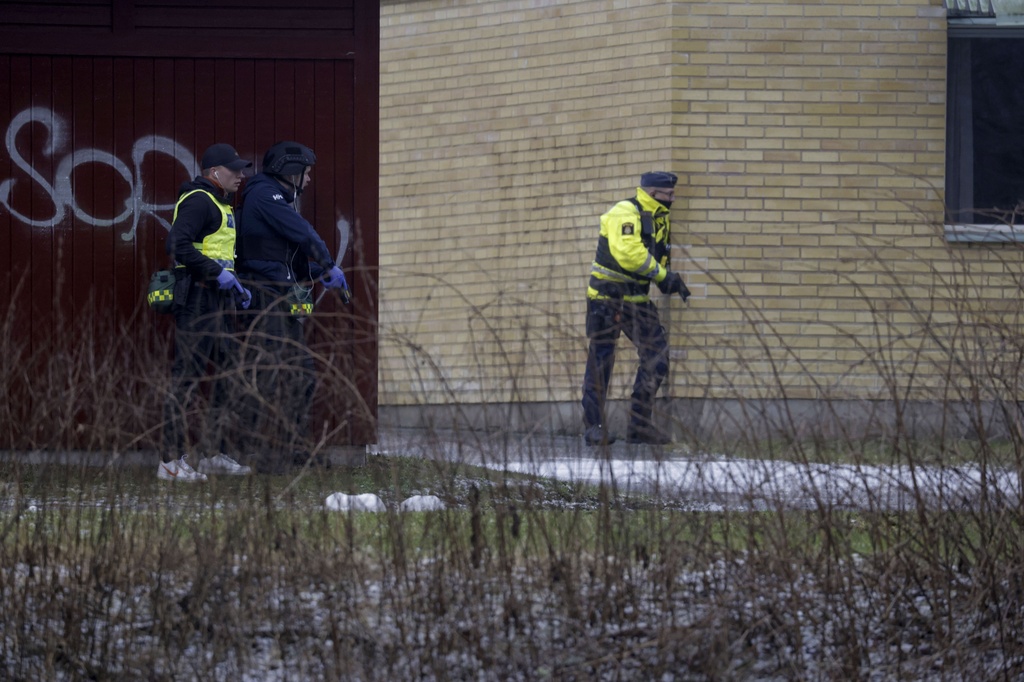
Emergency services at the scene of an incident at Risbergska School, in Örebro, Sweden, Tuesday, Feb. 4, 2025. (Kicki Nilsson/TT News Agency via AP)
Sweden’s worst mass shooting left at least 11 people dead, including the gunman, at an adult education center west of Stockholm as officials warned the death toll could rise.
The gunman’s motive, as well as the number of wounded, had not been determined by early Wednesday as Sweden — where gun violence at schools is very rare — reeled from an attack with such bloodshed that police early on said it was difficult to count the number of dead among the carnage.
The school, called Campus Risbergska, offers primary and secondary educational classes for adults age 20 and older, Swedish-language classes for immigrants, vocational training and programs for people with intellectual disabilities. It is on the outskirts of Orebro, which is about 200 kilometers (125 miles) west of Stockholm.
Justice Minister Gunnar Strömmer called the shooting “an event that shakes our entire society to its core.”
Police at the scene of an incident at Risbergska School, in Örebro, Sweden, Tuesday, Feb. 4, 2025. (Kicki Nilsson/TT News Agency via AP)
The shooting started Tuesday afternoon after many students had gone home following a national exam. Students sheltered in nearby buildings, and other parts of the school were evacuated following the shooting.
Authorities were working to identify the deceased, and police said the toll could rise. Roberto Eid Forest, head of the local police, told reporters the suspected gunman was among the dead.
There were no warnings beforehand, and police believe the perpetrator acted alone. Police have not said if the man was a student at the school. They haven’t released a possible motive, but authorities said there were no suspected connections to terrorism at this point.
Police raided the suspect’s home after Tuesday’s shooting, but it wasn’t immediately clear what they found.
Emergency services work at the scene of an incident at Risbergska School, in Örebro, Sweden, Tuesday, Feb. 4, 2025. (Pontus Lundahl/TT News Agency via AP)
“Today, we have witnessed brutal, deadly violence against completely innocent people,” Prime Minister Ulf Kristersson told reporters in Stockholm late Tuesday. “This is the worst mass shooting in Swedish history. Many questions remain unanswered, and I cannot provide those answers either.
“But the time will come when we will know what happened, how it could occur, and what motives may have been behind it. Let us not speculate,” he said.
While gun violence at schools is very rare in Sweden, people were wounded or killed with other weapons such as knives or axes in several incidents in recent years.
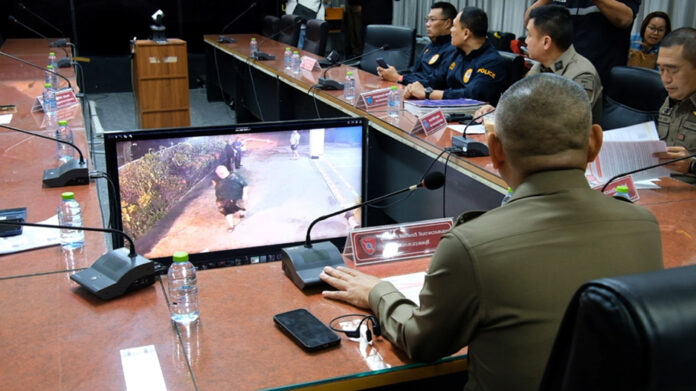
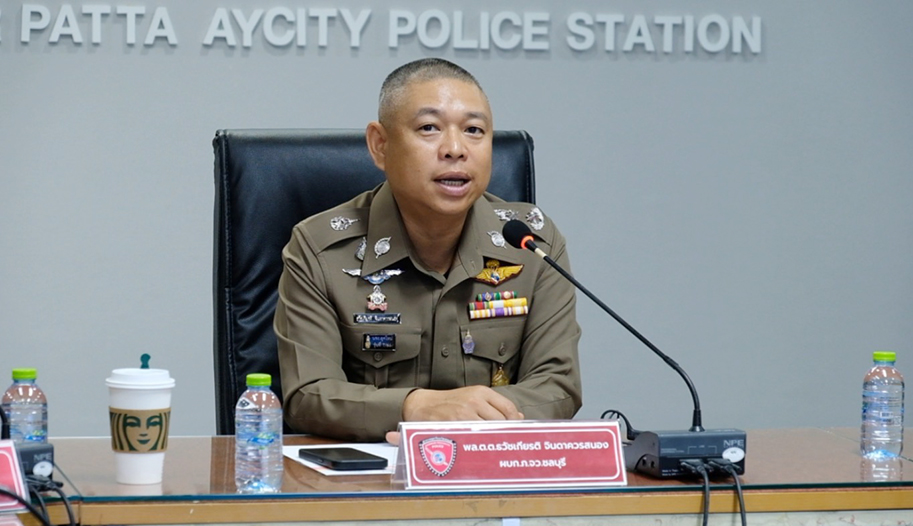
At a press conference at Pattaya City Police Station on February 4, 2025, Police Major General Thawatchakiat Jindakhuansanong presents CCTV footage of a British man's arrest for drunk and disorderly conduct.
CHONBURI — The Chonburi Provincial Police Commander is responding to allegations made in a Daily Mail article about the treatment of a British tourist in Pattaya, stating the report misrepresented facts about Thai police operations.
Andrew Hopkins, 55, claimed he was assaulted, detained for 36 hours, and forced to pay 15,000 baht after accidentally damaging a condominium sign on November 22, 2024. However, CCTV footage presented by police shows Hopkins intoxicated and deliberately damaging property at Hipark Residence condominium.
Police Major General Thawatchakiat Jindakhuansanong
At a press conference at Pattaya City Police Station on February 4, Police Major General Thawatchakiat Jindakhuansanong revealed that Hopkins was arrested for drunk and disorderly conduct, fined 100 baht, and released. The police chief denied allegations of extortion, stating all of Hopkins’ belongings were properly documented and returned.
After his release, Hopkins reportedly returned to the condominium, causing further disturbance that prompted residents to call police again.
The police commander announced plans to send a formal letter to the British Embassy to address the misleading reporting and protect Pattaya’s reputation. He emphasized that all procedures followed legal protocols and were conducted transparently.
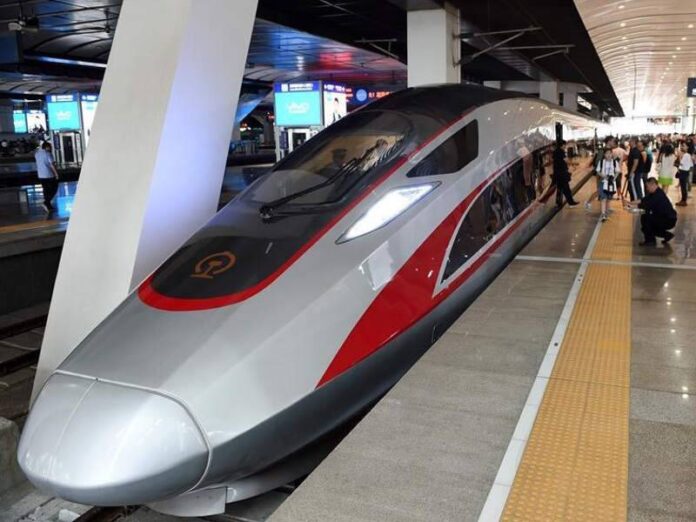
Cabinet approves 2nd phase of High-Speed Rail Project connecting to Vientiane and China on Feb.4, 2025.
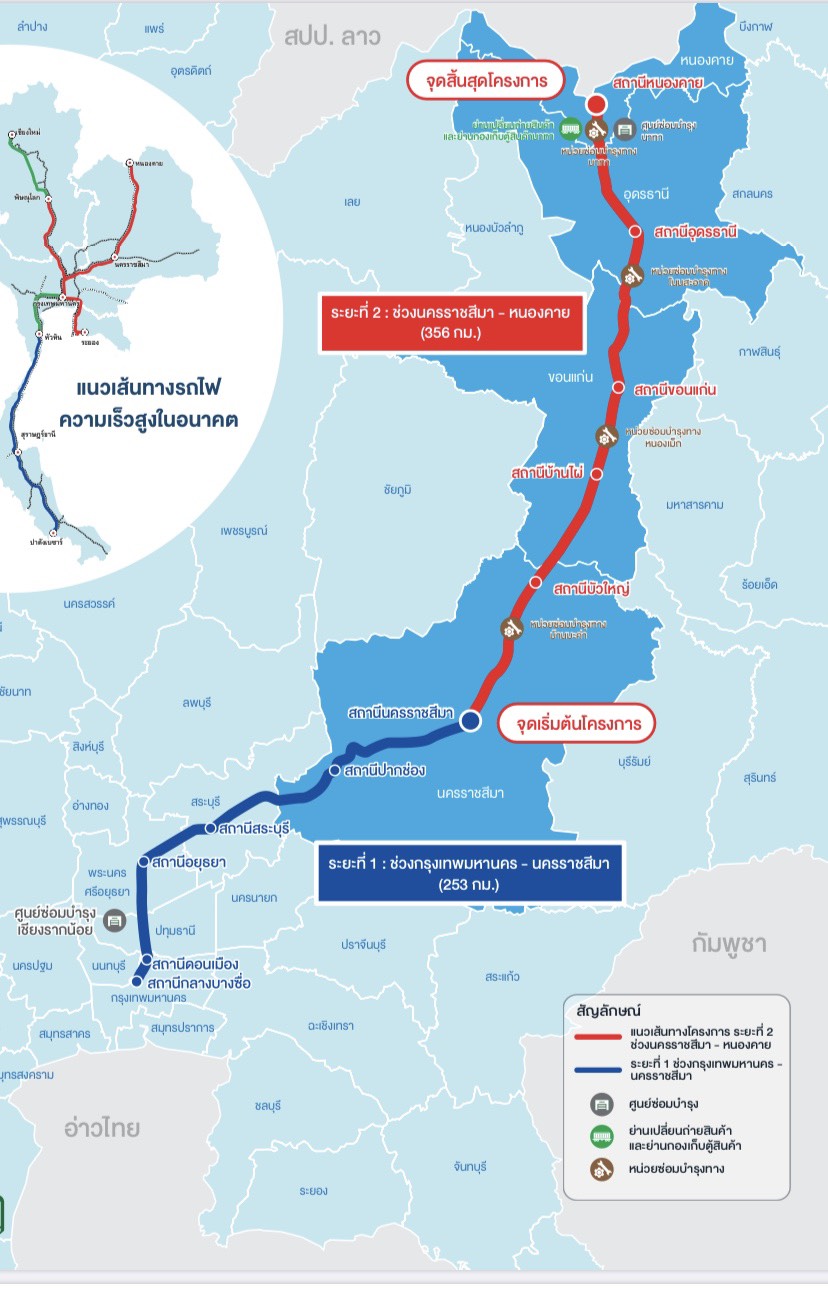
BANGKOK — The Thai cabinet has approved the second phase of the high-speed rail project, which will run from Nakhon Ratchasima to Nong Khai with a total length of 357 km and will ultimately connect Vientiane with China. The project is scheduled to be completed by 2030. In the meantime, the Prime Minister has ordered an acceleration of the first phase (Bangkok–Nakhon Ratchasima), which has been delayed.
On February 4, the Cabinet approved the implementation of Phase 2 of the high-speed rail project, which includes the Nakhon Ratchasima–Nong Khai section, with a total budget of THB 341.35 billion ($10 billion) and a project duration of 8 years (2025-2032), as proposed by the Ministry of Transport.
The Thai government will fund the project through annual budget allocations, while the Ministry of Finance will be responsible for obtaining loans and guarantees.
This project follows the 2017 Memorandum of Understanding (MoU) between Thailand and China to strengthen cooperation in railroad infrastructure. On July 11, 2017, the Cabinet approved Phase 1 Bangkok–Nakhon Ratchasima, 253 km (THB 179.41 billion or $5.3 billion), which was originally scheduled to be completed within 4 years (2017-2020). However, due to significant delays, only 35.74% of Phase 1 has been completed, meaning that expected operation is now scheduled for 2028.
The State Railway of Thailand (SRT) proposed 2nd Phase, consisting of two main components:
High-Speed Rail Construction (Nakhon Ratchasima–Nong Khai)
Total budget: 335.67 billion THB ($9.9 billion)
Distance: 357.12 km, connecting to Phase 1
Five stations:
(1) Bua Yai
(2) Ban Phai
(3) Khon Kaen
(4) Udon Thani
(5) Nong Khai
Construction period: 2025–2032 (8 years)
Natha Freight Transfer Center Construction
Total budget: 5.69 billion THB ($168 million)
Location: Nong Khai
Purpose: To facilitate the transfer of goods between Thai railways (1-meter gauge) and the China-Laos railway (1.45-meter standard gauge) under a One-Stop Service model.
A broad-based economic analysis (EIRR) combining phase 1 and phase 2 showed a return on investment of 13.23 percent, confirming the economic feasibility of the project. The Board of Directors of SRT has approved the 2nd phase and the Environmental Impact Assessment (EIA) has also been approved.
The Office of the National Economic and Social Development Council (NESDC) has recommended that the Ministry of Transportation expedite the work:
A feasibility study on the operating model for the high-speed rail system.
A public-private partnership (PPP) study to explore private sector participation.
A review of project assumptions to ensure that they are in line with the current economic situation.
The Prime Minister emphasized the need to speed up the completion of Phase 1 (Bangkok–Nakhon Ratchasima) as it has been delayed for several years.
The Cabinet approved the 2nd Phase in principle and instructed the Ministry of Transport and the SRT to implement the NESDC’s recommendations before moving forward. The project must comply with all relevant laws, regulations and Cabinet decisions before it can move forward.
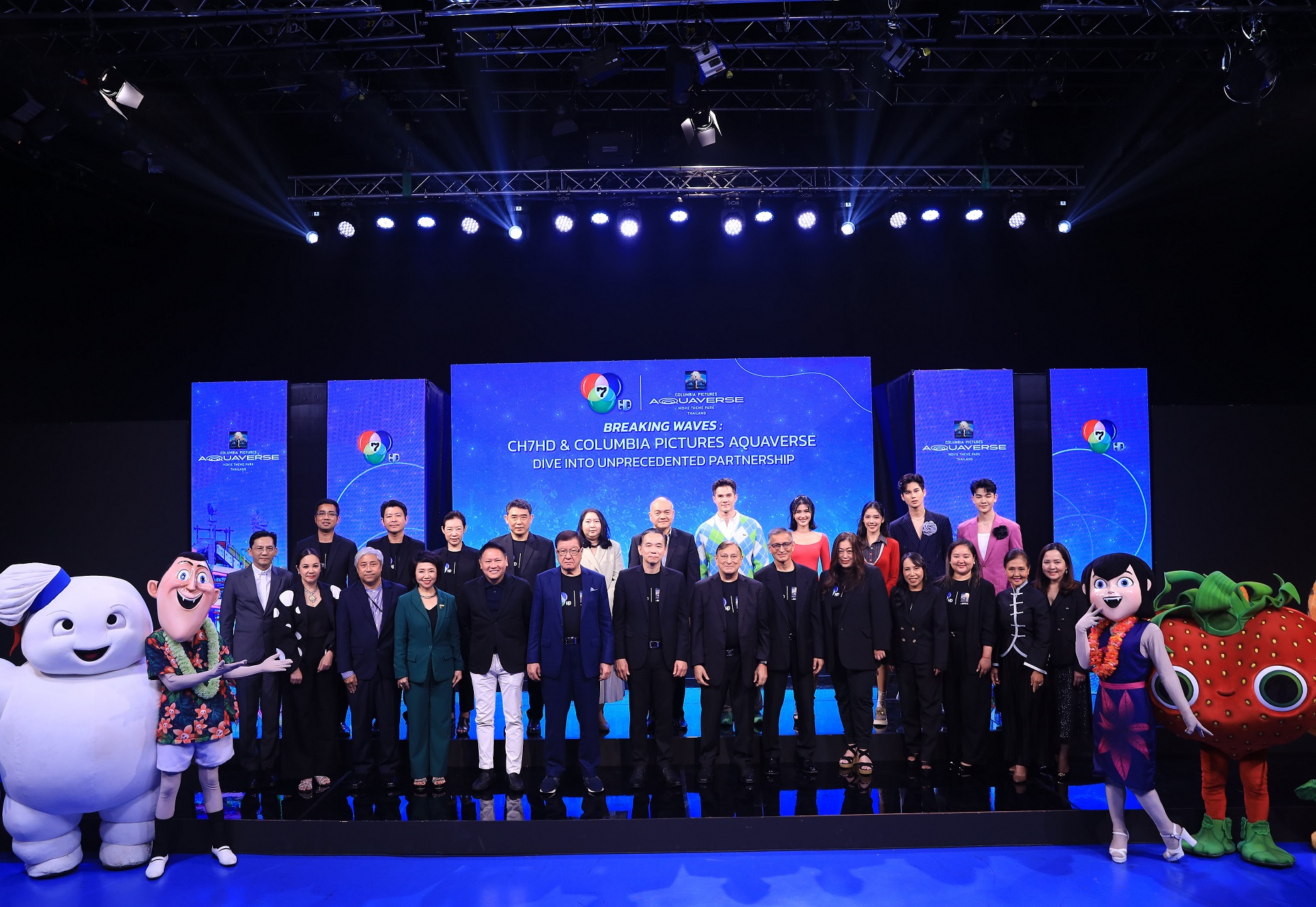
Patthanapong Nupan, Managing Director of CH7HD, and Liakat Dhanji, Chief Executive Officer and Chairman of Amazon Falls (operator of Columbia Pictures Aquaverse), speak about the cooperation after signing a Memorandum of Understanding (MOU) at CH7HD Headquarters' Studio 8, Building 7, on Feb. 4, 2025.
BANGKOK — In a significant move that promises to reshape Thailand’s entertainment landscape, CH7HD, the country’s leading television network, has announced a strategic partnership with Columbia Pictures Aquaverse, marking a major expansion into experiential entertainment.
The collaboration, formalized through a Memorandum of Understanding (MOU) signed at CH7HD’s headquarters, aims to develop premium content and organize national-level entertainment events, combining the broadcaster’s media expertise with the world’s first Columbia Pictures-themed amusement and water park.
Patthanapong Nupan, Managing Director of CH7HD, and Liakat Dhanji, Chief Executive Officer and Chairman of Amazon Falls (operator of Columbia Pictures Aquaverse), sign a Memorandum of Understanding (MOU) at CH7HD Headquarters’ Studio 8, Building 7, on Feb. 4, 2025.
“This partnership represents a strategic pivot towards creating comprehensive entertainment experiences,” said Patthanapong Nupan, Managing Director of CH7HD. “By leveraging our position as Thailand’s number one television network alongside Columbia Pictures Aquaverse’s world-class facilities, we’re poised to deliver unprecedented entertainment value to our audiences.”
The partnership’s initial plans include:
An exclusive Muay Thai competition series hosted at the theme park
Large-scale concert events and live performances
Special fan meet-and-greet sessions with CH7HD celebrities
Integrated content distribution across television, streaming, and live platforms
For Columbia Pictures Aquaverse, operated by Amazon Falls Co., Ltd., the alliance represents a significant step in establishing itself as a premier entertainment destination in Southeast Asia. The park, located 20 minutes south of Pattaya in Bang Saray, has already garnered international recognition, including being named one of the world’s best new theme parks by CNN in 2023 and winning the title of ASEAN’s Best Themed Water Park at MAFTA 2023.
“This collaboration with CH7HD aligns perfectly with our vision to position Columbia Pictures Aquaverse as a world-class entertainment destination,” said Liakat Dhanji, CEO and Chairman of Amazon Falls Co., Ltd. “It strengthens Thailand’s position in global tourism while creating multi-generational entertainment experiences.”
The partnership also supports Thailand’s Eastern Economic Corridor (EEC) project, reinforcing the region’s development as a key tourism and entertainment hub. Industry experts view this alliance as a strategic move that could significantly impact Thailand’s entertainment sector, potentially creating new revenue streams and employment opportunities in the region.
The signing ceremony was attended by key industry figures, including executives from Sony Pictures Entertainment (Thailand), Tero Entertainment Public Company Limited, and the Eastern Economic Corridor Office of Thailand (EECO). Popular Thai celebrities, including Mik Thongraya and Pinkploy-Paphawadee Chansamon, were present as witnesses to the agreement.
The partnership marks CH7HD’s latest move in its digital transformation strategy, building on the success of its Bugaboo.TV platform, which ranks among Thailand’s top 20 most downloaded apps. The collaboration is expected to create new opportunities for content creation and distribution across multiple platforms, while enhancing Thailand’s position in the global entertainment industry.
The signing ceremony is honored by the presence of esteemed executives from the entertainment and business sectors, on Feb. 4, 2025.
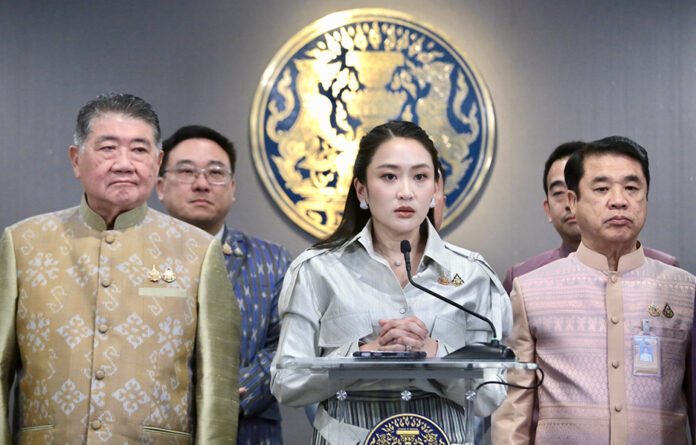
Prime Minister Paethongtarn Shinawatra addresses the media after the Cabinet meeting on February 4, 2025, confirming her unwavering decision to cut power supply to suspected scammer locations in Myanmar.
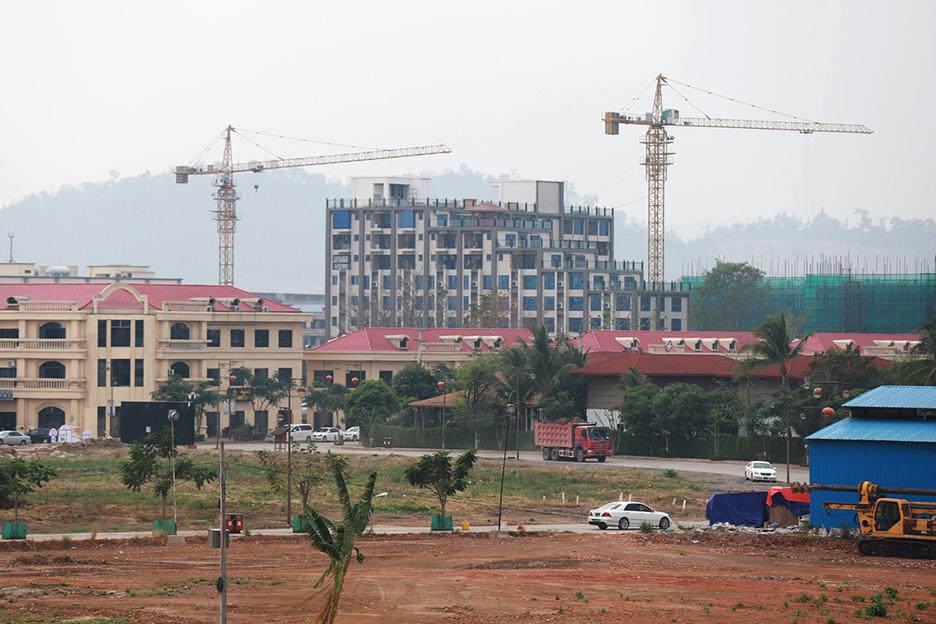
BANGKOK — Thailand will cut electricity, internet, and fuel supplies to five locations along its border with Myanmar starting February 5, marking an unprecedented move to combat transnational crime operations, particularly call center scams that have caused billions in damages.
The decision, announced by Deputy Prime Minister and Defense Minister Phumtham Wechayachai following a National Security Council (NSC) meeting on February 4, comes after revelations that such scams have victimized over 557,500 people and caused losses exceeding 68 billion baht ($2 billion), with daily damages of approximately 80 million baht ($2.3 million).
Prime Minister Paethongthan Shinawatra strongly endorsed the action following a Cabinet meeting. “I have no hestitaion. We must take care of our people first,” she stated firmly. “The impact on Thai people and our country’s image has been enormous. It’s time to take decisive action.”
The measures target five key areas along the Thai-Myanmar border, including major crossing points at Three Pagodas Pass, Mae Sai-Tachileik, and Mae Sot-Myawaddy. All affected locations are reportedly linked to call center gang operations.
Shwe Kokko / Radio Free Asia
The move follows recent high-level discussions between Thai officials and China’s Assistant Minister of Public Security, Liu Zhongyi, highlighting the international scope of the problem. China has also suffered significant losses from these criminal operations and has pledged to cooperate through information sharing.
Thai authorities have coordinated with healthcare facilities in affected areas to prepare for the shutdown. The Ministry of Foreign Affairs will notify the Myanmar government of the action, which affects several Myanmar-licensed companies operating under contracts with Thailand’s Provincial Electricity Authority.
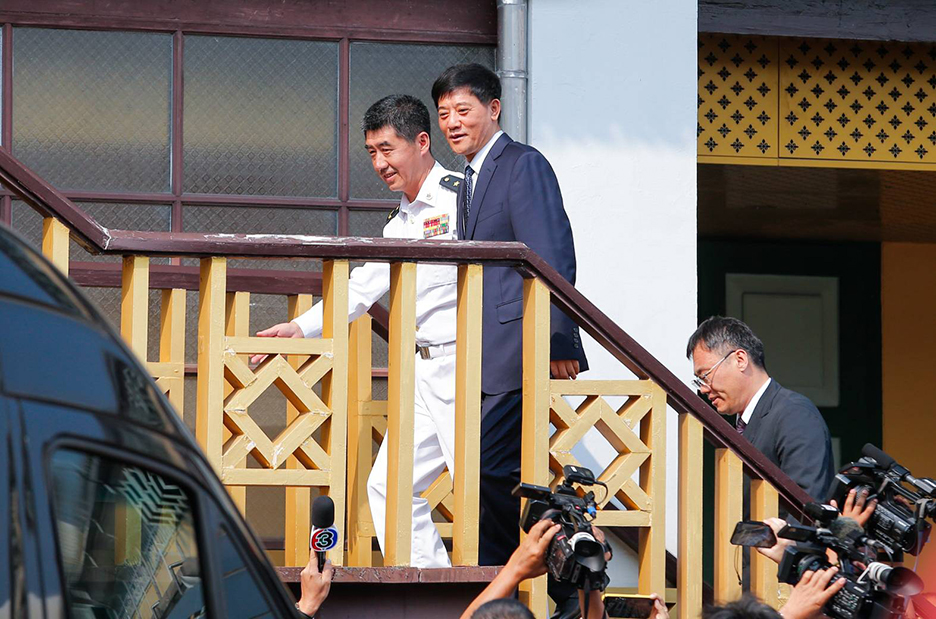
Liu Zhongyi, Vice Minister of Public Security of the People’s Republic of China, along with Wu Zhiwu, Chinese Ambassador to Thailand, and delegation meet with Phumtham Wechayachai, Deputy Prime Minister and Minister of Defense, to discuss solutions for online crime along the Thai-Myanmar border at the Ministry of Defense, February 4, 2025.
When questioned about possible retaliation from Myanmar, both the Prime Minister and Deputy Prime Minister expressed confidence in the decision, noting that the issue has been previously discussed with Myanmar authorities who understand the international nature of the problem.
The shutdown will be coordinated across 51 border districts, with authorities ready to prevent any attempts at illegal power connections. Officials emphasized that while Myanmar operators might resort to using generators, Thailand’s priority remains protecting its citizens from transnational criminal activities.
This unprecedented action represents Thailand’s strongest stance yet against border-based criminal operations, demonstrating the government’s commitment to addressing what it views as a critical national security issue affecting both domestic and international interests.
Police Lieutenant General Trairong Phiwphan led the arrest of three Taiwanese nationals operating a $300,000-per-day gambling network, on Feb. 4, 2025.
BANGKOK — Thai police conducted major raids targeting foreign-operated online gambling networks in Bangkok on Tuesday, successfully dismantling both Taiwanese and Chinese operations.
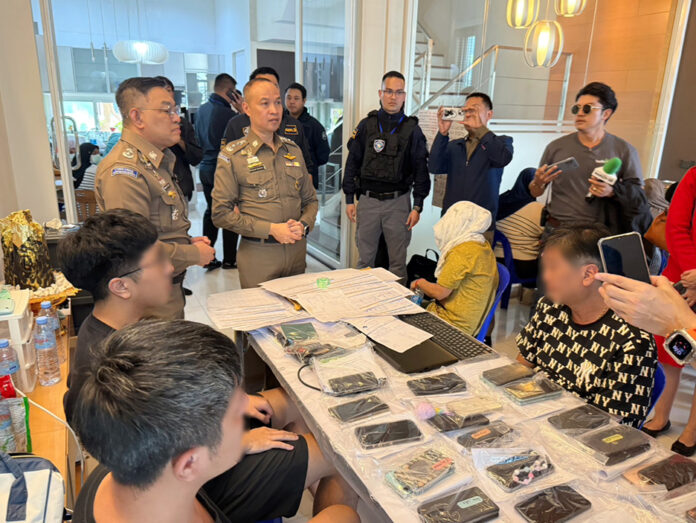
In the first operation, Thailand’s Cyber Police, led by Police Lieutenant General Trairong Phiwphan, raided four locations in Bangkok, including properties in Ladprao and Huai Khwang districts. The operation targeted a major Taiwanese gambling network with daily transactions of approximately $300,000. Over 20 Taiwanese nationals and their administrators were arrested.
The investigation began after youth complaints about gambling links embedded in cartoon websites. The network operated under the guise of an NFT trading platform but actually ran an illegal gambling website offering slots, fishing games, live casino, sports betting, poker, and other games.
People from the southern border region were held as witnesses after being hired through Facebook for what they believed was legitimate digital asset trading work at $18 per day.
Those arrested were Taiwanese nationals: Mr. Yaoyi (50), Mr. I-Teng (34), and Mr. Chungfeng (23), along with a 21-year-old Thai national named Thanakit, and a 45-year-old Myanmar citizen who handled financial transactions. The suspects denied the allegations, claiming they were only selling digital art.
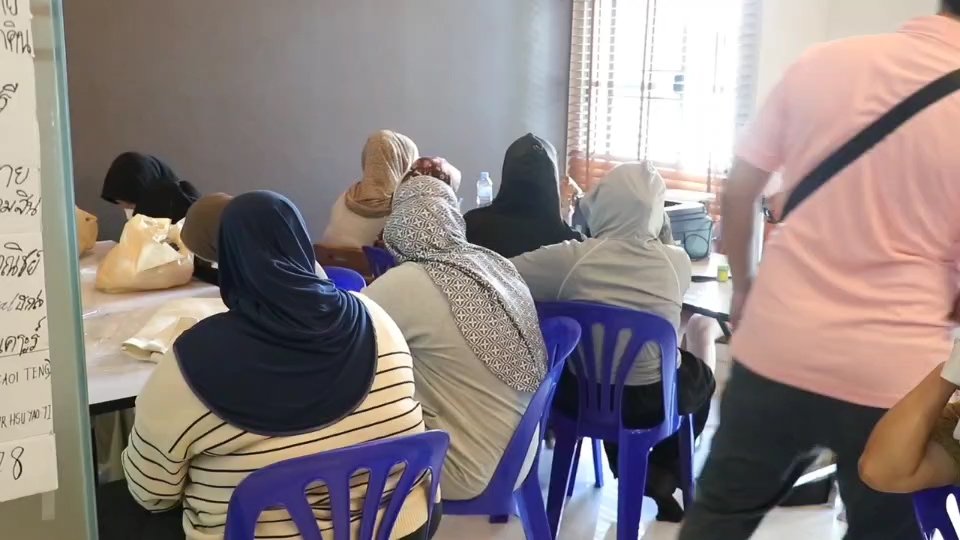
Police also found 18 Thai administrators recruited from the southern border region, who were held as witnesses. These individuals stated they were hired through Facebook for what they believed was legitimate digital asset trading work at $18 per day. Upon arrival, each worker was made to open a bank account and given a phone. After linking their accounts to the provided phones, they were tasked with daily money transfers. Police investigation later found all accounts were tied to illegal gambling operations.
During searches of the four locations, investigators uncovered substantial evidence linking the suspects to the gambling operation. Police seized 33 mobile phones along with numerous Thai and international bank accounts. A Mercedes Benz vehicle was also confiscated, as well as computer equipment and cryptocurrency seed phrases. The evidence included multiple SIM cards from both Thai and Laotian telecommunications providers, plus physical currency in Thai baht, Laotian kip, and Vietnamese dong.
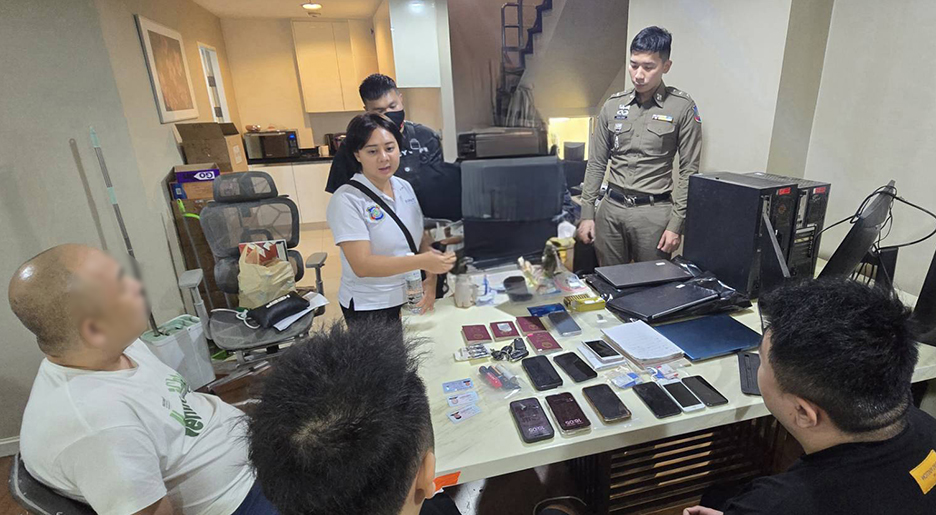
In a separate operation, Tourist Police arrested three Chinese nationals – Mr. Wenchong (41), Mr. Pengcheng (24), and Mr. Pohong (31) – at a luxury condominium in Huai Khwang. They were allegedly operating “dafabet,” an online gambling platform connected to grey-market Chinese operators in Cambodia. Two of the suspects, Wenchong and Pohong, were already wanted by Chinese authorities.
Three Chinese nationals arrested in Huai Khwang condo for operating illegal gambling site on Feb. 4, 2025.
The Chinese operation managed about 200,000 gambling accounts with daily transactions of approximately $57,000. Police seized computers, phones, OTP tokens, 0.7 grams of crystal methamphetamine, and 50 rounds of 9mm ammunition.
Police Lieutenant General Trairong emphasized that while Thailand welcomes legitimate tourists, authorities will continue to crack down on criminal activities. He referenced Chinese President Xi Jinping’s open-door policy analogy, stating that while Thailand’s tourism sector welcomes good visitors, law enforcement must act as a “screen door” to filter out criminal elements.
All suspects face charges related to operating illegal gambling operations and money laundering, with additional drug and weapons charges for the Chinese suspects.
Many parents want to avoid paying most fees whenever and wherever possible. However, there are certain fees that parents are almost glad to pay. Parents who are serious and care about the quality of the education their children are receiving begin gladly paying school fees when their children enter preschool and kindergarten.
They know that preschool and kindergarten-age children are at the heart of their developmental years, and the quality of the education they receive at that point in their lives often has a bearing on their level of enjoyment and engagement with their education throughout the entirety of their school years.
Parents are more than happy to pay the school fees of quality kindergartens and preschools because they are well aware of the importance of childhood development in getting the most from an education.
Skills and Areas of Development in Young People
The skills and areas children need to develop include:
Social
Emotional
Personal
Communication and language
Physical
It’s only when these skills are being developed that children can enjoy, appreciate, and get the most out of their education. These areas and skills constitute the tools they need to fully explore the subjects they’ll be taught during the educational years to come.
Talent and Aptitude
This development may also uncover a special talent or higher level of enjoyment a child has for a certain subject. A skilled teacher who recognizes this heightened level of enjoyment in a child can enhance the child’s education by showing them the joy of learning. Children naturally enjoy pursuing skills and activities at which they excel.
By skillfully guiding the child to appreciate their education as a whole, the child becomes better prepared and gets more out of their formal education.
The Value of Early Years Foundation Stage Education
Some preschools and kindergartens in Bangkok, including Noddy by Elizabeth, follow the British Early Years Foundation Stage (EYFS) curriculum. At Noddy by Elizabeth, this curriculum focuses on the student’s daily activities using the Free-Flow-Play technique, which encourages childhood development and learning enjoyment.
This learning through playing allows children to take the initiative and lead their own activities with monitoring and guidance from the teachers. The children develop a healthy love of education that can last through their school years with proper support and encouragement from their teachers and parents.
EYFS helps them get started on the road to enjoying and excelling at the subject they learn. Once they’ve reached that stage of their academic career, it also translates into being accepted into more colleges and universities.
Visit Noddy by Elizabeth
As more parents learn about the importance of EYFS education, they understand the value of investing in their child’s education from the beginning by paying the preschool and kindergarten school fees. If you’re located near the Silom area, contact Noddy by Elizabeth for a tour of our school and learn the value of the EYFS program.
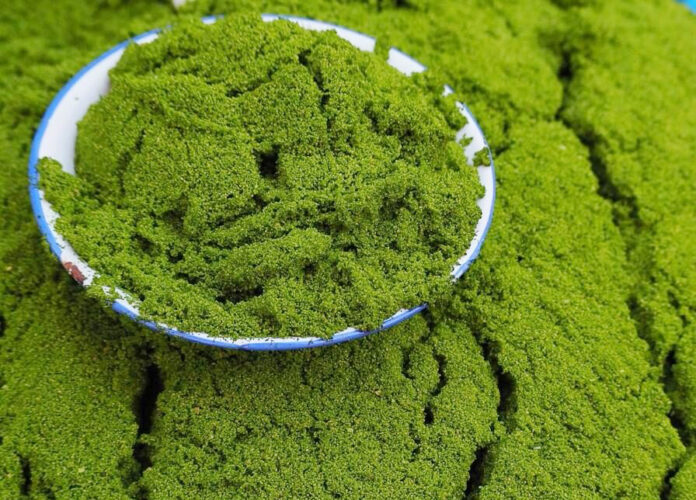
Wolffia, also known as Kai Pam in Thai, is considered a food of the future
BANGKOK — Wolffia, also known as Kai Pam in Thai, is considered a food of the future, rich in protein, vitamin B12 and other important nutrients. The Thai government is actively promoting it as a new economic crop.
The Minister of Agriculture and Cooperatives, Narumon Pinyosinwat, presented this plant at the International Green Week 2025 in Berlin – Agri-future: From Tradition to Sustainability, which took place at the end of January at Messe Berlin, Germany. As part of the presentation of Thailand’s superfoods for the international market, she demonstrated a dish with instant noodles made from Wolffia.
“I presented Wolffia at an international trade fair and it generated a lot of interest as a high-protein plant food. It offers excellent protein sources, especially for health-conscious consumers, and opens up great market opportunities. This could generate significant income for farmers, either as a supplementary crop or alongside their primary agricultural products,” Minister Narumon said at a seminar titled “Wolffia – Vanilla: New Trending Crops” held at the Khaosod News Office on January 31.
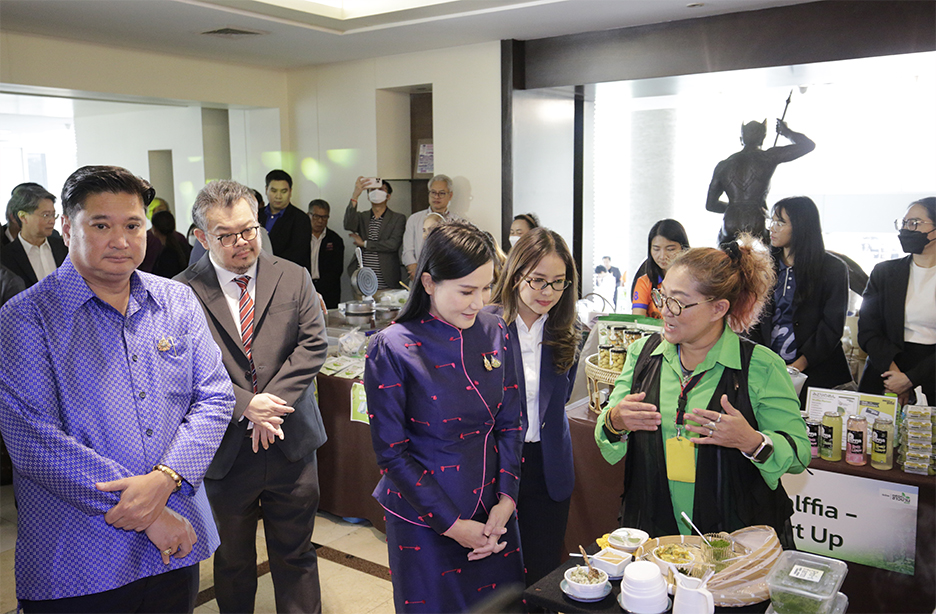
The Minister of Agriculture and Cooperatives, Narumon Pinyosinwat, examines products from Super Wolffia SUT Start Up during a seminar titled “Wolffia – Vanilla: New Trending Crops” at the Khaosod News Office on January 31, 2025.
She also emphasized that Wolffia is particularly suitable for health-conscious consumers, vegetarians, athletes, the elderly and people who have problems digesting animal proteins. As the consumption of plant-based proteins increases, Wolffia is gaining attention from both producers and consumers.
To promote its commercial potential, the Ministry of Agriculture and Cooperatives is working to set standards for Wolffia cultivation. The National Bureau of Agricultural Commodity and Food Standards (ACFS) has recently adopted guidelines for Wolffia farms, dividing them into two categories:
For human consumption
For animal feed – as it also provides high nutritional value for livestock.
The Department of Livestock is also showing interest in Wolffia, while the Ministry of Agriculture is encouraging farmers to adopt Good Agricultural Practices (GAP) to ensure higher quality and market value of the crop.
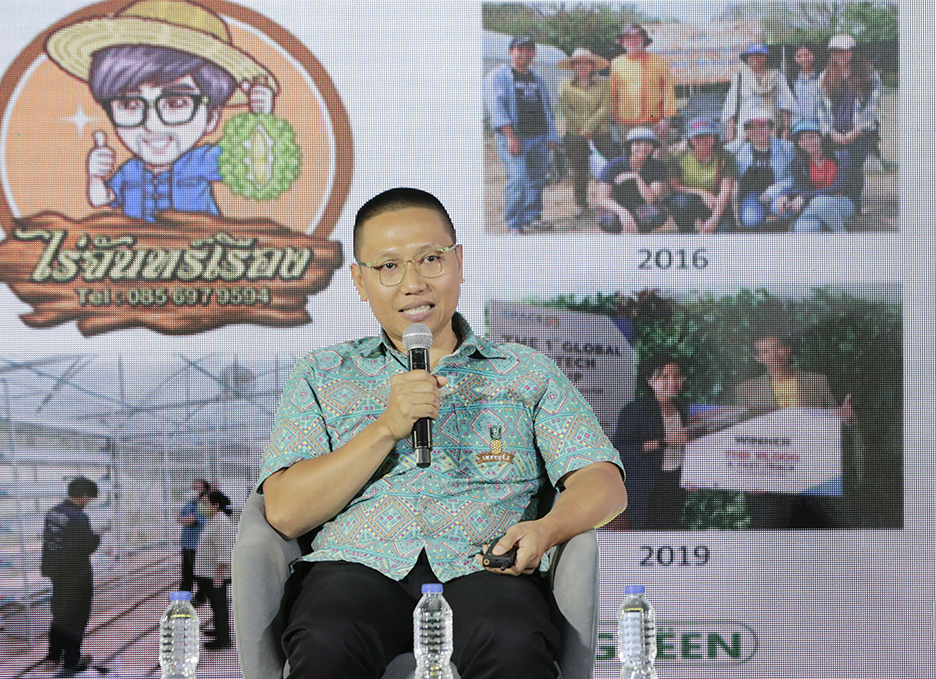
Natthawut Chanruang, the owner of Chanruang Farm in Chanthaburi Province, is pioneering large-scale wolffia cultivation in a vertical closed-loop system to ensure clean and high-quality production. Before getting into wolffia cultivation, Natthawut was a durian farmer with an annual harvest. In the off-season, he was looking for other crops and discovered wolffia 4-5 years ago, which he initially grew in a traditional open system.
Natthawut Chanruang, the owner of Chanruang Farm in Chanthaburi Province
At that time, market prices for Wolffia were around 15 baht per kilogram, but sales were low. Through continuous research, government support and closed breeding systems, he developed an innovative approach to vertical breeding, producing high quality Wolffia while minimizing contamination from bacteria and heavy metals.
In addition, he developed a water recirculation system and built greenhouses to establish a closed-loop vertical Wolffia cultivation method that meets GAP certification standards to support future export markets.
“The new cultivation method has significantly increased production and added value through processing. We can now sell processed Wolffia at 4,000 baht per kilogram. With quality certification and a clean cultivation process, our product is well accepted in the market. As Wolffia is an aquatic plant, there is a risk of contamination. Therefore, strict standards are essential to gain consumer confidence,” he explained.
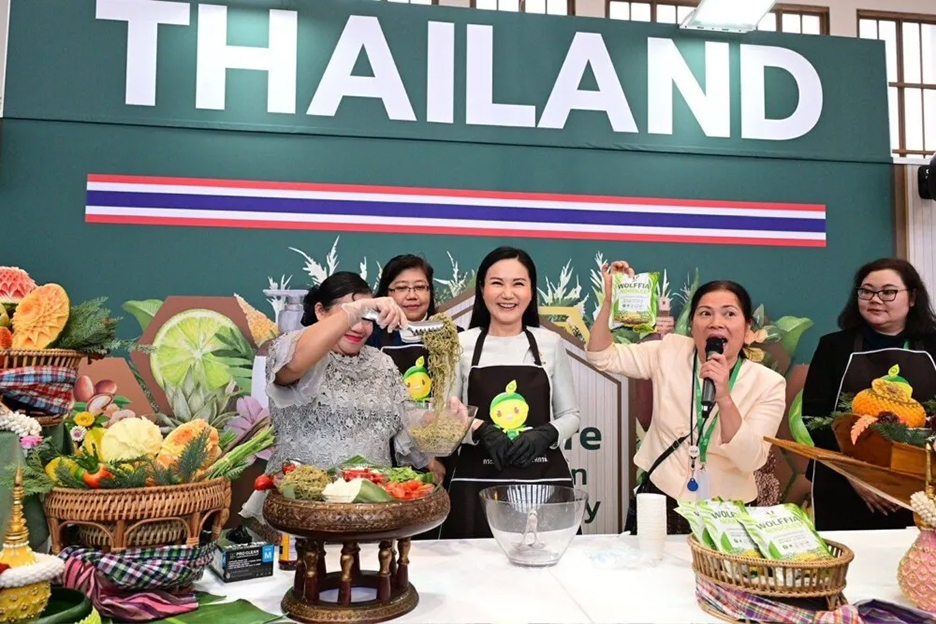
The Minister of Agriculture and Cooperatives, Narumon Pinyosinwat, demonstrates Wolffia cooking at the International Green Week 2025 in Berlin, Germany, on January 18, 2025.
Chanruang Farm is also using advanced technology to develop Wolffia extracts targeting export markets such as Japan and the Middle East. The farm is currently applying for halal certification, which Dubai, Saudi Arabia, Iran and Bahrain— are interested in – all markets with high potential and strong purchasing power. Future expansion plans will continue to focus on exports.
Rapibhat Chandarasrivongs, Director-General, Department of Agriculture, explained that Wolffia protein has the potential to replace animal protein in both the current and future markets. However, Wolffia harvested from natural water sources may contain contaminants such as pathogens and heavy metals that pose a health risk.
To ensure safe and high-quality production, he has instructed the Department of New Economic Crops and Greenhouse Gas Management to conduct research and technology development for optimized Wolffia cultivation that meets regional conditions and consumer demand.
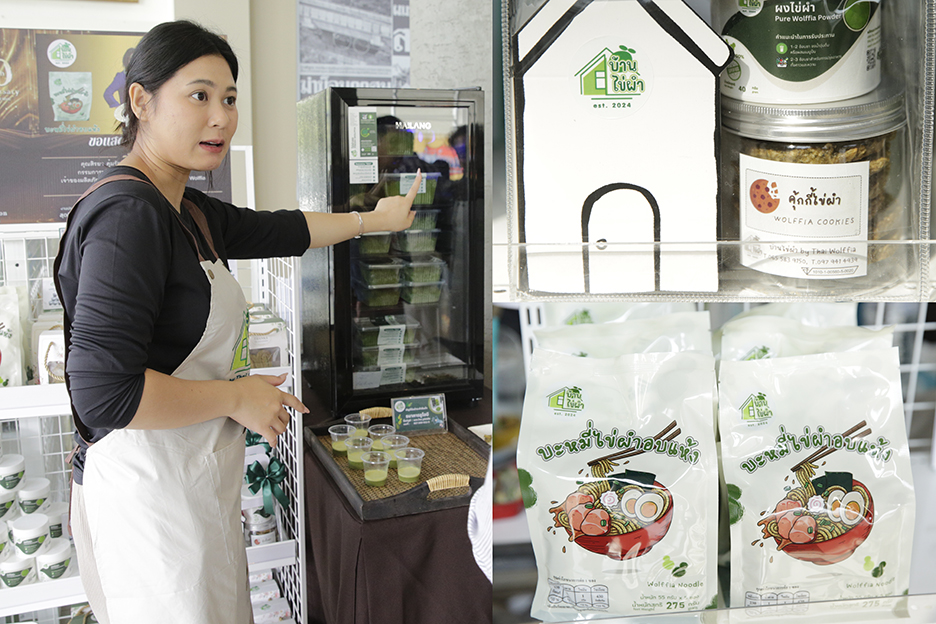
Wolffia products from Baan Kai Pam company, including dried Wolffia noodles, Wolffia cookies, and Wolffia powder, are displayed at the Wolffia Trending Crops seminar at Khaosod News Office, Bangkok, on January 31, 2025.
Currently, Thai researchers have developed three high-nutrient Wolffia varieties:
DOA1 Chiang Rai (CRI1) – 48.6 percent protein
DOA2 Nakhon Ratchasima (NMA1) – 47.0 percent protein
PYO1 Phayao – 46.0 percent protein
These varieties are promoted to entrepreneurs, farmers and interested private individuals for commercial cultivation and high-quality processing.
The Division of New Economic Crops is conducting GAP-standard workshops on commercial Wolffia farming, covering cultivation, harvesting, and storage techniques. The program focuses on three key objectives: establishing standardized cultivation practices across all farming sectors, fostering product development, and training certification personnel. This comprehensive initiative aims to strengthen Thailand’s Wolffia industry through education and quality control measures.
By ensuring strict quality control and sustainable farming practices, the Thai government hopes to position wolffia as a future superfood in both the domestic and global markets.
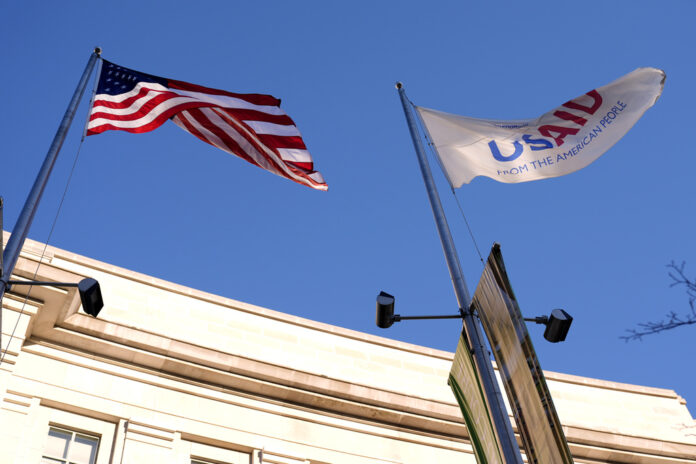
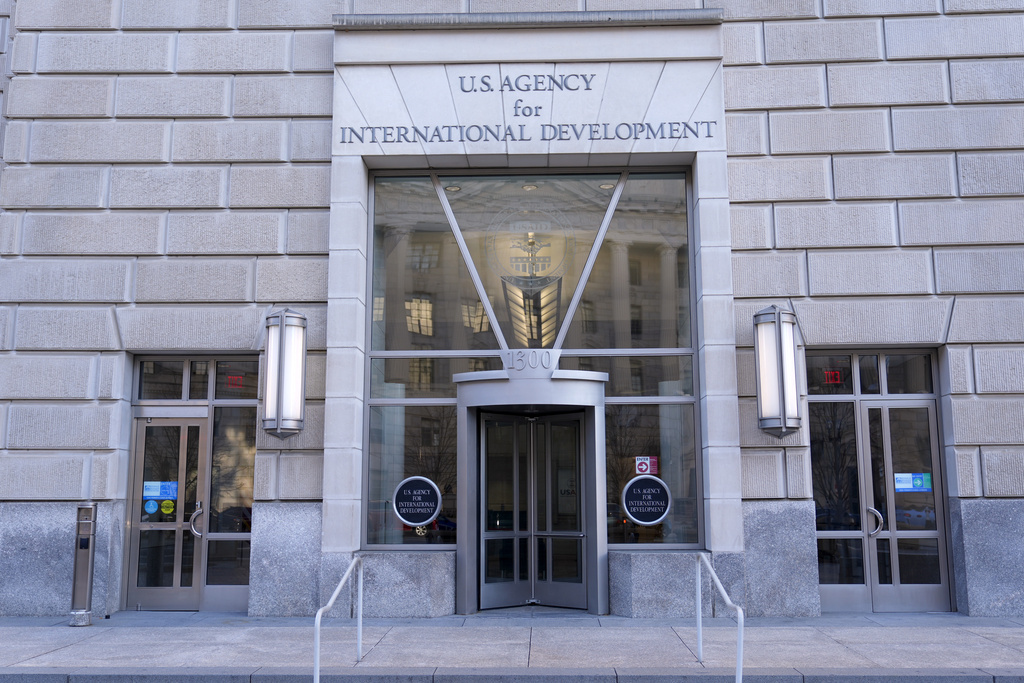
The U.S. Agency for International Development, or USAID, is pictured Saturday, Feb. 1, 2025, in Washington. (AP Photo/Carolyn Kaster)
What is USAID? Explaining the US foreign aid agency and why Trump and Musk want to end it
WASHINGTON (AP) — Dozens of senior officials put on leave. Thousands of contractors laid off. A freeze put on billions of dollars in humanitarian assistance to other countries.
Over the last two weeks, President Donald Trump’s administration has made significant changes to the U.S. agency charged with delivering humanitarian assistance overseas that has left aid organizations agonizing over whether they can continue with programs such as nutritional assistance for malnourished infants and children.
Then-President John F. Kennedy established the U.S. Agency for International Development, known as USAID, during the Cold War. In the decades since, Republicans and Democrats have fought over the agency and its funding.
Here’s a look at USAID, its history and the changes made since Trump took office.
What is USAID?
Kennedy created USAID at the height of the United States’ Cold War struggle with the Soviet Union. He wanted a more efficient way to counter Soviet influence abroad through foreign assistance and saw the State Department as frustratingly bureaucratic at doing that.
Congress passed the Foreign Assistance Act and Kennedy set up USAID as an independent agency in 1961.
USAID has outlived the Soviet Union, which fell in 1991. Today, supporters of USAID argue that U.S. assistance in countries counters Russian and Chinese influence. China has its own “belt and road” foreign aid program worldwide operating in many countries that the U.S. also wants as partners.
Critics say the programs are wasteful and promote a liberal agenda.
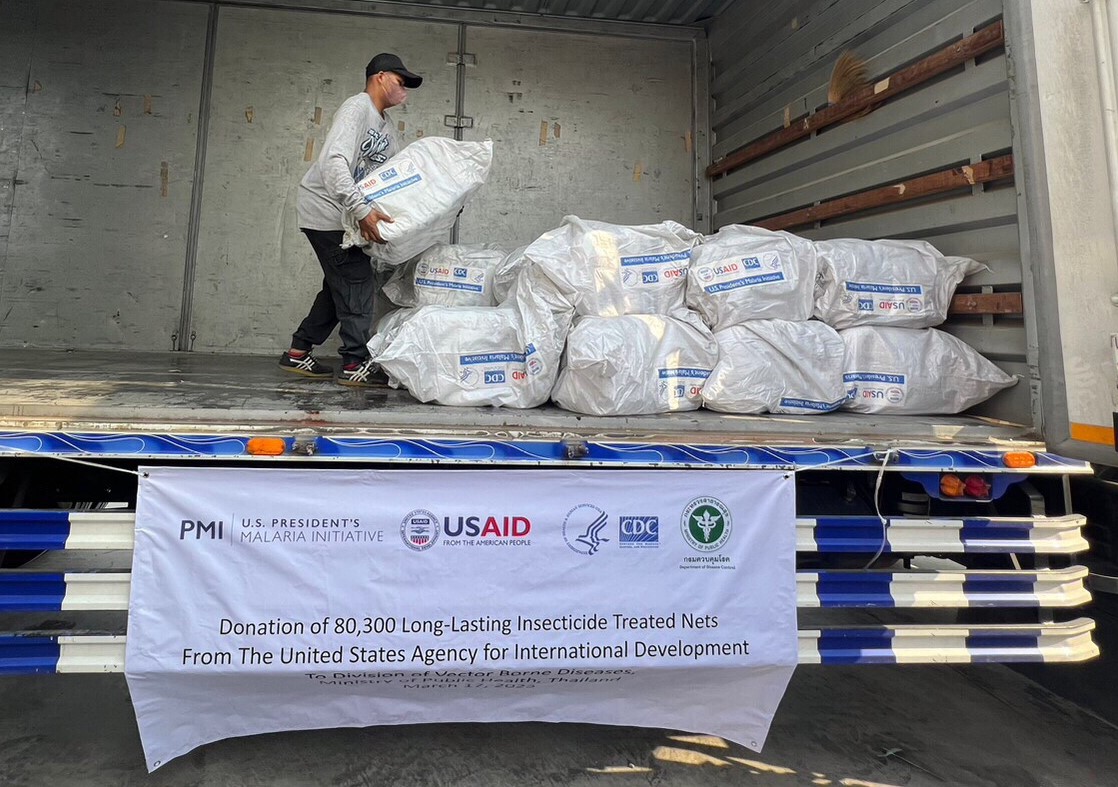
Mosquito nets being delivered to the government of Thailand. Photo credit: Chemonics
What’s going on with USAID?
On his first day in office Jan. 20, Trump implemented a 90-day freeze on foreign assistance. Four days later, Peter Marocco — a returning political appointee from Trump’s first term — drafted a tougher than expected interpretation of that order, a move that shut down thousands of programs around the world and forced furloughs and layoffs.
Secretary of State Marco Rubio has since moved to keep more kinds of strictly life-saving emergency programs going during the freeze. But confusion over what programs are exempted from the Trump administration’s stop-work orders — and fear of losing U.S. aid permanently — is still freezing aid and development work globally.
Dozens of senior officials have been put on leave, thousands of contractors laid off, and employees were told Monday not to enter its Washington headquarters. And USAID’s website and its account on the X platform have been taken down.
It’s part of a Trump administration crackdown that’s hitting across the federal government and its programs. But USAID and foreign aid are among those hit the hardest.
Rubio said the administration’s aim was a program-by-program review of which projects make “America safer, stronger or more prosperous.”
The decision to shut down U.S.-funded programs during the 90-day review meant the U.S. was “getting a lot more cooperation” from recipients of humanitarian, development and security assistance, Rubio said.
What do critics of USAID say?
Republicans typically push to give the State Department — which provides overall foreign policy guidance to USAID — more control of its policy and funds. Democrats typically promote USAID autonomy and authority.
Funding for United Nations agencies, including peacekeeping, human rights and refugee agencies, have been traditional targets for Republican administrations to cut. The first Trump administration moved to reduce foreign aid spending, suspending payments to various U.N. agencies, including the U.N. Population Fund and funding to the Palestinian Authority.
The U.S. Agency for International Development, or USAID, is pictured Saturday, Feb. 1, 2025, in Washington. (AP Photo/Carolyn Kaster)
In Trump’s first term, the U.S. pulled out of the U.N. Human Rights Council and its financial obligations to that body. The U.S. is also barred from funding the U.N. agency for Palestinian refugees, or UNRWA, under a bill signed by then-President Joe Biden last March.
As a Florida senator, Rubio often called for more transparency on foreign assistance spending, but was generally supportive. In a 2017 social media post, Rubio said foreign assistance was “not charity,” that the U.S. “must make sure it is well spent” and called foreign aid “critical to our national security.”
In 2023, Rubio sponsored a bill that would have required U.S. foreign assistance agencies to include more information on what organizations were implementing the aid on the ground.
Why is Elon Musk going after USAID?
Musk’s Department of Government Efficiency, known as DOGE, has launched a sweeping effort empowered by Trump to fire government workers and cut trillions in government spending. USAID is one of his prime targets. Musk alleges USAID funding been used to launch deadly programs and called it a “criminal organization.”
What is being affected by the USAID freeze?
Sub-Saharan Africa could suffer more than any other region during the aid pause. The U.S. gave the region more than $6.5 billion in humanitarian assistance last year. HIV patients in Africa arriving at clinics funded by an acclaimed U.S. program that helped rein in the global AIDS epidemic of the 1980s found locked doors.
There are also already ramifications in Latin America. In Mexico, a busy shelter for migrants in southern Mexico has been left without a doctor. A program to provide mental health support for LGBTQ+ youth fleeing Venezuela was disbanded.
In Colombia, Costa Rica, Ecuador and Guatemala, so-called “Safe Mobility Offices” where migrants can apply to enter the U.S. legally have shuttered.
The aid community is struggling to get the full picture—how many thousands of programs have shut down and how many thousands of workers were furloughed and laid off under the freeze?
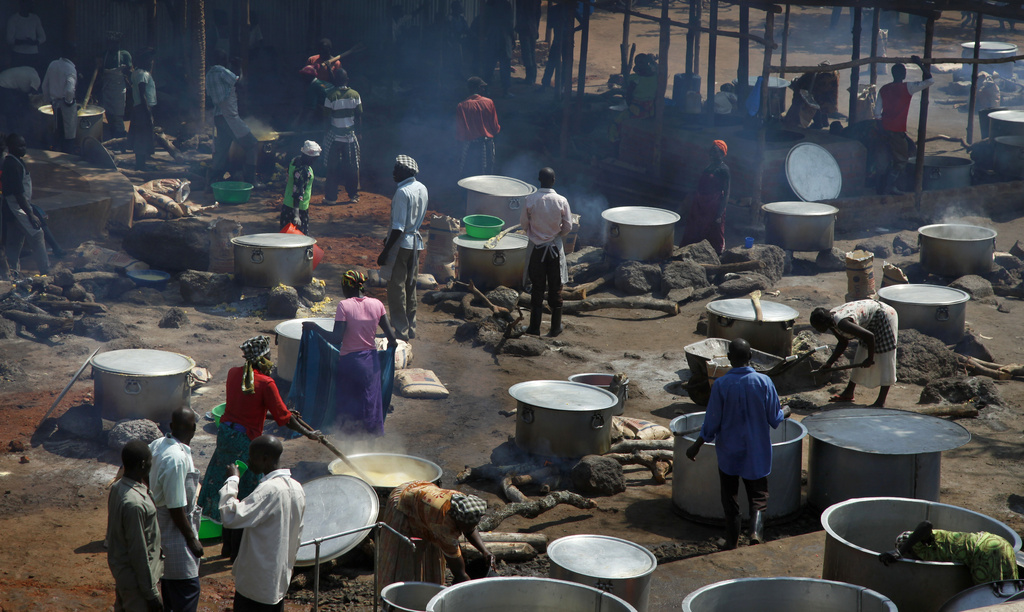
FILE – Refugees prepare food including maize porridge donated by USAID and known locally as posho, during the visit of U.N. in Adjumani, Uganda, Aug. 29, 2016. (AP Photo/Stephen Wandera, File)
How much does the U.S. spend on foreign aid?
In all, the U.S. spent about roughly $40 billion in foreign aid in the 2023 fiscal year, according to a report published last month by the nonpartisan Congressional Research Service.
The U.S. is the largest provider of humanitarian assistance globally, although some other countries spend a bigger share of their budget on it. Foreign assistance overall amounts to less than 1% of the U.S. budget.
What do Americans think of foreign aid?
About 6 in 10 U.S. adults said the U.S. government was spending “too much” overall on foreign aid, according to a March 2023 AP-NORC poll. Asked about specific costs, roughly 7 in 10 U.S. adults said the U.S. government was putting too much money toward assistance to other countries. About 9 in 10 Republicans and 55% of Democrats agreed that the country was overspending on foreign aid. At the time, about 6 in 10 U.S. adults said the government was spending “too little” on domestic issues that included education, health care, infrastructure, Social Security and Medicare.
Polling has shown that U.S. adults tend to overestimate the share of the federal budget that is spent on foreign aid. Surveys from the Kaiser Family Foundation have found that on average, Americans say spending on foreign aid makes up 31% of the federal budget rather than closer to 1% or less.
Could Trump dissolve USAID on his own?
Democrats say presidents lack the constitutional authority to eliminate USAID. But it’s not clear what would stop him from trying.
A mini-version of that legal battle played out in Trump’s first term, when he tried to cut the budget for foreign operations by a third.
When Congress refused, the Trump administration used freezes and other tactics to cut the flow of funds already appropriated by Congress for the foreign programs. The Government Accountability Office later ruled that violated a law known as the Impoundment Control Act.
It’s a law we may be hearing more of.
“Live by executive order, die by executive order,” Musk said on X Saturday in reference to USAID.
Currently, people are increasingly prioritizing environmental issues, especially reducing greenhouse gas emissions to combat global warming. One of the main causes of the greenhouse effect stems from excessive carbon dioxide emissions. “Steel” is a key material used in the production of various products. However, steel production contributes 8% of global carbon dioxide emissions.
Therefore, to move towards carbon neutrality and reduce carbon dioxide emissions, an environmentally friendly steel production process called “Green Steel” has emerged. It is believed to be a potential solution to this problem. Currently, major steel companies in Asia are beginning to launch environmentally friendly steel, or Green Steel, and Thailand is increasingly paying attention to this trend. This presents a significant opportunity for Thailand as international companies start to explore and invest in environmentally conscious industries, such as Meranti Green Steel (Thailand) Co., Ltd., which aims to elevate Thailand’s steel industry to adopt green and eco-friendly production practices.
About Meranti Green Steel
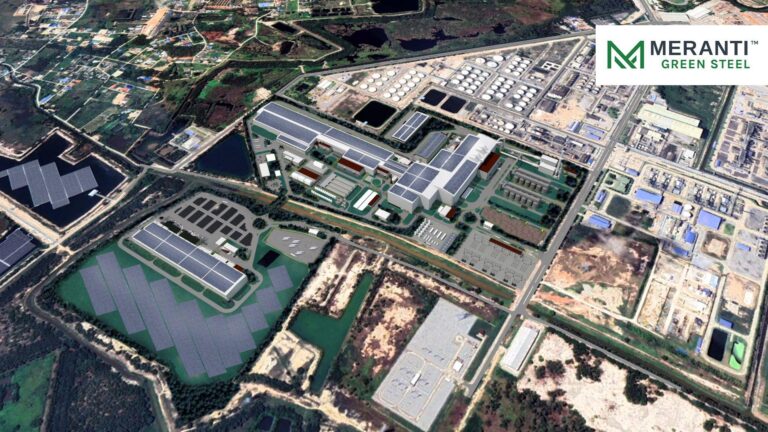
(A preview of Meranti Green Steel’s first green steel plant in Southeast Asia, located near Rayong, Thailand)
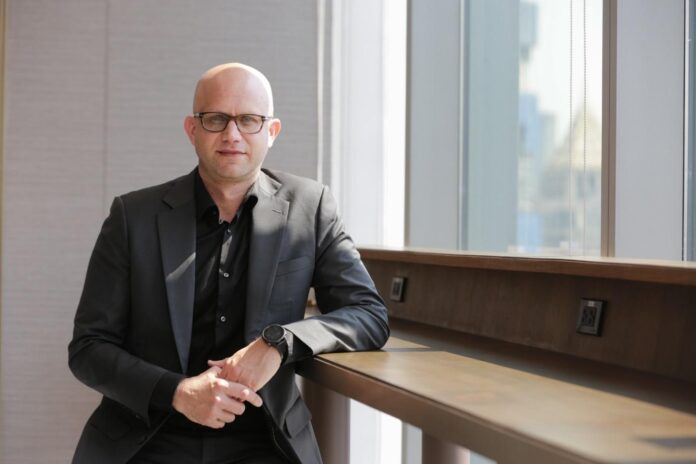
Mr. Sebastian Langendorf, CEO and founder of Meranti Green Steel (Thailand) Co., Ltd., stated in an interview with Matichon that Meranti Green Steel was established to meet the urgent demand for more environmentally friendly steel production. The steel industry is one of the largest contributors to global carbon dioxide (CO2) emissions, accounting for about 7–8%.
The company’s mission is to reduce CO2 emissions and promote eco-friendly steel production. Additionally, Meranti Green Steel emphasizes minimizing nitrogen oxide (NOx) emissions, which are harmful to the environment. The company is committed to becoming a leader in reducing NOx emissions among global steel producers.
Initially based in Singapore, Meranti Green Steel plans to expand its green steel production across Southeast Asia, with the ambition of establishing Thailand’s first green steel factory in the region. The company is also active in the Middle East and Western Australia, participating in green steel supply chain projects in those regions. Although Singapore remains the company’s headquarters, its focus is on the Asia-Pacific market.
Three Factors for Choosing Thailand
Mr. Sebastian highlighted three key factors influencing Meranti Green Steel’s decision to select Thailand as a base for developing clean energy projects and green steel production:
Infrastructure:
Thailand offers the best infrastructure for green steel production in Southeast Asia, including ports, transportation systems, electricity and human resources. The country also has an existing steel industry, making it an ideal foundation for eco-friendly steel production.
Strong downstream steel industries:
Thailand is an attractive location due to its robust downstream steel industries, such as automotive, home appliances, and construction. Thailand consumes 17 million tons of steel annually, with strong domestic demand for locally produced steel.
Historical leadership in steel production:
Thailand was once Southeast Asia’s leading steel producer 25 years ago. Meranti Green Steel sees a great opportunity to promote domestic production to reduce reliance on imports, especially for high-grade steel used in industries such as automotive and home appliances. These high-grade steels are currently imported mainly from Japan and South Korea. The company aims to revive Thailand’s steel industry and make it both sustainable and environmentally friendly.
Mr. Sebastian emphasized that revitalizing Thailand’s steel industry is crucial to maintaining its competitiveness. Without such efforts, downstream industries may relocate to other countries. Thus, modernizing and greening Thailand’s steel industry is essential.
Expanding Green Steel Production in Southeast Asia
Meranti Green Steel’s business model aims not only to help businesses using steel remain competitive but also to support Thailand’s commitments to achieving carbon neutrality by 2050 and net-zero greenhouse gas emissions by 2065, as pledged at COP26 in 2021. The company aligns with the UN’s Sustainable Development Goals (SDGs) and the Paris Agreement to keep global temperatures below 1.5°C.
Meranti Green Steel plans to expand its green steel production across Southeast Asia. Its plant in Thailand is located in the IRPC Eco-Industrial Zone in Rayong Province, part of the Eastern Economic Corridor (EEC) development project. The Thai government aims to transform the EEC into a logistics hub for Southeast Asia, enhancing land and sea trade connectivity through initiatives such as railway system upgrades, the development of Laem Chabang and Map Ta Phut ports, and the expansion of U-Tapao Airport. Once these projects are complete, Thailand will have enhanced global market access.
Collaborations and Goals
Mr. Sebastian revealed that Meranti Green Steel has extensive partnerships both locally and internationally. In Thailand, the company collaborates with GPSC, IRPC, BIG, Danieli Thailand, King Mongkut’s University of Technology Northern Bangkok, and IRPC Technological College in Rayong. Internationally, Meranti has partnerships with companies in Australia, Europe, North America, and the Middle East. Its Offtake Partners in Europe will begin importing steel from Meranti’s new Thailand green steel plant between 2028 and 2029. Additionally, Meranti Green Steel exports hot-rolled steel coils to downstream industries in Vietnam, which are further processed and exported to Europe.
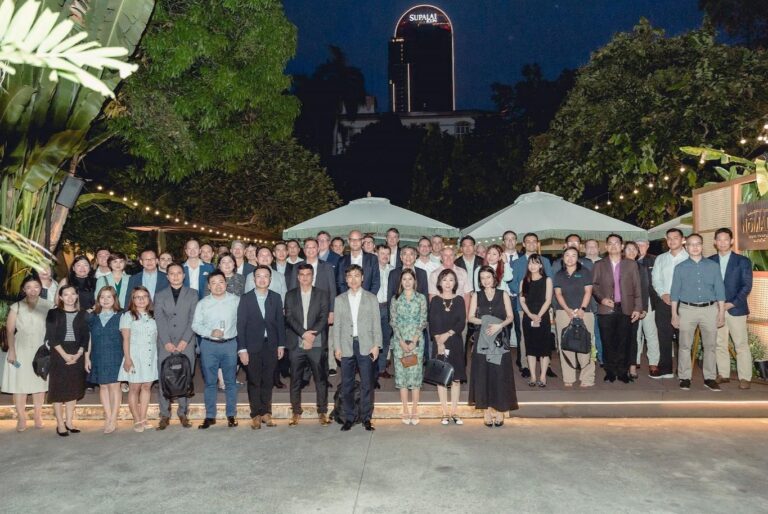
(Meranti Green Steel team members together with their key partners at Partners Appreciation Dinner)
Mr. Sebastian expressed his aspiration for Thailand to become a “global destination” for sustainable investments within a green ecosystem. He stressed the significant economic cost of climate change, estimated by the World Economic Forum to range from $1.7 trillion to $3.1 trillion, affecting future generations. Southeast Asia is already experiencing severe impacts, such as floods and typhoons, with last year being the hottest on record. The concentration of greenhouse gases has risen by 20% in just 30 years, highlighting the urgent need for long-term solutions.
“Our goal is to build the first green steel factory in collaboration with Thailand, Southeast Asia, and the world, upcoming carbon tax in Thailand will create significant economic opportunities, not just costs, for the country”