


































28.3 C
Bangkok
Saturday, July 25, 2026
Home Blog Page 56

New Springtail species discovered in Thailand’s Rama IX Forest

New Springtail species discovered in Thailand's Rama IX Forest

PATHUM THANI — 10 June 2026, A joint research team from the National Science Museum (NSM), Thaksin University, and Prince of Songkla University have discovered a new insect species, “Rama IX Springtail,” at Rama IX Museum’s forest park, marking the latest addition to the world’s known biodiversity.

On Wednesday, Acting NSM director, Suwarong Wongsiri, revealed that researcher team from NSM, Thaksin University, and Prince of Songkla University have discovered a new-to-science insect species called the “Rama IX Springtail” at the Rama IX Museum’s forest park.

The “Rama IX Springtail” belongs to the subfamily Heteromurinae within the family Orchesellidae and has been named Alloscopus ramani sp. nov., after its discovery site in the forest park of the Rama IX Museum building.

Suwarong added that measuring just 1.1 to 1.4 millimetres in length, the Rama IX springtail has a slender body, white coloration patterned with orange-brown bands and eye patches on its head. It resembles Alloscopus tetracanthus (Börner, 1906), a more widely distributed species, but can be distinguished by the unique arrangement of body hairs.

Regarding its distribution, current research data indicates that the species has been found only in Pathum Thani province, Thailand, making it endemic to a single known location in Thailand. Springtails are typically found in moist environments.

Suwarong further stated that more than 9,000 species of springtails have been reported worldwide. They inhabit a remarkable range of environments, from forest floors and tree canopies to volcanic craters and deep cave systems. Seventeen species within the same genus have been reported globally, seven of which have been recorded in Thailand.

“We must give importance to these tiny springtails that are near invisibility to the naked eye, because in reality, springtails serve a monumental role as the “housekeepers” or heroes of the ecosystem,” Suwarong stated. He added, “They break down organic matter into soil nutrients and act as natural regulators, keeping microbes and fungi in check. They are truly vital links that keep the food chain cycling smoothly.”

“The discovery of the Rama IX springtail is more than a taxonomic achievement,” he said. “It is a reminder for us to look back and appreciate the importance of the biodiversity that closest to us. With every step we take on damp ground, these tiny creatures may be hard at work. This collaboration between academic institutions and the museum represents a major stride toward expanding our knowledge, empowering us to understand and protect the smallest of living things, and their homes, to preserve our beautiful ecosystem forever.”

The world’s newest insect, the “Rama IX Springtail,” is now on display in the “Hidden Paradise” exhibition at Rama IX Museum, located within the National Science Museum complex in Khlong Ha sub-district, Khlong Luang district, Pathum Thani province. Visitors can view the exhibit from Tuesday to Friday between 09:30 and 15:00, and from 09:30 to 17:00 on weekends and public holidays.
Advertisement

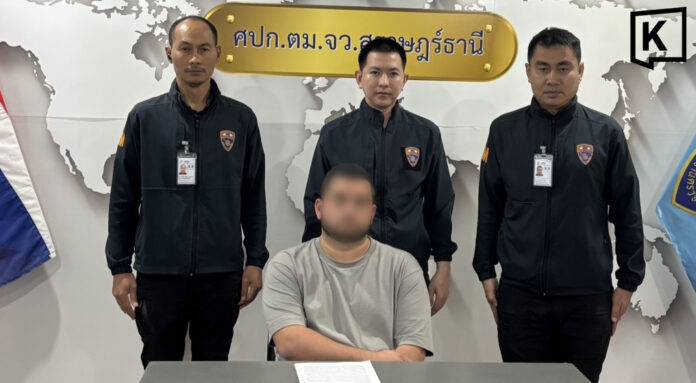
Israeli Suspect Arrested at Samui Airport for Land Nominee Case

Israeli Suspect Held at Samui Airport in Land Nominee Case

SURAT THANI — 10 June 2026, Thai authorities have arrested an Israeli national at Samui Airport on charges linked to an alleged nominee scheme used to acquire land on Koh Phangan through Thai proxy shareholders.

Police have been targeting foreign investors accused of illegally operating businesses, displacing Thai workers or using Thai nationals as nominees to conceal foreign ownership of land. In mid-May 2026, authorities launched an operation dubbed “Crackdown on Foreign Nominee Networks on Koh Phangan,” resulting in 45 arrest warrants. So far, 27 suspects have been apprehended, while efforts continue to locate the remaining 18.

Most recently, investigators from Surat Thani Immigration Police, working with Koh Phangan Police Station, arrested Alisa, a 30-year-old Israeli national, under an arrest warrant issued by the Samui Provincial Court on 21 May 2026.

He is accused of jointly submitting false information to land officials in order to obtain control of land through a company allegedly established using Thai nominee shareholders.

Authorities intercepted Alisa at Samui Airport as he was re-entering Thailand.

Police said Alisa was a shareholder in Alisa Paradise Co. Ltd. He had reportedly left the country before authorities executed a court-authorised search related to the investigation.

Investigators later learned that he was due to return through Samui Airport at about 10:30 on 10 June and moved in to arrest him upon arrival.

During initial questioning, Alisa admitted he was the person named in the warrant, police said.

He allegedly told investigators that he hired an accounting firm to register Alisa Paradise Co. Ltd. and used Thai nationals supplied by the firm as nominee shareholders. The company was then used to register land holdings on Koh Phangan, where he planned to build a private holiday residence in the future.

Police transferred the suspect to investigators at Koh Phangan Police Station for legal proceedings.

Authorities said they would continue expanding the investigation into the wider network, including the accounting firm involved and Thai nationals who allegedly agreed to act as nominees.

Advertisement

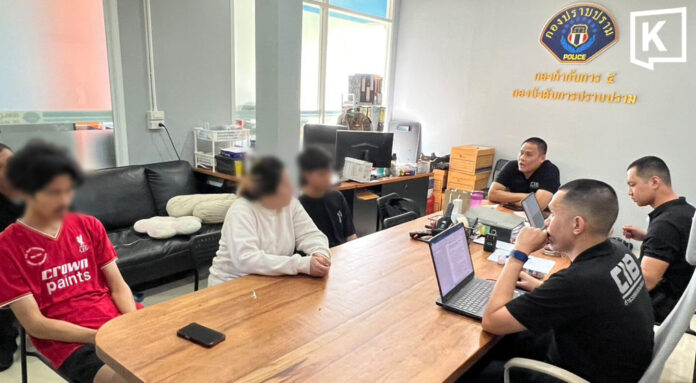
Seven arrested in Thai concert ticket scam linked to 350 X accounts

BANGKOK — 10 June 2026, The Anti Online Scam Centre (AOSC) and the Central Investigation Bureau (CIB) have arrested seven members of an online fraud ring accused of selling fake concert tickets through more than 350 X accounts, deceiving nearly 1,000 victims and causing losses of about 4 million baht ($121,688).

The operation was launched under the direction of Pol. Gen. Thana Choowong, deputy national police chief and director of the Police Cyber Taskforce (PCTF), together with Pol. Lt. Gen. Jirabhop Bhuridej, assistant commissioner-general and deputy director of the PCTF, and Pol. Lt. Gen. Natthasak Chaowanasai, commissioner of the CIB.

They assigned officers from the Technology Crime Suppression Division (TCSD), Crime Suppression Division (CSD) and Huai Khwang Police Station to carry out coordinated raids and arrests.

The suspects were identified only as:

• Thawatchai, 26
• Udomsak, 37
• Sasiprapha, 23
• Thanyaluck, 37
• Rattanakorn, 25
• Jetsupa, 22
• Surakarn, 22

All seven were arrested under Criminal Court warrants on charges including public fraud, fraud by impersonation, importing false information into a computer system, conspiracy to commit money laundering, money laundering, and participation in a criminal association known as Ang-Yee.

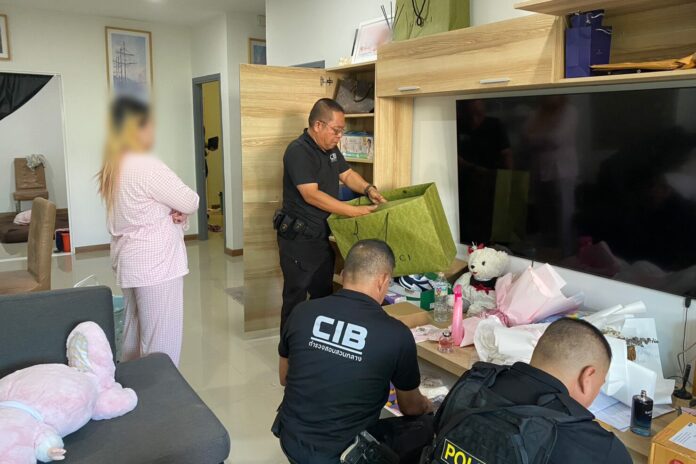
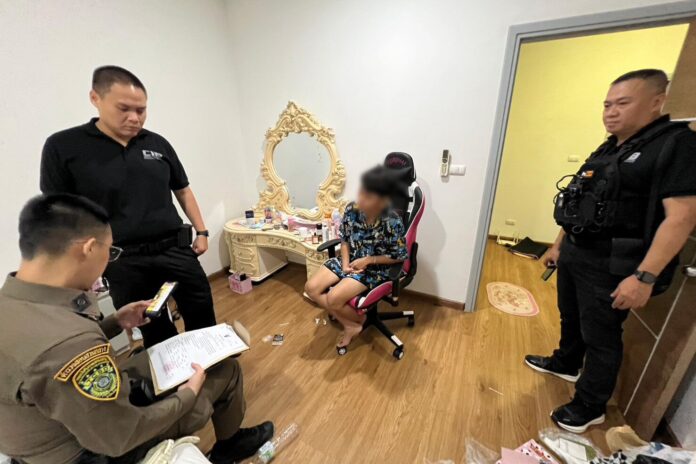
Authorities seized 10 bank passbooks, four mobile phones and one vehicle as evidence. Arrests were made in Bangkok, Nakhon Pathom and Phuket.

The investigation centred on a network accused of fraudulently selling tickets for concerts and fan events featuring both Thai and international artists through X.

2 web 7

Events involving K-pop artists GOT7, Jackson Wang, NCT, DAY6, BLACKPINK, SEVENTEEN, aespa, TWICE, EXO and D.O., as well as international performers ONE OK ROCK and Daniel Caesar, were allegedly used to lure victims. Thai artists whose events were exploited included Cocktail, BUS, Three Man Down, Asanee-Wasan, Nont Tanont, Jeff Satur, Potato, Paradox, Billkin and Tattoo Colour.

Police said concert ticket scams remain one of the most common forms of cybercrime in Thailand. Victims are often fans seeking tickets for highly anticipated concerts, fan meetings and music festivals. The high demand and limited availability of tickets frequently prompt buyers to transfer money before verifying sellers’ identities.

Investigators found that the network operated more than 350 X accounts to advertise non-existent tickets. A total of 739 complaints were submitted through Thailand’s online reporting system, with reported losses exceeding 3.7 million baht ($US 112,000).

According to police, the group maintained a clear division of responsibilities. Members monitored ticket release trends, posted fraudulent listings, communicated with victims, sourced mule bank accounts to receive transfers and withdrew cash to conceal financial trails before distributing the proceeds among members.

After gathering evidence, investigators obtained arrest warrants and launched raids targeting individuals responsible for opening mule accounts, withdrawing funds, researching ticket sales, communicating with victims and procuring bank accounts for the operation.

3 web 4

During questioning, Thanyaluck admitted she had been recruited by friends in early 2025 to withdraw money from bank accounts. She said she was told the funds came from legitimate business activities and was instructed to hand over the cash after each withdrawal.

She told investigators she later realised the group was operating a concert ticket scam after bank accounts were frozen and victims began reporting fraud linked to ticket sales on X. She admitted making more than 50 cash withdrawals involving over 200,000 baht.

Rattanakorn told investigators that members closely monitored upcoming high-demand concerts and events before copying booking confirmations and e-ticket images posted by legitimate sellers on X.

The images were then altered by changing buyer names and seat numbers and adding the group’s own watermarks to make the listings appear genuine before being reposted online.

She also admitted sourcing X accounts with more than 2,000 followers for use in the scams. To avoid detection, account names and user IDs were frequently changed after each operation.

4 web 2

Police said the group also obtained mule bank accounts and edited images of account holders’ identification cards by adding the phrase “For concert ticket sales only” to create a false sense of legitimacy.

Once victims transferred money, the funds were rapidly moved through multiple accounts before being withdrawn and distributed among members. Investigators believe the operation had been active since late 2024.

All seven suspects have been handed over to TCSD Sub-Division 2 investigators for further legal proceedings.

Advertisement

AIS showcases AI-powered IoT solutions at Global Telecom AIoT Summit 2026

Under the topic “AI for All,” AIS took part in the Global Telecom AIoT Summit 2026, a worldwide forum for knowledge sharing and innovation in AI and Internet of Things (IoT). The event, which was organized by the Telecommunications Association of Thailand under the Royal Patronage, brought together executives, technology partners, industry experts, and government representatives from different nations to share viewpoints on digital technologies and AIoT applications across business and industrial sectors.

Picture2 4

At the event, Mrs. Saichon Submakudom, Chief Corporate Communication of AIS, together with AIS executives, welcomed representatives from the public and private sectors, as well as local and international partners attending the summit. where AIS showcased its IoT solutions and digital innovations, demonstrating the potential of digital technologies to enhance operational efficiency across organizations, from smart device connectivity and real-time data management to data analytics that support business decision-making

AIS also shared insights on AIoT applications through a presentation titled “AIoT Ecosystem for Business,” delivered by AIS experts in IoT and Smart Solutions. The session highlighted approaches to leveraging AI and IoT technologies to transform operational data into actionable insights that can help business and organizations enhance efficiency, create business value, and support growth in the digital era.

AIS remains committed to advancing intelligent digital infrastructure and innovative technologies to support Thailand’s transition toward an AI-driven economy, while contributing to the sustainable growth of businesses and industries through digital transformation.

Picture3 4

Advertisement

DE blocks gambling websites ahead of World Cup 2026

DE has blocked over 673,000 gambling-related URLs in the past eight months as part of an intensified crackdown ahead of FIFA World Cup 2026.

Ms.Nan Boontida Somchai, Deputy Minister of Digital Economy and Society, revealed that Mr.Chaichanok Chidchob, Minister of Digital Economy and Society, has directed authorities to strengthen measures against threats to national security and social well-being. The policy includes intensified efforts to combat online crime and block illegal social media accounts, pages, websites, and URLs, particularly those related to online gambling.

Most recently, the Ministry of Digital Economy and Society (DE) has continued blocking social media accounts, pages, and URLs linked to illegal gambling under court orders, while also working closely with digital platforms to remove such content.

During fiscal year 2026, from 1 October 2025 to 31 May 2026, a total of 673,699 gambling-related URLs were blocked over an eight-month period. Of these, 635,717 URLs were blocked under court orders, while 37,982 URLs involving scams and online gambling were removed through cooperation with digital platforms.

In May 2026 alone, authorities blocked 78,796 illegal gambling URLs, including 68,571 URLs under court orders and 10,225 URLs removed through platform cooperation.

Overall, the ministry blocked a total of 787,899 illegal social media accounts, pages, websites, and URLs during the same eight-month period. This included 732,521 items blocked under court orders and 55,378 items removed through coordination with platforms.

“The DE Ministry has intensified efforts to block URLs related to online gambling, particularly during the FIFA World Cup 2026, which will begin on 11 June. Minister Chaichanok has instructed authorities to closely monitor and aggressively block illegal gambling activities,” said Ms.Nan.

She also warned the public to be cautious when sharing content that may violate the law on digital platforms and social media, especially content linked to gambling websites and online scams. Even unintentional sharing of such content could be considered a violation of Section 14 of the Computer Crime Act.

Advertisement

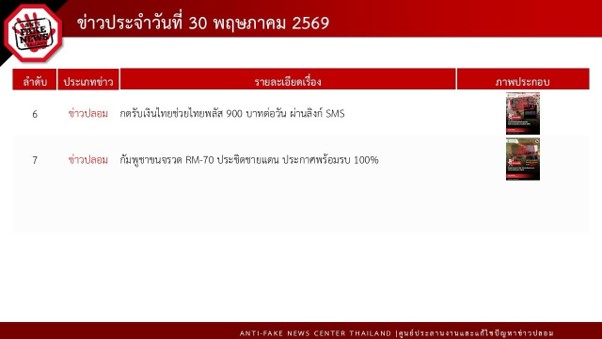
DE warns of fake “Thais Help Thais Plus” SMS

DE Warns of Fake “Thais Help Thais Plus” SMS Offering 900 Baht a Day, with Fraudulent Links Posing Risks to Money and Personal Data.

Mr.Wetang Phuangsup, Ministry of Digital Economy and Society Spokesperson, revealed the latest monitoring results from the Anti-Fake News Center Thailand (AFNC), in line with the policy of Mr.Chaichanok Chidchob, Minister of Digital Economy and Society, to strengthen public awareness of technology-related crimes, fake news, and misinformation.

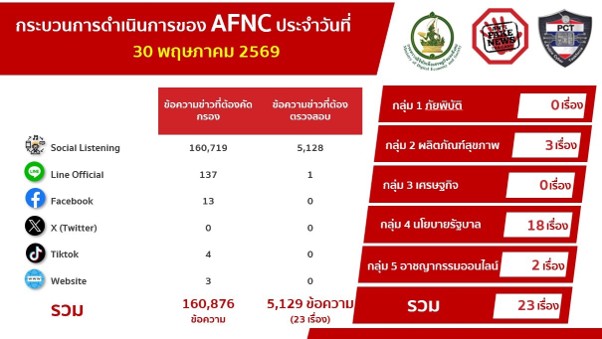
Picture1 2

AFNC monitored a total of 160,876 messages and identified 5,129 messages requiring verification. Most reports came from Social Listening channels, accounting for 5,128 messages, while one report was received through the AFNC Line Official account.

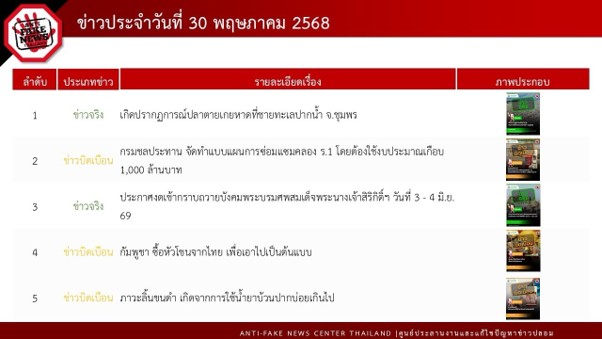
A total of 23 issues were investigated, with verification results received for four cases. Among the seven stories that attracted the highest public interest, there were two true stories, two fake stories, and three misleading stories.

One of the most notable fake stories claimed that people could receive 900 baht per day through the “Thais Help Thais Plus” scheme by clicking a link sent via SMS.

The Ministry of Digital Economy and Society coordinated with the Fiscal Policy Office (FPO) under the Ministry of Finance and confirmed that the SMS message contained a fraudulent link. The ministry therefore warns the public not to click links attached to SMS messages claiming to provide benefits or financial assistance, as scammers may use them to steal personal information or money.

The “Thais Help Thais Plus” scheme was open for registration from 25–29 May 2026, between 6:00 a.m. and 10:00 p.m., exclusively through the “Paotang” application. No other registration channels were provided, and government agencies do not send SMS messages containing registration links.

The ministry remains concerned about the spread of fake news and misinformation on online and social media platforms. Sharing unverified information may cause misunderstanding, financial losses, the misuse of personal data, and wider social impacts.

The public is encouraged to trust and share information only from official sources and to carefully verify facts and website links before believing or forwarding any information.

People who encounter suspicious information or possible fake news can report it or verify information through the Anti-Fake News Center Thailand via Hotline 1111 ext. 87, available 24 hours a day.

Picture2 2Picture3 2

Advertisement

German Tawandang launches custom Foam Art beer experience

BANGKOK — German Tawandang has introduced “Foam Art”, a new serving concept that allows personalised images and messages to be printed directly onto beer foam.

The company says the concept is built on its signature micro-foam technique, which produces a dense, stable layer of foam designed to preserve aroma and enhance flavour. According to German Tawandang, the foam can also serve as a printable surface for customised designs, including photographs, logos, messages and signatures.

Marketed under the slogan “Print Your Moment”, the service uses food-grade edible ink to create personalised beer presentations for celebrations, corporate events and social gatherings.

1 web 2

German Tawandang says it is the first Thai brand to offer large-scale beer foam printing as part of its customer experience programme.

The company has also launched the “Foam Art On Tour” campaign, bringing the concept to venues across Thailand.

More information is available through the German Tawandang Facebook page.

Advertisement

Hundreds lose nearly 1.1 million Baht in BTS ticket booking scam

Hundreds lose nearly 1.1 million Baht in BTS ticket booking scam

BANGKOK — 9 June 2026, June 2026, Hundreds of concertgoers say they were defrauded by an X account offering BTS World Tour ticket-buying services after the operator allegedly deleted the account and disappeared with nearly 1.1 million baht ($33,398) in customer payments.

The account had built a strong following by offering ticket-booking services for major concerts and sharing numerous positive reviews under the hashtag #รีวิวกดบัตรร้านซัมซัม. The service reportedly charged booking fees of 300 to 700 baht per ticket and required customers to transfer deposits and ticket payments in advance.

However, on Tuesday, the day BTS World Tour tickets went on sale, the account was abruptly deleted and customers were unable to contact the operator through either X or LINE. Victims subsequently created a Line Open Chat group to exchange information, gather evidence and trace the flow of funds.

According to information compiled by the group, most payments were transferred to bank accounts registered to a nursing student. The account holder later joined the chat group and claimed she had been paid to allow another person to use her account to receive transfers, insisting she was unaware it was allegedly being used for fraudulent activity.

She said the funds were subsequently transferred to another individual identified as “Praewa” through bank accounts and TrueMoney Wallet transactions. Both the nursing student and Praewa reportedly told victims that they had been working on behalf of another person known only as “Gam” and did not know their actions were connected to an alleged scam.

Many victims remain unconvinced, citing financial links they say connect the individuals involved.

One victim, identified only as “Rin”, said she discovered the service through BTS-related hashtags on X and was persuaded by what appeared to be numerous positive reviews. She paid the service to secure two VIP tickets before realising she had become one of hundreds of alleged victims.

Another victim, “Nui”, said information collected through a shared Google Sheet indicated that at least 145 people had been affected, with total losses approaching 1.1 million baht. Victims also identified multiple receiving accounts at several banks, including Kasikornbank and Krungthai Bank, leading some to suspect the operators used multiple accounts to make transactions more difficult to trace.

Many victims believe the operation was carefully orchestrated. They allege that numerous review accounts and testimonials were created to build credibility and gain the trust of prospective customers. Following the account’s disappearance, many of the promotional review posts and hashtags also vanished, leaving behind warnings from victims and discussions about the alleged fraud.

Affected customers have begun filing complaints with police while collecting transfer records, chat logs and other evidence to support the investigation.

Most recently, “Palm” Nithikorn Boonyokulcharoen, a former People’s Party party-list candidate, joined the victims’ Line Open Chat group and pledged to help pursue the case. He said he would coordinate with members of parliament, relevant parliamentary committees and the media to assist victims and raise public awareness.

Victims are urging anyone affected to preserve transfer slips, chat records, screenshots and other relevant evidence, and to file police reports as soon as possible to help investigators trace the money trail and identify those responsible.

Advertisement

13 hospitalised after eating noodle soup made with mystery powder in Udon Thani

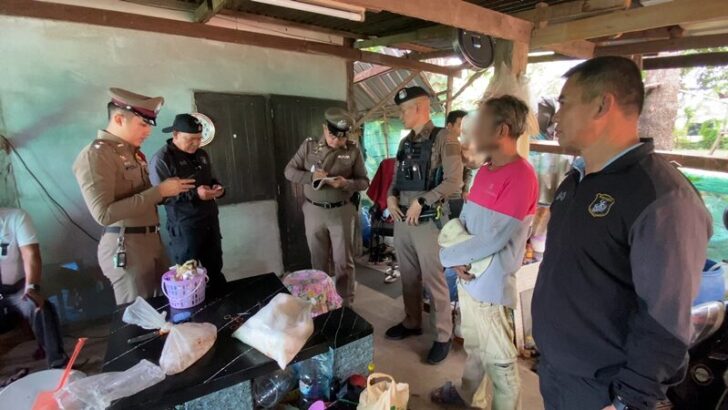
UDON THANI — 9 June 2026, 13 people were hospitalised after eating noodle soup from a roadside restaurant in northeastern Thailand, where a mystery white powder collected from a rubbish pile was allegedly used in place of salt, authorities said.

Police, forensic officers and public health officials inspected the noodle shop in Muang district, Udon Thani province, after customers and members of the owner’s family fell ill on 8 June. Six people remained in hospital on 9 June, while others had been discharged.

Victims reported symptoms including nausea, vomiting, dizziness, breathing difficulties and diarrhoea. Among those affected were the noodle vendor and her daughter.

Provincial public health officials collected food samples, ingredients and other evidence from the shop for laboratory testing. Authorities said the exact cause of the illnesses remains under investigation.

Police said the shop owner, a 70-year-old woman identified as Pan, had been operating the business for six to seven years. She told investigators that she believed the white powder was salt after tasting it and finding it salty.

According to her account, her son had brought her two small bags of the substance several days earlier. After running out of salt on the morning of 8 June, she used the powder while preparing the noodle broth.

“The powder looked old and slightly yellow, but when I tasted it, it was salty, so I thought it was salt,” she said.

Pan said she sampled the broth after cooking and soon developed numbness around her lips, followed by dizziness and diarrhoea. She later sought medical treatment.

She broke down in tears while speaking to reporters, insisting she had never experienced a similar incident during years of running the business.

“If it was poison, it would have harmed everyone in the kitchen as well,” she said. “My family ate the noodles too. I feel very sorry that this happened.”

A relative who helped run the shop said she also tasted the broth before serving customers and later suffered severe vomiting and diarrhoea.

She said the owner’s daughter became seriously ill, suffering convulsions and temporary vision loss before being rushed to hospital by rescue workers.

The owner’s son, 46-year-old Sinchu, admitted bringing the powder to the shop. He told police he had obtained it from a local man and believed it was salt.

Investigators later accompanied him to the man’s home, where large quantities of discarded materials collected for resale were stored. The man, identified only as “A”, told police he regularly gathered unwanted items from rubbish dumps and roadside waste for recycling and had warned Sinchu not to take the bags because they had come from a rubbish pile and were not clean.

2 web 6

Forensic officers seized three bags containing white powder from the property for further examination.

Later on 9 June, the father of a 35-year-old construction worker filed a police report after his son, who had eaten at the shop, was admitted to intensive care.

The father said his son developed stomach pain, breathing difficulties, tremors and a rapid heartbeat shortly after eating noodle soup at the restaurant. He was eventually transferred to Udon Thani Hospital, where he was placed on a ventilator.

Doctors later informed the family that he was no longer in critical condition but would remain under observation for several days.

“I want the restaurant to take responsibility for what happened,” the father said. “Food should be prepared safely and hygienically.”

Results from forensic and laboratory testing remain pending as authorities continue their investigation.

Advertisement

Deadly storm kills 757 flying foxes after century-old tree falls

Deadly storm kills 757 flying foxes after century-old tree falls

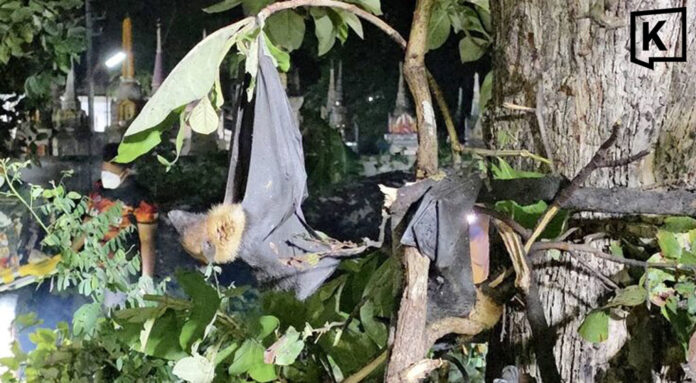
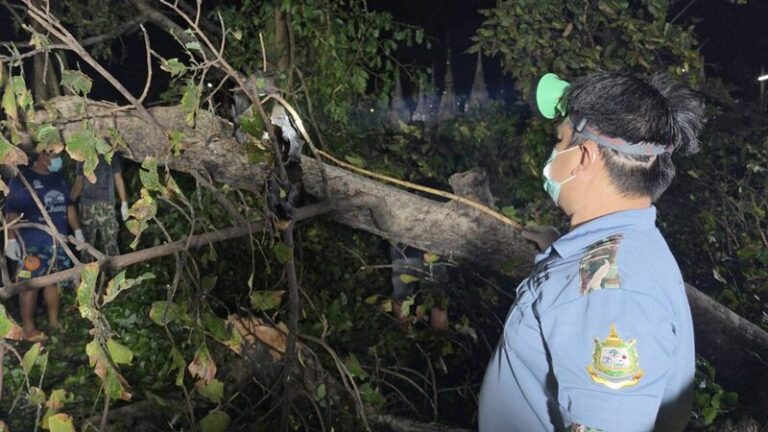
NAKHON NAYOK — 10 June 2026, A powerful storm toppled a century-old Yang Na tree at a temple in Nakhon Nayok province, killing 757 large flying foxes and injuring 47 others, wildlife officials said.

Officials and veterinarians from the Protected Areas Regional Office 1 (Prachin Buri), together with Ruamkatanyu Foundation rescue volunteers, worked to clear the fallen tree at Wat Kradan in Ban Na district after it collapsed during a storm on the afternoon of 9 June.

10 ฝน4 0

The tree, estimated to be more than 100 years old, served as a roost for thousands of large flying foxes and their young. Authorities said strong winds and heavy rain brought the ageing tree down, trapping many of the animals beneath branches and debris before they could escape.

Rescue teams spent more than five hours cutting the fallen tree into smaller sections and searching for surviving animals.

10 ฝน6 0

Officials classified the bats into three groups: those that died, those that were injured and those that remained unharmed. Carcasses were collected for disposal in accordance with Department of National Parks regulations, while injured animals were transported to Wildlife Rescue Centre 1 in Nakhon Nayok for treatment and rehabilitation. Healthy bats were released onto nearby trees within the area.

Preliminary surveys found that 757 flying foxes had died, while 47 injured animals were taken for veterinary care.

10 ฝน5 0

Authorities said they would continue searching the site for additional injured bats and remove any remaining carcasses in accordance with wildlife management procedures.

Wildlife officials also appealed for public donations of cages, medical supplies and other equipment to support the treatment of injured bats at the rescue centre in Nakhon Nayok.

Advertisement

Hot News

LATEST NEWS

Bangkok
light rain
28.3 ° C
28.3 °
28.3 °
82 %
3.6kmh
73 %
Sat
30 °
Sun
33 °
Mon
33 °
Tue
30 °
Wed
29 °