


































36.6 C
Bangkok
Monday, June 22, 2026
Home Blog Page 580

FDA Approves a Second Alzheimer’s Drug That Can Modestly Slow Disease

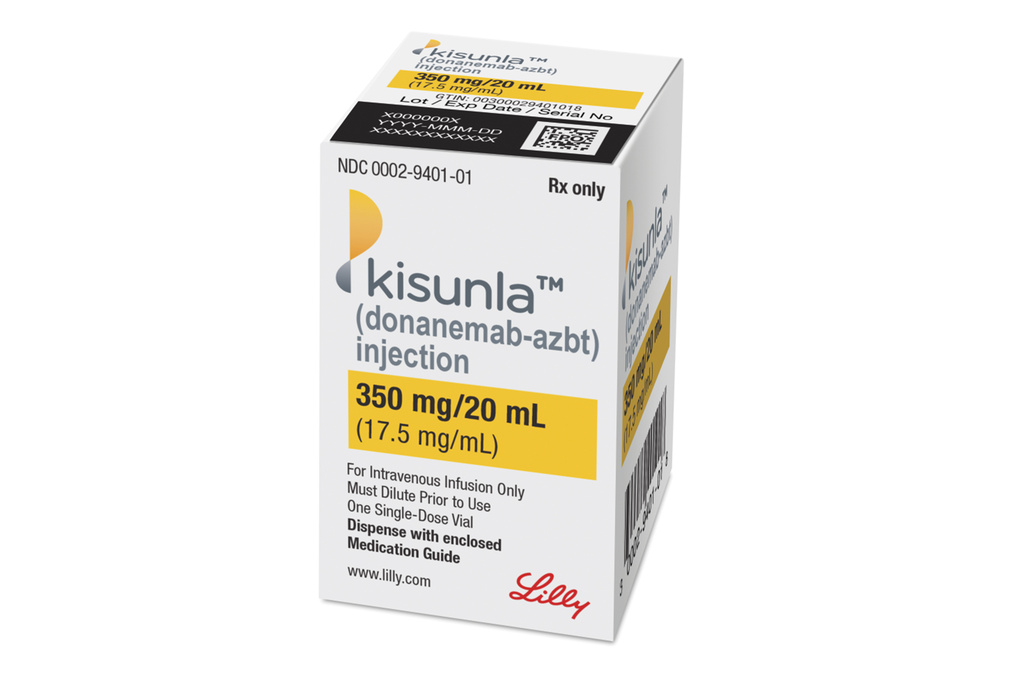
This image provided by Eli Lilly shows the company's new Alzheimer’s drug Kisunla. (Eli Lilly and Company via AP)

WASHINGTON (AP) — U.S. officials have approved another Alzheimer’s drug that can modestly slow the disease, providing a new option for patients in the early stages of the incurable, memory-destroying ailment.

The Food and Drug Administration approved Eli Lilly’s Kisunla on Tuesday for mild or early cases of dementia caused by Alzheimer’s. It’s only the second drug that’s been convincingly shown to delay cognitive decline in patients, following last year’s approval of a similar drug from Japanese drugmaker Eisai.

The delay seen with both drugs amounts to a matter of months — about seven months, in the case of Lilly’s drug. Patients and their families will have to weigh that benefit against the downsides, including regular IV infusions and potentially dangerous side effects like brain swelling.

Physicians who treat Alzheimer’s say the approval is an important step after decades of failed experimental treatments.

“I’m thrilled to have different options to help my patients,” said Dr. Suzanne Schindler, a neurologist at Washington University in St. Louis. “It’s been difficult as a dementia specialist — I diagnose my patients with Alzheimer’s and then every year I see them get worse and they progress until they die.”
AP24184513218097
This image provided by Eli Lilly shows the company’s new Alzheimer’s drug Kisunla. The Food and Drug Administration approved Eli Lilly’s Kisunla on Tuesday, July 2, 2024 for mild or early cases of dementia caused by Alzheimer’s. (Eli Lilly and Company via AP)

Both Kisunla and the Japanese drug, Leqembi, are laboratory-made antibodies, administered by IV, that target one contributor to Alzheimer’s — sticky amyloid plaque buildup in the brain. Questions remain about which patients should get the drugs and how long they might benefit.

The new drug’s approval was expected after an outside panel of FDA advisors unanimously voted in favor of its benefits at a public meeting last month. That endorsement came despite several questions from FDA reviewers about how Lilly studied the drug, including allowing patients to discontinue treatment after their plaque reached very low levels.

Costs will vary by patient, based on how long they take the drug, Lilly said. The company also said a year’s worth of therapy would cost $32,000 — higher than the $26,500 price of a year’s worth of Leqembi.

The FDA’s prescribing information tells doctors they can consider stopping the drug after confirming via brain scans that patients have minimal plaque.

More than 6 million Americans have Alzheimer’s. Only those with early or mild disease will be eligible for the new drug, and an even smaller subset are likely to undergo the multi-step process needed to get a prescription.

The FDA approved Kisunla, known chemically as donanemab, based on results from an 18-month study in which patients given getting the treatment declined about 22% more slowly in terms of memory and cognitive ability than those who received a dummy infusion.

The main safety issue was brain swelling and bleeding, a problem common to all plaque-targeting drugs. The rates reported in Lilly’s study — including 20% of patients with microbleeds — were slightly higher than those reported with competitor Leqembi. However, the two drugs were tested in slightly different types of patients, which experts say makes it difficult to compare the drugs’ safety.

Kisunla is infused once a month compared to Leqembi’s twice-a-month regimen, which could make things easier for caregivers who bring their loved ones to a hospital or clinic for treatment.

“Certainly getting an infusion once a month is more appealing than getting it every two weeks,” Schindler said.

Lilly’s drug has another potential advantage: Patients can stop taking it if they respond well.

In the company’s study, patients were taken off Kisunla once their brain plaque reached nearly undetectable levels. Almost half of patients reached that point within a year. Discontinuing the drug could reduce the costs and safety risks of long-term use. It’s not yet clear how soon patients might need to resume infusions.

Logistical hurdles, spotty insurance coverage and financial concerns have all slowed the rollout of competitor Leqembi, which Eisai co-markets with U.S. partner Biogen. Many smaller hospitals and health systems aren’t yet setup to prescribe the new plaque-targeting Alzheimer’s drugs.

First, doctors need to confirm that patients with dementia have the brain plaque targeted by the new drugs. Then they need to find a drug infusion center where patients can receive therapy. Meanwhile, nurses and other staff must be trained to perform repeated scans to check for brain swelling or bleeding.

“Those are all things a physician has to have set up,” said Dr. Mark Mintun, who heads Lilly’s neuroscience division. “Until they get used to them, a patient who comes into their office will not be offered this therapy.”

___

Advertisement

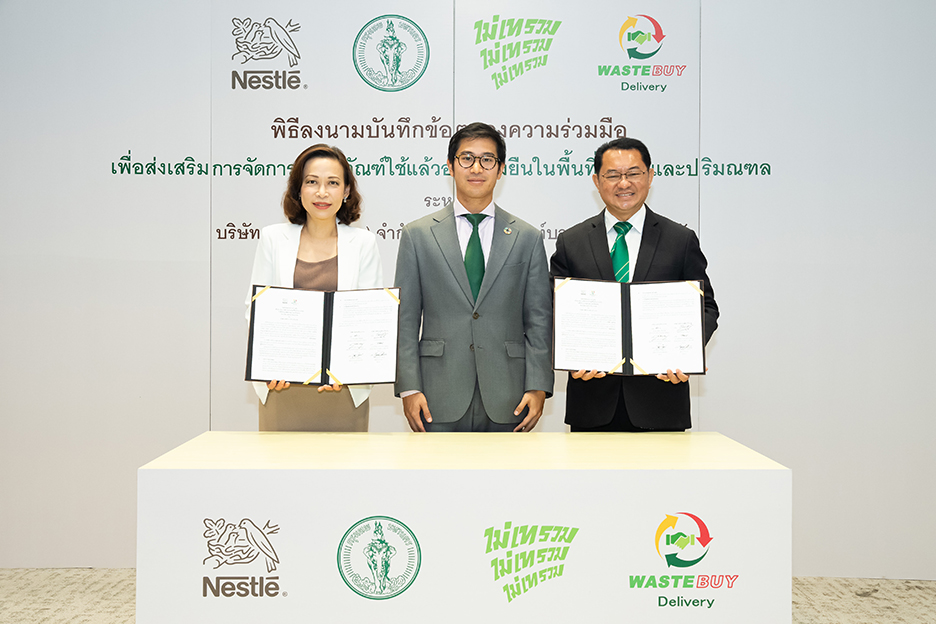
Nestlé and WasteBuy Delivery Launch Sustainable Used Packaging Management

BANGKOK – Nestlé (Thai) Ltd. has signed a Memorandum of Understanding (MoU) to collaborate with WasteBuy Delivery Co., Ltd. in a project aimed at driving sustainable used packaging management, observed by the Bangkok Metropolitan Administration (BMA).

This project supports the BMA’s “No Mixed Waste” policy by organizing waste segregation promotion activities in communities across all districts in Bangkok and vicinity throughout this year.

Consumers can sell their waste in exchange for money and receive Nestlé products to take home. This initiative promotes the recycling of used packaging, ensures efficient waste management, and reduces the use of natural resources to minimize environmental impact, in line with the circular economy concept.

nestle package
Nestlé (Thai) Ltd. has signed a Memorandum of Understanding (MoU) to collaborate with WasteBuy Delivery Co., Ltd. in a project aimed at driving sustainable used packaging management, observed by the Bangkok Metropolitan Administration (BMA).

Ms. Salinla Seehapan, Corporate Affairs Director, Nestlé (Thai) Ltd., said that Nestlé is committed to achieving net zero greenhouse gas emissions by 2050.To reach this ambitious goal, we have implemented a comprehensive sustainability plan with various projects for driving our ‘Good for the Planet’ strategy.

In this collaboration, Nestlé will provide education about used packaging management including UHT, PET plastic bottles, and other packaging types, while also providing products as incentives for communities to segregate waste.

“The collaboration with WasteBuy Delivery supports the BMA’s ‘No Mixed Waste’ policy, ensuring that used packaging enters the proper recycling process. This also promotes efficient resource use and supports the circular economy, driving Nestlé’s commitment in sustainability,” she said.

Mr. Pornphrom Vikitsreth, Advisor to the Governor of Bangkok, stated that the ‘No Mixed Waste’ project to promote household waste segregation for the proper collection and utilization of waste. All 50 districts in Bangkok will be involved in raising awareness and encouraging people to separate food waste, as its volume increases yearly.

“We hope this project will help reduce the budget for waste management and allow funds to be allocated for the development of other areas,” he said.

Mr. Pornphrom added that improper food waste management and the failure to separate dry and wet waste at the source leads to food waste contaminating other waste types. The BMA is delighted that the private sector is participating in promoting waste segregation, allowing used packaging to enter the recycling process efficiently.

This will make the circular use of resources a tangible practice. Previously, the BMA launched a pilot Waste Management Learning Center and introduced the ‘WasteBuy Delivery’ project, a caravan that purchases waste directly from homes, actively promoting waste segregation.

Dr. Itthikorn Srijarnban, CEO of WasteBuy Delivery Co., Ltd. said that his company developed the ‘WasteBuy’ application and created the WasteBuy Delivery project featuring a direct waste purchase service at home. This requires public participation and cooperation from the private sector. So far, the WasteBuy Delivery project has purchased more than 3,300 tons of recyclable waste in Bangkok. This has reduced greenhouse gas emissions by over 3,000 tons of carbon dioxide equivalent, which is comparable to planting more than 300,000 trees.

“Statistics show that, on average, 30% of every 100,000 tons of waste is recyclable. If the BMA can segregate over three million tons of waste annually, it will generate income from selling recyclable waste back to the communities. We hope that this collaboration with Nestlé will help raise awareness and encourage more participation from the communities,” he said.

Advertisement

Stampede at Religious Event in India Kills More Than 100, Mostly Women and Children

Relatives and volunteers carry the bodies on stretchers at the Sikandrarao hospital in Hathras district about 350 kilometers (217 miles) southwest of Lucknow, India, Tuesday, July 2, 2024. (AP Photo/Manoj Aligadi)

LUCKNOW, India (AP) — Thousands of people at a religious gathering in India rushed to leave a makeshift tent, setting off a stampede Tuesday that killed more than 100 and left scores injured, officials said.

It was not immediately clear what triggered the panic following an event with Hindu figure Bhole Baba. Local news reports cited authorities who said heat and suffocation in the tent could have been a factor. Video of the aftermath showed the structure appeared to have collapsed.

At least 116 people died, most of them women and children, said Prashant Kumar, the director-general of police in northern India’s state of Uttar Pradesh, where the stampede occurred.

More than 80 others were injured and admitted to hospitals, senior police officer Shalabh Mathur said.

“People started falling one upon another, one upon another. Those who were crushed died. People there pulled them out,” witness Shakuntala Devi told the Press Trust of India news agency.

Relatives wailed in distress as bodies of the dead, placed on stretchers and covered in white sheets, lined the grounds of a local hospital. A bus that arrived there carried more victims, whose bodies were lying on the seats inside.

AP24184555714547
Relatives mourn next to the bodies of their relatives outside the Sikandrarao hospital in Hathras district about 350 kilometers (217 miles) southwest of Lucknow, India, Tuesday, July 2, 2024.  (AP Photo)
AP24184567386263
Relatives mourn next to a body lying covered at the Sikandrarao hospital in Hathras district about 350 kilometers (217 miles) southwest of Lucknow, India, Tuesday, July 2, 2024.  (AP Photo/Manoj Aligadi)

Deadly stampedes are relatively common around Indian religious festivals, where large crowds gather in small areas with shoddy infrastructure and few safety measures.

Police officer Rajesh Singh said there was likely overcrowding at the event in a village in Hathras district about 350 kilometers (220 miles) southwest of the state capital, Lucknow.

Initial reports suggested that over 15,000 people had gathered for the event, which had permission to host about 5,000.

Indian Prime Minister Narendra Modi offered condolences to the families of the dead and said the federal government was working with state authorities to ensure the injured received help.

Uttar Pradesh’s chief minister, Yogi Adityanath, called the stampede “heart-wrenching” in a post on X. He said authorities were investigating.

In 2013, pilgrims visiting a temple for a popular Hindu festival in central Madhya Pradesh state trampled each other amid fears that a bridge would collapse. At least 115 were crushed to death or died in the river.

In 2011, more than 100 Hindu devotees died in a crush at a religious festival in the southern state of Kerala.

______

Advertisement

British Teacher in Phuket Alleges Tailor Slapped Her, Refuses Compromise

The British woman shows the red mark on her left cheek where she was allegedly slapped.

PHUKET — A British female teacher at an international school filed a complaint against a famous suit tailor for slapping her in front of her children. When the police suggested reconciliation, she refused and requested the police to pursue the case to the fullest extent.

Mrs. Bed, a British national and teacher at an international school in Phuket province, accompanied by an interpreter, filed a complaint with Police Lieutenant Colonel Kittipong Nupheng, Investigation Inspector at Choeng Thale Police Station, Phuket.

She stated that she had entered the tailor shop before noon on July 1 to order a dress. There was a price negotiation with the shop owner that didn’t go well, leading to an argument. Subsequently, the shop owner slapped her face, causing her to fall to the floor in front of her children.

Later, the officials contacted the British woman’s counterpart, Mr. Daeng Phanupong, and arranged for them to meet and reconcile. However, Mrs. Bed insisted on not settling and wanted to proceed with legal action against Mr. Daeng.

The officials then summoned Mr. Daeng for questioning. He informed them that he would meet with the investigating officer on July 4 as he was currently traveling upcountry, showing no signs of fleeing. The police will therefore interview him on the appointed date before reassessing the case.”

__________

Advertisement

Thailand to Suspend Arrival Duty-Free Shops to Boost Domestic Spending

Duty-Free
Duty-free shops at Suvarnabhumi Airport

BANGKOKThe Cabinet meeting on July 2 acknowledged the approach to promote Thailand as a center for tourism and spending, as proposed by the Ministry of Finance. This includes suspending the use of tax benefits for bonded warehouses for arrival duty-free shops at the international airports

Based on the current situation assessment, travelers entering the Kingdom through international airports can purchase duty-free goods up to 20,000 baht in total value. This has led to decreased domestic consumption and shopping.

The Ministry of Finance is considering the appropriateness of revoking permits for establishing bonded warehouses for arrival duty-free shops, including the duty exemption for goods purchased from these shops.

This aims to promote domestic consumption and circulation of goods within the country, enhancing economic efficiency and added value.

Currently, there are three legal entities authorized to establish arrival duty-free shops in 8 international airports nationwide, with total sales of 3 billion baht ($81.5 million). All three entities are willing to suspend the use of tax benefits for arrival duty-free shops in line with government policy until the policy is revoked.

Duty-Free
Duty-Free

The benefits and impacts of suspending arrival duty-free shops for one year are expected to increase foreign tourists’ spending in the country by an average of 570 baht ($15.5) per person per trip.

Simultaneously, this change is expected to result in new circulating funds of up to 3,460 million baht ($94 million) per year for general retailers and tourism-related businesses, creating opportunities and positively impacting production, investment, and employment.

For government revenue, money will circulate more widely among retailers, expanding the tax base and value-added tax collection. It’s estimated that this will lead to a 0.012% annual increase in Gross Domestic Product.

Advertisement

Thai Officials Order Removal of Indian Peacock to Protect Green Peafowls

Indian Peacock
A photograph of an Indian peacock species captured in Huai Kha Khaeng Wildlife Sanctuary has caused great concern among Thai National Park Department officials.

BANGKOK — Thailand’s National Park Department officials have been ordered to eliminate a white ‘Indian peacock’ and a suspected hybrid peacock, which have been foraging among a flock of about 10 Thai peacocks within the Huai Kha Khaeng Wildlife Sanctuary, near the Pong Chang Pueak wildlife observation tower (also known as the Peacock tower).

This order comes after attempts to capture them alive have been unsuccessful.

Attapon Charoenchansa, Director-General of the Department of National Parks, Wildlife and Plant Conservation, revealed to Matichon Online that if these two peacocks continue to breed, they will compromise the genetic integrity of the Thai peacocks in Huai Kha Khaeng, which are already in a near-extinct status.

Peacock
A photograph of a hybrid peacock species captured in Huai Kha Khaeng Wildlife Sanctuary has caused great concern among Thai National Park Department officials.

“The general public might see this as a minor issue concerning just one peacock, but it has significant implications for large-scale ecological changes. Experts have suggested that if we can’t capture them, we should euthanize or kill them outright. This is a practice followed in many countries. I don’t want to do it, but we must consider the potential negative consequences first,” Attapon stated.

However, officials within the Huai Kha Khaeng Wildlife Sanctuary estimated that the Indian peacock species that had been photographed had likely already been killed by predators.

Phermsak Kanittachart, a Forest Technical Officer and Head of Huai Kha Khaeng Wildlife Sanctuary, reported from observations at the Peacock Tower near Pong Chang Pueak:

The green peacock suspected to be a hybrid has not been seen since June 23, and the white Indian peacock has not been observed since June 28.

Patrol officers conducted a survey of the surrounding area to search for both peacocks. They found feather fragments of the white Indian peacock along with blood traces, but no carcass was discovered. It is suspected that the peacock may have been attacked or eaten by an unknown predator. When officials had previously observed the white Indian peacock, it appeared to be less cautious than the Thai peacocks, potentially making it an easy prey for predators.

The Huai Kha Khaeng Wildlife Sanctuary is in Uthai Thani and Tak provinces, Thailand. The park was established in 1974 and is part of the largest intact seasonal tropical forest complex in mainland Southeast Asia.

Coupled with the Thungyai Naresuan Wildlife Sanctuary, it was declared a World Heritage Site by the United Nations in 1991. Together, the two sanctuaries occupy 622,200 hectares.


The green peafowl (Pavo muticus), also known as the Indonesian peafowl, is a species native to Southeast Asian and Indochinese tropical forests. This bird, which serves as Myanmar’s national symbol, was once widespread throughout Southeast Asia. However, today only a few isolated populations survive, primarily in Cambodia and neighboring areas of Vietnam.

_______

Advertisement

Factorytalk Boosts Thai Pharma with Advanced eCTD Submission System

BANGKOK – Factorytalk, a leading digital solutions provider and consultancy for the life sciences industry, is thrilled to announce the successful upgrade and enhancement of Thailand’s electronic Common Technical Document (eCTD) submission management solution.

Since 2013, Factorytalk has been working with the Thai Food and Drug Administration (FDA) to digitally transform Thailand’s submissions away from paper and manual processes by bringing in the latest technology. The solution streamlines the submission process, and centralises the administrative functions while adhering to eCTD requirements. 

Regulatory submissions have always been a daunting yet compulsory process for the life sciences industry, the efficiency of which has significant impact on the overall pipeline of medical products introduced to the country.

Thai FDA first introduced eCTD submissions in Thailand with cooperation with Factorytalk to alleviate the problem, and through this major update, we aim to lessen the complexity and time it takes to register pharmaceutical products. The project prioritizes tackling three critical pain points to the benefit of all parties involved. 

image3

Firstly, reducing the length of the submission review process overall, which was longer than desired. The new digital workflows implemented reduce manual and redundant processes, and an upgraded eCTD review tool has been made more accessible to alleviate previous constraints and bottlenecks. As a result, the industry can expect a significant reduction in the time submissions take pending approval. 

Secondly, to improve visibility. Not only for the industry but also for the regulator themselves. Since there are several tools required to manage the whole Regulatory Management System, all systems are now integrated to ensure communication among the tools is done in real-time, without having to rely on manual data management. As the data is now synchronised, administrators can track progress from a centralized interface. Meanwhile, the industry will get a notification automatically whenever their submission’s status changes. 

And the last (but not least) pain point, improving accessibility to the eCTD submission publishing tool itself. After listening closely to industry feedback highlighting frustrations with the queuing time to access submission stations, the number of stations has been doubled providing an immediate solution, with other long-term improvements initiated and in the pipeline. 

Factorytalk’s aim is to help eradicate the reliance of paper from the whole life sciences industry. As relying on paper prevents companies transforming digitally towards Industry 4.0 and capitalizing on the improvements real-time data, process automation, and data driven decision making brings. As well as improving environmental sustainability by reducing waste from physical paper, printing, and the associated operational inefficiencies. 

“Factorytalk’s mission in regulatory submissions: empowering both regulatory bodies and industry players to navigate drug registration seamlessly. Our firm belief in the advancement towards eCTD submissions align with the proven success of global standards over the past two decades.” said Mr. Teerapong Cheepchol, one of Factorytalk’s board of directors. 

image2 2

“The fact the Thai FDA uses the same solution trusted by regulators around the world including the US, Canada, EU, China, Australia, etc. ensures that the solution comes with best-in-class data security and integrity, as well as a solid development roadmap to further improve the submission process in the next 5 – 10 years such as eCTD template 4.0 that comes with much greater flexibility compared to the current version (3.2) that could potentially open up a lot of possibilities; or Substance, Product, Organisation, and Referential (SPOR) data management,” Mr. Teerapong added. 

Factorytalk is currently providing a submission tool and services to almost 40 companies in Thailand to prepare and publish eCTD submissions. As Mr. Teerapong mentioned, Factorytalk is looking for more opportunities to support both industry and the regulatory body. This year, Factorytalk is planning to hold free training sessions on how to use the latest version of an eCTD submission tool, as well as developing more packages that could potentially fit all businesses. 

The solution Factorytalk provides is used by thousands of organizations, regulators included. Their client can ensure that confidential data will be managed properly. 

“We have been working with our life science customers for two decades. Therefore, we are committed to leverage our experience for any deliverables. Nevertheless, our growth-mindset keeps us being innovative and striving for improvements to meet the evolving needs of the industry,” Mr. Teerapong concluded. 

For more information about Factorytalk, please visit the company’s website https://www.factory-talk.com/

About Factorytalk 

Factorytalk are a leading digital solutions provider and consultancy for the GxP regulated life sciences industries, including pharmaceuticals, biotech, cell and gene therapy, medical device, herbal medicines, health tech, cosmetics, and F&B. Factorytalk has a team of experts operating across Asia, Europe, and the US from their offices in Bangkok, Thailand, and Manchester, UK.

The company engages with over 200 customers worldwide and has offered validation, consulting services, and systems implementation for GxP-regulated manufacturing companies, government organizations, and regulators

Advertisement

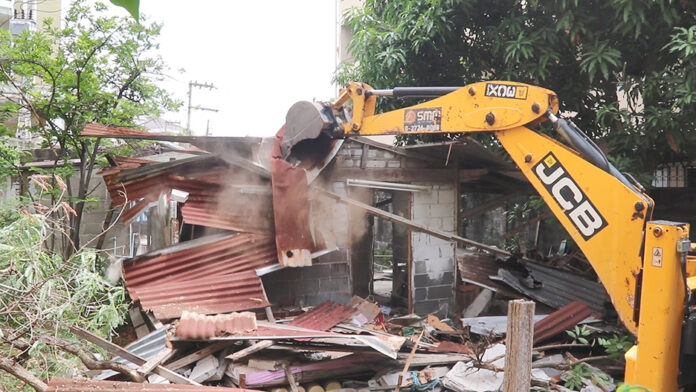
Pattaya Reclaims 30-Year Encroached Public Land, Demolishes Structures

Pattaya City officials begin demolishing structures encroaching on public land in Phothisan Soi 6 from July 1, 2024.

PATTAYA  — After the June 30 deadline for compensation to affected residents, Pattaya City has reclaimed public land and demolished structures encroaching on public right-of-way for over 30 years.

Pattaya Mayor Poramet Ngampichet directed relevant local officials to follow up on progress in reclaiming public land in Phothisan Soi 6 since July 1. He explained that the city of Pattaya has dispatched officers to remove structures encroaching on public land for 30 years, including houses and rental buildings, according to legal procedures.


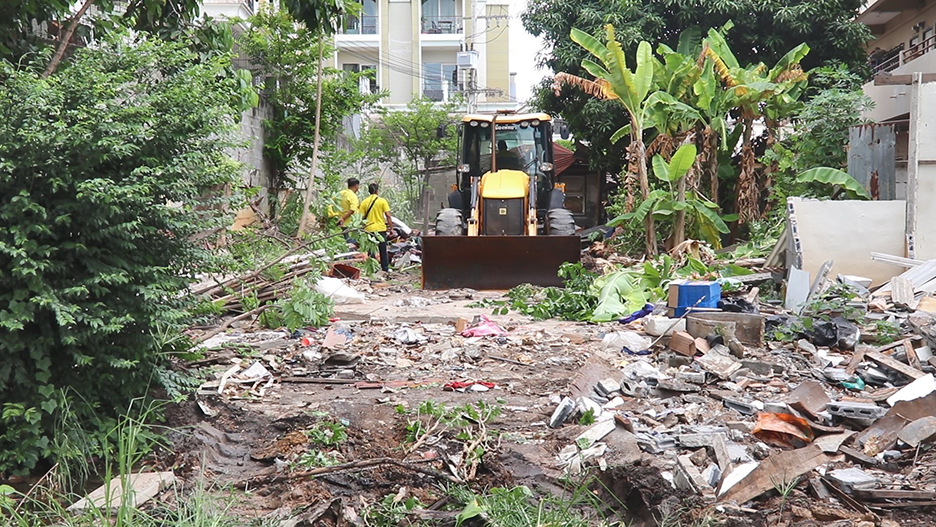
The process has been completed, and housing has been organized for 20 residents who were occupying public land. Of these, 18 residents have agreed to relocate. The Public Works Department has already dismantled the buildings and leveled the land in preparation for road construction.

Only two residents, who live at the beginning and end of the area, have refused to move. The city of Pattaya will begin further negotiations. If the residents continue to refuse to move, strict legal action will be taken.

The public land in Phothisan Soi 6 is part of a project to build a road to relieve traffic on Pattaya 3rd Road so that residents can share the area. This section extends approximately 300 meters from the Phothisan intersection to Phothisan Soi 6 and another 150 meters from this area to Phothisan Soi 8.

pattaya demolish3

Regarding concerns that Pattaya City is only targeting poor residents and not the wealthy, such as in the case of reclaiming the land from Sukavadee House, Mayor Poramet clarified that Pattaya City has consistently worked to reclaim the public land from Sukavadee House, with some structures already being dismantled.

The areas that have been quickly reclaimed are those built directly on public roads, and the same legal action applies to other encroachments on public land.

“The actions to reclaim public roads and land are not based on the wealth of individuals, but on the maximum benefit to Pattaya City and its citizens,” Mayor Poramet said.

He explained that reclaiming public roads benefits the community by opening up more travel routes for residents and tourists, which in turn improves traffic efficiency in Pattaya.

______

Advertisement

Potash Mining Project Sparks Tearful Protest at Cabinet Meeting in Korat

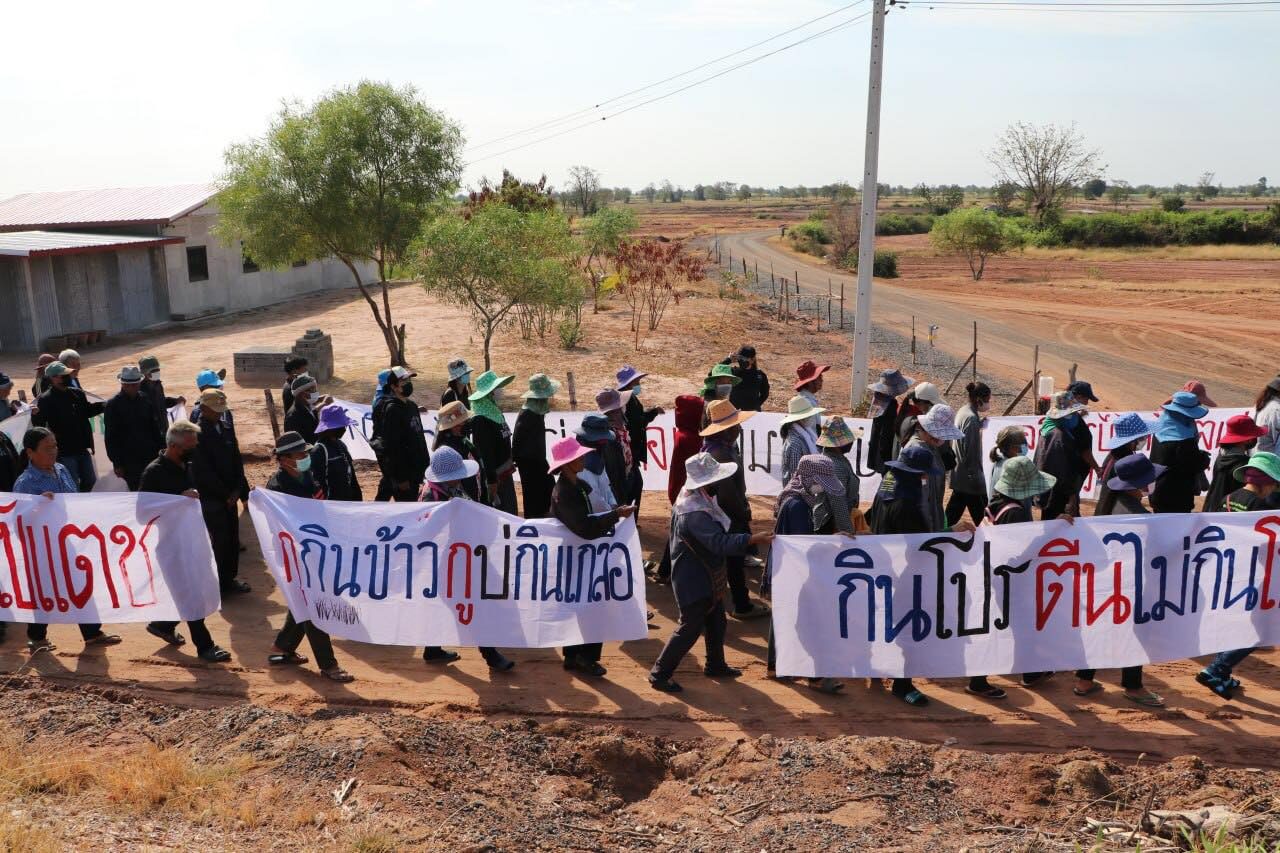
"The first bag of your fertilizer comes with people's tears," said a member of the group campaigning against potash mining in Nakhon Ratchasima Province on July 2, 2024.

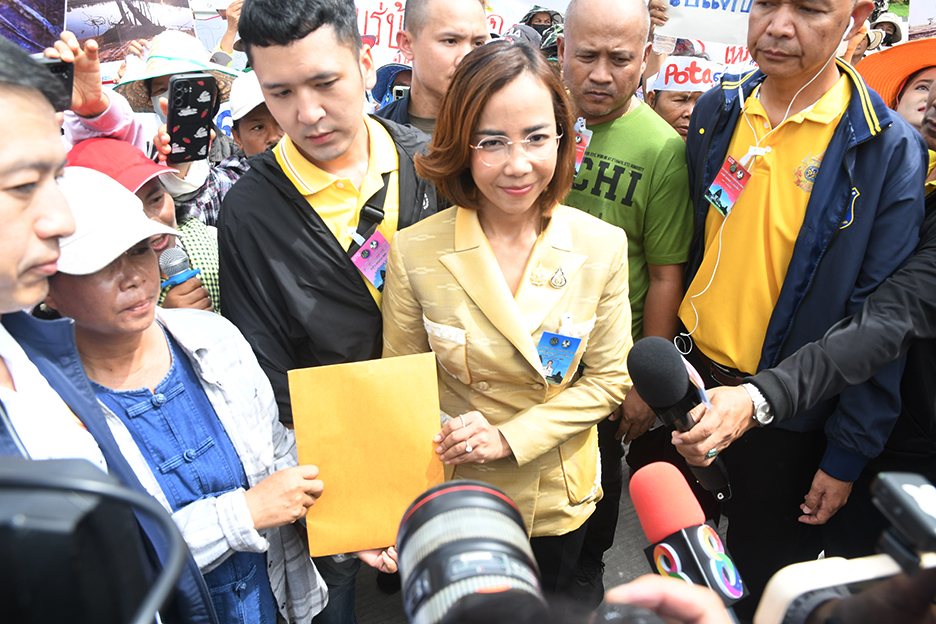
NAKHON RATCHASIMA“The first bag of your fertilizer comes with people’s tears,” said a member of the group campaigning against potash mining to Industry Minister Pimpatra Wichaikul as she handed over a letter opposing the project to the government.

This protest took place in front of the Rangsrit Auditorium of Nakhon Ratchasima Rajabhat University, the venue of the mobile cabinet meeting in Nakhon Ratchasima province on July 2, 2024.

The protesters announced that they would burn the letter at the entrance used by ministers and the prime minister if the prime minister did not come out to receive their letter.

This prompted officials to change the entrance for the Prime Minister and other ministers, while Pimpatra herself came out to receive the protest letter.


The protesters said Prime Minister Srettha Thavisin wanted to push ahead with the potash mining project, citing the need to offset 800,000 tons of imports. However, it was discovered that the government had already approved mining of more than 3 million tons. Government officials and private companies have been seeking mining concessions in Non Thai, Non Sung, and Mueang districts.

The demonstrators then laid out salt from the rice fields affected by potash mining in front of Pimpatra and proclaimed three demands:

  1. Revoke the second version of the Mineral Management Master Plan in relation to potash as it does not comply with the Mineral Act B.E. 2560 (2017) where there is no surveying and no zoning for mining areas.
  2. Allow exploration and mining of potash in areas not zoned as mining areas.
  3. Review the environmental impacts of potash mining development in light of changing conditions and demand for potash.

“The goal of mining has shifted from reducing imports to focusing on exports. The previous environmental impact assessment was carried out hastily, disregarding the balance of local livelihoods and adequate consideration of environmental and health impacts,” the statement reads.

Previously, on 7 November 2023, Prime Minister Srettha Thavisin ordered the operations of three potash mines with granted concessions in three areas: ASEAN Potash Chaiyaphum Co., Ltd. in Bamnet Narong District, Chaiyaphum Province; Thai Kali Co., Ltd. in Dan Khun Thot District, Nakhon Ratchasima Province; and Asia Pacific Potash Corporation Limited in Udon Thani Province.

This has caused concern among the Khon Rak Ban Kerd Dan Khun Thot Group, the local residents affected by the potash mining projects, who have called for a suspension of mining operations.

anti potash2
Industry Minister Pimpatra Wichaikul receives a letter opposing the Potash Mining Project from protesters on July 2, 2024.

The protest representatives called on the government to immediately address the impact of potash mining in the Dan Khun Thot district of Nakhon Ratchasima province. Ignoring the problem or delaying action would indicate the Ministry of Industry’s inability to regulate and effectively manage mining.

“If the government continues to fail to address the problems, it shows that it does not really value people’s quality of life and is only focused on GDP figures. The continuation of potash mining in Isaan could irreversibly damage the region,” said the group’s representative.

After receiving the protest letter from the Minister of Industry, one protester said in a trembling voice and tears, “The first bag of your fertilizer comes with our tears. Take us with you instead; the first bag of your fertilizer is right here.”

antipotash5
The Khon Rak Ban Kerd Dan Khun Thot Group, local residents affected by potash mining projects, protest in January 2024 calling for a suspension of mining operations.

Minister Pimpatra stated that since the protests in 2019, several committees have been established to investigate the impacts on the public, both at the provincial and departmental levels. Multiple on-site fact-finding missions have been conducted. At this stage, the investigation results cannot conclusively determine whether the various impacts are caused by the potash and rock salt mining project of Thai Kali Company Limited, which has held a mining concession since 2015.

Currently, Nakhon Ratchasima province has appointed a new working group, focusing on the participation of community representatives in the area to examine the demands and impacts of the 2nd Mineral Management Master Plan. The review of the Mineral Management Master Plan will begin again in 2025, incorporating various demands and proposals regarding the Strategic Environmental Assessment (SEA) into the plan’s revision.

According to an academic study by Suwit Kulabpong, a consultant for the Udon Thani Environmental Conservation Group, the construction of potash mines has a significant impact on the environment and local residents.

The main issues include problems with groundwater, competition for water resources, the high potential for salt leakage and the spread of salt dust within a 25 square kilometer radius of the mine. The continuation of the mining project may not be worth the associated environmental and social problems.

_______

Advertisement

Thailand Aims to Boost Tourism in Second half of 2024 to Hit the High Target

Koh Samui

BANGKOK — Thailand has seen an enormous number of foreign tourists in the first half of the year (January 1 – June 16, 2567), substantially boosting the country’s revenue by around 1.1 trillion baht ($30 billion).

Regarding this year’s tourism revenue goal of 3.5 trillion baht ($95 billion), with 36.7 million foreign tourists expected, Minister of Tourism and Sports Sermsak Pongpanich expressed serious concerns about reaching the target.

The Ministry, therefore, implemented the tourism policy of the Tourism Authority of Thailand (TAT) to stimulate the market in the latter half of the year, particularly during the peak season, to generate an additional 2.4 trillion baht in tourism revenue and attract an extra 21.7 million foreign tourists to Thailand.

Up to 3 trillion baht is possible

The Chairman of Smart Tourism and Chairman of the Tourism Council of Thailand (TCT), Kitti Pornsiwajkit, who is also a member of the Tourism Authority of Thailand (TAT), estimated that Thailand has already reached the target of 17.5 million tourists in the first half of the year (January 1 – June 30, 2567). However, looking at the latter half of the year, Thailand’s tourism situation remains highly challenging, potentially leading to three scenarios:

  1. Worst Case: estimated total revenue of 2.7 trillion baht ($73 billion), with 36 million foreign tourists generating 1.7 trillion baht and 200 million domestic Thai tourists contributing 0.9 trillion baht.
  2. Base Case: estimated total revenue of 3 trillion baht ($81.5 billion), with 38 million foreign tourists generating 1.9 trillion baht and 220 million domestic Thai tourists contributing 1.1 trillion baht.
  3. Best Case: estimated total revenue of 3.5 trillion baht ($95 billion), with 40 million foreign tourists generating 2.24 trillion baht and 229 million domestic Thai tourists contributing 1.26 trillion baht.
Tours
Tourists photograph the beauty of Wat Arun’s prang, a landmark of Bangkok, in the evening on June 15, 2024 (Khaosod Photo/ Narin Niempradit)

President of the Tourism Council of Thailand (TCT) Chamnan Srisawat informed “Prachachat Business” that the TCT estimated total revenue could reach 2.7 trillion baht in the Worst case scenario, with 36 million foreign tourists possible. In the Best case scenario, revenue could reach 3 trillion baht with 38 million tourists, and the domestic Thai tourism market could see 220 million trips per year.

6 Strategies to Pump ฿3.5 Trillion

Chamnarn stated that the Tourism Authority of Thailand (TAT) is confident that global demand will drive the country’s tourism sector to generate up to 3.5 trillion baht as the government targets. Therefore, he proposed six strategies to drive the tourism sector towards the Best Case scenario, achieving revenue of 3.5 trillion baht.

1. Establish the Thailand Team by proposing that TAT use its 29 international offices, collaborate with knowledgeable partners in every market, and accelerate marketing activities aggressively during the post-pandemic recovery phase.

This seeks to quickly draw 4 million tourists and strengthen marketing activities in potential markets such as Central Asia, India, China, and Chinese descendants in Singapore, Hong Kong, ASEAN, and Australia, in order to boost the duration of stay and expenditure per trip.

“Currently, Central Asian tourists spend an average of 100,000 baht per person per trip. Accelerating the development of Arabic language infrastructure and providing training to offer information in the medical and wellness sectors will attract quality tourists. Including additional activities to improve tourist spots, health tourism, sports tourism, cultural tourism, etc., or enabling Thailand to become a world-class retirement destination, will extend the length of stay and boost tourism revenue,” he said.

indian visitors
Indian tourists participated in the colorful Festival of Colours (HOLI) Pattaya Thailand at Pattaya Klang Beach on March 11, 2023.

2. Use airport hubs, buses, and tour companies as distribution channels to disperse tourists to various destinations to meet the policy of promoting tourist cities. The government is requested to help address issues and obstacles, such as developing public infrastructure and repairing and constructing tourist attractions, to ensure that local tourism products are ready for sale in both domestic and international markets.

3. Urgently accelerate the “Thai Market to Travel Thailand” campaign during this third quarter. For example, implement a nationwide bus tour project across all regions for three months in this third quarter, such as supporting 5,000 buses at 10,000 baht per bus. Implement a government tour project across Thailand, helping civil servants to travel on regular days or local Thai travel projects to increase tourism income during the low season.

4. Request the government to allocate a budget from the Digital Wallet project to support the tourism sector with 20% or 100,000 million baht.

5. Repair and construct tourist spots to improve the capabilities of personnel and entrepreneurs to ensure that tourists have a good experience at every step of the customer journey and become a springboard for the tourism sector to grow strong and sustainable in 2025 and following years.

6. Enhance the long-term competitiveness of tourism to push the Travel and Tourism Development Index, or TTDI, from 47th to 25th in the world, using tourism funds to repair and build infrastructure and tourist spots, upgrade standards, security, clean bathrooms, signposts, in both public and private sectors for balanced and sustainable growth.

pattaya cafe2
Pattaya

“In the past, the government has given much attention and support, pushing for numerous mega-events, encouraging foreign film production, granting visas to 93 countries and regions, and encouraging secondary cities to become popular travel destinations through tax measures. However, I would like you to consider the five proposals from the Tourism Council. If these can be implemented, this year’s target of 3.5 trillion in revenue is certainly achievable,” Chamnarn said.

4 Countries Set to Surpass 2019 Visitor Numbers

President of the Association of Thai Travel Agents (ATTA) Sittiwat Chivaratnaporn stated that the number of international tourists entering Thailand from January 1 to June 23, 2024, has reached almost 17 million. This represents the halfway point towards the target of 35 million. It is expected that more than 17 million tourists will visit in the remaining half of the year.

Particularly during the high season, the tourist season at the end of the year, it remains to be seen whether the government’s goal of 36.7 million will be reached.

“Four countries are expected to be among the top five sources of foreign visitors to Thailand this year, with trends indicating they will surpass their previous highs from 2019. These countries are Malaysia (ranked 2nd), expected to have 5 million visitors, up from 2.9 million; India (ranked 3rd), expected to have 2 million visitors, up from 1.4 million; South Korea (ranked 4th), expected to have 1.8 million visitors, up from 1.2 million; and Russia (ranked 5th), expected to have 1.8 million visitors, up from 1 million,” said Mr. Sittiwat.

________

Advertisement

Hot News

LATEST NEWS

Bangkok
broken clouds
36.6 ° C
37.8 °
35.5 °
47 %
3kmh
82 %
Mon
35 °
Tue
37 °
Wed
37 °
Thu
36 °
Fri
36 °