28.3 C
Bangkok
Monday, June 29, 2026
Home Blog Page 586

Chinese-Kazakh Couple Deceive by Selling Fake Luxury Watches

luxury watches
A foreign couple, Chinese and Kazakh nationals, arrested at a condominium in Sukhumvit Soi 32, Klongton Subdistrict, Klongtoey District, Bangkok.

BANGKOK — A foreign couple, consisting of Chinese and Kazakh nationals, jointly deceived a middleman by selling counterfeit luxury watches of the brand Patek Philippe to a watch store for up to 12 million baht. Their scheme was initially successful, but they were later caught.

On July 3, 2024, Police Major General Phantana Nuchnarot, Deputy Commissioner of Immigration, and the Immigration Team at the Muang Thong Thani Immigration Office announced the arrest of a foreign couple: Mr. Alkas, 32, a Kazakh national, and Ms. Billy (alias), 38, a Chinese national. They were arrested on a warrant issued by the South Bangkok District Court on 21 May 2023 for ‘joint fraud’.”

They were arrested at a condominium in Sukhumvit Soi 32, Klongton Subdistrict, Klongtoey District, Bangkok.

The two suspects jointly brought counterfeit Patek Philippe watches to deceive a middleman who acted as an intermediary in the buying and selling of watches. They claimed they would pay a reward of USD 800 per watch for the sale of the watches.

When the middleman agreed, the suspects presented Patek Philippe watches along with documents from a well-known watch testing business, claiming that these documents would confirm the authenticity of the watches. The middleman then sold the watches to a reputable watch store, which transferred 12 million baht ($327,000) to the suspects.

chinese kazakh2
Police display a chart illustrating how the two suspects jointly used counterfeit Patek Philippe watches to deceive a middleman, then sold the watches to a reputable watch store.

Later, the owner of the watch store discovered that the watches and the certification documents were fake and filed a complaint with the Thonglor police station to prosecute the middleman. After negotiations, the middleman agreed to compensate the store owner and filed a complaint with the Thonglor Police Station to prosecute Mr. Alkas and Ms. Billy.

Immigration police coordinated with Thonglor Police Station to track down the two suspects and eventually located them in a room of a condominium on Sukhumvit Soi 32. They were arrested and handed over to Thonglor Police Station for prosecution.

______

Advertisement

Rapid Growth and Recent Floods Prompt Phuket’s Push for Autonomy

Phuket
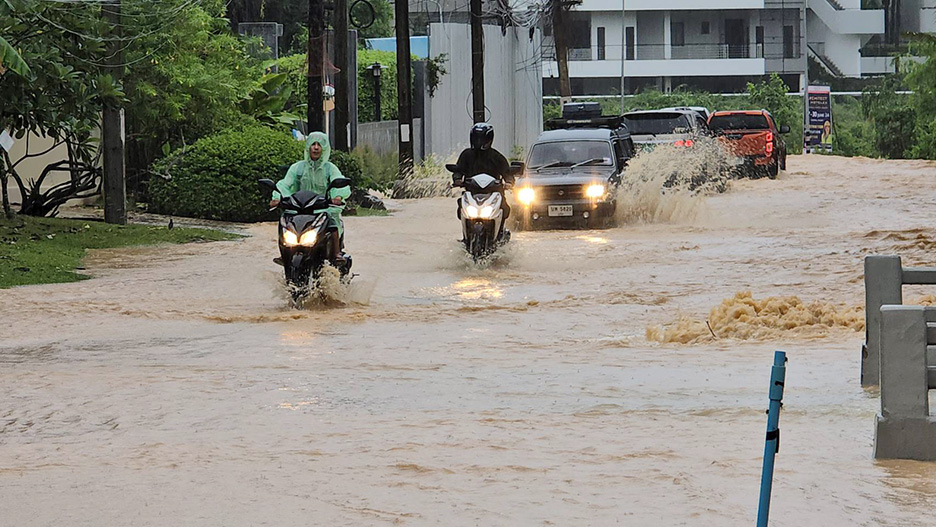
Roads and houses in Phuket were flooded after heavy rain and mountain runoff on June 30, 2024.

PHUKET — The latest flash floods in Phuket on June 30 have sparked debates about the rapid growth of the city and the resulting clogging of sewage systems, along with the question:  Is it time for prosperous Phuket to become a Special Administrative Region?

Currently in Thailand, there are two administrative zones that are special forms of local government organizations: Bangkok Metropolitan Administration and Pattaya City.

Mr. Rewat Areerob, the President of Phuket Provincial Administrative Organization (PAO), stated that Phuket is a major tourist city. He believes that it is time to decentralize power and let Phuket elect its own governor so that the locals can manage their own affairs like in Bangkok. He pointed out that the enormous tax revenue from tourism, which amounts to over 400 billion baht ($10.9 billion) annually, is not being adequately reinvested in the province.

At present, the rapid growth of Phuket city has outpaced existing laws and infrastructure management, including government agencies’ water management plans.

Existing plans from various government agencies need to be revised to adapt to the changing cityscape and take account of global climate changes, such as increasing rainfall.


“In the past, when it rained, we had areas that absorbed the water, so heavy rainfall was not a problem. But now these areas have been converted into housing projects and condominiums, so the absorption areas have become smaller. The government can not keep up. Earlier this year, Phuket faced drought problems, so we were forced to buy water for consumption, but now we are experiencing flooding,” Mr. Rewat said.

City needs revised Master Plan

Mr. Rewat added that government agencies need to plan and install more drainage pipes or pathways to accommodate housing estates and condominiums. At the same time, more water retention areas should be established to store water for dry spells by utilizing existing public lands. New roads, drainage channels, etc. also need to be built.

Flood and drought problems require the attention and intervention of the national government as they involve multiple agencies. Immediate action is needed and local authorities should be empowered to deal with the situation.

Two Move Forward Party MPs from Phuket, Mr. Chalermpong Saengdee and Mr. Thitikan Thitipruettikul, similarly stated that they have observed various problems in urban management and water management that are not aligned. This has led to the construction of buildings, houses, and roads without proper study of waterways or planning for effective drainage systems, despite Phuket being a government target for economic development.

phuket flood3 1
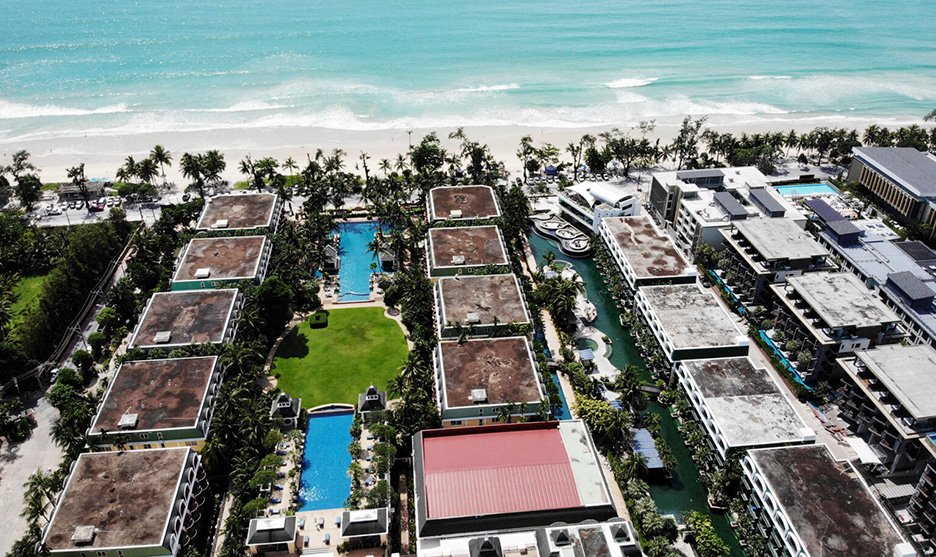
This aerial photo taken on October 1, 2020 shows a row of hotels on Patong beach in Phuket.  (Photo by Lillian SUWANRUMPHA / AFP)

They believe that if the Department of Disaster Prevention and Mitigation were directly under local administration, with its own budget and full management authority, it would be able to handle immediate situations better than the current setup.”

Phongrat Phiromrat, Director General of the Department of Public Works and Physical Planning, said that to address the problems in Phuket, it is necessary to revise the master plan that the ministry prepared in 2016-2018. This master plan was aimed at flood control in urban areas and needs to be revised to ensure it takes into account new flood-prone areas created by the city’s rapid expansion, which has led to bottlenecks and obstructions in watercourses.

“The bottleneck problems in many areas of Phuket are due to the past, when there were fewer surrounding structures and the existing channels could handle the water flow well. Overflowing water could spread to adjacent areas that were uninhabited and did not cause problems. But now that there are houses, buildings and communities, the canals can no longer handle the overflow and the communities are affected,” he said.

phuket flood2 1
Roads and houses in Phuket were flooded after heavy rain and mountain runoff on June 30, 2024.

Growth and Rain

According to AREA Company’s real estate market survey in Phuket in Q1/2024, 54 billion baht was invested in new projects, including both low-rise houses and condominiums. There are currently 500 active projects on the island with a total value of 470 billion baht ($14.8 billion).

This is a higher value for project development than in the pre-COVID-19 period. Of these, a total of 72,000 units are for sale, of which 62,000 units have been sold and 10,000 units are still pending.

On July 3, Mr. Surasee Kitti Kittimonthon, Secretary-General of the Office of National Water Resources (ONWR), issued a warning that on July 7, the lower southern region, especially Phuket province, is likely to experience heavy rainfall.

He has coordinated with the Department of Mineral Resources to be cautious about water-saturated soil in the area following the heavy rain and flooding from the past week. If rain continues, there is a risk of landslides.

_______

Related article:

Phuket’s Changing Landscape Contributes to Flood Challenges, Says Governor


Advertisement

German Overstayer with Attempted Murder History Arrested in Bangkok

German
Mr. Ahmad, a German national, was arrested in the Sukhumvit area of Bangkok for overstaying his visa.

BANGKOK — The German man of Iraqi origin has been arrested for overstaying in Thailand. The officers later found that he has a criminal record of using violence in an attempted murder in Germany.

On July 3, Immigration police officials jointly announced the arrest of a German man for overstaying his visa and found that he had a history of attempted murder against a fellow national.

The arrest stems from a complaint received by the Immigration Bureau’s Crime Suppression Division’s Section 2. The complaint reported that some hotels in Sukhumvit Soi 4 were allowing foreigners to stay without informing immigration authorities.

german iraq2
Police display a chart showing the arrest of Mr. Ahmad, a German national, who has a history of attempted murder in Hamburg, Germany.

During the investigation, officers encountered Mr. Ahmed, 28, who was born in Muthanna, Iraq. He exhibited suspicious behavior. Upon checking his passport and the information in the Immigration Department’s technical system, it was found that his residence permit for the Kingdom had expired for more than six days.

Upon inquiry at the German embassy in Thailand, it was confirmed that Mr. Ahmed was a member of a criminal organization and had previously engaged in a violent altercation in Humburg, Germany. He had attempted to murder an opponent by shooting him four times, resulting in serious injuries.

Department 2 of the Immigration Department arrested him on the charge of being a foreigner residing in the Kingdom without authorization. Mr. Ahmed will be returned to Germany at the end of the proceedings.

______

Advertisement

NEW REPORT REVEALS CHANGING FACE OF LUXURY TRAVEL IN ASIA PACIFIC 

The Luxury Group by Marriott International launches extensive research among affluent travelers across six markets 

  • 68% spending more on leisure travel with 74% respondents planning an intra-regional holiday within Asia-Pacific (APAC)
  • Australia is the top destination in next 12 months ahead of Japan, with 46% planning to visit
  • Indian HNW are driving luxury travel with 89% Indians planning to spend more in next 12 months 
  • High-end gastronomy is the primary driver for luxury travel with 88% planning holidays around food
  • Three new personas of luxury traveler defined

image3 2

As the Asia Pacific region continues to be the growth engine for luxury travel, a new comprehensive report from the Luxury Group by Marriott International has identified new expectations and travel preferences among high-net-worth (HNW) travelers in Asia Pacific. Across the region, 68% are planning to spend more on travel over the next 12 months – 89% among Indians – with 74% planning to travel within Asia Pacific and 88% prioritizing gastronomy as the reason to travel. One in four of all holidays planned (25%) are celebrations. Three distinct new groups of luxury traveler have emerged – the ‘Venture Travelist’ who seeks business opportunities when traveling, ‘Experience Connoisseur’ Millennials who are traveling for enrichment and ‘Timeless Adventurer’, over 65s who are building their own itineraries and exploring places before they become popular.

image2 3

Our New Luxe Landscapes Report provides deeper behavioral insights and motivations into elite travelers from Asia and the Pacific,” says Oriol Montal, Managing Director, Luxury, Asia Pacific (excluding China), Marriott International. “Whether it’s discovering new culinary experiences, traveling with their family or friends, or looking to forge connections with the local community, our research has identified new traveler archetypes, and provides Marriott International with new understandings in catering to this discerning traveler segment.”

image5 2

Deeper Extended Experiences With Their People

The research among HNW travelers in Australia, Singapore, South Korea, Japan, Indonesia and India reveals they are traveling frequently with longer holidays especially across the Asia Pacific region. An average of six leisure trips is planned within the next 12 months while 33% of respondents are planning at least seven holidays this year. On average, a short stay comprises three nights while a long stay is two-and-a-half weeks. For many, the kinship and connection within a group enhances the richness of the travel experience, with over 70% choosing to travel with family or friends.


Australia is the destination of choice (46%), above Japan (42%) and Hong Kong, China (27%). 69% of India’s HNW tourists are planning a trip to Australia and it is the top destination of choice for Indonesian, Japanese and Singaporean travelers. 

Increasing Demand in India

The most active and engaged travel market, 89% of Indian HNW say they are planning to spend more on travel. Families and friends are touring together to mark key milestones, attend a private function or event, with 38% planning a trip with friends and 33% making theirs a celebratory trip.

A Fascination for Food

88% are picking their holiday destination based on discovering a new food or culinary experience. Acutely aware of dining trends, almost half of the respondents (49%) describe a fine dining experience as an ideal night out. Reinforcing this point, 83% will choose a destination to visit an award-winning restaurant and 35% agreed they would spend more on unique culinary experiences. When choosing a hotel, 81% of HNW travelers make their selection based on fine dining options and 83% choose a destination so they can visit a celebrated restaurant.

New Traveler Personas  

With more disposable income for holidays and a growing population of ageing travelers, the research has identified three new categories of affluent travelers. These include: 

i) The ‘Venture Travelist’

The next-generation Bleisure tourist, the Venture Travelist prioritizes holiday destinations that will generate business opportunities. While they enjoy their vacation with their family and loved ones, they are always on the lookout to secure a deal. Entrepreneurs at heart, they explore a location, shopping for local products and antiques, and looking to forge business connections with members from the local community.

ii) The ‘Experience Connoisseur’

Predominantly millennials, Experience Connoisseurs plan their leisure travel as an opportunity for personal enrichment. They travel extensively and see the experience as an investment in their mental and physical wellbeing. They want to deeply explore a destination, they value personalization and actively seek exclusive one-of-a-kind experiences.

iii) The ‘Timeless Adventurer’ 

Debunking every stereotype of the over-65 ‘silver set travelers’, Timeless Adventurers are keen explorers who want to immerse themselves in a destination. They’re less interested in tourist attractions and more drawn to what gives the destination a sense of place, what makes it unique and memorable. 

Advertisement

Vietnamese Robbery Suspect Arrested on Return to Thailand

Mr. Nong, one of the Vietnamese youth group members, is arrested in Samut Sakhon on June 26 when returning to Thailand.

BANGKOK — Immigration police have solved a case from mid-last year by arresting an illegal Vietnamese guide who was involved in robbing his fellow countryman in Bangkok and then fled. He was finally arrested upon his return to Thailand.

Police Major General Phantana Nuchanart, Deputy Commissioner of the Immigration Bureau, announced on July 3 that this robbery case occurred on August 21, 2023, in the Phra Khanong Police Station area. The perpetrators were a group of Vietnamese youths who pretended to be tour guides, targeting Vietnamese victims as they could communicate easily and the victims were relatively wealthy.

This group of youths entered Thailand on August 16, 2023, through Suvarnabhumi Airport. Later, Mr. Nam, one of the perpetrators, was contacted by Mr. Tran, a Vietnamese tourist, to be a tour guide for him and his 7 friends. They were all staying in a rented house in Soi Sukhumvit 101, Punnawithi 49 Road, Bang Chak, Phra Khanong District.

vietnam rob1
Mr. Nong is one of 13 Vietnamese suspects on charges of “robbery committed by three or more persons, unlawful detention, and assault causing bodily or mental harm.”

On the day of the incident, August 21, Mr. Nam and 7-8 accomplices entered Mr. Tran’s residence, armed with sharp knives. They threatened Mr. Tran and his friends, handcuffed them, and chained their legs in a room. They then physically assaulted them and forced them to hand over cash and mobile phones before fleeing. Mr. Tran later filed a complaint with the Phra Khanong Police Station.

Investigation revealed that after the incident, the Vietnamese youth group fled Thailand through the Second Thai–Lao Friendship Bridge border checkpoint on August 26, 2023.

The Phra Khanong Police investigators gathered evidence and requested the Phra Khanong Criminal Court to issue arrest warrants for 13 suspects on charges of “robbery committed by three or more persons, unlawful detention, and assault causing bodily or mental harm.”

Later, the Immigration Bureau received information that Mr. Nong, one of the Vietnamese youth group members, had returned to Thailand and was hiding from the arrest warrant in Samut Sakhon City Police Station area. Officials tracked and arrested him near Setthakit Road and transferred him to Phra Khanong Police Station for legal proceedings.”

_________

Advertisement

World Bank Slashes Thai GDP Forecast Amid Digital Wallet Uncertainty

BANGKOK — World Bank cuts Thailand’s GDP Forecast for 2024 to 2.4% from 2.8% in April, even though there are positive factors such as the continued expansion of private consumption, alongside a rebound in tourism and exports.

In its latest economic outlook for Thailand, the World Bank indicates a modest recovery that increases from 1.9 percent in 2023 to 2.4 percent in 2024. It predicts further development, with the economy expanding by 2.8% in 2025.

The Digital Wallet is expected to boost GDP by 1 percentage point over the short term, at a fiscal cost of 2.7 percent of GDP. However the program is not incorporated into the baseline due to uncertainties surrounding the legality of the borrowing by the Bank for Agriculture and Agricultural Cooperatives (BAAC) and the details of the program.

This positive view is reinforced by an expanded fiscal year 2025 budget framework and expedited government budget disbursement after earlier delays. While private consumption will contribute to growth, tourism continues to be the backbone of this early-year improvement, underscoring its crucial role in Thailand’s economic landscape.

High Public Debt

Merchandise exports are predicted to increase as global trade circumstances improve, with tourism returning to pre-COVID-19 levels by mid-2025, despite China’s economic recession.

Furthermore, due to lower food and energy prices, headline inflation is expected to fall to 0.7 percent in 2024 from 1.3 in the previous year, the ASEAN region’s lowest level. This inflation rate is below the Bank of Thailand’s objective.

The World Bank predicts that Thailand’s state debt could reach 64.6% of GDP by 2025, thus impeding long-term economic growth. This increase is due to rising spending and ongoing economic stimulus aimed at increasing consumption.

The rising fiscal deficit, which is expected to reach 3.6% of GDP, reflects the return to normal budget disbursement and these stimulative measures. The report recommends prioritizing targeted social assistance and grants to support vulnerable populations, promoting a more effective approach to poverty alleviation.

Tourism is still the core

The World Bank report provides a bright picture of the tourism industry. Tourist arrivals are expected to reach 36.1 million in 2024, up from 28.2 million in 2023, and achieving pre-pandemic levels. This growth is forecast to continue until 2025, with visitor arrivals projected to reach 41.1 million, surpassing pre-pandemic levels.

The return of Chinese tourists is viewed as a crucial influence, driving both domestic and foreign demand. This tourism rebound is expected to make a major contribution to the 2.8% growth rate projected for 2025.
Smart City

Boosting Secondary Cities

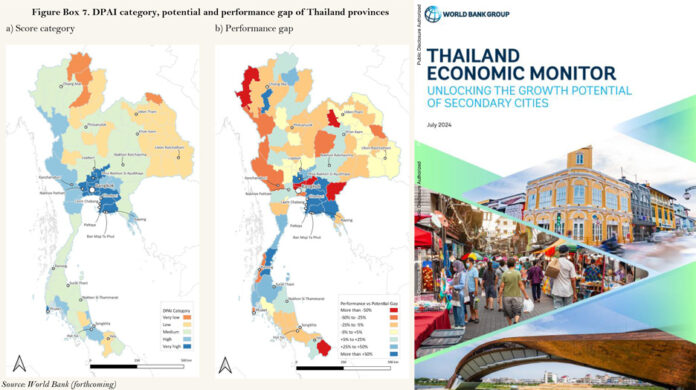
The paper emphasizes the importance of secondary cities for Thailand’s long-term growth. The 2011 Bangkok floods demonstrated the economic risk of relying significantly on a single city. To avoid this danger, the research recommends a more equitable allocation of economic growth among urban areas.

Thailand is at a critical juncture, with concerns such as low productivity and a diminishing workforce owing to demographic shifts. Fabrizio Sarcone, World Bank Country Manager for Thailand, argues that harnessing the latent potential of Thailand’s secondary cities is critical to long-term growth.

“Increasing the capacity of Thailand’s secondary cities marks a fundamental paradigm shift. These cities require flexibility, financial resources, and the necessary infrastructure to attract investment and skilled workers,” stated Assoc. Prof. Dr. Poon Thiangburanatham, Deputy Director of the Corporate Planning and Strategy Department at the Local Development Capital Management Unit.

“Investing in infrastructure, human capital, and institutional capacity is critical. This also entails updating the partnership framework between government entities at both the national and local levels. Such initiatives will allow these cities to greatly increase Thai productivity, fuel economic growth, and boost Thailand’s worldwide competitiveness.”

Many secondary cities already serve as regional economic hubs, with different sectors. Investment in infrastructure, human capital, and institutional capacity in these cities has the potential to generate enormous economic advantages. According to data, secondary cities might attain GDP per capita growth rates approximately 15 times higher than Bangkok.

The paper suggests decentralizing investment decisions and boosting budgetary independence for these cities. This would allow them to attract investment and talent while also developing the necessary infrastructure. Secondary cities may notably contribute to Thailand’s total productivity and competitiveness by investing in human capital and strengthening institutional capacity, as well as improving coordination across government departments.
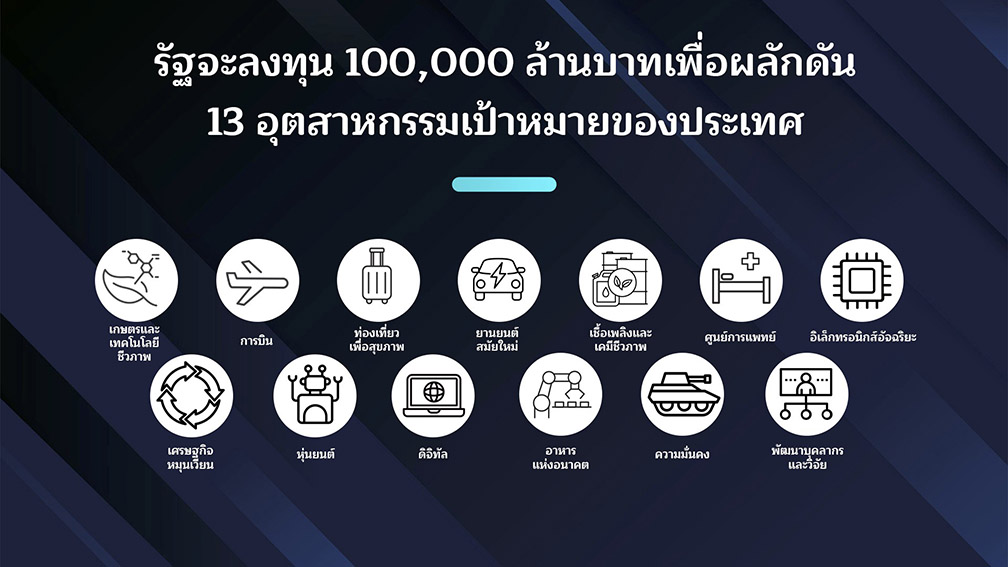
srettha digital2

Impact of Digital Wallet

Looking ahead to 2025, growth is expected to reach 2.8 percent, supported by both domestic and external demand. This outlook is further bolstered by the revised fiscal budget proposal for FY 2025 and the anticipated acceleration in budget execution following significant delays earlier this year.

The program is scheduled to be implemented in Q4 2024 and Q1 2025. The
fiscal cost, which will be financed through the fiscal budget for FY24 – FY25 and potentially quasi-fiscal means –borrowing by the BAAC, a state-owned bank, is expected to account for THB 500 billion, or USD 13.5 billion (2.7 percent of GDP).

However, World Bank stated that the program is not incorporated into the baseline due to uncertainties surrounding the legality of the borrowing by the BAAC and the details of the program. Once rolled out in Q4, private consumption is expected to benefit from the stimulus measure, with an estimated impact on GDP growth at 0.5 – 1.6 percentage points over the two-year period.

Inflation Remains the Lowest

This report also stated that inflation has turned positive but remained the lowest among emerging markets due to energy subsidies and a weak recovery.

After seven months in negative territory, headline inflation turned positive due to the partial withdrawal of energy subsidies and elevated food prices. In April, the government lifted the ceiling on retail diesel prices. However, subsidized electricity prices, including the reduced prices for low-income households, were kept unchanged.

Core inflation (which excludes energy and raw food) remained weak at 0.4 percent, below its pre-pandemic average of 0.7 percent over 2016-2019, due to lower-than-expected prepared food prices and the delayed closing of the output gap. More price pressures may emerge if electricity price subsidies are further reduced and global energy prices surge.

The central bank maintained its neutral policy rate, but risks of underlying price pressures obscured by price controls and the potential impact of the large Digital Wallet universal cash transfer on growth and inflation complicate monetary policy.

______

Advertisement

High-Level Educational Experts Convened to “Rethink Education Transformation” Ahead of didacta asia congress 2024

Bangkok, June 18, 2024 – didacta asia, with high-level educational representatives, held a luncheon meeting to discuss the “didacta asia congress 2024” to be concurrently held at “didacta asia 2024” under the theme “Rethinking Education Transformation.”

21

Led by SEAMEO Secretariat, the congress will gather experts from Thailand and Southeast Asia to discuss education policies, equality, and professional development for teachers and educational personnel.

41

Mr. Hans Stoter, Managing Director China Asia, Messe Stuttgart–the organizer of didacta asia, stated that this year’s theme, “didacta asia 2024: Shaping the Future Skills,” focuses on enhancing learning and skill development, utilizing technology effectively to foster efficient learning and understanding. It is essential to create an educational environment that meets both current and future needs in our rapidly changing world. Therefore, the event will feature the didacta asia congress, a major seminar platform, inviting educational experts from various countries and leading educational government agencies to collaborate on setting educational policy directions and presenting essential tools and curricula.

11

didacta asia 2024 and didacta asia congress 2024, taking place from October 16-18, 2024, will include experience-sharing sessions, training seminars, workshops, student competitions, and an exhibition of educational technology and innovation from around the world.

Mr. Jonh Arnold Siena, Deputy Director (Programme & Development), SEAMEO Secretariat, stated that SEAMEO Secretariat expressed pleasure in co-organizing the congress. SEAMEO will present two sessions. The first session will focus on implementing policies and technology to promote educational equity, joined by educational ministers from various Southeast Asian countries. The second session will focus on technology, inclusivity, and equitable education in Southeast Asia.

Mr. Panpermsak Arunee, Acting Advisor for the Development on Higher Education, Science, Research and Innovation, Ministry of Higher Education, Science, Research, and Innovation stated that highlighted the IGNITE THAILAND vision for sustainable economic growth, emphasizing the need for continuous learning and the Sandbox Curriculum Project for innovative education models. The congress will support this vision through knowledge exchange and collaboration.

Dr. Phonraphee Thummaphan, Deputy Secretary General of The Teachers’ Council stated that the Teachers’ Council of Thailand has been developing standards and accreditation for teacher qualifications and has identified that the teaching profession still requires further education and development. didacta asia congress can greatly support teacher lifelong education. The Teachers’ Council of Thailand invites teachers nationwide to visit didacta asia 2024 to develop their skills and gain new insights from the event.

Dr. Kritsachai Somsaman Director of SEAMEO STEM-ED stated that, at didacta asia congress, SEAMEO STEM-ED will present project-based learning approaches. Successful case studies will be showcased, with students involved to share their knowledge, methodologies, and the benefits they gained from learning through various project activities.

Dr. Angela Jarumilinthorn, Vice President, Academic and International Relations, Preschool Education Association emphasized the importance of creating a joyful learning environment for preschoolers. At didacta asia congress, the association will present a curriculum that kindergarten teachers can use to create lessons and a joyful environment to foster the development of fundamental skills in early childhood. It is anticipated that many kindergarten teachers and school administrators will be participating.

Ms. Yuppares Nimlekh, General Manager of EDUCA stated that EDUCA, a repository of educational knowledge and innovation in Thailand, has curated programs aimed at developing professional skills for teachers. They will host seminars featuring international speakers who share knowledge, experiences, and case studies with the attendees. EDUCA session will take place all-day on  October 18, 2024 at didacta asia congress.

Dr. Surapol Bunlue, President of Thailand Association for Education Communications and Technology stated the association has launched a short film competition titled “Soft Power and Lifelong Learning in Thai Education,”. Currently, the competition is in the student submission phase, where interested participants can submit their entries. Winners will be announced and awarded during the didacta asia congress 2024.

The Ministry of Education of Thailand recognizes education’s vital role in national development. Collaborating with all sectors, it aims for educational excellence and economic growth, aligning with Minister Police General Permpoon Chidchob’s policies of “Happy Learning” and “Join hands and walk together.” These policies promote AI and educational technology to reduce burdens on students and teachers, enabling access to education anywhere, anytime. The ministry supports free learning systems to increase access and reduce inequality, encouraging private sector and stakeholder involvement. This approach ensures students are happy, achieve good results, and gain employment opportunities, while preparing teachers and students with 21st-century skills.

Advertisement

FDA Approves a Second Alzheimer’s Drug That Can Modestly Slow Disease

This image provided by Eli Lilly shows the company's new Alzheimer’s drug Kisunla. (Eli Lilly and Company via AP)

WASHINGTON (AP) — U.S. officials have approved another Alzheimer’s drug that can modestly slow the disease, providing a new option for patients in the early stages of the incurable, memory-destroying ailment.

The Food and Drug Administration approved Eli Lilly’s Kisunla on Tuesday for mild or early cases of dementia caused by Alzheimer’s. It’s only the second drug that’s been convincingly shown to delay cognitive decline in patients, following last year’s approval of a similar drug from Japanese drugmaker Eisai.

The delay seen with both drugs amounts to a matter of months — about seven months, in the case of Lilly’s drug. Patients and their families will have to weigh that benefit against the downsides, including regular IV infusions and potentially dangerous side effects like brain swelling.

Physicians who treat Alzheimer’s say the approval is an important step after decades of failed experimental treatments.

“I’m thrilled to have different options to help my patients,” said Dr. Suzanne Schindler, a neurologist at Washington University in St. Louis. “It’s been difficult as a dementia specialist — I diagnose my patients with Alzheimer’s and then every year I see them get worse and they progress until they die.”

AP24184513218097
This image provided by Eli Lilly shows the company’s new Alzheimer’s drug Kisunla. The Food and Drug Administration approved Eli Lilly’s Kisunla on Tuesday, July 2, 2024 for mild or early cases of dementia caused by Alzheimer’s. (Eli Lilly and Company via AP)

Both Kisunla and the Japanese drug, Leqembi, are laboratory-made antibodies, administered by IV, that target one contributor to Alzheimer’s — sticky amyloid plaque buildup in the brain. Questions remain about which patients should get the drugs and how long they might benefit.

The new drug’s approval was expected after an outside panel of FDA advisors unanimously voted in favor of its benefits at a public meeting last month. That endorsement came despite several questions from FDA reviewers about how Lilly studied the drug, including allowing patients to discontinue treatment after their plaque reached very low levels.

Costs will vary by patient, based on how long they take the drug, Lilly said. The company also said a year’s worth of therapy would cost $32,000 — higher than the $26,500 price of a year’s worth of Leqembi.

The FDA’s prescribing information tells doctors they can consider stopping the drug after confirming via brain scans that patients have minimal plaque.

More than 6 million Americans have Alzheimer’s. Only those with early or mild disease will be eligible for the new drug, and an even smaller subset are likely to undergo the multi-step process needed to get a prescription.

The FDA approved Kisunla, known chemically as donanemab, based on results from an 18-month study in which patients given getting the treatment declined about 22% more slowly in terms of memory and cognitive ability than those who received a dummy infusion.

The main safety issue was brain swelling and bleeding, a problem common to all plaque-targeting drugs. The rates reported in Lilly’s study — including 20% of patients with microbleeds — were slightly higher than those reported with competitor Leqembi. However, the two drugs were tested in slightly different types of patients, which experts say makes it difficult to compare the drugs’ safety.

Kisunla is infused once a month compared to Leqembi’s twice-a-month regimen, which could make things easier for caregivers who bring their loved ones to a hospital or clinic for treatment.

“Certainly getting an infusion once a month is more appealing than getting it every two weeks,” Schindler said.

Lilly’s drug has another potential advantage: Patients can stop taking it if they respond well.

In the company’s study, patients were taken off Kisunla once their brain plaque reached nearly undetectable levels. Almost half of patients reached that point within a year. Discontinuing the drug could reduce the costs and safety risks of long-term use. It’s not yet clear how soon patients might need to resume infusions.

Logistical hurdles, spotty insurance coverage and financial concerns have all slowed the rollout of competitor Leqembi, which Eisai co-markets with U.S. partner Biogen. Many smaller hospitals and health systems aren’t yet setup to prescribe the new plaque-targeting Alzheimer’s drugs.

First, doctors need to confirm that patients with dementia have the brain plaque targeted by the new drugs. Then they need to find a drug infusion center where patients can receive therapy. Meanwhile, nurses and other staff must be trained to perform repeated scans to check for brain swelling or bleeding.

“Those are all things a physician has to have set up,” said Dr. Mark Mintun, who heads Lilly’s neuroscience division. “Until they get used to them, a patient who comes into their office will not be offered this therapy.”

___

Advertisement

Nestlé and WasteBuy Delivery Launch Sustainable Used Packaging Management

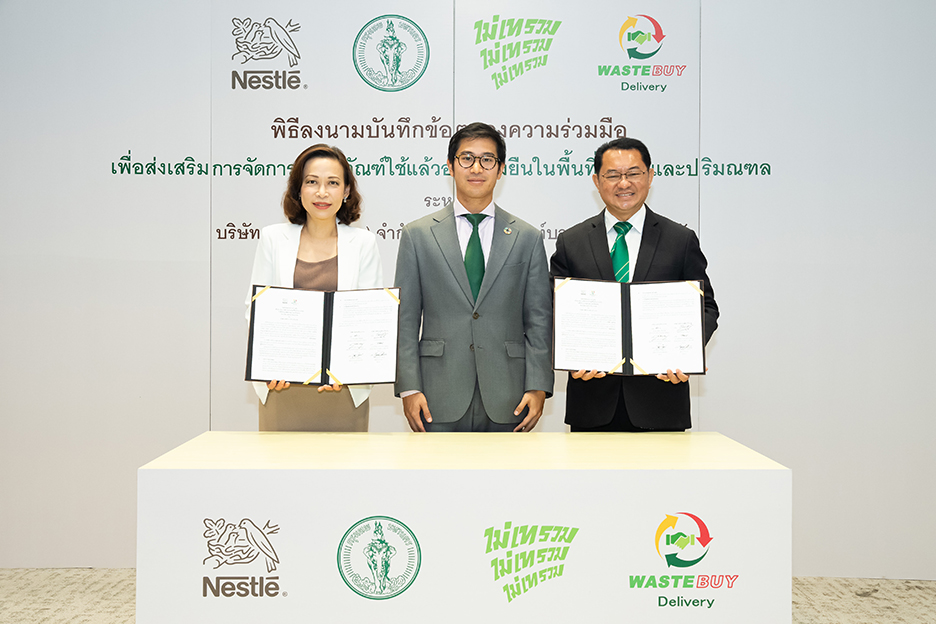
BANGKOK – Nestlé (Thai) Ltd. has signed a Memorandum of Understanding (MoU) to collaborate with WasteBuy Delivery Co., Ltd. in a project aimed at driving sustainable used packaging management, observed by the Bangkok Metropolitan Administration (BMA).

This project supports the BMA’s “No Mixed Waste” policy by organizing waste segregation promotion activities in communities across all districts in Bangkok and vicinity throughout this year.

Consumers can sell their waste in exchange for money and receive Nestlé products to take home. This initiative promotes the recycling of used packaging, ensures efficient waste management, and reduces the use of natural resources to minimize environmental impact, in line with the circular economy concept.

nestle package
Nestlé (Thai) Ltd. has signed a Memorandum of Understanding (MoU) to collaborate with WasteBuy Delivery Co., Ltd. in a project aimed at driving sustainable used packaging management, observed by the Bangkok Metropolitan Administration (BMA).

Ms. Salinla Seehapan, Corporate Affairs Director, Nestlé (Thai) Ltd., said that Nestlé is committed to achieving net zero greenhouse gas emissions by 2050.To reach this ambitious goal, we have implemented a comprehensive sustainability plan with various projects for driving our ‘Good for the Planet’ strategy.

In this collaboration, Nestlé will provide education about used packaging management including UHT, PET plastic bottles, and other packaging types, while also providing products as incentives for communities to segregate waste.

“The collaboration with WasteBuy Delivery supports the BMA’s ‘No Mixed Waste’ policy, ensuring that used packaging enters the proper recycling process. This also promotes efficient resource use and supports the circular economy, driving Nestlé’s commitment in sustainability,” she said.

Mr. Pornphrom Vikitsreth, Advisor to the Governor of Bangkok, stated that the ‘No Mixed Waste’ project to promote household waste segregation for the proper collection and utilization of waste. All 50 districts in Bangkok will be involved in raising awareness and encouraging people to separate food waste, as its volume increases yearly.

“We hope this project will help reduce the budget for waste management and allow funds to be allocated for the development of other areas,” he said.

Mr. Pornphrom added that improper food waste management and the failure to separate dry and wet waste at the source leads to food waste contaminating other waste types. The BMA is delighted that the private sector is participating in promoting waste segregation, allowing used packaging to enter the recycling process efficiently.

This will make the circular use of resources a tangible practice. Previously, the BMA launched a pilot Waste Management Learning Center and introduced the ‘WasteBuy Delivery’ project, a caravan that purchases waste directly from homes, actively promoting waste segregation.

Dr. Itthikorn Srijarnban, CEO of WasteBuy Delivery Co., Ltd. said that his company developed the ‘WasteBuy’ application and created the WasteBuy Delivery project featuring a direct waste purchase service at home. This requires public participation and cooperation from the private sector. So far, the WasteBuy Delivery project has purchased more than 3,300 tons of recyclable waste in Bangkok. This has reduced greenhouse gas emissions by over 3,000 tons of carbon dioxide equivalent, which is comparable to planting more than 300,000 trees.

“Statistics show that, on average, 30% of every 100,000 tons of waste is recyclable. If the BMA can segregate over three million tons of waste annually, it will generate income from selling recyclable waste back to the communities. We hope that this collaboration with Nestlé will help raise awareness and encourage more participation from the communities,” he said.

Advertisement

Stampede at Religious Event in India Kills More Than 100, Mostly Women and Children

Relatives and volunteers carry the bodies on stretchers at the Sikandrarao hospital in Hathras district about 350 kilometers (217 miles) southwest of Lucknow, India, Tuesday, July 2, 2024. (AP Photo/Manoj Aligadi)

LUCKNOW, India (AP) — Thousands of people at a religious gathering in India rushed to leave a makeshift tent, setting off a stampede Tuesday that killed more than 100 and left scores injured, officials said.

It was not immediately clear what triggered the panic following an event with Hindu figure Bhole Baba. Local news reports cited authorities who said heat and suffocation in the tent could have been a factor. Video of the aftermath showed the structure appeared to have collapsed.

At least 116 people died, most of them women and children, said Prashant Kumar, the director-general of police in northern India’s state of Uttar Pradesh, where the stampede occurred.

More than 80 others were injured and admitted to hospitals, senior police officer Shalabh Mathur said.

“People started falling one upon another, one upon another. Those who were crushed died. People there pulled them out,” witness Shakuntala Devi told the Press Trust of India news agency.

Relatives wailed in distress as bodies of the dead, placed on stretchers and covered in white sheets, lined the grounds of a local hospital. A bus that arrived there carried more victims, whose bodies were lying on the seats inside.

AP24184555714547
Relatives mourn next to the bodies of their relatives outside the Sikandrarao hospital in Hathras district about 350 kilometers (217 miles) southwest of Lucknow, India, Tuesday, July 2, 2024.  (AP Photo)
AP24184567386263
Relatives mourn next to a body lying covered at the Sikandrarao hospital in Hathras district about 350 kilometers (217 miles) southwest of Lucknow, India, Tuesday, July 2, 2024.  (AP Photo/Manoj Aligadi)

Deadly stampedes are relatively common around Indian religious festivals, where large crowds gather in small areas with shoddy infrastructure and few safety measures.

Police officer Rajesh Singh said there was likely overcrowding at the event in a village in Hathras district about 350 kilometers (220 miles) southwest of the state capital, Lucknow.

Initial reports suggested that over 15,000 people had gathered for the event, which had permission to host about 5,000.

Indian Prime Minister Narendra Modi offered condolences to the families of the dead and said the federal government was working with state authorities to ensure the injured received help.

Uttar Pradesh’s chief minister, Yogi Adityanath, called the stampede “heart-wrenching” in a post on X. He said authorities were investigating.

In 2013, pilgrims visiting a temple for a popular Hindu festival in central Madhya Pradesh state trampled each other amid fears that a bridge would collapse. At least 115 were crushed to death or died in the river.

In 2011, more than 100 Hindu devotees died in a crush at a religious festival in the southern state of Kerala.

______

Advertisement

Hot News

LATEST NEWS

Bangkok
overcast clouds
28.3 ° C
28.3 °
28.3 °
79 %
4.1kmh
100 %
Sun
28 °
Mon
34 °
Tue
34 °
Wed
32 °
Thu
33 °