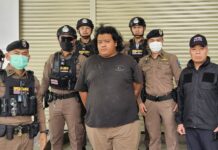
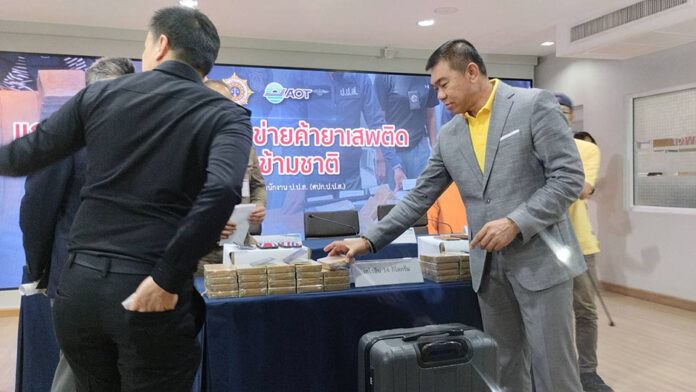
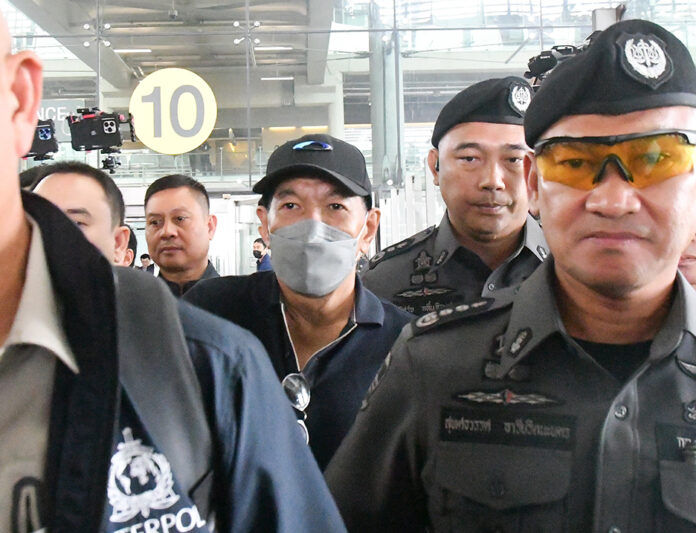
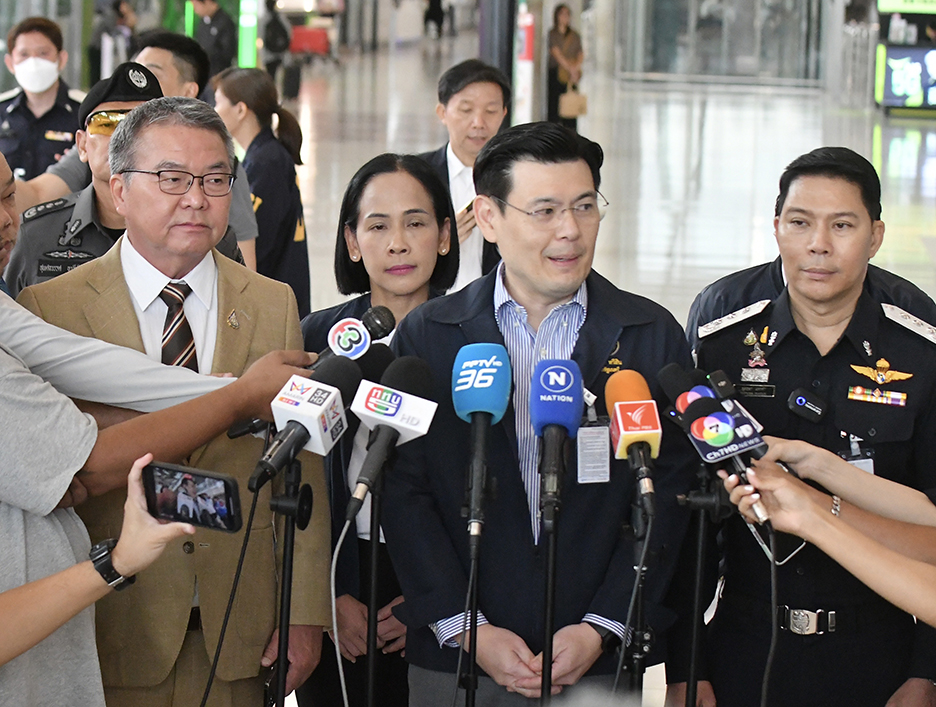
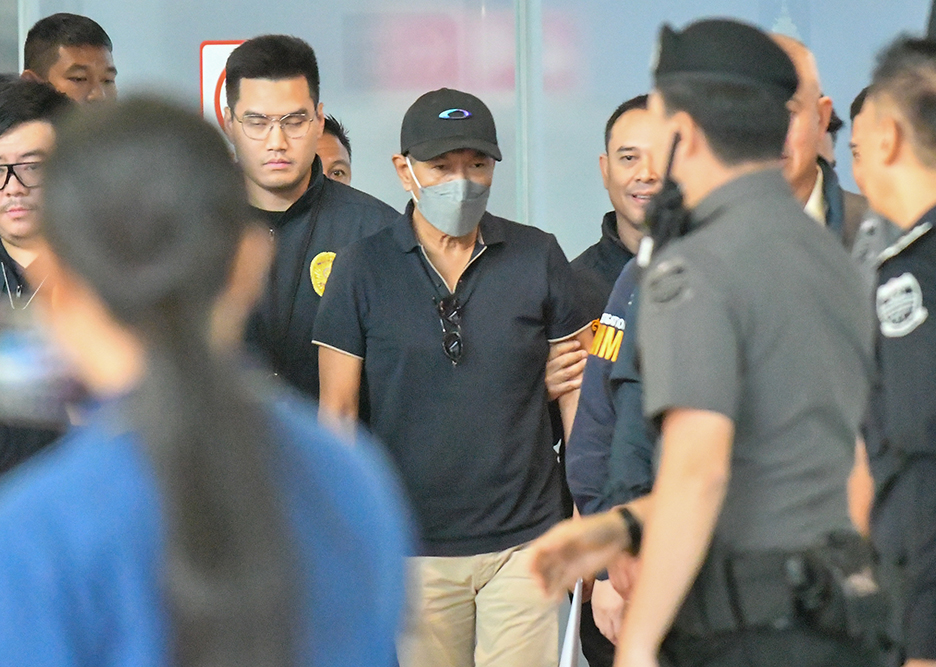
Police Lieutenant General Phanurat Lakboon, Secretary-General of the Office of Narcotics Control Board (ONCB), shows the seized 40 bars of heroin weighing 14 kilograms, hidden in a suitcase of Hong Kong gang member on June 24, 2024.
BANGKOK — The Airport Interdiction Task Force (AITF) arrested 4 Hong Kong nationals and seized 40 bars of heroin weighing 14 kilograms, hidden in a luggage at Suvarnabhumi Airport.
On June 24, Police Lieutenant General Phanurat Lakboon, Secretary-General of the Office of Narcotics Control Board (ONCB), along with Prin Mekanant, Director of the Narcotics Suppression Bureau, announced the arrest of an international drug trafficking network at the ONCB Operations Center in Bangkok.
The arrest of the 4 Hong Kong male suspects came after ONCB officials received information and conducted a joint investigation with Hong Kong police to track Leung Wai Kit, a major Hong Kong drug dealer who traveled to Thailand, along with Chun He Chow, a drug courier who also traveled to Thailand.
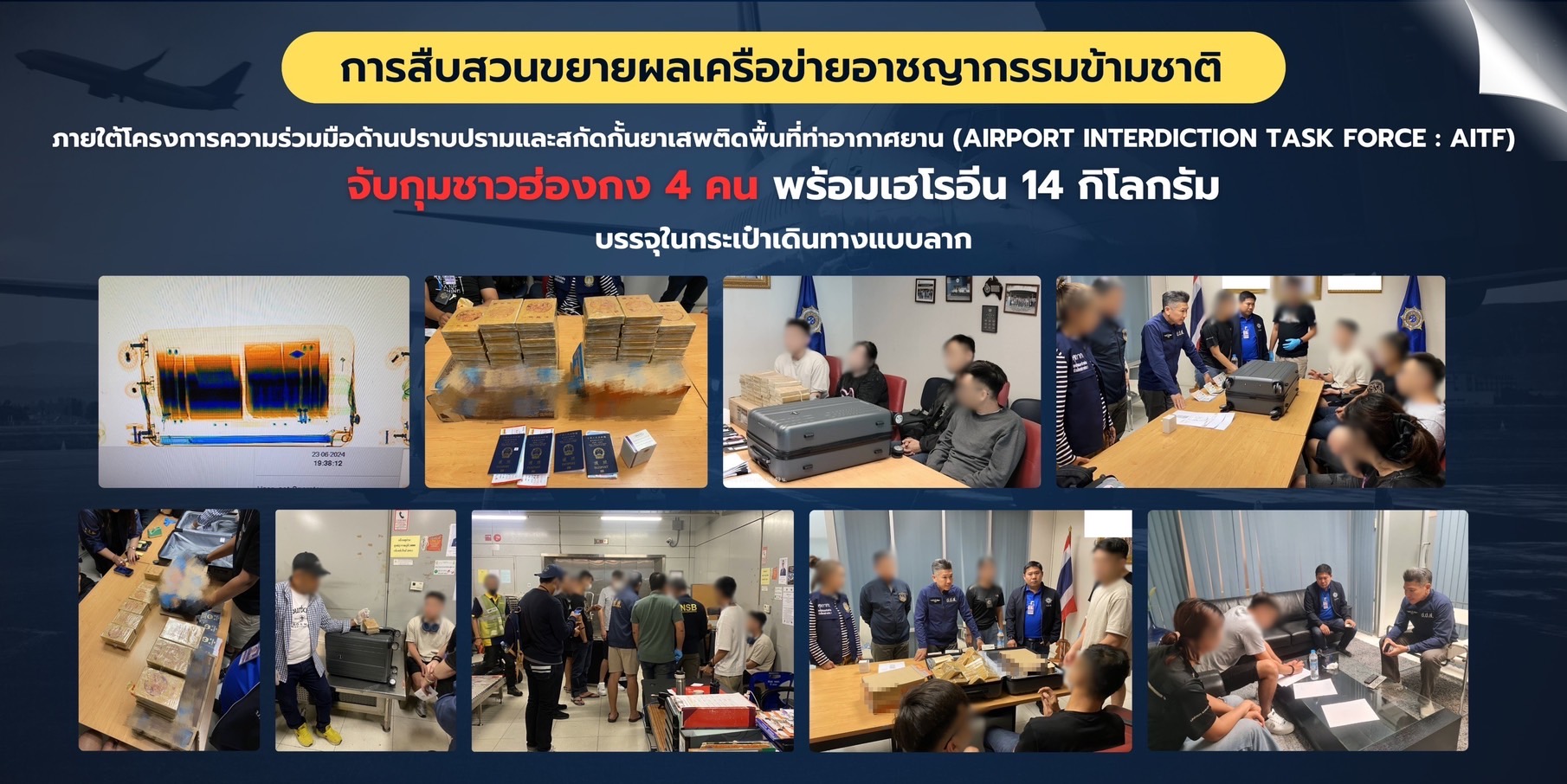
Chart showing the arrest of the 4 Hong Kong male suspects.
The AITF closely investigated these individuals. On Sunday, June 23, Leung and one associate entered Suvarnabhumi Airport with luggage believed to contain hidden drugs, preparing to hand it over to two other couriers. Officials immediately searched and detained these individuals.
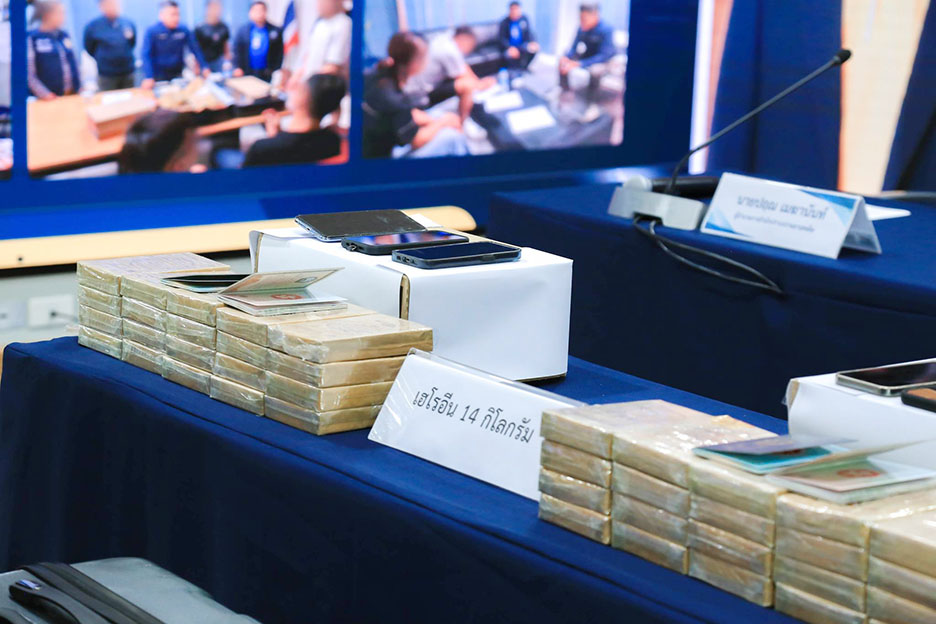
The search uncovered 40 bars of heroin weighing 14 kilograms hidden in the luggage. Leung and his three associates were arrested and charged with “jointly attempting to export a Category 1 narcotic (heroin) without permission and jointly possessing a Category 1 narcotic (heroin) without permission.”
Pol. Lt. Gen. Phanurat said this case was unusual because drug trafficking networks typically hide contraband in parcels, rarely concealing it in luggage to be loaded onto airline check-in conveyor belts.
40 bars of heroin weighing 14 kilograms, hidden in luggage at Suvarnabhumi Airport, are displayed at a news conference on June 24, 2024
Prin added that airlines or security teams usually focus X-ray checks on explosives and firearms. Therefore, hiding heroin in milk crates and loading them onto conveyor belts, being non-metallic objects, likely allowed them to pass through the X-ray machines at check-in points.
The investigation revealed that the suspects traveled to Thailand to receive heroin from Hong Kong couriers in Thailand and sell it to buyers in Hong Kong. Officials discovered that the Hong Kong mastermind stayed at one hotel in Thailand, while the Hong Kong courier stayed at another. On Sunday, June 23, they all checked out and headed to Suvarnabhumi Airport, where they were arrested.
This week, Hong Kong police will travel to Thailand to question the four suspects to expand the investigation into networks in Hong Kong and possibly additional networks in Thailand.
Phantong Loykulnanta, Tax Collection Development and Management Advisor at the Customs Department, said that although luggage loaded onto conveyor belts at check-in points goes through color X-ray machines to detect anomalies, items can still slip through. The Customs Department will review lessons learned from this incident.
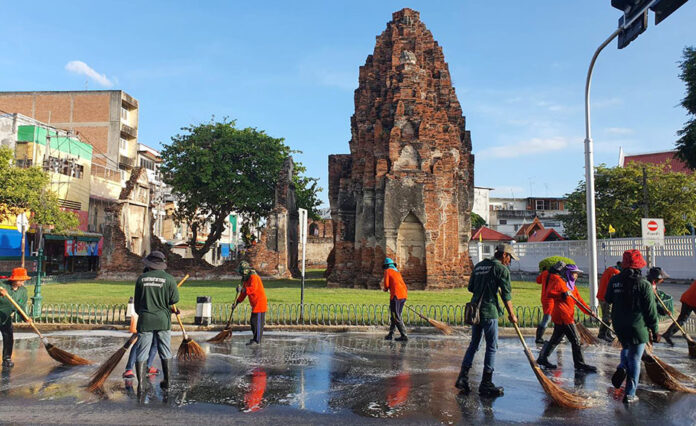
Lopburi City municipal officials cleaned the area around Phra Prang, the province's landmark, following the control of the monkey population in the city center on June 24, 2024.
LOPBURI — Efforts to get the monkey population under control are making progress and businesses in Lopburi Province are regaining confidence because they believe the problem is being tackled properly. Many companies are planning to revive instead of going out of business.
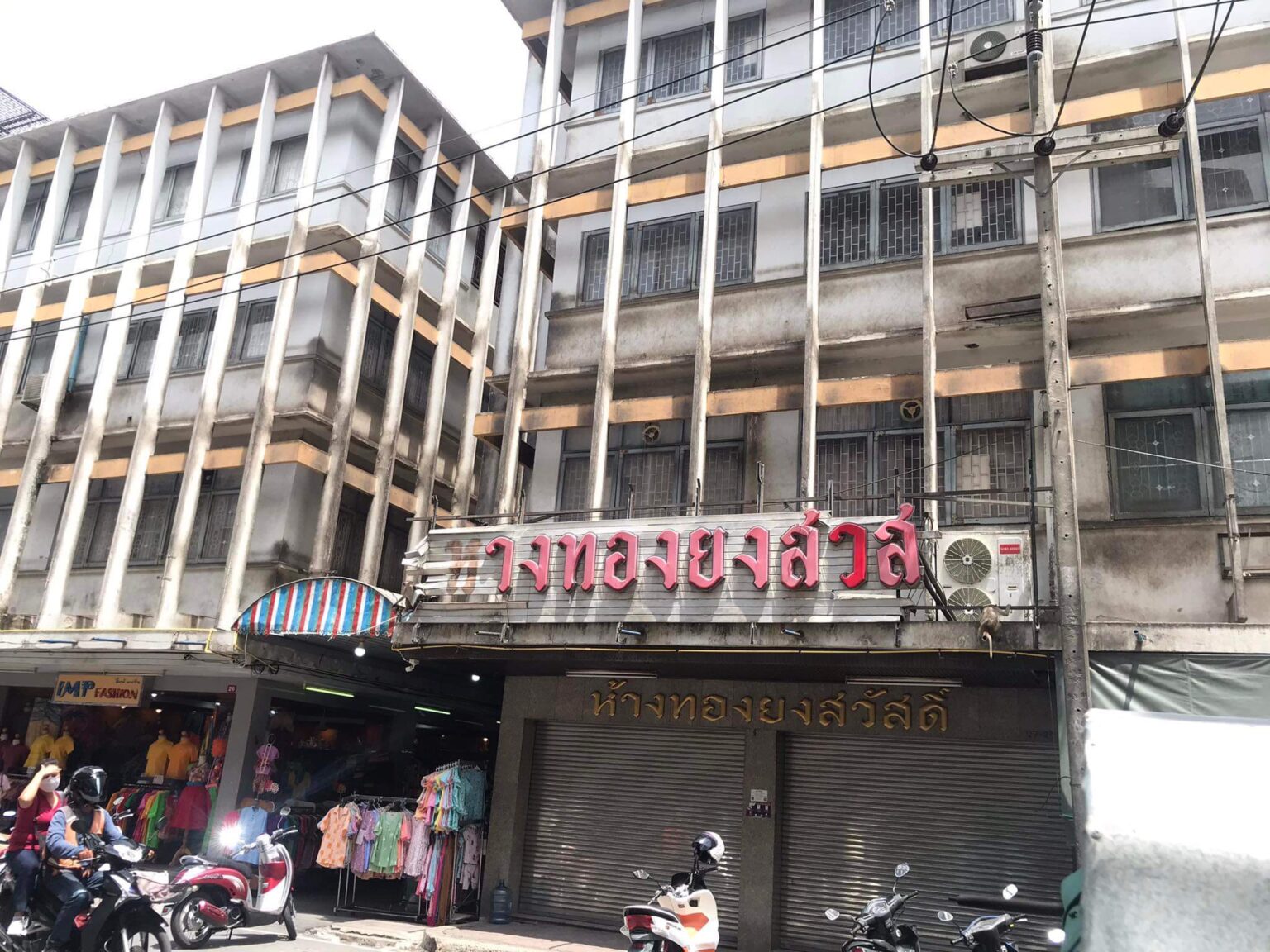
Damrongchai Market, for example, is rejuvenating its stalls to offer vendors over 60 blocks again, and the former shopping district known as “Heavy Alley” is being revitalized. In addition, the large department store “Apinya” has abandoned its plans to sell its property and is preparing to renovate the building while launching promotions to attract customers.
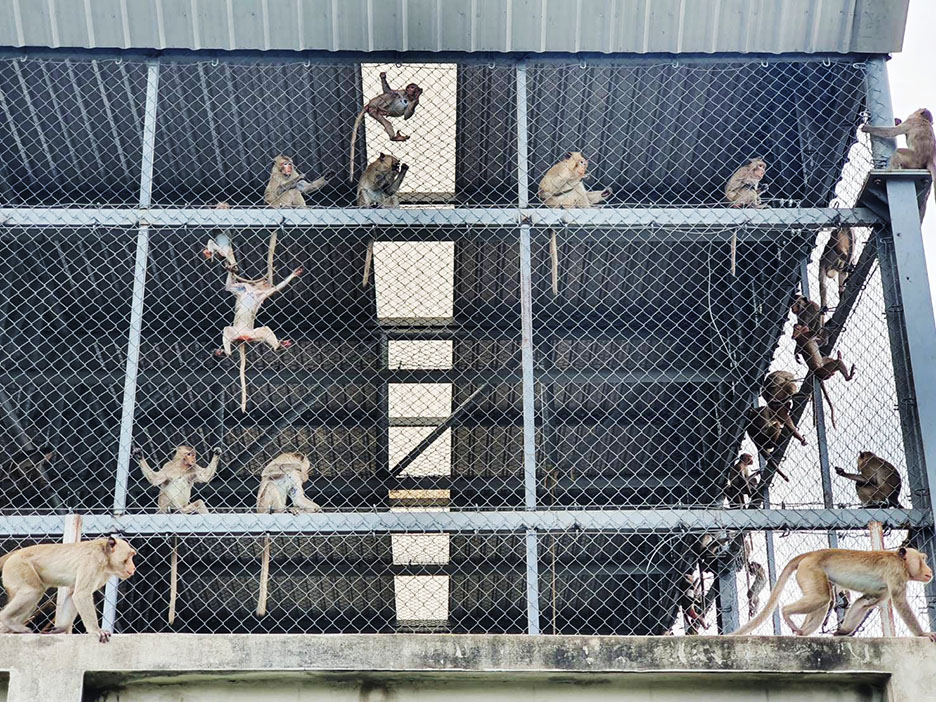
The Department of National Parks, Wildlife and Plant Conservation, in cooperation with Lopburi Municipality, has captured 1,200 of the estimated 3,000 monkeys and relocated them to an animal care facility in Phokhaoton Subdistrict, Mueang Lopburi District. The monkeys will be registered, tested for diseases and sterilized there. However, the capture process has been temporarily halted because the cages are full.
Lopburi Municipality, has captured 1,200 of the estimated 3,000 monkeys and relocated them to an animal care facility.
Prachachat Business reporters recently visited the old town of Mueang Lopburi district, which has been plagued by an overpopulation of monkeys for more than 10 years, causing disturbances in stores, businesses and homes. Starting at the landmark Phra Kan Shrine, they found less than 10 monkeys in the area in the afternoon.
When the reporters crossed the road and railroad line from Phra Kan Shrine to Phra Prang Sam Yot, they found that there were not many monkeys. However, local traders have noticed that the number of monkeys increases in the evening.
The area from Phra Prang Sam Yot to Prang Khaek, which used to be overrun by monkeys destroying property, is now “much calmer” after the first 300 monkeys were caught. Meanwhile, preparations are underway for the renovation of Damrongchai Market in Soi Heavy on Damrongchai Road. This market, once a center for youth products such as clothing, student uniforms and cosmetics, is being revived.
Monkeys climb a billboard in Lopburi Province, north of Bangkok, Thailand, Friday, May 24, 2024. (AP Photo/Sakchai Lalit)
Mr. Pancake Panichcharoen, the owner of Damrongchai Market, told “Prachchat Business” that the quality of life of local residents has improved significantly after some monkeys were caught. Previously, shoppers had their bags snatched by monkeys on a daily basis, causing constant fear. At the market, where some vendors remained despite the monkey infestation, many stalls were canceled at the height of the problem. However, thanks to the current measures, the market is almost back to full capacity and almost all 60 stalls have been rented out again.
“The government’s solution is good because it allows traders to return to normal trade. However, it will take time to monitor the situation further, as this is just the beginning. Tourists may or may not return, but for now, Lopburi’s economy seems to be moving in a better direction,” Mr. Pancake said.
Prachachat Business reporters also investigated other major business areas, including large and small stores opposite the Fresh Market, such as Seng Heng Shop and Apinya Shopping Center. This area is bustling with street vendors and stalls.
Ms. Phan Phookyu, who has been selling fruit for over 30 years, expressed her satisfaction that Lopburi officials and the government have recognized the long-standing monkey problem. She noted a significant decline in monkeys after some of them were relocated, but also a drop in tourist numbers.
“The concern is whether we have conveyed that the problem has been solved and that the monkeys in Lopburi are now orderly and safe for locals and tourists. We want Lopburi to be as busy as it used to be,” she said.
Mr. Surachat Chanprasith, deputy managing director of Apinya Shopping Center, said the monkey problem has been “properly addressed” and taken more seriously than ever before. The number of monkeys has visibly decreased, but business confidence will take some time to recover due to the decades-old problem.
“Getting rid of the monkeys will not immediately revitalize businesses. Businesses need time to adapt. Apinya plans to invest and renovate and negotiate with new business partners and brands to attract tenants with special offers, such as a monthly rent of only 1,000 baht with no three-month deposit.
“Some areas offer free monthly rent and additional support to ensure sustainability. Our goal is for our inner business district to regain 50 percent of its vibrancy from before the monkey problem and before COVID-19. I believe that businesses are willing to invest but have been deterred by unresolved issues. Now that the monkey problem is solved, we can move forward,” said Mr. Surachat.
Local businessmen say they have been operating in Lopburi for 40 years, when there were fewer monkeys. The recent capture of 1,200 monkeys out of a total of about 3,000 has significantly improved the environment in Lopburi. However, economic recovery will take time and continuous, long-term efforts.
“Currently, there is a major problem: After the monkeys have been captured and controlled, the Department of National Parks lacks a clear long-term plan for relocating the monkeys. The department has delegated responsibility for the budget and feeding of the 1,200 monkeys to Lopburi Municipality, which is struggling to meet these costs due to budget regulations. The daily feeding cost averages 20 baht per monkey, totaling about 24,000 baht per day or 720,000 baht per month.
“The city government cannot simply redistribute the funds, so local businesses, residents and even monks are trying to collect leftover food and vegetables for the monkeys. The government and Prime Minister Srettha Thavisin must intervene to find a comprehensive solution,” they said.
BANGKOK — After the COVID-19 pandemic, the foreign film production business has continuously grown. Therefore, Thai government aims to generate more revenue.
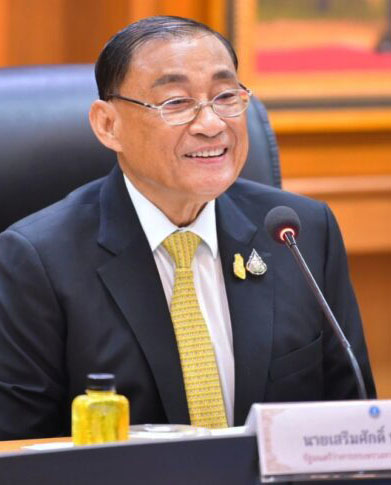
On June 24, 2024, Sermsak Pongpanich, Minister of Tourism and Sports emphasized that the government recognizes the importance of foreign film production, as foreign films have an influential role in attracting tourists to visit various locations featured in the films, as well as in encouraging them to follow in the footsteps of famous actors.
Sermsak Pongpanich, Minister of Tourism and Sports
In 2023, revenue from foreign film productions amounted to over 6.753 billion baht (184 million USD), setting the highest record since the promotion of foreign film production in Thailand began. From January to May 2024 (within five months), Thailand hosted film productions worth up to 3.416 billion baht (93 million USD).
Moreover, the government believes that the wide range of stunning settings in Thailand, combined with the skilled local crews accustomed to international film projects, the support from government bodies, and, notably, the attractive 20% cash rebate incentive, will make Thailand a more popular choice for foreign film productions.
The Ministry of Tourism and Sports has set a target to yield over 7.5 billion baht (204 million USD) in revenue from foreign film productions by 2024. Additionally, it aspires to cultivate film tourism by drawing visitors to sites featured in major international movies filmed in Thailand, which will greatly contribute to the Thai economy.
Mr. Sermsak also revealed that he had assigned Ms. Penpisut Jintasopon, Secretary to the Minister of Tourism and Sports, to welcome Mr. Scott Schaeffer, Senior Vice President of HBO Production for “The White Lotus S3”, a globally popular series that has swept Emmy Awards. The production team has been filming in Thailand since February of this year.
Instagram: thewhitelotus and streamonmax
Mr. Scott expressed his admiration for the professionalism of the Thai crew and appreciated the facilitation provided by the Ministry of Tourism and Sports, as well as other relevant government agencies and local communities. He mentioned that the filming locations in Thailand are of world-class beauty, highlighting the stunning scenery of Koh Samui, Phuket, and various islands in the Gulf of Thailand.
The intention to produce a series in Thailand was mainly driven by the country’s attractive incentive measures, which HBO and Warner Bros. have endorsed as the best in Asia.
When the series is released, it is expected to attract tourists to the filming locations, produce revenue for the tourism sector, generate employment opportunities, and boost economic activity, thereby positively impacting the future of the tourism industry.
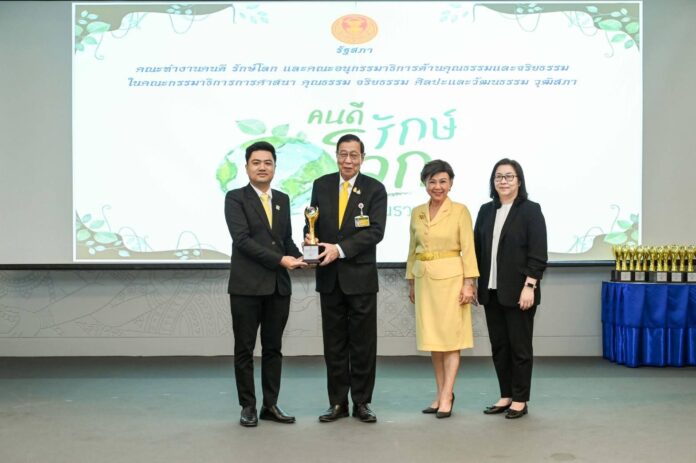
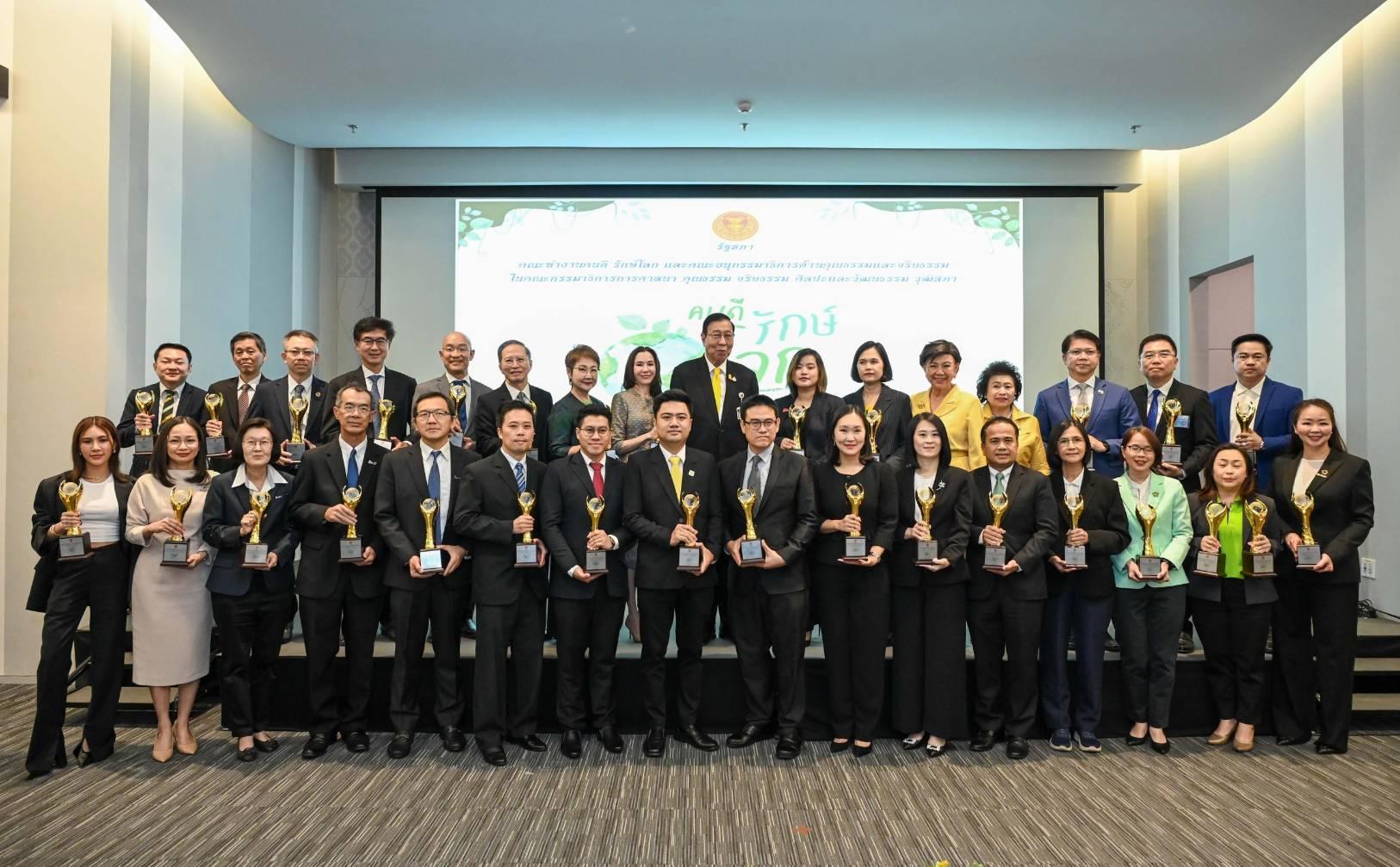
Charoen Pokphand Foods Public Company Limited (CP Foods) has been awarded the prestigious “Khon Dee Ruk Lok: Good People Preserve the World Award” in the private sector category by the Sub-Committee on Morals and Ethics, under the Senate Standing Committee on Religions, Morals, Ethics, Arts and Culture. This accolade underscores CP Foods’ unwavering commitment to environmental stewardship and natural resource conservation.
The award ceremony, presided over by Prof. Pornpetch Wichitcholchai, President of the Senate, was organized by the Sub-committee on Morals and Ethics in collaboration with the “Khon Dee Ruk Lok: Good People Preserve the World Award” working group. The event recognized organizations demonstrating exceptional ESG practices and dedication to natural resource conservation.
The “Khon Dee Ruk Lok: Good People Preserve the World Award” exemplifies CP Foods’ dedication to aligning its integrated agro-industrial and food business operations with CP Group’s “Three-Benefit Principle.” This principle prioritizes benefits to countries and communities where the business operates, followed by company interests. CP Foods has successfully integrated ESG principles into its business strategies and has emphasized protecting natural resources crucial for food security. The company focuses on efficient resource utilization in operations while implementing innovative waste reduction solutions in line with Circular Economy principles.
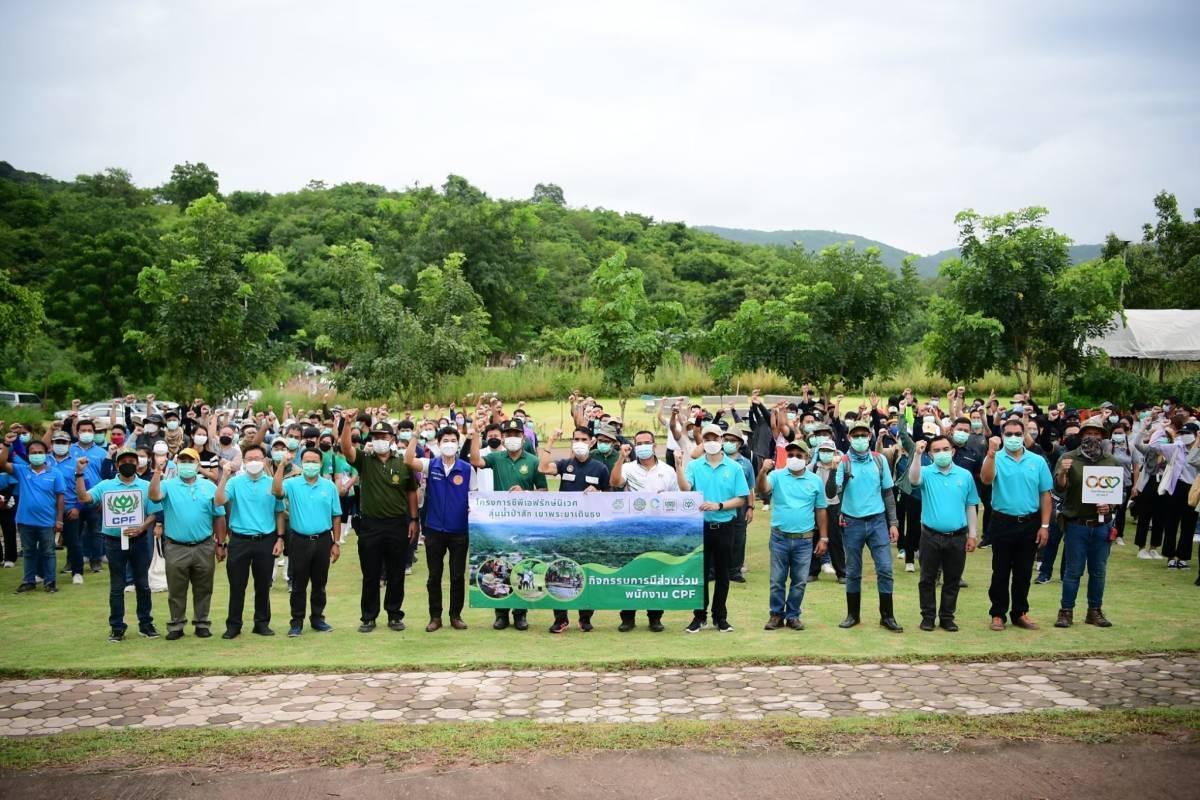
CP Foods fosters environmental responsibility among its employees, encouraging active participation in hands-on conservation projects and natural resource management initiatives. These include watershed forest and mangrove conservation and restoration efforts, as well as the expansion of green spaces at operational sites. So far, CP Foods’ operations in Thailand and abroad have contributed to the conservation, restoration, and planting of over 6 million trees. The company actively engages surrounding communities and schools in environmental conservation initiatives, aiming to sustainably enhance the well-being of ecology and society.
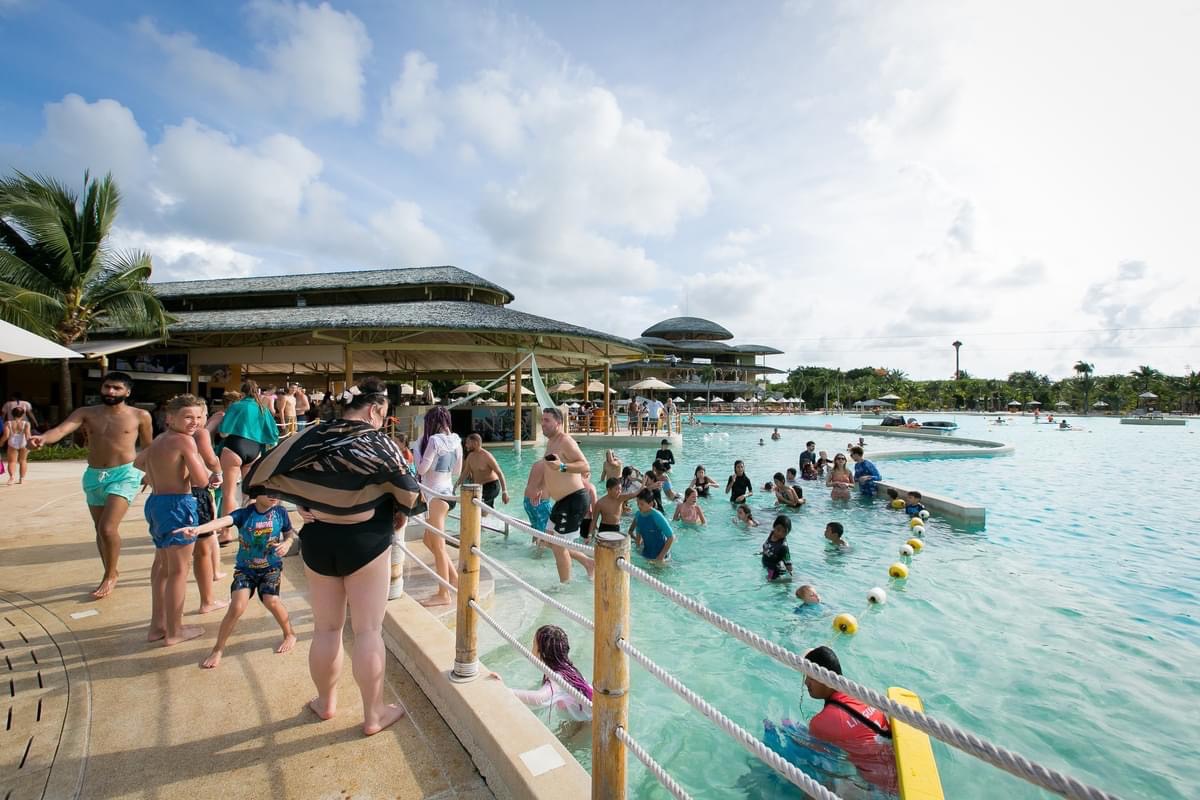
PHUKET — Blue Tree Phuket announced over the weekend that it will cease operations of Blue Tree Lagoon, its water park, and lay off more than 70 percent of its current staff. This comes after about five years of operation and raises questions among those unfamiliar with the Phuket business landscape, especially considering that Phuket’s tourism industry is thriving.
The Phuket Tourism Business Association reports that the province’s tourism business is booming, with revenue expected to exceed 400 billion baht (10.9 billion USD) by the end of 2024, surpassing pre-COVID-19 levels.
Blue Tree Phuket
Prachachat Business delved deeper into the situation and discovered even more intriguing information. Blue Tree Phuket announced on June 22, 2024 that the decision to cease operations of Blue Tree Lagoon, the company’s main business segment, on 1 August 2024, was made to meet changing customer demands.
The company emphasized that other areas within Blue Tree Phuket will continue to operate as usual and announced plans to open newly designed facilities in the Lifestyle Village Zone as part of a strategic business shift.
The company will introduce a range of family-friendly activities, including shopping, dining and other recreational areas. These include clothing stores, fitness activities such as judo and Muay Thai, and outdoor concert events that will make Lifestyle Village a new destination for everyone.
Blue Tree Phuket
“The company is preparing to transition its business model to a new concept that focuses on healthcare services and includes the promotion of physical and mental health as well as social connections to improve the quality of life for both locals and tourists,” the statement reads.
Even if outsiders might assume that the company is in financial difficulties, this might not be the case.
Several sources in Phuket told “Prachachat” that the group behind the project is “Pirate Girl”, the daughter of the owner of the world’s most expensive watch brand, Patek Philippe. Liquidity problems can therefore be ruled out.
“As far as I know, the project started because the daughter of the famous watch brand owner visited Phuket, liked it and told the driver that she wanted to buy land for investment. The investment of 1.2 billion baht is not worth mentioning because the sale of a few watches would cover the cost. But the ultra-rich are not stupid. When they calculate investments, they must be worth every penny,” said a source.
Blue Tree Phuket
The exact reasons for the closure are still unclear, but it is known that Blue Tree has been struggling with “internal management problems” for some time, with the management team having changed several times.
There is also an attractive factor: selling the business now would bring significant profits as the value of the land has increased many times over. The 140 rai plot alone could be sold for billions, as land prices in the area currently stand at 30-40 million baht per rai.
Another source suggested that there may be plans to shift investment to the hotel business or other ventures. As for the 300 employees, don’t worry because Blue Tree has made arrangements and many hotels and tourism businesses in Phuket are still short staffed and ready to hire.
The Kunming Immigration Office in Kunming, Yunnan.
KUNMING — A new problem of trafficking Thai teenage girls for elderly care in China has been discussed in the meeting between Thai and Chinese authorities in Kunming, China.
According to Matichon Online, the Central Investigation Bureau sent Anti-Trafficking in Persons Division police to coordinate with Chinese police in Yunnan Province to address human trafficking and call center gang issues.
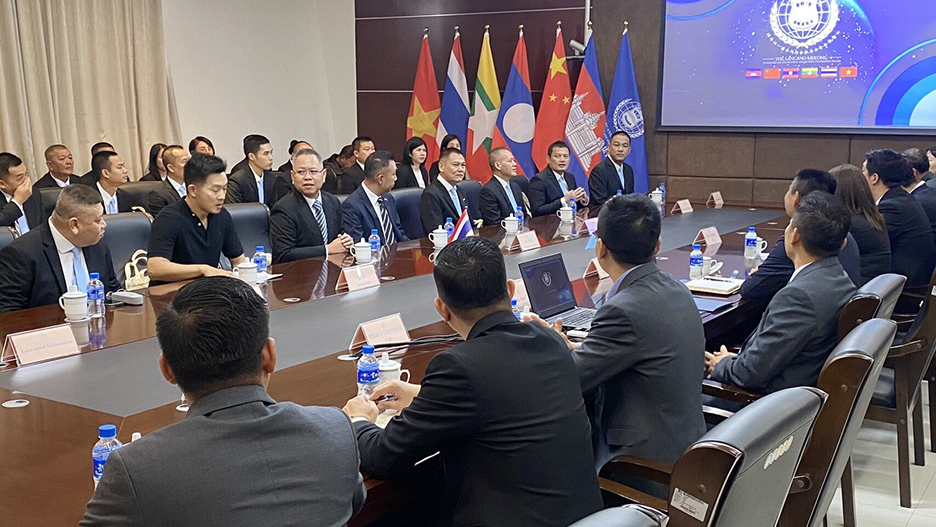
On June 23, at the Kunming Immigration Office in Yunnan, China, Pol. Maj. Gen. Saruti Khwaengsopha, Commander of the Anti-Trafficking in Persons Division, and 30 related Thai police officers met with Pol. Maj. Gen. Kong Yiping, Deputy Commander of Kunming Immigration Office.
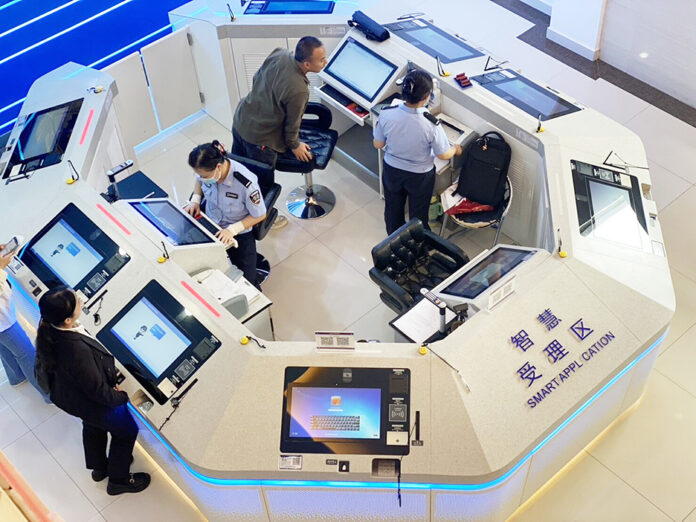
The meeting included observing immigration work that uses technology to reduce police workload by about 80%. They also met with various units in Kunming to update on transnational crime suppression.
Previously, Pol. Lt. Gen. Jirapop Phuridej, Commander of the Central Investigation Bureau, ordered anti-trafficking police to coordinate regarding the movement of Thai people into northern Myanmar, which is partly a base for call center gangs causing problems for both Thailand and China.
The meeting between Thai and Chinese authorities is taken place in Kunming, China on June 23, 2024.
Pol. Maj. Gen. Saruti said China doesn’t have specific anti-trafficking laws, but Thai police consuls are working to keep information updated between the two countries. They have tracked 27 Thai human trafficking suspects hiding in China and are cooperating on cases involving prostitution and the use of teenage labor, with many Thai people illegally working in Kunming.
The use of young Thai female workers is becoming popular among elderly Chinese who hire them for marriage, but some end up abandoned, causing problems that the Thai consulate in Kunming is trying to resolve.
The meeting also involved discussions with the Lancang-Mekong Integrated Law Enforcement and Security Cooperation Center (LMLECC), which coordinates between China, Laos, Cambodia, Myanmar, Vietnam, and Thailand in preventing and suppressing transnational crimes in the region.
Pol. Maj. Gen. Saruti added that last year, over 300 human trafficking cases were arrested, with 50% involving child prostitution, 30% child pornography, and the rest forced labor and begging.
The cooperation with LMLECC is expected to increase, which is crucial as the Mekong River is often used for human trafficking and call center operations.
Jiang Shui, Deputy Secretary-General of LMLECC, stated that since its establishment, LMLECC has helped reduce crime significantly. He emphasized the importance of the Mekong River as a trade route and called for Thai officials to join their operations for standardized practices, which would benefit regional economic growth and international trade.
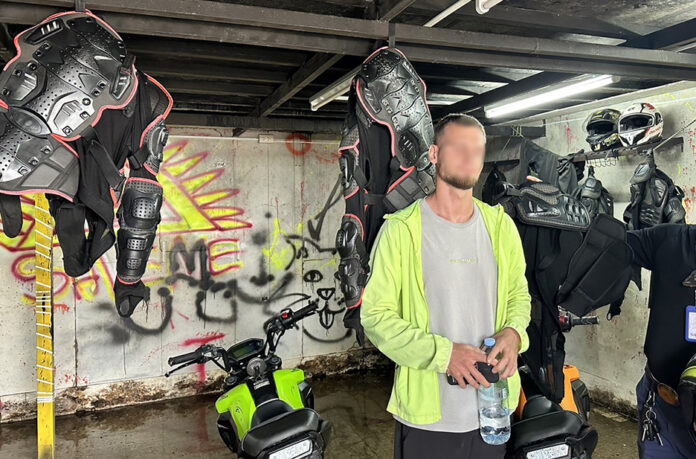
Mr. Roman, a 29-year-old Russian national for illegally teaching motorcycle driving in Phuket Province on June 23, 2024.
PHUKET — Tourist Police in Phuket launched an operation to suppress crimes affecting the tourism industry. They received information from an informant about a foreigner teaching motorcycle riding in a large parking area near the old floating market in Kathu Subdistrict, Kathu District, Phuket Province.
Investigation revealed an Instagram account of Mr. Roman, a 29-year-old Russian national, with a description in Russian that translates to “Motorcycle School, Motorcycle Rental – Phuket” and a contact phone number 063 1XX 45XX. When tourist police surveyed Mr. Roman’s motorcycle training location, they found him teaching a foreign woman how to ride a motorcycle and avoid obstacles.
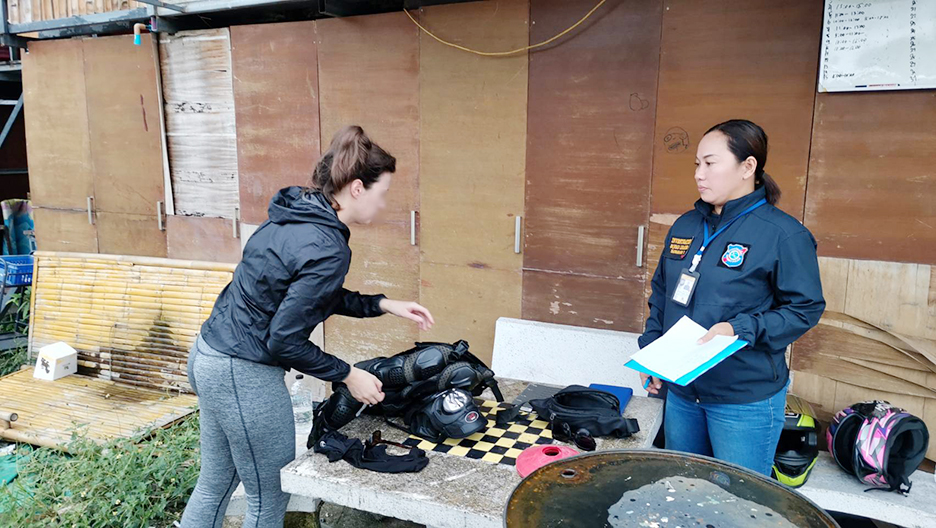
A Russian woman states that she had agreed to pay 2,000 baht for Mr. Roman’s 3-day course.
On June 23, the arrest team approached both individuals, identifying themselves as police officers. The woman taking the motorcycle lesson stated she was Russian and had agreed to pay 2,000 baht for a 3-day course. She found the service through a Google search and phone contact.
The officers then arrested Mr. Roman on charges of being a foreigner working without a work permit. He was handed over to the Kathu Police Station for further legal proceedings.
Evidence collected included social media messages from Instagram and other platforms where numerous previous students had given ratings to Mr. Roman.
PHETCHABUN — A heartwarming story about dog lovers helping to find the owner of a lost dog running in the rain searching for its owner’s car has gone viral on social media. This incident occurred in Phetchabun Province, in the lower northern region of Thailand.
A Facebook user named Puttal On-ta posted a video and message saying, “If anyone abandoned this dog or if it fell from a car, please come pick it up urgently. It’s pitiful – it won’t come under shelter when called, runs after every white car, and sits in the rain waiting for its owner. It looks left and right hopefully.”
The video shows a male Thai breed dog with brown fur, sitting and standing in the rain, looking scared with its tail down, peering out to the road as if waiting for something.
Later, a Khaosod news reporter met with Puttal, the page owner on June 23. She owns a souvenir shop in Khao Kho, along the Lom Sak-Phitsanulok road, Highway 12, in Camp Son subdistrict, Khao Kho district, Phetchabun province.
She said the dog had been around her shop for about 4-5 days. During this time, it often rained in Khao Kho area, but the dog would stand in the rain, refusing to take shelter. It looked scared, with its tail down, as if waiting for someone, and would often chase after white cars.
People in the area said they saw the dog jump out of a white pickup truck belonging to a lottery ticket seller and couldn’t find its way back. It just stood waiting for its owner. Puttal, her shop staff, and nearby vendors would feed it and try to get it to sleep near the shop.
After several days, she became attached to and felt sorry for the dog. She took photos and videos to post on Facebook, which were widely shared and commented on.
On June 22, the dog’s owner contacted her. Shortly after, the owner arrived at her shop. When the dog saw its owner, it jumped excitedly, wagging its tail and running towards her with great joy. Puttal immediately knew this woman was the real owner.
The owner explained that she had been away on business for seven days. When she returned home and couldn’t find her dog, she searched but couldn’t locate it. She got a tip from neighbors who saw a white pickup truck take the dog away. She finally saw the shared post on Facebook, recognized her dog immediately, and rushed to pick it up.
Puttal said that when the dog reunited with its owner, her shop staff were so moved they cried tears of joy. They were touched and very happy to have found the dog’s owner. The owner’s house was nearly 10 kilometers away. Puttal thanked the power of social media for helping share the post until the owner saw it.
Puttal On-ta, a souvenir shop owner, is happy for the dog.
DSI officials escorted STARK’s former chairman Chanin Yensudchai from Suvarnabhumi Airport to the DSI headquarters on Chaeng Watthana Road, Bangkok, on June 23, 2024.
BANGKOK — Thai government thanks the UAE officials for extraditing the main suspect, in STARK stock fraud case that affected 4,704 victims and caused 402 million USD in damages.
On June 23, officials from the Department of Special Investigation (DSI) escorted Chanin Yensudchai, former chairman of Stark Corporation Public Company Limited (STARK), from Suvarnabhumi Airport to the DSI headquarters on Chaeng Watthana Road for questioning. Chanin is a key suspect in the “STARK stock fraud case.”
The Thai government expressed gratitude to the United Arab Emirates (UAE) for extraditing Chanin to face prosecution in Thailand. This is considered a major case, with 4,704 victims and total damages amounting to 14.778 billion baht (approximately $402 million). The DSI has already interviewed 5 accusers and 157 witnesses.
Chakkrapong Saengmanee, Minister to the Prime Minister’s Office, revealed that the arrest of Chanin, who is accused of accounting fraud, public fraud, and money laundering involving billions of baht, took over 8 months. The process involved tracking his whereabouts across multiple countries and required delicate handling due to international implications.
Chakkrapong Saengmanee, Minister to the Prime Minister’s Office, revealed the arrest of STARK’s former chairman Chanin Yensudchai at Suvarnabhumi Airport on June 23, 2024.
It required cooperation from various agencies, including the Ministry of Justice, DSI, Ministry of Foreign Affairs, Securities and Exchange Commission (SEC), Attorney General’s Office, and UAE authorities.
“This case will serve as an important lesson for Thailand’s capital market. The SEC will use it to improve transparency and accountability,” Chakkrapong stated. He also disclosed that in initial conversations, Chanin claimed he fled the country due to safety concerns after receiving threats.
Subsequently, the DSI has pressed 6 major charges against Mr. Chanin, as follows:
Fraud against public property
Violation of the Securities and Exchange Act of Thailand
Forgery and false accounting records
Negligence in the performance of executive duties
Corruption
Money laundering
These charges represent serious allegations of financial crimes and misconduct in a corporate or financial context.
DSI officials escorted STARK’s former chairman Chanin Yensudchai from Suvarnabhumi Airport to the DSI headquarters on Chaeng Watthana Road, Bangkok, on June 23, 2024.
Previously, authorities had charged 11 suspects with violations of the Securities and Exchange Act of 1992 for accounting and financial statement fraud, as well as public fraud. They also face charges under the Anti-Money Laundering Act of 1999.
On June 24, the court will consider whether to grant bail to Chanin. Regarding the recovery of funds transferred abroad by the suspects, the DSI has been tasked with handling this aspect of the investigation.
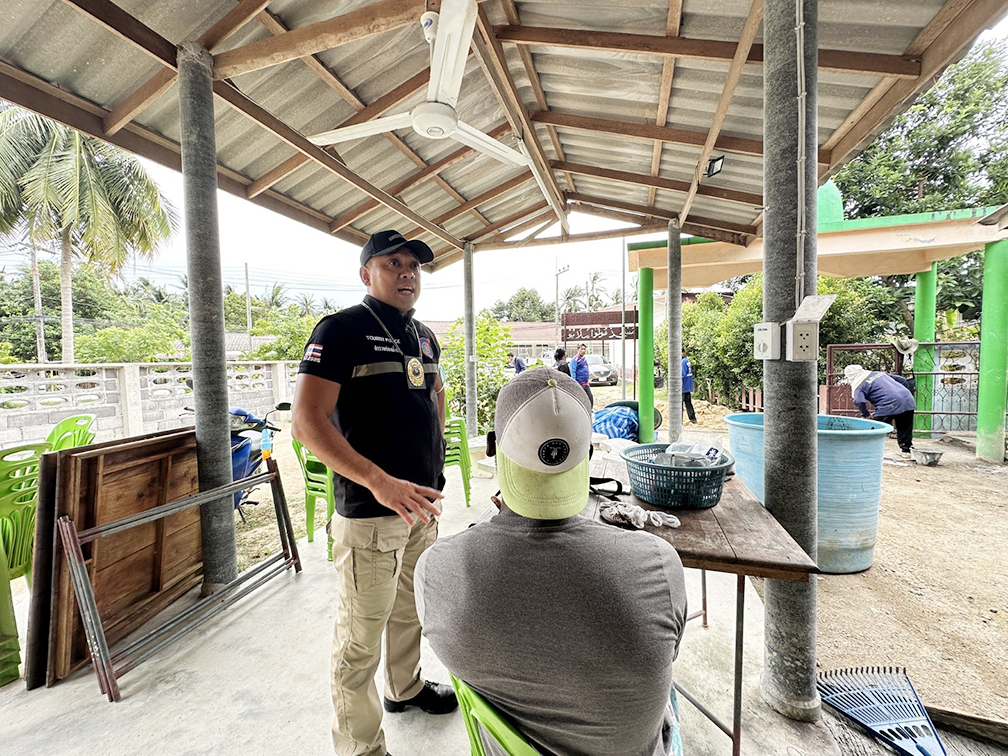
Tourism police officers arrested Mr. Evariste, a 39-year-old French national, at the Baan Tai Malay Mosque in Koh Phangan district, Surat Thani province on June 22, 2024.
KOH PHANGAN — Tourist police on Koh Phangan have arrested a French tourist who claimed to be a cult leader and invited other foreign tourists to join his rituals. The man had overstayed his legal limit.
On June 22, tourist police officers on Koh Phangan arrested Mr. Evariste, a 39-year-old French national, at the Baan Tai Malay Mosque in Koh Phangan district, Surat Thani province.
Previously, authorities received complaints about a foreigner living near the mosque, claiming to be a religious leader participating in rituals and inviting foreign tourists visiting Koh Phangan to join religious ceremonies.
An officer escorts Mr. Evariste to his residence and finds that his tourist visa was for 30 days, but he had overstayed by 3 months.
Officers conducted surveillance and spotted a foreigner matching the description from the complaints. When they approached Mr. Evariste, he appeared nervous. When asked for his passport, he claimed it was at another location where he had set up a tent near the mosque.
Officers escorted him to the tent and found that his tourist visa was for 30 days, but Mr. Evariste had overstayed by 3 months.
The authorities charged him with “being a foreigner staying in the Kingdom after permission has expired” (overstaying by 78 days) and transferred him to Koh Phangan Police Station for legal proceedings.