



















28.5 C
Bangkok
Tuesday, October 6, 2026
Home Blog Page 8

Taiwan Pavilion to Showcase Next-Generation AI Healthcare and Precision Ecosystem at Thailand LAB INTERNATIONAL 2026

Taiwan Pavilion to Showcase Next-Generation AI Healthcare and Precision Ecosystem at Thailand LAB INTERNATIONAL 2026

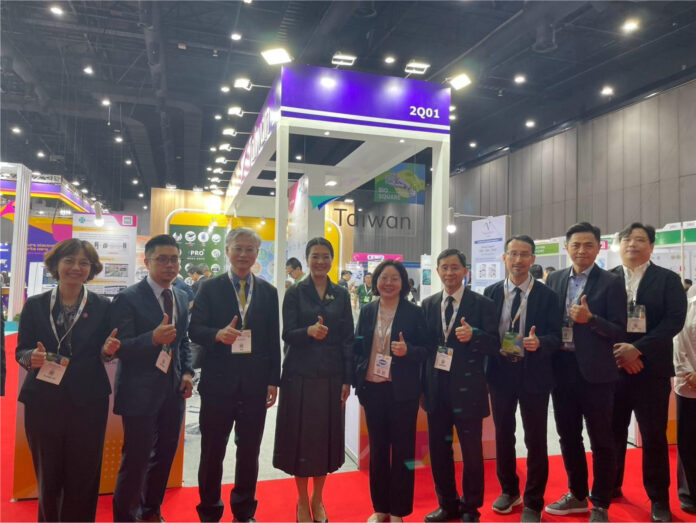
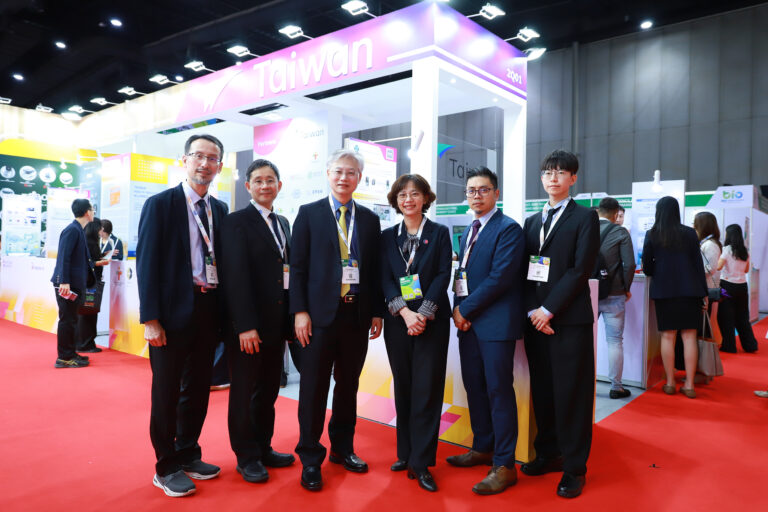
BANGKOK, Thailand — Positioning artificial intelligence, big data, and semiconductor capabilities at the core of its next-generation medical ecosystem, Taiwan is redefining global healthcare from clinical innovation to international execution. At Thailand LAB INTERNATIONAL 2026 (held September 2–4 at BITEC Bangna), the Taiwan Pavilion—organized by Taiwan International Trade Administration (TITA) and implemented by the Taiwan External Trade Development Council (TAITRA)—brings together 22 leading Taiwanese healthcare institutions, biotechnology pioneers, and technology innovators under the banner of “Smart Healthcare × Precision Diagnostics × Bio Innovation × Health Promotion.”
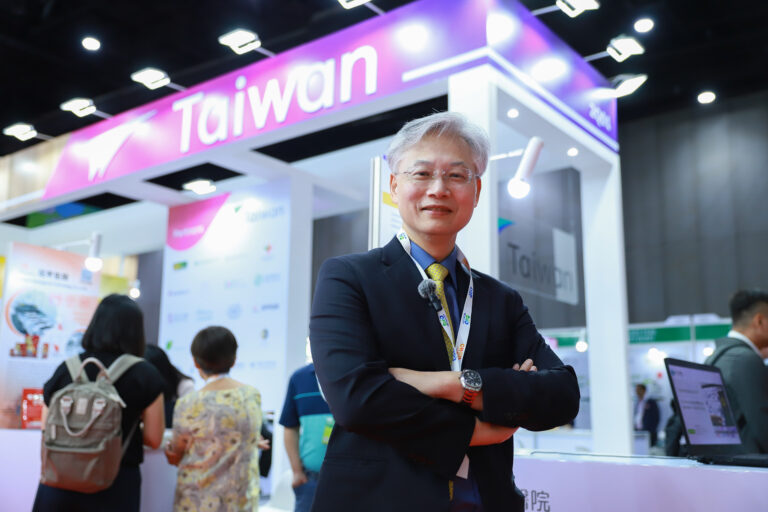
Taiwan hospital puts AI at the center of next-generation healthcare

As a premier gateway for expanding into the ASEAN market, the Taiwan Pavilion presents an end-to-end medical ecosystem that spans smart hospital management, point-of-care cell therapy, AI-driven diagnostics, preventive medicine, and functional wellness.
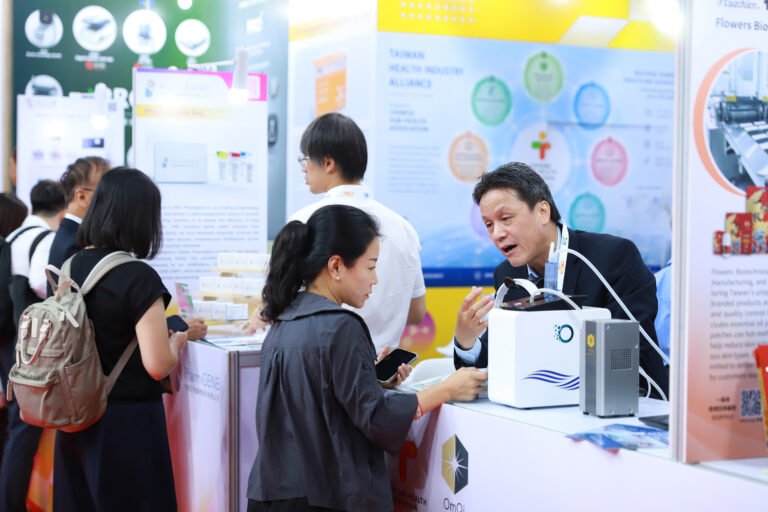
IMG 0029

A Multidisciplinary Medical Ecosystem: Exhibitor Categories & Highlights

The Taiwan Pavilion showcases the full spectrum of Taiwan’s biomedical strengths across four core domains. In Smart Healthcare & AI Digital Medicine, Fu Jen Catholic University Hospital(BestShape VS & OCTOFLOW & & Command Center) , DeepRad AI (DeepLung-CAC & Deep Brain-Cognito) , and Morning Dew Creative Technical (AI dual-lens colonoscopes) present cutting-edge clinical tools. Meanwhile, Precision Diagnostics & Genomics features Good Future BioMed (CTC detection), Pharmigene (HLA-B PGx DNA testing ), Genomics BioSci & Tech (NGS, proteomics, multiomics, and CRDMO ), Vita Genomics (MCED & ADHD diagnostics), and Fethiann Molecule Applied (Molecurique® precision bioactive molecule platform for drug discovery).
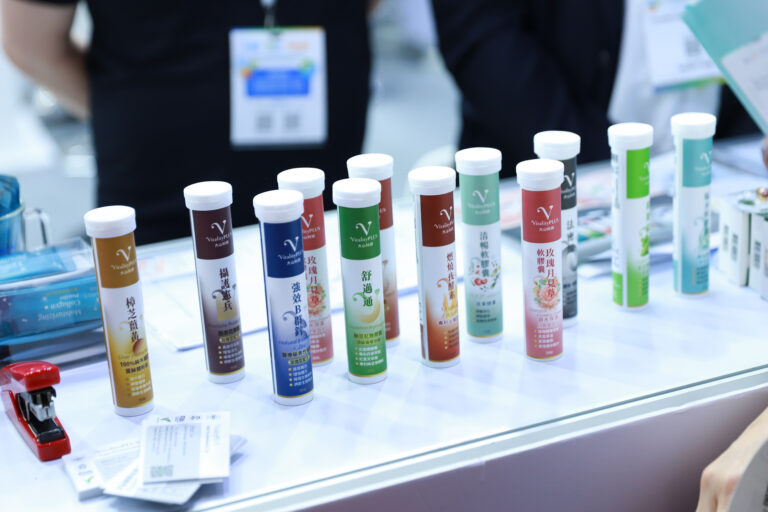

IMG 0494

IMG 0006

In Advanced Cell Therapy & Laboratory Equipment, YJ Biotechnology (Isolator platform for point-of-care manufacturing ), TIRS OPTICS (real-time nanoparticle visualization system ), and People Life TEK (IPRO Benchtop Equipment ) display advanced infrastructural innovations. Finally, Preventive Care, Wellness & Consulting highlights International Cryptomonadales Biotech (Nutraceutical grade supplements), OmQi Technology & CSHA (Sleep Oxygen & Air Purification System ), Flowers Biological Technology & Vitality Plus (herbal patches & vegan softgels), and Healthmate & Jizhi Management Consulting (patented ingredients & OEM/ODM services).
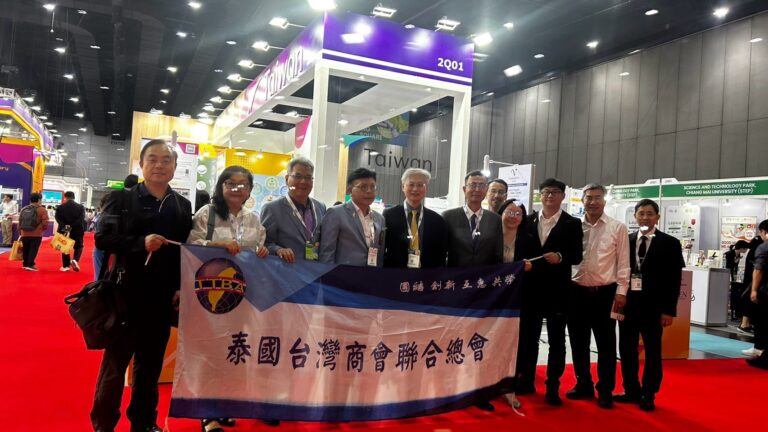
TAICHUNG 14

IMG 0609

IMG 0066

Pioneering Clinical AI: Taichung Veterans General Hospital (TCVGH)

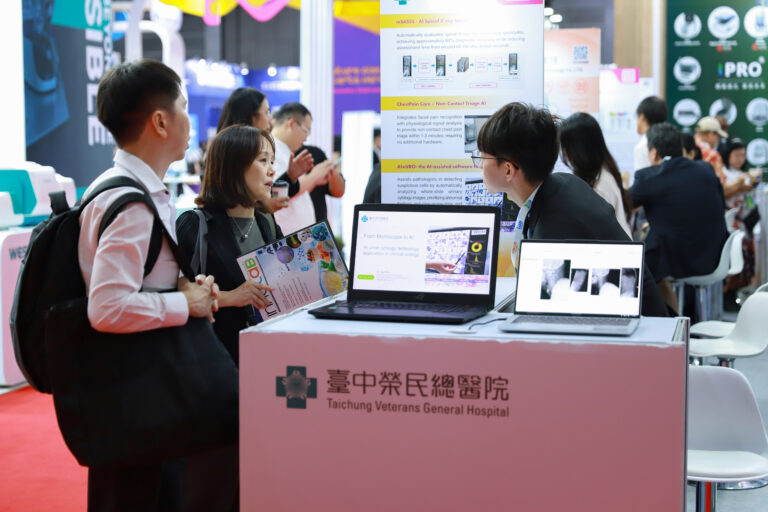
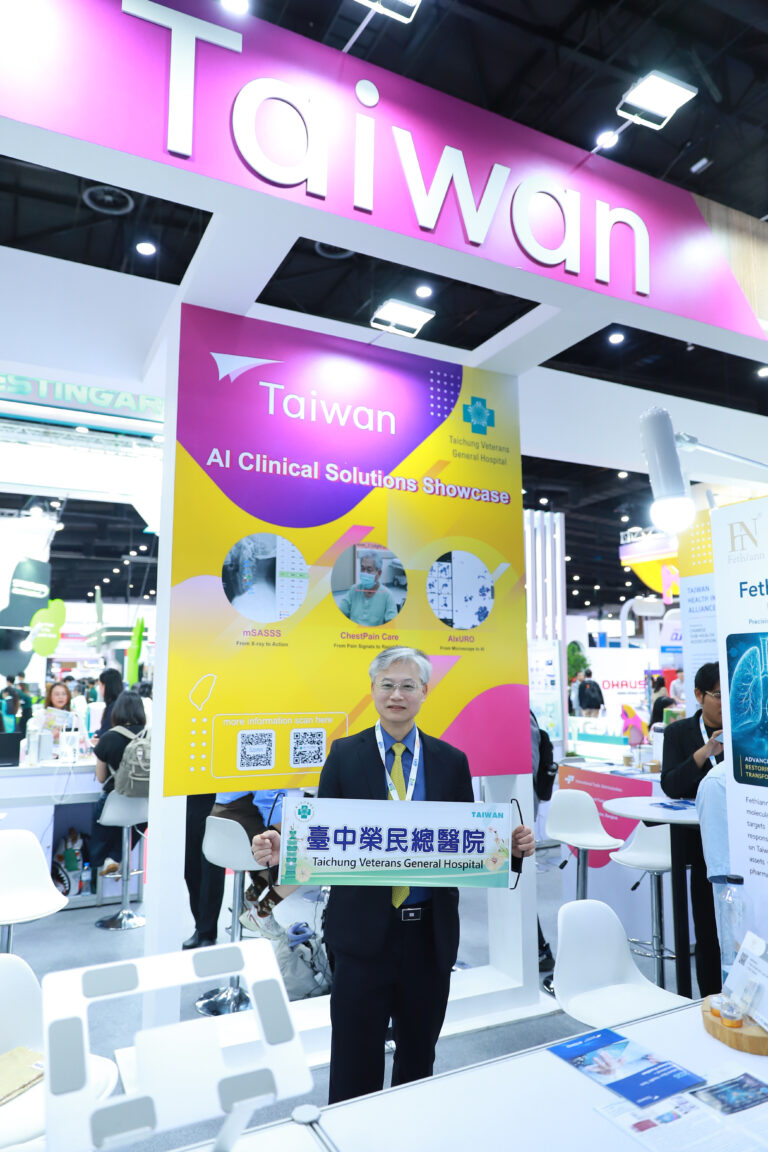
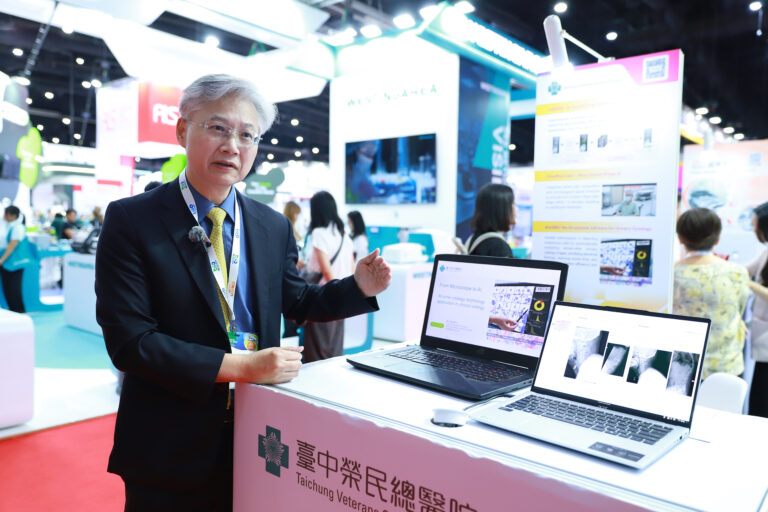
Serving as the clinical anchor of the Taiwan Pavilion, Taichung Veterans General Hospital (TCVGH)—the only national medical center in central Taiwan and ranked No. 1 in Taiwan and No. 85 globally in Newsweek’s World’s Best Smart Hospitals 2026 —demonstrates how AI transitions from laboratory development to real-world clinical implementation.
IMG 0296

Under the leadership of Superintendent Yun-Ching Fu, MD, PhD, TCVGH has pioneered advanced clinical applications across cardiology, robotic surgery, CAR-T cell therapy, and automated hospital infrastructure. Key clinical AI and smart healthcare breakthroughs      include:

  • mSASSS Spinal Assessment: Analyzes 24 spinal angles via AI, slashing X-ray evaluation time from 60 minutes to just seconds.
  • ChestPain Care Triage: Enables non-contact emergency department triage in 1 to 3 minutes, identifying high-risk cardiac patients with over 85% accuracy.
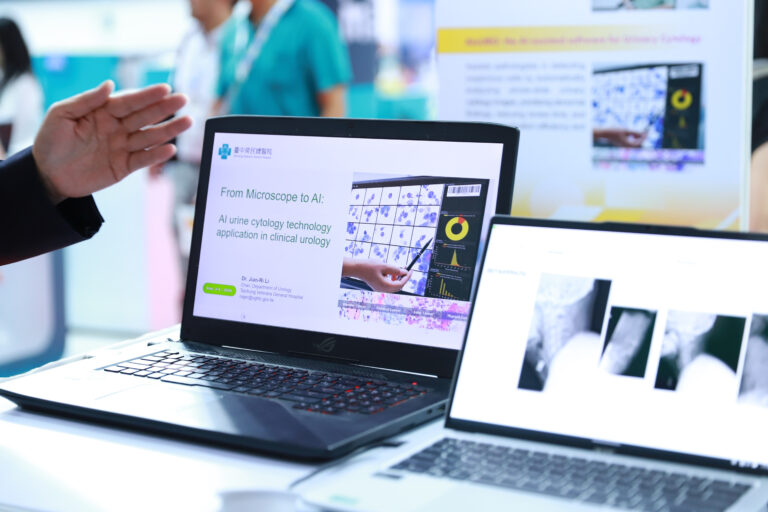
  • AIxURO Digital Cytology: Assists pathologists in identifying suspicious urinary cells to accelerate early cancer screening.
  • FDA-Cleared Osteoporosis Detection: Utilizes standard chest X-rays to screen for osteoporosis, providing an accessible alternative to conventional DXA scans.
  • Automated Infrastructure & Robotics: Features one of Asia’s largest automated laboratories—processing over 10,000 daily samples within 60 minutes—alongside an AI nursing robot system that reduces nursing operational workloads by up to 30%.
IMG 0314

IMG 0439

Strategic Synergies: Unlocking Taiwan–Thailand Healthcare Collaboration

IMG 0521

Combining Taiwan’s world-class ICT and medical infrastructure with Thailand’s rapidly growing position as the medical hub of Southeast Asia creates high-value strategic opportunities across four key areas:

  1. Smart Hospital Transformation & Workforce Alleviation: As Thai public and private hospital networks modernize, Taiwanese automated laboratory systems, remote ICU platforms, and AI nursing robotics provide immediate plug-and-play solutions to streamline clinical workflows and alleviate nursing shortages.
  2. Cross-Border Clinical Validation & Regulatory Alignment: Joint clinical trials and multi-center validation studies between Taiwanese medical centers and Thai academic institutions can accelerate the regional deployment and regulatory clearance of AI-driven diagnostic software across ASEAN.
  3. Medical Tourism Enhancement & Precision Triage: By integrating Taiwanese AI screening modules—such as rapid chest pain triage, early cancer detection, and non-invasive dementia prediction—into Thailand’s premier medical tourism facilities, healthcare providers can offer high-precision, elevated preventive care to international patients.
  4. Decentralized Cell Therapy & Regenerative Medicine: Utilizing micro-smart isolators and point-of-care manufacturing, Thai clinical centers can partner with Taiwanese biotechs to produce advanced cell therapies and exosomes locally, significantly reducing cold-chain logistics costs and broadening patient access.

Connecting Taiwan’s Expertise to Global Healthcare

By integrating silicon hardware, clinical data, and medical expertise, Taiwan is accelerating the evolution of healthcare from treatment to prediction, and from domestic validation to international collaboration. The Taiwan Pavilion serves as a direct bridge for Southeast Asian medical institutions, distributors, and research centers seeking strategic partnerships in clinical validation, smart hospital integration, and commercial expansion.


Contact Information:

For further details, delegation inquiries, or B2B matching opportunities, please contact:

Ad by TITA
Advertisement

Ayutthaya residents call for earlier flood warnings as water rises

AYUTTHAYA — Residents in low-lying communities in Ayutthaya have called for earlier flood warnings after rising water from the Chao Phraya River inundated homes and forced people to move belongings to higher ground.

The situation worsened after the Royal Irrigation Department increased water releases downstream from the Chao Phraya Dam, pushing river levels higher in Ayutthaya and causing water to spill into areas outside flood barriers.

As of 30 September, flooding had affected 13 districts, 167 subdistricts, 1,081 villages and 55 communities in Ayutthaya, affecting 42,286 households, according to the provincial Disaster Prevention and Mitigation Office. One death has been reported in Sena district.

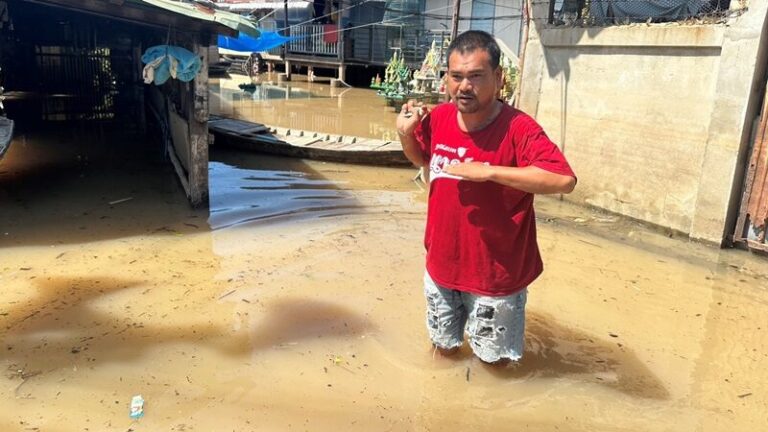
At a community in Ban Pho subdistrict, Sena district, water from the Noi River, which receives flows from the Chao Phraya, spilled into the neighbourhood along with water from the Chao Chet-Bang Yi Hon canal.

ป1 93

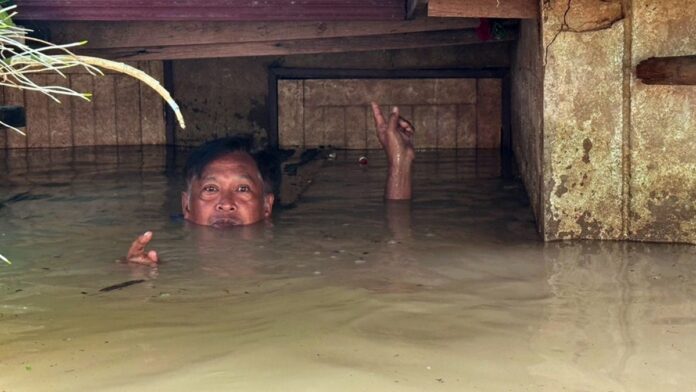
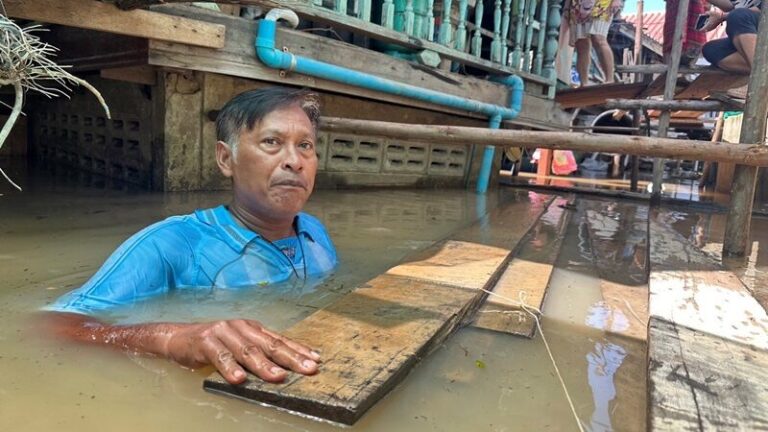
Water levels rose to more than 1.70 metres, flooding the lower floors of homes. Some houses are built on raised foundations, but their lower areas are used as kitchens, living spaces and storage areas.

Access to the community has also been disrupted, with some roads submerged. The local administration has built temporary wooden walkways, while residents in deeper areas have had to wade through the water or use boats.

Residents said the community is regularly among the first areas to flood during the annual wet season, disrupting daily life and forcing vendors and workers to stop working.

One resident, Jenphop, 36, said water levels rose rapidly over three days this year, leaving some residents unable to move belongings and motorcycles in time.

He called for authorities to issue warnings earlier so residents in low-lying areas have more time to move valuables and prepare for rising water.

Another resident, Wanida, 47, said water levels in the community rose by 2–3 metres within several days. Her home, like many others in the area, has a raised lower floor that is normally flooded for about a month during the annual flood season.

She said flood relief and supplies sometimes fail to reach homes deep inside the community, while flooding also prevents customers from reaching local shops and leaves many residents without income.

ป2 89

Residents acknowledged that Ayutthaya is a low-lying area that receives water during the flood season, but said better planning and water management were needed as severe flooding has become a recurring disruption.

Another resident, Adis, 56, said water rose so quickly this year that his family and neighbours could not move all their belongings in time.

He said residents have had to wade through water nearly up to their necks to retrieve possessions from their homes, while building raised walkways as the water level continues to rise.

Residents are now calling on authorities to improve the flood warning system and provide alerts further in advance, allowing communities more time to move property, protect homes and prepare for rising water.

Advertisement

Jointly seizing opportunities for cooperation for a prosperous future

Editor’s note: This article was written by H.E. Zhang Jianwei, Ambassador of the People’s Republic of China to the Kingdom of Thailand, to mark the occasion of China’s National Day.

On October 1, 2026, the People’s Republic of China will celebrate the 77th anniversary of its founding. Over the past 77 years, China has continued to open up and prosper. Its economy has become the world’s second largest, people’s lives have undergone profound changes, and China has become a major trading partner of more than 160 countries and regions. China’s development has also profoundly influenced the world. This year marks several important milestones that are worth looking back on, and I would like to share them with our Thai friends.

77 years of hard work and progress: China’s development path has enriched the global process of modernization.

From rebuilding across the board in the early days since its founding, to the rapid development brought about by reform and opening up, and till to high-quality development in the new era, China has undertaken in just a few decades a process of industrialization that took developed countries centuries to complete, creating remarkable achievements in rapid economic growth and long-term social stability. China has historically eliminated absolute poverty and built a moderately prosperous society in all respects. It has also continued to make new breakthroughs in scientific and technological innovation, green transformation and the digital economy. China’s development experience shows that developing countries can draw on the achievements of human civilization while taking into account their own national conditions and explore their own paths toward modernization.

This year marks the fifth anniversary of President Xi Jinping’s proposal of the Global Development Initiative.

Over the past five years, China has contributed around 30 percent of global economic growth on average each year, while practical cooperation projects have brought benefits to people in more than 120 countries. China’s development experience has continued to provide the world with valuable confidence and a source of stability. China has actively promoted the implementation of the Global Governance Initiative. The International Organization for Mediation has officially begun operations, and the World Artificial Intelligence Cooperation Organization has been established in China. China stands ready to work with all parties to firmly uphold the international system with the United Nations at its core, support the vigorous development of multilateral and regional cooperation mechanisms, and promote a more just and equitable global governance system.

 105 years of continued endeavor: the Communist Party of China has always put the people first.

This year marks the 105th anniversary of the founding of the Communist Party of China and the first year of the 15th Five-Year Plan. The Communist Party of China has remained committed to pursuing happiness for the Chinese people and rejuvenation of the Chinese nation. Whether in economic development and technological innovation or in education, healthcare, elderly care and employment, improving people’s well-being has always been the starting point and ultimate goal. China seeks to ensure that the benefits of development are shared more widely and fairly among its people.

China’s opportunities are becoming tangible benefits for people around the world.

China’s economy has strong resilience, while its vast domestic market continues to unleash new sources of growth. Smart Manufacturing in China is taking on new vitality. The 15th Five-Year Plan sets out China’s development blueprint while also extending an invitation for cooperation to the rest of the world. China has introduced zero-tariff treatment for 63 countries, and its imports have ranked second in the world for 17 consecutive years. Major scientific facilities in fields such as controlled nuclear fusion and quantum technology are open for international cooperation, while companies in emerging industries such as artificial intelligence are actively expanding their applications overseas. China will continue to open its doors to win-win cooperation and create more new opportunities for foreign investment in China.

51 years of standing together through thick and thin: the future of China-Thailand relations is bright.

Prime Minister Anutin Charnvirakul paid an official visit to China, during which the two governments issued a Joint Statement on a China-Thailand Community with a Shared Prosperous Future and signed more than 10 cooperation agreements covering trade and investment, scientific and technological innovation, artificial intelligence and other areas. The two sides will strengthen the alignment of their development strategies, advance key projects such as the China-Thailand railway, and expand cooperation in emerging fields including new energy vehicles, artificial intelligence and clean energy. China and Thailand will also continue the vigorous efforts to combat cross-border crimes such as online gambling and scam, creating a safer environment for practical cooperation and people-to-people exchanges between the two countries.

The saying that Thailand and China are as close as one family embodies the deep bond between the peoples of the two countries,with our shared sense of responsibility in overcoming difficulties together, and common aspiration for prosperity and development. Exchanges and cooperation between the two countries continue to bring new vitality and energy to this special bond.

Being closer like one family, prosperity in all endeavors will make its own way. China stands ready to remain a trustworthy and dependable comprehensive strategic cooperative partner of Thailand.Our cooperation can bring greater benefits to the peoples of both countries, strengthen the friendship from generation to generation, and stride for a future of shared prosperity.

Advertisement

Superhumans Center Ukraine: When war takes your limbs, life goes on

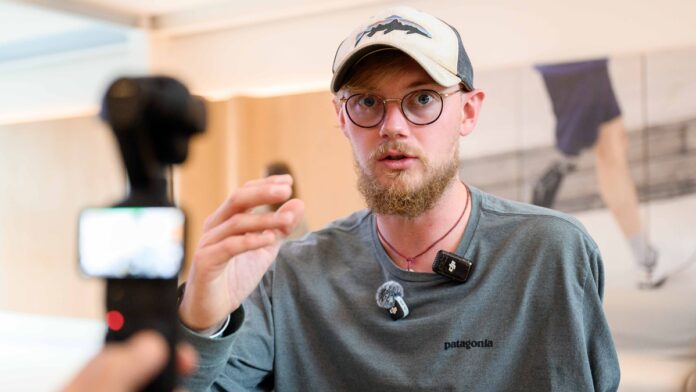
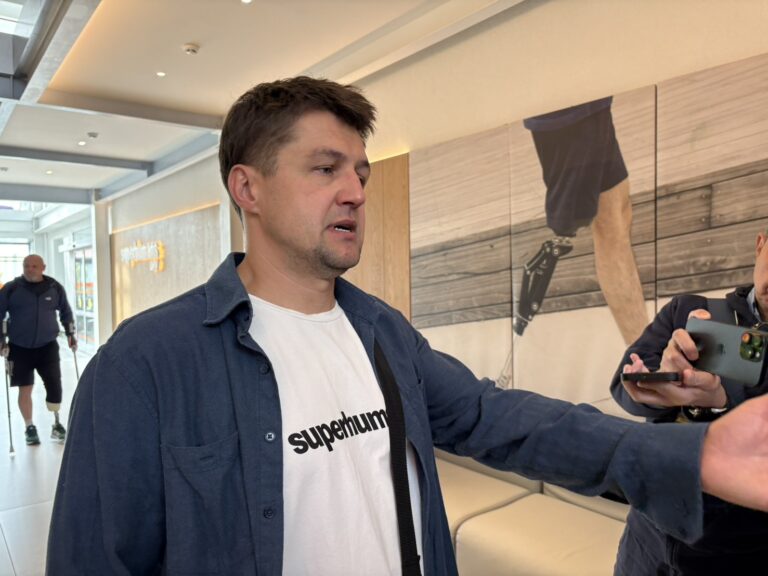
Eddy Scott, a 30-year-old British volunteer, works as an ambassador for Superhumans Center in Ukraine.

At Ukraine’s Superhumans Center, soldiers, civilians and children are learning to rebuild their lives after losing limbs in the war.

The sound of a drone came first.

Then came the explosion.

For British volunteer Eddy Scott, 30 January 2025 began like many other days of humanitarian work in Ukraine. He was helping evacuate civilians from the frontline city of Pokrovsk when an FPV drone struck the roof of his vehicle.

The blast took his left arm and severely damaged his left leg.

He survived, but the attack changed his life forever.

“I shouldn’t have survived,” Scott recalled.

Today, he works as an ambassador for Superhumans Center, a specialist treatment and rehabilitation facility for people injured in the war.

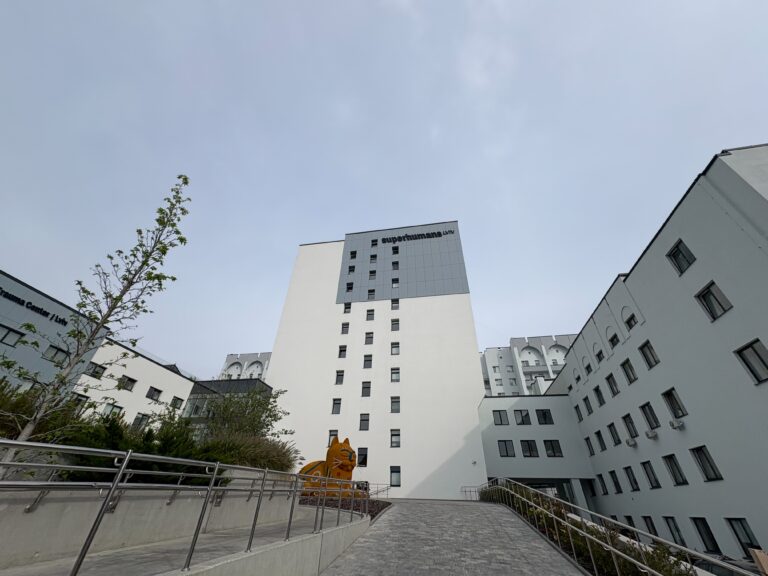
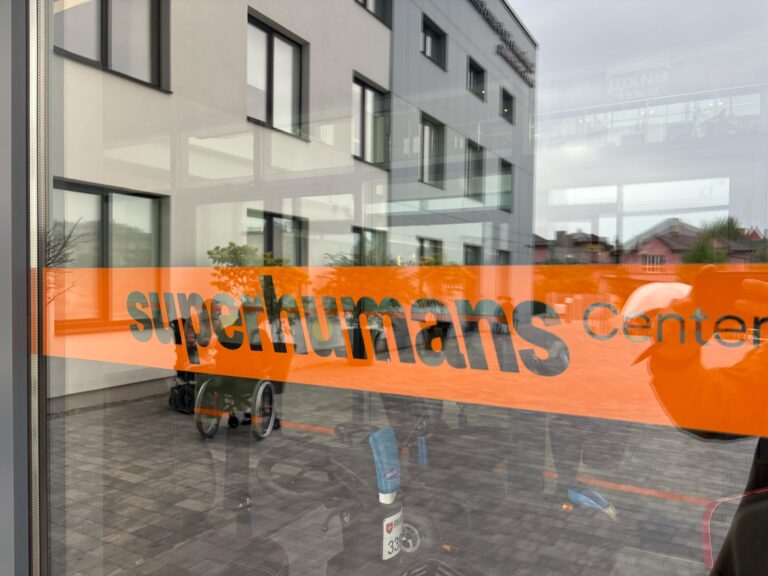
อาคารหลักของซูเปอร์ฮิวแมนส์ เซ็นเตอร์
Superhumans Center

For him, the centre is not simply about treating physical injuries. It is about helping people understand what comes next.

“This is the start of a life, not the end of a life,” Scott said.

From treatment to a new beginning

Superhumans Center was established in 2022 in Ukraine’s Lviv region, after Russia’s full-scale invasion created an urgent need for prosthetics, reconstructive surgery and long-term rehabilitation.

The project was initiated by Ukrainian businessman Andriy Stavnitser, with Filip Hrushko also among its founders. Olha Rudneva was appointed CEO.

The centre provides orthopaedic trauma care, reconstructive and plastic surgery, facial surgery, ENT treatment, rehabilitation and prosthetics. Its departments include surgical, traumatological, physical rehabilitation, PTSD and paediatric reconstruction services.

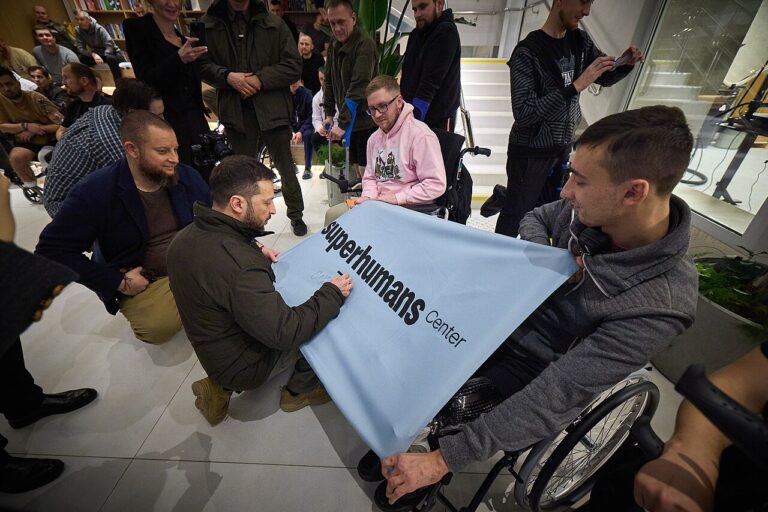
ประธานาธิบดียูเครน เยี่ยมซูเปอร์ฮิวแมนส์ เซ็นเตอร์ เมื่อปี 2567
Ukrainian President Volodymyr Zelenskyy visits the Superhumans Center in Lviv in 2024.

The approach is highly individualised. Patients with similar injuries may require very different treatment, depending on their bodies, injuries and lives.

Andriy Ishchyk, the centre’s media manager, said Superhumans operates as a charitable foundation, with funding coming from charities and private donors.

He said the centre’s weekly budget is roughly US$1 million and that fundraising remains a constant challenge.

From the best in Ukraine to a bigger dream

Scott said the founders initially wanted to build the best rehabilitation centre in Ukraine.

Then the ambition grew.

They wanted to build the best rehabilitation centre in the world.

อันดรีย์ อิชชีค ผู้จัดการฝ่ายสื่อของซูเปอร์ฮิวแมนส์ เซ็นเตอร์
Andriy Ishchyk, media manager at Ukraine’s Superhumans Center in Lviv.

After about seven months of planning, construction began in early 2023. The first patients arrived within three months.

The centre now combines rehabilitation facilities and prosthetics laboratories with a residential and medical facility. It has 86 beds, including six intensive care beds, as well as a full surgical suite.

The idea is to provide as much treatment as possible in one place, rather than repeatedly sending patients elsewhere.

Scott said the centre has continued to expand its services as staff encounter new types of injuries and learn what patients need.

From a sailor to life on the frontline

Before Ukraine, Scott spent about a decade working on private sailing yachts.

He followed the war closely before Russia’s full-scale invasion and eventually decided to leave his job and travel to Ukraine in October 2022.

He began working on humanitarian projects in the Donbas, helping with infrastructure, roads used for evacuations, roofs and fresh water supplies. He also trained as a medic and provided humanitarian medical assistance.

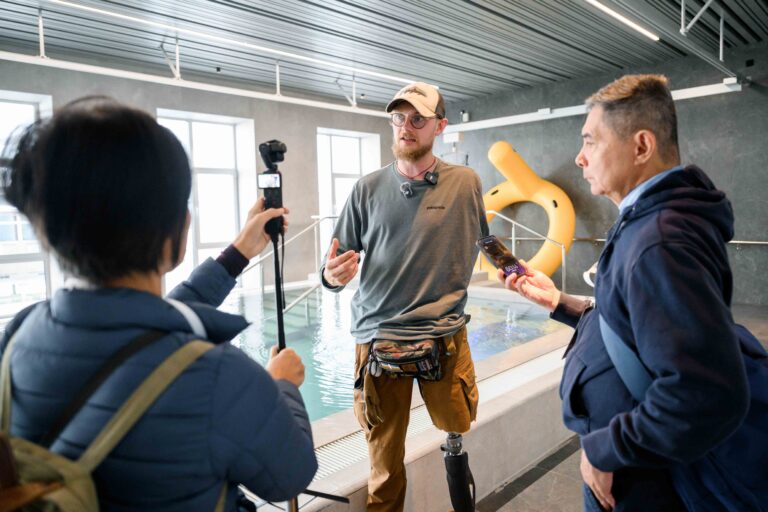
เอ็ดดีพูดคุยกับนักข่าวจากอาเซียน
Eddy Scott speaks with journalists from ASEAN countries at the Superhumans Center in Ukraine.

By late 2024 and early 2025, he was working with a team evacuating civilians from Pokrovsk.

On 30 January 2025, Scott and his team entered the city and evacuated three civilians and a dog. They returned for two more people.

On the way out, around 200 to 300 metres from the exit, an FPV drone came through the roof of their vehicle.

The explosion destroyed his left arm and severely injured his left leg.

His team leader, who suffered superficial injuries, applied tourniquets to his arm and leg. Scott was moved by pickup truck to a nearby town before being taken to hospital.

He remained conscious throughout the evacuation.

His last memory was being carried into the hospital.

Scott said that if the evacuation had taken longer, if the team had been deeper inside the city, or if the explosion had struck slightly further to the right, he might not have survived.

“I was stupidly lucky,” he said.

Not what I have lost, but what I can still do

The physical injuries were only part of the challenge.

Scott said adjusting to life after the attack was difficult, particularly after spending years working in high-risk environments.

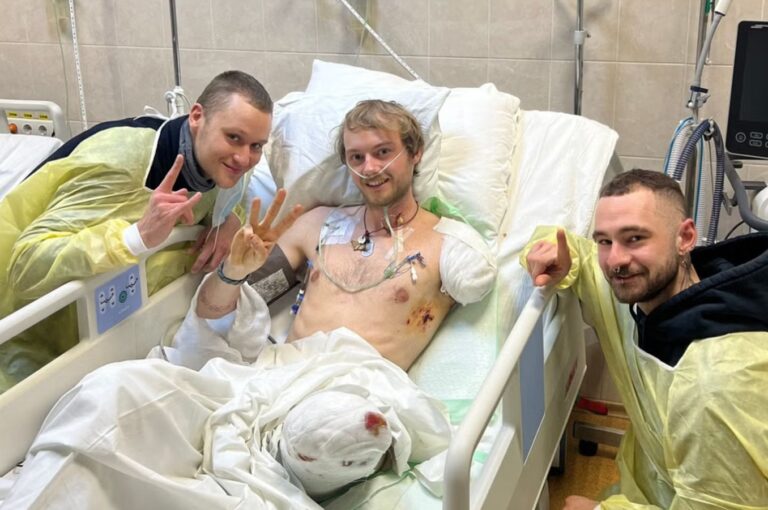
ภาพเมื่อเอ็ดดีกำลังรักษาตัวที่โรงพยาบาล
Eddy Scott receives treatment in hospital after being injured in a drone strike in Ukraine.

But he does not define his life by what he has lost.

A prosthesis gives him mobility and allows him to travel and live independently.

“I don’t think about this compared to my real life. I think about this compared to nothing,” he said.

Rather than asking what he can no longer do, Scott focuses on what remains possible.

Six months after the attack, he was climbing mountains in Spain and taking part in international sailing competitions.

At Superhumans, rehabilitation is also about adapting activities to people with disabilities. Scott spoke about developing opportunities in sports, including precision and dynamic shooting, with categories for disabled participants.

The principle is simple: rehabilitation does not necessarily mean returning to the person you were before the injury. It can mean building a different way of living.

Artem, the nine-year-old who ‘runs the centre’

Among the patients Scott remembers most vividly is Artem, a nine-year-old boy from Kherson.

About a year before Scott’s interview, Artem’s family was hit by a tank. His mother pulled him from the vehicle, but his leg was severely injured and had to be amputated.

Scott described Artem as extremely positive, funny and full of personality.

“He runs the centre,” Scott said.

Artem is also a musician, and his presence among adult patients has become part of the atmosphere at Superhumans.

S 23445507 0

For Scott, seeing children settle into the centre is a sign that the work is making a difference.

They are surrounded by what he described as “big brothers and sisters” who have experienced similar injuries and can support them as they grow up.

The message is not to pretend that the loss does not matter.

It is to recognise the loss, then look at what comes next.

“This is the start of a life, not the end of a life,” Scott said.

What happens when the war ends?

Superhumans is also thinking about a future beyond the war.

For Scott, rehabilitation cannot end when a patient leaves the centre.

Someone who loses a limb during the war may need a new prosthesis years or even decades later.

“Ten years from now, where do I get a new leg?” he asked.

S 23445517

That is why Scott believes Superhumans needs to become known beyond Ukraine, building international partnerships, sharing knowledge and training medical professionals.

He also sees the possibility of developing the Superhumans model in other countries through collaboration or franchising.

The goal is to build a system that can continue supporting wounded soldiers, civilians and children long after the war is over.

A wife, a farm and a quiet life

The attack also changed the way Scott thinks about the future.

Before being wounded, he often planned his life in terms of days or weeks because of the dangers of frontline humanitarian work.

Now, he thinks further ahead.

He has just turned 30.

And when asked what he wants if the war eventually ends, his answer is surprisingly simple.

“A wife, a farm, relax.”

His long-term plan when he first came to Ukraine was already to stay, settle in a village and live a quieter life.

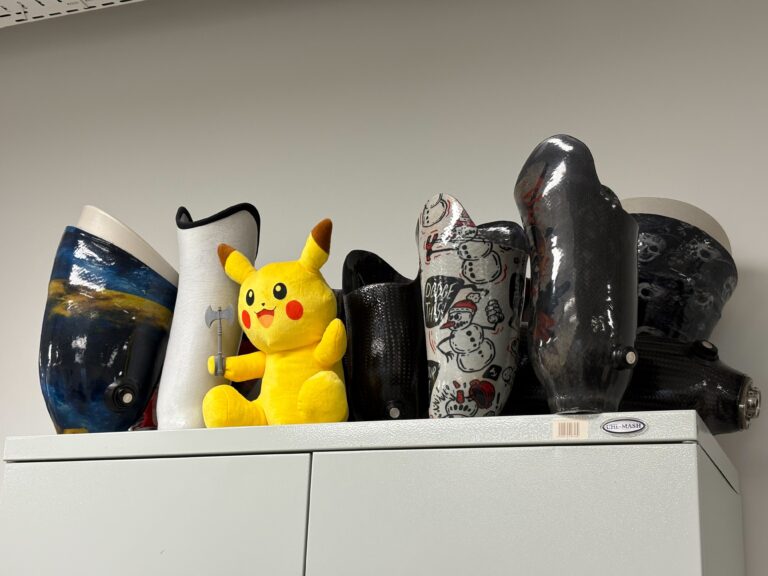
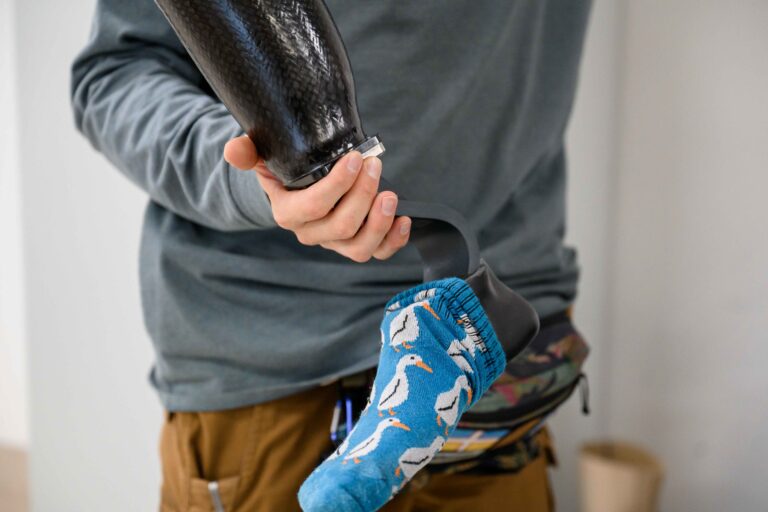
เอ็ดดีกำลังอธิบายขาเทียมแบบต่างๆ
Eddy Scott explains different types of prosthetic legs at the Superhumans Center in Ukraine.

After years of what he calls “a decade-plus of craziness”, he says he is ready for something different.

The war may have taken his arm and leg.

But for Scott, and for the people he meets at Superhumans, losing part of the body does not mean losing the rest of one’s life.

It means learning how to live it again.

Advertisement

Cabinet approves 1.2 billion baht to keep student loans flowing

BANGKOK — 30 September 2026, Thailand’s Cabinet has approved 1.206 billion baht in central budget funding to shore up the Student Loan Fund’s liquidity and ensure payments continue for nearly 142,000 borrowers.

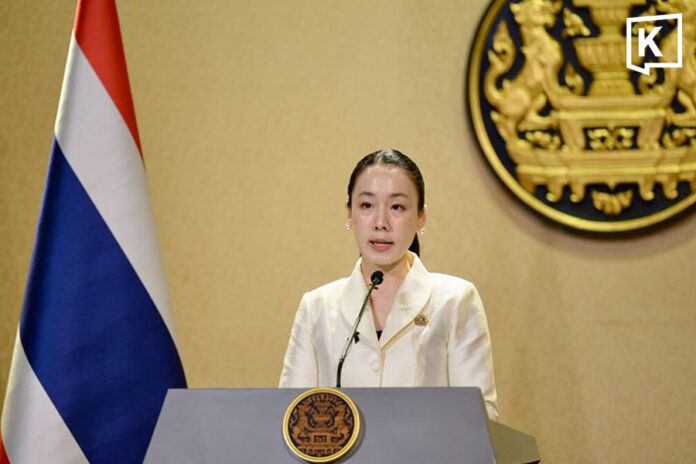
Lalida Periswattana, deputy government spokeswoman, said the Finance Ministry asked the Cabinet to allocate 1,206,477,900 baht from the central budget’s emergency and necessary expenditure reserve to the Student Loan Fund.

The money will allow the fund to continue transferring loans for tuition fees, education-related expenses and living costs.

The fund had requested 21.9 billion baht in the 2026 fiscal year budget but received only 5.1 billion baht, leaving it 16.8 billion baht short of its request.

The Student Loan Fund has relied on a combination of its state allocation and repayments from former borrowers to finance new loans. However, cash-flow projections showed it faced a liquidity risk and might not have enough money to make payments to 141,838 borrowers.

For the 2026 academic year, the fund has set a lending target of 775,629 new and continuing borrowers, with loans totalling about 47.71 billion baht. As of August, 577,523 borrowers — 74.45% of the target — had received loans worth 35.08 billion baht, or 73.54% of the planned amount.

The Budget Bureau had submitted the request to Prime Minister Anutin Charnvirakul, who approved the use of the central budget through the end of the fiscal year. Cabinet approval was required because the allocation exceeded 100 million baht.

The fund has also been instructed to step up efforts to encourage repayments from former borrowers, aiming to increase its revolving funds and strengthen its long-term liquidity.

Lalida said the additional funding would prevent interruptions to payments for tuition, related education costs and living expenses, helping students continue their studies.

Advertisement

Government warns Chao Phraya communities as dam releases rise

Chao Phraya Dam

BANGKOK — The government has urged people living along the Chao Phraya River to prepare for rising water levels after the Royal Irrigation Department increased water releases from the Chao Phraya Dam to 2,500 cubic metres per second from noon on 30 September.

The increase comes as water flowing towards the dam is expected to reach 3,600–3,700 cubic metres per second in the coming days, with the highest flow at the C.2 monitoring station in Nakhon Sawan forecast at about 3,000 cubic metres per second on 2 October.

The department said an additional 700–750 cubic metres per second is expected to flow into the Chao Phraya from tributaries, while around 550–580 cubic metres per second will be diverted into irrigation systems on both sides of the river.

The higher discharge is expected to require close monitoring of low-lying areas outside flood barriers, particularly along the Chao Phraya and Noi rivers.

The areas under particular watch include parts of Ayutthaya, Ang Thong, Sing Buri and Chai Nat provinces.

In Ayutthaya, the areas include Sena, Phak Hai, Bang Ban, Phra Nakhon Si Ayutthaya, Bang Pa-in and Bang Sai districts. In Ang Thong, authorities are monitoring Wiset Chai Chan, Pa Mok, Mueang Ang Thong and Chaiyo. In Sing Buri, the watch areas include In Buri, Phrom Buri and Mueang Sing Buri, while Sapphaya district is being monitored in Chai Nat.

The Royal Irrigation Department said the increased discharge is not expected to affect communities located inside flood barriers. People living in low-lying areas outside the barriers and along both rivers, however, have been urged to closely monitor the situation.

Government deputy spokesperson Phatdarasmi Thongsaluaykorn said residents in vulnerable areas should prepare before water levels rise, including moving electrical appliances, important documents and other valuables to higher ground.

Residents in risk areas have also been advised to move vehicles, livestock and farming equipment to safer locations, prepare essential supplies and emergency contact information, and follow official updates on water levels and evacuation warnings.

The government has issued an earlier warning to authorities in 11 provinces along the Chao Phraya basin: Uthai Thani, Chai Nat, Sing Buri, Ang Thong, Ayutthaya, Suphan Buri, Lop Buri, Pathum Thani, Nonthaburi, Samut Prakan and Bangkok.

Officials said the latest warning is intended as advance preparation rather than an indication that communities inside flood barriers are expected to be affected.

The Royal Irrigation Department will continue monitoring rainfall, upstream water volumes and river levels and adjust its water-management plan if conditions change.

Advertisement

Myanmar airstrike kills 50 at market in Rakhine

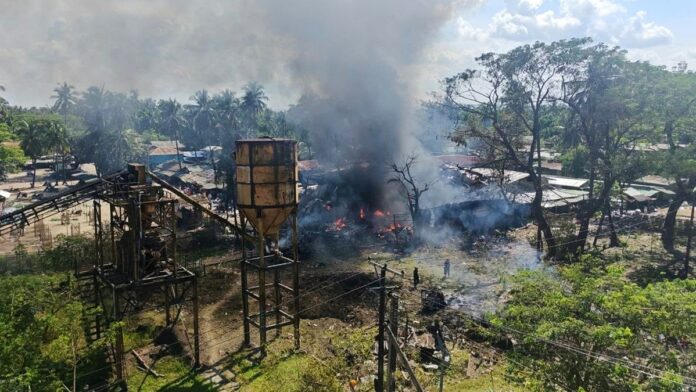
In this photo provided by Wai Hun Aung, smoke rises from a market after the area was allegedly hit by the military's airstrike in Kyauktaw township in Rakhine state, Myanmar, Monday, Sept. 28, 2026. (Wai Hun Aung via AP)

An airstrike on a busy market in western Myanmar has killed at least 50 people and wounded dozens more, with families gathering at the site to search for relatives as the country’s civil war continues to take a heavy toll on civilians.

The attack struck Kyauktaw in Rakhine state around midday on 28 September, according to local witnesses and the Arakan Army, an ethnic armed group that controls the area.

At least 58 people were also wounded, according to the Arakan Army. The group said the victims included vendors, shoppers, people passing through the market and workers handling cargo.

The attack hit the market and a nearby bridge that had become an important centre for local trade during the conflict. The area has relied heavily on river transport, including a route connecting communities with trade towards India.

On Tuesday, families gathered at the site as bodies were recovered and taken to a makeshift area for identification.

The attack has drawn concern from the United Nations, which said the rising violence in Rakhine was further evidence of the dangers facing civilians and displaced communities.

UN Secretary-General Antonio Guterres condemned the reported airstrike and called for an immediate end to violence and greater protection for civilians, according to UN spokesperson Stephane Dujarric.

UN human rights chief Volker Turk also warned of the severe conditions facing civilians across Myanmar, with Rakhine among the areas hardest hit by the conflict.

The UN said the continuing violence means conditions are not currently in place for the safe, voluntary and sustainable return of refugees and displaced people, including Rohingya refugees.

The Myanmar military and the Arakan Army have been engaged in heavy fighting in Rakhine, where the armed group has seized control of large areas.

Myanmar has been in civil war since the military seized power in February 2021, triggering widespread armed resistance and renewed fighting with ethnic armed groups.

The conflict has killed around 100,000 people and displaced more than 3.5 million, according to UN-linked estimates.

The Kyauktaw attack is reportedly the deadliest airstrike in Rakhine since a hospital was bombed in December, killing at least 30 people.

The latest death toll could rise as authorities and local residents continue recovering bodies from the market area.

Advertisement

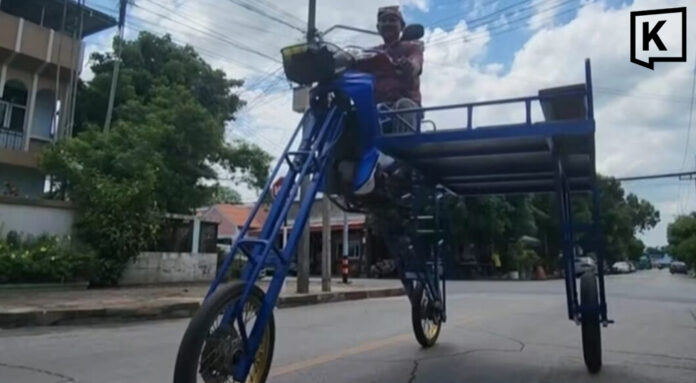
Yala welder builds raised motorcycle to tackle floodwaters

Yala welder builds raised motorcycle to tackle floodwaters

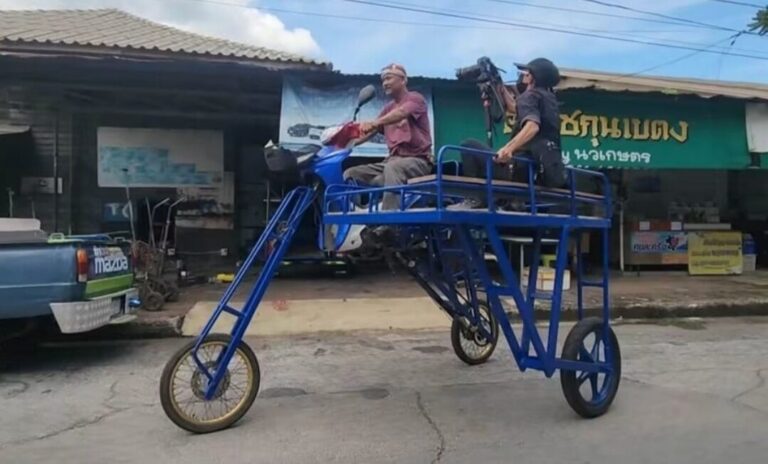
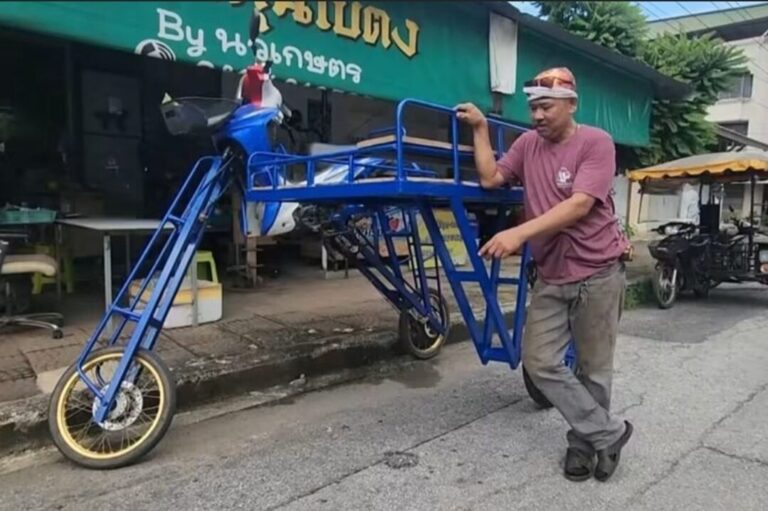
YALA — A 55-year-old welder in southern Thailand has gone viral after modifying a sidecar motorcycle into a raised vehicle designed to travel through floodwaters up to 1 metre deep.

Teepakorn Chankaew, known as “Chang Nui,” the owner of a sidecar workshop in Yala, built the unusual motorcycle after seeing residents struggle with flooding along routes around Noen Huk Wang Intersection and Wat Trimitt Road.

The area can become flooded after two to three hours of heavy rain, making it difficult for residents to travel in and out.

With more than 30 years of experience building sidecar motorcycles, Teepakorn worked with his son to modify an existing motorcycle. They removed some of its original components and added a steel frame to raise the motorcycle above the water level.

The modification took just three days to complete.

news164654 etMdhqmMvb1790736754

“The idea was to make it for our own use at home when flooding occurs for a few days each year,” Teepakorn said. “If there is an emergency before the water gets too high, it could also be used to travel through water around 1 metre deep to help people get out.”

He said the modification cost less than 10,000 baht, excluding the motorcycle itself.

Teepakorn said the motorcycle was never intended as a commercial product. His son posted a video of it online for fun, but the clip eventually attracted more than 3 million views.

The mechanic stressed that the modified motorcycle is intended only for emergencies and is not suitable for normal road use. He acknowledged that the modification does not meet standard requirements and is not compliant with traffic regulations.

Beyond the flood vehicle, Teepakorn also used the attention to highlight problems faced by sidecar motorcycle owners, including street vendors who rely on their vehicles for their livelihoods.

news164654 uoxSVBNW3s1790736754

He said many owners support bringing sidecar motorcycles into the legal registration system but face difficulties over regulations governing vehicle dimensions, particularly because the rules do not adequately cover sidecar roofs.

As a result, some owners who have installed roofs for work are reportedly unable to pass vehicle inspections when renewing registration. They may have to pay mechanics to remove the roofs before inspection and reinstall them afterward, creating additional costs and disrupting their work.

Teepakorn called on relevant authorities to study the issue on the ground and consider revising the regulations so vehicle dimensions include the roof.

He said clearer rules could help residents and vendors register their vehicles legally without unnecessary additional costs.

Advertisement

Malaysia sends nearly 1500 Myanmar detainees home despite UN safety warning

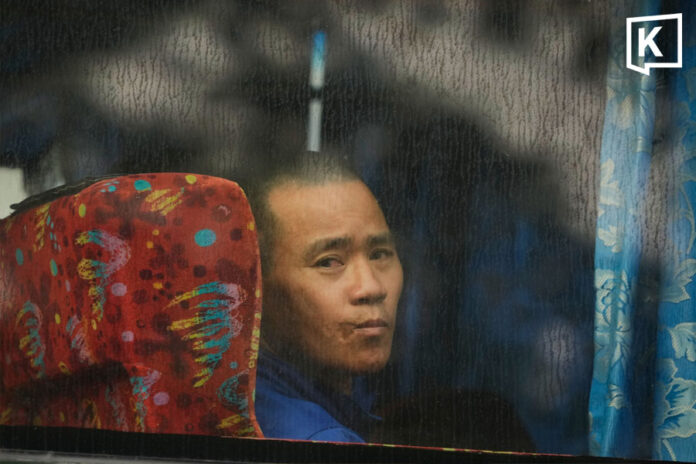
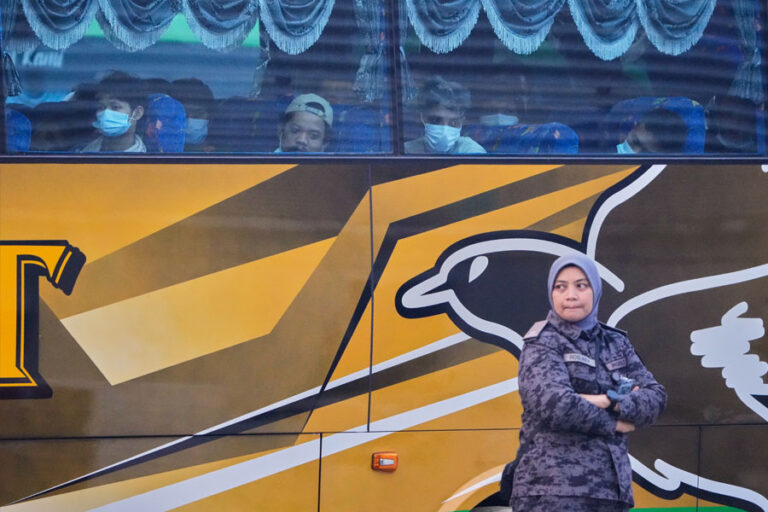
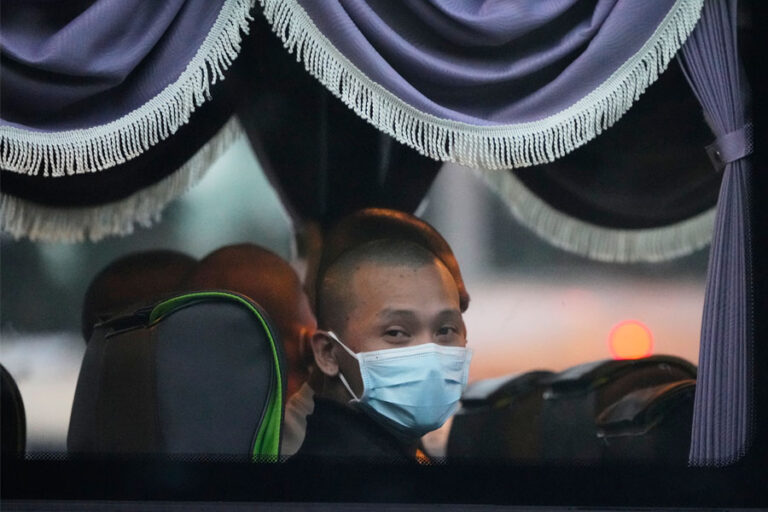
One of Myanmar nationals looks out from a bus in Manjung, Perak state of Malaysia, on Tuesday, Sept. 29, 2026. (AP Photo/Vincent Thian)

MANJUNG, Malaysia (AP) — Malaysia on Tuesday began repatriating Myanmar nationals, including women and children, under a voluntary program despite warnings from the United Nations refugee agency and rights groups that conditions in the country remain unsafe.

The 1,476 people being sent back are among 5,000 Myanmar nationals who will be repatriated in stages from Malaysia, where 10,388 Myanmar nationals were being held at immigration detention depots nationwide as of 15 Aug., according to Malaysia’s Home Ministry.

2 ap 1
Myanmar nationals look out from a bus in Manjung, Perak state of Malaysia, on Tuesday, Sept. 29, 2026, as a uniformed official walks past. (AP Photo/Vincent Thian)

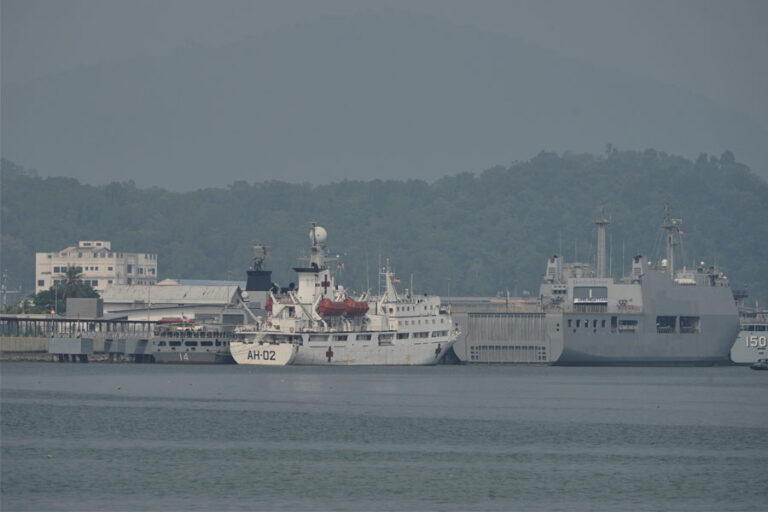
Buses believed to be carrying Myanmar returnees arrived at a stadium in Manjung town in Malaysia’s central Perak state early Tuesday, amid tight security. Ships believed to be from Myanmar were docked at the nearby Lumut naval base.

Home Ministry official Makhzan Mahyuddin was quoted by national Bernama news agency as saying the returnees included 1,370 men, 79 women, 20 boys and seven girls, and were aged between eight and 60.

The ministry said they would be sent back safely on two Myanmar navy warships and a hospital ship. It is unclear if any of the returnees were minority Muslim Rohingya, who are rejected by the Myanmar government. The ministry didn’t provide further details of their identities and circumstances, but stressed that their return was voluntary, although this wasn’t verified by any party.

1 ap 1
A ship waits to carry Myanmar nationals in Manjung, Perak state of Malaysia, on Tuesday, Sept. 29, 2026. (AP Photo/Vincent Thian)

“This move also sends a clear signal that the government is serious about addressing irregular migration and the issue of undocumented foreign nationals through law enforcement, repatriation and more systematic management and data collection,” the ministry said in a statement.

Many refugees in Malaysia come from Myanmar’s Rohingya minority

The United Nations High Commissioner for Refugees and rights groups slammed the repatriation, saying the security and humanitarian situation in parts of Myanmar remains volatile and returnees could face serious risks such as persecution and forced military conscription in an active war zone.

Myanmar is involved in an armed conflict and political instability following the military’s seizure of power in 2021.

Malaysia is home to about 215,600 refugees and asylum seekers registered with the UNHCR, including about 126,000 Rohingya who make up one of Southeast Asia’s largest refugee communities. Despite hosting them, Malaysia is not a party to the U.N. Refugee Convention and treats refugees as undocumented migrants.

The government recently launched a system to register refugees and asylum seekers in Malaysia and to build a biometric database, as it seeks to manage and regulate the population independently from the UNHCR.

Rohingya have faced growing public hostility in Malaysia due to their growing numbers, fueled by concerns over jobs, public services and security.

4 ap
Myanmar nationals look out from a bus in Manjung, Perak state of Malaysia, on Tuesday, Sept. 29, 2026. (AP Photo/Vincent Thian)

Malaysia says Myanmar must accept the refugees’ return

Malaysia’s Prime Minister Anwar Ibrahim has defended the repatriation policy as a diplomatic effort to find a long-term solution, saying Malaysia cannot host refugees indefinitely and Myanmar must take responsibility for its citizens.

Anwar said he plans to invite Myanmar leader Min Aung Hlaing to Malaysia to discuss the long-running refugee and undocumented migrant issue that has dragged on for decades.

“I am inviting him to say that we can be friends and trade, we can accept Myanmar, but Myanmar must accept them back,” he said in a podcast posted online Sept. 16. “To me, that’s better diplomacy than just shouting angrily at Myanmar.”

The Burmese Rohingya Organization UK, based in London, slammed plans to negotiate with the junta.

“Anwar Ibrahim is making a deal with the devil. Refugees’ lives are being used as currency in a deal with the same military responsible for genocide, crimes against humanity and war crimes,” said the group’s president Tun Khin.

Myanmar Foreign Ministry official Han Win Aung has said the plan follows repatriation operations in 2021 and 2022, when Myanmar received more than 1,100 of its nationals stranded in Malaysia.

He said the repatriation involves genuine citizens and is not about bringing back the Rohingya people, who are not recognized as an ethnic group in Myanmar and denied citizenship.

Malaysia’s Home Ministry said in the statement that subsequent repatriations would proceed once identity verification, documentation, logistics and operational coordination between the two countries are finalized.

Two advocacy groups, Amnesty International and Asylum Access, in a joint statement urged the government to halt repatriations, saying the government’s new system must not be used to fast-track unlawful deportations. Rights groups have also urged the government to restore the UNHCR’s access to detention centers to screen vulnerable refugees.

Advertisement

Australia urged to help free activist jailed in Vietnam

By AAP

Australia is being urged to act after a Melbourne activist and two others were jailed by Vietnamese authorities on terror charges.

Democracy campaigner Tran Hiep was due to meet his wife, Chloe Dang, in Bangkok after travelling to the Cambodian capital Phnom Penh to meet with human rights defenders.

But the 50-year-old Melbourne man never boarded his flight and has not been heard from since September 18.

Vietnamese authorities confirmed late on Monday that Mr Hiep, also known as Ho Pham Hiep Huy, had been arrested along with Vietnamese-Norwegian human rights activist Nguyen Duc Thuan and Thai Cong Truong Son.

“I really worry about how he will be treated in the prison,” Ms Dang told AAP on Tuesday, hours after landing in Melbourne from Bangkok.

“I really hope our government can help to get access to him as soon as possible.”

Vietnam’s Ministry of Public Security said the trio were detained on September 18 while allegedly attempting to cross illegally from Cambodia into Vietnam.

It said they admitted being members of Viet Tan, a pro-democracy diaspora political party founded by Vietnamese dissidents.

Viet Tan is a proscribed terrorist organisation under Vietnam’s communist government.

The activists are accused of entering the country to conduct “terrorist and sabotage activities” as well as forging seals and documents.

Mr Hiep was carrying an Australian passport, according to the ministry.

He founded the Australian Alliance to Combat Human Trafficking and was travelling to meet with other Vietnamese activists in Cambodia, according to Viet Tan.

Viet Tan has condemned Vietnamese authorities for the arrests of Mr Hiep and Mr Thuan, and denies claims the two men illegally entered Vietnam from the Cambodian border.

The group claims the pair had no intention of entering Vietnam.

They accuse Vietnamese authorities of abducting the pair on trumped-up charges to cover up an act of “transnational repression”.

Viet Tan’s representative in Sydney, Phong Nguyen, said the arrests were a chilling deterrent to other members travelling to Southeast Asia, even for tourism reasons.

“We condemn this and it is unacceptable,” he told AAP on Tuesday.

messageImage 1790745604823

“The Vietnamese government has now one of the most severe records of repressing activists outside the borders of Vietnam.”

Ms Dang called on Prime Minister Anthony Albanese to bring Mr Hiep home because of Vietnam’s abuse of political prisoners.

“Please do and try anything to get him home safely to us – that’s my wish right now,” she said.

“My emotions are all over the place. My body is shaking, my heart is jumping and I now know he’s in prison in Vietnam, but it worries me more because we don’t know where he is exactly.”

Vietnam has ramped up its crackdown on dissidents in recent years, with more than 55 activists arrested under broad criminal laws in 2025.

Foreign Minister Penny Wong’s office said the Department of Foreign Affairs and Trade was making urgent inquiries with Vietnamese authorities to confirm “an Australian citizen has been detained.”

Mr Albanese said the government was providing consular assistance and engaging with Mr Hiep’s family.

“That’s what Australian governments do for our citizens,” he told reporters.

Sydney man Chau Van Kham, also a member of Viet Tan, was detained in 2019 in Vietnam and returned to Australia in 2023 after lobbying by the Albanese government.

With Reuters


Advertisement

Hot News

LATEST NEWS

Bangkok
moderate rain
28.5 ° C
31.1 °
26.6 °
79 %
0.5kmh
100 %
Tue
30 °
Wed
33 °
Thu
33 °
Fri
33 °
Sat
29 °