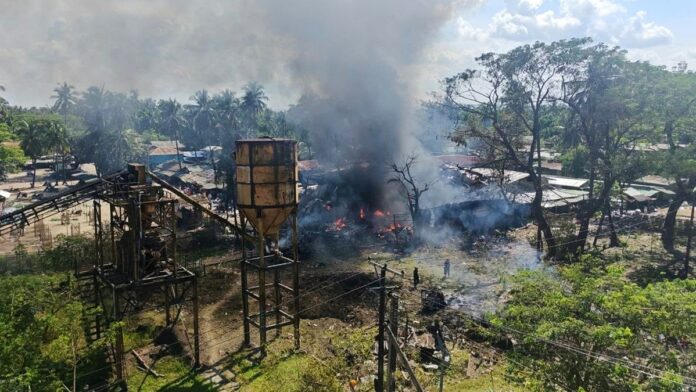
In this photo provided by Wai Hun Aung, smoke rises from a market after the area was allegedly hit by the military's airstrike in Kyauktaw township in Rakhine state, Myanmar, Monday, Sept. 28, 2026. (Wai Hun Aung via AP)
An airstrike on a busy market in western Myanmar has killed at least 50 people and wounded dozens more, with families gathering at the site to search for relatives as the country’s civil war continues to take a heavy toll on civilians.
The attack struck Kyauktaw in Rakhine state around midday on 28 September, according to local witnesses and the Arakan Army, an ethnic armed group that controls the area.
At least 58 people were also wounded, according to the Arakan Army. The group said the victims included vendors, shoppers, people passing through the market and workers handling cargo.
The attack hit the market and a nearby bridge that had become an important centre for local trade during the conflict. The area has relied heavily on river transport, including a route connecting communities with trade towards India.
On Tuesday, families gathered at the site as bodies were recovered and taken to a makeshift area for identification.
The attack has drawn concern from the United Nations, which said the rising violence in Rakhine was further evidence of the dangers facing civilians and displaced communities.
UN Secretary-General Antonio Guterres condemned the reported airstrike and called for an immediate end to violence and greater protection for civilians, according to UN spokesperson Stephane Dujarric.
UN human rights chief Volker Turk also warned of the severe conditions facing civilians across Myanmar, with Rakhine among the areas hardest hit by the conflict.
The UN said the continuing violence means conditions are not currently in place for the safe, voluntary and sustainable return of refugees and displaced people, including Rohingya refugees.
The Myanmar military and the Arakan Army have been engaged in heavy fighting in Rakhine, where the armed group has seized control of large areas.
Myanmar has been in civil war since the military seized power in February 2021, triggering widespread armed resistance and renewed fighting with ethnic armed groups.
The conflict has killed around 100,000 people and displaced more than 3.5 million, according to UN-linked estimates.
The Kyauktaw attack is reportedly the deadliest airstrike in Rakhine since a hospital was bombed in December, killing at least 30 people.
The latest death toll could rise as authorities and local residents continue recovering bodies from the market area.
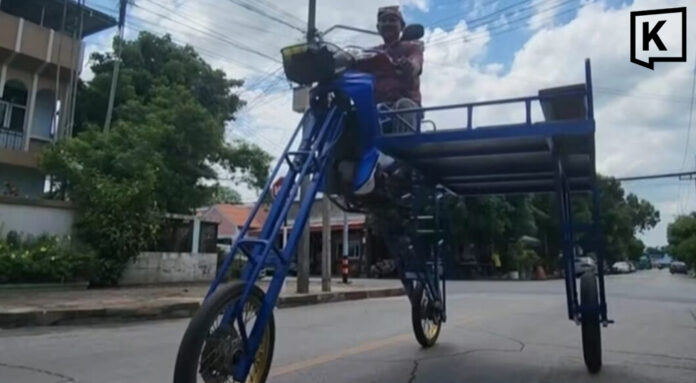
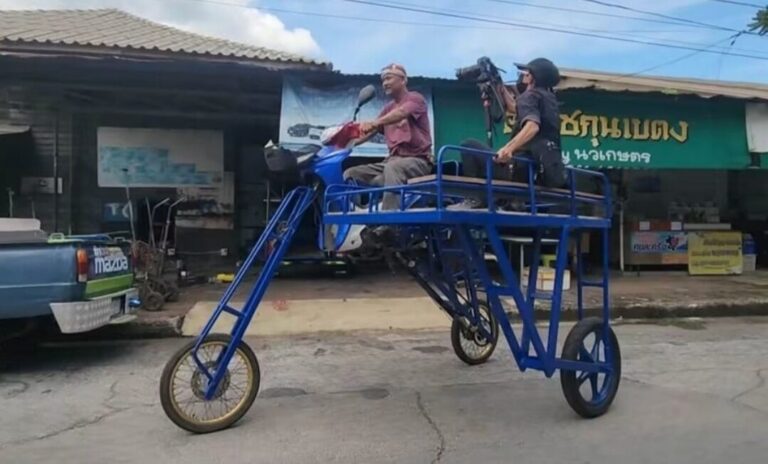
YALA — A 55-year-old welder in southern Thailand has gone viral after modifying a sidecar motorcycle into a raised vehicle designed to travel through floodwaters up to 1 metre deep.
Teepakorn Chankaew, known as “Chang Nui,” the owner of a sidecar workshop in Yala, built the unusual motorcycle after seeing residents struggle with flooding along routes around Noen Huk Wang Intersection and Wat Trimitt Road.
The area can become flooded after two to three hours of heavy rain, making it difficult for residents to travel in and out.
With more than 30 years of experience building sidecar motorcycles, Teepakorn worked with his son to modify an existing motorcycle. They removed some of its original components and added a steel frame to raise the motorcycle above the water level.
The modification took just three days to complete.
“The idea was to make it for our own use at home when flooding occurs for a few days each year,” Teepakorn said. “If there is an emergency before the water gets too high, it could also be used to travel through water around 1 metre deep to help people get out.”
He said the modification cost less than 10,000 baht, excluding the motorcycle itself.
Teepakorn said the motorcycle was never intended as a commercial product. His son posted a video of it online for fun, but the clip eventually attracted more than 3 million views.
The mechanic stressed that the modified motorcycle is intended only for emergencies and is not suitable for normal road use. He acknowledged that the modification does not meet standard requirements and is not compliant with traffic regulations.
Beyond the flood vehicle, Teepakorn also used the attention to highlight problems faced by sidecar motorcycle owners, including street vendors who rely on their vehicles for their livelihoods.
He said many owners support bringing sidecar motorcycles into the legal registration system but face difficulties over regulations governing vehicle dimensions, particularly because the rules do not adequately cover sidecar roofs.
As a result, some owners who have installed roofs for work are reportedly unable to pass vehicle inspections when renewing registration. They may have to pay mechanics to remove the roofs before inspection and reinstall them afterward, creating additional costs and disrupting their work.
Teepakorn called on relevant authorities to study the issue on the ground and consider revising the regulations so vehicle dimensions include the roof.
He said clearer rules could help residents and vendors register their vehicles legally without unnecessary additional costs.
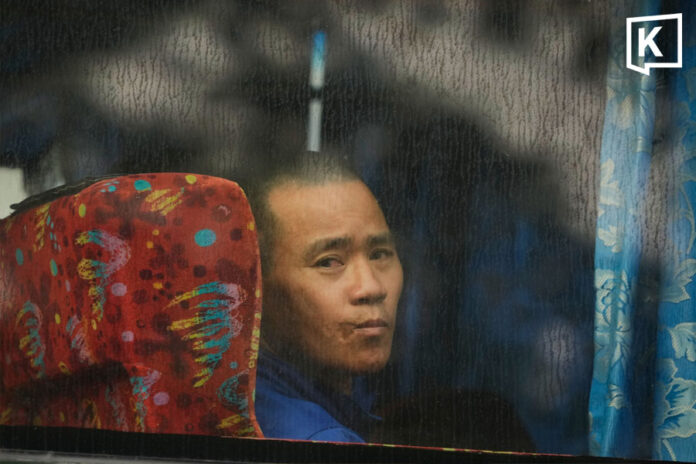
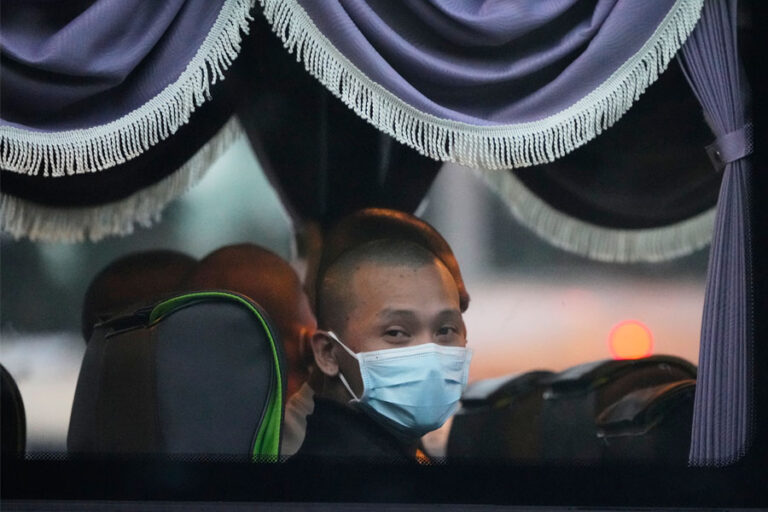
One of Myanmar nationals looks out from a bus in Manjung, Perak state of Malaysia, on Tuesday, Sept. 29, 2026. (AP Photo/Vincent Thian)
MANJUNG, Malaysia (AP) — Malaysia on Tuesday began repatriating Myanmar nationals, including women and children, under a voluntary program despite warnings from the United Nations refugee agency and rights groups that conditions in the country remain unsafe.
The 1,476 people being sent back are among 5,000 Myanmar nationals who will be repatriated in stages from Malaysia, where 10,388 Myanmar nationals were being held at immigration detention depots nationwide as of 15 Aug., according to Malaysia’s Home Ministry.
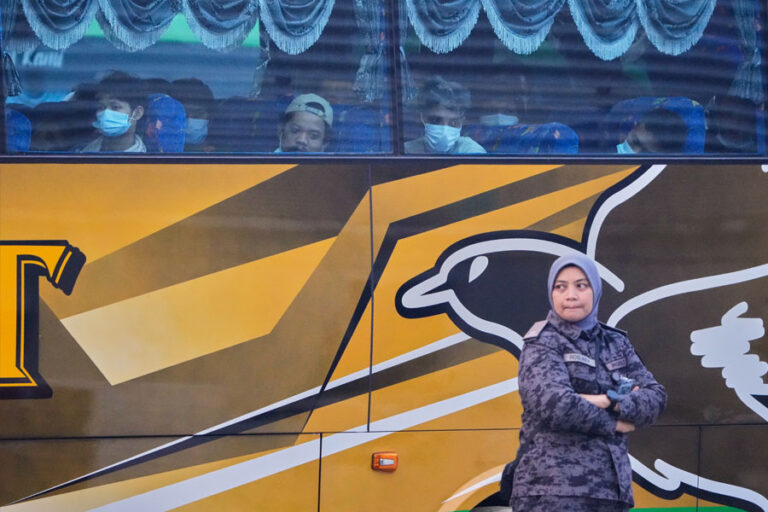
Myanmar nationals look out from a bus in Manjung, Perak state of Malaysia, on Tuesday, Sept. 29, 2026, as a uniformed official walks past. (AP Photo/Vincent Thian)
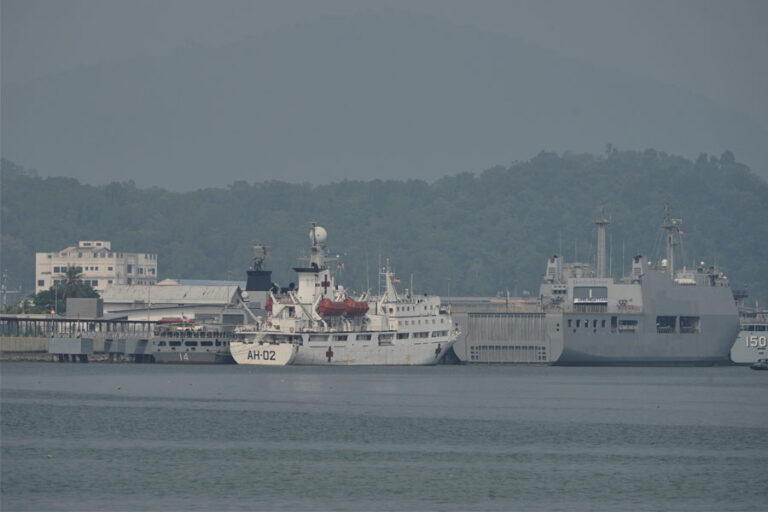
Buses believed to be carrying Myanmar returnees arrived at a stadium in Manjung town in Malaysia’s central Perak state early Tuesday, amid tight security. Ships believed to be from Myanmar were docked at the nearby Lumut naval base.
Home Ministry official Makhzan Mahyuddin was quoted by national Bernama news agency as saying the returnees included 1,370 men, 79 women, 20 boys and seven girls, and were aged between eight and 60.
The ministry said they would be sent back safely on two Myanmar navy warships and a hospital ship. It is unclear if any of the returnees were minority Muslim Rohingya, who are rejected by the Myanmar government. The ministry didn’t provide further details of their identities and circumstances, but stressed that their return was voluntary, although this wasn’t verified by any party.
A ship waits to carry Myanmar nationals in Manjung, Perak state of Malaysia, on Tuesday, Sept. 29, 2026. (AP Photo/Vincent Thian)
“This move also sends a clear signal that the government is serious about addressing irregular migration and the issue of undocumented foreign nationals through law enforcement, repatriation and more systematic management and data collection,” the ministry said in a statement.
Many refugees in Malaysia come from Myanmar’s Rohingya minority
The United Nations High Commissioner for Refugees and rights groups slammed the repatriation, saying the security and humanitarian situation in parts of Myanmar remains volatile and returnees could face serious risks such as persecution and forced military conscription in an active war zone.
Myanmar is involved in an armed conflict and political instability following the military’s seizure of power in 2021.
Malaysia is home to about 215,600 refugees and asylum seekers registered with the UNHCR, including about 126,000 Rohingya who make up one of Southeast Asia’s largest refugee communities. Despite hosting them, Malaysia is not a party to the U.N. Refugee Convention and treats refugees as undocumented migrants.
The government recently launched a system to register refugees and asylum seekers in Malaysia and to build a biometric database, as it seeks to manage and regulate the population independently from the UNHCR.
Rohingya have faced growing public hostility in Malaysia due to their growing numbers, fueled by concerns over jobs, public services and security.
Myanmar nationals look out from a bus in Manjung, Perak state of Malaysia, on Tuesday, Sept. 29, 2026. (AP Photo/Vincent Thian)
Malaysia says Myanmar must accept the refugees’ return
Malaysia’s Prime Minister Anwar Ibrahim has defended the repatriation policy as a diplomatic effort to find a long-term solution, saying Malaysia cannot host refugees indefinitely and Myanmar must take responsibility for its citizens.
Anwar said he plans to invite Myanmar leader Min Aung Hlaing to Malaysia to discuss the long-running refugee and undocumented migrant issue that has dragged on for decades.
“I am inviting him to say that we can be friends and trade, we can accept Myanmar, but Myanmar must accept them back,” he said in a podcast posted online Sept. 16. “To me, that’s better diplomacy than just shouting angrily at Myanmar.”
The Burmese Rohingya Organization UK, based in London, slammed plans to negotiate with the junta.
“Anwar Ibrahim is making a deal with the devil. Refugees’ lives are being used as currency in a deal with the same military responsible for genocide, crimes against humanity and war crimes,” said the group’s president Tun Khin.
Myanmar Foreign Ministry official Han Win Aung has said the plan follows repatriation operations in 2021 and 2022, when Myanmar received more than 1,100 of its nationals stranded in Malaysia.
He said the repatriation involves genuine citizens and is not about bringing back the Rohingya people, who are not recognized as an ethnic group in Myanmar and denied citizenship.
Malaysia’s Home Ministry said in the statement that subsequent repatriations would proceed once identity verification, documentation, logistics and operational coordination between the two countries are finalized.
Two advocacy groups, Amnesty International and Asylum Access, in a joint statement urged the government to halt repatriations, saying the government’s new system must not be used to fast-track unlawful deportations. Rights groups have also urged the government to restore the UNHCR’s access to detention centers to screen vulnerable refugees.
Australia is being urged to act after a Melbourne activist and two others were jailed by Vietnamese authorities on terror charges.
Democracy campaigner Tran Hiep was due to meet his wife, Chloe Dang, in Bangkok after travelling to the Cambodian capital Phnom Penh to meet with human rights defenders.
But the 50-year-old Melbourne man never boarded his flight and has not been heard from since September 18.
Vietnamese authorities confirmed late on Monday that Mr Hiep, also known as Ho Pham Hiep Huy, had been arrested along with Vietnamese-Norwegian human rights activist Nguyen Duc Thuan and Thai Cong Truong Son.
“I really worry about how he will be treated in the prison,” Ms Dang told AAP on Tuesday, hours after landing in Melbourne from Bangkok.
“I really hope our government can help to get access to him as soon as possible.”
Vietnam’s Ministry of Public Security said the trio were detained on September 18 while allegedly attempting to cross illegally from Cambodia into Vietnam.
It said they admitted being members of Viet Tan, a pro-democracy diaspora political party founded by Vietnamese dissidents.
Viet Tan is a proscribed terrorist organisation under Vietnam’s communist government.
The activists are accused of entering the country to conduct “terrorist and sabotage activities” as well as forging seals and documents.
Mr Hiep was carrying an Australian passport, according to the ministry.
He founded the Australian Alliance to Combat Human Trafficking and was travelling to meet with other Vietnamese activists in Cambodia, according to Viet Tan.
Viet Tan has condemned Vietnamese authorities for the arrests of Mr Hiep and Mr Thuan, and denies claims the two men illegally entered Vietnam from the Cambodian border.
The group claims the pair had no intention of entering Vietnam.
They accuse Vietnamese authorities of abducting the pair on trumped-up charges to cover up an act of “transnational repression”.
Viet Tan’s representative in Sydney, Phong Nguyen, said the arrests were a chilling deterrent to other members travelling to Southeast Asia, even for tourism reasons.
“We condemn this and it is unacceptable,” he told AAP on Tuesday.
“The Vietnamese government has now one of the most severe records of repressing activists outside the borders of Vietnam.”
Ms Dang called on Prime Minister Anthony Albanese to bring Mr Hiep home because of Vietnam’s abuse of political prisoners.
“Please do and try anything to get him home safely to us – that’s my wish right now,” she said.
“My emotions are all over the place. My body is shaking, my heart is jumping and I now know he’s in prison in Vietnam, but it worries me more because we don’t know where he is exactly.”
Vietnam has ramped up its crackdown on dissidents in recent years, with more than 55 activists arrested under broad criminal laws in 2025.
Foreign Minister Penny Wong’s office said the Department of Foreign Affairs and Trade was making urgent inquiries with Vietnamese authorities to confirm “an Australian citizen has been detained.”
Mr Albanese said the government was providing consular assistance and engaging with Mr Hiep’s family.
“That’s what Australian governments do for our citizens,” he told reporters.
Sydney man Chau Van Kham, also a member of Viet Tan, was detained in 2019 in Vietnam and returned to Australia in 2023 after lobbying by the Albanese government.
NAGOYA, Japan — 30 September 2026, Thai tennis player Mananchaya Sawangkaew’s Asian Games tennis campaign ended in the women’s singles quarterfinals after she was beaten 0–2 by Kazakhstan’s Yulia Putintseva on 30 September.
Mananchaya, ranked No. 89 in the world and seeded No. 5, faced Putintseva, the world No. 79 and No. 3 seed, at the Aichi-Nagoya 2026 Asian Games in Nagoya, Japan.
Putintseva, who reached a career-high No. 20 in the world in 2025, proved too strong for the Thai player, winning 6–3, 6–0.
The defeat brought Mananchaya’s run at the 2026 Asian Games to an end in the quarterfinals.
PHAYAO — 30 September 2026, 39-year-old university demonstration-school lecturer died after his car reportedly lost control on a curve, overturned and landed on its side in a roadside drainage ditch in Phayao province early Tuesday.
Police at Mae Ka Police Station were alerted at 02:48 on 30 Wednesday to a car that had overturned into a ditch and grass beside Phayao–Nakhon Sawan Road, about 200 metres beyond Mae Ka Municipality in Muang district.
Officers, rescue workers from the Phayao Ruam Kusol Association and Fah Mui rescue volunteers found a white Toyota sedan on its side in the ditch. The vehicle was heavily damaged and the driver was trapped inside.
Rescuers used hydraulic cutting equipment to remove the man’s body from the car.
The driver, identified only as Patcharathat, 39, was a lecturer at a university demonstration school, police said. He was pronounced dead at the scene and his body was sent to Phayao Hospital for a post-mortem examination.
Police initially believe the car was travelling from Phayao town towards the University of Phayao when it lost control on a curve, left the road and overturned into the ditch.
The cause of the crash remains under investigation. Police are examining evidence, the vehicle and conditions at the scene.
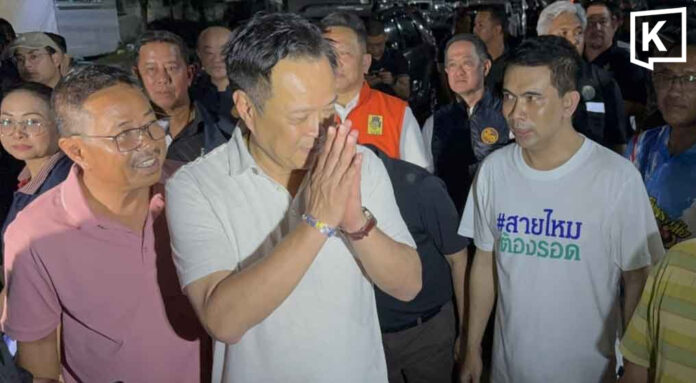
BANGKOK — 30 September 2026, Prime Minister and Interior Minister Anutin Charnvirakul has urged government departments and agencies to accept public criticism over the flooding situation with an open mind, work together and avoid obstructing one another as authorities step up efforts to help affected residents.
Anutin made the remarks at 08:00 on 30 September while chairing a meeting of the National Disaster Prevention and Mitigation Command at the Department of Disaster Prevention and Mitigation (DDPM).
The meeting brought together relevant departments and agencies, including military commanders, the national police chief, provincial governors from across Thailand and the Bangkok governor, to assess the flood situation and coordinate relief efforts.
Anutin said the meeting was intended to assess the government’s readiness, identify problems caused by flooding in Bangkok and nearby provinces, and prepare for possible flooding in other parts of the country.
He said the focus was not limited to Bangkok but was aimed at coordinating departments and agencies nationwide so they could work in the same direction.
A key goal, he said, was to “plug gaps” in the response, particularly in communication and the protection of people’s lives and property.
Anutin thanked government departments, agencies and volunteers for helping affected residents, saying resources had been mobilized over the past three to four days to assist people in affected areas.
He also acknowledged criticism from the public over the government’s flood response.
“Criticism, complaints and even harsh words from the public are things everyone must accept,” Anutin said. “In a situation like this, those voices reflect what people need. We must take them and find ways to solve problems and respond to those needs as much as possible.”
He urged officials to remain patient and not take criticism personally.
“I want everyone to be open-minded and patient. Don’t take those words personally. Use them to find solutions for the people. Everyone has to work together, not obstruct one another, and use their authority to the fullest to deal with these situations,” he said.
Anutin said the meeting would be held every morning from now on so departments and agencies could continuously share information and monitor developments together.
Agency heads with other important duties would not have to cancel their existing work and could send representatives to the meetings instead, he said.
The prime minister said the new coordination system was the first of its kind since 2011, drawing on the experience of the COVID-19 pandemic, when daily morning meetings helped authorities receive information from departments and agencies nationwide and develop a broader understanding of the situation.
“We meet every morning so that information sharing is systematic and continuous,” Anutin said.
He cited water-management operations as an example, saying Bangkok could be pumping water while the Royal Irrigation Department was simultaneously releasing water. Without coordination, he said, resources could be used without achieving the greatest possible benefit.
Anutin also stressed that the national government would support Bangkok rather than treating flooding in the capital as solely the responsibility of the Bangkok governor.
The government could not reject responsibility or simply designate Bangkok as a special area under the sole responsibility of the Bangkok governor, he said.
Once the Bangkok governor declares an area a disaster zone, Anutin said, the National Disaster Prevention and Mitigation Command is ready to provide full support to speed up the response and make it as effective as possible.
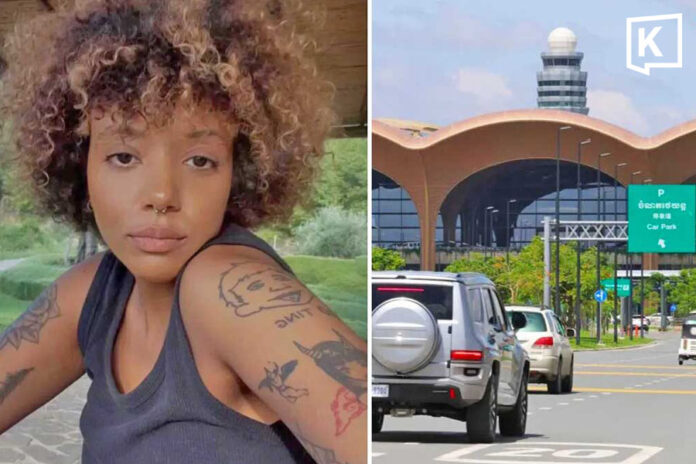
PHNOM PENH, Cambodia — A 31-year-old British woman could face up to 20 years in a Cambodian prison after she was arrested at Techo International Airport with 71 packages of cannabis weighing 34.5 kilograms allegedly hidden in her luggage.
The Sun reported that Tamara Martins, from Croydon, said she had been unknowingly recruited to smuggle drugs and only discovered the cannabis when airport officials searched her bags.
Tamara Martins, from Croydon, was arrested after allegedly attempting to leave the country with 71 packages of cannabis- amounting to 34.5kg – stuffed in her luggage. The 31-year-old claims she was the victim of a “set up” – and that she only found out about the cannabis when staff at Techo Airport asked to check her bags. Photo via Facebook.
Martins said a man approached her at a bar and offered to pay her to take a suitcase containing electronic equipment back to the United Kingdom.
Her brother, Trey, who is caring for Martins’ 10-year-old daughter, said he did not know she was in Cambodia until she called him in tears.
“She was very panicked and confused,” he said, adding that his sister had no previous criminal record.
He said they were able to speak during the first few days of her detention at a tourist holding centre, but her phone was confiscated after she was transferred to a women’s prison.
Martins is reportedly being held with more than 60 other detainees, with some sleeping on the floor. In a letter to her brother, she described prison conditions as “hell” and said she was struggling to sleep and eat.
According to the UK Foreign Office, 355 British nationals are detained in Southeast Asia after being accused of acting as drug mules. Drug-smuggling arrests involving Britons overseas more than quadrupled between 2023 and 2025.
Tamara is now one of the 355 Brits detained in Southeast Asia after being accused of being recruited as drug mules. Drug smuggling arrests involving Brits abroad have more than quadrupled between 2023 and 2025, according to the UK Foreign Office. Recruits are often told luggage destined for the UK contains clothes, gold or cash – with suitcases actually containing up drugs. Photo via Facebook.
The Foreign Office warned that recruits are often told luggage contains clothes, gold or cash, when it actually contains drugs.
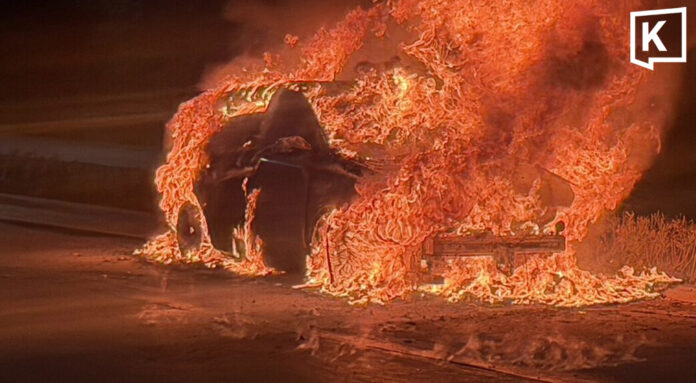
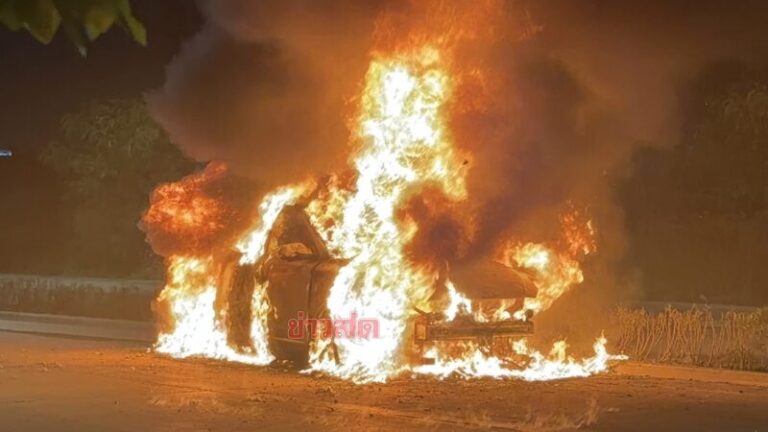
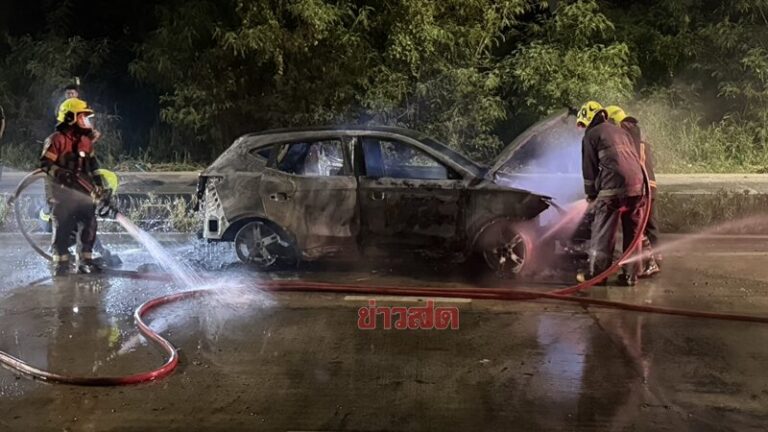
BANGKOK — 30 September 2026, An electric car caught fire and was destroyed while parked along Soi Vibhavadi Rangsit 72 in Bangkok’s Don Mueang district early, with authorities still investigating the cause.
Police at Don Mueang Police Station received a report of the vehicle fire at around 00:25 and rushed to the scene with firefighters from Bang Khen Fire and Rescue Station and Don Mueang Fire and Rescue, along with two water trucks.
The fire broke out on a three-lane road heading toward Phahonyothin Road near Saphan Mai. A white electric car with Bangkok license plates was found parked in the leftmost lane, with flames engulfing the vehicle.
Firefighters took around 20 minutes to bring the blaze under control. The car was completely destroyed, but no injuries or deaths were reported.
Authorities initially found no driver or owner at the scene.
Local residents told officials that the area had experienced significant flooding during recent heavy rain, making it difficult for vehicles to pass. Several cars had reportedly been left stranded along the road.
Officials suspect the electric car may have been left there during the flooding, but the cause of the fire has not yet been confirmed.
Authorities are working to locate the vehicle’s owner and investigate what caused the blaze.
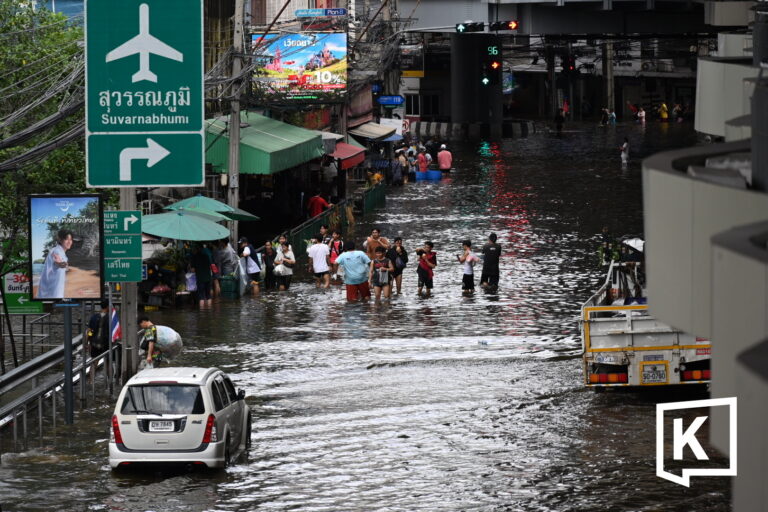
People wade through a flooded street after a heavy rain in Bangkok, Thailand, Monday, Sept. 28, 2026. (AP Photo/Sakchai Lalit)
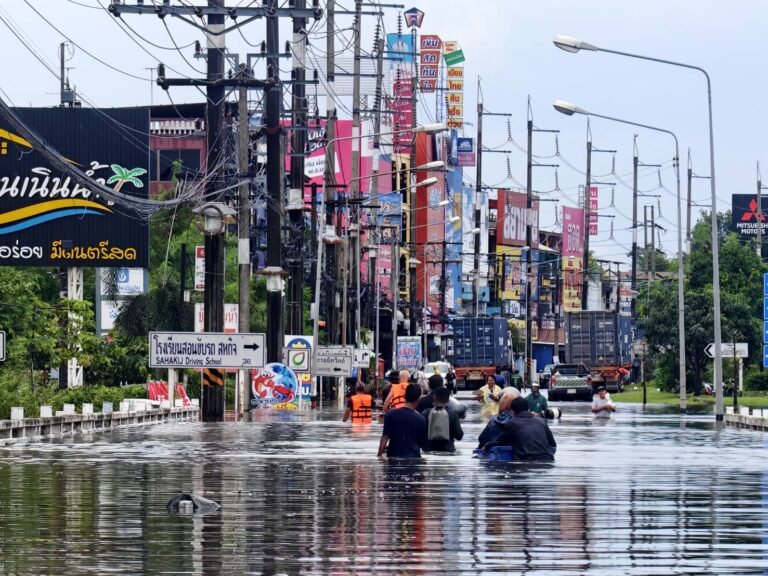
Flooding is affecting more than 2.6 million people across 29 provinces and all 50 districts of Bangkok, with 22 deaths reported, Thailand’s Department of Disaster Prevention and Mitigation (DDPM) said on 29 September.
DDPM director-general Teerapat Kachamat said heavy to very heavy rainfall in several areas, combined with water flowing south from the North and joining floodwaters in the Central region, has led to widespread flooding.
As of 06:00 on 29 September, flooding was reported across 29 provinces, affecting 167 districts, 890 subdistricts, 5,077 villages, 940,300 households and 2,602,309 people, according to the DDPM’s Emergency Operation Centre.
Flooding reported across 29 provinces
The affected provinces are Tak, Phitsanulok, Phetchabun, Nakhon Sawan, Uthai Thani, Lopburi, Sing Buri, Chai Nat, Suphan Buri, Kanchanaburi, Ang Thong, Saraburi, Ayutthaya, Samut Prakan, Pathum Thani, Nonthaburi, Nakhon Pathom, Nakhon Nayok, Prachin Buri, Chachoengsao, Sa Kaeo, Chon Buri, Rayong, Chanthaburi, Trat, Buri Ram, Chaiyaphum, Nakhon Ratchasima and Surin.
Cell Broadcast warnings issued
The DDPM issued several emergency warnings on Tuesday through the Cell Broadcast Service, warning residents in flood-risk areas of rising water levels and overflowing rivers.
At around 12:30, warnings were sent to residents in Kanchanaburi, Ratchaburi and Samut Sakhon over rising water levels and the Mae Klong River overflowing its banks.
Kanchanaburi and Ratchaburi warned of rising water
In Kanchanaburi, residents in Sai Yok, Dan Makham Tia, Mueang Kanchanaburi, Tha Muang and Tha Maka districts, particularly those living near waterways and in low-lying areas, were told to move belongings to higher ground and relocate vehicles to safe areas.
In Ratchaburi, residents in Ban Pong, Photharam, Mueang Ratchaburi, Bang Phae, Damnoen Saduak, Wat Phleng and Pak Tho districts were warned of the Mae Klong River overflowing its banks. Residents living along the river and canals were urged to evacuate immediately, move belongings to higher ground and cut electricity in low-lying areas.
Bangkok reinforces flood barriers
The DDPM also issued warnings for areas along Khlong Hok Wa Sai Lang on the border of Pathum Thani, as well as Sai Mai, Khlong Sam Wa and Nong Chok districts of Bangkok, after water was detected overflowing flood barriers.
Bangkok authorities are urgently reinforcing temporary flood barriers, while the DDPM is working with mobile network operators AIS, True and NT to send emergency SMS alerts to residents in affected areas.
Prachin Buri remains critical
In Prachin Buri, the DDPM issued another Cell Broadcast warning in the afternoon as water levels in the Prachin River continued to rise. Residents living near the river, in low-lying areas and other flood-risk locations were told to evacuate to shelters immediately and move their vehicles to safe areas.
Flooding in Wang Dan subdistrict, Kabin Buri district, remained critical, with authorities issuing a second evacuation warning of the day after floodwater overtopped barriers and flowed onto roads and into homes.
Water levels have fallen in some areas but remained stable in others, while authorities continued to urge residents to evacuate.