29.4 C
Bangkok
Friday, June 26, 2026
Home Blog Page 922

Death Toll From Pakistan Mosque Suicide Bombing Rises to 83

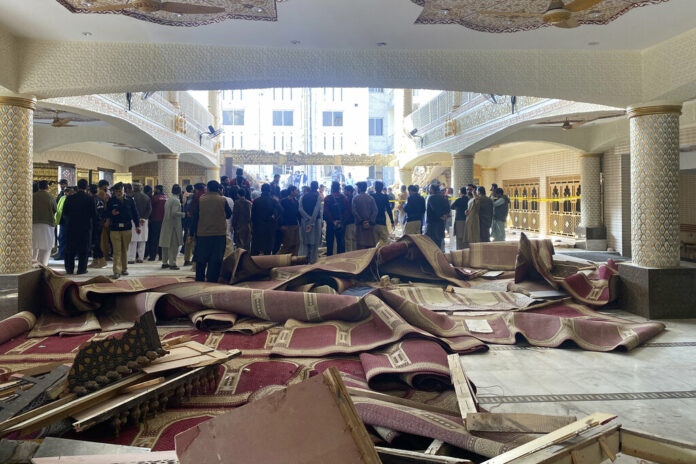
Security officials and rescue workers gather at the site of suicide bombing inside a mosque, in Peshawar, Pakistan, Monday, Jan. 30, 2023. Photo: Zubair Khan / AP

PESHAWAR, Pakistan (AP) — A Pakistani hospital spokesman says the death toll from the previous day’s suicide bombing at a mosque in the northwestern city of Peshawar has risen to 83.

Mohammad Asim, the spokesman, says more bodies were retrieved from the rubble of the mosque overnight and early on Tuesday, and several of those critically injured died in hospital.

“Most of them were policemen,” Asim said of the victims.

Bilal Faizi, the chief rescue official, said rescue teams are still carefully removing the rubble at the site of the mosque — located inside a police compound in a high security zone of the city — as more people are believed trapped inside after the roof caved in from the explosion.

He said the bombing also wounded more than 150 people. It was not clear how the bomber was able to slip into the walled compound in a high-security zone with other government buildings.

Also, on Tuesday mourners were burying the bombing victims at different graveyards in Peshawar and elsewhere.

___

Story: Riaz Khan.

Advertisement

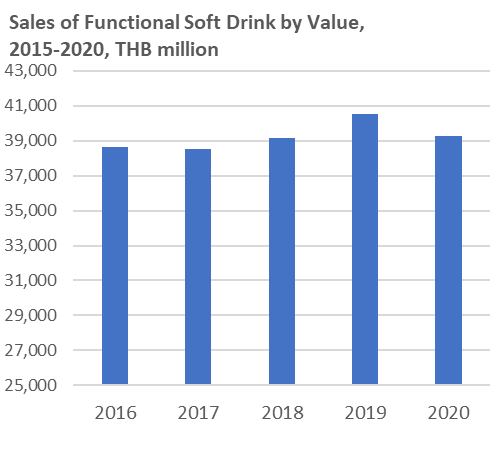
Thailand functional drink industry is expected to grow at a CAGR of 2% (in 2020 constant price) in the next five years.

Functional drinks are beverages with added ingredients for health benefits. It’s a large and important sector with a global market size of $104.2B in 2020. Thailand was the 11th largest market worth THB 47.8B in 2020 and 3rd largest in Southeast Asia after Philippines & Indonesia.There are two categories within functional beverages: functional hot drinks which include instant coffee, herbal tea, chocolate-based powder drinks and plant based hot drinks; and functional soft drinks which include energy drinks, sports drinks, juice and ready-to-drink coffee/tea. 

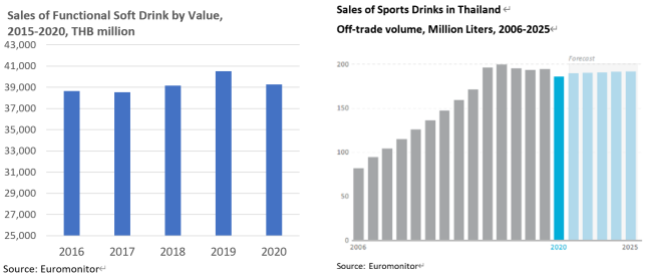
In 2020, functional drink sales in Thailand declined by 2% in retail value (THB 47.8 billion) and 4% in volume (1,925.5 million liters) due to a drop in soft drink sales, but hot drinks sales grew by 4% (THB 8.5 billion) as consumers sought healthier options. The COVID-19 pandemic impacted energy drinks and sports drinks, but favored hot drinks and immune-boosting soft drinks.

image2

Local players dominate the functional drink market in Thailand, controlling 78% with the top 3 (Osotspa, TC Pharmaceutical, and Carabao Tawandang) accounting for 60%. Energy and sports drinks hold 60% of the market share, with brands such as M-150, Carabao Dang, and Sponsor being popular. New products with a health-focused and immunity-boosting approach have gained popularity during the pandemic, such as C-Vitt, Ovaltine Gold 5 in 1 and Carabao Group’s Woody C+ Lock. Brands such as Minute Maid, Ovaltine, C-vitt, Nescafe, and Mansome also have a presence in the market.

The functional drink market in Thailand is expected to grow with a CAGR of 4% (a 2020 constant price CAGR of 2%)  in retail value and 1% in retail volume from 2021 to 2025, to reach THB 52.4 billion and 724,000 tons in 2025, according to Euromonitor. Due to increasing health consciousness and immune-boosting needs amid COVID-19 and a recovering economy. Key trends supporting growth include high-vitamin content products and increasing use of herbal extracts. Manufacturers plan to introduce more products with these features in the forecast period.

image3 1

Energy drinks

Thailand’s energy drink market is dominated by Osotspa, Carabao Group and TC Pharmaceutical. The top 3 brands, M-150, Carabao Dang, and Krating Daeng, account for over 90% of off-trade sales. M-150 dominates with 48.4% share, while Krating Daeng has 13.4%. Carabao Dang is popular due to strong advertising. The top 3 players compete fiercely, resulting in competitive pricing at THB 10 per unit.Energy drink market in Thailand is predicted to grow, reaching 325 million liters by 2025 with a 2% CAGR, due to resumption of infrastructure projects & post-pandemic economic recovery. Competition from subsectors with natural & healthier ingredients is expected, leading players are launching more healthy energy drinks (e.g. Osotspa’s Shark & Lipo-fine). Innovative products with natural ingredients are forecasted to become more prevalent in the next 5 years.

Sports drinks

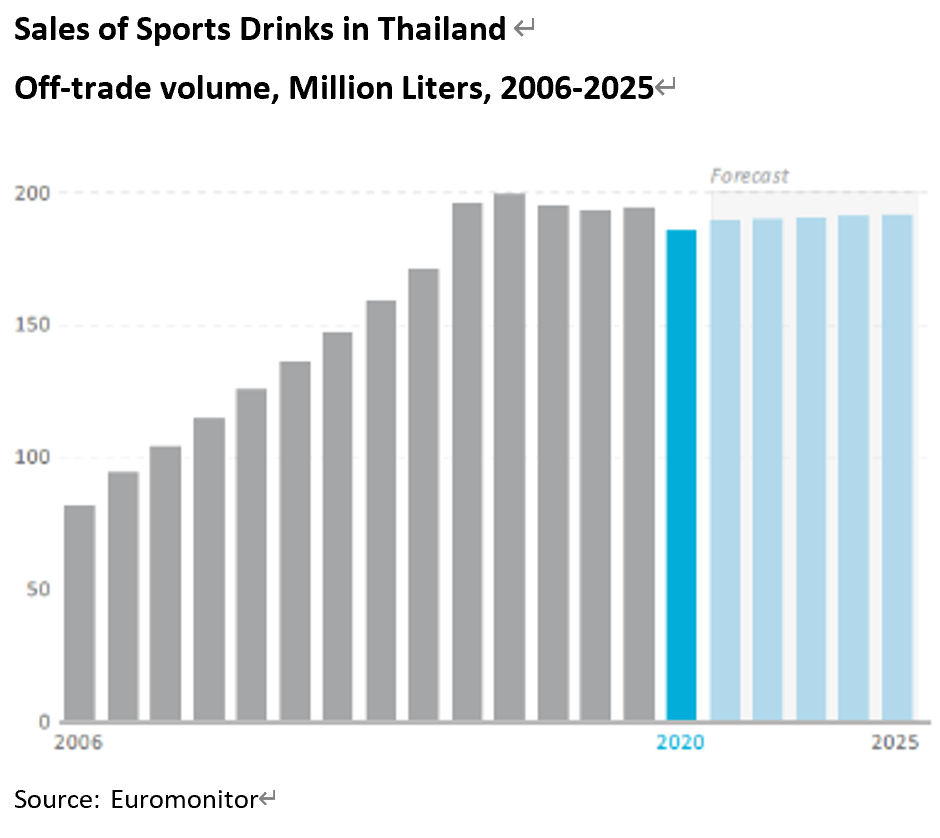
Sports drinks are popular globally with over 12.9 million liters sold globally in 2020. Thailand is the 9th largest sports drink market and 3rd largest in Southeast Asia with 184 million liters sold in 2020.Off-trade volume sales of sports drinks declined by 5% to 184 million liters in 2020, with a 4% drop in value sales to THB 7,801 million. The COVID-19 pandemic caused a 25% decline in on-trade volume sales, with the volume dropping to 17 million liters. Lockdowns and closures of sports facilities and fitness centers, as well as a sluggish economy, have impacted sales and consumers’ motivation to buy sports drinks.TC Pharmaceutical’s “Sponsor” dominates Thailand’s sports drink market with a 73.5% share of off-trade volume sales in 2020. New, healthy and affordable products such as “Sponsor Active” and “Sponsor Go” contribute to the company’s success. Other major players include “M-Electrolyte”, “100 Plus”, “Aquarius”, “Carabao Sports”, and “Gatorade”. COVID-19 disrupted workouts and reduced consumer income, leading to a decrease in demand for sports drinks.The COVID-19 pandemic is expected to recede in the forecast period, leading to a rise in off-trade sales of sports drinks to reach 195 million liters by 2025 with a CAGR of 1%. TC Pharmaceutical remains dominant, but new entrants will need strong products and precise positioning to succeed in a competitive market. The health and wellness trend will continue to influence the functional drink market, with a focus on natural ingredients.

Advertisement

Erdogan Might Approve Finland’s NATO Bid, ‘Shock’ Sweden

FILE - Turkey's President Recep Tayyip Erdogan waves to the crowd during a welcome ceremony in Sarajevo, Bosnia, on Sept. 6, 2022. Photo: Armin Durgut / AP File

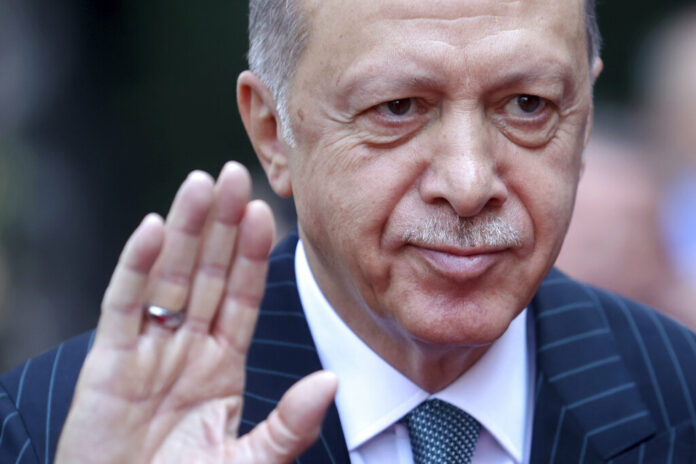
ISTANBUL (AP) — Turkey’s president has suggested his country might approve Finland’s application for NATO membership before taking any action on Sweden’s, while the Turkish government issued a travel warning for European countries due to anti-Turkish demonstrations and what it described as Islamophobia.

The travel warning published late Saturday followed demonstrations last weekend outside the Turkish Embassy in Sweden, where an anti-Islam activist burned the Quran and pro-Kurdish groups protested against Turkey. The events stiffened Turkey’s refusal so far to ratify Sweden’s NATO bid.

Sweden and Finland applied jointly to become members of the military alliance, dropping their longstanding military nonalignment following Russia’s war on Ukraine. In a prerecorded video of an event released Sunday, President Recep Tayyip Erdogan indicated that Turkey might sign off on only Finland.

“If needed, we could give a different message about Finland. Sweden will be shocked when we give the different message about Finland.” Erdogan said to a group of young people in Bilecik province.

Turkey has accused the government in Stockholm of being too lenient toward groups it deems as terror organizations or existential threats, including Kurdish groups. NATO requires unanimous approval of its existing members to add new ones, but Erdogan’s government has said it would only agree to admit Sweden if the country met its conditions.

In its travel warning to citizens, the Turkish foreign ministry cited an increase in anti-Turkish protests by “groups with links to terror groups,” a reference to the Kurdistan Workers’ Party, or PKK, which has waged a decades-long insurgency against Turkey. Along with Turkey, the European Union and United States also designate the PKK as a terror group.

Pro-Kurdish groups have waved the flags of the PKK and its affiliates during protests in Sweden organized as a response to Sweden and Finland’s promise to prevent the PKK’s activities in their countries in order to gain Turkey’s approval for their NATO memberships.

Erdogan said he told the Swedish prime minister, “You will extradite these terrorists if you really want to enter NATO. If you don’t extradite these terrorists, then sorry.” He said Turkey had provided a list of 120 people it wants extradited from Sweden, a demand that was part of a memorandum signed in June that averted Turkey’s veto of the Nordic nations’ joint application.

Turkey is demanding the extradition of alleged PKK militants as well as some followers of Fethullah Gulen, the Muslim cleric accused of the 2016 attempted coup. In December, the Swedish Supreme Court said the country cannot extradite Bulent Kenes, the former editor-in-chief of a newspaper linked to Gulen, angering Turkey.

Turkey also strongly condemned far-right activist Rasmus Paludan’s burning of the Quran last weekend in Stockholm, which he repeated in Copenhagen Friday. Ankara summoned the Dutch ambassador after another far-right activist tore pages of the Quran in the Hague.

Following last week’s protests, Erdogan warned Sweden not to expect support for its membership bid for the military alliance. Turkey also indefinitely postponed a key meeting in Brussels that would have discussed Sweden and Finland’s NATO membership.

The Turkish foreign ministry urged its citizens to take precautions and stay away from demonstration areas in Europe. It also said they should go to local authorities if they face xenophobic or racist attacks.

In a separate advisory, the ministry also urged Turkish citizens to be vigilant in the United States in case of protests in response to the fatal beating by Memphis, Tennessee, police of Tyre Nichols, an unarmed Black man.

Earlier Saturday, before Turkey had issued its travel warning, the Nordic countries separately issued updated travel guidelines for Turkey. Denmark, Finland, Norway and Sweden urged their citizens visiting Turkey to avoid large gatherings and to exercise caution.

The Swedish Foreign Ministry said in a message on its website that Sweden’s embassy in Ankara remains closed to the public and visitors to the country’s consulate general in Istanbul are “requested to exercise vigilance.”

“We want to make Swedes in Turkey aware that further manifestations may occur,” the Swedish ministry said, referring to counter-protests that erupted in Turkey after last weekend’s events in Stockholm.

___

Story: Zeynep Bilginsoy. Jari Tanner in Helsinki contributed.

Advertisement

‘Fast-track’ Talks Underway for Missiles, Planes to Ukraine

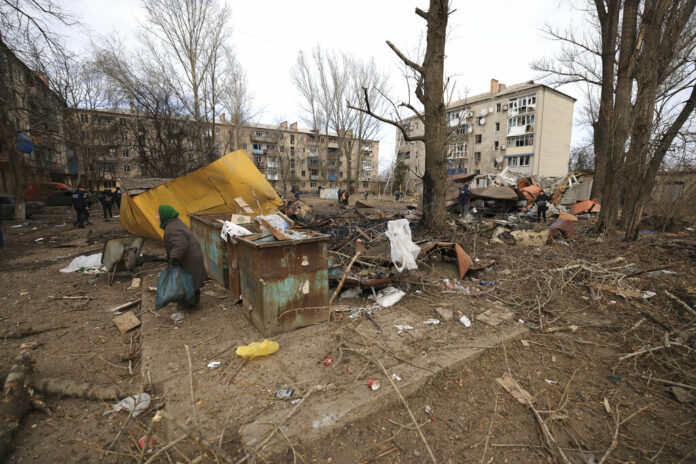
A local woman walks in the yard of a residential neighbourhood after a Russian attack in Kostiantynivka, Ukraine, Saturday, Jan. 28, 2023. Photo: Andriy Dubchak / AP

KYIV, Ukraine (AP) — Ukraine and its Western allies are engaged in “fast-track” talks on the possibility of equipping the invaded country with long-range missiles and military aircraft, a top Ukrainian presidential aide said Saturday.

Mykhailo Podolyak, an adviser to Ukrainian President Volodymyr Zelenskyy, said Ukraine’s supporters in the West “understand how the war is developing” and the need to supply planes capable of providing cover for the armored fighting vehicles that the United States and Germany pledged at the beginning of the month.

However, in remarks to online video channel Freedom, Podolyak said that some of Ukraine’s Western partners maintain a “conservative” attitude to arms deliveries, “due to fear of changes in the international architecture.” Russia and North Korea have accused the West of prolonging and taking a direct role in the war by sending Kyiv increasingly sophisticated weapons.

“We need to work with this. We must show (our partners) the real picture of this war,” Podolyak said, without naming specific countries. “We must speak reasonably and tell them, for example, ‘This and this will reduce fatalities, this will reduce the burden on infrastructure. This will reduce security threats to the European continent, this will keep the war localized.’ And we are doing it.”

The U.S. and Germany agreed Wednesday to share advanced tanks with Ukraine along with the Bradley and Marder vehicles promised earlier, a decision that led to criticism not only from the Kremlin but from the prime minister of NATO and European Union member Hungary.

Hungarian Prime Minister Viktor Orban asserted Friday that Western countries providing weapons and money to assist Ukraine in its war with Russia have “drifted” into becoming active participants in the conflict. Orban has refused to send weapons to neighboring Ukraine and sought to block EU funds earmarked for military aid.

The Ukrainian Foreign Ministry said it would summon Hungary’s ambassador to complain about Orban’s remarks. A ministry spokesperson, Oleg Nikolenko, said Orban told reporters that Ukraine was “a no-man’s land” and compared it to Afghanistan.

“Such statements are completely unacceptable. Budapest continues on its course to deliberately destroy Ukrainian-Hungarian relations,” Nikolenko said in a Facebook post.

President Joe Biden’s announcement that the U.S. would send 31 M1 Abrams tanks to Ukraine reversed months of arguments by Washington that they were too difficult for Ukrainian troops to operate and maintain.

The U.S. decision persuaded German Chancellor Olaf Scholz, who had expressed concern about a unilateral action drawing Russia’s wrath, to agree to send 14 Leopard 2 tanks from Germany’s stocks and to allow European countries with tanks to send some of theirs.

Western weapons have proven essential to Ukraine’s defense while stoking ever-higher tensions with Moscow. Russia’s Defense Ministry said Saturday that Ukrainian forces used U.S.-made HIMARS rockets to strike a hospital in the eastern Ukrainian town of Novoaidar, killing 14 people.

Novoaidar is located in Luhansk province, which is almost entirely under the control of Russian forces or Russian-backed separatists. The Russian Defense Ministry alleged the hospital was deliberately targeted. Its claim of a strike in Novoaidar could not be immediately verified.

“A deliberate missile attack on a known operating civilian medical institution is an unconditional grave war crime of the Kyiv regime,” the ministry said, according to Russian news agencies.

Amid the news of the Western pledges of heavy tanks, Russia bombarded Ukraine with missiles, exploding drones and artillery shells this week. The attacks continued Saturday, when Russian missiles struck the city of Kostyantynivka in eastern Ukraine’s Donetsk province.

The missiles fell in a residential area, killing three civilians, wounding 14 and damaging four high-rise apartment buildings, a hotel and garages, Gov. Pavlo Kyrylenko said.

“Kostyantynivka is a city relatively far from the front line, but still, it constantly suffers from enemy attacks. Everyone who remains in the city exposes themselves to mortal danger,” Kyrylenko said. “The Russians target civilians because they are not able to fight the Ukrainian army.”

In a separate Telegram post earlier Saturday, Kyrylenko reported that Russian attacks in the province killed four civilians in all and wounded seven others in 24 hours.

Russian rockets hit a residential area the Donestsk town of Chasiv Yar on Friday night, killing of two people and wounding five more, the governor said. Photos attached to Kyrylenko’s post showed a three-story school building on fire.

Donetsk province, where the territory is roughly split between Russian and Ukrainian control, has become the battle epicenter of the war as Moscow tries to jump-start a monthslong, grinding offensive to capture the city of Bakhmut.

Chasiv Yar lies on a hill strategically located for the defense of Bakhmut, and has come under intensified Russian shelling. Capturing Bakhmut would allow Russian troops to disrupt Ukrainian supply lines and potentially pave the way for them to threaten Sloviansk and Kramatorsk, the largest remaining Ukrainian-held cities in the country’s east.

Russian forces continued ground attacks around Bakhmut and Avdiivka, another Donetsk city to the south, while Ukrainian troops were on the offensive in southern and northeast Ukraine, the Ukrainian military said in a Saturday morning update.

The General Staff of the Ukrainian Armed Forces said that Russian troops “are defending themselves” near Lyman in Luhansk and Kharkiv provinces north of Donetsk, as well in Kherson and Zaporizhzhia provinces in the south.

The fighting has largely been deadlocked over the past months, with winter conditions slowing down ground operations and neither side reporting significant progress.

In the same update, the military reported that Russian forces launched 10 missile strikes, 26 air strikes and 81 shelling attacks on Ukrainian territory between Friday and Saturday mornings. The shelling killed two civilians in Kherson, another province that is partly Russian-occupied.

Podolyak, the presidential adviser, said Ukraine needs supplies of Western long-range missiles “to drastically curtail the key tool of the Russian army” by destroying the warehouses where it stores cannon artillery used on the front line.

___

Story: Susie Blann.

Advertisement

Opinion: Time for Tawan and Bam to End Their Political Hunger Strike

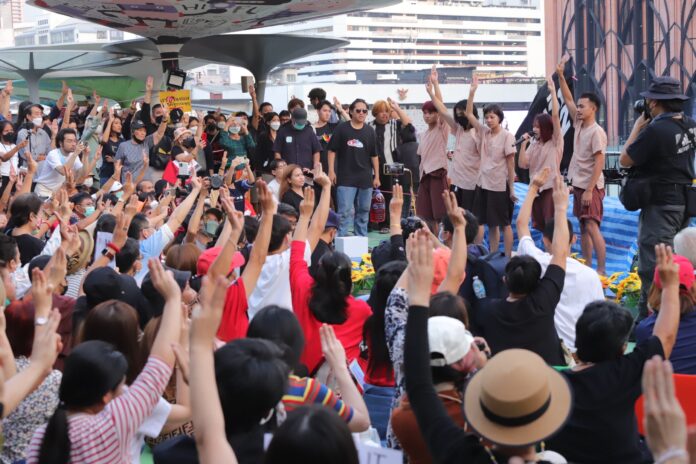
Protesters raises a three-finger salute during a rally supporting lese majeste detainees Tawan and Bam, who are on hunger strike, at Pathum Wan Intersection on Jan. 26, 2023.

It has been over ten days now since monarchy-reform activists Tawan and Bam have unilaterally revoked their lese majeste bail and began their hunger strike in prison. They are now at Thammasat Hospital. The two young activists issued three lofty demands: justice system reform, release of all political prisoners, and for all political parties to call for the abolition of both the lese majeste and sedition laws.

Ten days have passed and none of their demands have been met. Yet as of press time, they insist on continuing their hunger strike, adamant that, if need be, they are willing to sacrifice their lives for the cause they believe in.

A major rally was called by monarchy-reform co-leader Arnon Nampa on Thursday despite him being constrained by the bail condition, which means he is risking himself being detained once again. Despite that, no more than a few hundred demonstrators gathered. It was a far cry from the height of monarchy-reform street protests two years ago when tens of thousands, mostly young protesters, filled up the streets of Bangkok and beyond.

On Friday, both opposition parties, Pheu Thai and Move Forward, issued a joint statement calling for the first two demands to be met. Interestingly enough, or shamefully enough, none of the two parties address the issue of the third demand. As of press time, Move Forward Party’s stance is to call for the reform of the lese majeste law, while Pheu Thai has no plan to even push for a reform of the law, not to mention sedition law.

The two opposition parties were not willing to shift their stance to make it more progressive, or radical – perhaps out of fear of alienating their more conservative base. Activists ambushed Move Forward Party leader Pita Limjaroenrat on Saturday at a party event, but there was no sign that any accommodation will be made.

All political parties are now in the election campaign mode with the general elections expected by May if not sooner, so they are not willing to support street protests to the point where the election cannot be held or risk another military intervention. Over the past two years, not a few key monarchy-reform activists have also been poached to join the opposition parties. They are now running as MP candidates and are no longer able to lead street protests.

As for some activists and supporters of Tawan and Bam, they say they “respect” the two girls’ decision and support them. Some are even irritated by calls by others on the same camp who expressed concerns and told them to shut up.

It is easier said than done for those who simply say they will not try to stop or convince the two otherwise, after all it is not they themselves who are on hunger strike, risking their health if not their lives. They are more than willing to use the two girls as a stepping stone, if not a pawn, to further their ideological cause to ignite outrage if the two become incapacitated or die. If these people are not willing to be on a hunger strike themselves they should seriously reconsider their selfish piggybacking stance.

Time is of the essence and people who have good ties with the two and their respect should immediately meet them at the hospital to try to convince them that their demands will most unlikely be met in the foreseeable future and they should end the hunger strike and carry on a fight in a more protracted manner.

It may take many years, no, decades more, but we cannot expect Thai society to produce an immediate consensus particularly on the status of the lese majeste law by having someone threaten to sacrifice their live, if all political parties do not support the abolition of the law. We need more talks to convince the unconvinced and it cannot be achieved through a hunger strike. This is where Tawan and Bam, no matter how well intended, got it wrong.

The lese majeste law, despite its draconian 15 years maximum imprisonment term, could not make some Thais love and respect the monarchy. The same can be said about Tawan and Bam’s hunger strike to death’s ultimatum – it cannot make ultra-royalists and royalist parties call for the abolition of the lese majeste law.

Advertisement

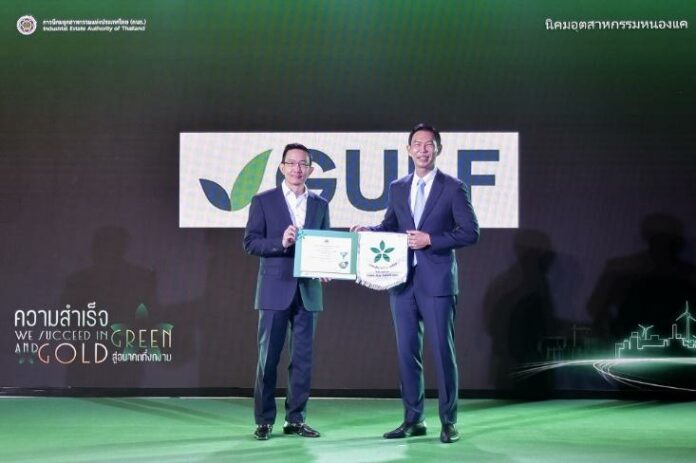
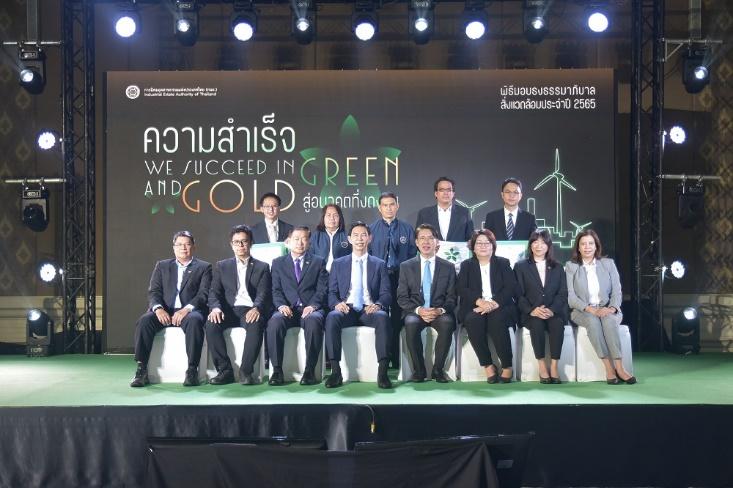
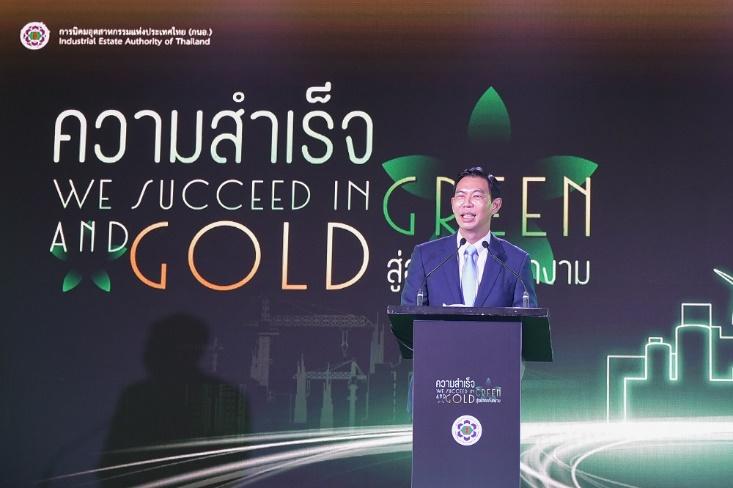
GULF receives environmental governance award 2022 (green star – white flag) 

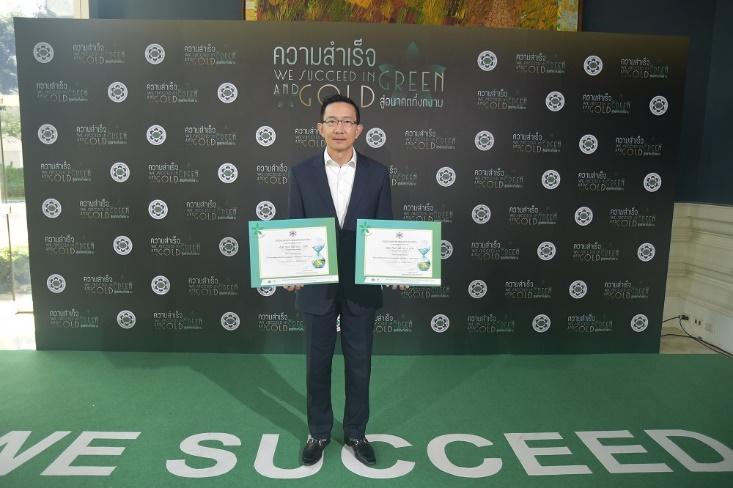
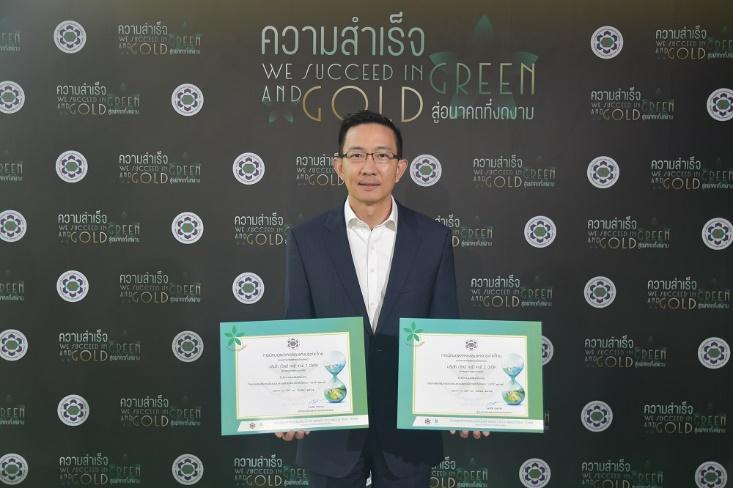
Gulf Group (GULF), represented by Mr. Smith Banomyong, Chief Operating Officer – Group Asset Management & Investment, has received environmental governance award for the GKP1 and GKP2 power plants from Dr.Veeris Ammarapala, Governor, the Industrial Estate Authority of Thailand. The ceremony was held at the ballroom, Pullman King Power Hotel, Bangkok.

image3 10

Gulf Group (GULF) has received environmental governance awards and certificates from Industrial Estate Authority of Thailand (IEAT) as a result of GKP1 and GKP2 power plants’ best-in-class environmental governance practices, reflecting excellent environmental management including green area management, drainage systems, water and sewage management, air quality management, employee safety and health, as well as promoting the local economy and improving quality of life of communities surrounding the power plants. This reiterates the company’s social responsibility in every aspect.

image2 13 image5 8

Since 2019, four power plants under Gulf Group, consisting of GVTP, GTS1, GTS 3, and GTS4, received environmental governance awards and certificates. This reaffirms the company’s commitment in efficient resource management to achieve best-in-class standards, while remaining socially and environmentally responsible in the area where the company operates.

image4 8

The environmental governance awards event is an initiative that aims to increase the community’s involvement in inspecting and supervising factories in industrial estates. The audit committee of the industrial estate is comprised of IEAT officials, community representatives, and local government agencies. Its purpose is to encourage factories in industrial estates to adopt environmental governance principles, and social responsibility in order to boost the confidence from all sectors as well as promote the sustainable growth of the industry and community.

Advertisement

Pack Light & Stay Motivated: Westin Hotels & Resorts Launches a Refueled Gear Lending Program

Travelers can borrow the latest high-tech recovery and total body strength training equipment to optimize their well-being while staying at any of the brand’s more than 230 properties globally

BETHESDA, MD – January 2023 Rooted in its mission of providing signature wellness programs that empower guests to regain control and enhance their well-being when they need it most while traveling, Westin Hotels & Resorts – part of Marriott Bonvoy’s® portfolio of 30 extraordinary brands – has reimagined its Gear Lending program, featuring the latest in high-tech recovery and total body strength training equipment.

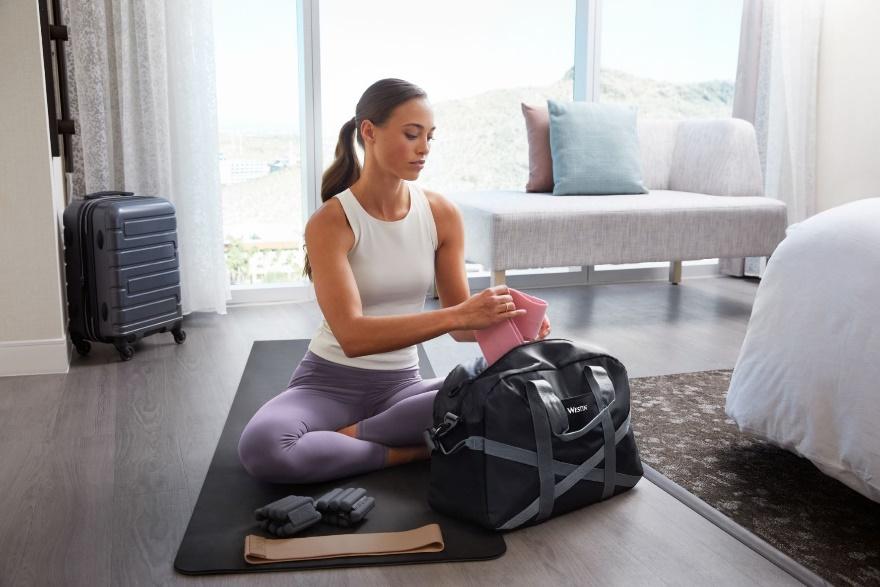
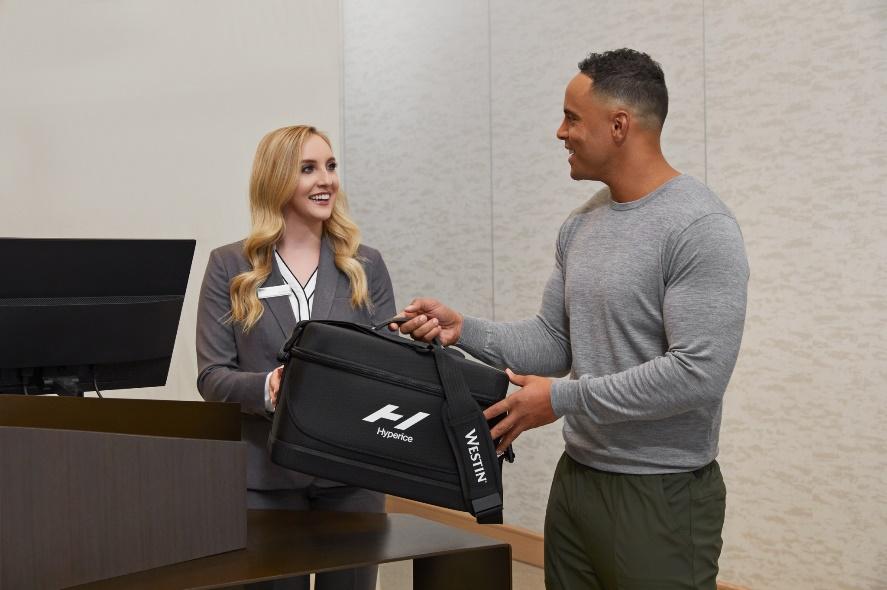
Rolling out at the brand’s over 230 properties globally beginning this month, the next generation WestinWORKOUT® Gear Lending program will encompass a library of kits allowing guests to borrow the equipment they need – whenever they want – to optimize their stay and feel their best.

Over the past decade, ​through both operational and consumer feedback, Westin has evolved and enhanced its Gear Lending program to meet consumers where they are today. The acclaimed, on-demand program focuses on helping guests maintain their workout routines, wherever they go, without the added bulk of packing fitness gear.

image4 7

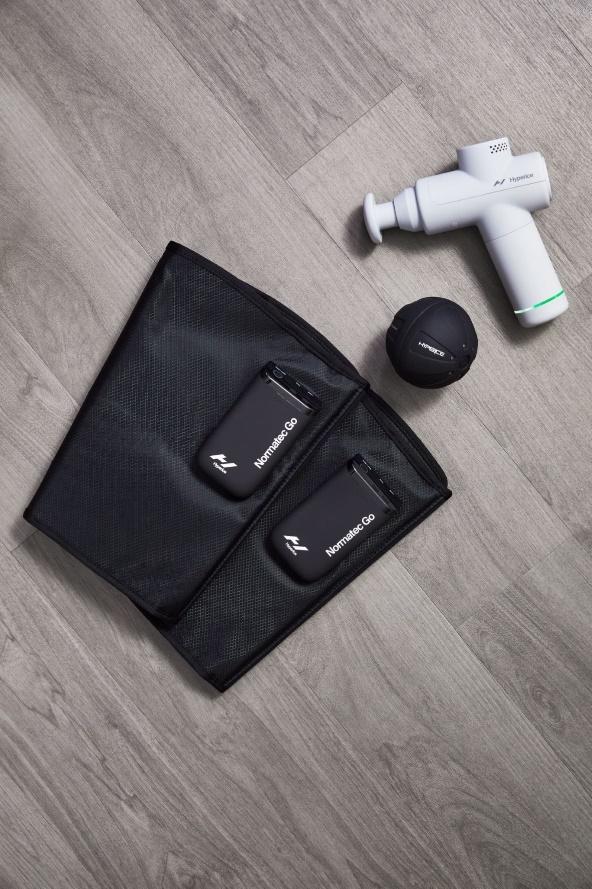
Westin tapped fitness powerhouses for the first two kits of its re-energized Gear Lending program, providing guests with high-quality fitness essentials in-room, on-demand. Global high-performance wellness brand Hyperice features its game changing massage and compression recovery products that are ideal for post-workout recovery, as well as soothing stiffness and tension from long travel.

Additionally, direct-to-consumer fitness accessories brand Bala features its beautifully designed and highly versatile total body fitness pieces, providing opportunities for guests to move well both in their guest room and outside, wherever the day takes them.

Whether an avid runner that needs recovery tools or cross-training, a yogi that wants to maintain their daily routine, or a guest that wants to relieve tension from a long day of travel and/or a day of meetings, guests now have the opportunity to borrow: 

  • Recover & Recharge Kit by Hyperice, which includes Hyperice’s most sought-after recovery gear such as the Hypervolt Go 2, and Hypersphere Mini, as part of Hyperice’s ongoing exclusive hospitality collaboration with Westin.
  • Sculpt & Flow Kit by Bala, which includes Bala’s full body workout essentials such as bangle weights, resistance bands, balance blocks, and a Westin branded yoga mat.

image3 9

“For Westin, wellness is central to our mission. Over the last decade, through our WestinWORKOUT® Gear Lending program, we’ve helped guests optimize their fitness routines and accomplish more while on the road,” said Jennifer Connell, Global Brand Leader, Westin Hotels & Resorts and Vice President, Distinctive Premium Brands, Marriott International.

“As strength training and recovery have evolved into essential wellness rituals, we’ve reimagined our beloved program to be more versatile and partnered with cutting-edge brands that help motivate and inspire guests to reach their full potential.” 

Hotel guests who wish to bring the WestinWORKOUT® Gear Lending experience home can request an exclusive promotional code to shop the products on the Bala and Hyperice websites. Looking ahead, Westin plans to continue expanding its Gear Lending program with more kits added to the roster as well as additional, enhanced guest experiences.

image6 6

“As the industry leader in wellness technology, Hyperice always looks to partner with forward-thinking brands to share the power of our recovery technology and reach new demographics,” says Jim Huether, CEO of Hyperice.

“Following the debut of our Hypervolt recovery stations in WestinWORKOUT® fitness studios at select Westin properties across the U.S. last year, the Recover & Recharge Kit by Hyperice will further help guests achieve their personal wellness goals as part of the WestinWORKOUT® Gear Lending program. Our continued partnership with Westin Hotels & Resorts is the result of bringing two industry leading brands together to deliver the next wave of holistic hospitality.

“Bala was started to make working out feel a bit less like work; to design products as fun as they are functional, said Maximilian Kislevitz, Co-Founder of Bala. “The Sculpt & Flow Kit by Bala within the WestinWORKOUT Gear Lending program is a dream come true, and we’re elated to help Westin guests keep up with their routines while on the road.”

image5 7

The Westin experience comes to life through the brand’s Six Pillars of Well-Being – Sleep Well, Eat Well, Move Well, Feel Well, Work Well, and Play Well – allowing guests to personalize their stay and engage in programming that best meets their needs.

In addition to WestinWORKOUT® Gear Lending program, offerings under the Move Well pillar include the signature WestinWORKOUT® Fitness Studios, and the more than 225 on-property Run Concierges around the world who host group runs and encourage athletes of all levels to grab a RunWESTIN™ map and explore the destination.

image1 15

To learn more about the brand’s Gear Lending program, please visit www.westin.com/gearlending and join the conversation via @westin and #MoveWell.

Advertisement

Germany: Victims of Fatal Train Attack Identified as 2 Teens

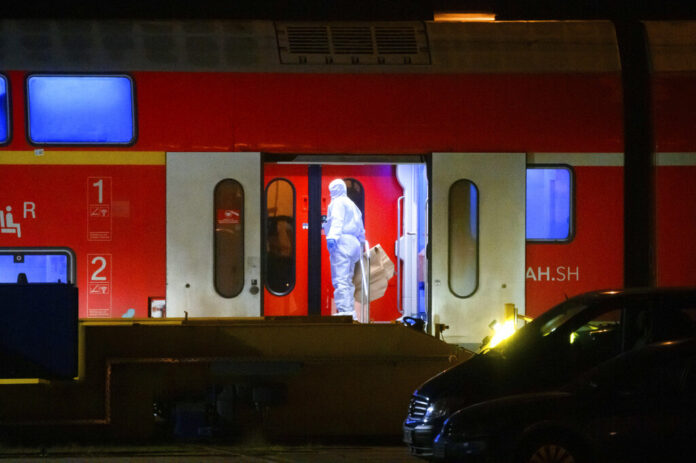
An investigator in a white protective suit works in the regional train that had been driven onto a siding in Neumunster, Germany, Wednesday, Jan. 25, 2023. Photo: Jonas Walzberg/dpa via AP

BERLIN (AP) — A 33-year-old man arrested on suspicion of fatally stabbing two teenagers and injuring five other passengers on a train in northern Germany had been released from pretrial detention a week ago and had previous criminal convictions, investigating officials said Thursday.

The man, who was identified as Ibrahim A., a stateless Palestinian who came to Germany in 2014, allegedly stabbed multiple people Wednesday afternoon on a regional train traveling from Kiel to Hamburg. A 17-year-old girl and a 19-year-old man died of their wounds, authorities said.

Two victims were still in life-threatening condition and two others were severely injured. One person was slightly injured, police said.

Other passengers overwhelmed the suspect, who was treated at a hospital for slight injuries and is in police custody, local police said at a press conference in Kiel.

Police and prosecutors said that the suspect’s criminal record included convictions including for another stabbing incident, sexual assault, grievous bodily harm, and shoplifting. German dpa agency said he had been in pretrial custody for a year because of another knife crime in Hamburg, before being released a week ago.

Before he was registered in Kiel, the suspect also lived in Hamburg and in the western state of North Rhine-Westphalia.

Police and prosecutors were investigating possible motives for the attack, which happened as the train approached the town of Brokstedt.

Several media outlets reported that the attacker chased passengers through different coaches of the train and that traces of blood could be found in four of them. Some passengers tried to defend themselves by throwing their suitcases at him, German news channel n-tv reported.

Sabine Suetterlin-Waack, the interior minister of Schleswig-Holstein state, where Brokstedt is located, said the parents of the two teenage victims had been informed of their deaths. Not all other injured victims had been identified by Thursday noon time, she said.

“Due to the very dynamic course of the crime, much is unclear,” the minister said. Results of an interrogation of the alleged perpetrator did not exist yet, so investigators cannot yet say anything about the motive.

She said investigators were working under high pressure to “gather all the facts.”

The state parliament began its session Thursday with a minute of silence for the victims of the attack.

___

Story: Kirsten Grieshaber.

Advertisement

Hong Kong to Ban CBD, Label It a ‘Dangerous Drug’

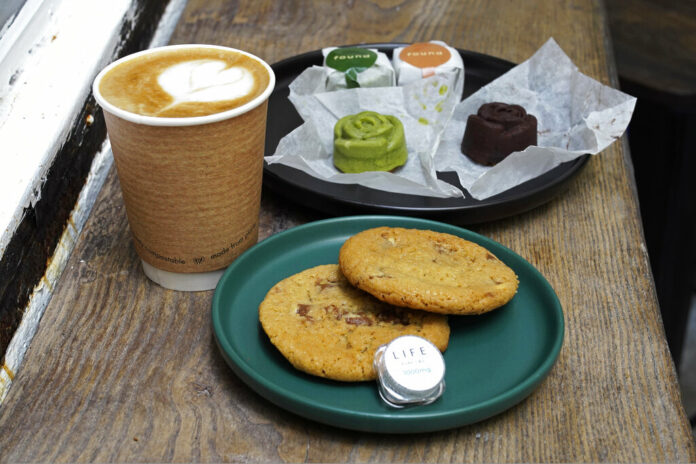
FILE - Coffee, biscuits, green tea and chocolate mooncake that contain cannabidiol, or CBD, a substance from the cannabis plant, are displayed at the Found Cafe in Hong Kong on Sept. 13, 2020. Photo: Vincent Yu / AP File

HONG KONG (AP) — Hong Kong will ban CBD starting Wednesday, categorizing it as a “dangerous drug” and mandating harsh penalties for its smuggling, production and possession, customs authorities announced Friday.

Supporters say CBD can treat a range of ailments including anxiety and that, unlike its more famous cousin THC — which is already illegal in Hong Kong — CBD doesn’t get users high. Cannabidiol, derived from the cannabis plant, was previously legal in Hong Kong, where bars and shops sold products containing it.

But Hong Kong authorities decided last year to prohibit the marijuana-derived substance — a change that will soon go into effect. Residents were given three months from Oct. 27 to dispose of their CBD products in special boxes set up around the city.

“Starting from February 1, cannabidiol, aka CBD, will be regarded as a dangerous drug and will be supervised and managed by the Dangerous Drugs Ordinance,” customs intelligence officer Au-Yeung Ka-lun said at a news briefing.

“As of then, transporting CBD for sale, including import and export, as well as producing, possessing and consuming CBD, will be illegal,” Au-Yeung said.

Penalties include up to life in prison and Hong Kong $5 million ($638,000) in fines for importing, exporting or producing CBD. Possession of the substance can result in a sentence of up to seven years and Hong Kong $1 million ($128,000) in fines.

In announcing the ban last year, the Hong Kong government cited the difficulty of isolating pure CBD from cannabis, the possibility of contamination with THC during the production process and the relative ease by which CBD can be converted to THC.

“We will tackle all kinds of dangerous drugs from all angles and all ends, and the intelligence-led enforcement action is our major goal,” Chan Kai-ho, a divisional commander with the department’s Airport Command, told reporters Friday.

Despite the harsh penalties mandated, Chan said authorities would handle enforcement on a case-by-case basis and “seek legal advice from our Department of Justice to determine what the further actions will be.”

Hong Kong maintains several categories of “dangerous drugs,” which include “hard drugs” such as heroin and cocaine, as well as marijuana.

Hong Kong’s first CBD cafe opened in 2020 and the ban will force scores of businesses to remove CBD-infused gummies, drinks and other products, or shut down altogether.

The ban is in keeping with a zero-tolerance policy toward drugs in Hong Kong, a semi-autonomous southern Chinese business hub, as well as on mainland China, where CBD was banned in 2022.

Chinese authorities have waged battles against heroin and methamphetamines, particularly in the southwest bordering on the drug-producing Golden Triangle region spanning parts of Myanmar, Thailand and Laos.

Criminal penalties for both sale and usage are also enforced for marijuana. In one of the most high-profile cases, Jaycee Chan, the son of Hong Kong action star Jackie Chan, served a six month sentence in 2014-2015 for allowing people to consume marijuana in his Beijing apartment amid a crackdown on illegal narcotics in the Chinese capital.

At the same time, China has been a main source of the precursor chemicals used to manufacture the dangerous drug fentanyl, a trade often facilitated through social media.

A wealthy Asian financial center with a thriving commercial port and major international airport, Hong Kong is a key point of entry to China as well as a market for some drugs, especially cocaine. Police have recently seized hundreds of kilograms (pounds) of the drug worth tens of millions of dollars, some of it hidden in a shipment of chicken feet from Brazil.

Most Asian nations maintain strict drug laws and enforce harsh penalties for violators, including the death penalty, with the exception of Thailand, which made it legal to cultivate and possess marijuana last year.

Debate over CBD policy continues in many countries and regions.

The U.S. Food and Drug Administration said Thursday there’s not enough evidence about CBD to confirm that it’s safe for consumption in foods or as a dietary supplement. It called on Congress to create new rules for the massive and growing market.

Marijuana-derived products have become increasingly popular in lotions, tinctures and foods, while their legal status has been murky in the U.S., where several states have legalized or decriminalized substances that remain illegal federally.

___

News assistant Caroline Chen contributed to this report from Beijing.

Advertisement

Myanmar Opium Cultivation Has Surged 33% Amid Violence

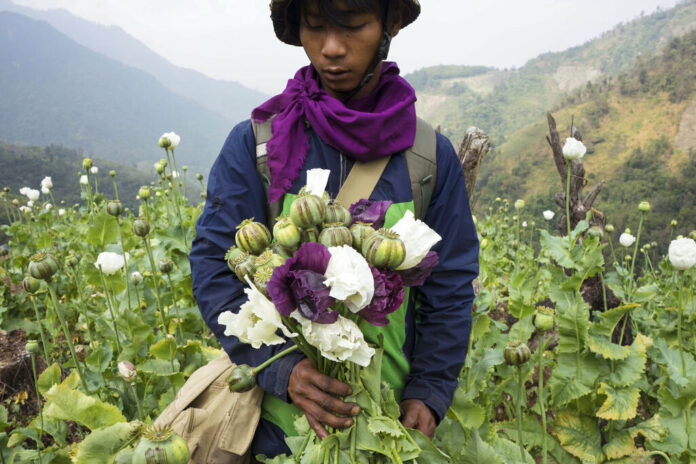
FILE - A member of Pat Jasan, a grassroots organization motivated by their faith to root out the destructive influence of drugs, holds poppies as his group slashes and uproots them from a hillside, in Lung Zar village, northern Kachin State, Myanmar on Feb. 3, 2016. Photo: Hkun Lat / AP File

BANGKOK (AP) — The production of opium in Myanmar has flourished since the military’s seizure of power, with the cultivation of poppies up by a third in the past year as eradication efforts have dropped off and the faltering economy has led more people toward the drug trade, according to a United Nations report released Thursday.

In 2022, in the first full growing season since the military wrested control of the country from the democratically elected government of Aung San Suu Kyi in 2021, Myanmar saw a 33% increase in cultivation area to 40,100 hectares (99,090 acres), according to the report by the U.N. Office on Drugs and Crime.

“Economic, security and governance disruptions that followed the military takeover of February 2021 have converged, and farmers in remote, often conflict-prone areas in northern Shan and border states have had little option but to move back to opium,” said the U.N. office’s regional representative Jeremy Douglas.

The overall value of the Myanmar opiate economy, based on U.N. estimates, ranges between $660 million and $2 billion, depending on how much was sold locally, and how much of the raw opium was processed into heroin or other drugs.

“Virtually all the heroin reported in East and Southeast Asia and Australia originates in Myanmar, and the country remains the second-largest opium and heroin producer in the world after Afghanistan,” Douglas said. “There is no comparing the two at this point as Afghanistan still produces far more, but the expansion underway in Myanmar should not be dismissed and needs attention as it will likely continue — it is directly tied to the security and economic situation we see unfolding today.”

The so-called Golden Triangle area, where the borders of Myanmar, Laos and Thailand meet, has historically been a major production area for opium and hosted many of the labs that converted it to heroin. Decades of political instability have made the frontier regions of Myanmar, also known as Burma, largely lawless, to be exploited by drug producers and traffickers.

Most of the opium exported by Myanmar goes to China and Vietnam, while heroin goes to many countries across the region, Douglas said.

“It is really where the value is for traffickers,” he said. “Very high profits.”

The cultivation of opium had been trending downward in recent years before the military took control of the government in 2021.

Production estimates hit a bottom of 400 metric tons (440 tons) in 2020. After rising slightly in 2021, that spiked in 2022 to an estimated 790 metric tons (870 tons), according to the report.

Since it took control of the government, the military’s use of deadly force to hold on to power has escalated conflict with its civilian opponents to the point that some experts describe the country as now being in a state of civil war.

The costs have been high, with 2,810 people killed by government forces to date and 17,427 detained, according to the Assistance Association for Political Prisoners.

The violence has meant that the government has been unable to reach some areas to carry out drug eradication raids, and has also had to divert its resources elsewhere. Consequently, eradication efforts appear to have decreased substantially, with 1,403 hectares (3,467 acres) reported eradicated in 2022 — some 70% fewer than in 2021.

At the same time, as the conflict continues to take its toll on Myanmar’s economy, an increasing number of rural households have been pushed into relying more on opium cultivation for income, the U.N. said.

“The expansion of opium production that is underway is fundamentally about poverty and people in rural areas reacting to the economic situation,” Douglas said. “It has always been there in tough times. At the same time, the security situation is clearly difficult with increasing frequency and intensity of conflict, and those involved in the drug economy have been left largely unchecked.”

Its synthetic drug economy has also been surging for the same reasons, with reported regional seizures of methamphetamine and other drugs reaching record levels. In a single bust in September in Laos, for example, authorities seized 33 million methamphetamine tablets along with 500 kilograms (1,100 pounds) of crystal methamphetamine.

___

Story: David Rising.

Advertisement

Hot News

LATEST NEWS

Bangkok
broken clouds
29.4 ° C
32.2 °
29.4 °
74 %
5.4kmh
58 %
Fri
29 °
Sat
36 °
Sun
37 °
Mon
37 °
Tue
32 °