30 C
Bangkok
Saturday, June 27, 2026
Home Blog Page 951

B.Grimm Healthcare acquires Unison Group – a leading pharmaceutical and healthcare group of companies in Thailand

Acquisition strengthens the company’s leadership in the healthcare industry

  • B.Grimm Healthcare acquires Medline, Unison, F.C.P. and  All Research to enhance competitiveness and drive sustainable growth
  • The Unison Group of companies is a leading pharmaceutical and healthcare products manufacturer and distributor with a strong presence across Thailand and internationally
  • Forges the expertise, experiences and networks of B.Grimm and the Unison Group, will enable B.Grimm Healthcare to become an industry leader in Thailand

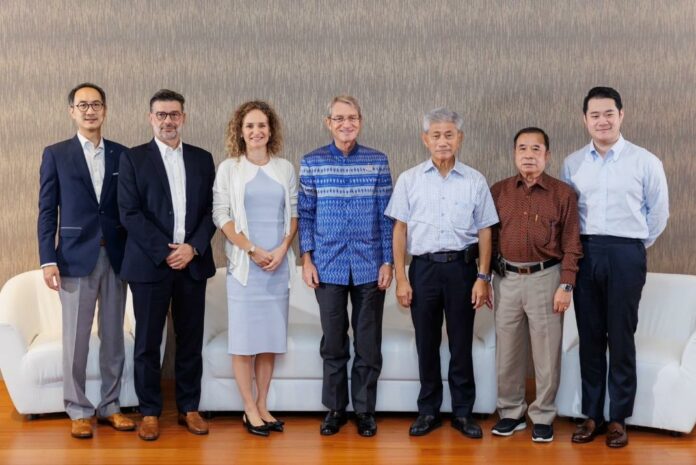
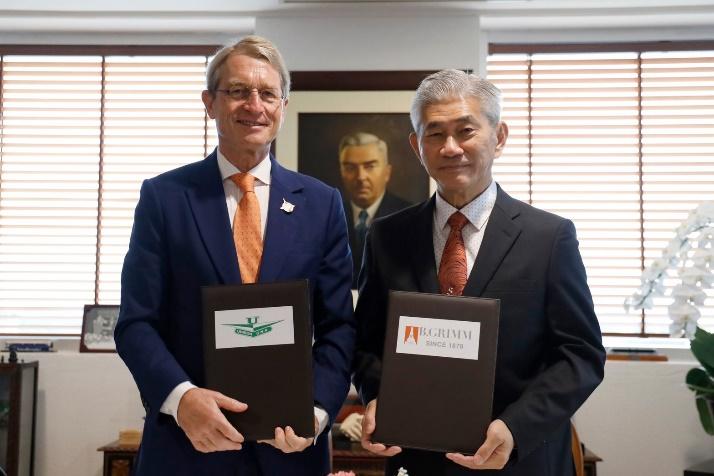
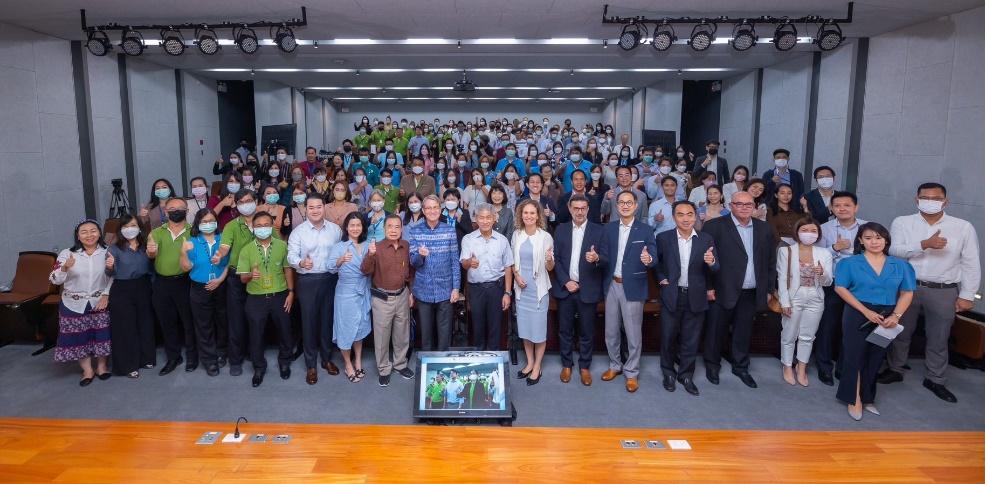
Bangkok, 10 October 2022 – B.Grimm Healthcare, a company under B.Grimm Group, announced today the acquisition of Medline, Unison, F.C.P., and All Research, effective on 30 September 2022. The acquisition is part of B.Grimm’s strategy to drive sustainable growth of its healthcare portfolio, as it continues to enhance the accessibility of high-quality healthcare products for everyone. 

image3 5

B.Grimm was founded in Thailand in 1878 during the reign of H.M. King Chulalongkorn (King Rama V), as a chemist’s shop, the Siam Dispensary. It was the first modern pharmacy in Thailand to provide people with healthcare support and medicine. B.Grimm carries on a tradition of  144 years of doing business with compassion to promote the quality of life for Thais. In addition to its long-standing healthcare business, B.Grimm is a multi business corporation active in the fields of energy, industrial systems, real estate, transport, digital and lifestyle. 

Founded in Thailand as a family business, the Unison Group has become one of the leaders in the country’s healthcare industry. Began with Medline, a modern pharmaceutical importer in Thailand, has operated for over 31 years with wide range of portfolio of its pharmaceutical products. In 1995, the company acquired Unison Laboratories (Unison), a pharmaceutical manufacturer, to enhance its business capabilities and to complete its value chain for both importation and manufacturing. The Unison group also expanded into food supplements and cosmetics through the acquisition of F.C.P., harnessing its technology and pharmaceutical insights to help advance product quality. Presently, the Unison Group is established in both locally and in more than 20 countries.

image2 5

Dr. Harald Link, Chairman of B.Grimm, said, “B.Grimm Healthcare’s portfolio has been a priority for B.Grimm since 1878. The acquisition is a key milestone as we continue our  philosophy of doing business with compassion, which we have adhered to for 144 years in Thailand. Our philosophy is rooted on our commitment to society, the environment, and our communities. We strive to uplift people’s quality of life, while bringing prosperity and happiness to Thai society. B.Grimm Healthcare plays a critical role in creating positive social impact and enhancing access to high-quality products for all, which is aligned with our social responsibility and community support strategy to promote sustainable growth.” 

Ms. Caroline Link, President of B.Grimm Joint Venture Holding Ltd., stated, “As Thailand’s leading healthcare company, the Unison Group has high growth potential. The acquisition will help strengthen our business as we advance growth of B.Grimm Healthcare, enabling us to become a leader in the industry. We remain committed to creating value for a better society. We will continue to invest in innovation and digital technologies, and in providing comprehensive healthcare solutions, to address the challenges of current and future generations.”

This acquisition is part of our expansion strategy to grow B.Grimm’s healthcare portfolio, with the goal of contributing to Thailand becoming a leading hub for research & development, pharmaceutical manufacturing and high-quality healthcare products with international standards. We are committed to promoting quality of life for all people and improving access to the products of quality.”

Advertisement

Cremations Readied for Nong Bua Lamphu Massacre Victims

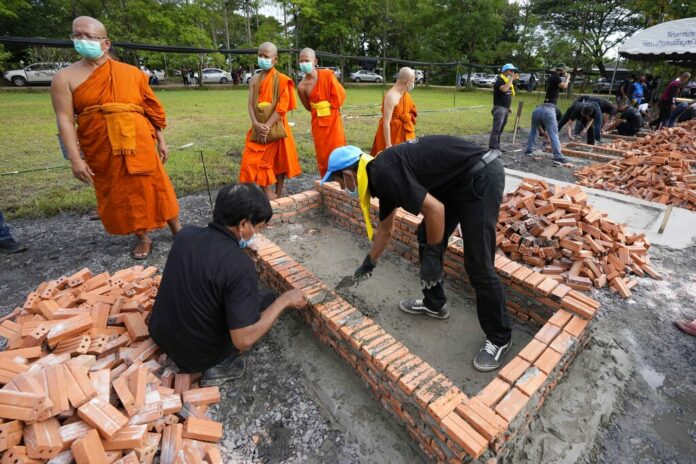
Buddhist monks oversee the making of cremation furnaces at Wat Rat Samakee temple in Uthai Sawan, northeastern Thailand, Monday, Oct. 10, 2022. Photo: Sakchai Lalit / AP

UTHAI SAWAN, Thailand (AP) — Makeshift furnaces made of clay bricks were built Monday on the grounds of Buddhist temples in a small town in northeastern Thailand on the eve of the cremation of the young victims of last week’s massacre at a day care center by a former policeman.

Last Thursday’s brutal gun and and knife attack on the Young Children’s Development Center in Uthai Sawan left 36 people dead, including 24 young children. It was the biggest mass killing by an individual in the country’s history.

Phra Kru Adisal Kijjanuwat, abbot of the Rat Samakee temple, around 3 kilometers (2 miles) from the scene of the bloodshed, said 19 victims will be cremated in a group ceremony on Tuesday, bringing an end to a three-day mourning ceremony for the families.

He said the bodies would be cremated at the same time on charcoal-fueled open-air pyres to spare the families from having to wait long hours for successive ceremonies to be completed.

“We only have one furnace at the temple and we wouldn’t be able to cremate all victims at the same time, and I do not wish for any family to have to wait for a lengthy cremation process,” Adisal said.

“After seeing their grief, I thought it would be better if we can hold the ceremony at the same time and that all relatives can go through this final stage of this painful event together,” he said.

The monk said temporary furnaces were also being installed at two other nearby temples that will account for the remaining victims. He said that five families have chosen to host their funeral services separately from the group ones.

Police identified the perpetrator of the massacre as Panya Kamrap, 34, a police sergeant fired earlier this year after being charged with a drug offense.

A clear motive for the killings may never be determined after Panya took his own life, but police say they consider his financial and marital problems, as well as his history of drug use, to be factors.

Panya was cremated Saturday in a neighboring province after temples in Uthai Sawan refused to host his funeral, Thai media reported.

___

Story: Tassanee Vejpongsa. Associated Press writer Kaweewit Kaewjinda in Bangkok contributed to this report.

Advertisement

New Zealand Proposes Taxing Cow Burps, Angering Farmers

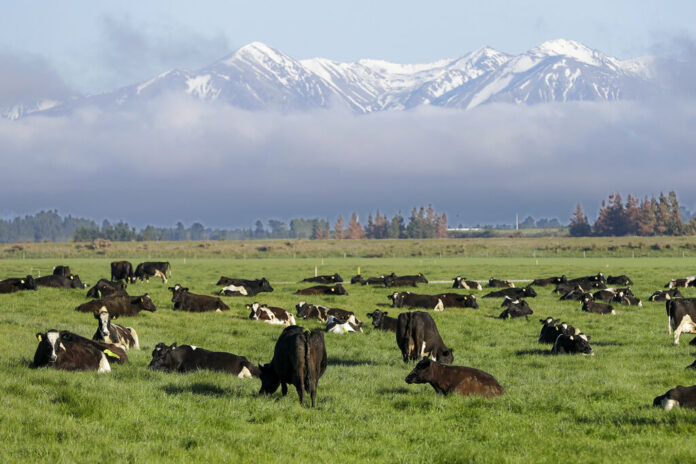
FILE - Dairy cows graze on a farm near Oxford, in the South Island of New Zealand on Oct. 8, 2018. Photo: Mark Baker / AP File

WELLINGTON, New Zealand (AP) — New Zealand’s government on Tuesday proposed taxing the greenhouse gasses that farm animals make from burping and peeing as part of a plan to tackle climate change.

The government said the farm levy would be a world first, and that farmers should be able to recoup the cost by charging more for climate-friendly products.

But farmers quickly condemned the plan. Federated Farmers, the industry’s main lobby group, said the plan would “rip the guts out of small-town New Zealand” and see farms replaced with trees.

Federated Farmers President Andrew Hoggard said farmers had been trying to work with the government for more than two years on an emissions reduction plan that wouldn’t decrease food production.

“Our plan was to keep farmers farming,” Hoggard said. Instead, he said farmers would be selling their farms “so fast you won’t even hear the dogs barking on the back of the ute (pickup truck) as they drive off.”

Opposition lawmakers from the conservative ACT Party said the plan would actually increase worldwide emissions by moving farming to other countries that were less efficient at making food.

New Zealand’s farming industry is vital to its economy. Dairy products, including those used to make infant formula in China, are the nation’s largest export earner.

There are just 5 million people in New Zealand but some 10 million beef and dairy cattle and 26 million sheep.

The outsized industry has made New Zealand unusual in that about half of its greenhouse gas emissions come from farms. Farm animals produce gasses that warm the planet, particularly methane from cattle burps and nitrous oxide from their urine.

The debate in New Zealand is part of a broader global reckoning about farming’s impact on the environment and the steps some say are needed for mitigation.

In the Netherlands, farmers have dumped hay bales on roads and driven tractors along busy highways to protest government proposals to slash emissions of damaging pollutants.

In New Zealand, the government has pledged to reduce greenhouse gas emissions and make the country carbon neutral by 2050. Part of that plan includes a pledge that it will reduce methane emissions from farm animals by 10% by 2030 and by up to 47% by 2050.

Under the government’s proposed plan, farmers would start to pay for emissions in 2025, with the pricing yet to be finalized.

Prime Minister Jacinda Ardern said all the money collected from the proposed farm levy would be put back into the industry to fund new technology, research and incentive payments for farmers.

“New Zealand’s farmers are set to be the first in the world to reduce agricultural emissions, positioning our biggest export market for the competitive advantage that brings in a world increasingly discerning about the provenance of their food,” Ardern said.

Agriculture Minister Damien O’Connor said it was an exciting opportunity for New Zealand and its farmers.

“Farmers are already experiencing the impact of climate change with more regular drought and flooding,” O’Connor said. “Taking the lead on agricultural emissions is both good for the environment and our economy.”

The liberal Labour government’s proposal harks back to a similar but unsuccessful proposal made by a previous Labour government in 2003 to tax farm animals for their methane emissions.

Farmers back then also vehemently opposed the idea, and political opponents ridiculed it as a “fart tax” — although a “burp tax” would have been more technically accurate as most of the methane emissions come from belching. The government eventually abandoned the plan.

According to opinion polls, Ardern’s Labour Party has slipped in popularity and fallen behind the main opposition National Party since Ardern won a second term in 2020 in a landslide victory of historic proportions.

If Ardern’s government can’t find agreement on the proposal with farmers, who have considerable political sway in New Zealand, it’s likely to make it more difficult for Ardern to win reelection next year when the nation goes back to the polls.

___

Story: Nick Perry.

Advertisement

CNN Apologizes for Entering Thai Massacre Site, Pulls Video

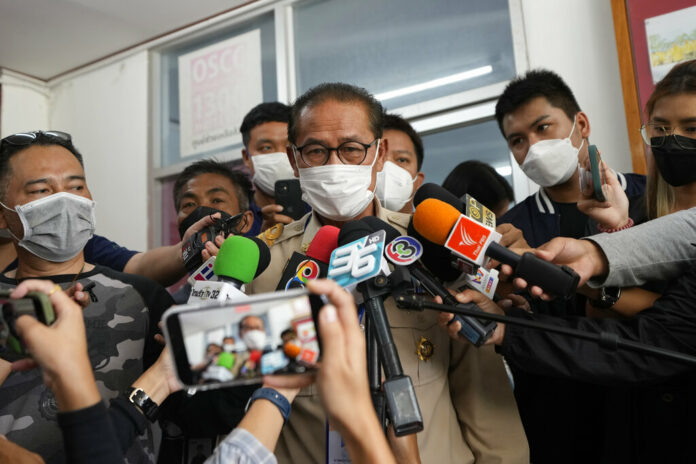
Chief executive of Uthai Sawan Sub-district Administrative Organization Danaichok Boonsom, talks to reporters at a police station in Uthai Sawan, north eastern Thailand, Sunday, Oct. 9, 2022. Photo: Sakchai Lalit / AP

UTHAI SAWAN, Thailand (AP) — CNN pulled a story on the massacre of Thai preschoolers and apologized Sunday over criticism its journalists entered the day care where the children were slain and filmed the crime scene without permission.

The two CNN journalists involved were fined after authorities found that they had been working in the country after entering on tourist visas, but cleared of wrongdoing for entering the day care center where more than 20 children were killed, deputy national police chief Surachate Hakparn said.

He said his investigation had determined the journalists believed they had obtained permission to enter and film after being waved into the building by a volunteer or a health officer, and were unaware the person was not authorized to allow them inside.

They each agreed to pay fines of 5,000 baht ($133) and leave the country, he said.

Both journalists apologized, as did CNN International’s executive vice president and general manager Mike McCarthy.

In a statement, he said his reporters sought permission to enter the building but the team “now understands that these officials were not authorized to grant this permission,” adding that it was “never their intention to contravene any rules.”

“We deeply regret any distress or offense our report may have caused, and for any inconvenience to the police at such a distressing time for the country,” he said in the statement tweeted by CNN.

He said CNN had ceased broadcasting the report and had removed the video from its website.

Authorities began looking into the incident after a Thai reporter posted an image on social media of two members of the crew leaving the scene in northeastern Thailand, where they were reporting on the Thursday attack by a fired policeman who authorities say massacred 36 people, 24 of them children. One CNN crew member was seen climbing over the low wall and fence around the compound, over police tape, and the other already outside.

That prompted criticism from the Foreign Correspondents’ Club of Thailand, which said it was “dismayed” by CNN’s coverage and the decision to film the crime scene inside.

“This was unprofessional and a serious breach of journalistic ethics in crime reporting,” the FCCT said.

The Thai Journalists’ Association criticized CNN’s actions as “unethical” and “insensitive,” and called for an internal company investigation of the incident in addition to the official Thai probe.

In an initial response, CNN tweeted that the crew had entered the premises when the police cordon had been removed from the center, and were told by three public health officials exiting the building that they could film inside.

“The team gathered footage inside the center for around 15 minutes, then left,” CNN said in its tweet. “During this time, the cordon had been set back in place, so the team needed to climb over the fence at the center to leave.”

As Thailand’s worst such massacre, the attack drew widespread international media attention to the small town of Uthai Sawan in the country’s rural northeast. By Sunday, few remained but a large number of Thai media continued to report from the scene.

___

Story: David Rising.

Advertisement

‘A Time Bomb’: Anger Rising in a Hot Spot of Iran Protests

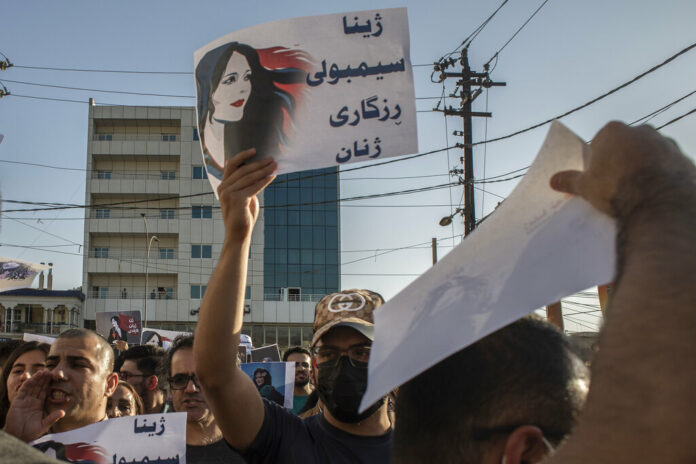
FILE - Protesters gather in Sulaimaniyah on Sept. 28, 2022, protest the killing of Mahsa Amini, an Iranian Kurdish woman after she was arrested in Tehran by morality police for wearing her headscarf improperly. Photo: Hawre Khalid / Metrography / AP File

SULIMANIYAH, Iraq (AP) — Growing up under a repressive system, Sharo, a 35-year-old university graduate, never thought she would hear words of open rebellion spoken out loud. Now she herself chants slogans like “Death to the Dictator!” with a fury she didn’t know she had, as she joins protests calling for toppling the country’s rulers.

Sharo said that after three weeks of protests, triggered by the death of a young woman in the custody of the feared morality police, anger at the authorities is only rising, despite a bloody crackdown that has left dozens dead and hundreds in detention.

“The situation here is tense and volatile,” she said, referring to the city of Sanandaj in the majority Kurdish home district of the same name in northwestern Iran, one of the hot spots of the protests.

“We are just waiting for something to happen, like a time-bomb,” she said, speaking to The Associated Press via Telegram messenger service.

The anti-government protests in Sanandaj, 300 miles (500 kilometers) from the capital, are a microcosm of the leaderless protests that have roiled Iran.

Led largely by women and youth, they have evolved from spontaneous mass gatherings in central areas to scattered demonstrations in residential areas, schools and universities as activists try to evade an increasingly brutal crackdown.

Tensions rose again Saturday in Sanandaj after rights monitors said two protesters were shot dead and several were wounded, following a resumption of demonstrations. Residents said there has been a heavy security presence in the city, with constant patrols and security personnel stationed on major streets.

The Associated Press spoke to six female activists in Sanandaj who said suppression tactics, including beatings, arrests, the use of live ammunition and internet disruptions make it difficult at times to keep the momentum going. Yet protests persist, along with other expressions of civil disobedience, such as commercial strikes and drivers honking horns at security forces.

The activists in the city spoke on the condition their full names be withheld fearing reprisals by Iranian authorities. Their accounts were corroborated by three human rights monitors.

THE BURIAL

Three weeks ago, the news of the death of 22-year old Mahsa Amini in the custody of the morality police in Tehran spread rapidly across her home province of Kurdistan, of which Sanandaj is the capital. The response was swift in the impoverished and historically marginalized area.

As the burial was underway in Amini’s town of Saqqez on Sept. 17, protesters were already filling Sanandaj’s main thoroughfare, activists said.

People of all ages were present and began chanting slogans that would be repeated in cities across Iran: “Woman. Life. Freedom.”

The Amini family had been under pressure from the government to bury Mahsa quickly before a critical mass of protesters formed, said Afsanah, a 38-year-old clothing designer from Saqqez. She was at the burial that day and followed the crowds from the cemetery to the city square.

Rozan, a 32-year old housewife, didn’t know Amini personally. But when she heard the young woman had died in the custody of the morality police in Tehran and had been arrested for violating the Islamic Republic’s hijab rules, she felt compelled to take to the street that day.

“The same thing happened to me,” she said. In 2013, like Amini, she had ventured to the capital with a friend when she was apprehended by the morality police because her abaya, or loose robe that is part of the mandatory dress code, was too short. She was taken to the same facility where Amini later died, and fingerprinted and made to sign a declaration of guilt.

“It could have been me,” she said. In the years since then Rozan, a former nurse, was fired from the local government health department for being too vocal about her views about women’s rights.

After the funeral, she saw an elderly woman take a step forward and in one swift gesture, remove her headscarf. “I felt inspired to do the same,” she said.

SUPPRESSION

In the first three days after the burial, protesters were plucked from the demonstrations in arrest sweeps in Sanandaj. By the end of the week, arrests targeted known activists and protest organizers.

Dunya, a lawyer, said she was one among a small group of women’s rights activists who helped organize protests. They also asked shopkeepers to respect a call for a commercial strike along the city’s main streets.

“Almost all the women in our group are in jail now,” she said.

Internet blackouts made it difficult for protesters to communicate with one another across cities and with the outside world.

“We would wake up in the morning and have no idea what was happening,” said Sharo, the university graduate. The internet would return intermittently, often late at night or during working hours, but swiftly cut off in the late afternoon, the time many would gather to protest.

The heavy security presence also prevented mass gatherings.

“There are patrols in almost every street, and they break up groups, even if its just two or three people walking on the street,” said Sharo.

During demonstrations security forces fired pellet guns and tear gas at the crowd causing many to run. Security personnel on motorcycles also drove into crowds in an effort to disperse them.

All activists interviewed said they either witnessed or heard live ammunition. Iranian authorities have so far denied this, blaming separatist groups on occasions when the use of live fire was verified. The two protesters killed Saturday in Sanandaj were killed by live fire, according to the France-based Kurdistan Human Rights network.

Protesters say fear is a close companion. The wounded were often reluctant to use ambulances or go to hospitals, worried they might get arrested. Activists also suspected government informants were trying to blend in with the crowds.

But acts of resistance have continued.

“I assure you the protests are not over,” said Sharo. “The people are angry, they are talking back to the police in ways I have never seen.”

DISOBEDIENCE

The anger runs deep. In Sanandaj the confluence of three factors has rendered the city a ripe ground for protest activity — a history of Kurdish resistance, rising poverty and a long history of women’s rights activism.

Yet the protests are not defined along ethnic or regional lines even though they were sparked in a predominantly Kurdish area, said Tara Sepehri Fars, a researcher for Human Rights Watch. “It’s been very unique in that sense,” she said.

There have been waves of protest in Iran in recent years, the largest in 2009 bringing large crowds into the streets after what protesters felt was a stolen election. But the continued defiance and demands for regime change during the current wave seem to pose the most serious challenge in years to the Islamic Republic.

Like most of Iran, Sanandaj has suffered as U.S. sanctions and the coronavirus pandemic devastated the economy and spurred inflation. Far from the capital, in the fringes of the country, its majority Kurdish residents are eyed with suspicion by the regime.

By the third week, with the opening of universities and schools, students began holding small rallies and joined the movement.

Videos circulated on social media showing students jeering school masters, school girls removing their headscarves on the street and chanting: “One by one they will kill us, if we don’t stand together.”

One university student said they were planning on boycotting classes altogether.

Afsanah, the clothing designer, said that she likes wearing the headscarf. “But I am protesting because it was never my choice.”

Her parents, fearing for her safety, tried to persuade her to stay home. But she disobeyed them, pretending to go to work in the morning only to search for protest gatherings around the city.

“I am angry, and I am without fear — we just need this feeling to overflow on the street,” she said.

___

Story: Samya Kullab and Salar Salim.

Advertisement

The Thailand Cannabis Industry: What Happens Next?

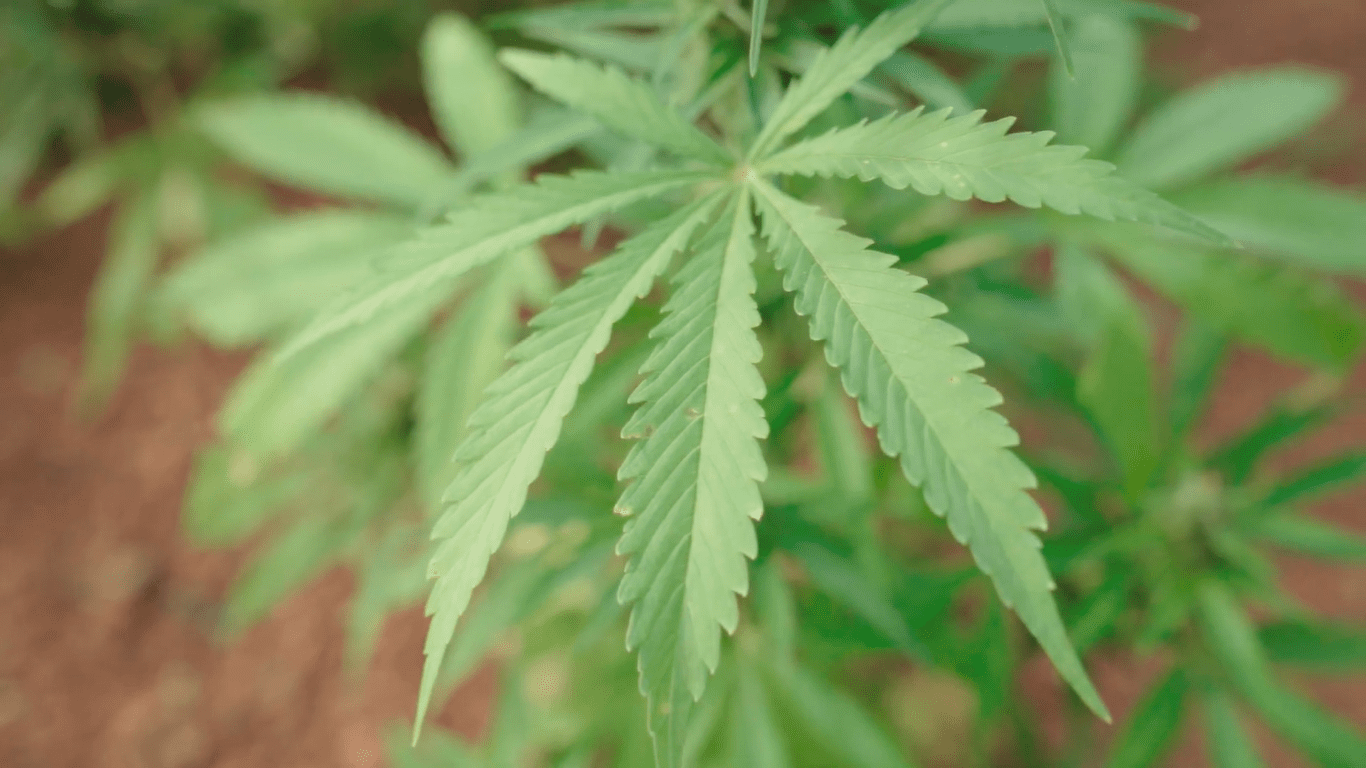
This year, Thailand became the first country in Asia—and only the third in the world—to legalize cannabis nationwide. Despite a patchwork of confusing laws, shops selling weed, hashish, and gummies have proliferated. Even our 7-Elevens sell drinks and beauty products infused with some form of cannabis. But the cannabis business in Thailand has a “Wild West” air hanging around it, and its promise as a valuable cash crop for the country is still materializing, even though Global Cannabis Report has projected it will be a $1.2 billion market within a few years.

image3

In Thailand, cannabis flowers can contain unlimited quantities of THC, but public recreational use is not legal—punishable by fines and potential imprisonment—and therefore cannabis tourism is indirectly discouraged by the government. Laws in surrounding markets, which can result in serious charges for tourists who return from Thailand with traces of cannabis in their systems, are intimidating. Meanwhile, any form extract or consumer products like topicals and edibles can contain only a token 0.2% THC. 

image2

Thailand’s cannabis laws can whiplash from one end to another. In July, a government official ordered that dispensaries were illegal. Arrest orders were rescinded almost immediately, though, when a health official acknowledged that proper permitting did not yet exist and it was still impossible to prosecute supposed wrongdoers. The ambiguity around the specifics of legal cannabis selling and use pose challenges to major Thai enterprises and smaller proprietors alike, albeit ongoing attempts to impose suitable laws and regulations by the government and FDA. 

image5

What’s needed and what’s next? For Eastern Spectrum Group to thrive as a business, we are taking new steps for our own business while advocating for further actions by the Thailand government. These include:

  • Diversifying our own offerings from B2B to B2C products, to spur local market interest with high quality and meaningful Cannabis-derived products, whilst continuing to structure our farming business as a cooperative in which local farmers can participate and from which they can learn and profit.
  • Calling for a well-regulated and standardized Thai cannabis industry with a consistent and well-defined legal framework.
  • Making information readily available to protect tourists from unintentionally breaking Thai laws—or falling afoul of the laws in other countries when traveling on from Thailand.

image4 1

While the Thai cannabis industry is emerging in fits and starts, it is essential that clear regulation be brought to it for the sake of its potential to contribute to the Thai economy in a long-term and sustainable manner.

Advertisement

Opinion: Nong Bua Lamphu Massacre Should Not Be Met With Knee Jerk Reactions

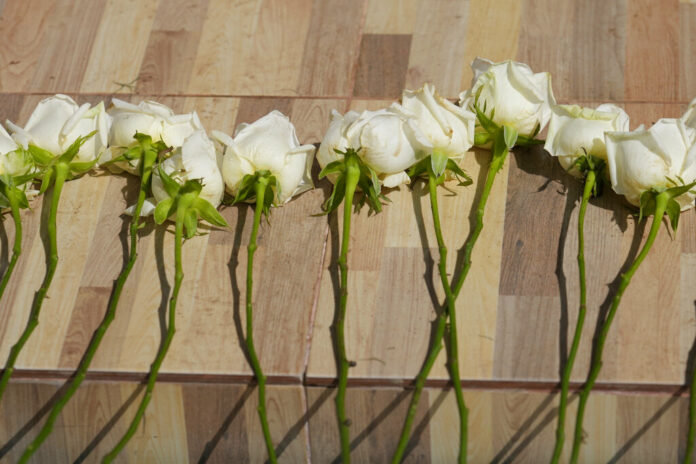
Relatives and friends leave flowers during a ceremony for those killed in the attack on the Young Children's Development Center in the rural town of Uthai Sawan, north eastern Thailand, Friday, Oct. 7, 2022. Photo: Sakchai Lalit / AP

The collective shock unfolding in Thailand in the aftermath of Nong Bua Lamphu mass shooting by a drug-addicted ex-cop which resulted in 38 deaths including the assailant, who committed suicide, led to much soul-searching but also kneejerk reactions.

Declare war on drugs? Done! The Ministry of Interior has done that on Friday, one day after the senseless killings which included 24 kindergarten-age boys and girls at a childcare center. What is this thing called the war on drugs, BTW?

The last time a war on drugs was officially declared during the Thaksin Shinawatra administration two decades ago, at least 2,500 people were extrajudicially killed.

The current government led by former junta leader Gen. Prayut Chan-o-cha has yet to sanctioned extrajudicial killing but in the hours after the shooting on Thursday afternoon, some netizens are already advocating it as the only way to prevent future mass shootings.

“Eradicating drugs must become a national agenda,” wrote a Facebook user who is an army officer by the pen name of Phi Muad Tutor on Friday night. “Whether the person is a government official or not, both the dealer and user who pose a danger to society must be extrajudicially killed without exception. We shouldn’t be optimistic and let the users and sellers laugh with madness and continue to kill more innocent people.”

The hours after the killings also saw many broadcast media focusing on other cases of the “evil” of methamphetamine and its users who went berserk to harm others. On Friday, the first autopsy conducted on the mass shooter showed no traces of drugs. Earlier, national police chief Pol. Gen. Damrongsak Kittiprapas said its former-officer-cum-killer Panya Kamrob was stressed or may have taken drugs, however.

It is so convenient to simply declare a war on drugs and wish those drugs dealers and users be either imprisoned if not extrajudicially executed without looking at the big picture and asking ourselves hard questions such as why Panya turned into a monster taking the lives of many young children.

Why many end up using drugs to begin with and what role do systemic corruption within the police force, as well as the military, play in the massive flow of methamphetamine from Thailand’s neighbors particularly Myanmar? (One psychiatrist wrote on social media that the killer was taking a revenge on the society who turned him into what he became.)

Poverty, sense of hopelessness about the future for many poor people, systemic corruptions where many honest police officers have to turn a blind eye to their corrupt peers and superiors in order to simply survive and keep their career, these are but some of the factors making the challenge much more complex that merely declaring war for the enemy is within us, within and part of the very system that is Thai society and not just evil and selfish few individuals that can simply be isolated and ‘eradicated.’

One might ask how the mass shooter managed to be employed for so long before he was fired earlier this year?

Other complex challenges include how to ensure a better mental healthcare system that can cater to people who are very stressed before they are on the verge of committing senseless killings.

In Thailand, seeing a psychiatrist is both very costly and comes with a big stigma where one is almost judged by others as mad or mentally ill if they are known to have received help from a psychiatrist, while traditional systems that heal the mind such as Buddhism are becoming less and less attractive to younger Thais.

Many police officers, for example, are under tremendous stress and need proper care and regular psychological monitoring. And I am not just talking about the corrupt ones.

Then there is gun control and the need for a stricter law although it would not be easy because both the army and police forces are very trigger-happy bunch of people and the black market also make it accessible.

Declaring war on drugs is easy. Knee jerk reaction is tempting if not automatic, particularly when a pill of meth is now just 10 baht, cheaper than a can of Coke (the legal beverage that is).

Calling for extrajudicial execution of others may fulfill your thirst for instant gratification but proceeding without respect for human rights, due process and understanding of the mammoth systemic challenge facing Thai society will likely bring about more deaths and carnage and not the less.

This is not just about evil people but a rotten system that needs a comprehensive overhaul. We cannot solve the problems if we start with a knee jerk reaction.

Advertisement

Mahidol University strikes a deal for an integrated health care centre at ICS

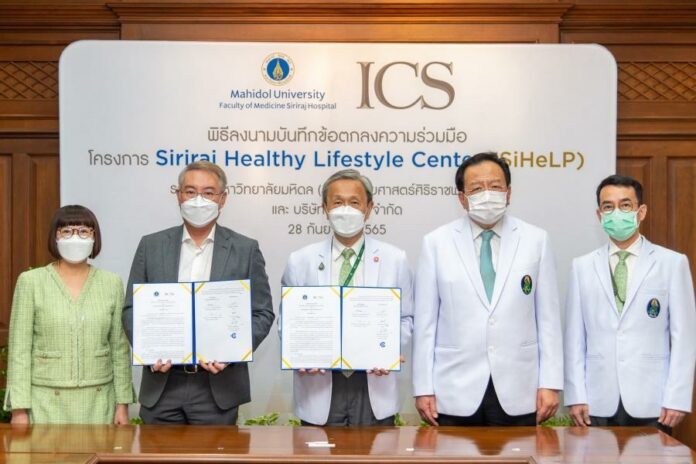
Mahidol University will set up a comprehensive health care centre outside the hospital at the new ICS MixedUse Lifestyle Town. Prof. Dr. Prasit Watanapa, Dean of Faculty of Medicine Siriraj Hospital, Mahidol University, signed a memorandum of understanding with Mr.Supoj Chaiwatsirikul, Managing Director of ICONSIAM Co., Ltd., to confirm the university’s intention to establish the health care centre at the ICS site. The signing ceremony, held on 28 September at the Siriraj Hospital’s Mahidol Bamphen Building, was witnessed by Mrs.Suma Wongphan, Executive Vice President (Marketing), ICONSIAM; Clinical Prof. Visit Vamvanij, Director of Siriraj Hospital; and Assistant Prof. Monsak Chuchotirot, Vice Director of Siriraj Hospital.

 The Siriraj Healthy Lifestyle Center (SiHeLP) will be one the prominent tenants of the ICS MixedUse Lifestyle Town, a major extension of the ICONSIAM, Bangkok’s worldclass riverside commercial landmark.  The SiHeLP will cover the entire fifth floor of the ICS building, with an area of more than 3,000 square metres.

 The centre focuses on screening, taking care, promoting health rehabilitation and antiaging. There is a plan for it to expand to offer health care services to serve the hospital’s patients and the general public of all genders and ages, especially those who want to take care of their health and preventing them before they get sick. The SiHeLP will be run by a team of health experts with modern innovative technology.

Advertisement

TALK STAGE: Sustainable Design: A Feasible Idea or Just a Fad?

October 2, 2022:  Today, it is not uncommon to hear that the concept of environmental sustainability is being practiced in businesses globally, including in Thailand.  The increasing awareness of the trend has been on the rise in almost all industries, even in the arts, fashion and design.  While this has been a welcome change, there are doubts as to the feasibility of the trend in the latter groups as artists and designers are known for their extravaganza ways of creating highly elaborate works.  So, is sustainable design here to stay, or is it just another trend that will fade away? 

No description available.

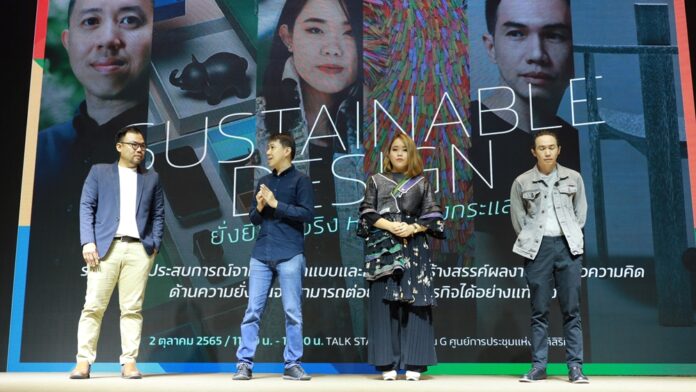
At the Betterism Design Talk event at the recent Sustainability Expo 2022 at Queen Sirikit National Convention Center, three of Thailand’s top experts in design and arts were invited to share their visions and stories of their path to success in sustainable design.  They were Mr. Teerachai Suppameteekulwat, Founder & Managing Director of QUALY, Ms. Wishulada Pantaranuwong, Social Activist, Artist and Founder of Turn to Art Co., Ltd, and Mr. Amornthep Kacchanon, Founder & Design Director of AmoArte.  

No description available.

The first speaker to come on stage was Mr. Teerachai Suppameteekulwat, Founder & Managing Director of QUALY, a design and manufacturing company of environmentally friendly products and materials in Thailand. Having come from a background that was in complete contrast to  his current work, Teerachai shared his story, saying, “My family has been in the plastic manufacturing business for a long time, until one day when plastic was being called the environmental culprit, the enemy of sustainability.  So, we decided to change, that from now on, we would be a design company that helps to create ‘sustainability’ instead.  We help our clients through innovations and creativity, so that no matter whether they are consumers or manufacturers, they find it easier to become socially and environmentally responsible. When trash disposal is guilt-free and the designs are nice, our clients should be quite pleased. ”    

The total turn-around of his family’s business from producing plastic to crushing and changing it into new raw materials was not all that troublesome.  In fact, Teerachai saw the change as a necessary investment that can save the planet at the same time.  For example, he switched to sourcing his materials by buying marine trash from foundations or communities that collect them professionally.  He also invested in machinery that processes these wastes into renewable materials, thus delaying the use of new materials from nature.  Teerachai pointed out that Mother Nature needs time to replenish her resources and so he, by investing in putting the production of renewable materials, can already save the environment and all the communities involved.  And great designs, he added, are vital to generating profits, once the clients like them. “Our brand philosophy is in our designs.  In many cases, we print them on our container boxes.  So, it is not just our clients to whom we communicate, but everyone from our delivery guys to the people just browsing through our products on their phones.  They don’t need to buy anything, but they are already aware of the message.”       
Teerachai also invites his clients to donate their trash – empty plastic containers, bottles and cups –to his company in exchange for discounts on the purchase of QUALY products.  “There aren’t many businesses like ours around here, but we will keep taking your plastic waste until there is a new process for finding a better material to substitute it.  Everyone need to be aware that eventually all plastic containers, no matter how good their quality, have to be disposed of.  So, by taking your trash to give them a new purpose is how we take care of the planet.”      

No description available.

Next to grace the stage was Ms. Wishulada Pantaranuwong, a social activist, artist and founder of Turn to Art Co., Ltd. She is a well-known figure on the circuit of arts created with recycled and waste materials and who has collaborated with several leading brands and organizations.  Familiar with the amount of trash she had to sift through before being able to select them for work, Wishulada addressed a question to all the manufacturers of goods: isn’t it about time to think of the origins of the trash so we can reduce it along with our carbon footprint?  In order to do so, she encouraged everyone, both manufacturers and consumers, to use the 4Rs rule: RETHINK, REDUCE, REUSE and RECYCLE.         

Moreover, Wishulada also shared her experience in collaborating with slum communities, noting that this was not just to source her materials but also to get in touch with the people and invite them to participate in sorting waste.  They can also see that trash can be turned into many other things such as art exhibitions or fashion items, for example.  At the end of the exhibitions, they can also be reused or re-distributed to others.  In her case, she has donated old stuffed animals used in one of her exhibitions to UNICEF for distribution to underprivileged children in slums.    

“Sustainability is the balance between your passion for doing a profitable business and looking after the environment at the same time.  If you only think of yourself and not society, in the end your business will not thrive.”

The final speaker of the day was Mr. Amornthep Kacchanon, Founder & Design Director of AmoArte, a Thai bamboo and sugar palm wood furniture brand, who started his business over a decade ago out of a passion for bamboo.  Having just returned from an exhibition in Paris where his works caught the eyes of the locals, he attested to the fact that “Good design is the vital key in establishing environmental awareness and sustainability.  When we succeed in attracting people to marvel at the esthetics of this bamboo and sugar palm wood furniture, it is only then that we earn the opportunity to tell our stories, which is more than just making a sales pitch.” 

The story that Amornthep wanted to share with everyone was the fact that bamboo is a highly sustainable plant.  Bamboos are fast growing, strong and flexible. After treatments for molds and mites, their durability increases.  When fashioned into modern designs mixed with a hint of the traditional look of bamboo furniture, they can be very sophisticated.  Amornthep sources his bamboos from several rural villages and communities.  When they began to see that his modern bamboo furniture could be sold at a much higher price than what they usually make in their traditional style, these villagers started seeing a better future for themselves, too.  Instead of growing the plant seasonally in small numbers and selling it at a cheap price, they now focus on farming it commercially to make bigger profits.     

No description available.

As for his sugar palm wood furniture, Amornthep said that all of his works are created from “wasted wood”: the sugar palm trees that no longer bear fruit.  Because they had been struck by lightning or infested with swarms of mites, the farmers often leave them alone in their orchards despite no longer having any use of them.  Known for its strength and durability, sugar palm wood was commonly used as pillars for local houses or use to build boats in the old days. Having learned this from the farmers, Amornthep became confident about turning this “wasted wood” into larger pieces of furniture.  By showing the farmers that he is capable of breathing new life into this wood, Amonthep believes that he has inspired them and the sugar palm growing communities to see that they now can create a better way of life by simply not letting anything go to waste.           

At the end of the talk session, the three design gurus seemed to agree that true sustainability can only happen when everyone in society cooperates together. Mr. Teerachai said, “Awareness is the key and business operators need to realize that now.  The demand for sustainable products and environmental responsibility is on the rise from the consumers’ end.  Therefore, business owners should take what they do into consideration and look at the extent to which they can adjust to this trend.  Be the first to take the initiative.  Don’t wait until society finally forces you to change.” 

No description available.

Meanwhile, Ms. Wishulada offered her thoughts, saying, “ It’s refreshing to see an increasing number of new generation artists and business operators paying more attention to environmental and waste reduction issues.  But I would like to urge all business operators and material manufacturers to be more concerned about minimizing waste from the beginning of production, and not just be content with the “environmentally friendly” label.  Show that you really mean business: make sustainability your organization’s DNA ; put it to use and don’t just follow the trend. ”

Mr. Amornthep concluded by saying that business operators should pay more attention to creating sustainability, observing that if society has a full understanding of it and becomes the driving force behind the change, then all businesses will follow suit.  More importantly, the change has to begin with all of us.  Everyone needs to be aware that all resources in the world can be depleted one day.  We can start by taking care of what we own and prolong their usage for as long as we are able to.  That is how sustainability should be.           

Advertisement

MARRIOTT BONVOY BRINGS BACK WEEK OF WONDERS, INSPIRING TRAVELERS TO UNLEASH THEIR URGE TO TRAVEL LIKE NEVER BEFORE

As More Borders Reopen Across Key Markets in Asia Pacific, Marriott Bonvoy Is Helping Fulfill Travelers’ Growing Appetite For Long-Awaited Travels With Its Extraordinary Portfolio Of 30 Brands And Exclusive Offers.

Singapore – October 6, 2022 – When it comes to travel today, people are making every moment count and no longer putting off that dream vacation. In fact, in this upcoming holiday season, many travelers aim to cross off at least one of their bucket list travel experiences, according to a recent YouGov survey conducted by Marriott Bonvoy, Marriott International’s award-winning travel program. 

To unleash the urge to travel like never before, Marriott Bonvoy’s celebratory Week of Wonders taking place from Oct. 6th to 13th 2022 is set to satisfy wanderlust with exclusive offers, including discounted room rates, opportunities to earn bonus points towards free stays, and capabilities to redeem incredible experiences through Marriott Bonvoy Moments TM

“This year’s Week of Wonders is one of the best times to enjoy the benefits that comes with being a Marriott Bonvoy Member,” shared by Julie Purser, Vice President, Marketing, Loyalty and Partnerships, Marriott International, Asia Pacific. “This week is all about all members with incredible offers that will satisfy our members’ overwhelming urge to explore and experience the world – whether it is a weekend getaway nearby or a trip halfway around the globe.” 

With Week of Wonders, Marriott Bonvoy is Satisfying Wanderlust with Extraordinary Experiences and Enticing Global Offers  

Marriott Bonvoy members can access a variety of global and regional Wonders across Marriott Bonvoy’s expansive portfolio of extraordinary brands, including: 

  • Wonders of Discovery

Travelers eager to reignite their spirit of discovery can book their next hotel redemption stay for up to 15% less points at over 4,500 hotels and resorts worldwide during Week of Wonders.  

  • Wonders of Adventure

Members can earn 2,000 bonus points per stay, starting from the 2nd stay. Plus, co-brand card members get an additional 2,000 bonus points per brand, starting with the 2nd brand.

  • Wonders of Inspiration

Week of Wonders is the perfect time to book any of the 76,000+ premium homes available with Homes & Villas by Marriott International. Members can earn double points on bookings made during Week of Wonders, plus earn double Elite Night Credits per stay toward Elite status.  

  • Wonders of More

Week of Wonders offers a 50% bonus on purchases of 2,000 or more points for travelers who wish to get closer to the next vacation as quickly as possible.

  • Wonders of Extraordinary

Members can turn their dream vacation into a reality with Marriott Bonvoy Moments. For example, members can enjoy VIP treatment on Race Day with the Mercedes-AMG PETRONAS F1 Team

at the Japan Grand Prix or a private dreamy vacation in Maldives. 

  • Wonders of Exploration

Members can earn double points on travel experiences booked through Marriott Bonvoy Tours & Activities, featuring a large selection of unique experiences.   

  • Wonders of Luxury

Members checking in Marriott Bonvoy participating hotels and resorts in Asia Pacific (excluding Greater China) can elevate their stay with complimentary breakfast for two, welcome amenities and hotel credits when they book a premium room from today till the end of 2022.  

Advertisement

Hot News

LATEST NEWS

Bangkok
overcast clouds
30 ° C
30 °
30 °
74 %
4.4kmh
100 %
Sat
29 °
Sun
36 °
Mon
35 °
Tue
33 °
Wed
32 °