
























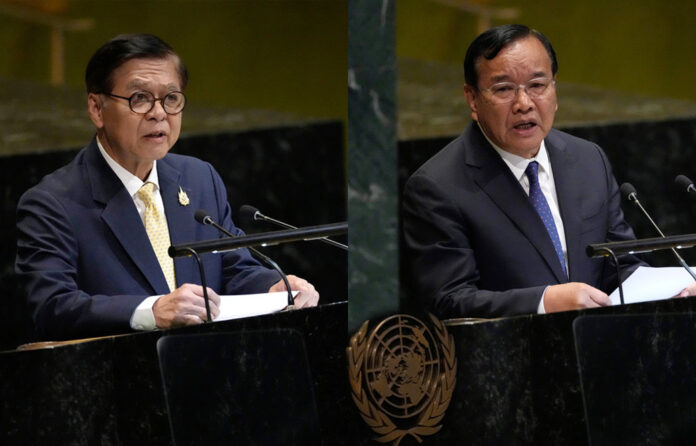
NEW YORK — Thailand and Cambodia engaged in a heated exchange of accusations at the United Nations General Assembly on Saturday, with both countries presenting starkly different accounts of escalating border tensions that have threatened the fragile peace between the two Southeast Asian neighbors.
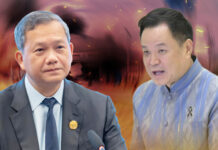
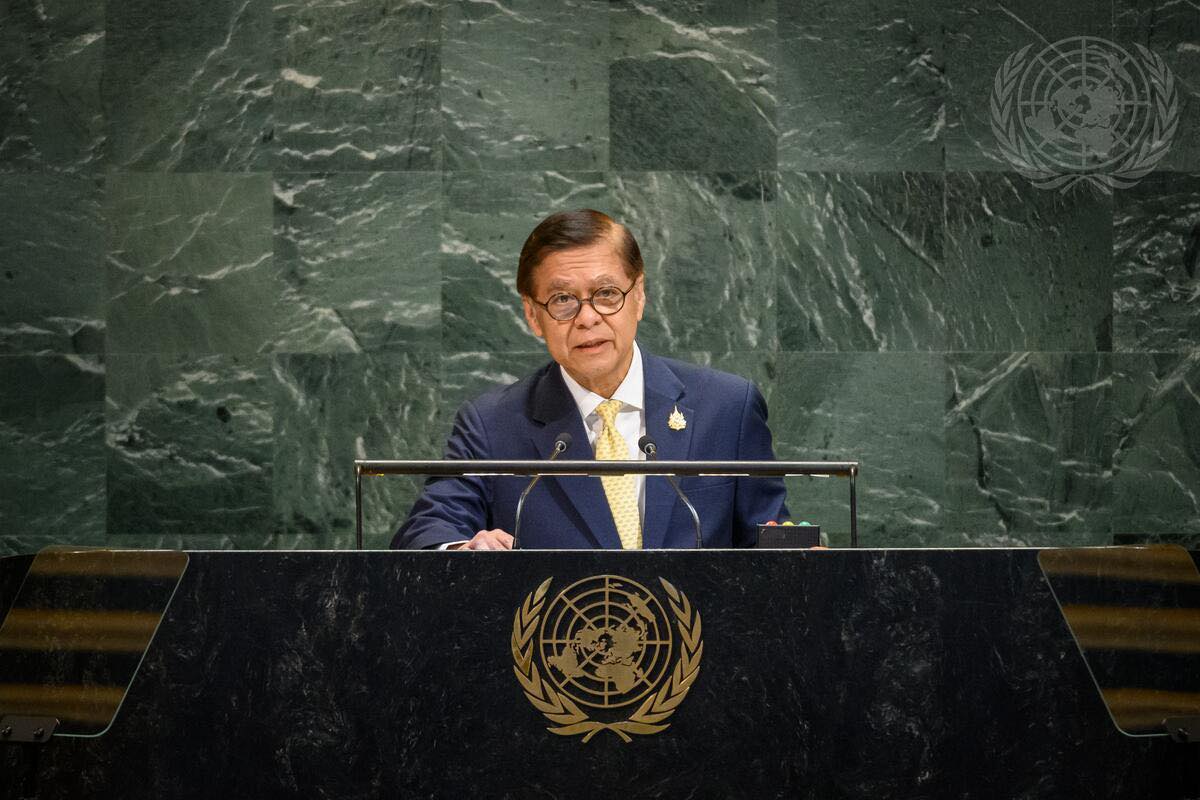
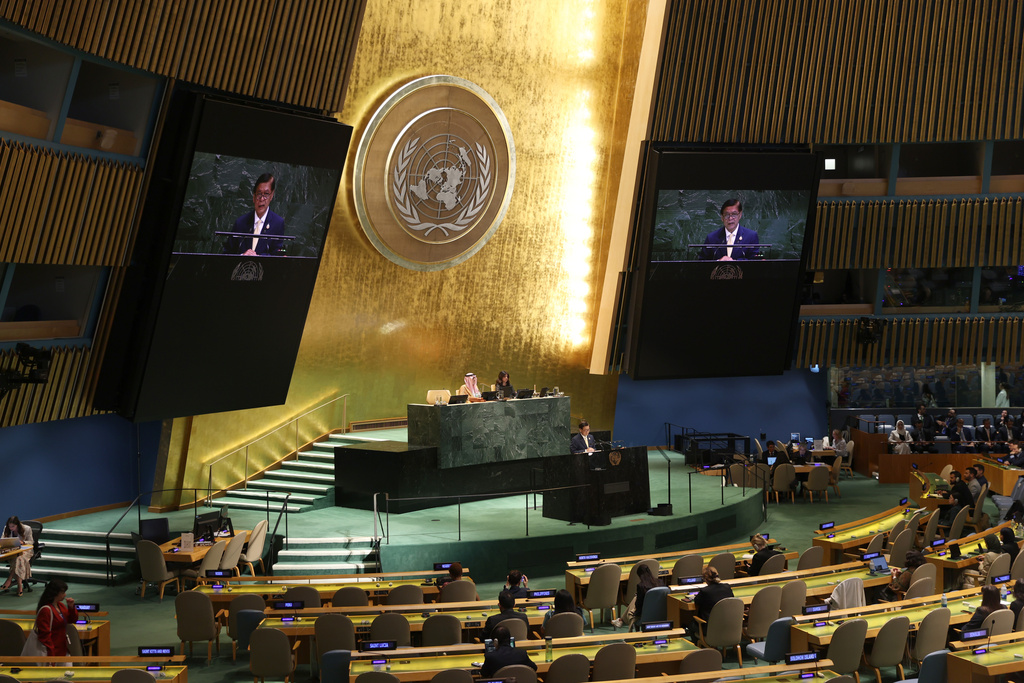
Speaking on the fifth day of the 80th UNGA General Debate, Thai Foreign Minister Sihasak Phuangketkeow delivered an unexpectedly sharp rebuke of Cambodia, saying he had been forced to rewrite his prepared speech following what he called “regrettable remarks” by his Cambodian counterpart earlier in the day.
Conflicting Narratives
The diplomatic clash came as Cambodia’s Deputy Prime Minister and Foreign Minister Prak Sokhonn accused Thailand of forced evictions of Cambodian civilians, threatening to impose domestic laws on Cambodian territory, and resorting to force rather than agreed mechanisms to resolve border disputes.
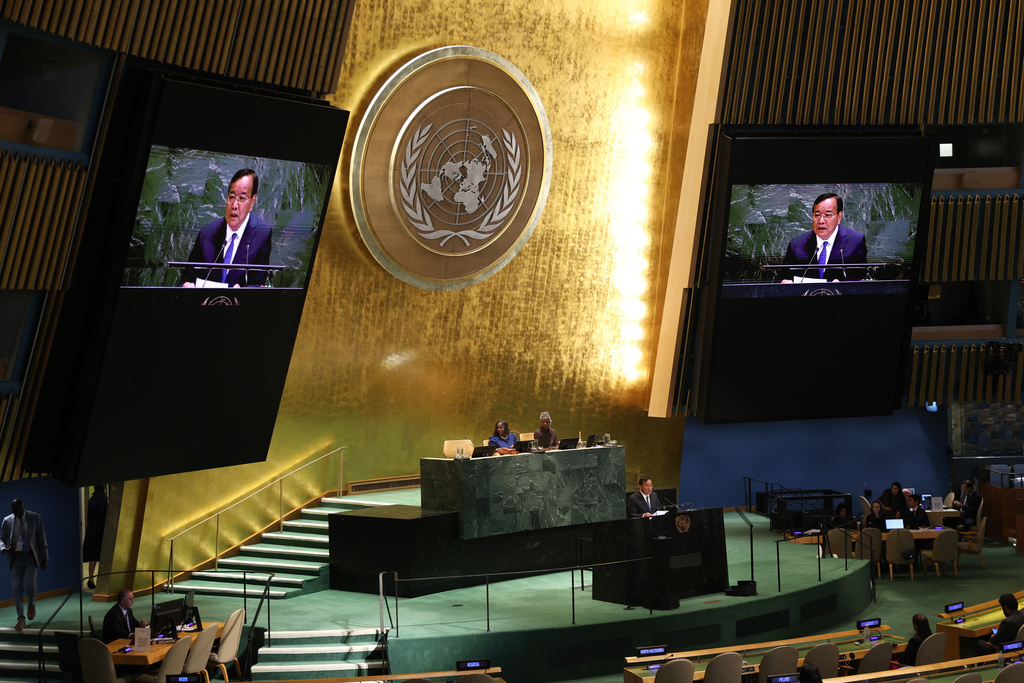
Sokhonn, who did not mention Thailand by name in his speech, criticized his neighbor for relying on unilateral maps instead of internationally recognized ones established under binding treaties, actions he said undermine trust-building and peace efforts.
In his response, Phuangketkeow expressed dismay that Cambodia “continues to present itself as the victim” and accused Cambodia of distorting the truth, pointing to Thai soldiers who lost legs from landmines, children whose schools were shelled, and civilians attacked by Cambodian rocket fire at a grocery store as “the real victims.”
Disputed Territory and Historical Context
The Thai foreign minister maintained that villages referenced by Cambodia are in Thai territory, noting they exist because Thailand opened its borders in the late 1970s for hundreds of thousands of Cambodians fleeing civil war. He claimed that despite repeated Thai protests, Cambodia has ignored requests to address what Thailand views as encroachment as these villages expanded over decades.
Phuangketkeow also highlighted Thailand’s role in rebuilding Cambodia after the 1991 Paris Peace Agreements, saying Thailand built homes, roads, and hospitals because “peace in Cambodia is in Thailand’s interest.”
Recent Incidents Fuel Tensions
The Thai minister accused Cambodia of continued provocations, including mobilizing civilians into Thai territory and recent firings toward Thai positions, referencing incidents since September 23 of Cambodian troops firing at Thai forces along the border, with the most recent occurring on the day of his speech. He also reported daily intrusions by Cambodian surveillance drones into Thai territory, calling these actions violations of Thailand’s sovereignty and a ceasefire agreement reached in Putrajaya, Malaysia.
Cambodia presented a different version of events. Sokhonn pointed to what he called an unprovoked attack on Cambodian forces in the An Ses area on September 27, firmly rejecting accusations that Cambodian troops initiated the clash and stating that Cambodian forces “have not fired first, nor have they retaliated to the provocation.”
Diplomatic Contradictions
Phuangketkeow revealed he had met with his Cambodian colleague at the UN the previous day to discuss peace, dialogue, and mutual trust, discussions that were reinforced at informal four-party consultations organized by the United States. However, he expressed disappointment that Cambodia’s public statements contradicted these private discussions, questioning Cambodia’s true intentions.
Path Forward Uncertain
Despite the sharp rhetoric, Thailand insisted it “will always stand for peace” while remaining “firm and resolute in the defense of our sovereignty and territorial integrity,” urging Cambodia to resolve differences through peaceful dialogue and existing mechanisms.
Phuangketkeow posed a direct question to Cambodia: which path they wish to take—”the path of continued confrontation or the path of peace and cooperation”—stating that Thailand chooses peace but questioning whether Cambodia shares that intention.
The public confrontation at the UN highlights the fragility of the ceasefire between the two ASEAN members and underscores the challenges facing the regional bloc in maintaining unity amid bilateral disputes between its members.
_________