
































Education leaders from across Asia and the Pacific exchange approaches to flexible learning, proactive data use and cross-sector collaboration to support children and youth.
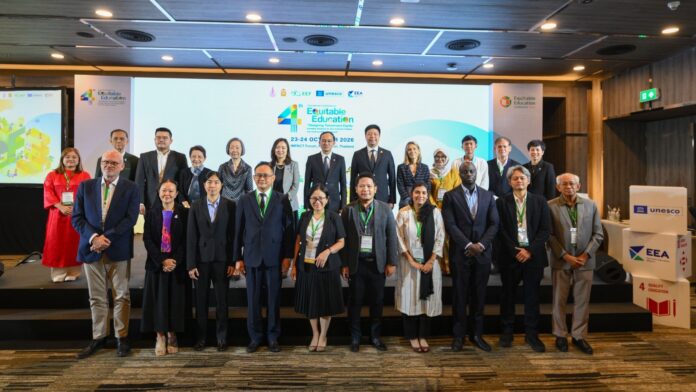
23 October 2026 – The Equitable Education Fund (EEF) Thailand and the UNESCO Regional Office in Bangkok and Office for UN Coordination for Asia and the Pacific (UNESCO Bangkok), under the Equitable Education Alliance (EEA) framework, co-organised the 4th International Conference on Equitable Education, also known as the All for Education Conference 2026 (AFE 2026), from 23–24 October 2026 at IMPACT Forum, Nonthaburi, Thailand. Under the theme “Designing Tomorrow’s Equity: Equitable Solutions for Out-of-School Children and Youth by 2030 and Beyond,” the Conference focused on developing solutions for out-of-school children and youth to make education systems more equitable, inclusive, and flexible.
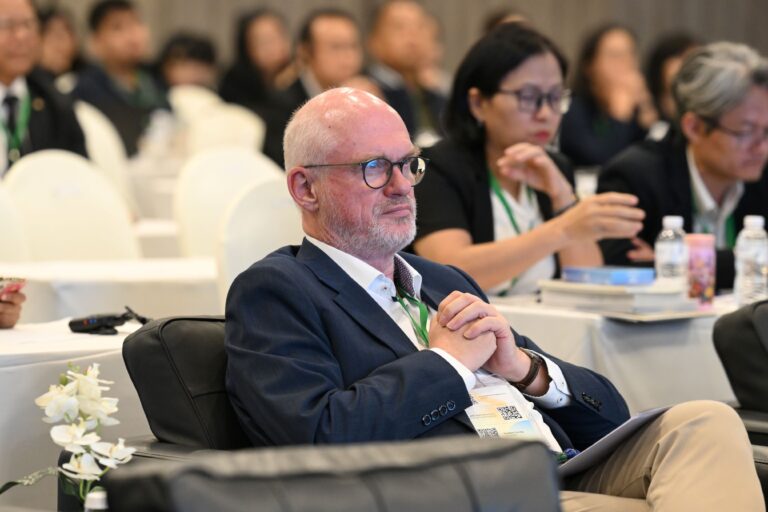
AFE 2026 brought together over 1,000 policymakers, experts, educators, young people and partners from Equitable Education Alliance across Asia and the Pacific on-site and online to exchange knowledge, experiences and approaches for advancing education equity. Discussions focused on connecting policy, data, financing and implementation to help out-of-school children and young people return to learning, continue their education and complete their studies in line with their potential.
UNESCO’s 2026 Global Education Monitoring (GEM) Report highlights a major challenge: 273 million children and young people worldwide remain out of school, while 77 million children and young people of upper-secondary school age are out of school in Asia and the Pacific. These figures show that expanding access to education alone is not enough. Education systems must also remove barriers and respond to learners’ diverse needs, enabling them to continue learning and progress through education.
Highlighting Thailand’s systemic commitment, Associate Professor Dr. Prawit Erawan, Permanent Secretary for the Ministry of Education, stated, “Achieving true educational equity must begin by connecting formal, non-formal, and informal education. Thailand is therefore advancing the Credit Bank system alongside competency recognition to enable everyone to accumulate skills and transfer qualifications, while bridging education to employment and paving the way for all learners to sustainably ‘learn to earn’.”
This national systemic commitment closely aligns with pressing global realities and urgent international challenges. “Education is a fundamental human right, yet one in six children and young people worldwide remains out of school. Closing this gap requires sustained commitment and collective action,” said Ms Soohyun Kim, Regional Director of UNESCO Bangkok. “Across Asia and the Pacific, we need to turn data into action, expand flexible learning pathways linked to skills and the world of work, and advance equitable and sustainable financing. As we look towards education beyond 2030, accelerating progress today is essential. Children and young people who are out of school cannot wait.”
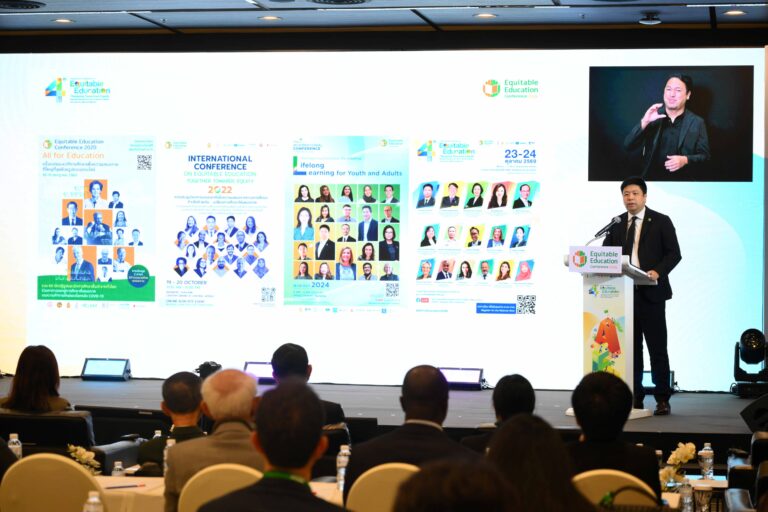
To translate this global vision and policy ambition into concrete, on-the-ground implementation while elevating collaboration to the regional level, Dr. Kraiyos Patrawart, Managing Director of the Equitable Education Fund (EEF) Thailand, emphasized, “When children cannot fit into our education systems, we should not simply ask how to bring them back. We must ask how our systems can change to meet their needs. EEF (Thailand) stands ready to leverage lessons from Thailand Zero Dropout Plus, joining forces with UNESCO and regional partners to elevate this agenda across the region, paving the way toward the adoption of a joint ASEAN Zero Dropout Declaration during Thailand’s ASEAN Chairmanship in 2028. The evidence, insights, and recommendations emerging from AFE 2026 will serve as vital catalysts in shaping this declaration—ensuring that no child or young person in our region is ever left behind.”
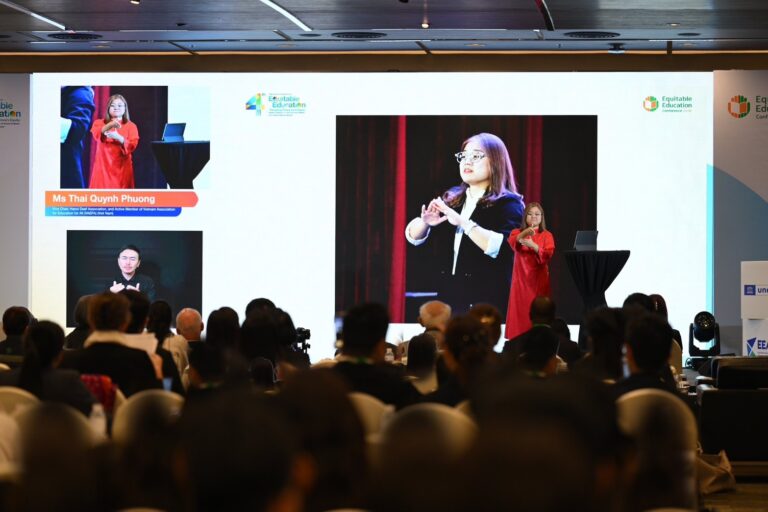
AFE 2026 focused on four interconnected priorities to address barriers to education from expanding flexible learning pathways that respond to diverse learners’ needs, strengthening data-driven interventions and early warning systems to identify and support learners at risk of dropping out, advancing equitable and sustainable education financing to direct resources towards those most in need, and fostering cross-sector collaboration among governments, education institutions, civil society, the private sector and communities to ensure all children and young people can access and complete quality education.
The discussions and recommendations from AFE 2026 will contribute to the development of the Outcome Document on Equitable Education by 2030 and Beyond, bringing together policy recommendations and practical approaches to advance education equity. The document will inform regional and global education discussions in 2027, including the 7th Asia-Pacific Meeting on Education (APMED7) and the Global Education Meeting, which Thailand will co-host with UNESCO.