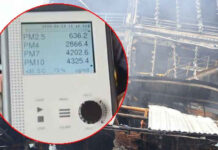


































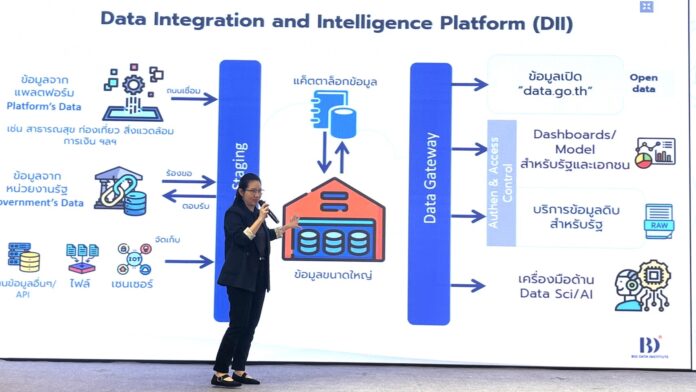
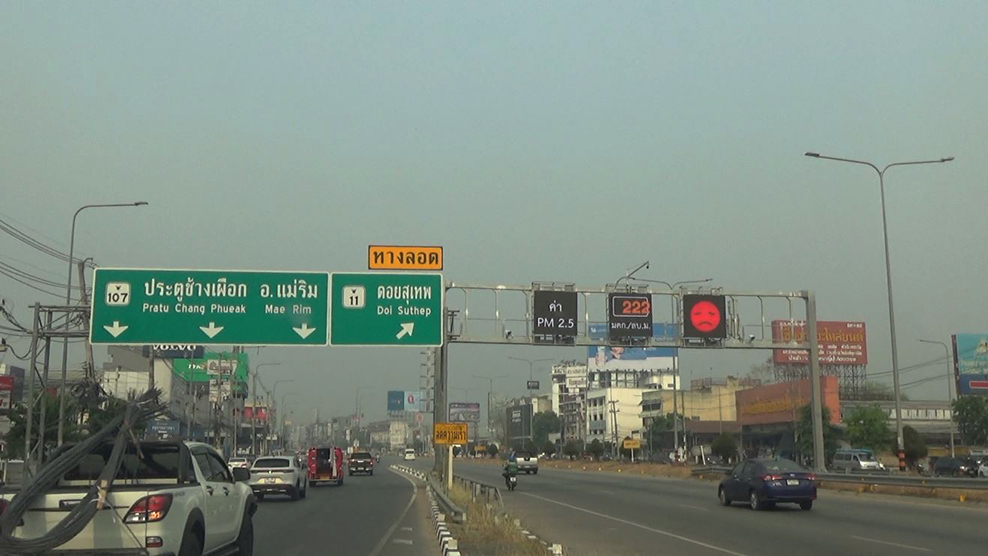
CHIANG MAI — The Big Data Institute (BDI) has launched “Envi Link,” a national environmental data platform that integrates over 200 datasets from more than 30 agencies to systematically address PM2.5 pollution. Chiang Mai Province serves as the pilot area for this data-driven environmental management system.
Partners of the “Clean Air Driven by Big Data” project met October 9-10 at Centara Riverside Hotel Chiang Mai to prepare for the upcoming winter season when PM2.5 levels typically surge.
Real-Time Monitoring and Decision Making
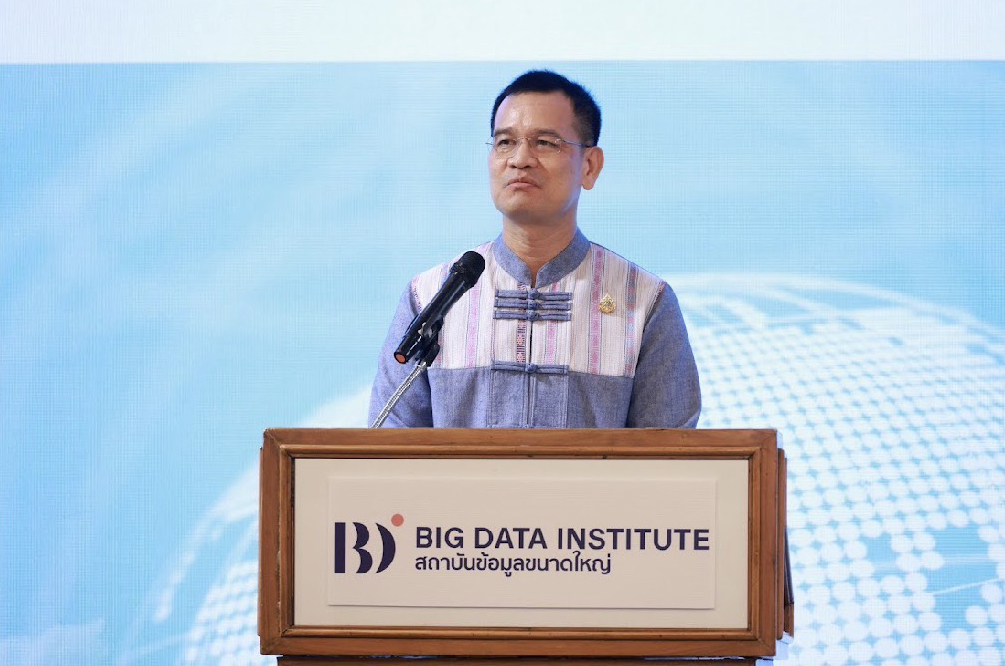
Siwakorn Buapong, Deputy Governor of Chiang Mai Province, said the integrated data system represents a crucial turning point in environmental management. Data dashboards enable administrators to monitor real-time situations, analyze trends, and make evidence-based decisions systematically.
“This collaboration goes beyond solving air pollution—it creates a model ‘clean air city’ where government, private sector, academia, and citizens use the same data to monitor situations and plan prevention strategies together,” Siwakorn said.
Multi-Dimensional Data Integration
Professor Dr. Theeranee Achalakul, BDI Director, said the platform compiles multi-dimensional data including dust levels, hotspots, burned areas, Fire-D system permits, patient statistics, and air quality sensor readings from agencies nationwide. This enables real-time access to interconnected data for precise and timely problem management.
The platform has been designated as the central database for nationwide PM2.5 management following recommendations from the working group on air pollution reduction measures.
Envi Link offers over 15 analytical dashboards, including provincial dust management indicators, Fire-D permit comparisons with actual burned areas, and real-time air quality data from sources like RGUARD, DustBoy, Air4Thai, DPM Alert, and Check Dust.
Expansion and Future Development
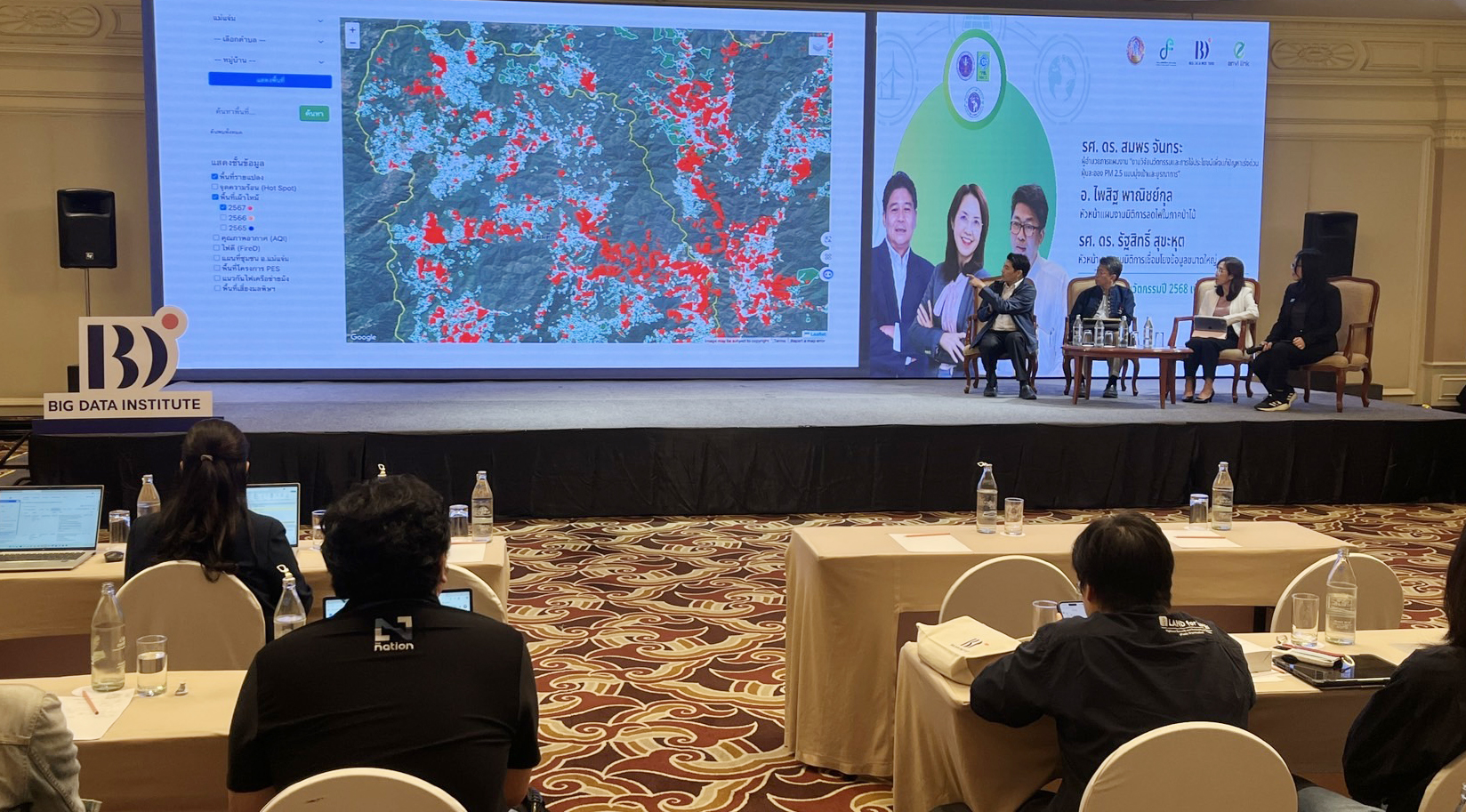
BDI plans to extend Envi Link to eight upper northern provinces, creating a regional environmental data system for area-specific policies, forest fire management, and sustainable PM2.5 reduction.
The project is supported by the Science, Research and Innovation Fund under the National Research Council of Thailand (NRCT), with key partners including Chiang Mai University, the Highland Research and Development Institute, the Geo-Informatics and Space Technology Development Agency, and the Thailand Institute of Scientific and Technological Research.
Smart Environment Driving
Future applications include tracking burned areas by crop type using satellite imagery and identifying high-potential areas for crop transition to reduce burning while increasing economic value.
“Operations in Chiang Mai are not only the starting point for environmental data integration, but also a significant step in driving ‘Smart Environment’ under the government’s Smart City policy. The goal is to make data a critical tool for policy design, natural resource management, and creating sustainable quality of life for citizens,” Professor Dr. Theeranee said.
______________