


































The unspoken tragedy of the ongoing Thai-Cambodian conflict is that the vast majority of those affected are ordinary people on both sides of the border, made virtually voiceless. Some may be given a minute or two to speak to the press, particularly civilians who have been injured or lost a loved one.
Here in Thailand, the hundreds of thousands of Cambodian migrant workers who fled, and those who remained, were basically treated by the majority of the Thai press as statistics—figures, not distinct individual human beings with dreams, hopes, fears, and aspirations.
Meanwhile, social media was dominated by so-called extremist influencers who catered to the bases of our human instincts—anger, hatred, and prejudice.
Over the past few months since the conflict flared up in May and led to a five-day undeclared war, it was sad to see many Cambodians who could speak Thai exhibit not just anger but hatred towards Thais and Thailand. This is sad because no one would choose to learn the foreign language of a country they hated. This means we have collectively failed to handle the conflict in a way that it would be limited. Instead, it escalated into mutual hatred.
It was in this context that I felt that there was a need to interview a Cambodian in Thailand at length.
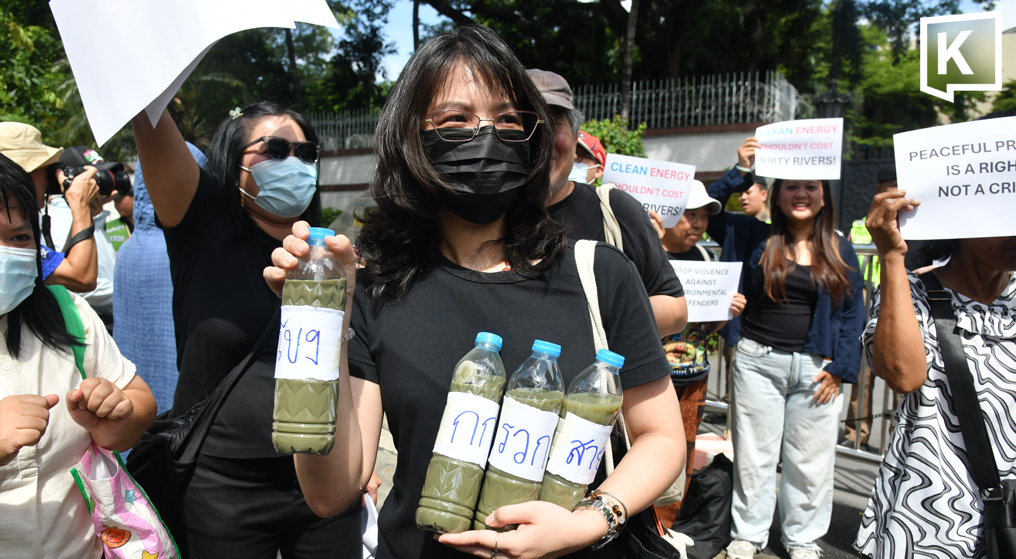
On Friday, I interviewed Ms. Saing Ry, a 42-year-old Cambodian woman from Battambang province, who has lived and worked in Thailand for over 20 years on my weekly video-recorded programme on Khaosod Thai called ‘Geopolitics’.
Saing Ry worked on labour rights, assisting her fellow Cambodians who had come to work in Thailand. Before the conflict, there were over 1.2 million Cambodians in Thailand, according to a news report by the Khmer Times, while the previous Thai Labour Minister put the official registered number at 500,000 plus. Since the conflict, Saing Ry told me about 80 percent of the workers have left Thailand. And some are now being arrested for trying to illegally cross bank to Thailand for work.
Even though she knew that speaking out during a time of tension between the two countries would draw a negative reaction, Saing Ry insisted that she chose to speak because she wants the people of Thailand and Cambodia to understand each other and live together peacefully again.
She said that as far as she was aware, none of the Thais who attacked Cambodian workers and videotaped the assaults have been apprehended. In one case, Thai police told her it’s because no one filed a police complaint. Saing Ry added, however, that when a young Cambodian was attacked in Chanthaburi province where she lives, some Thais saved the man from the Thai perpetrators.
From a 100 Baht Fishmonger to a Migrant Labour Advocate
Saing Ry recalls that almost twenty years ago, when she was around 20, she decided to leave her home country because the income in Cambodia was not enough to live on. She heard that there were jobs in Thailand and that the pay was better, so she came with a friend. Her first job was working at a fish farm in Chanthaburi province, earning 100 Baht a day, before she later shifted to working on the rights of Cambodian labourers.
At the time, she didn’t speak any Thai, but she was interested, so she slowly taught herself until she could communicate and began to understand life in Thailand more.
The Impact of the Conflict
When the most recent conflict occurred, more than 80% of Cambodian workers decided to return home because they were concerned for their safety. There were reports of them being attacked and rumours that they would be stripped of their citizenship if they continued to work in Thailand. This caused hundreds of thousands of workers to return to Cambodia. Some were able to find jobs, but a significant number couldn’t, so they had to find a way to come back to Thailand again.
Saing Ry herself has faced a lot of pressure. Every time she has given an interview to the Thai media, she’s been met with hateful comments. Examples she remembers are messages like, “Why don’t you go back to your own country?” or “Are you staying in Thailand to protect your people?”
She admits that she was very hurt at first. She read the comments hoping that readers would understand her good intentions, which were simply that she didn’t want a fight to break out and that she wanted the two countries to negotiate. Instead, she found hundreds of comments crudely telling her to leave Thailand, which was extremely painful. She says she is more used to it now, “they might not understand us yet.”
A Call to Leaders
Saing Ry is calling on the leaders of both countries to sit down for peaceful negotiations to find a mutually beneficial solution, not just at the government level but for the sake of the ordinary people of both nations.
She wants to tell the Thai and Cambodian people who are cursing each other, and throwing hate speech at one another, right now, that, in truth, “we are all human beings.” She asks that people from both sides be open-minded, accept, and forgive each other so that peace can prevail.
Even though Saing Ry doesn’t know when this conflict will end, she remains hopeful that the leaders of both countries will find a peaceful solution soon for the greater good of both the Thai and Cambodian people.
Note: When this writer posted the video of the interview on his Facebook, one Cambodian reader asked whether Saing Ry was really free to say anything critical about Thailand and Thai leaders, which was a fair point.
”I like your phrase ‘Let’s help each other build bridges, not walls, not barbed wire.’ I wish you good luck with your work. 🙏,” wrote Cambodian FB user Bunthon Chea, referring to what I said during the video interview.
”However, I’m just curious because she is right [here] in Thailand, are you sure she has said what’s really on her mind?”
________