


















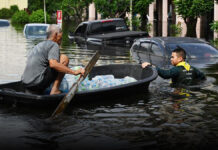















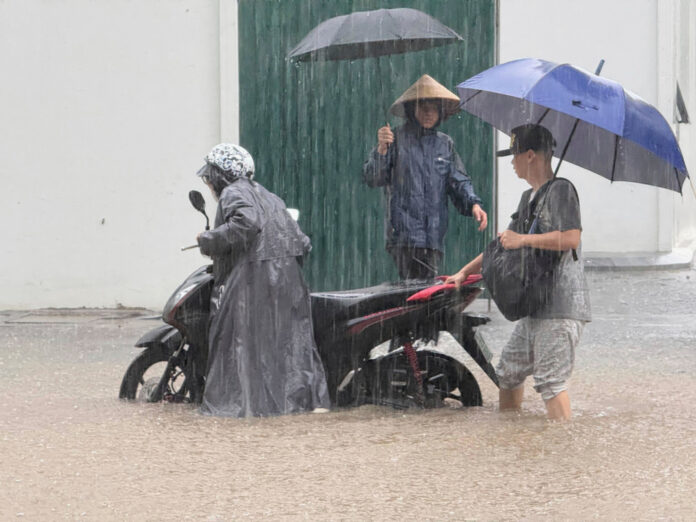
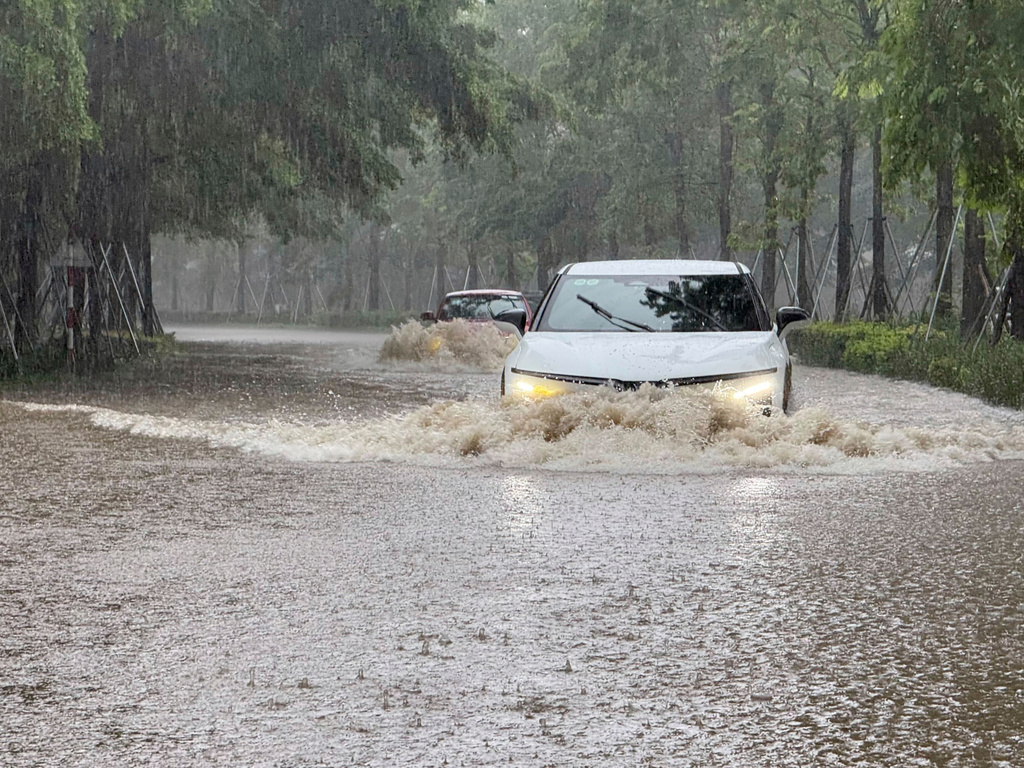
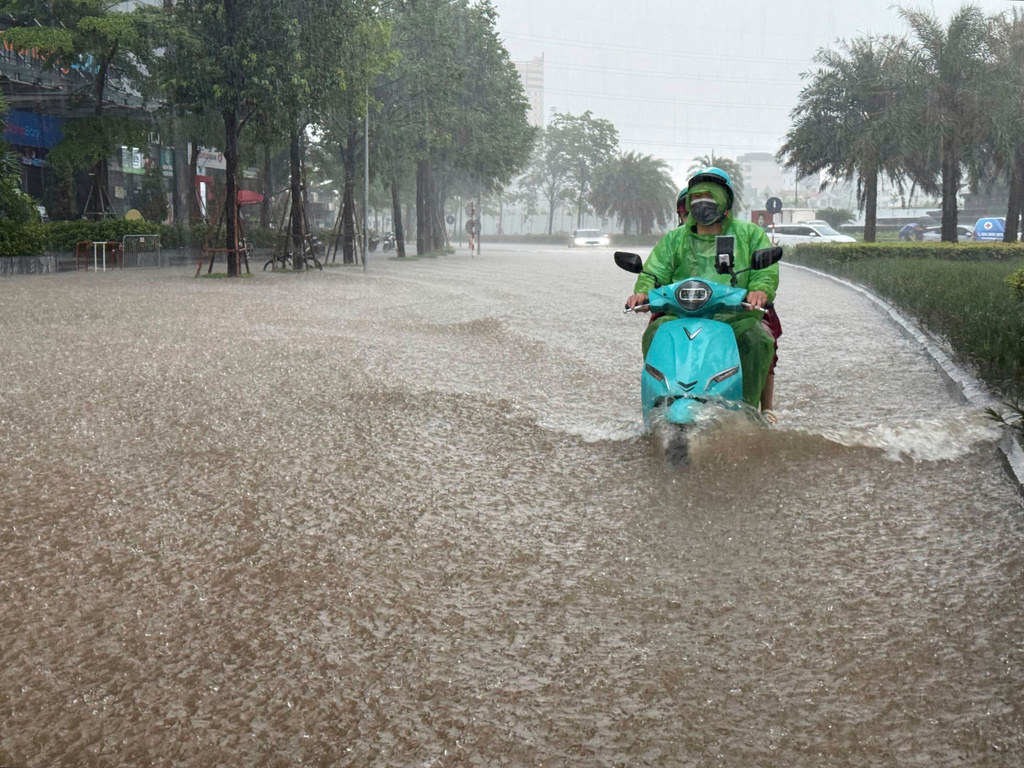
HANOI, Vietnam (AP) — Heavy rain fell Tuesday in parts of Southeast Asia after a tropical storm made landfall in Vietnam, flooding streets in the capital, blowing away billboards and knocking down power poles and trees.
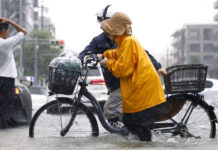
In Hanoi, people tried to push motorbikes through water that was ankle-deep or higher as cars and buses slowly moved along flooded city streets.
Vietnam’s state media said the remnants of Typhoon Kajiki were now a tropical depression over Laos. Heavy rain was also forecast in Thailand, and people were told to be vigilant to possible flooding.
Vietnam’s government had planned to evacuate nearly 600,000 people in the provinces of Thanh Hoa, Quang Tri, Hue and Danang, where more than 152,000 homes were in high-risk areas. More than 16,500 soldiers and 107,000 paramilitary personnel were assisting with evacuations or were on standby for search and rescue, state media said.
Two airports in Thanh Hoa and Quang Binh provinces were still closed Tuesday after flights were halted Monday.
The national weather agency said Kajiki made landfall in central Vietnam with maximum sustained winds of 117 kph (73 mph). The torrential rain triggered flash flood and landslide alerts.
The storm blew away billboards and the roofs of buildings, uprooted trees and knocked down electric poles, state media VTV reported. It hit Monday afternoon during high tides that caused coastal flooding in Nghe An and Ha Tinh provinces.
Overnight, heavy rain persisted between central Vietnam’s Thanh Hoa and Ha Tinh provinces.
Vietnam has reported one death, a man who was electrocuted while trying to prepare his home for the storm Friday.
Kajiki earlier brought winds and rain to China’s southern Hainan Island.
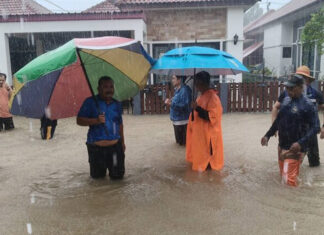
In Thailand, the Meteorological Department warned of heavy rain nationwide Tuesday. Residents in foothills and low-lying areas near waterways were warned about possible flash floods and landslides.
Scientists published a study last year warning that seas warmed by climate change will result in Southeast Asia’s cyclones forming closer to land, strengthening faster and lasting longer, raising risks for cities.
_________