

































BANGKOK — The Department of Corrections is a living testament to Thailand’s journey through the ages, transitioning from punishments intended to inflict pain and death, to restrictions on liberty, and ultimately to a system that aims to develop inmates into valuable human resources before their return to society. It clearly marks Siam’s shift from a traditional order to a modern, civilized state.
On its 110th anniversary, the Department of Corrections hosted a special forum, “110 Years of the Department of Corrections: From Tradition to Civilization.” The event examined the institution’s historic role in managing offenders and maintaining social order.
The forum featured the launch of two books published by Matichon: “Correcting the History of Corrections” and “The Department of Corrections Under Royal Patronage” on September 15.


Both books recount the 110-year history and development of the Department of Corrections within Thailand’s political, economic, and social contexts, both nationally and internationally, while highlighting the crucial role of the monarchy in shaping corrections.
Speakers included Sahakarn Petchnarint, Director-General of the Department of Corrections; Prof. (Special) Thongthong Chandransu, expert in Thai history and culture, former law lecturer at Chulalongkorn University, and former Deputy Permanent Secretary of the Ministry of Justice; and Asst. Prof. Dr. Saranyoo Thepsongkroh, author of “The Carceral State: Punitive Power in the Modern Era” (Matichon Publishing).
The discussion was moderated by Kasidit Anantanatorn, lecturer at Ramkhamhaeng University’s Faculty of Law. Attendees included Justice Minister Tawee Sodsong and Matichon Group executives led by Chairwoman Parnbua Boonpan.

The Evolution of Corrections
Dr. Saranyoo explained that the power of corrections reflects the power of rulers, as the treatment of offenders mirrors how those in power view their people. In the traditional era, punishment was tied to religious and moral beliefs and served as the penalty for violating dharma. Although kings formally held the power to punish, in practice it was exercised by nobles and local lords, resulting in inconsistent and unstandardized punishments.
With the arrival of Western legal standards, major changes occurred during the reign of King Rama V: torture was replaced by confinement in prisons, and standards of punishment were introduced. Under King Rama VI, this led to the centralization of corrections under a dedicated agency, the Department of Corrections.
Rewriting Corrections History
Director-General Sahakarn explained the origins of the book project: after visiting the Corrections Museum and reviewing documents compiled by previous administrators, he recognized the value of presenting this material to the public. The books compile accounts of punishment practices and document the royal role in corrections across different reigns.
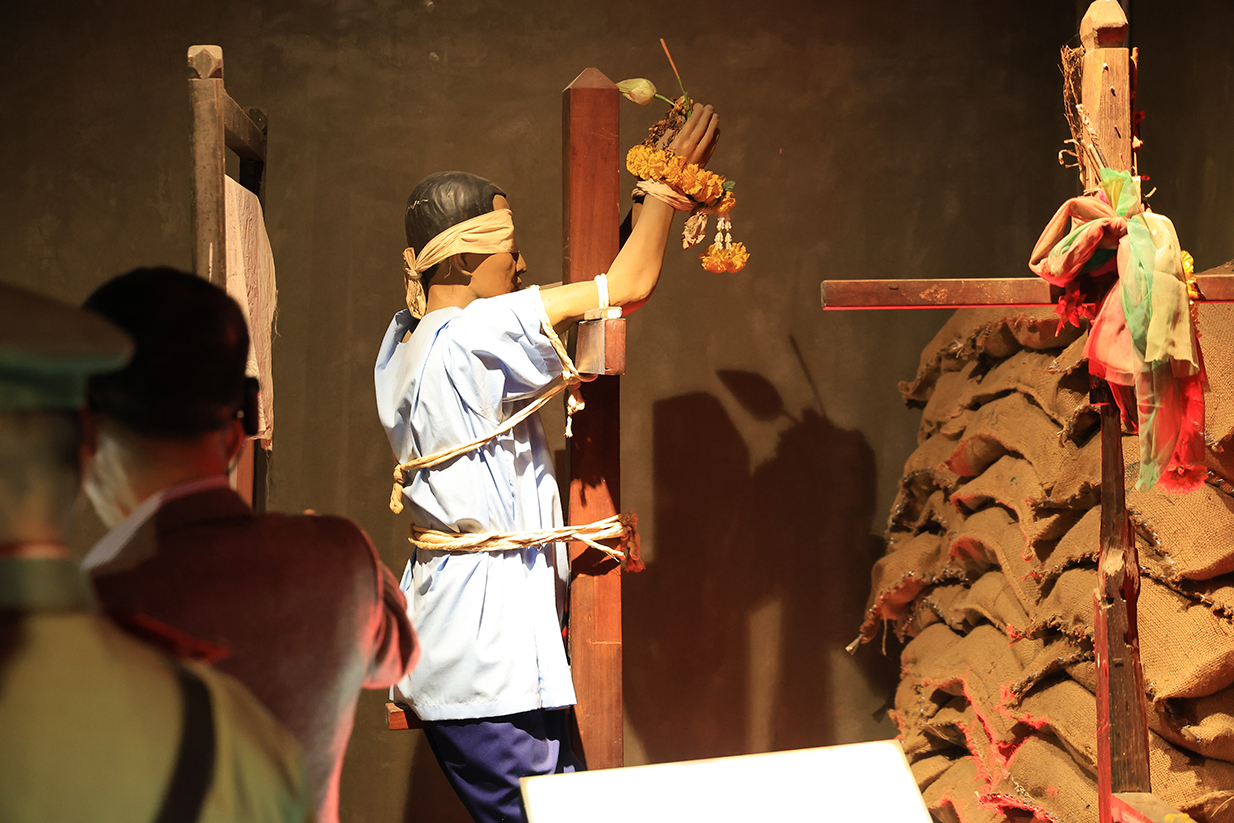
The two volumes include many fascinating aspects of history: the granting of the emblem “Phra Yom on a Lion,” the Department’s insignia symbolizing its mission; the “angel with a staff” insignia of its Director-General; and detailed accounts of capital punishment methods, from the last beheading by sword (Boonteng “Iron Casket”), the first execution by firing squad (Sergeant Sawat Mahamad), the use of poison, to modern times when human rights standards emphasized deprivation of liberty and rehabilitation over brutality. One volume also highlights the enduring royal patronage of corrections from past to present.
“I want people to see that prisons are not alien to society. We must accept and give importance to them, because they have long been a part of Thai life,” the Director-General remarked.

Prof. Thongthong emphasized the monarchy’s importance to corrections, noting that the royal prerogative of pardon is vital to prisoners because it gives them hope. Pardons, whether through sentence reductions or releases, alleviate despair, reduce prison overcrowding, and allow corrections work to continue.
He also recounted the compassion of Princess Maha Chakri Sirindhorn, who has supported “Phrom Phanya” prison libraries and often asked whether inmates could access books. She has noted that inmates, having abundant time, should be encouraged to study. Her projects, including Corrections Sharing Happiness, demonstrate the monarchy’s ongoing concern for prisoners, especially women.

Pardons for Foreign Prisoners
Dr. Saranyoo added that in the early period, corrections focused mainly on confinement, not rehabilitation. After the 1932 Revolution, however, behavioral reform became central. The two books document this shift thoroughly, with rare photographs and documents, including royal pardons granted not only to Thai prisoners but also to foreigners.
Prof. Thongthong emphasized that pardons for foreign prisoners directly benefited Thailand’s international relations, smoothing the way for agreements and cooperation.
He also urged greater understanding of the Department of Corrections, which shoulders responsibilities “beyond its capacity,” especially with limited resources for prisoner rehabilitation. For the future, he suggested stronger state support for post-release monitoring and reintegration systems, an area that currently lacks a dedicated agency. The Director-General agreed with this vision.
_______