

































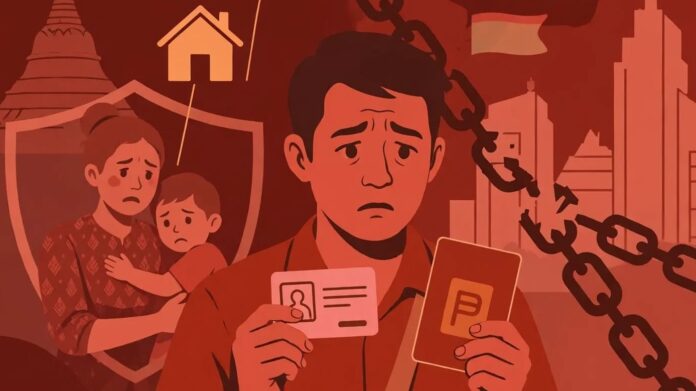
A Myanmar migrant workers’ organisation in Thailand has urged the Thai government to ease documentation requirements and provide humanitarian protection, alleging that Myanmar’s military authorities require workers to pay advance income tax and prove they have sent part of their earnings back home.
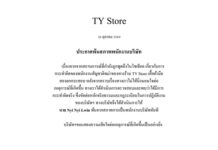
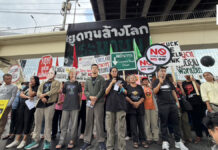
The Myanmar Migrant Workers’ Representative Coordinating Committee in Thailand (MMWRCCT) submitted a letter on 27 October to employers participating in the White Employer project, calling for the Thai government, parliamentary committees, employers and the public to understand the difficulties workers face in renewing identity documents and work permits.
The organisation said Myanmar authorities require migrant workers applying for or renewing Certificates of Identity (CI) and passports to pay advance income tax equivalent to 2% of their earnings. Workers must also provide evidence that they have remitted at least 25% of their monthly income to Myanmar.
The committee said it had credible information suggesting the money could be used to purchase weapons and military equipment, conduct airstrikes and support operations that kill civilians, including women and children. Some workers are therefore reluctant to make payments they fear could contribute to harm in their home country, the letter said.
The organisation also raised concerns that the document application process collects detailed personal and registration information that could allow Myanmar authorities to identify workers’ families and their addresses. It warned that relatives could face threats, pressure, arbitrary arrest or detention, and extortion if workers refused to comply with requirements they considered unfair.
Workers are also concerned about travelling to border areas to renew passports, where they could risk being forcibly conscripted under Myanmar’s military service law, the committee said.
The costs of obtaining documents in both countries, including agent fees and recruitment company charges, are also difficult for many workers to afford. Those unable to renew their documents and visas before they expire could immediately lose their legal status to stay or work in Thailand, the letter warned.
Five proposals to Thailand
The MMWRCCT put forward five proposals to address the problems.
First, it asked Thailand to allow migrant workers holding pink identification cards and work permits to use those documents as alternatives to passports or CIs for temporary legal residence and employment. It also called for Thailand to issue temporary visas and facilitate work permit renewals and pink card applications within the country, without requiring workers to return to Myanmar.
Second, it urged authorities to ensure workers holding pink cards and work permits have full access to social security, healthcare benefits and labour protections. It also called on the Bank of Thailand and commercial banks to establish appropriate rules allowing them to open bank accounts to receive wages and conduct essential financial transactions.
Third, the organisation said workers wanted to pay visa fees, work permit fees and applicable income taxes directly to Thai government agencies rather than authorities under Myanmar’s military leadership. It said the revenue should support Thailand’s economic and social development.
Fourth, it called for transparent fees for document applications and changes, as well as stricter action against illegal agents and those charging excessive prices.
Fifth, it urged Thailand to introduce special humanitarian protection measures, including a grace period for workers whose documents expire, rather than immediately arresting or prosecuting them as illegal workers.
Workers warn of wider economic impact
The committee said Myanmar migrant workers play an important role in Thailand’s seafood, industrial, construction, agricultural and service sectors, contributing skills and experience to businesses.
If documentation problems leave large numbers of workers without legal status, Thailand could face labour shortages while workers become more vulnerable to human trafficking, exploitation and rights violations, the organisation warned.
The letter said many workers had come to Thailand to escape what it described as unjust persecution under Myanmar’s military dictatorship, difficult living conditions and threats to their lives and property.
The organisation appealed to the Thai government, parliament and public for understanding and cooperation on humanitarian grounds, saying the proposed measures would benefit workers, employers and Thailand alike.