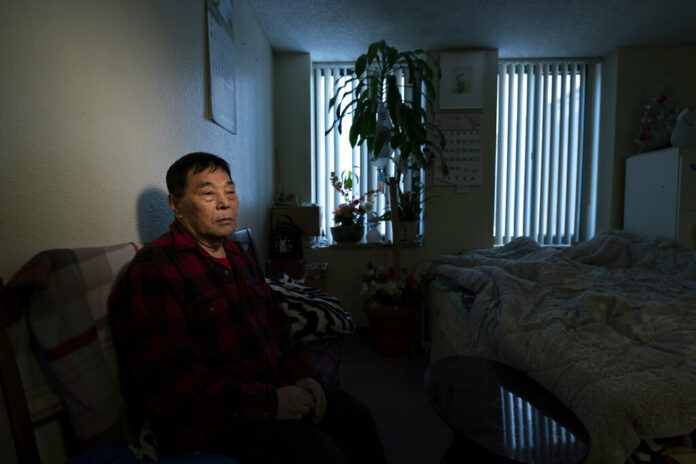
Yong Sin Kim, an 85-year-old Korean immigrant, pauses for photos in his apartment in downtown Los Angeles, Thursday, March 25, 2021. Kim said he rarely leaves home these days. When he does, he carries a whistle with him, his only defense against random attacks targeting the defenseless. "We don't go out at all. We stay home all day as if we are locked up," said Kim. "I can't even think of going for a walk." Photo: Jae C. Hong / AP
LOS ANGELES (AP) — Yong Sin Kim, an 85-year-old Korean immigrant living in a senior apartment complex in downtown Los Angeles, says he rarely leaves home these days. When he does, he carries a whistle with him; at least he could call for help if he’s attacked.
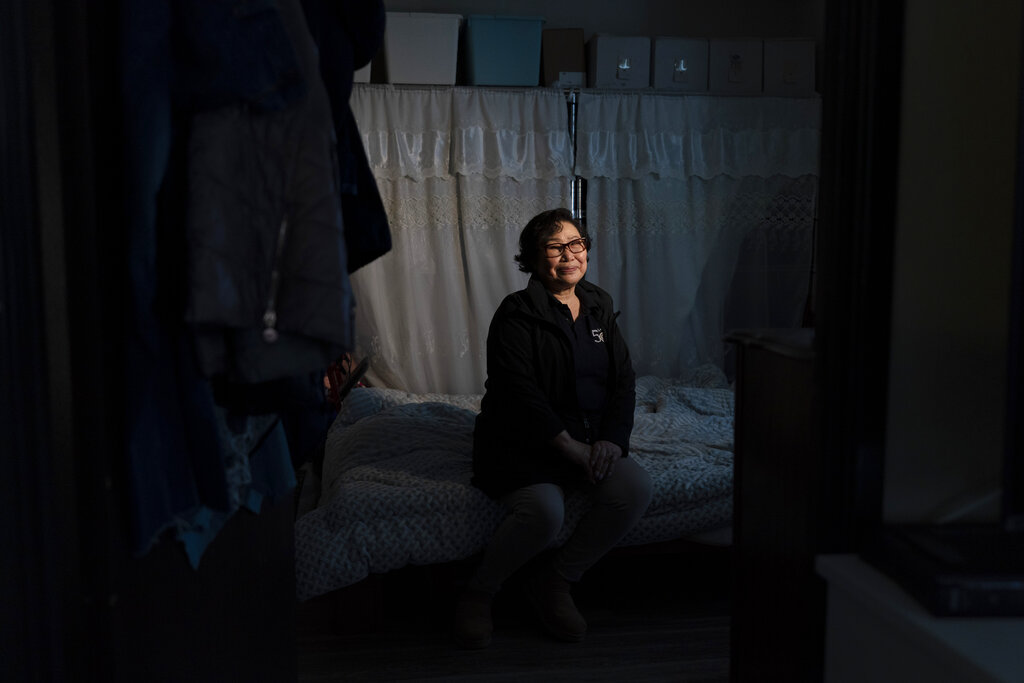
Three floors up in the same building, Hyang Ran Kim, 74, waits for her daughter to pick her up. She is temporarily moving into her daughter’s place in a quieter neighborhood in the suburbs. Kim says her daughter is worried about her safety.
Amid a surge of anti-Asian violence, fear creeps in and alters the daily life of vulnerable Asian seniors.
Asian Americans have been targets of discrimination, threats and violence that have escalated in the past year because the coronavirus pandemic originated in Wuhan, China. Some have blamed former President Donald Trump for fanning flames of intolerance by calling COVID-19 the “China virus” and “kung flu.”
Yong Sin Kim, an 85-year-old South Korean immigrant, shows a whistle attached to his keychain while pausing for photos in his apartment in downtown Los Angeles, Thursday, March 25, 2021. Photo: Jae C. Hong / AP
People of Asian descent have been spit on, beaten and told to go back to where they came from. Reports of violence have been on the rise, most notably when a white gunman killed eight people — six of them Asian women — in a string of shootings at Atlanta area spas in mid-March. Four of the women were of Korean descent.
While police haven’t said that was a hate crime, overt examples of racism have surfaced, such as a surveillance video showing a man in New York City kicking an Asian American woman and stomping on her face while shouting anti-Asian slurs.
In LA’s Koreatown, Denny Kim, a U.S. Air Force veteran said he was beaten in February by two men who shouted slurs such as “ching chong” and “China virus.” Police were investigating it as a hate crime.
Discrimination against Asian groups has a long and ugly history dating back to California’s origins — from Chinese laborers exploited during construction of the transcontinental railroad to the large number of Japanese immigrants and their American-born children herded into internment camps during World War II.
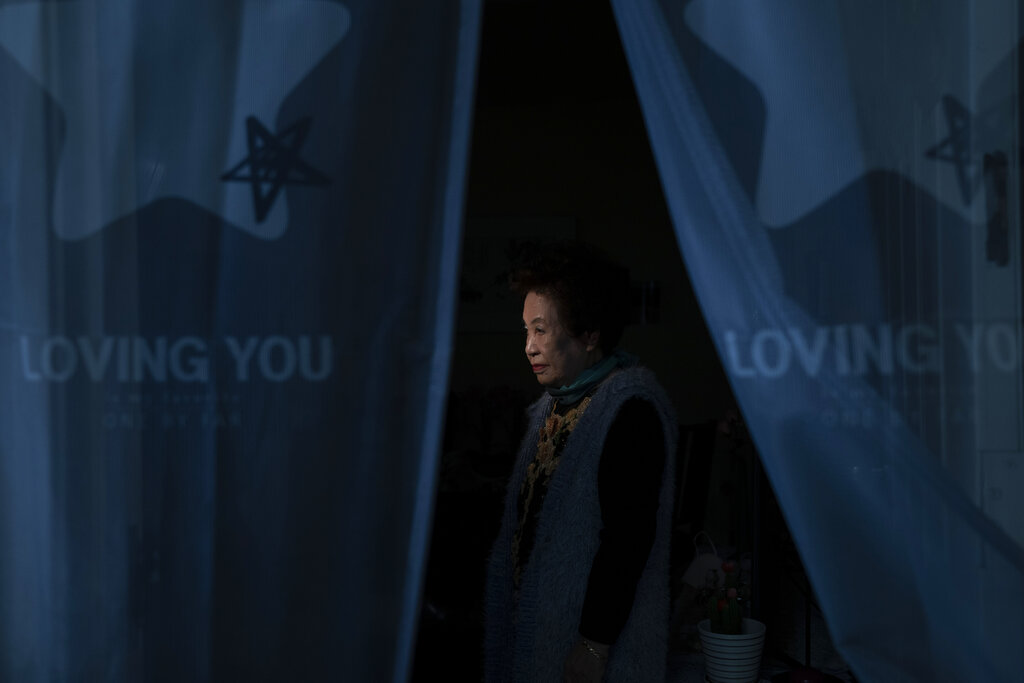
Hyang Ran Kim, a 74-year-old immigrant from South Korea, pauses for photos in her apartment in downtown Los Angeles, Thursday, March 25, 2021. Kim temporarily moved into her daughter’s place in a quiet neighborhood in the suburbs of Orange County. Kim said her daughter was too worried about her safety amid the surge in anti-Asian hate crimes. Photo: Jae C. Hong / AP
Korean Americans in Los Angeles found themselves under siege three decades ago during the 1992 riots that broke out following the acquittal of the police officers who beat Black motorist Rodney King. Anger over the verdict merged with tensions that had been brewing in the Black community over Korean ownership of mom-and-pop shops in their neighborhoods.
Arsons and looting spread from South Los Angeles into Koreatown, where merchants guarded their shops with guns. Despite the defense, much of the $1 billion in the city’s economic losses from the riots were in Koreatown.
For Yong Sin Kim and his wife, who were quarantined in their small apartment for days after they tested positive for COVID-19, their confinement continues to avoid another virus — violence.
“We don’t go out at all. We stay home all day as if we are locked up,” said Kim. “I can’t even think of going for a walk.”
For 74-year-old Sung Hee Chae in Koreatown, it’s about a 6-minute walk to the nearest Korean grocery market. Chae said she doesn’t go there alone anymore. Her son accompanies her to the market these days. Her daughter in South Korea urges her not to go out at all.
Hea Kyung Kim, an 81-year-old South Korean immigrant, pauses for photos in her apartment in the Koreatown neighborhood of Los Angeles, Wednesday, March 24, 2021. “My children tell me to be careful these days,” said Kim. “I have never been a hate crime victim, but it scares me watching the news about it. There is no guarantee it won’t happen to me ever.” Photo: Jae C. Hong / AP
“I was terrified,” said Chae about the recent shooting in Atlanta. “It was horrifying.”
The bloodshed led to an outpouring of support for Asian Americans and rallies condemning hatred against any group.
“I wish all of us could get along fine regardless of the color of skin. I feel sad. I have mistreated no one,” Chae said.
Jen Ho Lee, 76, has a faint heart. She is weak. She needs her walker to get around. She also limits her outings for the same reason as other Korean seniors.
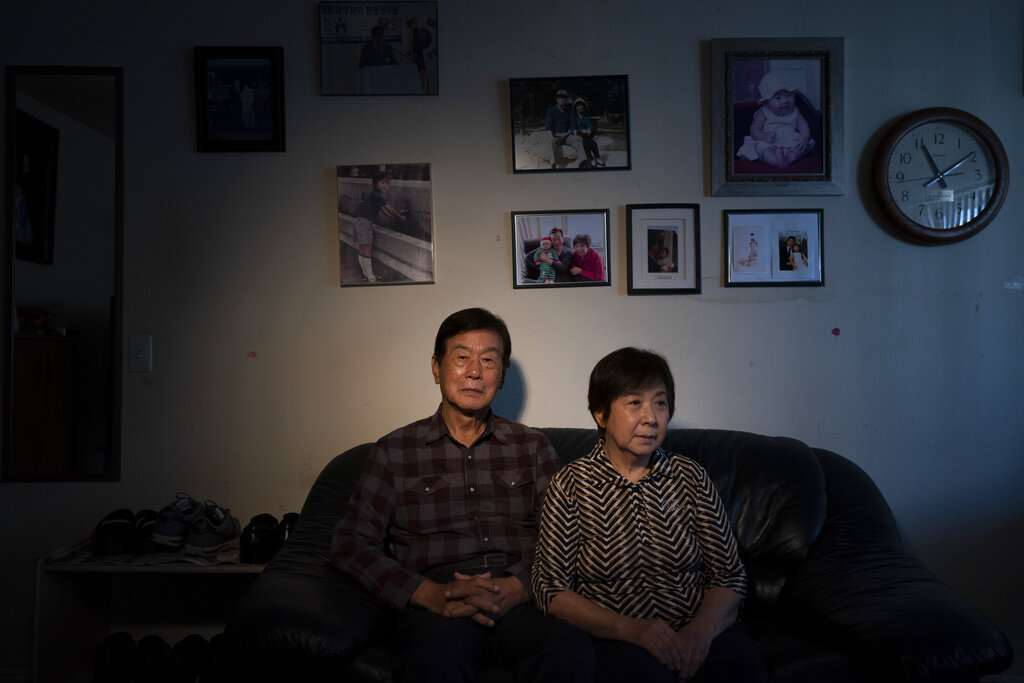
Hyung Oh Kim, an 85-year-old immigrant from South Korea, and wife, Ki Sook, 77, pause for photos in their apartment in the Koreatown neighborhood of Los Angeles, Wednesday, March 24, 2021. As a head of LA Senior Citizens Society, Kim said he urges its members to carry whistles or walking sticks when leaving home for self-protection against potential random attacks. Amid the surge of anti-Asian hate crimes, Kim, who came to the States in 1989 with his wife and children, asks himself whether he made the right decision these days. “I never had this type of fear before,” said Kim. Photo: Jae C. Hong / AP
But, the series of recent attacks against Asian people brought a different change for Lee.
Lee took a trip to Koreatown to attend a recent protest against anti-Asian hate crimes. It took her two buses to get there and two buses back to her home.
With signs that say “Stop Asian hate,” and “I’m not a virus” taped around her walker, she chanted slogans.
“We should be united. We Asians can’t stay silent,” said Lee. “I didn’t go to the rally because I had plenty of time or because I was healthy.”
“It is wrong to think these attacks have nothing to do with me. This could happen to me or my family one day,” Lee added.
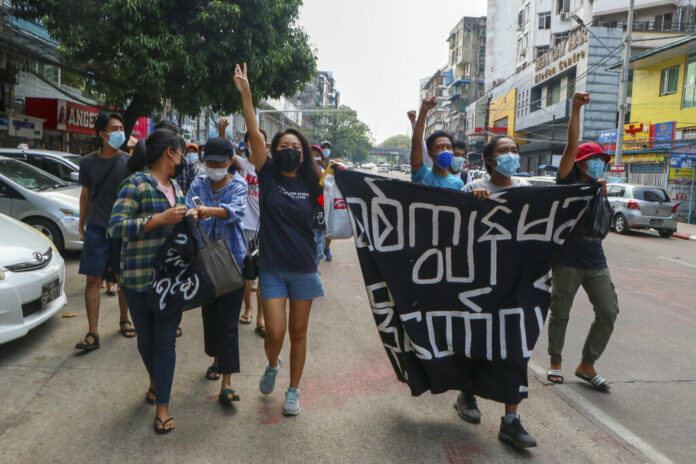
Anti-coup protesters shout slogan with a banner reading ''Carry on revolution! We do not accept as the military slave,'' in Kamayut township of Yangon, Myanmar, Monday, April 19, 2021. Anti-coup protesters kept public demonstrations going despite the threat of lethal violence from security forces. (AP Photo)
YANGON, Myanmar (AP) — Security forces in Myanmar used violence on Monday against demonstrators who sought to celebrate last week’s formation of a shadow government to serve as an alternative to the military junta that has held power since a February coup.
Myanmar media and posts on social networks said the violence was especially intense in Myingyan, a town in central Myanmar, where the online news site The Irrawaddy reported at least one person was killed Sunday. Unconfirmed reports on social media said at least one more person was killed there Monday.
Marches were held in Mandalay, the country’s second biggest city, and elsewhere to show support for the “National Unity Government” announced Friday by protest leaders. Security forces reportedly broke up a march at dawn in Mandalay that included Buddhist monks.
Social media were flooded with appeals to “Please save Myingyan.”
Another news site, Myanmar Now, said security forces on Sunday launched attacks in Myingyan with the main target being a street stronghold set up by protesters, some believed armed with hunting rifles.
It said the stronghold, fortified with sandbags, was destroyed by government forces, rebuilt overnight and then destroyed again Monday morning.
Setting up street barricades is one of the tactics used by protesters against the Feb. 1 army takeover that ousted the elected government of Aung San Suu Kyi. Often the strongholds last for just a few hours before being captured and destroyed by police and soldiers, then are rebuilt overnight.
Their defenders use homemade weapons, such as gasoline bombs, and security personnel respond with overwhelming force, frequently resulting in multiple fatalities.
Most protesters, however, embrace nonviolence and seek to avoid confrontations in their marches and motorcycle processions. Security personnel frequently employ lethal force to break up their rallies as well.
Security forces have killed at least 737 protesters and bystanders since the military takeover, according to the Assistance Association for Political Prisoners, which monitors casualties and arrests.
The government in recent weeks seems to be pursuing a strategy of hunting down individual protest leaders nationwide, while using overwhelming force, town by town, to smash street protests and intimidate participants.
The military has issued widely circulated wanted lists of more that 200 protest supporters — including actors, internet influencers and medical personnel — accused of endangering public order, a charge punishable by up to three years in prison. Arrests are also highly publicized.
In a further apparent attempt at psychological warfare, government television stations on Sunday night showed photos of young people who had been arrested, looking badly bruised. The reports said they were accused of carrying out a series of explosions on Saturday in Yangon, the country’s biggest city. Their supporters charged they were tortured in custody.
A Japanese journalist in Yangon was also arrested Sunday. Japan’s government said it is asking Myanmar authorities to explain the arrest and release him as soon as possible.
On Friday, the protest movement advanced on the political front with its declaration of the National Unity Government, including members of Suu Kyi’s ousted Cabinet and representatives of ethnic minority groups and other allies.
Opponents of the coup had been seeking an alliance with ethnic minority groups as a way of strengthening their resistance. The minorities have kept up on-again, off-again armed struggles for greater autonomy in borderlands for decades.
In the north, armed guerrillas of the Kachin Independence Organization have launched a series of attacks on government military outposts, while the Karen National Union in the east, on the border with Thailand, has offered shelter to fleeing protesters in the territory it controls.
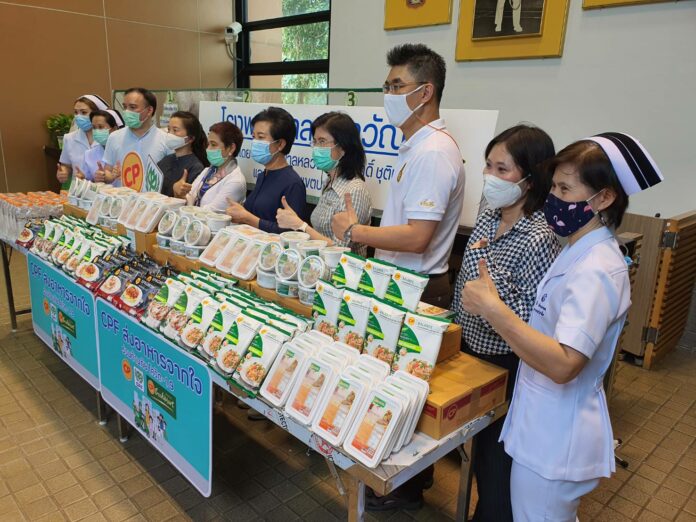
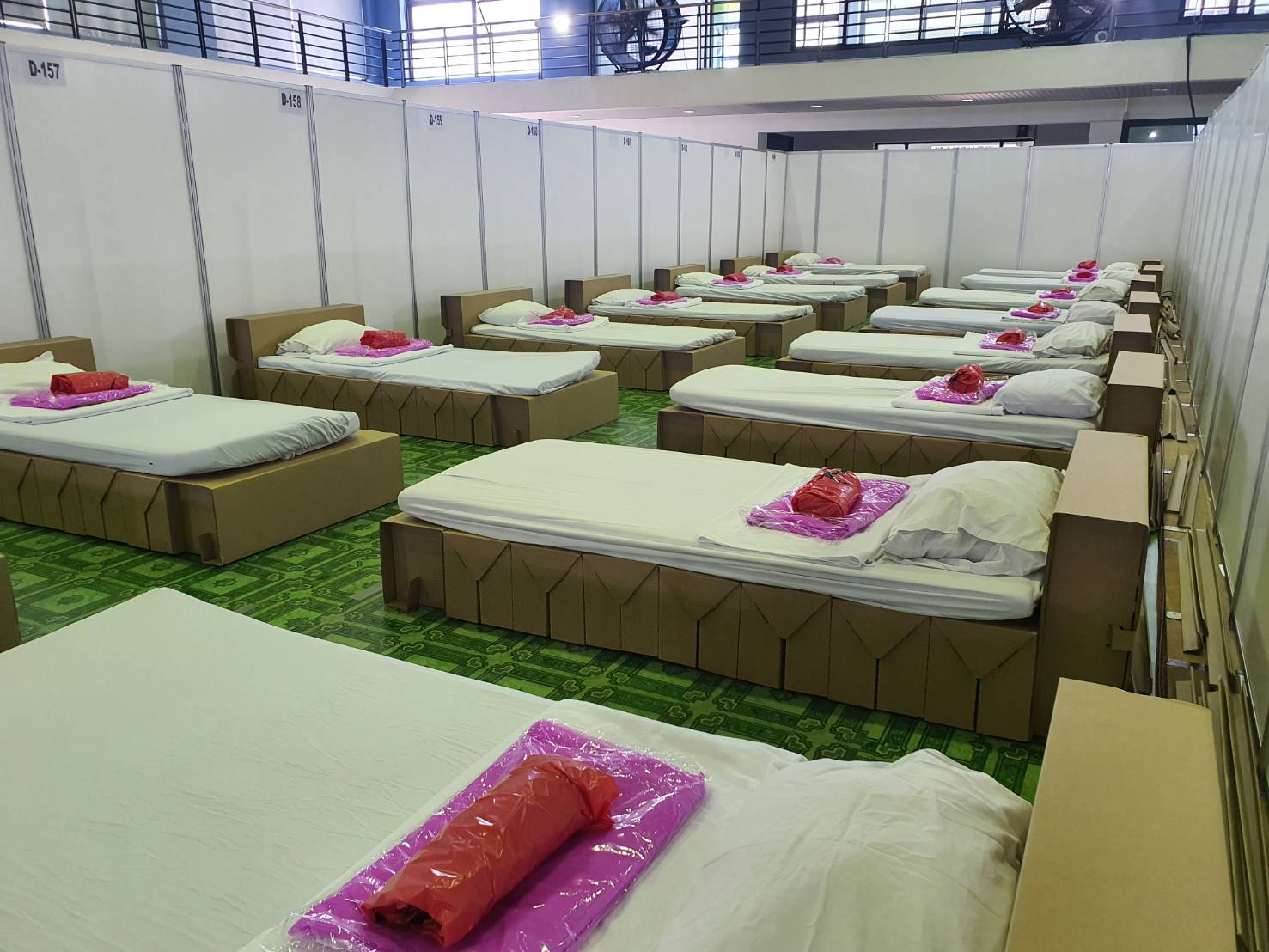
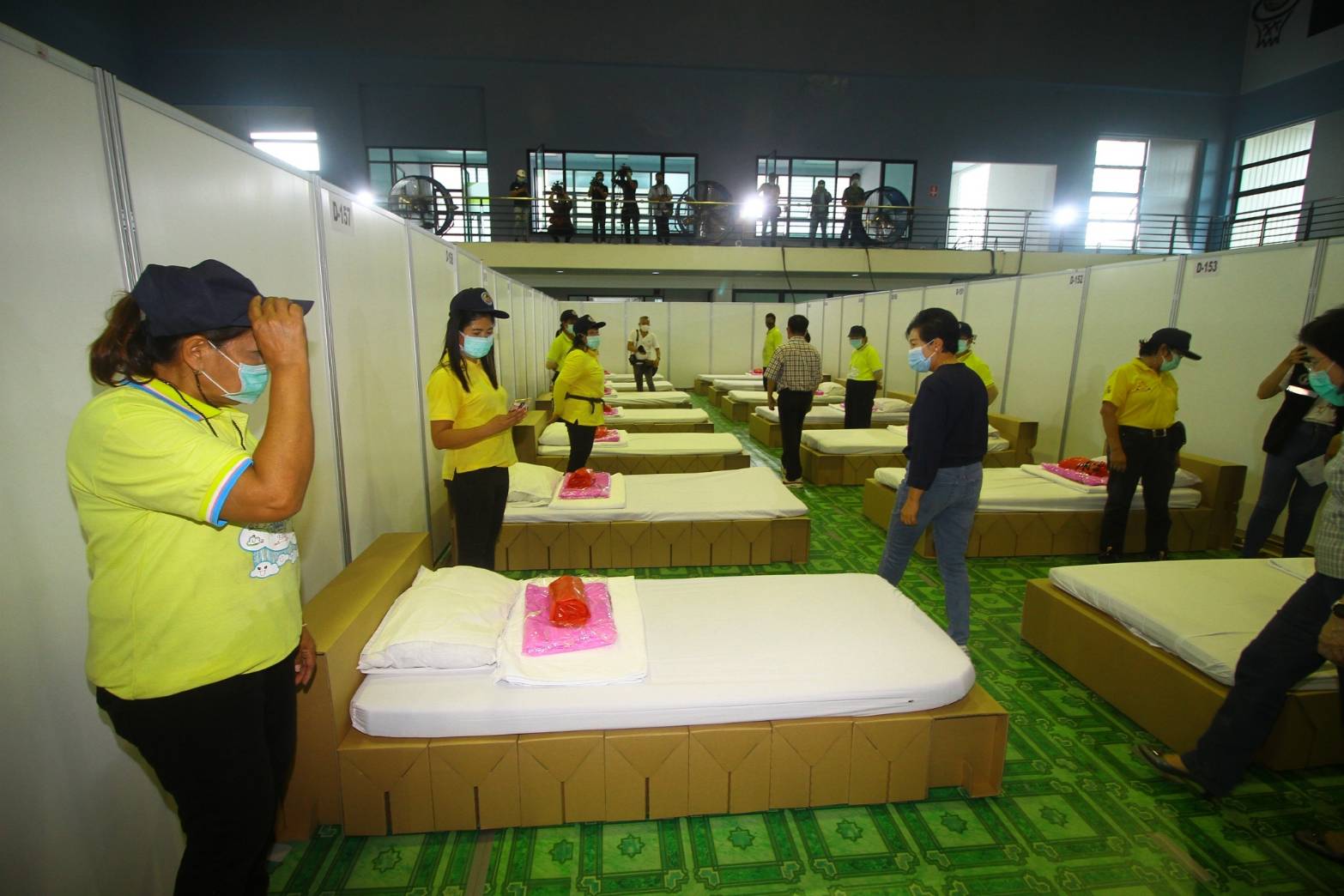
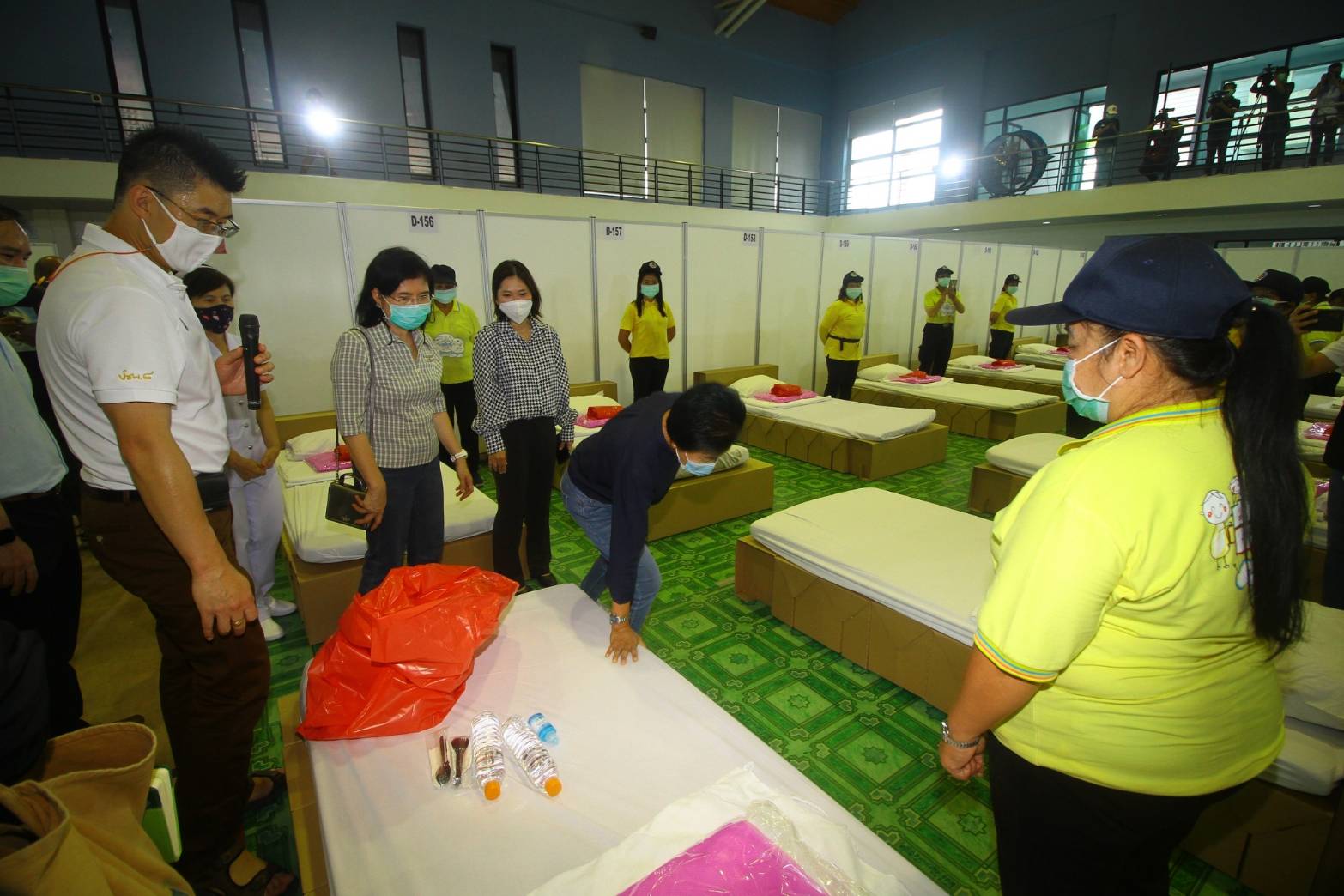
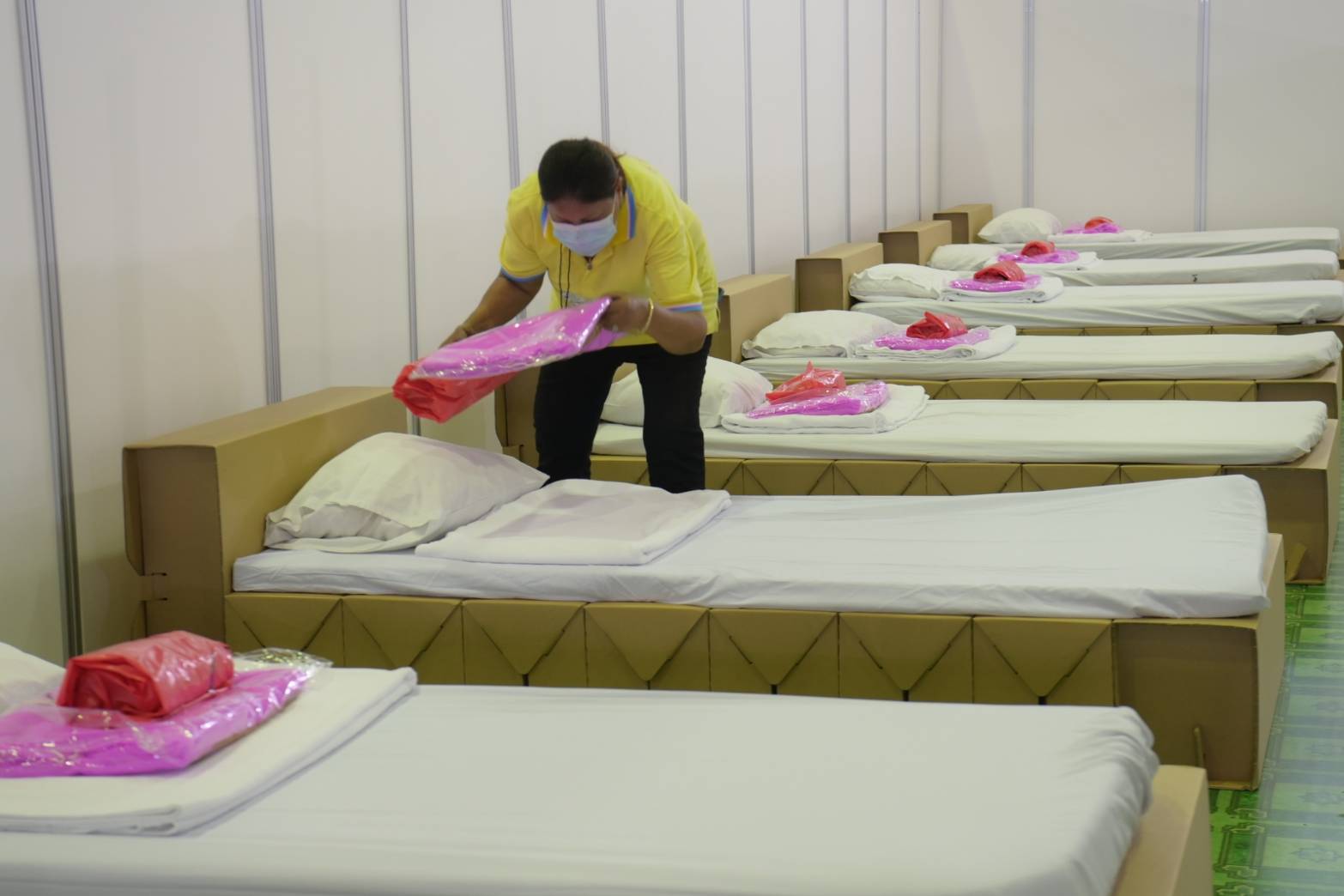
Charoen Pokphand Foods Public Company Limited (CP Foods) donated over 4,400 packs of safe and high quality food and 4,400 bottles of drinking water to ‘Erawan Hospital 1’, a 200-bed field hospital, located at the 84th Anniversary Stadium in Bang Bon district, Bangkok.
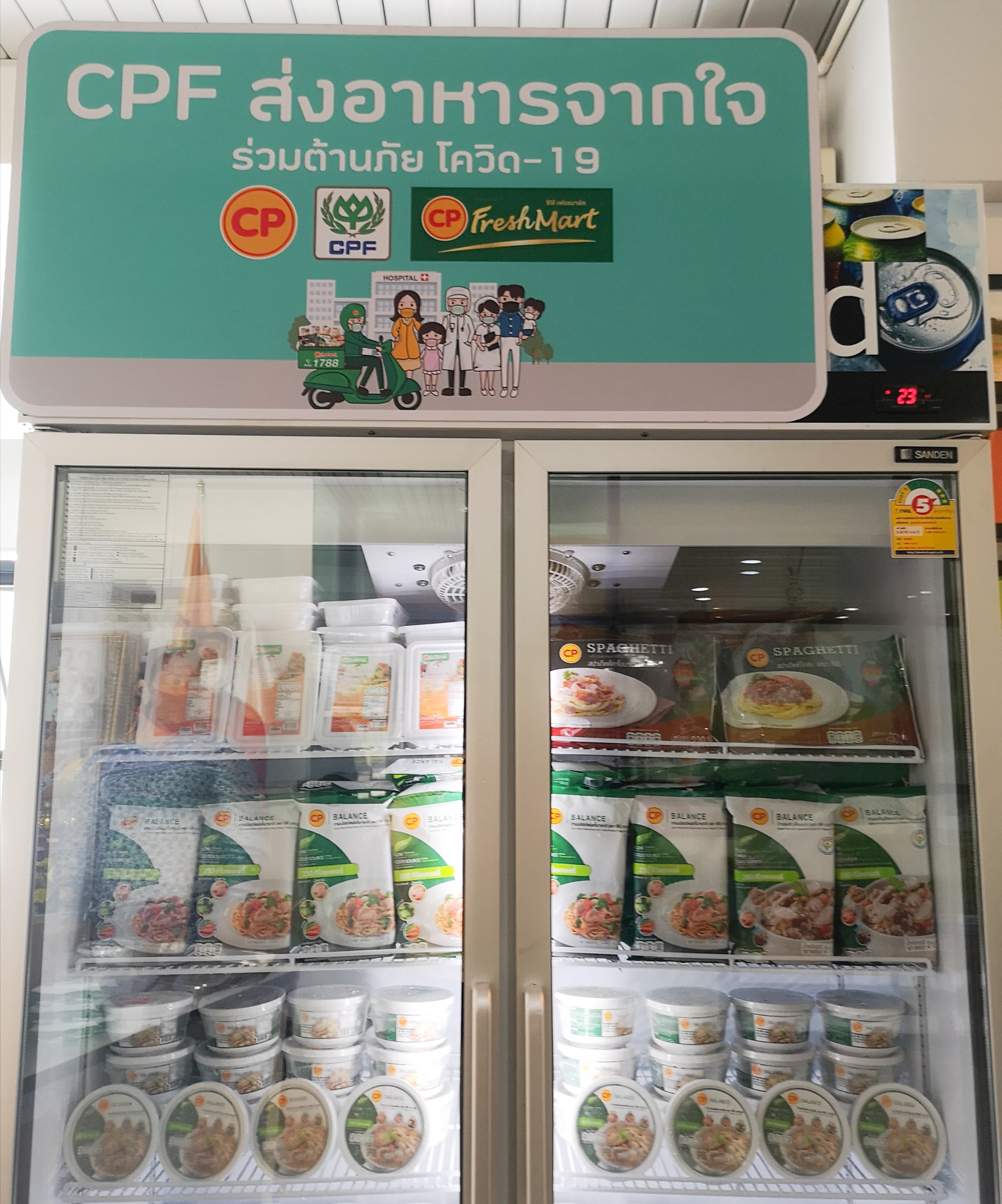
The COVID-19 relief effort is a part of “CPF Food from the Heart against COVID-19” project, which aims to alleviate the burden of medical staff, volunteers and patients amid the new wave of outbreak.
At the hand-over ceremony, the Bangkok Metropolitan Administration permanent secretary Silpasuay Raweesangsoon thanked CP Foods for continuously supplying food products to BMA in a bid to provide society with adequate food safety since the first wave of outbreak in early 2020. This effort has greatly boosted a morale of medical staffs, volunteers, and COVID-19 patients at the field hospitals.
CP Foods has supplied BMA field hospital a variety frozen menu, including Shrimp Wonton, Thai Boiled Brown Rice, Shrimp Boiled Rice, Fried Rice with Basil and Shrimp, Whole Wheat Ramen with Spicy Chicken, Spaghetti Carbonara and Chicken Spaghetti, etc.
Beside this activity, the company, as a leading food producer, adheres to strict COVID-19 preventive measures as well as internationally-recognized standards for quality and safety throughout food production, ensuring product safety.
“CPF Food from the Heart against COVID-19” project was initiated in early 2020 in accordance with the Charoen Pokphand Group’s policy to support people in need at a time of crisis, ensuring food security in Thailand. Subsequently, CP Foods has joined forces with its partners within CP Group, government and partners to supply safe foods for multiple groups such as people returned from aboard to self quarantine, medical staffs and their families during the first wave pandemic and expand to vulnerable people and migrant workers and support people at the field hospitals.
Charoen Pokphand Foods PCL (CP Foods) announced that 61 of its plants are now certified “IPHA – Industrial and Production Hygiene Administration”, a newly established food safety standard, to build confidence among consumers both in Thailand and Overseas.
IPHA standard is a joint initiative of the Federation of Thai Industries, the Public Health Ministry and the Industry Ministry to ensure food safety amid COVID-19 outbreak. This new food safety standard is based on the GMP, HACCP, IS022000 and internationally-recognized COVID-19 prevention measures. IPHA certificates will be given to food-processing factories that pass the self-assessment on hygienic standards for workplace, production process and workers.
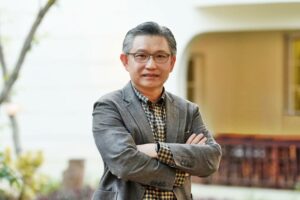
Mr. Siripong Aroonratana.
Mr. Siripong Aroonratana, CP Foods’ Chief Operating Officer – Livestock Business, said the company currently has the highest number of IPHA certified plant, adding that winning the certification reflects CP Foods’ stringent measures to safeguard production lines from the new coronavirus 2019.
The company continues to promote its operating plants to assess IPHA standards under “self-declaration” in a bid to ensure people the hygiene and safety in food product.
He explained that the company has placed a great emphasis on food safety and food security of Thai people. Consequently, the company has set up special teams to tackle human and animal epidemic under the COVID-19 Monitoring and Management Center.
For business continuity, CP Foods puts in place several measures which cover 3 key aspects:
Food security: the company’s production line must not be disrupted, to prevent food shortages.
Supply chain and logistics: The government assistance has been sought to facilitate transportation of raw materials to factories and food products to consumers, even during lockdown.
Disease prevention: Employees in Thailand and overseas are given guidelines on how to protect themselves against the disease. The company also announced a work-from-home policy to protect workers from the infection.
Asides its operation, CP Foods has made multiple efforts to supports its partners and communities. The company has shared a successful health and safety practices to farmers, suppliers etc. Also, it reduces credit terms to 30 days in an effort to increase liquidity for its suppliers, including small and medium-sized enterprises (SMEs) under a project so-called “Faster Payment.”
Recently, CP Foods supplied ready-to-eat meals and drinking water under “CPF Food from Heart, against Covid-19” project for field hospitals in Bangkok and several provinces, to support the work of frontlines medical staffs, volunteers and patients in a bid to against a latest wave of COVID-19 pandemic in Thailand.
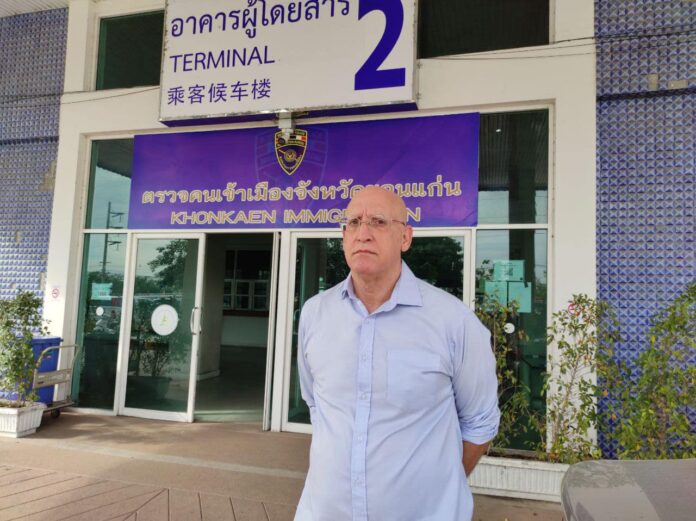
David Streckfuss at Khon Kaen Immigration Office on Apr. 19, 2021. Photo: Hathairat Phaholtap / Facebook.
KHON KAEN — The immigration bureau on Monday deferred the decision to extend the work permit and visa of an American academic who wrote about the country’s draconian lese majeste law.
Scholar David Streckfuss faced expulsion from the kingdom after Khon Kaen University suddenly terminated his employment contract, resulting in his visa being revoked. He went to the local immigration office Monday to plead for another extension. The bureau said the decision was delayed to May 3 because they needed more time to revise his documents.
“I confirm that the Khon Kaen Immigration Office is pursuing the case accordingly,” Lt. Col. Nattapong Kulsak, inspector of Khon Kaen immigration, said. “This has nothing to do with politics and David is not a prohibited person under the immigration act. Therefore, there should be no problem with his visa application process.”
Streckfuss said he will not flee the country and is trying to secure a new work permit and visa under his new employer, The Isaan Record online news site. After filing his application last month, Streckfuss said police officers repeatedly visited his office and asked local people about his whereabouts.
“It seems irregular as if there is something going on,” he said.
The longtime expat worked as the director of the exchange student program at Khon Kaen University for the past 27 years before he was given a one-month notice of termination in February for “not being able to do assigned work.” He believed the decision was politically charged, an allegation denied by his former employer.
“No police or any other state officials have met with the rector or the dean,” Khon Kaen University rector Charnchai Pangthongviriyakul said Saturday. “The faculty saw that there has been no progress in his work, so it decided to notify him of contract termination.”
Although Streckfuss admitted that there was no exchange of students due to the pandemic, he told Khaosod English in an interview Friday that police officers did visit the rector and the dean of the Faculty of Public Health he worked with in February.
“I heard from someone who is close to the matter that some police visited the rector and the dean on Feb. 18,” Streckfuss said. “They said I was interfering in politics, so the administration made the choice to end the contract. That was the reason, but they didn’t put it in writing.”
In 2010, he published “Truth on Trial in Thailand: Defamation, Treason, and Lese-Majeste,” which explores how the royal defamation law shaped Thai society. Streckfuss said he does not believe it is the book that is causing him problems, but it is the accusations of him being a foreign agent made by former leader of the Yellowshirt movement Sondhi Limthongkul that put him under spotlight.
“There’s no way to prove that I’m not a unicorn either,” Streckfuss said. “No, I’m not. I came from University of Wisconsin–Madison, where there were often protests against the CIA.”
Apart from the book, he also discussed Article 112 at a panel held by the Foreign Correspondents’ Club of Thailand in March alongside heavyweight panelists such as the outspoken Move Forward MP Rangsiman Rome and the leader of the pro-establishment Thai Phakdee group Warong Dechgitvigom.
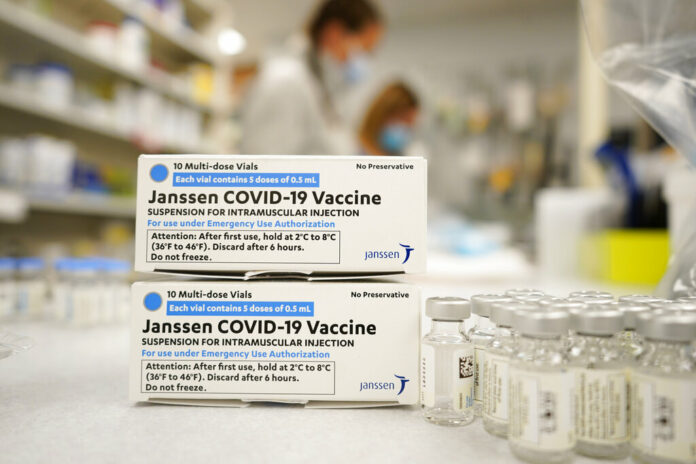
In this March 6, 2021, file photo, boxes stand next vials of Johnson & Johnson COVID-19 vaccine in the pharmacy of National Jewish Hospital for distribution in Denver. U.S. health officials are weighing next steps as they investigate unusual blood clots in a small number of people given the vaccine -- a one-dose shot that many countries hoped would help speed protection against the pandemic. Photo: David Zalubowski, File / AP
WASHINGTON (AP) — Half of all adults in the U.S. have received at least one COVID-19 shot, the government announced Sunday, marking another milestone in the nation’s largest-ever vaccination campaign but leaving more work to do to convince skeptical Americans to roll up their sleeves.
Almost 130 million people 18 or older have received at least one dose of a vaccine, or 50.4% of the total adult population, the Centers for Disease Control and Prevention reported. Almost 84 million adults, or about 32.5% of the population, have been fully vaccinated.
The U.S. cleared the 50% mark just a day after the reported global death toll from the coronavirus topped a staggering 3 million, according to totals compiled by Johns Hopkins University, though the actual number is believed to be significantly higher.
The country’s vaccination rate, at 61.6 doses administered per 100 people, currently falls behind Israel, which leads among countries with at least 5 million people with a rate of 119.2. The U.S. also trails the United Arab Emirates, Chile and the United Kingdom, which is vaccinating at a rate of 62 doses per 100 people, according to Our World in Data, an online research site.
The vaccine campaign offered hope in places like Nashville, Tennessee, where the Music City Center bustled Sunday with vaccine seekers. High demand for appointment-only shots at the convention center has leveled off enough that walk-ins will be welcome starting this week.
Amanda Grimsley, who received her second shot, said she’s ready to see her 96-year-old grandmother, who lives in Alabama and has been nervous about getting the vaccine after having a bad reaction to a flu shot.
“It’s a little emotional. I haven’t been able to see my grandmother in a year and a half almost,” said Grimsley, 35. “And that’s the longest my entire family has ever gone without seeing her. And we’ll be seeing her in mid-May now.”
The states with the highest vaccination rates have a history of voting Democratic and supporting President Joe Biden in the 2020 election: New Hampshire at the top, with 71.1%, followed by New Mexico, Connecticut, Massachusetts and Maine, CDC data show.
The demand has not been the same in many areas of Tennessee — particularly, rural ones.
Tennessee sits in the bottom four states for rates of adults getting at least one shot, at 40.8%. It’s trailed only by Louisiana, Alabama and Mississippi — three other Southern states that lean Republican and voted for Donald Trump last fall.
Vaccination rates do not always align with how states vote. But polling from The Associated Press-NORC Center for Public Affairs Research has shown trends that link political leanings and attitudes about the vaccines and other issues related to the pandemic, which has killed more than 566,000 people in the U.S.
A poll conducted in late March found that 36% of Republicans said they will probably or definitely not get vaccinated, compared with 12% of Democrats. Similarly, a third of rural Americans said they were leaning against getting shots, while fewer than a fourth of people living in cities and suburbs shared that hesitancy.
Overall, willingness to get vaccinated has risen, polling shows.
In January, 67% of adult Americans were willing to get vaccinated or had already received at least one shot. The figure has climbed to 75%, according to the latest AP-NORC poll.
Nationwide, 24% of Black Americans and 22% of Hispanic Americans say they will probably or definitely not get vaccinated, down from 41% and 34% in January, respectively. Among white Americans, 26% now say they will not get vaccinated. In January, that number was 31%.
Dr. Anthony Fauci, the nation’s top infectious disease expert, said the goal is to get community figures, from athletes to clergy, to encourage vaccinations, particularly as the seven-day national average of cases remains over 60,000 new infections per day.
“What we are doing is we’re trying to get, by a community core, trusted messages that anyone would feel comfortable with listening to, whether you’re a Republican, a Democrat, an independent or whomever you are, that you’re comfortable,” Fauci said Sunday on ABC’s “This Week.”
Fauci also indicated Sunday that the government will likely move to resume use of Johnson & Johnson’s COVID-19 vaccinethis week, possibly with restrictions or broader warnings after reports of some very rare blood clot cases.
“I would be very surprised if we don’t have a resumption in some form by Friday,” he said. “I don’t really anticipate that they’re going to want it stretch it out a bit longer.”
Fauci, who is President Joe Biden’s chief medical adviser, said he believed federal regulators could bring the shots back with limits based on age or gender, or with a blanket warning, so the vaccine is administered in a way “a little bit different than we were before the pause.”
The J&J vaccine was thrown into limbo after the CDC and the Food and Drug Administration said last week that they needed more evidence to decide if a handful of unusual blood clots were linked to the shot — and if so, how big the risk is.
The reports are rare — six cases out of more than 7 million U.S. inoculations with the J&J vaccine. The clots were found in women between the ages of 18 and 48. One person died.
Authorities stressed that they have found no sign of clot problems with the most widely used COVID-19 vaccines in the U.S. — from Moderna and Pfizer.
___
Story: Hope Yen and Jonathan Mattise. Mattise reported from Nashville, Tennessee.
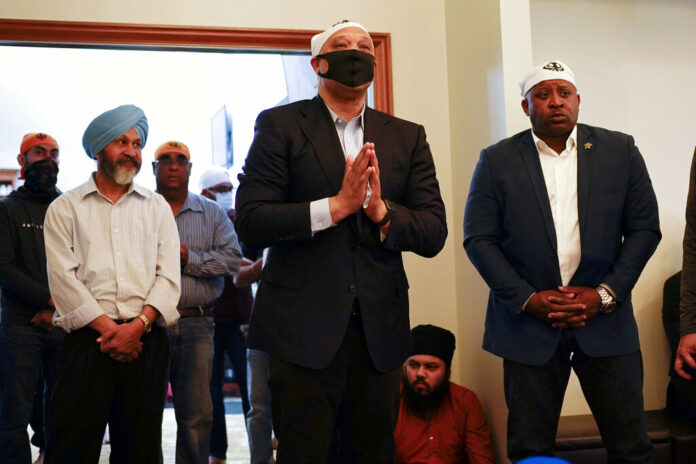
Rep. Andre Carson, D-Ind., speaks with members of the Sikh Coalition at the Sikh Satsang of Indianapolis in Indianapolis, Saturday, April 17, 2021 for a commemoration of the victims of the shooting at a FedEx facility in Indianapolis that claimed the lives of several members of the Sikh community. Photo: AJ Mast / AP
INDIANAPOLIS (AP) — The former employee who shot andkilled eight people at a FedEx facility in Indianapolis legally bought the two rifles used in the attack despite red flag laws designed to prevent such purchases, police said.
A trace of the two guns found by investigators at the scene revealed that suspect Brandon Scott Hole, 19, of Indianapolis, legally bought the rifles last July and September, officials with the Indianapolis police said Saturday.
The police did not say where Hole bought what they described as “assault rifles,” citing the ongoing investigation, but said he was seen using both rifles during the shooting.
Details about the weapons’ make, model and caliber won’t be released until the investigation is complete, said Genae Cook, a spokesperson for the Indianapolis Metropolitan Police Department.
Authorities said Hole shot and killed eight people, four of them from the city’s Sikh community, at the FedEx facility late Thursday before killing himself.
The FBI said agents had questioned Hole last yearafter his mother called police to say her son might commit “suicide by cop.” Officers seized a pump-action shotgun from Hole’s home after responding to the call, according to a police report. Police said the gun was never returned to him.
Republican Sen. Todd Young called Sunday for more mental health services across all level of governments.
“We know that we have a Hoosier family who cried out for help, knowing they had a child who required mental health treatment. We know we have members of our law enforcement community who, for a period of time, responded to that call for help. And we know that in the end, that wasn’t enough,” he told The Associated Press before addressing a gathering at the Gurdwara Sikh Satsang, a Sikh house of worship on the east side of Indianapolis.
Young questioned whether Indiana’s red flag laws “were actually enforced” to prevent the shooting.
Mark Bode, a spokesperson for Indianapolis Mayor Joe Hogsett, said Sunday his office also “continues to monitor closely the findings of the ongoing investigation, and what breakdowns in the red flag law processes may have come into play.”
Indiana has had a “red flag law” allowing police or courts to seize guns from people who show warning signs of violence since 2005. It became one of the first states to enact such a law after an Indianapolis police officer was killed by a man whose weapons had to be returned despite hospitalization months earlier for an emergency mental health evaluation.
The law is intended to prevent people from purchasing or possessing a firearm if they are found by a judge to present “an imminent risk” to themselves or others.
Authorities have two weeks after seizing someone’s weapon to argue in court that the person should not be allowed to possess a gun. Officials have not said whether Hole’s case was brought before a judge. Michael Leffler, a spokesperson for the Marion County Prosecutor, said Sunday that the office is “looking into this matter.”
If Hole had a court hearing and prevailed, state law indicates the shotgun would have been returned to him. If a judge ruled him dangerous or incompetent, however, he should have been barred from buying another gun.
Gaganpal S. Dhaliwal, a member of the Sikh community who also spoke at the gathering Sunday, added that victims’ families want to see “common sense gun laws” and stricter hate crime policies.
“This shooter had a shotgun confiscated, but he was still able to get his hands on rifles,” Dhaliwal said. “ We need to make sure that guns don’t end up in the wrong hands.”
Dhaliwal also called for roughly two dozen fast-tracked visas from the U.S. and Indian governments to allow relatives to travel for funeral ceremonies that will take place in the next two weeks, he said.
Hole was a former employee at the FedEx facility who left his job last year, police said. Authorities have not yet announced a possible motive for the attack.
Hole’s family said in a statement they are “so sorry for the pain and hurt” his actions caused.
About 90% of the workers at the FedEx warehouse near the Indianapolis International Airport are members of the local Sikh community, police said.
The shooting is the deadliest incident of violence collectively in the Sikh community in the U.S. since 2012, when a white supremacist burst into a Sikh temple in Wisconsin and shot 10 people, killing seven.
___
Story: Casey Smith. Casey Smith is a corps member for the Associated Press/Report for America Statehouse News Initiative. Report for America is a nonprofit national service program that places journalists in local newsrooms to report on undercovered issues.
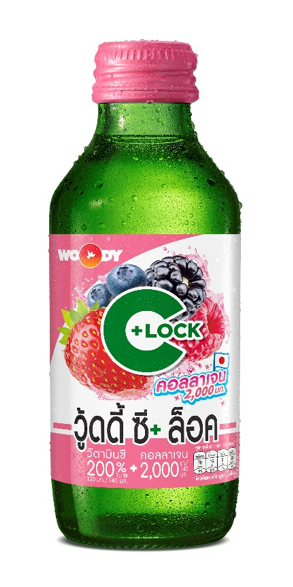
A Woody Drink, a subsidiary under Carabao Group Public Company Limited, are launching their latest vitamin C drink, Woody C+ Lock Collagen Mixed Berry, the first drink in Thailand with 2,000 milligrams of collagen along with 200% vitamin C content. Powered by a 100-million-baht investment, the new product is being offensively launched in every distribution channel and is also endorsed by presenter Peechaya “Min” Wattanamontree to attract consumers in the beauty market and increase the market share. Only 10 months after the launch, Wood C+ Lock has become the number 2 best seller in the vitamin C market with the aspiration to become the number 1 in 3 years.
Ms. Nutchamai Thanombooncharoen, Managing Director of Carabao Group PCL, revealed that the company has successfully tapped into the vitamin C market after the launch of Woody C+ Lock Lemon earlier in March 2020, followed by orange flavor in June. Woody C+ Lock has since ranked number 2 in the health shots market, worth 6,700 million baht, within just 10 months.
Following this success, the increasing market share and the continuing expansion of its consumer base, the company launching Woody C+ Lock Collagen Mixed Berry. The drink will be the first of its kind in Thailand to have as much as 2,000 milligrams of collagen and as high as 200% vitamin C (based on the report by the Foundation for Consumers, released in December 2020). Marketed with the tagline “Radiant skin from collagen and vitamin C in a single bottle’’, Woody C + Lock Collagen Mixed Berry features collagen taken from fish imported from Japan. The new product retails at 15 baht per bottle, the same price as the previous two products and is considered the market’s most competitive price considering the amount of vitamin C and collagen with the newly designed packaging to distinguish each three flavors and create maximum visibility on shelves and chillers nationwide.
The launch also aims to create a new brand image for Woody C+ Lock to expand its customer base in the vitamin C drinks market and, tap into the beauty market and attract skincare loving women, students, office workers and factory workers after successfully creating brand awareness among health-conscious consumers. Woody C+ Lock Collagen Mixed Berry is backed by a 100-million-baht investment, and is heavily promoted through both online and offline channels, marketing activations, modern and traditional trade as well as convenience stores, which are the main distribution channels for vitamin C drinks.
The product is endorsed by presenter, Peechaya “Min” Wattanamontree, an actress with attractive fair, radiant skin. And as a representation of modern women, lively and healthy, Min takes great care of herself, both internally and externally, and is revered as the actress with a “forever baby face”. The first two Woody C+ Lock flavors were endorsed by Vuthithorn” Woody” Milintachinda as brand ambassador.
Ms. Nutchamai also adds that the key success that has driven Woody C + Lock to number 2 in the market within such a short time is its vitamin C content that is currently the highest in the market, the C+ Lock innovation, nitrogen filling and double-lock cap that preserve and prolongs the effectiveness of the vitamin C. The famous brand ambassador, Woody, also effectively communicates the brand’s health benefits to the right target. Combined with suitable marketing plans, Woody C+ Lock has become successful as planned in a very short period of time.
Presently, the functional drinks market is seeing constant growth, due to the new consumer trend for health-boosting products. In 2020, the market was valued at 9,100 million baht, considered a 9% growth. The healthy shot market is worth 6,700 million baht and is considered a 14% growth. However, the highest growing market is the vitamin C shot market, which is worth 4,000 million baht and is considered a 45% growth from last year. One success factor is also Carabao Group’s strategic marketing plans that shake up the market, shifting from passive to offensive marketing. New entrants to the market also have much room to grow and thrive.
The vitamin C drinks market is, so far, the most competitive segment, especially with the strategy of presenters communicating directly to target groups. However, with the company’s distinguished innovation, Carabao Group’s high production standard and high potential distribution network that covers 180,000 retail shops all over Thailand, Woody C+ Lock Collagen Mixed Berry can quicky and successfully penetrate the market and become the top-of-mind product.
Woody C+ Lock Collagen Mixed Berry will be available in convenience stores such as CJ More, 7-Eleven and TooKDee Shops as well as leading stores all over Thailand. The first batch will be shipped out mid-April 2021 and will reach consumers nationwide by the end of April 2021. A Woody Drink, under Carabao Group, expects a 20% market share from Woody C+ Lock products before year end, and to become the number one in the healthy shot market within 3 years.
In the post-pandemic world, Industrial Artificial Intelligence (AI) will come of age as a driving force and enabler of innovative operational applications for capital-intensive industries. Fuelled by significant volatile market forces, this new normal will be anything but business as usual. Combined with shifts in new technologies, the transformational impact of Industrial AI is unprecedented. Companies need to adopt a business-first mentality and applying AI technology to domain-specific industrial challenges, by focusing on critical outcomes. With workforce shifts and a resulting loss of domain expertise, there is an increased adoption of AI and automation across these industries.
With the need to automate operational knowledge, there is a greater need for intelligence-rich applications. A lack of in-house data science skills continues to be a key barrier to AI adoption. Industrial businesses can mitigate this challenge with the convergence of AI, data science, purpose-build software, as well as domain expertise – to overcome skills shortage and deploy built-for-industry AI applications.
Benefitting from Industrial AI
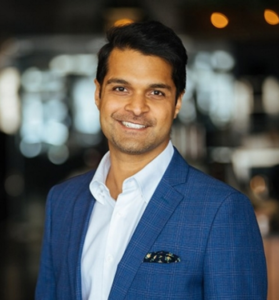
Adi Pendyala, Senior Director, Market Strategy, Aspen Technology.
Embedded AI applications enable users to carry out domain-specific operations with increased accuracy, quality, reliability, and sustainability across the industrial asset lifecycle. The biggest benefit of Industrial AI is a significant increase in productivity, as well as benefits in sustainability. The next-generation asset optimization solutions that have embedded AI can overcome resource barriers, which significantly reduces the need for organizations to recruit many data scientists and reap benefits. Efficiency and value capture are cornerstones in this economy. For example, with a relatively fragile supply chain, industrial companies cannot risk errors and machine failures slowing them down.
Predictive and prescriptive maintenance technology, with Machine Learning (ML) and Industrial AI, can identify precise failure patterns to predict equipment degradation weeks or even months in advance. This ensures that action can be taken to mitigate unplanned downtime, as well as safety and environmental risks. Companies are implementing specific process metrics that consider emissions and resource use, as well as efficiency enhancements through digital technology. The International Energy Agency (IEA) has found that Industrial AI and digital solutions can boost energy efficiency by up to 30% for industrial operations. Multi-dimensional optimization, predictive analytics, and other digital solutions also help in meeting sustainability goals.
Artificial Intelligence of Things
According to Maciej Kranz, a leading technologist, AI, and the Industrial Internet of Things (IIoT), these technologies become transformational when they integrate, interconnect and interwork – with intelligence – to solve complex industry problems. Collectively, they are like the body and brain of industrial digital transformation: IIoT is the body, creating and transmitting data from a variety sources that is sometimes acted upon, while AI is the brain, turning data into intelligence for smarter decisions and enabling the digital future of industrial organizations.
The confluence of these technological forces gives rise to a new digital solution category – the Artificial Intelligence of Things (AIoT) – that centres on unlocking the hidden business value in industrial data. This category describes the combination of AI technologies with the IIoT to enable the next generation of Industrial AI infrastructure, allowing organizations to achieve more efficient IIoT operations, enable seamless human-machine workflows, harmonize industrial data management, and rapidly transform raw data into tangible business outcomes.
According to Accenture, nearly 69% of executives acknowledge they know how to pilot a program but struggle to scale their Industrial AI strategy across the enterprise. Organization strategy needs to start with the identification of business problems, corporate objectives, and strategic goals. Companies need to democratize the application of AI by focusing on business outcomes, making the technology valuable and actionable to create real business value.
Scaling Towards an AIoT Strategy
Sharp market volatility means capital-intensive industries have to be more agile in an unprecedented way to survive and thrive. Companies need to capitalize on the rapid convergence of IT and OT. The rise of the digital executive is reshaping the digital transformation strategy of industrial organizations. There is a critical and growing need to access industrial analytics and actionable insights in making business decisions across the enterprise. Organizations need to focus on strategic industrial data management, as well as using AI-enabled technologies to unlock the hidden value in these previously unoptimized and undiscovered sets of industrial data.
Industrial organizations are increasing investment in lowering barriers to AI adoption by deploying fit-for-purpose Industrial AI applications that combine data science and AI with software and domain expertise. This is key to overcoming a lack of in-house skills and drastically reduce the need for an army of data scientists. To scale, many enterprises are adopting new measures to reduce complexity in interoperability, overcome information silos and harmonize towards a cloud-ready infrastructure that bridges legacy systems with next-generation solutions.
A Business-First AIoT Ecosystem
In serving as the foundational infrastructure for industrial companies to evolve and accelerate towards the Self-Optimizing Plant, the Aspen AIoT also addresses organizational challenges today. First, the main challenge lies in data integration and mobility. Between 60 – 73% of enterprise data is not utilized and exacerbated by a lack of scalable data infrastructure to power Industrial AI models. Organizations need to access and fully leverage integrated data across the enterprise. A cloud-ready infrastructure is necessary to scale in AI with the right tools, infrastructure, and workflows to power Industrial AI across the solution lifecycle. This is a critical success factor for organizations to mature beyond sporadic AI proof-of-concepts to an enterprise-wide Industrial AI strategy.
Secondly, Deloitte’s recent article on the state of AI in the enterprise highlighted “modernizing our data infrastructure for AI” as the top reason for 20% of the companies surveyed to increase competitive advantage via AI. The AIoT Hub provides a cloud-ready, robust, and highly scalable infrastructure for Industrial AI applications to realize the vision for the Self-Optimizing Plant. Third, industrial organizations need to translate real-time data into faster, smarter, profitable business decisions. The AIoT Hub enables access to real-time data, analytics and enterprise-wide workflow and governance.
Finally, enterprises need a purpose-built, fully integrated AI environments for data scientists to collaborate with domain experts to accelerate the transformation of raw data into purposefully guided AI/ML products, driven by fit-for-industry algorithms and models. The AIoT Hub provides an embedded workbench for feature engineering, training, rapidly turning ML models into products, as well as supporting version upgrades and collaboration. Data scientists and domain experts, across customers and partners, are empowered to collaborate and build their own data-rich AI apps and models.
Indeed, 2021 looks set to be a year where Industrial AI goes mainstream – powered by a robust AIoT strategy. This bullish sentiment is further bolstered with a 2021 Artificial Intelligence Award from the Business Intelligence Group for the AIoT Hub’s ability to accelerate optimal ROI and drive industrial digital transformation.
Britain's Queen Elizabeth II sits alone in St. George’s Chapel during the funeral of Prince Philip, the man who had been by her side for 73 years, at Windsor Castle, Windsor, England, Saturday April 17, 2021. Prince Philip died April 9 at the age of 99 after 73 years of marriage to Britain's Queen Elizabeth II. (Jonathan Brady/Pool via AP)
WINDSOR, England (AP) — Queen Elizabeth II is sitting alone in the quire of St. George’s Chapel during the funeral of Prince Philip, the man who had been by her side for 73 years.
Philip, who died April 9 at the age of 99, was being laid to rest in the Royal Vault at Windsor Castle after a funeral service steeped in military and royal tradition — but also pared down and infused with his own personality. People across Britain have observed one minute of silence in honor of Philip just before his royal ceremonial funeral got under way.
Following strict social distancing rules during the pandemic, the queen set an example even in grief, sitting apart from family members arrayed around the church. Just 30 mourners were allowed to attend the service at St. George’s on the grounds of Windsor Castle, where the queen has stayed to avoid getting COVID-19.
Other royals who are in family bubbles are sitting together.
From front left, Britain’s Prince Charles, Princess Anne, Prince Andrew. Prince Edward, Prince William, Peter Phillips, Prince Harry, Earl of Snowdon and Tim Laurence follow the coffin in a ceremonial procession for the funeral of Britain’s Prince Philip inside Windsor Castle in Windsor, England Saturday April 17, 2021. Photo: Alastair Grant / Pool via AP
The service began with Archbishop of Canterbury Justin Welby entering the chapel ahead of the coffin, followed by Philip’s children and three of his eight grandchildren, as a four-member choir sang “I am the resurrection and the life.”
THIS IS A BREAKING NEWS UPDATE. AP’s earlier story follows below.
WINDSOR, England (AP) — Military bands played and Queen Elizabeth II joined a procession Saturday at Windsor Castle ahead of a funeral where her husband Prince Philip was being remembered as a man of “courage, fortitude and faith.” The service was saluting both his service in the Royal Navy and his support for Britain’s monarch over three quarters of a century.
Philip, who died April 9 at the age of 99 after 73 years of marriage, was being laid to rest in the Royal Vault at Windsor Castle after a funeral service steeped in military and royal tradition — but also pared down and infused with his own personality.
The coffin arrives at St George’s Chapel for the funeral of Britain’s Prince Philip inside Windsor Castle in Windsor, England, Saturday, April 17, 2021. Photo: Kirsty Wigglesworth / Pool via AP
Coronavirus restrictions mean that instead of the 800 mourners included in the longstanding plans for his funeral, there will be only 30 inside the castle’s St. George’s Chapel, including the widowed queen, her four children and her eight grandchildren.
His coffin emerged from the State Entrance of Windsor Castle as those taking part in the ceremonial procession for his funeral took their places. It was loaded on a specially adapted Land Rover, designed by Philip himself, for the eight-minute journey to St. George’s Chapel. Senior military commanders lined up in front of the vehicle, with members of the royal family following behind.
The queen rode in a state Bentley at the rear of the procession. The entire procession and funeral was taking place out of public view within the grounds of the castle, a 950-year-old royal residence 20 miles (30 kilometers) west of London. It will be shown live on television.
Members of the 1st Battalion Grenadier Guards place the coffin of Britain’s Prince Philip onto a modified Jaguar Land Rover in the Quadrangle at Windsor Castle in Windsor, England, Saturday, April 17, 2021 ahead of the funeral of Britain’s Prince Philip. Prince Philip died April 9 at the age of 99 after 73 years of marriage to Britain’s Queen Elizabeth II. Photo: Adrian Dennis/Pool via AP
Under spring sunshine, some locals stopped outside the castle to leave flowers on Saturday, but people largely heeded requests by police and the palace not to gather because of the coronavirus pandemic.
Philip’s coffin coffin was draped in his personal standard, and topped with his Royal Navy cap and sword and a wreath of flowers.
The funeral will reflect Philip’s military ties, both as a ceremonial commander of many units and as a veteran of war. More than 700 military personnel are taking part, including army bands, Royal Marine buglers and an honor guard drawn from across the armed forces.
Those marching into place included soldiers of the King’s Troop Royal Horse Artillery, who were firing a gun salute, Guards regiments in scarlet tunics and bearskin hats, Highlanders in kilts and sailors in white naval hats.
Military personnel in parade dress uniform march past flowers which where placed on the grass for the funeral of Britain’s Prince Philip inside Windsor Castle in Windsor, England, Saturday, April 17, 2021. Photo: Justin Tallis/Pool via AP
Philip was deeply involved in the funeral planning, and aspects of it reflect his personality, including his love of the rugged Land Rover. Philip drove several versions of the four-wheel drive vehicle for decades until he was forced to give up his license at 97 after a crash. His body will be carried to the chapel on a modified Land Rover Defender that he designed himself.
The children of Philip and the queen — heir to the throne Prince Charles, Princess Anne, Prince Andrew and Prince Edward — will walk behind the hearse, while the 94-year-old queen will travel to the chapel in a Bentley car.
Grandsons Prince William and Prince Harry will also walk behind the coffin, although not side by side. The brothers, whose relationship has been strained amid Harry’s decision to quit royal duties and move to California, will flank their cousin Peter Phillips, the son of Princess Anne.
The King’s Troop Royal Horse Artillery arriving at Windsor Castle in preparation for the Gun Salute on the palace grounds, before the funeral of Britain’s Prince Philip, in Windsor, England, Saturday, April 17, 2021. Photo: Antonio Olmos/Pool photo via AP
The moment is likely to stir memories of the image of William and Harry at 15 and 12, walking behind their mother Princess Diana’s coffin in 1997, accompanied by their grandfather Philip, in a London ceremony televised around the world.
Armed forces bands played hymns and classical music before the funeral service, which was being preceded by a nationwide minute of silence.
Inside the Gothic chapel, the setting for centuries of royal weddings and funerals, the service was to be simple and somber. There will be no sermon, at Philip’s request, and no family eulogies or readings, in keeping with royal tradition. But Dean of Windsor David Conner will say the country has been enriched by Philip’s “unwavering loyalty to our queen, by his service to the nation and the Commonwealth, by his courage, fortitude and faith.”
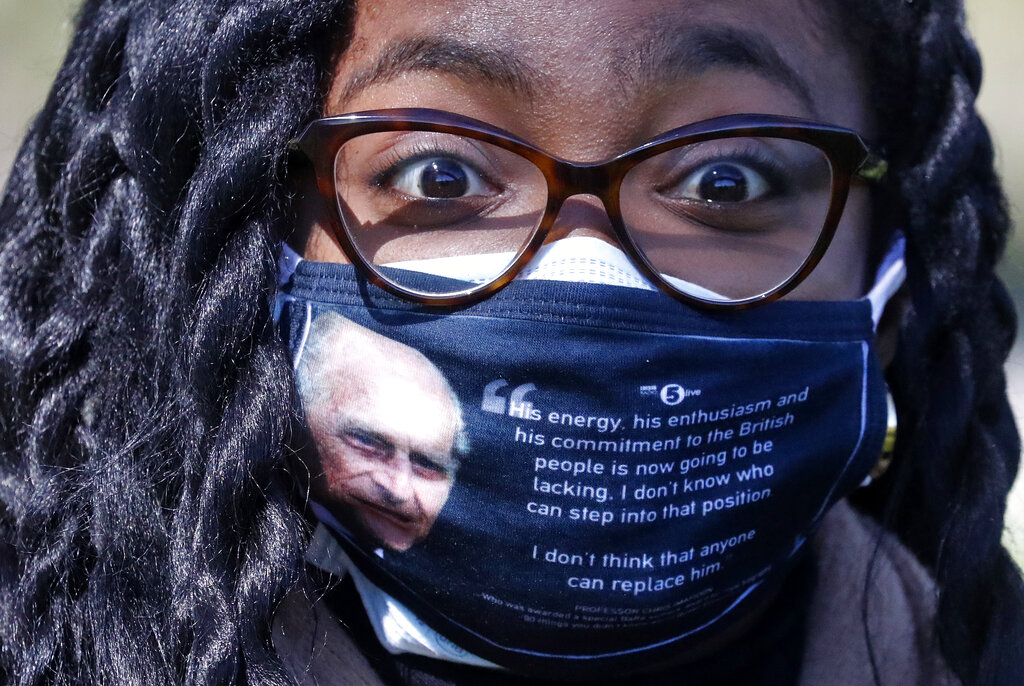
A woman wears a face covering with a picture of the Duke of Edinburgh as he walks along the Long Walk in Windsor, Saturday, April 17, 2021. Photo: Frank Augstein / AP
Philip spent almost 14 years in the Royal Navy and saw action in the Mediterranean Sea, the Indian Ocean and the Pacific during World War II. Several elements of his funeral have a maritime theme, including the hymn “Eternal Father, Strong to Save,” which is associated with seafarers and asks God: “O hear us when we cry to thee/For those in peril on the sea.”
As Philip’s coffin is lowered into the Royal Vault, Royal Marine buglers will sound “Action Stations,” an alarm that alerts sailors to prepare for battle — a personal request from Philip.
Former Bishop of London Richard Chartres, who knew Philip well, said the prince was a man of faith, but liked things kept succinct.
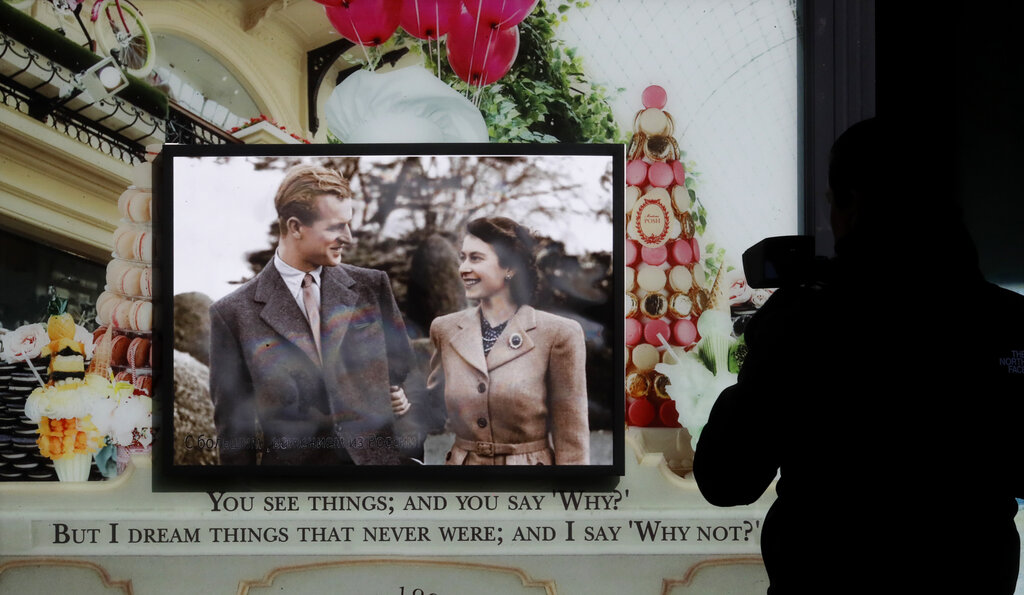
A picture of Britain’s Prince Philip with Queen Elizabeth ahead of his funeral in Windsor, England Saturday April 17, 2021. Philip died April 9 at the age of 99 after 73 years of marriage to Britain’s Queen Elizabeth II. Coronavirus restrictions mean there will be only 30 mourners for the service, including the widowed queen, her four children and her eight grandchildren. Photo: Frank Augstein / AP
“He was at home with broad church, high church and low church, but what he really liked was short church,” Chartres told the BBC. “I always remember preaching on occasions which he was principal actor that the instruction would always come down: ‘No more than four minutes.’”
Along with Philip’s children and grandchildren, the 30 funeral guests include other senior royals and several of his German relatives. Philip was born a prince of Greece and Denmark and, like the queen, is related to a thicket of European royal families.
Mourners have been instructed to wear masks and observe social distancing inside the chapel, and not to join in when a four-person choir sings hymns. The queen, who has spent much of the past year isolating with her husband at Windsor Castle, will sit alone.
Artist Kaya Mar carries a portrait of Prince Philip ahead of the Prince’s funeral in Windsor, England Saturday April 17, 2021. Philip died April 9 at the age of 99 after 73 years of marriage to Britain’s Queen Elizabeth II. Photo: Frank Augstein / AP
Ahead of the funeral, Buckingham Palace released a photo of the queen and Philip, smiling and relaxing on blankets in the grass in the Scottish Highlands in 2003. The palace said the casual photo was a favorite of the queen.
For decades, Philip was a fixture of British life, renowned for his founding of the Duke of Edinburgh’s Awards youth program and for a blunt-spoken manner that at times included downright offensive remarks. He lived in his wife’s shadow, but his death has sparked a reflection about his role, and new appreciation from many in Britain.
“He was a character, an absolute character,” said Jenny Jeeves as she looked at the floral tributes in Windsor. “He was fun, he was funny. Yes, he made quite a few gaffes, but it depends which way you took it really. Just a wonderful husband, father, and grandfather, and a good example to all of us, really.”
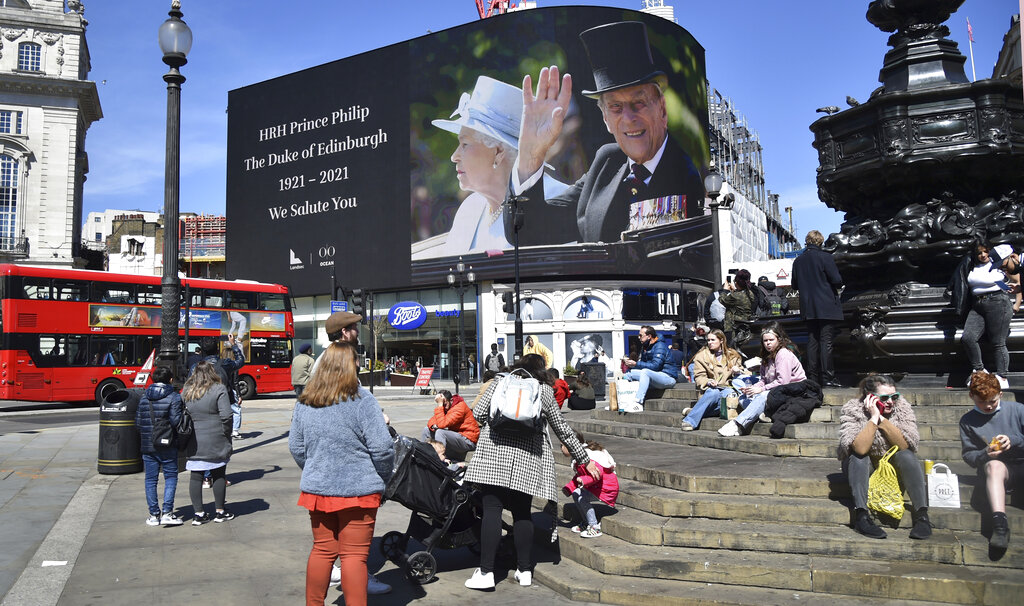
Images of Britain’s Prince Philip are displayed on a giant screen at Piccadilly Circus, London Saturday, April 17, 2021. Prince Philip, husband of Queen Elizabeth II, died Friday April 9 aged 99. His funeral service is taking place at St. George’s Chapel inside Windsor Castle Saturday. Photo: Rui Vieira / AP
___
Story: Danica Kirka and Jill Lawless. Jill Lawless reported from London.































 Food security: the company’s production line must not be disrupted, to prevent food shortages.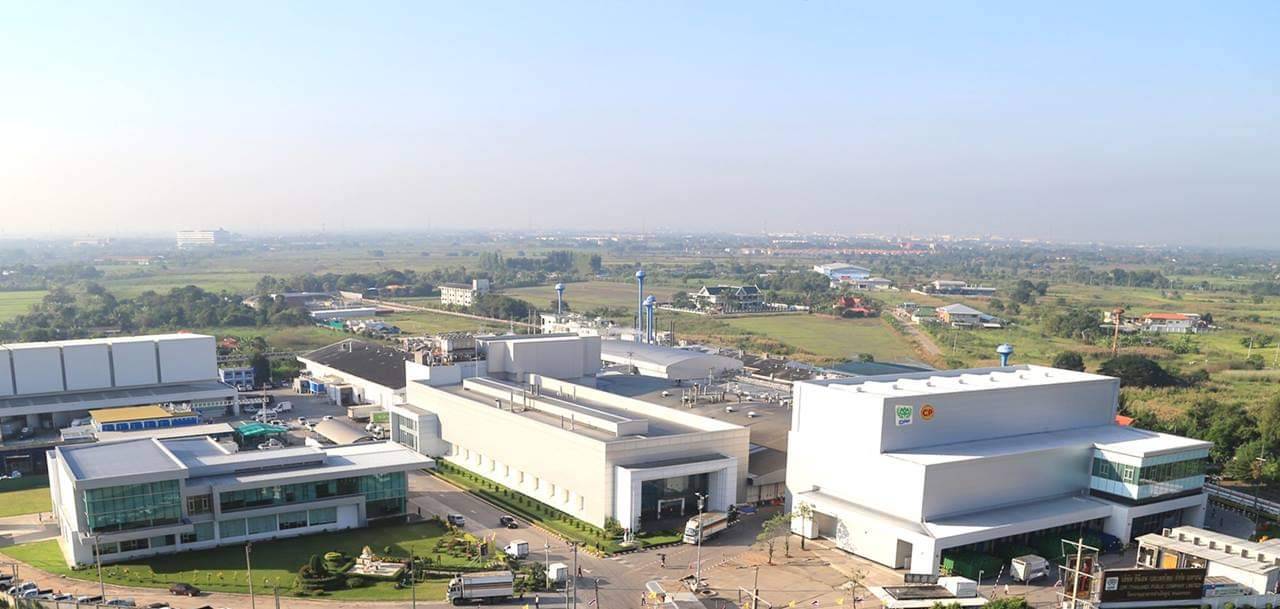




 Sharp market volatility means capital-intensive industries have to be more agile in an unprecedented way to survive and thrive. Companies need to capitalize on the rapid convergence of IT and OT. The rise of the digital executive is reshaping the digital transformation strategy of industrial organizations. There is a critical and growing need to access industrial analytics and actionable insights in making business decisions across the enterprise. Organizations need to focus on strategic industrial data management, as well as using AI-enabled technologies to unlock the hidden value in these previously unoptimized and undiscovered sets of industrial data.