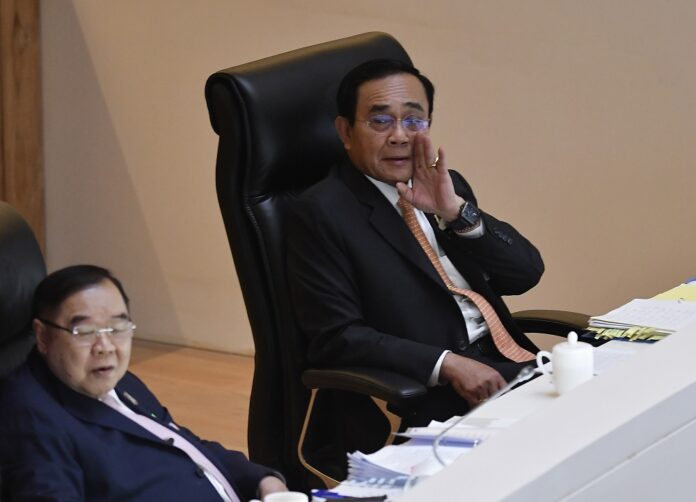
Prime Minister Prayuth Chan-ocha gestures during a no-confidence debate at the parliament in Bangkok, Thailand, Tuesday, Feb. 16, 2021.
BANGKOK (AP) — Opposition parties in Thailand on Tuesday began debating a no-confidence motion against Prime Minister Prayuth Chan-ocha and nine members of his Cabinet who face accusations of mismanaging the economy, bungling the provision of COVID-19 vaccines, abusing human rights and corruption.
It is the second no-confidence debate that Prayuth’s government has faced since taking office in July 2019. In February last year, Prayuth and five Cabinet ministers easily turned back a no-confidence vote in the lower house. All 10 being grilled this year are expected to coast through again with the backing of the governing coalition.
The current debate is scheduled over four days, with voting to take place Saturday.
On the first day, the opposition parties concentrated on Prayuth, accusing him of responsibility for the government’s alleged failures.
“I’m not afraid of anything,” Prayuth said in defending himself. “This is a good opportunity for both sides to do something together for our country and people. And I am ready to clarify every allegation.”
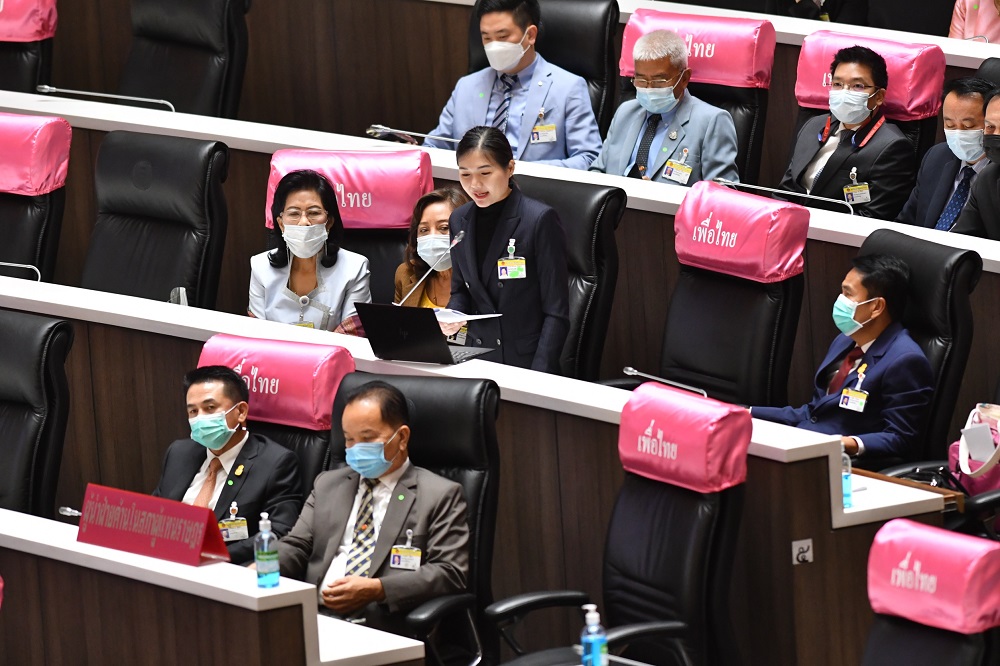
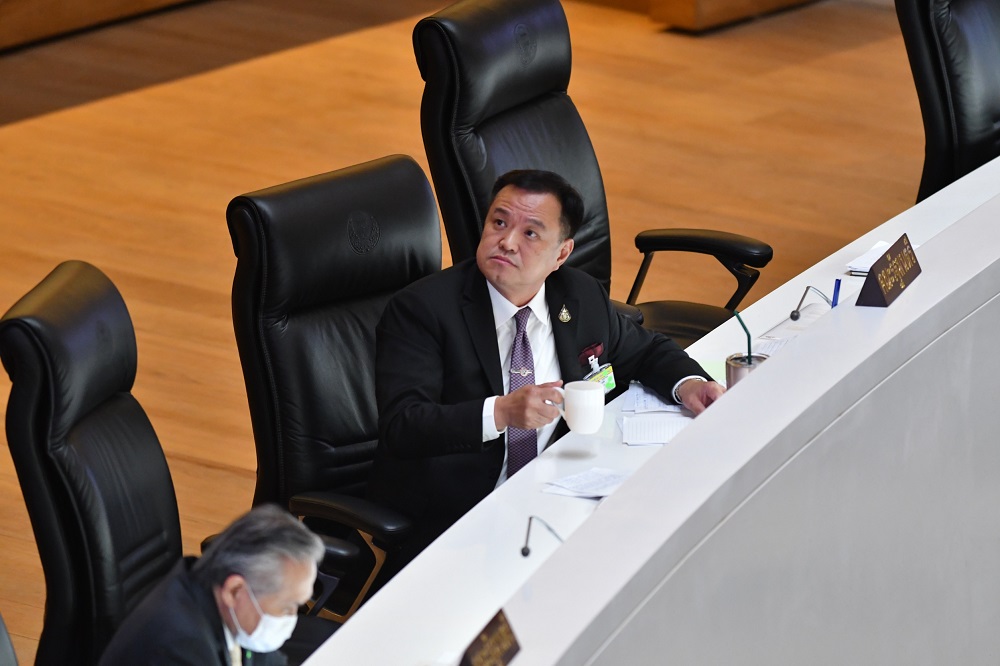
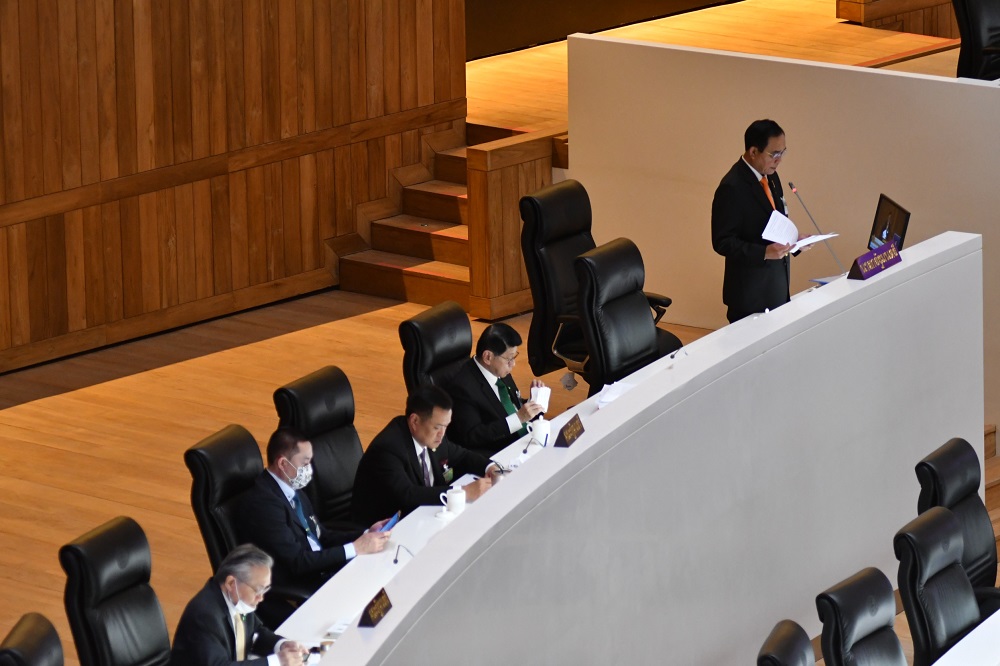
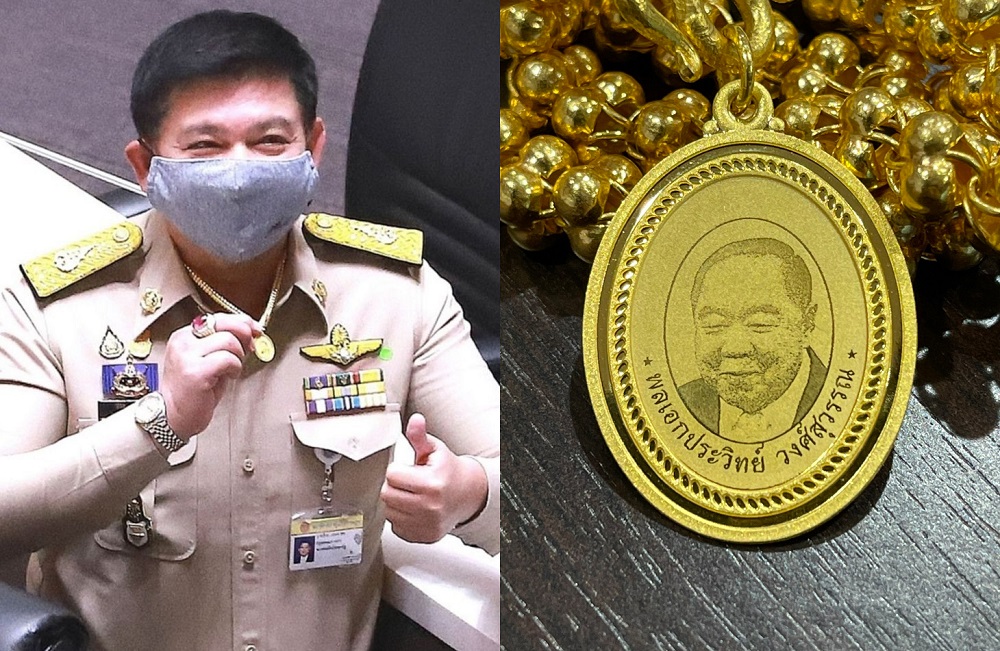
Opposition politicians speak at a no-confidence debate at the parliament in Bangkok, Thailand, Tuesday, Feb. 16, 2021.Health minister Anutin Charnvirakul looks at a screen during a no-confidence debate at the parliament in Bangkok, Thailand, Tuesday, Feb. 16, 2021.Prime Minister Prayut Chan-o-cha speaks at a no-confidence debate at the parliament in Bangkok, Thailand, Tuesday, Feb. 16, 2021.Pro-government Phalang Pracharath Party lawmaker Sira Jenjaka shows his amulet depicting Deputy Prime Minister Prawit Wongsuwan to reporters during a no-confidence debate at the parliament in Bangkok, Thailand, Wednesday, Feb. 17, 2021.
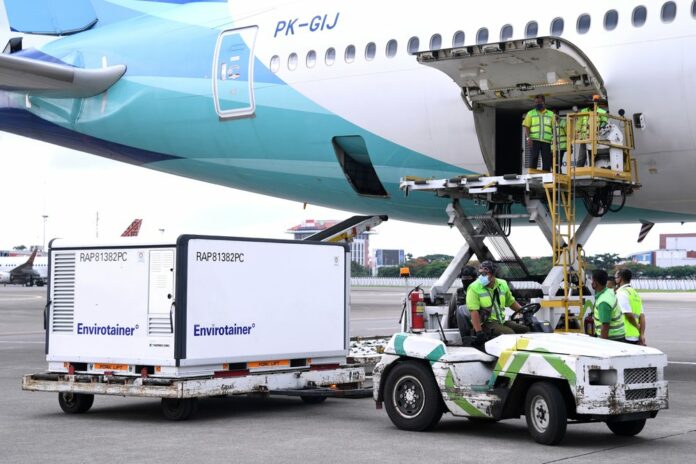
In this photo released by the Indonesian Presidential Palace, workers unload a container containing experimental coronavirus vaccines made by the Chinese company Sinovac from the cargo bay of a Garuda Indonesia plane at the Soekarno-Hatta International Airport in Tangerang, Indonesia, Tuesday, Jan, 12, 2021. (Indonesian Presidential Palace via AP)
BANGKOK — The first shipment of vaccine against COVID-19 for Thailand will be brought from China on a Thai Airways flight next week, the airline said Tuesday.
The cargo flight, numbered TG675, will depart Beijing in the morning of Feb. 24 and land at Suvarnabhumi Airport at around 11am, along with 200,000 doses of vaccine developed by Chinese firm Sinovac, according to a statement by Thai Airways.
The statement, which quotes Thai Airways director Chaiyapruk Didyasarin, said a specialized freezer and experts will be onboard to ensure that the vaccine is kept in ideal condition during the flight.
“We are deeply proud to participate in the mission to transport the vaccine against COVID-19 to the Thais,” Chaiyapruk said.
Health minister Anutin Charnvirakul told reporters earlier this week that the shipment will undergo the necessary inspection for a formal approval before the doses can be distributed. He did not mention when that would happen.
The government said it has ordered 2 million doses from Sinovac, which will be handed out to health professionals and vulnerable groups in the provinces hardest hit by the coronavirus. The rest of the public will receive up to 61 million doses developed by British firm AstraZeneca, according to health authorities.
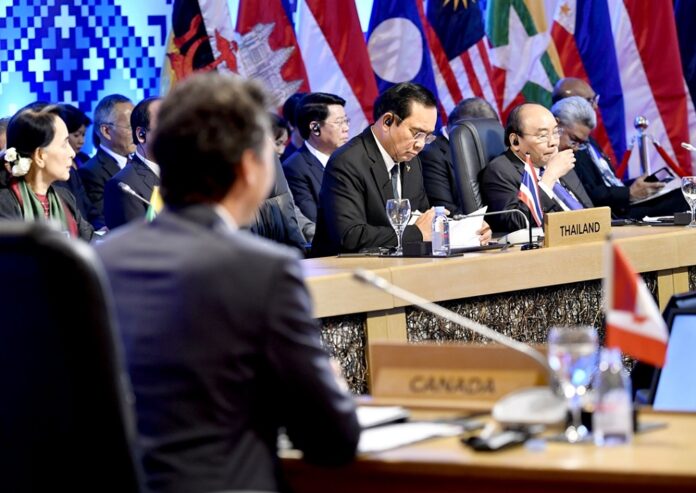
Photo released by the government shows Prime Minister Prayut Chan-o-cha attending a meeting with Canadian Prime Minister Justin Trudeau and ASEAN leaders in Manila, the Philippines, on Nov. 14, 2017.
By Sarah Taylor, the Ambassador of Canada to Thailand.
As we celebrate 60 years of diplomatic relations between Thailand and Canada in 2021, now is a good time to take concrete measures to bring our countries closer.
Thailand and Canada are both trading nations. Trade improves the standard of living of our
respective citizens. These outcomes are improved by market diversification and robust and predictable trading rules. Canada, as a middle power and defender of the rules-based international system, is at the forefront of several initiatives to modernise existing institutions and trade agreements to reflect the realities of the 21st century.
We have, for instance, led on the creation of the Ottawa Group, comprised of 13 partners including Japan, South Korea, and Singapore, to reform the World Trade Organization and address specific challenges that are putting the rules-based trading system under stress.
We also pushed for a modified and more inclusive version of the Trans-Pacific Partnership which, as the Comprehensive and Progressive Agreement for Trans-Pacific Partnership (CPTPP), is now in force for seven out of its 11 signatories, including Japan, Vietnam, Mexico, Australia and Singapore.
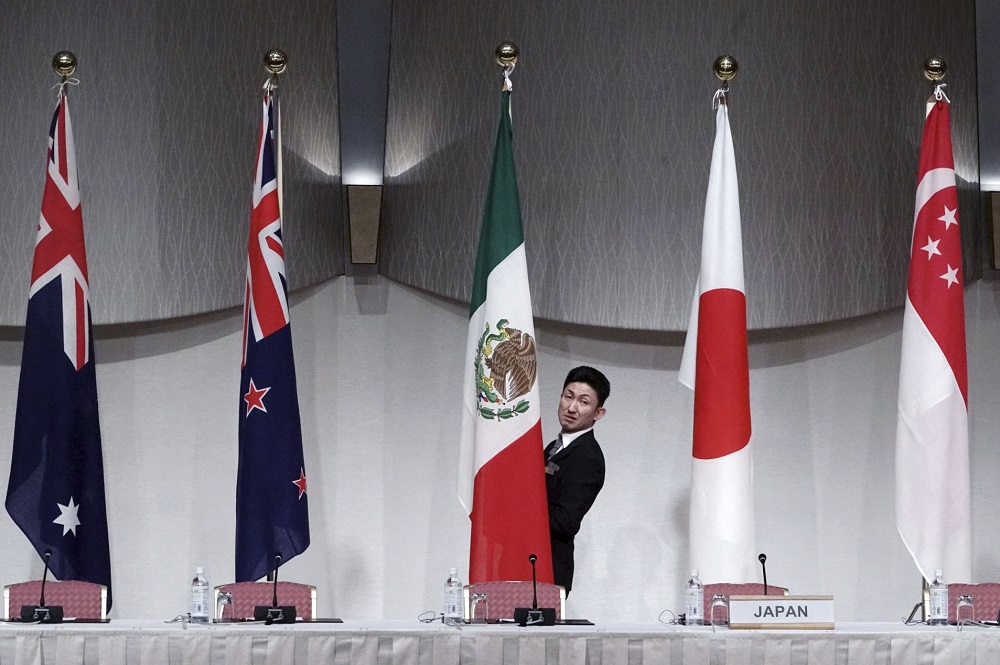
A staff adjusts national flags prior to a joint press conference of the Comprehensive and Progressive Trans-Pacific Partnership (CPTPP) in Tokyo, Japan, in 2019. Image: AP.
With China, South Korea and the United Kingdom having publically indicated they are considering membership in this trade pact, momentum is building.
The trade pact sets common rules for 500 million consumers and underlying regional supply chains that span the Asia-Pacific region, making trade in goods and services more predictable and transparent. Improving ease of doing business and providing certainty will be all the more vital as countries work to grow their economies following COVID-19. One of the ways the CPTPP does this is by levelling the playing field for all, especially SMEs, which will be key drivers in this recovery phase.
The CPTPP’s comprehensive tariff elimination and provisions to non-tariff barriers could offer advantageous conditions for trade beyond what the Regional Comprehensive Economic Partnership (RCEP) offers.
Free trade agreements often lead to lively domestic discussions on the benefits of further liberalisation. Canada, in the lead-up to ratifying CPTPP, was no exception. This is why CPTPP has dedicated chapters and provisions to ensure the benefits of trade are widely shared, including with those who have historically not always benefitted fully from such agreements.
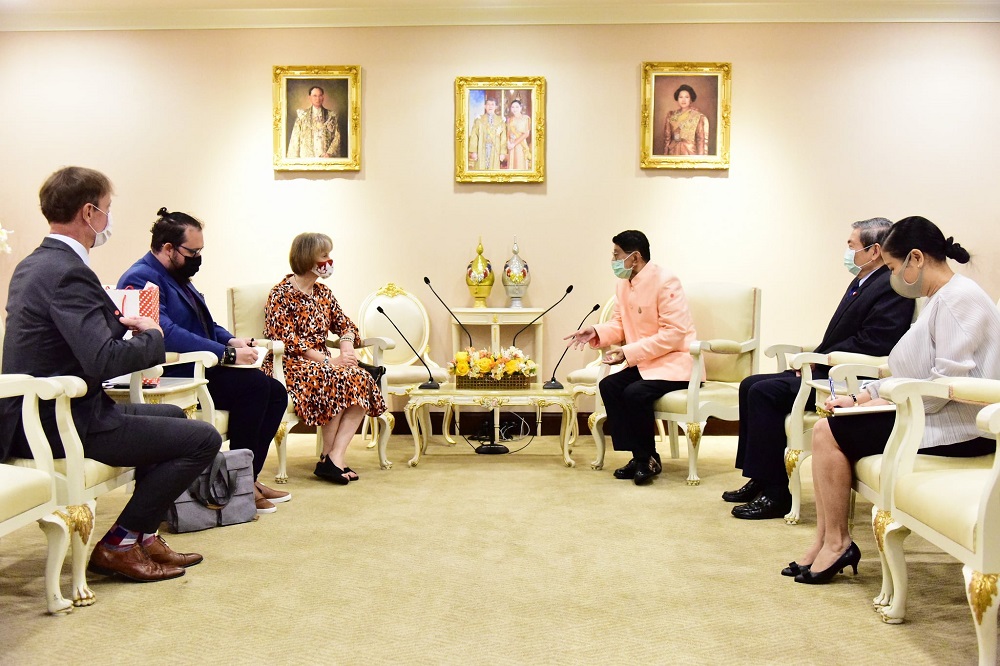
Canadian ambassador Sarah Taylor meets Deputy Prime Minister Wissanu Krea-ngam at Government House on Sept. 3, 2020. Image: Embassy of Canada to Thailand
The agreement also includes enforceable provisions for labour and the environment, features which Canada sees as key to next generation trade agreements that provide benefits beyond simple tariff reductions.
CPTPP also affirms each country’s ability to balance commitments in areas such as intellectual property with other important domestic public policy objectives, such as promoting access to medicines. Canada is open to sharing its experiences in promoting this balance, including with respect to the protection of plant varieties.
As a significant market with expansive global connections, Canada offers many opportunities for business. Canada is the world’s 9th largest economy and the only G7 country with trade agreements covering Asia, North America, and Europe. In 2019, Charoen Pokphand Group invested close to CAD500 million to purchase an agri-food company in Winnipeg, Canada.
This major investment, the first of its kind by a Thai food company in Canada, is a reminder that Thai companies can take advantage of the open, competitive, and innovative Canadian market.
Thailand is one of the most advanced economies of Southeast Asia. However, the Thai economy is particularly vulnerable to external shocks due to its heavy dependence on exports and tourism.
The road to recovery after the COVID-19 pandemic could be long and painful. Having played a leadership role during its chairmanship of ASEAN in 2019, the Thai government has reason to celebrate now that RCEP has reached the ratification stage. RCEP is a significant agreement in advancing trade liberalisation and the rules-based order in Asia at a time of growing geopolitical uncertainty.
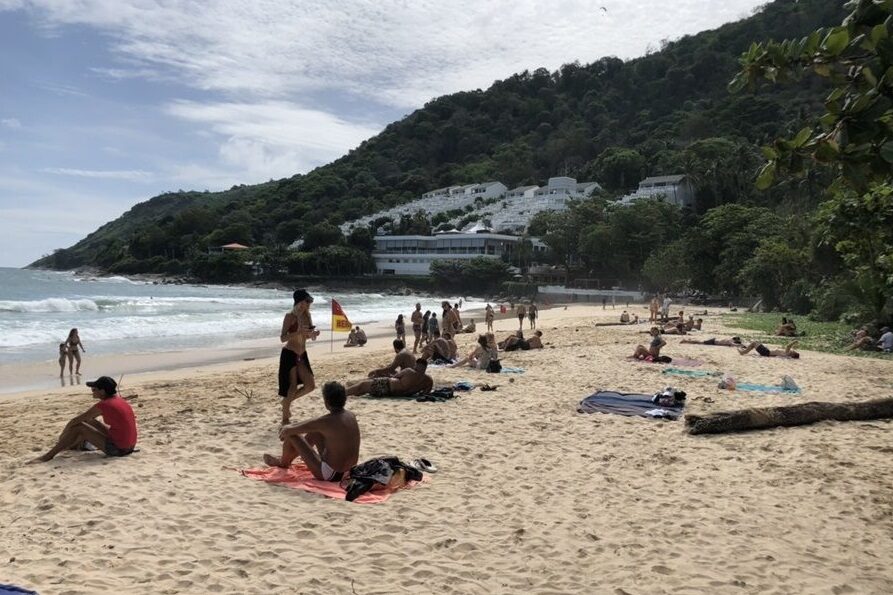
Few tourists are seen on a beach amid the coronavirus pandemic in Phuket province on June 9, 2020.
With RCEP concluded, Thailand can consider additional ways to support its post-COVID-19 recovery, including by strengthening Thailand’s position in regional supply chains and its appeal as an attractive investment destination through the CPTPP.
Our world is deeply interconnected, as we have seen throughout this difficult pandemic year. As we prepare for the recovery phase, now is a good time to consider how we can strengthen the rules-based trading system to ensure that the economic pain brought by COVID-19 remains temporary, and that we build back better, together.
Participation in CPTPP could be an option for Thailand as it seeks to create new opportunities for Thais and to enhance its position within the global trading system.
Canada welcomes interest in accession from any economy that can meet CPTPP’s rules and commitments, and looks forward to continuing to work with Thailand to advance rules-based trade in support of sustainable economic recovery.
About the author
Dr. Sarah Taylor is the Ambassador of Canada to Thailand and Laos. She previously served as a diplomat to the People’s Republic of China, and had a background in archaeology.
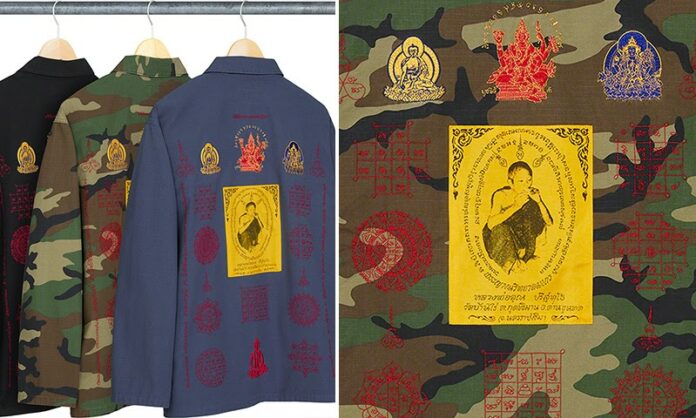
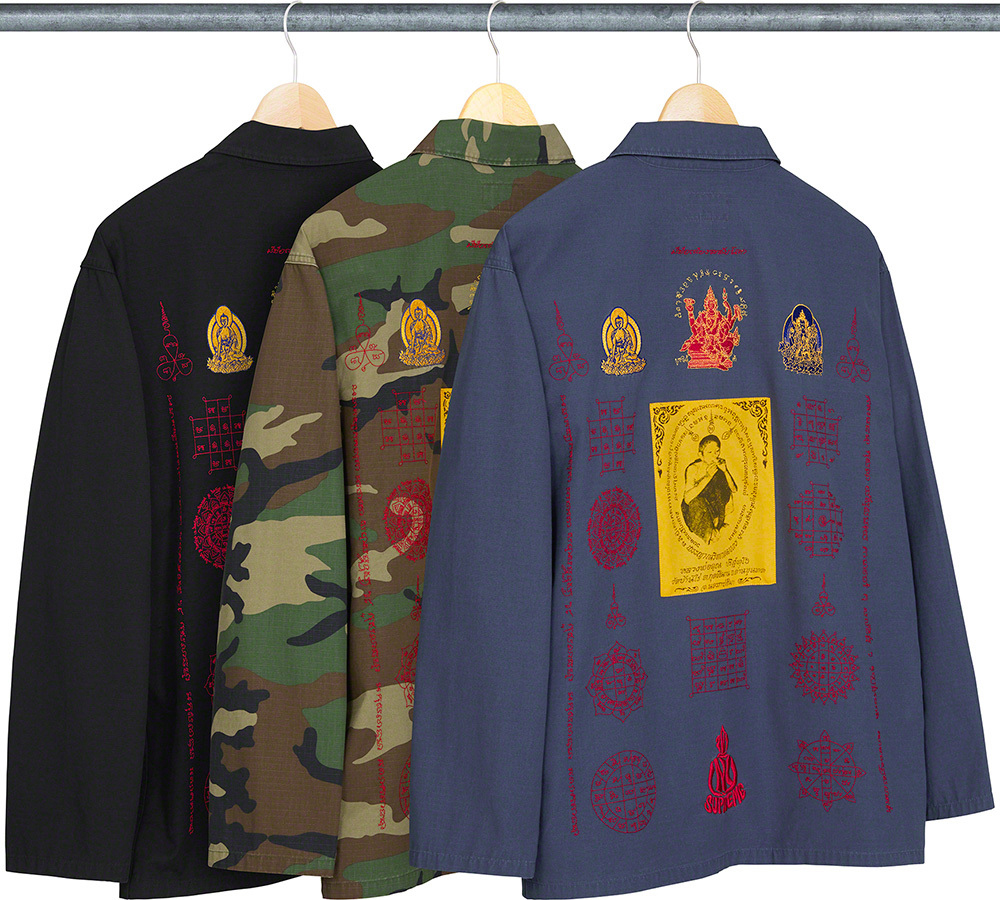
Supreme’s Blessings Ripstop Shirts, which feature Luang Por Koon. Photo: Supreme / Website
BANGKOK — A widelyrevered Buddhist monk who died in 2015 lives on… in the latest spring collection released by American clothing brand Supreme.
The “Blessings Ripstop Shirt” from Supreme preview features an image of Luang Por Koon along with magical yant, delighting many Thai customers – although the temple in the northeast where he resided said on Wednesday that his image was used without permission.
“When I first saw it, I had to rub my eyes to double check,” wrote Soul4Street, a street fashion page followed by more than 441,000 people.
“This means, we can’t miss buying one. Let’s wait and see how much the price will be at the next drop. If you’re planning to buy, keep that money in your hand. Sathu!”
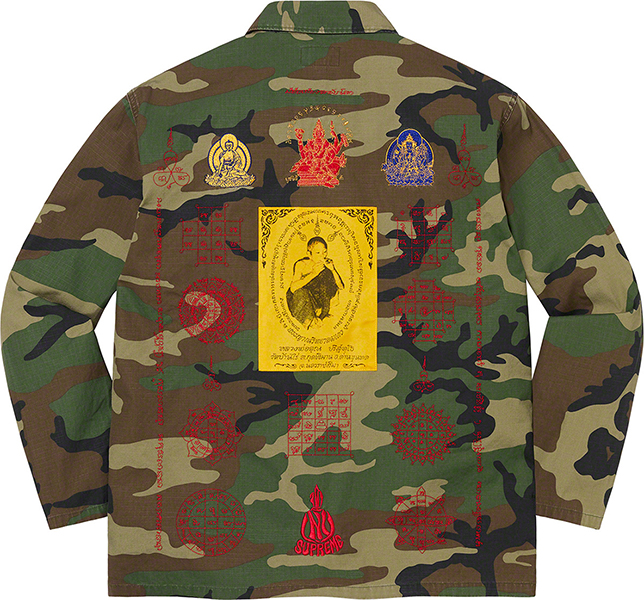
The shirt comes in ripstop cotton fabric in three colors: camouflage, navy, and black. On the back is a yellow holy cloth that has a photograph of the monk squatting and smoking, one of the most popular pictures of Luang Por Koon.
The image is surrounded by several Thai incantation tattoo designs, or yant.
Supreme’s Blessings Ripstop Shirt, which features Luang Por Koon. Photo: Supreme / Website
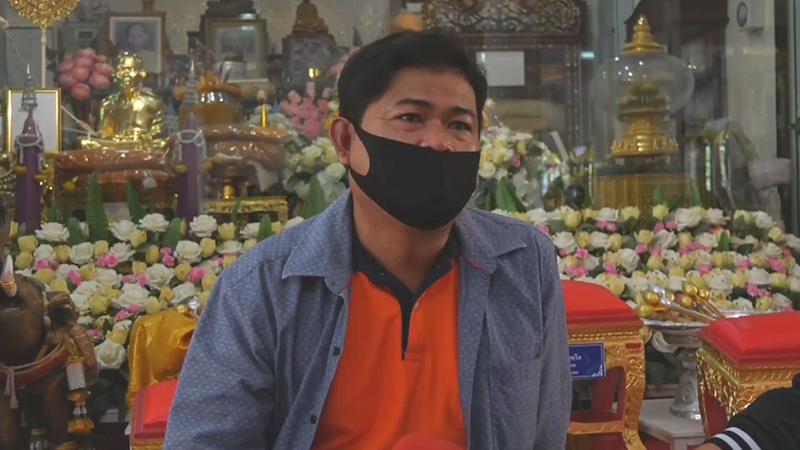
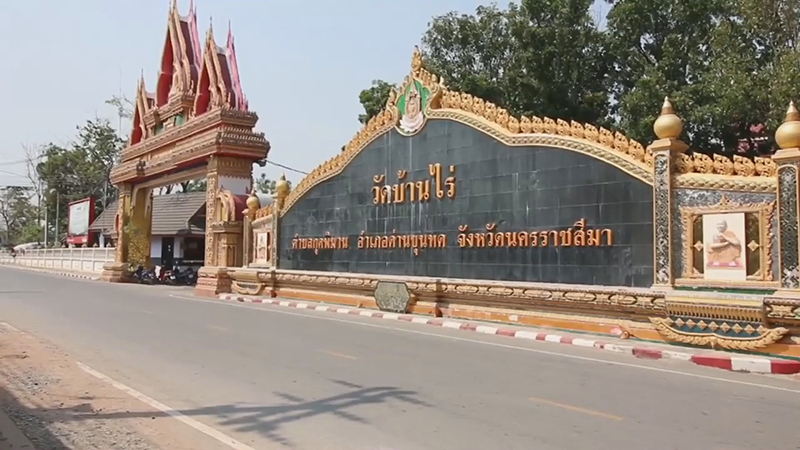
Despite the largely positive comments, not everyone was elated. Thawatchai Saenprasit, an accountant of Wat Ban Rai in Korat where the monk had been an abbot, said the American brand had not asked for permission from the temple for the usage of his image.
“Usually, if people were to produce shirts with his image, they have to ask the temple for permission first,” Thawatchai Saenprasit said. He said temple officials would discuss the matter further, and find out the brand’s “motivation” for putting the monk on their shirt.
Thawatchai Saenprasit at a shrine dedicated to Luang Por Khoon in Wat Ban Rai on Feb. 17, 2021.
Luang Por Koon Paritsuttho, who lived from 1923 to 2015, was admired for his preachings in which he simplified Buddhist messages for the masses. He also lived a humble lifestyle and spoke in a frank, informal language to the rich and poor alike.
From Wat Ban Rai in Nakhon Ratchasima, where he lived as the abbot, his fame eventually spread into a large national following. His audience was requested by many prominent figures, including high-profile politicians, businessmen, and even King Rama IX.
Luang Por Koon also presided over the manufacturing of numerous amulets, which are highly sought after by his supporters.
Supreme is an American clothing brand known for its skateboarding lifestyle clothing and was founding in New York City in April 1994. The brand enjoys a level of popularity among brandhunting Thais, even though there is no official shop in the country.
Wat Ban Rai.Supreme’s Blessings Ripstop Shirts, which feature Luang Por Koon. Photo: Supreme / Website
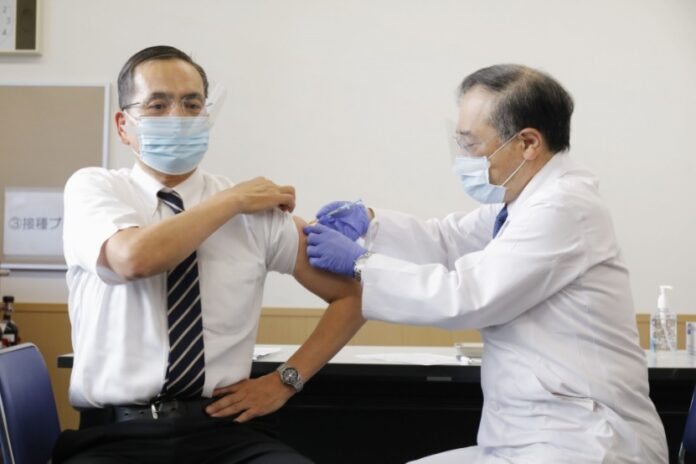
Kazuhiro Araki (L), head of the Tokyo Medical Center, is administered a COVID-19 vaccine at his hospital in Tokyo's Meguro Ward on Feb. 17, 2021, receiving the first shot under Japan's vaccination program against the novel coronavirus. Image: Kyodo.
TOKYO (Kyodo) — Japan began administering COVID-19 vaccinations on Wednesday, starting with hospital staff in Tokyo before expanding the rollout nationwide as the clock ticks down to the Summer Olympics.
The country has been slow to launch inoculations against the coronavirus, starting its program later than at least 70 other countries as Prime Minister Yoshihide Suga’s public support dwindles amid criticism of a sluggish pandemic response.
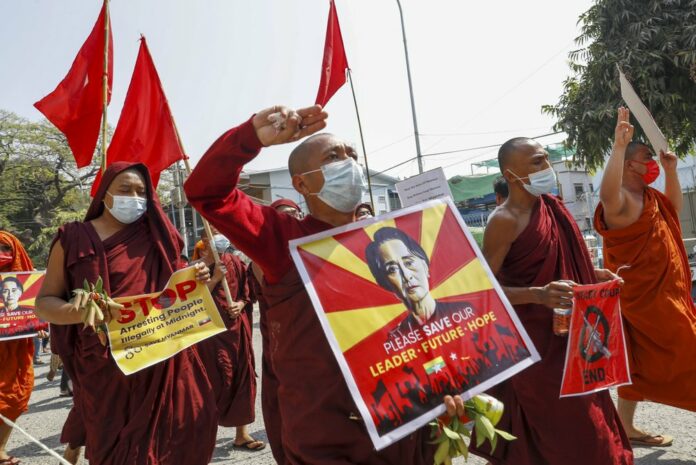
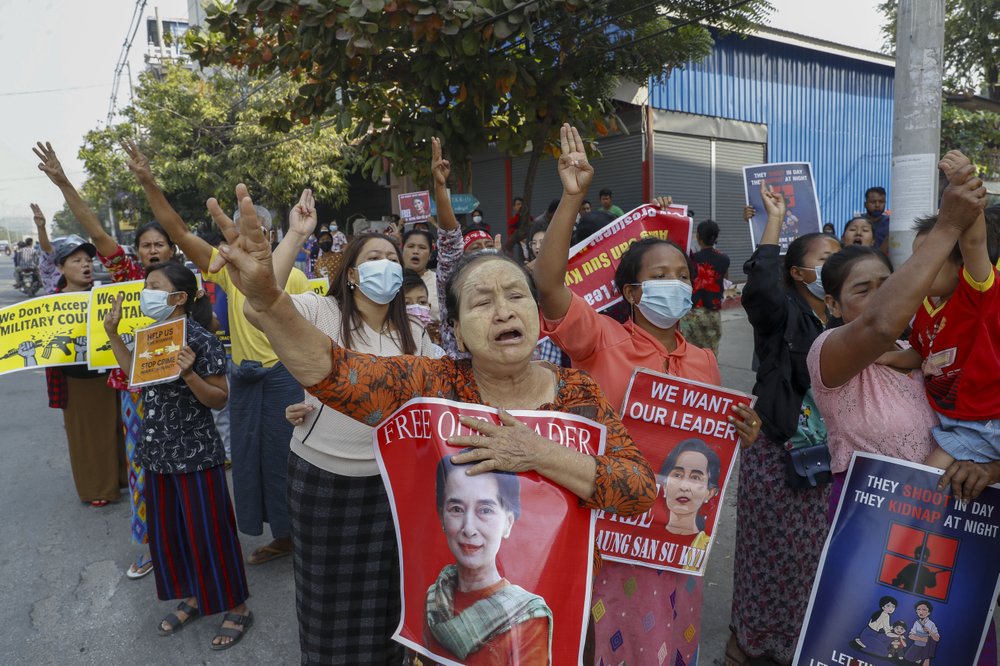
Buddhist monks and nuns display pictures of detained Myanmar leader Aung San Suu Kyi during a protest against the military coup in Mandalay, Myanmar on Tuesday, Feb. 16, 2021. (AP Photo)
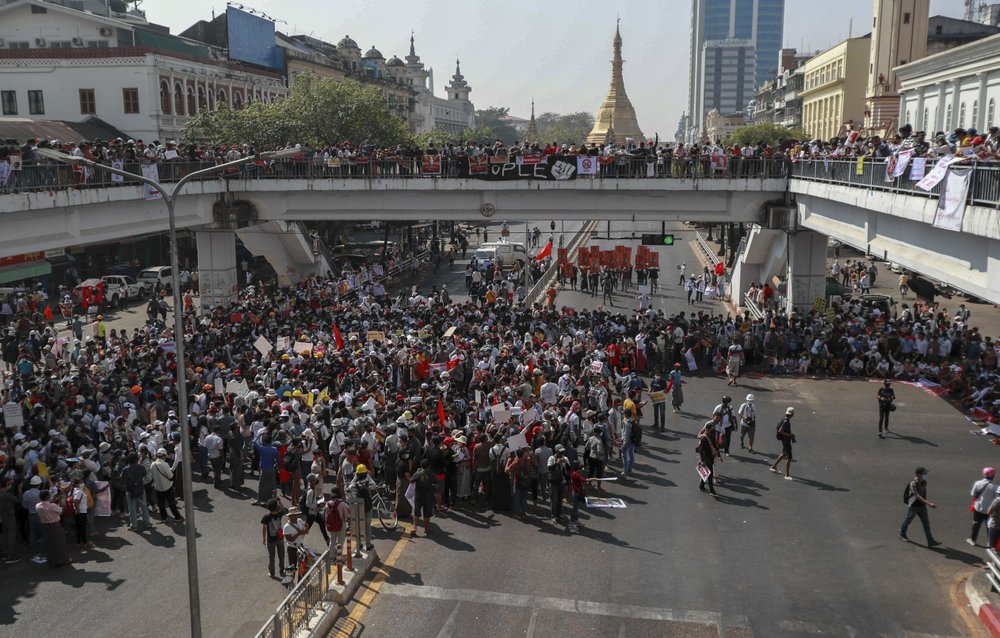
YANGON, Myanmar (AP) — Demonstrators in Myanmar gathered Wednesday in their largest numbers so far to protest the military’s seizure of power, as a U.N. human rights expert warned that troops being brought to Yangon and elsewhere could signal the prospect for major violence.
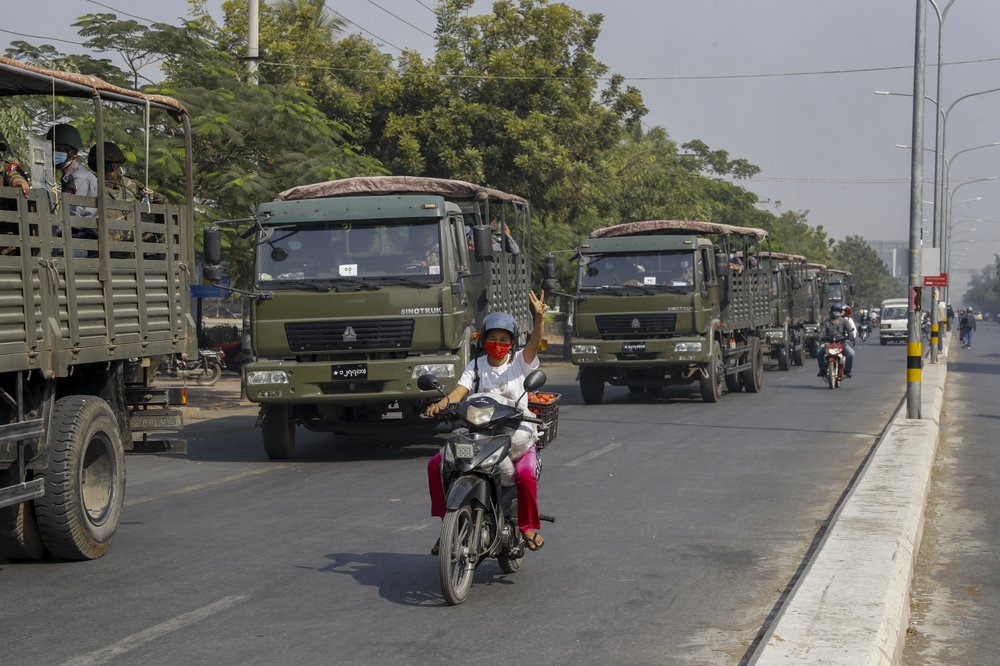
U.N. rapporteur Tom Andrews said he was alarmed by reports of soldiers being transported into Yangon, the biggest city.
“In the past, such troop movements preceded killings, disappearances, and detentions on a mass scale,” he said in a statement issued late Tuesday by the U.N. Human Rights office in Geneva. “I am terrified that given the confluence of these two developments – planned mass protests and troops converging – we could be on the precipice of the military committing even greater crimes against the people of Myanmar.”
Fresh protests roiled Yangon, the second-largest city of Mandalay and the capital Naypyitaw, in defiance of an order banning gatherings of five or more people.
Demonstrators gather close to Sule Pagoda to protest against the military coup in Yangon, Myanmar, Wednesday, Feb. 17, 2021. (AP Photo)
“Let’s march en masse. Let’s show our force against the coup government that has destroyed the future of youth and our country,” Kyi Toe, a spokesman for the National League for Democracy party of ousted leader Aung San Suu Kyi, wrote on his Facebook page.
Wednesday’s turnout in Yangon appeared to be one of the biggest so far in the city. Protesters have adopted a tactic of blocking off streets from security forces by parking vehicles in groups with their hoods up and the excuse of having engine trouble.
In Naypyitaw, thousands including private bank employees and engineers marched down its wide boulevards, chanting for the release of Suu Kyi and President Win Myint.
Protesters also poured into the streets of Mandalay, where on Monday security forces pointed guns at a group of 1,000 demonstrators and attacked them with slingshots and sticks. Local media reported that police also fired rubber bullets into a crowd and that a few people were injured.
A demonstrator on motor bike flashes the three-fingered salute against the military coup as she rides pass military vehicles parked along a road in Mandalay, Myanmar on Wednesday, Feb. 17, 2021. (AP Photo)
The marches have been organized as part of a civil disobedience movement, spearheaded by medical workers and supported by many civil servants.
The Feb. 1 coup has brought an abrupt halt to Myanmar’s fragile progress toward democracy, as Suu Kyi’s party was about to begin a second five-year term after winning a landslide in November’s election. The military justified its takeover with allegations of widespread voting irregularities, though the election commission found no evidence of significant fraud. The junta says it will hold power for a year before holding new elections.
Police filed a new charge against Suu Kyi, her lawyer said Tuesday, a move likely to keep her under house arrest and further fuel public anger.
Suu Kyi already faced a charge of illegally possessing walkie-talkies. The new charge concerns a law that has been used to prosecute people who have violated coronavirus restrictions, lawyer Khin Maung Zaw told reporters after meeting with a judge. It carries a maximum punishment of three years in prison.
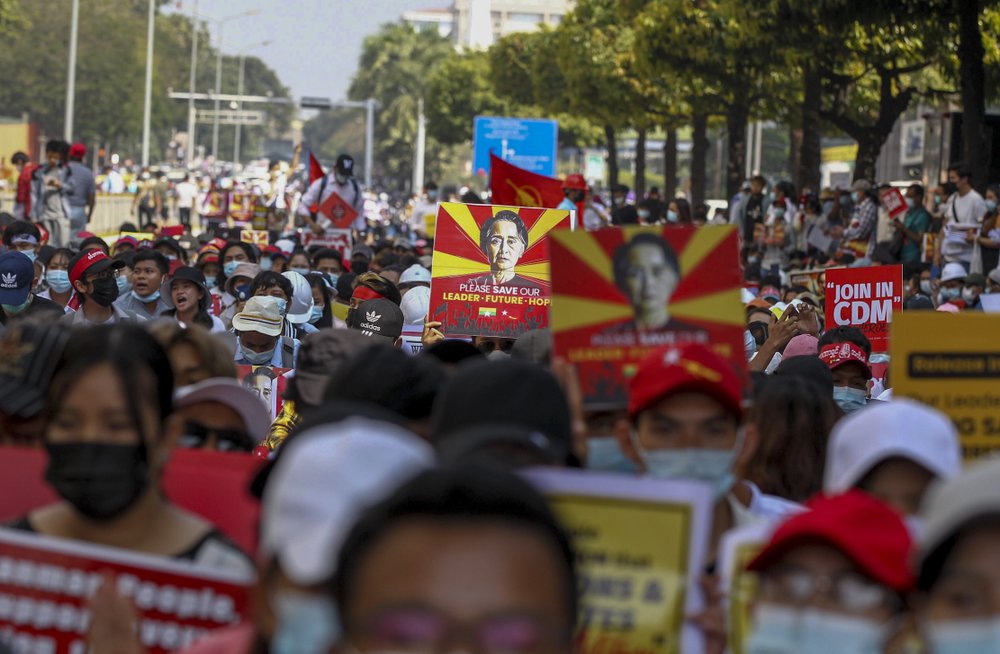
Demonstrators display pictures of deposed Myanmar leader Aung San Suu Kyi to protest against the military coup in Yangon, Myanmar Wednesday, Feb. 17, 2021. (AP Photo)
British Prime Minister Boris Johnson issued a strong denunciation of the legal maneuver against Suu Kyi.
“New charges against Aung San Suu Kyi fabricated by the Myanmar military are a clear violation of her human rights,” he tweeted. “We stand with the people of Myanmar and will ensure those responsible for this coup are held to account.”
U.N. spokesman Stéphane Dujarric said the world body stood by its denunciation of the coup and has called for charges against Suu Kyi to be dropped and for her to be released.
For a third night in a row, the military ordered an internet blackout — almost entirely blocking online access from 1 a.m. to 9 a.m. It has also prepared a draft law that would tighten surveillance of cyberspace and criminalize many online activities.
While the military did not say why the internet was blocked, there is widespread speculation that the government is installing a firewall system to allow it to monitor or block online activity. Social media users have speculated widely that neighboring China, with extensive experience in censoring the internet, was giving technical assistance for such a project.
Demonstrators display pictures of deposed Myanmar leader Aung San Suu Kyi during a protest against the military coup in Mandalay, Myanmar, Wednesday, Feb. 17, 2021. (AP Photo)
China has so far not condemned the takeover. Some protesters have accused Beijing — which has long been Myanmar’s main arms supplier and has major investments in the country — of propping up the junta.
China’s Ambassador Chen Hai said Beijing wished the protesters and the military could solve their differences through dialogue, according to the text of an interview posted on the embassy’s Facebook page Tuesday.
“The current development in Myanmar is absolutely not what China wants to see,” he said.
Chen also denied that China was helping Myanmar to control its internet traffic and that Chinese soldiers were showing up on the Myanmar’s streets.
“For the record, these are completely nonsense and even ridiculous accusations,” Chen said.
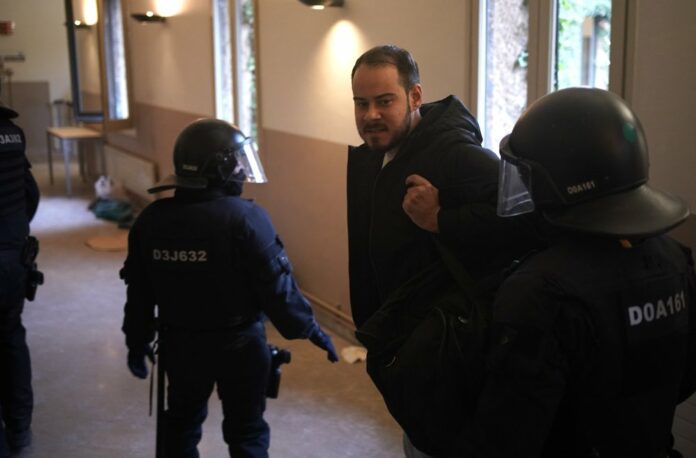
Rap singer Pablo Hasél is detained by police officers at the University of Lleida, Spain, Tuesday, Feb. 16, 2021. (AP Photo/Joan Mateu)
LLEIDA, Spain (AP) — Violent street protests erupted in some Spanish cities on Tuesday night following the arrest of a rap artist who barricaded himself at a university with dozens of supporters to avoid prison and has portrayed his case as a fight for free speech.
In Barcelona, several thousand protestors set trash cans on fire and threw rocks at the police. Several stores and a bank were damaged amid chaotic scenes on one of the city’s main streets. Smaller demonstrations took place in Valencia and Palma de Mallorca, Spanish media reported.
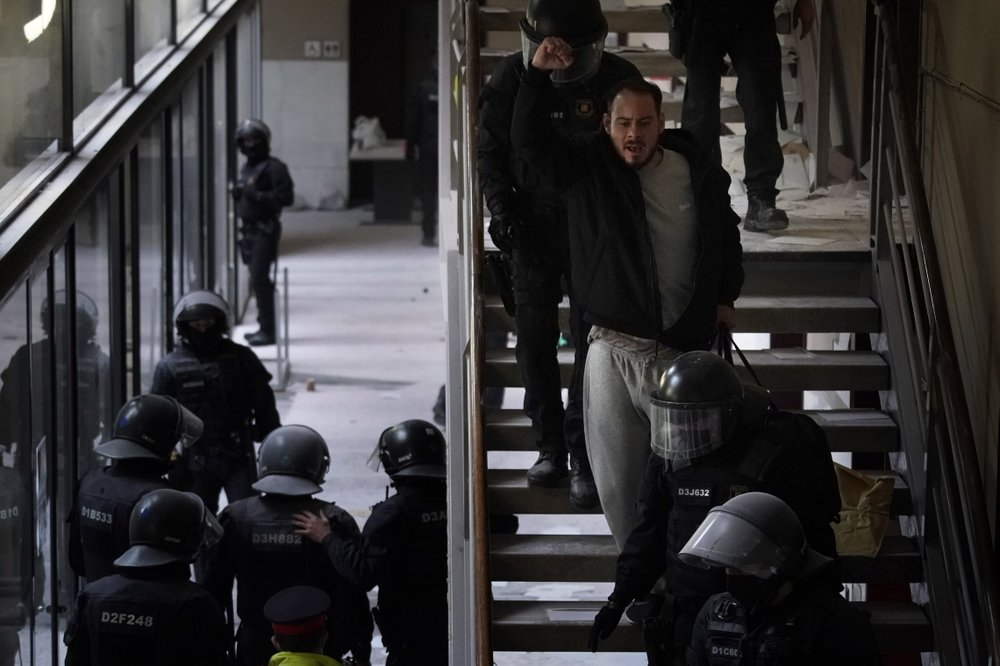
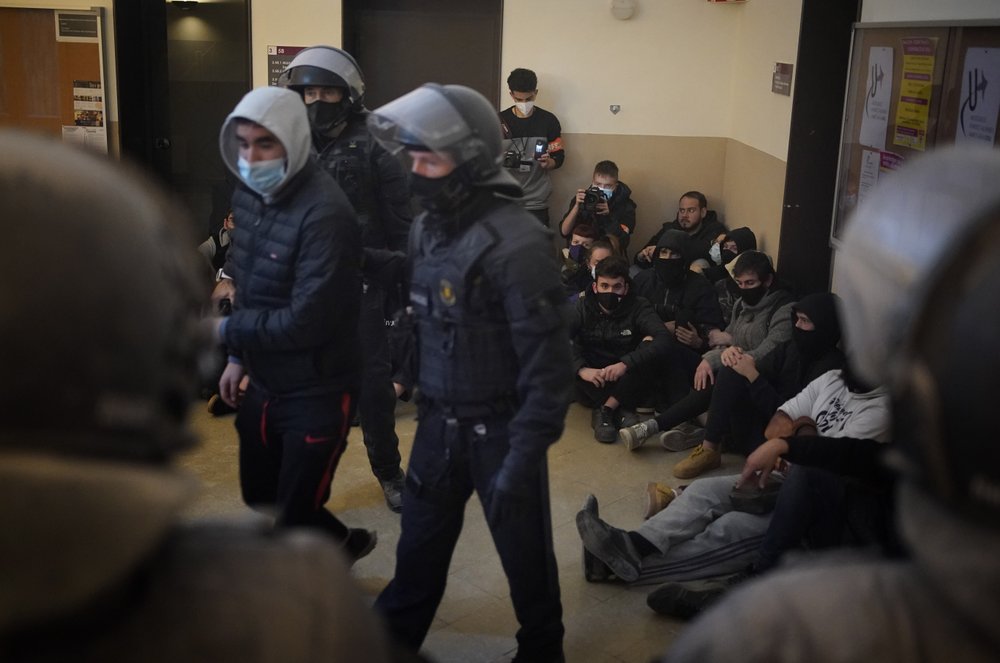
A 24-hour standoff between police and Spanish rapper Pablo Hasél ended Tuesday when anti-riot officers arrested the artist shortly after dawn and escorted him out of Lleida University’s rectorate building. He and more than 50 supporters locked themselves inside the university in Spain’s northeastern Catalonia region at midday on Monday.
Hasél was sent to prison, where he’s set to serve a 9-month sentence for insulting the monarchy and glorifying terrorism.
Rap singer Pablo Hasél is detained by police officers at the University of Lleida, Spain, Tuesday, Feb. 16, 2021. (AP Photo/Joan Mateu)
The university barricade was the rapper’s latest effort to avoid serving his sentence and to draw attention to what he says is a campaign for freedom of expression. He has faced criticism and legal action over some of his statements, includes ones about the monarchy and the need for armed resistance.
“We will win! They will not bend us with all their repression, never!” the 32-year-old rapper said as he passed TV news cameras.
The case of Hasél, whose name at birth is Pablo Rivadulla Duró, has drawn increasing attention in Spain, with many members of the public, artists, celebrities and politicians showing their support and demanding a change in the country’s so-called “Gag Law.”
Spain’s left-wing coalition government also unexpectedly announced last week that it would change the country’s criminal code to eliminate prison terms for offenses involving freedom of expression. It did not specifically mention Hasél or set a timetable for the changes.
The rapper is no stranger to controversy. With an artistic opus that includes songs with strong anti-establishment criticism, he has seen his notoriety amplified among the wider Spanish public with every run-in with authorities.
Having faced charges on at least four occasions for assault, praising armed extremist groups, breaking into private premises or insulting the country’s monarchy, in 2014 he was given a suspended 2-year prison term. But in a new case tried in 2018, judges handed him a reduced sentence of 9 months behind bars for a song about former King Juan Carlos I and 64 tweets he posted between 2014 and 2016.
Rap singer Pablo Hasél, background, is surrounded by his supporters as police officers arrest one of the activists at the University of Lleida, Spain, Tuesday, Feb. 16, 2021. (AP Photo/Joan Mateu)
The tweets straddled the line between opinion and calls to violent insurrection, with several mentions of ETA and Grapo, two now-defunct armed extremist groups in Spain. In the song, Hasél rapped about corruption tied to the former monarch but also talked about him as a wife-beater, a drunk, head of a mafia mob and a frequent user of prostitution.
Spain’s National Court on Monday rejected his latest appeal to be kept out of prison. Judges said the sentencing came on the back of a suspended one and that offenders need to serve prison time if they relapse.
Sparing Hasél from imprisonment, the court said, would be “discriminatory” to other convicts, adding that the campaigning around his case could be used to change laws in parliament but that courts needed to apply the existing criminal code.
“I won’t allow them to tell me what I have to think, feel or say,” Hasél told The Associated Press late Monday. “This serves me as an extra stimulus to keep writing the same songs.”
Jordi Dalmau, head of the Mossos d’Esquadara police for western Catalonia, said Hasél’s arrest, which involved dismantling barricades of desks and benches blocking the building’s entrance, had been carried out “with normality” and the activists did not resist. The rapper had refused last week to voluntarily respond to a summons to show up for prison.
Before being hurled into a police car, he shouted to supporters “Death to the fascist state!”
Over 200 artists, including film director Pedro Almodóvar and actor Javier Bardem, had signed a petition last week in support of the rapper. Amnesty International noted that Hasel’s case was the latest in a string of trials of artists and social media personalities under the 2015 Public Security Law introduced by a conservative government.
Valtònyc, another rapper sentenced on similar grounds in 2018, fled to Belgium, where judicial authorities have rejected Spain’s extradition request. Other recent cases have involved puppeteers purveying political satire and bloggers joking about assassinations of the 1939-1975 authoritarian regime of Gen. Francisco Franco.
The Spanish government’s eleventh-hour proposal to change the criminal code under the law is being rejected by the conservative and far-right opposition.
But Tuesday’s arrest also caused a new political storm in the ruling left-wing coalition led by Socialists from their smaller partner, the far-left United We Can (Unidas Podemos) party.
“All those who boast of this “full democratic normality” and consider themselves progressive should feel ashamed,” the party tweeted Tuesday. “Will they cover their eyes? There is no progress if we refuse to acknowledge the current democratic deficits.”
__
Parra reported from Madrid. AP journalists Renata Brito in Barcelona and Ciarán Giles and Aritz Parra in Madrid and contributed to this report.
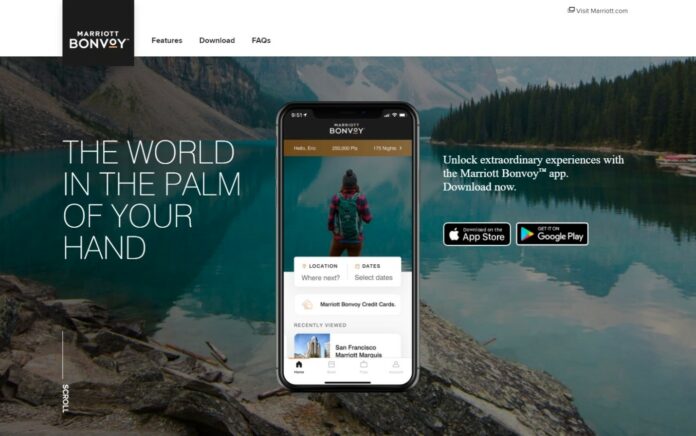
Marriott Bonvoy, the highly awarded travel program from Marriott International, has released a redesigned, more intuitive version of its mobile app in anticipation of increased desire and demand for travel this year.
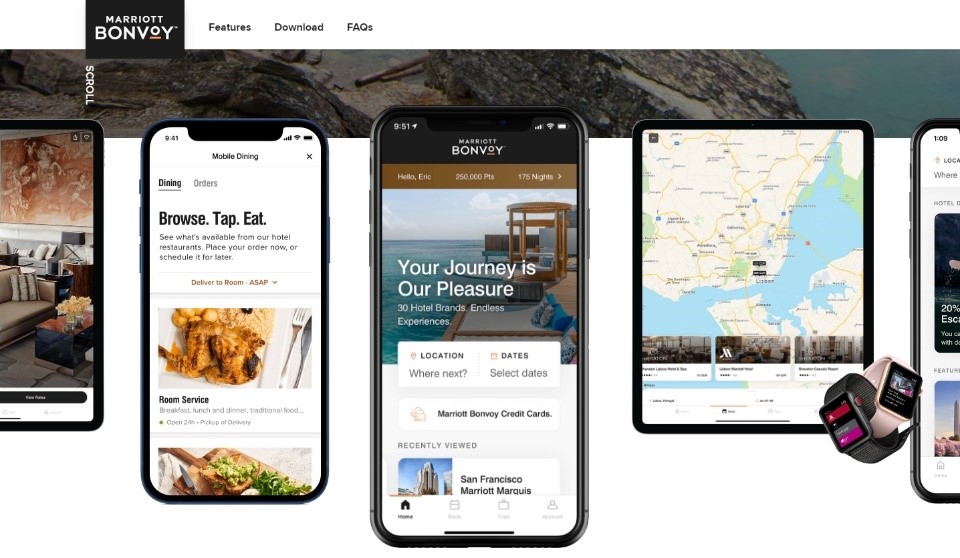
Featuring new travel shopping options based on inspiring destinations and access to more experiences to book, such as premium vacation rentals from Homes & Villas by Marriott International as well as destination tours and activities, the app will offer members even more personalized recommendations and offers to maximize their points earned when traveling and even when they are not.
As the centerpiece of the company’s mobile-first mindset, the Marriott Bonvoy app ensures guests receive the best available rate; enjoy program benefits such as exclusive member rates and accruing points for stays; and enables members to customize their experience. The app will make it easier for guests to choose a contactless option for check-in and check-out, easy access to mobile keys, and the ability to request services and amenities via chat and mobile requests.
“The enhanced Marriott Bonvoy Mobile app is a must-have travel companion. It simplifies the travel planning process, allows for the most frictionless experience before and during your stay and gets smarter the more you interact with it,” said Leigh Zarelli, Senior Vice President Digital, Marriott International.
“Only the Marriott Bonvoy Mobile app offers travelers so much whether it is the breadth of global accommodations — from 7,500 hotels among our 30 brands to home rentals — destination experiences and relevant and customizable content for travel inspiration. Through tailored, displayed offers, members can learn how to earn hundreds of thousands of points just by booking stays, or going about their daily lives’ grocery shopping, ordering takeout or buying items for their home.”
What’s new on the Marriott Bonvoy mobile app:
New Shopping and Booking Options: Homes & Villas by Marriott International home rentals, Work Anywhere with Marriott Bonvoy day, stay and play passes and Marriott Bonvoy Tours & Activities are all now available through in-app browsing. By booking via the app, guests are guaranteed the lowest rate available and is one of the ways members can earn points and receive on-property benefits during stays.
More Customization During the Stay: Improvements and additions to mobile requests and mobile key enable members to get more from their experience and choose to minimize contact and better maintain social distance.
Mobile Key, available at over 4000 properties, is now accessible on the home screen once checked in. Making it easy to skip the desk and minimize social interactions.
Mobile Requests now contains more one-touch-buttons so users can order a crib, shoeshine, and dry cleaning, along with bath towels, pillows, bath products and more, as well as the ability to chat directly with hotel staff.
Making it Easier for Members to Earn Points: Members can capitalize on points promotions relevant to them on the home screen and their account page. This provides members with easy to access, tailored Marriott Bonvoy American Express and Chase limited time offers, as well as access to points promotions with Eat Around Town and Hertz.
Increased Functionality for Non-Members: While nearly a million people used the app to become members in 2020, those not ready to join for free can still search and book stays easier than before.
Updated Searching & Booking with New, Dynamic Map: Users can search and book accommodations by hotel brand, destination, price or points needed for a free night’s stay.
And More Improvements for the Frequent App Users:
Updated Marriott Bonvoy account profile page highlighting personalized promotions, on-property benefits to take advantage of during stays and full account activity.
Member numbers can be copied and pasted onto other web-based forms.
FaceID and TouchID automatically engages after the first login.
Room numbers will now appear on the home screen.
***For APAC and MEA: Members now can access a QR code in the app that can be scanned at select on-property restaurants to earn and redeem points for food and beverage purchases.
An ever-expanding travel program, Marriott Bonvoy connects 30 extraordinary hotel brands with 7,500 properties located in 132 countries & territories, 20,000 premium and luxury vacation home rentals, and tens of thousands of tours & activities enabling members countless ways to earn and redeem points for a perfect and personalized travel experience.
The refreshed Marriott Bonvoy mobile app provides front and center, easy access to points earning opportunities, as well as the ability to sign-up for and earn points with the Marriott Bonvoy co-brand credit cards, providing additional ways beyond the stay for members to earn points.
The app is available in seven languages – English, Spanish, French, German, Japanese, Korean, Chinese. Four additional languages will be added later this year including Italian (April), Russian (May), Portuguese (June) and Arabic (August). The improved app experience launches first on Apple’s iOS operating system which accounts for most Marriott Bonvoy app users followed the Android operating system later this year.
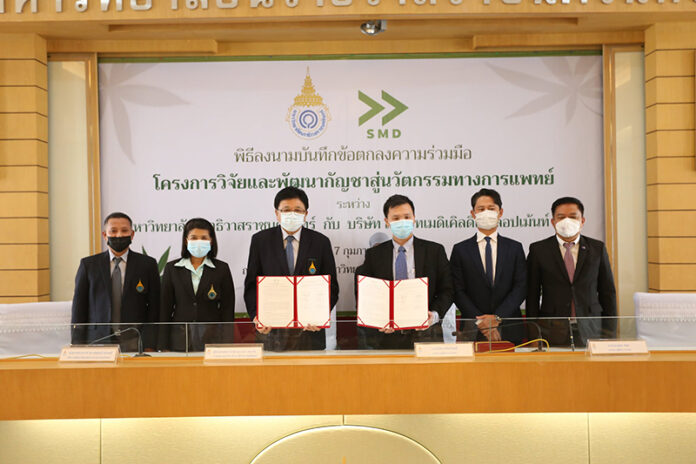
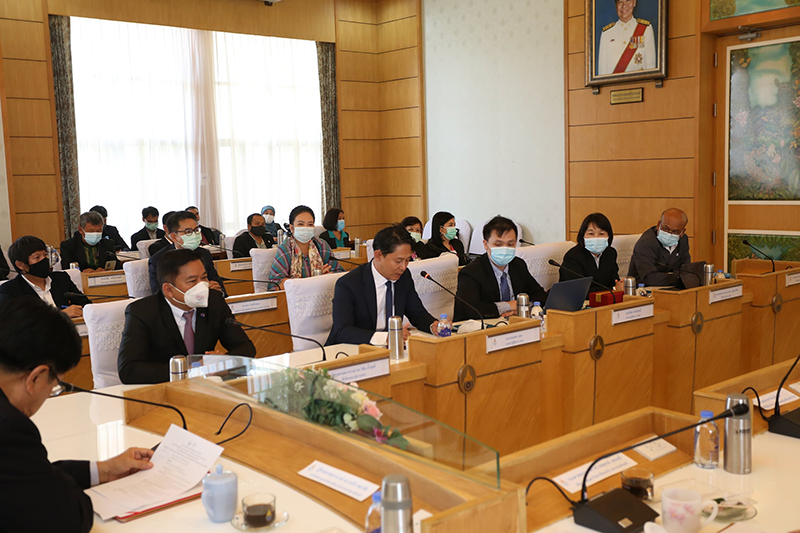
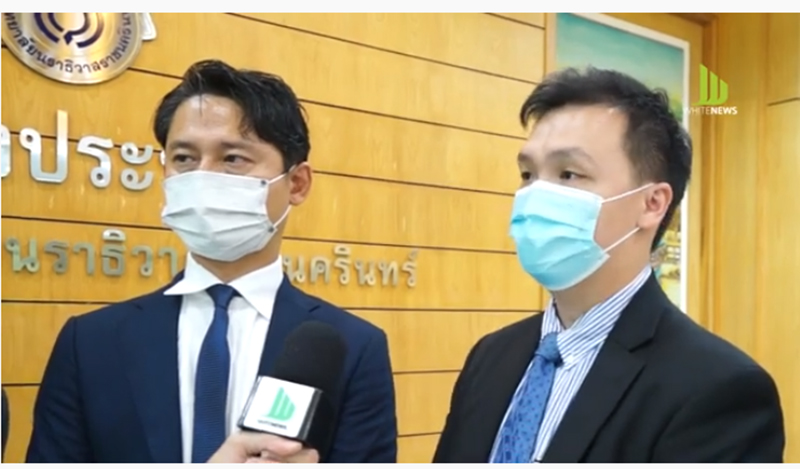
The ceremony MOU signing of research and development project of cannabis for medical innovation between Princess of Naradhiwas University (PNU) and Smart Medical Development Co., Ltd. (SMD) was held at the council meeting room, office of the president building, Princess of Naradhiwas University, located in Kok Kian, Muang Narathiwat, Narathiwat province.
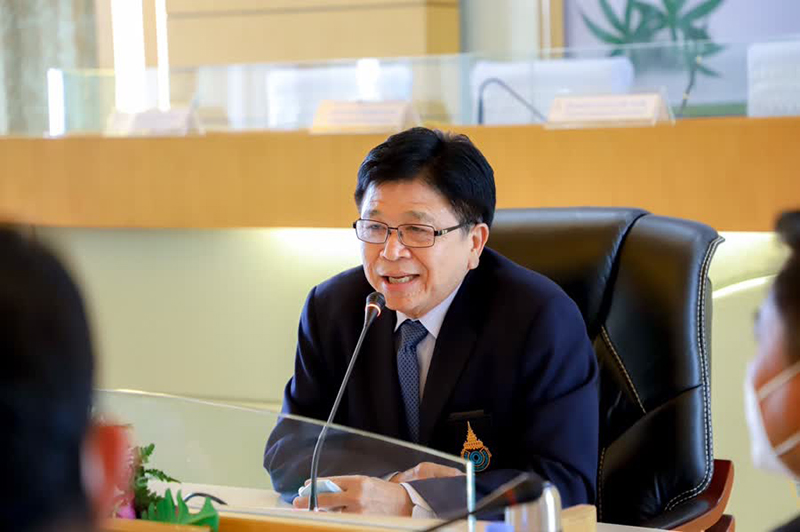
Asst.Prof. Dr. Jongrak Plasai, Chairman of PNU Council, said “this MOU signing (on 17 February 2021) aims to research cannabis as the medical herb and further develop it to be economic crops in order to increase the commercial value. The participation of SMD and Phramongkutklao College of Medicine as the network can build confidence as well. I believe that the research process will generate knowledge and integrate more work because SMD is active in academia, technology and innovation. This takes an important role in benefiting and upgrading PNU to have an opportunity to do research with international organizations.”
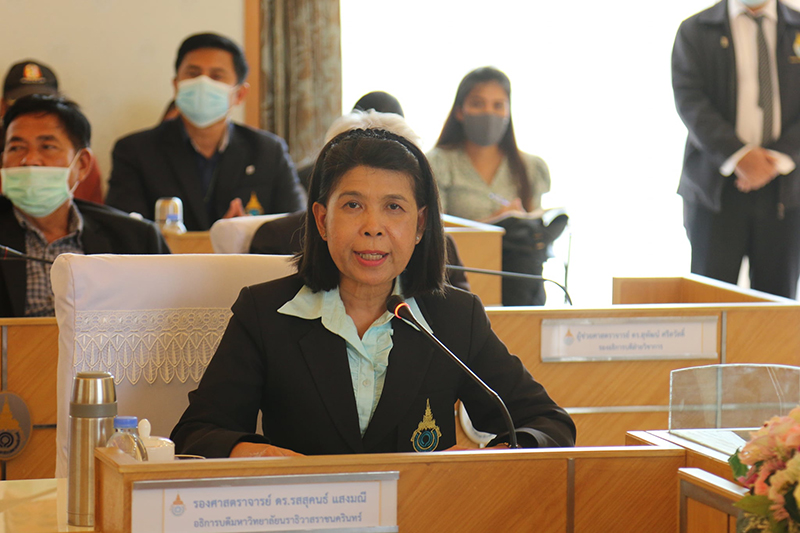
Assoc.Prof. Dr. Rossukon Sangmanee, President of PNU, said “regarding the government policy on cannabis for medical and scientific use in 2019, PNU and SMD have cooperatively created a project on the basis of accuracy and law. This MOU signing will cover planting, developing and exchanging the knowledge of medical cannabis to keep up with the global situation and society, including the commercial development.”
Dr. Korathon Yaowarat, researcher of Phramongkutklao College of Medicine, said “PNU is ready for this project and has the network to drive this project. Phramongkutklao College of Medicine, Thailand Center of Excellence for Life Sciences (TCELS) and Thailand Institute of Scientific and Technological Research (TISTR), also SMD have the network in ASEAN and European Union. In the future, we will be able to develop the herbal product with the innovation, which will help enhance entrepreneurs in Narathiwat province, Start-Ups and SMEs, and support students to become new entrepreneurs to launch into commercial.”
Mr. Keerakit Sapvisut, Managing Director of SMD, said “SMD has jointed venture with a Japanese company to start a business selling health products in Japan, and has networks in Korea and many other countries. In Thailand, SMD and our affiliates also sell soil and organic fertilizers for growing cannabis. SMD also serves as a consultant for other cannabis growers. Regarding this MOU signing with PNU, SMD sees the opportunity to plant and develop the products made of cannabis, hemp and kratom from upstream, midstream and downstream. SMD is ready to provide the support about the technology on planting, extracting, developing the products for the medical and commercial benefit, including transferring and exchanging the knowledge to university personnel and students, and promoting career creation and income generation for the localities of Narathiwat province.”
Mr. Weon Sek Choi, Managing Director of SMD, Operational and Soil Expert, said “the aim of SMD is to use the rich history Thailand has with traditional medicine while aiming for absolute quality of what we wish to produce. With our partnerships in Japan and Korea, we are not just looking at this venture as a plan for importing and exporting but also as a viable way to bring medical tourism to Thailand in the immediate future. We are striving as well to not just cultivate cannabis and hemp but also just as important, to achieve responsible genetics with the help of the community. With the correct genetics that are suitable for the climate and region, we will be able to provide a future for growers within Thailand by providing educational opportunities to learn sustainable and organic farming practices.”
Asst.Prof. Dr. Vichai Lamsutthi, Senior Advisor of SMD, said “we see the opportunity to drive the medical cannabis and commercial cannabis products to the global market by using the principle of ‘Marketing Leads Production’. Importantly, we will plan and produce the cannabis which has high CBD (Cannabidiol) but low THC (Tetrahydrocannabinol) so that Thailand will have our own cannabis seeds, which helps reduce imports from abroad. Then, we can develop the cannabis products to cure disease for people in Narathiwat province and other provinces at the low cost. The health cannabis products will be more accessible; and the economic value will increase.”
In this regard, Doctor Sathaporn Sincharoenkit, Deputy Doctor of Narathiwat Provincial Public Health, Police Major General Narin Busaman, Narathiwat Provincial Police Commander, Narathiwat Provincial Industrial Office, Chairman of Narathiwat Chamber of Commerce, executives of Princess of Naradhiwas University, Chief Executive of Kok Kian Subdistrict Administrative Organization, Kok Kian Subdistrict Headman, the business advisor team of SMD. and other involved people attended this ceremony.
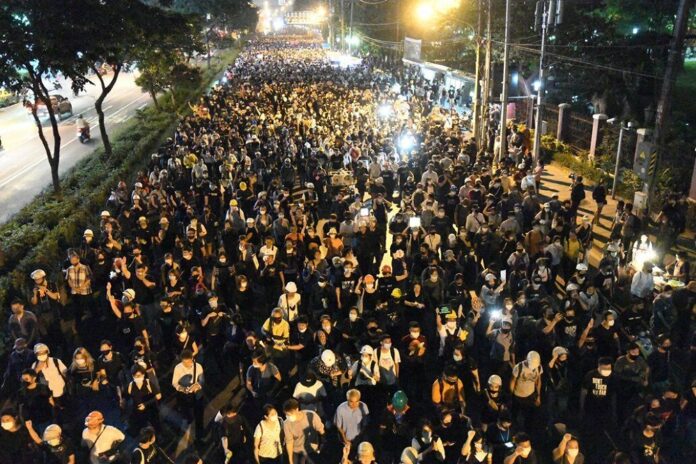
Demonstrators march to call for reforms of the monarchy and abolition of lese majeste law on Rama IV Road, Bangkok, on Oct. 26, 2020.
BANGKOK — Lawyers and opponents of the royal defamation law on Tuesday questioned an appeal court’s decision to deny a bail release to four protest leaders on the grounds that their speeches about the monarchy “hurt” the feelings of Thai people.
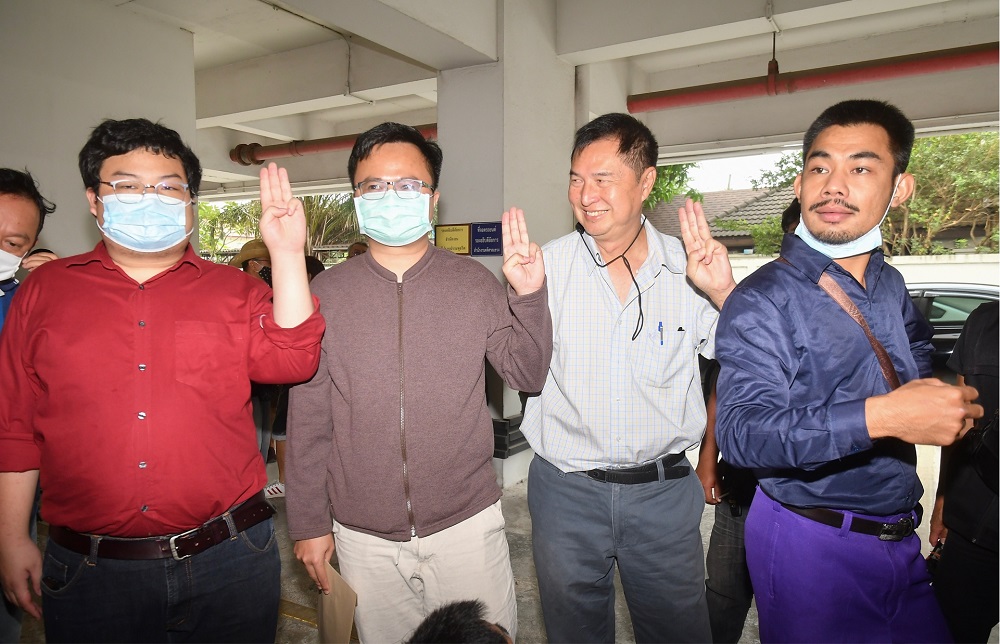
The Court of Appeals on Monday rejected the bail requests submitted by the four suspects: Arnon Nampa, Parit “Penguin Chiwarak, Somyot Prueksakasemsuk, and Patiwat “Bank” Saraiyam. The ruling meant the four activists are likely facing a lengthy pre-trial detention under royal insult charges for their protest on Sept. 19.
While the bail rejection was somewhat expected by many, lawyers who represented the four said they were nevertheless surprised by the language of the court ruling, which appears to affirm their guilt even before the cases went before the judges.
“Their actions result in damages to the monarchy, which is widely revered and worshiped, and hurt the feelings of Thai loyal subjects without harboring any fear of the laws,” part of the statement said. “And their actions also encouraged members of the public to violate the laws.”
Yaowalak Anuphan, head of Thai Lawyers for Human Rights, said the language amounted to passing a judgment on the four activists before a trial could be convened.
“It wasn’t in accordance with the laws at all. If they claim that the alleged wrongdoing is a serious crime, then people accused of murders won’t get bail either,” Yaowalak, whose organization represents the activists pro bono, said by phone.
“Secondly, by saying that they may repeat the offense, that’s a judgement made in advance,” she said. “Thirdly, the part about hurting the feeling of loyal subjects, that’s a deliberation that was beyond the case.”
Sawatree Suksri, a law lecturer at Thammasat University and a critic of the lese majeste law, also said the court document’s language is highly unusual, because it implied that the four were already found guilty.
Parit “Penguin Chiwarak, Arnon Nampa, Somyot Prueksakasemsuk, and Patiwat “Bank” Saraiyam flash the three-finger salute on Feb. 9, 2021.
“It was only a request for a temporary release. It hasn’t reached a trial to find out whether they are guilty or not,” Sawatree said by phone. “Yet in the document, the court already mentioned the nature of the case.”
She added, “I’ve never seen anything like this.”
Human rights lawyer Sarawut Pratoomraj expressed a similar view, and added that he’s not convinced why the four activists should not be granted bail.
“Usually, in every other case, if there’s no credible evidence that the defendants may interfere with the evidence, flee the country, or threaten the witnesses, the court would grant them bail,” Sarawut said. “The activists are not some influential people.”
Both Sarawut and Yaowalak also questioned why the court ruling that denied bail to the four protest leaders did not bear the name of the presiding judge – the omission is very unusual, they said.
At least 58 people have been charged with royal defamation, or lese majeste, since police launched a crackdown on people accused of insulting the monarchy back in November. Violators face up to 15 years in jail per count.
Although the letter of the law only bans threats or insults made toward key members of the Royal Family, a large number of suspects were charged with the offense for increasingly vague reasons, like wearing a traditional Thai costume and feigning to pay respect to a group of pro-democracy activists.





























 Making it Easier for Members to Earn Points: Members can capitalize on points promotions relevant to them on the home screen and their account page. This provides members with easy to access, tailored Marriott Bonvoy American Express and Chase limited time offers, as well as access to points promotions with Eat Around Town and Hertz.