






















31.6 C
Bangkok
Sunday, June 28, 2026
Home Blog Page 1176

Tour Guide Who Lost His Job in Pandemic Opens Tea Shop

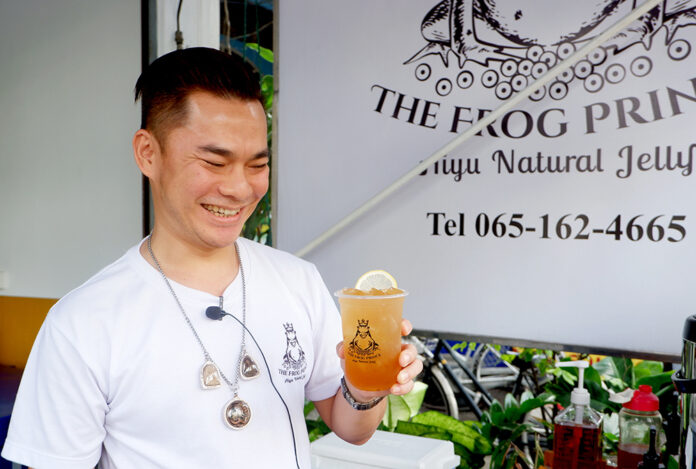
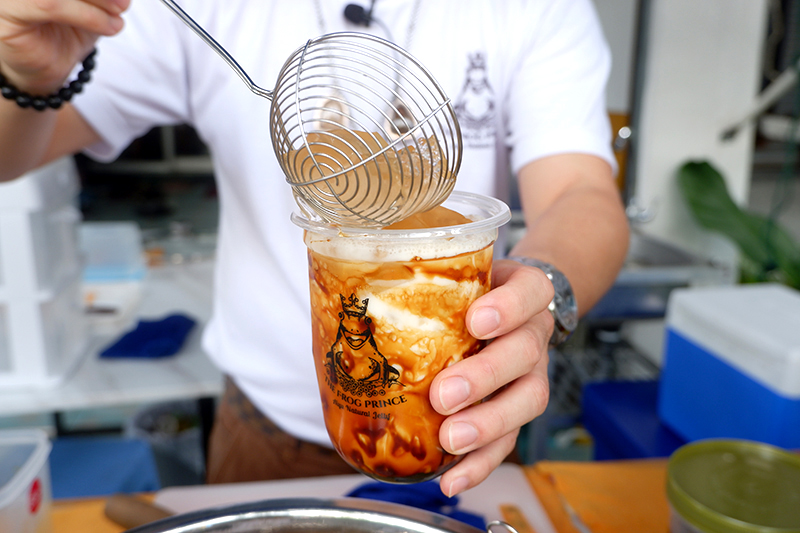
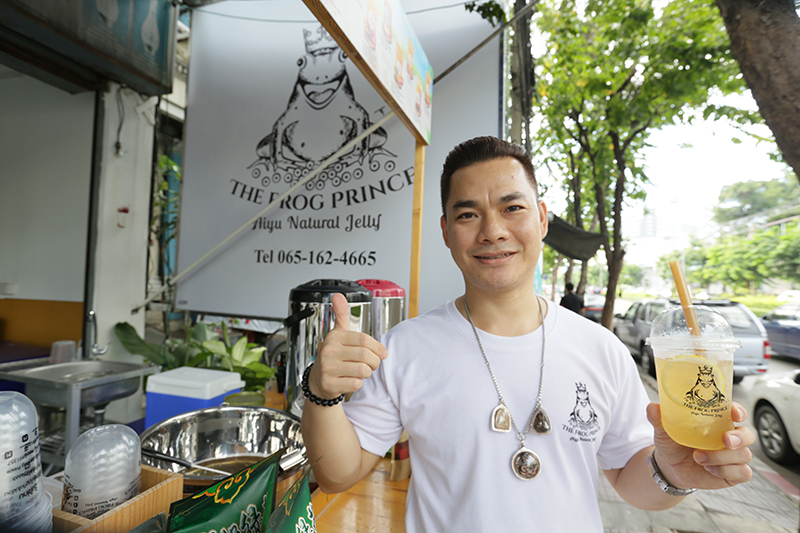
Auttapol Saejong holds his Sweet Osmanthus Lemon Tea Aiyu Jelly (60 baht).

BANGKOK — A humble tea shop in northern Bangkok offers a healthy herbal jelly as an alternative to boba – but the shop and its owner have travelled a long way to bring customers their wobbly gelatinous drinks.

Auttapol Saejong opened The Frog Prince, a stall selling tea drinks with aiyu jelly in June after the coronavirus pandemic broke out earlier this year and turned his life upside down. Chinese tourists stopped coming to Thailand. Borders closed down. He lost his job.

“I used to take Chinese tour groups to the Temple of the Emerald Buddha and Pattaya,” Auttapol, 38, said. “But they were all gone after COVID [surfaced].”
DSCF2491

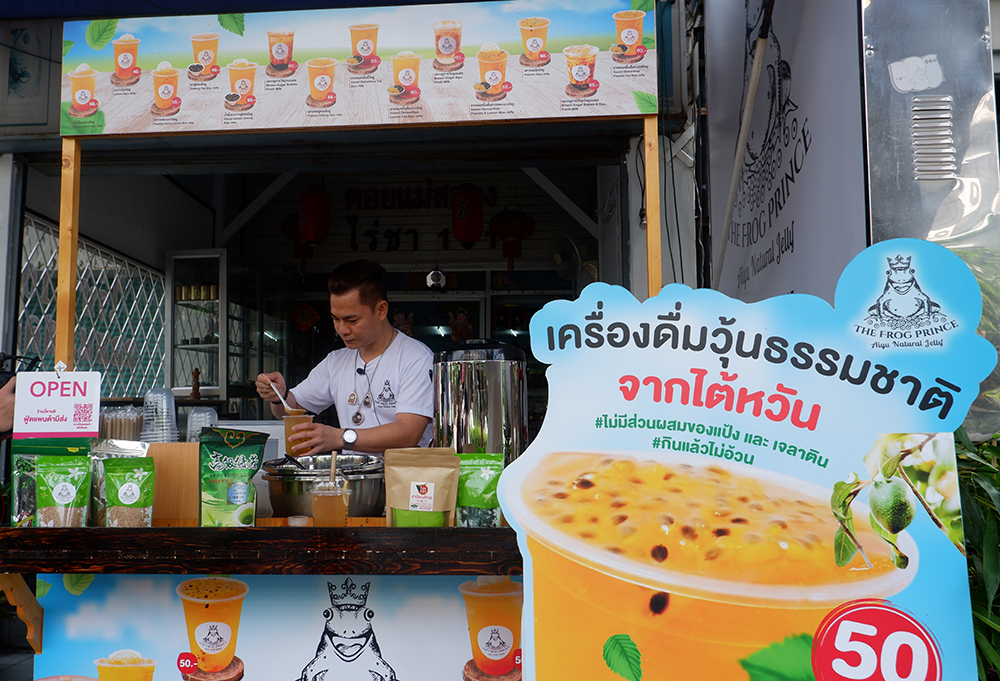
To make ends meet, he opened The Frog Prince.

Fortunately for him, Auttapol didn’t have to start from scratch. Prior to his career in tourism, the Chiang Rai native had studied and worked as a chef in Taiwan for 16 years – including 10 years at a Japanese restaurant, as well as a stint at a tea shop.

He decided to build on his experience and import from Taiwan the seeds of the awkeotsang creeping fig – to make his own aiyu jelly.
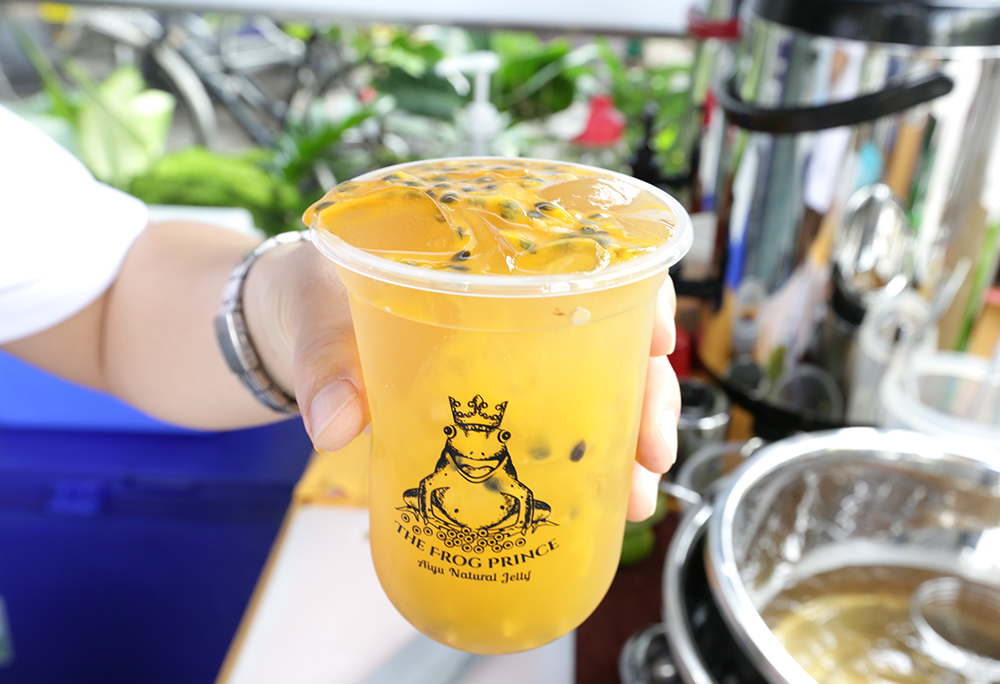
3Q2A3500
Passion Fruit Aiyu Jelly (50 baht).

“It’s not very well known in Thailand yet. Mostly people drink bubble tea, which is not so good for your health,” Auttapol recalled. “The texture of the jelly is like Pipo, but softer. It just melts in your mouth, not like pudding or gelatin.”

Aiyu jelly, widely consumed in Taiwan, is a jelly made from the gel that forms by soaking the seeds of the awkeotsang creeping fig. Aiyu jelly is used in refreshing snacks in Taiwan, often mixed with citrus fruits and honey.
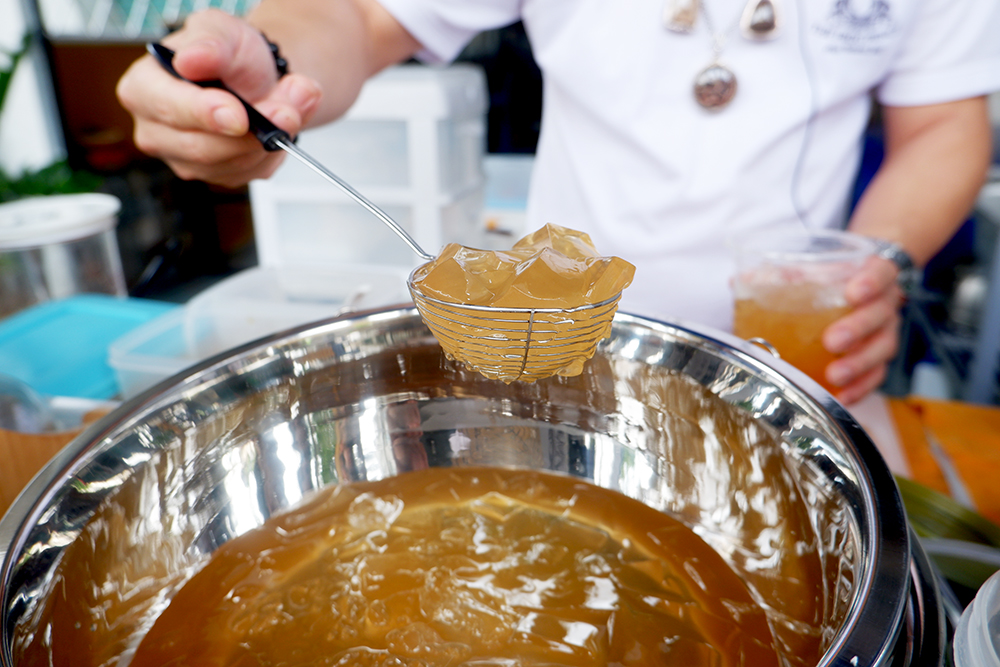
DSCF2473
Auttapol’s aiyu jelly.

The tea stall’s humble appearance betrays the owner’s decades of professional chef experience. Auttapol meticulously scoops jellies, passionfruit juice, and sweetened osmanthus teas for each order. He’s proudest of his Sweet Osmanthus Lemon Tea Aiyu Jelly (60 baht), his own brew of sweetened osmanthus tea with added aiyu and lime.

It’s a guilt-free snack, a calorie-light alternative to popular sugar-filled bubble tea snacks. The osmanthus tea with passionfruit is a personal favorite, a fragrant flower tea that’s not too acidic (60 baht). The strongly pro-passionfruit should order the Passion Fruit Aiyu Jelly (50 baht), a cup of passionfruit juice with generous scoops of aiyu. 

“Women in Taiwan really like to drink aiyu because there’s no flour or gelatin. It’s from a fruit, and helps you to feel full and control your weight. You won’t get fat no matter how much you eat it,” Auttapol said.
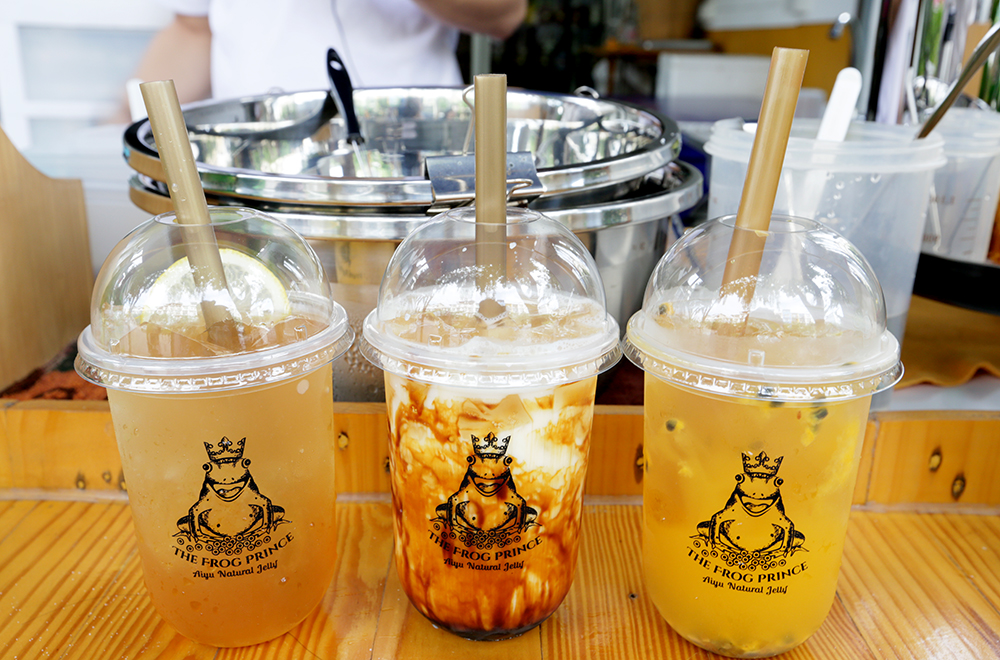
3Q2A3518
Sweet Osmanthus Lemon Tea Aiyu Jelly (60 baht), Brown Sugar and Aiyu Fresh Milk (65 baht), and Passion Fruit Aiyu Jelly (50 baht).

In fact, Frog Prince’s Brown Sugar and Aiyu Fresh Milk (65 baht) even swaps out carb-heavy tapioca pearls for aiyu, which is only 30 calories per half a cup.

Auttapol makes his aiyu fresh every day, and even sells the seeds in raw form for those who want to try making their own. Aiyu is composed of 90 percent water, with pectin as the gelling agent, making it a good source of fiber and water and even promotes satiety.

His claims aren’t exaggerated – as much as four hours after drinking the brown sugar milk tea with aiyu, we were still full. We tried drinking the osmanthus lemon tea with aiyu on another day – still full after three hours!
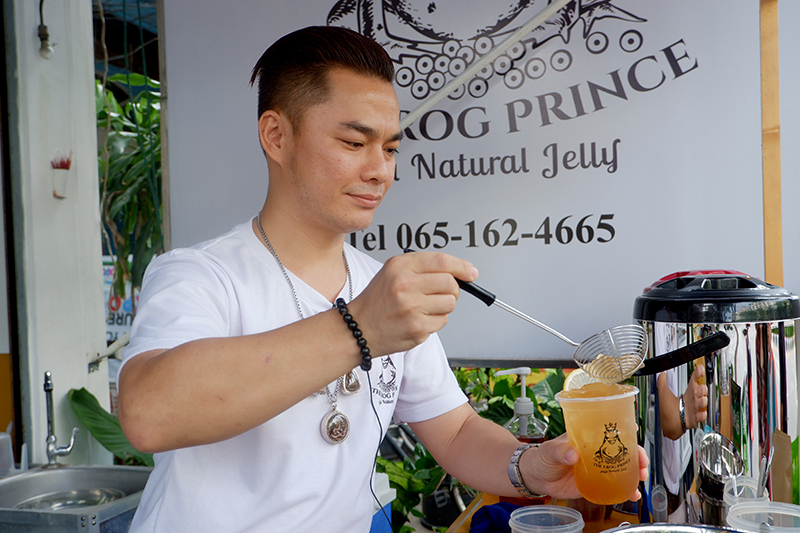
DSCF2484 copy

Auttapol’s choice in opening a tea stall based around just this wobbly jelly is due to tis properties – he says that the jelly decreases cholesterol, aids the digestive system, hydrates the skin, and even boosts newborn moms’ milk supply.

To make tea orders even healthier, customers can request that the teas have no sugar as well, although Auttapol only uses brown sugar. One can also bring their own cups and straws to cut back on plastic use.
DSCF2500 copy3Q2A3560 copy

The Frog Prince can be ordered on Grab, Food Panda, and Line Man and is open from 10am to 7pm every day. The shop is located on Thetsaban Songkhro Road in Chatuchak district right next to Bon Marche market, a taxi ride away from MRT Chatuchak Park or BTS Mo Chit. 


Related stories:

Grounded by the Pandemic, This Pilot is Now a ‘Grab’ Driver
Advertisement

‘Bye Dinosaurs,’ Students Rally for Educational, Political Reforms

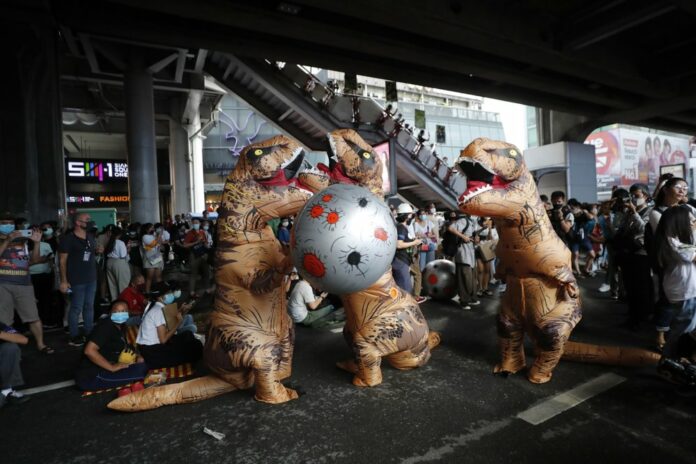
Dinosaur mascots hold a large ball depicting an asteroid during a student rally in Bangkok, Saturday, Nov. 21, 2020. (AP Photo/Sakchai Lalit)

BANGKOK (AP) — Secondary school students in Thailand’s capital rallied Saturday for educational and political reforms, defying government threats to crack down with legal action against the country’s high-profile protest movement.

The rally was called by a group that calls itself “Bad Students,” mocking their status as rebels against traditional school rules and authorities.

Reflecting their light touch toward protest actions, they used props including people in dinosaur suits and oversize beach balls standing in for asteroids.

1000 1 12
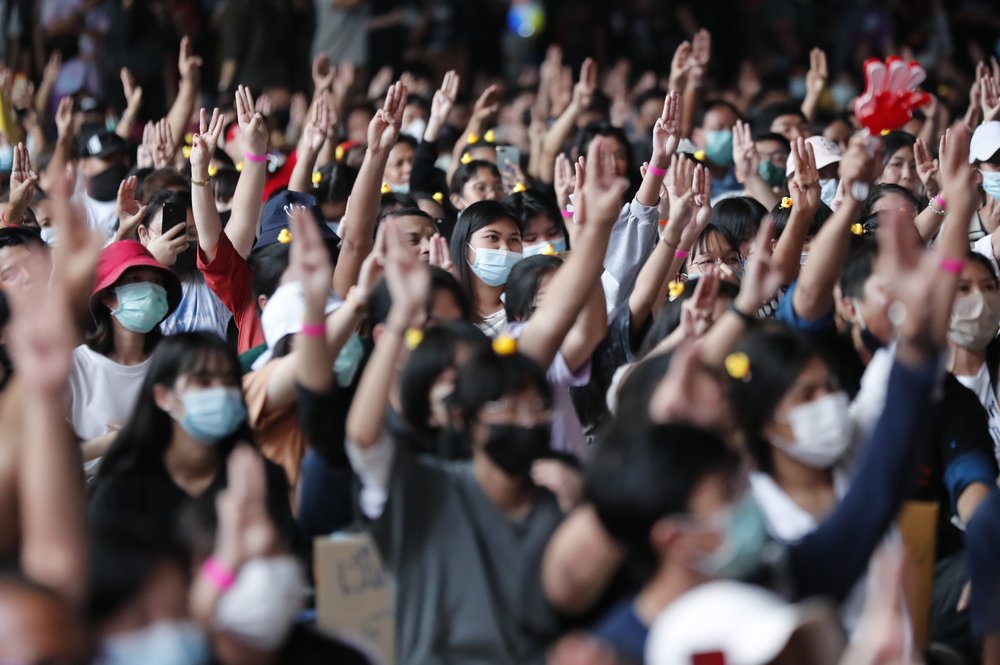
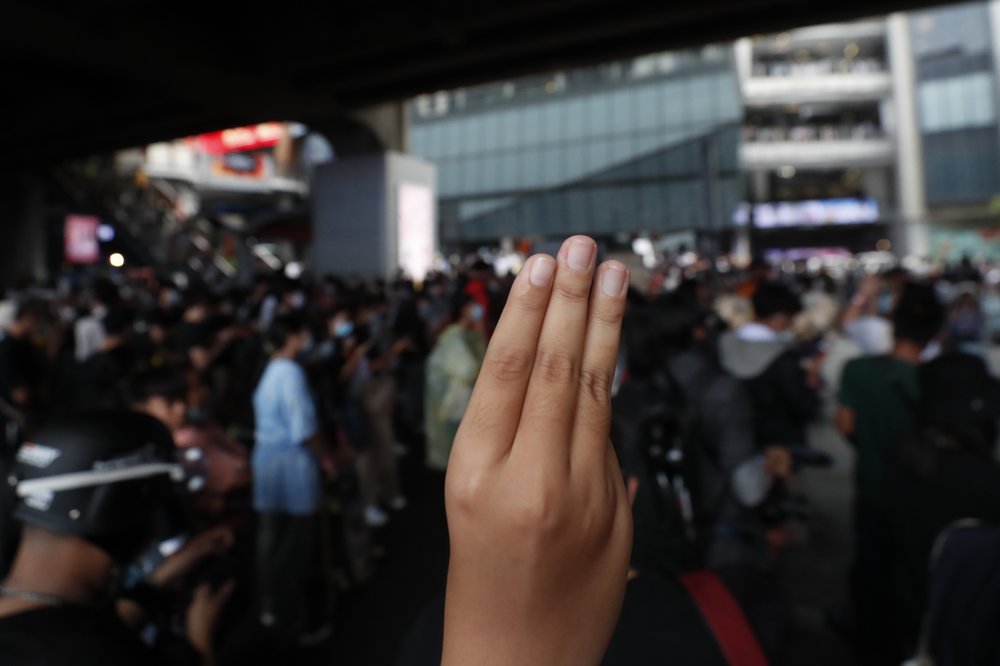
A crowd flashes the three-finger protest gesture during a student rally in Bangkok Saturday, Nov. 21, 2020. (AP Photo/Sakchai Lalit)

Just as an asteroid hitting the earth is believed to have led to the extinction of the dinosaurs, they pointed out, the old-fashioned members of Thailand’s establishment impeding change will face a collision with the country’s pro-democracy movement.

Though the original goals of the Bad Students included abolishing outmoded regulations such as dress codes and reforming antiquated curriculums, they now also support the demands of Thailand’s broader pro-democracy movement, which seeks major political change.

Saturday’s rally, held in one of Bangkok’s busiest shopping areas, attracted a crowd of at least 1,000 people, many of whom were not secondary school students.

1000 6 5
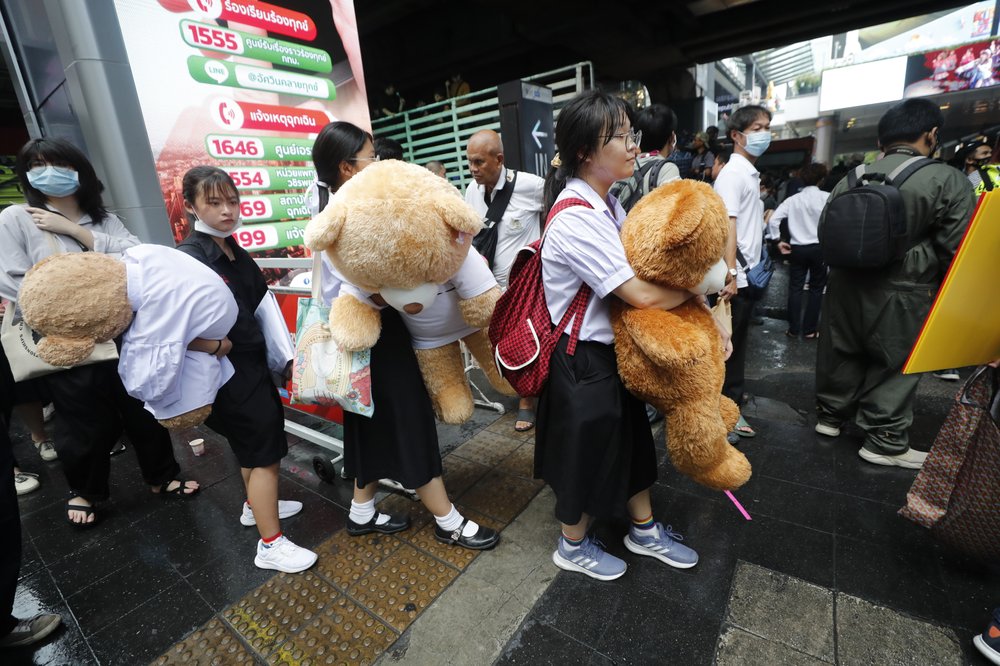
Secondary school students hold giant teddy bears as they attend a student rally in Bangkok, Saturday, Nov. 21, 2020. (AP Photo/Sakchai Lalit)

Namfon Jaruk, a 21-year-old college student, said it was appropriate for demonstrators to discuss issues beyond education.

“We are not just students. We are citizens of this country, too,” she said. “Students have rights to talk politics and anything that needs to be discussed.”

The rally came at the end of a week with two chaotic protests held by followers of the pro-democracy movement.

1000 4 8
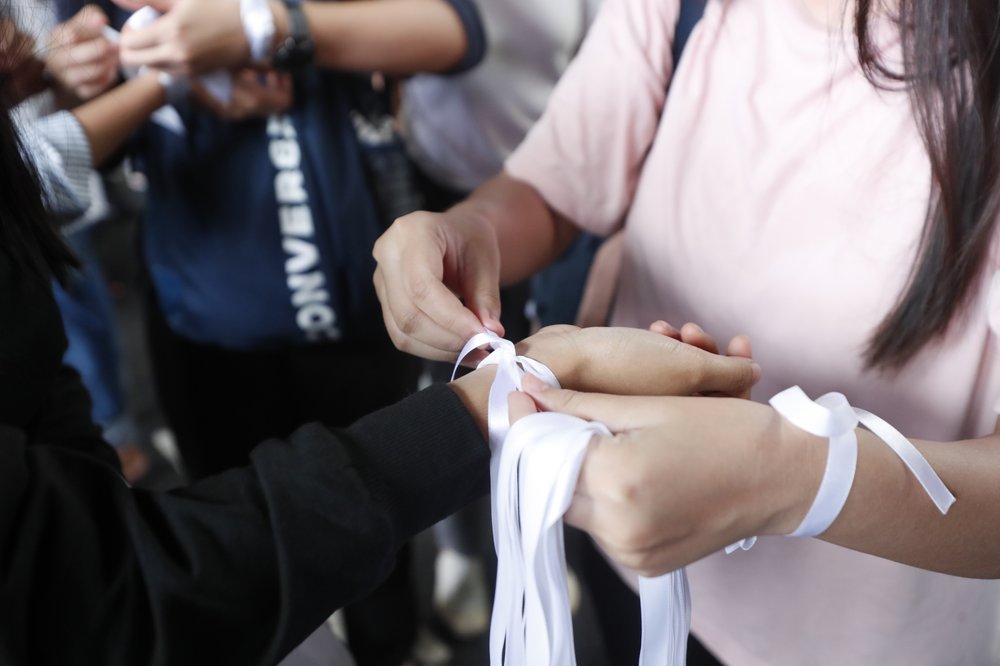
A white ribbon, seen as a protest symbol for secondary school students, is tied on the wrist of an individual attending a student rally in Bangkok, Saturday, Nov. 21, 2020. (AP Photo/Sakchai Lalit)

On Tuesday, protesters rallied outside Parliament to urge lawmakers to pass a bill to consider sweeping changes in the constitution, including sections about the monarchy’s rights and privileges. The lawmakers agreed to consider changes, but not to sections including the monarchy.

The three core demands of the movement are that Prime Minister Prayuth Chan-ocha step down, the constitution be amended to make it more democratic, and the monarchy be reformed to be made more accountable.

The movement believes the monarchy holds too much power for a constitutional monarchy. But their challenge is fiercely opposed by royalists, who consider the royal institution an untouchable bedrock of national identity.

1000 5 3
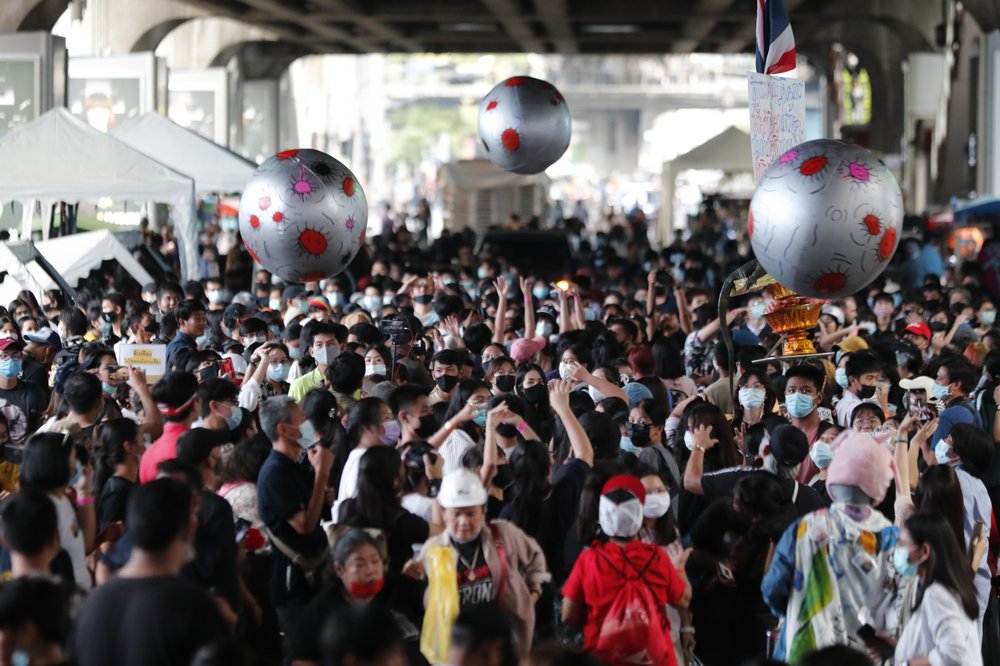
Large balls that depict asteroids are thrown in the air over a crowd attending a student rally in Bangkok, Saturday, Nov. 21, 2020. (AP Photo/Sakchai Lalit)

Efforts by Tuesday’s protesters to force their way onto the grounds of Parliament were pushed back by police using tear gas and water cannons firing a mixture that included chemical irritants. At least 55 people were hurt, including six reported to have had gunshot wounds. Police denied firing live rounds or rubber bullets.

On Wednesday, several thousand demonstrators gathered outside the national headquarters of the police in central Bangkok to protest the force used against protesters the night before.

The Wednesday rally was nonviolent, though protesters defaced the “Royal Thai Police” sign outside its headquarters and scrawled graffiti and chanted slogans that could be considered derogatory to King Maha Vajiralongkorn.

1000 3 10
The three-finger protest gesture is flashed during a student rally in Bangkok, Saturday, Nov. 21, 2020. (AP Photo/Sakchai Lalit)

Prime Minister Prayuth reacted by declaring that the protesters had gone too far and could now expect to be prosecuted for their illegal actions. While protest leaders have faced dozens of charges over the past few months, they have generally been freed on bail, and none have yet come to trial.

On Friday, Prayuth made clear that the government would also employ the use of Thailand’s lese majeste law, which calls for a prison term of up to 15 years for anyone who defames the king or his immediate family.

Advertisement

Trump’s Legal Team Cried Vote Fraud, but Courts Found None

In this Nov. 5, 2020 file photo, President Donald Trump speaks at the White House in Washington. (AP Photo/Evan Vucci, File)

PHILADELPHIA (AP) — As they frantically searched for ways to salvage President Donald Trump’s failed reelection bid, his campaign pursued a dizzying game of legal hopscotch across six states that centered on the biggest prize of all: Pennsylvania.

The strategy may have played well in front of television cameras and on talk radio to Trump’s supporters. But it has proved a disaster in court, where judges uniformly rejected their claims of vote fraud and found the campaign’s legal work amateurish.

In a scathing ruling late Saturday, U.S. District Judge Matthew Brann — a Republican and Federalist Society member in central Pennsylvania — compared the campaign’s legal arguments to “Frankenstein’s Monster,” concluding that Trump’s team offered only “speculative accusations,” not proof of rampant corruption.

The campaign on Sunday filed notice it would appeal the decision to the 3rd U.S. Circuit Court of Appeals, a day before the state’s 67 counties are set to certify their results and send them to state officials. And they asked Sunday night for an expedited hearing Wednesday as they seek to amend the Pennsylvania lawsuit that Brann dismissed.

Trump’s efforts in Pennsylvania show how far he is willing to push baseless theories of widespread voter fraud, even as the legal doors close on his attempts to have courts do what voters would not do on Election Day and deliver him a second term.

The effort is being led by Rudy Giuliani, Trump’s personal lawyer, who descended on the state the Saturday after the Nov. 3 election as the count dragged on and the president played golf. Summoning reporters to a scruffy, far-flung corner of Philadelphia on Nov. 7, he held forth at a site that would soon become legendary: Four Seasons Total Landscaping.

The 11:30 a.m. news conference was doomed from the start.

Only minutes earlier, news outlets had started calling the presidential contest for Democrat Joe Biden. The race was over.

Just heating up was Trump’s plan to subvert the election through litigation and howls of fraud — the same tactic he had used to stave off losses in the business world. And it would soon spread far beyond Pennsylvania.

“Some of the ballots looked suspicious,” Giuliani, 76, said of the vote count in Philadelphia as he stood behind a chain link fence, next to a sex shop. He maligned the city as being run by a “decrepit Democratic machine.”

“Those mail-in ballots could have been written the day before, by the Democratic Party hacks that were all over the convention center,” Giuliani said. He promised to file a new round of lawsuits. He rambled.

“This is a very, very strong case,” he asserted.

Justin Levitt, a Loyola Law School professor who specializes in election law, called the Trump lawsuits dangerous.

“It is a sideshow, but it’s a harmful sideshow,” Levitt said. “It’s a toxic sideshow. The continuing baseless, evidence-free claims of alternative facts are actually having an effect on a substantial number of Americans. They are creating the conditions for elections not to work in the future.”

Not a single court has found merit in the core legal claims, but that did not stop Trump’s team from firing off nearly two dozen legal challenges to Biden’s victory in Pennsylvania, including an early morning suit on Election Day filed by a once-imprisoned lawyer.

The president’s lawyers fought the three-day grace period for mail-in ballots to arrive. They complained they weren’t being let in to observe the vote count. They said Democratic counties unfairly let voters fix mistakes on their ballot envelopes. Everywhere they turned, they said, they sniffed fraud.

“I felt insidious fraud going on,” Philadelphia poll watcher Lisette Tarragano said when Giuliani called her to the microphone at the landscaping company.

In fact, a Republican runs the city’s election board, and has said his office got death threats as Trump’s rants about the election intensified. No judges ever found any evidence of election fraud in Pennsylvania or any other state where the campaign sued — not in Michigan, Wisconsin, Arizona, Nevada or Georgia.

Instead, Trump lawyers found themselves backpedaling when pressed in court for admissible evidence, or dropping out when they were accused of helping derail the democratic process.

“I am asking you as a member of the bar of this court, are people representing the Donald J. Trump for president (campaign) … in that room?” U.S. District Judge Paul Diamond asked at an after-hours hearing on Nov. 5, when Republicans asked him to stop the vote count in Philadelphia over their alleged banishment.

“There’s a nonzero number of people in the room,” lawyer Jerome Marcus replied.

The count continued in Philadelphia. The Trump losses kept coming. By Friday, Nov. 6, when a state appeals court rejected a Republican complaint over provisional ballots and a Philadelphia judge refused to throw out 8,300 mail-in ballots they challenged, Biden was up by about 27,000 votes.

Nationally, the race had not yet been called. But it was becoming clear that a Biden win in Pennsylvania, with its 20 electoral votes, was imminent.

When it came, Trump quickly pivoted to litigation. It did not go well.

A U.S. appeals court found Pennsylvania’s three-day extension for mail-in ballots laudatory, given the disruption and mail delays cause by the pandemic. Judges in Michigan and Arizona, finding no evidence of fraud, refused to block the certification of county vote tallies. Law firms representing the campaign started to come under fire and withdrew.

That left Giuliani, who had not argued a case in court for three decades, in charge of the effort to overturn the election.

“You can say a lot at a driveway (news conference). … When you go to court, you can’t,” said lawyer Mark Aronchick, who represented election officials in Philadelphia, Pittsburgh and elsewhere in several of the Pennsylvania suits. “I don’t really pay attention to the chatter until I see a legal brief.”

Advertisement

2020’s Flu Cases Plunge in COVID-Anxious Thailand

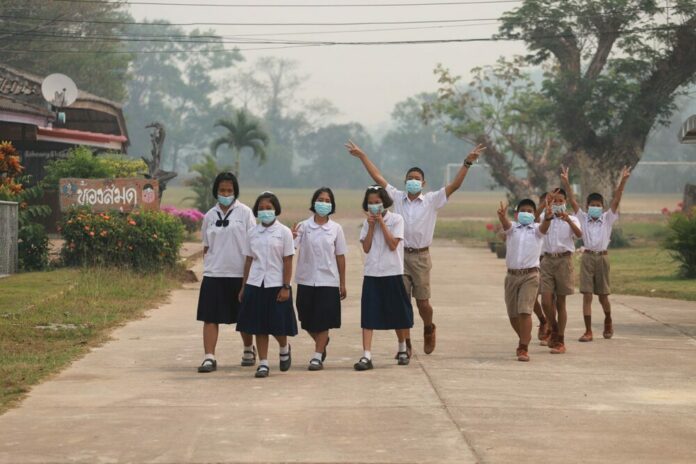
Students at Warundittharam School in Trat province wear facemasks on Feb. 24, 2020.

BANGKOK — Respiratory diseases, especially the flu, have diminished to a record low throughout this year due to new hygiene habits Thailand adopted in the face of the coronavirus pandemic, medical experts said. 

As of publication time, cases of influenza this year have dropped by a whopping 70 percent drop compared to 2019. The case number is also far below the five-year average. Officials attribute the phenomenon to the omnipresent facemasks and other measures taken up by Thais living under the ever-looming threat of the coronavirus

“Since COVID-19 towards the beginning of this year, we found that measures such as social distancing, hand-washing, and wearing face masks have decreased respiratory diseases,” Rungrueng Kitphati, spokesman of the Ministry of Public Health, said by phone Tuesday. 

It’s not the flu either; Rungrueng said hand foot mouth diseases also dropped significantly. 

“Even during this cold season – viruses love it – we are finding fewer patients than last year,” Rungrueng said.

รร.ตราด แจกหน้ากาก4
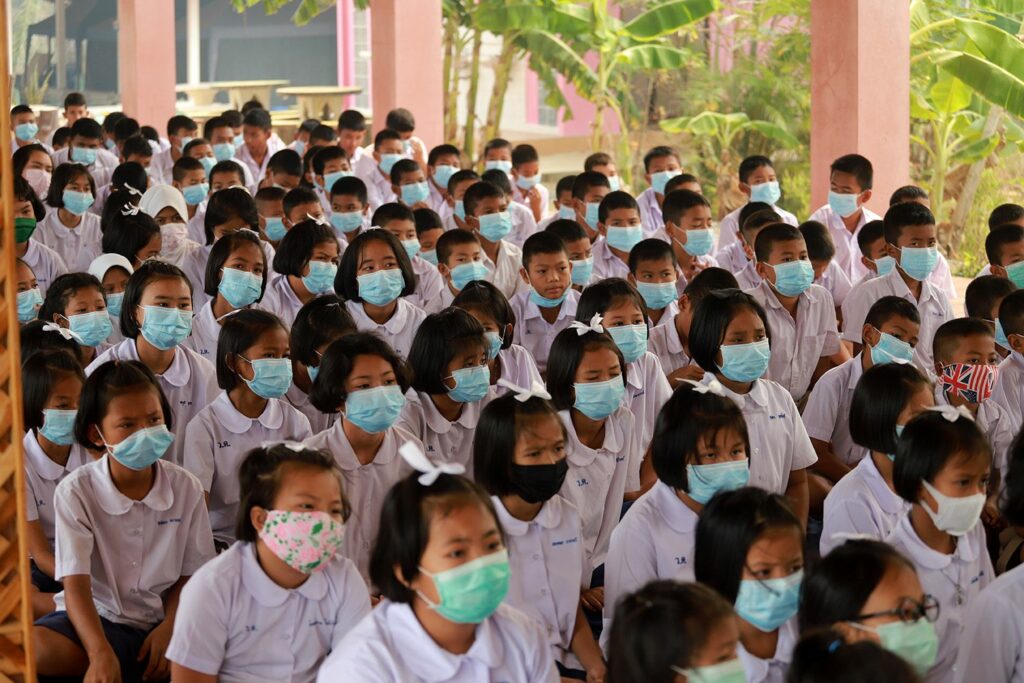
Students at Warundittharam School in Trat province wear facemasks on Feb. 24, 2020.

According to the Department of Disease Control, from Jan. 1 to Nov 10, there were 116,052 reported cases of influenza, with three deaths nationwide. 

That’s almost a 70 percent drop from the past year. Between Jan. 1, 2019 and Jan. 7, 2020, a total of 390,773 cases of influenza were noted, with 27 dead. 

This year’s numbers also compare favorably to years prior: during Jan. to Dec. 2018, officials recorded more than 172,000 cases and 31 deaths, close to the five-year-average. 

Those at most risk of influenza in Thailand are school children, who in turn often infect parents and grandparents with them. The flu can be fatal for the elderly with preexisting medical conditions. 

From Jan. 1 to Aug. 15, 425 people with hand, foot, and mouth disease were recorded – while 6,436 people were infected in 2019. Neither year saw deaths. In both years, 1-year-olds were the most susceptible.

11132020 ๒๐๑๑๑๔ 0
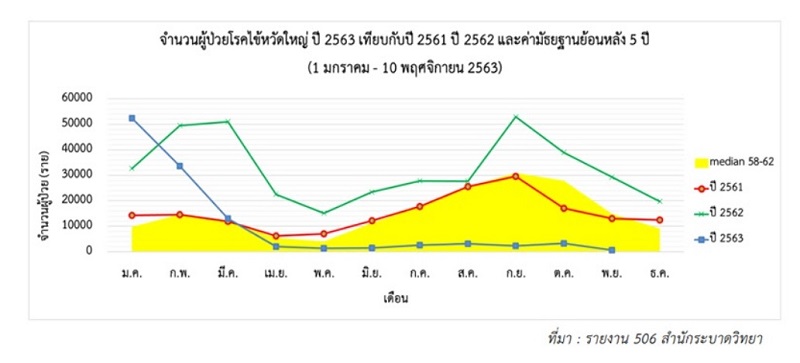
The number of recorded influenza patients in 2020 (blue), are compared with 2019 (green), 2018 (red), and the average between 2015 to 2019 (yellow). Graph: Department of Communicable Diseases

Although the latest report from August noted that the last half of 2020 had still not been accounted for, there were likely to be fewer patients from the disease than the average from 2015 to 2019. 

Thailand has won global renown for its ability to contain the domestic outbreak of the coronavirus, despite having the first known case of infection outside China, where the virus is thought to have originated. 

Just earlier this week, World Health Organization chief Tedros Adhanom Ghebreyesus praised Thailand’s effort to control the pandemic. Speaking at the 73rd World Health Assembly, Ghebreyesus said Thailand’s unique feats are not just a coincidence, but the result of serious efforts and effective policies.

The cumulative number of coronavirus infections in Thailand stands at fewer than 4,000 cases, with most of the patients having recovered. Official records say 60 people have died as a result of the virus. 

Advertisement

Planned Parenthood Hails New Law Allowing 12-Week Abortion

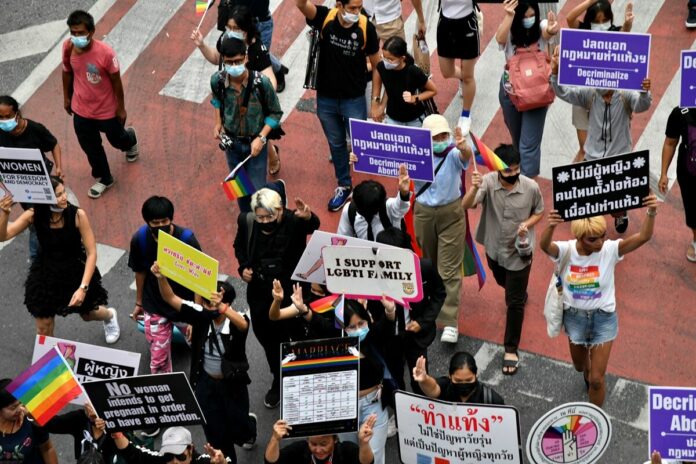
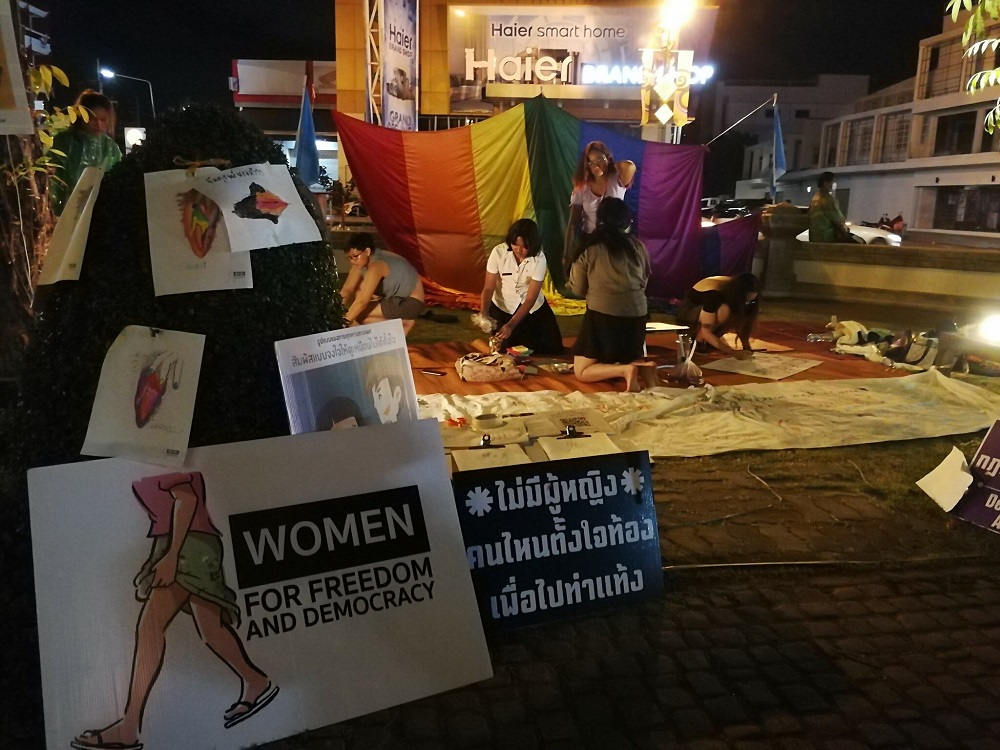
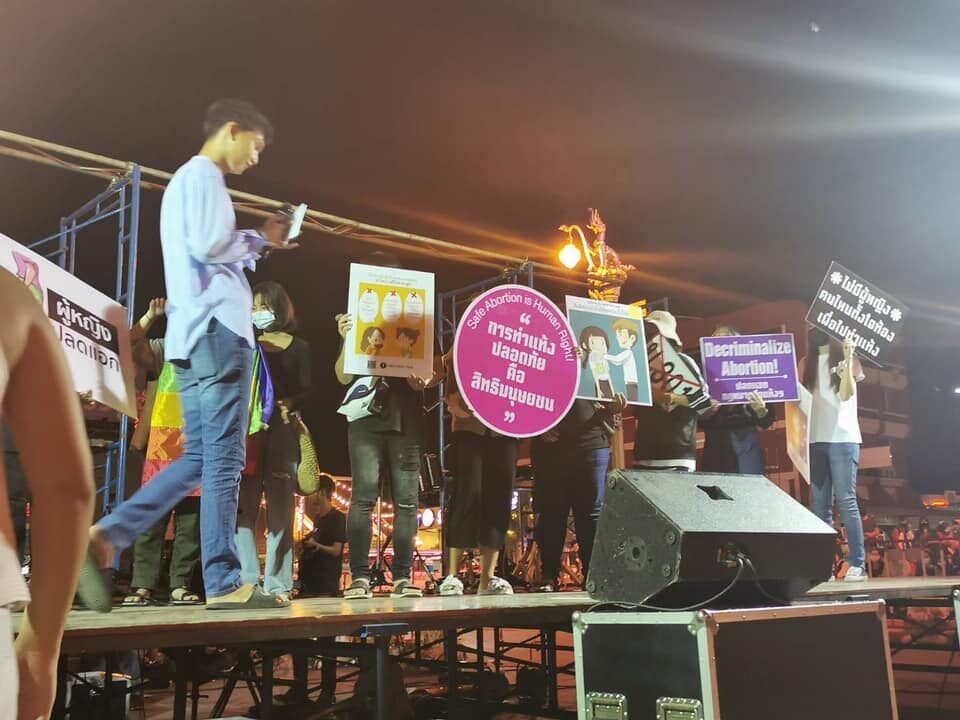
Protesters march in support of abortion rights during a pro-democracy rally in Bangkokk on Aug. 16, 2020,

BANGKOK — A leading family planning organization on Wednesday welcomed a legal amendment that would allow abortion up to 12 weeks of pregnancy and protect doctors who perform the operations from prosecution. 

The change to Thailand’s Criminal Codes was approved by the Cabinet on Tuesday, and is expected to come into effect by February 2021. A spokesman for the Planned Parenthood Association of Thailand said the protection of rights to abortion would help save women from undergoing unsafe prodecures to terminate their pregnancy.  

“In Thai society, abortion goes against some people’s feelings. Some doctors won’t carry out abortion procedures based on their own morals, because they think it’s a sin,” spokesman Somchai Kamthong said by phone. 

“But now that will become law, clinics, doctors, and hospitals can provide this service more widely.”

S 3596343
Activists in support of abortion rights are seen during a pro-democracy rally in Bangkokk on Aug. 16, 2020,

The amendment passed by the Cabinet replaced Article 301 of the Criminal Codes, which said abortion is illegal except in several cases, with a passage stating very simply that women have the rights to abortion within 12 weeks of pregnancy. 

“For those who are really not ready to have children, then they don’t have to be as ashamed or secretive,” Somchai said, referring to the bill. “Perhaps it will make their decision easier.”

The change followed the Feb. 19 ruling by the Constitutional Court, which struck the current abortion laws as unconstitutional, citing its violation of women’s rights to their life and body.

The preamble of the amendment draft acknowledged that abortion is a deeply sensitive issue, but added that a law cannot only focus on the fetus’ rights to life without taking into consideration the rights and liberties of the woman who carried the pregnancy – and whose existence preceded the fetus. 

“[Such interpretation] would result in the unfair treatment of the woman and infringe on her rights over her own body, a natural right that is fundamental to dignity of a human individual,” the document said. 

“Each individual is entitled to rights and liberties to perform, or refrain from performing, any actions on their own lives and bodies, as long as they do not infringe on the rights of others.”

The amendment also calls for decriminalizing doctors who perform abortions under 12 weeks of pregnancy.

Clearer Protection

Despite the seemingly groundbreaking nature of the amended law, Thailand’s current abortion does not impose a sweeping and uncompromising ban on the procedures.  

For instance, Article 301 exempts abortion from legal punishment if the woman’s physical or mental heath is in danger, the woman is under 15, the fetus is found to have serious disabilites or deformities, or the pregnancy was a result of sexual assault.

Another clause was also added in 2005 allowing women to terminate pregnancies if they pose “harm to women’s physical and mental health.” Many clinics and hospitals perform abortion under this exemption, by interpretating that distress caused by the pregnancy counts as harm to one’s mental health. 

But the vague wording of the law does deter some medical workers from performing abortions, out of fear that they could be prosecuted. Some doctors also cite the law to refuse abortion for patients – which often leads many to seek abortions at illegal clinics that can result in serious complications. 

S 3596343 1
Activists in support of abortion rights are seen during a pro-democracy rally in Bangkokk on Aug. 16, 2020,

The amendment helps clear up any concerns or grey areas for doctors performing the operations, according to Somchai from the Planned Parenthood Association of Thailand.

“This 12-week period has already been used by doctors at clinics, but the problem is that it hasn’t been written as law,” he said.

Both of Thailand’s leading authorities of reproductive health, including the Medical Council of Thailand and Royal Thai College of Obstetricians and Gynaecologists, recommended the 12-week window.

Backlashes from conservatives are likely to follow – Thai Buddhists often see abortion as murder and maternal sin, and many in the older generations associate abortion with promiscuity. 

“Buddhist principles taught that one must have fear and shame of committing sins,” prominent monk Phra Phayom Kalayano said in a TV interview. “Now the channel is open for people to have no fears and no shames for committing sins. The law backs it now. Human hearts will be tempted. From now on, girls will claim they don’t know it’s wrong.”

Thailand also appears to be on the track to the reputation as one of the more open countries towards abortion in Southeast Asia, which vary widely in abortion law.

Vietnam, Cambodia, and Singapore allow abortion at the woman’s request, with free access to abortion available in Vietnam. 

Abortion in Malaysia is illegal unless a woman’s physical health or mental well-being is at risk. A similar clause can be found in Indonesia, Myanmar, and Brunei, while the Phillipines and Laos ban abortion altogether. 

The World Health Organization estimates that almost one in eight maternal deaths in Asia are a result from unsafe abortion. 

Related stories:

Safe, Legal Abortion Still Out of Reach For Many Thai Women

Abortion in Thailand: More Safe and Legal Than You May Have Thought

Advertisement

Emergency Rule Extended Till January 2021 to Stem COVID Threat

BANGKOK (Xinhua) — Thailand’s Center for COVID-19 Situation Administration (CCSA) on Wednesday approved the extension of an emergency decree for 45 days to stem the spread of COVID-19.

The extension will span through the New Year festival and an international badminton tournament, CCSA spokesman Kaweesi Visanuyothin confirmed.

Taweesin also said that the CCSA had also approved “in principle” a reduction of the 14-day quarantine period to 10 days.

The CCSA, chaired by Prime Minister Prayut Chan-o-cha, has agreed to extend the emergency decree for another 45 days, from Dec. 1, 2020 to Jan. 15, 2021, to facilitate the work of disease-control officials, confirmed Taweesin.

The extension of the decree was justified by the CCSA, said Taweesin, adding that should infections arise, the government can then make a swift decision under the decree to stem the outbreak.

The extension covers the New Year’s holiday and the HSBC BWF World Tour, which will take place in Thailand on Jan. 12-31 next year.

Advertisement

Royalist Protester Arrested With Gun After 6 Shot at Rally

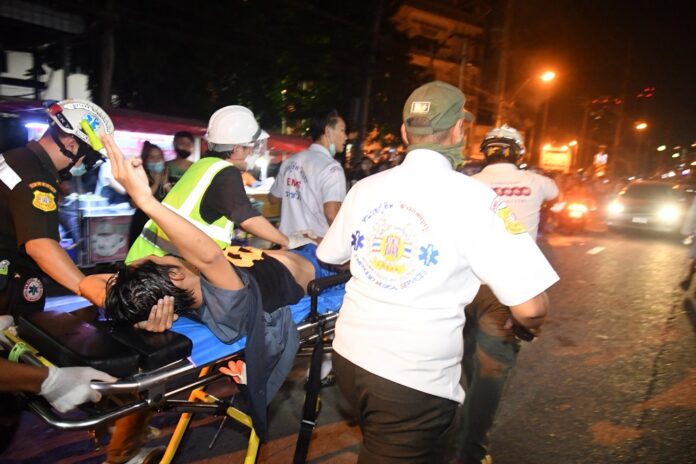
Rescue workers wheel an injured protester away from clashes between reformist protesters and hardline royalists at Kiakkai Intersection on Nov. 17, 2020.

BANGKOK — Police on Wednesday said a man was arrested on firearm charges for bringing a handgun and ammo to yesterday’s protest, where at least six people were shot by unidentified assailants. 

The suspect was identified as Kasidit Leelamuktanun, 35. Police said Kasidit was arrested on Tuesday night, hours after gunshots were heard at the protest close to the parliament, which escalated into clashes between pro-monarchy hardliners and activists urging reforms of the monarchy. 

Police reports said soldiers at an army base close to the protest site saw Kasidit trying to hide his firearm and bullets. He was soon apprehended with a .357 handgun and 10 rounds of ammunition. 

S 30580747
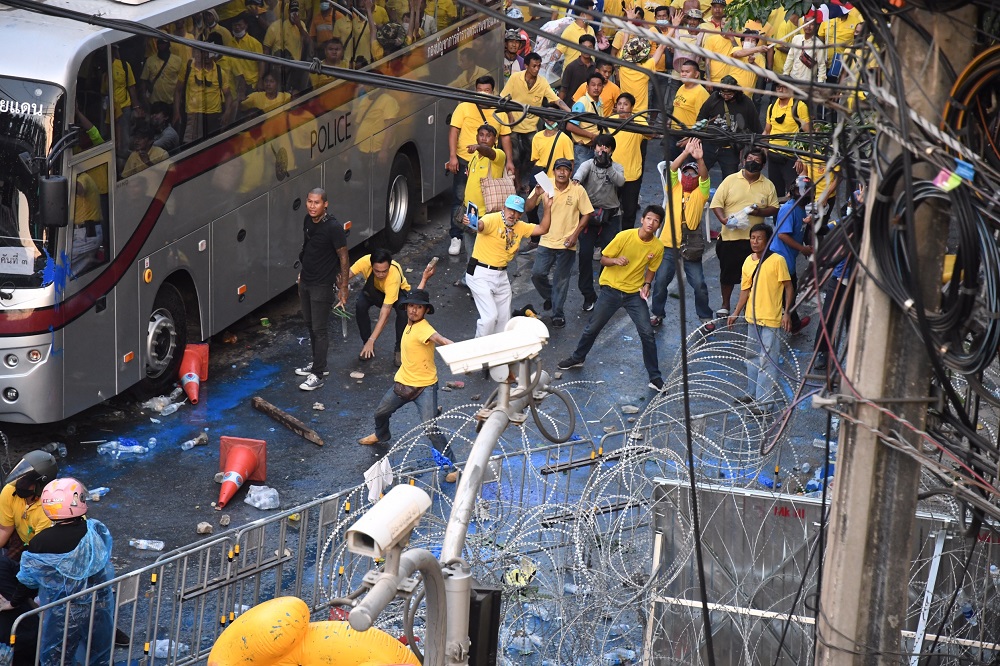
Reformists and hardline royalists throw projectiles at each other close to Kiakkai Intersection on Nov. 17, 2020.

Kasidit reportedly told investigators he carried the firearm to the royalist rally on Tuesday because he was concerned about his safety. He was charged with illegal possession of firearms and carrying weapons into residential areas without reasonable causes. 

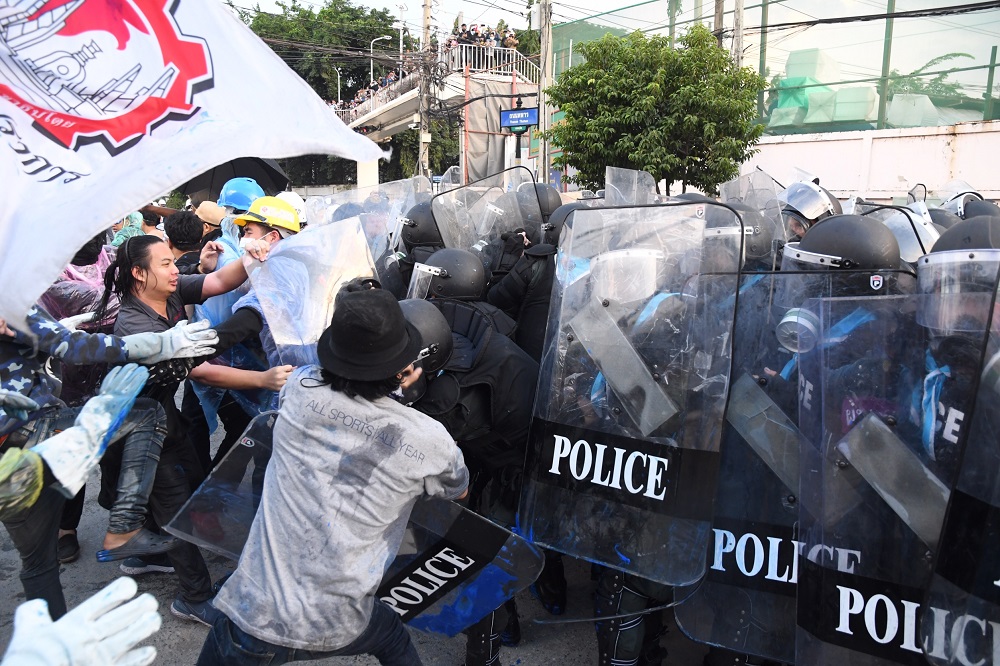
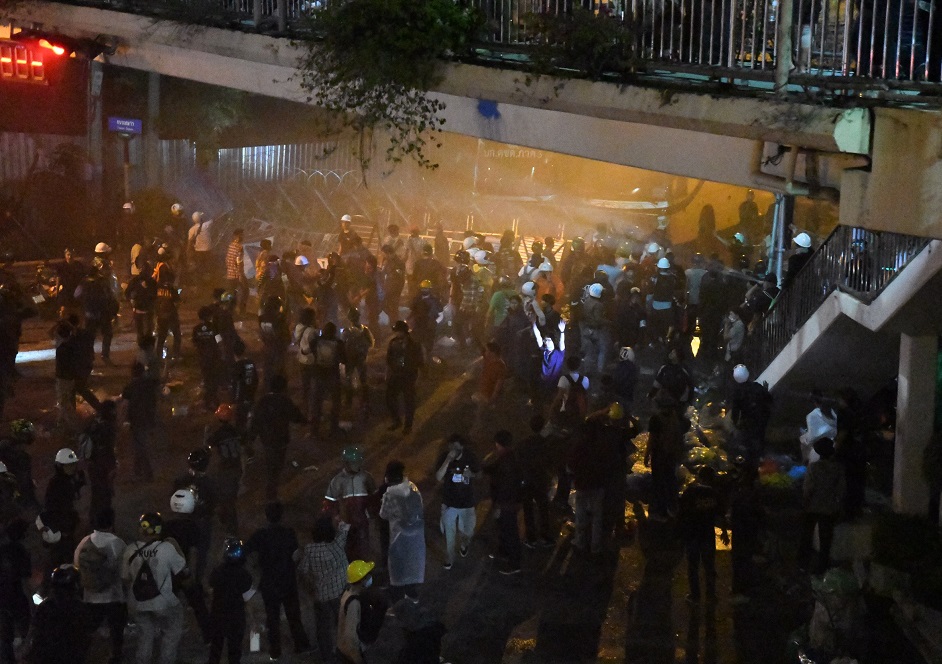
Yesterday’s protest saw the most serious violence since the student-led demonstrations broke out in February. Police launched water cannons and teargas at protesters attempting to besiege the parliament building. 

Pro-democracy activists also skirmished with the hardline royalists into the night at Kiakkai Intersection in absence of the police force. Loud bangs of gunshots and fireworks echoed throughout the area. 

S 30580759
Reformist protesters scuffle with riot police at Kiakkai Intersection on Nov. 17, 2020.

At least 55 people were sent to hospital throughout the day, the city hall’s Erawan Medical Center reported. Many more were given first aid at the protest site. 

Among the most alarming injuries were six people who were found with gunshot wounds, though none was in serious conditions. 

Police denied any involvement; they said only teargas and water cannons were deployed on Tuesday, and no live ammunition was used on the protesters. 

S 30613574
Reformist protesters and hardline royalists clash at Kiakkai Intersection on Nov. 17, 2020.
Advertisement

Protesters, Police Clash as MPs Mull Charter Change

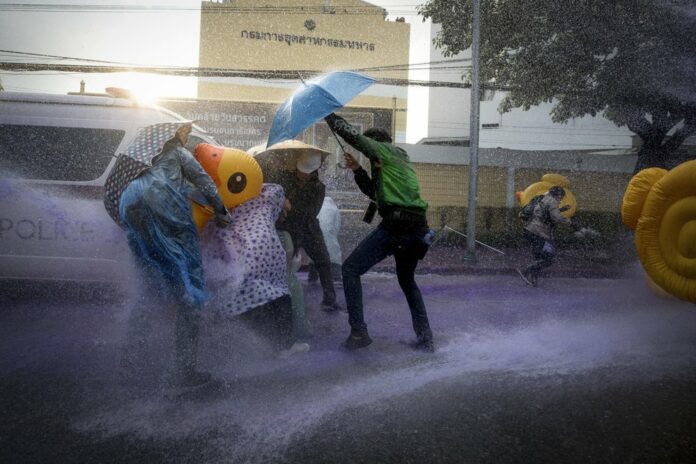
Pro-democracy protesters take cover with inflatable ducks and umbrellas as police fire water cannons during an anti-government rally near the Parliament in Bangkok, Tuesday, Nov. 17, 2020. (AP Photo/Wason Wanichakorn)

BANGKOK (AP) — Pro-democracy protesters in Thailand battled police who sought to keep them from entering the grounds of Parliament on Tuesday to press for constitutional changes as lawmakers debated whether to back proposed amendments.

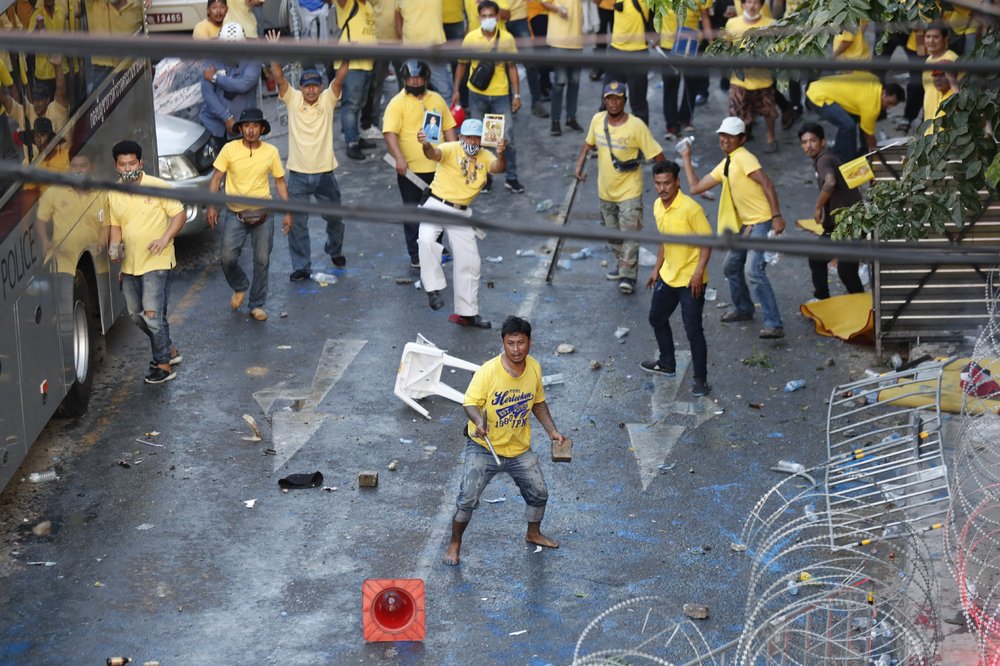
About 40 people were injured, including five who were shot, according to emergency services. It was unclear who fired the shots and whether they were live rounds or rubber bullets. Some of the injuries occurred during a brawl between the pro-democracy protesters and stone-throwing royalists who oppose constitutional change.

Police used tear gas and water cannons laced with irritating chemicals against the student-led demonstrators, who tried to push their way past barbed-wire barriers to enter the grounds of the legislature on the outskirts of Bangkok.

The chaotic street confrontations began in midafternoon and ended about six hours later, when protest leaders called a halt and sent followers home.

1000 1 11
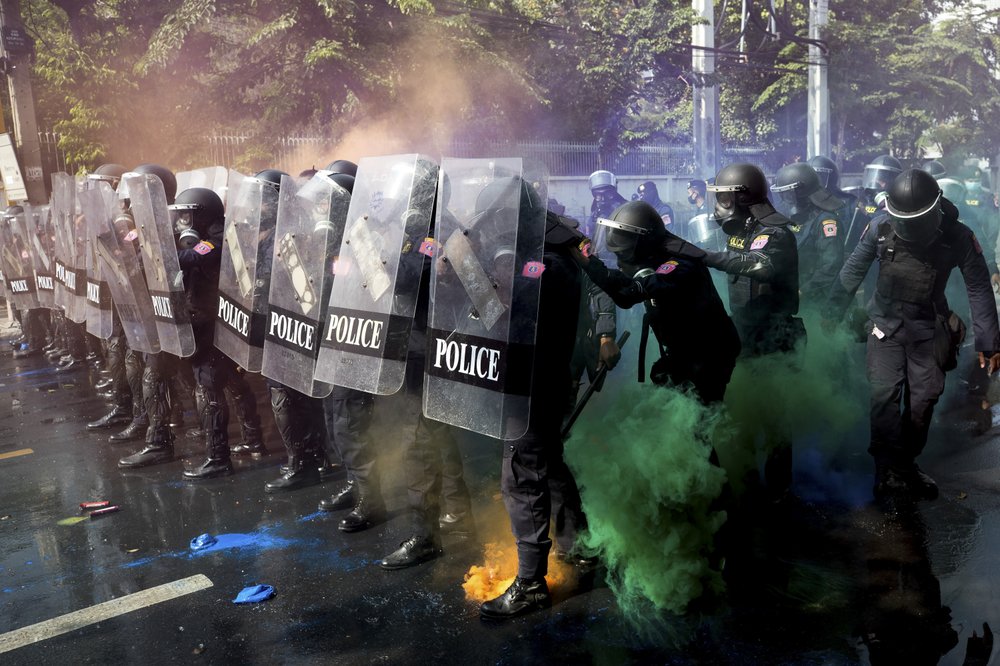
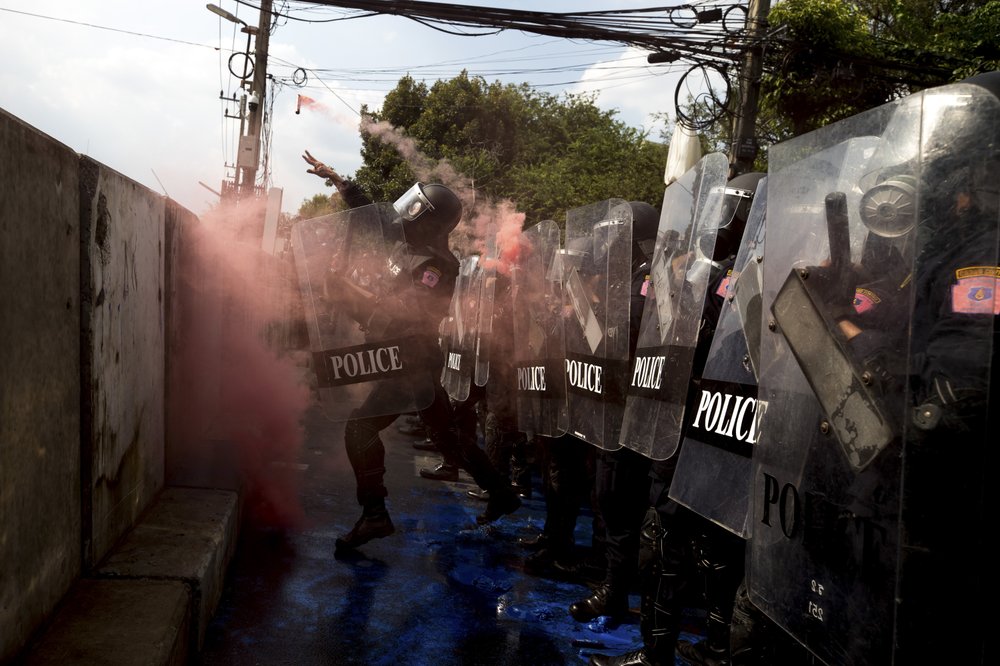
Riot police stand in formation as pro-democracy protesters throw smoke bombs near the Parliament in Bangkok, Tuesday, Nov. 17, 2020. (AP Photo/Wason Wanichakorn)

It was the worst violence during months of actions by the protesters, though police had previously employed water cannons at least twice. The protest movement has been staging increasingly determined mass rallies of thousands of people around the country.

Lawmakers are scheduled to vote on seven proposed constitutional amendments during a two-day joint session of the elected House and appointed Senate. Constitutional changes require a joint vote of both bodies. Any motions that are passed will have to go through second and third votes at least a month after this week’s balloting.

Lawmakers adjourned a previous session without voting on proposed amendments, leading the protesters to accuse the government of bad faith.

The parliamentary session is an effort by the government of Prime Minister Prayuth Chan-ocha to take the initiative away from the pro-democracy movement, which in addition to seeking constitutional changes and reforms to the monarchy wants Prayuth and his government to step down.

1000 5 2
Democracy protesters break through a barricade during an anti-government rally near the Parliament in Bangkok, Tuesday, Nov. 17, 2020. (AP Photo/Sakchai Lalit)

The protesters say that Prayuth, who as army chief in 2014 led a coup that ousted an elected government, returned to power unfairly in last year’s election because laws had been changed to favor a pro-military party. The protesters also say the constitution, written and enacted under military rule, is undemocratic.

Reform of the monarchy is a key demand of the protest movement, which believes the royal institution is too powerful and lacks accountability. The unprecedented demand has touched a raw nerve in Thailand, where reverence for the royal institution is inculcated from birth and protected by a law that makes defaming the monarch and his immediate family punishable by up to 15 years in prison.

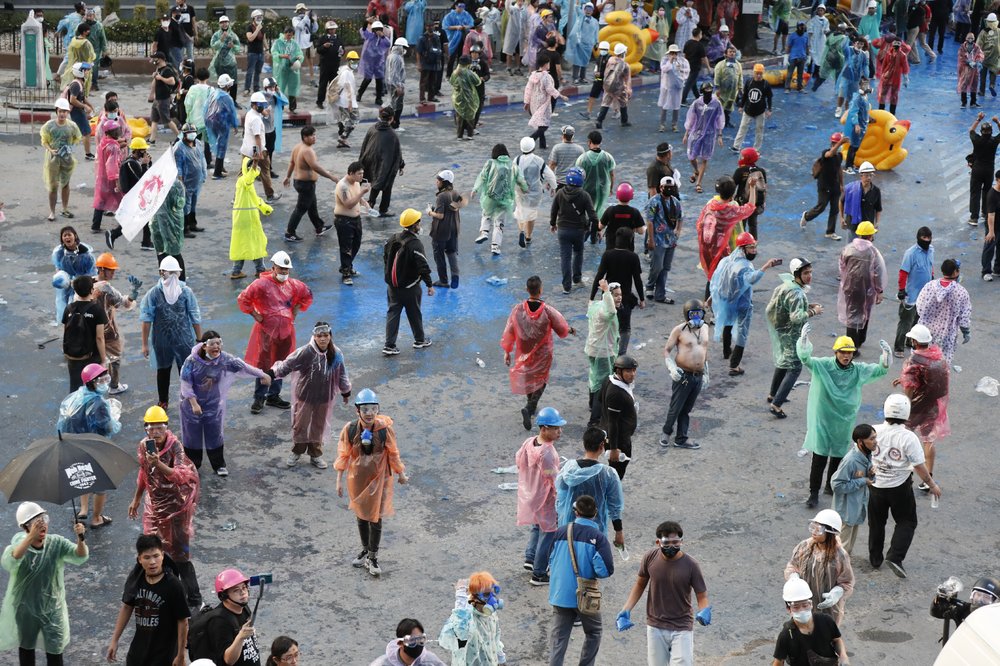
Tuesday’s violence grew as about 1,000 protesters were pushed back by police water cannons as they tried to breach barriers set up on several streets to keep them from entering the Parliament compound.

Police also fired fired tear gas canisters, some of which were tossed back by demonstrators, many of whom wore helmets and other protective gear.

1000 3 9
Royalist supporters look to confront pro-democracy protesters during an anti-government rally near the Parliament in Bangkok, Tuesday, Nov. 17, 2020. (AP Photo/Sakchai Lalit)

The Erawan emergency medical services group said 41 people were injured, including five who were shot in the leg, stomach or wrist. No further details were available. Police later denied firing any guns and said they had complied with laws and international standards.

A protest leader, Parit “Penguin” Chiwarak, announced at about 8 p.m. that the demonstrators had captured enough ground to declare they had achieved their goal of surrounding Parliament. Some lawmakers had already left the scene by boat from a pier behind Parliament.

Parit announced another rally on Wednesday afternoon at the busy Rajprasong intersection in the heart of Bangkok’s main shopping district.

Parliament is not expected to agree on specific constitutional changes at this point. The protesters back a proposal that would roll back aspects of the current 2017 constitution — enacted during military rule — that granted extra powers to unelected branches of government, such as the Senate.

1000 4 7
Riot police throw a smoke bomb back to pro-democracy protesters near the Parliament in Bangkok, Tuesday, Nov. 17, 2020. (AP Photo/Wason Wanichakorn)

Instead, Parliament is likely to establish a drafting committee to write a new charter. This would allow the government to say it is willing to meet the protesters’ demands at least halfway, while buying time with a process that could extend over many months.

Any change to sections of the constitution concerning the monarchy is fiercely opposed by the government and its supporters, who consider the monarchy untouchable.

Thailand has had 20 constitutions since abolishing the absolute monarchy in 1932 in favor of a constitutional monarchy.

___

Associated Press writers Chalida Ekvitthayavechnukul and Grant Peck contributed to this report.

Advertisement

‘I Don’t Want to Die Before My Mom,’ Monk Fled Thailand for ‘Insulting’ King

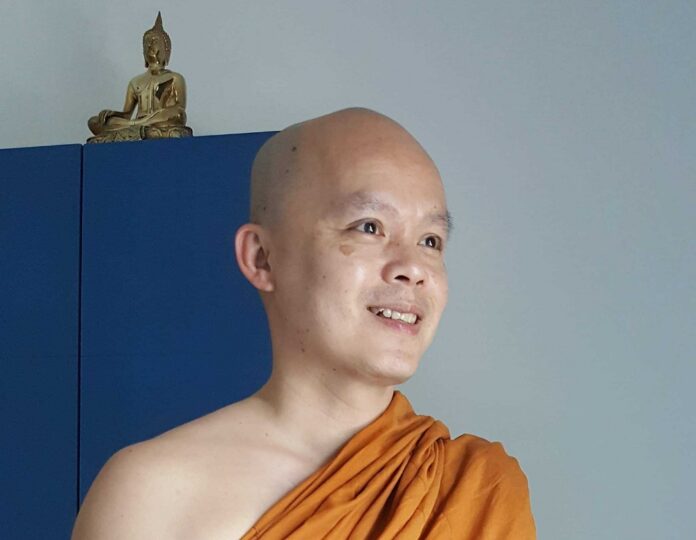
Phra Panya Seesun. Image: Courtesy

BANGKOK — A Buddhist monk said he fled Thailand to avoid being charged and possibly imprisoned for his Facebook posts that referenced His Majesty the King.

Phra Panya Seesun, 39, said he left the country a month ago after police told him he would be prosecuted for his critical comments. Although police stopped short of using the infamous lese majeste law, or royal defamation – opting for a charge of cybercrime instead – the monk said he stood little chance to prove his innocence all the same. 

“From what I saw on the news, no one won lese majeste cases, no matter how nonsensical the charges may be,” Phra Panya said by phone Monday. “The rulings were mostly abnormal and the interpretation ever more vague.”

Phra Panya, who is also known as Bhikku Moss, said he is currently residing in a foreign country – he wouldn’t say where, citing fears that he could end up like so many other exiles marked as critics of the monarchy who ended up dead or missing. 

“I just do not want to die before my mother, who is 74,” the monk said. “If she has to come to term with her son dying before her, it would be devastating. I wouldn’t be surprised though, because those in power are capable.”

Read: Sister of Abducted Activist to Visit Cambodia for Investigation

The monk said his troubles began when he criticized the appointment of the several senior monks on his Facebook from October to December 2019. His main gripe was the Sangha Act, which was amended in 2018 under the auspices of the junta at the time. 

Phra Panya said he disagreed with the law because it granted His Majesty the King the power to appoint or remove key positions in the national Buddhist hierarchy, which he saw as a blurred line between the church and the state. He made clear of his objection in those Facebook posts. 

“As the King now exercises the power to rule over the Sangha, he cannot avoid criticism,” Phra Panya said in the interview. 

A police summons eventually landed on his temple on July 30, Phra Panya recalled, or nearly half a year since he wrote the critical comments. The document accused him of importing “false” information into the computer system that could cause unrest in the country, an offense under the Computer Crimes Act. 

S 144867346 1
Phra Panya Seesun. Image: Courtesy.

Due to legal concerns, Khaosod English cannot republish his comments in full. Phra Panya also said police told him before he fled Thailand that they will not charge him under the lese majeste law due to the “clemency of His Majesty the King.” 

The account was confirmed by Supanut Boonsod, the monk’s pro bono attorney from Thai Lawyers for Human Rights group, who spoke in an interview on Monday.

“He was accused of violating the lese majeste law but police said the Compute Crimes Act will be used instead,” Supanut said. The Computer Crimes Act carries a maximum jail term of five years.

Pol. Lt. Col. Sarawut Buddee, who handled Phra Panya’s investigation, did not answer multiple phone calls made to him on Monday. The summons seen by Khaosod English bore Sarawut’s signature and listed the Special Branch Police as the plaintiff who brought charges against the monk. 

The summons letter warned that an arrest warrant would be issued for Phra Panya if he failed to show up by Oct. 8. That deadline has long passed, and Panya’s lawyer said he expected the arrest warrant could be issued at any time. 

Holy Man in Exile

Although His Majesty the King reportedly asked the government and the police in June to refrain from pursuing charges of royal defamation against members of the public, critics of the monarchy continue to be prosecuted for their speeches.

One of the offenses often used by police is the sweeping Computer Crime Acts, which outlaws any action on the computer system that could affect national security.  

Phra Panya said he is now trying to travel to Europe and seek political asylum status; he believes he is the first Buddhist monk in political exile in recent history, and added that he will contest any attempt to extradite him.

“Let me challenge them to do it so the world can see that they can frame a monk with mindless charges,” he said. “I challenge them to do it.”

Panya, who used to reside at Wat Yanasangvararam in Chonburi province prior to his exile, said he has since been living on personal savings and some donations from the faithful, though he worried that he could run out of money within two months. 

The monk has already overstayed his visa in the country he is staying. In order to avoid attention, Phra Panya said he has stopped wearing his monk robe when he goes out. Unlike monks in Thailand, he has to cook for himself nowadays, as no alms can be collected. 

“Some Thai political dissidents in exile also told me not to mingle with other Thais,” Panya said.

Related stories:

Thai Musicians in Exile for Their Songs Fear for Their Lives

Advertisement

Book Discounted Buffets in Bangkok Through This App

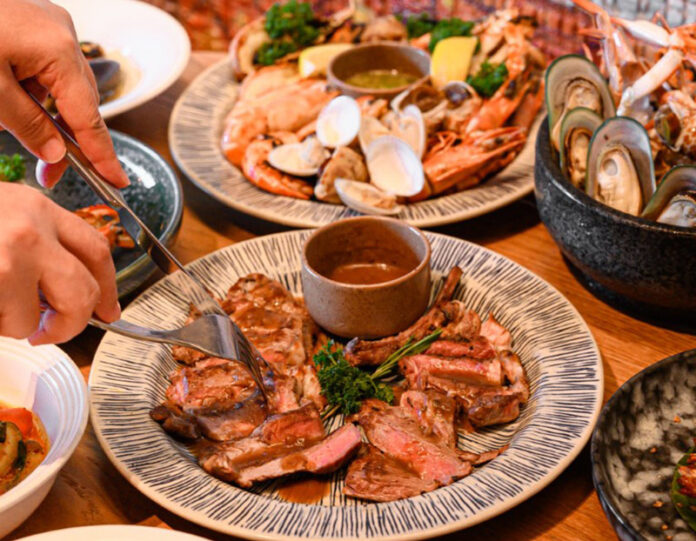
Photo: Praya Kitchen Bangkok Marriott Hotel The Surawongse / Hungry Hub

BANGKOK — There’s an app that helps you gorge gourmet buffets for less as a pat-on-the-back for getting through this century’s annus horribilis. 

The Hungry Hub dining app allows diners to book discounted dinners at more than 400 restaurants, most of them offering all-you-can-eat deals, including those located inside Bangkok’s luxury hotels.

“The prices of the buffets are quite worth it, such as the price of the buffet for Audrey Cafe,” Anchasa Burarak, public relations officer at Hungry Hub, said by phone. “If I just walk-in to the restaurant, one dish might already be this price.” 

Think of it as an Eatigo, but with an emphasis on buffets. 

Hungry Hub founder and CEO Srasit Sachdev said in a press release that Hungry Hub saw decreased usage from March to June during the pandemic, but is now working to provide promotional offers to diners. The app plans to launch in Phuket and Pattaya in December. 

Among those listed in the application are restaurants from Marriott Group and Banyan Tree hotels, as well as Copper International Buffet, Crab & Claw, and Sushi Den. 

The Hungry Hub app is available on both iOS and Android, and can also be booked via their website

Advertisement

Hot News

LATEST NEWS

Bangkok
overcast clouds
31.6 ° C
32.7 °
31.6 °
99 %
5.2kmh
100 %
Sun
30 °
Mon
34 °
Tue
33 °
Wed
31 °
Thu
29 °