

































29.4 C
Bangkok
Tuesday, June 23, 2026
Home Blog Page 1428

U.S. Visa Obstacles Drive Chinese Students Elsewhere

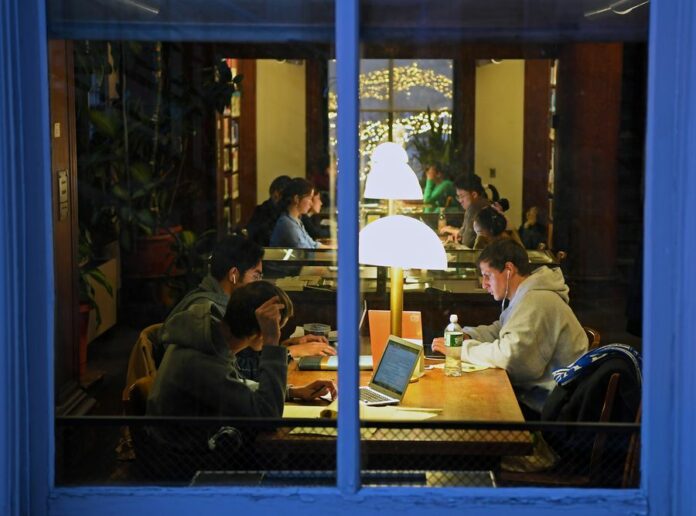
Students study at a library of Columbia University in New York, the United States, on Dec. 7, 2019. (Xinhua/Li Rui)

NEW YORK (Xinhua) — An increasing number of Chinese students have put U.S. visa obstacles, along with social instability and climbing tuition fees, into perspective, and moved on to other global destinations for higher education as well as institutions at home, as industry professionals have observed while looking back at 2019.

“Chinese students’ enthusiasm for American higher education has been dampened by the U.S. administration’s visa policy, which has delayed or denied entries to many of them, especially those aiming for STEM (science, technology, engineering and mathematics) degrees,” said Annabelle Ding, admission representative at Columbia University School of Professional Studies, in a recent interview with Xinhua.

According to the non-partisan think tank Migration Policy Institute (MPI), new international student enrollment at U.S. colleges and universities dropped for the third year in a row, and the number of student visas issued to Chinese applicants went down by 54 percent in fiscal year 2018 from fiscal year 2015. Not incidentally, the United States reportedly saw an increase of only 1.7 percent for Chinese students in fall 2018, the lowest in a decade.

“Recent U.S. policies have affected its image and reputation, obstructed its exchange with other countries, and undermined its own interests,” Chinese Foreign Ministry spokesman Geng Shuang told reporters in November.

“Today, it is all the more important for us to create positive conditions for exchange of students as well as people-to-people ties with an open and inclusive attitude,” Geng said.

Voices Against Visa Policy

Lindsay Zou founded offerbang.io to provide career education for international students and professionals, after dabbling in Wall Street as a financial executive upon completion of her schooling years in New York and Beijing.

“I’ve met Chinese students hurt by visa delay or denial. As a consequence, the upcoming ones are overshadowed. Seeing the hardship of studying and job finding in the United States, they’d rather stay in China for higher education, relinquishing their overseas plans at all,” she said.

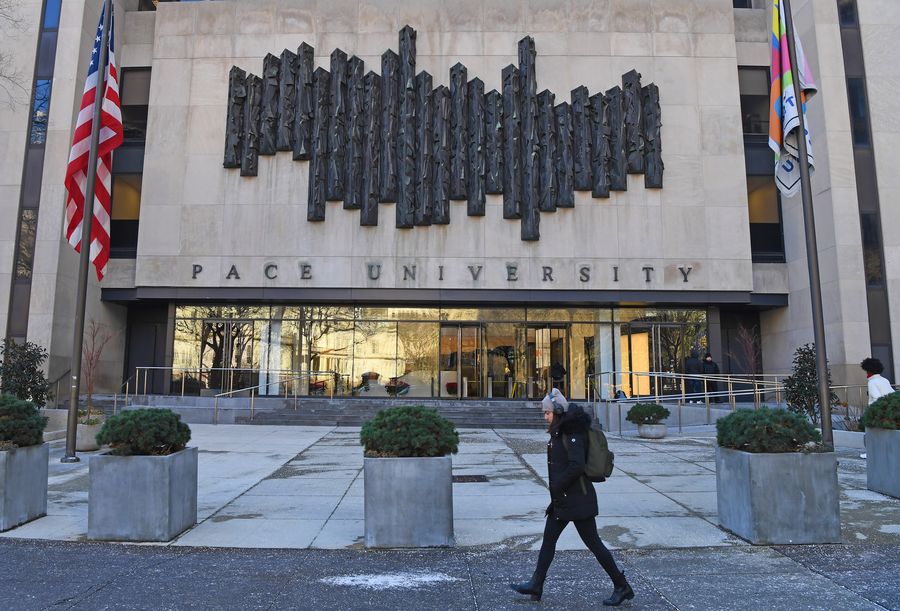
Lan Yang just obtained his master’s degree of computer science at Pace University this year and found a job as a product and user interface/user experience manager at Zou’s company. Some of his Chinese friends and classmates were not as lucky as him.

“As I know, you have to wait longer to get your student visa, which worries not only the students themselves but their parents. For those who are still planning their studying trips to the United States, it is an omen clearly spelt – they react in no other way but jump to a conclusion that America is unfriendly toward Chinese students,” he said.

Rachel Banks, director of public policy at NAFSA: Association of International Educators, was recently quoted by The China Press as saying that the U.S. administration’s visa policy and its leaders’ comments were the prime factor that stemmed the influx of international students.
75580099 3530159493678136 2600025973814460416 n 1
A student walks past a building of Pace University in New York, the United States, on Dec. 19, 2019. (Xinhua/Li Rui)

U.S. President Donald Trump and White House officials have denied such accusations.

Caroline Casagrande, deputy assistant secretary for academic programs in the U.S. Department of State’s Bureau of Educational and Cultural Affairs, told Xinhua at the end of November that “our visa policy is matching our discussion, which is coming from the highest office in the land. The president recently said out of the Oval Office (that) we welcome Chinese students into our universities.”

What Casagrande referred to was Trump’s remarks made on Oct. 11 in the White House — “Our universities are available. The world comes in. They use our universities. We have the greatest system in the world. And China is not going to be treated any differently.”

However, U.S. universities and education organizations picked up a different tone.

“We want the pathway (of coming to the United States) to be very clear and very transparent and very predictable. And what we’re hearing from Chinese students is that’s not always the case,” Brad Farnsworth, vice president of American Council on Education, told Xinhua recently.

Months earlier, top universities like Massachusetts Institute of Technology, Yale University, Harvard University and University of California Berkeley voiced their concern that their government’s visa policy created “toxic atmosphere” and ran counter to their doctrine of openness and transparency. Chinese students were always welcomed by U.S. universities, they added.

For the 10th consecutive year, China remained the largest source of international students in the United States in 2018/19, with 369,548 students in undergraduate, graduate, non-degree, and OPT programs.

International students, making up 5.5 percent of the total U.S. higher education population, contributed 44.7 billion U.S. dollars to the country’s economy in 2018, an increase of 5.5 percent from the previous year, according to the latest data from the U.S. Department of Commerce.

Meanwhile, according to NAFSA’s recent statistics, the consecutive slump of new international students since 2016 has led to a loss of 11.8 billion dollars to the U.S. economy.

“To be frank, it is no more the choice of choices, but one choice of choices for Chinese students to get enrolled at an American university. I recommend that they make dual options for higher education: maybe one is coming to the United States and the other is to other nations, including China itself,” said Ding.

Canada, Australia and China have been catching up in attracting international students, said a report issued in December by the Center for China and Globalization (CCG) at a summit on the internationalization of higher education in Beijing.

According to the report, China now accounts for 10 percent of the world’s total international students, ranking No. 3 on the global charts in this category, and plans to host 500,000 international students at all academic levels by 2020.
Advertisement

US Kills Iran’s Most Powerful General in Baghdad Airstrike

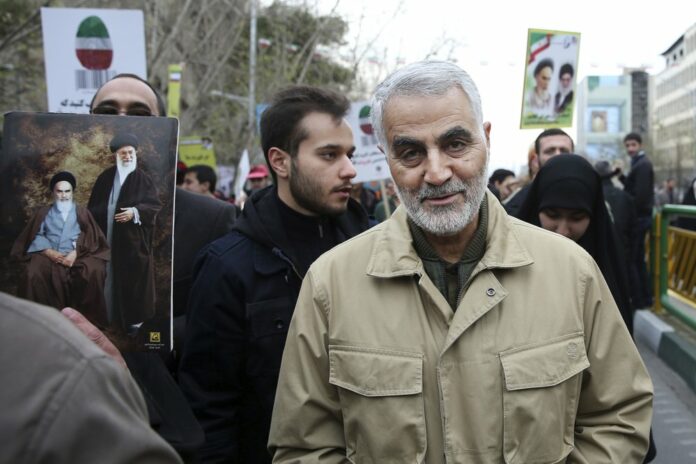
In this Thursday, Feb. 11, 2016, file photo, Qassem Soleimani, commander of Iran's Quds Force, attends an annual rally commemorating the anniversary of the 1979 Islamic revolution, in Tehran, Iran. (AP Photo/Ebrahim Noroozi, File)

BAGHDAD (AP) — The United States killed Iran’s top general and the architect of Tehran’s proxy wars in the Middle East in an airstrike at Baghdad’s international airport early on Friday, an attack that threatens to dramatically ratchet up tensions in the region.

The targeted killing of Gen. Qassem Soleimani, the head of Iran’s elite Quds Force, could draw forceful Iranian retaliation against American interests in the region and spiral into a far larger conflict between the U.S. and Iran, endangering U.S. troops in Iraq, Syria and beyond.

The Defense Department said it killed Soleimani because he “was actively developing plans to attack American diplomats and service members in Iraq and throughout the region.” It also accused Soleimani of approving the attacks on the U.S. Embassy in Baghdad earlier this week.

Iran’s Supreme Leader Ayatollah Ali Khamenei warned that a “harsh retaliation is waiting” for the U.S.

Iranian state TV carried a statement by Khamenei also calling Soleimani “the international face of resistance.” Khamenei declared three days of public mourning for the general’s death.

Also, an adviser to Iran’s President Hassan Rouhani warned President Donald Trump of retaliation from Tehran. “Trump through his gamble has dragged the U.S. into the most dangerous situation in the region,” Hessameddin Ashena wrote on the social media app Telegram. “Whoever put his foot beyond the red line should be ready to face its consequences.”

1000 9
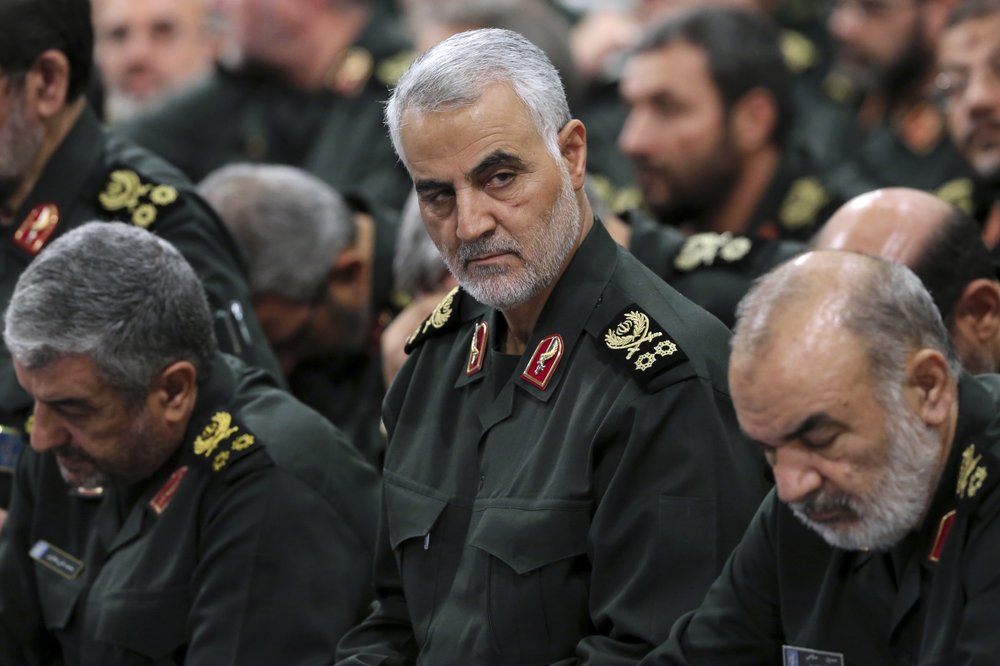
In this Sept. 18, 2016, file photo provided by an official website of the office of the Iranian supreme leader, Revolutionary Guard Gen. Qassem Soleimani, center, attends a meeting in Tehran, Iran. (Office of the Iranian Supreme Leader via AP, File)

Iranian state television later in a commentary called Trump’s order to kill Soleimani “the biggest miscalculation by the U.S.” in the years since World War II. “The people of the region will no longer allow Americans to stay,” the TV said.

The airport strike also killed Abu Mahdi al-Muhandis, deputy commander of Iran-backed militias in Iraq known as the Popular Mobilization Forces, and five others, including the PMF’s airport protocol officer, Mohammed Reda, Iraqi officials said.

Trump was vacationing on his estate in Palm Beach, Florida, but sent out a tweet of an American flag.

The dramatic attack comes at the start of a year in which Trump faces both a Senate trial following his impeachment by the U.S. House and a re-election campaign. It marks a potential turning point in the Middle East and represents a drastic change for American policy toward Iran after months of tensions.

Tehran shot down a U.S. military surveillance drone and seized oil tankers. The U.S. also blames Iran for a series of attacks targeting tankers, as well as a September assault on Saudi Arabia’s oil industry that temporarily halved its production.

The tensions take root in Trump’s decision in May 2018 to withdraw the U.S. from Iran’s nuclear deal with world powers, struck under his predecessor, Barack Obama.

The 62-year-old Soleimani was the target of Friday’s U.S. attack, which was conducted by an armed American drone, according to a U.S. official. His vehicle was struck on an access road near the Baghdad airport.

A senior Iraqi security official said the airstrike took place near the cargo area after Soleimani left his plane and joined al-Muhandis and others in a car. The official said the plane had arrived from either Lebanon or Syria.

Two officials from the PMF said Suleimani’s body was torn to pieces in the attack, while they did not find the body of al-Muhandis. A senior politician said Soleimani’s body was identified by the ring he wore.

The officials spoke on condition of anonymity because they were not authorized to give official statements.

It’s unclear what legal authority the U.S. relied on to carry out the attack. American presidents claim broad authority to act without the approval of the Congress when U.S. personnel or interests are facing an imminent threat. The Pentagon did not provide evidence to back up its assertion that Soleimani was planning new attacks against Americans.

Democratic Connecticut Sen. Richard Blumenthal said Trump owes a full explanation to Congress and the American people. “The present authorizations for use of military force in no way cover starting a possible new war. This step could bring the most consequential military confrontation in decades,” Blumenthal said.

But Trump allies were quick to praise the action. “To the Iranian government: if you want more, you will get more,” tweeted South Carolina Sen. Lindsey Graham.

For Iran, the killing represents more than just the loss of a battlefield commander, but also a cultural icon who represented national pride and resilience while facing U.S. sanctions. While careful to avoid involving himself in politics, Soleimani’s profile rose sharply as U.S. and Israeli officials blamed him for Iranian proxy attacks abroad.

While Iran’s conventional military has suffered under 40 years of American sanctions, the Guard has built up a ballistic missile program. It also can strike asymmetrically in the region through forces like Lebanon’s Hezbollah and Yemen’s Houthi rebels. The U.S. long has blamed Iran for car bombings and kidnappings it never claimed.

As the head of the Quds, or Jersualem, Force of Iran’s paramilitary Revolutionary Guard, Soleimani led all of its expeditionary forces and frequently shuttled between Iraq, Lebanon and Syria. Quds Force members have deployed into Syria’s long war to support President Bashar Assad, as well as into Iraq in the wake of the 2003 U.S. invasion that toppled dictator Saddam Hussein, a longtime foe of Tehran.

Soleimani rose to prominence by advising forces fighting the Islamic State group in Iraq and in Syria on behalf of the embattled Assad.

U.S. officials say the Guard under Soleimani taught Iraqi militants how to manufacture and use especially deadly roadside bombs against U.S. troops after the invasion of Iraq. Iran has denied that. Soleimani himself remains popular among many Iranians, who see him as a selfless hero fighting Iran’s enemies abroad.

Soleimani had been rumored dead several times, including in a 2006 airplane crash that killed other military officials in northwestern Iran and following a 2012 bombing in Damascus that killed top aides of Assad. Rumors circulated in November 2015 that Soleimani was killed or seriously wounded leading forces loyal to Assad as they fought around Syria’s Aleppo.

Soleimani’s killing follows the New Year’s Eve attack by Iran-backed militias on the U.S. Embassy in Baghdad. The two-day embassy attack, which ended Wednesday, prompted Trump to order about 750 U.S. soldiers deployed to the Middle East.

It also prompted Secretary of State Mike Pompeo to postpone his trip to Ukraine and four other countries “to continue monitoring the ongoing situation in Iraq and ensure the safety and security of Americans in the Middle East,” State Department spokeswoman Morgan Ortagus said Wednesday.

The breach at the embassy followed U.S. airstrikes Sunday that killed 25 fighters of the Iran-backed militia in Iraq, the Kataeb Hezbollah. The U.S. military said the strikes were in retaliation for last week’s killing of an American contractor in a rocket attack on an Iraqi military base that the U.S. blamed on the militia.

U.S. officials have suggested they were prepared to engage in further retaliatory attacks in Iraq.

“The game has changed,” Defense Secretary Mark Esper said Thursday, telling reporters that violent acts by Iran-backed Shiite militias in Iraq — including the Dec. 27 rocket attack that killed one American — will be met with U.S. military force.

___

Karam reported from Beirut. Associated Press writers Robert Burns and Zeke Miller in Washington, Jon Gambrell in Dubai, United Arab Emirates, Nasser Karimi in Tehran, Iran, and Bassem Mroue in Beirut contributed reporting.

Advertisement

A Milestone for French Rail Strikes: 29th Day of Walkouts

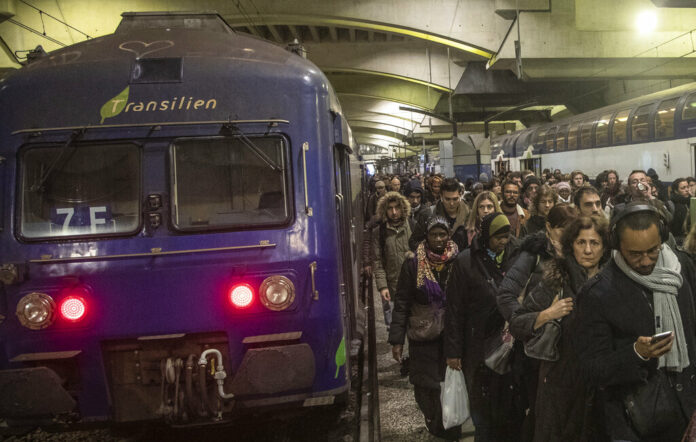
Commuters arrive at at Gare Montparnasse train station during the 29th day of transport strikes in Paris, Thursday, Jan. 2, 2020. The start of 2020 was the second New Year celebration in a row where Macron has faced social upheaval. Photo: Michel Euler / AP

PARIS (AP) — With 29 straight days of walkouts, French rail strikes against government plans to reform France’s retirement system marked a new milestone Thursday, surpassing even the lengths of strikes in the 1980s.

The nationwide walkouts against the government’s pension plans started Dec. 5. On Thursday, they surpassed a 1986-1987 rail strike in longevity, a walkout that lasted 28 days at the SNCF national rail company.

The current strikes have crippled train and metro services in Paris and across the country over the Christmas-New Year period and continue to cause severe disruptions.

The SNCF said half of its vaunted high-speed trains weren’t running on Thursday. Only two automated lines were running normally in the Paris Metro, with services spotty or non-existent across the rest of the network.

Unions are gearing up for further walkouts next week, when French schools reopen and negotiations are set to resume with the government.

In a televised New Year address on Tuesday, French President Emmanuel Macron reaffirmed his commitment to the pension overhaul but urged his government to “find the path of a quick compromise” with unions.

Macron stayed firm on the principles of the reform, including its most decried measure: raising the eligibility age for full pensions from 62 to 64. He insisted the new system will be fairer to all French workers and will be financially sustainable. The plan aims to unite dozens of separate pension systems into one and eliminate special deals that let some French transit workers retire in their 50s.

Advertisement

China May Have Over 40 Space Launches in 2020

A Long March-3A carrier rocket carrying two satellites of the BeiDou Navigation Satellite System (BDS) blasts off from Xichang Satellite Launch Center in Xichang, southwest China's Sichuan Province, on Dec. 16, 2019.(Photo by Guo Wenbin/Xinhua)

BEIJING (Xinhua) — China’s aerospace industry will see a busy year in 2020, with the number of space launches expected to exceed 40, according to the China Aerospace Science and Technology Corporation (CASC).

The highlights of the space activities include the launch of China’s first Mars probe, the Chang’e-5 lunar probe, which is expected to bring moon samples back to Earth, the final step of China’s current lunar exploration program, as well as the completion of the BeiDou Navigation Satellite System constellation.

Three new types of carrier rockets including the Long March-5B, Long March-7A and Long March-8 will make their maiden flights in 2020, said the CASC.

In addition, some commercial satellites such as the APSTAR-6D satellite and the experiment satellite for the construction of satellite Internet will also be launched.

Wu Yansheng, board chairman of the CASC, said the corporation completed 27 space launches in 2019, sending 66 satellites into space.

The number of China’s space launches over the past two years ranked first in the world.

The key tasks in the coming year will bring both challenges and opportunities for the CASC, Wu said.

Advertisement

Japan Earmarks 1.8 Bil. Yen to Boost Promotion of Sake

Sake making in Wakayama, western Japan, pictured in November 2018.

TOKYO (Kyodo) — Japan has earmarked a combined 1.78 billion yen ($16 million) in the state budget for boosting promotion of sake and other Japan-made alcoholic beverages abroad, especially when the country hosts the Olympics and Paralympics this year.

The total — of which 1.31 billion yen is in the budget for fiscal 2020 starting in April and the remainder in the supplementary budget for the current fiscal year to March — is seven times larger than similar spending in the initial 2019 budget.

Continue reading the story here

Advertisement

‘Millions of Sparks’: Weather Raises Australia’s Fire Danger

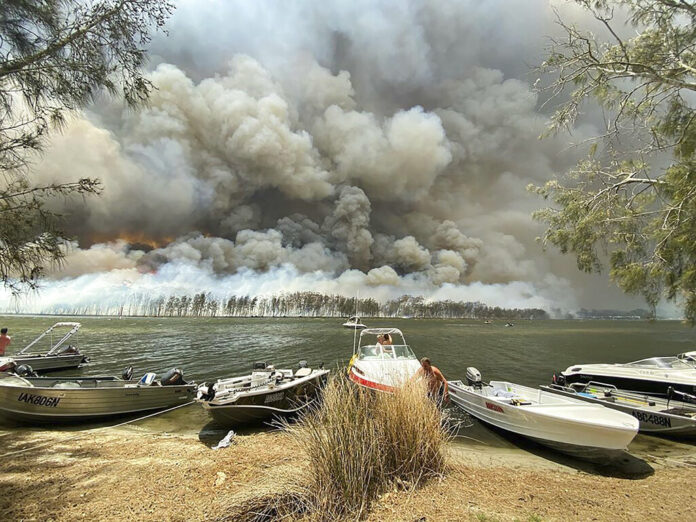
Boats are pulled ashore as smoke and wildfires rage behind Lake Conjola, Australia, Thursday, Jan. 2, 2020. Thousands of tourists fled Australia's wildfire-ravaged eastern coast Thursday ahead of worsening conditions as the military started to evacuate people trapped on the shore further south. Photo: Robert Oerlemans via AP

SYDNEY (AP) — Navy ships plucked hundreds of people from beaches and tens of thousands were urged to flee Friday before hot weather and strong winds in the forecast worsen Australia’s already-devastating wildfires.

More than 200 fires were burning, and warnings of extreme danger to come Saturday set in motion one of the largest evacuations in Australian history. Thousands have already fled at-risk coastal areas, creating traffic gridlock in places, and firefighters escorted convoys of evacuees as fires threatened to close roads.

Victoria Premier Daniel Andrew declared a disaster across much of the eastern part of the state, allowing the government to order evacuations in an area with as many as 140,000 permanent residents and tens of thousands more vacationers.

“If you can leave, you must leave,” Andrews said.

South Australia state’s Country Fire Service chief officer Mark Jones said the weather conditions were cause for concern because some fires were still burning or smoldering.

“The ignition sources are already there,” he said. “There are millions of sparks out there ready to go if they break containment lines.”

The early and devastating start to Australia’s summer wildfires has made this season the worst on record. About 5 million hectares (12.35 million acres) of land have burned, at least 19 people have been killed, and more than 1,400 homes have been destroyed.

This week, at least 448 homes have been destroyed on the New South Wales southern coast and dozens were burned in Victoria. Ten deaths have been confirmed in the two states this week, and Victoria authorities also say 28 people are missing. Fires are also burning in Western Australia, South Australia and Tasmania.

The navy was evacuating hundreds from the Victorian coastal town of Mallacoota, which has been cut off for days by wildfires, forcing as many as 4,000 residents and tourists to shelter on beaches. Landing craft ferried people to the HMAS Choules offshore.

Choules Commander Scott Houlihan said 963 people had signed up for evacuation by sea and more had been airlifted to safety.

A state of emergency was in place in New South Wales and a total fire ban.

State Rural Fire Service deputy commissioner Rob Rogers said strong winds and high temperatures Saturday will make the fire danger worse in many areas and urged those who can flee to do so.

“We know people have got a little bit of fire fatigue. They’ve been dealing with this now for months,” Rogers said. “But we need people to stay focused. Tomorrow is not the day to drop your guard. Take it seriously. If you’re in those areas where we put those maps out, do not be there.”

Prime Minister Scott Morrison visited the township of Bairnsdale in Victoria and received a warmer welcome than a day earlier in New South Wales.

Morrison cut short a visit to the town of Cobargo when locals yelled at him, made obscene gestures and called him an “idiot” and worse, criticizing him for the lack of equipment to deal with the fires in town.

In a radio interview Friday, Morrison said he understood the anger of people affected by the fires.

“People are angry and people are raw and people are upset,” he said. “Whether they are angry with me or they are angry about the situation, all I know is they are hurting and it’s my job to be there to try and offer some comfort and support.”

Smoke from the wildfires has choked air quality and turned daytime skies to near-nighttime darkness in the worst-hit areas.

It’s also blown across the Tasman Sea into New Zealand, where skies are hazy and glaciers have turned a deep caramel brown. The color change may cause more melting since the glaciers will reflect less sunlight.

___

Story: Shonal Ganguly. AP journalist Steve McMorran in Wellington, New Zealand, contributed to this report.

Advertisement

Book the Best Hostel near Siam Square

When you book your stay in Bangkok at the best hostel near Siam Square, you’ll be staying in a vibrant area close to several great shopping options to choose from, a world of cafes, and restaurants that offer the authentic flavours of world-famous Thai cuisine. You’ll also enjoy easy access to the rest of the city’s attractions and landmarks.

Siam Square is centrally-located, which makes it a prime area in which to book your stay. The BTS Skytrain is the transit system that will open the doors to dozens of worthwhile trips around Bangkok.

From the historical landmarks and temples along the Chao Phraya River to the shopping, entertainment hotspots, bars and restaurants along Sukhumvit Road, the BTS Skytrain allows you easy access to all of these and more.

 Effective Use of Public Transport in Bangkok

When you stay at the best hostel near Siam Square, the key in taking full advantage of your excellent location near the BTS Skytrain is to think of all the different forms of public transport in the city and figure out the quickest way to get to your destination by using several of them.

For example, the most effective way to visit the Temple of the Dawn on the Chao Phraya River is to take the BTS Skytrain to the Saphan Taksin station and then transfer to a water taxi. The water taxi will take you directly to the temple.

To avoid taking an expensive taxi out to Suvarnabhumi Airport, you would take the BTS Skytrain from your hostel to the Airport Express at the Phaya Thai BTS station on the Sukhumvit line. The Airport Express provides direct service to the airport and can save you a lot of money and hassles over the alternative option of taking a taxi.

By spending a few days riding the public transit lines of Bangkok, you’ll soon figure out where the transit lines run. From there, it’s just a matter of putting the different lines together to reach your destination in the most efficient manner. The transit lines interconnect with each other, which makes using them sort of like connecting the dots.

 Make Friends to Learn About Bangkok

One of the main features of staying in the best hostel near Siam Square is that hostel life promotes meeting other travellers and comparing notes and tips on the best sights, best food, and best nightlife of a city. In Bangkok, this will also include the ways to get around this vast, exciting city. Making good use of the public transport systems of Bangkok will enable you to experience more of the colour and vibrancy in the limited time you’ll be visiting.

By booking a stay at the best hostel near Siam Square, you’ll be positioning yourself perfectly to take full advantage of everything that Bangkok has to offer. You’ll be able to enjoy every minute of your stay and see more of the city as well.


Advertisement

Nationwide Plastic Bag Ban Forces Customers to Adapt

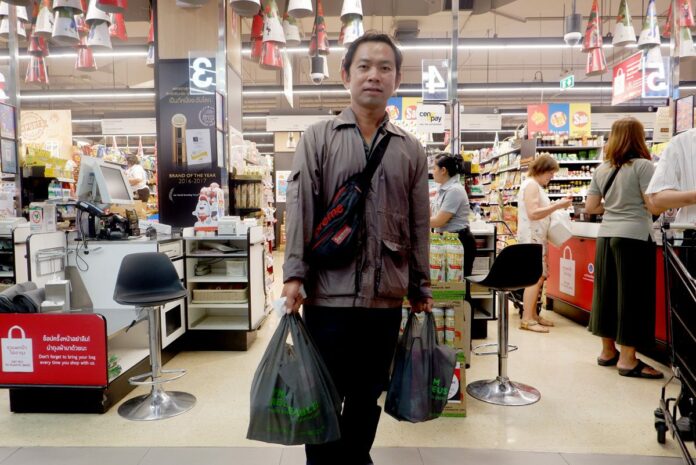
Niran Tangjitmet bring his own bags to a Tops supermarket on Jan. 2, 2020.

Top: Niran Tangjitmet bring his own bags to a Tops supermarket on Jan. 2, 2020.

BANGKOK — Most retailers, except for a major convenience store chain, stopped giving out plastic bags for free at the beginning of 2020, giving Thailand a head start on green new year’s resolutions.

Grocery shoppers said Thursday they were adjusting to the big retailers’ ban, which was promised by the environment ministry back in September. TV stations were also told to blur images of plastic bags. It is the most ambitious attempt to curb single-use plastic products in a country blamed for polluting the environment with massive amounts of plastic waste.

Siranee Kheedsoy, a shopper at Big C Saphan Kwai, had to wait for her son to bring a backpack to retrieve her cartful of goods. The familiar green plastic bags were nowhere to be seen.

IMG 8116 2

“I heard the news, but I forgot to bring my own bag because I didn’t intend to buy anything today,” the 44-year-old mother said. “I’m lucky because my home is not far from here, but I’m concerned about others who already purchased the items but couldn’t find a way to bring them back.”

Thailand, like Fiji and Mexico City, rolled out its ban on plastic bags in retailing businesses on New Year’s Day. More than 90 major retailers and plastic manufacturers have signed onto the government’s plastic reduction scheme, which is the first step towards the complete ban of single-use plastic bags by 2021.

Throughout 2019, several retailers offered smaller, flimsier measures to reduce plastic use, such as charging a baht per bag or promising to not automatically offer bags, but still give them for free if asked.

New Norm

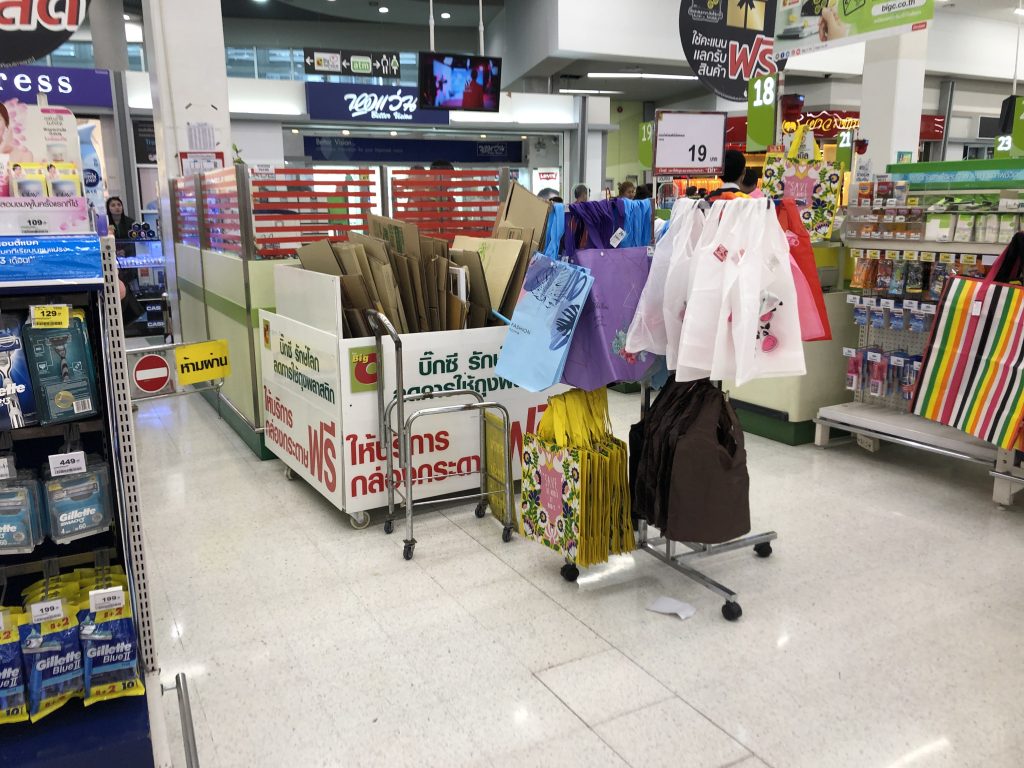
At Big C Saphan Kwai, a large billboard was put up in front of the store reminding shoppers that plastic bags are no longer given. There were also reusable plastic bags on sale for 19 baht each, and free cardboard boxes for those who refused to pay for extra baht.

Many shoppers were prepared. Among them was Tanapon Thanadarangkura, 28, who came with his own small trolley. He said he supported the scheme, but he suggested there should be a better solution that doesn’t push all the burden to consumers.

“It’s a good policy, but retailers should do something to help out customers as well,” Tanapon said. “It’s fine for me to not handing out plastic bags. I believe there should be middle-ground solutions like changing to paper bags or charging for customers who still want plastic bags.”

IMG 8117

The ubiquitous 7-Eleven stores are adopting a more flexible approach.

Plastic bags are still given for customers who purchased hot food or bulky items. A cashier said the management still let plastic bags to be given since they understood that people need some time to adapt.

“If you really want it, I can still give it to you,” the cashier said.

Tops supermarkets, a chain popular with middle-class customers, have implemented the ban. Shoppers at a branch on Nang Linchi Road either brought their own totes, purchased reusable bags at the cashier, or stuffed packages of crackers into their own bags.

Niran Tangjitmet, 40, had come armed with two gray bags he had purchased from Tops earlier for 3 baht apiece.

DSCF0028

“I knew about the measure way before they implemented it yesterday, so I came prepared,” Niran said. “I think it’s a good idea to reduce plastic use. I have so many plastic bags stacked up at home anyway.”

Red signs at checkout counters clearly stated that plastic bags would still be provided for customers demanding them – at 1 baht per bag, which would be donated to Siriraj Hospital. The cashiers’ shopping bag hooks were empty of plastic bags.

Cashier Supaporn Lertwattananon, 22, said she herself hasn’t gotten angry customers demanding free bags for their purchases – yet. “People are cooperating. No one’s complained about this yet.”

All-out War

The intiative is part of the government’s plan to eradicate single-use plastic bags nationwide by 2021, which the next step is to push traditional retailers like markets and “mom and pop” stores to cease offering plastic bags.

Environmental minister Varawut Silpa-archa said after visiting four retailers on Wednesday that he’s surprised to see people adjusting their shopping habit.

“This is an unseen phenomenon because we previously used up to 5,300 tonnes of plastic bags per day,” Varawut said.

The Department of Pollution Control stated that the pilot program would be able to reduce about 30 percent of annual plastic bag usage, or around 13.5 million pieces.

138491390 15716840924411n

The government is also pushing out an even more radical solution: blurring images of single-use plastic bags on TV shows, similar to the existing censorship of cigarettes, alcohol, and depictions of violence and sexuality.

At a news conference held on Dec. 18, Varawut said eight private and state TV channels have agreed to either cut down on presence of single-use plastic bags on air or blur them out, in order to reshape public opinion on the waste.

News programs would be exempted from the ban, Varawut said.

Additional reporting Asaree Thaitrakulpanich

Related stories:

Vendors Balk at Khaosan Road’s Call to Ban Plastic, Styrofoam

Plastic Here to Stay, Vendors at ‘Model’ Market Say

Advertisement

House Speaker Proposes Booting Armed Forces Out of Senate

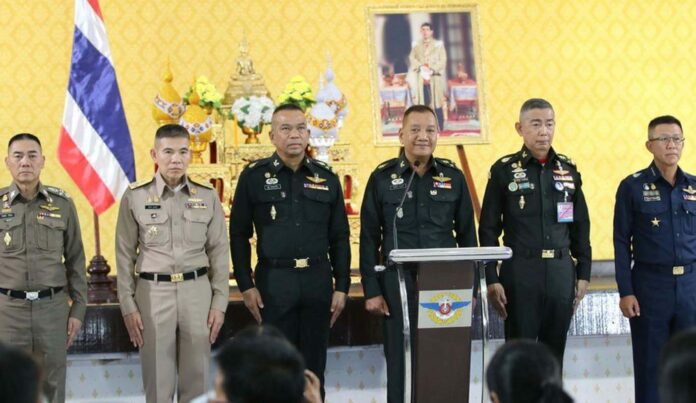
A file photo of the six commanders of the Thai armed forces. They include chiefs of the police, army, navy, air force, Supreme Commander of the Armed Forces, and Permanent Secretary of the Ministry of Defense.

BANGKOK — A proposal by House Speaker Chuan Leekpai to rid the upper house of military commanders was met with support and dissent on Thursday.

Several Democrat and Pheu Thai members said they back the move, which Chuan said would lessen military influence in politics, whereas a junta-appointed Senator said such amendment risks interfering with the Senate’s authority.

“If they go ahead with the plan, would that amount to seizing power from the Senate?” Seri Suwanpanon told reporters. “Because other people might propose their own motions, too, and the Senate’s power would be taken away entirely.”

Read: Newly Appointed Thai Senate Includes Many Soldiers, Police

He continued, “Whatever they want to amend, they should not touch the Senator clause.”

Under the 2017 constitution drafted by the junta and approved in a referendum, six seats in the upper house must be held by the incumbent commanders of the armed forces for five years after the charter was enacted.

“The six individuals would be here for only five years, which isn’t that long. Two years have passed already,” Seri said.

But Democrat MP Thepthai Seanapong said having military commanders in the Senate runs against democratic principles because Senators are supposed to scrutinize and act as a counterbalance to the authorities.

Pheu Thai MP Somkid Chuekong also endorses Chuan’s proposal.

“Generals should not be interfering in politics,” Somkid said.

Deputy PM Wissanu Krea-ngam declined to comment on the matter.

The 250-seat upper house is mostly stacked with military and police officers along with allies of PM Prayuth Chan-ocha and other pro-establishment figures.

They include 15 former members of Prayuth’s Cabinet during his five years in power as the junta chief, as well as many members of the unelected parliament that served under his junta.

Related stories:

Gov’t Unveils 250 Senators Full of Generals, Junta Favorites

6 Senate Selection Committee Members Now Senators Themselves

Advertisement

Japan’s Emperor Naruhito Hopes for ‘Peaceful Year’

TOKYO (Kyodo) — Emperor Naruhito offered greetings on Thursday in his first New Year’s address since taking the throne, expressing hope for a “peaceful” year without natural disasters in Japan and for the happiness of people around the world.

Accompanied by his wife Empress Masako and other members of the imperial family, the 59-year-old, who ascended the Chrysanthemum Throne on May 1 following his father’s abdication, waved to thousands of well-wishers from behind the windows of a balcony at the Imperial Palace in Tokyo.

Continue reading the story here

Advertisement

Hot News

LATEST NEWS

Bangkok
broken clouds
29.4 ° C
29.4 °
25.5 °
71 %
2.9kmh
60 %
Mon
29 °
Tue
38 °
Wed
37 °
Thu
36 °
Fri
37 °