





























29.4 C
Bangkok
Tuesday, June 23, 2026
Home Blog Page 1429

Year-End Violence Highlights Danger of Worshipping

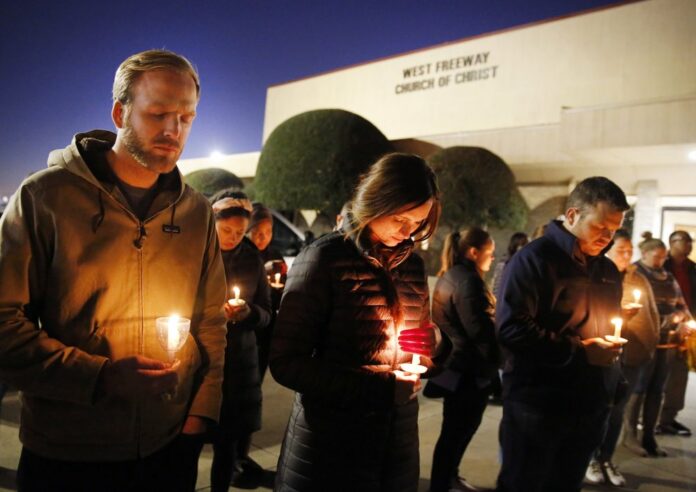
In this Monday, Dec. 30, 2019, file photo, church and community members, including Matt Pacholczyk, left, and his wife, Faith Pacholczyk, stand outside West Freeway Church of Christ for a candlelight vigil in White Settlement, Texas. (Tom Fox/The Dallas Morning News via AP, File)

NEW YORK (AP) — When a machete-wielding attacker walked into a rabbi’s home in Monsey, New York, during Hanukkah and a gunman fired on worshippers at a Texas church 14 hours later, the two congregations in different regions of the country joined a growing list of faith communities that have come under attack in the U.S.

It is a group that crosses denominations and geography and has companions around the world. The frequency of attacks has faith leaders and law enforcement grappling with how to protect people when they are at their most vulnerable.

FBI hate crime statistics show that incidents in churches, synagogues, temples and mosques increased 34.8% between 2014 and 2018, the last year for which FBI data is available.

“For a person bent on hate crime against a particular religion or race, you go to a place where you know a lot of people in that group will be congregating — and vulnerable,” said James Alan Fox, a criminologist at Boston’s Northeastern University. “One place you can go to find people of a certain religion is where they worship.” Most congregations, he said, do not have security.

Three of the deadliest attacks on congregation members have occurred since June 2015, when a gunman killed nine people at Emanuel African Methodist Episcopal Church in Charleston, South Carolina, according to a database compiled by The Associated Press, USA TODAY and Northeastern University. The database includes attacks where four or more victims are killed.

However, the database wouldn’t include the most recent attacks that have refocused attention on the security vulnerabilities at religious institutions.

The FBI’s hate crime highlights list a number of crimes, including a Colorado plot to blow up a synagogue, an Oregon man sentenced to federal prison for targeting a Catholic Church and two guilty pleas in the bombing of an Islamic Center in Minnesota where congregants were worshipping in the mosque.

A five-year compilation of AP reports showed the frequency of attacks countrywide.

Recent stories included the stabbing of an Orthodox Jewish man as he approached the driveway of his synagogue in Monsey in November, as well as a Las Vegas incident where a suspect torched a Buddhist temple, then shot toward at least one monk fleeing the fire.

The data is definitive enough that the FBI invited faith leaders to its Washington, D.C., headquarters last June to discuss how to protect themselves and their congregants from bias-based attacks.
1000 1 2
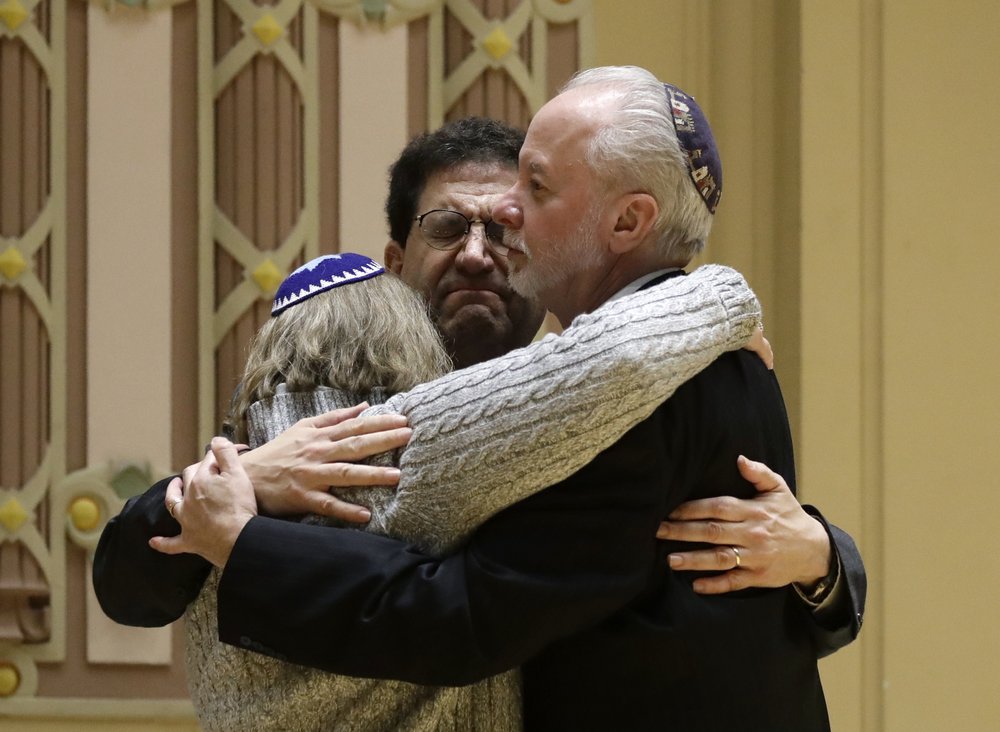
In this Oct. 28, 2018, file photo, Rabbi Jeffrey Myers, right, of Tree of Life/Or L’Simcha Congregation hugs Rabbi Cheryl Klein, left, of Dor Hadash Congregation and Rabbi Jonathan Perlman during a community gathering held in the aftermath of a deadly shooting at the Tree of Life Synagogue in Pittsburgh. (AP Photo/Matt Rourke, File)

Mark Whitlock Jr., pastor of Reid Temple AME Church in Glenn Dale, Maryland, said his own staff and volunteers have met five times in the last month to discuss safety.

“Our first responsibility is to make sure our congregants have faith in God and second, that they are safe,” Whitlock said. “We must not create an environment of fear but we also must not fail to recognize things do happen and evil is present.”

Reid has a paid security staff of about 20 who wear uniforms and are armed. There are volunteers as well, made up of former and current federal agents, law enforcement officers and military who also provide security, Whitlock said.

Even with the protection, he is watchful. On Sunday, he was in the pulpit and saw the security force reacting to something. They explained later it was a stranger they wanted to identify.

“When you’re looking at thousands of people and you see your security force walking around, your mind begins to wonder,” he said.

The new spate of anti-Semitic attacks has added to the sense of urgency that’s been felt by Jewish security experts since the 2018 massacre at Pittsburgh’s Tree of Life synagogue, where 11 people were killed.

“The greatest adversary we truly face is not an external threat, it’s a sense of denial,” said Michael Masters, national director of the Secure Community Network. It was formed by leading Jewish organizations in 2004 to coordinate a response to security threats.

“The conversation prior to Pittsburgh was whether safety and security was necessary,” Masters said. “Now it’s a question of how do we effectuate that — there’s now a reality that these events can happen anywhere.”

Sunday’s attack in White Settlement, Texas, in which the gunman was shot dead by a highly trained leader of the church’s security team, came barely two years after more than two dozen people were killed at a church in Sutherland Springs, Texas. That remains the deadliest shooting at a house of worship in the U.S. in modern times.

The two Texas attacks have heightened worries among churchgoers in neighboring Oklahoma, said the Rev. Derrek Belase, a former police officer turned pastor who coordinates security training for the more than 480 United Methodist churches in Oklahoma.

“Texas is close to home for us,” Belase said. “People see it on the news and think, ‘That could be us.’”

Under Oklahoma law, houses of worship are among the places where adults are allowed to carry firearms, whether concealed or openly. Churches may ask worshippers not to bring guns with them, but Belase says that’s not a common request.

When Belase is advising churches on security, his core recommendations are to work in tandem with local law enforcement, be wary of for-profit security consultants, and be sure that members of any church security team are thoroughly trained.

The security team leader in White Settlement “wasn’t just a guy with a gun,” Belase said. “He was trained to do that.”

Pardeep Singh Kaleka, executive director of the Interfaith Conference of Greater Milwaukee, said his own Sikh temple has armed guards and an evacuation plan, the result of a 2012 attack in Oak Creek, Wisconsin, that killed six worshippers, including his father. He said the conference members talk regularly about how to prevent the next tragedy. “All faiths want to remain open, Buddhists, Sikhs, Muslims, Jews, Christians, but you also have to be vigilant and institute safety protocols.”

___

Associated Press researcher Rhonda Shafner in New York contributed to this report.

Associated Press religion coverage receives support from the Lilly Endowment through the Religion News Foundation. The AP is solely responsible for this content.
Advertisement

Hong Kong Rioters Go on Rampage in Protest on New Year’s Day

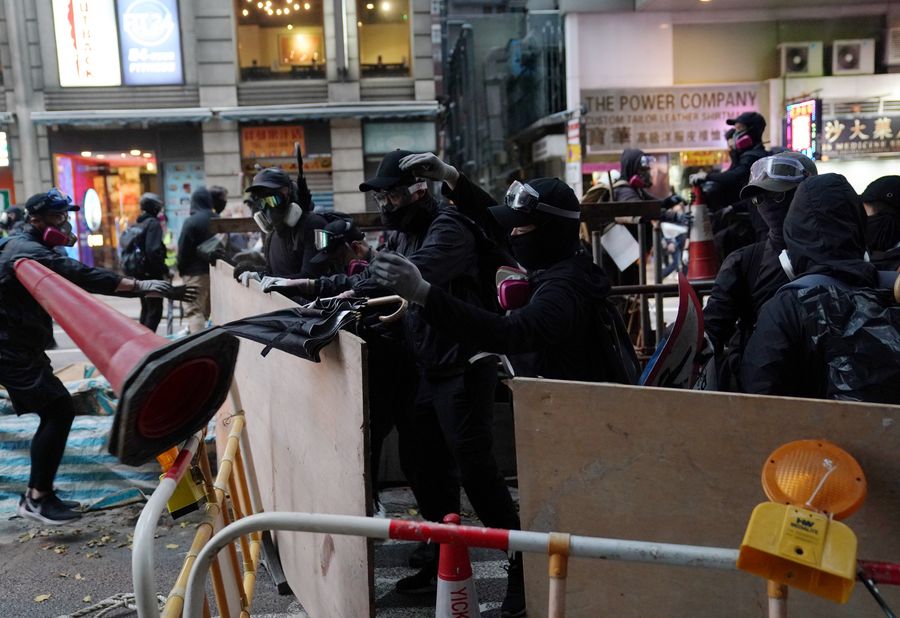
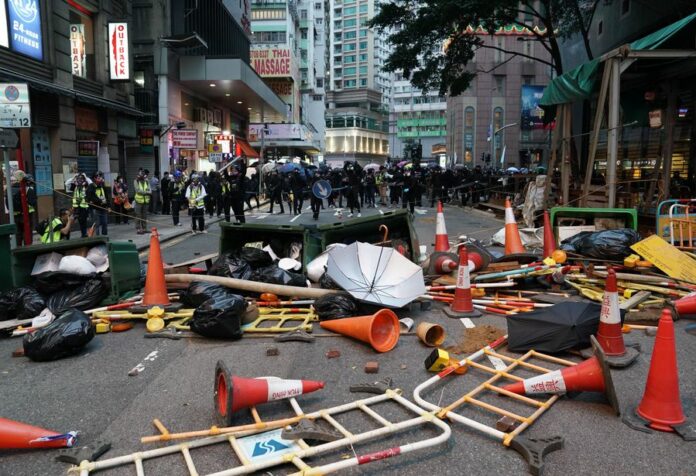
Rioters set barricades with debris on streets to block traffic on Jan. 1, 2020 in Hong Kong, China. (Xinhua)

HONG KONG (Xinhua) — Rioters took advantage of a protest to wreak havoc again in Hong Kong on New Year’s Day, trashing an HSBC branch, setting fire on streets, and spray-painting insulting words on the outer wall of the High Court.

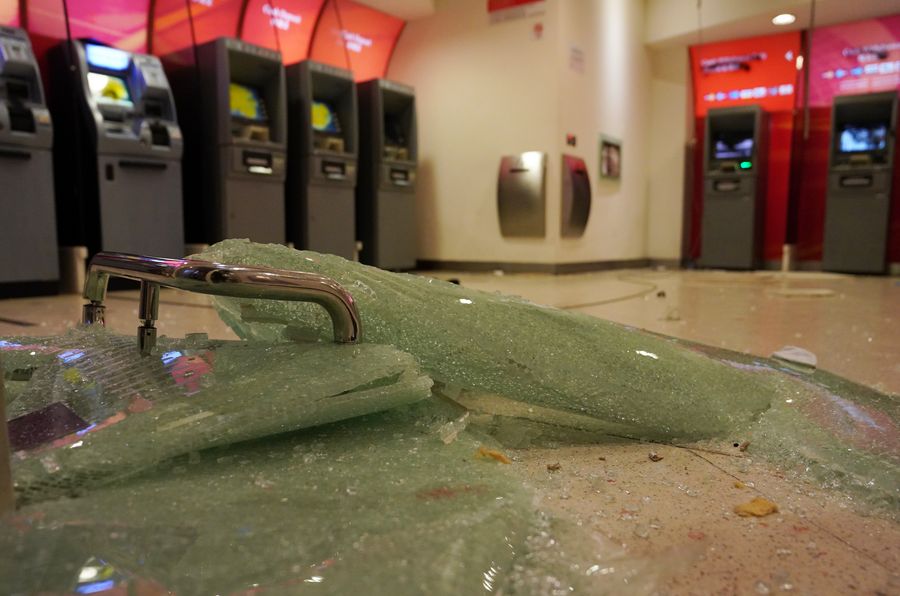
At about 3:50 p.m. local time, a group of masked rioters smashed the glass door and damaged automated teller machines (ATMs) of a branch of HSBC bank on Hennessy Road during a demonstration on Hong Kong Island Wednesday afternoon.

Violent protesters also poured red paint over a lion sculpture in front of the HSBC Headquarters in Central district. Some spray-painted the protective white planks at the entrance of an HSBC branch in the vicinity of Victoria Park.

It was not the first time for Hong Kong’s largest bank to be targeted by rioters. An HSBC branch in Mong Kok was trashed on Christmas Eve.

photo l 1 1
Rioters smash the glass door of an HSBC branch in Wan Chai, Hong Kong on Jan. 1, 2020. (Xinhua)

Some other businesses also fell victim to the violence on Wednesday. The glass door of a China Life Insurance building was destroyed, and a Bank of China branch was also vandalized. A Starbucks cafe was trashed and set on fire, and an outlet of Hui’s Brothers Currency Exchange was painted with graffiti.

According to the plan filed with the police, protesters first gathered at Victoria Park at noon before marching toward Chater Road as the destination. However, after the demonstration ended at about 5:30 p.m., some rioters still occupied the streets.

At about 5:00 p.m. local time, rioters hurled petrol bombs at Luard Road and Hennessy Road, posing a grave threat to public safety. At about 6 p.m. local time, rioters set road barricades with debris and damaged the traffic lights in the vicinity of Des Voeux Road Central and Pedder Street.

Violence showed no signs of abating in the evening as rioters vandalized public facilities in Causeway Bay, Wan Chai and Central, with roads blocked and pavements destroyed. Some even set fire to banks and ATMs.

As warnings went in vain, the police had to deploy the minimum necessary force, including tear gas and the Specialized Crowd Management Vehicle to disperse protesters. Five people involved in the vandalism of the HSBC branch were arrested for criminal damage.

As one of the most stunning incidents on Wednesday, some rioters spray-painted words on the outer wall of the High Court to insult a judge.

The police strongly condemned such an unlawful act which defies the spirit of law and clarified the case as “criminal damage”. The Department of Justice of the Hong Kong Special Administrative Region (HKSAR) government said personal attacks and insults against judges would severely undermine the authority of the courts and damage public confidence in the judicial system.

PYO 9716 1
Rioters set up barricades on streets to block traffic in Hong Kong on Jan. 1, 2020. (Xinhua)

At a press briefing at about 11:00 p.m., police said about 400 people were arrested for offenses including unlawful assembly and possession of offensive weapon.

Ng Lok-chun, senior superintendent (Operations) of Hong Kong Island Region of Hong Kong police, said the demonstration ended ahead of schedule as rioters committed a series of violent acts, from trashing the HSBC branch and besieging police officers to throwing petrol bombs.

Given the situation, it is impossible for the demonstration to carry on in a peaceful manner, Ng said.

Ng stressed that peaceful protesters had enough time to leave as the police did not use force until about 7:00 p.m.local time, about an hour and a half after the end of the protest.

The HKSAR government strongly condemned the violent acts on Wednesday, in particular the assault on the High Court, and said the police will handle related cases seriously. “The society will never tolerate the violent act that causes enormous damage to the rule of law in Hong Kong,” a government spokesperson said.

The spokesperson expressed concerns over rioters repeatedly using protests to commit violent acts and called on residents not to tolerate any forms of violence and called on peaceful participants to stay away from rioters.

The spokesperson also condemned the act of some protesters to wave independence flags and stressed that the HKSAR is an inalienable part of China, adding that any forms of foreign interference in Hong Kong affairs will be rejected.

The HKSAR government will not turn a blind eye to any unconstitutional and illegal acts, the spokesperson said.

Advertisement

Tokyo Manga Hotel Makes Virtue of Sleepless Nights

Masayoshi Mikoshiba holds a manga comic book in the Manga Art Hotel in Tokyo, on Dec. 17, 2019

TOKYO (Kyodo) — Few hotels in the world actively encourage guests to have sleepless nights, but one manga-themed establishment in Tokyo does just that — and it is proving very popular with Japanese and foreigners alike.

The Manga Art Hotel in central Tokyo has developed its own unique offering, with capsule-like rooms built into specially-curated manga comic-stuffed bookshelves.

Continue reading the story here

Advertisement

Militiamen Withdraw From US Embassy But Iraq Tensions Linger

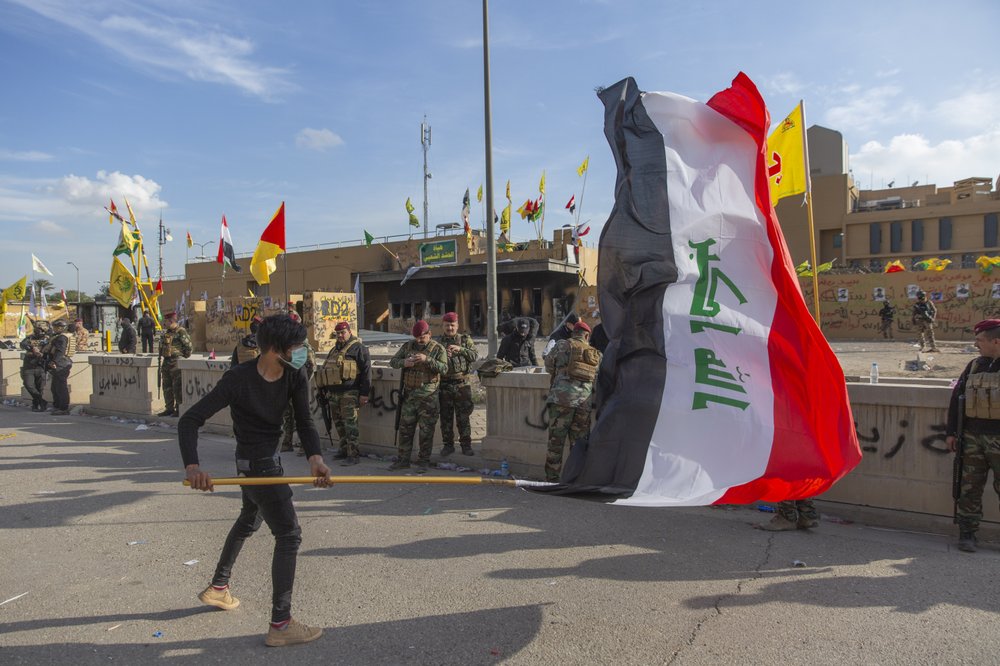
Iraqi army soldiers are deployed in front of the U.S. embassy, in Baghdad, Iraq, Wednesday, Jan. 1, 2020. (AP Photo/Nasser Nasser)

BAGHDAD (AP) — Iran-backed militiamen withdrew from the U.S. Embassy compound in Baghdad on Wednesday after two days of clashes with American security forces, but U.S.-Iran tensions remain high and could spill over into further violence.

The withdrawal followed calls from the government and senior militia leaders. It ended a two-day crisis marked by the breach of the largest and one of the most heavily fortified U.S. diplomatic missions in the world.

The attack and its volatile aftermath prompted the Pentagon to send hundreds of additional troops to the Middle East an d U.S. Secretary of State Mike Pompeo to delay a European and Central Asian trip.

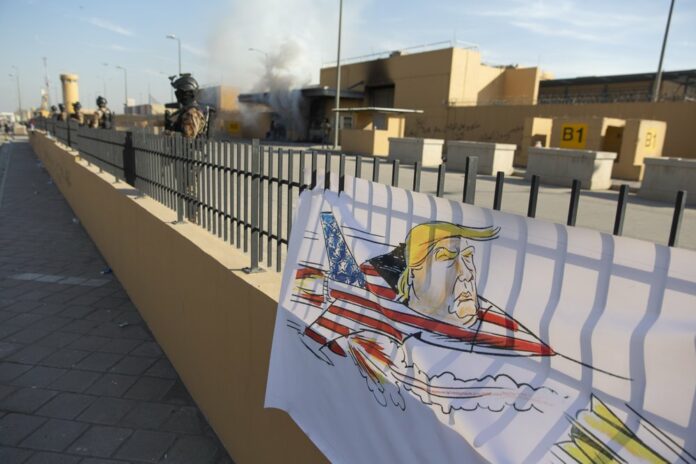
In an orchestrated assault, hundreds of militiamen and their supporters broke into the embassy compound, destroying a reception area, smashing windows and spraying graffiti on walls to protest U.S. airstrikes against an Iran-backed militia over the weekend that killed 25 fighters.

The U.S. blamed the militia for a rocket attack on an Iraqi military base in the northern city of Kirkuk last week that killed a U.S. contractor.

The protesters set up a tent camp overnight and on Wednesday set fire to the reception area and hurled stones at U.S. Marines guarding the compound, who responded with tear gas. There were no injuries on either side and no American staff were evacuated from the compound.

1000 1
A man waves the Iraqi flag while the Iraqi army soldiers are deployed in front of the U.S. embassy, in Baghdad, Iraq, Wednesday, Jan. 1, 2020. (AP Photo/Nasser Nasser)

The Popular Mobilization Forces, an umbrella group of state-allied militias — many backed by Iran — called on its supporters to withdraw in response to an appeal by the Iraqi government, saying “your message has been received.”

By late afternoon the tents had been taken down and the protesters relocated to the opposite side of the Tigris River, outside the so-called Green Zone housing government offices and foreign embassies. U.S. Apache helicopters circled overhead.

“After achieving the intended aim, we pulled out from this place triumphantly,” said Fadhil al-Gezzi, a militia supporter. “We rubbed America’s nose in the dirt.” Trump has vowed to exact a “big price” for an attack he blamed squarely on Iran.

Kataeb Hezbollah, the Iran-backed militia targeted by the U.S. airstrikes, initially refused to leave but later bowed to demands to disperse. The militia is separate from the Hezbollah militant group in Lebanon, though both are backed by Iran.

“We don’t care about these planes that are flying over the heads of the picketers. Neither do we care about the news that America will bring Marines,” said Mohammed Mohy, a spokesman for Kataeb Hezbollah. “On the contrary, this shows a psychological defeat and a big mental breakdown that the American administration is suffering from,” he said, before withdrawing from the area.

The violence came as Iran and its allies across the region have faced unprecedented mass protests in recent months and heavy U.S. sanctions have cratered Iran’s economy.

Iraq has been gripped by anti-government protests since October fueled by anger at widespread corruption and economic mismanagement, as well as Iran’s heavy influence over the country’s affairs. Those protesters were not involved in the embassy attack.

The Pentagon sent an infantry battalion of about 750 soldiers to the Middle East. A U.S. official familiar with the decision said they would go to Kuwait. Pompeo postponed a trip that was scheduled to start in Ukraine late Thursday so that he can monitor developments in Iraq and “ensure the safety and security of Americans in the Middle East,” said State Department spokeswoman Morgan Ortagus.

Iran denied involvement in the attack on the embassy. Supreme Leader Ayatollah Ali Khamenei was quoted by media as saying that “if the Islamic Republic makes a decision to confront any country, it will do it directly.”

Iran later summoned the Swiss charge d’affaires, who represents American interests in Tehran, to protest what it said was war-mongering by U.S. officials.

Public consular operations at the embassy were suspended and future appointments cancelled, it said in a statement.

Tensions have steadily risen since Trump withdrew the U.S. from Iran’s 2015 nuclear deal with world powers and embarked on a campaign of maximum pressure through economic sanctions. Iran has responded by abandoning some of its commitments under the deal.

U.S. officials have blamed Iran for the sabotage of oil tankers in the Persian Gulf and a drone attack on Saudi oil facilities in September that caused a spike in world oil prices. But the Trump administration has not responded with direct military action, apparently fearing a wider conflict.

The U.S. has sent more than 14,000 additional troops to the Gulf region since May in response to concerns about Iranian aggression. At the time of the attack, the U.S. had about 5,200 troops in Iraq, mainly to train Iraqi forces and help them combat Islamic State extremists.

The U.S. and Iran have vied for influence over Iraq since the 2003 U.S.-led invasion that toppled Saddam Hussein. Iran has close ties to Iraq’s Shiite majority and major political factions, and its influence has steadily grown since then.

Iran helped to mobilize tens of thousands of mostly Shiite militiamen to battle the Islamic State group when it stormed across northern and western Iraq in 2014 as the armed forces collapsed. The U.S. and Iran both provided vital aid to Iraqi forces, who eventually declared victory over the extremists in December 2017.

The political influence of the Popular Mobilization Forces has risen in recent years, and their allies dominate the parliament and the government. That has made them the target of the anti-government protesters, who have attacked Iranian diplomatic missions and the local headquarters of parties affiliated with the militias across southern Iraq.
They have also set up a sprawling protest camp in central Baghdad, and for weeks have been trying to enter the Green Zone. Iraqi security forces have beaten them back with tear gas and live ammunition, killing hundreds.

The militiamen and their supporters, however, were able to quickly enter the Green Zone and mass in front of the embassy, with little if any resistance from authorities.

Iraq’s government vehemently condemned the airstrikes on the militia, saying it violated national sovereignty. But Iran and its allies might have also seen the attack as a way of diverting attention from the anti-government protests.

“Iran has been trying to provoke the U.S. into helping it solve its Iraq problem,” said the Crisis Group, an international think tank. “The Trump administration, by responding to the attacks in Kirkuk and elsewhere with airstrikes, has obliged.”

___

Krauss reported from Ramallah, West Bank. Associated Press writers Amir Vahdat in Tehran, Iran, Bassem Mroue in Beirut and Robert Burns in Washington contributed.

Advertisement

China Starts 10-Year Fishing Ban on Yangtze River

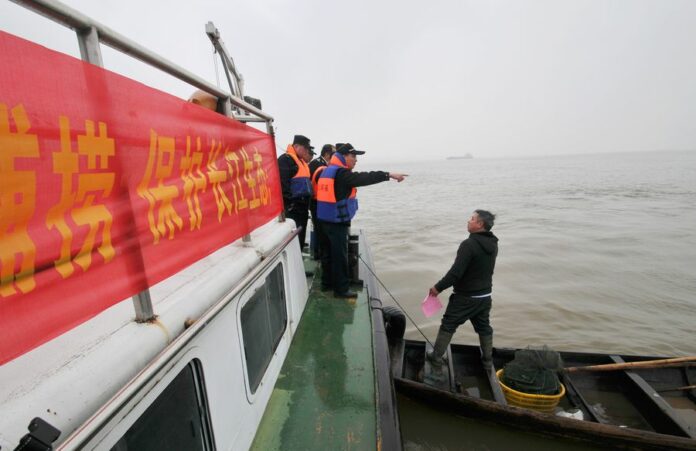
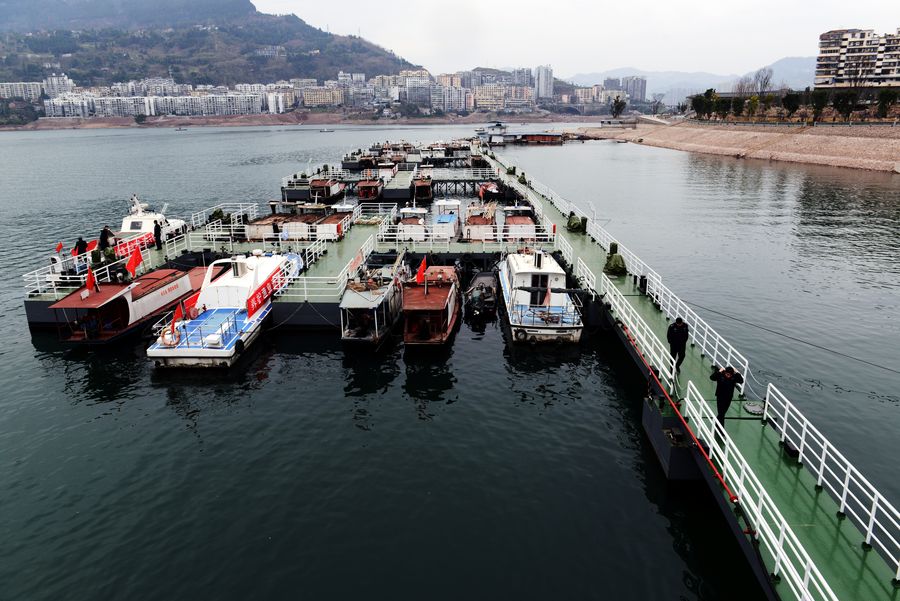
Law enforcement officers from the fishery and public security sectors patrol a porpoise conservation area on the Yangtze River in Anqing, east China's Anhui Province, March 1, 2019. (Xinhua/Huang Youan)

BEIJING (Xinhua) — China on Wednesday began a 10-year fishing ban on key areas of the Yangtze River to protect biodiversity in the country’s longest river, according to the Ministry of Agriculture and Rural Affairs.

Starting from this year, the ban will be observed in 332 conservation areas in the Yangtze River basin, which will also be expanded to all natural waterways of the river and its major tributaries from no later than Jan. 1, 2021.

Fishing will also be prohibited on natural waterways of large lakes connected to the Yangtze such as the Dongting Lake and Poyang Lake for 10 years starting from no later than Jan. 1, 2021.

Fishing bans will be further imposed on other natural waterways in the Yangtze River basin, said the ministry, the scale and length of which will be subject to the decision of provincial-level fishing authorities.

The fishing moratorium is regarded as a key move fighting depleting biological resources and degrading biodiversity in the Yangtze River, which has long been suffering from human activities such as overfishing, pollution and damming, said Vice Minister of Agriculture and Rural Affairs Yu Kangzhen.

S 22732905
Fishing boats are anchored at a quay on the Pengxi River, a Yangtze River tributary, in Yunyang County, southwest China’s Chongqing Municipality, March 1, 2019. (Xinhua/Xie Hong)

Biological deterioration has reduced fishing activities along the Yangtze as well, which now only produces 0.32 percent of China’s total freshwater aquatic products. In recent years, annual catch from the Yangtze has fallen to less than 100,000 tonnes from more than 420,000 tonnes in the 1950s.

The 10-year ban is estimated to affect more than 110,000 fishing boats and nearly 280,000 fishermen in 10 provincial regions along the river. The ministry has promised to provide social security services, financial support and vocational trainings for fishermen who have to find new ways of living.

For instance, fishermen moving ashore could work as patrollers and protectors of the river as members of the team executing the fishing ban, said Yu.

Efforts will also be made to protect rare species and enhance monitoring over aquatic life in the Yangtze, and to improve protection and management strategies in accordance with biological resource restoration progress, according to Yu.

Yang Zhiming, a fisherman in Yanwanghu Township of Hanshou County, central China’s Hunan Province, has come ashore and now manages business such as killing chicken and goose for customers at a local market.
Yang bought a place at the market with a 20,000-yuan subsidy for fishermen from the local government in 2008. “My family fished when there was fish in the river and picked and sold cress and Chinese tarragon when there was fishing ban in spring, and we were able to make a living,” he said.

“Now, the 10-year fishing ban has started, my family don’t have to worry too much because we can do some business in the market,” he said.

“The Dongting Lake is home to us fishermen. We stop fishing to protect our home,” he added.

Advertisement

Thailand Rings in 2020

Fireworks over Chao Phraya River on Jan. 1, 2020.

BANGKOK — Revelers across the country gathered at various sites to ring in the new year with fireworks and music.

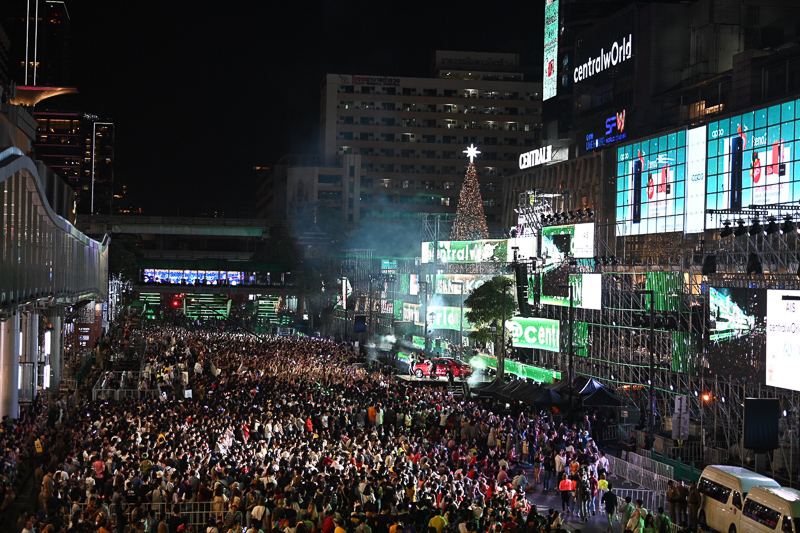
Ten of thousands of merrymakers crowded major countdown events at CentralWorld and Iconsiam, where they waited for the clock to strike midnight with tunes from local artists. More than 20,000 fireworks burst from barges on the Chao Phraya River, while fireworks display at CentralWorld went on for five minutes.

Fireworks display at CentralWorld.

S 13197333

Fireworks also drew a large crowd of tourists to dance away the year on beaches like Pattaya and Koh Phangan in Surat Thani province.

In Buriram, Chang Arena was crammed with football fans and families who celebrated the night with concerts and celebrity appearances from Buriram United footballers.

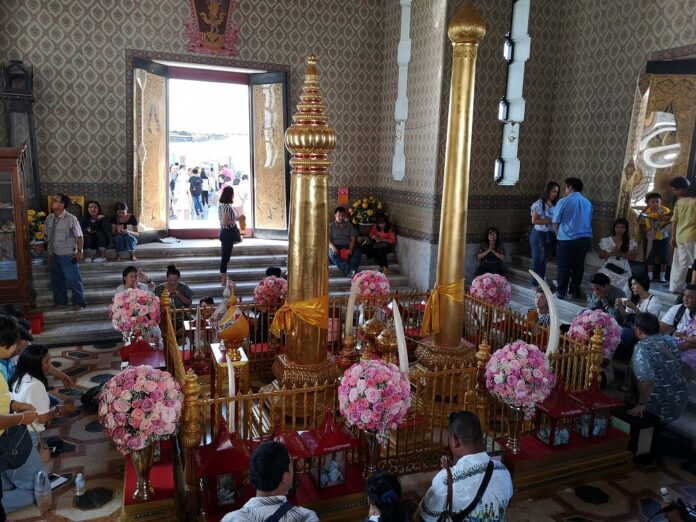
However, New Year’s celebrations were not all about countdown raves. People also gathered at temples across the country to chant prayers on New Year’s Eve, which they believe will bring in good fortune for the year ahead.

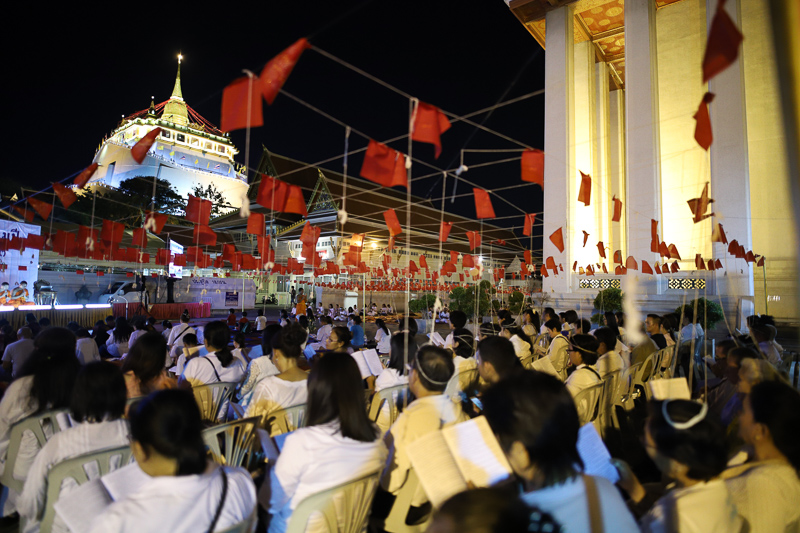
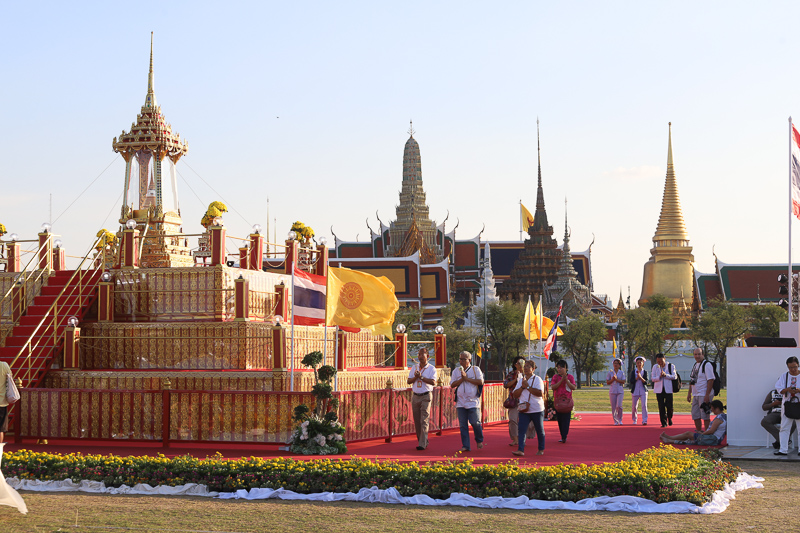
At Bangkok’s Wat Saket, more than a thousand Buddhists put on holy threads over their heads as they prayed for hours ahead before midnight. Sanam Luang was also a popular spot among Buddhists, where devotees made merit to Buddha relics.

Authorities deployed 30,000 police officers in Bangkok to safeguard the celebrations, which were generally peaceful, national police chief Chakthip Chaijinda said.

Devotees gather at Wat Saket to chant prayers on the night of Dec. 31, 2019.
Devotees walk around Buddha relics to make merit Jan. 1, 2020 at Sanam Luang.
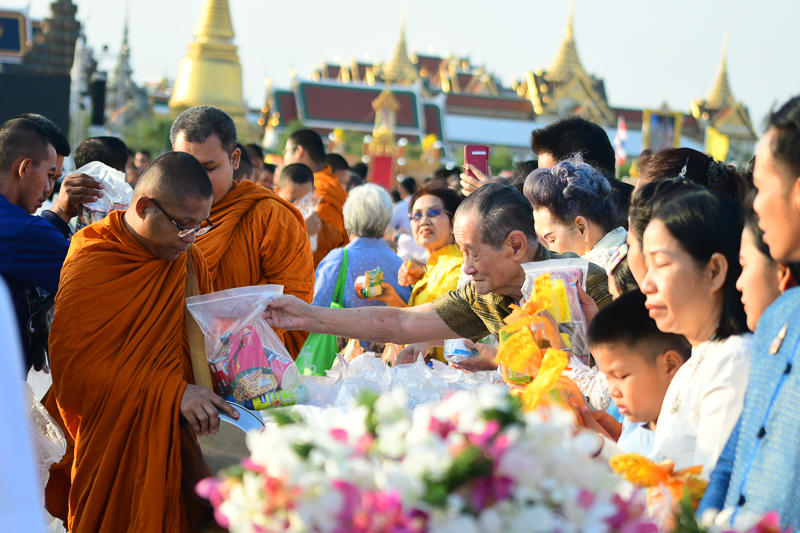
Devotees give alms to monks Jan. 1, 2020 at Sanam Luang.

Advertisement

At a Popular Shrine, New Year Prayers Echo Politics, Money Anxieties

BANGKOK — Many Thais spent the last hours of 2019 flocking to the much revered City Pillar Shrine where they pray for a better life next year – even as they express dire outlook for politics and money matters in the year 2020.

If anything, those interviewed said, they anticipate the political and economy situations to decline in the next 12 months.

Natsakol Bunditchoke, 68, drove from nearby Chonburi province to the City Pillar Shrine to pray for a successful business. He believes the prospects for both the economy and politics are bleak.

S 22732905 1
Natsakol Bunditchoke

“Those managing [the government] are not adept in running the economy. Politics is a mess. I want politicians to think about the people more. If they can’t take the country forward then they should allow people to decide,” Natsakol said, referring to a new general election.

“It’s all bad,” Chumporn Laochamroon, 67, a retired Bangkokian government official said. Chumporn then lit three incense sticks to pray for better luck and wealth in 2020.

photo l
Chumporn Laochamroon

Petcharat Jumewongsai, 48, is originally from Yasothon in the northeast but she has been living in Bangkok for 20 years now. Self-employed, she said she prayed for a successful business year.

EGwYPztUcAITjzw 1
Petcharat Jumewongsai

“I hope the economy will improve but I really doubt it. As for politics, I hope politicians consider the people more.”

Kingmanee Thaowong, a 24-year-old company employee came with her friend, 19-year-old Sitthichai Nuemyoon, a vocational college student.

138636017 15765136486261n
Kingmanee Thaowong and Sitthichai Nuemyoon

Sitthichai prayed for a speedy recovery of his two fingers. The tips of his left hand’s index and middle fingers were cut off by accident at a factory by a metal cutting machine that his colleague was operating.

Sitthichai said he didn’t sue his colleague for damages, but the factory didn’t want to send him to a private hospital that would have cost him 90,000 baht. The young man relied on the universal health care program instead.

As for politics and the economy, Sitthichai believes it will only get worse.

“Both politics and the economy goes hand in hand. It’s up to the government,” he asked.

Related stories:

Analysis: Political, Economic Challenges to Test Prayuth in 2020

Advertisement

Our Reporters on Their Favorite Stories of 2019

We did it, Reddit! Despite a difficult year for the media – the Thai Journalist Association called it a year of ‘downfalls and storms’ – that saw TV channels shut down and a newspaper folded, Khaosod English made it to the end of 2019, and onward to the year 2020.

Per annual tradition, we ask our staff writers to talk about their favorite stories of the year.

Asaree Thaitrakulpanich

Worlds Collide When Intl School Students Hazed at Thai Unis

One Thai Man’s Epic Overland Journey from the UK to Bangkok in 1970

What Do Thai-Chinese Think About Hong Kong Protests?

old ppl at chinatown 190826 0035 1068x712
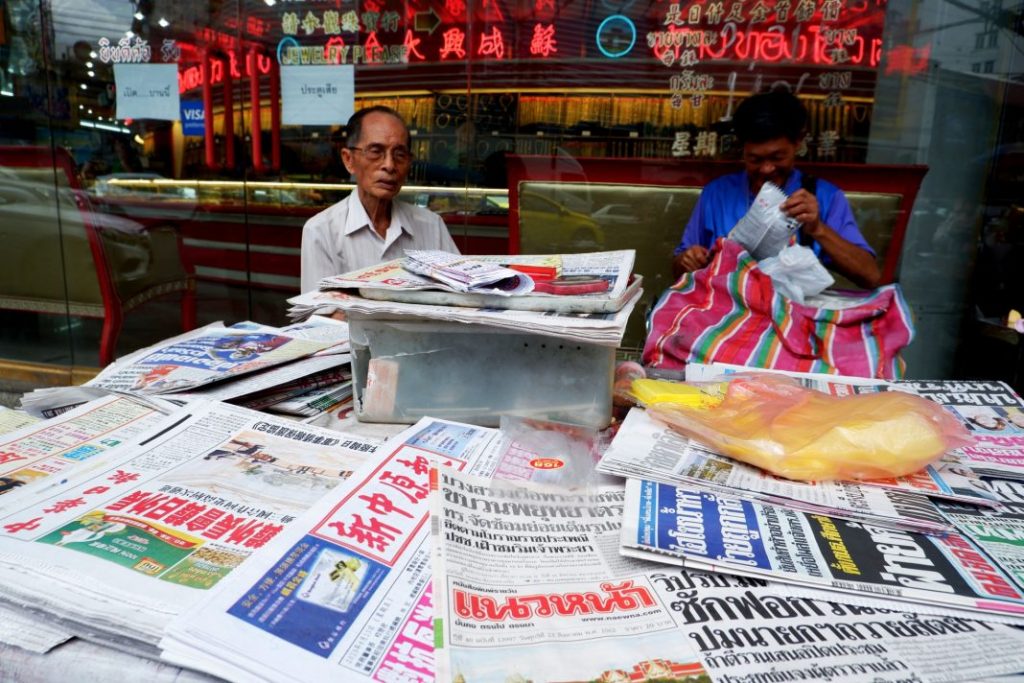
Wan Pek Tang, a newspaper vendor in Chinatown in August 2019.

Capturing the delicate cultural clashes of international school students hazed upon entering Thai universities reflected not only my own experience, but also those of my peers. 

Interviewing Grandpa Anussorn about his epic road trip in the ‘70s made me nostalgic for my own late grandfather, Tang Nguk-uang to which the two-part series on what Thai-Chinese think about the Hong Kong protests is dedicated. He would’ve had a lot to say.

Tappanai Boonbandit

From Village to Airplane Cabin: How Thai Ghosts Evolve Alongside the Living

Exhibition Explores What It Means to Be ‘Very Thai’ and ‘Very German’

photo l 1 7
Mai Davika as Mae Nak in Pee Mak (2013)

It was my pleasure to write about topics I am passionate about – horror films and the quirkiness we lived with everyday. Not only did they give me the chance to distract myself from the buzz of daily happenings, they also offer our readers a deeper insight into Thai culture and beliefs. I also learned something new (even for a Thai) when reporting them.

Pravit Rojanaphruk

Opinion: Is Thailand’s Vassalage to China Making a Comeback?

138640241 15766538016211n 6
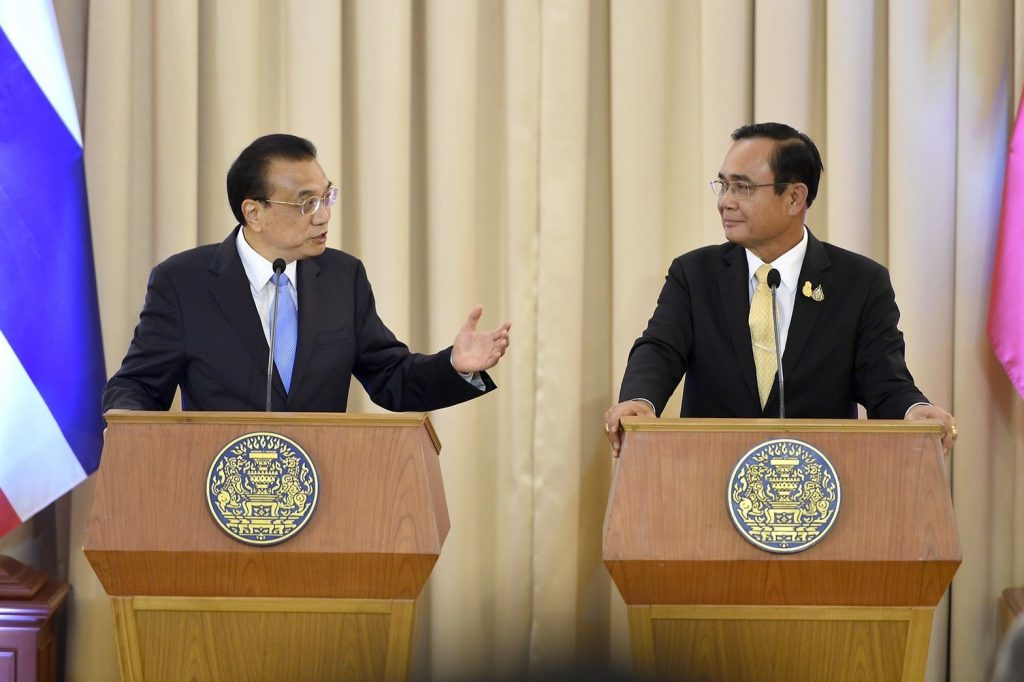
Chinese PM Li Keqiang and PM Prayuth Chan-ocha on Nov. 6, 2019.

The year 2019 in three words: China, China, and China. How the current administration deals with the growing assertion and willpower of China will likely shape Thailand and regional geopolitics for the decade to come.

Teeranai Charuvastra

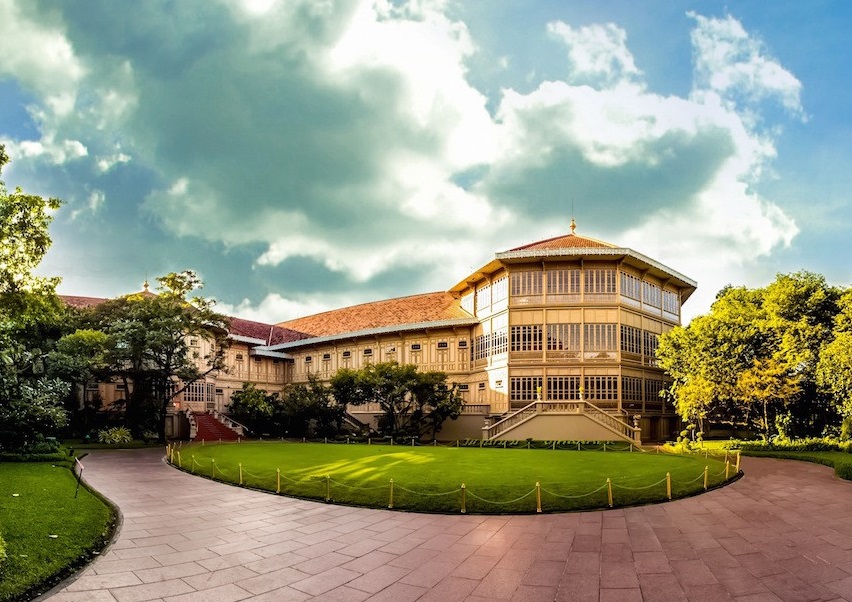
Khaosod English Visits ‘Demolished’ Vimanmek Palace

6 xY0jJjD 2

Rumors that the historic mansion has been torn down prompted me to venture into the sprawling complex of Amphorn Sathan royal residence – the only reporter to have stepped foot inside so far, I was told – to see it for myself. It was an interesting trip.

Related stories:

Our Reporters on Their Favorite Stories of 2018

Khaosod English Writers on Some Favorite Stories of 2017

Advertisement

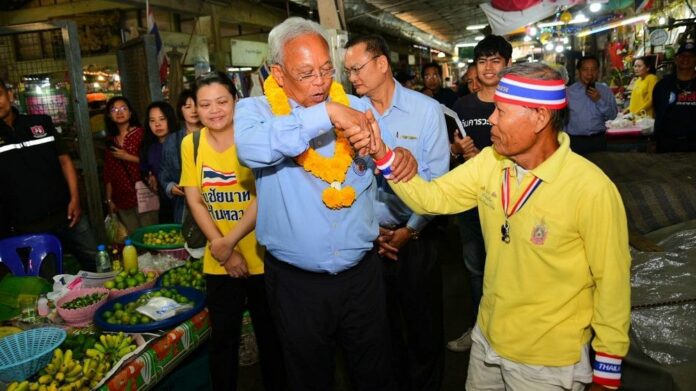
Gov’t Official Slams Suthep’s Hint at Politics Comeback

Suthep Thaugsuban campaigns on behalf of the Action Coalition of Thailand Party on Jan. 28, 2019.

BANGKOK — A fresh hint to re-enter politics by the leader of a protest movement that helped brought down Yingluck Shinawatra’s elected government drew a rebuff from pro-government politicos and netizens on Tuesday.

Justice minister and Phalang Pracharath leader Somsak Thepsuthin said Suthep Thaugsuban, who organized street protests in 2013 that paved the way for a military coup a year later, should be careful with his words, lest political conflicts and mass protests make a comeback.

“What’s the purpose of doing this?” Somsak said. “People are facing a lot of problems already. I would like everyone to express their opinions in an academic manner, rather than stirring people to take the streets.”

He continued, “We already had the experience, and many people were jailed. Let me ask what good it would do? Please, whatever that can cause conflicts, don’t do it.”

Suthep, who serves as “an advisor” for the pro-junta party Action Coalition of Thailand, appeared to break his vow to never re-enter politics again on Sunday. Speaking at a party assembly, he said he couldn’t let go of politics, which he said is necessary to protect the country from anti-monarchist movements.

“After all our efforts, the situation still can’t be trusted. We eliminated the old villain, but the new villain emerged,” Suthep said. “I can’t tell who he is, but this one is horrifying, daring, and he has made himself clear that he’s all against the traditions. That’s the reason, because I don’t know who else to rely on.”

He went on to stress that he does not wish for a seat in the Cabinet, but rather want to serve the people and uphold the monarchy. However, Suthep did not elaborate on how he would pursue his activism.

“I don’t want to say this, but many parties are egocentric. They only care about which seats they will get,” Suthep said. “I don’t want to take any positions, but I can’t be stopped from re-entering into politics because I have a vision to create a party that really represents people’s voice.”

“We want the monarchy to remain at the center of people’s hearts,” he continued. “The institution is vital to our national security.”

At the height of his protest from 2013 to 2014, he led thousands of protesters to occupy key intersections and government institutions across Bangkok to pressure then-PM Yingluck to resign and install a new regime to “reform the country.”

After months of escalating violence, which saw at least 20 people dead, the military seized power in May 2014.

Suthep became a monk after the coup and pledged not to take up politics again, only to cast off his robe to join the Action Coalition of Thailand in 2018. But his popularity seems to have dried up; the party could only secure five seats in the latest election. 

Suthep’s critics on Facebook expressed their ire at what they perceive to be an overture to Suthep’s return to politics.

“It’s you who’s the villain,” user Adirek Phannawong wrote. “The monkhood doesn’t help you to become a better person.”

Advertisement

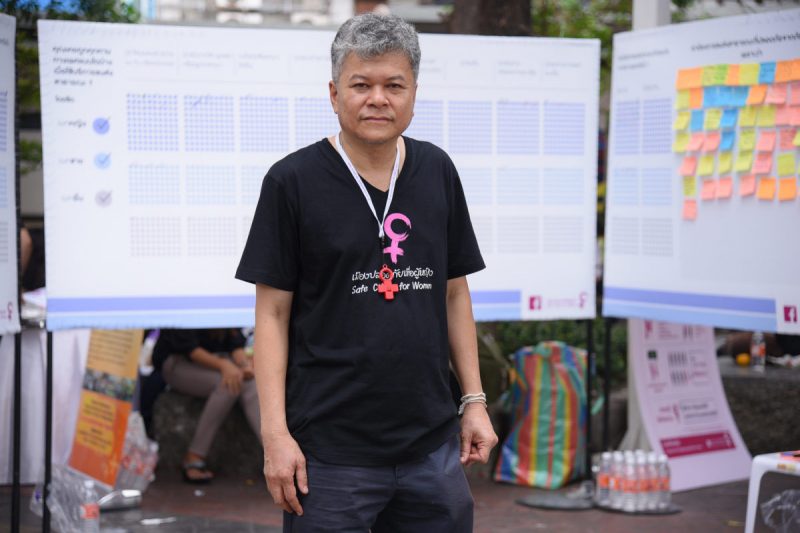
What’s Next for Thai Women in 2020?

Activists campaign for an end to sexual violence against women on Nov. 15, 2019, at Victory Monument in Bangkok.

The year 2019 saw a semi-democratic rule restored in Thailand. The immediate impact of the return of an elected lower house is more women in the legislative branch: the current Parliament has 76 women out of 500 MPs or around 14 percent.

That number is an improvement from the five years of junta rule, when only 5.4 percent of the junta-appointed lawmakers were women, placing Thailand in the rank of 182 out of 193 countries for female parliament representation according to UN data.

Thailand also currently has the highest global percentage of female chief financial officers at 42 percent, the second highest percentage globally for women in senior management at 28 percent, and the third-highest percentage of female CEOs at 9 percent, according to the Credit Suisse Research Institute in their 2019 gender report.

Yet, only about 10 percent of board members are women, compared to the global average of around 20 percent, said the study, which analyzed 3,000 companies in 56 countries.

And beyond those numbers, experts and advocates say women in Thailand continue to face an uphill battle in issues of equality and welfare.

As the year 2019 comes to a close, Khaosod asks prominent members of the political, business, and NGO fields to discuss the challenges women face, and what is to be done in 2020. Note: all interviews have been edited for brevity and clarity.

Angkhana Neelapaijit

Human rights activist and 2019 Magsaysay Award Winner

angkhana

Women in Thailand are still lacking opportunities enter into policy-making or leadership positions in government; those who do enter politics have their gender used to discredit them, or end up as victims of cyberbullying. Thai women who have experienced sexual violence are still unlikely to see their assailants charged, much less behind bars.

I hope to see more women stepping up in 2020 to solve or highlight collective problems like the environment, economy, sexual discrimination, and reproductive rights.

Jaded Chaowilai

Head of Women and Men Progressive Movement Foundation
Photo: Matichon
Photo: Matichon

Although women are becoming more outspoken against injustices, sexual and domestic violence is still rampant, while the law enforcement and regulations are in dire need of a reform.

Women in the 2020s should believe that they are independent, with their education and work, and don’t need anyone. If you get a boyfriend, I believe you will check first if he will be a problem in your life or not. If he likes to exercise power over you, don’t get involved with him, because he will try to subjugate you.

Patcharin Samsiripong

Phalang Pracharath MP for Bangkok

patcharin

I am glad to see more women in Parliament, and I hope to see a larger male role in households. I believe the housewife’s duties are still necessary, but we must also support men’s participation to share the load.

Due to women’s physical forms, we are more likely to be assaulted than men. The state should make ‘safety zones’ for women, such as public parking spaces with better security, and more public lighting and CCTVs.

Jiraporn Sinthuprai

Pheu Thai MP for Roi Et
Jiraporn Sinthuprai, center, campaigns for the Pheu Thai party on March 14, 2019 in Roi Et province. Photo: Jiraporn Sinthuprai / Facebook

I admire German Chancellor Angela Merkel, New Zealand PM Jacinda Ardern, our former PM Yingluck Shinawatra as role models of political leaders on the world stage over the past decade.

Gender is not a limitation to work, whether women, men, or LGBT. Everyone has the same capacity to do good work. I would like to see more women in managerial positions and for people to accept women’s capabilities, rather than giving special privileges that use gender as a determining factor.

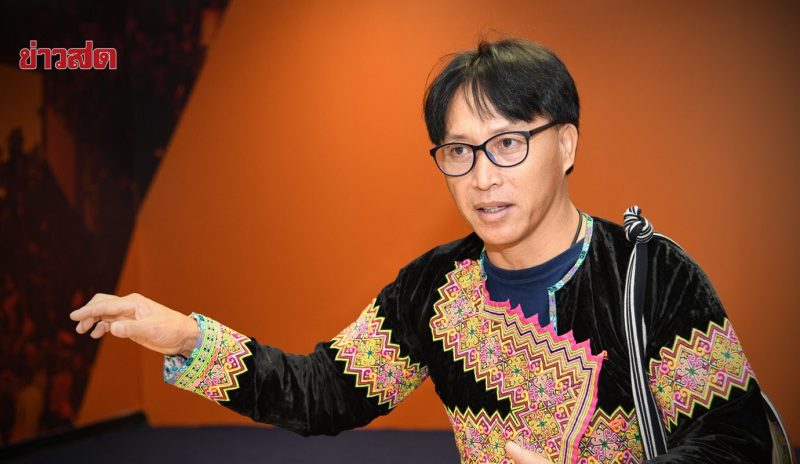
Nattapon Seubsakwong

Future Forward Party List MP

nattapon e1577773858203

As a member of the Hmong ethnic group, I have seen the well-being of Hmong women improve exponentially throughout the past decade. But when it comes to traditional social structures, patriarchal norms still apply.

The mother, as the general and caretaker of the household, should receive many rights. However, everything is still circumscribed with religion and culture, so I hope that society is more open in the future. I would also like to see a female Lower House Speaker, or another female Prime Minister.

Nualphan Lamsam

Muang Thai Life Assurance CEO, Port Football Club Chairwoman
Nualphan Lamsam, center, at the Women’s World Cup in June 2019 in France.

Throughout my business career, I have had to compete with men. No one went easy on me. Women who want to be in the business world must forget the word gender. At confrontations in the meeting room, we must be strong.

I’d also like to see more women in sports. We have to admit there is a lot of inequality in sports, with such a large gap between women’s and men’s football. Developing women’s sports needs not only the support of the private sector, but also from the public.

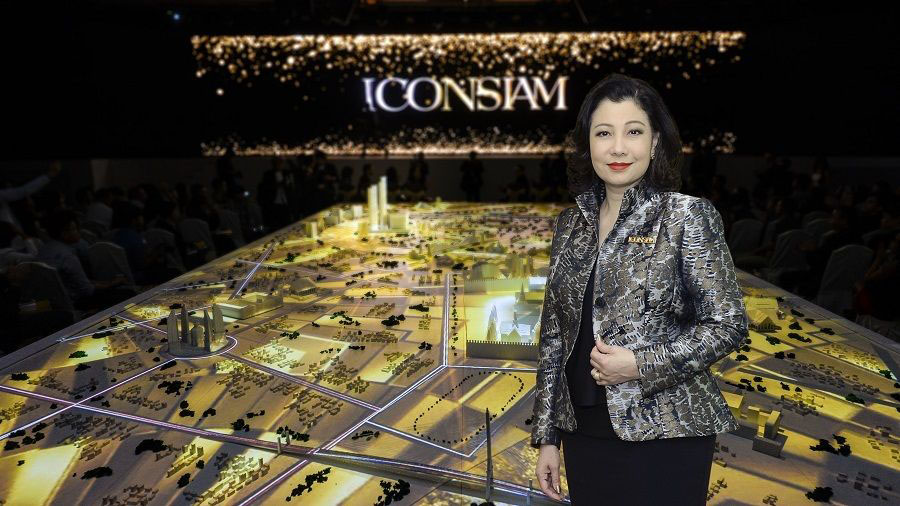
Chadatip Chutrakul

Siam Piwat CEO

chadatip

The year 2020 will be full of changes, whether due to the fluctuating global economy, tumultuous politics, trade wars, and rapid changes in the digital world. Business must quickly adapt,and it will be a year of challenges.

Women in 2020 should be open to learning new things and starting new beginnings, as well as being quick to adapt their way of thinking and working to keep up with the changing world. Both men and women should be quick to think, quick to act all the while calculating risk factors.

Advertisement

Hot News

LATEST NEWS

Bangkok
broken clouds
29.4 ° C
29.4 °
25.5 °
71 %
2.9kmh
60 %
Mon
29 °
Tue
38 °
Wed
37 °
Thu
36 °
Fri
37 °