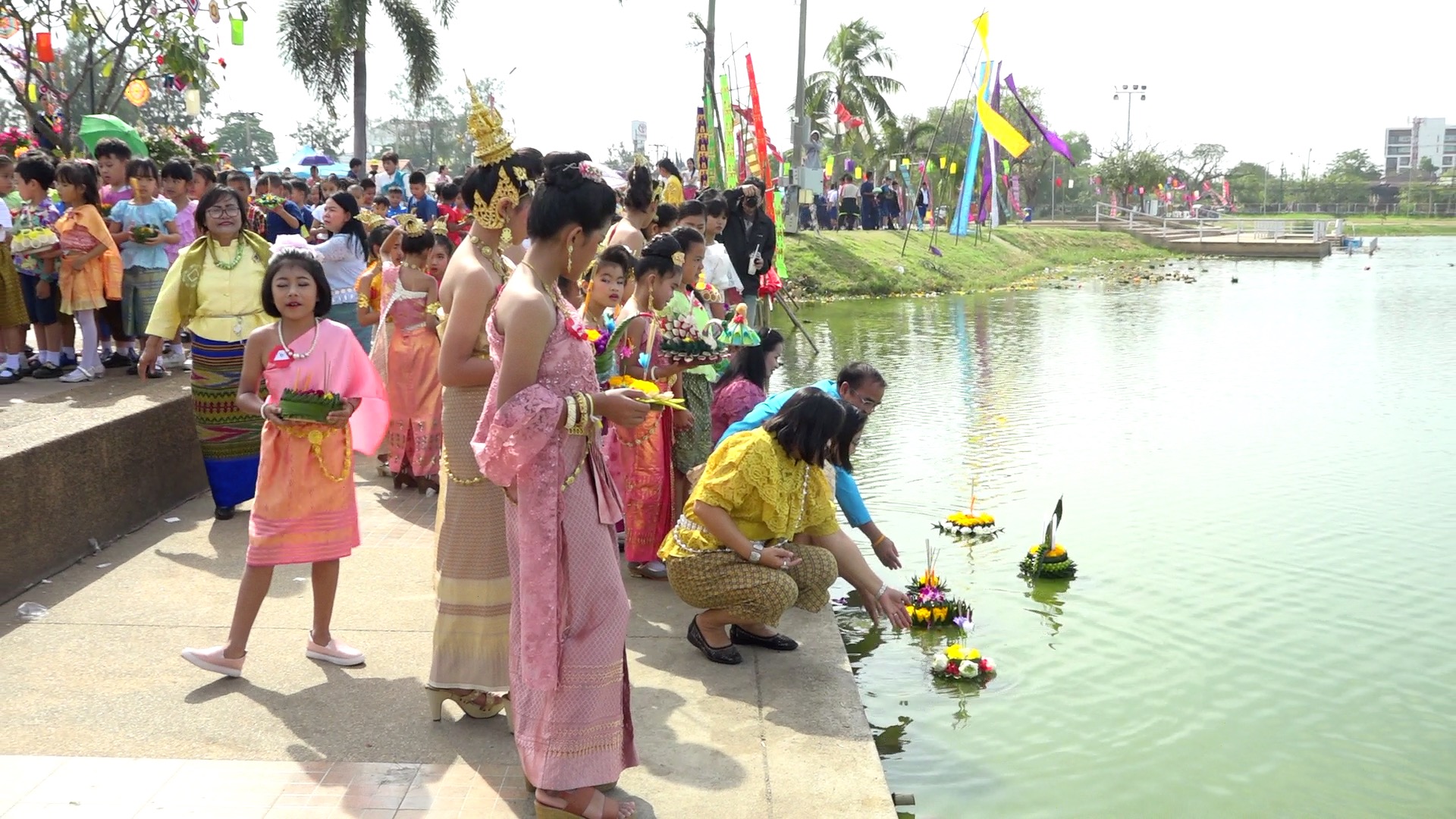
“Loy Krathong is a Thai tradition that has existed since the Sukhothai period. Called ‘floating lanterns’ or ‘lantern lanterns’ it began as a public festival and continues that way. A Miss Noppamas, or Lady Srichulalakam, tradition was added in the reign of Phraya Le Thai, the 4th King of Phra Ruang, known as Noppamas Rewadee, Noppamas, and Thao Sri Chulalak. Another innovation was to create a lotus flower krathong instead of floating lanterns to pay homage to the Buddha’s footprint at Namthanee River in the Thakinabod region of India, now called ‘Neraphuttha River’. The homage was to be paid directly on Wan Phen, or the full moon day of the 12th month, corresponding to the 15th month of the Thai lunar calendar and the Lanna Lunar Calendar, and around November according to the solar calendar.”
“On Loy Krathong Day, beautiful music is heard in the streets accompanied with auspicious theatrical performances. At night, there are fireworks and throughout the day and evening families gather round. At the same time, people in communities work together to organise events. In some areas, merit-making is considered as contributing to the inheritance of Buddhism and a good opportunity to boost environmental conservation campaigns along canals and rivers. Stories continue to be told about Loy Krathong traditions.”
“An educational institution, Navamindradhiraj University, gave me an opportunity to share my specialised Loy Krathong knowledge, culture and skills and this led to making friends with people with a common interest in mental wellbeing among members of society.”
“Loy Krathong traditions that Thai people have carried on for generations continue to be deeply rooted in attitudes and beliefs associated with Buddhism. Dharma helps to cultivate consciousness and joy in national unity. I thank this educational institution for giving me the opportunity to participate in this event on Monday, November 11, 2562 (BE) and help carry on the wonderful Loy Krathong tradition.”
“With our hands and beautiful krathongs we expressd our respect and gratitude to our benefactors, including The Buddha, the gods, and the Mother of the Ganges. With our elaborately-crafted devotional krathongs, we express our will for peace and unity inspired by The Buddha’s footprint and The Buddha. Each festival eventually passes but their collective meaning, memories and impact form part of our land’s eternal inheritance.”
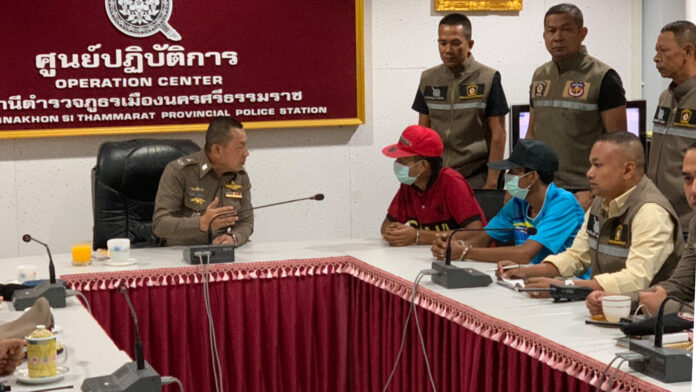
Anusak Daengdet, 27, and Watchara Wannamas, 26, at a presser on Nov. 11, 2019.
NAKHON SI THAMMARAT — Two men were arrested on Monday for a drive-by shooting that left a teenage girl dead and a 4-year-old boy injured.
Anusak Daengdet, 27, and Watchara Wannamas, 26, are accused of firing shots at a house in Nakhon Si Thammarat city which killed Sasiprapha Yisoonsaem, 14, and wounded her 4-year-old relative while watching television inside the house on Friday.
The police said the suspects confessed to the shooting. One of the men, Anusak, reportedly said he only meant to threaten the girl’s father and did not intend to take anyone’s life.
“I didn’t think that it would become this bad. I regret the girl’s death. If it were possible, I would trade my life for hers,” Anusak said during the presser Monday.
The girl’s father Wichai Yisoonsaem said he got into a brawl with the two men at a shop on Friday when Anusak grabbed his cup of sweetened drink and poured it out to a dog for no apparent reason.
The police said Anusak then persuaded his friends to carry out the attack later that night. The gunmen opened fire at the house, but Wichai was not at home.
Three other suspects – Watana Anantakhal, 28, Khunphol Ngernliam, 25, and Wisanu Nakkhong, 27 – were still on the run, according to the police.
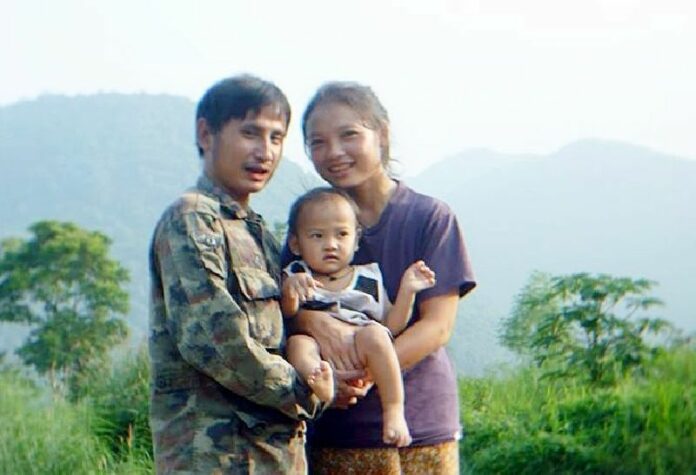
Porlajee “Billy” Rakchongcharoen poses with his wife and child. Photo: Courtesy of his family
BANGKOK — The Department of Special Investigation announced Monday that arrest warrants have been issued for four men allegedly involved in the murder of a Karen land rights activist whose bones was found burned in an oil drum.
Police Col. Paisit Wongmung, director of the Department of Special Investigation told the press Monday that courts have issued arrests for four men, including Chaiwat Limlikhit-aksorn, former national park chief of Kaeng Krachan National Park, for the murder of Porlajee “Billy” Rakchongcharoen.
The Department of Special Investigation said in September that burnt bone fragments found in the park in May inside a tank submerged in water belonged to Billy. The bones were burned at temperatures of 200C to 300C, which the investigation committee said was an attempt to cover up the murder.
Activists had previously accused then-director Chaiwat of engineering the disappearance of the local Karen activist.
Chaiwat and several park officials briefly detained the land rights activist on April 17, 2014 to reprimand him for “wild honey theft” but claim they later released him without charge. Billy, a campaigner for community rights, was not seen since. His friends and family feared the 30-year-old activist was abducted and murdered for his opposition to the government’s eviction efforts.
This is a developing story and may be updated without notice.
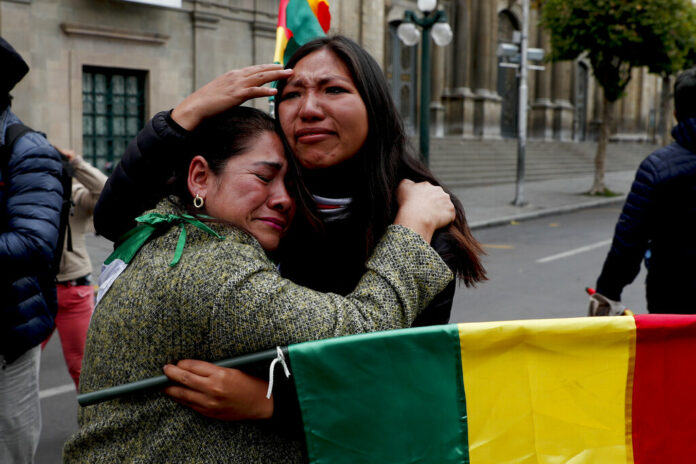
Opponents of Bolivia's President Evo Morales celebrate after he announced his resignation, in La Paz, Bolivia, Sunday, Nov. 10, 2019. Morales resigned Sunday under mounting pressure from the military and the public after his re-election victory triggered weeks of fraud allegations and deadly protests. Photo: Juan Karita / AP
LA PAZ, Bolivia (AP) — President Evo Morales resigned Sunday under mounting pressure from Bolivia’s military and the public after his re-election victory triggered weeks of fraud allegations and deadly protests.
The decision came after a day of fast-moving developments, including an offer from Morales to hold a new election. The crisis deepened dramatically when the country’s military chief went on national television to call on the president to step down.
“I am sending my resignation letter to the Legislative Assembly of Bolivia,” the 60-year-old socialist leader said, portraying his departure as the culmination of a “coup d’etat.”
He added: “I ask you to stop attacking the brothers and sisters, stop burning and attacking.”
Before Morales had even finished his statement, people began honking their car horns in La Paz and other cities and took to the streets to celebrate, waving Bolivian flags and setting off fireworks.
“This is not Cuba, nor Venezuela. This is Bolivia, and Bolivia is respected,” a crowd in the capital shouted.
Large crowds formed in the main squares in the capital, with many people rejoicing and some crying tears of joy. Protesters lay down in front of the presidential palace and set a coffin on fire to symbolize the death of the Morales government.
“We are celebrating that Bolivia is free,” said one demonstrator near the presidential palace.
It was not immediately clear who would succeed Morales. His vice president also resigned as did the Senate president, who was next in line. The only other official listed by the constitution as a successor, the head of the lower house, already had resigned.
Morales was the first member of Bolivia’s indigenous population to become president and was in power for 13 years and nine months, the longest span in the country’s history.
But his claim to have won a fourth term last month set off unrest that left three people dead and over 100 injured in clashes between his supporters and opponents.
After nightfall, there were reports of tensions in La Paz and the neighboring city of El Alto, with reports of looting and burning of public property and some houses.
Earlier Sunday, the Organization of American States said in a preliminary report that it had found a “heap of observed irregularities” in the Oct. 20 election and that a new vote should be held.
Morales agreed to that. But within hours, the military chief, Gen. Williams Kaliman, made it clear that would not be sufficient.
“After analyzing the situation of internal conflict, we ask the president to resign, allowing peace to be restored and stability to be maintained for the good of our Bolivia,” Kaliman said.
The leadership crisis escalated in the hours leading up Morales’ resignation. Two government ministers in charge of mines and hydrocarbons, the Chamber of Deputies president and three other pro-government legislators announced their resignations. Some said opposition supporters had threatened their families.
In addition, the head of Bolivia’s Supreme Electoral Tribunal, Maria Eugenia Choque, stepped down after the release of the OAS findings. The attorney general’s office said it would investigate the tribunal’s judges for possible fraud, and police later said Choque had been detained along with 37 other officials on suspicion of electoral crimes.
Morales, whose whereabouts were unknown, went on Twitter late Sunday to claim authorities were seeking to arrest him, but police Gen. Yuri Calderon denied any apprehension order had been issued for the resigned leader. He called such rumors “fake news.”
In his tweet, Morales said: “I report to the world and Bolivian people that a police officer publicly announced that he has instructions to execute an unlawful apprehension order against me; in addition, violent groups also stormed my home.”
Armed intruders did break into Morales’ home in Cochabamba.
Mexico’s government reported Sunday night that 20 members of Bolivia’s executive and legislative branches were at the official Mexican residence in the capital seeking asylum.
Mexican Foreign Secretary Marcelo Ebrard also said on Twitter that Mexico would offer asylum to Morales if should ask for it. There was no indication that Morales had done that.
Earlier, Ebrard criticized the involvement of the Bolivian military in the day’s events crisis, saying that “we reject it.”
In a tweet, Ebrard said: “Mexico will maintain its position of respect for democracy and institutions. Coup no.”
Jennifer Cyr, an associate professor of political science and Latin American studies at the University of Arizona, also voiced concern about the military commander calling on Morales to resign, calling it “extremely troubling” and “sad.”
The OAS report and Morales’ acceptance of a new election were positive steps that could have calmed Bolivia’s divisions, she said. “Now I am not sure what will happen.”
Morales was first elected in 2006 and went on to preside over a commodities-fed economic boom in South America’s poorest country. The combative former leader of a coca growers union, he paved roads, sent Bolivia’s first satellite into space and curbed inflation.
But many who were once excited by his fairy-tale rise grew wary of his reluctance to leave power.
He ran for a fourth term after refusing to abide by the results of a referendum that upheld term limits for the president. He was able to run because Bolivia’s constitutional court disallowed such limits.
After the Oct. 20 vote, Morales declared himself the outright winner even before official results indicated he obtained just enough support to avoid a runoff with opposition leader and former President Carlos Mesa. A 24-hour lapse in releasing results fueled suspicions of vote-rigging.
The OAS sent a team to look into the election. It called for a new contest with a new electoral tribunal.
“Mindful of the heap of observed irregularities, it’s not possible to guarantee the integrity of the numbers and give certainty of the results,” the OAS said in a statement.
The U.S. State Department issued a statement calling for the OAS to send a mission to Bolivia to oversee the electoral process. “The Bolivian people deserve free and fair elections,” it said.
During the unrest, protesters torched the headquarters of local electoral tribunal offices and set up roadblocks that paralyzed parts of Bolivia.
The pressure on Morales had increased ominously Saturday when police on guard outside the presidential palace abandoned their posts, and police officers retreated to their barracks in at least three cities.
The state news agency ABI said Morales announced his resignation from Chapare province, where he began his career as a union leader. At the end of his speech, he said he was returning to Chapare.
“I return to my people who never left me. The fight goes on,” he said.
___
Story: Paola Flores and Carlos Valdez. Associated Press writer Luis Andres Henao in Buenos Aires, Argentina, contributed to this report.
Zookeepers wearing penguin and panda costume celebrate Loy Krathong festival at Chiang Mai Zoo’s snow dome on Nov. 8, 2019.
BANGKOK — Biodegradable krathongs of lottery tickets, Loy Krathong among ice and snow in a zoo, and even floating krathongs at the Thai-Cambodian border crossing show that this year’s floating lantern holiday comes in many forms around the kingdom.
Loy Krathong revelers across the country are opting for biodegradable krathongs to pay gratitude to not just to water spirits, but while keeping Mother Nature in mind.
Vendors countrywide told press that krathongs made of natural materials like banana stalks and coconut shells are the best-selling this year.
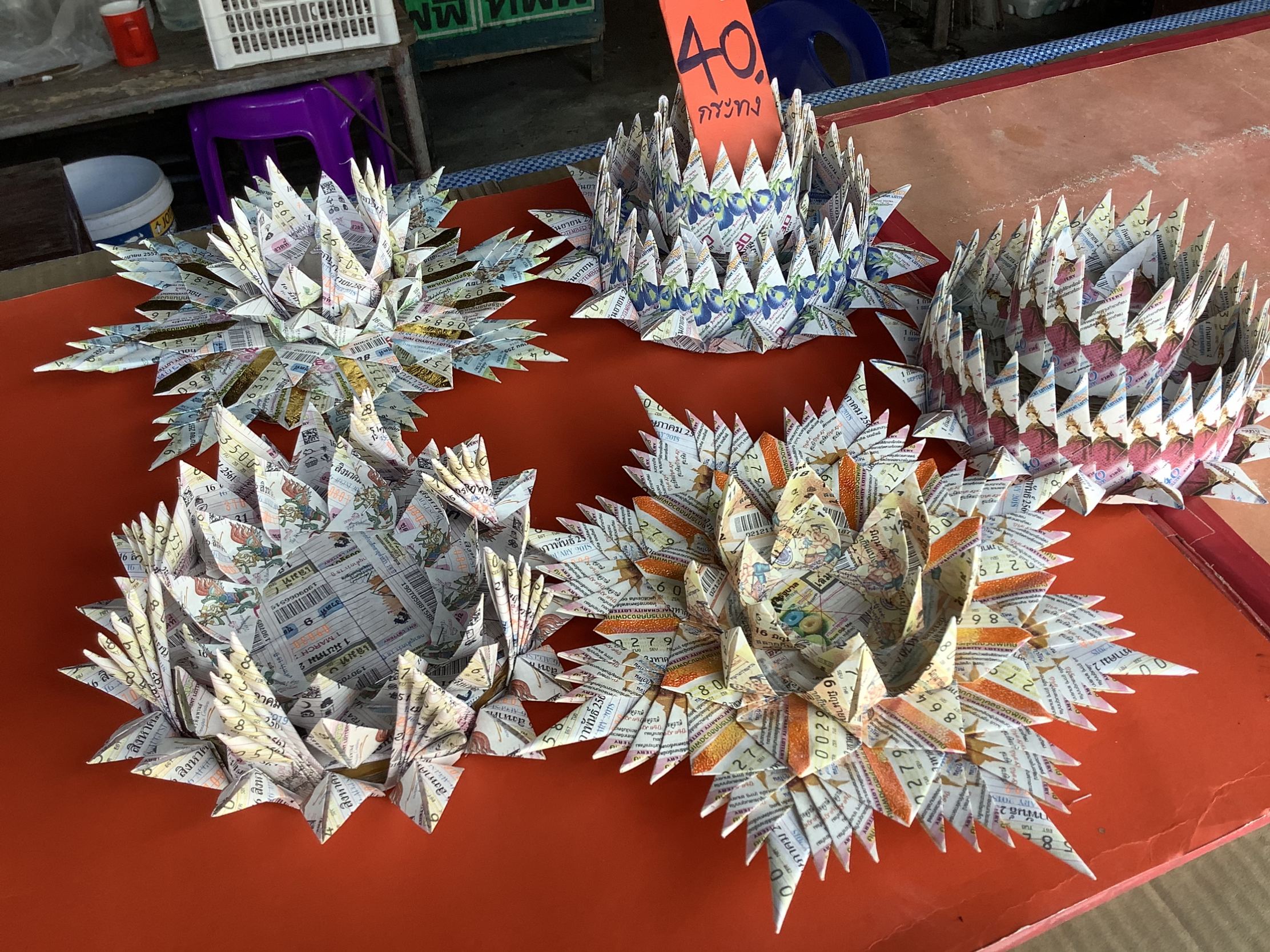
Tradition meets creativity as a vendor in Surin offers edible krathongs made of ice cream cones, while another vendor in Trat sells krathongs made of discarded lottery tickets for festival-goers to float their misfortune away.
Festivities are planned for this evening, but some provinces have already kicked off their local variations. Up north in Chiang Mai, the city’s night sky was studded with thousands of sky lanterns as the three-night Yi Peng festival began yesterday. A total of 150 flights at Chiang Mai Airport were either canceled or rescheduled to avoid coming in contact with these lanterns.
Chiang Mai Zoo’s are also having snowy Loy Krathongs in their snow dome area as well as underwater Loy Krathongs with the fish at the aquarium.
Thais and Cambodians are set to participate in Loy Krathong together at an event planned at the border province of Trat tonight, a proof that the festival doesn’t have a boundary.
But for officials at Sa Kaeo customs, it was duties as usual when they intercepted counterfeit goods and cigarettes worth 200,000 baht Monday.
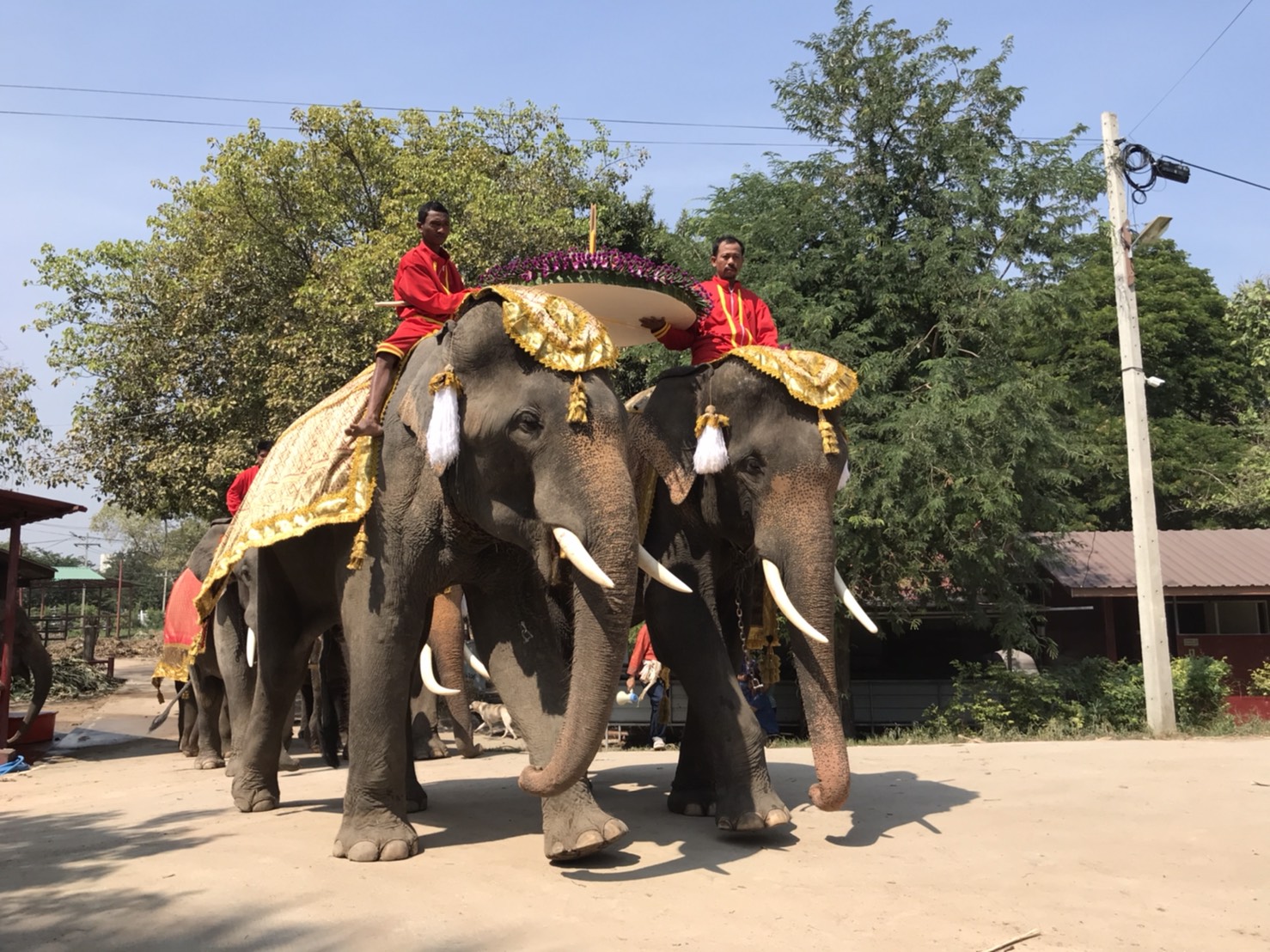
In Ayutthaya, seven elephants also floated their krathongs on Lopburi River on Friday.
Prime Minister Prayuth Chan-ocha will personally float his krathong with locals in Kanchanaburi today.
In Bangkok, up to 30 public parks and other venues will be opened to revellers tonight.
Elephants join the fest at an elephant camp in Ayutthaya.Children dress up in traditional costumes for a Nang Noppamas pageant contest in Lam Luk Ka district, Pathum Thani.Underwater Loy Krathong at Chiang Mai Zoo’s aquarium.Krathongs made of discarded lottery tickets in Trat.A morning Loy Krathong celebration in Khon Kaen on Nov. 11, 2019.
Alibaba tracks the net worth of 11.11 sales on Nov. 11, 2019 in Hangzhou, China.
HANGZHOU, China (Xinhua) — China’s Singles’ Day sales on TMall hit 10 billion yuan (about 1.44 billion U.S. dollars) at just one minute and 36 seconds after midnight on Monday.
According to Alibaba, owner of TMall, more than 22,000 overseas brands from 200 countries and regions have participated in this year’s shopping spree in China.
The e-commerce giant launched the annual online shopping promotion on Nov. 11, 2009, a day celebrated by many Chinese young people as Single’s Day. The date was chosen because 11-11 resembles four “bare sticks,” a Chinese term for bachelor.
Sales of Tmall’s first shopping festival totaled about 52 million yuan. Alibaba’s Single’s Day sales reached 213.5 billion yuan last year.
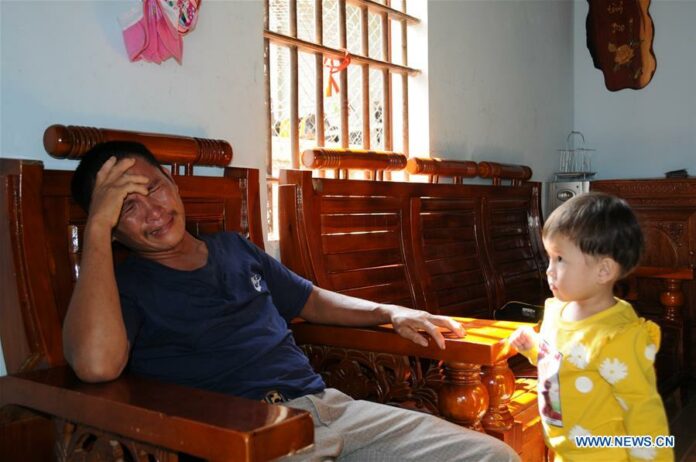
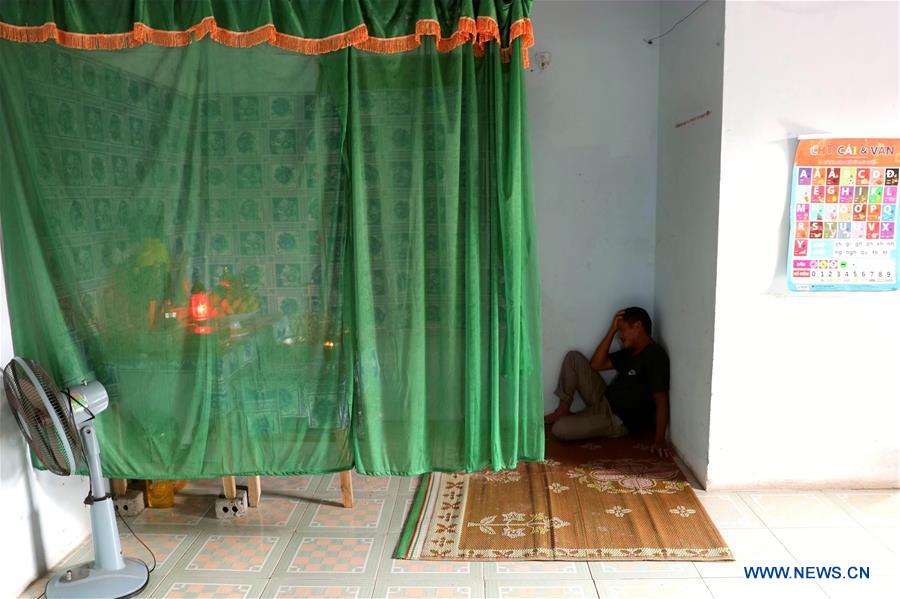
Cao Huy Thanh's elder brother (L) grieves as his daughter looks on in Vietnam's central Nghe An province, Nov. 8, 2019. Thanh, who was among the 39 Vietnamese nationals found dead in a lorry in Essex, Britain, was the breadwinner of a family with four children. Photo: Tao Jun / Xinhua
VINH, Vietnam (Xinhua) — Cao Huy Thanh’s old run-down house is nestled deep into a narrow and winding road covered with big bushes and trees, a typical landscape of rural Vietnam.
Extra tables and chairs have been prepared for guests coming to send condolences to the family of the 37-year-old, who was among the 39 Vietnamese nationals found dead in a lorry in Essex, Britain.
The sound of adults talking and grieving was well mixed with the innocent laughter of small children inside the 40-square-meter house. Occasionally, a family member disrupted the conversation to turn to the living room to check the altar set up on Nov. 5 for Thanh.
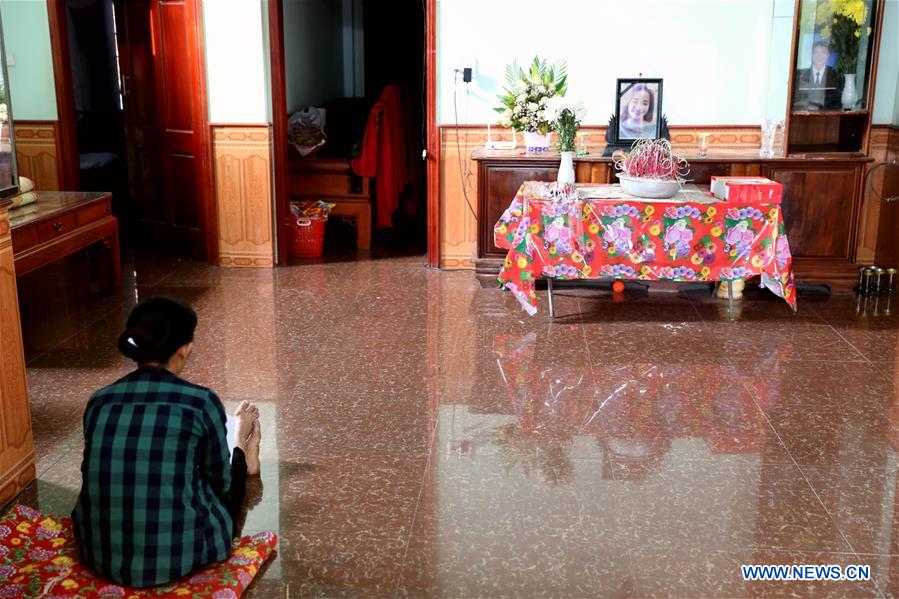
Incense, candles and offerings were well-arranged around the portrait picture of the ill-fated man on the altar, which stood opposite to his wedding photo taken seven years ago.
“We are waiting for my husband’s body to be repatriated home so my four children can see their father for the last time,” said his wife Thai Thi Giang, patting on her 11-month-old kid.
The 25-year-old told Xinhua that she got a phone call from the Vietnamese Ministry of Foreign Affairs at 7:00 p.m. on Nov. 7, confirming that her husband was among the 39 victims in a container in Britain.
Her worst nightmare has come true – she lost her beloved husband, the breadwinner of the family of six to the perilous journey to Britain.
Photo taken on Nov. 8, 2019 shows an altar set up for Bui Thi Nhung at her home in Vietnam’s central Nghe An province. The 19-year-old was among the 39 Vietnamese nationals found dead in a lorry in Essex, Britain. Her family is waiting for her body to be repatriated home. Photo: Wang Di / Xinhua
DREAMS FIZZLE
Living in a rural village in Dien Ngoc commune, Dien Chau district of Vietnam’s central Nghe An province where fishing is the only thing unskilled people could do for a living, Thanh earned barely 200,000 dong (8.7 U.S. dollars) a day. The money was barely enough to cover the daily costs of the family of six.
In March 2019 when his fourth child was five months old, Thanh waved goodbye to his family, believing a better life was waiting for him abroad after paying 120 million dong (5,200 U.S. dollars) to go to work in Romania through a labor export company.
The harsh reality of life abroad soon broke Thanh’s dream. He could not cover the daily expenses by doing “the physically tough job with low-paid wage” for a meat processing factory in Romania. He then asked his family to pay more for his trip to Germany where he worked in a restaurant with his childhood friend Cao Tien Dung, who was also among the 39 people found dead in a lorry in Essex last month.
“His last phone call home was on October 22. He told me that he would travel to Britain but didn’t mention how he would get there and what job he would do. He asked our family to prepare money for the trip,” Giang told Xinhua while embracing her youngest son in her arms.
“Yet he never called me back,” she said while looking down with signs of weariness, hopelessness and deep despair.
Thanh’s family got a loan of nearly 600 million dong (26,100 U.S. dollars), secured on their house, to fund his trips from Vietnam to Romania and then Germany.
His dream about a better future for the family bitterly turned into an inconsolable loss, a crippling debt and an uncertain future for the family.
“Without him, I don’t know how we can manage raising all the four kids, repaying the debt and paying monthly interest rate. I don’t know what to do with our life now,” Thanh’s mother said in grief.
Victims and their families had not been fully aware that their investment in an illegal immigration trip was a life-and-death gamble.
“Thanh is the first in our family to go to work abroad. If we had known about the risks, we would have never let him go that way,” said Thanh’s father-in-law, adding that he was worried how his jobless daughter could live on with such a great loss.
WORKING ABROAD FOR BETTER INCOME
In the nearby Yen Thanh district, the passing of 26-year-old Nguyen Dinh Tu, breadwinner of the family and father of two small children, also turned his family’s life upside down.
“His wife was devastated and fell ill these days,” Tu’s sister-in-law said. In recent days, the newly-built house without much furniture of Tu has been frequented by neighbors and relatives who came to share condolences with the family.
Some 500 meters away is 19-year-old Bui Thi Nhung’s house which was echoed with the sad rhythms of Bible verses that her family members, neighbors and relatives sang to pray for her.
The family has set up a small altar for their ill-fated daughter – the picture of the young girl with radiant eyes and a warm smile was placed in the center and candles and a vase of fresh white chrysanthemum were put on two sides.
In the memories of her beloved ones, Nhung was “a cheerful yet thoughtful and responsible child.”
“She had always put the family’s needs above her own,” said Bui Thi Phuong, sadly taking a look at the picture of her younger sister on the altar.
Two years ago, her father died of cancer and the family had to struggle to repay the debt they borrowed for the treatment fee. Living in a commune where about 75 percent of the working population work abroad, Nhung chose to go abroad with the hope for a better future and freeing her family from the loans.
Cao Huy Thanh’s elder brother grieves in front of Thanh’s altar in Vietnam’s central Nghe An province, Nov. 8, 2019. Photo: Wang Di / Xinhua
According to Nguyen Thi Hong, a local resident of Do Thanh commune who is at her 50s, people here rely mostly on rice farming for a living. After harvesting season, there is no job to do so some go to Hanoi or Ho Chi Minh City to find jobs.
Many families use low-interest loans borrowed from state credit funds to send their children to work abroad, Hong said.
Do Thanh commune is well-known as one of the most affluent localities in the central Nghe An province thanks largely to labor export, according to Vietnam News Agency.
Previously, people in this commune and surrounding areas had a difficult life because they could barely rely on planting rice and potatoes in the barren land. But in the past 20 years, there has been a movement of going to work in countries including Russia and Germany, among others, Nguyen Manh Ha, chairman of the commune’s People’s Committee was quoted as saying by the news agency.
With a population of fewer than 15,000, the commune currently has nearly 1,500 people working in foreign countries. Some families have two or more members working abroad.
High-rise houses and even villas have sprung up across the village. Many families have higher income and people’s livelihood in Do Thanh commune has improved, local media reported.
The central Nghe An province, hometown of 21 out of the 39 Vietnamese victims, has more than 60,000 people working abroad, the highest number in the country. The province defines labor export as one of the key ways to create jobs and reduce poverty.
NO MORE SUCH TRAGEDIES
The list of the 39 Vietnamese victims in the Essex lorry tragedy was announced by the Vietnamese Ministry of Public Security here on Friday.
After British authorities’ confirmation of the 39 dead in the Essex lorry, Vietnam has dug into measures to bolster labor export management, so such “serious humanitarian tragedy” would not happen again.
Currently, 400 businesses in Vietnam are licensed to send Vietnamese workers abroad. In the past three years, more than 300,000 people have been sent to work in South Korea, Japan, and Malaysia, among others, according to Minister of Labor, Invalids and Social Affairs Dao Ngoc Dung.
Local people should go to work overseas via legal channels and not attempt illegal and perilous journeys, he added.
As a criminal investigation for organizing, brokering illegal immigration and residence in foreign countries is underway, the criminals will be brought to justice and illegal immigration will also be tightened to prevent similar tragedies from happening again.
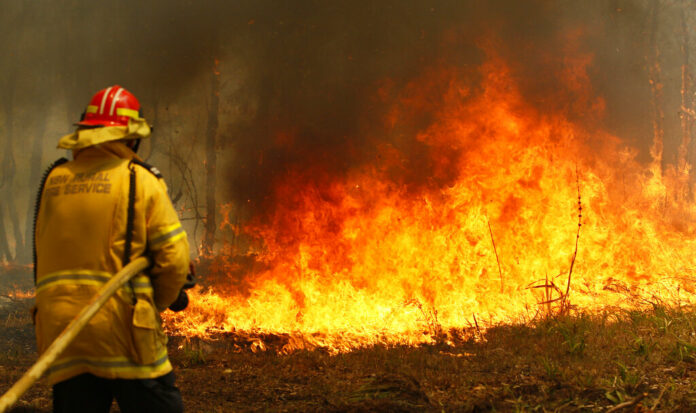
Firefighters work to contain a bushfire along Old Bar road in Old Bar, Saturday, Nov. 9, 2019. Wildfires razing Australia's drought-stricken east coast have left two people dead and several missing, more than 30 injured and over 150 homes destroyed, officials said Saturday. Photo: Darren Pateman / AAP Image via AP
CANBERRA, Australia (AP) — Australia’s most populous state declared a fire emergency on Monday with worsening conditions expected after wildfires have already claimed three lives and more than 150 homes.
New South Wales state Emergency Services Minister David Elliott said residents were facing what “could be the most dangerous bushfire week this nation has ever seen.”
Fires in the state’s northeast have razed more than 850,000 hectares (3,300 square miles) of forest and farmland since Friday.
Fire conditions are forecast to be worse on Tuesday than they were at the peak of the current fire emergency on Friday.
“The catastrophic weather conditions mean that things can change very quickly,” Premier Gladys Berejiklian told reporters in Sydney.
“You might think you’re OK and a few minutes later you won’t be. Please heed all the messages you receive. Tomorrow (Tuesday) is not the day to be complacent,” she added.
Catastrophic fire danger has been declared for Sydney and the Hunter Valley region to the north on Tuesday with severe and extreme danger across vast parts of the rest of the state.
“Catastrophic is off the conventional scale,” Rural Fire Service Commissioner Shane Fitzsimmons said.
The weeklong declaration of a state of emergency gives the Rural Fire Service sweeping powers to direct any government agency to conduct or refrain from conducting any of its functions. It can order the immediate shutdown of essential utilities including gas and electricity in fire-declared areas and can close roads and take possession of any property in the course of an emergency response.
The annual Australian fire season, which peaks during the Southern Hemisphere summer, has started early after an unusually warm and dry winter.
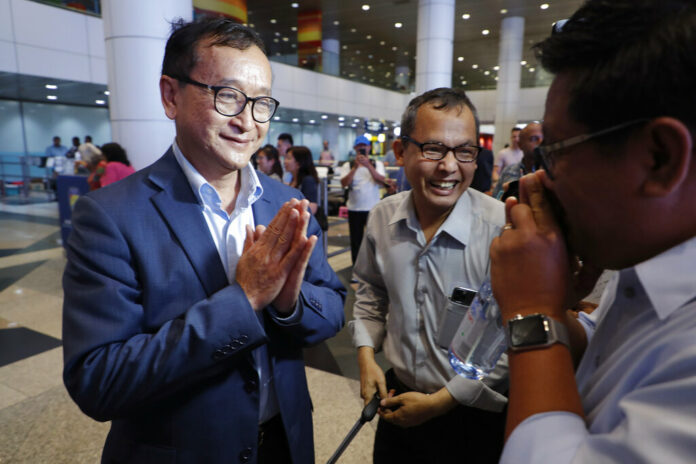
Cambodia's exiled opposition leader Sam Rainsy, left, greets supporters as he arrived at Kuala Lumpur International's Airport in Sepang, Malaysia Saturday, Nov. 9, 2019. Sam Rainsy landed in Kuala Lumpur in a bid to return to his homeland after Thailand had earlier blocked him from entering. Photo: Vincent Thian / AP
KUALA LUMPUR, Malaysia (AP) — Cambodia’s exiled opposition leader Sam Rainsy arrived in Malaysia, making partial progress in his quest to return to his home country to try to oust long-serving Prime Minister Hun Sen.
Although he failed to make it to Cambodia on Saturday — the country’s Independence Day — he told reporters in Kuala Lumpur, “I will go back home, of course. It is my right. And also my duty.”
Hun Sen’s authoritarian government has vigorously opposed the return of Sam Rainsy and fellow members of the banned Cambodia National Rescue Party and declared they would be arrested immediately if they made it onto Cambodian soil.
In a video posted Saturday morning before he boarded a flight from Paris, Sam Rainsy told supporters: “Our victory is getting nearer and nearer. The change of regime through the democratic means will soon arrive and be accomplished.”
In what may be a possible turnaround in the Cambodian government’s position, its influential deputy prime minister and interior minister, Sar Kheng, said on his Facebook page Saturday, “As of now, there is not any announcement by the Cambodian government to bar culprit Sam Rainsy and his colleagues from entering the country.”
Sar Kheng said Sam Rainsy — who has several convictions with prison sentences to serve along with charges pending for several other alleged offenses — can return as an ordinary person but will have to face due justice. Sam Rainsy considers the legal actions political persecution.
It was unclear if Sar Kheng’s Facebook post represents government policy. Cambodia’s long holiday weekend runs through Tuesday.
Sam Rainsy spoke to reporters briefly on his arrival in Kuala Lumpur, saying he had been invited by Malaysian lawmakers to meet with them on Tuesday. He declared that his visit was private and that he was grateful to the Malaysia authorities.
His comments appeared to sidestep the issue of whether he was interfering with Cambodia’s internal affairs while on Malaysian soil. Malaysia and Cambodia are both members of the Association of Southeast Asian Nations, which maintains a policy of noninterference in each other’s affairs. Malaysia and Thailand have both hindered the free movement of opposition party leaders, drawing criticism from human rights groups.
Prime Minister Mahathir Mohamad said earlier in the week that Malaysia doesn’t want to be used as a base for political activists or interfere in the affairs of other countries.
“Keep up the hope. We are on the right track. Democracy will prevail,” Sam Rainsy said. “Democracy has prevailed in Malaysia, democracy will prevail in Cambodia. We look up to Malaysia as our model to strengthen democracy in a peaceful way.”
In Cambodia on Saturday, Hun Sen and constitutional monarch King Norodom Sihamoni attended a celebration ceremony at Independence Monument in Phnom Penh, the capital.
Hun Sen and his ruling Cambodian People’s Party have a stranglehold on power, which was ensured when Cambodia’s high court dissolved the Cambodia National Rescue Party in late 2017 for allegedly treasonous activities.
The action was seen as a political ploy to ensure victory by Hun Sen’s party in the 2018 general election by eliminating the only credible opposition group. Sam Rainsy’s party had mounted an unexpectedly strong challenge in 2013 elections.
But he and his colleagues face an uphill battle.
An effort Sam Rainsy made Thursday to fly from Paris to Thailand — Cambodia’s western neighbor — was thwarted when Thai Airways refused to let him board. Thai Prime Minister Prayuth Chan-ocha had said earlier that he would be barred from entering Thailand.
Inside Cambodia, scores of opposition supporters have been arrested in the past few weeks.
Security in Phnom Penh was heavy and especially high Saturday at the border checkpoint at Poipet in the country’s northwest, where Sam Rainsy and his top party leaders had announced that they and their supporters would be crossing from Thailand. Traffic to the checkpoint as well as across the border was limited, with Cambodian migrant workers in Thailand reportedly barred from entry.
Other top party members fled into exile after the 2017 crackdown on all opposition to Hun Sen, which also included the shuttering of virtually all critical media and the arrest of the party’s other co-founder, Kem Sokha. He was charged with treason, based on his links to a U.S. pro-democracy organization, and is under strict house arrest.
___
Peck reported from Bangkok. Associated Press writers Sopheng Cheang in Phnom Penh, Cambodia, and Eileen Ng in Hong Kong contributed to this report.
BEIJING — You cannot even begin to grasp the grandeur of Beijing’s Forbidden City unless you enter through its mighty gates and see it for yourself.
And believe me when I say the landmark alone is enough a reason to visit Beijing at least once in a lifetime, especially if you are a history or architecture buff.
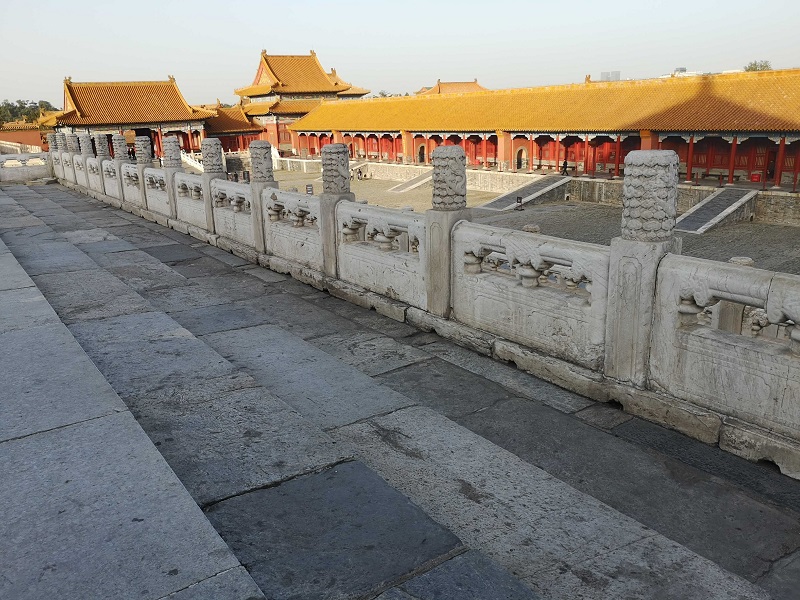
As the name suggests, the 720,000-sqm complex was once the seat of power of the Ming (1368-1644) and Qing dynasties (1644-1912), staffed by an army of eunuchs and off-limit to commoners unless they had the privilege of being invited by the imperial court. Throughout China’s turbulent history, it came close to an annihilation by Western, Japanese, and Communist forces. Nowadays it is open to millions of tourists.
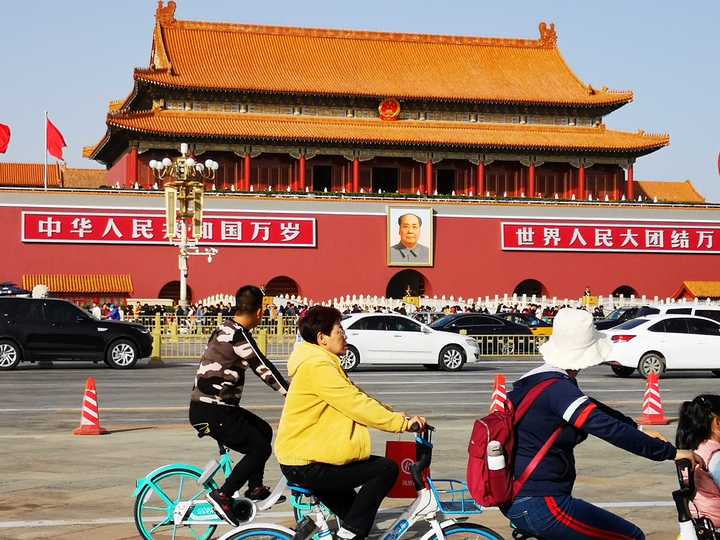
My first impression before entering the Forbidden City, completed in 1420, is the massive scale of the outer gate, called Tiananmen, or the Gate of Heavenly Peace.
The fortress-like gatehouse is adorned with a huge portrait of Mao Zedong. The Chairman stood on its balcony 70 years ago to proclaim the founding of the People’s Republic. This is the same gate that overlooked the 1989 mass protest that attempted to bring about democracy and reforms before it was put down by the military, leading to debatable number of deaths.
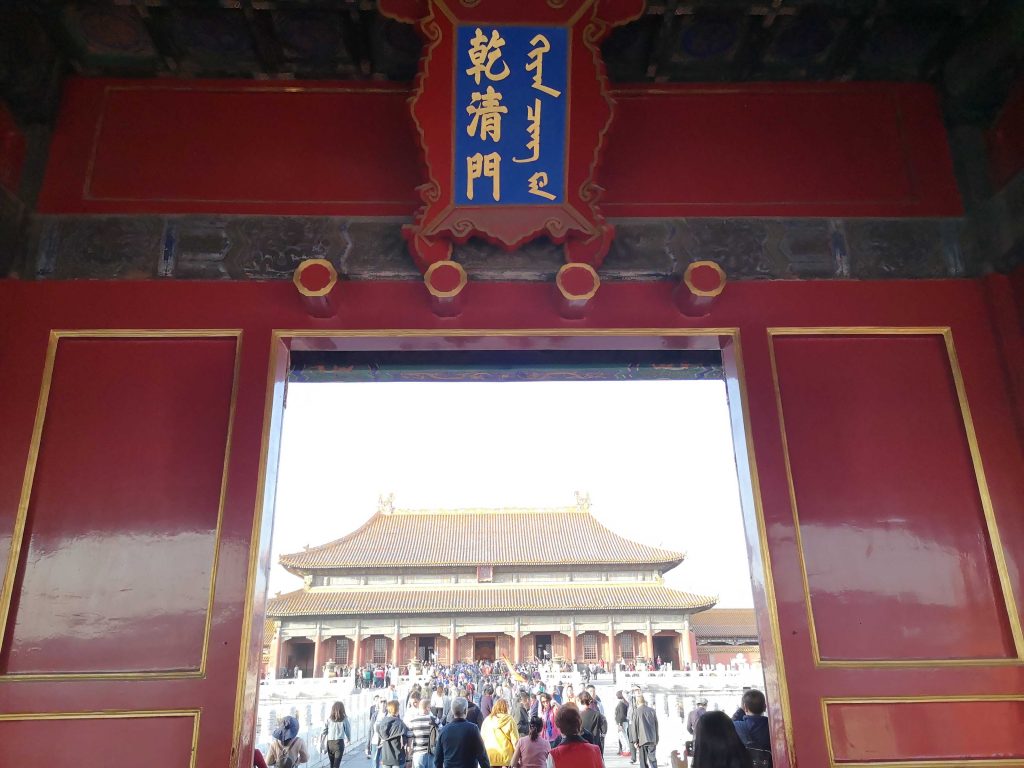
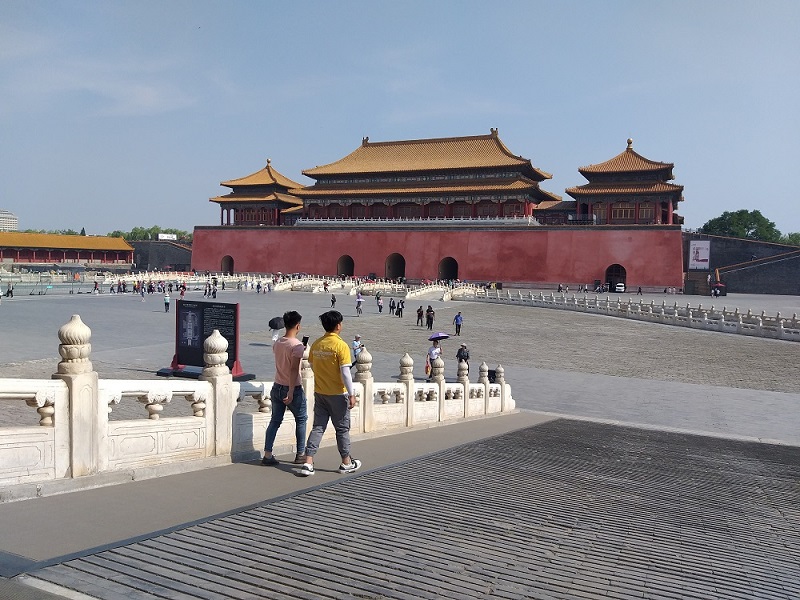
Entering the first, second and third massive gates of the Forbidden City, one cannot help but feel humbled and awed by the experience.
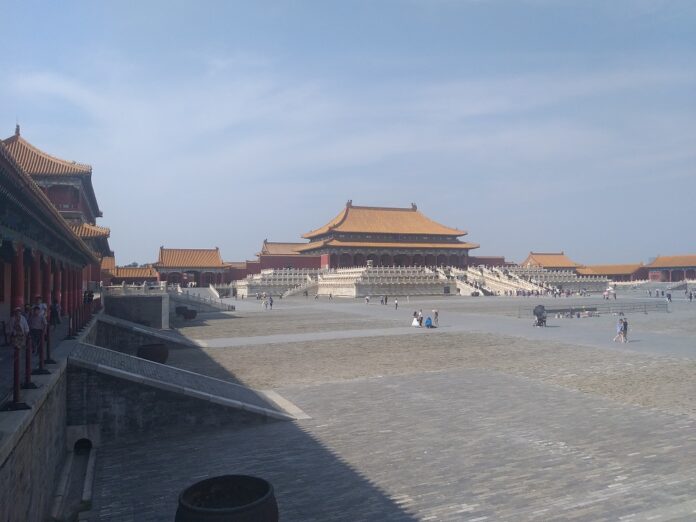
At the center of the Forbidden City, and after a considerable stroll, is the Hall of Supreme Harmony, the largest hall in the palace. Those who have seen the classic “The Last Emperor” would immediately recognize the sight.
Pause here admire the colored ceilings and ornate dragon throne from a distance. This must be done in competition with a throng of other tourists, mostly Chinese. Yet stand there as long as you can to imbibe in the atmosphere.
If you can, use binoculars to admire the imperial Chinese architecture. Notice the roof guardians in odd number of figures believed to protect the buildings from fire.
Our guide, supplied by the China’s Ministry of Foreign Affairs, told us that there used to be 9,999 rooms inside the Forbidden City. The emperors were thought to be semi-divine, but only the truly divine beings in heaven have 10,000 rooms, according to traditional beliefs.
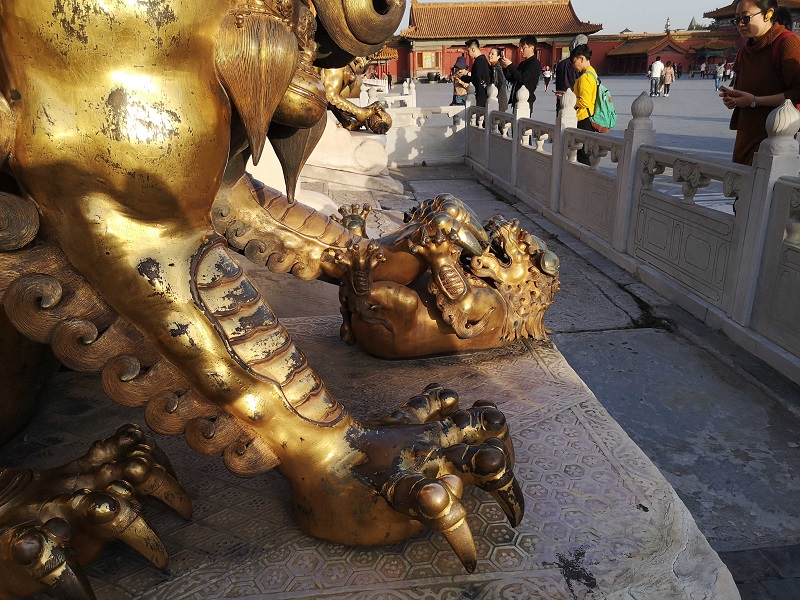
Bronze Chinese lions, such as the two guarding the front of the Gate of Supreme Harmony, are simply exquisite and filled with an aura of power. A careful observation would reveal that one is male and another female; the male holds a ball beneath its left paw while the female caresses a lion cub.
There are bronze water receptors, used to store water in case there’s a fire inside the city. The guide said the marks of damages on the vessels were caused by Japanese invaders during the occupation of Beijing.
One should also simply sit and admire the majesty of the palace, built by a labor of 1 million people over a period of 14 years. I wonder how many died, and how many of them were willing participants in the grand project.
Whichever direction you look, you will find yourself surrounded by delicate architecture and artisan craft, even though most of its treasures are long gone, with the better of the collection kept at the National Palace Museum located 1,721 km away in Taipei.
The treasures, consisting of some 650,000 items, were evacuated to the southern island due to fear of being looted by the Japanese army during its invasion of Beijing in 1937. Having visited the museum in Taipei myself, I must say a trip there is also a must for a Sinophile.
The fact that the Forbidden City itself is still standing is almost a miracle on its own. In 1860, during the humiliating Second Opium War, it was nearly burned down by the British and French troops who toyed with the idea while encamped in front of Tiananmen.
‘Fortunately,’ they eventually decided to loot and burn down the Summer Palace in northern Beijing instead.
The palace again came close to destruction when the Cultural Revolution reached its height of frenzy in 1966. At the time, 4,922 out of 6,843 designated places of historical interest were already trashed or vandalized by the Red Guards, and they soon set their sights on the most iconic landmark of Chinese feudalism.
Upon hearing about a planned attack on the Forbidden City, however, Premier Zhou Enlai sent troops there and ordered the gates closed, effectively sparing its fate.
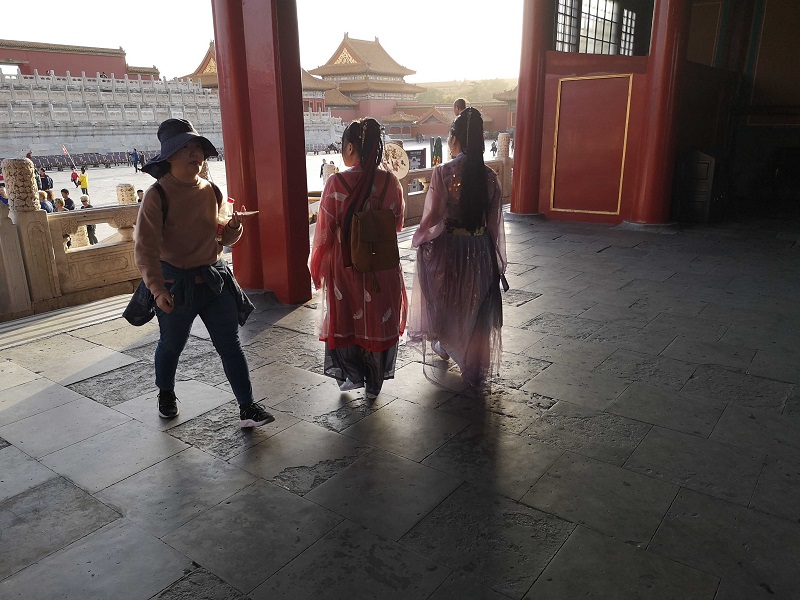
The Red Guards are a distant past. By contrast, during my visit the palace is full of young Chinese dressed up in traditional hanfu costumes and taking photos for their social media.
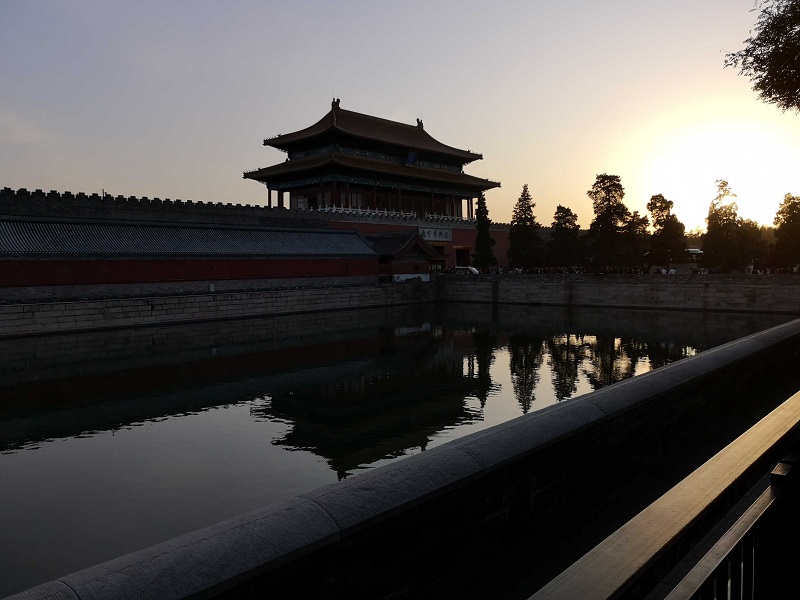
As I exit the Forbidden City through the last gate, the Gate of Divine Prowess, I noticed the blue tablet on the gate written both in Chinese and Manchurian scripts. Apparently when the Qing emperors were in power, Manchurian women of certain young age and class would have to be sent to the palace through this backgate to be selected to serve the emperor.
Such feudal practice is no more. The emperors are gone for a long time now, although more recently Hong Kong pro-democracy activist Joshua Wong brought back the medieval term, branding Chinese paramount leader President Xi Jinping as “Emperor Xi”.
The writer would like to thank the Chinese Embassy in Bangkok, the Ministry of Foreign Affairs of the People’s Republic of China, and the guide for a tour of the Forbidden City.

































 “An educational institution, Navamindradhiraj University, gave me an opportunity to share my specialised Loy Krathong knowledge, culture and skills and this led to making friends with people with a common interest in mental wellbeing among members of society.”