27.2 C
Bangkok
Saturday, June 20, 2026
Home Blog Page 1496

Gov’t Says ‘5 More People’ May be Nabbed for Royal Insult

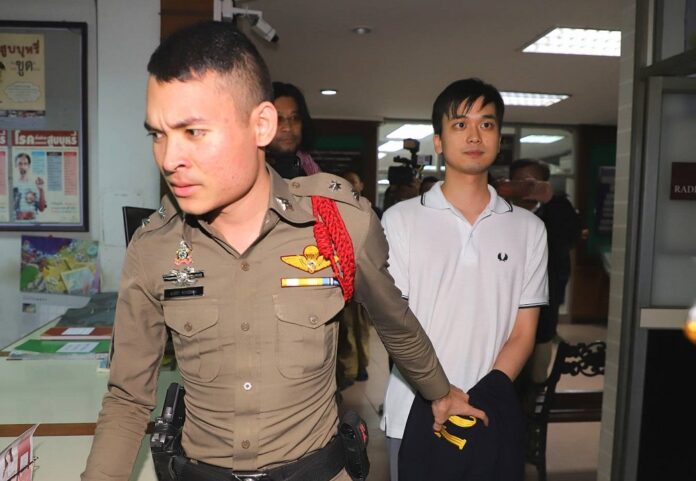
Police escort Karn Pongpraphapan to an interrogation at a police station in Bangkok on Oct. 8, 2019.

BANGKOK — A top official said Tuesday five more people might be arrested in connection with “inappropriate” online comments about the monarchy, in addition to an activist apprehended by the police last night.

Deputy Prime Minister Prawit Wongsuwan said he was told by the digital economy ministry that the five people of interests, whom he did not name, may be involved with the offensive comments. He spoke hours after pro-democracy campaigner Karn Pongpraphapan was charged with cybercrime for allegedly insulting the monarchy on Facebook.

“I have been informed that there are about five people [involved] in this matter,” Prawit told reporters. “As for how much involvement they have, I still don’t know, because I have to wait for the investigation results first.”

Read: Activist Arrested, Accused of Making Threats to Monarchy

He continued, “But if they are heavily involved, we’ll have to prosecute them, because their wrongdoing involves attacking the monarchy.”

Police earlier today announced they arrested Karn at his home and later charged him with cybercrime for a comment he wrote on his public Facebook account.

In the Oct. 2 post, which he has since deleted, Karn made references to the gruesome fates of past European monarchies, though he did not explicitly mention the Thai Royal Family.

Yet it was enough for police to charge him with Computer Crime Act, which bans importing information into the computer system that affects national security. The offense carries a maximum penalty of five years in jail.

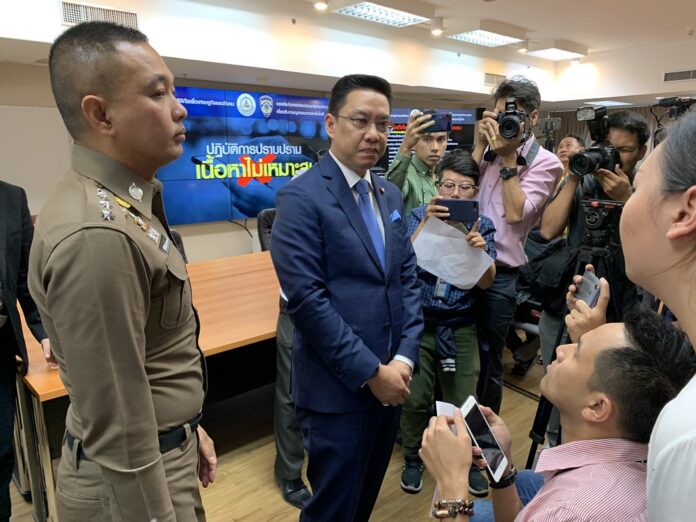
Digital Economy minister Puttipong Punnakan said the authorities acted on evidence and did not target Karn for his political beliefs.

Asked whether the police acted proportionately by arresting Karn without issuing him with summons warrants first, the minister replied it was the court who approved the arrest.

“We cannot interfere with the court’s decisions,” Puttipong said.

Advertisement

Minister Orders Cafes, Restaurants To Collect Customers’ Wifi Data

Minister of Digital Economy Puttipong Punnakan speaks at Oct. 8, 2019, news conference.

BANGKOK — A minister said on Tuesday cafe and restaurant operators with free wifi service must collect internet traffic data used by their customers up to 90 days, or face punishment.

Minister of Digital Economy Puttipong Punnakan said the backlog is necessary in case the wifi was used in criminal actions.

“Shops and cafes that offer wifi services must collect internet traffic information for 90 days, so in case there is anything, officials may need to request for the information under Article 26 of the Computer Crimes Act,” Puttipong said at a news conference.

He was referring to a section in the newly revised cybercrime law that requires internet providers to keep a backlog of their users’ internet usage up to three months.

Those who do not comply will face punishment in accordance with the law, Puttipong said.

He spoke on the same day police announced the arrest of a pro-democracy activist on allegations of posting inappropriate comments about the monarchy.

Advertisement

Activist Arrested, Accused of Making Threats to Monarchy

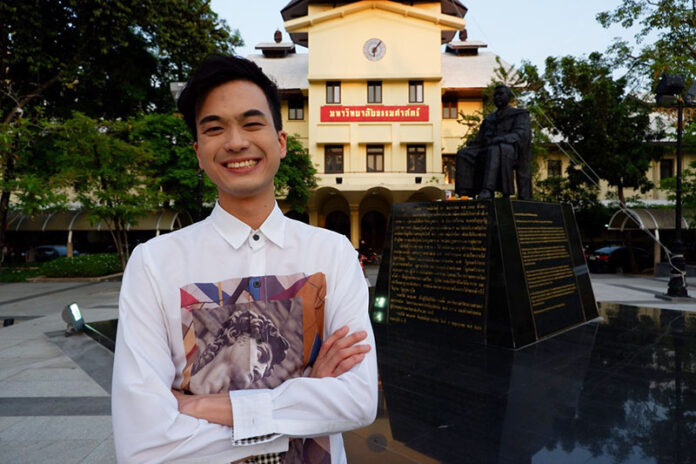
A file photo of Karn Pongpraphapan.

Update: Karn Pongpraphapan was released on Tuesday afternoon on a bond of 100,000 baht. He was also instructed not to write similar offensive comments on social media while on bail. 

BANGKOK — Police on Tuesday said they arrested a pro-democracy campaigner who spread “hatred” toward the monarchy in an online post – an allegation disputed by his lawyer.

Karn Pongpraphapan, 25, was arrested at his home last night and taken to a police station where he was charged with violating the cybercrime law, according to a statement released today by the cyberpolice division. If found guilty, Karn faces five years in jail.

The police statement did not specify what Karn wrote, but described it as an “inappropriate content on Facebook spreading hatred” which “upset a number of people” after it was widely shared. Karn is charged under Section 14 of the Computer Crime Act, which bans disseminating online contents that “pose a threat to national security.”

But his attorney Winyat Chatmontree said the message in question was a public Facebook post Karn wrote on Oct. 2, which asked “How do you want it to end?”

Karn then went on to reference historical events involving past foreign monarchies, such as “shooting like the Russians,” “beheading by guillotine like the French,” and “exiled like the Germans.”

Top: Winyat, left, and Karn, right, at a police station.

Winyat said he wanted to stress that Karn’s writing did not mention the Thai monarchy in any way. He also disputed speculation on social media that Karn was criticizing the recent traffic woes allegedly caused by royal motorcade in Bangkok.

“He was not talking about the Thai monarchy. He was not talking about the royal convoy,” the lawyer said. “He was talking about the history of other nations.”

Winyat said the post was nonetheless twisted by a number of people, and some even shared the message while attaching an image of Thai royal family to the post, which Karn did not do. The activist later deleted the post and deactivated his account when it became clear that his words were being distorted, the lawyer said.

“There is an element of witch-hunting involved,” Winyat said. “He was falsely accused of attempting to overthrow the monarchy.”

The arrest came several days after digital economy minister Puttipong Punnakan announced that the police were on the verge of “purging” anti-monarchy figures on social media.

It also followed a recent wave of online discontent toward road blockades in the capital attributed to royal motorcades, which led to severe traffic congestion.

The police statement on Karn’s arrest warned that anyone sharing his message will be liable for prosecution under the same charge.

Winyat said Karn is currently held at a police station’s cellroom, and he will be brought to court later today for a bail hearing.

“He is in good spirits,” Winyat said.

Advertisement

Trump Defends Decision to Abandon Kurdish Allies in Syria

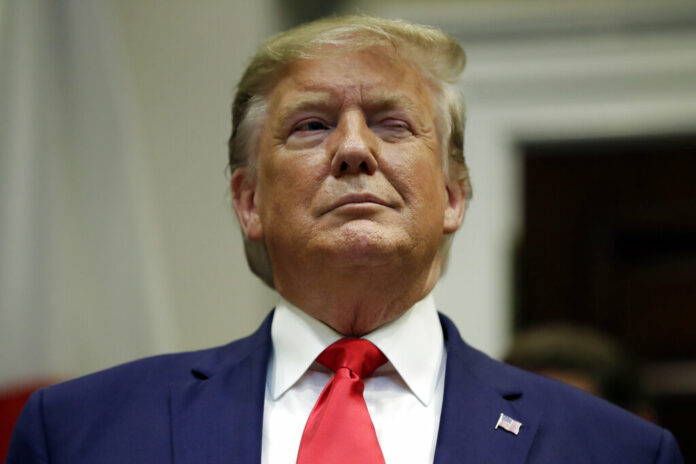
President Donald Trump winks as he listens before a trade agreement signing with Japan in the Roosevelt Room of the White House, Monday, Oct. 7, 2019, in Washington. Photo: Evan Vucci / AP

WASHINGTON (AP) — President Donald Trump on Monday cast his decision to abandon Kurdish fighters in Syria as fulfilling a campaign promise to withdraw from “endless war” in the Middle East, even as Republican critics and others said he was sacrificing a U.S. ally and undermining American credibility.

Trump declared U.S. troops would step aside for an expected Turkish attack on the Kurds, who have fought alongside Americans for years, but he then threatened to destroy the Turks’ economy if they went too far.

Even Trump’s staunchest Republican congressional allies expressed outrage at the prospect of abandoning Syrian Kurds who had fought the Islamic State group with American arms and advice. It was the latest example of Trump’s approach to foreign policy that critics condemn as impulsive, that he sometimes reverses and that frequently is untethered to the advice of his national security aides.

“A catastrophic mistake,” said Rep. Liz Cheney of Wyoming, the No. 3 House Republican leader. “Shot in the arm to the bad guys,” said Sen. Lindsey Graham of South Carolina.

Trump said he understood criticism from fellow GOP leaders but disagreed. He said he could also name supporters, but he didn’t.

Pentagon and State Department officials held out the possibility of persuading Turkey to abandon its expected invasion. U.S. officials said they had seen no indication that Turkey had begun a military operation by late Monday.

Trump, in late afternoon remarks to reporters, appeared largely unconcerned at the prospect of Turkish forces attacking the Kurds, who include a faction he described as “natural enemies” of the Turks.

“But I have told Turkey that if they do anything outside of what we would think is humane … they could suffer the wrath of an extremely decimated economy,” Trump said.

In recent weeks, the U.S. and Turkey had reached an apparent accommodation of Turkish concerns about the presence of Kurdish fighters, seen in Turkey as a threat. American and Turkish soldiers had been conducting joint patrols in a zone along the border. As part of that work, barriers designed to protect the Kurds were dismantled amid assurances that Turkey would not invade.

Graham said Turkey’s NATO membership should be suspended if it attacks into northeastern Turkey, potentially annihilating Kurdish fighters who acted as a U.S. proxy army in a five-year fight to eliminate the Islamic State’s so-called caliphate. Graham, who had talked Trump out of a withdrawal from Syria last December, said letting Turkey invade would be a mistake of historic proportion and would “lead to ISIS reemergence .”

This all comes at a pivotal moment of Trump’s presidency. House Democrats are marching forward with their impeachment inquiry into whether he compromised national security or abused his office by seeking negative information on former Vice President Joe Biden, a political rival, from Ukraine and other foreign countries.

As he faces the impeachment inquiry, Trump has appeared more focused on making good on his political pledges, even at the risk of sending a troubling signal to American allies abroad.

“I campaigned on the fact that I was going to bring our soldiers home and bring them home as rapidly as possible,” he said.

The strong pushback on Capitol Hill prompted Trump to recast as well as restate his decision, but with renewed bombast and self-flattery.

He promised to destroy the Turkish economy “if Turkey does anything that I, in my great and unmatched wisdom, consider to be off limits.”

Sunday night the White House had said the U.S. would get its troops out of the way of the Turkish forces. That announcement came after Trump spoke by phone with Turkish President Recep Tayyip Erdogan.

One official described that White House announcement as a botched effort appeared aimed at making Trump look bold for ending a war. The official said attempts by the Pentagon and State Department to make the statement stronger in its opposition to Turkey’s military action were unsuccessful.

That official, like others interviewed, was not authorized to speak on the record and was granted anonymity to comment.

The official added that Erdogan appeared to be reconsidering his earlier resolve because he was relatively quiet Monday. But damage done to relations with the Kurds could be irreparable.

An official familiar with the Erdogan call said the Turkish president was “ranting” at Trump, saying the safe zone was not working and that Turkey couldn’t trust the U.S. military to do what was needed. And in reaction, Trump said the U.S. wanted no part of an invasion and would withdraw troops.

The announcement threw the military situation in Syria into fresh chaos and injected deeper uncertainty into U.S. relations with European allies. A French official, speaking on condition of anonymity on a sensitive topic, said France wasn’t informed ahead of time. A Foreign Ministry statement warned Turkey to avoid any action that would harm the international coalition against the Islamic State and noted the Kurds had been essential allies. It entirely omitted any mention of the United States.

U.S. involvement in Syria has been fraught with peril since it started in 2014 with the insertion of small numbers of special operations forces to recruit, train, arm and advise local fighters to combat the Islamic State. Trump entered the White House in 2017 intent on getting out of Syria, and even before the counter-IS military campaign reclaimed the last militant strongholds early this year, he declared victory and said troops would leave.

Trump defended his latest decision, acknowledging in tweets that “the Kurds fought with us” but adding that they “were paid massive amounts of money and equipment to do so.”

“I held off this fight for almost 3 years, but it is time for us to get out of these ridiculous Endless Wars, many of them tribal, and bring our soldiers home,” he wrote.

In his later remarks, Trump asserted that American troops in Syria are not performing useful work. They are, he said, “not fighting.” They are “just there,” he said.

Among the first to move were about 30 U.S. troops from two outposts who would be in the immediate area of a Turkish invasion. It’s unclear whether others among the roughly 1,000 U.S. forces in northeastern Syria would be moved, but officials said there was no plan for any to leave Syria entirely.

Bulent Aliriza, director of the Turkey Project at the Center for Strategic and International Studies, said that a U.S. withdrawal from Syria would be a major boost to Russia’s position there.

He added that other allies in the region, including the Kurds, will “look at this withdrawal as U.S. unwillingness to stand up for its rights and maintain its alliances in the region.”

House Minority Leader Kevin McCarthy, R-Calif., another strong Trump supporter, said in an appearance on “Fox & Friends” that he had concerns.

“I want to make sure we keep our word for those who fight with us and help us,” he said, adding that, “If you make a commitment and somebody is fighting with you, America should keep their word.”

Former Trump administration officials also expressed concern.

Nikki Haley, who served as U.S. ambassador to the United Nations, said the U.S. “must always have the backs of our allies, if we expect them to have our back. … Leaving them to die is a big mistake.”

Turkey considers the People’s Protection Units, or YPG, an extension of the Kurdistan Workers’ Party, or PKK, which has waged an insurgency against Turkey for 35 years.

Story: Robert Burns, Lolita C. Baldor, and Matthew Lee. Zeynep Bilginsoy in Istanbul, Zeina Karam and Sarah El Deeb in Beirut, and Lori Hinnant in Paris contributed to this report.


Advertisement

Carrie Lam Urges Foreign Politicians to ‘Stop Supporting Violence’

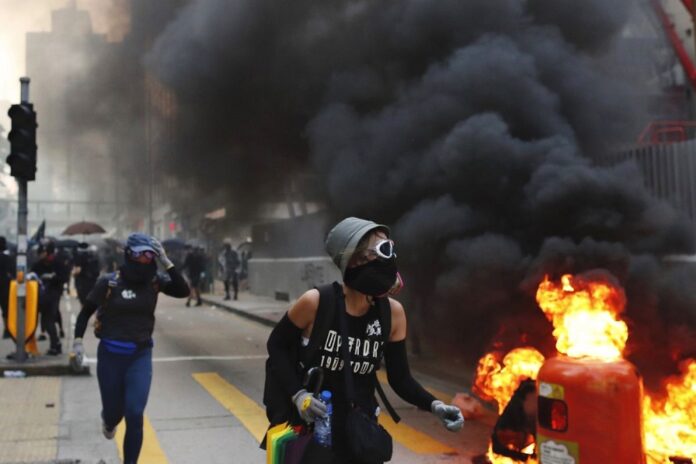
Protesters in Hong Kong on Oct. 1, 2019. (AP Photo/Gemunu Amarasinghe)
HONG KONG (Xinhua) — Chief Executive of China’s Hong Kong Special Administrative Region (HKSAR) Carrie Lam on Tuesday urged foreign politicians to take an objective view of the current situation in Hong Kong and stop supporting those who are committing violence.

In response to former governor of Hong Kong Chris Patten’s recent remarks on the Prohibition on Face Covering Regulation of the HKSAR, Lam said, “I hope foreign politicians, before making comments on Hong Kong, can take an objective view of what’s happening here and recognize its essence.”

She stressed that the essence of the recent so-called “peaceful demonstration for freedom of expression” is “unprecedented violence.”

“For the past four months, especially during the recent one or two months, we were under unprecedented impact of violence,” she said. “I believe if they see the real situation currently in Hong Kong, no foreign governments will agree it is essentially about freedom of expression.”

Lam made the remarks at a media briefing Tuesday morning before attending the weekly meeting of the HKSAR Executive Council.

She emphasized that the HKSAR government’s invoking the power under the Emergency Regulations Ordinance to enact the Prohibition on Face Covering Regulation is a decision aimed at curbing violence and restoring order.

The anti-mask regulation is in line with international common practices, since similar laws and regulations have been implemented in Western countries including Germany, France and Canada, and in some states in the U.S., she said.

Lam called for empathy of foreign governments and politicians concerning the situation in Hong Kong. “If similar violent incidents occur in their countries, they may take stricter measures,” she said.

Rejecting foreign politicians’ irresponsible remarks on Hong Kong, Lam urged them to stop maliciously criticizing Hong Kong’s efforts to curb violence and glamorizing those who are committing violence as “peaceful demonstrators for freedom of expression.”

Advertisement

HKEX Drops Takeover Bid for London Counterpart

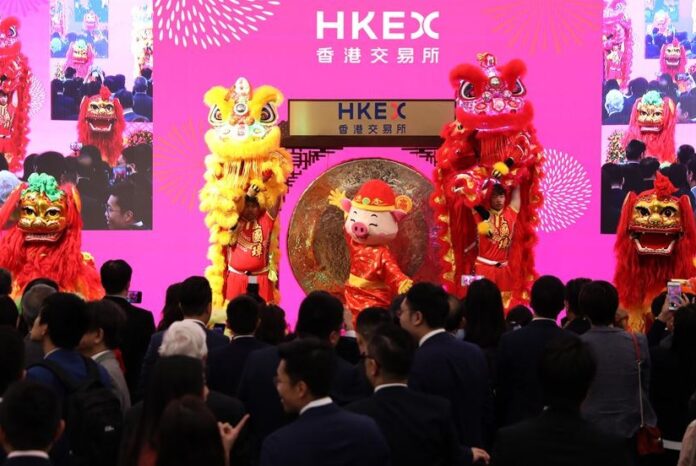
A ceremony is held by the Hong Kong Exchanges and Clearing Limited (HKEX) to welcome the first trading day in the Chinese lunar new year in Hong Kong, south China, Feb. 8, 2019. (Xinhua/Wu Xiaochu)

HONG KONG (Xinhua) — Hong Kong Exchanges and Clearing Limited (HKEX) said Tuesday it would not proceed with a proposal to the London Stock Exchange Group plc (LSEG) to combine the two companies.

The HKEX said it still believes that the combination “is strategically compelling and would create a world-leading market infrastructure group” but is disappointed that “it has been unable to engage with the management of LSEG in realizing this vision.”

The London bourse announced the rejection decision soon after the HKEX made the merger proposal on Sept. 11.

HKEX Chief Executive Charles Li said dropping the bid was a hard but rational decision in the interest of its shareholders, adding that there were previous cases of merger realized through other means after rejection of the initial proposal.

Li said the HKEX would not ease its global pace after giving up the bid.

The HKEX has delivered a 207-percent increase in its share price and Total Shareholder Returns of 315 percent since the start of 2009, which it said reflects the fundamental strengths of its business and its ability to adapt in the global industry.

Advertisement

Lam Says Chinese Military Could Step in If Uprising Gets Bad

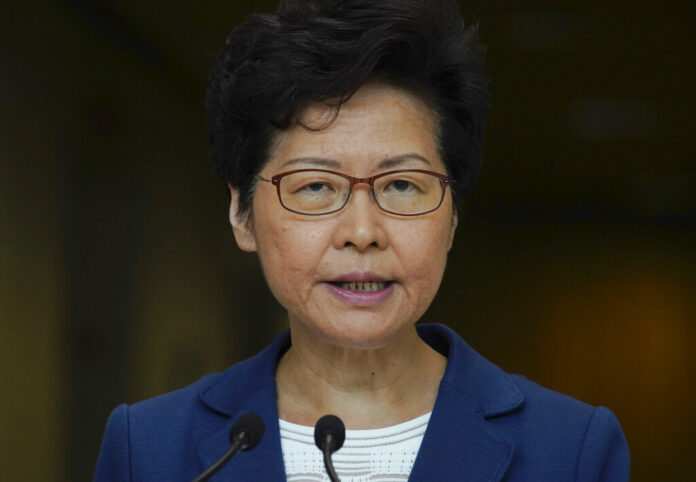
Hong Kong Chief Executive Carrie Lam speaks during a press conference in Hong Kong, Tuesday, Oct. 8, 2019. Photo: Vincent Yu / AP

HONG KONG (AP) — Hong Kong’s leader Carrie Lam warned Tuesday that the Chinese military could step in if an uprising for democratic reforms that has rocked the city for months “becomes so bad” but reiterated the government still hopes to resolve the crisis itself.

Lam urged foreign critics to accept that the four months of protests marked by escalating violence were no longer “a peaceful movement for democracy.”

She said seeking Chinese intervention was provided for under Hong Kong’s constitution but that she cannot reveal under what circumstances she will do so.

” I still strongly feel that we should find the solutions ourselves. That is also the position of the central government that Hong Kong should tackle the problem on her own but if the situation becomes so bad, then no options could be ruled out if we want Hong Kong to at least have another chance,” she told a news conference.

The protests started in June over a now-shelved extradition bill that would have allowed some criminal suspects to be sent to mainland China for trial but have since morphed into a larger anti-government movement. Protesters fear the bill is an example of Beijing’s increasing influence over the former British colony, which was promised a high level of autonomy when it returned to Chinese rule in 1997.

The unrest had pummeled tourism and hurt businesses in the global financial hub, further bruising the city’ economy as it grapples with effects of the U.S.-China trade war.

Hardening her government’s stance on the protests last week, Lam invoked a colonial-era emergency law last week to criminalize the wearing of masks at rallies but it fueled more anger, with continuous daily violence over the long holiday weekend. Police officers last week fired gunshots while under attack from protesters, wounding two teenagers who were the first victims of police gunfire since the protests started.

Enforcement of the mask ban began Saturday, and Lam said it was too early to call it a failure. Two people have been charged with violating the mask ban so far.

Critics fear the emergency law, which gives Lam broad powers to implement any measures she deems necessary, could pave the way for more draconian moves. Lam said the government would make “careful assessment” before imposing other measures under the law, such as internet controls.

She also pledged to continue dialogue and take steps to address livelihood and economic problems in a policy address due Oct. 16 when the Legislative Council resumes.

Protesters stormed and damaged the legislative building on July 1, requiring repairs. Lam appealed for peace when the legislative session reopens, warning that further disruptions would set back the approval of bills and impede the city’s development.

Advertisement

Court Official Says No Meddling in Judges’ Works

Court of Justice sec-gen Sarawut Benchakul visits Yala judge Khanakorn Pianchana in hospital on Oct. 6, 2019. Image: Court of Justice.

BANGKOK — The judicial branch on Monday launched an investigation into a recent attempted suicide by a judge who said he was protesting interference from the court higher-ups.

Court of Justice sec-gen Sarawut Benchakul said three court officials were appointed as a fact-finding committee, and they must report their findings to the agency within 15 days. He also announced that the judge who shot himself, Khanakorn Pianchana, is now in stable condition.

Read: Judge’s Protest by Attempted Suicide Shakes Judicial Authority

Although Sarawut said the committee will conduct its work impartially, he dismissed allegations of meddling in the justice system in yesterday’s news conference.

Sarawut said the Court of Justice is “fair and independent.” He also said senior court officials always respect verdicts reached by the judges under their supervision.

Khanakorn shot himself in the chest on Friday inside a courtroom in Yala province, moments after acquitting five men of murder.

In a written statement leaked to social media after the shooting, Khanakorn said he was pressured by his supervisor to find the men guilty despite a lack of concrete evidence.

Sarawut said the judge is now out of ICU. He said he has visited Khanakorn in hospital, but said the pair did not discuss the grievances that allegedly prompted Khanakorn to shoot himself.

A statement by the hospital said Khanakorn suffered injuries in his spleen.

Advertisement

Rare Birds, Animals Under Threat From Amulet Craze, Campaigners Warn

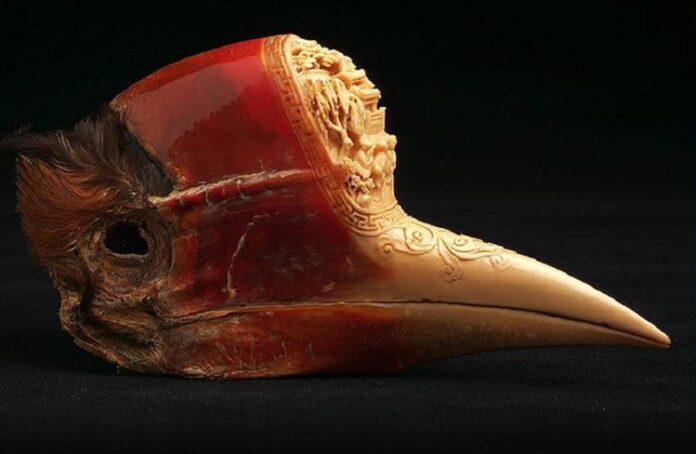
A carved hornbill beak. Image: Bird Conservation Society of Thailand / Facebook

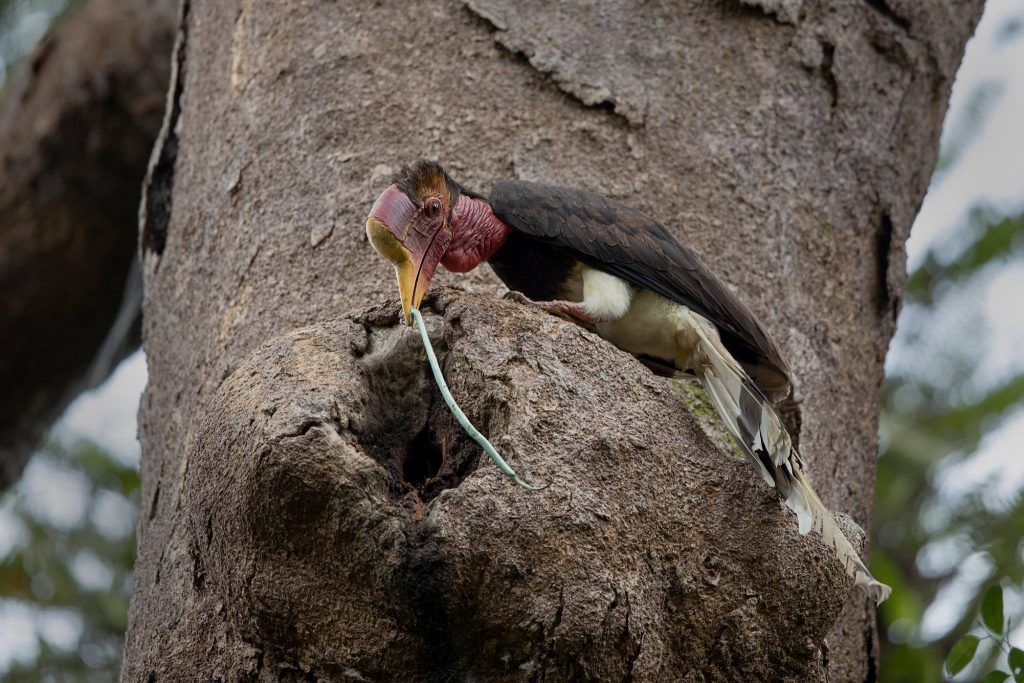
BANGKOK — Craze for helmeted hornbill heads as amulets and decorations is posing a serious to the birds’ small population in Thailand’s forests, conservation activists said Monday.

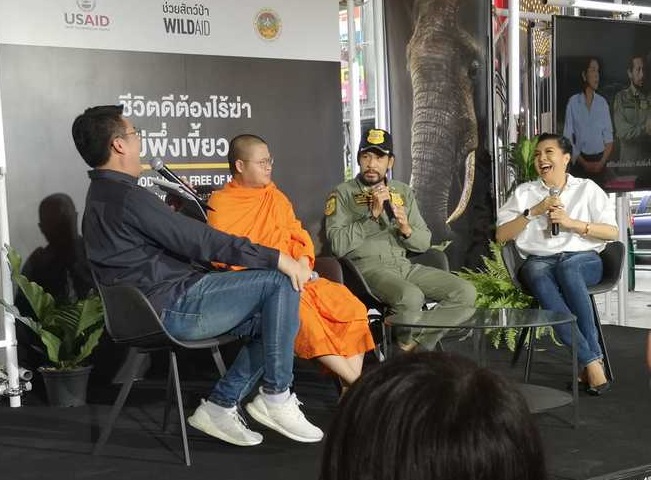
The campaigners spoke at an event where they announced a new campaign to raise awareness over the dwindling number of rare animals in the wild. They were joined by celebrities and government officials who urged Thais to eliminate the use of animal parts, such as hornbill heads, tiger teeth, and ivory.

While ivory and tiger teeth have long been targeted by poachers, a recent fad for helmeted hornbill in the black market is particularly worrying because there are only about 200 hornbills left in Thailand, according to an activist from environment group Traffic.

Yet, despite the birds’ potential extinction, their plight is not well known among the public, group coordinator Maethinee Passaraudomsuk said.

นกชนหิน 1024x683
Image: Thailand Hornbill Project / Facebook

Hornbills lost their head so that the orange-colored parts of their bills, or casques, could be carved into base reliefs of Buddha or even King Rama IX, the activist said.

Speaking at the same panel, popular Buddhist monk and preacher Phra Medhivajirodom agreed with Maethinee that there’s a need to raise the public’s attention not just to elephants and tigers, but hornbills as well.

“Don’t you know that killing [hornbills] will affect us, because one hornbill help plant 200,000 trees per year?” the monk said.

Read: Conservation Rhetoric Falls Apart as 1,000 Tiger Amulets Seized From Temple

The monk also said killing wildlife animals to make tributes to Lord Buddha will not bring any blessing to their lives.

“It’s superstitious,” Phra Medhivajirodom said. “I should like to say it’s foolish, but dare not to, as I don’t want to offend anyone.”

Another panelist is actor and volunteer Bin Banloerit, who was also chosen by the groups to be the public face of their campaigns. He admitted to having bought and possessed amulets made from wildlife animals in the past – his collection even included a tooth of a dugong – out of belief that they would bring good luck.

But he changed his mind after working as a rescue volunteer. One day, Bin recalled, he realized that his belief was groundless because many dead bodies he retrieved from accident sites or crime scenes were wearing the same amulets he had, yet they met horrible deaths nonetheless.

img 20191007 143044 720
The panel on Oct. 7, 2019.

“In the past I used to really misunderstand about tiger teeth and ivory,” Bin, who has been heading a relief effort in flood-struck Isaan region, said at the panel. “I heard these stories about its potency, that a knife or a bullet cannot penetrate the owner. That was twenty years ago.”

The actor-turned-volunteer added that he once lost a football gamble, and his pair of ivory tusks were taken away by the loan shark, which also proved to him that the tusks didn’t bring him any luck after all.

A study published in 2018 by USAID Wildlife Asia said about 500,000 Thais are believed to own ivory products, and 250,000 own artifacts made from tiger parts.

Department of National Parks, Wildlife and Plant Conservation official Somkiat Soontornpitakkool said his agency has tried to visit some Buddhist temples that organized ceremonies to impart spiritual power into amulets made from ivory or tiger teeth, but his officials couldn’t do much.

The matter was mostly left to religious authorities because the situation is “sensitive,” Somkiat said.

He added that a revised edition of the Wildlife Protection Act is coming into effect in late November. Under the revision, violators who trade illegal wildlife items face up to 10 years in jail and a fine of up to one million baht.

Additional writing Teeranai Charuvastra

Advertisement

Movies About King, Katoey, Bad Monk Added to National Film Heritage

“Karma” (2015, Arbat).

BANGKOK — Banned controversial movies, rare footage of early 20th century Siam, and the first-ever known film about katoey are some of the works selected for the National Film Heritage.

Fifteen films deemed to be historically and culturally significant and in danger of disappearing have entered the nation’s film registry as of Friday, which also marked the annual Thai Film Preservation Day.

The selected films, from incomplete 10-minute footage to full-length feature films, are deemed to have a significant impact on Thai society, Chalida Uabumrungjit, director of the Thai Film Archive said on Monday.

The National Heritage film registry is in its ninth year and has a total of 200 films, including the 15 below. They were selected by a panel of experts from more than 800 submissions.

Five of the 15 films are a look at Siam in the early 20th century:

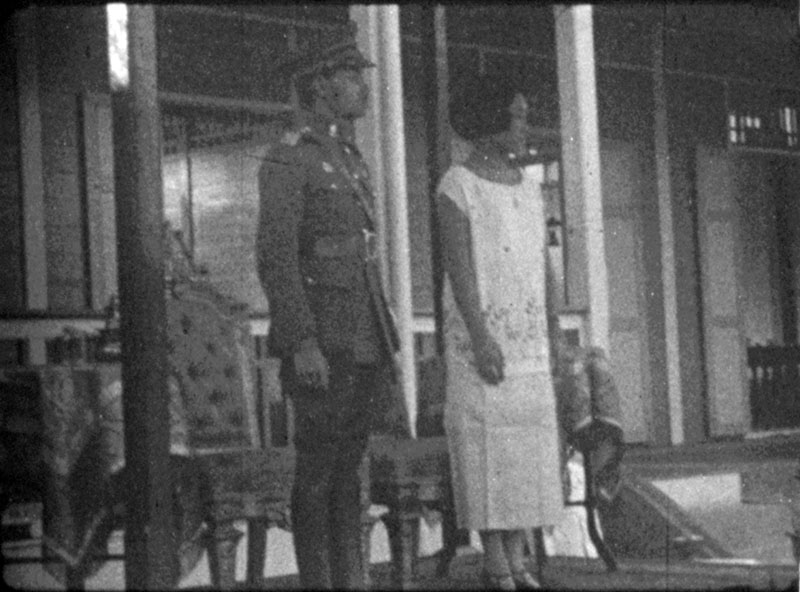
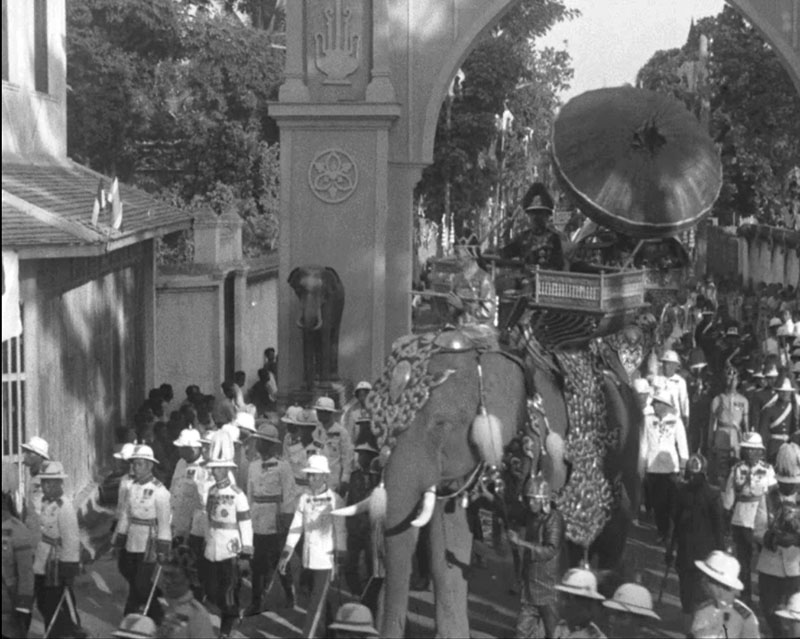
“King Rama VII’s Visits to the Northern Provinces” (1926) is a two-hour travelogue filmed by Rama VII himself as he recorded his visit to the northern provinces of then-Siam, as well as the customs of the locals there.

“King Rama VII’s Visits to the Northern Provinces” (1926).

“Royal Tour in Northern Siam” (1926) is of the same royal visit, but recorded by government officials and the State Railways of Siam’s film department.

“Royal Tour in Northern Siam” (1926).

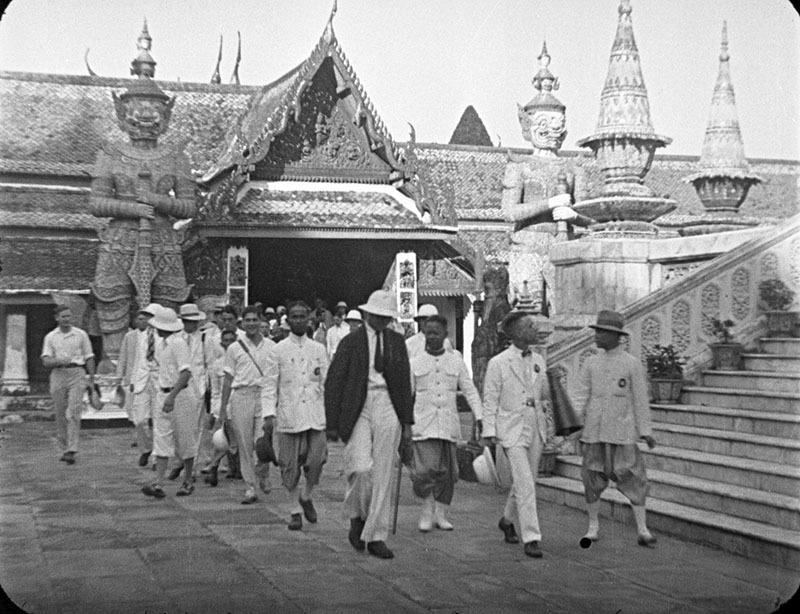
This same department also filmed “See Siam” (1930), one of the first tourism promotion films made for foreigners.

“See Siam” (1930).
“See Siam” (1930).

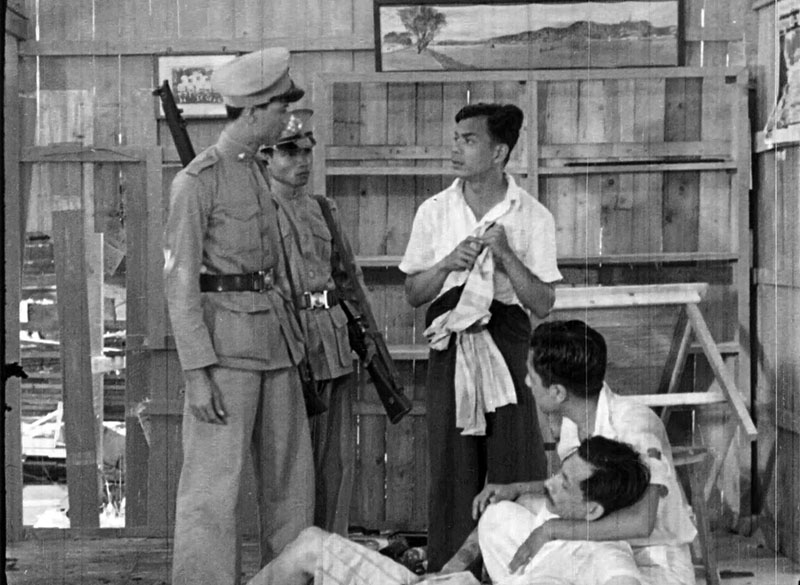
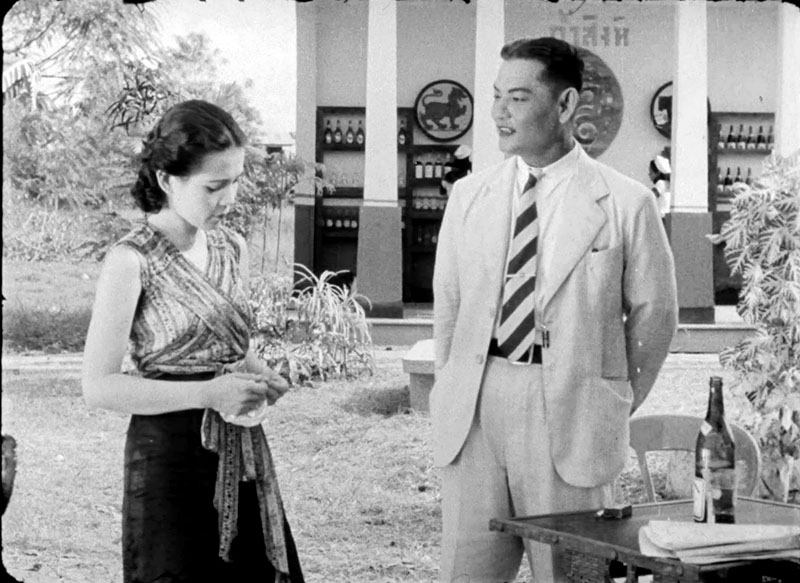
The first sound motion pictures by Thai studios are are also included for safekeeping: “Farmers’ Blood” (Lued Chao Na, 1936) by Sri Krung Studio and “Gold Leaf Behind the Buddha” (1939, Pid Thong Lang Phra) by Thai Pappayon Studio, although both are in incomplete form.

“Farmers’ Blood” (Lued Chao Na, 1936).
“Gold Leaf Behind the Buddha” (1939, Pid Thong Lang Phra).

“There’s actually lots of footage filmed way back since 1926, and they showed that parts of rural Thailand back then were surprisingly modern,” Chalida said.

Some may also be surprised at the oldest known Thai film with a katoey, or transgender woman, character is from 1954: “It Happens Because of a Katoey” (Katoey Pen Het). The film is a comedy about the main character, a katoey, who is engaged to a man, showing that acceptance of gender issues have been a long-standing cultural norm in Thailand.

“It Happens Because of a Katoey” (1954, Katoey Pen Het).

Bangkok’s mid-century transportation and vintage vehicles is shown through “Bangkok Metropolitan Buses and Trucks” (1958), a six-minute clip filmed by bus businessman Supot Thawatchainon.

“Bangkok Metropolitan Buses and Trucks” (1958).

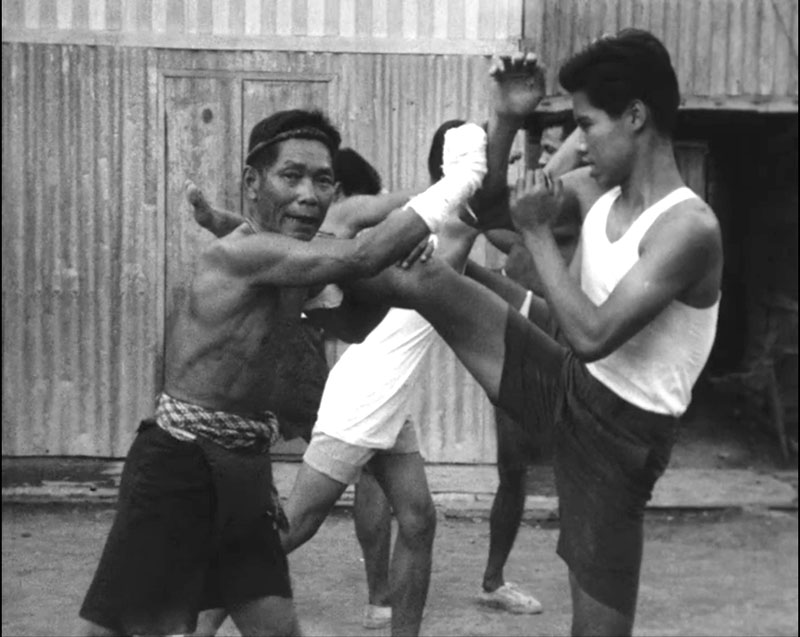
“Muay Thai” (1963) is a documentary that records the teachings of Bua Wad-im, a Thai boxer known for his Korat style of muay thai.

“Muay Thai” (1963).
“Muay Thai” (1963).

Award-winning feature film “Miss Poradok” (1965, Nang Sao Poradok) is made by Thailand’s first national artist in film, Wijit Kunawuti, and cemented his status as one of the nation’s best directors of all time with its innovative cinematic techniques.

“Miss Poradok” (1965, Nang Sao Poradok).

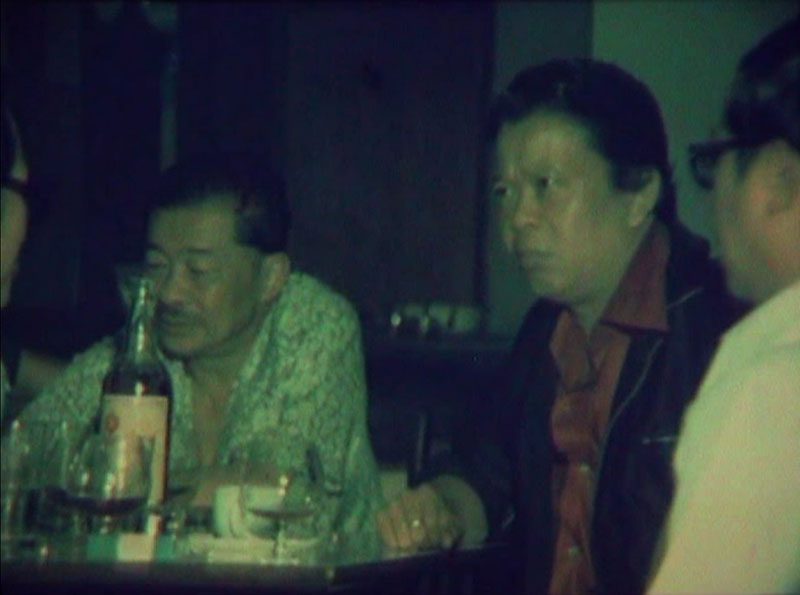
The only way many will ever get to see what a mid-70s gathering of Thailand’s literary luminaries is through “Fah Muang Thai, the 8th Anniversary on Wednesday, April 19, 1976” (1976), a home movie filmed by National Artist in Literature, Ajin Panjapan.

The short 8mm movie is also Chalida’s personal pick.

“It’s a rare documentation of the Thai literary circle. Usually we never get to see the famous writers of the novels we read,” she said. “Here we can see them socializing, dancing, and singing.”

Read: Ajin Panjapan, Author Who Took Readers Inside ‘The Tin Mine,’ Dies at 91

“Fah Muang Thai, the 8th Anniversary on Wednesday, April 19, 1976” (1976).

The film selection then jumps to the 90s with “Crazy Me” (1993, Luk Ba Tiew Lah Sud) directed by Ittisunthon Wichailuck, which captures the urban ennui of pre-Tom Yum Kung crisis Bangkok through the eyes of a salaryman.

“Crazy Me” (1993, Luk Ba Tiew Lah Sud).

The first film by new-wave director Pen-Ek Ratanaruang, “Fun Bar Karaoke” (1997) is included for its daring, groundbreaking depiction of seedy Bangkok, and even premiered at the 1997 Berlin Film Festival.

“Fun Bar Karaoke” (1997).

Pen-Ek would later go on to produce “Transistor Love Story” (2001), “Last Life in the Universe” (2003), and “Ploy” (2007).

Included although in no danger of being lost is the highest-grossing Thai film in history, “Pee Mak Phrakhanong” (2013) a horror-romantic comedy directed by Jira Maligool about the legend of Mae Nak (Davika Hoorne), but told through the eyes of her husband (Mario Maurer).

“The idea for Pee Mak came from … questioning why Pee Mak had to run away from his wife when he found out she was a ghost. So we twisted the legend to make Pee Mak accept that his wife is a ghost to differentiate it from earlier adaptations. We also made it comedic,” Jira said in July at a public event about the film’s screenwriting process.

Read: Making A Blockbuster Thai Film: The Studio Behind “Pee Mak” and “Bad Genius”

Finally, the most contemporary additions are controversial films that had to fight government censorship just to get aired in Thailand.

“These banned films are a cultural phenomenon. Although they got to screen in the end, they had to go through a historical process and fight of getting it screened,” Chalida said.

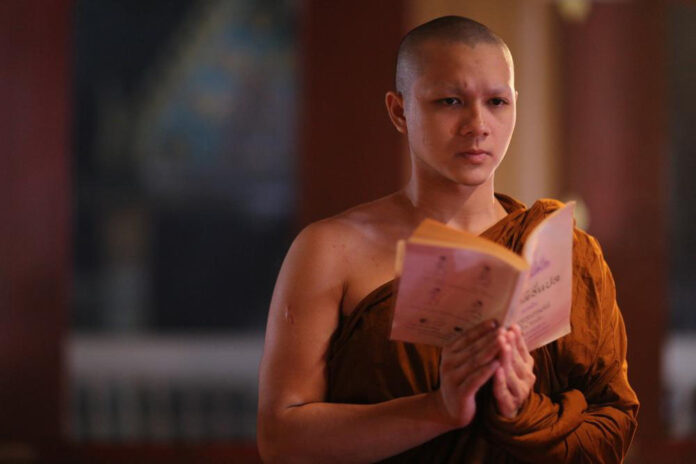
“Karma” (2015, Arbat) directed by Kanittha Kwanyu was initially banned for depicting a reluctant novice breaking monk precepts such as drinking and having a girlfriend. The film was Thailand’s nomination for Best Foreign Language Film at the 89th Academy Awards.

It took seven years and a case in the Administrative Court for “Insects in the Backyard” (2017) to screen, minus three seconds of a gay sex scene.

These new entries to the National Film Heritage registry will be screened by the Thai Film Archive in the near future, Chalida says. Some film shorts which are only 10-plus minutes long will even be uploaded to their YouTube channel.

Related stories:

Banned ‘Insects’ to Show 7 Years Later Sans Gay Sex Scene

Making A Blockbuster Thai Film: The Studio Behind “Pee Mak” and “Bad Genius”

Censors Pulled Thai Film Due to Crying Monk Scene

Banning Movie for Containing Sex Scene Was Lawful, Court Rules

Oldest Sound Films Shot in Thailand Discovered

Advertisement

Hot News

LATEST NEWS

Bangkok
overcast clouds
27.2 ° C
27.2 °
27.2 °
92 %
2.9kmh
100 %
Sat
32 °
Sun
35 °
Mon
37 °
Tue
37 °
Wed
37 °