

























32.7 C
Bangkok
Friday, June 5, 2026
Home Blog Page 1536

Introduce Yourself to Georgian Food Near BTS Nana

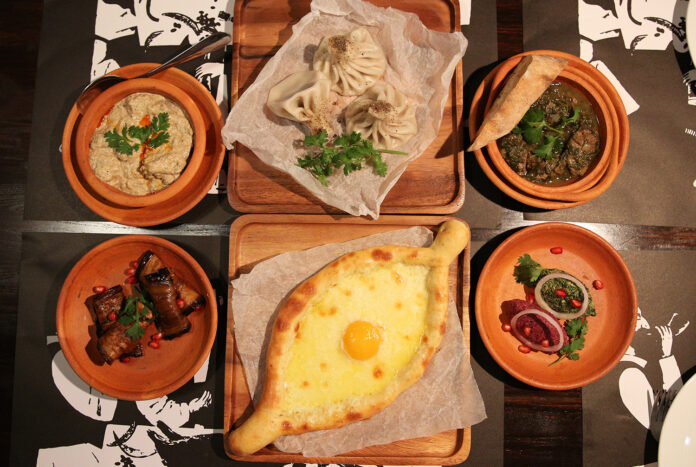
Clockwise from top left: satsivi (190 baht), khinkhali (70 baht apiece), chakapuli (470 baht), phali (120 baht), acharuli khachapuri (250 baht), and badrijani nigvzit (130 baht).

Photos by Tappanai Boonbandit

BANGKOK — Try khachapuri the next time you want to taste a new cuisine – and one place to find it is Argo, a Georgian restaurant located a few steps away from BTS Nana.

Argo has been offering expats and locals an introduction into the world of Georgian cuisine since April.

“I think Georgian cuisine is quite unique. Thai people might find it interesting because of the spices,” owner Anna Avramidou said.

Thai tongues new to Georgian cuisine should start off with more tangy dishes before easing into creamy, nut-based ones. Kick off with the khinkhali (70 baht apiece), a beef dumpling with soup inside. Think xiao long bao but larger – grab the peppery top, flip it upside down, take a bite and slurp some soup, before munching it all down.
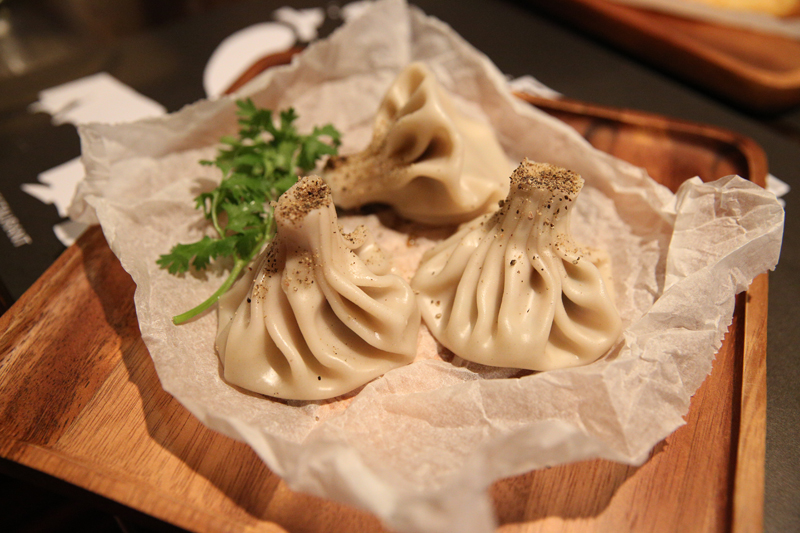
Khinkhali (70 baht apiece).

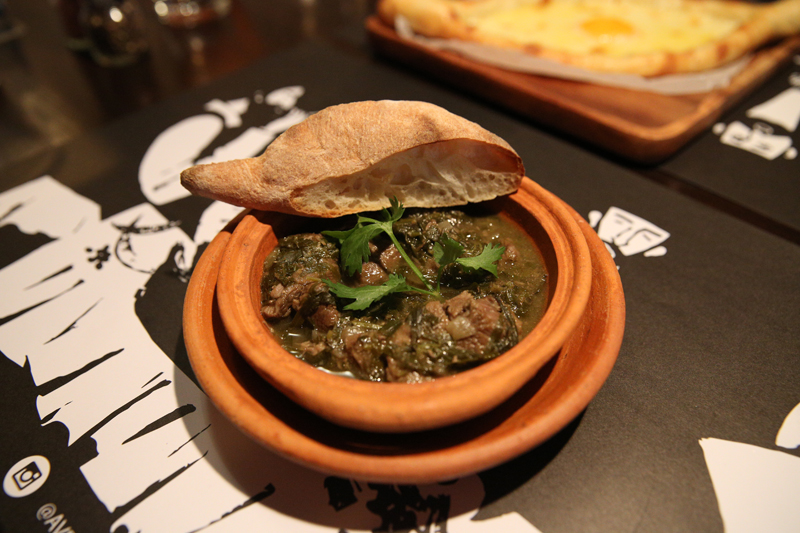
Next, try the chashushuli (380 baht), a lightly-spiced tomato beef stew with tender, soft beef – a hearty accompaniment to the homemade bread. For something familiar yet simultaneously foreign, try the chakapuli (470 baht), a stew of green cherry plums from Georgia with lamb. The tangy plums will remind Thai tongues of soups made from manao dong (fermented limes).
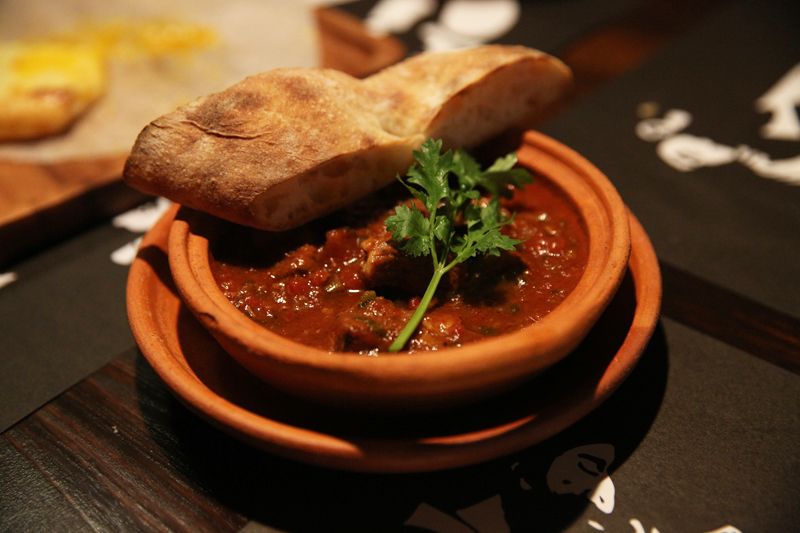
Chashushuli (380 baht).
Chakapuli (470 baht).

Of course, you can’t say you’ve tried Georgian food without ordering the national dish: the cheese-filled bread khachapuri. We tried the photogenic acharuli khachapuri (250 baht), a satisfying dougy boat filled with soft, slightly sweet sulguni cheese and topped with an egg yolk. Think a cross between dessert pastry and cheese pizza.
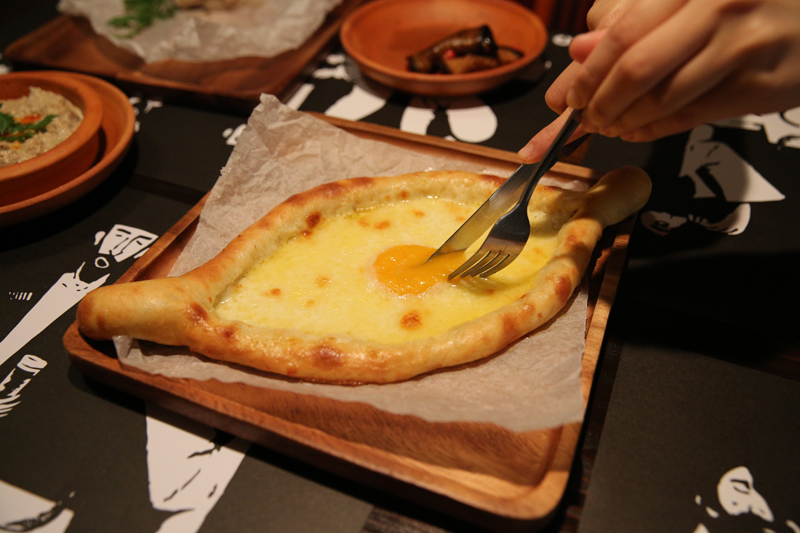
Acharuli khachapuri (250 baht).

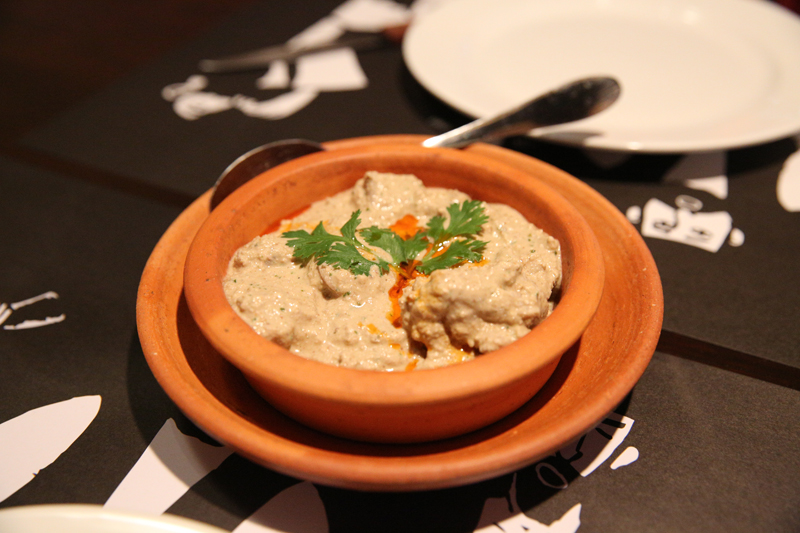
Georgian food, we found, often incorporates walnuts blended with spices. If you’ve fared well so far, try the phali (120 baht), a ball of spinach and beetroot blended with walnuts and khmeli sumeli, a Georgian seven-spice mix smelling strongly of fenugreek. If the creamy nuttiness is palatable, move on to the badrijani nigvzit (130 baht), an eggplant roll with a similar walnut filling, or the satsivi (190 baht) – chicken cooked in walnut sauce. Almost everything is served on wooden trays or charming clay plates.
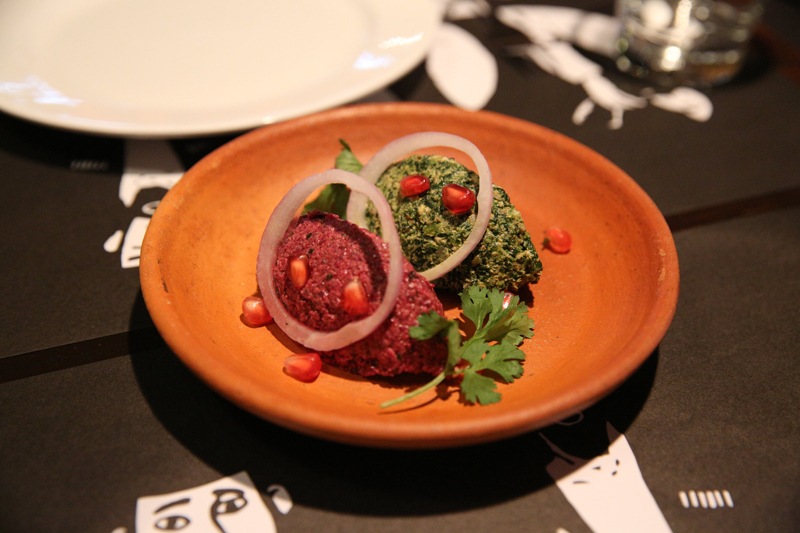
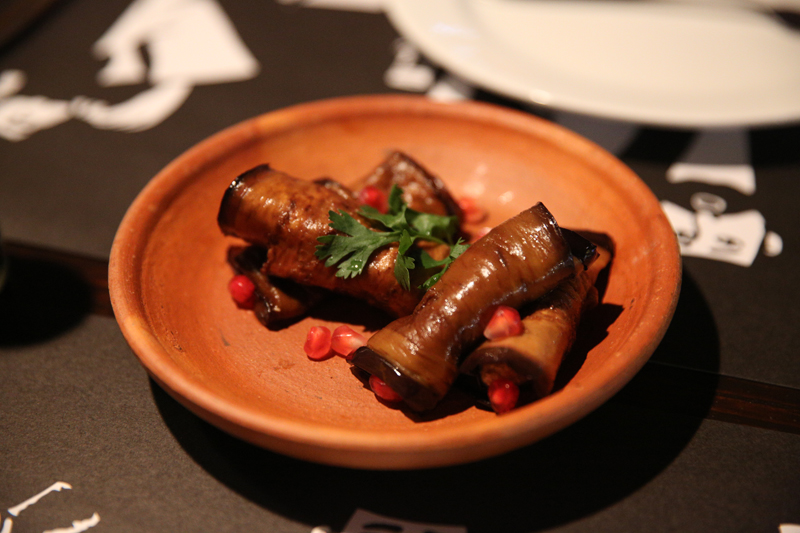
Phali (120 baht).
Phali (120 baht).
Badrijani nigvzit (130 baht).
Satsivi (190 baht).
Satsivi (190 baht).

“I know all the Georgians here [in Bangkok],” Avramidou said, affirming the food’s authenticity. “They say, ‘Oh, it’s like home, same as in Georgia.’”

Avramidou explained that Georgian food differs from Thai food in the spice process: whereas Thai dishes often come with accompanying sauces and dips, Georgian food is usually seasoned during the cooking process. Argo strives to reduce the oil and fat in its cooking though.

Avramidou is Greek-Russian, with a Georgian-born mother. Argo’s menu also includes Greek and Russian dishes, such as moussakas and Olivier salad. Spices used in Argo’s cooking are all imported, as is the bacteria used to make the cheese in khachapuri.
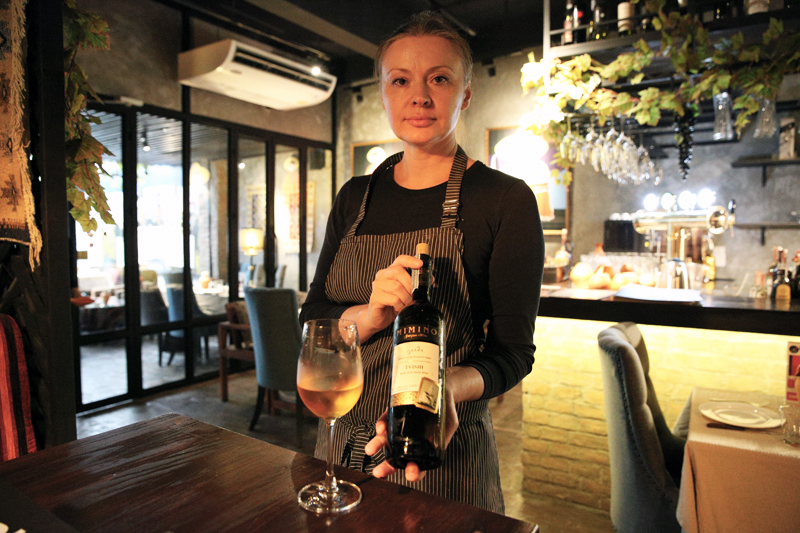
Anna Avramidou.
Anna Avramidou.

Avramidou also owns the four-year-old Greek restaurant Avra near BTS Phrom Phong, which is slightly pricier and can accomodate larger groups. Although the menus at Argo and Avra are identical, the portions at Argo are smaller and cheaper, perfect for those dipping their toes into a new cuisine.

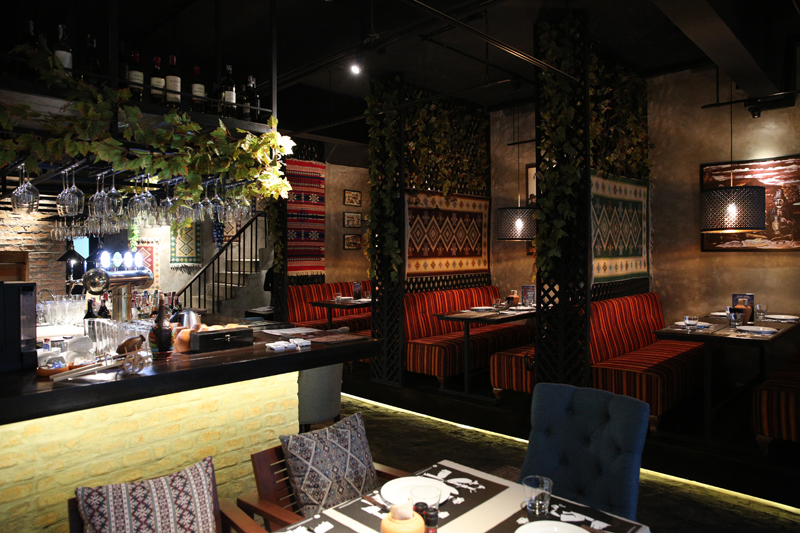
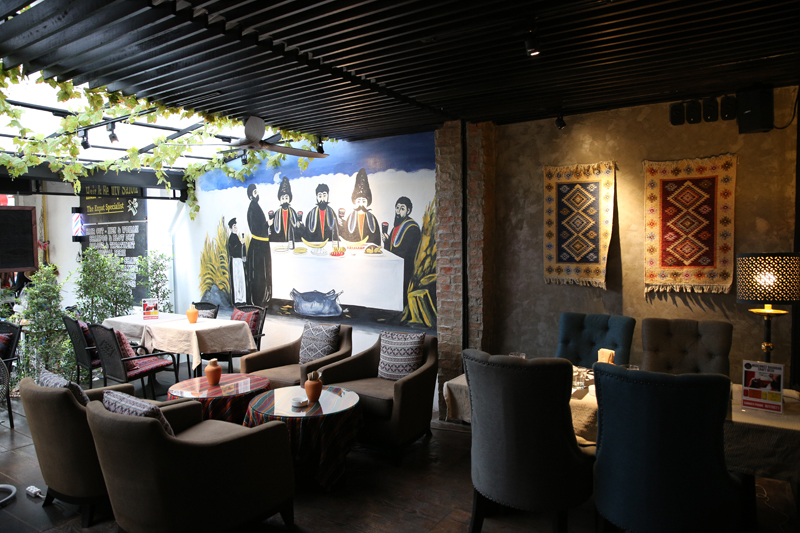
The restaurant, seating about 40 with both indoor and outdoor seating, is decorated with dark wood, Georgian rugs, and prints of Georgian painter Niko Pirosmani’s work. Once you get tipsy on the wine – the semi-sweet white Tvishi is recommended (270 for a glass) – you might even clap along to the rumbling Georgian choral music.
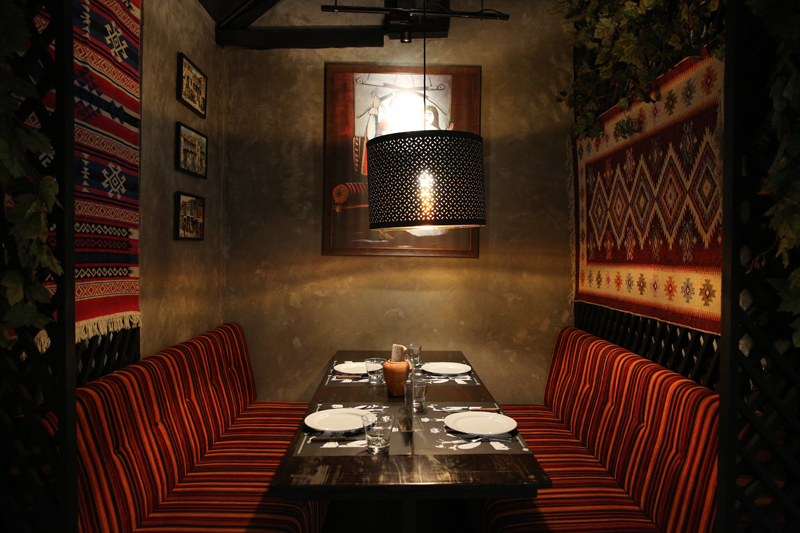
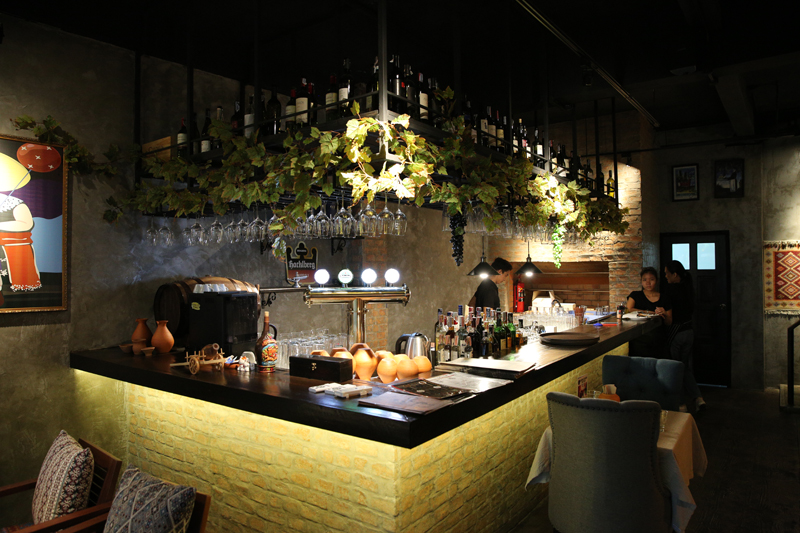
IMG 0381 IMG 0382 IMG 0380 IMG 0391

Argo Georgian and Greek Restaurant is located in Sukhumvit Soi 8, close to BTS Nana. It’s open from 5pm to 11pm every day except Mondays, and plan to open for lunch starting in September. 

This review is based on a hosted visit.

Related stories:

Russian Restaurant by Real Russian Opens in Bangkok

Advertisement

16-Year-Old Dek Van Arrested for Wheelie at Wat Phra Kaew

Screenshot from a now-deleted video showing wheelie maneuver on Na Phra Lan Road on Sunday, left and center in circles. The teen when he was arrested on Tuesday, right.

BANGKOK — A 16-year-old dek van motorcycle street racer was arrested on Tuesday for doing wheelies in front of Wat Phra Kaew on the birthday of His Majesty the King.

The teen, whose name has been withheld, was arrested at his home in the suburbs of Min Buri after being accused of being one of two illegal street racers caught in a viral video doing wheelies on Na Phra Lan Road, where the Grand Palace and the Temple of the Emerald Buddha are situated.

Police Lt. Gen. Damrongsak Kittiprapat, assistant to the national police chief, said the teen admitted to being one of the racers in the viral clip, which netizens have criticized as being disrespectful to one of the most sacred places in the nation.

Out of Bangkok’s hundreds of streets, the daredevil teen chose Na Phra Lan Road because he was challenged to a race by another group of dek van who happened to be there to see the illuminations along nearby Ratchadamnoen Avenue. The teen confessed he was reckless and did not think about the importance of the area.

The police have indicted him on charges relating to organizing an illegal street race, reckless driving, and driving without a license. He will be tried in a juvenile court, while his father has been given parole under a now-defunct NCPO order which obliges parents to prevent their children from gathering at street races.

“I urge everyone not to race like my son,” the teen’s father wailed during a press conference on Tuesday. “It is an inappropriate place to race.”

The father could spend three months in prison if his son is caught repeating the offense.

The owner of the motorbike the teen borrowed and an auto-parts shop who tuned the motorbike will also be charged. Damrongsak said he will investigate the superintendent of Chanasongkram Police Station for possible malfeasance in office, related to allegations the area has been carelessly maintained.

Police Maj. Gen. Senit Samrarnsamruajkit, commander of Metropolitan Police Division 1, confirmed over the phone that local police pursued the case on their own behest rather than under pressure from higher authorities.

“We are following our standard line of duty,” Senit said.

Another street racer caught in the clip on his red bike is still on the run. The police urged him to surrender, promising that the charges would be gentle if he turned himself in.

Advertisement

Bangladesh Grapples With Country’s Worst Dengue Outbreak

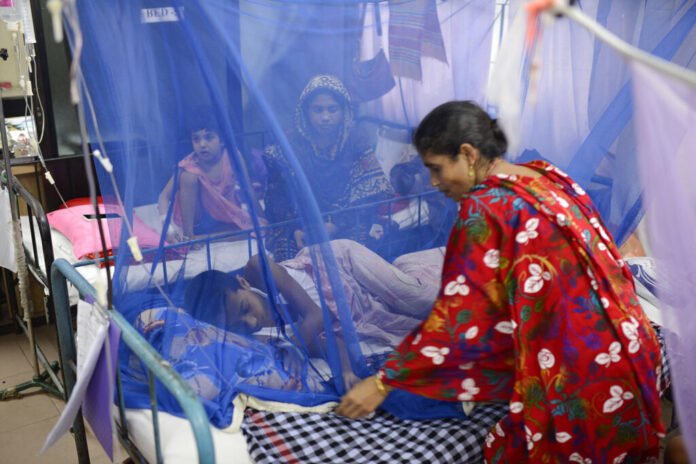
A woman stand by the bed of a child receiving treatment for dengue at Dhaka Shishu Hospital in Dhaka, Bangladesh, Wednesday, July 31, 2019. Photo: Mahmud Hossain Opu / AP

DHAKA, Bangladesh — Bangladesh is facing its worst-ever dengue fever outbreak as hospitals are flooded with patients, putting a severe strain on the country’s already overwhelmed medical system.

The mosquito-borne viral infection has spread across the country, with 61 out of 64 districts reporting dengue cases by late Tuesday.

The government has confirmed 15,369 dengue cases since Jan. 1. Of those, 9,683 patients were diagnosed between July 1 and July 30. As of Tuesday, about 4,400 patients, including many children, were undergoing hospital treatment. There have been 14 deaths.

Officials from Dhaka, the overcrowded capital and the epicenter of the outbreak, have struggled to contain it, drawing criticism and spreading panic among some residents.

Dengue is found in tropical areas around the world and is spread by a type of mosquito that mainly lives in urban areas. The virus causes severe flu-like symptoms, and while there is no specific treatment for the illness, medical care to maintain a person’s fluid levels is seen as critical.

There are fears that the situation in the countryside will worsen as many residents of the city travel to villages to celebrate Eid-ul-Adha next month. Infected humans can serve as a source of the virus for uninfected mosquitoes.

Ayesha Akhter, assistant director at the Directorate General of Health Services under the Ministry of Health, said an outbreak of dengue has accompanied every monsoon since 2000, but this year’s situation is the worst.

A DGHS study identified a six-fold increase in the Aedes aegypti mosquito population in four months in Dhaka as the primary cause of the larger-than-average outbreak.

Earlier this month, the World Health Organization said the dengue situation in Bangladesh was “alarming but not out of control.”

Other countries in Asia are also facing a surge in dengue cases this year, including Thailand, where 53,699 cases and 65 deaths were reported as of July 23.

Read: Dengue Outbreak Soars With Other Wet Season Diseases

Nevertheless, with dengue cases soaring in recent weeks, Dhaka hospitals have been running out of room and manpower to treat new patients.

Prof. Abul Kalam Azad, director general of DGHS, said they had asked the hospitals to increase beds for dengue patients and to open dengue wards. The government also halved the charges for diagnosing dengue and directed public and private hospitals, clinics and diagnostic centers to do the same.

Dhaka Medical College Hospital, the largest hospital in the country, opened a special ward for dengue patients, said A.K.M. Nasir Uddin, its director general.

Prof. Uttam Kumar Barua, director of Shaheed Suhrawardy Medical College and Hospital, another major public hospital in Dhaka, said they were relying on senior medical students to assist doctors in the face of so many patients.

“We don’t have manpower, logistic support and technicians as much as needed. That’s why we are having too much pressure. We have three times more patients than our bed capacity,” Barua said.

He said they were admitting every dengue patient who entered the hospital but could not provide beds or even seats for everyone, adding that many had been asked to wait in hospital corridors and verandas.

Champa Begum took her 8-month-old to Shaheed hospital on Wednesday.

“I have other kids. I go to work leaving this one to another child. I have no way but to work,” she said. “I can’t take care of this child properly. This child is laid down anywhere. My home is above dirty water. That how this one was bitten and got dengue.”

On Tuesday, Bangladeshi Prime Minister Sheikh Hasina called for concerted efforts to fight the illness.

“The government is working to tackle dengue,” she told an emergency meeting of her ruling Awami League party via teleconference from London, where she was on an official visit.

“I urge everyone to keep their houses and surrounding areas clean. That will save us from the disease,” she said.

The country’s opposition parties and urban planning experts blamed the central and local government’s lack of preparedness for the rise in dengue cases. People have taken to Facebook to vent their anger about city authorities’ failure to control dengue-carrying mosquitoes.

Story: Abdur Rahman Jahangir

Related stories:

Dengue Outbreak Soars With Other Wet Season Diseases

Advertisement

Moscow Couple Shaken but Defiant After Police Crackdown

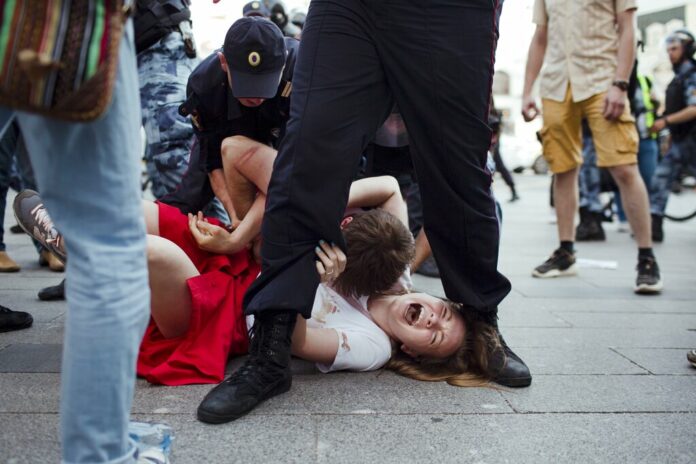
In this photo taken on Saturday, July 27, 2019, Inga Kudracheva screams as her boyfriend Boris Kantorovich lies atop her while police try to detain him during an unsanctioned protest in Moscow. Images of the young couple have been spread on social media. They say the crackdown by police has left them shaken but with their resolve strengthened. Photo: Denis Sinyakov / AP

MOSCOW — The young woman screamed as her boyfriend lay atop her, absorbing the blows of a helmeted riot policeman.

It’s one of the indelible images of the violent police response to an unauthorized protest in Moscow.

Inga Kudracheva’s terror and anguish are clear in the video and photos that spread across Russian social media and foreign news coverage of the July 27 crackdown in which an arrest-monitoring group said nearly 1,400 people were detained.

Yet Kudracheva and Boris Kantorovich say the ordeal has only strengthened them.

“People are not afraid of police anymore. Even though police were beating us violently and tried to intimidate us, it was worth it,” the 27-year-old told The Associated Press on Tuesday, sitting on a sofa with Kudracheva and occasionally squeezing her hand reassuringly.

“I’m really scared, but being scared is fine, and there are other things more important than fear,” said Kantorovich, who works in sales.

Such determination suggests that the fierce police response might have been a miscalculation, hardening resistance rather than dissipating it. Both police and activists likely will be tested again on Saturday, as protest organizers have called for another unsanctioned rally in the Russian capital.

There have been a series of demonstrations denouncing the exclusion of some opposition and independent candidates from a Sept. 8 election for the Moscow city council. In the past month, the issue has provoked a surprisingly large outcry for a local election; on July 20, about 20,000 people turned out for a demonstration that was the largest in the city in several years.

In this photo taken on July 30, 2019, Inga Kudracheva and Boris Kantorovich speak during an interview with The Associated Press in Moscow. Images of the young couple have been spread on social media. They say the crackdown by police has left them shaken but with their resolve strengthened. “People are not afraid of police anymore. Even though police were beating us violently and tried to intimidate us, it was worth it,” Kantorovich said. Photo: Alexander Zemlianichenko / AP

But that earlier demonstration had been sanctioned. When the July 27 protest was called, authorities were clearly determined to stifle the dissent.

The police actions were “demonstrative cruelty,” said Ilya Shablinsky, head of the voters’ rights committee of the presidential human rights council, in an interview with the newspaper Kommersant.

Ivan Sustin, a human-rights lawyer, said the police violence was at a level previously seen only in a 2012 demonstration against President Vladimir Putin’s inauguration and that the recent protesters were far less aggressive.

The police action came amid declining approval rates for Putin and the dominant United Russia party, whose nominees suffered crushing defeats in several gubernatorial elections last fall.

There has been widespread condemnation of the crackdown. The U.S. Embassy in Moscow decried it as “use of disproportionate police force.”

Hugh Williamson, Human Rights Watch’s director for Europe and Central Asia, said the “government’s strong-arm response is a warning to Russians that people who take to the streets, no matter how peaceful, to demand free and fair elections will face dire consequences.”

But Russian authorities show no sign of backing down.

In his first public comments on the disorder, Moscow Mayor Sergei Sobyanin said Tuesday the protesters “forced police to use force that in this situation was completely appropriate.”

At the same time, Russia’s Investigative Committee opened a criminal investigation for charges of organizing or participating in mass disorder, a crime that carries a potential prison sentence of up to 15 years.

During the July 27 demonstration, police tried to grab Kantorovich as he was sitting on a curb. He curled up as police hit him with their batons, and Kudracheva tried to intervene. Nearby police dogs barked and howled.

Moments later, she was on the pavement with Kantorovich atop her.

“The scariest moment was when I was lying underneath Boris … and I felt as if the policeman was jumping on him,” said Kudracheva, a 27-year-old human resources specialist. “I felt like he was going to crush my chest.”

“We were not doing anything,” Kudracheva said of the minutes before the melee. “We were not trying to break the cordons. We weren’t throwing anything at the police.”

Kantorovich was shoved into a police van. After arriving at a police station, he called for an ambulance and went to a hospital for treatment of heavy bruises. Kudracheva suffered only scratches.

By coincidence, Kudracheva also figured in one of the day’s other stunning visual scenes, helping to wrap gauze on the head of Alexandra Parushina, her face masked with blood, after she was beaten by police at a different site.

Parushina, a deputy in a Moscow district council, told AP she hadn’t known Kudracheva before that earlier incident.

The beating left her with stitches in her head and severe bruises, and she said she was so unwell that she couldn’t leave her apartment. But she said she’s ready for future protests.

“Well, it may be frightening and dangerous, but on the other hand, I personally can’t see another way but to go to these kinds of protests. Otherwise, we just aren’t able to overcome this misuse of power,” she said.

Kantorovich, who had taken part in previous protests, said the authorities’ refusal to register the candidates was a brazen insult: “Candidates who want to run did everything by the book. After that, the system told them ‘So you did everything by the book? We’re not going to register you anyway.’ I feel this is what really angered people.”

Lyubov Shangina, a 71-year-old protester, said she was bruised when a policeman grabbed her, but “they didn’t detain because they were scared that by taking me I’d drop dead and they’d be responsible.”

Story: Nataliya Vasilyeva. Tanya Titova, Francesca Ebel, Harriet Morris and Jim Heintz contributed to this report.

Advertisement

Pompeo ‘Very Hopeful’ US-North Korea Talks Will Resume Soon

Secretary of State Mike Pompeo arrives at Andrews Air Force Base, Md., Tuesday, July 30, 2019. Pompeo is heading to Thailand, Australia, and Micronesia. Photo: Jonathan Ernst / Pool Photo via AP

BANGKOK — U.S. Secretary of State Mike Pompeo said Wednesday he’s very hopeful for a quick resumption in nuclear talks with North Korea despite the North’s recent weapons tests that have clouded already uncertain prospects for a return to the table.

Pompeo told reporters accompanying him to an Asian security conference in Thailand that some preliminary work on a new round of talks has been done but no dates have been set. He said he’s waiting to see if North Korea’s foreign minister comes to Bangkok for the Association of Southeast Asian Nations Regional Forum and is confident they will meet if he does. The State Department says the lead U.S. negotiator, Stephen Biegun, will be in Bangkok for North Korea-related discussions but has not released his schedule.

“We think they’ll be started before too long,” Pompeo said. “I’m very hopeful.”

Talks have been stalled since President Donald Trump and North Korean leader Kim Jong Un’s summit in February in Hanoi that broke up over disagreements about sanctions relief and what actions the North would have to take in exchange. But they agreed to restart the talks when they met at the Demilitarized Zone separating the two Koreas in June. At the time, U.S. officials spoke of the negotiations resuming in a matter of a few weeks.

“It’s taken a little bit longer than that,” Pompeo said. “There’s been a little bit of preliminary work to be done. I never want to set a date (but) I hope before too long we will have Special Representative Biegun sitting with what I think will be a new counterpart from North Korea.”

Since the latest Trump-Kim meeting, however, and just in the past week, the North has conducted two short-range ballistic missile tests. And, the two sides remain at odds on a definition of denuclearization. The U.S. says sanctions cannot be removed until the process is complete, although it has said some concessions are possible in return for partial steps.

The annual ASEAN security meeting has been used in the past as a venue for U.S.-North Korea talks and although the North has signaled that its top diplomat may not attend this year, Pompeo was nonplussed.

“We don’t anticipate that the North Koreans will be at the event in Bangkok, but if they are, I’d look forward to the chance to meet with Foreign Minister Ri Yong Ho,” he said, saying such a meeting “would be great.” ”We’ll see if they are there, and if they are there, I am confident we’ll meet.”

Even if such a meeting does not occur, Pompeo will have a full plate of thorny issues to contend with in Bangkok.

Among them, rising tensions with China over its increasingly assertive behavior in the South China Sea, hostility toward pro-democracy protests in Hong Kong and mass detentions of Muslims and other minorities in the western region of Xinjiang. Pompeo will meet Chinese Foreign Minister Wang Yi on Thursday as talks on ending a bitter U.S.-China trade dispute wrap up in Shanghai.

Pompeo will also be seeking in Bangkok to ease brewing tensions over trade between U.S. allies Japan and South Korea that threaten to disrupt Seoul’s electronics industry and draws on long-standing bitterness over Japan’s actions toward Korea during World War II. The dispute also threatens to poison relations at a time when Washington would prefer to see a united front in dealing with North Korea.

On Friday, Pompeo will meet the Japanese and South Korean foreign ministers separately before convening a three-way meeting among them.

“We will encourage them to find a path forward. We think it’s important,” Pompeo said aboard his plane. “They’re both great partners of ours; they’re both working closely with us on our efforts to denuclearize North Korea. So, if we can help them find a good place for each of their two countries, we certainly find that important to the United States, indeed, as well as to each of those two countries. I hope we’ll have a good conversation and we can help get to a good place.”

Story: Matthew Lee.

Advertisement

Overhill Farms Jointly Celebrated HM the King’s Birthday

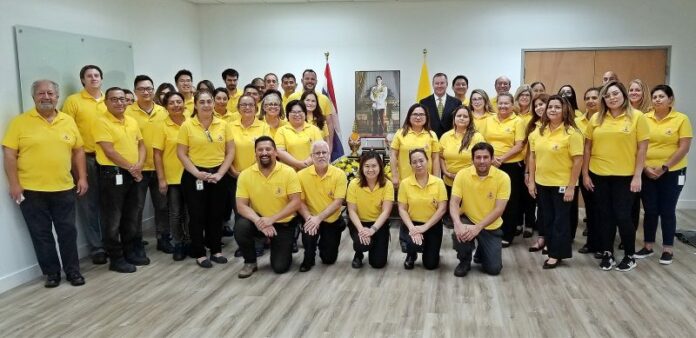
Mr.Terry O’Brien, President of Overhill Farms, Inc., a subsidiary of Bellisio Foods (Charon Pokphand Foods PCL’s operation in the U.S.), together with Thai and local executives and staffs to pay obeisance before the royal portrait of His Majesty the King and sang the royal anthem to express their well-wishes to celebrate the Majesty the King’s birthday on 28 July 2019. The activity was held at Overhill Farms office in California of the United States.

โอเวอร์ฮิลล์ ฟาร์ม กิจการซีพีเอฟในสหรัฐอเมริกา ร่วมถวายพระพรชัยมงคล เนื่องในวันเฉลิมพระชนมพรรษา ในหลวง ร.10

นายเทอรี่ โอไบร์อัน (Mr.Terry O’Brien) ประธานกรรมการ บริษัทโอเวอร์ฮิลล์ฟาร์ม ภายใต้เครือบริษัท เบลลิซิโอ ฟู้ดส์ จำกัด (กิจการในบริษัท เจริญโภคภัณฑ์อาหาร จำกัด (มหาชน) หรือ ซีพีเอฟ ในสหรัฐอเมริกา) นำคณะผู้บริหารพนักงานทั้งชาวไทยและชาวอเมริกัน ถวายพระพรชัยมงคล เพื่อเฉลิมพระเกียรติและร่วมแสดงความจงรักภักดีถวายแด่พระบาทสมเด็จพระปรเมนทรรามาธิบดีศรีสินทรมหาวชิราลงกรณ พระวชิรเกล้าเจ้าอยู่หัว เนื่องในวันเฉลิมพระชนมพรรษา 67 พรรษา 28 กรกฎาคม 2562  ณ เมืองเวอร์นอน รัฐแคลิฟอร์เนีย สหรัฐอเมริกา.

Advertisement

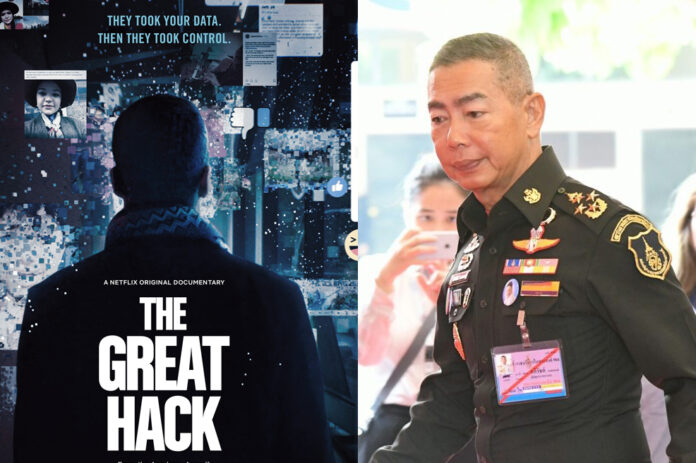
Army Chief Recommends Netflix’s ‘The Great Hack’

BANGKOK — The army chief has recommended people watch a Netflix documentary about how social media can be weaponized to turn the tide of public opinion – it’s happening in Thailand, he says.

Gen. Apirat Kongsompong told press Tuesday that Thais should watch Netflix’s “The Great Hack” to guard themselves against politicians clouding their minds through social media.

“Watch this film. It has similarities to Thailand,” he said. “Political parties can use social media as a propaganda weapon, with youths as their target. The young will absorb information unknowingly, and political parties will exploit it.”

Apirat said he is currently writing a paper on how social media affects Thai society, economics, culture, and politics, which he promised to finish toward the end of August.

“The Great Hack” is a Netflix documentary about the 2018 Cambridge Analytica hacking scandal, in which the company was found to have harvested the data of millions of Facebook accounts to influence opinions through political advertising.

In the aftermath of the March 2019 election, many Thais cried foul that the election was riddled with misformation and fraud. Junta proxy Phalang Pracharath Party came out on top, allowing Gen. Prayuth Chan-ocha to become PM after five years as junta leader. His final challenger was Future Forward party head Thanathorn Juangroongruangkit, whose party is popular with younger voters.

Apirat isn’t one to shy away from recommending media. In February during campaign season, the hardline royalist recommended that a Pheu Thai Party candidate listen to the anti-Communist anthem, “Nuk Paen Din” or “Scum of the Earth.”

Related stories:

Army Revokes Order to Broadcast ‘Red Scare’ Song

Nation TV Airs Obviously Faked ‘Secret’ Thaksin-Thanathorn Recording

Prayuth ‘Animal Farm’ Endorsement Left Netizens Snorting

Prayuth Wins Second Term as PM

Thainet Cries ‘Dirtiest Election’ in Wake of Confusing Poll Night

Advertisement

Thailand to Purchase 60 Strykers from US

US soldiers of the 8th Squadron, 1st Cavalry Regiment fire mortars from their Stryker during crew certification in May 2008 at Fort Lewis, Washington. Photo: Jason Kaye

BANGKOK — Thailand is set to be the first foreign buyer of US-built Stryker tanks after a purchase was approved by the US.

The US has approved the sale of 60 M-1126 Stryker infantry carrier vehicles to Thailand, which will be delivered starting September for a total of USD$175 million, or 5.38 billion baht. The US’ longtime Southeast Asian ally will be the first non-US country to own them.

“The Stryker vehicles will increase Thailand’s capability to defend its sovereign territory against traditional and non-traditional threats by filling the capability void between light infantry soldiers and heavy mechanized units. Thailand will have no difficulty absorbing this equipment into its armed forces,” reads the statement released by the Defense Security Cooperation Agency.

The agency, under the US Department of Defense, says Congress was notified of the sale Friday.

“The proposed sale of this equipment and support will not alter the basic military balance in the region,” the statement also says. “There will be no adverse impact on US defense readiness as a result of this proposed sale.”

Of the 60 Strykers, 37 are refurbished vehicles previously used by the US Army. The cost of each Stryker averaged 89,775,000 baht per each. The sale also includes extra equipment including machine guns and grenade launchers.

The army initially announced in May that it would purchase 37 Strykers for the 11th Infantry Division in Chachoengsao for 80 million baht each, totalling 2.96 billion baht. Army chief Gen. Apirat Kongsompong met with Maj. Gen. John P. Johnson, the Deputy Commanding General of the US Army Pacific (USARPAC), for a meeting from 13 to 17 May in Pattaya.

Transparency activist Srisuwan Janya called out the army on May 15, criticising the high price of the Strykers as exorbitant, especially given several have already been in use by the US army for 20 years.

Thailand previously purchased Black Hawk helicopters from the US in 2009, as well as Lakota helicopters in 2013 and 2014.

Since the May 2014 coup, the Thai military has been expanding its firepower by purchasing submarines, battle tanks, vehicles and jets, including a three-submarine fleet from China. But over the years, the military has also been duped into acquisitions that turned out to be completely fraudulent. These include bogus bomb and narcotic detectors that cost the state millions of baht in damages, and a 350 million baht “security blimp” that proved unable to fly reliably.

Related stories:

Thailand to Spend Billions on Satellites From Unknown Company

Admiral Behind Submarine Deal Defends Need for ‘Dream Weapon’

Prayuth Vows to Buy Submarines, Says He Can Get 3-for-2 Deal


Advertisement

Julie Byrne to ‘Follow Her Voice’ in Bangkok This August

Photo: Julie Byrne / Courtesy

BANGKOK — American singer-songwriter Julie Byrne is returning to Bangkok with her signature guitar plucking this August.

In her second gig in Bangkok, Julie Byrne will perform on August 16 at the reborn cultural hub Lido Connect in Siam Square. Concertgoers can choose to be seated on either a bean bag (1,500 baht) or regular chair (1,300 baht) while chilling out to her dreamy synths.

Tickets are on sale now via Ticketmelon.

Julie Byrne is known to indie listeners for her folk album “Not Even Happiness,” released in 2017, and her debut album “Rooms With Walls and Windows,” released in 2014. The New York artist and part-time park ranger has progressively built up an audience through her nomadic performances around the US. Pitchfork named “Not Even Happiness” one of the 50 best albums of 2017.


Related stories:

Julie Byrne to Follow Her Voice to Bangkok

Advertisement

Southeast Asia a Hub of Illegal Wildlife and Timber Trade: UN

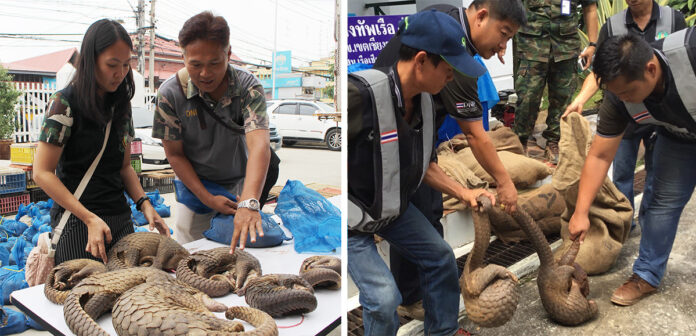
Officials inspect some of the 217 pangolins seized on February 2016 in Ratchaburi. Photo: Matichon. Right, Four pangolins are seized on June 2018 at the Thai-Lao border in Chiang Rai.

BANGKOK — Despite a continued crackdown on perpetrators, Southeast Asia is becoming an even more prominent hub of illegal wildlife and timber trade, a UN report released earlier this month revealed.

The region connects illegal trade supply chains across African and East Asian markets, according to the report, “Transnational Organized Crime in Southeast Asia: Evolution, Growth and Impact,” by the United Nations Office on Drugs and Crime.

Major seizures of illicit wildlife in Southeast Asia and China between Jan. and May this year include: 12.7 tons of pangolin scales and 180 kilograms of carved ivory worth USD$38.7 million from Vietnam seized in Singapore; 9.1 tons of ivory from Africa seized in Vietnam; 24 pieces of rhino horn weighing 40 kilograms worth USD$1 million seized in Hong Kong; and 30 tons of pangolins seized in Malaysia.

As infrastructure development in the region accelerates, the movement of goods within the region and previously remote areas has become more accessible. Two other important drivers of the illicit wildlife market in Asia are the growth of a high-income class that values the display of wildlife products as status symbols, and beliefs in the medicinal value of wildlife products.

The report estimates, for example, that international trade has seen more than one million pangolins killed in the past decade.

“The international trade is driven by the demand for their scales for use in traditional medicines and for the luxury consumption of their meat, primarily in China and Vietnam,” reads the report.

Police seize 76 trafficked pangolins in March 2019 at Prachuap Khiri Khan.

As for illegal timber trade, the report found most illegal trade in Southeast Asia continues to be conducted alongside the legal trade. Formal business enterprises operate through fraudulent or corrupt methods to conceal the illicit origins of products.

“Corruption is a key facilitator of illegal wildlife and timber trades. Bribery and document fraud are commonly used to conceal the contents and origins of cargo, allowing wildlife and timber to be moved with relative ease,” the report said.

Southeast Asia’s proximity to China, which has a voracious appetite for rosewood, has led rosewood to become the world’s most trafficked timber species. Siamese rosewood (dalbergia cochinchinensis) or payung in Thai, which is found in Cambodia, Laos and Thailand, is prized in China for making luxury furniture. Burmese rosewood (dalbergia oliveri/bariensis) or pradu in Thai is also increasingly in demand.

The report estimates that up to 50 park rangers were murdered, with roughly an equal number seriously injured, in Thailand from 2009 to 2016 as a result of confrontation with illegal loggers.

Related stories:

Police Intercept Pickup Packed With Pangolins On Way to China (Video)

Advertisement

Hot News

LATEST NEWS

Bangkok
overcast clouds
32.7 ° C
33.9 °
31.1 °
68 %
7.5kmh
100 %
Fri
35 °
Sat
36 °
Sun
35 °
Mon
35 °
Tue
33 °