
























31.6 C
Bangkok
Monday, June 29, 2026
Home Blog Page 1646

Japan Space Probe Drops Explosive on Asteroid to Make Crater

In this computer graphics image released by the Japan Aerospace Exploration Agency (JAXA), the Hayabusa2 spacecraft is seen above on the asteroid Ryugu. Photo: ISAS / JAXA via AP

TOKYO — Japan’s space agency said its Hayabusa2 spacecraft successfully dropped an explosive designed to make a crater on an asteroid and collect its underground samples to find possible clues to the origin of the solar system.

Friday’s crater mission is the riskiest for Hayabusa2, as it had to immediately get away so it won’t get hit by flying shards from the blast.

The Japan Aerospace Exploration Agency, or JAXA, said that Hayabusa2 dropped a “small carry-on impactor” made of copper onto the asteroid Friday morning, and that data confirmed the spacecraft safely evacuated and remained intact. JAXA is analyzing data to examine if or how the impactor made a crater.

The copper explosive is the size of a baseball weighing 2 kilograms. It was designed to come out of a cone-shaped piece of equipment. A copper plate on its bottom was to turn into a ball during its descent and slam into the asteroid at 2 kilometers per second.

JAXA plans to send Hayabusa2 back to the site later, when the dust and debris settle, for observations from above and to collect samples from underground that have not been exposed to the sun or space rays. Scientists hope the samples will be crucial to determine the history of the asteroid and our planet.

If successful, it would be the first time for a spacecraft to take such materials. In a 2005 “deep impact” mission to a comet, NASA observed fragments after blasting the surface but did not collect them.

After dropping the impactor, the spacecraft was to move quickly to the other side of the asteroid to avoid flying shards from the blast. While moving away, Hayabusa2 also left a camera to capture the outcome. One of its first photos showed the impactor being successfully released and headed to the asteroid.

“So far, Hayabusa2 has done everything as planned, and we are delighted,” said mission leader Makoto Yoshikawa. “But we still have more missions to achieve and it’s too early for us to celebrate with ‘banzai.'”

Hayabusa2 successfully touched down on a tiny flat surface on the boulder-rich asteroid in February, when the spacecraft also collected some surface dust and small debris. The craft is scheduled to leave the asteroid at the end of 2019 and bring surface fragments and underground samples back to Earth in late 2020.

The asteroid, named Ryugu after an undersea palace in a Japanese folktale, is about 300 million kilometers from Earth.

Story: Mari Yamaguchi
Advertisement

Political Stress Draws More Calls to Mental Health Hotline: Official

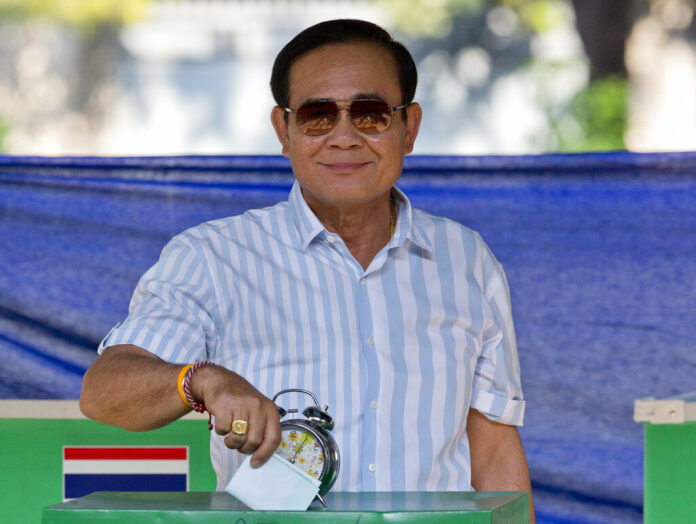
Junta leader-cum-Prime Minister Prayuth Chan-ocha casts his vote at a polling station March 24 in Bangkok. Photo: Gemunu Amarasinghe / Associated Press

BANGKOK — The state mental health hotline experienced nearly a 70 percent spike in calls related to politics in the lead up to the March election, a top official said Friday.

Kiattibhoom Vongrachit, Director-General of the Mental Health Department, said that in March the line saw a 68-percent increase from February in calls about politics-related distress. He said most callers needed advice about conflict with family, friends or colleagues over differences in political opinion.

Read: Love in a Time of Political Hate. Still Possible?

According to Kiattibhoom, overall consultation calls increased by 33 percent in March compared to February, with most calling about mental health disorders, followed by stress and domestic issues. There were more than 13,000 calls over the two months combined.

“In a democratic society, it’s normal for people to think differently, but that shouldn’t cause division,” Kiattibhoom said. “We should listen to others’ opinions with respect … so that the stress and anxiety isn’t bottled up too much.”

The department has suggested that the public not consume political news for more than an hour a day to reduce stress levels.

In 2018, a survey by the department found that more than 20 percent of Thai people suffer from mental health issues. However, it said many people were not aware of those problems, especially when it came to anxiety.

Those needing support are encouraged to call the hotline at 1323, which can be accessed at all hours, although call attempts may not always go through successfully.

Related stories:

Love in a Time of Political Hate. Still Possible?

Thai Suicides Inflamed by Urbanization, Social Stigmas

Advertisement

Indonesia President Has Big Poll Lead as Election Nears

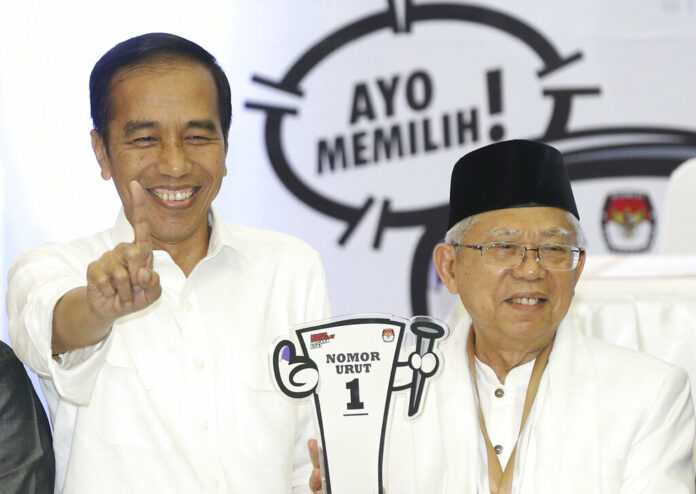
In this Sept. 21, 2018, file photo, Indonesian presidential candidates Joko Widodo, left, and his running mate Ma'ruf Amin, show the ballot number that will represent them in the 2019 presidential election, during a draw at the General Election Commission office in Jakarta, Indonesia. Photo: Achmad Ibrahim / Associated Press

JAKARTA, Indonesia — Opinion surveys two weeks ahead of presidential and legislative elections in the world’s third-largest democracy show Indonesian President Joko Widodo and his ruling coalition maintaining a large lead over the rival camp.

Four nationwide surveys conducted in the second half of March show Widodo between 13 and 20 percentage points ahead of former special forces general Prabowo Subianto, though undecided voters are as high as 20%.

The race has tightened modestly since late last year, but pollsters say Widodo, who has had a commanding lead for months, especially in populous East and Central Java, is headed for victory in the April 17 election.

Widodo, the first Indonesian president from outside the Jakarta elite, has campaigned on progress in upgrading inadequate infrastructure and reducing poverty. He narrowly defeated Subianto in the 2014 president election.

Far behind in the polls, Subianto and his team have recently resorted to questioning the integrity of the upcoming vote, apparently setting the groundwork for a repeat of his unsuccessful challenge to the 2014 results.

Subianto’s ultra-nationalistic campaign has focused on what he sees as Indonesia’s weakness in the world relative to its vast land area rich in natural resources and population of more than 260 million.

He has highlighted significant problems facing the country including poverty and particularly the tragedy of stunting — malnutrition in children younger than 5 that causes lifelong physical and mental impairment.

But the government has been able to show progress in alleviating those long-standing crises.

The U.N.’s Food and Agriculture Organization and other international agencies said earlier this week that the percentage of Indonesian children suffering from stunting fell to 30.8% from nearly 38% between 2013 and 2018.

During the same period, the reduction in the number of hungry and malnourished people, including children, has come to a standstill in many other parts of Asia, according to the agencies that included UNICEF, the World Health Organization and World Food Program.

Meanwhile, the Pew Research Center, in research released Thursday, said Indonesians are increasingly optimistic about their country’s current and future economic situation.

As of last summer, two thirds of Indonesians said the economy was doing well compared with almost the same number saying it was doing poorly before Widodo was elected in 2014.

The March opinion surveys showed the coalition of parties that has coalesced around Widodo since his election would gain about 60% of the vote compared with 37% for the parties allied with Subianto.

Religion has not figured in the election campaign as prominently as expected in the predominantly Muslim nation. Widodo at least partially neutralized criticism he is insufficiently Muslim by naming a conservative cleric, Ma’ruf Amin, as his running mate.

Personality differences also appear to have worked in Widodo’s favor.

Subianto, an elite figure linked to human rights abuses during the Suharto dictatorship, is a powerful speaker but has often appeared volatile and emotional during the campaign. Widodo has cultivated a friendly common man persona that has roots in his lower middle-class background.

Story: Stephen Wright

Advertisement

NZ Mosque Suspect to Undergo Mental Health Check

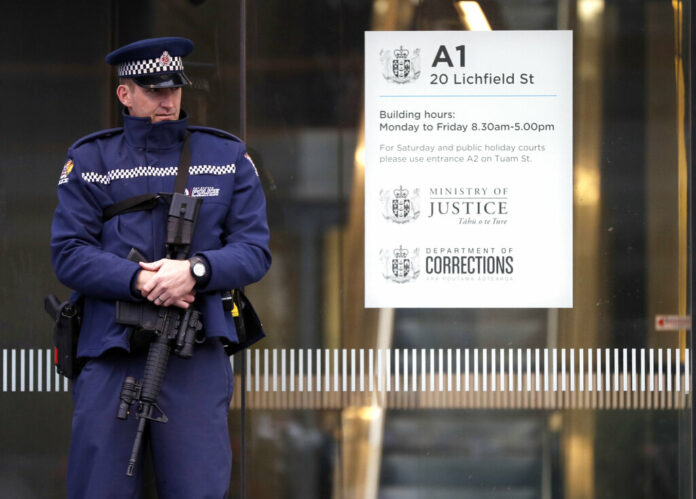
A armed police office stands guard Friday outside the entrance to the High Court in Christchurch, New Zealand. Photo: Mark Baker / Associated Press

CHRISTCHURCH, New Zealand — A New Zealand judge on Friday ordered that the man accused of killing 50 people at two Christchurch mosques undergo two mental health assessments to determine if he’s fit to stand trial.

High Court judge Cameron Mander made the order during a hearing in which 28-year-old Australian Brenton Harrison Tarrant appeared via video link from a small room at the maximum security Paremoremo prison in Auckland.

Mander said nothing should be read into his order for the mental health assessments, as it was a normal step in such a case. Lawyers said it could take two or three months to complete.

The judge said Tarrant was charged with 50 counts of murder and 39 counts of attempted murder. Police initially filed a single, representative murder charge before filing the additional charges this week.

Tarrant was wearing handcuffs and a gray-colored sweater when he appeared on a large screen inside the Christchurch courtroom, which was packed with family members and victims of the shooting, some in wheelchairs and hospital gowns and still recovering from gunshot wounds.

Tarrant had stubble and close-cropped hair. He showed no emotion during the hearing. At times he looked around the room or cocked his head, seemingly to better hear what was being said. The judge explained that from his end, Tarrant could see the judge and lawyers but not those in the public gallery.

Tarrant spoke only once to confirm to the judge he was seated, although his voice didn’t come through because the sound was muted. It wasn’t immediately clear if his link had been deliberately or inadvertently muted.

The courtroom was filled with more than two dozen reporters and about 60 members of the public. A court registrar greeted people in Arabic and English as the hearing got underway. Some of those watching got emotional and wept.

In the March 15 attacks, 42 people were killed at the Al Noor mosque, seven were killed at the Linwood mosque and one more person died later.

The day after the attacks, Tarrant dismissed an appointed lawyer, saying he wanted to represent himself. But he has now hired two Auckland lawyers to represent him, Shane Tait and Jonathan Hudson. The next court hearing was scheduled for June 14, and the mental health findings would determine whether he is required to enter a plea then.

Outside the courtroom, Yama Nabi, whose father died in the attacks, said he felt helpless watching.

“We just have to sit in the court and listen,” Nabi said. “What can we do? We can’t do nothing. Just leave it to the justice of New Zealand and the prime minister.”

Tofazzal Alam, 25, said he was worshipping at the Linwood mosque when the gunman attacked. He felt it was important to attend the hearing because so many of his friends were killed.

Alam said he felt upset seeing Tarrant.

“It seems he don’t care what has been done. He has no emotion. He looks all right,” Alam said. “I feel sorry. Sorry for myself. Sorry for my friends who have been killed. And for him.”

Story: Nick Perry

Advertisement

City Hall Wants All Telecom Cables Underground in 2 Years

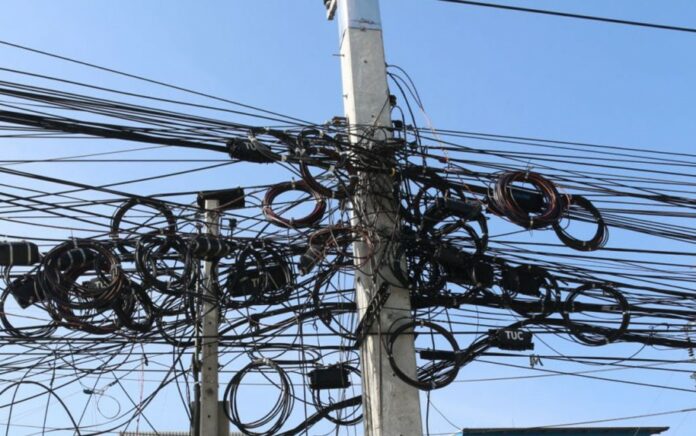
BANGKOK — City Hall said Thursday it will once again attempt to clear the tangled mess of cables that hang over Bangkok streets, though promising only the undergrounding of communication lines this time.

Gov. Aswin Kwanmuang said the administration has partnered with the national broadcasting regulator to move all telecommunication cables across the capital underground within two years, as part of its campaign to “beautify the city’s scenery.”

Aswin said the work will start after the May royal coronation ceremony. The project was granted to Krungthep Thanakom, one of the operators of the city rail network (BTS).

According to Aswin, the burying process will stretch more than 2,400 kilometers across the capital but insisted that the work won’t “disturb the public.”

In 2017, the state electricity authority said it would underground power lines along Bangkok’s Ratchadaphisek Road by 2021.

The city has intermittently launched bids for the project of undergrounding the messily hung power and utilities lines long complained about as eyesores and potentially fatal hazards. But the process has so far dragged on with little achievement.

A Thammasat University student filed a police complaint on Wednesday night after he was injured by a falling cable while riding a motorcycle back to his dorm in northern metro Bangkok.

In 2016, billionaire Bill Gates posted a photo of a hanging mass of cables in Bangkok, prompting embarrassed officials to promise they would bury the lines within five years.

Advertisement

The Week That Was in Asia (Photos)

In this Wednesday, April 3, 2019, file photo, dancers dressed in South Korean traditional
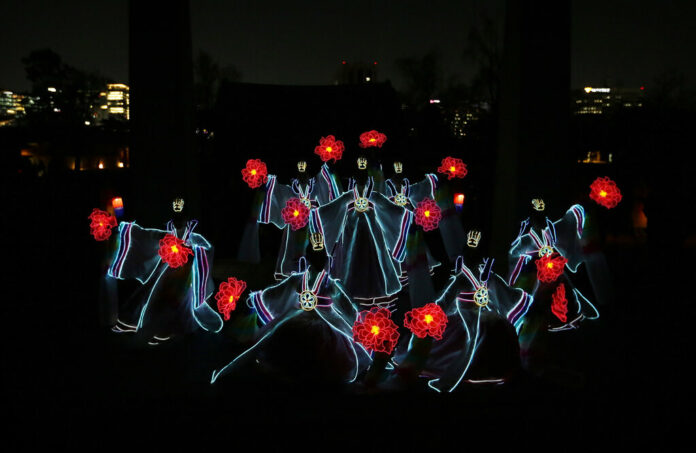
In this Wednesday, April 3, 2019, file photo, dancers dressed in South Korean traditional "Hanbok" attire perform during a media preview of the Royal Culture Festival at the Gyeongbok Palace, the main royal palace in the Joseon Dynasty, in Seoul, South Korea. The festival will take place for 9 days, from Apr. 27 to May 5. Photo: Ahn Young-joon / Associated Press

Dancers in traditional Korean “Hanbok” attire perform at the Royal Culture Festival at the Gyeongbok Palace in Seoul.

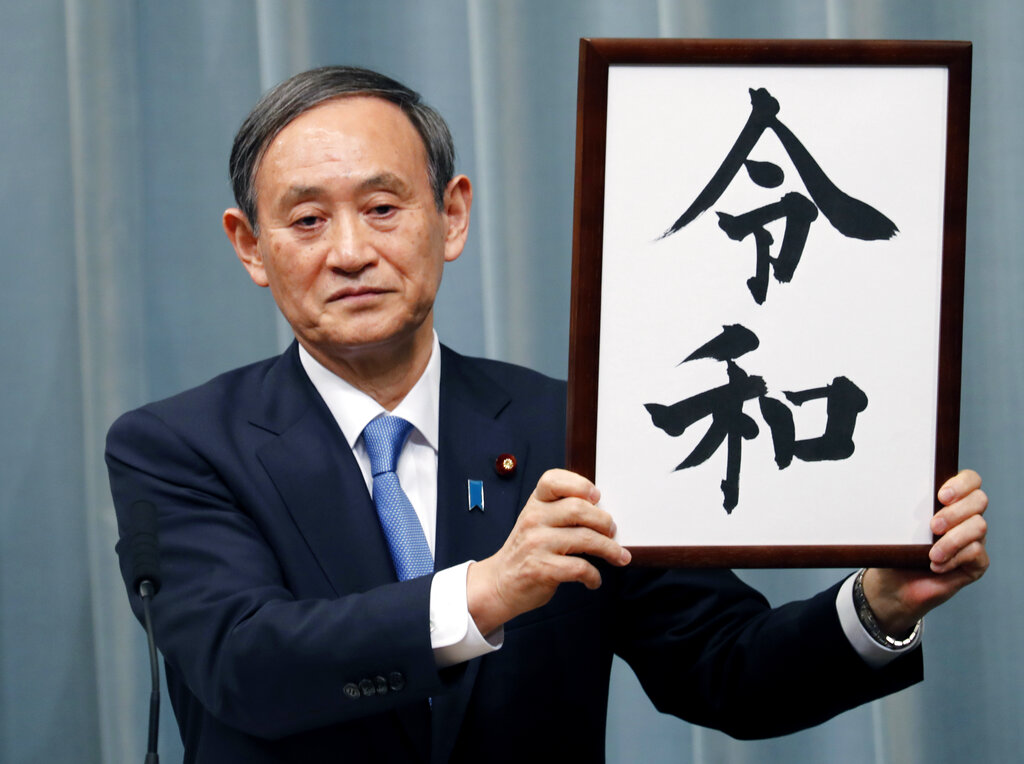
In other images from the Asia-Pacific region this week, Japan’s Chief Cabinet Secretary Yoshihide Suga unveils the name of the new emperor’s era called “Reiwa,” or “Beautiful Harmony,” which will come into force May 1 when Crown Prince Naruhito succeeds his father.

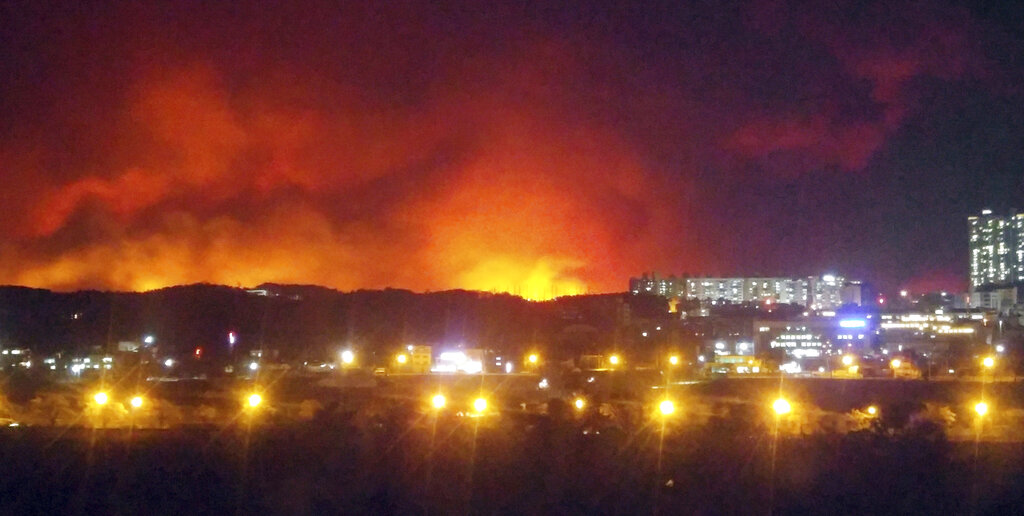
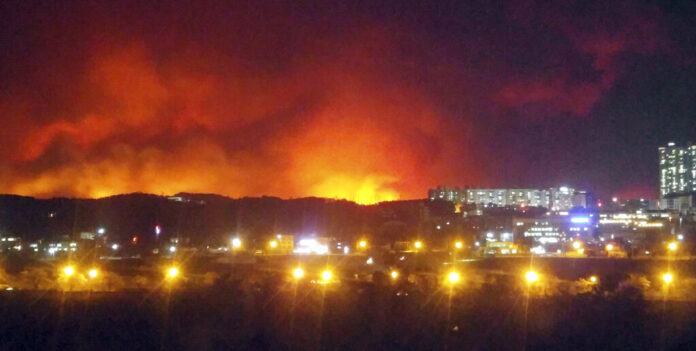
A massive wildfire burns in Goseong, South Korea, fanned by strong winds in a mountainous province that hosted the 2018 Pyeongchang Winter Olympics.

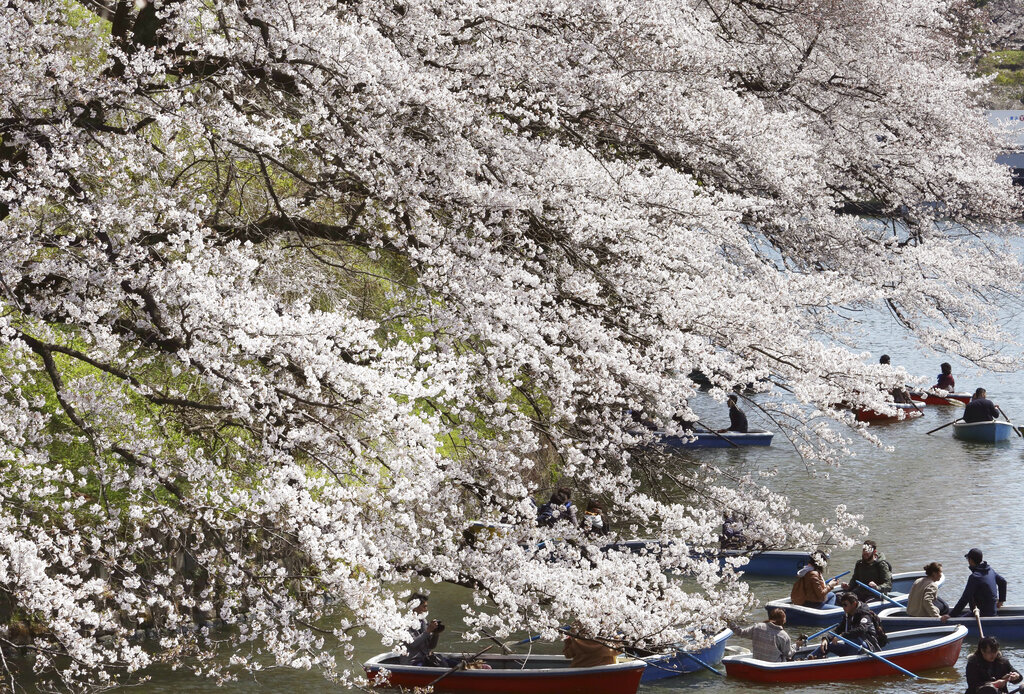
People in Tokyo enjoy blooming cherry blossoms along the Chidorigafuchi Imperial Palace moat.

AP19091106719503
In this Monday, April 1, 2019, file photo, Japan’s Chief Cabinet Secretary Yoshihide Suga unveils the name of new era “Reiwa” at the prime minister’s official residence in Tokyo. Japan says next emperor Naruhito’s era name is Reiwa, effective May 1 when he takes the throne from his father. (AP Photo/Eugene Hoshiko, File)
AP19091151196850
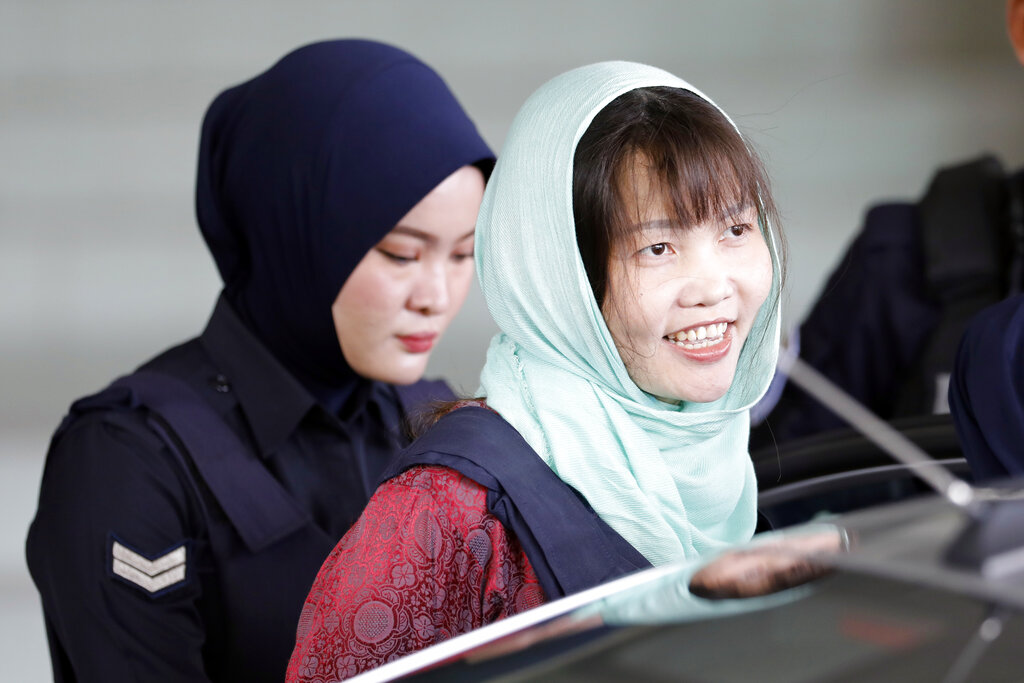
In this Monday, April 1, 2019, file photo, Vietnamese Doan Thi Huong, right, leaves Shah Alam High Court in Shah Alam, Malaysia. The Vietnamese woman who is the only suspect in custody for the killing of the North Korean leader’s brother Kim Jong Nam pleaded guilty to a lesser charge in a Malaysian court on Monday and her lawyer said she could be freed as early as next month. (AP Photo/Vincent Thian, File)
AP19091355904397
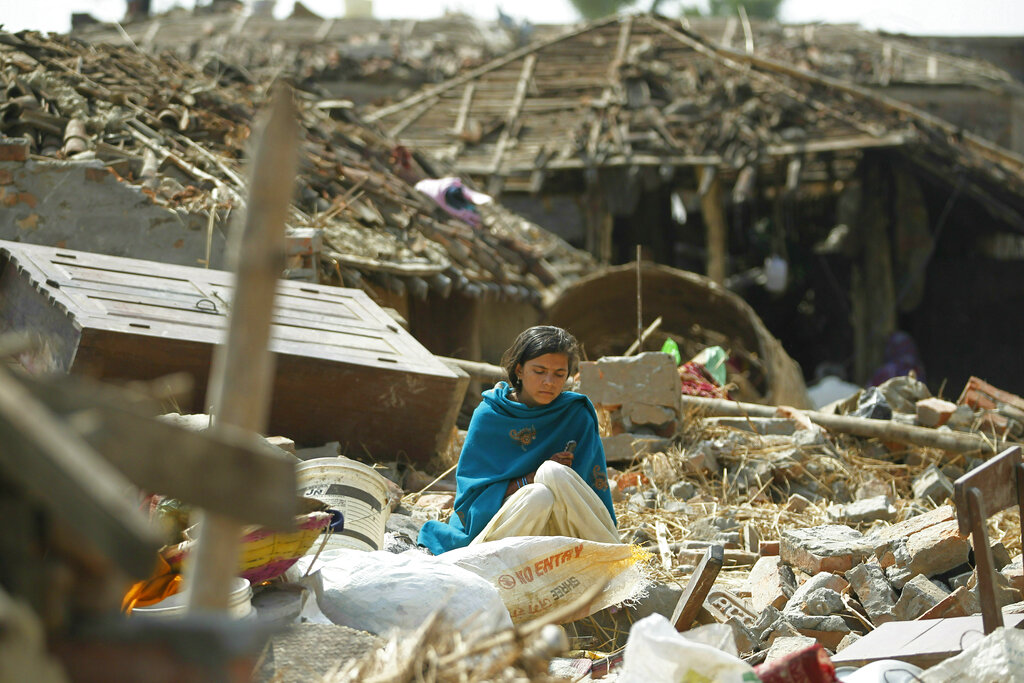
In this Monday, April 1, 2019, file photo, a woman sits in the middle of the debris of a residential house damaged in rainstorm in Bara district, 125 kilometers (75 miles) south of Kathmandu, Nepal. Rescuers struggled Monday to reach villages in southern Nepal cut off by a powerful rainstorm that killed at least 28 people and injured hundreds more. (AP Photo/Niranjan Shrestha, File)
AP19091390351201
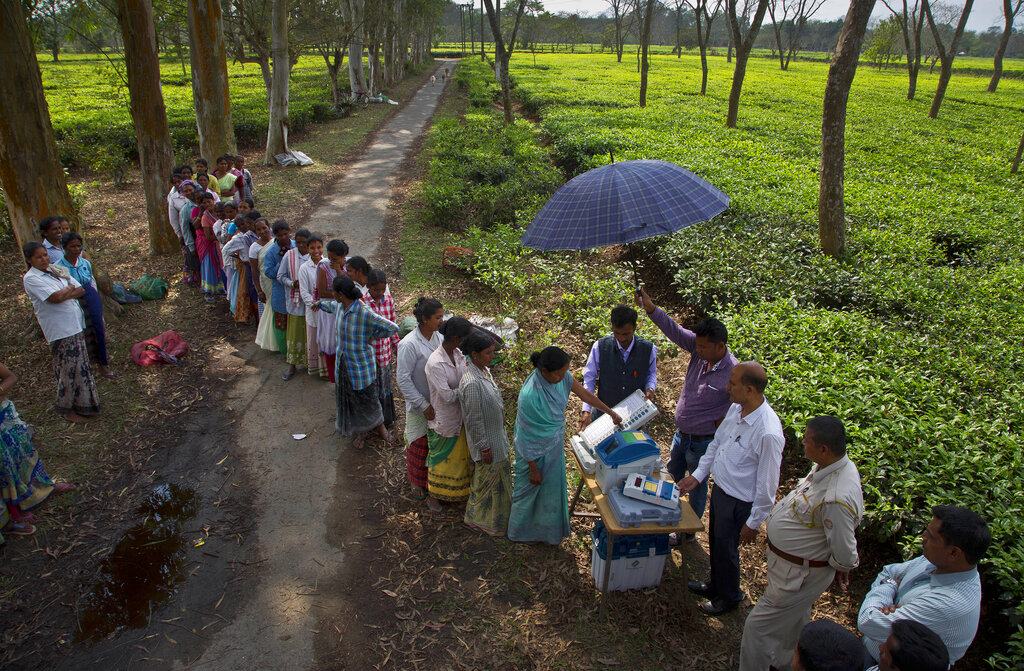
In this Monday, April 1, 2019, file photo, a woman casts her vote on the demo electronic voting machines and checks on Voter Verifiable Paper Audit Trail or VVPAT as others wait in the queue during an election awareness drive by district administration amongst the tea garden laborers ahead of India’s general election in Jorhat, India. A VVPAT vending machine is an independent printing system connected to the electronic voting machines that allows voters to check that their votes are being cast as intended. The system will be used in the upcoming national elections to be held in seven phases starting from April 11. Votes will be counted on May 23. (AP Photo/Anupam Nath, File)
AP19093064703024
In this Feb. 23, 2019, file photo, the Crusader horseman ride around the arena prior to the start of the Super Rugby match between the Crusaders and Hurricanes in Christchurch, New Zealand. The Crusaders announced Wednesday, April 3, 2019, that they will be considering a change to their name and branding following the Christchurch terrorist attacks on March 15 – insisting the status quo is “no longer tenable.” (AP Photo/Mark Baker, File)
AP19093159744085
In this Wednesday, April 3, 2019, file photo, people on boat enjoy blooming cherry blossoms along the Chidorigafuchi Imperial Palace moat in Tokyo. (AP Photo/Koji Sasahara, File)
AP19093358168335
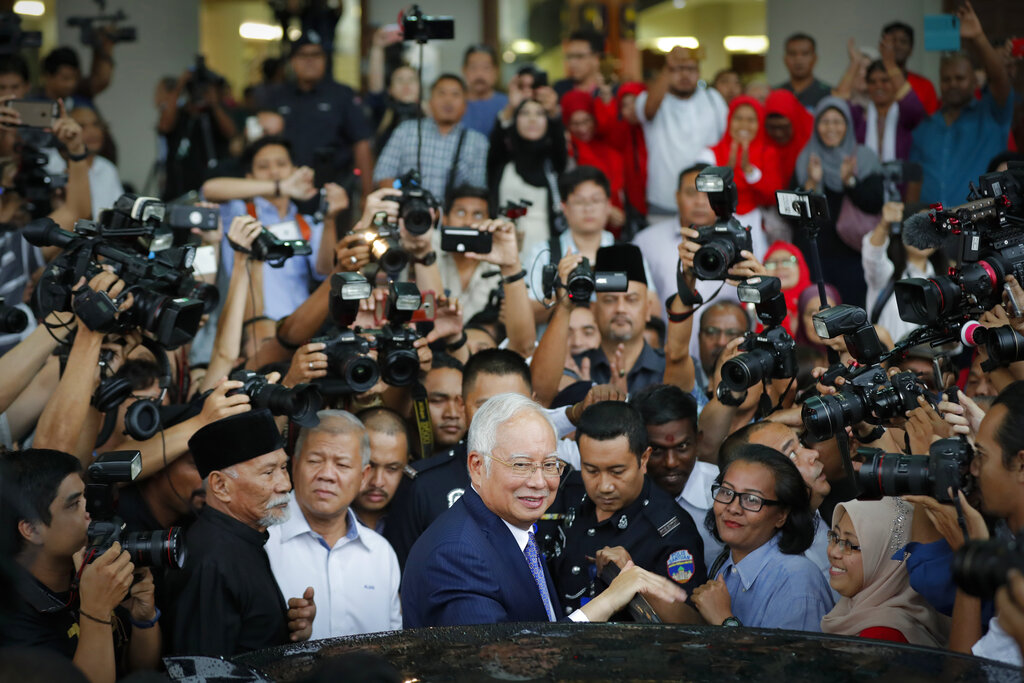
In this Wednesday, April 3, 2019, file photo, former Prime Minister Najib Razak, center, gets into a car after his court appearance at the Kuala Lumpur High Court in Kuala Lumpur, Malaysia. Najib appeared in court Wednesday for the start of his corruption trial, exactly 10 years after he was first elected to office only to suffer a spectacular defeat last year on allegations he pilfered millions of dollars from a state investment fund. (AP Photo/Vincent Thian, File)
AP19095053714810
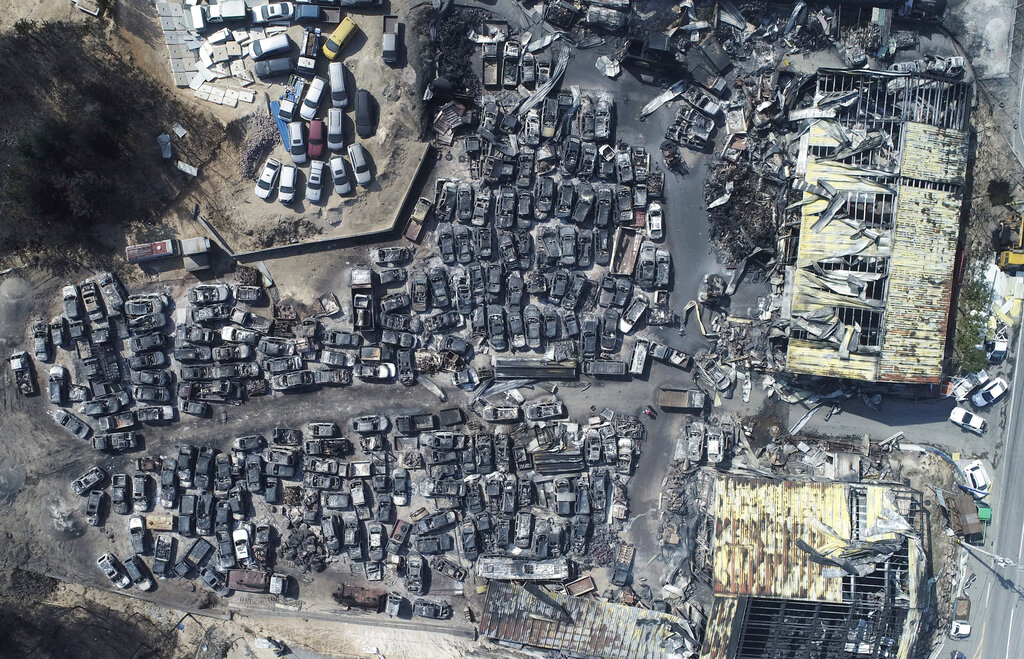
This aerial photo shows burnt vehicles filling a junkyard after being hit by a massive forest fire in Sokcho, South Korea, Friday, April 5, 2019. The fire likely started Thursday night from a transformer spark near a resort in the town of Goseong in Gangwon province about 210 kilometers (130 miles) northeast of Seoul and then spread to the nearby mountains, according to Choi Jin-ho, a fire captain at Gangwon Fire Headquarters. (Kim Do-hoon/Yonhap via AP)
AP19095075519004
In this Thursday, April 4, 2019, file photo, a wildfire burns in Goseong, South Korea. A few people died and thousands were evacuated after strong winds fanned a large fire Friday burning in a mountainous South Korean province that hosted the 2018 Pyeongchang Winter Olympics, officials said. (Lee Jong-geun/Yonhap via AP, File)
AP19089541126689
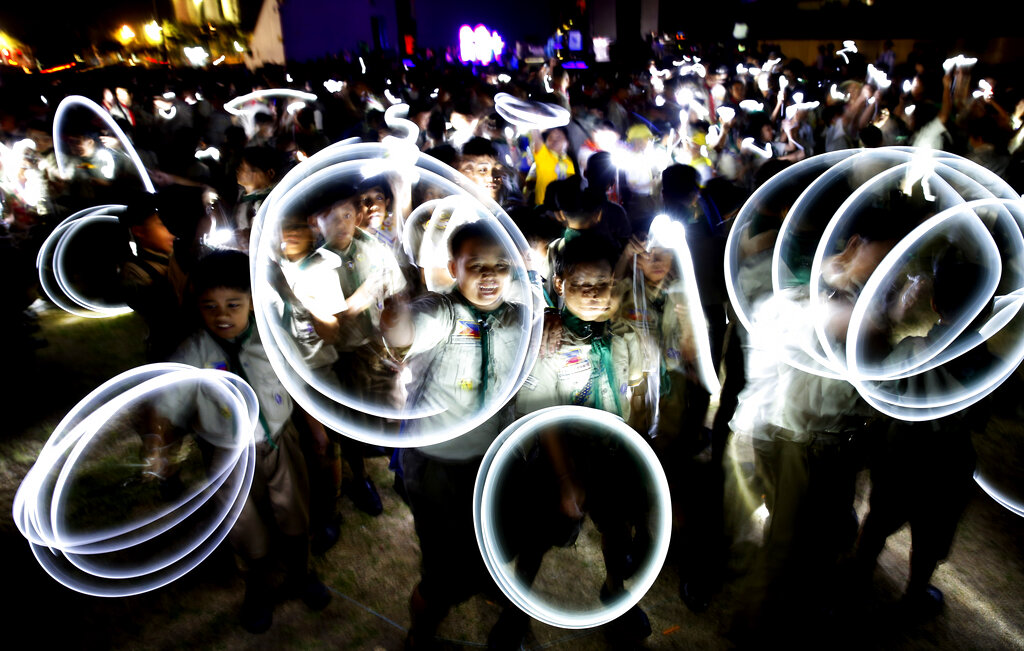
In this Saturday, March 30, 2019, file photo, Philippine Boy Scouts play with their flashlights at the countdown for the 12th Earth Hour event in suburban Makati city, east of Manila, Philippines. Earth Hour is the symbolic switching off of the lights for one hour to help minimize fossil fuel consumption as well as mitigate the effects of climate change. (AP Photo/Bullit Marquez, File)
AP19090442293622
In this Sunday, March 31, 2019, file photo, Sunrisers Hyderabad’s David Warner leaps in the air to celebrate scoring a century during the VIVO IPL T20 cricket match between Sunrisers Hyderabad and Royal Challengers Bangalore in Hyderabad, India. (AP Photo/Mahesh Kumar A., File)
Advertisement

S.Korea Coastal Forest Fire Kills 2, Destroys 120 Homes

A wildfire burns Thursday in Goseong, South Korea. Photo: Lee Jong-geun / Yonhap via AP

SEOUL, South Korea — A forest fire burning in the mountainous region where South Korea hosted the 2018 Winter Olympics has destroyed 120 homes and caused two deaths, authorities said Friday as thousands of people fled.

Firefighters by Friday morning had extinguished large parts of a forest fire likely started Thursday night from a transformer spark near a resort in the town of Goseong and then spread to the nearby mountains, according to Choi Jin-ho, a fire captain at Gangwon Fire Headquarters.

Gangwon province governs the Olympic host city of Pyeongchang and is about 210 kilometers (130 miles) northeast of Seoul.

Videos posted to social media in South Korea showed tall flames rising from large areas of forest, the air filled with embers and debris as cars drove by the raging fire. News photos showed a burnt-out bus, fire engulfing a hill, and residents evacuating apartment complexes and filing into gyms.

Choi said nearly 2,400 people in Goseong and almost 1,250 in the city of Sokcho were evacuated.

Authorities said a 60-year-old man died because of the fire, and a woman in her 70s died after being hit by wide-angle mirror on a road that fell because of strong winds.

The region is close to the border with North Korea. South Korea’s Unification Ministry said Friday it plans to inform North Korea of details about the forest fires.

The Ministry of the Interior and Safety said about 120 homes were burned. The Korea Forestry Service said about 250 hectares of forest was estimated to have burned in Goseong alone.

About 20 firefighting helicopters and 5,600 firefighting personnel were expected to be deployed Friday, the ministry said. The fire also spread toward Ganeung and Donghae, causing the temporary shutdown of a highway and delays in train services from Ganeung to Seoul.

Another Gangwon fire official, who spoke on condition of anonymity because of office rules, said at least 11 people were being treated for injuries. The official wouldn’t comment on the nature of the injuries or how many were serious.

The office of South Korean President Moon Jae-in said he held an emergency meeting early Friday and called for all available resources to be deployed.

Choi said nearly 800 firefighters fought the fire overnight but had trouble because of the wind and darkness, which prevented the use of helicopters.

Fire brigades from all major surrounding regions, including Seoul, were reportedly ordered to send trucks to help fight the blaze.

Story: Jung-yoon Kim and Kim Tong-hyung

Advertisement

Kingdom Prepares for Coronation’s Holy Water Ritual

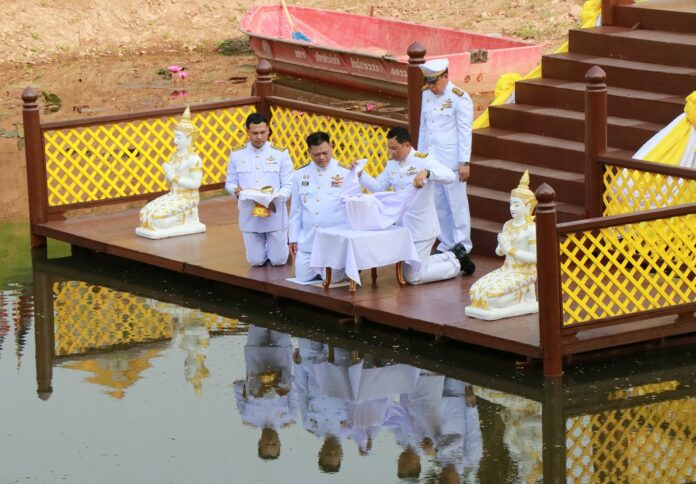
The Phitsanulok Governor, right, leads the Thursday rehearsal to draw holy water for the coronation ceremony.

BANGKOK — Rehearsals to draw and transport sacred water for the May coronation ceremony took place on Thursday across the nation.

A rehearsal of the gathering of sacred water from 126 sources across 76 provinces and Bangkok took place today, with the real process to take place on Saturday. A consecration ceremony for the water will then take place on April 18 at Wat Suthat in Bangkok, before the water is transported to the Emerald Buddha Temple next to the grand palace the next day.

Read: Sacred Water Sources Sought for Coronation Rituals

In Bangkok, governor Aswin Kwanmuang rehearsed transporting sacred water for ablution by car along a specific route to the grand palace.

According to a book entitled “The Royal Coronation Ceremony” published by the Culture Ministry in 2018, drawing sacred water for ablution is the first step in preparations for the royal coronation ceremony, which will take place from May 4-6.

Water from five rivers and four ponds will be collected on Saturday between 11.52am to 12.38am.

“[The water] is combined and blessed to be used as sacred water for ablution of the king in the Purification Ceremony and again in the Anointment Ceremony during the Royal Coronation Ceremony. According to the ancient Brahmanism textbook, the water for the Anointment Ceremony must come from the five main streams of South Asia, or from the country of India to be specific,” the book stated.

It however added that no record from the Sukhothai and Ayutthaya periods show that water was ever taken from India.

Holy water for the ceremony next month will come from the Chao Phraya, Bang Pakong, Pasak, Ratchaburi and Petchburi rivers and several other domestic sources. The river water will be combined with water from four sacred ponds in Suphan Buri province.

King Rama V, the great grandfather of the current king, visited India in 1872 and brought back with him water from the five main streams as prescribed in the Brahmanism textbook. He combined this with water from four sacred ponds in Suphan Buri province for his second coronation in 1873. This is why water from the four ponds in Suphan Buri continued to be used.

Related stories:

Bangkok Roads to Close 5 Days During King’s Coronation (Maps)

Full Schedule for Royal Coronation Ceremony Unveiled

Sacred Water Sources Sought for Coronation Rituals

Advertisement

Philippines Issues Strongly Worded Rebuke at China Flotillas

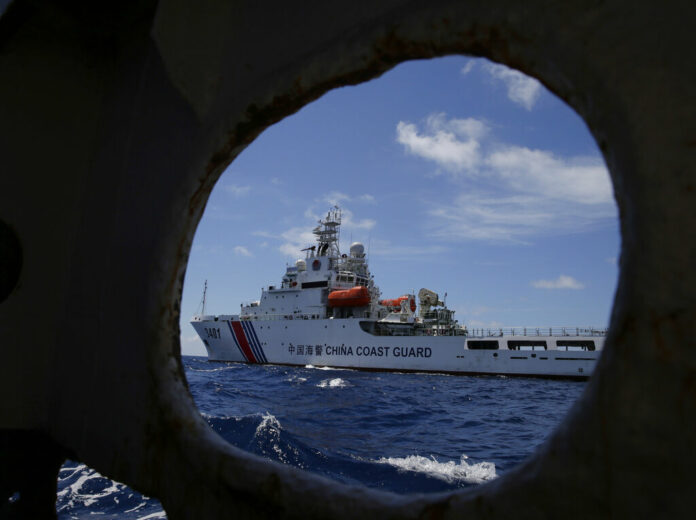
In this photo taken March 29, 2014, a Chinese Coast Guard ship attempts to block a Philippine government vessel as the latter tries to enter Second Thomas Shoal to relieve Philippine troops and resupply provisions. Photo: Bullit Marquez / Associated Press

MANILA, Philippines — The Philippine government protested on Thursday the presence of large numbers of Chinese vessels near islands and islets occupied by the Philippines in the disputed South China Sea as illegal and vowed to take “appropriate action.”

The Department of Foreign Affairs issued the rare public rebuke of the Chinese presence after the Philippine military monitored more than 200 Chinese vessels from January to March in a disputed area named Sandy Cay near a Philippine-occupied island called Pag-asa by Filipinos.

“The presence of Chinese vessels near and around Pag-asa and other maritime features … is illegal,” the department said in a statement. “Such actions are a clear violation of Philippine sovereignty, sovereign rights and jurisdiction as defined under international law.”

The department said it has lodged diplomatic protests and raised concerns in meetings with Chinese officials, and that the presence of Chinese military, fishing or other vessels in the area would “continue to be the subject of appropriate action by the Philippines.”

The Philippines regards a chain of islands and islets, nine of which it occupies, in a contested region named the Spratlys in the South China Sea as a municipality it calls Kalayaan under its western province of Palawan. That claim conflicts with the larger territorial claims of China, Vietnam, and three other governments in a long-simmering Asian dispute.

A 2002 accord between China and the 10-nation Association of Southeast Asian Nations aims to prevent armed confrontation in the busy waterway, where much of Asia’s oil and trade transits.

“We call on concerned parties to desist from any action and activity that contravenes the ASEAN-China Declaration on the Conduct of Parties in the South China Sea as these generate tension, mistrust and uncertainty, and threaten regional peace and stability,” the Philippine statement said.

Chinese boats have swarmed around Sandy Cay, a chain of three sandbars that naturally emerged in recent years, since 2017. The sandbars lie between Pag-asa, which is internationally called Thitu, and a Chinese man-made island called Subi.

The Philippines tried to occupy the largest sandbar, about 2.5 nautical miles (4.6 kilometers) from Thitu, in 2017 but China strongly protested. Shortly after, Chinese navy, coast guard and fishing vessels converged at the sandbars, and the Philippines halted planned construction and withdrew on the orders of President Rodrigo Duterte, Defense Secretary Delfin Lorenzana said at the time.

The Philippines delivered a protest note to the Chinese Embassy in Manila last Friday. Philippine officials again raised strong concern over the Chinese vessels near Sandy Cay and Thitu, along with two other Philippine-occupied islets, in a meeting with Chinese counterparts on Wednesday in Manila, a Philippine official said.

In Beijing, Chinese foreign ministry spokesman Geng Shuang said Chinese and Philippine officials on Wednesday discussed problems in the South China Sea constructively in the latest in a series of meetings that began in 2017.

“The two sides discussed the ways to handle problems with a cooperative attitude and reiterated that they will continue cooperation and discuss measures to promote trust,” he said when asked about the Philippines’ concern.

Duterte has taken a nonconfrontational approach to the territorial disputes with China as he seeks trade, investment and infrastructure funding.

He has so far refused to take up with China a ruling by a U.N.-linked tribunal that invalidated Beijing’s sprawling claims in the South China Sea, sparking criticism from nationalist and left-wing groups, which wanted him to demand immediate Chinese compliance with the landmark decision. China did not participate in the international arbitration and has defied its ruling.

Duterte and Chinese President Xi Jinping agreed in a statement last November to exercise self-restraint to prevent an escalation of the territorial disputes.

“We call on the Chinese government to adhere to this consensus reached at the highest levels, down to its agencies and its military,” the Philippine foreign affairs department said.

Story: Jim Gomez

Advertisement

Preliminary Report Says Crew of Ethiopia Jet Followed Boeing Rules

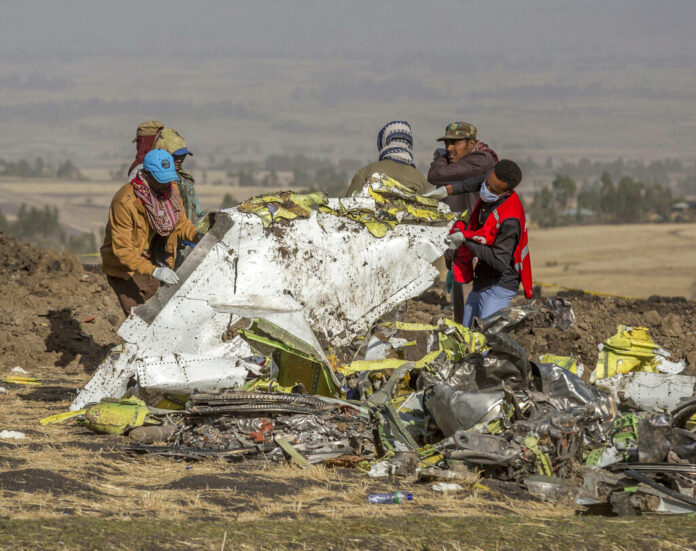
In this March 11, 2019, file photo, rescuers work at the scene of an Ethiopian Airlines flight crash near Bishoftu, Ethiopia. Photo: Mulugeta Ayene / Associated Press

ADDIS ABABA, Ethiopia — The crew of the Ethiopian Airlines jet that crashed shortly after takeoff last month performed all of the procedures recommended by Boeing when the plane started to nose dive but could not control it, according to a preliminary report released Thursday by Ethiopia’s government.

The report was based on data from the recorders of the Boeing 737 Max 8. Boeing declined to comment pending its review of the report.

The Max 8 has been under scrutiny since a Lion Air flight crashed off the coast of Indonesia under similar circumstances in October.

Investigators are looking into the role of a flight-control system known by its acronym, MCAS, which under some circumstances can automatically lower the plane’s nose to prevent an aerodynamic stall. The Max has been grounded worldwide pending a software fix that Boeing is rolling out, which still needs approval from the Federal Aviation Administration and other regulators.

The Ethiopian Airlines jet crashed shortly after takeoff from Addis Ababa on March 10, killing all 157 on board.

Boeing is the focus of investigations by the U.S. Justice Department, the Transportation Department’s inspector general, and congressional committees. Investigations are also looking at the role of the Federal Aviation Administration in the U.S., which certified the Max in 2017 and declined to ground it after the first deadly crash in October.

The FAA said in a statement that it is continuing to work toward a full understanding of what happened and will take appropriate action as findings become available.

Advertisement

Hot News

LATEST NEWS

Bangkok
overcast clouds
31.6 ° C
32.2 °
31.6 °
63 %
4.7kmh
100 %
Mon
33 °
Tue
32 °
Wed
30 °
Thu
34 °
Fri
33 °