






















30.5 C
Bangkok
Monday, July 6, 2026
Home Blog Page 1731

In First, Election Rules to Limit Social Media Campaigning

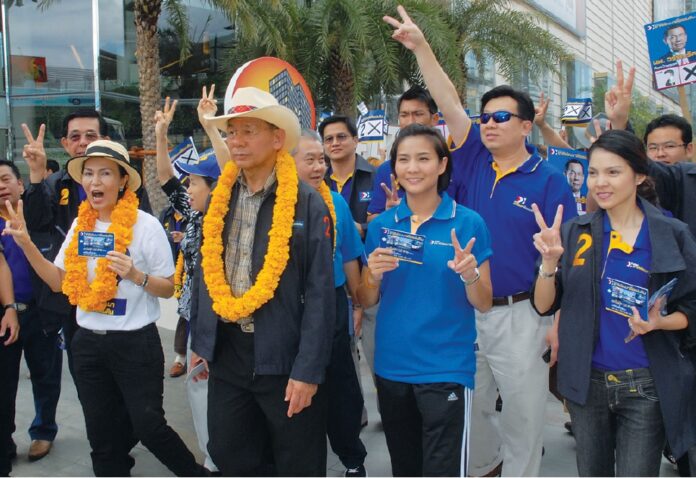
A candidate from Chart Pattana Puea Pandin Party campaigns at Siam Paragon on June 11, 2011.

BANGKOK — Those planning to meme their way to electoral triumph via savvy Facebook campaigns need to think twice. Riding the easy train into parliament and Government House won’t be as simple as hiring the zeitgeist-exploding girls of BNK48 to serenade the youth vote.

New campaign rules implemented yesterday alongside an actual poll date covered everything from how much money can be spent and the wording of campaign posters to a ban on hosting “entertainment” to a political party’s advantage.

And for the first time in history, for the first election since it became the main platform for unfettered discourse, social media is covered by the regulations. Parties must notify the Election Commission what messages they will put out on which platforms for how long before they begin. Infractions may result in “red cards” disqualifying the contenders from running.

Related stories: Election Commission Lays Down Timeline for 2019 Poll

“Violations on social media are digital [crimes], which are not hard to trace,” Election Commissioner Charungwit Phumma told reporters.

Under the regulations, social media campaigns can only contain candidates’ names, their photos, their party names, party logos, policies, slogans and biographical information.

Parties must also refrain from “Liking” and sharing contents that defame rival candidates or contain “false information.”

Social media is the one space that has eluded control of the military government, though some critics, satirists and opponents have been arrested and charged under the vaguely written cybercrimes law.

The commission said it would convene a “war room” to monitor online political discourse during the campaign season.

Citing fear of potential prosecution, some politicians, including Pheu Thai luminary Sudarat Keyuraphan, deactivated their Facebook accounts on Tuesday.

But Thai Raksa Chart Party advisor Chaturon Chaisang said he would maintain his online presence in order to call for a fair election. The former education minister criticized the Election Commission’s rules on social media campaigning as backward.

“Because the Election Commission does not understand the term ‘freedom,’ the rules turned out this way,” Chaturon wrote online. “But there’s no way they can block it. The social media world has gone far ahead. The Election Commission can’t catch up with it.”

Other rules include:

  • Candidates cannot invoke the monarchy in any way for good or ill.
  • Candidates cannot employ actors, musicians, celebrities and media to “use their talents” to the advantage of the candidates and their parties.
  • Candidates cannot use impolite or aggressive language.
  • Candidates cannot leave literature and materials at locations unsupervised but must directly hand it out.
  • Candidates cannot hand out money or any other financial inducements to the public, even where it would traditionally be acceptable, such as at weddings and funerals.
  • Each party can only spend up to 35 million baht in their campaigns. That includes staff salaries, uniform costs, accommodations, venue rental fees, travel expenses, utility bills and money spent on social media.
  • Campaign posters and billboards can only contain candidates’ names, photos, party names, party logos, policies, slogans, party leader photos and prime minister candidate photos.
  • In what’s seen as a rule to prevent Pheu Thai and its allied parties from employing fugitive prime minister Thaksin Shinawatra to influence its base, campaign posters and billboards cannot display individuals unrelated to the parties.
Advertisement

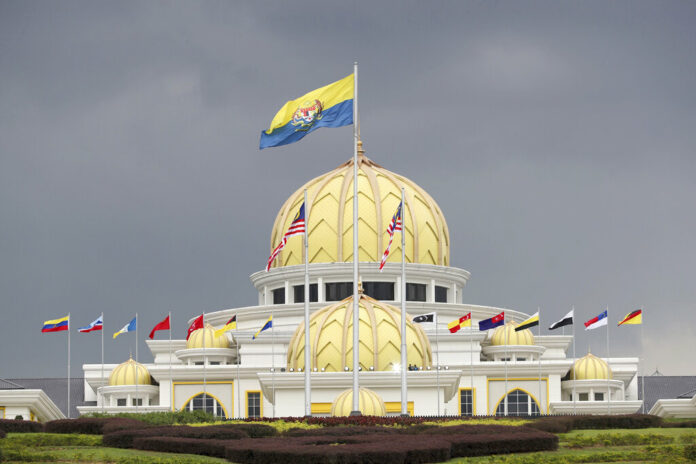
Malaysian Royals Pick Pahang Sultan as New King

Flags fly Thursday at the Malaysia National Palace in Kuala Lumpur, Malaysia. Photo: Vincent Thian / Associated Press

KUALA LUMPUR — Sultan Abdullah Sultan Ahmad Shah of central Pahang state has been named Malaysia’s new king, replacing Sultan Muhammad V who abdicated unexpectedly after just two years on the throne.

The 49-year-old ruler resigned Jan. 6 as Malaysia’s 15th king, marking the first abdication in the nation’s history and cutting short his five-year term. No reason was given, but the move came after he reportedly married a 25-year-old former Russian beauty queen in November.

Keeper of the Ruler’s Seal, Syed Danial Syed Ahmad, says the Conference of Rulers on Thursday elected Sultan Abdullah under a unique rotating monarchy system.

Sultan Abdullah is a key figure in several international sports bodies. He will be sworn in on Jan. 31 for a five-year term.

Advertisement

Engineers Face Charges After Bangkok Crane Collapse Kills 5

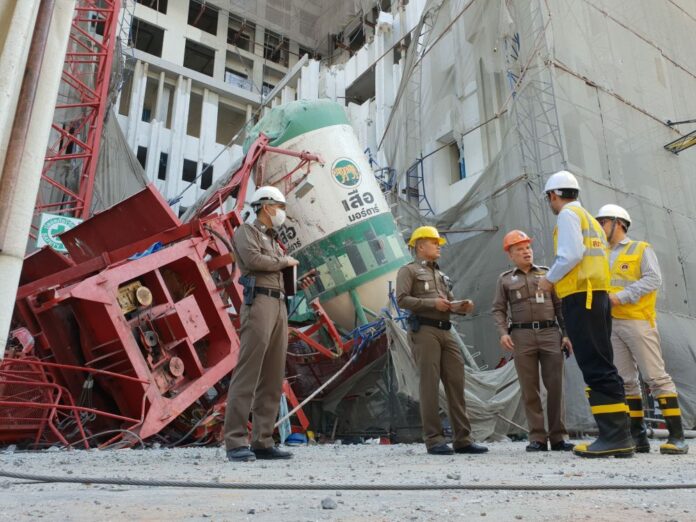
Police and engineers on Thursday at the construction site where a crane collapsed and killed five people in Bangkok.

BANGKOK — Construction engineers face charges after a crane collapsed on Bangkok’s Rama III Road, killing five people, police said Thursday.

Col. Sompot Suwanjarat of the Bang Phong Phang Police Station said investigators and experts are looking for the head engineers of the Lumpini Park Rama 3 Riverine condominium construction project. He said they face charges of fatal negligence after the crane partially collapsed yesterday afternoon.

The accident led to a dramatic rescue operation, as one worker was trapped atop the wreckage about 50 meters above the ground. He was brought down safely but later died at the hospital due to severe blood loss, bringing the death toll to five. Five others were injured.

Read: Rescuers Scramble to Save Worker Trapped in Crane After Collapse Kills 4

Sompot said police are working with engineering experts to determine the cause of the accident. He added that the developer, L.P.N. Development Public Co. Ltd., has yet to contact the authorities.

Construction site accidents and worker fatalities are commonplace and despite frequent assertions of legal action, accountability is in short supply.

Civil engineer Chulert Jitjurjun, who’s assisting the investigation, said after the site inspection that a faulty installment of the crane might have caused the collapse. He also said the crane was old and partly damaged.

The national engineering council will permanently revoke the engineers’ license if found responsible for the accident, Chulert said, adding that the collapse only had a minor impact on the building structure.

Sompot said it’s not yet known if any engineers were at the site when the accident occurred.

The Yan Nawa district administration ordered the site closed and construction work suspended 30 days.

Advertisement

Unlike Elected PMs, Prayuth to Retain Full Power Until Vote

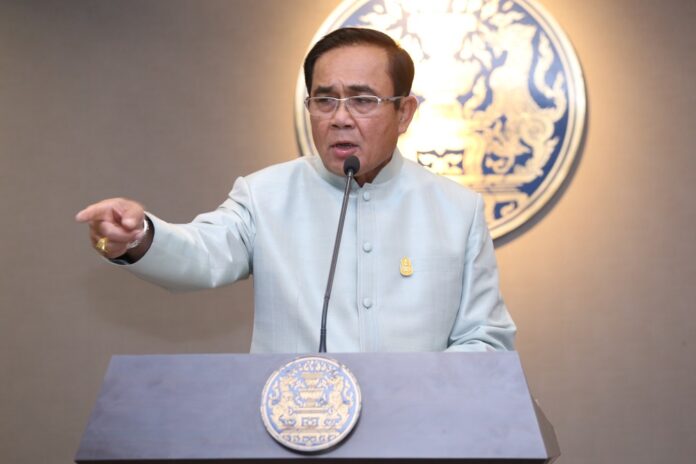
Junta chairman Prayuth Chan-ocha speaks to reporters Jan. 22, 2019.

BANGKOK — The government on Thursday rejected calls for junta chairman Prayuth Chan-ocha to step down in the weeks leading up to the election.

Instead of serving as a caretaker prime minister with limited power – as has been the case when governments call general elections – Gen. Prayuth will continue to wield his authority as the sovereign leader until voters go to the polls March 24.

“This government will not be in a caretaker status but will continue to perform its duties until a new cabinet is place,” deputy prime minister Wissanu Krea-ngam told reporters. “This government will continue to have full power.”

Read: Prayuth’s Ex-Deputy Says Junta Leader Shouldn’t Be PM Again

Unlike a pre-election caretaker government, Prayuth can sign government projects, transfer officials, greenlight emergency funds and propose legislation to the interim legislature.

Most of all, Section 44 of the 2014 charter – which granted Prayuth absolute authority to enact any law he deems fit – will remain in place.

In the past, elected prime ministers were required to assume caretaker status because their parliamentary term was considered expired. Leaders that have come to power through coups have been exempt from such limitations, since there was no formal parliament in the first place.

Like Prayuth, Gen. Surayud Chulanont, who was made prime minister by the coup-makers of 2006, remained in full control of the government until the polls opened in December 2007.

Thai Raksa Chart Party politician Chaturon Chaisang was among critics urging Prayuth to relinquish power. Speaking to reporters today, Chaturon said Prayuth’s government may interfere with the upcoming election if it retains full authority.

“This government came to power under special circumstances,” Chaturon said. “Please don’t stay and work under special circumstances. It would be taking an advantage over other political parties.”

He also slammed the four cabinet members under Prayuth who continue to hold office even as they serve as leaders of a pro-junta party called Palang Pracharat.

Advertisement

Election Commission Lays Down Timeline for 2019 Poll

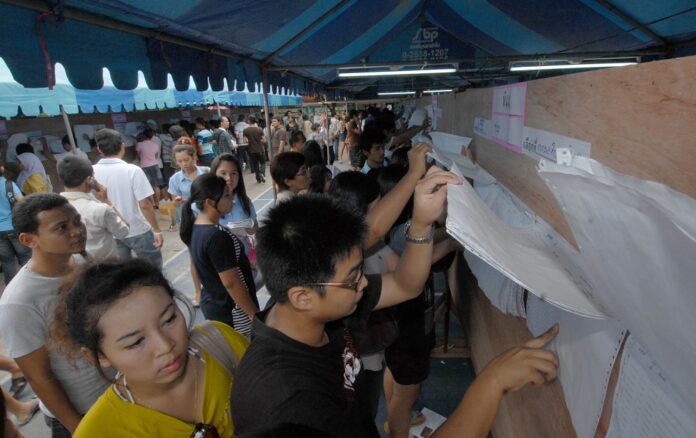
Voters check their registrations in June 2011.

BANGKOK — Thailand is set to vote March 24 on its future government, but the results may not be finalized until early May, according to a timeline laid down by the organizers of the election.

The Election Commission has until May 9 to verify the results and settle any misconduct complaints filed against party candidates. Only after the results are verified can the new government be formed and premier appointed.

By comparison, when Thailand voted in July 2011, the Election Commission had only several weeks to endorse the results. The parliament chose Yingluck Shinawatra as prime minister on Aug. 5 – less than a month after Election Day.

The timeframe for the 2019 election announced by the commission goes as follows:

Jan. 23
Election date was formally set

Jan. 28 – Feb. 19
Registration for advance and overseas voting opens

Feb. 4 – 8
Registration for MP candidates opens; each contending party submits
names of its prime minister candidates

Feb. 15
MP candidates announced

March 1 – 16
Overseas voting

March 17
Advance voting

March 24
General Election Day

May 9
Deadline for endorsement of the results

Advertisement

Korean Accused of Dismembering Compatriot in Rayong

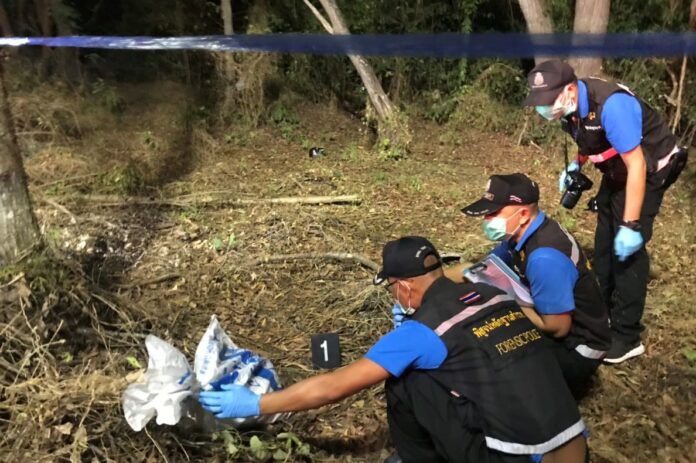
Police investigate a crime scene Monday where a dismembered body, later identified as a South Korean man, was found in Rayong province.

RAYONG — A South Korean man was arrested early Thursday on suspicion of allegedly murdering and dismembering a compatriot in Rayong province earlier this week.

The Crime Suppression Division said the man, identified as Gim Hyeonjun, turned himself in to the South Korean Embassy, which brought him to the Thai authorities at about 1am this morning. Police said he confessed to be an accessory in the killing of Choi Myunghoon, whose remains were found Monday stuffed in bags hidden in a forested part of Rayong City.

According to police, Gim said he and the victim were involved in an online gambling ring, and that he was forced by threats of violence to help dismember Choi and dispose of his body by other two gang members who killed him and are now on the run.

Choi’s identity wasn’t confirmed until last night as his body had been cut into several pieces. His head and arm remain unaccounted for. He was identified by a distinctive tattoo on his torso and a suitcase abandoned near the scene.

Choi had been blacklisted by Thai authorities as he was charged with gambling-related offenses in Bangkok in 2015. Gim was found to be residing illegally in Thailand.

Police said they’re looking for the other two suspects identified by Gim.

Correction: A previous version of this article mistakenly said Gim had confessed to killing Choi. In fact, he confessed to being an accessory of the murder.

Advertisement

Thai Law: Foreigners and the Medical Marijuana Law, Explained

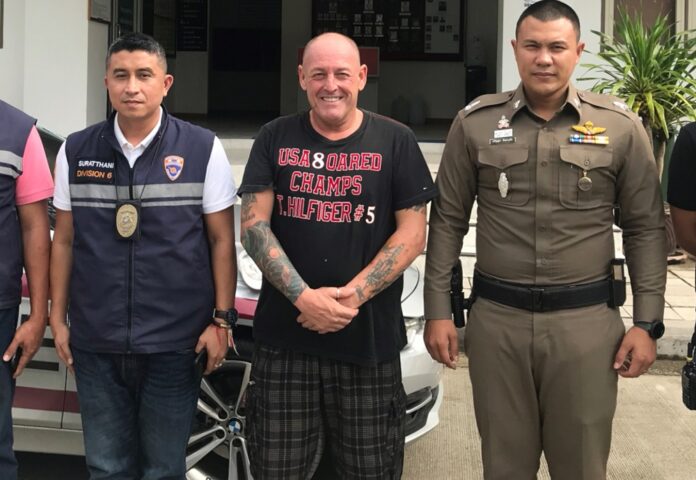
Gary Coughlan stands between two police officers Jan. 16 on Koh Samui after police accused him of cooking tom yum goong with cannabis.

wirot.3Marijuana was legalized in Thailand in the closing days of 2018 when the National Legislative Assembly passed the Narcotics Bill in its third and final reading. Now it awaits publication in the Royal Gazette to become law, which should happen by March 25.

The upcoming general election, which had been expected in the new year’s first quarter, might have been a factor in the decisive enactment of the law, especially considering who it benefits most. People in rural areas constitute the largest pool of voters eligible to form licensed agricultural groups to cultivate hundreds of acres of the new economic crop. Some of these folks will also be able to earn extra income by obtaining licenses to prescribe medical marijuana as Thai traditional medicine practitioners and village healers.

Marijuana For Most – But Not All

People with illnesses requiring marijuana treatment will be allowed by the new law to consume the now-lawful drug provided they can produce a prescription issued by a properly licensed medical practitioners specifying the limited amount they can carry on their person, subject to medical formulations permitted by the Public Health Ministry.

Government research institutes, medical schools, pharmacy schools, pharmaceutical laboratories, public and private universities, hospitals and clinics will all directly benefit in the name of science and medicine, after they are licensed by the Food and Drug Administration.

Foreigners have been expressly excluded from the new law. Foreign companies and foreign-majority companies incorporated in Thailand are prohibited from producing, selling, importing, exporting and possessing cannabis. The restrictions on foreign involvement understandably resulted from a recent “Thailand First” sentiment that resulted from an outcry against foreign applicants with advanced technology and capability applying for Thai patent protection prior to the opening of the domestic market.

Foreigners Not Fully Shut Out

Acknowledging that cooperation with foreign advancements in research and development could add value to the Thai market, the ban on foreigners benefiting from the new law is not absolute and exceptions do exist.

First, easy exceptions are built in for weed medical tourism, that is to say international travelers coming in and out of Thailand with illnesses that can be treated by marijuana. Visitors coming for ganja therapy must first obtain a license from the FDA to “import, export and possess” the necessary amounts of marijuana prescribed for treatment. There’s not much clarity on what that means, yet.

To boost Thailand as one of the world’s major tourism destinations, international airlines, ships, cruise ships or other cross-border vehicles can likewise apply for an FDA license for those amounts of marijuana they need to transport on their craft for first aid and emergency treatment of passengers.

Companies established under Thai law that have a local office qualify for licenses to “produce, sell, import, export and possess” marijuana, if Thai nationals own at least two-thirds of the capital and if at least two-thirds of their directors are Thai. The lawmakers were hoping that one-third foreign ownership in a Thai company could result in the transfer of some technology and know-how for developing marijuana-based pharmaceutical products for local distribution and export.

FDA Leads the Way

The Narcotics Bill differs greatly from the Narcotics Act of 1979 that it amends in that it shifts the licensing authority from the Public Health Ministry to the FDA. This is a significant change from the rare policy approvals for drug use from the minister – which happened on a difficult, case-by-case basis – to mass licensing by the FDA, which means an easier routine basis that treats the substance no different from other types of lawful drugs that require licensing to go to market.

The FDA is bracing for what’s expected to be an overflowing new workload.

Without FDA licensing, marijuana remains an illicit drug, with possession of 10 kilograms or more deemed intent to sell, a crime punishable by up to 15 years in prison and a fine of 1.5 million baht (USD$45,000).

Clearly, only medical and pharmaceutical marijuana area allowed, and the public is not free to consume marijuana for pleasure.  Consumption of marijuana in violation of the new Narcotics Bill carries a jail term of one year and a fine of 20,000 baht (USD$600).

The Narcotics Control Board will continues to play a pivotal, supervisory role over the FDA under the bill, just as it did over the ministry under the original act. One major exception is that for marijuana legalization, the board’s membership has expanded from law enforcement-heavy authorities such as police, prosecutors and military rep by adding over half a dozen new members drawn from the medical, industrial, agricultural, pharmaceutical and Thai traditional medicine sectors — a priming of the pipe, if you will, for long-term, large-scale industrial pharmaceutical production of medical marijuana formulas for medical use to potentially involve investors and banks.

Not the Only Law

Under the bill, seven types of applicants can apply for FDA licenses to produce, sell, import, export and possess marijuana. After five years, the narcotics board will review the types of applicants and their licensing requirements on top of semi-annual assessments of the law’s implementation.

Producing includes cultivating, growing, making, processing scientifically, altering and packaging.

As the focus of the new law is on helping the grassroots – meaning low-income, rural folks – as well as the public at large become marijuana-income earners and users, there are a number of laws applicable: the Narcotics Bill, the Narcotics Act, the Act on Professional Thai Traditional Medicine of 2013, the Act on Promotion of Community Enterprises of 2005; the Sanatorium Act of 1998, as well as other laws and regulations.

Operators of marijuana businesses need to obtain their authorizations consistent with these separate pieces of legislation as well to enable them to finally handle marijuana under the Narcotics Bill.

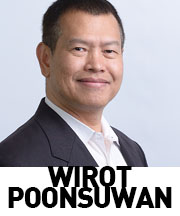
Wirot Poonsuwan is senior counsel and head of special projects at Blumenthal Richter & Sumet in Bangkok and can be reached at [email protected].

Advertisement

Governor Convicted of Blasphemy Freed From Indonesian Prison

Jakarta Governor Basuki
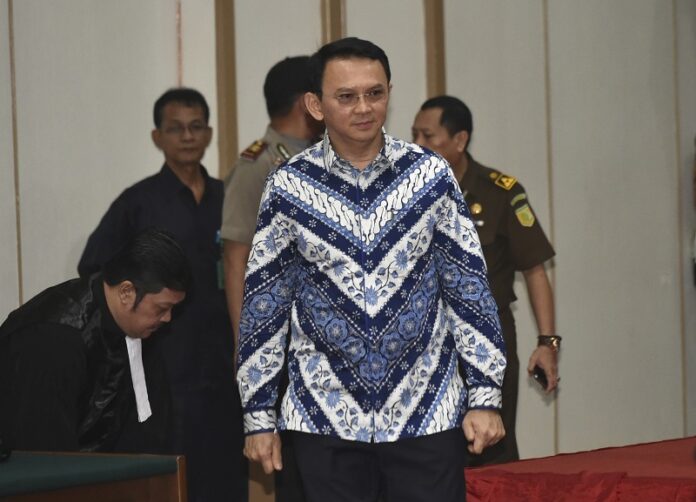
Jakarta Governor Basuki "Ahok" Tjahaja Purnama, center, enters the court room as he attends his sentencing hearing in 2017 in Jakarta, Indonesia. Photo: Bay Ismoyo / Associated Press

JAKARTA — A polarizing Christian politician whose campaign comments ignited protests that were the largest in Muslim-majority Indonesia in years was freed Thursday after serving nearly two years in prison for blasphemy.

Basuki “Ahok” Tjahaja Purnama, the former governor of Jakarta, left a paramilitary police prison outside the capital early Thursday with members of his family, said his spokesman Sakti Budiono, avoiding waiting supporters and media.

In 2016, Purnama made lighthearted campaign-trail comments that voters shouldn’t heed his detractors who said the Quran prohibits Muslims from being led by Christians. Hardliners seized on the remarks as blasphemy, triggering protests that brought hundreds of thousands of white-robed Muslims to the center of Jakarta.

He was defeated in an election by a rival aligned with the protesters and sentenced to prison in May 2017 for blaspheming the Quran. Rights groups said the sentence highlighted why the easily abused blasphemy law should be repealed.

Days before being freed, Purnama posted online that he didn’t want supporters to make a fuss about his release and apologized to Jakarta civil servants including “even my haters” that he’d offended by being rude and arrogant.

The movement against Purnama, an ally of President Joko Widodo, brought fringe groups into the political mainstream and rattled the government, highlighting the mingling of religion with politics in Indonesia, the world’s third-largest democracy.

Widodo subsequently chose a conservative cleric as his running mate for April’s presidential election, hoping to deflect attacks that he is insufficiently Islamic.

It’s unclear if Purnama will return to politics but in a handwritten noted posted on Instagram earlier this week he told supporters to not be discouraged and to vote for candidates in April’s presidential and legislative elections who support diversity.

Islamic Defenders Front member Novel Bakmumin, who filed a police complaint that led to Purnama being investigated for blasphemy, said the former governor should stay out of politics.

“I hope Ahok will not repeat a mistake that can cause unrest among Muslims, not only in Indonesia but in the world, because Islam is not his realm to be critical of, he should take care of his own religion,” he said.

Purnama, part of the tiny ethnic Chinese minority in Indonesia, was popular with Jakarta’s middle class for efforts to stamp out corruption and make the teeming capital more livable.

But others were alienated by his brash outspokenness and the demolition of slums that were home to Jakarta’s poorest residents.

An activist from the Friends of Ahok group said Purnama’s true calling is politics and predicted he would “become a leader, whether a leader of a political party or a leader of this country.”

“He is a fighting politician, he fights against corruption, injustice and upholds order and democracy. That caused many people to dislike him and become his political enemies,” said Hasan Nasbi.

In an unlikely twist, the 2016 protests also provided opportunists with the impetus for an alleged plot to topple Widodo, the first Indonesian president not from the country’s military and political elite.

Police arrested numerous high-profile Indonesians, including a daughter of Indonesia’s founding president, accusing them of plotting to hijack the protests to cause chaos. Their apparent aim was to provide a pretext for military intervention that would unseat Widodo.

They were later released and have not faced trial.

Story: Stephen Wright, Niniek Karmini

Advertisement

North Korea Says Kim Ordered Preparations for 2nd Trump Meet

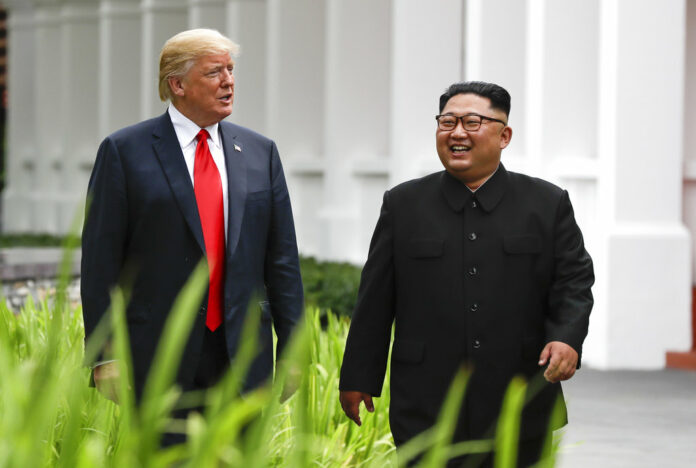
U.S. President Donald Trump, left, and North Korea leader Kim Jong Un walk from their lunch at the Capella resort on Sentosa Island in Singapore on June 12, 2018. (AP Photo/Evan Vucci)

SEOUL, South Korea — North Korean leader Kim Jong Un has ordered preparations for a second summit with President Donald Trump, saying he’ll “wait with patience and in good faith” to work toward a common goal, the North’s state media reported Thursday.

Despite Kim’s determination for another meeting with Trump, the two remain at odds over fundamental issues. Experts say a major sticking point is what denuclearization steps Kim should take to move forward stalled nuclear diplomacy and what rewards Trump should provide to push Kim to take those measures.

The Korean Central News Agency said Kim received a letter from Trump from a North Korean envoy who met the U.S. president in Washington last week. After meeting with Kim’s envoy, top lieutenant Kim Yong Chol, Trump said that he and Kim Jong Un will probably meet around the end of February but did not say exactly when and where the summit would take place.

Thursday’s report said Kim expressed satisfaction over his envoy’s meeting with Trump and spoke highly of the U.S. president for “expressing his unusual determination and will for the settlement of the issue with a great interest in the second summit.”

“We will wait with patience and in good faith and, together with the U.S., advance step by step toward the goal to be reached by the two countries,” Kim was quoted as saying.

Kim also “set forth tasks and orientation for making good technical preparations for the second (North Korea)-U.S. summit high on the agenda,” according to KCNA.

Nuclear diplomacy has been stuck since Kim and Trump met in Singapore last June for their first summit, which ended with a vague denuclearization pledge by Kim that his government had previously used when it called for the withdrawal of the 28,500 U.S. troops in South Korea. A summit accord also stated that the United States and North Korea will commit to establishing new relations and join their efforts to build a lasting and stable peace regime on the Korean Peninsula.

The strongest step Kim could promise to take for a second summit may be abandoning his long-range missile program targeting the U.S. mainland. That step, if realized, would trigger a strong backlash from many in South Korea and Japan, which are still placed in the striking distance of North Korea’s short- and medium-range missiles. In return, Kim is seeking to get U.N. sanctions on his government lifted and better relations with the United States to try to revive his country’s moribund economy to pave the way for a prolonged rule by his family, experts say.

North Korea observers say Vietnam is likely a venue for a second summit but there has been no official confirmation.

The nuclear diplomacy has replaced fears of war caused by Kim’s series of high-profile nuclear and missile tests in 2017 that were followed by his exchanges of crude insults and threats of total destruction with Trump.

Kim has so far suspended nuclear and missile tests, dismantled North Korea’s nuclear testing site and parts of its rocket engine test facility and took conciliatory measures like releasing American detainees. The North now says it’s time for the U.S. to come up with reciprocal measures.

But satellite footage indicate North Korea is still running its main nuclear complex, raising a question on why it’s producing nuclear materials if it is truly committed to denuclearization. U.S. officials want North Korea to take more significant steps such as a declared accounting of its nuclear weapons program for future inspections. The North has rejected that, saying such a declaration would be like providing coordinates for U.S. military strikes on its nuclear facilities.

Story: Hyung-jin Kim

Advertisement

Oliver Mtukudzi, Zimbabwean Afro-Jazz Star, Dead at 66

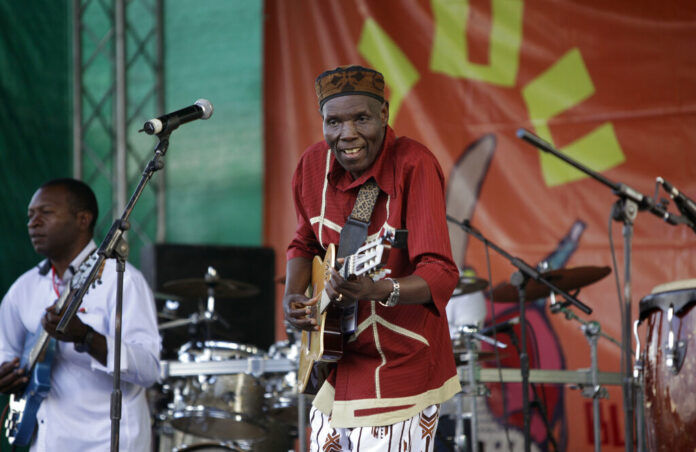
Zimbabwean music superstar and U.N. goodwill ambassador Oliver Mtukudzi, center, performs in 2011 at a music festival held in Karen on the outskirts of Nairobi, Kenya. Photo: Ben Curtis / Associated Press

HARARE, Zimbabwe — One of Zimbabwe and Africa’s most iconic musicians, Oliver Mtukudzi, died on Wednesday at age 66 after decades of rollicking, captivating performances won him devoted fans worldwide.

“It is difficult to accept, I have no words,” said musician and poet Albert Nyathi, who joined several other mourners at the hospital in the capital, Harare, where the star passed away. “What is left is to celebrate his life.”

Zimbabwe’s state-run Herald newspaper reported that Mtukudzi had “succumbed to a long battle with diabetes.”

With his distinctive husky voice, Mtukudzi had a career that stretched from white minority-ruled Rhodesia to majority-ruled Zimbabwe, producing a string of hits that spread his fame across Africa and eventually to an international audience.

Tuku, as he was widely known, avoided political controversy. The closest he came was with his 2001 song “Bvuma,” which in the Shona language means “accept that you are old” and was taken as a message to longtime leader Robert Mugabe to retire.

Paul Mangwana, a senior official with Zimbabwe’s ruling ZANU-PF party, praised Mtukudzi for remaining “apolitical,” saying he supported calls for the singer to be buried at the national heroes’ acre, a shrine that is a preserve of ruling party elites.

“He was a nation-builder. Where it was necessary to criticize he would, and where it was necessary to praise he would,” Mangwana said at the hospital.

In a country where political tensions are high and party loyalties matter, Mtukudzi cut across the divide, singing at ruling party events but also performing at late opposition leader Morgan Tsvangirai’s wedding and funeral.

“Today we said goodbye to a true patriot. Oliver Mtukudzi, your voice has given us comfort during difficult times, and will remain with us for posterity,” President Emmerson Mnangagwa said.

One of Mtukudzi’s biggest hits was “Neria,” a mournful song about the tribulations of a woman who was thrown into poverty when her husband died because customary law did not allow her to inherit his property. It was the title song of a movie of the same name.

In 1980, Mtukudzi celebrated Zimbabwe’s independence by singing the country’s new national anthem, “Ishe Komborera Africa” (God Bless Africa) with a reggae inflection.

He sang, played guitar and danced while directing a tight band of guitarists, keyboards, percussionists and dancers. He released more than 60 albums and made several successful international tours, performing in neighboring South Africa late last year.

He also was known for mentoring young Zimbabwean musicians. “He was like a father figure,” said MacDonald Chidavaenzi, a songwriter and producer.

Mtukudzi’s company in a statement called him a “national icon” as well as “a father, brother, grandfather, uncle, and above all a husband to his loving wife Daisy Mtukudzi.”

Mtukudzi wrote songs in a style that were a mix of Zimbabwean and South African rhythms that became known at “Tuku music.”

The ruling African National Congress in South Africa tweeted simply “Rest in peace.”

Story: Farai Mutsaka, Andrew Meldrum

Advertisement

Hot News

LATEST NEWS

Bangkok
overcast clouds
30.5 ° C
32.2 °
30.5 °
78 %
4kmh
100 %
Mon
32 °
Tue
35 °
Wed
30 °
Thu
32 °
Fri
31 °