

























27.2 C
Bangkok
Wednesday, June 17, 2026
Home Blog Page 2055

Washington Becomes 1st State to Approve Net-Neutrality Rules

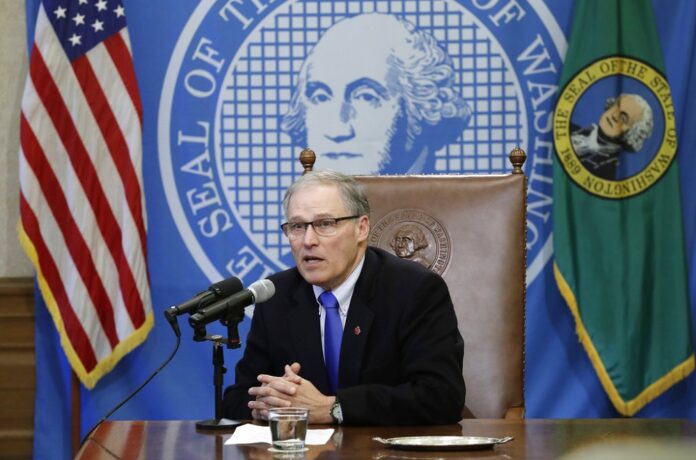
Washington Gov. Jay Inslee speaks after signing a bill Monday, March 5, 2018, in Olympia, Wash., that makes Washington the first state to set up its own net-neutrality requirements in response to the Federal Communications Commission's recent repeal of Obama-era rules. The FCC voted in December to gut U.S. rules that meant to prevent broadband companies such as Comcast, AT&T and Verizon from exercising more control over what people watch and see on the internet. Photo: Ted S. Warren / Associated Press

OLYMPIA, Wash. — Setting up a likely legal fight with the Trump administration, Washington has become the first state to enact its own net-neutrality requirements after U.S. regulators repealed Obama-era rules designed to keep the internet an even playing field.

“We know that when D.C. fails to act, Washington state has to do so,” Gov. Jay Inslee said Monday before signing the bipartisan measure that banned internet providers from blocking content or interfering with online traffic.

The new law also requires internet providers to disclose information about their management practices, performance and commercial terms. Violations would be enforceable under the state’s Consumer Protection Act.

The Federal Communications Commission voted in December to gut U.S. rules that meant to prevent broadband companies such as Comcast, AT&T and Verizon from exercising more control over what people watch and see on the internet. The regulations also prohibited providers from favoring some sites and apps over others.

Because the FCC prohibited state laws from contradicting its decision, opponents of the Washington law have said it would lead to lawsuits. Inslee said he was confident of its legality, saying “the states have a full right to protect their citizens.”

As he has done frequently over the past year, Inslee took aim at President Donald Trump’s administration, saying the decision by the Federal Communications Commission was “a clear case of the Trump administration favoring powerful corporate interests over the interests of millions of Washingtonians and Americans.”

While several states introduced similar measures this year seeking to protect net neutrality, so far only Oregon and Washington have passed legislation. But Oregon’s measure wouldn’t put any new requirements on internet providers.

It would stop state agencies from buying internet service from any company that blocks or prioritizes specific content or apps, starting in 2019. It’s unclear when Oregon’s measure would be signed into law.

Washington state was among more than 20 states and the District of Columbia that sued in January to try and block the FCC’s action. There are also efforts by Democrats to undo the move in Congress.

Governors in five states — Hawaii, New Jersey, New York, Montana and Vermont — have signed executive orders related to net-neutrality issues, according to the National Conference of State Legislatures.

Montana’s order, for instance, bars telecommunications companies from receiving state contracts if they interfere with internet traffic or favor higher-paying sites or apps.

Big telecom companies have said net neutrality rules could undermine investment in broadband and introduce uncertainty about what are acceptable business practices. Net-neutrality advocates say the FCC decision harms innovation and make it harder for the government to crack down on internet providers who act against consumer interests.

The FCC’s new rules are not expected to go into effect until later this spring. Washington’s law will take effect in June.

Ron Main, executive director of the Broadband Communications Association of Washington, which opposed the bill, said the cable companies his group represents have already pledged not to block legal content or engage in paid prioritization.

He said that because the internet is an interstate service, only Congress can pass legislation “that gives all consumers and internet services providers the clarity and consistency needed for a free and open internet.”

“There should not be a state-by-state patchwork of differing laws and regulations,” he said in a written statement.

Advertisement

Officials Insist Fish Imported From Fukushima is Safe

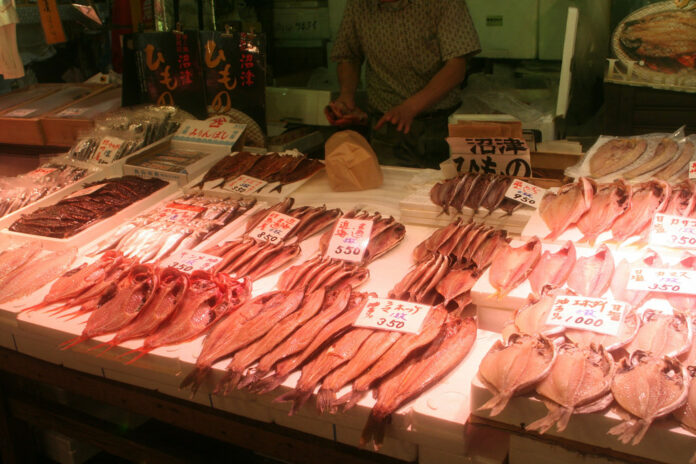
A file photo of flounder fish sold in Japan. Image: Ryan Lackey / Flickr

BANGKOK — Health and fishery officials said Tuesday a recent batch of fish imported from a Japanese coastal city struck by nuclear radiation leak seven years ago is perfectly safe for consumption.

The batch, about 100 kilograms of flounder and 10 kilograms of little mouth flounder, is allegedly the first exported from Fukushima since the 2011 earthquake and subsequent nuclear disaster. While an environmental activist raised alarm of possible contamination, officials said the fear is unfounded.

Fishery department deputy director Umaporn Pimolbutr said Thailand has been monitoring levels of contamination in fish caught off the coast of Fukushima since the 2011 earthquake, and has gradually decreased to near non existent level by 2015.

“In 2017, we coordinated with Japan and sampled 4,708 samples of fish,” Umaporn said in an interview. “Only eight samples were found to be contaminated, and secondly, none of them is the type of fish we imported.”

Nearly 16,000 people died when a powerful earthquake and tsunamis struck eastern Japan in 2011. The quake also triggered nuclear reactors at Fukushima to malfunction, causing a triple meltdown that leaked out hazardous radiation. The disaster led to fears of radioactive contamination in sea creatures caught off the coast of the Sendai region.

The Asahi Shimbun reported Thursday the city’s fishing cooperative exported the flounder and little mouth flounder to 12 restaurants in Thailand, the first overseas sales since the earthquake. The newspaper quoted a local cooperative manager as saying the fish was safe to eat.

The Thai Food and Drug Administration, or FDA, also released a statement Tuesday saying the imported fish is safe for human consumption.

But environment and transparency activist Srisuwan Janya disputed the assertion. He said even if there’s a possibility of less than 1 percent that imported fish were to be contaminated, it would cause cancer risks to consumers.

“This means eating Japanese fish is like buying a lottery. If it turns out you have the winning number, you’re at risk of cancer,” Srisuwan told reporters Tuesday.

He demanded that the fishery department reveal the names of 12 restaurants that imported the Fukushima fish. Srisuwan also said he may sue the agency in court if it’s proven that the fish were contaminated.

Umaporn, the fishery official, said her agency does not know which restaurants got the fish because the foodstuff was immediately distributed to the stores after it passed a health inspection.

Marine life veterinarian Weerapong Laovetchprasit said concerns for health hazards in fish caught off Fukushima are valid, because humans are also affected by any residue left in the meat they eat. He added the danger is particularly high among “stationary” creatures such as clams.

However, he believes Thailand has adequate equipment to detect any radioactive substance.

Advertisement

Sri Lanka Declares Emergency Amid Anti-Muslim Violence

COLOMBO, Sri Lanka — Sri Lanka’s president has declared a state of emergency amid fears that anti-Muslim attacks in a central hill town could spread.

Details of the emergency decree were not immediately announced, and it was unclear how it would affect life on the South Asian island nation, where Buddhist-Muslim tensions have flared in recent years as extremist Buddhist organizations have spread.

A tweet from the office of President Maithripala Sirisena says the decree was issued to “redress the unsatisfactory security situation prevailing in certain parts of the country.”

The announcement came after Buddhist mobs swept through the hill town of Kandy on Monday, burning at least 11 Muslim-owned shops and homes, after a Buddhist man was reportedly killed by a group of Muslims.

Advertisement

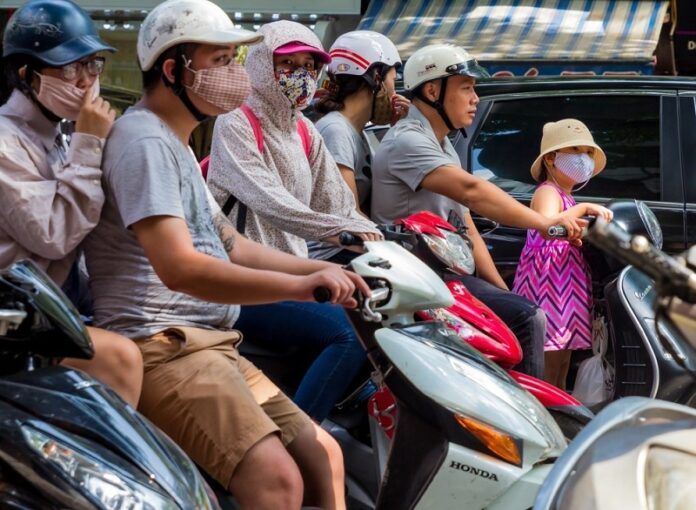
Inaction on Bangkok Pollution Risks Toxic Future For All

BANGKOK — Avoiding the capital’s toxic smog has become a primary concern for Thitinan Maitree.

For the past five years, the civil servant, now 41, has battled respiratory health conditions that have kept her in and out of hospitals and affected almost every aspect of her routine – from where she lives and what she does to where she goes.

Though the education ministry where she works is in Bangkok’s old town, Thitinan’s house is about 20 kilometers away in the capital’s Chaeng Wattana suburb, where she lives to avoid the pollution that aggravates her asthma and chronic bronchitis, which was diagnosed in 2013.

“I try to avoid anything that would trigger it,” Thitinan said in a recent interview, adding she has felt Bangkok’s air quality worsen every year and avoided traveling to the city center unless necessary. “The traffic there is congested, and I can’t breathe clearly.”

Though the skies have cleared somewhat since last month’s pollution crisis, Thitinan, like a number of environmental experts, said more must be done to battle the problem and prevent air quality from returning to unsafe levels.

Educating the Public

Tara Buakamsri, director of Greenpeace Thailand, said there must be greater public awareness about air pollution.

He said Bangkok has Southeast Asia’s most contaminated air, citing factors such as construction dust, nearby coal power plants, motor vehicle emissions and seasonal wind direction.

One month ago on Feb. 8, an international air monitor ranked the capital among the world’s five most polluted cities when it’s Air Quality Index, or AQI, rose to a “very unhealthy” 203.

The AQI’s color-coded system measures pollution levels from zero to 500. Green – zero to 50 – means the air quality is “good.” Yellow ranges from 51 to 100 and is considered “moderate.”

Orange is “unhealthy for sensitive groups” and goes from 101 to 150. Red runs through to 200 and stands for “unhealthy,” while purple is “very unhealthy” for anything beyond 201.

Thalearngsak Petchsuwan, a top pollution control official, agreed on the need to understand the issue of pollution – specifically fine particles known as Suspended Particulate Matter. Classified by the size of the particles, those as small as 2.5 microns (PM2.5) to 10 microns (PM10) can cause severe respiratory diseases.

They are invisible to the eye. In comparison, the average diameter of a human hair is about 70 microns.

While the government says it has taken a proactive posture on the problem, critics including Greenpeace say it is ignoring the dangers of the smallest deadly particles, which it estimates kills 37,000 every year.

Government Inaction

Thalearngsak, from the pollution department, said it would take another three years for Bangkok to be fully equipped with machines capable of detecting PM2.5. He said current readings are not entirely precise, as only six of 12 air-testing stations in the capital are suited to detect such particles.

The director blamed the three-year wait on budget allocation problems. However, he believes that “unhealthy” air is not the new normal for Bangkok.

“The situation is really good,” Thalearngsak said late last month, predicting air quality would immediately return to “normal” as Bangkok’s AQI hit 157. The AQI two days later was “unhealthy for sensitive groups” at 119. Three days later, on Feb. 27, it again broke the “unhealthy” threshold.

Both Thalearngsak and Tara said it is still too far-fetched to compare the capital’s pollution problem with that of, say, Hong Kong. On a day Bangkok was cresting “unhealthy” at 157, Hong Kong’s AQI was a “moderate” 98.

Poor Data

Quantifying the problem of those affected by Bangkok’s air pollution is also difficult. Statistics such as those from the World Health Organization aren’t specific to the capital. The Health Ministry has no readily available data.

But the problem affects all and isn’t going away.

Noppanan Arunvongse, a China scholar based in Beijing, said Thai authorities will eventually have to come to terms with the problem as everyone – rich or poor – breathes the same air.

“After awhile, they will be afraid of dying from lung cancer. All the related government administrators have to breathe as long as they are still human,” he said in an online comment.

Related stories:

Masks On: Bangkok’s Mystery ‘Fog’ is Heavy Smog

Bangkok’s Air More Toxic Than You Think: Greenpeace

Smog Airpocalypse Worsens Over Bangkok

Cleaner Cars, Aggressive Steps Needed to Clear Bangkok’s Air

Advertisement

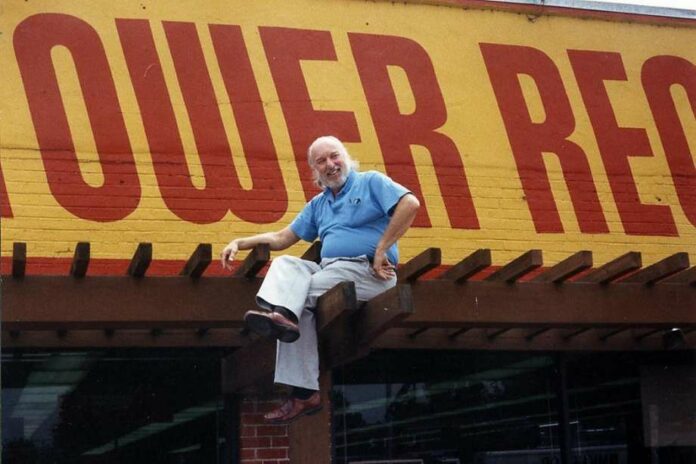
Russell Solomon, Founder of Tower Records, 92

SACRAMENTO — Russell Solomon, founder of the Tower Records chain that became a global phenomenon and changed the way people consumed music, has died. He was 92.

Solomon died Sunday night of an apparent heart attack while drinking whiskey and watching the Oscars, said his son, Michael Solomon.

Russell Solomon first began selling music in 1941, at age 16, out of his father’s Sacramento drug store inside the historic Tower Theater building.

The makeshift record shop officially became Tower Records in 1960. Solomon, who preferred jazz, country and classical music, offered something other stores didn’t: A place to sift through every genre of music in one place, with the help of employees who loved music even more.

Solomon expanded to San Francisco in 1968, then to Los Angeles and eventually all across the world, with Tower Records operating 271 stores and selling $1 billion worth of records at its height in the 1990s.

Michael Solomon said his father’s theories about what a music store should be were simple: Large inventories, long and late hours, and control by local managers about artists and records each individual store should stock. The company’s more than 8,000 employees were music lovers who wore their clothes and hair however they wanted and showed up to work because they loved music as much as Solomon did.

“I’m sure he’ll go down in history as having the greatest record store chain in the world,” Michael Solomon said.

Solomon and Tower Records were the subject of a 2015 documentary by actor Colin Hanks that examined its iconic role in music in the 1970s and 1980s, with stars like Elton John and Bruce Springsteen talking about their love of the store.

Solomon, who never graduated high school, eventually rose to be number 335 on the Forbes’ list of the 400 richest Americans, according to the Sacramento Bee.

He delighted in the challenges of expanding his business worldwide, to England, Japan and beyond. In 1985, he nearly went to jail after opening his store in London on Sundays, not knowing labor laws prohibited it.

“It’s like climbing up a mountain. It’s a little bit dangerous to do; a lot dangerous. But risk is part of the adventure,” he told The Associated Press in a 1988 interview about his business expansion.

Those risks are part of what made it difficult for Tower Records to survive when technology began to drastically change the music business in the late 1990s and early 2000s. Consumers began to shift to the internet to download music or to buy it from retailers such as Walmart, who offered lower prices in exchange for a less intimate customer experience than what Tower provided. Russell Solomon said in interviews years later than the debt from earlier expansions helped lead to the company’s downfall, the Bee reported.

Michael Solomon took over the business in 1998, with Russell remaining chairman of the board. The financial pressures eventually became too great in 2004, when Tower Records first filed for bankruptcy before closing its doors in 2006.

But Russell Solomon had always resisted retiring — “What would I do if I retire?” he said in 1988 — and wasn’t yet done with music. He re-entered the music business just months after Tower Records folded, opening another music store in the original drugstore location. It lasted only three years.

“Maybe I’m believing in something that’s drifting away,” he told the Sacramento Bee.

Story: Kathleen Ronayne

Advertisement

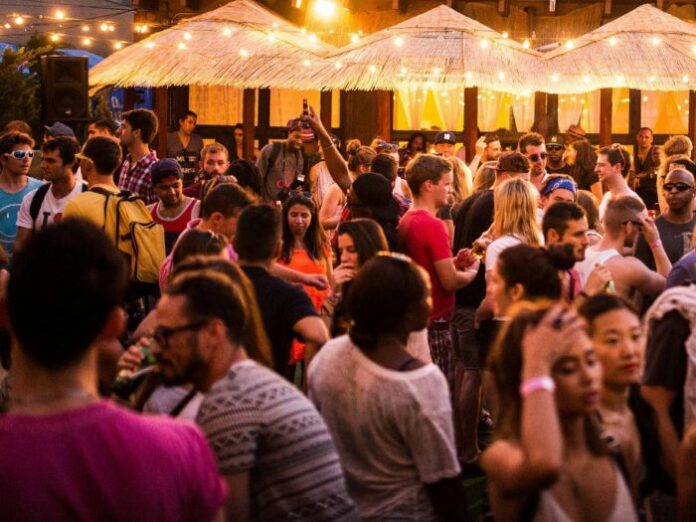
Move Hips, Lick Lips At Soi 11 Food Fest

Sea of bodies at a garden event. Photo: Madison McGraw / courtesy

BANGKOK — The people behind some of Soi Sukhumvit 11’s popular bars and restaurants will throw a party this weekend serving exotic food and drinks, with a small portion going to a charitable cause.

The lawns of the Fraser Suites hotel will turn into a bazaar Saturday for the Soho District Party. Organizer Soho Hospitality owns Above Eleven, Havana Social, Charcoal and other area eateries.

Feast on pizza and pasta supplied by Cantina, Indian grub by Charcoal; cocktails by Havana Social; Peruvian and Japanese fusion eats by Above Eleven; and French fare by Brasserie Cordonnier.

All items on the menu will run between 50 baht and 200 baht.

Guests can get their faces painted for free on arrival and offer their good side for photographers there to capture the moment.

The lithe and lovely crew of Dance Queens Bangkok will perform all night supported by performances by local drag queens. For music, disco legend DJ Dicky Trisco is coming from the UK to bring the funk. The slum boys of Slum Disco Soundsystem will support with disco and house.

Five percent of the profits will go toward the Solange Paz Mendoza Foundation to help migrant children living in border communities. Their foundation’s main mission is funding sustainable projects for the benefit of underprivileged children.

Entry is free. Selected cocktails will be available free 4pm to 5pm.

The Soho District Party starts at 4pm on March 10 in the front gardens of the Fraser Suites hotel on Soi Sukhumvit 11. The hotel is located 700 meters from BTS Nana, so walk 15-20 minutes or consider a taxi or motorcycle.

Advertisement

Zedd to ‘Break Free’ in Bangkok for Club Tour

Photo: Zedd / Facebook

BANGKOK — Russo-German electronic dance music producer DJ Zedd will be coming to the city’s nightlife district RCA next month.

As a part of his Asia Club Tour, Zedd will be performing on April 5 at Onyx Bangkok located in the city’s nightclub district of RCA, the artist announced Tuesday morning.

Tickets are 900 baht and available online. Attendees must be over 20.

The 28-year-old talent is best known for producing “Star” with Alessia Cara, “Clarity” featuring Foxes and “Break Free” in which he collaborates with Ariana Grande.

Born Anton Zaslavski, Zedd began his solo career in 2010. He currently produces and performs diverse genres from electro house and progressive house to dubstep and classical music.

Advertisement

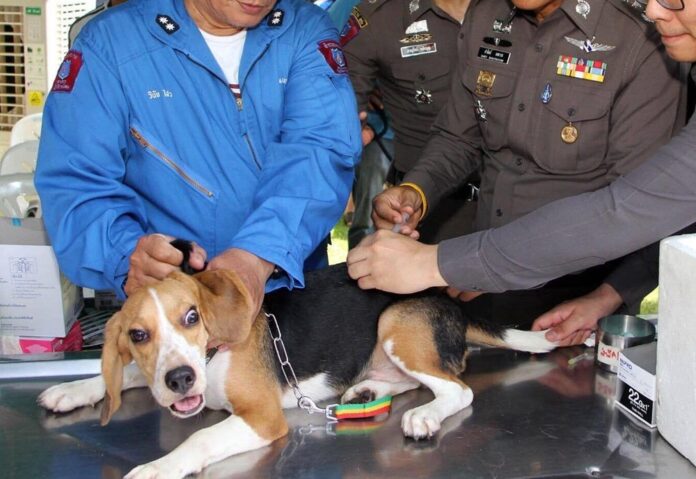
Deaths from Rabies Rise to 14 in 2017: Officials

A dog is vaccinated against rabies in Bangkok Sept. 10, 2015.

BANGKOK — There’s been an increase in deaths from rabies nationwide, as more than a dozen people died from the disease last year and the number of infected dogs doubled, officials said Tuesday.

Fourteen people died from rabies across 13 provinces in 2017, livestock officials said, adding that the number of infected dogs in Thailand had surpassed 300 since January – a twofold increase from last year. In contrast, 11 people died from the disease in 2016.

“If you get bitten or scratched by a dog that isn’t your pet, please go to the doctor as soon as possible and get vaccinated,” Patiwat Dilokpot, a Phetchabun Livestock Control official said by phone Tuesday. “Rabies deaths are due to people feeling too embarrassed to go to the doctor or delaying their visits. People who die from rabies die in agony.”

Provinces where people have died from rabies are Surin, Chonburi, Samut Prakan, Chachoengsao, Nan, Buriram, Ubon Ratchathani, Chiang Rai, Roi Et, Songkhla, Rayong, Tak and Srisaket. Officials found infected dogs in 42 other provinces, including Bangkok.

Rabies in Bangkok, Patiwat said, is often found in dogs that roam construction sites, which workers bring into the city from upcountry.

“We find these cases often,” he said.

Pornpitak Panlar, an official at the Department of Disease Control told reporters that the number of dogs that tested positive for rabies doubled over the past year.

In January to February, officials found 315 rabies-infected dogs. Only 160 dogs were found in the same months in 2017.

Pornpitak said this increase was due to more intensive search efforts and said that her department would try to get more funding for vaccines approved by the auditor general, adding that residents should vaccinate their pet dogs every year.

“This is very important. If you are infected and are not vaccinated you will die 100 percent,” Pornpitak said, adding that pet dogs account for about 55 percent of those infected.

Patiwat said that after a rabies death, livestock control officials check both stray and pet dogs within a 5 kilometer radius and vaccinate them.

Patiwat said to be wary of dogs that display rabies symptoms.

“Please be careful and avoid them. Don’t tease them, it could be risky since you’re strangers to them,” she said.

In August 2017, Princess Chulabhorn went to the World Health Organization headquarters in Geneva to agree to make Thailand rabies-free by 2020. According to the organization, rabies in humans has dropped significantly in Thailand over the past few decades.

“We are lucky that [the princess] is spearheading this and coordinating efforts on central and local levels,” Patiwat said.

Advertisement

Book Review: A Man’s Infatuation With Japan in ‘A Tokyo Romance’

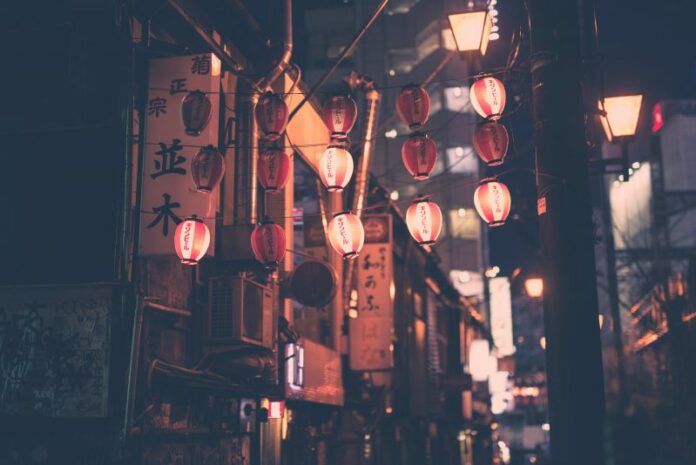
downtown Tokyo where Ian Buruma once wondered the streets. Photo: Pexels / Associated Press

“A Tokyo Romance” (Penguin Press), by Ian Buruma

At a time when there still weren’t a lot of foreigners in Japan, Ian Buruma moved to Tokyo to immerse himself in the esoteric world of avant-garde Japanese theater and film.

Back in Amsterdam, he had happened to catch a performance by an experimental Japanese theater troupe whose “deeply weird” plays were electrifying to him.

That experience, plus a longing to leave his “safe and slightly dull surroundings” and meet the kind of exotic Asian women he’d seen in the movies, led him to apply to an arts program in Tokyo.

When he got in, he bid farewell, at least for the time being, to the “world of garden sprinklers, club ties (and) bridge parties” of his upper-middle-class childhood.

Buruma’s new memoir, “A Tokyo Romance,” describes the years he spent in Tokyo in the late 1970s — and his coming-of-age as a writer — at a time when the city itself seemed almost as weird to him as that bohemian theater group.

“To be sure, I did not come across ventriloquists in 19th century French clothes being whipped by leather-clad dominatrices,” he writes. “But there was something theatrical, even hallucinatory, about the cityscape itself, where nothing was understated.”

Buruma, who went on to have a brilliant career as a journalist, succeeding Robert Silvers last year as editor of The New York Review of Books, where he was a longtime contributor, is an unusually lucid writer.

Last December at a talk at the New York Public Library he praised Silvers for insisting that writing should be concrete, and in this book he certainly follows his illustrious predecessor’s advice.

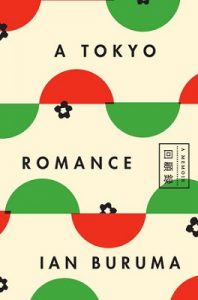
Cover image released by Penguin Press shows "A Tokyo Romance," by Ian Burma. Photo: Penguin Press / Associated Press
Cover image released by Penguin
Press shows “A Tokyo Romance,” by Ian Burma.
Photo: Penguin Press / Associated Press

While the book occasionally gets bogged down in excruciating detail about movies only the most ardent cinephile would care about, Buruma paints a vivid portrait of his often mind-boggling encounters with the motley collection of artists, expats and eccentrics he befriended over his six years in Tokyo.

And his honesty is disarming. He confesses to alcohol-fueled indiscretions and erotic adventures and frankly grapples with the privileged treatment he received as a white man in Japan.

Ultimately, he says, it was that sense of being a perennial outsider in an insular island nation that made it impossible for him to stay.

“Even though I decided to leave Japan, I knew that Japan would never leave me,” he writes. “I arrived in Tokyo when I was still unformed, callow and eager for experience. … Japan shaped me when the plaster was still wet.”

Story: Ann Levin

Advertisement

Man Accused of Stealing Mcdormand’s Oscar Trophy

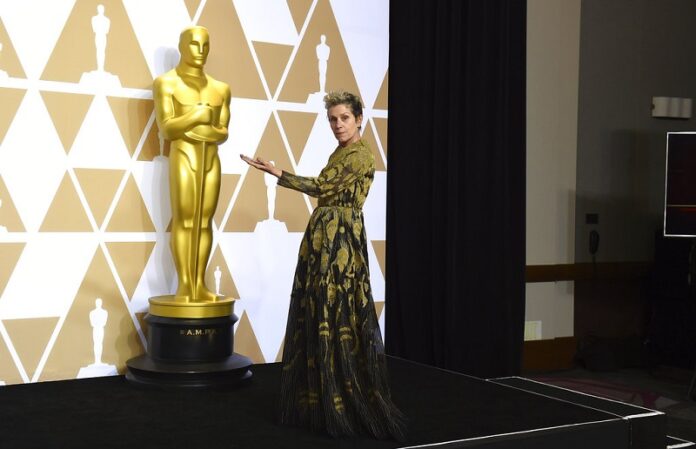
Frances McDormand poses in the press room at the Oscars on Sunday, March 4, 2018, at the Dolby Theatre in Los Angeles. Photo: Jordan Strauss / Associated Press

LOS ANGELES — A man was arrested and is accused of stealing Frances McDormand’s Oscars trophy after the Academy Awards on Sunday night, Los Angeles police said.

Terry Bryant, 47, was arrested on suspicion of felony grand theft, said Officer Rosario Herrera, a police spokeswoman.

“After some brief time apart, Frances and her Oscar were happily reunited. They celebrated the reunion with a double cheeseburger from In-N-Out Burger,” McDormand’s publicist, Simon Halls, told The Associated Press.

McDormand received the Academy Award for Best Actress for her performance in “Three Billboards Outside Ebbing, Missouri.”

The Oscar statuette was allegedly stolen during the Governors Ball after party, authorities said. Bryant had a ticket for the event, Herrera said.

Bryant was stopped as he was leaving the Governors Ball after a photographer took his picture holding the trophy, police said.

The photographer didn’t recognize him as a winner and began following Bryant. When he was confronted, Bryant handed back the statuette without a fight, police said.

He was detained by security guards at the event and arrested by Los Angeles police officers. The award was later returned to McDormand.

The two-time Oscar winner, who swept trophies at the Golden Globes, Screen Actors Guild, Independent Spirit and BAFTA ceremonies, beat out Sally Hawkins of “The Shape of Water,” Margot Robbie of “I, Tonya,” Saoirse Ronan of “Lady Bird,” and 21-time nominee Streep of “The Post” at Sunday’s Oscars.

In “Three Billboards,” McDormand played Mildred Hayes, a hardened woman seeking justice for her daughter’s murder in the crime drama.

Her first Oscar came for the 1996 film “Fargo,” directed by her husband Joel Coen and his brother Ethan.

Bryant was being held on $20,000 bail Monday, police said.

There was no immediate reply to a message sent to one of Bryant’s social media profiles and it wasn’t clear if had an attorney who could comment on his behalf.

A video that posted live on a Facebook page that appeared to belong to Bryant showed him kissing and flaunting a statuette during the Governor’s Ball.

“Look it, baby. My team got this tonight. This is mine,” he said, turning the trophy toward the camera, before kissing it on the head.

As he spun around in a circle, Bryant solicited congratulations from those around him.

“Who wants to wish me congratulations?” he asked fellow revelers who were walking by, before posing for several selfies.

“You know what, I can’t believe I got this.”

No one named Terry Bryant won an Oscar on Sunday.

Story: Michael Balsamo and Mark Kennedy


Advertisement

Hot News

LATEST NEWS

Bangkok
overcast clouds
27.2 ° C
30.5 °
27.2 °
87 %
2.9kmh
99 %
Tue
27 °
Wed
34 °
Thu
34 °
Fri
35 °
Sat
35 °