
































31.1 C
Bangkok
Tuesday, June 9, 2026
Home Blog Page 2083

Nation Multimedia Taken Over By Far-Right News Corp

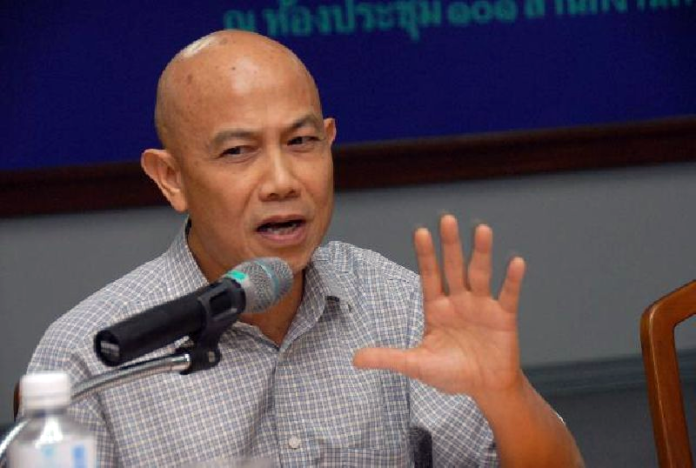
Suthichai Yoon. Photo: Matichon

BANGKOK — An ultraconservative news agency said Sunday that it has acquired the media conglomerate behind Thailand’s No. 2 English-language newspaper to “rescue” it from insolvency.

A week after becoming the new owner of Nation Multimedia Group, Sontiyan Chuenruetainaidhama, founder of conservative outlets T News and INN News, said it had acquired the company to keep it afloat.

“If it’s the last thing I do in my life, I will rescue The Nation,” Sontiyan said in a statement published Sunday by T News. He did not return multiple calls seeking comment Monday.

Read: Thailand’s Devastating Year For Print Was a Wake-Up Call. Adapt or Die.

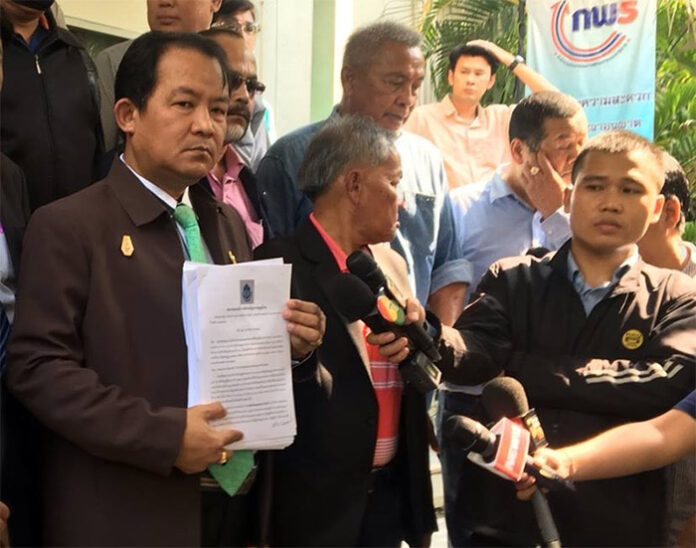
T News’ acquisition of Nation Multimedia Group; which consists of two digital TV stations, English-language The Nation newspaper, two Thai papers and a publishing house; caps a three-year effort that was opposed by some of Nation’s editorial team, who circulated a petition last year protesting the buyout.

The takeover was achieved through acquisition of a controlling stock interest by T News, INN News and Spring News, which are all part of News Network Corp. Public Co. Ltd. Sontiyan, who sat on the board of both News Network and Nation, resigned as director of News Network earlier this month.

Nation Multimedia Group (NMG) closed at 0.46 baht Monday on the Stock Exchange of Thailand, where it has been sliding toward its lowest level since 2011. The media conglomerate has been in dire financial straits for years, downsizing its operations and staff to try and stem losses.

T News is ardently ultra-royalist and pro-junta on both the editorial page and its daily coverage. It has also developed a reputation for habitually reproducing news taken from other agencies without regard to copyright, for which it has been forced to apologize.

Sontiyan’s statement said nothing about changes to Nation’s editorial direction, but it was printed side-by-side with a biography touting his leadership role, alongside Suthep Thaugsuban,  in 2014 street protests seeking to topple the government and suspend democratic rule.

Though The Nation has hewed to the right on the opinion page, which hailed the 2014 coup and ensuing military rule, its daily news coverage is more right-of-center and has taken issue with the controversial lese-majeste law.

The two brothers largely responsible for what The Nation is today – co-founder Suthichai Yoon and Thepchai Yong – won’t be around.

A call seeking comment was terminated by Thepchai, who Nation news has said will depart in April. Suthichai, an energetic and combative force on the opinion page and social media before his retirement was announced Jan. 12, could not be reached for comment.

According to one of Suthichai’s colleagues, the 71-year-old said he was proud of the newspaper’s standards and values at his Jan.12 farewell party.

“I hope after my retirement everyone here will carry on the Nation Way,” he said, according to a report by Kittipong Thavevong.

Which Way Ahead?

Sunida Kitiyakara, who helped cofound Nation Group in 1971 but departed years ago, was skeptical of Sontiyan’s claim to be rescuing what is one of the nation’s largest media conglomerates.

“I read that and laughed so hard. Who does he think he is? How is he going to save The Nation, by plugging the leaks with money?” Sunida said.

She said the new management would be wise not to change the way news is reported.

“If he’s smart, he shouldn’t change the way The Nation does things,” she said. “The Nation has its unique way of reporting, unlike the usual Thai style or the way T News does it.”

A former senior editor at The Nation, whose 2014 departure was said to be over its editorial direction – she says the reasons were personal – expressed concern at the change in leadership.

“The Nation used to have its strengths and used to be reliable. But in recent years, it’s taken too many political sides that raised questions about its quality,” said Nitthinand Yorsaengrat, who now writes a column for Matichon. Both Matichon and Khaosod English are part of the Matichon Group.

Nitthinand said The Nation newsroom was open to different perspectives.

“The Nation also gives its reporters lots of leeway. Even reporters who thought differently could do their work while having fun with it,” Nitthinand said. “But will things still be like that in the Sontiyan era?”

Several staff members at The Nation did not want to comment on the news.

Pratch Rujivanarom, a current Nation reporter, said nothing has changed as yet.

“We haven’t seen any big changes yet,” Pratch said. “Right now it’s still the same set of editorial staff. Next month we might see more changes, company-wise.”

Asked whether he thought its ideological stance would change, Pratch said he had “no idea, it’s up to the new management and their policies.”

Advertisement

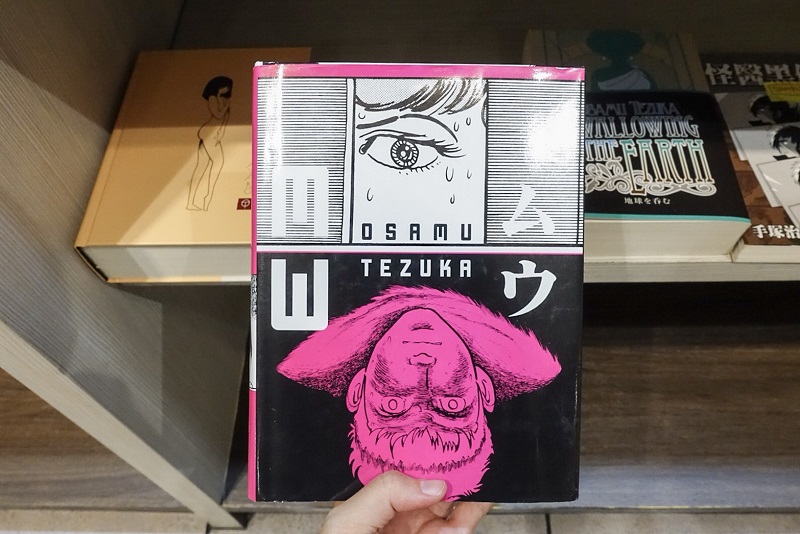
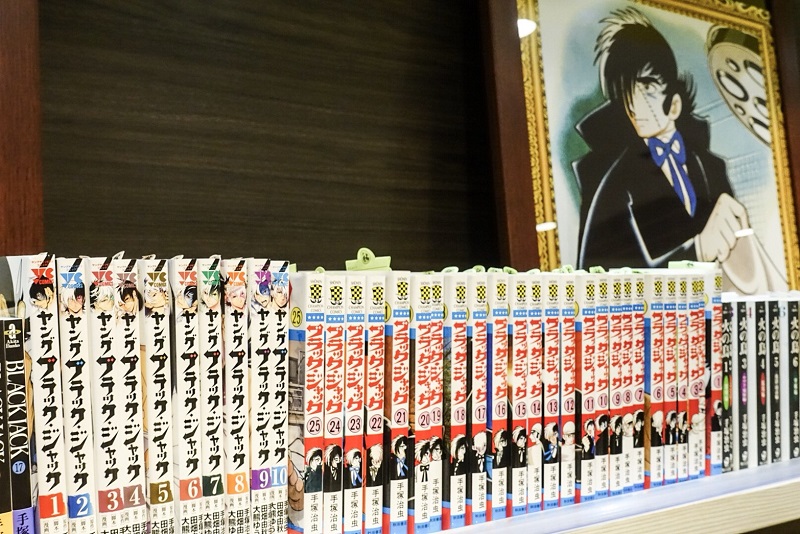
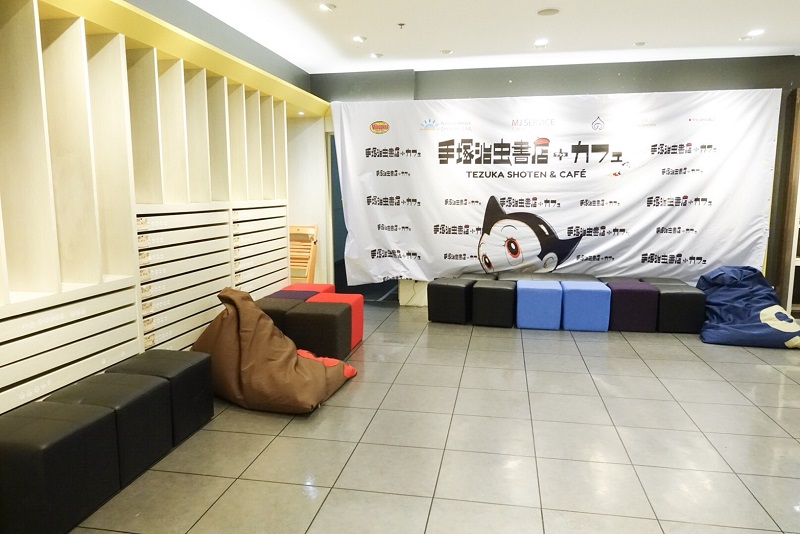
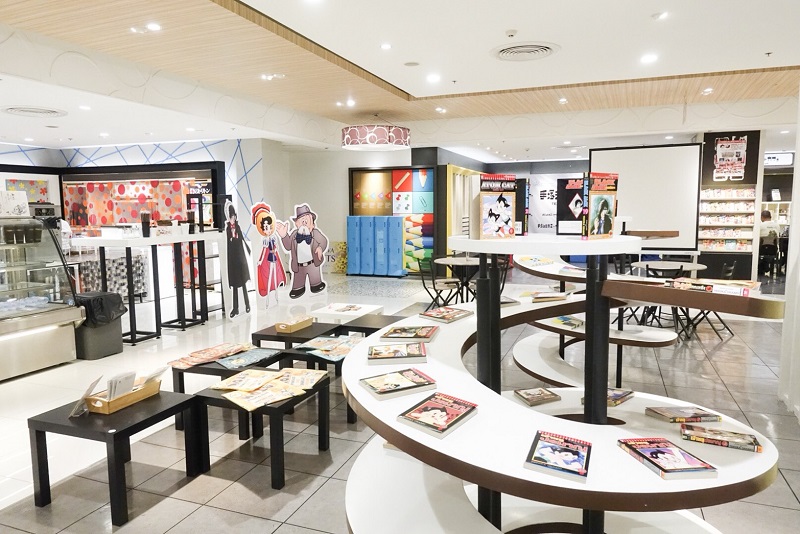
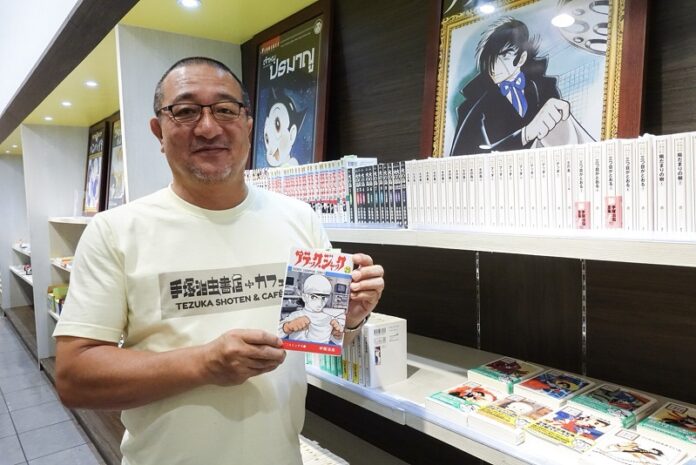
Bangkok’s First ‘Manga Cafe’ Pays Tribute to Japanese Master (Photos)

Toru Sasaki, owner of Tezuka Shoten and Cafe, holds a copy of his favorite manga ‘Black Jack.’

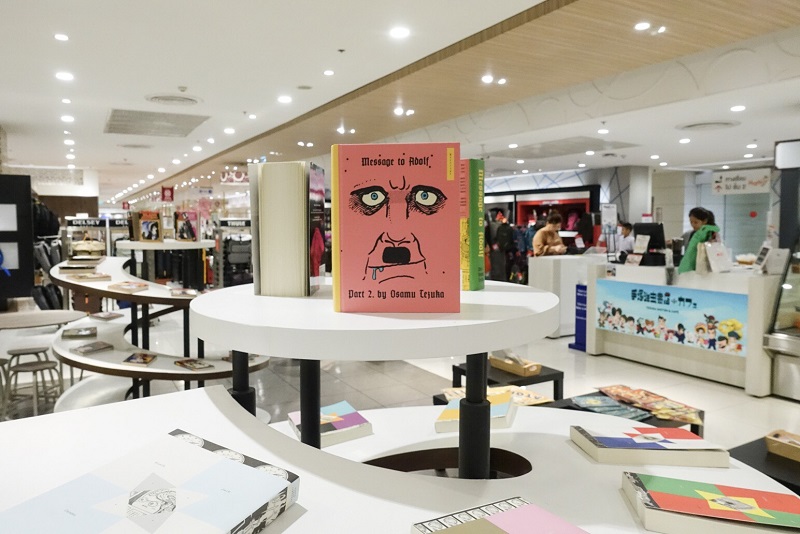
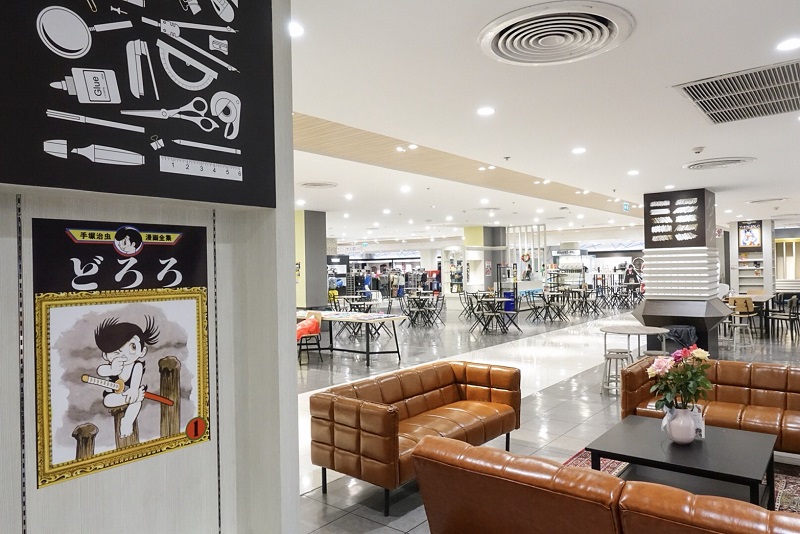
BANGKOK — Geeks who love reading comics all day now have their own “third place” for doing so at the capital’s first manga cafe.

Opening on the second floor of Prawet district shopping mall, Tezuka Shoten and Cafe opened last month with hundreds of manga comic books which customers can spend their time reading.

Just one thing: All the comic books available are by late “God of Manga” Osamu Tezuka, regarded as the Walt Disney of Japan.

Filling 400sqm, the cafe is ringed by shelves crowded with 500 comic books ranging from Osamu’s most famous – “Astro Boys,” “Black Jack” and “Phoenix” – to lesser-known titles such as “Don Dracula” and “Kimba the White Lion,” which predated and seemed creatively looted by Disney’s “The Lion King.”

Apart from finding physical copies on the shelves, manga readers can use their smartphones or laptops to log into Tezuka Spot, where more of the artist-author’s works are available for free in Japanese, Thai, English, Korean, Chinese, French and Spanish.

On the menu there’s sweet bun melon pan, soft-serve ice cream, mini fish-shaped taiyaki cakes, coffee and smoothies.

The cafe is owned by Japanese expat Toru Sasaki, an ardent Osamu fan. He is also the president of MJ Service, an event organizer and agency based in Bangkok.

“[Osamu’s] works are legendary,” Sasaki said via a translator. “Over a 40 year career, he could convey delicate feelings through his stories and characters. Each title gives love to his readers, especially children.”

Osamu is widely considered Japan’s most prominent manga artist of all time for his successful, pioneering and influential works in anime’s long-standing history – which just celebrated 100 years last year.

While manga cafes have been increasingly common in Japan – and have popped up in several Western cities – they’re still considered unpopular in Thailand.

“Ten years ago I partnered with Family Mart for a manga cafe in Bangkok, but it didn’t work out,” Sasaki said.

The cafe is currently operating on a one-year contract. It plans to expand services by adding anime films and games to achieve the full concept of a manga cafe.

An exhibition on Osamu’s life will take place at the spacious venue as well, cafe manager Sasipitcha Arawatworakul said.

Tezuka Shoten and Cafe sits inside Tokyu Department Store on the second floor of the Paradise Park Shopping Center on Srinagarindra Road. It’s open 10:30am to 9pm every day and can be reached by motorbike or taxi from BTS Udom Suk.

S 10240021 S 10240018 S 10240017 S 10240014 S 10240013 S 10240011 S 10240010 S 10240007

TSPOTCOLLAGE
Tezuka Spot on a smartphone screen through which users can read Osamu Tezuka’s comics.
S 10240024
Black Jack Coffee, hot coffee with fictional character Black Jack on the milk foam.

Advertisement

Philippine Volcano Explodes, Authorities Raise Alert Level (Video)

MANILA — The Philippines’ most active volcano exploded thunderously Monday, sending a huge gray column of lava fragments, ash and steam into the sky and prompting authorities to warn that a violent eruption may be imminent.

The noontime explosion sent superheated lava, molten rocks and steam cascading down Mount Mayon’s slopes and shrouded nearby villages in darkness, said Renato Solidum of the Philippine Institute of Seismology and Volcanology and other officials.

Authorities raised the alert level to four on a scale of five, which means an explosive eruption is possible within hours or days. A danger zone around Mayon was expanded to 8 kilometers (5 miles) from the crater.

“If the eruption is vertical, it’s possible pyroclastic flows or pyroclastic density currents may cascade down in all directions,” Solidum told a news conference, warning villagers and tourists not to venture into the no-go zones and airplanes to stay safely away from the crater and ash-laden winds.

More than 27,000 villagers have fled since Mayon started acting up more than a week ago.

Mayon is in coconut-growing Albay province, about 340 kilometers (210 miles) southeast of Manila. With its near-perfect cone, it is popular with climbers and tourists but has erupted about 50 times in the last 500 years, sometimes violently.

In 2013, an ash eruption killed five climbers who had ventured near the summit despite warnings. Mayon’s first recorded eruption was in 1616 and the most destructive, in 1814, killed 1,200 people and buried the town of Cagsawa in volcanic mud.

The Philippines lies in the so-called “Ring of Fire,” a line of seismic faults surrounding the Pacific Ocean where earthquakes and volcanic activity are common.

In 1991, Mount Pinatubo in the northern Philippines exploded in one of the biggest volcanic eruptions of the 20th century, killing about 800 people.

Advertisement

Trial in Kim Jong Nam’s Murder Resumes in Malaysia

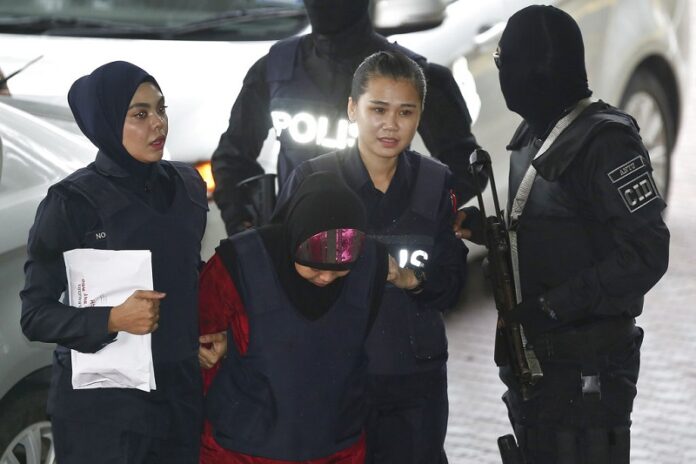
Indonesian Siti Aisyah, second left, is escorted by police as she arrives for court hearing at Shah Alam court house Monday in Shah Alam, Malaysia. Photo: Sadiq Asyraf / Associated Press

SHAH ALAM, Malaysia — The trial of the two women accused of killing the estranged half brother of North Korea’s leader has resumed after a seven-week recess, with witnesses taking the stand to verify the authenticity of security camera footage showing the attack.

Prosecutors at the trial in Malaysia on Monday called three technicians working at the airport and airport hotel to explain how they extracted relevant images from the main computer server and copied them to discs. This was to enable the court to accept the footage as evidence.

Indonesian Siti Aisyah and Vietnamese Doan Thi Huong are accused of smearing VX nerve agent on Kim Jong Nam’s face in a crowded airport terminal in Kuala Lumpur last Feb. 13. They pleaded not guilty to murder charges when their trial began Oct. 2.

Advertisement

BKK – Khon Kaen Marchers to Sue Police

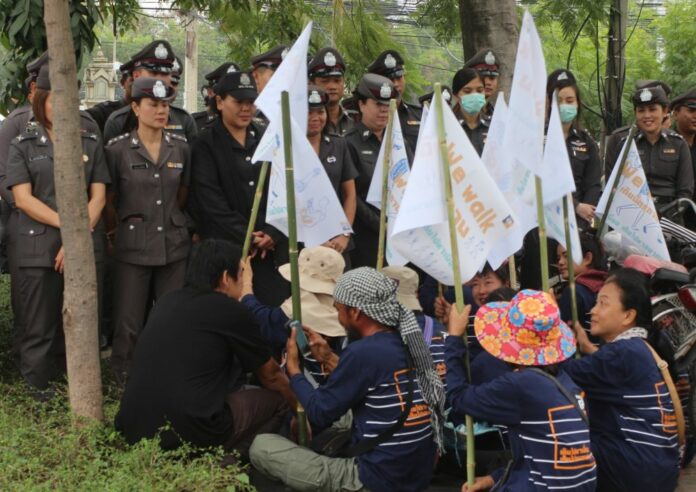
People Go activists face off with police in Pathum Thani province on Saturday

BANGKOK — Activists walking cross country for expanded civil rights said Monday they’re suing the national police force for unlawfully obstructing the beginning of their march.

Organizers of “Walk for Friends,” a group of about a dozen activists walking from Bangkok to Khon Kaen province, said they will file suit and seek an administrative court injunction barring police from all further “intimidation” against the demonstrators, a lawyer representing the group said. A police spokesman maintained the force has acted within the law.

The lawsuit will name three police commanders in northern metro Bangkok who allegedly ordered officers to block the marchers Saturday.

“We want the Royal Thai Police and those named in the lawsuit to stop restricting our freedom,” attorney Phattranit Yaodam said. “Secondly, we want the police command to order their officers in the field to aid the marchers and refrain from any intimidation throughout the route.”

The demonstrators, led by a network of activists called People Go, set out Saturday from Bangkok on a march to the northeastern province, a distance of 450 kilometers. The group said they aim to highlight demands for freedom of expression, universal healthcare, food security and community rights.

But on Saturday police in Pathum Thani province intercepted the marchers, citing a junta order that bans political gatherings of more than four people. The marchers responded by continuing the walk in the evening in groups of fours.

As of noon on Monday, the marchers had reached Saraburi province. Phattrani said police had not attempted to stop the walk so far today.

“Police have not directly negotiated with us, but there are undercover police following the demonstrators and taking their photos,” the lawyer said.

Police spokesman Krissana Pattanacharoen said police are investigating whether the marchers intend to break the law by other means.

“What is their objective?” Col. Krissana said. “In my opinion, the way they walk and their intent look like they are trying to evade laws on public assembly and the order that bans gathering of five people.”

He also said police have adhered to the law.

“Police do not hinder activities as long as they are legal,” Krissana said. “I’d like to ask the organizers: This activity they are doing, is it in accordance with the scope of rights permitted by laws?”

Protests and public challenge to the junta’s rule remain banned under the regime, three years after the military seized power in 2014.

Previous legal challenges filed against the ban have failed. In October, a civil court ruled that activists were not eligible to receive compensation over a 2015 crackdown on their protest because security officers were acting legally.

Phattranit, the lawyer representing the Bangkok – Khon Kaen marchers, said she hopes today’s attempt will yield a different result.

“In that case, it was a lawsuit filed to the civil court for financial compensation, but we are suing in the administrative court,” she said.

Advertisement

Two Israelis Arrested at Airport Over ‘Mafia’ Hit on Samui

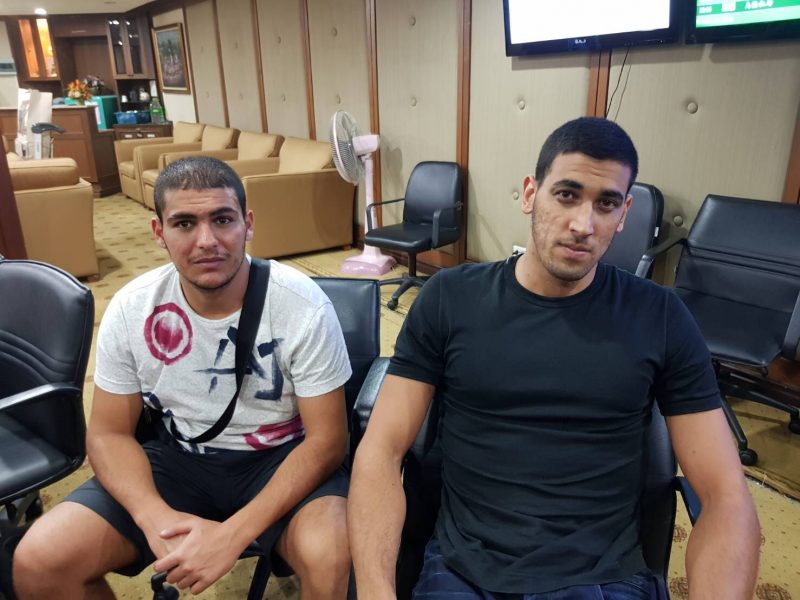
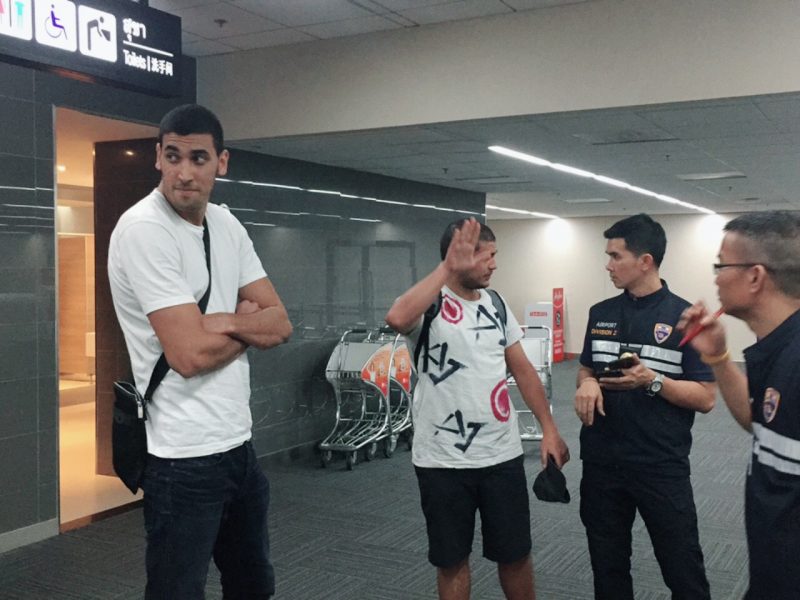
BANGKOK — Two Israeli men were arrested Monday morning at Don Mueang International Airport for what police say was a mafia-style hit on a compatriot the day before.

Police intercepted Dolev Zuarez, 23, Eyal Bokal, 25, Monday morning at one of the capital’s airports, where they were allegedly fleeing Koh Samui after murdering fellow Israeli Maor Israel Malul, 33, on the island.

Police said all three were members of Israeli organized crime.

“They were part of the mafia, so the killing was related to that,” police Col. Krissana Phattanacharoen said Monday. “Now they’ve been sent back to Surat Thani.”

Krissana said that police believe Zuarez and Bokal were planning to make their way back to Israel.

The pair were involved in violent crime several years ago in Israel, Krissana added, but were not known to have committed murder.

Malul was reportedly with his wife Rachel Ozana at about 2pm on Sunday near the Samui International Hospital on Cheng Mon-Chaweng Road in Bo Put District. In footage recorded from a security camera, a sports utility vehicle is seen striking him and someone else as they attempt to flee on a motorcycle.

Another man exited the vehicle and stabbed Malul, according to police. He died later at a hospital. Ozana was injured but survived.

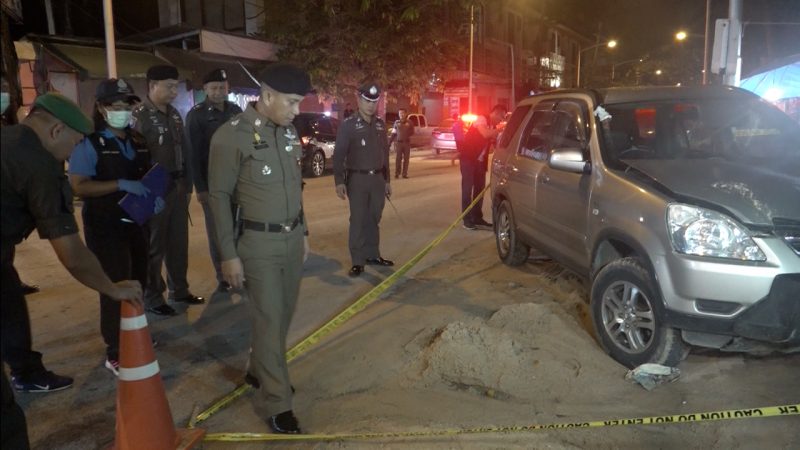
Police identified the murderers as Zuarez and Bokal and started looking for them. The pair allegedly abandoned their car in front of Rajabhat University’s island campus.

“The men killed the victim over a mafia drug conflict,” police Gen. Weerachai Songmetta said Monday morning. “The dead had just been released from a prison sentence in Israel. All three men were mafia members in their home country. The victim came to vacation here, but the two men followed him to get revenge.”

Weerachai said police would continue investigating the Israeli mafia network in Thailand.

“We want to check whether Thais are involved, especially on Samui. This case doesn’t end here,” Weerachai said.

According to The Times of Israel, Malul was recently released from 20 months in Israeli prison for aggravated assault of a crime boss. Police believe Malul was part of a rival gang. His brother was shot and killed in 2015 outside his home in Israel.

Two other Israeli nationals at the scene, Meir Kriaf and Dana Kriaf, were also injured.

Krissana said Zuarez and Bokal face charges of premeditated murder.

S 7446569 e1516597861810
Dolev Zuarez, left, and Eyal Bokal, right, are intercepted at Don Mueang International Airport Monday morning.

S 127787018 e1516597866158

a4 e1516597872680
Police on Koh Samui investigate Dolev Zuarez and Eyal Bokal’s alleged getaway vehicle Sunday night.
Advertisement

Deferring Election to 2019 a Conflict of Interest: Activist

Transparency activist Srisuwan Janya presents his petition to junta leader Gen. Prayuth Chan-ocha Monday at Government House in Bangkok.

BANGKOK — Anti-corruption activist Srisuwan Janya on Monday urged junta leader Gen. Prayuth Chan-ocha to exercise his absolute power to stop the junta-appointed legislature from deferring promised elections by 90 days.

Srisuwan, the lawyer who heads the Association of Thai Constitution Protection, is petitioning Prayuth to stop the National Legislative Assembly from acting to delay the implementation of election laws under the new constitution. He submitted a letter to Prayuth, who’s also prime minister, at the Government House this morning.

Srisuwan argued that the legislators have a conflict of interest because delaying the vote would extend their time in office and guarantee them another three months pay and benefits. The NLA took the first steps to approve the changes in a Friday vote and will likely take up the measure for final approval later this week.

Prayuth Monday denied the legislature is acting under pressure from the junta, which has delayed returning power to the electorate several times in its nearly four years of rule.

If the parliament moves forward and approves the delay, it would mean the laws would not come into effect until 90 days after they are published in the Royal Gazette. That would delay what will be the first elections in nearly five years – now slated for November – into 2019.

The last general elections were held in 2014 at the height of street protests seeking to bring down the government of former Prime Minister Yingluck Shinawatra. Her political opponents rallied people to disrupt voting, and the results were soon annulled by the Constitutional Court.

Elements within the military led by Prayuth seized power in a coup two months later in May, installing him as prime minister. Prayuth appointed drafters to write a new constitution favorable to maintaining the legal supremacy of the military over future civilian administrations and has promised that elections would be held each of the past three years.

Advertisement

Vietnam Jails Former Oil Execs in High-Profile Graft Case

Trinh Xuan Thanh, center, is led to a court room by police Monday in Hanoi, Vietnam. Photo: Doan Tan / Associated Press

HANOI, Vietnam — A former oil executive has been sentenced to life in prison and a former high-ranking Vietnamese government official has received a lengthy prison term in a major corruption case.

The court in the capital Hanoi sentenced former Politburo member Dinh La Thang, ex-chairman of state energy giant PetroVietnam, to 13 years in jail for deliberate economic mismanagement Monday as the two-week trial concluded. Thang was the first Politburo member to be jailed in decades.

Trinh Xuan Thanh, an ex-chairman of PetroVietnam’s construction arm, was given life imprisonment for embezzlement. Germany accuses Vietnam agents of snatching him from a Berlin park last year.

The two were among 22 defendants, most of them current or former oil executives.

Tuoi Tre newspaper quoted a Judge as saying the prosecutions were well-founded.

Advertisement

Among Rohingya, Refugee Squalor Can Seem Better Than Home

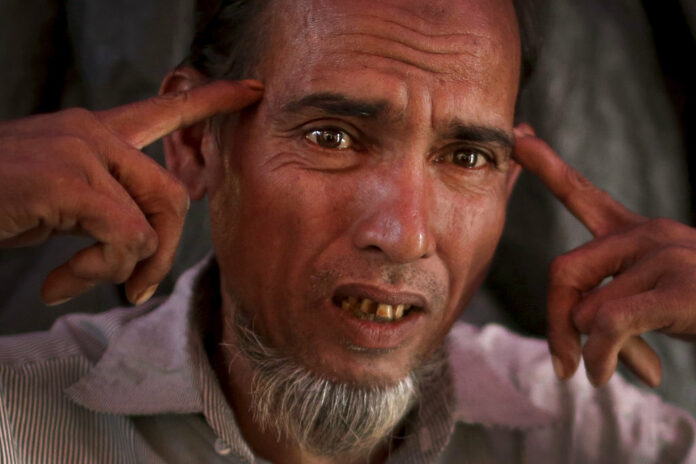
In this Tuesday, Nov. 28, 2017, photo, Shafir Rahman, 50, describes how he watched a soldier hammering a four-inch nail into the side of a man's head with a rifle butt during an interview with The Associated Press in his tent in Jamtoli refugee camp in Bangladesh. Photo: Wong Maye-E / Associated Press

DHAKA, Bangladesh — Both Bangladesh and Myanmar insist the repatriations of Rohingya Muslims will go smoothly, with thousands of refugees who fled their homes in terror just a few months ago crossing the border back into Myanmar and returning safely to their villages.

Eventually, more than 650,000 Rohingya are supposed to leave Bangladesh in a process that guarantees them “safety, security and dignity,” according to an agreement both countries signed late last year.

But with the first repatriations scheduled for as early as Tuesday, and more than 1 million Rohingya Muslims living in refugee camps in Bangladesh, international aid workers, local officials and the refugees themselves say preparations have barely begun. Many refugees say they would rather contend with the squalor of the camps rather than the dangers they could face if they return home.

“If they send us back forcefully we will not go,” said Sayed Noor, who fled his village in Myanmar last August, amid a torrent of Rohingya heading for safety. He says Myanmar authorities “have to give us our rights and give us justice.”

“They will have to return all our wealth that they have looted and hold people accountable. They will have to compensate us. We came here because we are fighting for those things,” he said. “If we don’t get all of this, then what was the point of coming here?”

David Mathieson, a longtime human rights researcher who has spent years working on Rohingya issues, heaped scorn on the agreement.

“It’s a fantasyland, make-believe world that both governments are in,” he said in an interview in Yangon, Myanmar’s main city, noting that security forces there had just forced hundreds of thousands of Rohingya across the border. “Now you’re expecting them to come back, as if they’re in a conga line of joy after what you did to them?”

The Rohingya Muslims have long been treated as outsiders in largely-Buddhist Myanmar, derided as “Bengalis,” illegal immigrants from Bangladesh, even though many Rohingya families have lived in Myanmar for generations. Most have been denied citizenship since 1982, effectively rendered stateless. They are denied freedom of movement and other basic rights.

Most live in poverty in Myanmar’s Rakhine state, near the Bangladesh border. Marked by their religion and their language most Rohingya speak a dialect of Bengali, while most of their neighbors speak Rakhine  they are easy to target.

The recent surge of violence erupted after an underground insurgent group, the Arakan Rohingya Salvation Army, attacked at least 30 security outposts in Myanmar in late August. The military and Buddhist mobs then launched retaliatory attacks on Rohingya across Rakhine in a frenzy of killings, rapes and burned villages. The U.N. has described the violence as “textbook ethnic cleansing.”

The attacks, which Doctors Without Borders believes have left at least 6,700 Rohingya dead, sowed terror across Rohingya communities, sending more than 650,000 people fleeing across the border. Most came in the first month or so after the violence began, but some continue to trickle into Bangladesh, complaining of ill-treatment by authorities.

In early January, following up on their November 2017 agreement, Bangladesh and Myanmar signed a deal to begin sending back the refugees starting Tuesday. Officials have said they expect some 1,500 refugees to go back each week, though only refugees with identity documents  which most Rohingya lack  will be allowed into Myanmar.

Bangladesh and Myanmar are both eager to have the repatriations begin. Bangladesh has grown weary of hosting Rohingya refugees, who have been spilling across the border for decades to escape violence at home. More than a million Rohingya are now believed to live in Bangladesh. Myanmar, meanwhile, wants the repatriations to lessen the international condemnation it has faced for the violence.

In Myanmar, officials have started building sprawling camps for returning refugees. Forty buildings have been finished already in the Hla Po Kaung transit camp, enough for more than 3,000 refugees, state media has reported. Eventually, the camp will have 625 buildings, enough for 30,000 refugees. In theory the returnees will stay only temporarily in the camp before going home, though many Rohingya villages were burned to the ground during the violence.

In Bangladesh, there are almost no signs of preparations. A Bangladesh official who oversees the area where most of the camps are located said last week that “we have not finalized anything yet.”

Aid workers say some refugees may want to return  perhaps the 500 or so Bengali-speaking Hindus who also fled the Rakhine state violence, and the handful of Rohingya who have managed to acquire citizenship documents.

But how many more?

Not many, experts say.

“I think that the (Myanmar) government knows very well that only a few people will go back,” said Chris Lewa, the director of the human rights research group the Arakan Project. But officials want the good publicity that could come with repatriations, she said.

“When the majority of Rohingya refuse to come back, the Myanmar government will say ‘See, we have done what we can for them to return, but they refuse to come back and prefer to stay in Bangladesh, which was their own country,'” she said.

Inside Rakhine, there are few signs that people want their former Rohingya neighbors to return.

“International pressure, because of human rights and humanitarianism, means we have to accept them back, even though we don’t want to,” Than Tun, a Buddhist leader in Sittwe, the Rakhine state capital, said in a telephone interview.

He dismissed the idea that the Rohingya had fled their homes. “We think that these Bengalis have gone back to their original land  Bangladesh.”

Story: Julhas Alam

Advertisement

‘Asian Hiddink’ Sparks Rare Success for Southeast Asian Team

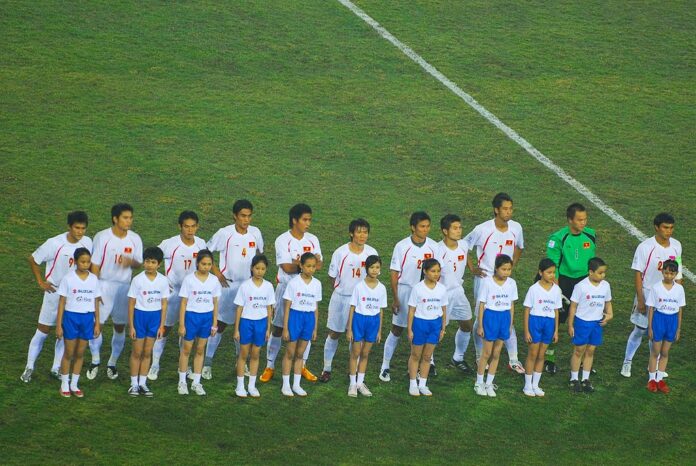
Vietnam's national football team prior to a match against Thailand in 2008 in Hanoi, Vietnam. Photo: Dinh Minh Hung / Wikimedia Commons

KUALA LUMPUR — Southeast Asian soccer is making positive news for a change with historic performances at the continental under-23 championships, spearheaded by a coach nick-named “The Asian Hiddink.”

Vietnam head coach Park Hang-seo is the toast of the country after leading the team to the semifinals. Park was a member of Guus Hiddink’s coaching staff when South Korea reached the 2002 World Cup semifinals — a run that had millions of Koreans gathering in the streets to support the national team’s progress in the tournament it was co-hosting with Japan.

On Saturday it was the turn of Vietnam fans to celebrate in the streets and plazas after a famous quarterfinal win over Iraq. From the country’s ubiquitous scooter riders waving flags to Vietnam’s Prime Minister Nguyen Xuan Phuc, there were hearty congratulations for the team.

“I have always believed that the players had the talent,” Park, who burst into tears after the successful penalty shootout that followed a dramatic 3-3 draw, told reporters. “They needed a lift and the belief they can win against teams like Iraq. Now we have to keep going.”

It is not only the results and performances that have fans and media swooning. Park has received praise for his friendly manner and putting his hand on his chest during national anthems.

“We have never seen a foreign coach like this,” reported Ho Chi Minh city newspaper Nguoi Lao Dong. “We have had many Korean singers and movies stars be popular here but now it is Park receiving the love of the Vietnamese people.”

In Seoul, Park’s exploits with Vietnam have been widely covered with commentators observing that the man who witnessed the events of almost 16 years ago is now forging a legend of his own by injecting belief and discipline into a team that has always had talent.

It is not over yet. Vietnam faces a tough task against Qatar, which has won all four of its games in the tournament so far, in the semifinal on Tuesday. Confidence is high after the Iraq win and victory over Australia in the group stage.

“We know that there is still lots of work to do,” Park said. “But now we are looking forward to showing what we can do. We are ready.”

Another surprise win could pit Park against South Korea in the final if the East Asian team can overcome Uzbekistan.

South Korea had to defeat Southeast Asian opposition in the quarterfinal, with a tough 2-1 victory over Malaysia. Despite the loss, fans in Kuala Lumpur were happy with a fine performance and a good tournament overall.

“We played well in this quarterfinal match, though we know they are good teams,” Malaysia goalscorer N. Thanabalan said after the match.”But we can prove that we can play with them.”

The soccer news in Malaysia has been dismal for some time and the senior team is currently ranked No. 175 by FIFA, its lowest ever in the international standings.

Low expectations heading into the tournament were seemingly confirmed after a 4-1 loss to Iraq in the opening game. The Tigers bounced back, though, to draw with Jordan and beat Saudi Arabia 1-0 in the last group stage game before giving the Koreans a scare.

Now Malaysia coach Ong Kim Swee wants to move forward and qualify for the 2020 Olympics by going one step further in the next U-23 Championship.

“It is a very good achievement, but we cannot afford to be too happy or celebrate too much,” the coach said. “We can’t just stop here, personally my target is qualification for the Olympic Games and what we will have to do is become one of the top four teams at the 2020 AFC Under-23 Championship.”

Story: John Duerden

Advertisement

Hot News

LATEST NEWS

Bangkok
overcast clouds
31.1 ° C
31.6 °
28.3 °
73 %
3.7kmh
100 %
Mon
29 °
Tue
35 °
Wed
34 °
Thu
34 °
Fri
28 °