26.6 C
Bangkok
Monday, June 22, 2026
Home Blog Page 2098

Deferring Election to 2019 a Conflict of Interest: Activist

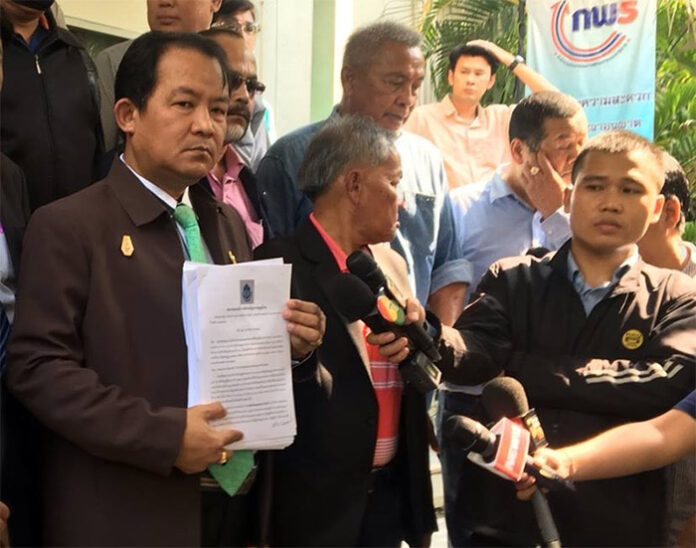
Transparency activist Srisuwan Janya presents his petition to junta leader Gen. Prayuth Chan-ocha Monday at Government House in Bangkok.

BANGKOK — Anti-corruption activist Srisuwan Janya on Monday urged junta leader Gen. Prayuth Chan-ocha to exercise his absolute power to stop the junta-appointed legislature from deferring promised elections by 90 days.

Srisuwan, the lawyer who heads the Association of Thai Constitution Protection, is petitioning Prayuth to stop the National Legislative Assembly from acting to delay the implementation of election laws under the new constitution. He submitted a letter to Prayuth, who’s also prime minister, at the Government House this morning.

Srisuwan argued that the legislators have a conflict of interest because delaying the vote would extend their time in office and guarantee them another three months pay and benefits. The NLA took the first steps to approve the changes in a Friday vote and will likely take up the measure for final approval later this week.

Prayuth Monday denied the legislature is acting under pressure from the junta, which has delayed returning power to the electorate several times in its nearly four years of rule.

If the parliament moves forward and approves the delay, it would mean the laws would not come into effect until 90 days after they are published in the Royal Gazette. That would delay what will be the first elections in nearly five years – now slated for November – into 2019.

The last general elections were held in 2014 at the height of street protests seeking to bring down the government of former Prime Minister Yingluck Shinawatra. Her political opponents rallied people to disrupt voting, and the results were soon annulled by the Constitutional Court.

Elements within the military led by Prayuth seized power in a coup two months later in May, installing him as prime minister. Prayuth appointed drafters to write a new constitution favorable to maintaining the legal supremacy of the military over future civilian administrations and has promised that elections would be held each of the past three years.

Advertisement

Vietnam Jails Former Oil Execs in High-Profile Graft Case

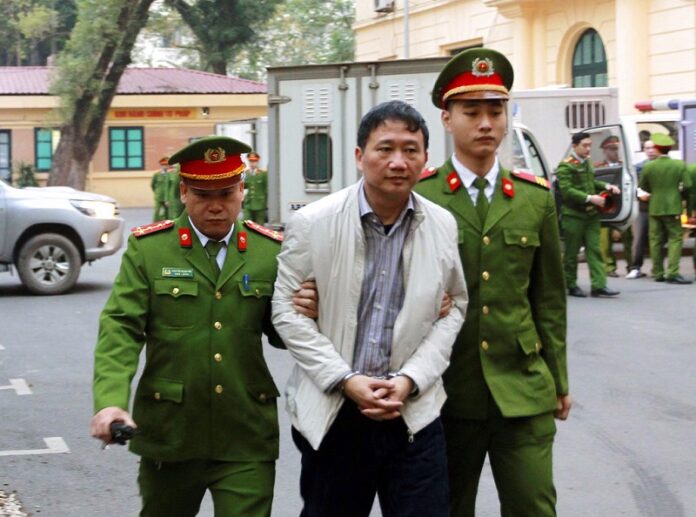
Trinh Xuan Thanh, center, is led to a court room by police Monday in Hanoi, Vietnam. Photo: Doan Tan / Associated Press

HANOI, Vietnam — A former oil executive has been sentenced to life in prison and a former high-ranking Vietnamese government official has received a lengthy prison term in a major corruption case.

The court in the capital Hanoi sentenced former Politburo member Dinh La Thang, ex-chairman of state energy giant PetroVietnam, to 13 years in jail for deliberate economic mismanagement Monday as the two-week trial concluded. Thang was the first Politburo member to be jailed in decades.

Trinh Xuan Thanh, an ex-chairman of PetroVietnam’s construction arm, was given life imprisonment for embezzlement. Germany accuses Vietnam agents of snatching him from a Berlin park last year.

The two were among 22 defendants, most of them current or former oil executives.

Tuoi Tre newspaper quoted a Judge as saying the prosecutions were well-founded.

Advertisement

Among Rohingya, Refugee Squalor Can Seem Better Than Home

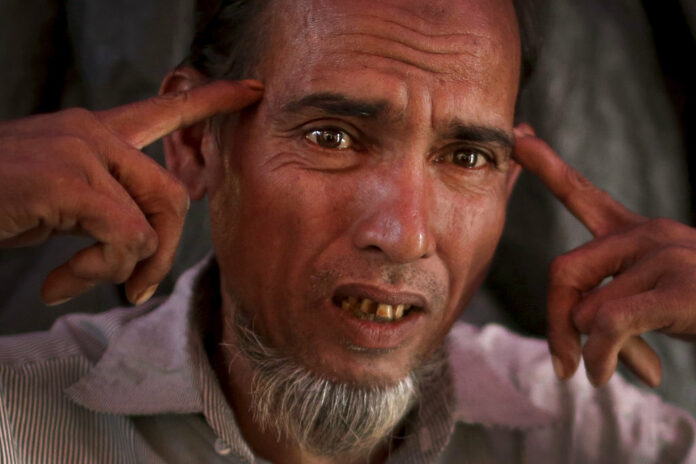
In this Tuesday, Nov. 28, 2017, photo, Shafir Rahman, 50, describes how he watched a soldier hammering a four-inch nail into the side of a man's head with a rifle butt during an interview with The Associated Press in his tent in Jamtoli refugee camp in Bangladesh. Photo: Wong Maye-E / Associated Press

DHAKA, Bangladesh — Both Bangladesh and Myanmar insist the repatriations of Rohingya Muslims will go smoothly, with thousands of refugees who fled their homes in terror just a few months ago crossing the border back into Myanmar and returning safely to their villages.

Eventually, more than 650,000 Rohingya are supposed to leave Bangladesh in a process that guarantees them “safety, security and dignity,” according to an agreement both countries signed late last year.

But with the first repatriations scheduled for as early as Tuesday, and more than 1 million Rohingya Muslims living in refugee camps in Bangladesh, international aid workers, local officials and the refugees themselves say preparations have barely begun. Many refugees say they would rather contend with the squalor of the camps rather than the dangers they could face if they return home.

“If they send us back forcefully we will not go,” said Sayed Noor, who fled his village in Myanmar last August, amid a torrent of Rohingya heading for safety. He says Myanmar authorities “have to give us our rights and give us justice.”

“They will have to return all our wealth that they have looted and hold people accountable. They will have to compensate us. We came here because we are fighting for those things,” he said. “If we don’t get all of this, then what was the point of coming here?”

David Mathieson, a longtime human rights researcher who has spent years working on Rohingya issues, heaped scorn on the agreement.

“It’s a fantasyland, make-believe world that both governments are in,” he said in an interview in Yangon, Myanmar’s main city, noting that security forces there had just forced hundreds of thousands of Rohingya across the border. “Now you’re expecting them to come back, as if they’re in a conga line of joy after what you did to them?”

The Rohingya Muslims have long been treated as outsiders in largely-Buddhist Myanmar, derided as “Bengalis,” illegal immigrants from Bangladesh, even though many Rohingya families have lived in Myanmar for generations. Most have been denied citizenship since 1982, effectively rendered stateless. They are denied freedom of movement and other basic rights.

Most live in poverty in Myanmar’s Rakhine state, near the Bangladesh border. Marked by their religion and their language most Rohingya speak a dialect of Bengali, while most of their neighbors speak Rakhine  they are easy to target.

The recent surge of violence erupted after an underground insurgent group, the Arakan Rohingya Salvation Army, attacked at least 30 security outposts in Myanmar in late August. The military and Buddhist mobs then launched retaliatory attacks on Rohingya across Rakhine in a frenzy of killings, rapes and burned villages. The U.N. has described the violence as “textbook ethnic cleansing.”

The attacks, which Doctors Without Borders believes have left at least 6,700 Rohingya dead, sowed terror across Rohingya communities, sending more than 650,000 people fleeing across the border. Most came in the first month or so after the violence began, but some continue to trickle into Bangladesh, complaining of ill-treatment by authorities.

In early January, following up on their November 2017 agreement, Bangladesh and Myanmar signed a deal to begin sending back the refugees starting Tuesday. Officials have said they expect some 1,500 refugees to go back each week, though only refugees with identity documents  which most Rohingya lack  will be allowed into Myanmar.

Bangladesh and Myanmar are both eager to have the repatriations begin. Bangladesh has grown weary of hosting Rohingya refugees, who have been spilling across the border for decades to escape violence at home. More than a million Rohingya are now believed to live in Bangladesh. Myanmar, meanwhile, wants the repatriations to lessen the international condemnation it has faced for the violence.

In Myanmar, officials have started building sprawling camps for returning refugees. Forty buildings have been finished already in the Hla Po Kaung transit camp, enough for more than 3,000 refugees, state media has reported. Eventually, the camp will have 625 buildings, enough for 30,000 refugees. In theory the returnees will stay only temporarily in the camp before going home, though many Rohingya villages were burned to the ground during the violence.

In Bangladesh, there are almost no signs of preparations. A Bangladesh official who oversees the area where most of the camps are located said last week that “we have not finalized anything yet.”

Aid workers say some refugees may want to return  perhaps the 500 or so Bengali-speaking Hindus who also fled the Rakhine state violence, and the handful of Rohingya who have managed to acquire citizenship documents.

But how many more?

Not many, experts say.

“I think that the (Myanmar) government knows very well that only a few people will go back,” said Chris Lewa, the director of the human rights research group the Arakan Project. But officials want the good publicity that could come with repatriations, she said.

“When the majority of Rohingya refuse to come back, the Myanmar government will say ‘See, we have done what we can for them to return, but they refuse to come back and prefer to stay in Bangladesh, which was their own country,'” she said.

Inside Rakhine, there are few signs that people want their former Rohingya neighbors to return.

“International pressure, because of human rights and humanitarianism, means we have to accept them back, even though we don’t want to,” Than Tun, a Buddhist leader in Sittwe, the Rakhine state capital, said in a telephone interview.

He dismissed the idea that the Rohingya had fled their homes. “We think that these Bengalis have gone back to their original land  Bangladesh.”

Story: Julhas Alam
Advertisement

‘Asian Hiddink’ Sparks Rare Success for Southeast Asian Team
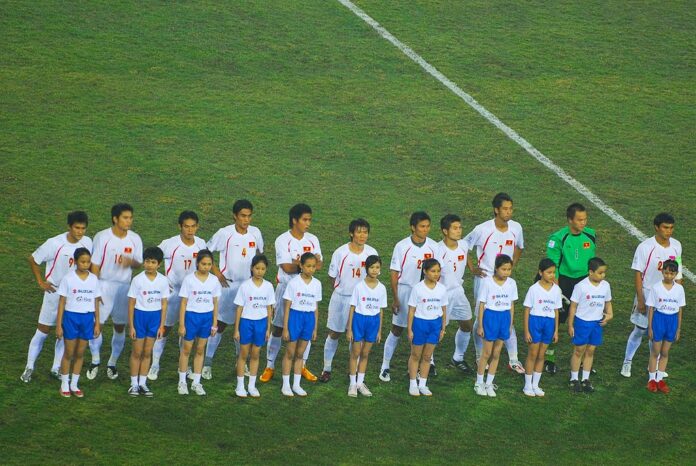
Vietnam's national football team prior to a match against Thailand in 2008 in Hanoi, Vietnam. Photo: Dinh Minh Hung / Wikimedia Commons
KUALA LUMPUR — Southeast Asian soccer is making positive news for a change with historic performances at the continental under-23 championships, spearheaded by a coach nick-named “The Asian Hiddink.”

Vietnam head coach Park Hang-seo is the toast of the country after leading the team to the semifinals. Park was a member of Guus Hiddink’s coaching staff when South Korea reached the 2002 World Cup semifinals — a run that had millions of Koreans gathering in the streets to support the national team’s progress in the tournament it was co-hosting with Japan.

On Saturday it was the turn of Vietnam fans to celebrate in the streets and plazas after a famous quarterfinal win over Iraq. From the country’s ubiquitous scooter riders waving flags to Vietnam’s Prime Minister Nguyen Xuan Phuc, there were hearty congratulations for the team.

“I have always believed that the players had the talent,” Park, who burst into tears after the successful penalty shootout that followed a dramatic 3-3 draw, told reporters. “They needed a lift and the belief they can win against teams like Iraq. Now we have to keep going.”

It is not only the results and performances that have fans and media swooning. Park has received praise for his friendly manner and putting his hand on his chest during national anthems.

“We have never seen a foreign coach like this,” reported Ho Chi Minh city newspaper Nguoi Lao Dong. “We have had many Korean singers and movies stars be popular here but now it is Park receiving the love of the Vietnamese people.”

In Seoul, Park’s exploits with Vietnam have been widely covered with commentators observing that the man who witnessed the events of almost 16 years ago is now forging a legend of his own by injecting belief and discipline into a team that has always had talent.

It is not over yet. Vietnam faces a tough task against Qatar, which has won all four of its games in the tournament so far, in the semifinal on Tuesday. Confidence is high after the Iraq win and victory over Australia in the group stage.

“We know that there is still lots of work to do,” Park said. “But now we are looking forward to showing what we can do. We are ready.”

Another surprise win could pit Park against South Korea in the final if the East Asian team can overcome Uzbekistan.

South Korea had to defeat Southeast Asian opposition in the quarterfinal, with a tough 2-1 victory over Malaysia. Despite the loss, fans in Kuala Lumpur were happy with a fine performance and a good tournament overall.

“We played well in this quarterfinal match, though we know they are good teams,” Malaysia goalscorer N. Thanabalan said after the match.”But we can prove that we can play with them.”

The soccer news in Malaysia has been dismal for some time and the senior team is currently ranked No. 175 by FIFA, its lowest ever in the international standings.

Low expectations heading into the tournament were seemingly confirmed after a 4-1 loss to Iraq in the opening game. The Tigers bounced back, though, to draw with Jordan and beat Saudi Arabia 1-0 in the last group stage game before giving the Koreans a scare.

Now Malaysia coach Ong Kim Swee wants to move forward and qualify for the 2020 Olympics by going one step further in the next U-23 Championship.

“It is a very good achievement, but we cannot afford to be too happy or celebrate too much,” the coach said. “We can’t just stop here, personally my target is qualification for the Olympic Games and what we will have to do is become one of the top four teams at the 2020 AFC Under-23 Championship.”

Story: John Duerden

Advertisement

Bombing at Market in Yala Kills 3, Injures 18

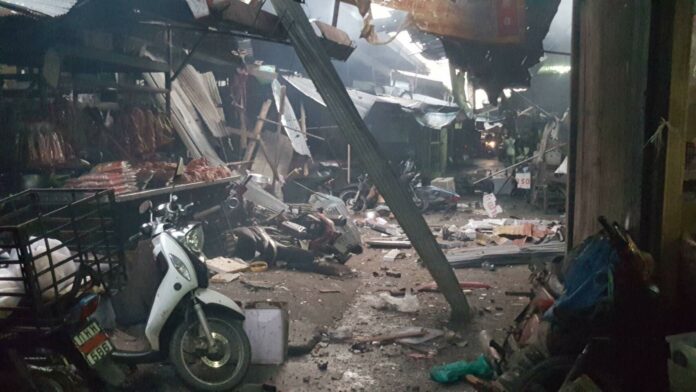
A scene of devastation at a market in Yala following Monday's bomb attack which kills three people

YALA — Police say three people have been killed and 18 injured by a bomb that exploded in a market in southern Thailand.

Police Lt. Eakapong Rattanachai said an attacker parked a motorcycle rigged with explosives near the market and bought goods there to blend in with the crowd Monday morning in Yala province.

Eakapong said the motorcycle bomb exploded when the attacker left the market area, killing three and injuring 18.

Yala is one of Thailand’s three southernmost provinces where Muslim militants have waged a yearslong insurgency.

The three provinces are the only ones with Muslim majorities in the predominantly Buddhist country.

More than 6,500 people have been killed in the violence since 2004.

Advertisement

Greeks Rally Over Name Dispute With Neighbor Macedonia

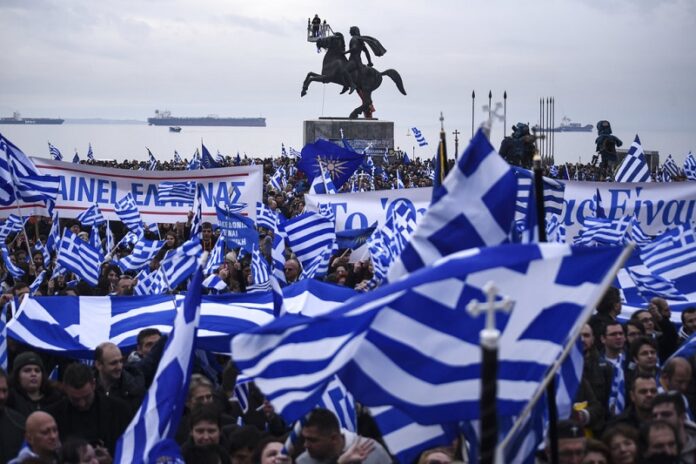
Greek protesters wave flags and banners Sunday during a rally against the use of the term "Macedonia" for the northern neighbouring country's name, at the northern Greek city of Thessaloniki. Photo: Giannis Papanikos / Associated Press

THESSALONIKI, Greece — Tens of thousands of flag-waving Greeks gathered in the northern city of Thessaloniki on Sunday to demand that Macedonia change its name because it’s also the name of the Greek province of which Thessaloniki is the capital.

Greece and the Republic of Macedonia, which share a border, have been locked in the name dispute since Macedonia declared independence from Yugoslavia in 1991. Greeks feel deeply the use of the name Macedonia is a usurpation of their heritage and implies territorial claims on their province.

Macedonia is represented in international organizations as The Former Yugoslav Republic of Macedonia and is seated in the United Nations under the letter T, right after Thailand. Greece successfully vetoed Macedonia’s application to join NATO in 2008.

Sunday’s rally was staged in front of a statue of Alexander the Great, the most famous ruler of the ancient Greek Kingdom of Macedonia. No public official was among the five keynote speakers. The best-known speaker was Fragoulis Frangos, a retired general and former chief of the Greek Army Staff, who is said to harbor political ambitions.

Several local lawmakers attended, as did the local bishop, Metropolitan Anthimos of Thessalonica, whom many people consider the real leader of the nationalist hardliners opposing an accommodation between the countries.

Anthimos, in speaking about the citizens of Macedonia, used the term Skopje, the name of its capital, which is how most Greeks refer to them.

“Demonstrate, my brothers for Macedonia … Skopje will never be accepted with the name Macedonia by the people’s conscience,” Anthimos thundered from the pulpit during his sermon. “If we only shut (access) to the port (of Thessaloniki), they’re dead the following week.”

The rally didn’t reach the magnitude of one in 1992, when the name issue first flared up. It was prompted by recent efforts on both sides of the border to find an acceptable compromise. The defeat last year of Macedonia’s nationalist conservatives by the social democrats has improved the climate, and Macedonian prime minister Zoran Zaev accepted the invitation by Thessaloniki mayor Yannis Boutaris, an outspoken anti-nationalist, to spend New Year’s in the city.

But those who took part in the rally would have none of it.

“Today, the message is aimed primarily at Greek politicians,” said Giorgos Tatsios, president of the Greek Federation of Macedonian Cultural Associations. “Those who use the name of Macedonia and give it away with no scruples. We call on the government and, especially, the foreign ministry and (foreign minister Nikos) Kotzias to become the hero of Greek Macedonians and not hand over the name. If he does, he should know he is a traitor to the nation.”

Naturally, there were dissenters, but they didn’t show up, except for a few hundred anarchists, who had their own banner: “Against nationalism; the whole earth is our homeland.” Some of them clashed with passers-by, prompting police to intervene.

People presumed to be right-wing extremists set fire to a building occupied by some of the anarchist counter-demonstrators in the center of the city. The building suffered extensive damage, but none of its occupants was present when masked men set fire to it.

Leftist prime minister Alexis Tsipras has said, most recently in an interview published Sunday in newspaper Ethnos, that he wouldn’t mind a composite name that includes the word Macedonia. But his coalition partner, defense minister Panos Kammenos, leader of the Independent Greeks party, has taken a hardline stance, saying he wouldn’t accept the inclusion of the name Macedonia, suggesting the neighboring country call itself Vardarska.

Story: Costas Kantouris, Demetris Nellas

Advertisement

Koh Yoong Coral Recovers 2 Years After Tourists Ban

Photo: Thon Thamrongnawasawat / Facebook

KRABI — A marine expert on Wednesday said coral reefs on Krabi province’s Yoong island saw a recovery, two years after the island was declared off limits to tourists.

Thon Thamrongnawasawat, a marine expert and conservationist posted Wednesday his Facebook that he is satisfied with the recovery of coral reefs on Koh Yoong, a small island near Ao Nang bay, two years after authorities closed it off to tourists.

The recovery has led Thon to ask the government declare more islands off limits for a period of time to allow for a recovery.

“While coral reefs elsewhere are crying, here they’re smiling,” wrote Thon, who visited the areas every two to three months for the past two years. He added that he wants to see 15 more islands being protected from tourists and every marine national park temporarily declare some areas off limits to allow for regeneration.

Thon posted photos and said that corals, such as colony corals are regenerating satisfactorily.

Vorapot Lomlim, head of Hat Noppharat Thara and Mu Koh Phi Phi National Park, said the adverse impact on the coral reefs in the areas was caused by not just tourists but a rise in sea temperatures.

Koh Yoong is a small island not far from Koh Phi Phi and is known for its shallow and crystal clear waters and deep-water coral reefs.

Advertisement

Bidding for Lucky License Plates Fetches 7 Million Baht

Girls on Sunday display license plates held for auction in Sisaket province.

SISAKET — Authorities on Saturday raised millions of baht on the first day of bidding at an ongoing auction for auspicious vehicle license plate numbers and initials.

More than 7 million baht were raised Saturday as the trend for car owners to purchase license plates they consider auspicious continued in Sisaket province at a two-day auction held by the transport department.

The bidding at the province – regarded among the poorest in Thailand – produced a handsome reward as it entered its second day, with the most expensive license plate – “Kor Tor 9999” – fetching 850,000 baht. This is the fifth year the auction has taken place.

The number nine is considered auspicious in Thai because it’s pronounced “kao,” which can also mean to step forward. The letter “kor” was interpreted as representing “honor” in Thai, while “tor” was interpreted as representing advancement.

The transport department said part of the money raised would go to philanthropic causes, adding that over the past two years, 69 disabled people received assistance through tools bought with money raised in previous auctions worth a total of 3.2 million baht. Additionally, it said 12 million baht went to fund road safety campaigns in the province.

Advertisement

Voranai: Farangs, Mind Your Own Business!

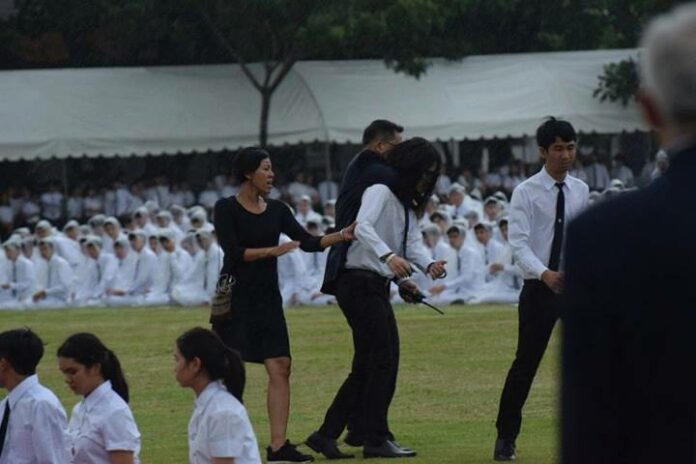
Chulalongkorn University professor Ruengwit Bunjongrat holds fourth-year student Supalak Damrongjit in a headlock on Aug. 4, 2017, at a university initiation ceremony held on campus. Photo: Netiwit Chotiphatchaisal

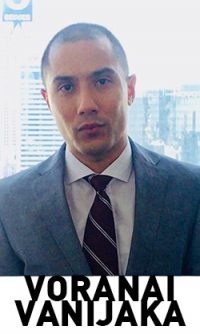
Voranai Vanijaka

A lot of people argue that the Thais are not ready or not equipped for democracy. There may be a grain of truth in this statement. However, I would retort that I learned how to swim by my father first throwing me into the pool.

Life is a trial by errors, learning is doing, no risks no returns, nothing ventured nothing gained – there are plenty of sayings that serve to remind us to not live a life full of excuses. Like the great philosopher Nike of Beaverton proclaimed so many years ago, “Just do it.” Nonetheless, there is still something to the first statement of this column. Let’s examine it.

On Aug. 4, 2017, pandemonium ensued during the freshmen induction ceremony at Chulalongkorn University where students were expected to prostrate on the ground. Led by the former student president Netiwit Chotiphatphaisal, a group of students refused to participate. The incident led to one professor putting a student into a headlock in trying to prevent him from leaving the ceremony. On social media, netizens expressed their furor over the students’ action. These students received academic penalties.

Fast-forward to this past week, 25 Western scholars and scientists, including seven Nobel laureates, issued a letter to Chulalongkorn. In the letter, they offered understanding on the importance of the Thai culture but also urged the university to recognize the importance of free speech and an educational institution’s obligation to foster an atmosphere of openness. If any content in the letter could be construed as negative, it may have been use of the term “embarrassment,” in the context that the entire incident was embarrassing for the university.

Read comments left about the related news article on Khaosod English’s Facebook and find social media reactions that explain the thinking of its largely Western or westernized readers. On Khaosod Thai’s Facebook, the social media comments illustrate a completely different mindset. While it may be true that public sentiments are shifting politically, that’s because we are tired of the junta leaders and want to move on with elections and democracy. But that’s about the junta-government. When it comes to culture and tradition, public sentiments have yet to shift from deep-seated conservatism.

One public reaction is the usual cliche we know so well: Farangs should mind their own business; farangs should not comment on Thailand; and of course, farangs can never understand Thailand. Another is in the realm of tragic comedy: Western schools have so much freedom that students are free to shoot them up on a regular basis.

But the attitude relevant to this article is this: Most comments are fine with freedom, and no one espouses hatred of freedom. But, these comments point, freedom must be confined by culture and restrained by tradition. Freedom must be restricted within the boundaries of socially accepted behavior, or the term we Thais like to use: appropriateness.

Who we are today is the consequence of our past. I’ve written many times on how the historical evolutions of Western vs. Thai society have produced different cultural mindsets. Freedom, culture and tradition are important everywhere. However, where a typical Westerner might put freedom as No. 1 on his list of social ideals, a typical Thai may put tradition on top. As such, in Thailand, whenever conflict arises between liberty / human rights vs. culture / tradition, in general the betting odds are on the latter.

This norm does not just dominate our history, it is also what we are taught in schools. From an early age, we are taught to subjugate ourselves to the authority of our elders, prostrate before tradition and bow to social norms. Therefore, it is simply the logical consequence that when young students refuse to prostate or when foreigners critique, we have reactionary impulses. We are fiercely protective of the things we have been taught to love and obey since we were young.

Now, if a society does not value rights, liberty and freedom above all things, then naturally democracy will struggle. The solution to this quandary is something people have talked about for decades, but nothing has ever been done: education. It’s a cycle difficult to get out of. Cultural mindsets are taught and nurtured, but how are we to foster the minds of the young to be different, when the teachers themselves adhere to old traditions, without exception?

Advertisement

DJ Dragon Interviews Solar Soul Star Pyra

Photo: Courtesy

mongkorn.bug .2017

Peeralada Sukawat, or Pyra, has come a long way since her humble beginnings lending her voice in collabs with the likes of electro-funkmaster Gramaphone Children and Thai rap duo Jayrun & Akarin.

This month, 25-year-old Pyra takes the spotlight by dropping her latest single “White Lotus,” but not before I had a chance to interview her about her career.

She calls her latest work “Solar Soul.” Soundwise, it takes her music deeper into neo-soul territory, while lyrically she explores Taoist and Buddhist themes. Visually she ditches the cute girl image for sak yant hand tattoos and an Indian nose ring.

For the track, Pyra’s sensual vocals are laced over ambient soundscapes, while melancholic melodies and a deep af bassline rattles subwoofers under lyrics like:

“Caught up by delusion of a,
Self-created illusion,
That In the depths of this water,
You can’t breathe? Are you sure?”

The track was produced by Kitsch Kat label mates Gramaphone Children and producer Cyndi Seui.

The Bangkok-raised Pyra credits her strict Asian parents for pushing her academically as well as getting her started in extra-curricular, after-school music programs. This, she said, inspired her to write music.

At 9, she recorded her first collaboration with pop superstar Thongchai “Bird” Mcintyre and by 16 was learning music production.

Her first solo track, “Stray,” was released to critical acclaim in 2016, making its way to the No. 1 spot on Thailand’s Apple Music Hot Charts.

I had a chat with Pyra and talked to her about her new single “White Lotus” and the creative process of working with artists like Gramaphone Children and Cyndi Seui. Here’s our lightly edited exchange.

Mongkorn Timkul: Soundwise, White Lotus sounds a lot edgier than your past releases. Was this the kind of vibe you’ve always wanted to do?

Peeralada Sukawat: I’m quite dark and introverted as a person. If I was a color, I would be dark purple with a hint of red tint. If you trace back to my first single, it’s actually darker than “White Lotus.” That one is called “Stay” featuring Twopee Southside. Back then I was quite afraid to release such a deep and dark tune because I don’t think the crowd will comprehend it, but somehow I did after a year of finishing it.

MT: “White Lotus” is written in English. Do you feel more comfortable expressing yourself in English or Thai? You mentioned the track has a lot of Buddhist and Taoist references. What does the White Lotus represent? Something which came from mud can turn into something beautiful?
PS: I feel that I’m twice as comfortable at expressing myself in English. After all, I’ve grown up in an international school since first grade.

On the representation, Buddha compared humans to lotuses in 4 positions – the under-the-mud lotus, under-the-water lotus, boom lotus and the bloom lotus. And yes, as you mentioned, something from the mud can turn into something beautiful and vice-versa. The philosophy and teaching of Buddhism / Taoism is so beautiful and important, but these are the areas that people hardly mention today. The core principles of these religions are one of the best life guides you can find out there but what’s being practiced and told everyday is the business side of things, which I find very unpleasant.

MT: What will the rest of the album be like?

PS: The pillar for Pyra’s musical work will always be neo-soulful vocals built with a distinctive melodic style. If asked what’s my genre, I’ll say “Solar Soul.” We “solar artists” make music with a greater purpose to tackle social impact issues, to disrupt the ugly system and to leave the world a better place before we perish. I believe that’s the duty of someone with the ability to influence the masses. We should be able to contribute positively to the society. We give, we take. The secret is actually that the more you give, the more people will be willing to give back to you. So let’s all start by creating values to those around you.

MT: You’ve collaborated with many great producers and musicians. What was it like working with Jaree [Gramaphone Children] and Cyndi Seui for this release?

PS: I’d seen so much of their work in such different genres and styles, and deep in my mind I knew I wanted them to produce for me, but I didn’t really say it. Somehow I found my way into talking with the country manager of Believe Digital Group, my music distribution company, to convince Gramaphone Children for me.

I usually finish most of the tracks by myself alone at home in my bedroom studio then show it to the team and they work the magic to take my vision to the next level. They pick better sounds, design all these amazing soundscapes and advise me on my vocal design. For some other tracks, they throw and bounce me a guitar stem and let me create everything else around that.

MT: This is by far my favorite release from you. Artistically, do you think you’ve reached the point where you want to be, or can your fans expect a whole lot more in the future?

PS: I’d say song and image-wise, I’m very satisfied. It’s very close to what I’m aiming for. But I’m a big dreamer. I will always set higher goals for myself and my creations. I don’t know yet what I’m gonna create for my fourth EP, but I do have a slight idea for my third. But expect growth and maturity over time.

White Lotus drops on Jan. 26 and will be available on the Apple Store.

More information can be found on her website.

Advertisement

Hot News

LATEST NEWS

Bangkok
overcast clouds
26.6 ° C
26.6 °
26.6 °
86 %
1.5kmh
96 %
Mon
36 °
Tue
37 °
Wed
37 °
Thu
36 °
Fri
36 °