32.3 C
Bangkok
Tuesday, June 23, 2026
Home Blog Page 2248

2 Chinese Tourists Detained for Making Nazi Salutes in Berlin

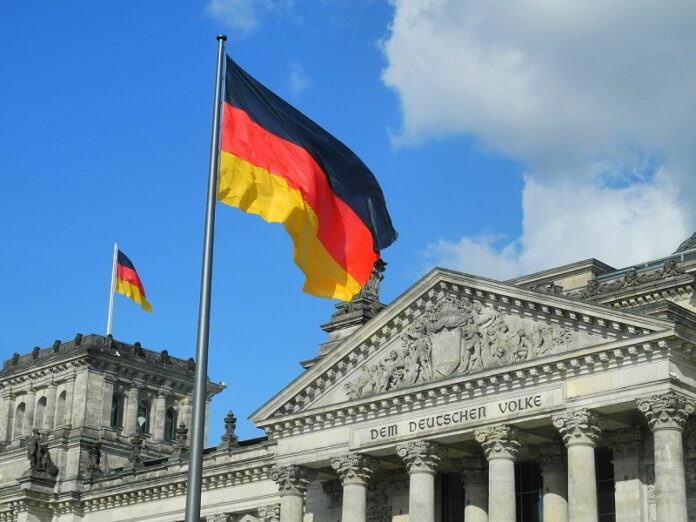
The German Reichstag seen here in 2014.

BERLIN — Police in Berlin say two Chinese tourists were detained Saturday for performing banned Nazi salutes in front of the German parliament.

Officers saw the two men, aged 36 and 49, taking photos of each other making the gesture in front of the Reichstag.

Police said in a statement that the men were questioned at a nearby precinct but later released after leaving a security deposit of 500 euros (USD $593) each.

They face a criminal investigation for using symbols associated with organizations that are considered to be in breach of Germany’s constitution. Convictions can incur a fine or a prison sentence of up to three years.

Advertisement

Disagreements Over China, Korea in ASEAN Delay Joint Statement

Canadian Foreign Minister Chrystia Freeland, fourth left, applauds with the Association of Southeast Asian Nations foreign ministers and their representatives Sunday as they take part in the ASEAN-Canada ministerial meeting of the 50th ASEAN foreign ministers' meeting and its dialogue partners. Photo: Bullit Marquez / Associated Press

MANILA — Two Southeast Asian diplomats say disagreements over North Korea’s intercontinental ballistic missile tests and territorial disputes in the South China Sea have prevented the region’s top diplomats from promptly issuing their joint communique after an annual summit in Manila over the weekend.

One of the diplomats tells The Associated Press that Cambodia expressed concern over the issuance by the Association of Southeast Asian Nations’ foreign ministers of a separate statement criticizing North Korea’s two ICBM tests last month.

The diplomat said Sunday Cambodia wants its sentiments on the Korean Peninsula better reflected in the ASEAN foreign ministers’ joint communique, causing a delay in its issuance Saturday after the ministers concluded their meeting.

Another diplomat says the wordings on the South China Sea issue to be included in the communique had not yet been finalized Saturday.

The diplomat says the South China Sea may be settled faster and will likely not carry sensitive issues that China objects to because the ministers are aware of Beijing’s crucial economic and trade relations with ASEAN member states.

Both diplomats spoke to the AP condition of anonymity because they were not authorized to discuss the issues publicly.

Story: Jim Gomez

Advertisement

Indian Boxer Beats Chinese Rival, Doesn’t Want His Belt

Indian boxing and WBO Asia-Pacific Super Middleweight champion Vijender Singh, left, fights with WBO Oriental Super Middleweight champion of China Zulpikar Maimaitiali, right, Saturday during their fight for the double title in Mumbai, India. Photo: Rafiq Maqbool / Associated Press

NEW DELHI — Indian boxer Vijender Singh won his fight on Saturday and then offered to give his Chinese opponent’s belt back in a gesture of peace between the two rival nations.

The fight against China’s Zulpikar Maimaitiali went all 10 rounds with Singh the winner in a unanimous verdict – 96-93, 95-94, 95-94.

Singh successfully defended his WBO Asia Pacific super middleweight title and also took his opponent’s WBO Oriental super middleweight belt.

Singh hugged top Bollywood star Amitabh Bachchan and other celebrities among fans at the National Sports Club of India in Mumbai, the country’s financial and entertainment capital.

Singh then came back into the ring, took the microphone and said: “I don’t want this title. I will give it back to Zulpikar.”

He added: “I don’t want tension on the border. It’s a message of peace. That’s important.”

The countries have been involved in a lingering dispute over a contested region high in the Himalayas where China, India and Bhutan meet.

Advertisement

Legalizing Thailand’s Sex Industry Unfathomable

In this undated image, two women approach a passerby in Bangkok's Soi Cowboy. Image: Bangkok 112 / YouTube

retention.column

Last month’s recommendations by a UN body promoting gender equality to Thailand to stop prosecutions of female sex workers and violent raids of entertainment venues have got me thinking further about the issue.

While the UN Committee on the Elimination of Discrimination Against Women, or CEDAW, was bold in making such suggestions in its 14-page report released on July 24 from Geneva, in realities such suggestions are much much easier said than done.

Please do not mistake this writer for being a supporter of continued criminalization of “women in prostitution,” as CEDAW’s described it. In fact I am for legalizing sex work so long as these workers have willingly entered the trade, known by those who looked down on them as prostitution. They will no longer have to hide, be extorted or exploited further. Proper income tax could also be collected.

While I do not personally purchase sex, I think we should be open-minded and not confine ourselves to one moral compass.

Who am I to look down on sex workers and feel morally superior when there are people in many other professions who sell their souls to the highest bidder by focusing their whole life in whatever legal works that promised them profit-maximization? Think about people who are paid to work tirelessly to convince us that their products or services are the best in the trade, no matter what the reality may entail. And that’s just the beginning.

For sexpats and Thai sex customers who wish that sex industry would be legalized one day, they should consider the factors below.

Pravit.mug .column.final

One of the most obvious major obstacles is the urge to maintain Thailand’s image or face. Thai face is so thin many can’t bear having their country be associated with red light districts and sex tourism, never mind the reality.

One naturally recall the emotional fiasco over Longman Dictionary when it was forced by not just the Thai government but angry public to alter its 1993 edition which contains an entry on Bangkok that partly described the city as “a place where there are a lot of prostitutes.”

No, no, no, decent and morally-upright Thais can never concede to such a description, no matter the reality on the ground. Legalizing prostitution or even ending the criminalization of women in prostitution may thus be just a pipe dream.

If you are still not convinced. Consider the need for these Thais to safely maintain the moral high-ground. Like in the English language, calling someone a “whore” or karii (กะหรี่) enables one to feel superior over those described as such. Somehow, the moral hierarchy must be maintained and some professions have to be kept much lower than others, fair or not. Prostitution as a profession remains among the lowest of the low to most people.

In Thailand, it’s hard to imagine how sex workers will ever be treated like any other workers – like in Amsterdam’s infamous red-light district where skimpily clad women try to seduce you from behind generic but legal glass windows. Here in Bangkok and elsewhere in Thailand, like in Phuket’s Patong Beach or Pattaya’s Walking Street, which is in like Bangkok’s Patpong on the beach, the flesh trade is supposed to be illegal, despite what one witnesses with one’s own eyes.

Perhaps it has to do with men’s desire to control women’s reproductive system that is being challenged by sex work. People also tends to traditionally think of sex as something ideally not to be consummated without love.

It must be confessed here that at subconscious level, I still find sex work rather unsettling. The trade of flesh for cash is never easy to contemplate though we should try to regard it, or at least let those willing, to see it as just another monetary transaction.

Nevertheless, legalizing sex work, or even thinking about such possibilities, breaks the narrowly defined moral code and embraces an alternative way of looking at sex industry.

Are Thais ready and mature enough to contemplate the unfathomable?

Advertisement

Rwanda Leader Wins 3rd Term in Vote He Called ‘A Formality’

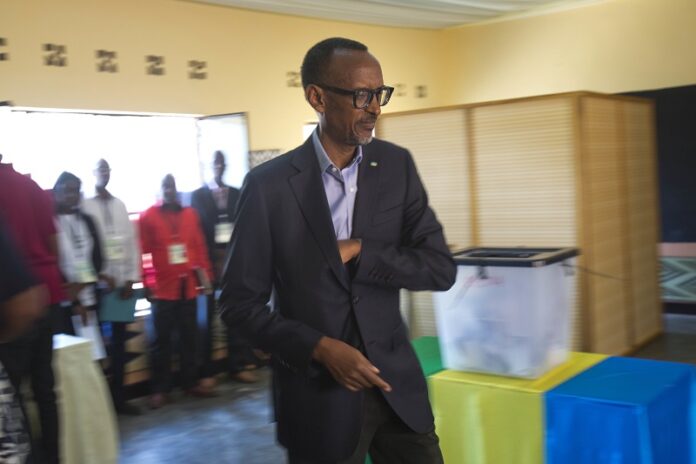
Rwandan President Paul Kagame arrives to cast his ballot Friday in Rwanda's capital Kigali. Photo: Jerome Delay / Associated Press

KIGALI, Rwanda — Rwanda’s longtime President Paul Kagame has easily won a third term in office in what he had called “a formality.” He faces another seven years leading the small East African nation praised for its economic performance but criticized for its silencing of opponents.

Electoral authorities overnight said Kagame had won more than 98 percent of the vote with 80 percent of the votes counted, with no major change expected when final results are announced later Saturday. He had faced two challengers.

Kagame addressed jubilant supporters at party headquarters and urged Rwandans, including those who hadn’t supported him, to work together.

“The victory belongs to Rwandans who put trust in me,” he said. “I promise to build on the achievements so far registered and transform the country.”

Kagame has led the country of 12 million people since his rebels helped to end its genocide in 1994 in which more than 800,000 Tutsis and moderate Hutus were massacred by Hutu extremists.

The 59-year-old president has been praised for the country’s economic growth, but human rights groups accuse his government of using state powers to silence any opposition. Rwandan authorities, including the president, deny it.

A constitutional amendment in 2015 allows Kagame to stay in power until 2034 if he pursues it.

Kagame was running against Frank Habineza of the Democratic Green Party of Rwanda – the only permitted opposition party – and independent candidate and former journalist Philippe Mpayimana. Three potential candidates were disqualified for allegedly failing to fulfil requirements including collecting enough signatures.

With 80 percent of the votes counted, Mpayimana had received just 0.72 percent and conceded defeat and congratulated Kagame. Habineza received 0.45 percent.

More than 80 percent of Rwanda’s USD 6.9 million registered voters cast their ballots, according to Charles Munyaneza, executive secretary of the Rwanda Electoral Commission.

In Rwanda’s tidy capital, Kigali, there had been little hint of the coming vote. Candidates had been barred from putting campaign posters in most public places, including schools and hospitals. The electoral commission vetted candidates’ campaign messages, warning that their social media accounts could be blocked otherwise.

Two decades of often deadly attacks on political opponents, journalists and rights activists created a “climate of fear” ahead of Rwanda’s election, Amnesty International said in a report last month.

In 2010, Kagame won election with 93 percent of the vote.

In July, he told a campaign rally that “the day of the presidential elections will just be a formality.”

Story: Ignatius Ssuuna

Advertisement

Savor Bad Burger’s Honesty and Inconvenient Truths

By Emily Churchill

Her name floats through the social media feed. Maybe you follow her; maybe you’ve gotten into a spat with her on Bangkok Foodies. With a notable social media presence marked by biting humor and brutal frankness, Poupee Paethanom has stood out in the capital’s food scene, inviting both devotion and derision. Her policy? Honesty always, even if some don’t like it.

Bad Burger, inspired by villains of lore, is Poupee‘s most recent endeavor. Walk into the restaurant and take a look around – you’ll get a feel for what this chef is about.

The wall hosts cartoon mug shots of famous Hollywood villains –  Batman’s Joker, Alice in Wonderland’s Queen of Hearts and Sleeping Beauty’s Maleficent, to name a few – with their famous catchphrases.

The Wi-Fi sign betrays a coy hostility. The password is an answer to a question: “What came first, chicken or egg?”

Spoiler warning: The password, of course, is “I don’t know.” The Wi-Fi puzzle is a device Poupee uses to make customers talk to her and the staff – a form of icebreaking trickery.

Poupee is a fan of the villains of pop culture, and she identifies with their origin stories.

“Most of them were not born villains, but they were good people that were bullied, so they decided to stand up for themselves,” she explains.

poupee.fb

Moving onto this busy street has given Poupee an opportunity to play the role of one of her favorite antagonists. She says that because she is a newcomer to the area, many restaurants have had issues with her presence.

“Opening restaurants so close to others, it looks like I’m the bad guy,” she says. “But I have the story, I have my reasons, and I want people to know them.”

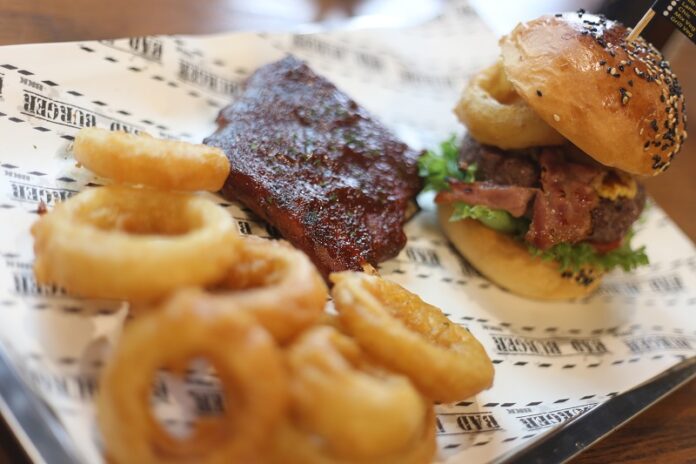
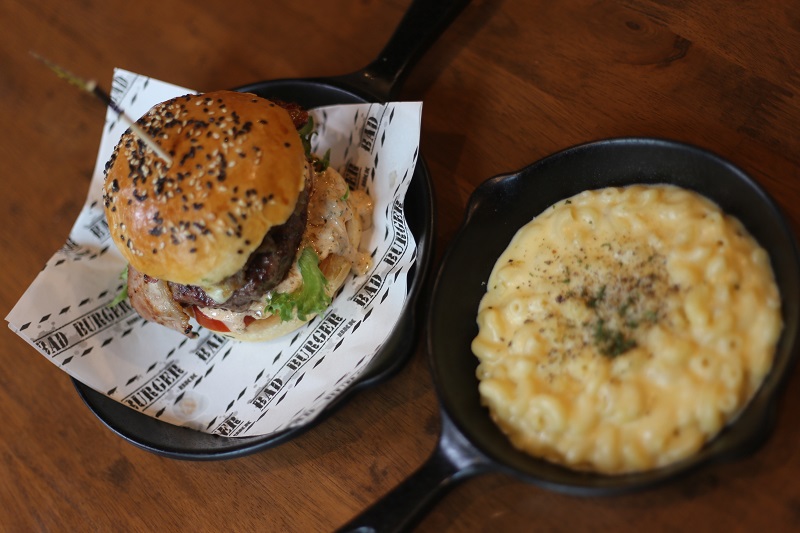
The burgers are served on an old-school metal lunch platter on wax paper with “Bad Burger” printed across it in all caps like caution tape. Sides are served in stylized cast-iron pans, lending a rustic charm to the otherwise wood-and-industrial sense of the space.

Poupee has carefully crafted these burgers to different levels of “badness” based on what they come with. Choices range from basic American burgers to special burgers with options such as grilled onions, Gruyere and bearnaise sauce. The rudimentary burger sells for 249 baht and is aptly called the “Basic Bit**.” There is a vegan and vegetarian burger on the menu for 239 baht each. Half and full racks of ribs are served for 359 baht and 579 baht, respectively.

“When I do this food, I want people to feel like it’s worth it,” Poupee says. “I want to give them something that is a good value, something that I’m not trying to teach or get money out of… I didn’t study any marketing or anything, but what I know is that when people are happy with it, they will keep coming back.”

With a slight raise of her eyebrows, Poupee adds what could be a trademark for her personal brand:

“It’s just honest business.”

Bad Burger is open noon to 11pm daily. Find it on the second floor on the south side of Sukhumvit Road between sois 18 and 20, a short walk from exit No. 1 of BTS Asok.

IMG 3908

Advertisement

Cambodian Police Arrest 175 Chinese Suspects in Phone Fraud 

PHNOM PENH — Officials in Cambodia said Friday they have arrested 175 Chinese citizens after a tipoff from Chinese police about their suspected involvement in an internet phone scam.

The Interior Ministry’s immigration investigation chief, Gen. Ouk Haiseila, said the suspects were arrested Wednesday in the western town of Poipet on the Thai border.

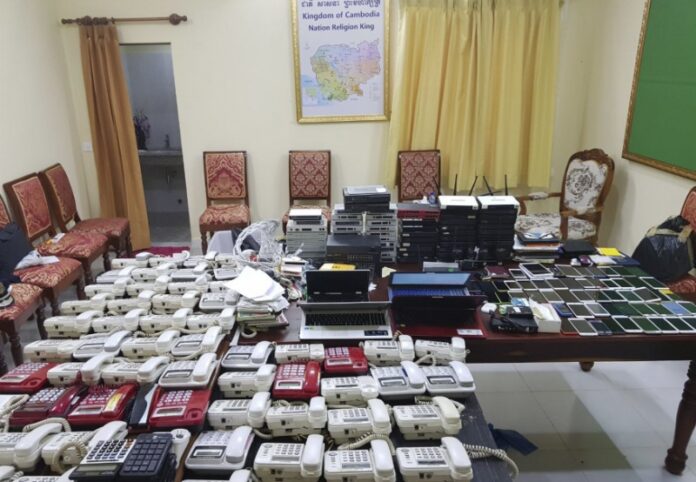
The arrests are the latest in a crackdown in the region on Chinese gangs that make phone calls made over the internet to extort or trick people into transferring money to them.

There have been similar cases in the past few weeks in Thailand and Indonesia. Most of the targets appear to be fellow Chinese, and suspects are generally quickly deported to China. Chinese police often take part in raids on the gangs.

Since 2012, almost 1,000 Chinese and Taiwanese accused of taking part in internet scams have been arrested in Cambodia and deported to China. Recent raids in the capital, Phnom Penh, captured several dozen people, but others have been arrested in recent years in Kandal and Svay Rieng provinces and the seaside town of Sihanoukville, where 166 suspects were detained in coordinated raids in November 2015.

The suspects in the latest raid apparently used the same tactics as a gang of 31 arrested last month in Phnom Penh.

In that case, the gang allegedly contacted women over social media and tricked them into exchanging nude or sexy photos, and then extorted money from them by threatening to circulate the pictures online.

Ouk Haiseila said that in addition to seizing telecommunications equipment in Poipet, police found documents with the names of several thousand potential victims.

He said the suspects told interrogators that fellow Chinese lured them to Cambodia to work as goods promoters or in offices, but after they arrived, they were trained in IT skills such as using the internet to make phone calls.

Last month, police in neighboring Thailand arrested 44 people — 19 Chinese citizens and 25 Taiwanese — who they said made internet calls in which they claimed to be banking officials and accused their targets of financial crimes.

The targets would then be put in touch with a fake policeman — also at the gang’s headquarters — and told they could escape arrest by transferring the allegedly stolen money to a bank account belonging to the scam artists.

The same scheme was allegedly used in Indonesia, where police arrested 153 suspects last month.

A major issue in such arrests, which normally end in deportation, is where the suspects are deported to. Although Taiwan maintains it is independent, Taiwanese suspects have often been deported to China, a measure of China’s diplomatic influence backing its claim that Taiwan is part of its territory.

Story: Sopheng Cheang

Advertisement

Myanmar Court Grants Bail for Editor in Defamation Case 

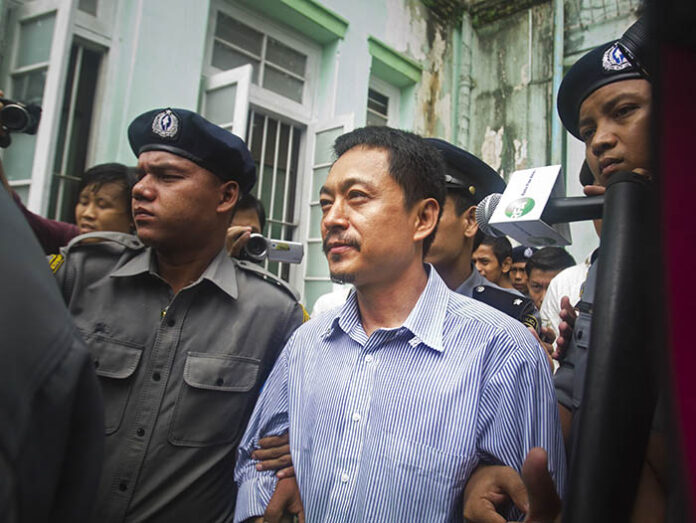
Kyaw Min Swe, at center, chief editor of The Voice Daily newspaper, is escorted by police on June 16, 2017, during a trial at the township court in Yangon. Photo: Thein Zaw / Associated Press

YANGON — A court in Myanmar granted bail Friday to a newspaper editor who is being tried under a controversial defamation statute in a telecommunications law.

Kyaw Min Swe, chief editor of The Voice Daily, was arrested in June for publishing online a satirical article that allegedly mocked the efforts of the military to reach a peace agreement with ethnic minority groups.

His previous requests for bail had been rejected, but during his ninth appearance in court, the judge granted his release on bail of 10 million kyats (245,000 baht).

He was charged under Article 66(D) of the Telecommunications Law, which broadly defines defamation and carries a penalty of up to three years’ imprisonment.

Rights groups decry the article as a restriction on freedom of expression, but the country’s parliament this week turned down a bid to drop the article and decriminalize the offense.

One of the newspaper’s columnists, Kyaw Zwa Naing, was also arrested on June 2 under Article 66(D), but the charge against him was dropped last month.

Advertisement

Active Suppression of Yingluck Supporters Before Verdict

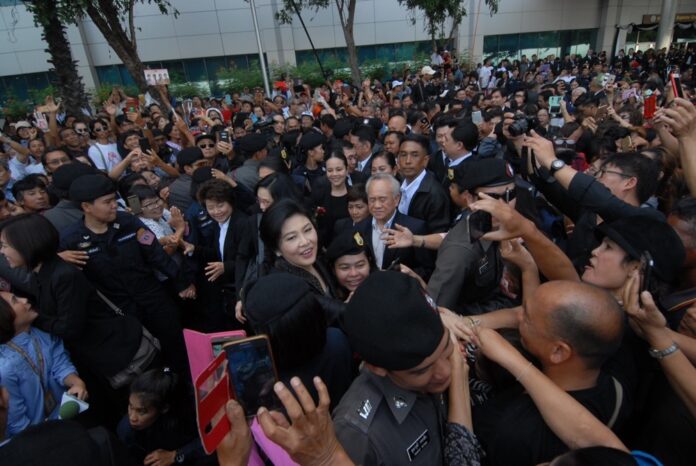
Former premier Yingluck Shinawatra greets supporters Tuesday outside the Supreme Court in Bangkok.

BANGKOK — A day after hundreds gathered to support former premier Yingluck Shinawatra’s closing statement in her malfeasance trial, the deputy chief responsible for the most serious police cases launched a crackdown against the people who drove them there.

Gen. Srivara Rangsipramkul, who usually handles matters of national security, charged 21 minivans drivers Wednesday with violating the Land Transport Act by straying from their designated routes to bring Yingluck supporters to Bangkok. Redshirt supporters describe this as just one of the measures being taken to dissuade shows of support for the head of the former elected government.

The leaders of the military government, including junta leader Gen. Prayuth Chan-ocha, have in recent weeks urged Yingluck’s supporters to stay home on Aug. 25 and watch the long-awaited verdict on television. They have also dispatched soldiers to talk to locals who support Yingluck.

Read: 3 Junta Critics Charged With Sedition Over Facebook Posts

Redshirt supporters say these efforts are emblematic of the Prayuth regime’s strategy of uprooting the legacy of its political rivals, the Shinawatra clan, and falling short of that, render it invisible. Some believe the government is worried any gathering could escalate into a broader show of defiance.

Supporters said these suppression tactics worked this past Tuesday, when hundreds gathered as Yingluck told the court the charges were politically motivated and urged judges not to heed Prayuth’s intent she be found guilty.

The Red Doctor

Pongsak Phusitsakul, 57, is a general surgeon at a private hospital who lives an hour west of Bangkok in Ratchaburi province. Pongsak was in Bangkok on Tuesday, but only after he said police visited him in a failed bid to convince him not to go.

“I am irritated,” Pongsak said of the numerous police visits to his home and even the hospital where he works.

The surgeon said a cop asked him to meet to talk again tonight, Friday, Pongsak said he’d oblige. He said police acknowledged that they can’t stop him from driving to Bangkok to join the hundreds who showed up to greet the ex-premier.

It just seems they don’t want to be blamed for it.

“They asked that if a placard is held up, ‘Ratchaburi’ should not be written on it,” Pongsak said Thursday.

Read: Asking for Justice, Yingluck Tells Court She is Victim of ‘Political Game’

Supporters who went Tuesday were told by police to put down signs that identified their home provinces.

“They are looking out for themselves. Everyone has been visited and even trailed. They even asked fellow Redshirts about details regarding my wife and child,” he said, adding these plainclothes cops take photos with him to present to their superiors.

Many other local Redshirts are not afforded the status of being a physician, however.

Pongsak said others have received rawer visits and threats by cops out of uniform. Their ID cards and homes have been photographed. Some were warned that five people or more simply traveling together to cheer Yingluck violated the junta’s ban on political assembly. Checkpoints were set Tuesday along roads leading into Bangkok from the provinces, Pongsak said, though only hired vans were stopped.

No matter how many people show up Aug. 25, supporters say the regime is fearful of its potentially symbolic value.

“They don’t want to have a scene where many people show up. If Yingluck goes to prison, we may see a phenomenon in which people go squat and sleep in front of the prison, and this could embolden others to come out,” Pongsak said.

Redshirt Noppakow Kongsuwan is another die-hard Yingluck supporter who’s cheered the beleaguered ex-premier at the court on many occasions.

Noppakow said Tuesday’s turnout, estimated by police to be 800 and supporters to be over 1,000, was lower than hoped. He attributed the past week’s flood crisis across the north and northeast as another factor in the smaller-than-expected crowd.

But come Aug. 25, he said it will be a disappointment if fewer than 5,000 show up.

“It may not affect the verdict, but it will communicate to society that these people think what is being done to Yingluck isn’t fair,” Noppakow said, playing down the chance a guilty verdict could lead to wider unrest against military rule as has been speculated on social media.

Fair or not, Kiat-udom Maenasawat, a former Pheu Thai MP for Udon Thani province, sounded fearful and apologetic when asked about regime efforts to discourage people from his overwhelmingly red province from gathering.

“Please excuse me because I’m not ready to give out details,” Kiat-udom said, adding that he didn’t want to discuss what happened to others in his community. “I will personally be there [on Aug. 25] because this is our party’s policy, however.”


Advertisement

Be Prepared: Bangkok Buses Getting New Routes

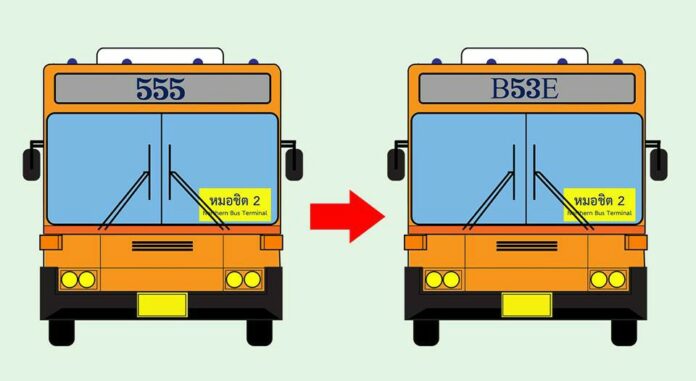
BANGKOK — The capital’s public bus system will undergo radical changes when hundreds of them have both their routes and numbers changed starting September, a transport official said Friday.

Sanit Promwong, director of the Land Transport Department said more than 200 bus routes will change across Bangkok and receive new route numbers in the next two years.

“The most important thing is that local people will not be affected,” Sanit said Friday. “We’ll gradually change the buses’ numbers over time and commuters will start to get used to it.”

Officials say the radical route re-do will make the system more systematic. Any routes using letters from the Thai alphabet will be changed over to Roman characters for more convenient use by tourists.

The first eight routes will make the change in September. For example, the No. 11 bus will become the No. R3 bus and run from Suan Luang Rama IX to BTS National Stadium instead of its former route between Mega Bangna to MBK Center.

Bus No. 514, which runs from Minburi to Silom, will now be No. G59 and run from the eastern district of Minburi to the Si Phraya Pier near River City Bangkok.

Bus lines will also be separated into four color groups: Green-line routes will begin with G and yellow-line routes with Y, for example.

The project will expand during the next two years. By the end of 2019, 269 route numbers are expected to be changed, according to transport officials.

Some of the planned changes have been posted online.


Advertisement

Hot News

LATEST NEWS

Bangkok
overcast clouds
32.3 ° C
34.4 °
30.5 °
62 %
4kmh
86 %
Tue
37 °
Wed
37 °
Thu
37 °
Fri
37 °
Sat
37 °