


























31.6 C
Bangkok
Sunday, June 28, 2026
Home Blog Page 2458

UK Lawmakers Back Bill to Trigger EU Exit Talks

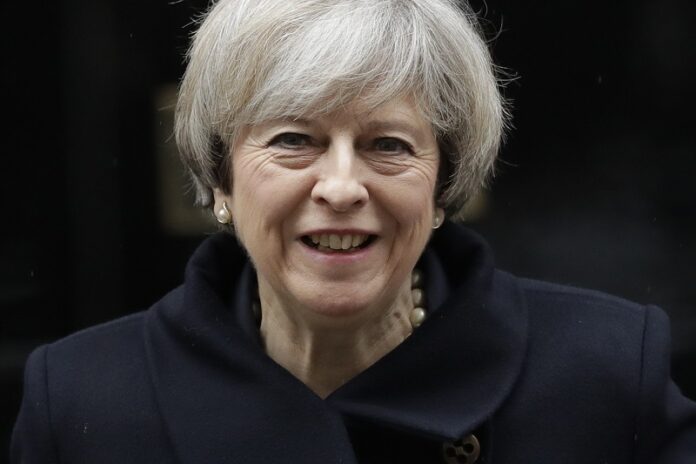
British Prime Minister Theresa May leaves 10 Downing Street in London, to attend Prime Minister's Questions in 2017 at the Houses of Parliament. Photo: Matt Dunham / Associated Press

LONDON — Britain moved closer to leaving the European Union Wednesday as lawmakers backed a bill authorizing divorce proceedings and kept alive the government’s plan to trigger Brexit talks within weeks.

The House of Commons decisively backed the bill by 498 votes to 114, sending it on for committee scrutiny. The result was a victory for the Conservative government, which had fought in court to avert the vote out of fear Parliament would impede its Brexit plans.

Lawmakers also defeated a “wrecking amendment” proposed by the Scottish National Party that sought to delay Britain’s exit talks with the EU because the British government has not disclosed detailed plans for its negotiations.

During two days of debate in the House of Commons, many legislators  Euroskeptic and Europhile alike  said they would back the bill out of respect for voters’ June 23 decision to leave the EU.

But opposition parties will try to insert more amendments during the next stages of the parliamentary process. They are seeking to prevent an economy-shocking “hard Brexit,” in which Britain loses full access to the EU’s single market and faces restrictions or tariffs on trade.

After committee consideration, the bill is due to return to the House of Commons for a final vote next week before moving on to Parliament’s upper chamber, the House of Lords.

The government was forced to introduce the legislation after a Supreme Court ruling last week torpedoed Prime Minister Theresa May’s effort to start the process of leaving the 28-nation bloc without a parliamentary vote.

The government wants to have the bill approved by early March so it can meet a self-imposed March 31 deadline for triggering the EU divorce talks.

Scores of lawmakers spoke during more than 16 hours of debate over two days. Those who backed the winning “leave” side in the referendum said they would vote proudly to start the exit process.

Others, who voted to remain in the EU, said they would respect the will of the people despite their own reservations.

Former Treasury chief George Osborne, a pro-EU Conservative, said “to vote against the majority verdict of the largest democratic exercise in British history” would set Parliament against the people and “provoke a deep constitutional crisis in our country.”

Still others said they would oppose the start of withdrawal negotiations, accusing the government of rushing Britain toward the EU exit door with little idea of what is on the other side.

The government says it will publish a White Paper outlining its strategy for withdrawal on Thursday, but it’s unclear how many new details it will contain.

“Voting for departure is not the same as voting for a destination,” said Liberal Democrat leader Tim Farron, who called on the government to guarantee a second referendum to approve a final deal with the bloc.

Scottish National Party lawmaker Angus MacNeil said that in acting to trigger Brexit, “the House of Commons has taken leave of its senses.”

“It’s crossing its fingers and hoping for the best,” he said.

The U.K.’s largest opposition party, Labour, told its lawmakers to back the bill, but said it plans to try to amend it later to avert the so-called “hard Brexit.”

However, 47 of the 229 Labour lawmakers defied party leader Jeremy Corbyn and voted against the bill.

“I do not believe that the Brexit course we are now set on will make Britain a more prosperous, fairer, more equal, tolerant country,” said Owen Smith, one of the Labour rebels. “I believe, by contrast, that it will make our politics meaner, and it will make our country poorer.”

Meanwhile, Britain’s former top diplomat to the EU warned Wednesday that disentangling the U.K. from the bloc will be a long and arduous process.

Ivan Rogers, who resigned in January after telling the government that a deal could take a decade, told Parliament’s European Scrutiny Committee that Brexit will involve negotiations “on a humongous scale.”

Rogers said consensus among the other EU nations was that a new free trade deal between Britain and the bloc would take until the early 2020s to be ratified.

One major wrangle is likely to be over how much Britain will have to pay the EU to leave. Rogers said EU officials currently put the figure at 40 billion to 60 billion euros (USD $37 billion to USD $56 billion).

Story: Jill Lawless
Advertisement

Clashes as Romanians Protest Law Decriminalizing Official Misconduct

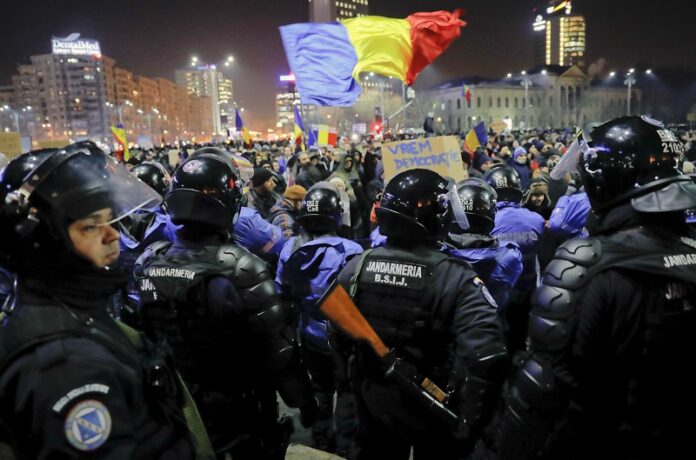
Romanian riot police protect the government building from crowds before minor clashes erupted during a protest Wednesday in Bucharest, Romania. Photo: Vadim Ghirda / Associated Press

BUCHAREST, Romania — Protesters and riot police clashed sporadically in Romania’s capital late Wednesday as tens of thousands demonstrated against the government for decriminalizing some official misconduct, a move that critics at home and abroad called a major a setback for the anti-corruption fight.

A handful of protesters threw firecrackers and smoke bombs at police guarding the main government offices, who responded with tear gas. At least one person was detained and a newspaper kiosk was set on fire. Media reported that the violent protesters were football supporters and not anti-government demonstrators.

Emergency situations official Raed Arafat said two police officers and two demonstrators were treated at hospitals for minor injuries. An unspecified number of other officers sustained light injuries.

It was the second consecutive night of protests against the government, whose adoption of an emergency ordinance that decriminalizes abuse in office went against widespread protests and warnings from prosecutors and the president.

The ordinance was published in the official government monitor at 3 a.m. Wednesday.

The speed with which the center-left government approved the proposal and the hour of its action alarmed critics. The coalition government has been in office for less than a month and the ordinance benefits its allies and Romanian officials facing corruption charges.

“It shows that the government is willing to use backdoor methods with no scrutiny or checks and balances in order to protect and promote itself,” said Dan Brett, an associate professor at the Open University.

There were protests in a half dozen cities around Romania, with people calling for the resignation of the government.

President Klaus Iohannis, who has limited powers and doesn’t oversee the government, called the measure’s adoption “a day of mourning for the rule of law.”

In recent years, Romania has been touted as a regional leader for targeting the rich and the powerful in a crackdown on corruption. But the drive proved unpopular with politicians.

The leaders of the center-left Social Democratic Party and the junior Alliance of Democratic Liberals, which form the current coalition government, both face corruption charges that bar them from serving as ministers.

Social Democrat chairman Liviu Dragnea was unable to become prime minister because in April 2016 he received a two-year suspended jail sentence for vote rigging. On Tuesday, he went on trial for abuse of power while he was president of the Teleorman local council from 2006 to 2012. He denies wrongdoing.

Justice Minister Florin Iordache said the emergency ordinance will decriminalize cases of official misconduct in which the damages are valued at less than 200,000 lei ($47,800).

On Wednesday, Romania’s Supreme Council of Magistrates unanimously agreed to take the emergency decree to the Constitutional Court, which is the last legal resort to stop the law.

The government on Tuesday evening also sent to Parliament a proposal that would pardon thousands of prisoners for non-violent crimes. It says the measure, which would free about 3,000 convicts, would help reduce overcrowding in prisons.

Prisoners interviewed by The Associated Press scoffed at the idea, saying the changes were likely to benefit senior officials rather than ordinary convicts.

Protests erupted in cities around the country after the decriminalization plan was made public last month. The chief anti-corruption prosecutor, Laura Codruta Kovesi, said it “will render the anti-corruption fight irrelevant.”

The National Anticorruption Directorate has prosecuted 1,170 cases of abuse in office during the past three years with damages worth 1 billion euros ($1.07 billion), just under one-third of all of its cases, she said.

The European Union criticized the Romanian government’s move.

European Commission Vice President Maros Sefcovic told reporters that the EU is “following the latest developments in Romania with growing concern.”

“The fight against corruption needs to be advanced and not undone,” Sefcovic said.

Story: Alison Mutler, Vadim Ghirda

Advertisement

Bhutanese Teacher Found 28 Kilometers From Bangkok Hotel

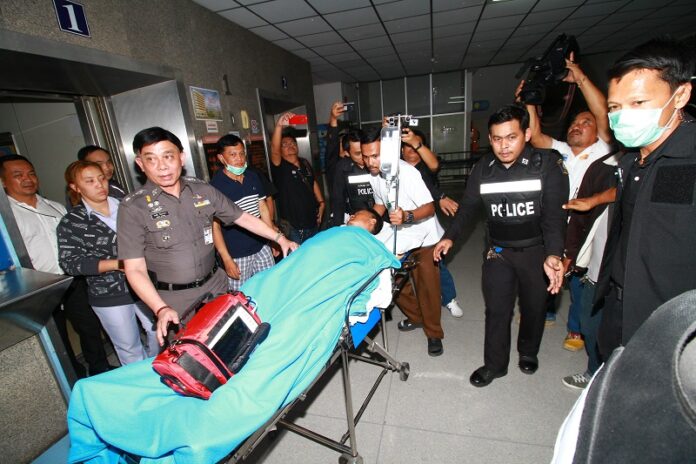
Bhutanese teacher Harka Bahardu Sabba, 40, is taken unconscious to a hospital after he was found in Samut Prakan province Wednesday night.

SAMUT PRAKAN — A Bhutanese teacher was found by the side of a road in Samut Prakan province on Wednesday night, nine days after he disappeared from a Bangkok hotel.

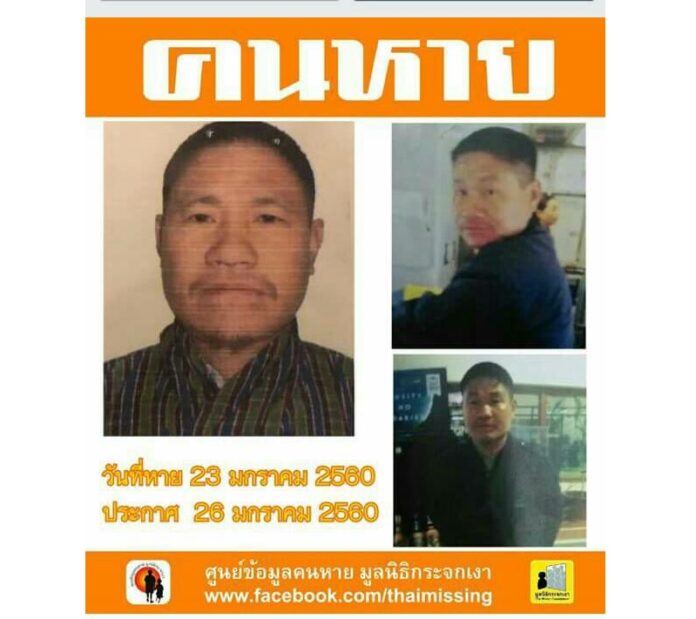
Harka Bahardu Sabba, 40, who disappeared from a Bhutanese education delegation and was the subject of a police hunt, was found 28 kilometers from where he was last seen on Sai Luat Road in Samut Prakan city. He was found unconscious and was taken to a hospital by rescue workers.

Samut Prakan police commander Thammanoon Trithipphong said police would have to wait until he recovers to question him. He said the Bhutan Embassy has been notified.

Read: Search Continues in Strange Case of Bhutanese Teacher Missing 9 Days

Sabba appeared to be suffering from exhaustion and had some scratches on his body. He is now being treated at the Police General Hospital.

Sabba was supposed to travel to Chonburi province with his group of teachers from Bhutan but he disappeared from Sena Place Hotel in Soi Phaholyotin 1 on the morning of Jan. 23.

A police search and social media campaign were launched for Sabba, who spoke neither English nor Thai. He was spotted several times in Samut Prakan in southwest metro Bangkok. He was found almost 28 kilometers from the hotel, a nearly six-hour walk, according to Google Maps.

Advertisement

Pattaya Terrorized by Knife-Wielding, Naked Farang

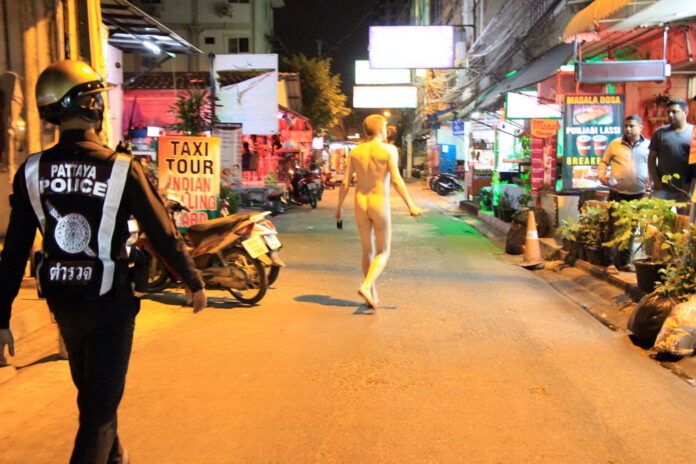
A Police officer trails an agitated man with a knife menacing people Wednesday night in downtown Pattaya city.

PATTAYA — Cops were called in Wednesday night to apprehend a Caucasian man who went on a naked rampage in Central Pattaya.

The man, who remains unidentified Thursday, was seen wandering at about midnight with a knife in his hand close to the Mae Wilai Market located downtown on Central Pattaya Road.

Thongyib Chomdee, a vendor at the scene, said the man charged at several people and tried to damage property, prompting many vendors, including herself, to close down their shops and bar their doors.

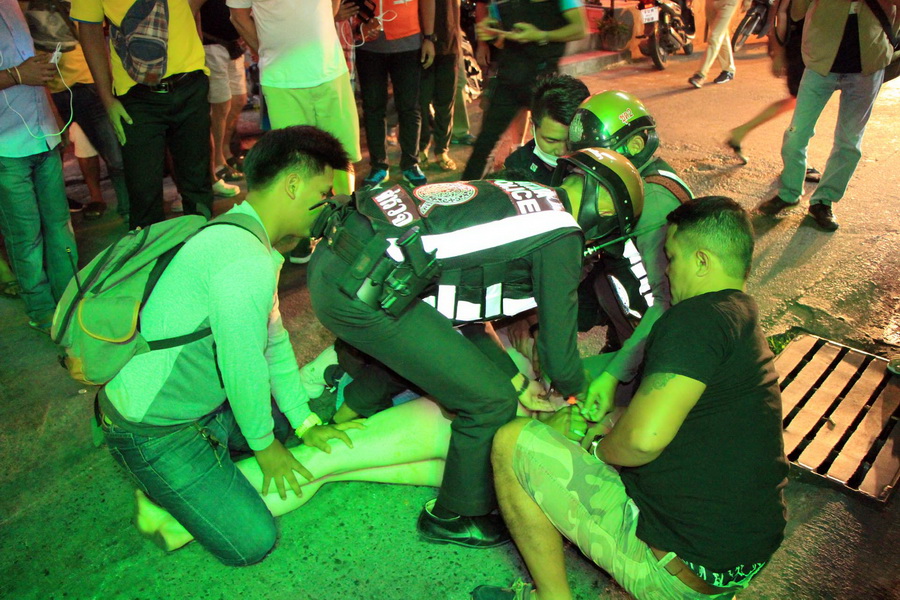
Police officers arrived about 20 minutes after someone alerted them and arrested the naked man. He was reportedly taken to Pattaya City Police Station to calm down.

But a call Thursday morning to the police station found they had no record of the man, indicating he was likely released soon after without charge.

“We don’t have any information regarding this person,” deputy commander Lt. Col. Sompan Suksamran said.

Officers subdue the unidentified suspect Wednesday night in downtown Pattaya city.
Advertisement

Crush of War Drives Boys to Guns in ‘Return to Homs’

BANGKOK — While Syria’s carnage of warfare continues to ravage the country, the outside world finds opportunities to raise awareness of those affected and their daily challenges.

The aspects and consequences of Syria’s wartime struggles will be screened later this month at the Foreign Correspondents’ Club through “Return to Homs,” a documentary portraying lives trapped in a conflict now entering its sixth year.

Filmed in 2013, two years into what was already a devastating war, the film follows Abdul Basset Saroot and Ossama al Homsi in their quest to survive, as they are caught in the crossfire of rebel groups and government forces.

Having won a string of accolades, including the Sundance Festival’s World Cinema Grand Jury award, the documentary provides insight into two young people as they change from normal civilians into rebel insurgents.

Entry is free for members and 150 baht for non-members. The two-hour film will show at 7pm on Feb. 20 at the Foreign Correspondents’ Club, which can be reached via skywalk from BTS Chit Lom’s Exit No. 2.

Note: The date of this event was changed from Feb. 13 to Feb. 20 by organizers. Feb. 13 will be a national holiday on which the occasion of the Buddhist festival Makha Bucha will be observed.

Advertisement

Meet a Thai Couple Who Just Fight All the Time (Video)

MMA fighters Shannon 'One Shin' Wiratchai and Rika 'Tiny Doll' Ishige.

How are two Thai MMA Fighters bringing their global sport back home to the land of Muay Thai? What’s it like being an MMA couple, and how do two fighters with a relationship outside the ring take each other down?

Read: Women Fighters to Smash Bangkok as MMA Penetrates Homeland of Muay Thai

Find out in our interview with Shannon “One Shin” Wiratchai and Thai-Japanese fighter Rika “Tiny Doll” Ishige. Both fighters will compete March 11 in Bangkok at the second of two tournaments staged by One Championship.

Related stories:
Women’s Fights a Strong Part of One’s Expansion Plans
Women Fighters to Smash Bangkok as MMA Penetrates Homeland of Muay Thai
ONE Championship MMA Coming to Bangkok, New Markets for 2017
Rags to Riches: The Story of Thailand’s First MMA Champ

Advertisement

Charles Manson Follower May be Freed on Parole

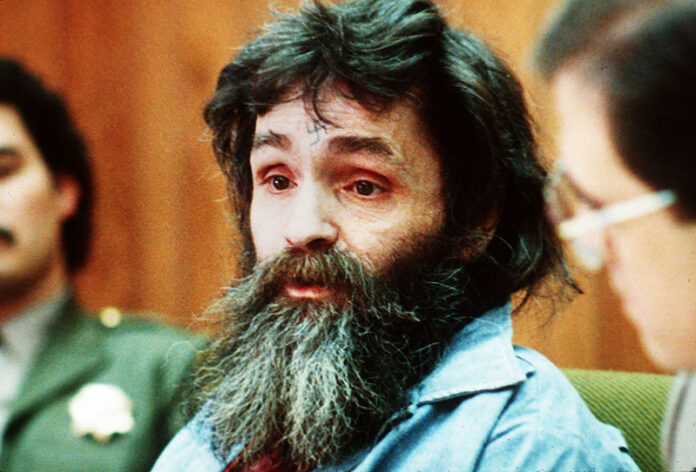
Charles Manson in court in 1986. Photo: Associated Press

SACRAMENTO, California — A parole panel on Wednesday recommended the release of a former follower of cult leader Charles Manson after California governors blocked four previous parole recommendations.

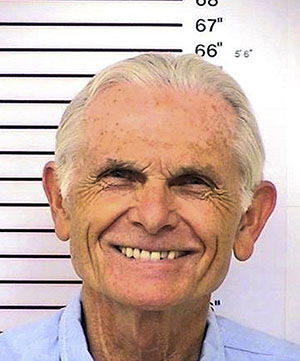
Bruce Davis, 74, had his 31st parole hearing at the California Men’s Colony at San Luis Obispo as he serves a life sentence for the 1969 slayings of musician Gary Hinman and stuntman Donald “Shorty” Shea.

Davis was not involved in the more notorious killings of actress Sharon Tate and six others by the Manson “family” the same year.

Bruce Davis in 2014. Photo: California Department of Corrections and Rehabilitation

During the half-century since the slayings, parole panels have now decided five times that Davis is no longer a public safety risk. Officials have cited his age and good behavior behind bars that includes earning a doctoral degree and ministering to other inmates.

Governors, however, have the final say on release. Gov. Jerry Brown will have about five months to consider the latest recommendation.

Brown rejected a previous recommendation last year. Gov. Arnold Schwarzenegger also concluded that Davis remains too dangerous to be free.

Davis testified at his 2014 hearing that he attacked Shea with a knife and held a gun on Hinman while Manson cut Hinman’s face with a sword.

“I wanted to be Charlie’s favorite guy,” he said then.

Attorney Michael Beckman, who has been fighting for years for the release of Davis, said he is the most rehabilitated prisoner among the 2,000 Beckman is representing in the penal system. “There’s no one even a close second,” he said.

“Now all we have to do is get past the governor, which hasn’t happened the first four times,” Beckman said after the hearing. “I’m sort of at the end of my wits on what to do.”

Los Angeles County District Attorney Jackie Lacey objected to the possible release of Davis. She called the Manson-related slayings “some of the most horrific crimes in California history.”

“We believe he continues to exhibit a lack of insight and remorse and remains a public safety risk,” she said in a statement after the parole decision.

Gary Hinman’s cousin, Kay Martley, said Davis’ crime was so heinous that he should die in prison.

Hinman was tortured for three days, Martley recounted in remarks prepared for the parole hearing.

“This wasn’t a crime of passion or impulse; this was slow, calculated and cold-blooded,” she wrote.

Martley, who traveled from Hinman’s native Colorado to attend the hearing, said she was angry about the recommendation for parole.

“Just because he’s going to be 75, he’s considered a low risk even though they said he has a personality disorder that he’s going to have to work on — his narcissistic behavior, need for acceptance, his grandiosity,” she said.

Martley and Sharon Tate’s sister, Debra Tate, who also attended the hearing, said Davis twice started to rise from his chair in apparent anger and pointed at a parole commissioner when he objected to her questions.

Beckman said his client was merely reacting out of frustration to misinformation that Shea’s body had been dismembered, when he said an autopsy shows it was intact.

“He did not jump out of his chair but he did react a little defensibly and he apologized profusely several times,” Beckman said.

Tate said opponents of Davis’ parole are gathering signatures online to present to Brown.

Davis was convicted with Manson and another follower, Steve Grogan, in the twin slayings. Grogan was paroled in 1985 after he led police to Shea’s buried body. Robert Beausoleil, convicted in Hinman’s death, remains in prison.

Manson and followers Leslie Van Houten, Patricia Krenwinkel and Charles “Tex” Watson are imprisoned for the Tate killings. Their co-defendant, Susan Atkins, died of cancer behind bars in 2009.

Story: Don Thompson

Advertisement

Search Continues in Strange Case of Bhutanese Teacher Missing 9 Days

Photo: The Mirror Foundation / Facebook

SAMUT PRAKAN — Nine days ago, a Bhutanese teacher walked out of his Bangkok hotel and just seemed to disappear.

Three days ago, police said a man resembling Harka Bahardu Sabba, 40, was seen 24 kilometers away in Samut Prakan province. He’s reportedly been seen by witnesses several times since then, but police still can’t be sure it’s him.

“The last time he was spotted, yesterday, was only confirmed by a witness without proof,” said Col Prasert Buakhao of Samrong Tai Police Station. “So we cannot confirm it was him.”

The Bhutanese teacher, who was visiting with a delegation of educators, disappeared early on the morning of Jan. 23 from the Sena Place Hotel in Soi Phahonyothin Soi 11 where they were staying.

Bhutan Ambassador Tshewang Chophel Dorji met with police Wednesday for an update on the case and to express his gratitude for the effort being made to find Sabba.

The ambassador said he was surprised that Sabba, who only speaks Bhutanese, would have traveled so far. He said the teacher has four children back home.

Sabba traveled to Thailand with 10 other teachers for an agricultural training course. Some of his group continued on to Chonburi province. A missing person notice has been sent to police and publicized on social media.

A motorcycle taxi driver, Aduldej Phetroj, 39, said he saw Sabba twice but didn’t know he was missing. The first time was on Soi Sukhumvit 107 on Thursday, then again on Friday. When he saw him on Friday, Sabba looked tired and had no shirt. The motosai taxi driver said he bought him a meal and gave him his shirt. Aduldej said the man could not communicate in Thai or English.

Samut Prakan’s police commander said he has ordered all stations in the province to look for the man.

Traffic police radio released a video in Bhutanese should someone find him. The voice in the video says, “Please go with this person, they will take you to the embassy to take you home.”

Those who have useful information are encouraged to call traffic police at 1808.

Advertisement

Refugees: A World Away From Loved Ones, Anxious and in Limbo

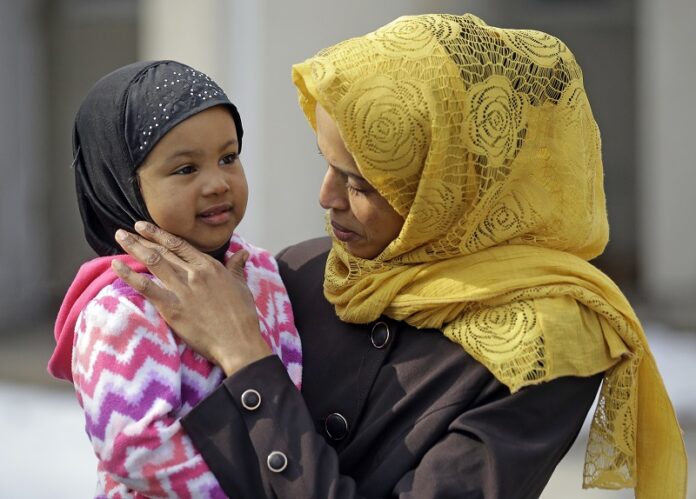
Somali refugee Nimo Hashi holds her daughter Taslim at their home Tuesday in Salt Lake City, Utah. Photo: Rick Bowmer / Associated Press

President Donald Trump’s executive order banning refugees from certain countries has brought stress, desperation, worry and confusion to a number of families in the United States and abroad.

Trump’s order temporarily halted the entire U.S. refugee program and banned all entries from seven Muslim-majority nations for 90 days. Many refugees in the U.S. had expected to reunite with relatives any day, but now their plans are on hold.

5-Year-Old Girl: Far From Mum and Dad

Nagi Algahaim, a U.S. citizen who runs a gas station in Detroit, said he’s effectively stuck in Malaysia with his wife, a native of Yemen. Their 5-year-old daughter is at home with relatives in Detroit but the mother can’t travel there.

Algahaim, 33, said he and Kokab Algazali, 28, have been in Malaysia since December, seeking immigration documents to qualify her for a green card in the United States.

Algahaim said Malaysia Airlines told them that while he can fly to the U.S., his wife cannot.

But he’s not leaving Kuala Lumpur without her.

“She’s been crying every day. It’s heartbreaking,” he said Tuesday.

Their daughter, who has health problems, hasn’t seen her mother since she was 8 months old.

“As an American, I’m disgusted,” Algahaim said. “I thought Trump was going to bring up America, not twist it around with fear and racism.”

Everything Was Set

Everything was set for the Syrian refugees to fly to the U.S.

A “processing error” that for months kept Baraa Haj Khalaf, her husband and baby daughter from joining her parents and two siblings in the U.S. had at last been taken care of. They were told to be at the Istanbul airport Monday for their flight to the U.S.  and a new life near Chicago.

So confident were they that they were on their way to America after fleeing Aleppo, Syria in 2013, Baraa and her husband sold or gave away practically all of their belongings.

In suburban Chicago, her 46-year-old father, Khaled Haj Khalaf, could hardly contain his excitement. “We were very happy,” he said through an interpreter Tuesday. “This is the land of freedom, the land of democracy.”

Even some Chicago mothers had volunteered to collect furniture, food, clothing and toys for the baby at their future apartment. Then came President Donald Trump’s executive order.

Now all the refugees’ plans and hopes are “in limbo,” said Melineh Kano, executive director of a group called RefugeeOne, which is providing support for the volunteers.

A Family Separated

Abdalla Munye and his wife resettled in Georgia weeks ago but their 20-year-old daughter wasn’t able to join them. Her flight was scheduled to arrive this week. Now her trip is on hold.

Munye said his family stayed in refugee camps after fleeing the violence of Somalia, and his wife, Habiba Mohamed, said she watched her 11-year-old daughter be raped and killed.

They are concerned about their older daughter, Batula, who remains in a refugee camp in Kenya.

“Now that we are here and we have left her behind, we are in a lot of distress and worry,” Munye, 44, said through a translator. “The only thing I can request from the American government is to help me be reunited with my daughter.”

The couple held out hope that first lady Melania Trump, herself an immigrant from Slovenia, might be able to persuade the president to reverse course.

“She’s a parent and she knows the love that a parent has for their child and I would like her to do her best to convince the president to change his mind,” Munye said.

A Daughter Who Has Never Met Her Father

Somali refugee Nimo Hashi bought couches and a new kitchen table for her Salt Lake City apartment in anticipation of reuniting Friday with her husband for the first time in nearly three years.

Hashi said she last saw him when she was two months pregnant with their daughter, Taslim. Her husband has never seen his daughter. After Trump’s order, it’s not clear when the father and daughter will meet.

The couple met in Ethiopia after both fled Somalia amid the civil war. Her refugee case had already been approved, so officials told her to go ahead to the U.S. where she could apply for her husband to join her.

“I was so happy and joyous but that dream is shattered,” Hashi said through a translator. “This is not right just singling out people from Muslim countries, being singled out based on religion.”

Stressed Out

Iraqi refugee Rana Elshekly expected to see her husband soon but his resettlement was put on hold. Now he is in limbo in Turkey.

“Every time we talk it sounds like we are arguing because we don’t know what to do,” Elshekly said through an interpreter. “He’s even trying to get me to come back to Turkey so we can at least all be together.”

Elshekly, 36, resettled in Albuquerque, New Mexico, in October with her two young boys, 9-year-old Dair and 3-year-old Laith.

Her husband, Hikmat Ahmed, 42, stayed behind after officials suggested that she and the children come alone to the United State to get out of the region faster.

When she thinks about returning to the war-torn region, she remembers her 20-year-old pregnant sister who was recently killed in a bombing at a market in Iraq.

“I start thinking of my boys, and I have to stay because of them,” she said.

No One Showed Up for Dinner

The Somali community in Providence, Rhode Island, prepared traditional home-cooked meals  including goat meat, vegetables and the crepe-like bread known as canjeero  and furnished an apartment for three brothers who were supposed to arrive Monday night. They never made it.

The eldest brother fled his war-torn homeland in the 1990s and had been waiting to be resettled since 2000, when he registered with the United Nations Refugee Agency, said Baha Sadr of refugee resettlement group Dorcas International Institute of Rhode Island.

“For the past 16 years, most of his life, he was just waiting to get approval,” Sadr said. “If anybody’s in waiting for 16 years, how much more extreme vetting can they get?”

From Afghanistan With Worries

Haidary Mohammad, 27, is celebrating little more than a week of being in the U.S., just barely settled into an apartment in Jacksonville, Florida, after years of working for the U.S. military as a translator in Afghanistan.

Haidary was able to move with his wife. But his father, mother and sisters and brothers remain in Afghanistan. He hopes they’ll be able to make it to the U.S. one day  like he did. But now there’s much to be uncertain about.

“I’ve been through a lot of firefights and ambushes and stuff like that in Afghanistan,” he said, adding he applied two years ago to be resettled as a refugee, fearing for his life from the Taliban.

“The Taliban look for the guys who work with Americans, and I was one of the guys,” he told The Associated Press. Now he doesn’t know what will happen with two friends who are helping U.S. forces and also want to come over.

“There’s two friends of mine still working in the north of Afghanistan with the Special Forces,” he said. “Their paperwork is nearly done, one already got his visa, and they’re still hoping to come.”

Advertisement

BBC Symphony to Orchestrate 2 Nights in March

BBC Symphony Orchestra in an image posted online Dec. 25, 2016. Photo: BBC Symphony Orchestra / Facebook

NAKHON PATHOM — From the Barbican Centre to metro Bangkok, the BBC Symphony Orchestra will bend their bows and trill their reeds in Thailand for the first time in March.

Considered one of the top orchestras in the world, the London-based orchestra will make a stop on its world tour for two engagements dedicated to the late king who was known as a musician and music lover.

The 87-year-old orchestra will serenade audiences for two nights with King Bhumibol’s Kinari Suite as an overture. The first night will followed by Gary Carpenter’s Dadaville, Britten’s Piano Concerto and Walton’s Symphony No.1. For the second night, audiences will hear Shostakovich’s Festive Overture, Mozart’s Piano Concerto No. 20 in D minor, Mendelssohn’s Calm Sea and Prosperous Voyage, as well as Elgar’s Enigma Variations.

Edward Gardner, chief conductor of Norway’s Bergen Philharmonic, will conduct, while internationally recognized pianist Benjamin Grosvenor will perform solo.

Tickets are 1,000 baht to 10,000 baht with seating available for guests with disabilities. Early bird discounts for students and group tickets are available until Feb. 14.

Both concerts begin at 7pm on March 28 and 29 at the Prince Mahidol Hall at Mahidol University in Salaya, about an hour’s drive from downtown Bangkok. It can be reached by taxi or shuttle bus from BTS Bang Wa exit Nos. 1 and 2.

Advertisement

Hot News

LATEST NEWS

Bangkok
overcast clouds
31.6 ° C
32.7 °
31.6 °
99 %
5.2kmh
100 %
Sun
30 °
Mon
34 °
Tue
33 °
Wed
31 °
Thu
29 °