The platform of BTS Saphan Taksin in 2004 photo. Photo: Tom Page / Flickr
BANGKOK — Capital city commuters will be able to ride the BTS Skytrain, BRT bus system and one of the canal boats for free on New Year’s Eve.
Those traveling into town to celebrate 2016’s end and the arrival of 2017 can use certain public transportation options free from noon on Dec. 31 through noon of Jan. 1, the Bangkok Metropolitan Administration announced Thursday.
The fee-free routes include all BTS Skytrain stations, the bus rapid transit system from BRT Sathon to BRT Ratchaphruek. The Khlong Phasi Charoen canal taxi in western Bangkok will be free between the Phasi Charoen pier to Petchkasem 69 pier.
Laotian Prime Minister Thongloun Sisoulith, second left, and China's President Xi Jinping, right, attend their meeting Dec. 1 at the Great Halll of the People in Beijing. Photo: Nicolas Asfouri / Associated Press
BANGKOK — Ng Shui Meng hasn’t given up hope.
Thursday was the fourth anniversary of the day her husband, Laotian community organizer Sombath Somphone, vanished at a police checkpoint on the outskirts of Vientiane, the capital – a suspicious disappearance reflecting the repressive tactics of the country’s Communist rulers, who have quashed political dissent since taking power in 1975.
After Sombath vanished, Laotian authorities denied responsibility and promised investigations that never materialized, though video evidence showed that his last known location was in police custody.
“Nobody contacted me, I know nothing,” Singaporean native Ng said by phone from Vientiane, where she still lives, waiting for her husband. “The last update I heard was over two years ago.”
Now, human rights organizations are renewing calls for a full investigation into his disappearance, accusing the government of not doing enough.
“The Lao government’s investigation of Sombath Somphone’s disappearance has been a pattern of delay, denial, and cover-up,” said Phil Robertson, deputy Asia director at Human Rights Watch. “Four years on, Sombath’s family is no closer to learning the truth.”
Security camera video obtained by Ng shortly after her husband’s disappearance clearly shows police stopping Sombath’s rusty jeep, and minutes later, unidentified individuals hustling Sombath into another vehicle. Even after a new video was found in December 2015 showing Sombath’s jeep being driven back into the city, police refused to conduct reviews of other cameras along the jeep’s route. Pressure from the United States during Obama’s visit in September yielded no results.
More than 130 rights organizations from around the world issued a statement Thursday condemning the Laotian government’s “inaction to resurrect the investigation into his disappearance after the discovery of new video evidence.”
“We call on (the government) to end its denial of basic facts,” it said, also calling for information about the fate of 10 other activists who were detained or simply disappeared over the past decade.
Born the son of poor farmers, Sombath was an unlikely target. For many years he ran the only civil organization permitted in Laos, becoming internationally respected for work in rural development. He taught good farming practices and set up recycling programs. And he tried hard to keep out of the limelight, friends and colleagues say.
But in Laos, everything is political – nothing more so than rural land evictions, the very issue that Sombath advocated against. He showed farmers Google Earth to give them a clear sense of their land.
“It was a message,” said Anne-Sophie Gindroz, a Swiss development worker deported a week before Sombath’s disappearance. “Targeting Sombath was a very effective way to tell that ‘there are limits to be respected, and if this can happen to Sombath, it can happen to anyone.'” His disappearance had a chilling effect on Laos’ budding civil society.
“The Communist Party doesn’t really want to let go of its commanding heights,” said Hal Hill, an economist specializing in Southeast Asia. “That’s what you expect when you’ve got concentrated political power and large resource projects.”
In recent years, Laos has made startling economic progress. The government is trying to pull the country out of poverty by opening its economy to foreign investors, and funneling money into massive projects like road and dam construction, for exporting hydroelectricity to its neighbors. It can boast of the poverty rate dropping from 46 percent in 1992 to 23 percent in 2015, according to U.N. figures.
“You need more than just GDP growth,” Ng said. “I live on hope every day. I have no choice.”
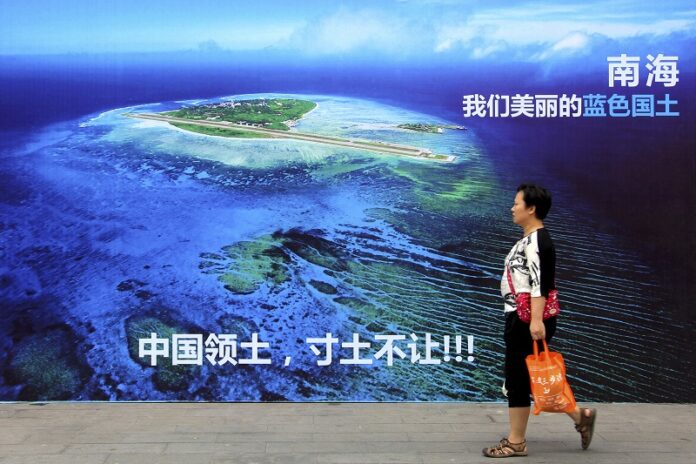
A woman walks past a billboard featuring an image of an island in South China Sea on display with Chinese words that read: "South China Sea, our beautiful motherland, we won't let go an inch" in Weifang in east China's Shandong province. Photo: Associated Press
BEIJING — China appears to have installed anti-aircraft and anti-missile weapons on its man-made islands in the strategically vital South China Sea, a U.S. security think tank says, upping the stakes in what many see as a potential Asian powder keg.
The Center for Strategic and International Studies said in a report late Wednesday that the anti-aircraft guns and close-in weapons systems designed to guard against missile attack have been placed on all seven of China’s newly created islands.
The outposts were built in recent years over objections by the U.S. and rival claimants by piling sand on top of coral reefs, followed by the construction of military grade 3,000-meter (10,000-foot) airstrips, barracks, lighthouses, radar stations and other infrastructure.
CSIS based its conclusions on satellite images taken in mid-to-late November and published on the website of its Asia Maritime Transparency Initiative.
In a statement, China’s Defense Ministry repeated that development on the islands was mainly for civilian purposes, but added that defensive measures were “appropriate and legal.”
“For example, were someone to be threatening you with armed force outside your front door, would you not get ready even a slingshot?” the ministry statement said.
The Philippines, which has troops and villagers stationed on some reefs and islands near China’s new artificial islands, expressed concern despite recently improving relations with China.
“If true, it is a big concern for us and the international community who uses the South China Sea lanes for trade,” Defense Secretary Delfin Lorenzana said. “It would mean that the Chinese are militarizing the area, which is not good.”
China’s new island armaments “show that Beijing is serious about defense of its artificial islands in case of an armed contingency in the South China Sea,” CSIS experts wrote in the report.
“Among other things, they would be the last line of defense against cruise missiles launched by the United States or others against these soon-to-be-operational air bases,” the report said.
Beijing says the islands are intended to boost maritime safety in the region while downplaying their military utility. They also mark China’s claim to ownership of practically the entire South China Sea.
Taiwan, Vietnam, the Philippines, Malaysia and Brunei also claim territory in the waterway through which an estimated USD $5 trillion in global trade passes each year, while the U.S. Navy insists on its right to operate throughout the area, including in waters close to China’s new outposts. China has strongly criticized such missions, known as freedom of navigation operations.
The U.S. has committed to beefing up its military presence in the area, although new uncertainty has been introduced by incoming president Donald Trump, who broke long-established diplomatic protocol by talking on the phone earlier this month with the president of China’s longtime rival Taiwan.
Trump has called for a reconsideration of its commitments to its Asian allies, including Japan and South Korea, while simultaneously criticizing Chinese trade policy toward the U.S. along with its new territorial assertiveness. He also referred to China’s man-made islands in a tweet earlier this month, saying Beijing didn’t ask the U.S. if it was OK to “build a massive military complex in the South China Sea.”
“The timing is significant in that these first clear images come amid Trump’s challenging comments about China and its South China Sea fortresses,” said Alexander Neill, a senior fellow for Asia-Pacific security for the International Institute for Strategic Studies based in Singapore.
Chinese President Xi Jinping said on a visit to the U.S. last year that “China does not intend to pursue militarization” of the area, prompting some foreign experts to accuse China of going back on its word with its new deployments.
Despite that, China considers it vital to equip the islands with defensive means given their distance – 1,600 kilometers (1,000 miles) – from the Chinese mainland, together with the nearby presence of forces from rival claimants such as Vietnam, said Yue Gang, a retired colonel and military analyst.
“As the matter of fact, these occupied islands have been armed and fortified for a long time,” Yue said. “No country in the world would only commit to providing civil services without considering its own security safety.”
Looking forward, the nature of China’s new military deployments will likely be calibrated in response to moves taken by the U.S., said the IISS’s Neill.
“China will argue that they are entitled to place whatever they want there in reaction to U.S. actions,” Neill said. “The big question is whether Trump will embark on a more strident or discordant policy in the South China Sea.”
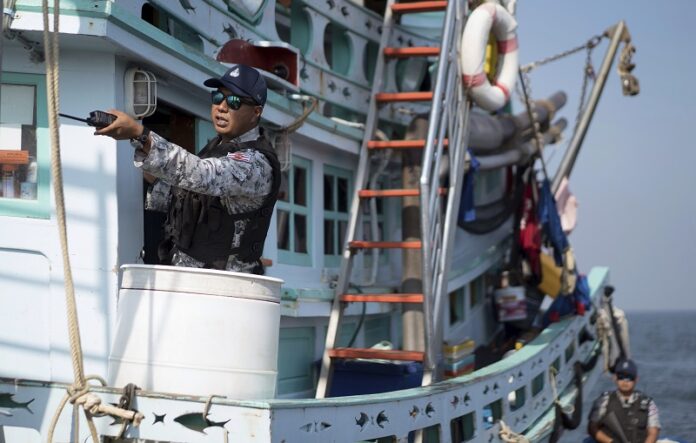
A Thai navy officer on Dec. 9 inspecting a fishing boat in the waters off the coast of Samut Sakhon province. Photo: Dake Kang / Associated Press
BANGKOK — The six men lay in red body bags, lined up on a concrete dock. The first died almost three weeks before his ship reached Thailand; the last almost made it alive but died the day before the ship docked.
They were Thai and Cambodian fishermen who had succumbed to beriberi, a disease better known for striking sailors more than a century ago. But their deaths, says a Greenpeace report released Thursday, are part of an all-too modern scourge — Thai fishing fleets operating thousands of kilometers (miles) from home in unregulated waters to dodge government oversight over illegal fishing and onboard human rights abuses.
Thailand has responded to problems in the industry by grounding its overseas fleet and ordering tracking equipment installed on the vessels.
The two ships carrying the dead had left Thailand in the first few months of 2015, according to an earlier Thai government report. They parked themselves off the coast of Madagascar, where they stayed for months. They transferred their catch to “reefers,” refrigerated cargo ships, to avoid government regulators while still getting their fish to market.
Supply ships brought the fishermen fresh food once every couple of months. But they didn’t come often enough.
An inspection found “there was no fresh food,” Thai government investigators concluded after searching one ship, the Somboon 19. “The rest of the kitchen had eggs, vegetable oil, and white rice. No fresh vegetables or meat.”
The ships ran out of fresh food weeks after each delivery, forcing the crew to subsist on fish and rice — a diet deficient in Vitamin B, the root cause of beriberi. Many began to fall ill. Subject to hours of backbreaking labor, some of the fishermen began finding it hard to breathe. Their legs swelled and their bodies went limp.
Though one ship returned to Thailand as soon as a fisherman died, the second one dumped the body in the freezer of the cargo hold and kept fishing, only returning when the navy called them home, said Cmdr. Piyanan Kaewmanee, head of a Thai navy department combating illegal fishing.
“It was gross,” he told The Associated Press in a recent interview.
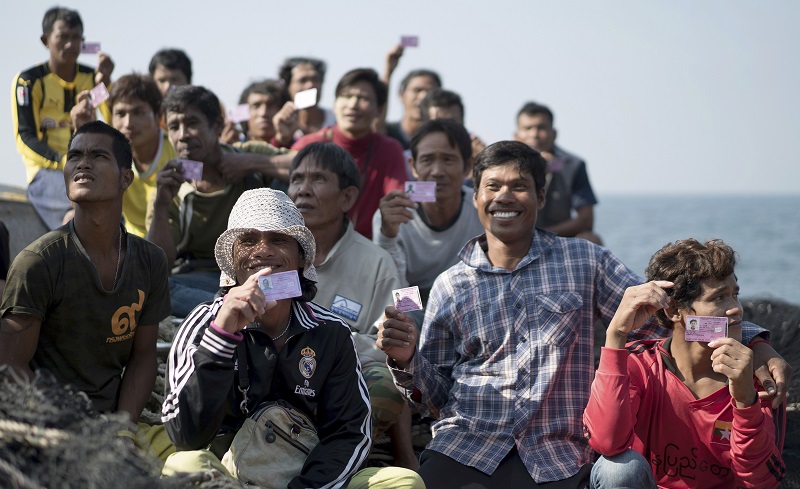
Crew from a fishing boat show their identity cards to Thai navy officers during a search of their boat in the waters off the coast of Samut Sakhon province. Photo: Dake Kang / Associated Press
The arrival of the bodies on Thai shores in January 2016 kicked up a media frenzy. Newspapers reported the fishermen had died from vitamin deficiencies.
The story of how these vessels ended up so far from home in the first place starts with Indonesia and Papua New Guinea. For decades, Thai vessels fished in their waters, splitting profits in exchange for fishing licenses.
But following an AP report last year revealing that Thai fishing boats enslaved migrants from Myanmar, Cambodia and other neighboring countries, Indonesia shut off their waters to fishing vessels from foreign countries. Papua New Guinea followed suit soon after.
Deprived of their usual hunting ground, the boats set sail for seas far from the prying eyes of governments.
“Some of these problems we’ve seen in Indonesia … are just being exported and happening somewhere else,” says Mark Dia, an oceans activist and manager at Greenpeace. “Nobody really knows what happens on these vessels.”
The Greenpeace report names some of the worst fishing boat operators, who they say send fish into the supply chain of major retailers of imitation crab and cat food. The AP has not independently verified those claims.
Greenpeace said satellite data it obtained tracked the ships as they moved toward the Saya de Malha Bank, an ecologically rich breeding ground for whales that Mauritius claims is part of its exclusive economic zone. However, it’s effectively unregulated, officials and experts say.
“To send a patrol boat to inspect them at sea is hugely expensive,” Cmdr. Piyanan said. “If it’s not urgent, it’s a rarity that we’d send a patrol boat.”
After Thailand received a “yellow card” from the European Union in April 2015, Prime Minister Prayuth Chan-ocha created the Command Center for Combating Illegal Fishing.
In December 2015, the Thai navy sent a task force to inspect 74 Thai overseas fishing vessels to enforce new permit regulations. A navy report recorded dozens of vessels that had violated labor permits and overstayed their licenses, prompting them to recall their entire overseas fishing fleet back to Thailand.
After these abuses were uncovered, the Thai navy grounded the overseas fleet and prosecuted some of the operators. Seventy of the vessels are now docked in a port an hour away from Bangkok and are being outfitted with new GPS tracking equipment; they will be allowed to sail again next year.
Navy officials say they are exploring cheaper alternatives to regular in-person inspections, including hiring observers, installing on-board cameras and seeking assistance from countries such as Somalia, Djibouti, and Madagascar. New regulations stipulate that the vessels must return to Thailand every year, instead of roaming the high seas indefinitely.
Greenpeace says more needed to be done, particularly a industry ban on transshipments, the practice of using reefers as intermediaries.
Cmdr. Piyanan said regulation will always be challenging: “Anyone that is greedy enough, they can come up with things to avoid detection to avoid control from the government.”
A rubber plantation in Thailand in an undated file photo.
BANGKOK — Police say a rubber farmer has been shot dead in the southern province of Songkhla, in the latest attack in a region that has been in the grip of an ethnic Malay Muslim insurgency for over a decade.
Police say Dech Promjan was sharpening his knife on his porch Thursday when two people arrived by motorcycle. They quoted Dech’s wife as saying that the man riding at the back got off, pulled out a gun and fired three bullets into her husband’s chest.
Insurgents in the Muslim-majority south began their bid for greater autonomy in 2004. Over 6,700 deaths have been tallied since then.
In separate incidents this week, insurgents detonated three bombs and shot at electricians fixing roadside cables, injuring 15 people in all.
Police Senior Sgt. Maj. Vivek Kamolvibul on duty. Photos: Courtesy
NONTHABURI — Police in northern metro Bangkok had a problem. A gang was mugging women in the area, and they just couldn’t catch them.
The station chief didn’t want to send out women officers late at night – it won’t win him progressive points, but he thought they would be vulnerable – but he did dream up a creative solution.
“We decided to develop a plan, a method to capture the alleged offenders because there were four muggings in 24 hours,” Col. Kittisak Tiangkamol of Rattanathibet police said Thursday.
His methodology, to Kittisak, was practical and simple: Dress Senior Sgt. Maj. Vivek Kamolvibul up as a woman and send him out to catch the bad guys.
“I chose Vivek because he’s a clever officer. He’s a master’s graduate, too. And everyone was in agreement with choosing him because he has the whitest skin at the precinct, and he also is a man without leg hair.”
Beginning Friday, Vivek donned a black wig, casual black sundress and a pink, chain strap purse.
He drove around the Rattanathibet area from 4am to 6am every morning and stood at various bus stops in an attempt to bait the muggers.
“Tuesday in the early morning, I spotted them about to commit another crime,” Vivek said, but the suspects were driven off by an approaching taxi – but not before he noted their license plate.
He ran the plate and found an address. On Wednesday, police moved in and arrested the alleged offenders: Thanawat Krutsorn, 18, and a 17-year-old minor. Police said they would rob victims in Nonthaburi, usually along bus routes.
The string of muggings allegedly yielded the teens petty cash and a handful of junk from unsuspecting women this month, such as a laptop in front of Every Mall, a camera and 16 baht from Soi Rattanathibet 18, a mobile phone and 100 baht from in front of Central Plaza Rattanathibet. Saturday might have been their biggest payoff, when they made off with a stainless steel necklace, 600 baht, an ATM card and acoustic guitar from a victim in front of the Esplanade Rattanathibet shopping mall.
The are also accused of stabbing a woman Dec. 8 near the Nonthaburi City Pillar Shrine who had nothing they could steal.
Vivek said he had the right qualities for the job.
“Well, the chief chose me because I’m really the only guy who can pass off as a woman,” he said. “I’ve got light skin, no leg hair, and slim legs.”
And he’s not ashamed if it helps him do the job.
“I’m always getting teased at the precinct,” he said, laughing. “But if another case comes up where I have to dress as a woman, I’ll probably do it. I’m still a man.”
Ekburut Ritrakkhaphan, 32, seen in an image from a security camera with an Australian woman on his motorcycle traveling from the Khok Wua junction near Khaosan Road to an abandoned building where she said she was assaulted in the early hours of Dec. 5.
BANGKOK — A man accused of sexually assaulting an Australian tourist was arrested early Thursday morning.
Ekburut Ritrakkhaphan was captured in the northeastern province of Sakon Nakhon where police said he fled from Bangkok after he emerged as a suspect in the rape of a 23-year-old Australian woman earlier this month.
Police said the 32-year-old motorcycle taxi driver claims they had consensual sex.
He was arrested 10 days after the woman walked into a police station where she said she had been taken by a tuk-tuk driver to a deserted building in western Bangkok in the early hours of Dec. 5 and assaulted by the man and his friend. Police initially cast doubt on her claim, citing her heavily intoxicated state, which prompted extensive and unsympathetic media coverage.
After the news got out, police were pressured to look into the case, and police chief Sanit Mahathavorn instructed officers to fully investigate it.
They eventually issued an arrest warrant for Ekburut on Tuesday after identifying him through security camera footage. That same day the results of a medical examination confirmed the woman was assaulted.
Ekburut told police he often rides his motorcycle to Khaosan Road late at night because he knows it is a good place to find inebriated women getting out of the bars after late-night drinking sessions. He said he usually finds women to take from there to have sex with.
The motorcycle taxi driver said he saw the Australian woman, who appeared to be drunk, near the Khok Wua junction, so he approached her. He said she got onto his motorcycle of her own will, as he always does when he’s hunting for drunk women.
Ekburut said he abandoned her at the empty building at her request, claiming she did not want to go back to where she was staying, despite the dawning sun.
Ekburut was being questioned Thursday afternoon at the Bangkok Metropolitan Police Bureau.
BANGKOK — The year couldn’t end without another hipster night market joining the trend.
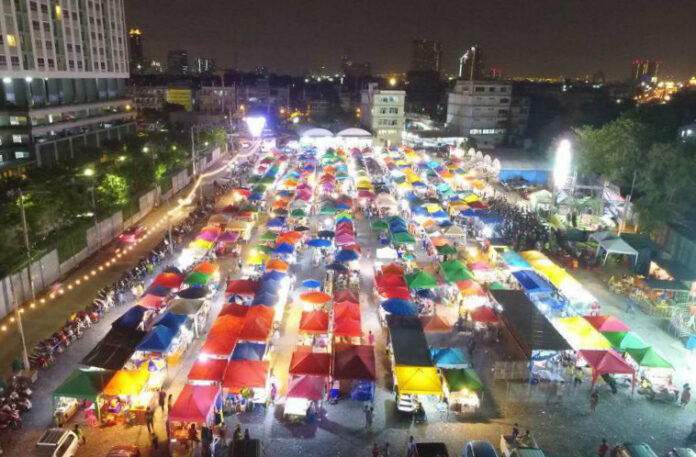
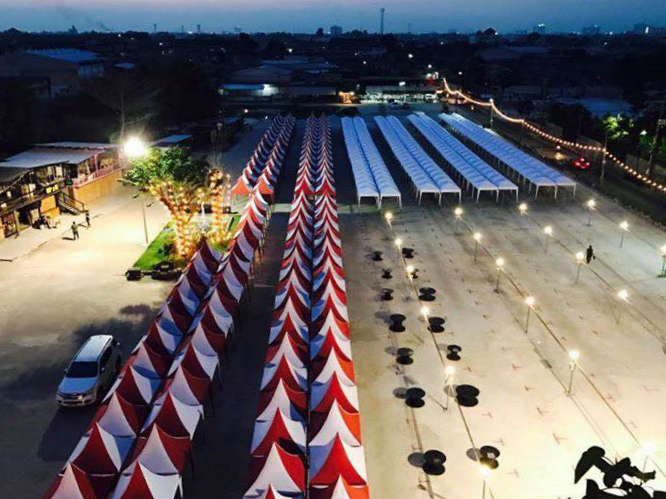
On Sunday Indy Market will open within Dao Khanong to welcome the cool breezy season.
Indy Market promises around 500 stalls of food, drink, crafts, clothes and more on the Thon Buri side of the river in the Dao Khanong area.
While the name suggests a place for auto racing fans, it may refer to the massive parking lot – 400 parking spaces – available for commuting shoppers.
It’s hosted by the same people behind the one which used to take place at Platinum Fashion Mall in the Pratunam area.
Indy Market will be open from 4pm until 11pm daily. It’s located on Soi Suksawat 2, and the closest public transportation option is the Dao Khanong Pier. But really, just drive or taxi there.
BANGKOK — What to do for a chill Christmas weekend? Consider a three-day flea market in Thonglor with everything from food, drink and music to poetry, mimes and handmade crafts.
To celebrate the holiday season’s cool weather, Winter Vibes Market will feature bands and solo artists live on stage for three days including acoustic guitarist-singer Thee Chaiyadej, indie-folk trio My life as Ali Thomas, folk-rockin’ Greasy Cafe, and alternative pop Moving and Cut.
Singer “Tul” from Apartment Khun Pa band and actor Peron Yasu will read some poetry and Japanese artist Yano Kazuki will break it down in pantomime.
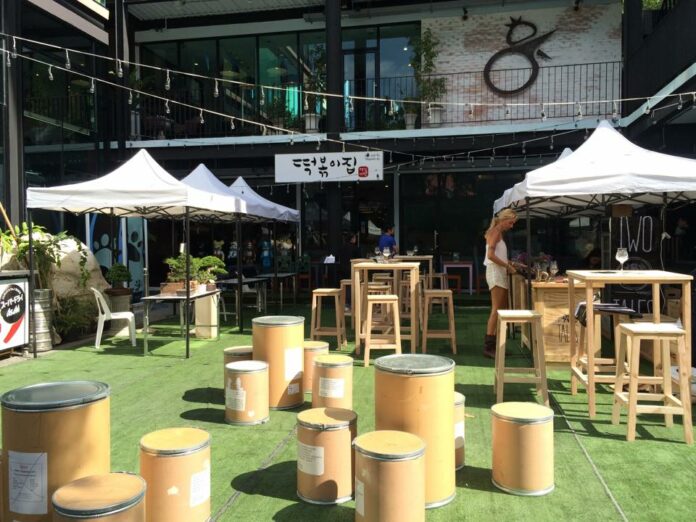
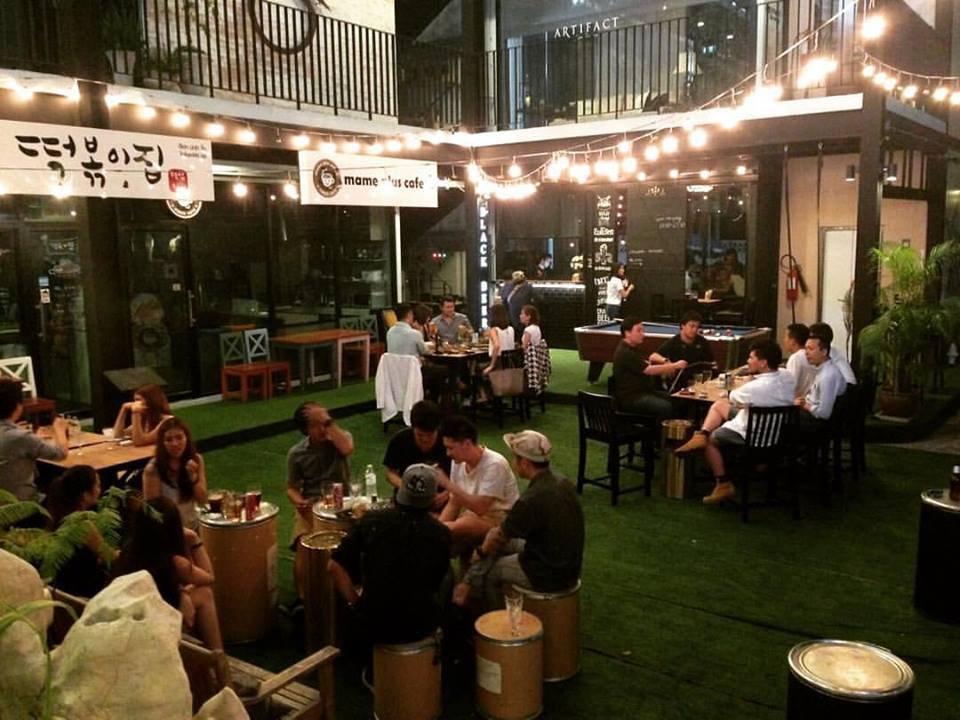
Winter Vibes Market will take place Dec. 23 through Dec. 25 at the 9:53 Community Mall.
Admission to the market is free. Tickets to the live shows will be available at the door for 100 baht. The community mall is located where Soi Sukhumvit Soi 53 and Thonglor Soi 9 meet.
Photo: Jongrak MC / FacebookPhoto: Black Beer’D / Facebook
BANGKOK — Bangkok Bank hit back at a multinational media corporation’s legal complaint Wednesday, saying it did not default on guarantees of a multi-billion baht licensing deal because it was Fox Networks Group Asia that was in breach of contract.
In a statement released Wednesday night, Thailand’s largest commercial bank said it did not make good on the 2.5 billion baht licensing deal for Thai media companies GMM Grammy and CTH because Fox was at fault.
“CTH has now instructed Bangkok Bank not to make payment as demanded because Fox Networks Group Asia was at fault for breaching the contract,” said the statement from Bangkok Bank’s public relations team.
Apart from claiming Fox violated contract terms, it did not go into further detail, citing the lawsuits filed by Fox against CTH in Hong Kong, and GMM and the bank in Bangkok.
Decha Tulanun, vice president of Bangkok Bank, was not available for comment on Thursday.
Fox announced it had filed suit against the bank on Wednesday afternoon for allegedly breaching contracts under the terms of a 2013 licensing agreement the network made with domestic media companies GMM and CTH to license its programming.