25.5 C
Bangkok
Wednesday, July 1, 2026
Home Blog Page 2750

Blatter Claims Role in Trying to Remove African President

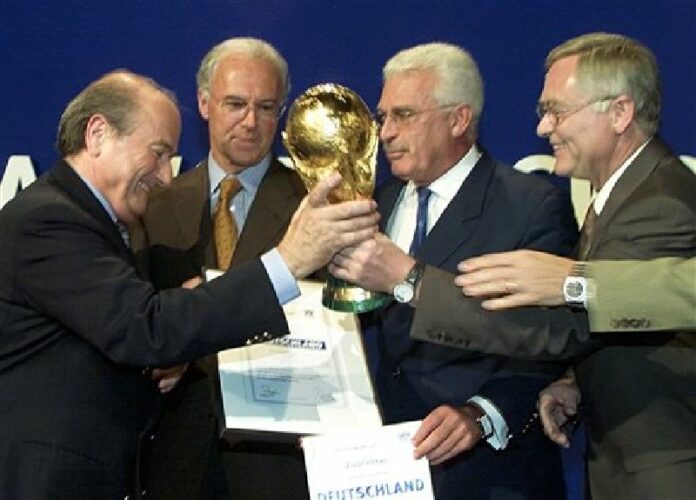
In this July 6, 2000, file photo, FIFA President Sepp Blatter, left, hands over a copy of the soccer World Cup trophy to the German bid team, Franz Beckenbauer, second from left, Fedor Radmann, second from right, and Horst R. Schmidt, right, after FIFA announced that Germany will host the soccer World Cup 2006, in Zurich, Switzerland. Photo: Michel Euler / Associated Press

ZURICH — Former FIFA president Sepp Blatter was asked by Switzerland's foreign ministry last year to help persuade an African president to leave office.

Blatter offered Burundi president Pierre Nkurunziza an ambassador's role in world soccer as the nation fell into violent turmoil, according to his new book, which was launched on Thursday.

Blatter's intervention was supported by the United States, he claims in "Sepp Blatter: Mission and Passion Football," which was published in German.

After Nkurunziza said last April he wanted an unconstitutional third presidential term, a bloody military coup failed to remove him. Blatter said his offer to Nkurunziza followed an approach by Yves Rossier, the state secretary of the Swiss ministry.

"I proposed to the president, who is a big football fan, in front of witnesses that if it would be an advantage for his country and him, FIFA could deploy him as an ambassador for football in Africa or in the whole world," Blatter is quoted saying in an interview section of the 300-page book.

"Unfortunately, that never happened," Blatter said of the offer, which was rejected.

Nkurunziza then won a disputed election in July and continues to lead his troubled nation.

On Thursday, the Swiss ministry confirmed there was contact between Blatter and Rossier.

"The intention was to contribute to a peaceful solution in order to prevent the current crisis in Burundi," the ministry said in a statement, adding that Switzerland "never asked president Nkurunziza not to run for the office of president again."

Blatter's picture-led book reflects on his 41 years at scandal-hit FIFA, which ended in February. It includes photographs of Blatter with U.S. President Barack Obama, Russian President Vladimir Putin and Pope Francis.

The book had been scheduled for release before the Feb. 26 election to replace Blatter as FIFA president, but was delayed.

Blatter is awaiting an appeal hearing date at the Court of Arbitration for Sport to challenge a six-year ban from soccer by FIFA. He was suspended for a financial conflict of interest over a payment given to UEFA President Michel Platini. Platini goes to CAS on April 29 to appeal against his six-year ban.

Blatter is the subject of a Swiss criminal investigation over the payment and for approving the sale of undervalued World Cup television rights for the Caribbean. That deal benefited disgraced former FIFA vice president Jack Warner, who appears in the book in the photograph of Blatter with Obama at the White House in 2009.

The FIFA election was won by former UEFA general secretary Gianni Infantino, who Blatter says in the book once applied for a job at an unspecified date in the FIFA legal department.

"Without success," Blatter wrote.

Story: Graham Dunbar / Associated Press


To reach us about this article or another matter, please contact us by e-mail at: [email protected].

Follow Khaosod English on Facebook and Twitter for news, politics and more from Thailand.

Follow @KhaosodEnglish

\

Advertisement

China's Xi Moves toTake More Direct Command Over Military

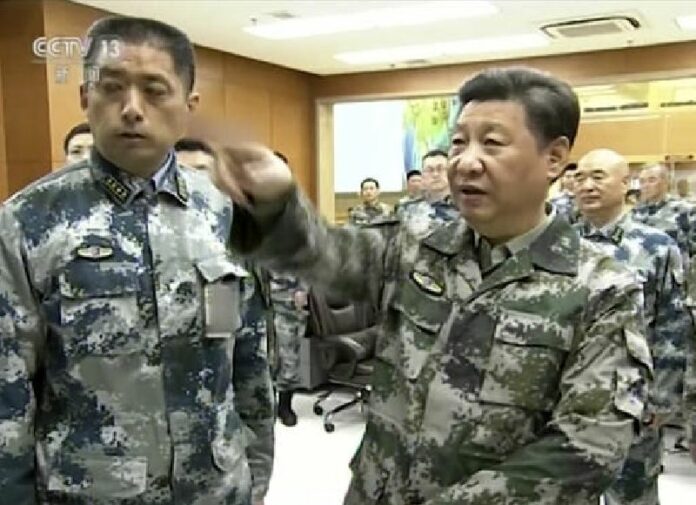
In this Thursday, April 21, 2016 image taken from a video footage run by China's CCTV via AP Video, Chinese President Xi Jinping, right, in military uniform gestures as he tours to the Chinese army’s Joint Operation Command Center in Beijing. Photo: CCTV via Associated Press Video

BEIJING — Bolstering his status as China's most powerful leader in decades, Chinese President Xi Jinping has assumed a more direct role as head of the country's powerful armed forces with the new title of commander in chief of its Joint Operations Command Center, state media and analysts said Thursday.

Xi's new position was revealed in news reports that featured prominently on national news broadcasts Wednesday and Thursday in which he appeared publicly for the first time in camouflage battle dress wearing the joint center's insignia.

During his Wednesday visit, Xi called on the center's staff to "closely follow the trends of global military revolution and strive to build a joint battle command system that meets the need of fighting and winning an informationized war," the official Xinhua News Agency said.

Officers should "change their ideas, innovate and tackle difficulties, in a bid to build a joint battle command system that was absolutely loyal, resourceful in fighting, efficient in commanding and courageous and capable of winning wars," Xinhua quoted Xi as saying.

Battle command capacities should be measured by "the standards of being able to fight and win wars," Xi said, stressing the need to prepare for conflicts, analyze possible security risks, and handle effectively "all sorts of emergencies."

The joint center, reportedly located underground in the western outskirts of Beijing, is under the direct supervision of the ruling Communist Party's Central Military Commission, which is headed by Xi and oversees the 2.3-million-member People's Liberation Army, the world's largest standing armed forces.

Xi was accompanied on his visit by the commission's two vice chairmen, Gen. Fan Changlong and Gen. Xu Qiliang.

Among his several other titles, Xi is also leader of the ruling Communist Party and chair of a recently created National Security Council, which gives him greater control over the domestic security services.

As head of the military, Xi has overseen a reorganization of the PLA's command structure into five theater commands aimed at better integrating the different services. He has ordered a 300,000-person reduction in forces that will see the elimination of many outdated and non-combat units, and shift the emphasis further from ground forces to the navy, air force and missile corps.

\

In this Thursday, April 21, 2016 image taken from a video footage run by China's CCTV, Chinese President Xi Jinping in military uniform shakes hands with a military staff member in Beijing. Photo: CCTV via Associated Press Video

Xi's appearance in battle dress with insignia Wednesday emphasized his more direct role in military affairs. When appearing simply as head of the Central Military Commission he routinely wears olive green tunics, shirts and trousers without insignia or decoration, as did his predecessors.

Xi's new choice of apparel "indicates that he not only controls the military, but also does it in an absolute manner, and that in wartime, he is ready to command personally," said Ni Lexiong, a military affairs expert at Shanghai's University of Political Science and Law.

Three years since taking on the presidency, Xi is widely seen as having accumulated more power and authority than any Chinese leader since Deng Xiaoping in the late 1980s. A cult of personality has also sprung up around him to rival that of the founder of the communist state, Mao Zedong, with his slogans, sayings and signature political themes widely disseminated in the media.

Yet his reputation has also been called into question by anonymous letters, allegedly from Communist Party members, calling for his resignation. Revelations in the international media about vast wealth accumulated by members of his extended family have meanwhile flown in the face of his relentless campaign against corruption in the party, military and state industries.

Xi's new title and his visit to the joint center were "more political than military" in significance and don't imply he will take charge of the day-to-day running of the PLA, said Andrei Chang, Hong Kong-based editor of the magazine Kanwa Asian Defense and a close observer of Chinese military affairs.

"Throughout Chinese history, political power has always been founded on control of the military," Chang said. "This was a visit to show off his muscle to his potential enemies and show that he is tough and in charge."

Xi's new title and appearance in battle dress may also be a deliberate message to China's chief rivals, including the U.S., Japan, the Philippines and the self-governing island of Taiwan that China has vowed to conquer by force if necessary.

"The combat uniform is not only to show he is in charge of the military, but also shows that China is ready for a fight amid a tense external situation. It is a bit like telling China's opponents that he is ready for a combat," Ni said.

Along with his structural and personnel reforms, Xi has highlighted the PLA's importance with frequent, highly publicized visits to military bases and a massive parade last September that saw the army's latest equipment wheeled through the center of Beijing while warplanes and helicopters roared overhead.

Xi enjoys special cachet with the armed forces, partly due to his late father's status as a military commander and Xi's own brief service as a uniformed aide to a former defense minister, but also because his muscular foreign policy is popular among Chinese nationalists and the defense establishment.

That's been especially true in the disputed South China Sea, which China claims virtually in its entirety and where it has constructed island airfields on former coral reefs and sought to limit the U.S. Navy's ability to operate in the area.

Xi has remained resolute in that approach despite it being blamed for raising tensions with China's Southeast Asian neighbors and prompting the U.S. to devote more resources to Asia and strengthen its cooperation with traditional allies and even former foe Vietnam.

"The most important message he meant to send to the world is that he will not make a concession on the issue of territory even at the cost of a war," Ni said.

Story: Christopher Booden / Associated Press


Related stories:

Prayuth: Read Chinese Governance Book Because It Suits Thailand

Advertisement

EU Keeps Sanctions Threat on Thai Seafood

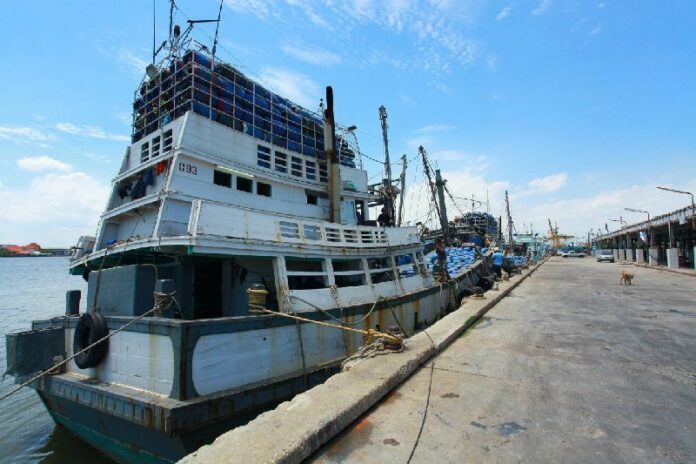
A fishing port in Samut Prakran, 30 June 2015.

BRUSSELS — The European Union is maintaining the threat of a seafood import ban on Thailand because the global exporter is still not doing enough to improve its fisheries and labor practices, officials said Thursday.

The 28-nation EU is keeping up the pressure because even some Thai legislation enacted last year to curb illegal practices was not sufficiently followed up by action over the past months, two EU officials with knowledge of the ongoing talks told the Associated Press.

Illegal, unreported and unregulated fishing is seen as a major contributor to dwindling fish stocks across the globe, while in Thailand it has also led to illegal labor practices amounting in some cases to slave labor.

"We continue to have serious concerns about the steps taken by the Thai authorities to fight illegal and unregulated fishing activities. This means that further action by the EU Commission cannot be ruled out," said one official, who asked not to be identified because of the sensitivity of the talks. Thai authorities insist they are working hard to fundamentally change the practices of the past.

Thailand, the third-largest global seafood exporter, with a stake of 8.1 percent of global exports, needs the wealthy European market to maintain its seafood prominence. Annual Thai fish exports to the EU are estimated to be worth between 575 million and 730 million euros (USD$650 million and USD$825 million).

Beyond illegal fishing though, Thailand also faces the slavery issue. The Associated Press has exposed during a two year investigation labor abuses amounting to slavery. In addition to freeing more than 2,000 slaves, the reporting resulted in the arrest of a dozen alleged traffickers-so far eight have been convicted and sentenced-the seizing of millions of dollars' worth of seafood and vessels, several lawsuits, and legal actions by governments and corporations.

EU officials have said that the slavery and labor issues are intimately intertwined with the illegal fishing industry, and that a cleanup of the sector will automatically also have an impact on the labor situation.

The news that Thailand would continue to work under a so-called yellow card threat came Thursday as the EU Commission was assessing other nations from across the world whether they would be punished for unsustainable fishing that further weakens threatened fish stocks or whether reforms in some nations would result in lifting the threat of sanctions. Thailand was given a yellow card exactly one year ago.
EU officials said that dialogue is still proving difficult.

"Lately we have been receiving less evidence of reform from them and more evidence from third countries and NGOs" of illegal practices or a lack of enforcement, the official said.

Both sides are to meet again next month in Brussels amid hope progress can be made.

Story: Associated Press


Related stories:

AP Wins Pulitzer for Stories on Enslaved Fishermen in Southeast Asia

US: Forced Labor Continues on Thai Fishing Vessels

Nestle Admits to Slavery in Thai-Sourced Seafood

EU Warning on Illegal Fishing Has Thai Fishing Industry Reeling

Thai Fishing Boats Forced to Dock as New Regulations Take Effect

Rights Groups Scrutinize Junta’s Anti-Trafficking Efforts in Fishing Industry 


Advertisement

Prayuth Names Thaksin as Plotter Behind Protests

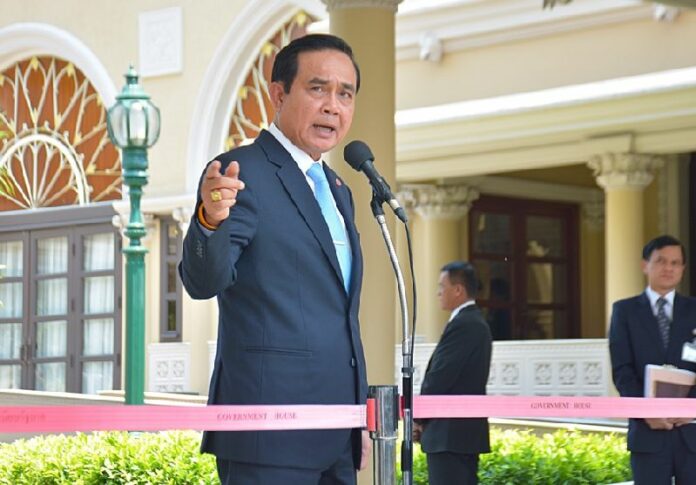
Junta chairman Prayuth Chan-ocha referred to former Prime Minister Thaksin Shinawatra by name Thursday. He habitually makes only indirect reference to the political figure whose influence has been a target of the military regime.

BANGKOK — Junta chairman and Prime Minister Prayuth Chan-ocha today accused the de facto leader of the Redshirt movement of plotting the recent resumption of public protests against his military regime.

After a heated exchange with reporters at Government House who pressed Prayuth to name the person he thinks is behind the gatherings, the junta chief blurted out the name of former Prime Minister Thaksin Shinawatra, who remains immensely popular in parts of Thailand despite the coup that deposed him 10 years ago.
“Who’s doing this? Who’s supporting them? Who’s plotting all this?” Gen. Prayuth said. “Firstly, it’s foreign lobbyists. Who? Thaksin!” 

The reporter encouraged him, “Yeah, that’s the way to do it!”

Prayuth, who regularly posits himself as a selfless peace-maker, seemed to immediately regret invoking Thaksin by name.

“Yeah, you will use this to strike me. It will be messy again. That’s all you want. The country will be in unrest again.” 

Thaksin, whose sister Yingluck Shinawatra led the civilian government toppled by Prayuth in May 2014, continues to wield undisputed control over his political dynasty despite living in exile for a decade. 

Since seizing power from the pro-Thaksin government in 2014, the junta has worked to dismantle the influence of Thaksin and his network of supporters, known as Redshirts, though publicly junta leaders insist on their political impartiality. 
When egged on by reporters, Prayuth has made previous allusions to Thaksin in public speeches, but never mentioned the Redshirt leader by name in a such a way.

Here’s a partial transcript of Prayuth’s exchange with several unidentified reporters today:

Reporter: Right now there are student groups organizing…

Prayuth: Students are students. But whose side are they on? whose cars brought them there? Who? Huh? Did Voice TV bring them there? Did UDD [Redshirts’ umbrella group, United Front of Democracy Against Dictatorship] cars bring them there? Who? How is it related? Analyze it.

Reporter: About people coming out to protest, are you concerned? Because, looking at the trend, they continue to come out, even though their leaders are arrested…

Prayuth: They will go to jail. They will be tried in court. How else?

Reporter: Based on your findings, what network is behind them?
Prayuth: They're investigating. Or you want to do it? … Don’t you know? Answer me. Don't you know where the money is from? Which group? Who? Say the name.

Reporter: Can you explicitly name the person…

Prayuth: I was just telling you earlier. Why didn’t you listen to me? Who's doing this? Who's supporting them? Who's plotting all this? Firstly, it's foreign lobbyists. Who? Thaksin! 

Reporter: Yeah, that’s the way to do it!

Prayuth: Yeah, you will use this to strike me. It will be messy again. That's all you want. The country will be in unrest again.


Related stories:
Prayuth Promises Not to Arrest Thaksin at Lee Kuan Yew's Funeral

Prayuth Asks Media To Stop Reporting About Thaksin

Official Calls Thaksin’s Speech ‘Dog Bites Man’ Story 

Don't Vote For 'Previous Politicians,' Prayuth Advises Nation


Teeranai Charuvastra can be reached at [email protected] and @Teeranai_C.


\

Advertisement

Watana Faces Prosecution for Breaking Pledge to Junta

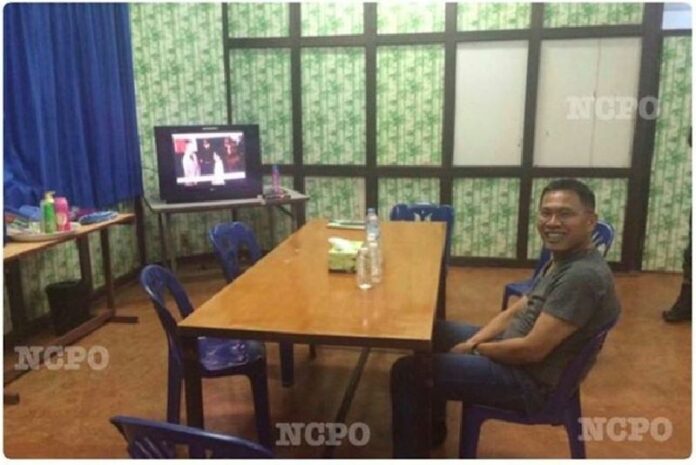
Watana Muangsook, a member of the Pheu Thai Party, in detention Wednesday at a military base west of Bangkok in Kanchanaburi province. Photo: Courtesy National Council for Peace and Order

By Pravit Rojanaphruk
Senior Staff Writer

BANGKOK — Former Pheu Thai MP Watana Muangsook will likely be charged with violating the terms of an agreement not to oppose the junta or incite insurrection against the military regime, according to the detained politician’s lawyer.

Watana’s lawyer Narinpong Jinapak has been notified by the military that his client, who has refused to eat anything but coconut meat since turning himself in to military custody Monday and prompted public demonstrations calling for his release, will be charged for violating the terms of an agreement made under duress in the aftermath of the May 2014 coup.


Daily Protests Planned Until Watana Released


The 59-year-old former commerce minister was returned to Bangkok this morning from detention in Kanchanaburi province and is being held at the 11th Military Circle in Bangkok. If convicted he faces up to two years in prison.

Watana’s most recent detention stemmed from his saying online that he would oppose the proposed constitution written under supervision of the military and set to go before the public in a Aug. 7 referendum.

He was first detained in the days after the military seized power on May 22, 2014, and among those compelled to sign a “memoranda of understanding” including terms they would not “assist, participate in or lead” any anti-junta movement.

Yaowalak Anupan, head of Thai Lawyers for Human Rights, cast doubt as to how criticizing the junta-sponsored charter could constitute a violation of that agreement, which was signed while being detained without charge by the junta – which calls itself the National Council for Peace and Order – a process the junta euphemistically terms an “attitude adjustment” session.

“Watana insists that he had only criticized the draft charter. Is that [not allowed] in the agreement?” asked Yaowalak, who is a lawyer but not representing Watana.

To pro-democracy activist and Red Sunday Group leader Sombat Boonngam-anong, the decision to charge Wattana is meant to make an example of him and instill fear in others. He said it reflects the Thai expression of, “slaughtering a chicken for the monkeys to see.”

“If the NCPO cannot stop Watana, the NCPO’s power won’t be sacred. This is not about law but about power,” Sombat said.

It’s still premature to conclude whether the strategy will be effective, he added, as detaining Watana has seen renewed demonstrations and a fresh wave of criticism against the junta.

The junta only targets influential figures for detention and prosecution, Sombat said, pointing out that Watana has proven to particularly fierce in his criticism of the military regime which next month will mark its second anniversary in power.

“[Watana] didn’t spare the junta it’s face,” Sombat concluded.


Related stories:

Frustration Boils Over at Rare, Brief Protest

Activists Promise Protest if Watana Not Released by Military

Watana Defiant as He Turns Himself in at Army Base

Advertisement

Frenchman Falls to Death from Luxury Sathorn Condo

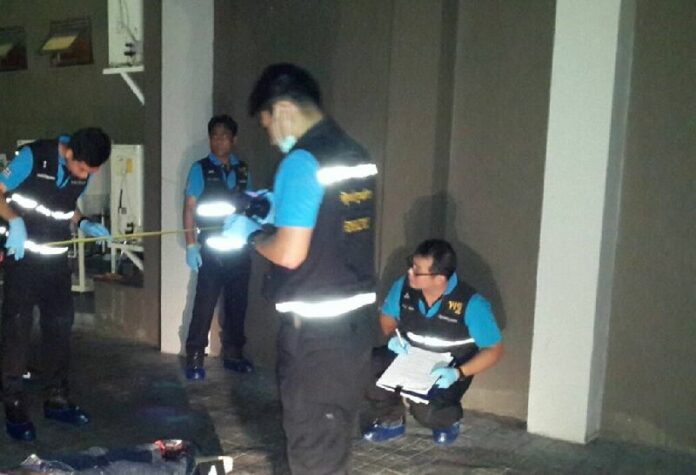
Police inspect the scene where a 31-year-old Frenchman fell to his death Wednesday night in Bangkok’s Soi Sathorn 12.

BANGKOK — Emmanuel Jean Vincent’s girlfriend rushed to his condo last night after he sent her a photo of him perched in the window of his 26th floor room. The two had been fighting.

When she arrived, it was too late. The body of the 31-year-old French national was already on the ground Wednesday night in front of The Address Sathorn.

“We were unable to tell whether he intended to commit suicide or just accidentally fell,” said police. Col. Pongsak Supla-or of the Yannawa Police Station.

Vincent’s girlfriend told police she and her boyfriend, who worked as a costume designer fought frequently. She rushed from her place in Pathum Thani province to his condo in Soi Sathorn 12 after he sent her the photo showing his legs dangling over the edge of the window.

Pongsak said no sign of struggle was found in his room.

Police notified the French Embassy while his body is undergoing a forensic examination.


\

The photo Emmanuel Jean Vincent sent to his girlfriend prior to falling to his death from The Address Sathorn condominium in Bangkok.


Advertisement

Goodbye Andrew, Hello Harriet: Slavery-Born Woman New Face of USD$20

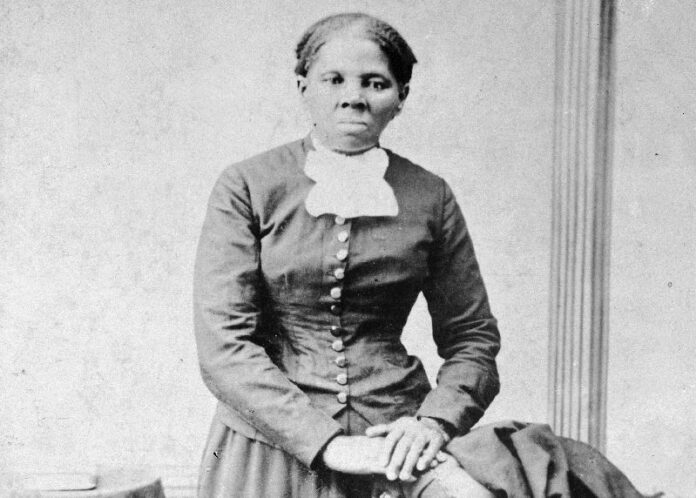
An image provided by the Library of Congress shows Harriet Tubman, between 1860 and 1875. Photo: H.B. Lindsley / Library of Congress / Associated Press

WASHINGTON — Harriet Tubman, an African-American abolitionist who was born a slave, will stand with George Washington, Abraham Lincoln and Benjamin Franklin among the iconic faces of U.S. currency.

The USD$20 bill will be redesigned with Tubman's portrait on the front, marking two historic milestones, Treasury Secretary Jacob Lew announced Wednesday. Tubman will become the first African-American on U.S. paper money and the first woman to be depicted on currency in 100 years.

The leader of the Underground Railroad will replace the portrait of Andrew Jackson, the nation's seventh president and a slave owner, who will be pushed to the back of the bill.

Lew also settled a backlash that had erupted after he had announced an initial plan to remove Alexander Hamilton, the nation's first Treasury secretary, from the USD$10 bill in order to honor a woman on the bill.

Hamilton will remain on the USD$10 note, Lew said. Instead, the Treasury building on the back of the bill will be changed to commemorate a 1913 march that ended on the steps of the Treasury building. It will also feature suffragette leaders Lucretia Mott, Sojourner Truth, Susan B. Anthony, Elizabeth Cady Stanton and Alice Paul.

The back of the USD$20, which now shows the White House, will be redesigned to include the White House and Jackson, whose statute stands across the street in Lafayette Park.

The USD$5 bill will also undergo change: The illustration of the Lincoln Memorial on the back will be redesigned to honor "events at the Lincoln Memorial that helped to shape our history and our democracy."

The new image on the USD$5 bill will include civil rights leader Martin Luther King Jr., who gave his famous "I have a dream" speech on the steps of the memorial in 1963 and Marian Anderson and Eleanor Roosevelt. Anderson, an African-American opera singer, gave a concert at the memorial in 1939 after she had been blocked from singing at the then-segregated Constitution Hall. The Lincoln Memorial concert was arranged by Mrs. Roosevelt.

An online group, Women on 20s, said it was encouraged that Lew was responding to its campaign to replace Jackson with a woman. But it said it wouldn't be satisfied unless Lew committed to issuing the new USD$20 bill at the same time that the redesigned USD$10 bill is scheduled to be issued in 2020.

Lew didn't go that far Wednesday. But he pledged that at least the designs for all three bills will be accelerated so they'll be finished by 2020 — the 100th anniversary of passage of the 19th amendment giving women the right to vote. He said the new notes will go into circulation as fast as possible after that, consistent with the need to incorporate new anti-counterfeiting measures in the designs.

Federal Reserve Chair Janet Yellen, the first woman to head the central bank, said she welcomed the decision to honor the achievements of women in American history. She said the Fed would work closely with Treasury to get the new bills developed and into circulation.

U.S. currency has undergone upgrades over the years to stay ahead of counterfeiters. But the updates proposed by Lew for the three bills would be the most sweeping changes since 1929, when all U.S. paper money was redesigned to feature more standard designs and a smaller size to save printing costs.

Lew had initially selected the USD$10 bill to feature a woman because under the original timetable it was the next bill to be redesigned. But that proposal met fierce objections from supporters of Hamilton, who is enjoying renewed popular interest with the smash Broadway hit musical "Hamilton."

Tubman, who was born into slavery in the early part of the 19th century, escaped and then used the network of anti-slavery activists and safe houses known as the Underground Railroad to transport other slaves to freedom. After the Civil War, Tubman, who died in 1913, became active in the campaign for women's suffrage.

Numerous groups have been campaigning to have a woman honored on the nation's paper currency, which has been an all-male domain for more than a century.

Amrita Myers, a historian at Indiana University, said honoring Tubman was appropriate.

"Not only is this going to be the first African-American historical figure on U.S. currency, but it's a woman specifically from the era of slavery," Myers said.

Wednesday's announcement helped mark a decades-long decline in the reputation of Jackson, once a pillar of the modern Democratic Party but now often defined by his ownership of slaves and the "Trail of Tears" saga that forcibly removed American Indians from their land.

"Jackson at one time was mainly known as the champion of democracy and the defender of the union and the champion of the common man against aggregated wealth and bankers," said Daniel Feller, a history professor at the University of Tennessee and director of Jackson's papers.

The last woman featured on U.S. paper money was Martha Washington, who was on a dollar silver certificate from 1891 to 1896. The only other woman ever featured on U.S. paper money was Pocahontas, from 1865 to 1869. Susan B. Anthony and Sacagawea are on dollar coins.

Story: Martin Crutsinger / Associated Press

Advertisement

UN Hears Major Differences on the Approach to Drug Use


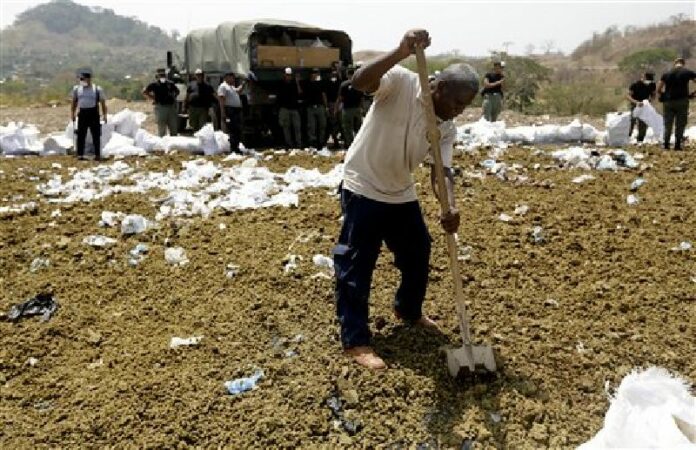
A narcotics agent shovels marijuana, as part of an operation to destroy seized drugs, on the outskirts of Panama City, Friday, April 1, 2016. Photo: Arnulfo Franco / Associated Press

UNITED NATIONS — Jamaica defended its decriminalization of possession of small amounts of marijuana. Iran said it seized 620 tons of different types of drugs last year and is helping protect the world from "the evils of addiction." Cuba opposed the legalization of drugs or declaring them harmless.

The first U.N. General Assembly special session to address global drug policy in nearly 20 years heard major differences on the approach to drug use on its second day on Wednesday.

On the liberalization side, Canada's Health Minister Jane Philpott announced that the government will introduce legislation to legalize marijuana next spring. She said Canada will ensure that marijuana is kept out children's hands, and will address the devastating consequences of drugs and drug-related crimes.

Jamaica's Foreign Minister Kamina Johnson Smith told delegates that the government amended the Dangerous Drugs Act last year to give tickets for possession of less than two ounces of cannabis instead of making it a felony offense, and to legalize the sacramental use of marijuana by Rastafarians. It also established provisions for the medical, scientific and therapeutic uses of the plant, she said.

Smith said Jamaica is finalizing a five-year national drug plan including programs to reduce demand for drugs, provide for early intervention and treatment of drug users, and promote rehabilitation and social reintegration.

Michael Botticelli, director of the White House Office of National Drug Control Policy, stressed that "law enforcement efforts should focus on criminal organizations — not on people with substance use disorders who need treatment and recovery support services."

He called for drug policies in every country to address the needs of underserved groups including women and children, indigenous people, prisoners, and lesbians, gays, bisexual and transgender people.

On the tough enforcement side, Indonesia's Ambassador Rachmat Budiman said "a zero-tolerance approach" is needed to suppress and eliminate the scourge of drugs.

He said drug trafficking rings are using new "psychoactive substances" and the Internet to penetrate all levels of society, including the young generation, and pose "a serious threat which requires extraordinary efforts."

Like Indonesia, Iran imposes the death penalty on drug traffickers.

Iran's Justice Minister Abdulreza Rahmani Fazli told the high-level meeting that the Islamic Republic has spent billions of dollars in its campaign against armed drug traffickers.

He said Iran is ready to host an international conference on countering drugs and drug-related crimes along the Balkan route, one of the two main heroin trafficking corridors linking opium-producing Afghanistan to the huge markets of Russia and Western Europe. It usually goes through Pakistan to Iran, Turkey, Greece and Bulgaria across southeastern Europe to the Western European market, and has an annual market value of some $28 billion, according to the U.N. Office of Drugs and Crime known as UNODC.

Fazli said the conference, in collaboration with the UNODC and countries on the route, would tackle ways to combat drug-related money laundering and detect drug trafficking ringleaders.

Cuba's Justice Minister Maria Esther Reus Gonzalez asked how the world couldn't be worried when the world drug problem has become "deeper and more intensified" with 246 million people using illicit drugs, according to UNODC.

"It will be really difficult to solve the problems of mass production of and trafficking in drugs from the South, if the majority demand from the North is not eliminated," she warned.

Reus Gonzalez also warned that legalizing drugs won't solve the problem either and will only open "more dangerous gaps for the stability of our nations." She reiterated "Cuba's absolutely commitment to achieving societies free of illicit drugs."

Story: Edith M. Lederer / Associated Press


Advertisement

Civil Servant Denies Copy-Paste Doctoral Thesis Was Plagiarism

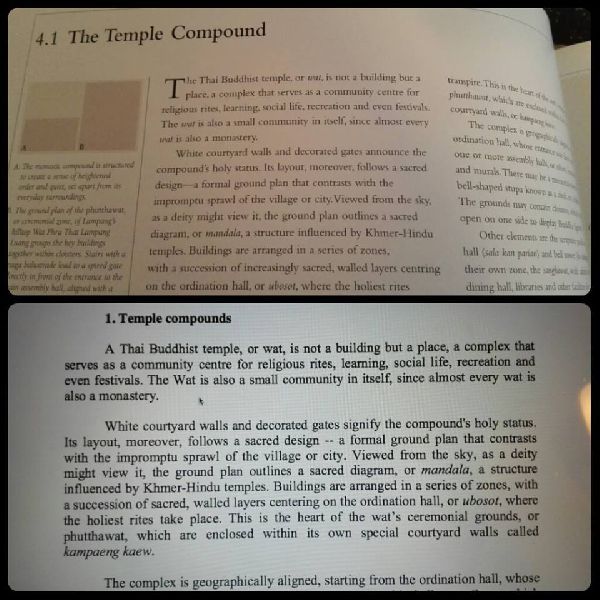
Comparison of a doctoral dissertation and book published three years earlier. Image: Poe Limkul / Facebook.

By Teeranai Charuvastra
Staff Reporter

BANGKOK — “A Thai Buddhist temple, or wat, is not a building but a place, a complex that serves as a community centre for religious rites, learning, social life, recreation and even festivals," read Wattana Boonjub’s 2009 thesis on Thai architecture.

As a researcher discovered and shared online recently, there was one problem with that and many other sentences from Wattana’s dissertation. Someone had written exactly the same thing three years earlier in a book titled “Architecture of Thailand.”

Today, the linguist working for the Department of Fine Arts admitted to lifting entire passages word-for-word from the book for his doctoral thesis – but insisted the act did not constitute plagiarism.

In Wattana's thesis, which can be found online, the 52 pages comprising one of its six chapters was copied with alteration from the 2006 book authored by Nithi Sthapitanonda and Brian Mertens.

“Just found a shocking plagiarism in a Thai PhD thesis,” researcher Poe Limkul wrote on Facebook along with images comparing the book to the dissertation. “And it is not just one [instance], it repeated multiple times. Within 60 seconds I recognized he literally copied 2 entire chapters from a book published 3 years prior to the thesis.”

\

Comparison of a a doctoral dissertation and book published three years earlier. Image: Poe Limkul / Facebook


Silpakorn University, where the thesis was completed, has promised to investigate.

The thesis was submitted to the school’s Faculty of Architecture. It indicates that two academics and one national artist reviewed and accredited it prior to publication.

Wattana did not use any footnotes or citations anywhere in his thesis apart from a list of sources cited in a bibliography at the end, one of which identified “Architecture of Thailand” by Nithi Sthapitanonda and Brian Mertens as one of his materials. 

Nowhere in the purloined chapter did Wattana attribute the material to Nithi and Mertens. 

Reached for comment Wednesday, the bureaucrat defended his action, saying it was sufficient to list the “Architecture of Thailand” in the bibliography.

“I didn’t plagiarize the book. I merely lifted the content for my use,” said Wattana, who works as a linguist in the Department of Fine Arts’ literature and history division. “I cited him [Nithi] in the bibliography. I said clearly that I used Nithi’s work. I didn’t have enough wisdom to come up with that work on my own.”

A staff member at Silpakorn University’s Faculty of Architecture said the university is taking the matter seriously.

“We are investigating this issue. We just learned about it today,” said the staff member, who declined to give her name because she’s not authorized to speak the media. “According to the regulations, if he’s guilty, he will be stripped of his degree.” 

The university referred a reporter to graduate school dean Panjai Tantatsanawong but said he was not in the office.

Academic integrity is lightly policed in the kingdom’s universities, where a pervasive culture of student cheating continues under pressure from high-stakes testing. There have been a number of high-profile cases involving plagiarized academic theses over the years. 

Wattana said he’s unconcerned by the investigation because he has no attachment to his doctorate.

“Whether they strip me of my degree is the right of the committee. I don’t pay much attention to my doctorate anyway,” Wattana said. “The heart of my work has already been accomplished. When people call me or write my name without the honorific ‘Dr.,’ I’m not angry either.”

Wattana said he has discussed the matter with Nithi, and the author holds no grudge against him. He also questioned the intentions of the researcher who brought the matter to public attention.

“The person who raised this issue, what kind of agenda do they have?” Wattana said. 

In a Facebook post published Wednesday, Nithi said he doesn’t mind the plagiarism because it helps spread his work. 

“If anyone finds benefit in it and uses it, whether by plagiarizing it entirely or partially amending it for use, personally I do not have any problem with that,” Nithi wrote. “But if it violates any system in the university or educational institute, it’s up to that institute to take action as it deems fit.” 


Related stories:

Thailand's Students Marked Down For Cheating


Teeranai Charuvastra can be reached at [email protected] and @Teeranai_C.

\

Advertisement

Suspected Uighur Militant in Threat Warning Twice Entered Thailand

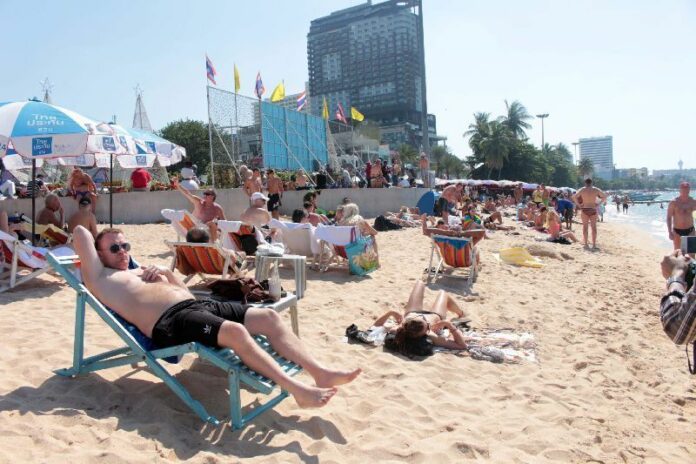
Pattaya Beach in a December 2014 file photo.

BANGKOK — One of the alleged militants said to be plotting terror attacks in Southeast Asia in a leaked intelligence report entered the country twice in March before departing, immigration police said today.

One of the men, identified as Uighur militants earlier this month in the April 8 report, entered Thailand on March 18 and 24, the heads of the national and immigration police forces told reporters Wednesday.

”We always monitor these people. But sometimes we receive information after the perpetrator has already left the country, so it’s so difficult to track them down that we might need help from angels,” Royal Thai Police commander Chakthip Chaijinda said.


Uighur, Chechen Militants in Thailand to Stage Attacks, Memo Warns


Ali Yalcin, a 36-year-old Turkish national, first entered Thailand as a tourist at Don Mueang International Airport from Singapore on an AirAsia flight, according to Maj. Gen. Natthorn Prosunthorn of Immigration Bureau police.

Yalcin stayed in the country for four days before departing to Siem Reap on March 22. He returned two days later and remained in the country four days before leaving to Malaysia on March 28. Tourists from Turkey are permitted to stay up to 30 days without a visa.

Yalcin was accompanied by another Turkish man whose name was not included in the warning which named also named Hid Yet Dursun as security threats. No mention was made of the two alleged Chechen militants identified in the April 8 memo.

The men were said to be plotting attacks on Chinese businesses in ASEAN member states.

Two ethnic Uighurs – one a citizen of China and another of Turkey – are being tried over alleged roles in a deadly terror attack in Bangkok that killed 20 people in August.

Natthorn said he already ordered a search of the room in Bangkok on Soi Sukhumvit 16 and another in Phuket town where the men stayed.

Authorities said they are seeking more information from their Singaporean counterparts.

Deputy police chief Sriwarah Rangsipramkul said Wednesday the men were now on a watch list.

A military national security agency operating out of the Prime Minister’s Office today played down any concerns.

Col. Peerawat Sangthong, a spokesman for the Internal Security Operations Command, said his intelligence unit believes there is no likelihood of a terrorist attack being carried out by external players in the country.


Related stories:

500 Witnesses to be Called in Bangkok Bombing Trial

Uighur, Chechen Militants in Thailand to Stage Attacks, Memo Warns

No Credible ISIS Threat, Thai Interpol Head Says

Police Investigate Source of ISIS Memo Leak

Police Caught Off Guard by Memo About Possible ISIS Attack

Moscow Warns That ISIS in Thailand to Attack Russian Targets


Advertisement

Hot News

LATEST NEWS

Bangkok
overcast clouds
25.5 ° C
25.5 °
25.5 °
56 %
3.7kmh
100 %
Tue
26 °
Wed
34 °
Thu
37 °
Fri
35 °
Sat
32 °