32.2 C
Bangkok
Monday, June 29, 2026
Home Blog Page 2767

Jenphop Sped Toward Deadly Crash at Over 250KPH

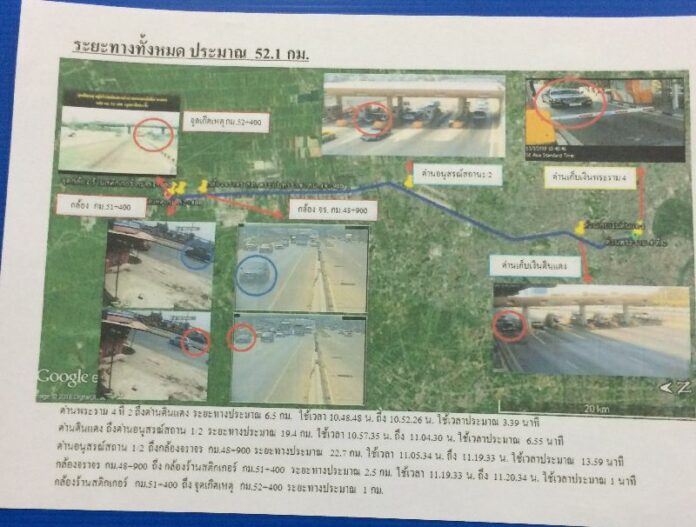
A map showing Jenphop Viraporn’s route on the day of the deadly crash is shown by police Tuesday at a news conference at the Ayutthaya regional police headquarters.

AYUTTHAYA — A wealthy auto scion was speeding at over 250kph when he slammed into another vehicle and killed two people on a highway earlier this month, police announced today.

Evidence that Jenphop Viraporn was speeding at more than twice the highway limit of 120kph will be presented as key evidence against him in court, where he faces two charges for the March 13 deaths of Krissana Thaworn and Thantapat Horsaengchai, police said.

“As a person who has worked as an investigator, I confirm that we can indict him, definitely,” said deputy national police chief Gen. Pongsapat Pongcharoen at a Tuesday news conference.

After blowing through a Rama IV Road toll booth without stopping, Jenphop traveled 52.1 kilometers to where the accident occurred in 25 minutes, according to Pongsapat.

Along the way, his speed varied between 215kph and 257kph, according to data recorded by his Mercedes-Benz. 

Pongsapat said experts were fetched from Hong Kong to independently verify the data, and he assured the victim’s families that police will not shield Jenphop from justice. 

“I will do my best in this case,” Pongsapat said. “If I do not, I won’t be able to continue living in Thailand.” 

He estimated Jenphop will be indicted next month.


Related Stories:

Deadly Driver Jenphop Agrees to Blood Test 15 Days Later

Fresh Charge Against Jenphop as Model Student Victims Laid to Rest

Businessman Charged for Fatal Collision Amid Mounting Criticism

Officers In Charge of Ayutthaya Deadly Collision Removed

Jenphop Plowed Through Toll Booth Before Deadly Crash (Video)


Teeranai Charuvastra can be reached at [email protected] and @Teeranai_C.


\

Advertisement

Attorney General Vows to Prosecute Stalled Case Against Red Bull Heir

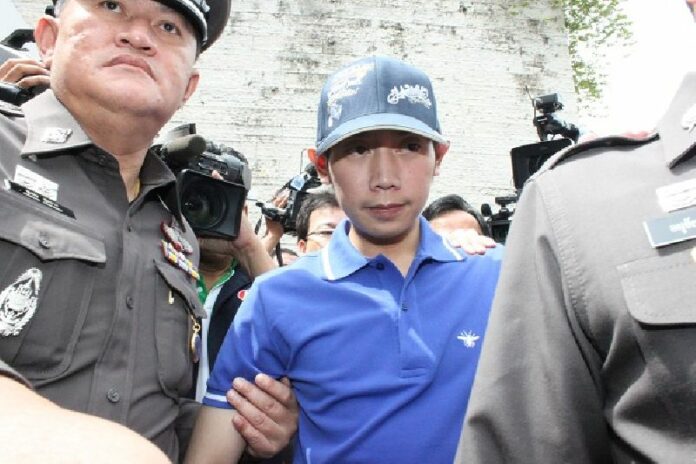
Vorayuth Yoovidhya was arrested at his family home in Bangkok on Sept. 3, 2012. He would later flee to Singapore.

BANGKOK — Four years after he killed a Bangkok motorcycle cop, fugitive Red Bull heir Vorayuth “Boss” Yoovidhya still faces prosecution, the Attorney General’s office announced today.

After nearly two years of inactivity, the case against Vorayuth is moving forward again, an attorney general spokesman said Tuesday, and he will still be prosecuted for reckless driving resulting in death, one of two charges for which the statute of limitations has yet to expire.

With public attention again focused on high-profile cases of wealthy children escaping justice, Lt. Somnuek Siangkong vowed that Vorayuth, now 31, will one day be tried for the 2012 death of Bangkok police officer Wichian Klanprasert.

Wichian, a sergeant major at the Thonglor police station, was killed when Vorayuth crashed his Ferrari into Wichian’s motorcycle then dragged his body behind as he sped away.

Somnuek said two previously filed misdemeanors speeding and property damage had already expired.

No announcement was made as when to expect a trial or Vorayuth’s arrest.

Somnuek blamed the lapsed charges on Vorayuth’s failure to appear. Vorayuth, the grandson of deceased billionaire Chaleo Yoovidhya, didn’t respond to police summons and failed to appear a number of times in 2013 before absconding to Singapore. He claimed to be ill.

Vorayuth still faces a lesser charge of not reporting the incident to police, a charge which will expire next year. Somnuek said if he fails to respond to a new summons, authorities are authorized to seek a warrant for his arrest. No mention was made of whether his extradition would be sought from Singapore.

A charge of drunk driving was dropped by prosecutors due to a lack of evidence, according to the Attorney General’s office.

The 2012 case, long a simmering example of Thailand’s two-tier justice system, won fresh interest after wealthy businessman Jenphop Veeraporn killed two students earlier this month in his speeding Mercedes-Benz.

There were further similarities in the two cases, such as a failure to immediately test the suspect’s sobriety. Authorities only took the case seriously after an eruption of outrage on social media, where the accident served as a reminder of other cases of “hit-and-run rich kids” never properly prosecuted.

Police chief Chakthip Chaijinda last week urged authorities to move the case against Vorayuth forward as it had again become a matter of public interest.

Somnuek said Vorayuth asked two years ago to postpone his arrest and proposed five more witnesses for authorities to interview.

It wasn’t until last week that investigators sent prosecutors the results of those interviews, which they are now reviewing.


Related stories:

Deadly Driver Jenphop Agrees to Blood Test 15 Days Later

Fresh Charge Against Jenphop as Model Student Victims Laid to Rest

Businessman Charged for Fatal Collision Amid Mounting Criticism

‘Anna Reese’ Rejects 6.2M Settlement Sought By Dead Cop’s Family

Millionaire's Son Arrested For Street Car Racing


Advertisement

Final Draft of Charter Out, Critics Resolute on Rejection

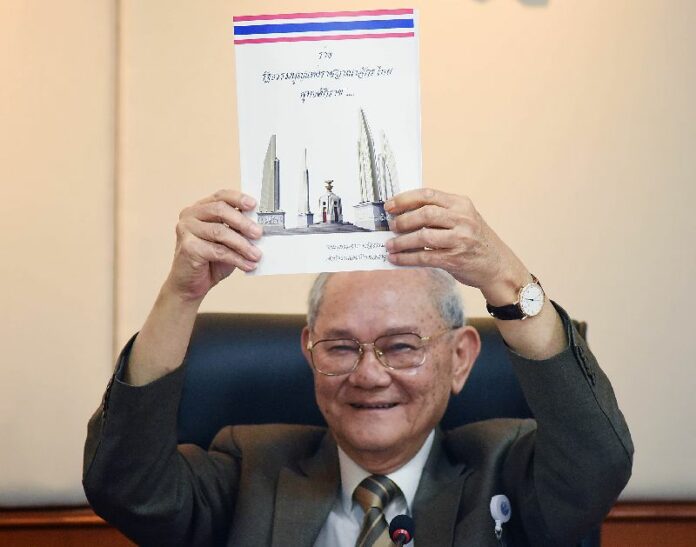
Constitution Drafting Committee Chairman Meechai Ruchuphan displays the final draft of the charter March 29 in Bangkok.

By Pravit Rojanaphruk
Senior Staff Writer

BANGKOK — Although the final draft of the junta-sponsored charter is just being rolled out today, some critics have already made up their minds.

Democracy activist leader Sombat Boonngamanon, Redshirt leader Weng Tojirakarn and law lecturer Ekachai Chainuvati are among those who’ve decided to vote against the draft, citing its undemocratic process and content.

“I will reject it, and the reason is that the drafting process is problematic and unacceptable,” Sombat said, citing the fact it was written by 21 people all appointed by the military. “The drafting process is also non-participatory.”

Sombat said no possibility should have been left open to a non-MP becoming prime minister. The fact that no senators will be elected by the public, and in effect be selected by the junta is also a reason, he said.

Ekachai cited the illegitimacy of the process as his reason to reject it.

“I don’t believe that a coup d’etat can can solve political problems,” he said.

The Siam University law lecturer also cited the fact that upper house members would be chosen by a panel appointed by the National Council for Peace and Order, the formal name of the junta, as another reason to reject it.

That’s made worse, he added, be the senate being made more powerful than the House of Representatives and able to vote for a prime minister in case of a deadlock in the lower house.

“The senate should never be able to override the House of Representatives,” he said.

Charter drafters have marketed their proposed constitution as necessary to end an endemic culture of corruption in Thai politics.

Ekachai said it just makes things worse, citing increased powers granted to the controversial Constitutional Court as another reason: “Giving the court the power to become a political actor.”

As for Weng, he said he made up his mind some time ago.

“I will definitely reject this most horrible draft charter. Having coup makers drafting the charter cannot ever make it democratic,” he said, adding that its drafters tend to defend their class interests.

Weng called the latest charter draft the worse of both worlds, comparing it with the 1978 charter, which had an appointed upper house and unelected PM, combined with the 2007 charter, which gave a lot of power to so-called independent organizations.

All three are also concerned the referendum process may not be free and fair as critics and opponents do not have equal space and freedom to articulate their positions due to external constraints, such as the ban on political gatherings.

Weng cited as an example a threat to imprison for 10 years those who try to derail the vote.

“It’s like our ears, eyes and hands are being tied or shut,” he said.

For Ekachai, the most worrying aspect is the lack of equal freedom of expression to deliberate on the draft. He fears the absolute power provided to the junta leader under Article 44 of the provisional charter will be used to further curb such freedoms in the run-up to the vote, now expected in early August.

Ekachai vowed to express his stance through writing opinion pieces for the media with a focus on the constitutional process.

“All people, no matter what [their political] color should come and speak out,” he said.

Sombat, who is already facing trial for sedition for a failed attempt to overthrow the junta, is also gearing up to speak out. He refused to go into details at this time.

Sombat also led a failed campaign to reject the previous junta-sponsored draft constitution in 2007.

He used the color red to represent a traffic light stop signal, a color that would soon be adopted by Redshirts.

Sombat said there’s now much less freedom to deliberate on the next constitution compared to 2007.

“I am still looking for ways to express myself,” he said. “If I simply show up, I could be whisked away. I won’t say what I’m gonna do yet.”

Advertisement

Officials Say Egyptian Plane Hijacked, Lands in Cyprus

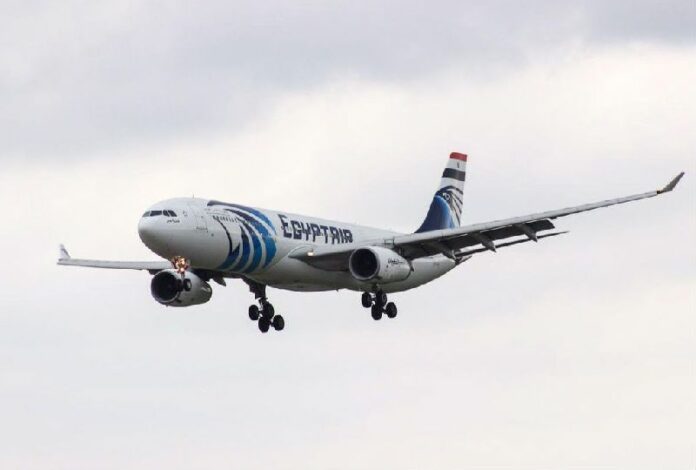
An undated file picture of an Egypt Air plane. Photo: Egypt Air / Facebook

NICOSIA, Cyprus — An Egypt Air plane was hijacked on Tuesday while flying from the Egyptian Mediterranean coastal city of Alexandria to the capital, Cairo, and later landed in Cyprus where some of the women and children were allowed to get off the aircraft, according to Egyptian and Cypriot officials.

The Airbus flight number MS181 had 81 passengers on board and was flying on a regular route when the hijacking took place, the Egyptians said. It was not immediately clear if one or more hijackers were involved.

Details were sketchy and the motives and identities of the hijacker or hjackers were also not known.

Shortly after, the plane landed at the airport in the Cypriot coastal city of Larnaca, Cypriot officials said, adding that there were suspicions of a bomb on board.

The official later said the hijackers later allowed an unspecified number of women and children to go free and some were disembarking.

A second Cypriot official said there "seems like there's more than one hijacker." He said there have been no demands made so far other than that police vehicles move away from the aircraft.

All the officials in Egypt and Cyprus spoke on condition of anonymity because they were not authorized to speak to the media.

The hijacking, however, will most likely bring to the fore again the question of security at Egyptian airports, five months after a Russian aircraft crashed over Egypt's Sinai Peninsula minutes after it took off from Egypt's Red Sea resort of Sharm el-Sheikh. All 224 people on board were killed in the crash. Russia later said an explosive device brought down the aircraft and the extremist Islamic State group said it downed the plane

Story: Hamza Hendawi and Menelaos Hadjicostis / Associated Press


Advertisement

Woman Charged With Sedition For Posing With Red Bucket

Theerawan Charoensuk, 57 of Chiang Mai's Mae Ping district, poses with a festival water scoop in an undated photo posted online. Photo: Pantip

By Pravit Rojanaphruk
Senior Staff Writer

CHIANG MAI — Posing with water buckets printed with messages from ousted premiers could now be a crime in Thailand.

A 57-year-old housewife faces a military tribunal and seven years in prison for posting a photo with a red plastic water scoop emblazoned with a message from siblings and former prime ministers Thaksin and Yingluck Shinawatra, a human rights lawyer said Tuesday.

Police on Monday ordered Theerawan “Wan” Charoensuk, a resident of Mae Ping district in Chiang Mai province, to report to the military court this morning to hear a charge of inciting rebellion for the photo she posted to Facebook, according to human rights lawyer Anond Nampa.

Anond is a colleague of Theerawan’s lawyer, who he said wants to remain anonymous.

Speaking on Tuesday afternoon at Government House, junta chairman Prayuth Chan-ocha defended the move, saying Theerawan's actions not only threatened national security but incited others to violate the law.

"You have to see: the photo is about a man who broke the law," Gen. Prayuth said, refering to Thaksin, who was convicted of corruption in absentia in 2008. "Isn't support for a person who broke the laws and ran away from the criminal case a wrong thing to do?"

Attorney Yaowalak Anuphan, head of Thai Lawyers for Human Rights, said Prayuth's comments held no logic.

"It's not a crime. This is a dictatorial mindset to support the thinking of a dictator," she said in response to his comments. "Otherwise Prayuth's photo with Thaksin could be taken as evidence of committing a crime."

Theerawan was released from detention at about 2pm on Tuesday afternoon after posting a 100,000 bond.

In undated images posted to the Pantip webforum on Saturday, Theerawan smiles as she holds the bucket and makes a thumbs-up gesture. In another she also holds a calendar printed with images of Thaksin and Yingluck.

The bucket is the type of scoop used to splash water during the Songkran festival, which takes place next month.

"The situation may be hot, but brothers and sisters may gain coolness from the water inside this bucket," read the message printed on the scoop.

The Shinawatras hail from Chiang Mai, where they retain a high level of popularity and support. Since seizing power in May 2014, the junta has attempted to stamp out Thaksin’s influence, years after he was deposed in a 2006 coup.

While Theerawan’s case moves forward, she is barred from participating in any political activities. If found guilty, she faces up to seven years in prison.

“This is a measure employed to discourage local people [from opposing the junta],” Anond said.

Human Rights Watch senior researcher on Thailand, Sunai Phasuk, said the charge is ridiculous.

“This new level of absurdity shows intolerance even to the slightest form of political dissent. The junta has passed a threshold in which no one knows where this is going to lead."

Additional reporting Teeranai Charuvastra

Update: This story has been updated with comments from Gen. Prayuth

Related stories:

Shinawatras Defy Junta With Publicity Drive

A Country Divided by a Calendar

Junta Warns Redshirts Not to Don Red Shirts

Soldiers Confiscate 'Thaksin Strawberry Jam'

Advertisement

Vast Trove of Travelers’ Personal Info Posted on Govt Website

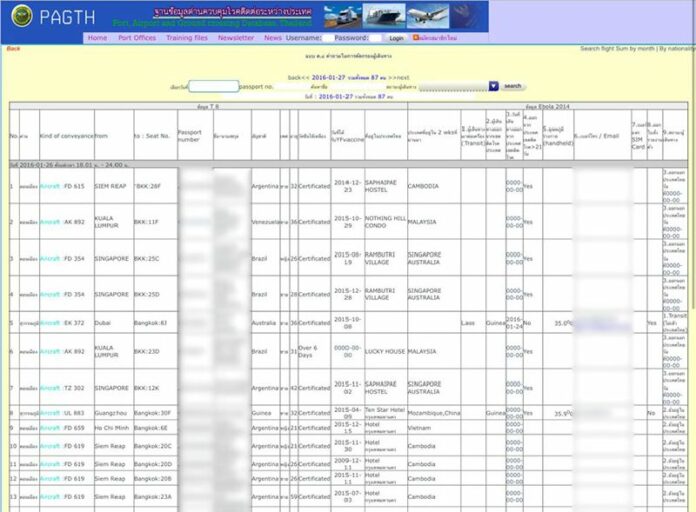
A screenshot of the database with names, passport numbers and residence addresses blurred.

BANGKOK — Sensitive information of tens of thousands of foreign travelers, including their real names and passport numbers, was publicly available on a government website until it was taken down yesterday in response to publicity.

Operated by the Bureau of General Communicable Diseases, the website displayed records of foreign travelers who passed through health checkpoints at Thai border controls, both air and land.

\

A screenshot of the database with names, passport numbers and residence addresses blurred.

In addition to dates of travelers’ most recent vaccines, the information included their real names, nationalities, passport numbers, flight numbers, addresses in Thailand and in some cases email addresses. It appeared to cover only certain regions, as the vast majority of the travelers were from South American nations.

It was unclear how long the information had been available online, but the records went back to 2012. 

The discovery of the unsecured information demonstrated again the weak security protocols for protecting sensitive data. On Sunday, a website was taken down which exposed personal details of foreign residents in southern Thailand, including a map showing where they lived.


Expat Personal Records Posted to Govt Site


Arthit Suriyawongkul of privacy advocacy group Thai Netizen Network said bureaucrats applied the same flawed logic in both incidents, that no one would find the URLs to access the sensitive information.

“It’s like you have a home, and you keep valuables in that home, and you hide a backdoor at the back of your house,” Arthit said. “But this doorway has no door at all. It’s just a frame in a hidden corner, and you hope that no one will know about this doorway.” 

Attention was called to the disease bureau’s database Monday by user Brfsa2 on the popular ThaiVisa forum, in a thread discussing news about the immigration website which revealed similar sensitive information about expats living in southern Thailand. 

“It has all names, passports, full current address, nationality and every single travel history,” the user wrote, including a link subsequently deleted by a forum administrator. “All made puiblicly [sic] available within a simple google search. Amazing!”  

Thai Netizens said it contacted the department in charge of the database at around 6:10pm on Monday and the website was taken down an hour later. 

In its Facebook post, Thai Netizen Network also advised members of the public to report any “leaks” or exposure of sensitive information to the Center of Emergency Response Team, a state agency tasked with improving national cybersecurity.

Arthit believes such incidents will become more frequent as bureaucrats place more private information and records online to improve services and communication between agencies. And problems with data vulnerability will only be solved, he said, if a data privacy law is enacted that insures it is used for legitimate purposes and is stored securely.


Related stories:

Expat Personal Records Posted to Govt Site

Anonymous Releases Court Data as Police Vow to Catch Hackers

Thai Banks Urged to Beef Up Security in Wake of Cyberactivism


Teeranai Charuvastra can be reached at [email protected] and @Teeranai_C.


\

Advertisement

Indonesia Says 10 Nationals Held Hostage After Ship Hijacked


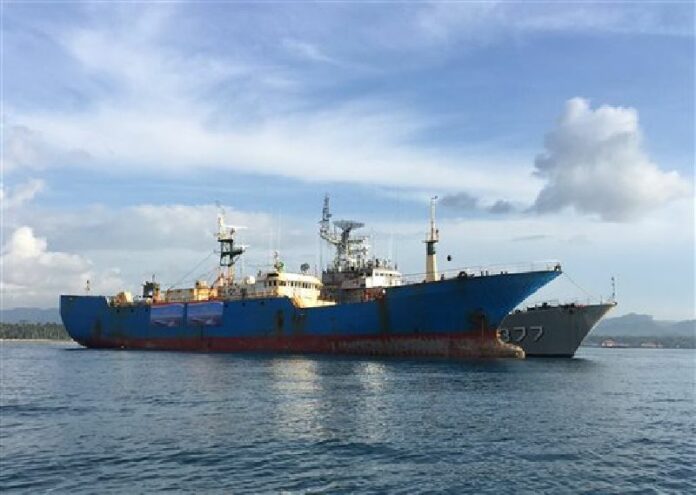
Illegal fishing vessel Viking, which was seized by Indonesia’s Navy is anchored next to Indonesian navy ship KRI Sutanto before its sinking on the waters off Pangandaran, West Java, Indonesia, Monday, March 14, 2016. Photo: Andi Jatmiko / Associated Press

JAKARTA, Indonesia — Indonesia's foreign ministry said Tuesday that 10 Indonesian nationals are being held hostage after their ship was hijacked in Philippine waters.

The ministry said in a statement that the owner of the hijacked tug boat and coal barge has received two telephone calls, purportedly from militant group Abu Sayyaf, demanding a ransom.

It does not know exactly when the incident occurred but said the ship owner was first contacted on Saturday. The ministry's statement also referred to the hostage takers as pirates.

"The current priority is the safety of 10 citizens who were taken hostage," the statement said. It said the company that owns the ship has informed the families of the crew.

Abu Sayyaf, which is on U.S. and Philippine lists of terrorist organizations, is notorious for bombings, extortions and kidnappings for ransom in the volatile south of the Philippines. It has been weakened by years of U.S.-backed Philippine offensives but remains a security threat.

The tug, Brahma 12, and the Anand 12 barge were going from Sungai Putting in Kalimantan, which is the Indonesian part of Borneo island, to Batangas in the southern Philippines.

Philippine police say the tug boat was found in Languyan town in the southernmost Philippine province of Tawi Tawi. Indonesia's foreign ministry believes the barge carrying about 7,000 tons of coal is still under the control of the hostage takers.

Philippine security officials suspect the al-Qaida-linked Abu Sayyaf for last year's abductions of two Canadians, a Norwegian and a Filipino woman from a marina on southern Samal Island. The kidnap victims are believed to be held in the jungles of southern Sulu province.

In a recent video posted on a Facebook account linked to the militants, they threatened to kill the hostages unless a huge ransom was paid by April 8. The Philippine military said the government's no-ransom policy remains and security forces would continue efforts to secure the safe release of the captives.

Indonesia has been helping the Philippines forge a peace agreement with Filipino Muslim rebels by sending soldiers to join an international oversight group which helps monitor government and rebel adherence to a cease-fire.

Story:  Niniek Karmin and Jim Gomez / Associated Press 


Advertisement

Girl, 3, Decapitated Outside Taipei Subway Station

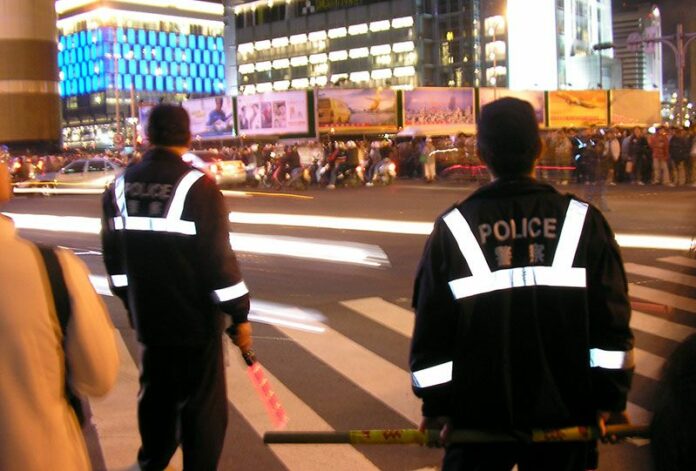
Police in Taipei in a file photo. Photo: Wikimedia Commons

TAIPEI, Taiwan — Taiwanese media report a 3-year-old girl was decapitated in an apparently random killing outside a subway station in the capital.

Local media say police arrested a man following Monday's attack in Taipei.

According to the reports, the man, identified by his surname, Wang, grabbed the girl from behind and decapitated her with a cleaver shortly before noon. The girl was with her mother, who was unable to prevent the attack.

Hours later, an angry crowd gathered outside the police station where Wang had been taken, some brandishing baseball bats in apparent preparation for an attack on the suspect.

The government-run Central News Agency said the 33-year-old Wang had an arrest record for drug crimes and had been treated for mental illness.

Violent crime is rare in Taiwan.

Advertisement

Wine Pioneer Finds Success in Myanmar Hills

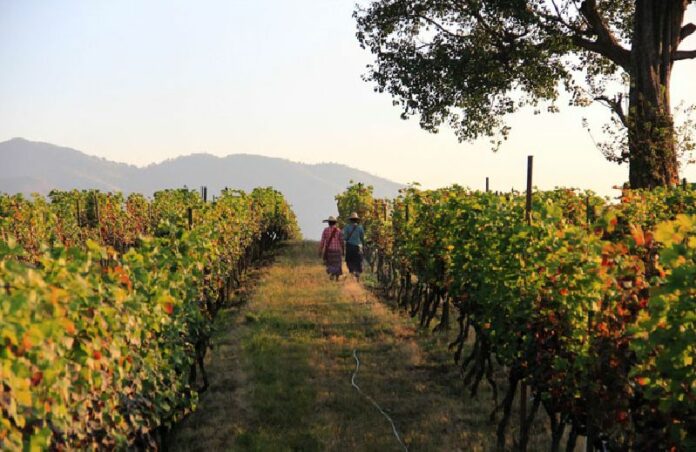
Workers walk through the Aythaya wine estate Feb. 2 in Aythaya, near Taunggyi, the capital of northeastern Shan state, Myanmar. Photo: Esther Htusan / Associated Press

AYTHAYA, Myanmar — When a democratically elected Myanmar president takes office this week after decades of military rule, some will be toasting the historic moment with a beverage decidedly not paired with this tropical, Southeast Asian nation: surprisingly high-quality, locally produced wine.

They might pour themselves an Aythaya Sauvignon blanc ("internationally competitive," says one wine critic), a Shiraz-based red ("marvelous improvement over initial vintages") or start off with a refreshing sparkling rose.

These all stem from Myanmar's first winery, a pioneering effort by German entrepreneur Bert Morsbach, who overcame both political minefields and viticulturally virgin terrain to find himself catering to a growing middle class and booming tourism, which together create more demand than he can currently satisfy. He doesn't even have enough left over for export.

Morsbach's Aythaya estate could be mistaken for a corner of Provence or California's wine country, in a verdant valley tucked into the Shan Hills of northeastern Myanmar, and at 1,300 meters probably the highest vineyard in Asia. Visitors, including a number of young Burmese, sample its wines at his restaurant with panoramic sunset views over the gently undulating vineyard.

\
Workers hold bottles at a bottling machine Feb. 2 at Aythaya wine estate in Aythaya, near Taunggyi, the capital of northeastern Shan state, Myanmar. Photo: Esther Htusan / Associated Press
 

The harvests haven't come easily. A genial onetime mining engineer, Morsbach was among just a handful of individual foreign businessmen in the 1990s operating in a largely isolated country where a xenophobic military regime made the rules. One minister, he says, simply appropriated an earlier venture. And Morsbach had no experience in winemaking, never mind doing it under tropical conditions.

"It was full of obstacles, adverse conditions, but it was a chance to do something new. That was the challenge and it had a reasonable chance of success," says the 78-year-old Morsbach, whose resume includes building factories in the United States, advising the Laos government and introducing sailboarding to Asia.

In the first year of full production, 2004, the estate managed just 20,000 bottles. This has soared to as many as 200,000 bottles in recent years, and Morsbach says he is about to open another plant with a 1-million-bottle capacity. He needs far more grapes than those grown on contract by 30 families and his current harvest from the 8-hectare (20-acre) Aythaya vineyard.

Wine consumption in Myanmar is minuscule, so, Morsbach exults, the potential in the country of 52 million is immense.

"We are still working on our first glass," says Hans-Eduard Leiendecker, Ayuthaya's head winemaker, referring to statistics showing that Burmese, per capita, drink just one-tenth of a glass of wine per year. Compare that to eight bottles of wine per year for Americans, 18 for Germans and 35 for the French.

\
A worker collects grapes in a plastic bin March 12 at Aythaya wine estate in Aythaya, near Taunggyi, the capital of northeastern Shan state, Myanmar. Photo: Esther Htusan / Associated Press


Leiendecker grew up on a family vineyard in Germany's Moselle region and spent 24 years in the European wine business. Like Morsbach, he was looking for a new challenge and took a big pay cut to come to Myanmar.

"Today, there is still no real wine culture in Myanmar. It needs one generation. It takes time," he says. "Some Burmese still drink wine like it was a soft drink, finding themselves under the table in 15 minutes."

Nonetheless, sophistication is slowly bubbling up among Aythaya's prime customers: the expanding middle class. "If you want to show that you have arrived in society, you sit in a restaurant with a glass of wine in your hand, not beer," Morsbach says.

The winemakers are also hopeful that wine and democracy will prove a good marriage, further spurring their enterprise.

Once the right contacts were made and the bureaucratic barriers breached, they say operating a 70-year-lease under the military regime has actually proved satisfactory. But Leienecker says reforms are still needed since foreign businesses face onerous restrictions, including an inability to secure loans if, like Morsbach's enterprise, they are 100 percent foreign-owned.

"We should hope that the new government will bring in international standards of doing business," Leienecker says of the April 1 regime change to a government led by democracy leader Aung San Suu Kyi.

The main challenge ahead is to shore up enough profits to allow for the investment needed to turn out truly outstanding "new latitude wines," those vintages coming from non-traditional wine-producing countries like Brazil, India and Thailand where the grape is not a native plant.

Aythaya found only seven of the more than 50 classical grape varieties able to adapt to the tropics, where daylight is shorter and the fungus-bearing rains are longer and more intense than in wine-producing Mediterranean climates.

Morsbach says they've successfully wrestled with such problems and conditions are otherwise excellent, especially for white wines. Some critics agree, with R. James Mullen, veteran wine writer for Thailand's The Nation newspaper, saying the sauvignon blanc "would hold up to almost any on the international market."

"I am convinced that one day Myanmar can make the best wine in Asia," Morsbach says. "It's my karma."

Story: Denis D. Gray / Associated Press

Advertisement

Pom Mahakan Fort People Ordered Out By April

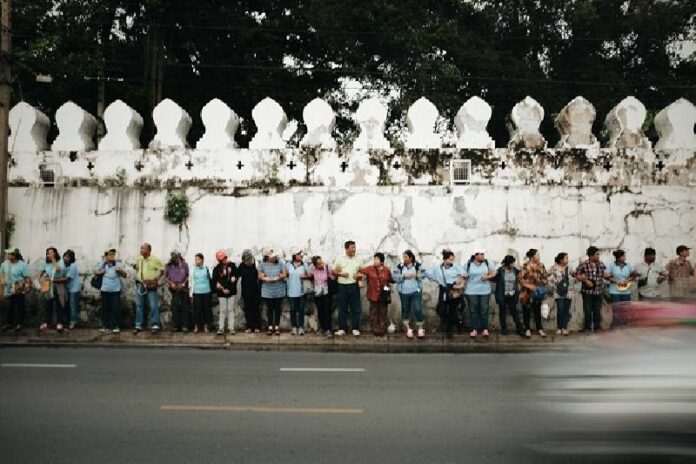
Members of the Pom Mahakan community and their supporters lock arms together Sunday in a symbolic show of opposition to eviction by the city. Photo: Matichon
BANGKOK — Three weeks after City Hall renewed threats to evict residents of the Pom Mahakan community, authorities today delivered an ultimatum they must leave next month.

A sign ordering the eviction of all residents by April 30 was put up Monday by city workers outside a wall of the historic community in Bangkok’s Phra Nakhon district. It said authorities would aid residents who ask for help in relocating, and housing officials would be present April 19 nearby to provide counseling.

The announcement cited the 2005 Supreme Court verdict authorizing the Bangkok Metropolitan Administration, or BMA, to evict the community in order to preserve the 18th century fort it sits behind and turn the land into a park.

Following many previous attempts to evict the community, the announcement seemed intended to justify the decision to the wider public.

“The BMA already paid compensation, and ownership was already properly transferred,” it said. “And we have been trying to find the best way for everyone’s best benefit.”

Having fought eviction for more than 24 years, community representatives insisted they will not leave.

“There should be life in the park that the BMA wants to develop in the Pom Mahakan area,” said Peeraphol Hemrat, one of the community leaders. “We volunteer to be guards, taking care of the park.”

Peeraphol said the community is now trying to arrange a meeting with Bangkok Gov. Sukhumbhand Paribatra to strike a compromise deal under which they would work with authorities to develop Pom Mahakan into a tourism spot.

They also said they would return to city coffers the compensation received when the BMA declared eminent domain and pay rent to stay on the land.


Related stories:

This Endangered Community Has Been Fighting Eviction 24 Years (Photos)


Advertisement

Hot News

LATEST NEWS

Bangkok
overcast clouds
32.2 ° C
32.2 °
32.2 °
97 %
4.3kmh
100 %
Sun
30 °
Mon
34 °
Tue
33 °
Wed
32 °
Thu
33 °