37.8 C
Bangkok
Friday, June 26, 2026
Home Blog Page 2973

Three Men Arrested for Assaulting Foreign Tourists in Chiang Mai

CHIANG MAI — Police say three Thai men have been arrested for assaulting two tourists from Australia in the northern city of Chiang Mai.

Police said the 60-year-old Australian man and his 18-year-old son were assaulted by the trio on 16 June and fled into a Buddhist temple to ask for assistance. Monks at the temple then alerted the police and sent the pair to hospital, said Pol.Maj.Gen. Pacha Rattapan, deputy commander of Fifth Region Police.

Police tracked down the suspects by studying CCTV footage in the area, and discovered that the altercation took place in front of a convenience store near Chiang Mai Land gated community on Chang Klan Road, said Pol.Maj.Gen. Pacha.

The arrested suspects have been identified as Bhuwanart Kullasuwan, 45; Pariwat Moonrianthong, 47; and a 17-year-old boy. They have been charged with physical assault. 

Pol.Maj.Gen. Pacha said the three suspects confessed to beating the two tourists, but said the tourists were intoxicated and tried to "pick a fight" with them first. The suspects also offered to provide financial compensation to the two tourists, Pol.Maj.Gen. Pacha said. 


For comments, or corrections to this article please contact: [email protected]

You can also find Khaosod English on Twitter and Facebook
http://twitter.com/KhaosodEnglish
http://www.facebook.com/KhaosodEnglish

Advertisement

China Offers Food to North Korea Amid Drought

A file photo shows a rice paddy that is parched and cracked from a long drought in Paju, north of Seoul, South Korea, 11 June 2015. EPA/YONHAP SOUTH KOREA

BEIJING (DPA) — China said it could offer food aid to North Korea, which has declared one of its worst droughts in a century, a news report said.

"The Chinese side is willing to provide assistance at the request of North Korea," Foreign Ministry spokesman Lu Kang was quoted as saying in Beijing, by South Korea's Yonhap News Agency.

"We hope that the government and people of North Korea will tide over the disaster at an early date."

Pyongyang's state-run Korean Central News Agency said this week that the worst drought in a century is drying up vast expanses of North Korea's agricultural fields.

More than one-third its paddy fields were "parching up," leading to fears of food shortages, with authorities attempting to grow substitute crops for the lost rice, the report said.

Relations with China, historically one of communist North Korea's few international allies, have recently been strained over Pyongyang's nuclear and missile programmes.

North Korea rarely speaks openly of its chronic food shortages. Relief supplies have in the past been the subject of diplomatic negotiations.

A widespread famine in the 1990s is believed to have caused the deaths of hundreds of thousands of North Koreans.


For comments, or corrections to this article please contact: [email protected]

You can also find Khaosod English on Twitter and Facebook
http://twitter.com/KhaosodEnglish
http://www.facebook.com/KhaosodEnglish

Advertisement

First MERS Patient in Thailand, Officials Confirm

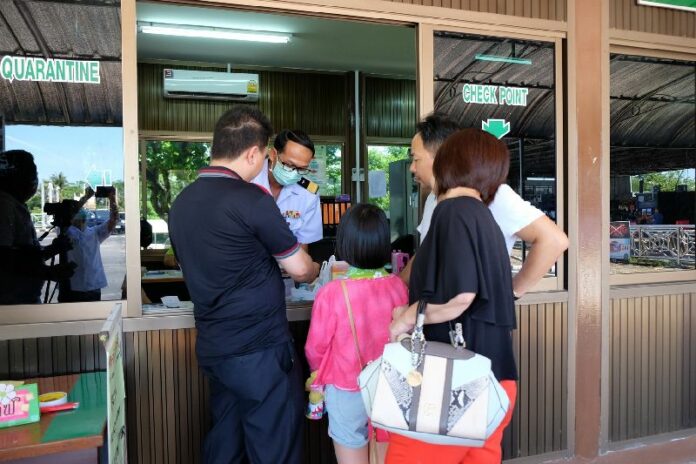
A health checkpoint near the Thai-Laos border in Nong Khai province, 10 June 2015.

BANGKOK — An elderly man from Oman is the first person in Thailand to be infected with Middle East Respiratory Syndrome (MERS), health officials said today.

The 75-year-old patient arrived in Thailand on 15 June seeking treatment for heart disease at a private hospital in Bangkok, said Minister of Public Health Rachata Rachatanawin.

According to Rachata, doctors at the hospital noticed his condition was worsening, and sent him to another medical institute where doctors discovered that he had been infected with MERS, a deadly respiratory disease.

A total of 59 people in Thailand are currently being monitored for possible infection of the virus, either at hospitals or at their homes, said Ratacha. The Minister also asked the public not to panic. 

"This patient traveled from abroad, and our country has swiftly detected his ailment and is exercising caution,” he said. “Cooperation among the people will enable our country to contain this disease." 

The announcement came several hours after officials at the Ministry of Public Health dismissed a rumor on social media that three patients had tested positive for MERS virus.  

The Thai government also officially recognized MERS as one of the 22 “dangerous communicable diseases” that infected citizens are required to report to the authorities.

Other diseases in the list, which has been compiled by the Ministry of Public Health since 2004, include Ebola, yellow fever, and tuberculosis, among others.

Health officials are now authorized to quarantine individuals to prevent the spread of the disease. Failure to adhere to the quarantine carries a maximum penalty of 2,000 baht fine. 

The vast majority of MERS infections have been in Saudi Arabia, but at least 23 people have died in South Korea after outbreak last month.

No vaccine or specific treatment is currently available for the virus.

For comments, or corrections to this article please contact: [email protected]

You can also find Khaosod English on Twitter and Facebook
http://twitter.com/KhaosodEnglish
http://www.facebook.com/KhaosodEnglish

Advertisement

First MERS Patient in Thailand, Officials Confirm

Suvarnabhumi Airport officials show reporters a thermal scan used to detect viruses like MERS, 12 June 2015.

BANGKOK — An elderly man from Oman is the first person in Thailand to be infected with Middle East Respiratory Syndrome (MERS), health officials said today.

The 75-year-old patient arrived in Thailand on 15 June seeking treatment for heart disease at a private hospital in Bangkok, said Minister of Public Health Rachata Rachatanawin.

According to Rachata, doctors at the hospital noticed his condition was worsening, and sent him to another medical institute where doctors discovered that he had been infected with MERS, a deadly respiratory disease.

A total of 59 people in Thailand are currently being monitored for possible infection of the virus, either at hospitals or at their homes, said Ratacha. The Minister also asked the public not to panic. 

"This patient traveled from abroad, and our country has swiftly detected his ailment and is exercising caution,” he said. “Cooperation among the people will enable our country to contain this disease." 

The announcement came several hours after officials at the Ministry of Public Health dismissed a rumor on social media that three patients had tested positive for MERS virus.  

The Thai government also officially recognized MERS as one of the 22 “dangerous communicable diseases” that infected citizens are required to report to the authorities.

Other diseases in the list, which has been compiled by the Ministry of Public Health since 2004, include Ebola, yellow fever, and tuberculosis, among others.

Health officials are now authorized to quarantine individuals to prevent the spread of the disease. Failure to adhere to the quarantine carries a maximum penalty of 2,000 baht fine. 

The vast majority of MERS infections have been in Saudi Arabia, but at least 23 people have died in South Korea after outbreak last month.

No vaccine or specific treatment is currently available for the virus.

For comments, or corrections to this article please contact: [email protected]

You can also find Khaosod English on Twitter and Facebook
http://twitter.com/KhaosodEnglish
http://www.facebook.com/KhaosodEnglish

Advertisement

Thai Royalists Thank Prayuth for Suppressing Discussion of Monarchy

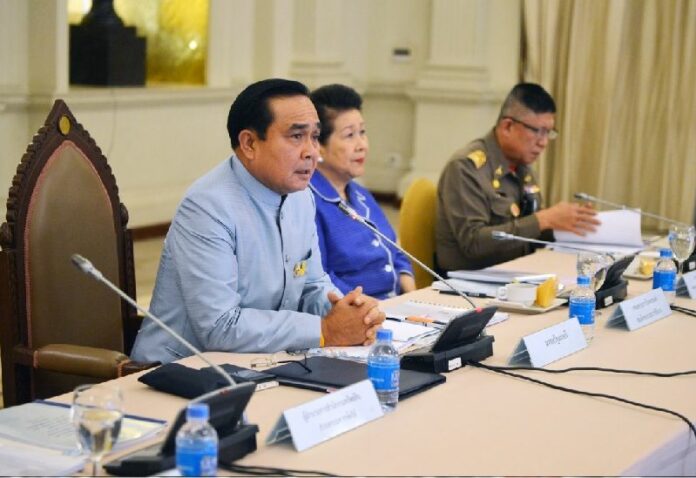
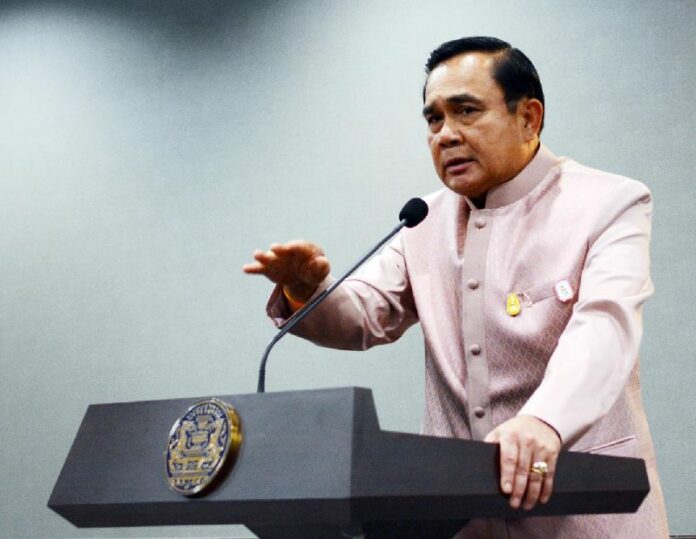
Thai junta chairman Gen. Prayuth Chan-ocha at the Government House on 18 June 2015.

PHRAE — A group of ultra-royalists in northern Thailand have formally thanked junta chairman Prayuth Chan-ocha for "defending" the monarchy with his strict enforcement of the country's lese majeste law.

Kanathip Moodcharoen, the chairman of a local association called People Who Love the King, submitted the group's thank-you letter through Phrae province’s governor this morning.

Kanathip told reporters he and his fellow activists are impressed by Gen. Prayuth's "dedication" to enforcing Section 112 of the Thai Criminal Codes, a law known as lese majeste that criminalizes insulting the king, queen, heir-apparent, and regent with up to 15 years in prison.

The law, which is the harshest of its kind in the world, is frequently used to block any discussion of the monarchy, drawing condemnation from human rights organizations who say it used to stifle free speech. 

This week, the military junta ordered the Foreign Correspondents’ Club of Thailand to cancel a panel discussion on the role of the lese majeste law in Thai society, reportedly citing a concern that the event would "sow disunity in Thai society, and encourage people to break the law and stir up unrest."

Although insulting the monarchy has been a crime in Thailand for over a hundred years, the law has been enforced more frequently over the past decade, and with a notable rise in severity since Gen. Prayuth seized power from an elected government in May 2014. 

"In the past, officials responsible for law enforcement have neglected their duties, and there were many serious insults and accusations against the monarchy, both in open and secretive ways," Kanathip said. "The reason was because there was no fear of committing the crime, which greatly disturbs loyal subjects of His Majesty the King. But in the present time, [Prayuth's] government has enforced the laws strictly and continuously, and those who wish to overthrow the monarchy can no longer dare display their illegal actions openly. Some even had to flee the country."

Since the May 2014 coup, nearly 50 people have been charged with lese majeste, and more than half of them have been denied bail while they await trial, according to iLaw, a watchdog group that tracks legal cases in Thailand. Several months ago, a 58-year-old man was sentenced to 25 years in prison for allegedly insulting the monarchy on Facebook. 

Gen. Prayuth, a hardline royalist, has declared "defending His Majesty's authority" as a top priority of his government.

"We will use legal measures, social-psychological measures, and telecommunications and information technology to deal with those who are not mindful of their words, are arrogant at heart, or harbor ill intentions to undermine the important Institution of the nation," Gen. Prayuth said in September 2014. 

King Bhumibol, 87,  is widely revered as a demi-god in Thailand, where he has sat on the throne for more than half a century. He is currently being hospitalized for poor health, a cause of anxiety for many Thais who have never lived under another monarch. 

For comments, or corrections to this article please contact: [email protected]

You can also find Khaosod English on Twitter and Facebook
http://twitter.com/KhaosodEnglish
http://www.facebook.com/KhaosodEnglish

Advertisement

Thai Royalists Thank Prayuth for Suppressing Discussion of Monarchy

Thai junta chairman Gen. Prayuth Chan-ocha at the Government House on 16 June 2015.

PHRAE — A group of ultra-royalists in northern Thailand have formally thanked junta chairman Prayuth Chan-ocha for "defending" the monarchy with his strict enforcement of the country's lese majeste law.

Kanathip Moodcharoen, the chairman of a local association called People Who Love the King, submitted the group's thank-you letter through Phrae province’s governor this morning.

Kanathip told reporters he and his fellow activists are impressed by Gen. Prayuth's "dedication" to enforcing Section 112 of the Thai Criminal Codes, a law known as lese majeste that criminalizes insulting the king, queen, heir-apparent, and regent with up to 15 years in prison.

The law, which is the harshest of its kind in the world, is frequently used to block any discussion of the monarchy, drawing condemnation from human rights organizations who say it used to stifle free speech. 

This week, the military junta ordered the Foreign Correspondents’ Club of Thailand to cancel a panel discussion on the role of the lese majeste law in Thai society, reportedly citing a concern that the event would "sow disunity in Thai society, and encourage people to break the law and stir up unrest."

Although insulting the monarchy has been a crime in Thailand for over a hundred years, the law has been enforced more frequently over the past decade, and with a notable rise in severity since Gen. Prayuth seized power from an elected government in May 2014. 

"In the past, officials responsible for law enforcement have neglected their duties, and there were many serious insults and accusations against the monarchy, both in open and secretive ways," Kanathip said. "The reason was because there was no fear of committing the crime, which greatly disturbs loyal subjects of His Majesty the King. But in the present time, [Prayuth's] government has enforced the laws strictly and continuously, and those who wish to overthrow the monarchy can no longer dare display their illegal actions openly. Some even had to flee the country."

Since the May 2014 coup, nearly 50 people have been charged with lese majeste, and more than half of them have been denied bail while they await trial, according to iLaw, a watchdog group that tracks legal cases in Thailand. Several months ago, a 58-year-old man was sentenced to 25 years in prison for allegedly insulting the monarchy on Facebook. 

Gen. Prayuth, a hardline royalist, has declared "defending His Majesty's authority" as a top priority of his government.

"We will use legal measures, social-psychological measures, and telecommunications and information technology to deal with those who are not mindful of their words, are arrogant at heart, or harbor ill intentions to undermine the important Institution of the nation," Gen. Prayuth said in September 2014. 

King Bhumibol, 87,  is widely revered as a demi-god in Thailand, where he has sat on the throne for more than half a century. He is currently being hospitalized for poor health, a cause of anxiety for many Thais who have never lived under another monarch. 

For comments, or corrections to this article please contact: [email protected]

You can also find Khaosod English on Twitter and Facebook
http://twitter.com/KhaosodEnglish
http://www.facebook.com/KhaosodEnglish

Advertisement

Beijing Discontent After Hong Kong Rejects Electoral Reforms

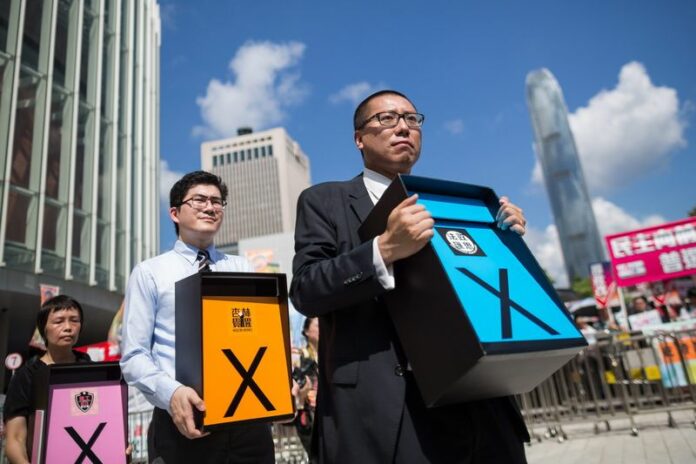
Pro-democracy supporters rally outside the Legislative Council in Hong Kong, China, 17 June 2015. EPA/JEROME FAVRE

HONG KONG (DPA) — Plans for election reform that triggered the worst unrest in years in Hong Kong were voted down Thursday, in a move criticized by Beijing.

Just 36 members of Hong Kong's 70-member Legislative Council voted, with eight in favour of the reform package and 28 against, according to reports.

"I think by now Beijing should understand how firm many Hong Kong people are in wanting to have a democratic system compatible with certain basic standards," Democratic Party lawmaker Albert Ho told dpa. 

The Beijing-backed reforms were also supported by the Hong Kong government, and needed at least a two-thirds majority to be approved by the council.

Hong Kong Chief Executive Leung Chun-ying, whose post is at the centre of the political wrangling, said that "he, the Hong Kong government and Hong Kong people are very disappointed about the result".

About 30 pro-establishment lawmakers walked out of the Legislative Council chamber less than a minute before the vote, South China Morning Post reported.

The lawmakers later told a press conference they were waiting for one more lawmaker to arrive before casting their votes, but there was a "miscommunication" and they missed the vote. 

Chinese Foreign Ministry spokesman Lu Kang told reporters in Beijing the result was something the government "does not wish to see," without answering further questions. 

The reform would have allowed the direct election of the city's next chief executive, but from a list of candidates pre-approved by Beijing. The pan-democrats want publicly nominated candidates.

Blocking it leaves in place the current system, where a 1,200-person committee of Hong Kong's economic and political elites selects the next chief executive, rather than the estimated 5 million eligible voters in the city.

The vote came after two days of debate.

Lawmakers opposing the changes said they hope to engage in talks with the Beijing government to restart the election reform process. 

Last year, tens of thousands of demonstrators occupied streets outside the legislative complex for nearly three months to protest the proposed reforms.

(Reporting by Joanna Chiu)


For comments, or corrections to this article please contact: [email protected]

You can also find Khaosod English on Twitter and Facebook
http://twitter.com/KhaosodEnglish
http://www.facebook.com/KhaosodEnglish

Advertisement

Junta Solicits Opinions on Referendum from Redshirt Politicians

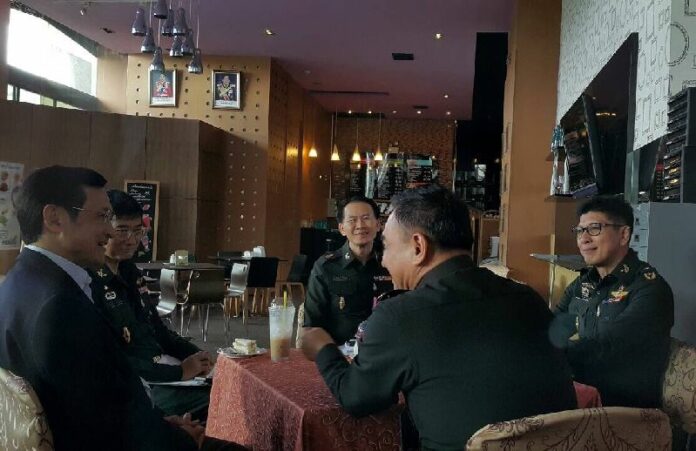
Former Pheu Thai Minister Chaturon Chaisaeng meeting with army officers at the Army Club, 18 June 2015.

BANGKOK — Three top leaders of the Redshirt movement met individually with army officers today after being invited to share their opinions on the junta’s national reform efforts.

The politicians were personally welcomed by Lt.Gen. Boontham Oris, the deputy director of the junta’s Center for Reconciliation and Reform, which has organized several state-sanctioned forums for prominent political leaders, academics, and activists.

Independently-organized discussions on politics remain banned by the junta, which seized power from the Redshirt-backed government in May 2014.

The political figures who met with army officers today included Chaturon Chaisaeng, a former Pheu Thai Party politician, and Jatuporn Prompan and Nattawut Saikua, two leaders of the Redshirts’ United Front of Democracy Against Dictatorship (UDD). Reporters were not allowed to observe the discussions.

Speaking to reporters after his meeting, Chaturon said he and the officers discussed the junta’s economic policies, new constitution, reconciliation efforts, and restrictions on freedom of expression.

Chaturon, a former MP and Cabinet Minister, said he told the officers that the upcoming referendum on the new charter, which is being drafted by junta-appointed councils, will be a "waste of money" if the military does not lift its ban on political debates. 

"If the referendum is not a free one, it will be a waste of money," Chaturon said. "Let me repeat: don't hold a referendum that binds people's hands and only allows people to express their agreement with the charter, because that will only result in undemocratic rules and unsustainable peace. In the end, conflict will return to the country."

Thailand’s previous constitution, which was dissolved by the military shortly after the coup, was put to a referendum in 2007 but only gave voters the option to accept or reject the document, without specifying an alternative. Critics believe many Thais reluctantly approved the charter – which was also written by a junta-appointed council – out of fear of prolonged military rule.

Chaturon also criticized the junta’s reconciliation efforts, citing the need for free debate in order to address the root causes of Thailand’s protracted political conflict. For much of the past decade, Thailand has been rocked by a power struggle between the mostly-rural and pro-democracy Redshirts, and a network of conservative middle and upper class Bangkokians, bureaucrats, and traditional elites.

Several leaders of the latter movement, commonly referred to as the Yellowshirts, are scheduled to meet with army officers to share their views on the junta's reform campaign tomorrow. 

"Throughout all this time, the [junta's] reforms have not addressed the root causes of conflict in this country: that laws were not respected, and the [former] government was unable to enforce the laws," Chaturon said. "So, [the junta leaders] need to ask themselves, do they want peace? If they want sustainable peace, there has to be a widespread exchange of opinions." 

Thailand's ruling junta has come under steady criticism from rights groups and foreign democratic governments for its clampdown on freedom of expression over the past year. Under the leadership of former army chief Gen. Prayuth Chan-ocha, the junta has maintained a ban on all political protests, pressured the media into self-censorship, and interfered with at least 73 forums on sensitive political topics.

The junta has also repeatedly postponed the date for national elections. At present, authorities say an election will take place in September 2016, given that the charter is approved and the political climate is deemed stable. 

After emerging from his meeting with officers today, UDD chairman Jatuporn said he stressed the need for a "transparent" referendum.

"They need to explain the referendum to foreigners, not only to Thai people," Jatuporn said. "If it is done in a transparent, efficient, and unblemished way, no matter what the result is, the country will be able to move forward. I am not personally afraid that [the junta’s use of] state power will interfere with the referendum, because the more power they use, the more resistance there will be." 

He added, "The people who assume the roles as referees must also perform their duties straightforwardly. Don't act like referees in [professional] wrestling, because all of them are unfair." 


For comments, or corrections to this article please contact: [email protected]

You can also find Khaosod English on Twitter and Facebook
http://twitter.com/KhaosodEnglish
http://www.facebook.com/KhaosodEnglish

Advertisement

Junta Solicits Opinions on Referendum from Redshirt Politicians

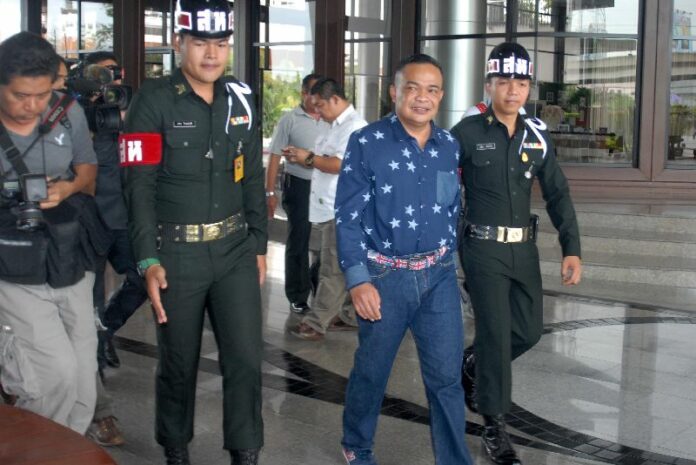
Redshirt leader Jatuporn Prompan arriving at the Army club for a discussion with military officers on 18 June 2015.

BANGKOK — Three top leaders of the Redshirt movement met individually with army officers today after being invited to share their opinions on the junta’s national reform efforts.

The politicians were personally welcomed by Lt.Gen. Boontham Oris, the deputy director of the junta’s Center for Reconciliation and Reform, which has organized several state-sanctioned forums for prominent political leaders, academics, and activists.

Independently-organized discussions on politics remain banned by the junta, which seized power from the Redshirt-backed government in May 2014.

The political figures who met with army officers today included Chaturon Chaisaeng, a former Pheu Thai Party politician, and Jatuporn Prompan and Nattawut Saikua, two leaders of the Redshirts’ United Front of Democracy Against Dictatorship (UDD). Reporters were not allowed to observe the discussions.

Speaking to reporters after his meeting, Chaturon said he and the officers discussed the junta’s economic policies, new constitution, reconciliation efforts, and restrictions on freedom of expression.

Chaturon, a former MP and Cabinet Minister, said he told the officers that the upcoming referendum on the new charter, which is being drafted by junta-appointed councils, will be a "waste of money" if the military does not lift its ban on political debates. 

"If the referendum is not a free one, it will be a waste of money," Chaturon said. "Let me repeat: don't hold a referendum that binds people's hands and only allows people to express their agreement with the charter, because that will only result in undemocratic rules and unsustainable peace. In the end, conflict will return to the country."

Thailand’s previous constitution, which was dissolved by the military shortly after the coup, was put to a referendum in 2007 but only gave voters the option to accept or reject the document, without specifying an alternative. Critics believe many Thais reluctantly approved the charter – which was also written by a junta-appointed council – out of fear of prolonged military rule.

\
Former Pheu Thai Minister Chaturon Chaisaeng meeting with army officers at the Army Club, 18 June 2015.

Chaturon also criticized the junta’s reconciliation efforts, citing the need for free debate in order to address the root causes of Thailand’s protracted political conflict. For much of the past decade, Thailand has been rocked by a power struggle between the mostly-rural and pro-democracy Redshirts, and a network of conservative middle and upper class Bangkokians, bureaucrats, and traditional elites.

Several leaders of the latter movement, commonly referred to as the Yellowshirts, are scheduled to meet with army officers to share their views on the junta's reform campaign tomorrow. 

"Throughout all this time, the [junta's] reforms have not addressed the root causes of conflict in this country: that laws were not respected, and the [former] government was unable to enforce the laws," Chaturon said. "So, [the junta leaders] need to ask themselves, do they want peace? If they want sustainable peace, there has to be a widespread exchange of opinions." 

Thailand's ruling junta has come under steady criticism from rights groups and foreign democratic governments for its clampdown on freedom of expression over the past year. Under the leadership of former army chief Gen. Prayuth Chan-ocha, the junta has maintained a ban on all political protests, pressured the media into self-censorship, and interfered with at least 73 forums on sensitive political topics.

The junta has also repeatedly postponed the date for national elections. At present, authorities say an election will take place in September 2016, given that the charter is approved and the political climate is deemed stable. 

After emerging from his meeting with officers today, UDD chairman Jatuporn said he stressed the need for a "transparent" referendum.

"They need to explain the referendum to foreigners, not only to Thai people," Jatuporn said. "If it is done in a transparent, efficient, and unblemished way, no matter what the result is, the country will be able to move forward. I am not personally afraid that [the junta’s use of] state power will interfere with the referendum, because the more power they use, the more resistance there will be." 

He added, "The people who assume the roles as referees must also perform their duties straightforwardly. Don't act like referees in [professional] wrestling, because all of them are unfair." 
 

For comments, or corrections to this article please contact: [email protected]

You can also find Khaosod English on Twitter and Facebook
http://twitter.com/KhaosodEnglish
http://www.facebook.com/KhaosodEnglish

Advertisement

Govt Repeals Arrest Warrants of 22 Suspected Insurgents in Deep South

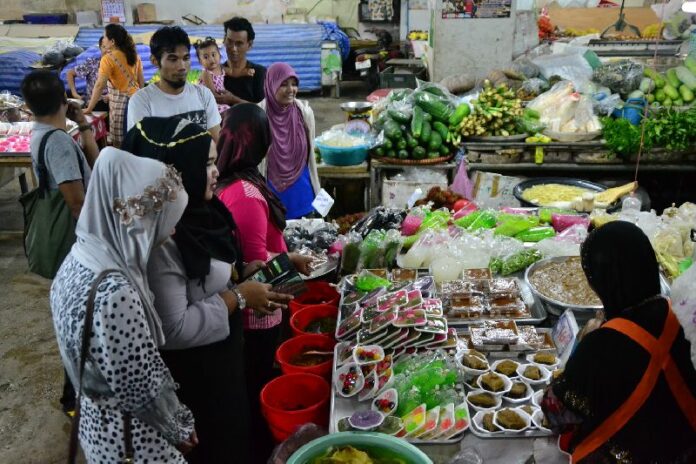
Muslim shopping in preparation for Ramadan in Yala province, 18 June 2015.

NARATHIWAT — Thai officials say they have repealed the arrest warrants of 22 former suspected members of the separatist movement in southern Thailand in an effort to promote reconciliation during the Islamic holy month of Ramadan.

Chamnan Muendam, the deputy governor of Narathiwat, said the 22 men were wanted by authorities for their suspected connections to local insurgent groups that have been waging a violent campaign to secede the provinces of Narathiwat, Yala, and Pattani and form a breakaway Islamic state.

The former fugitives surrendered to authorities and have abandoned their armed struggle in favor of a peaceful solution to the conflict, he said.

"[We] are proceeding with the government's policy of opening opportunities for those who think differently from the state or those who took up violent methods, and allowing them to return and solve the problems with peaceful methods," Chamnan said. 

Yesterday Thai army officials explained that suspected insurgents charged with crimes under the Emergency Decree, which has been in place in the region for a decade and grants security officers sweeping powers to detain and arrest suspects, will have their warrants revoked if they can prove their innocence.

Speaking today, Chamnan explained that members of the insurgent movement may also be granted legal amnesty if they prove their "innocent intention" by disavowing the violent campaign.

Thai authorities say the program is an effort to promote reconciliation during Ramadan, a holy month for Muslims that began today.

The deputy governor also handed over certificates to the 22 former suspects, confirming that their previous arrest warrants issued under the Emergency Decree have been formally revoked, and they are now free to return to their normal lives. 

The secessionist campaign in Narathiwat, Yala, and Pattani – a region known as the Deep South – has claimed the lives of more than 6,200 people since the most recent waves of violence broke out in January 2004, according to data compiled by rights groups.

Thai authorities have responded to the insurgency by deploying at least 60,000 security officers in the Deep South, and maintaining martial law and the Emergency Decree for more than nine years.


For comments, or corrections to this article please contact: [email protected]

You can also find Khaosod English on Twitter and Facebook
http://twitter.com/KhaosodEnglish
http://www.facebook.com/KhaosodEnglish

Advertisement

Hot News

LATEST NEWS

Bangkok
broken clouds
37.8 ° C
37.8 °
36.6 °
54 %
3.7kmh
71 %
Fri
38 °
Sat
36 °
Sun
37 °
Mon
37 °
Tue
36 °