































28.8 C
Bangkok
Sunday, June 28, 2026
Home Blog Page 2997

Thai Navy Denies Threatening Rohingya Boat With Guns

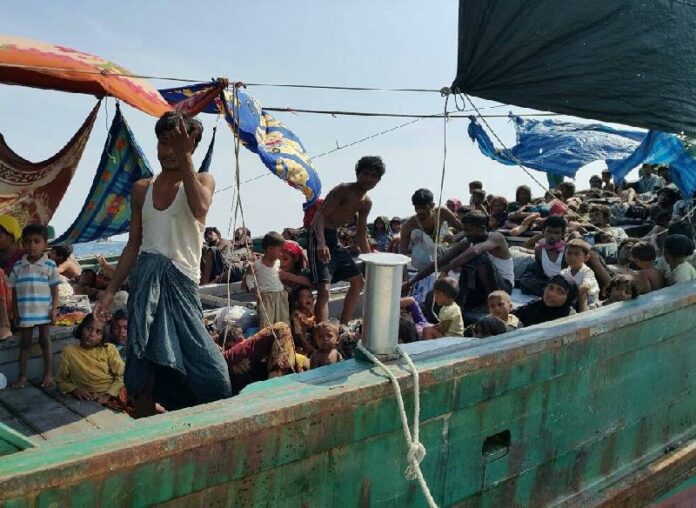
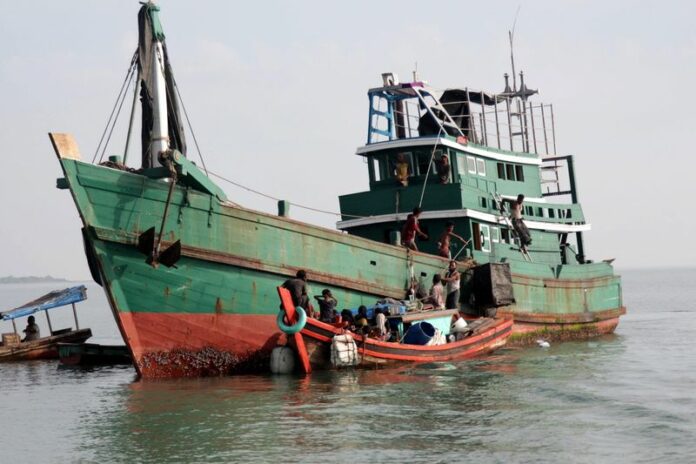
A boat of abandoned refugees from Myanmar found by reporters and naval officers off the coast of Satun province on 14 May 2015. [Photo: Royal Thai Navy]

BANGKOK — The Royal Thai Navy has denied threatening to shoot at a boat of Rohingya refugees in Thai waters last week, a government spokesperson said.

A 23-year-old passenger on the rickety green boat told AP yesterday that Thai naval officers towed the ship out to sea after providing food and water, and then threatened to shoot if they returned.

After being rejected by several countries in the region, the overcrowded boat was rescued by Indonesian fishermen and brought to shore in Aceh yesterday.

"The government and the navy would like to reject this completely baseless news," said Maj.Gen. Sansern Kaewkamnerd, spokesperson of the Thai Prime Minister's Office. “It also made the Navy, who is dedicated in its works to help fellow humans and defend the maritime sovereignty of the nation, very sad." 

He told reporters that he has personally spoken to every Naval officer involved in the encounter, and that each one denied the allegation.

Maj.Gen. Sansern also reiterated that the ship’s passengers told officers they wanted to continue to a third country.

Thailand will continue its policy of providing humanitarian aid to boats bound for other nations, but treat any migrants who land Thai shores as illegal immigrants, he said.

"Even though we have been accused unfairly, which leads to a risk that the international community will misunderstand Thailand, the Thai government will not change its policy to treat these irregular migrants," Maj.Gen. Sansern said. 

Yesterday, after a week of playing “maritime ping-pong” with the boat people, Indonesia and Mayalsia decided to open their shores and provide temporary shelter for up to one year. Thailand declined to join the initiative.

The boat people are primarily Bangladeshis fleeing poverty, and Rohingya Muslims escaping ethno-religious persecution in Myanmar. Most are seeking to settle in Muslim-majority Malaysia or Indonesia, though Thailand has traditionally been used as a transit country for human smugglers and traffickers. 

The surge of stranded migrants off shore – estimated to be as many as 8,000 – was triggered in part by Thailand's clampdown on smuggling operations in the south earlier this month. After sweeping the region, Thai police have found several mass graves and jungle camps used by traffickers to detain and abuse migrants until their relatives send hefty ransom sums. 

Thailand will hold an international summit to discuss the crisis on 29 May.

For comments, or corrections to this article please contact: [email protected]

You can also find Khaosod English on Twitter and Facebook
http://twitter.com/KhaosodEnglish
http://www.facebook.com/KhaosodEnglish
Advertisement

Russian Tourist Drowns at Jomtien Beach

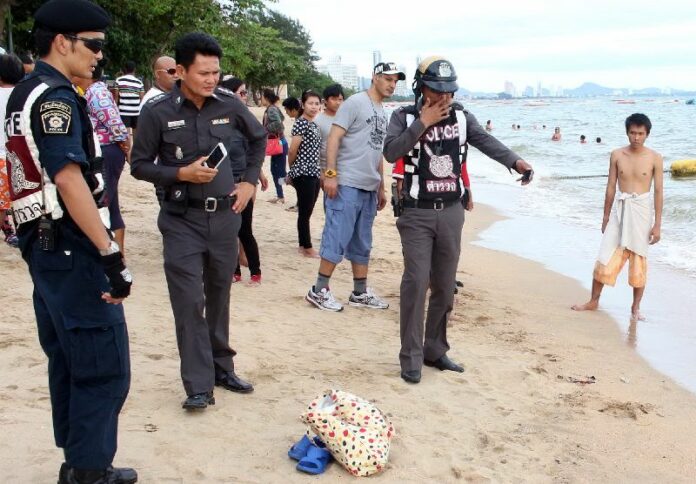
Police inspect the scene on Jomtien beach where a 76-year-old woman was found dead on 20 May 2015.

CHONBURI — A 76-year-old Russian woman was found dead on Jomtien beach yesterday evening.

Chit Chaiman, a witness at the scene, told reporters he spotted the body floating near a buoy at around 6 pm yesterday. Two tourists later swam to the buoy and brought the deceased to the shore, he said. 

The woman, a tourist from Russia, was already dead when she was brought to the beach, according to police. No injuries were found on her body, leading officers to believe she drowned. 

The victim's bag and other belongings were also found on the beach. 

"We believe the deceased had been swimming in the sea before either a cramp or pre-existing medical condition hit her," a police officer from Mueang Pattaya Police Station said. "However, we will send the body for an autopsy to find out about true cause of her death." 

Jomtien Beach is close to Pattaya, a resort town popular among Russian tourists. 


For comments, or corrections to this article please contact: [email protected]

You can also find Khaosod English on Twitter and Facebook
http://twitter.com/KhaosodEnglish
http://www.facebook.com/KhaosodEnglish
Advertisement

Thailand Lets Neighbors Shoulder Migrant Crisis

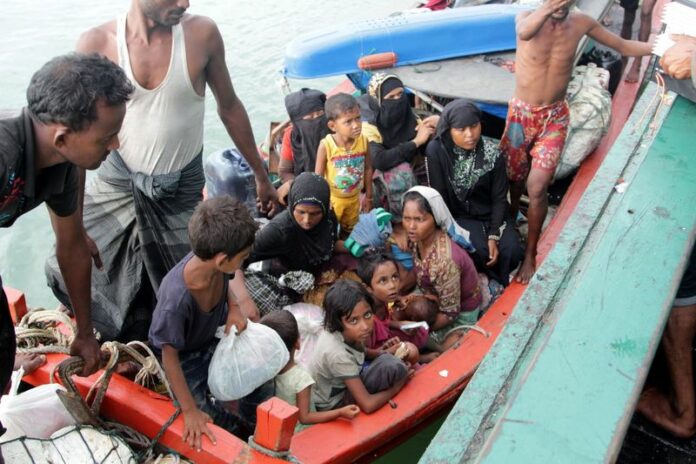
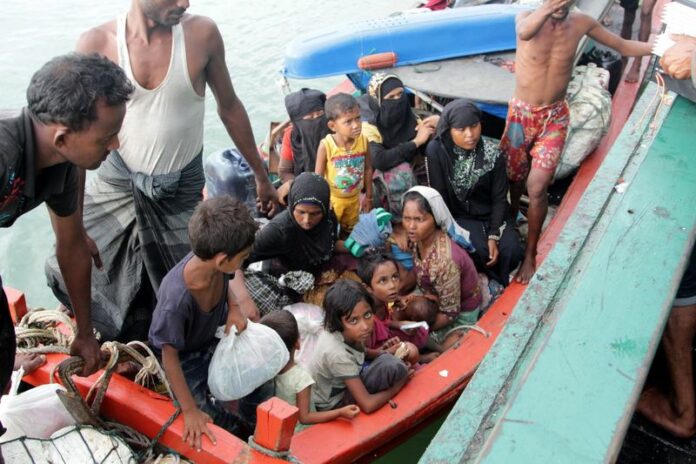
Refugees from Myanmar and Bangladesh are rescued by Aceh fisherman in Julok, East Aceh, Sumatra, Indonesia, 20 May 2015. EPA

BANGKOK — Thailand has stopped short of promising refuge to migrants stranded in its waters, unlike Malaysia and Indonesia who agreed today to provide temporary shelter to the boat people after days of pushing them back to sea.

Thailand’s Foreign Minister was conspicuously absent from a press conference that followed a tri-lateral meeting between the three countries in Putrajaya this morning, during which ministers from Malaysia and Indonesia said their countries would provide temporary shelter to the migrants if the international community could facilitate resettlement within a year.

Thailand’s Minister of Foreign Affairs, General Tanasak Patimapragorn, reportedly said he needed to consult domestic laws before Thailand could commit to the initiative.

Hours later, Thailand’s Ministry of Foreign affairs released astatement about the meeting that did not mention any plans to house the migrants, or explain Gen. Tanasak’s absence from the press conference.

The statement’s only concrete promise was that Thailand will “will not push back migrants stranded in the Thai territorial water.”

Commenting on Twitter, Human Rights Watch’s Phil Robertson called Thailand’s lack of action an “appalling” and “shameful” abdication of leadership.

Gen. Tanasak’s absence from the press conference also perplexed many veteran journalists in the region.

“I can never remember seeing something like this in 20 years of reporting ASEAN,” BBC’s Jonathan Head wrote of a photo showing Gen. Tanasak's empty podium on Twitter. “Appearance usually matters so much.”

The boat people are primarily Bangladeshis fleeing poverty, and Rohingya Muslims escaping ethno-religious persecution in Myanmar. Most are seeking to settle in Muslim-majority Malaysia or Indonesia, though Thailand has traditionally been used as a key transit country for human smugglers and traffickers. 

The surge of stranded migrants off shore – estimated to be as many as 8,000 – was triggered in part by Thailand's clampdown on smuggling operations in the south earlier this month. After sweeping the region, Thai police have found several mass graves and jungle camps used by traffickers to detain and abuse migrants until their relatives send hefty ransom sums. 

Although the UN and other agencies have called on governments in the region to mount a full scale search-and-rescue mission, Malaysia’s foreign minister said today that Indonesia and Malaysia would not actively search for migrants in the sea, but only provide assistance to those who land on shore.

For the past week, ThailandMalaysia, and Indonesia have taken turns towing the overcrowded boats of hungry and dehydrated migrants out of their territorial waters.

Thai authorities have said the migrants are welcome to land on its shores, but will be prosecuted for illegal entry into the Kingdom. 

However, a 23-year-old Rohingya who survived a perilous sea voyage and landed in Indonesia this morning told AP the Thai navy threatened to "shoot" his ship if the boat tried to return. 

 
For comments, or corrections to this article please contact: [email protected]

You can also find Khaosod English on Twitter and Facebook
http://twitter.com/KhaosodEnglish
http://www.facebook.com/KhaosodEnglish
Advertisement

Thailand Lets Neighbors Shoulder Migrant Crisis

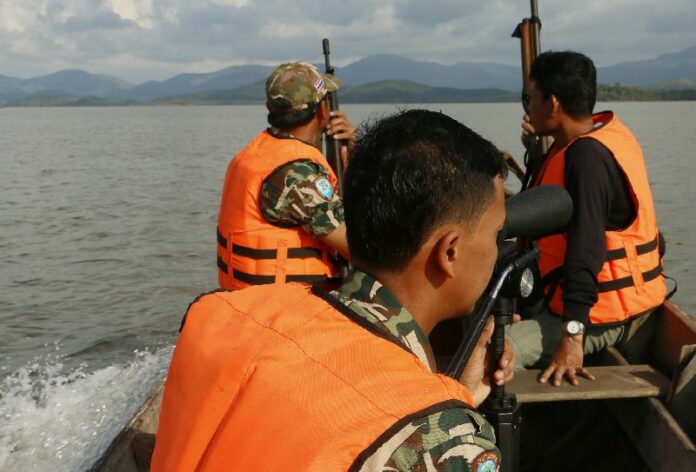
Security officers patrol the coast off Ranong province to look for any Rohingya refugee boats, 20 May 2015.

BANGKOK — Thailand has stopped short of promising refuge to migrants stranded in its waters, unlike Malaysia and Indonesia, whose governments agreed today to take in the boat people after days of pushing them back to sea.

Thailand’s Foreign Minister was conspicuously absent from a press conference that followed a meeting between representatives from the three countries in Putrajaya this morning, during which ministers from Malaysia and Indonesia said their governments would provide temporary shelter to the migrants if the international community could facilitate resettlement within a year.

Thailand’s Minister of Foreign Affairs, General Tanasak Patimapragorn, reportedly said he needed to consult domestic laws before Thailand could commit to the initiative.

Hours later, Thailand’s Ministry of Foreign affairs released a statement about the meeting that did not mention any plans to house the migrants, or explain Gen. Tanasak’s absence from the press conference.

The statement’s only concrete promise was that Thailand will “will not push back migrants stranded in the Thai territorial water.”

Commenting on Twitter, Human Rights Watch’s Phil Robertson called Thailand’s lack of action an “appalling” and “shameful” abdication of leadership.

Gen. Tanasak’s absence from the press conference also perplexed many veteran journalists in the region.

“I can never remember seeing something like this in 20 years of reporting ASEAN,” BBC’s Jonathan Head wrote of a photo showing Gen. Tanasak's empty podium. “Appearance usually matters so much.”

The boat people are primarily Bangladeshis fleeing poverty, and Rohingya Muslims escaping ethnic and religious persecution in Myanmar. Most are seeking to settle in Muslim-majority Malaysia or Indonesia, though Thailand has traditionally been used as a key transit country for human smugglers and traffickers. 

The surge of stranded migrants off shore – estimated to be as many as 8,000 – was triggered in part by Thailand's clampdown on smuggling operations in the south earlier this month. After sweeping the region, Thai police have found several mass graves and jungle camps used by traffickers to detain and abuse migrants until their relatives send hefty ransom sums. 

Over the past week, ThailandMalaysia, and Indonesia have taken turns towing the overcrowded boats of hungry migrants out of their territorial waters, attracting heavy criticism from the UN and other human rights groups.

The director of the International Organization for Migration commended "the governments of Malaysia and Indonesia, in particular" today for agreeing to shelter the migrants, but reiterated the urgent need to mount a search-and-rescue mission for the boats still adrift at sea.

“I applaud this humanitarian response by these ASEAN nations and urge an immediate response at sea to now rescue and bring to shore these suffering migrants, many of whom are women and children who have been in life threatening conditions without water or food for days," said IOM director William Swing.

Thai authorities have said the migrants are welcome to disembark on Thai shores, but will be prosecuted for illegal entry into the Kingdom. However, a 23-year-old Rohingya whose boat was rescued by Indonesian fishermen this morning told AP the Thai navy towed his ship out to sea after providing food and water, and then threatened to "shoot" if the migrants returned.

Thailand is holding a international summit to discuss the humanitarian crisis on 29 May.

(Reporting by Sally Mairs)
 
For comments, or corrections to this article please contact: [email protected]

You can also find Khaosod English on Twitter and Facebook
http://twitter.com/KhaosodEnglish
http://www.facebook.com/KhaosodEnglish

Advertisement

South-East Asian Boat People Get Reprieve but Crisis Far From Over

KUALA LUMPUR (DPA) — The decision of Malaysia and Indonesia to allow thousands of Rohingya and Bangladeshi boat people to land might put a temporary end to one of the worst humanitarian crises the region has faced in recent times, but the problem is far from over, activists and officials said.

Malaysia, Thailand and Indonesia emphasized that the decision was a stop-gap measure, as these migrants must be relocated to third countries within a year and a permanent solution to the problem of Rohingyas in Myanmar needs to be found.

\
Refugees from Myanmar and Bangladesh are rescued by Aceh fisherman in Julok, East Aceh, Sumatra, Indonesia, 20 May 2015. EPA 

"We … agreed to offer them temporary shelter provided that the resettlement and repatriation process will be done in one year by the international community," the foreign ministers of the three countries said in a statement after a meeting in Kuala Lumpur that Myanmar did not attend.

The ministers appeared to have bowed to the international outrage over their earlier decision to prevent the migrants aboard rickety boats from entering their waters or coming ashore.

On Tuesday, the UN high commissioners for human rights and refugees, the UN special representative for migration and the International Organization for Migration, demanded that the three countries give priority to saving lives and respecting human dignity.

Thailand, Malaysia and Indonesia have turned the tables on their critics, urging them to do their share in helping the boat people.

"Malaysia and Indonesia invite other countries in the region to join in this endeavour," the three foreign ministers said.

"Malaysia, Indonesia and Thailand call upon the international community to uphold their responsibility and urgently share the burden of providing the necessary support," they added.

The three countries called on the international community to provide financial assistance, especially in building temporary housing for the migrants, as well as ensuring that these migrants will be repatriated or resettled in a third country within a year.

They also wanted the problem to be dealt with at source.

"The root causes and other contributory factors to the recent influx of irregular migrants should be immediately identified and addressed by the parties concerned," the ministers said.

Malaysia Home Minister Zahid Hamidi said that the Rohingya and Bangladeshi boat people were "trafficked voluntarily" because they made payments to smugglers to get them out of their country.

While Bangladeshi boat people can be considered economic migrants because they left their country to escape poverty and seek better lives, the same cannot be said for the tens of thousands of Rohingya boat people who are persecuted in their homeland in Myanmar, Rohingya activists said.

The Arakan Rohingya National Organization said the Rohingya boat people are fleeing large-scale persecution and mass atrocities in Myanmar.

"We reiterate that the root cause of these human tragedies should be addressed," it said in a statement.

"The Burmese/Myanmar government has to bear all responsibility for the untold sufferings of the Rohingya people for not allowing them to have a peaceful living in their own homeland," it added.

Zafar Ahmad Abdul Ghani, president of the Myanmar Ethnic Rohingya Human Rights Organization in Malaysia, urged the 10-country Association of South-East Asian Nations – of which Myanmar, Thailand, Malaysia, Indonesia are members – to address the Rohingya problem.

Zafar said the influx of thousands of Rohingya boat people in Thailand, Malaysia and Indonesia is proof that Rohingyas are facing systematic prosecution in Myanmar.

"We face gross human rights violations by the state, we became victims of genocide for generations and left to die in horrible makeshift camps in our own homeland without food, water and medicine supply from the government," he said.

"Due to the horrible situation we face in our homeland, we take risks to flee the country to seek refuge in other countries," he added.

The Myanmar government has a different take on the issue. It maintained that the more than 1 million Muslim Rohingyas were ethnic Bengalis who illegally migrated to Myanmar from neighbouring Bangladesh.

Myanmar has consistently refused to discuss the issue in ASEAN and maintained the Rohingya issue is an internal problem.

Charles Santiago, a Malaysian member of parliament, said ASEAN must confront the Rohingya issue squarely.

"The Rohingya problem is a thorny issue for ASEAN," he said. "For more than a decade ASEAN skirted the issue. I don't think they can still continue doing that."

Santiago, who is also the chairman of the ASEAN parliamentarians for human rights, urged Malaysia – this year's chairman of ASEAN – to go beyond palliative measures in addressing the Rohingya issue.

"Rohingya refugees are not one particular country's problem but it is ASEAN's problem," he said. "The crisis is far from over."

(Reporting by John Grafilo)
 
For comments, or corrections to this article please contact: [email protected]

You can also find Khaosod English on Twitter and Facebook
http://twitter.com/KhaosodEnglish
http://www.facebook.com/KhaosodEnglish

Advertisement

Thai Rights Commission Challenges Shutdown of Redshirt TV Channel

Readshirt leader Nattawut Saikua in a YouTube segment uploaded by Peace TV on 19 May 2015.

BANGKOK — Thailand’s National Human Rights Commission (NHRC) has disputed a state agency's decision to pull a Redshirt-operated TV station off the air, calling the move an unjustified violation of freedom of expression.

Peace TV’s license was revoked last month by Thailand’s media regulatory board, the National Broadcasting Telecommunication Commission (NBTC).

NBTC officials said the channel had violated junta orders that forbid media from inciting violence or causing "divisions in the Kingdom." Redshirt leaders later filed a complaint to the NHRC and asked the committee to investigate the ruling.

NHRC director Niran Pitakwachara said today that the committee believes the shut-down order was delivered without due process or cause. 

"We have not found any content [on Peace TV] that incited unrest or divisions," Niran said. "The reason cited in the [NBTC’s] explanation does not match the station’s news. It is a judgement that violates the liberty and rights of expression of media agencies."

He added, "Furthermore, the NBTC never allowed the accused to explain their cases." 

Niran encouraged the Redshirts to include his committee’s verdict when they file a lawsuit against the NBTC, as Redshirt leader Nattawut Saikua has vowed to do.

Although the station's broadcast license was formally rescinded on 30 April, Peace TV staff have continued to film and upload segments on YouTube.

Both of Thailand’s Redshirt and Yellowshirt movements operate their own TV and radio channels featuring news programs and live broadcasts of their political rallies. Media agencies affiliated with the two groups played significant roles in the pro- and anti-government rallies last year that culminated in the May 2014 coup.

After the military takeover on 22 May 2014, the junta has banned all political activities and prohibited the media agencies from aggressively criticizing the regime. TV channels affiliated to both Redshirt and Yellowshirt movements were allowed to operate – as long as they agree not to instigate violence, divisions, or "confusion" among the public. 

Critics say the junta is particularly bent on curbing the influence of the largely anti-coup Redshirt movement, which has commanded the polls and elected majorities in congress in every national election for the past decade. 


For comments, or corrections to this article please contact: [email protected]

You can also find Khaosod English on Twitter and Facebook
http://twitter.com/KhaosodEnglish
http://www.facebook.com/KhaosodEnglish

Advertisement

Thai Rights Commission Challenges Shutdown of Redshirt TV Channel

Readshirt leader Jatuporn Prompan in a YouTube segment uploaded by Peace TV on May 19, 2015.

BANGKOK — Thailand’s National Human Rights Commission (NHRC) has disputed a state agency's decision to pull a Redshirt-operated TV station off the air, calling the move an unjustified violation of freedom of expression.

Peace TV’s license was revoked last month by Thailand’s media regulatory board, the National Broadcasting Telecommunication Commission (NBTC).

\
Readshirt leader Nattawut Saikua in a YouTube segment uploaded by Peace TV on 19 May 2015.

NBTC officials said the channel had violated junta orders that forbid media from inciting violence or causing "divisions in the Kingdom." Redshirt leaders later filed a complaint to the NHRC and asked the committee to investigate the ruling.

NHRC director Niran Pitakwachara said today that the committee believes the shut-down order was delivered without due process or cause. 

"We have not found any content [on Peace TV] that incited unrest or divisions," Niran said. "The reason cited in the [NBTC’s] explanation does not match the station’s news. It is a judgement that violates the liberty and rights of expression of media agencies."

He added, "Furthermore, the NBTC never allowed the accused to explain their cases." 

Niran encouraged the Redshirts to include his committee’s verdict when they file a lawsuit against the NBTC, as Redshirt leader Nattawut Saikua has vowed to do.

Although the station's broadcast license was formally rescinded on 30 April, Peace TV staff have continued to film and upload segments on YouTube.

Both of Thailand’s Redshirt and Yellowshirt movements operate their own TV and radio channels featuring news programs and live broadcasts of their political rallies. Media agencies affiliated with the two groups played significant roles in the pro- and anti-government rallies last year that culminated in the May 2014 coup.

After the military takeover on 22 May 2014, the junta has banned all political activities and prohibited the media agencies from aggressively criticizing the regime. TV channels affiliated to both Redshirt and Yellowshirt movements were allowed to operate – as long as they agree not to instigate violence, divisions, or "confusion" among the public. 

Critics say the junta is particularly bent on curbing the influence of the largely anti-coup Redshirt movement, which has commanded the polls and elected majorities in congress in every national election for the past decade. 


For comments, or corrections to this article please contact: [email protected]

You can also find Khaosod English on Twitter and Facebook
http://twitter.com/KhaosodEnglish
http://www.facebook.com/KhaosodEnglish

Advertisement

Boat Migrants Allowed to Land in Malaysia and Indonesia

Refugees from Myanmar and Bangladesh are rescued by Aceh fisherman in Julok, East Aceh, Sumatra, Indonesia, 20 May 2015. Indonesian fishermen rescued more than 370 migrants, many from Myanmar's Rohingya minority, a rescue official said. EPA/STR

KUALA LUMPUR (DPA) — Thousands of boat migrants from Myanmar and Bangladesh will be allowed to come ashore in Malaysia and Indonesia according to an agreement reached Wednesday, amid international pressure for a solution to South-East Asia's migrant crisis.

The Malaysian and Indonesian foreign ministers made the announcement after talks – also attended by Thailand – over how to deal with the stranded migrants, mostly from the persecuted Rohingya minority in Myanmar.

\
Refugees from Myanmar and Bangladesh are rescued by Aceh fisherman in Julok, East Aceh, Sumatra, Indonesia, 20 May 2015. EPA 

"Indonesia and Malaysia agreed to continue to provide humanitarian assistance to those 7,000 irregular migrants still at sea," Malaysian Foreign Minister Anifah Aman said alongside his Indonesian counterpart Retno Marsude.

"We also agreed to offer them temporary shelter provided that the resettlement and repatriation process will be done in one year by the international community," he added after the meeting near Kuala Lumpur.

Anifah warned that Malaysia and Indonesia have limited resources to help the migrants and called on the rest of the world to help.

He added that Indonesia and Malaysia would not actively search for migrants in the sea, but would only provide assistance to those who come to their shores.

Indonesian Vice President Jusuf Kalla released a statement after the conference confirming the agreement.

He clarified that the Bangladeshi migrants from the boats would be repatriated "because they are economic migrants."

"As for the Rohingya, we will let them stay while awaiting for resettlement in a third country," he said.

Although Thailand put its name on a joint statement outlining the deal, it will not take in any migrants as part of the agreement.

Thai Foreign Minister Tanasak Patimapragorn left before the press conference, reportedly left after saying that he needed to consult local laws.

Earlier Wednesday, Indonesian fishermen rescued more than 370 migrants, many from Myanmar's Rohingya minority, from two boats, a rescue official said. 

They were evacuated from the boats off northern Aceh province, said Khairul Nova, the chief of the search and rescue agency in the town of Langsa.

"They were dehydrated, hungry and very weak," Khairul said. The boat people include men, women and children, he said.  

The rescue came after the military urged fishermen not to help migrant boats reach the country's shores unless they were sinking or their boats stall.

The latest arrivals brought to nearly 1,800 the number of Rohingya and Bangladeshi migrants rescued off Aceh this month. 

Military spokesman Fuad Basya said the fishermen were apparently not aware of the military's calls not to bring the migrants ashore. 

"The fishermen had been in the sea for several days when they found the refugees," Fuad said. 

Read more:
More Than 370 Migrants Rescued by Indonesian Fishermen
Rohingya Are Illegal Migrants, Not Refugees: Thai Army Chief 


For comments, or corrections to this article please contact: [email protected]

Advertisement

Soldiers to Reform Student Gangs, Thai Official Says

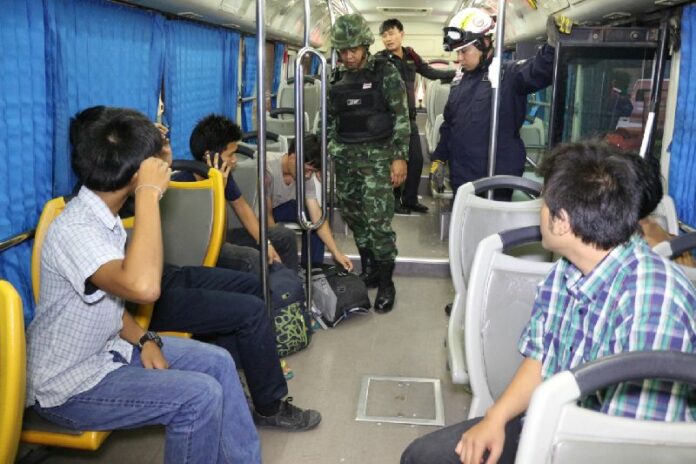
Soldiers board a bus in Pathum Thani that was attacked by students in an incident of suspected gang violence, 18 May 2015.

BANGKOK — Thai education officials may institute an army-run "prep camp" aimed at diffusing long-running gang rivalries between students at polytechnic colleges in Bangkok.

Chaiyapruek Serirak, sec-gen of the Vocational Education Commission (VEC), said the orientation program would feature lectures from army officers, and be open to students from different schools.

"They would mix with students from other colleges, join in activities together, and get to know each other," Chaiyapruek said today. "Tomorrow I will invite directors of 22 'risky' colleges, both private and state-owned, for a joint meeting to empathize measures to prevent further fights." 

A similar camp was held at a Navy base in Chonburi province earlier this year.

Gang violence between students at Thailand's technical colleges is common, and occasionally leads to injuries or even deaths of students and bystanders. 

Chaiyapruek's comment came a day after a public bus in Pathum Thani carrying four students from Don Muang Technical College – two of whom were carrying small swords – was attacked by suspected members of a rival gang. Police say around 20 students hurled stones at the Route 187 bus near Future Park Rangsit shopping mall after they reportedly spotted the four students inside.

The attack took place two days after technical colleges in Pathum Thani began their first semesters.

Speaking to reporters today, Chaiyapruek commended the bus driver for quickly shutting the bus door and speeding away from the scene. "Otherwise, some unimaginable incident may have happened," he said.

The official also urged administrators of technical colleges to keep an eye out for abusive hazing practices as the school year kicks off. 

"In the first few weeks of each year's [academic semester], there are incidents of senior students organizing hazing without permission or knowledge of the teachers. It often involves abuse and can lead to fights, sometimes even deaths," Chaiyapruek said.

He urged students and parents to report any knowledge of harmful hazing to school administrators immediately. 


For comments, or corrections to this article please contact: [email protected]

You can also find Khaosod English on Twitter and Facebook
http://twitter.com/KhaosodEnglish
http://www.facebook.com/KhaosodEnglish
Advertisement

South-East Asian Boat People Get Reprieve but Crisis Far From Over

Refugees from Myanmar and Bangladesh are rescued by Aceh fisherman in Julok, East Aceh, Sumatra, Indonesia, 20 May 2015. EPA

KUALA LUMPUR (DPA) — The decision of Malaysia and Indonesia to allow thousands of Rohingya and Bangladeshi boat people to land might put a temporary end to one of the worst humanitarian crises the region has faced in recent times, but the problem is far from over, activists and officials said.

Malaysia, Thailand and Indonesia emphasized that the decision was a stop-gap measure, as these migrants must be relocated to third countries within a year and a permanent solution to the problem of Rohingyas in Myanmar needs to be found.

"We … agreed to offer them temporary shelter provided that the resettlement and repatriation process will be done in one year by the international community," the foreign ministers of the three countries said in a statement after a meeting in Kuala Lumpur that Myanmar did not attend.

The ministers appeared to have bowed to the international outrage over their earlier decision to prevent the migrants aboard rickety boats from entering their waters or coming ashore.

On Tuesday, the UN high commissioners for human rights and refugees, the UN special representative for migration and the International Organization for Migration, demanded that the three countries give priority to saving lives and respecting human dignity.

Thailand, Malaysia and Indonesia have turned the tables on their critics, urging them to do their share in helping the boat people.

"Malaysia and Indonesia invite other countries in the region to join in this endeavour," the three foreign ministers said.

"Malaysia, Indonesia and Thailand call upon the international community to uphold their responsibility and urgently share the burden of providing the necessary support," they added.

The three countries called on the international community to provide financial assistance, especially in building temporary housing for the migrants, as well as ensuring that these migrants will be repatriated or resettled in a third country within a year.

They also wanted the problem to be dealt with at source.

"The root causes and other contributory factors to the recent influx of irregular migrants should be immediately identified and addressed by the parties concerned," the ministers said.

Malaysia Home Minister Zahid Hamidi said that the Rohingya and Bangladeshi boat people were "trafficked voluntarily" because they made payments to smugglers to get them out of their country.

While Bangladeshi boat people can be considered economic migrants because they left their country to escape poverty and seek better lives, the same cannot be said for the tens of thousands of Rohingya boat people who are persecuted in their homeland in Myanmar, Rohingya activists said.

The Arakan Rohingya National Organization said the Rohingya boat people are fleeing large-scale persecution and mass atrocities in Myanmar.

"We reiterate that the root cause of these human tragedies should be addressed," it said in a statement.

"The Burmese/Myanmar government has to bear all responsibility for the untold sufferings of the Rohingya people for not allowing them to have a peaceful living in their own homeland," it added.

Zafar Ahmad Abdul Ghani, president of the Myanmar Ethnic Rohingya Human Rights Organization in Malaysia, urged the 10-country Association of South-East Asian Nations – of which Myanmar, Thailand, Malaysia, Indonesia are members – to address the Rohingya problem.

Zafar said the influx of thousands of Rohingya boat people in Thailand, Malaysia and Indonesia is proof that Rohingyas are facing systematic prosecution in Myanmar.

"We face gross human rights violations by the state, we became victims of genocide for generations and left to die in horrible makeshift camps in our own homeland without food, water and medicine supply from the government," he said.

"Due to the horrible situation we face in our homeland, we take risks to flee the country to seek refuge in other countries," he added.

The Myanmar government has a different take on the issue. It maintained that the more than 1 million Muslim Rohingyas were ethnic Bengalis who illegally migrated to Myanmar from neighbouring Bangladesh.

Myanmar has consistently refused to discuss the issue in ASEAN and maintained the Rohingya issue is an internal problem.

Charles Santiago, a Malaysian member of parliament, said ASEAN must confront the Rohingya issue squarely.

"The Rohingya problem is a thorny issue for ASEAN," he said. "For more than a decade ASEAN skirted the issue. I don't think they can still continue doing that."

Santiago, who is also the chairman of the ASEAN parliamentarians for human rights, urged Malaysia – this year's chairman of ASEAN – to go beyond palliative measures in addressing the Rohingya issue.

"Rohingya refugees are not one particular country's problem but it is ASEAN's problem," he said. "The crisis is far from over."

(Reporting by John Grafilo)
 
For comments, or corrections to this article please contact: [email protected]

You can also find Khaosod English on Twitter and Facebook
http://twitter.com/KhaosodEnglish
http://www.facebook.com/KhaosodEnglish
 

For comments, or corrections to this article please contact: [email protected]

You can also find Khaosod English on Twitter and Facebook
http://twitter.com/KhaosodEnglish
http://www.facebook.com/KhaosodEnglish
Advertisement

Hot News

LATEST NEWS

Bangkok
overcast clouds
28.8 ° C
28.8 °
28.8 °
75 %
3.4kmh
100 %
Sun
34 °
Mon
34 °
Tue
33 °
Wed
33 °
Thu
33 °