30.5 C
Bangkok
Saturday, June 27, 2026
Home Blog Page 3032

Gunmen Kill Burmese Man, Steal 52,000 Baht Lottery Prize

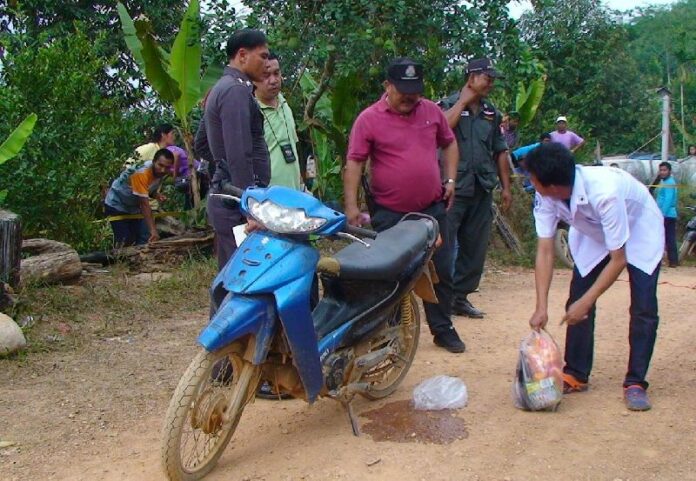
The scene where a Burmese man was shot and killed while riding a motorcycle in Chumpon province, 2 April 2015.

CHUMPHON — Unidentified gunmen shot two Burmese men and stole the 52,000 baht lottery winnings they was carrying in Chumpon province, police say.

Ha, 31, was found dead next to his motorcycle on an isolated mountain road in Chonmaikaew subdistrict yesterday evening. Another Burmese man named Pia, who had been shot in his left leg, was hiding in the woods near the crime scene, police say.

Pia told the officers he had recently won 52,000 baht through an underground lottery. He brought his friend Ha to collect the prize money, and while the pair was driving home to celebrate, two masked men flanked their motorcycle and opened fire. Ha was immediately killed and Pia was shot and injured in the leg, he told police.

The two gunmen then reportedly searched Ha's body and fled with all of the lottery money. 

Police said they believe the gunmen began trailing the two Burmese men after they received the money from the underground dealer, who Pia identified as a man named Kiew in Huay Yai village. The incident is currently under investigation. 

Underground lotteries, in which players bet on last three digits of the official lottery's winning number, is an illegal but popular business in Thailand.


For comments, or corrections to this article please contact[email protected]

You can also find Khaosod English on Twitter and Facebook
http://twitter.com/KhaosodEnglish
http://www.facebook.com/KhaosodEnglish


Advertisement

Former Army Chief Named as Witness in 2010 Crackdown Inquiry

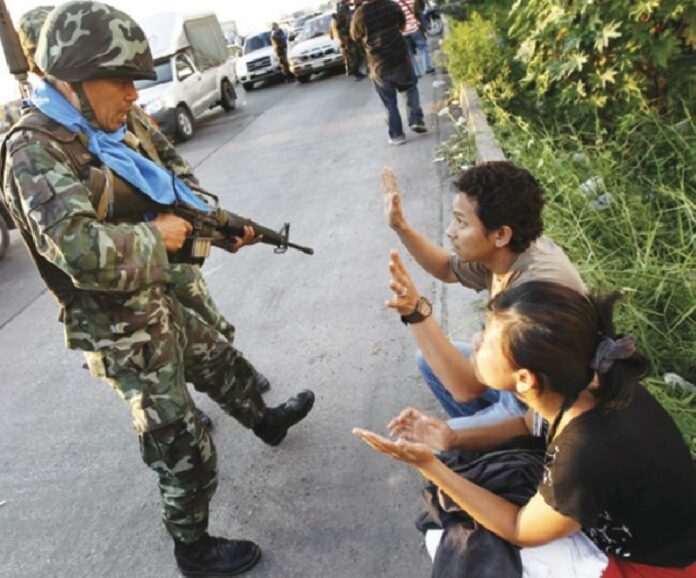
A soldier detains two Redshirt protesters at gunpoint following civil unrest in 2010 in Pathum Thani province.

BANGKOK — Thailand’s national anti-graft agency has named former army chief Anupong Paochinda as a witness in a legal case investigating the violent military crackdown on Redshirt protesters in 2010.

Panthep Klanarongran, chairman of the National Anti-Corruption Commission (NACC), said today that Gen. Anupong will testify in defense of former Prime Minister Abhisit Vejjajiva, who has been charged with "abuse of power" for ordering the crackdown that lasted from April to May 2010 and left over 90 people dead.

\
Redshirt protesters cheered as they stormed into the Government Complex in Bangkok, 5 April 2010.

Abhisit's former deputy, Suthep Thaugsuban, is facing the same charge.

The charges, which were filed in February, are a preliminary step in an impeachment process against the two Democrat Party politicians. If the NACC continues with the case, Abhisit and Suthep’s fate will be determined by the junta-appointed interim parliament, who will vote on whether to retroactively impeach the pair and thereby ban them from political office for five years.  

In addition to Gen. Anupong, then-chairman of the National Security Council Thawil Pliensri will also be summoned to provide testimony, Panthep said.

"By 21 April, NACC officials will invite the two witnesses to give their testimonies to the NACC," Panthep told reporters at today's press conference. "They can come to explain themselves on their own, or they can send documented explanations to us." 

The crackdown was launched in response to tens of thousands of Redshirt demonstrators who descended on Bangkok in March of that year to demand a new election from Abhisit. On 10 April 2010, Abhisit ordered the army, which was led by Gen. Anupong at the time, to disperse the protesters on Ratchadamnoen Avenue, but the operation was called off after security officers were attacked by shadowy militants known as the Blackshirts. 

Following a month of skirmishes between protesters and security officers, the Abhisit government mounted another military operation in May 2010 against the protesters. Redshirt leaders eventually surrendered and called off the protest on 19 May 2010, after at least 90 people – mostly civilians – had died. 

Abhisit, Suthep, and other members of the government and the military at the time have sought to distance themselves from the fatalities and blame the violence on Blackshirt militants who were allegedly allied with the Redshirt protesters. 

However, numerous court inquests from 2013 have attributed civilian deaths to soldiers, some of whom shot indiscriminately into crowds of unarmed protesters. Human rights groups have also faulted Thai authorities for failing to hold state officials accountable for the 2010 crackdown.

 
For comments, or corrections to this article please contact[email protected]

You can also find Khaosod English on Twitter and Facebook
http://twitter.com/KhaosodEnglish
http://www.facebook.com/KhaosodEnglish


Advertisement

Deep South Raid: 'Confiscated' Firearms Not Linked to Insurgency

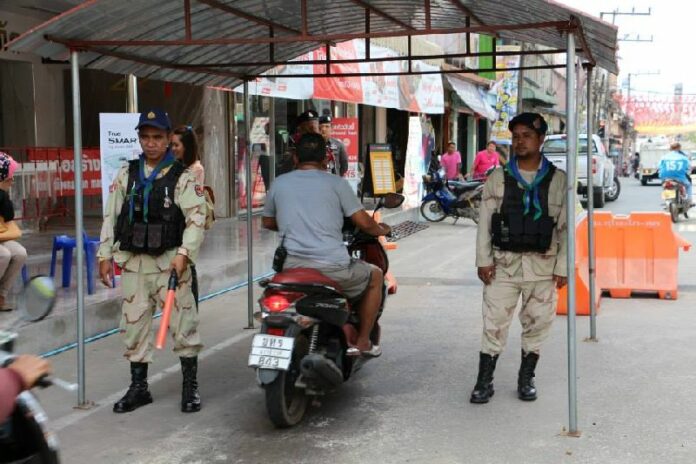
A security checkpoint in Narathiwat province on 24 March 2015.

BANGKOK — The firearms allegedly confiscated from suspected militants during a raid in the insurgency-plagued province of Pattani were not used in any previous shooting attacks in the region, forensic tests revealed today.

The guns were found by security officers who conducted a raid on To Chud village on 25 March that left four civilians dead. Authorities said the raid was an effort to arrest Islamic insurgents who were meeting to plot attacks in the region, and that the suspects fired at security officers first.

\
The entrance to 
To Chud village in Pattani province, 26 March 2015.

A high-ranking officer at the Office of Police Forensic Science told Khaosod today that none of the confiscated weapons were used in any previous attacks connected to the insurgency, which has rattled the region since 2004. 

"Based on inspections by the Forensic Integrated Database System, we discovered that none of the firearms have ever been used in any previous incident," said the officer, who asked not to be named because of the sensitivity of the case.

The forensic department maintains detailed records of bullets and other evidence gathered from the sites of attacks in the area, the officer said.

The results of the forensic tests are likely to deepen suspicions among local residents and relatives of the four men who have accused authorities of "planting" the weapons on bodies of the victims to falsely implicate them. 

Police initially told media that two of the four men killed in the raid belonged to RKK, one of several militant groups behind the Islamic insurgency, but later said that none of the deceased had any pre-existing records or arrest warrants related to the separatist violence. 

According to relatives of the victims and community leaders, two of the men were Fatoni University students in their twenties, one was a known drug addict with no links to the insurgency, and the fourth victim was a 32-year-old man preparing to assist Thai authorities as a Village Defense volunteer after two of his relatives were killed by militants. 

Twenty-two men were also arrested at the scene and taken to army camps for interrogation. Sixteen were released several days later without charges. 

Following public demands for an impartial review of the incident, Thai authorities appointed a 15-member panel to investigate the raid. The panel includes representatives from the military, local administration, Central Islamic Council of Thailand, and Fatoni University, among other agencies. The panel’s report is expected on 3 April.

Police also say seven soldiers will be charged with murder for their role in the raid, though the men failed to report to hear their charges yesterday. Police said the suspects postponed their meeting "indefinitely," but declined to comment further.

More than 6,200 people have been killed since secessionist violence broke out in the three southern border provinces of Pattani, Yala, and Narathiwat in early 2004, according to data compiled by rights groups. In an effort to quell the insurgency, which aims to create an independent Islamic state, approximately 60,000 security officers are stationed in the region. 

Although suspected insurgent attacks are responsible for the majority of casualties, human rights activists have also documented cases of excessive brutality and foul play by security officers in the region. 

In August, a volunteer ranger admitted to killing a local 14-year-old boy and planting a firearm on his body to implicate him as an insurgent. 


For comments, or corrections to this article please contact: [email protected]

You can also find Khaosod English on Twitter and Facebook
http://twitter.com/KhaosodEnglish
http://www.facebook.com/KhaosodEnglish

Advertisement

Bomb Attacks in Deep South Amid Inquiry into Deadly Raid

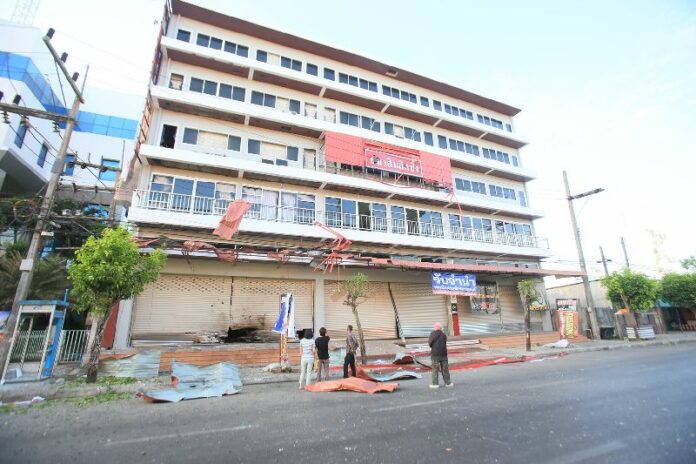
Damage caused by a homemade bomb in Pattani province, 2 April 2010.

PATTANI — Five homemade bombs exploded almost simultaneously last night in the southern border province of Pattani, a week after a controversial military raid in the province left four local residents dead.

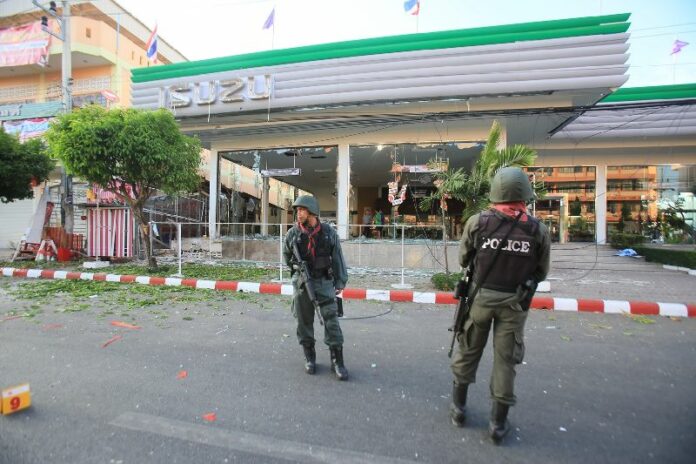
According to police, the bombs exploded at around 2 am in four different sites across the province’s capital. Three bombs reportedly targeted shops in the city, and two were detonated near electric poles on Bana – Laem Nok Road, causing a total of six poles to collapse onto the street. 

\
Police inspect the site where a homemade bomb exploded in Pattani on 2 April 2015.

The homemade explosives, which consisted of gas canisters and timed detonators, did not cause any injuries or deaths, police said.

Islamic insurgents seeking to secede Pattani and its two neighboring provinces have been locked in a bloody conflict with Thai authorities since 2004. The violence has claimed more than 6,000 lives in the region, which has been governed under martial law for the past nine years. Although most of the deaths have been caused by suspected insurgent attacks, authorities have also been faulted for their heavy-handed tactics.

Today’s string of bomb attacks followed a fatal raid carried out by soldiers, police, and paramilitary rangers on To Chud village on 25 March.

Authorities said the operation was an effort to arrest insurgents plotting to stage attacks in the region, and initially told the media that two of the four men killed in the raid belonged to RKK, one of several militant groups behind the insurgency.

However, it later emerged that none of the deceased had any pre-existing records or arrest warrants related to the secessionist movement. According to relatives of the victims and community leaders, two of the men were Fatoni University students in their twenties, one was a known drug addict with no links to the insurgency, and the fourth victim was a 32-year-old manpreparing to assist Thai authorities as a Village Defense volunteer after two of his relatives were killed by militants. 

Commenting on the raid today, Thailand’s army chief said To Chud village has long been known as a place where insurgents regularly gather for meetings.

"Let me explain that the village that was besieged in the seach-and-arrest operation, and where the fatal clash took place, is an area that has problems with narcotics, and perpetrators of violent incidents use it as a gathering place," Gen. Udomdet Sitabutr said today.  "Intelligence reports reached security officers, so there was a necessity to act."   

He added that ten of the 22 men detained in the raid tested positive for drug use. The men were taken to army camps for interrogation, and sixteen were released several days later without any charges. 

Gen. Udomdet also told reporters that the army would accept the findings of a 15-member panel appointed to investigate the raid. The panel, which was formed in response to demands from the community, includes representatives from the military, local administration, Central Islamic Council of Thailand, and Fatoni University, among other agencies. 

"If there is any wrongdoing, we are willing to admit it," Gen. Udomdet said. "Our works to solve problems in the border provinces are based on our sincerity for the people. I and my subordinate officers understand well that we have to be proper and straightforward. Otherwise, we won't have any credibility. What is right is right. What is wrong, we will frankly say it is wrong." 

The panel’s report is expected on 3 April. Police also say seven soldiers will be charged with murder for their role in the raid, though the seven men failed to report to police to hear their charges yesterday. Police said the suspects postponed their meeting "indefinitely," but declined to comment further.

There are an estimated 60,000 security officers deployed in the three southern border provinces of Pattani, Yala, and Narathiwat, a region known as the Deep South. The controversy surrounding the fatal raid has highlighted the deep mistrust of Thai authorities among locals in region. 

In another incident this morning, two men were shot dead by unidentified gunmen as they were riding a motorcycle in Narathiwat province at around 7 am. One of the victims was later identified as a local defense volunteer. Police say the man's firearms were taken away by the assailants. 


For comments, or corrections to this article please contact: [email protected]

You can also find Khaosod English on Twitter and Facebook
http://twitter.com/KhaosodEnglish
http://www.facebook.com/KhaosodEnglish

Advertisement

Bomb Attacks in Deep South Amid Inquiry into Deadly Raid

Police inspect the site where a homemade bomb exploded in Pattani on 2 April 2015.

PATTANI — Five homemade bombs exploded almost simultaneously last night in the southern border province of Pattani, a week after a controversial military raid in the province left four local residents dead.

According to police, the bombs exploded at around 2 am in four different sites across the province’s capital. Three bombs reportedly targeted shops in the city, and two were detonated near electric poles on Bana – Laem Nok Road, causing a total of six poles to collapse onto the street. 

\
Damage caused by a homemade bomb in Pattani province, 2 April 2010.

The homemade explosives, which consisted of gas canisters and timed detonators, did not cause any injuries or deaths, police said.

Islamic insurgents seeking to secede Pattani and its two neighboring provinces have been locked in a bloody conflict with Thai authorities since 2004. The violence has claimed more than 6,000 lives in the region, which has been governed under martial law for the past nine years. Although most of the deaths have been caused by suspected insurgent attacks, authorities have also been faulted for their heavy-handed tactics.

Today’s string of bomb attacks followed a fatal raid carried out by soldiers, police, and paramilitary rangers on To Chud village on 25 March.

Authorities said the operation was an effort to arrest insurgents plotting to stage attacks in the region, and initially told the media that two of the four men killed in the raid belonged to RKK, one of several militant groups behind the insurgency.

However, it later emerged that none of the deceased had any pre-existing records or arrest warrants related to the secessionist movement. According to relatives of the victims and community leaders, two of the men were Fatoni University students in their twenties, one was a known drug addict with no links to the insurgency, and the fourth victim was a 32-year-old man preparing to assist Thai authorities as a Village Defense volunteer after two of his relatives were killed by militants. 

Commenting on the raid today, Thailand’s army chief said To Chud village has long been known as a place where insurgents regularly gather for meetings.

"Let me explain that the village that was besieged in the seach-and-arrest operation, and where the fatal clash took place, is an area that has problems with narcotics, and perpetrators of violent incidents use it as a gathering place," Gen. Udomdet Sitabutr said today.  "Intelligence reports reached security officers, so there was a necessity to act."   

He added that ten of the 22 men detained in the raid tested positive for drug use. The men were taken to army camps for interrogation, and sixteen were released several days later without any charges. 

Gen. Udomdet also told reporters that the army would accept the findings of a 15-member panel appointed to investigate the raid. The panel, which was formed in response to demands from the community, includes representatives from the military, local administration, Central Islamic Council of Thailand, and Fatoni University, among other agencies. 

"If there is any wrongdoing, we are willing to admit it," Gen. Udomdet said. "Our works to solve problems in the border provinces are based on our sincerity for the people. I and my subordinate officers understand well that we have to be proper and straightforward. Otherwise, we won't have any credibility. What is right is right. What is wrong, we will frankly say it is wrong." 

The panel’s report is expected on 3 April. Police also say seven soldiers will be charged with murder for their role in the raid, though the seven men failed to report to police to hear their charges yesterday. Police said the suspects postponed their meeting "indefinitely," but declined to comment further.

There are an estimated 60,000 security officers deployed in the three southern border provinces of Pattani, Yala, and Narathiwat, a region known as the Deep South. The controversy surrounding the fatal raid has highlighted the deep mistrust of Thai authorities among locals in region. 

In another incident this morning, two men were shot dead by unidentified gunmen as they were riding a motorcycle in Narathiwat province at around 7 am. One of the victims was later identified as a local defense volunteer. Police say the man's firearms were taken away by the assailants. 


For comments, or corrections to this article please contact: [email protected]

You can also find Khaosod English on Twitter and Facebook
http://twitter.com/KhaosodEnglish
http://www.facebook.com/KhaosodEnglish

Advertisement

Thai Junta Chairman Downplays Article 44's Autocratic Powers

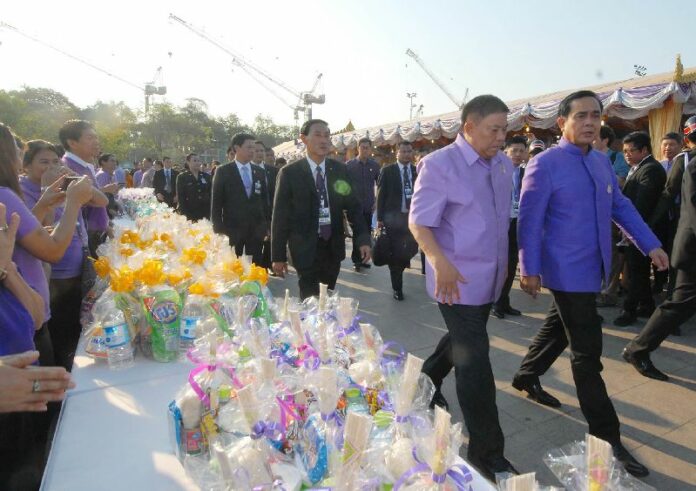
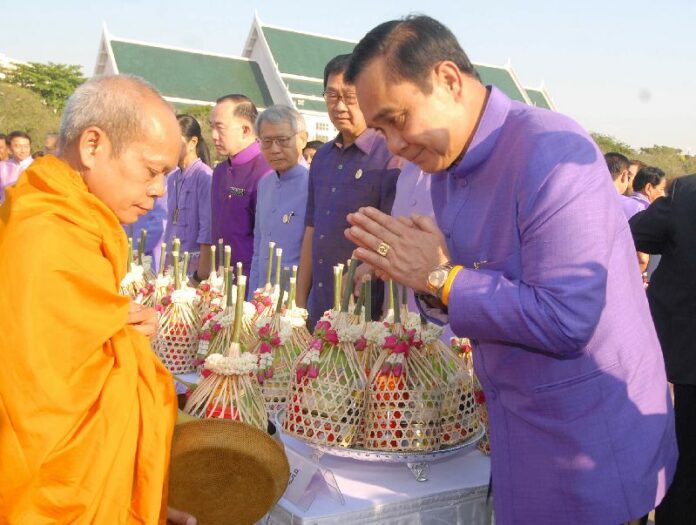
Thai junta chairman Gen. Prayuth attending a celebration for Princess Sirindhorn's 60th birthday at Sanam Luang in Bangkok, 2 April 2015.

BANGKOK — Thailand's junta chairman has brushed off concerns about Article 44, a constitutional clause invoked last night that grants him near-absolute power.

"No problem," Gen. Prayuth Chan-ocha told reporters today when he was asked to comment on the Article, which he used for the first time last night after revoking martial law.

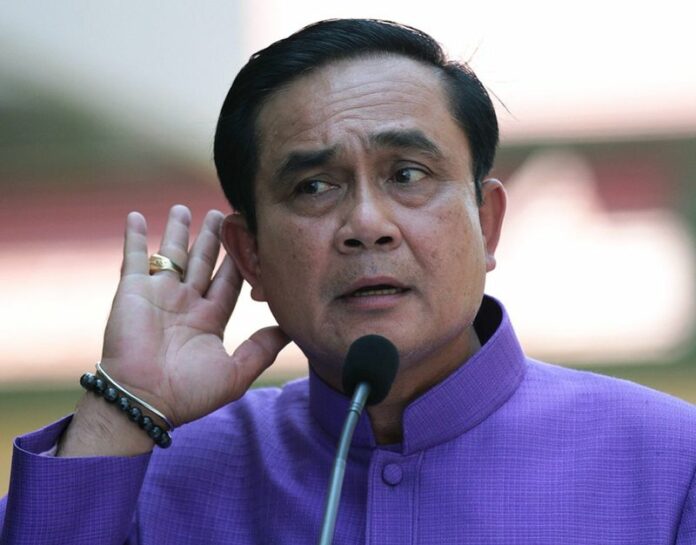
Pressed by journalists to comment, the general waved his hand and said, "What? It's nothing. It's been there all along. I have always had it, you know, Article 44."

Gen. Prayuth made another brief comment to reporters earlier in the day, saying he has been "in good mood" since he replaced martial law with the Article last night.  

Article 44 of the interim charter, which was penned by the junta shortly after the May 2014 coup, authorizes Gen. Prayuth to unilaterally intervene in the face of any perceived threats to national security, the economy, the monarchy, or state affairs. Any order Gen. Prayuth promulgates through Article 44 will be deemed legal and binding, the clause states.

Citing the Article, Gen. Prayuth issued fourteen orders last night retaining key powers granted to the military under martial law, such as soldiers’ authority to detain suspects without charge, censor the media, and ban political gatherings. 

Junta leaders said martial law was repealed last night – after nearly eleven months – to ease international concerns and boost tourism, but critics warn that Article 44's broad language grants the junta chairman even greater powers with essentially no checks.

"Thailand’s friends abroad should not be fooled by this obvious sleight of hand by the junta leader to replace martial law with a constitutional provision that effectively provides unlimited and unaccountable powers," said Brad Adams, Human Rights Watch’s Asia director.

The UN's Human Rights agency also released a statement on Thursday expressing "alarm" at Gen. Prayuth's adoption of "potentially unlimited and draconian powers."

"Normally I would warmly welcome the lifting of martial law," the UN High Commissioner for Human Rights Zeid Ra'ad Al Hussein said in the statement. "But I am alarmed at the decision to replace martial law with something even more draconian, which bestows unlimited powers on the current Prime Minister without any judicial oversight at all. This clearly leaves the door wide open to serious violations of fundamental human rights."

However, government officials insist that Article 44 will only be used "constructively" and "creatively" to protect national security and swiftly solve other urgent problems, such as human trafficking and land encroachment.

"Article 44 will be used only for the interest of the public," Anusit Kunakorn, sec-gen of the National Security Council, said this morning. "This government is not using its power to restrict freedom. We should wait and see what kind of benefits it will bring, now that the law is being used."

Deputy chairman of the junta, Gen. Prawit Wongsuwan, also dismissed concerns that Article 44 may raise alarms internationally.

"I don't know, I'm not a foreigner," Gen. Prawit said, after a reporter asked whether he believes foreigners will react negatively to the invocation of the law. "I am not worried. I have explained it. If you are worried, so be it. But if you are Thais, you shouldn't be worried." 

"I am confident that Article 44 will create peace in Thailand," he added. 

Gen. Prayuth, who toppled a democratically-elected government last May, is currently both chairman of the junta, formally known as the National Council for Peace and Order (NCPO), and Prime Minister of the interim government he appointed. 

Critics have compared Article 44 to a clause in Thailand’s 1959 charter that granted the leader of the 1957 coup, Field Marshal Sarit Thanarat, similarly sweeping power. Sarit ruled over Thailand with an iron first for seven years and invoked the clause to order summary executions. 


For comments, or corrections to this article please contact: [email protected]

You can also find Khaosod English on Twitter and Facebook
http://twitter.com/KhaosodEnglish
http://www.facebook.com/KhaosodEnglish

Advertisement

Thai Junta Chairman Downplays Article 44's Autocratic Powers

Thai junta chairman Gen. Prayuth attending a celebration for Princess Sirindhorn's 60th birthday at Sanam Luang in Bangkok, 2 April 2015.

BANGKOK — Thailand's junta chairman has brushed off concerns about Article 44, a constitutional clause invoked last night that grants him near-absolute power.

"No problem," Gen. Prayuth Chan-ocha told reporters today when he was asked to comment on the Article, which he used for the first time last night after revoking martial law.

\
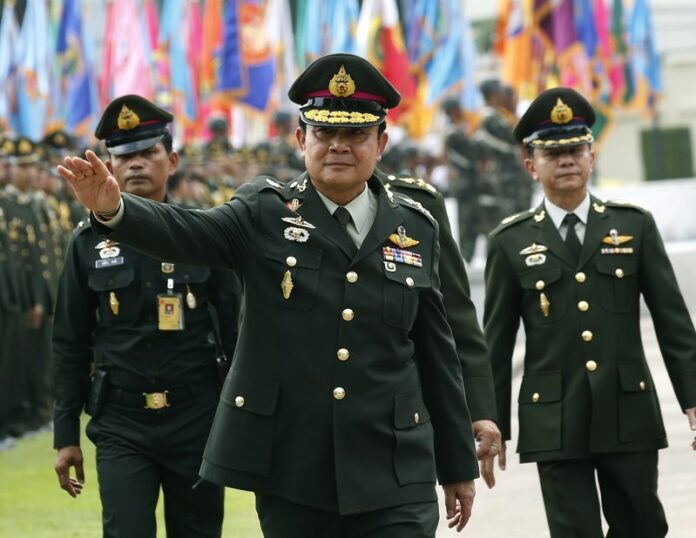
Gen. Prayuth Chan-ocha (R) attending a celebration for Princess Sirindhorn's 60th birthday at Sanam Luang in Bangkok, 2 April 2015.

Pressed by journalists to comment, the general waved his hand and said, "What? It's nothing. It's been there all along. I have always had it, you know, Article 44."

Gen. Prayuth made another brief comment to reporters earlier in the day, saying he has been "in good mood" since he replaced martial law with the Article last night.  

Article 44 of the interim charter, which was penned by the junta shortly after the May 2014 coup, authorizes Gen. Prayuth to unilaterally intervene in the face of any perceived threats to national security, the economy, the monarchy, or state affairs. Any order Gen. Prayuth promulgates through Article 44 will be deemed legal and binding, the clause states.

Citing the Article, Gen. Prayuth issued fourteen orders last night retaining key powers granted to the military under martial law, such as soldiers’ authority to detain suspects without charge, censor the media, and ban political gatherings. 

Junta leaders said martial law was repealed last night – after nearly eleven months – to ease international concerns and boost tourism, but critics warn that Article 44's broad language grants the junta chairman even greater powers with essentially no checks.

"Thailand’s friends abroad should not be fooled by this obvious sleight of hand by the junta leader to replace martial law with a constitutional provision that effectively provides unlimited and unaccountable powers," said Brad Adams, Human Rights Watch’s Asia director.

The UN's Human Rights agency also released a statement on Thursday expressing alarm at Gen. Prayuth's adoption of "potentially unlimited and draconian powers."

"Normally I would warmly welcome the lifting of martial law," the UN High Commissioner for Human Rights Zeid Ra'ad Al Hussein said in the statement. "But I am alarmed at the decision to replace martial law with something even more draconian, which bestows unlimited powers on the current Prime Minister without any judicial oversight at all. This clearly leaves the door wide open to serious violations of fundamental human rights."

However, Thai officials insist that Article 44 will only be used "constructively" and "creatively" to protect national security and swiftly solve other urgent problems, such as human trafficking and land encroachment.

"Article 44 will be used only for the interest of the public," Anusit Kunakorn, sec-gen of the National Security Council, said this morning. "This government is not using its power to restrict freedom. We should wait and see what kind of benefits it will bring, now that the law is being used."

Deputy chairman of the junta, Gen. Prawit Wongsuwan, also dismissed concerns that Article 44 may raise alarms internationally.

"I don't know, I'm not a foreigner," Gen. Prawit said, after a reporter asked whether he believes foreigners will react negatively to the invocation of the law. "I am not worried. I have explained it. If you are worried, so be it. But if you are Thais, you shouldn't be worried." 

"I am confident that Article 44 will create peace in Thailand," he added. 

Gen. Prayuth, who toppled a democratically-elected government last May, is currently both chairman of the junta, formally known as the National Council for Peace and Order (NCPO), and Prime Minister of the interim government he appointed. 

Critics have compared Article 44 to a clause in Thailand’s 1959 charter that granted the leader of the 1957 coup, Field Marshal Sarit Thanarat, similarly sweeping power. Sarit ruled over Thailand with an iron first for seven years and invoked the clause to order summary executions. 


For comments, or corrections to this article please contact: [email protected]

You can also find Khaosod English on Twitter and Facebook
http://twitter.com/KhaosodEnglish
http://www.facebook.com/KhaosodEnglish

Advertisement

Questions Mount After Lufthansa Reveal About Co-Pilot's Depression

Andreas Lubitz

PARIS (DPA) – Pressure grew Wednesday for German air carrier Lufthansa to explain how Andreas Lubitz – a young man who had exhibited suicidal tendencies and suspended a training programme due to depression – could have been left at the helm of ill-fated Germanwings flight 4U9525.

Lufthansa chief executive Carsten Spohr declined to comment Wednesday on when the airline learned of problems plaguing the 27-year-old co-pilot, who is believed to have intentionally crashed the plane into a mountainside in France last week, killing himself and 149 others on board.

"We are learning more every day, but it will take a long, long time to understand how this could happen," Spohr said during a visit to a memorial near the crash site, alongside Germanwings chief executive Thomas Winkelmann. Lufthansa is Germanwings' parent company.

"We're very, very sorry that such an accident could have happened at Lufthansa, where we put so much focus on safety. We are sorry for the losses that occurred and there are just no words to express this," Spohr said.

Lufthansa had said its flight training school knew of Lubitz's problems with depression. The company on Tuesday produced a 2009 email in which Lubitz explained he was ready to resume flight training after a break.

In it, Lubitz informed the school of a "previous episode of severe depression," sparking questions about why his history didn't raise red flags at the airline carrier.

Lufthansa provided the email along with other documents to prosecutors in the German city of Dusseldorf and said it was cooperating fully with the investigation.

Prosecutors said that Lubitz had been in treatment with psychiatrists and neurologists, and that a doctor had noted a suicidal tendency in him before he received his pilot's licence.

Earlier, Spohr said Lubitz had passed all his medical tests, and that he "was fit for flying without any restrictions." Medical records outlining the suicidal tendencies were protected under German confidentiality laws, and it's unclear that Germanwings was aware of that section of Lubitz's file.

He also passed medical and psychological evaluations to obtain a student pilot certificate from the US Federal Aviation Authority in 2010.

In Berlin, a spokeswoman for the German Transport Ministry said it would not consider changes to the country's pilot selection standards until prosecutors in Dusseldorf have finished their investigation.

France's Paris Match and German tabloid Bild published minute-by-minute accounts of the plane's last minutes, which they say are based on quotes and information drawn from a video found on a mobile phone at the crash site.

French prosecutors said they did not possess a mobile phone video recording of the flight's final moments, telling dpa that remnants of mobile phones found at the crash site were likely too damaged to yield footage.

"In the event that someone has such a video, they should turn it over to police without delay," Marseille prosecutor Brice Robin told French media on Wednesday, repeating comments he made to dpa late Tuesday as he dismissed media reports claiming to have seen footage.

The accounts largely reflect statements Robin gave to press last week after listening to a recovered cockpit voice recorder, from which he surmised Lubitz locked himself alone in the cockpit and intentionally changed the plane's trajectory until it slammed into the mountainside. The cockpit was secured, preventing the pilot from re-entering despite increasingly insistent attempts.
Data from the cockpit voice recorder is one of the key pieces of evidence used by prosecutors to reconstruct the flight's last moments. Investigators are still searching for a the contents of a second black box among the remnants of the plane, which shattered on impact.

A spokesman of the French recovery team gathering evidence from the crash site said that there were no longer any human remains "visible." A group of four German investigators specializing in digital and laser tracing also arrived at the site on Wednesday to collect evidence.

In the town of Haltern in the west of Germany, families and friends were to gather late on Wednesday for an ecumenical religious service in memory of the 16 school pupils and two teachers from a local school killed in the crash.

The students from the town's Joseph Koenig Gymnasium had been returning from a trip to Spain.

The service was to be held in the Catholic church of St Sixtus, the same venue as used for a memorial service last Friday with Germany's President Joachim Gauck.

Germany's national memorial service for the dead is set for April 17 in the Catholic cathedral of Cologne with Chancellor Angela Merkel attending.

 
For comments, or corrections to this article please contact: [email protected]

You can also find Khaosod English on Twitter and Facebook
http://twitter.com/KhaosodEnglish
http://www.facebook.com/KhaosodEnglish

Advertisement

Martial Law Lifted in Thailand

BANGKOK (DPA) – Thailand's military government lifted martial law in a televised address to the nation Wednesday night, after receiving a royal endorsement to do so.

The junta said that it had received approval from King Bhumibol Adulyadej to lift martial law, which it has used to govern Thailand since taking power in a coup in May.

The junta also announced that Prime Minister Prayuth Chan-ocha had used Section 44 of the current interim constitution to put in place several acts which would be effective immediately.

The new executive orders continue several martial law clauses including the detention of dissidents for up to seven days without charge, the trial of civilians in military courts, the banning of political gatherings and the right to ban news and media which threaten national security.

Prayuth also used his executive orders under section 44 to empower military soldiers to act as law enforcement officials in issues concerning national security.

Rights groups and some political leaders have expressed criticism over the use of Section 44.

"General Prayuth's activation of constitution section 44 will mark Thailand's deepening descent into dictatorship," said Brad Adams, Human Rights Watch's Asia director.

He said Section 44 was a "constitutional provision that effectively provides unlimited and unaccountable powers."

Locally the use of Section 44 has also been met with resistance.

"To revoke martial law and exercise Section 44 instead is risky because the article gives the PM absolute authority," National Human Rights Commissioner Nirat Pitakwatchara said.

"During a time that the country is trying to promote national reform and solve inequality issues, I doubt that it's suitable to use Section 44 or martial law."

The junta for its part has denied that it would use the controversial clause dictatorially.

Deputy Prime Minister Prawit Wongsuwan said last week the section would only be used against people who were conspiring against the country and that "good people need not worry."

The current military government came to power after a military coup last May.

Since assuming power, the armed forces have cracked down on dissent and censored political opponents, citing the need for national stability.

(Reporting by Cod Satrusayang, dpa)

 
For comments, or corrections to this article please contact: [email protected]

You can also find Khaosod English on Twitter and Facebook
http://twitter.com/KhaosodEnglish
http://www.facebook.com/KhaosodEnglish

Advertisement

Martial Law Lifted in Thailand

Thai Prime Minister Prayuth Chan-ocha at Thai army headquarters in Bangkok on September 30, 2014. Thailand's military government on Tuesday received permission to lift martial law from King Bhumibol and have done so. EPA/NARONG SANGNAK

BANGKOK (DPA) — Thailand's military government lifted martial law in a televised address to the nation Wednesday night, after receiving a royal endorsement to do so.

The junta said that it had received approval from King Bhumibol Adulyadej to lift martial law, which it has used to govern Thailand since taking power in a coup in May.

The junta also announced that Prime Minister Prayuth Chan-ocha had used Section 44 of the current interim constitution to put in place several acts which would be effective immediately.

The new executive orders continue several martial law clauses including the detention of dissidents for up to seven days without charge, the trial of civilians in military courts, the banning of political gatherings and the right to ban news and media which threaten national security.

Prayuth also used his executive orders under section 44 to empower military soldiers to act as law enforcement officials in issues concerning national security.

Rights groups and some political leaders have expressed criticism over the use of Section 44.

"General Prayuth's activation of constitution section 44 will mark Thailand's deepening descent into dictatorship," said Brad Adams, Human Rights Watch's Asia director.

He said Section 44 was a "constitutional provision that effectively provides unlimited and unaccountable powers."

Locally the use of Section 44 has also been met with resistance.

"To revoke martial law and exercise Section 44 instead is risky because the article gives the PM absolute authority," National Human Rights Commissioner Nirat Pitakwatchara said.

"During a time that the country is trying to promote national reform and solve inequality issues, I doubt that it's suitable to use Section 44 or martial law."

The junta for its part has denied that it would use the controversial clause dictatorially.

Deputy Prime Minister Prawit Wongsuwan said last week the section would only be used against people who were conspiring against the country and that "good people need not worry."

The current military government came to power after a military coup last May.

Since assuming power, the armed forces have cracked down on dissent and censored political opponents, citing the need for national stability.

(Reporting by Cod Satrusayang, dpa)

 
For comments, or corrections to this article please contact: [email protected]

You can also find Khaosod English on Twitter and Facebook
http://twitter.com/KhaosodEnglish
http://www.facebook.com/KhaosodEnglish

Advertisement

Hot News

LATEST NEWS

Bangkok
overcast clouds
30.5 ° C
32.2 °
30.5 °
76 %
4.9kmh
100 %
Sat
30 °
Sun
35 °
Mon
35 °
Tue
33 °
Wed
32 °