32.2 C
Bangkok
Sunday, June 28, 2026
Home Blog Page 3044

Thai Court to Hear Criminal Case Against Former Premier Yingluck

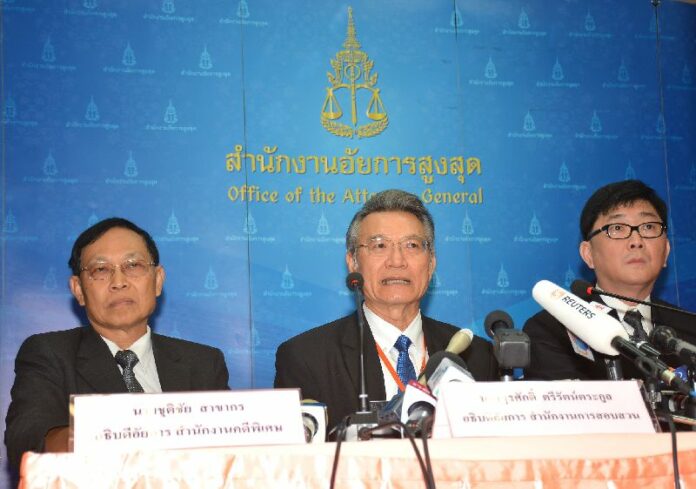
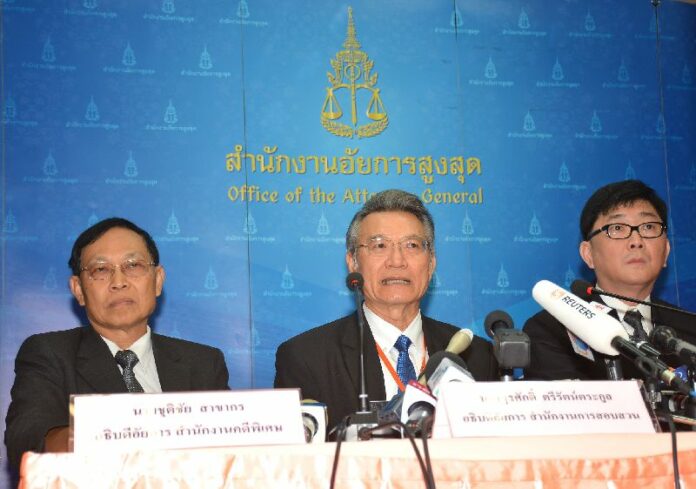
The public prosecutor announcing that the Supreme Court has accepted the case against Yingluck, 18 March 2015.

BANGKOK (DPA) — The criminal case against Thai former premier Yingluck Shinawatra will be heard in the Supreme Court in May, the court said Thursday.

Yingluck is indicted for her alleged role in a corruption-plagued rice price subsidy scheme, and could face up to 10 years in jail for failing to prevent the loss of billions of dollars.

The trial will open at the Supreme Court's Criminal Division for Person Holding Political Positions on May 19, a nine-judge panel ruled Thursday.

Yingluck, who was overthrown in May in a coup led by current Prime Minister Prayut Chan-ocha, has denied any wrong-doing in the scheme to help the country's impoverished rice farmers.

She has described the case as politically motivated and said she will face trial rather than fleeing abroad to avoid prosecution.

Her elder brother, Thaksin Shinawatra, who was also overthrown in a coup, in 2006, fled the country to avoid a two-year jail sentence for abuse of power in the sale of Bangkok real estate.

In July, the National Anti-Corruption Commission found Yingluck guilty of negligence for failing to stop the rice subsidy program even after government losses had grown to an estimated 500 billion baht (15.2 billion dollars).

The finding led to her impeachment in January, banning her from politics for five years, and to her indictment in February, starting the current criminal trial.

The rice scheme was popular in the north-eastern provinces, which remain the main political stronghold of Yingluck's Pheu Thai Party.

But it was plagued by persistent corruption and allegations of incompetence, with thousands of tons of unsold rice left to rot in storage facilities.


Advertisement

Torture Allegation is a 'Distortion of Facts,' Thai Junta Says

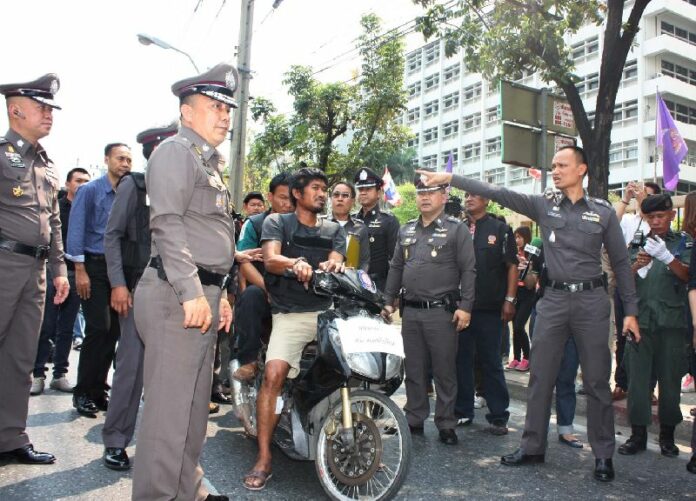
Two suspects accused of throwing a grenade at the Criminal Court on 7 March "re-enact" their alleged crime with police, 13 March 2015.

BANGKOK — A Thai junta spokesperson has denied that four men were tortured in military custody last week, and threatened to take legal action against those who spread the allegation.

The Thai Lawyers for Human Rights Center released a statement yesterday accusing the military of torturing the four men, who were recently arrested in connection with an alleged "terrorism network" that plotted to stage bomb attacks in Bangkok. 

\
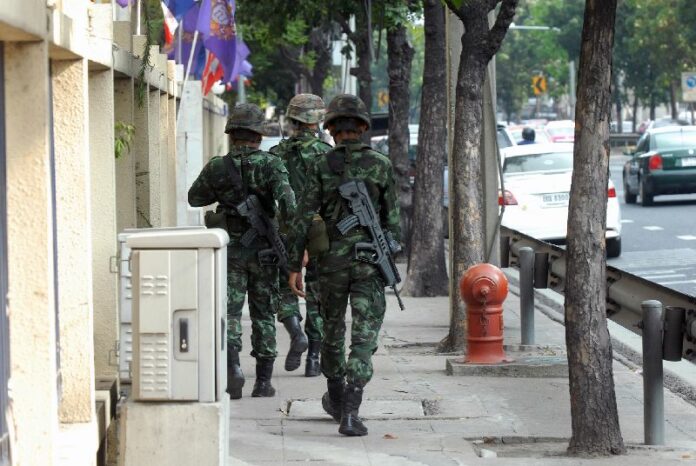
Soldiers patrol the Criminal Court in Bangkok, where a grenade exploded on 7 March. 16 March 2015.

According to the lawyers, the four suspects were tortured into making false confessions by military officers from 9 – 15 March, when they were held for interrogation at an army barrack.

Col. Winthai Suwaree, spokesperson of the junta, said he has investigated the claim and determined it to be "untrue." 

"Such information is intended to distort the facts and damage the credibility of security officers," Col. Winthai said. "We may further investigate the suspects who provided this information, or certain ill-intentioned individuals who are trying to spread such false information." 

He added, "Our legal team may be involved in the investigation into the details." 

The four men, identified as Sansern Sri-unruen, Charnvit Jariyanukul, Norapat Luepol, and Wichai Yoosuk, have been accused by police of participating in a plot to "create chaos" and draw an intervention from the United Nations by staging bomb attacks around Bangkok.

Police say the same network was responsible for the grenade attack at the Criminal Court on the night 7 March. No one was injured in the explosion, which caused minor damages to the court’s parking lot.

At least 17 arrest warrants have been issued in connection with the case so far. 

One of the four suspects, Sansern, told Prachatai news that he was slapped, punched, and kicked by soldiers during the interrogation. He also showed burn marks on his legs that he said were from elecotrocution, which military officers reportedly applied "30-40 times" becasue he refused to confess. 

\
Sansern Sri-unruen shows traces of alleged electrocution on his leg applied by soliders [Prachatai].

However, Col. Winthai  argued that there was no reason for the military to coerce suspects into confessing, as confessions obtained through informal interrogation do not have any binding effect in court.

"The information obtained at that level [of interrogation] is only used for preventing and deterring [violent] incidents, in order to restore peace and order in society so that there won't be any further violence," the spokesperson explained.

"When the military transfers detainees to the police, there are physical check-ups that are clearly documented as evidence. No one can distort those facts. I insist that security officers proceed with everything in accordance with the laws and international principles. Such accusations amount to listening to one side of the story and accusing the officers, which contradicts with the legal profession. Lawyers should investigate the facts clearly first."

The four men have been charged with premeditated murder, causing an explosion that potentially harms other individuals or properties, illegally possessing war weaponry, possessing and using firearms and ammunition without permit, carrying weapons into residential areas without due cause, and using firearms in residential areas without due cause. 

Under martial law, which was imposed by the junta after it seized power from an elected government in May 2014, security officers can search properties and detain individuals for up to seven days without court warrants.

 
Advertisement

Torture Allegation is a 'Distortion of Facts,' Thai Junta Says

Soldiers patrol the Criminal Court in Bangkok on 16 March 2015.

BANGKOK — A Thai junta spokesperson has denied that four men were tortured in military custody last week, and threatened to take legal action against those who spread the allegation.

The Thai Lawyers for Human Rights Center released a statement yesterday accusing the military of torturing the four men, who were recently arrested in connection with an alleged "terrorism network" that plotted to stage bomb attacks in Bangkok. 

According to the lawyers, the four suspects were tortured into making false confessions by military officers from 9 – 15 March, when they were held for interrogation at an army barrack.

Col. Winthai Suwaree, spokesperson of the junta, said he has investigated the claim and determined it to be "untrue." 

"Such information is intended to distort the facts and damage the credibility of security officers," Col. Winthai said. "We may further investigate the suspects who provided this information, or certain ill-intentioned individuals who are trying to spread such false information." 

He added, "Our legal team may be involved in the investigation into the details." 

The four men, identified as Sansern Sri-unruen, Charnvit Jariyanukul, Norapat Luepol, and Wichai Yoosuk, have been accused by police of participating in a plot to "create chaos" and draw an intervention from the United Nations by staging bomb attacks around Bangkok.

Police say the same network was responsible for the grenade attack at the Criminal Court on the night 7 March. No one was injured in the explosion, which caused minor damages to the court’s parking lot.

At least 17 arrest warrants have been issued in connection with the case so far. 

One of the four suspects, Sansern, told Prachatai news that he was slapped, punched, and kicked by soldiers during the interrogation. He also showed burn marks on his legs that he said were from elecotrocution, which military officers reportedly applied "30-40 times" becasue he refused to confess. 

\
Sansern Sri-unruen shows traces of alleged electrocution on his leg applied by soliders [Prachatai].

However, Col. Winthai  argued that there was no reason for the military to coerce suspects into confessing, as confessions obtained through informal interrogation do not have any binding effect in court.

"The information obtained at that level [of interrogation] is only used for preventing and deterring [violent] incidents, in order to restore peace and order in society so that there won't be any further violence," the spokesperson explained.

"When the military transfers detainees to the police, there are physical check-ups that are clearly documented as evidence. No one can distort those facts. I insist that security officers proceed with everything in accordance with the laws and international principles. Such accusations amount to listening to one side of the story and accusing the officers, which contradicts with the legal profession. Lawyers should investigate the facts clearly first."

The four men have been charged with premeditated murder, causing an explosion that potentially harms other individuals or properties, illegally possessing war weaponry, possessing and using firearms and ammunition without permit, carrying weapons into residential areas without due cause, and using firearms in residential areas without due cause. 

Under martial law, which was imposed by the junta after it seized power from an elected government in May 2014, security officers can search properties and detain individuals for up to seven days without court warrants.

 
Advertisement

Motorcyclist Shot Dead By Traffic Cop, Autopsy Confirms

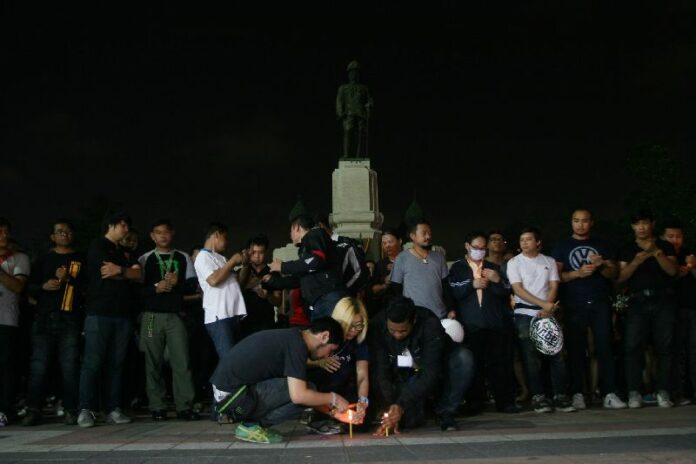
A vigil for Naret Rojanaboonsongsri in Lumpini Park, Bangkok, 17 March 2015.

BANGKOK — An autopsy has established that a motorcyclist who failed to stop at a police checkpoint was shot dead by an officer, police say.

Naret Rojanaboonsongsri, 40, was found dead with severe injuries to the head shortly after he ran through a checkpoint near Hua Lek bridge in Chonburi province on 15 March. Witnesses said they heard one gunshot moments before Naret's motorcycle crashed. A police officer admitted to firing his weapon during the altercation, but insisted that he fired into the air and not at Naret. 

The officer, Police Senior Sergeant Major Suphan Chamnit, told media agencies at the time that Naret crashed his motorcycle on his own and died from injuries caused by the crash. 

However, a preliminary report from Phayathai Hospital noted that Naret died from gunshot to the head, prompting his family and friends to accuse police of attempting to cover up Naret's death. Over the past few days, Naret's friends have organized several demonstrations in defiance of the junta's ban on protests to demand an investigation. The latest gathering took place last night, when more than 100 people attended a vigil in Lumpini Park.

Today police announced that a formal autopsy at Thammasat Hospital determined Naret was killed by a gunshot wound to the head.

Pol.Col. Chakrit Sawasdi, an officer from Chonburi police force who observed the autopsy, told reporters that Naret was shot in the back of his head from a far distance. 

Although the autopsy did not determine the type of bullet fired, the finding is enough to suggest that Pol.Sen.Sgt.Maj. Suphan was responsible for Naret's death, Pol.Col. Chakrit said.

"It is clearly confirmed that the officer acted with excessive force," Pol.Col. Chakrit said, adding that Suphan has been charged with premeditated murder. Police filed charges against the officer yesterday. 

Banthoon Rojanaboonsongri, an older brother of Naret, declined to comment on a previous police statement that Naret was drunk when he drove through checkpoint, saying that he could not comment on an incident he did not personally witness. But Banthoon stressed that he would "do whatever it takes" to hold police responsible for his brother's death. 

Pol.Maj.Gen. Nitipong Niamnoi, commander of Chonburi provincial police, said Pol.Sen.Sgt.Maj. Suphan has been suspended from his duty, effective immediately. He added that a committee has been formed to investigate the case, and that no police officer from Nong Kham Police Station, where Suphan was based, would be allowed to participate in the investigation.

"It is for transparency and fairness," Pol.Maj.Gen. Nititpong said.

Kittirittitham Sawaenghasap, a friend of Naret and a core organizer of previous protests, said he is "relieved" to hear about the development in the case.

"I have to admit, I had a negative opinion of police's work, so my friends and I banded together to spur police [to work on the case]," Kittirittitham told Khaosod. "But now that I have received all the information, I am relieved, to a certain degree."

Kittirittitham said his group will convene in front of the 2nd Provincial Police headquarters on 21 March to thank police officers for the investigation, and apologize for any offense the group has caused. According to Kittirittitham, police will permit the rally on three conditions: no show of disrespect to the venue, no violence, and no loud engines.

Yesterday, Thai police commander Pol.Gen. Somyot Pumphanmuang told reporters that even if Suphan was found guilty, his behavior may not be considered excessive in other countries.

"If this thing happened in United States of America, it wouldn't be considered excessive," Pol.Gen. Somyot told reporters yesterday, "In the US, or other countries with violent crimes, the police can shoot you just because you don't raise your hands up."

Nevertheless, Pol.Gen. Somyot insisted that Suphan will be prosecuted in accordance with the law.

 
Advertisement

Thai Court to Hear Criminal Case Against Former Premier Yingluck

The public prosecutor announcing that the Supreme Court has accepted the case against Yingluck, 18 March 2015.

BANGKOK (DPA) — The criminal case against Thai former premier Yingluck Shinawatra will be heard in the Supreme Court in May, the court said Thursday.

Yingluck is indicted for her alleged role in a corruption-plagued rice price subsidy scheme, and could face up to 10 years in jail for failing to prevent the loss of billions of dollars.

The trial will open at the Supreme Court's Criminal Division for Person Holding Political Positions on May 19, a nine-judge panel ruled Thursday.

Yingluck, who was overthrown in May in a coup led by current Prime Minister Prayut Chan-ocha, has denied any wrong-doing in the scheme to help the country's impoverished rice farmers.

She has described the case as politically motivated and said she will face trial rather than fleeing abroad to avoid prosecution.

Her elder brother, Thaksin Shinawatra, who was also overthrown in a coup, in 2006, fled the country to avoid a two-year jail sentence for abuse of power in the sale of Bangkok real estate.

In July, the National Anti-Corruption Commission found Yingluck guilty of negligence for failing to stop the rice subsidy program even after government losses had grown to an estimated 500 billion baht (15.2 billion dollars).

The finding led to her impeachment in January, banning her from politics for five years, and to her indictment in February, starting the current criminal trial.

The rice scheme was popular in the north-eastern provinces, which remain the main political stronghold of Yingluck's Pheu Thai Party.

But it was plagued by persistent corruption and allegations of incompetence, with thousands of tons of unsold rice left to rot in storage facilities.


Advertisement

European Tour Bus Catches Fire in Southern Thailand

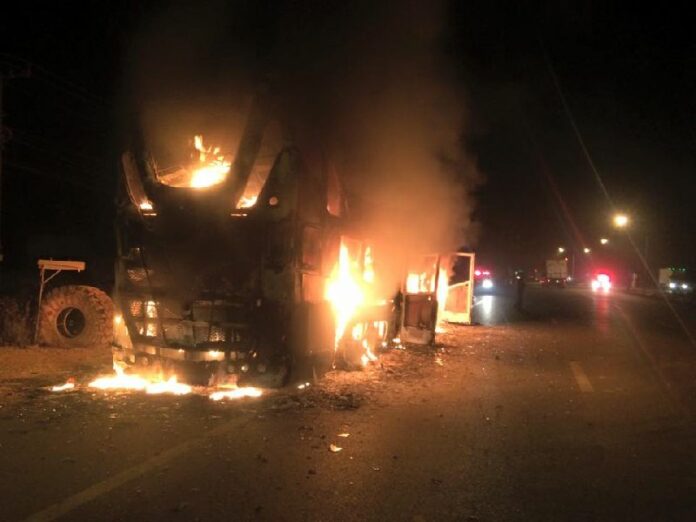
The burning bus on 41 Highway in Sawee district in Chumphon Province, 18 March 2015.

CHUMPHON — Over 30 foreign tourists were forced to flee for their lives after their tour bus suddenly caught fire on a highway in southern Thailand this morning.

Police were first informed about the fire in Chumphon province at 4 am this morning, but firefighters were not dispatched until an hour later, causing some tourists who were waiting at the scene to boo as the firefighters arrived.

No one was injured in the incident, but the driver of the tour bus, Pongpan Daengduan, said all of the tourists’ bags were lost in the fire because of the delay.

\
The burning bus on 
41 Highway in Sawee district in Chumphon Province, 18 March 2015.

According to Pongpan, 4o, the bus belonged to a tour company called Choke Mali Daeng. He said he picked up 34 European tourists from Khaosan Road in Bangkok on 7:30 pm yesterday to drive them to a ferry port in Surat Thani province, where the passengers would take boats to Koh Samui island. 

The driver said an electrical failure occurred while he was driving, after which he promptly parked the bus on the side of the road. He then smelled smoke and heard a loud noise from the engine.

"So I shouted at the tourists who were sleeping, I woke them up and told them to flee," Pongpan said, adding that he and the passengers had to use emergency exit on the lower part of the bus because two other doors were shut down by the electrical problem. 

Pongpan told police he called police after he was unable to put out the flames with a fire extinguisher.

Police are investigating the incident. 

 
Advertisement

Terror Suspect Charged With Insulting the Monarchy

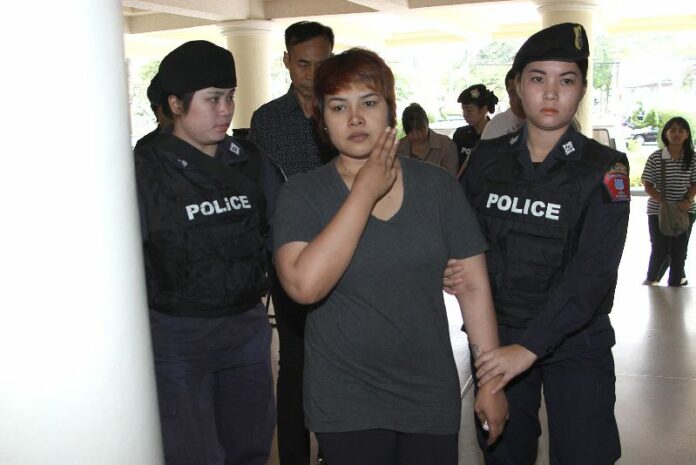
Nattathida Meewangpla flashing an anti-coup hand gesture while police escort her to their HQ in Bangkok on 17 March 2015.

BANGKOK — The former nurse detained by the military for six days and charged with terrorism has now been accused of insulting the Thai Royal Family, a crime punishable by up to 15 years in prison.

Nattathida Meewangpla, 36, was charged with lese majeste (defaming the monarchy) yesterday. She is also facing terrorism charges for her alleged involvement in a network that plotted to stage bomb attacks in Bangkok.

\
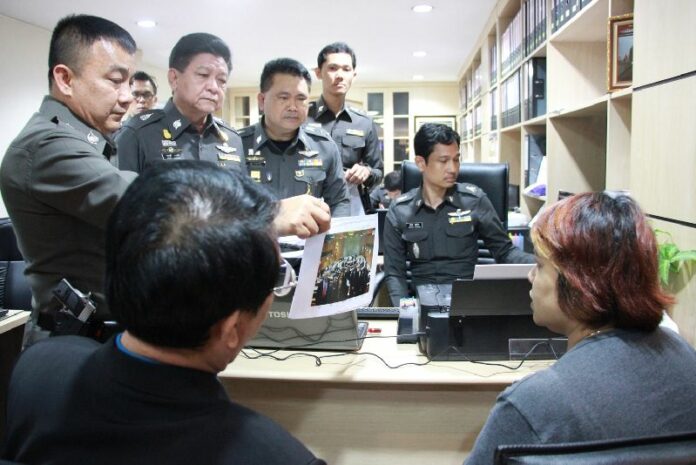
Police question Nattathida Meewangpla at the police HQ in Bangkok, 17 March 2015.

The lese majeste charge was filed by Col. Wicharn Joddaeng, a high-ranking officer in the Internal Security Operation Command (ISOC), a Thai counter-insurgency agency.

According to Col. Wicharn, who heads the ISOC's department of laws and human rights, Nattathida copied a text that insulted the monarchy from one chat room and posted it in two other chat groups. 

Col. Wicharn filed documents about Nattathida's interrogation and photocopies of the chat log to Crime Suppression Division as evidence. 

Criticizing the the King, Queen, or Heir-Apparent is outlawed under Section 112 of Thailand’s criminal codes. In practice, the law is interpreted to cover any content deemed insulting to the monarchy. Those who quote or republish lese majeste content have also been convicted of the crime.

Soldiers took Nattathida from her home on 11 March to an unspecified location for six days, during which she was not allowed contact with the outside world. 

The ruling military junta initially denied detaining Nattathida, but later conceded on 17 March after she was transferred from military to police custody and accused of participating in an alleged terrorism plot. 

According to police, Nattathida assisted a group who planned to stage five bomb attacks around Bangkok. Police say the group was also responsible for the grenade attack at the Criminal Court on 7 March. 

Nattathida is currently being held in a Bangkok prison while she awaits trial in martial court.

In response to outcry from human rights activists about Nattathida's detention, junta chairman and Prime Minister Prayuth Chan-ocha clarified yesterday that the military merely "invited" Nattathida "to talk."

"We didn't arrest her at all. We simply invited her at her home for a talk, and she came," Gen. Prayuth said. "If we had announced it, there would have been a panic."

Nattathida was a key witnesss in a court inquiry that deemed soldiers responsible for the deaths of six civilians at a Buddhist temple during the military crackdown on Redshirt protesters in 2010. Nattathida was working as a volunteer nurse inside the temple during the shooting, which left two other medics dead. 

The junta has insisted that her detention was unrelated to the court case. 

The prosecution of lese majeste suspects has risen considerably since the junta seized power last May, drawing criticism from human rights groups who say the law is abused to restrict free speech. Gen. Prayuth, considered a hardline royalist, has also granted military courts – which do not permit appeals – jurisdiction over lese majeste cases.

Advertisement

Terror Suspect Charged With Insulting the Monarchy

Police interrogate Nattathida Meewangpla, 36, on 17 March 2015.

BANGKOK — The former nurse detained by the military for six days and charged with terrorism has now been accused of insulting the Thai Royal Family, a crime punishable by up to 15 years in prison.

Nattathida Meewangpla, 36, was charged with lese majeste (defaming the monarchy) yesterday. She is also facing terrorism charges for her alleged involvement in a network that plotted to stage bomb attacks in Bangkok.

The lese majeste charge was filed by Col. Wicharn Joddaeng, a high-ranking officer in the Internal Security Operation Command (ISOC), a Thai counter-insurgency agency.

According to Col. Wicharn, who heads the ISOC's department of laws and human rights, Nattathida copied a text that insulted the monarchy from one chat room and posted it in two other chat groups. 

Col. Wicharn filed documents about Nattathida's interrogation and photocopies of the chat log to Crime Suppression Division as evidence. 

Criticizing the the King, Queen, or Heir-Apparent is outlawed under Section 112 of Thailand’s criminal codes. In practice, the law is interpreted to cover any content deemed insulting to the monarchy. Those who quote or republish lese majeste content have also been convicted of the crime.

Soldiers took Nattathida from her home on 11 March to an unspecified location for six days, during which she was not allowed contact with the outside world. 

The ruling military junta initially denied detaining Nattathida, but later conceded on 17 March after she was transferred from military to police custody and accused of participating in an alleged terrorism plot. 

According to police, Nattathida assisted a group who planned to stage five bomb attacks around Bangkok. Police say the group was also responsible for the grenade attack at the Criminal Court on 7 March. 

Nattathida is currently being held in a Bangkok prison while she awaits trial in martial court.

In response to outcry from human rights activists about Nattathida's detention, junta chairman and Prime Minister Prayuth Chan-ocha clarified yesterday that the military merely "invited" Nattathida "to talk."

"We didn't arrest her at all. We simply invited her at her home for a talk, and she came," Gen. Prayuth said. "If we had announced it, there would have been a panic."

Nattathida was a key witnesss in a court inquiry that deemed soldiers responsible for the deaths of six civilians at a Buddhist temple during the military crackdown on Redshirt protesters in 2010. Nattathida was working as a volunteer nurse inside the temple during the shooting, which left two other medics dead. 

The junta has insisted that her detention was unrelated to the court case. 

The prosecution of lese majeste suspects has risen considerably since the junta seized power last May, drawing criticism from human rights groups who say the law is abused to restrict free speech. Gen. Prayuth, considered a hardline royalist, has also granted military courts – which do not permit appeals – jurisdiction over lese majeste cases.

Advertisement

US Isolated as China Gains European Allies for Development Bank

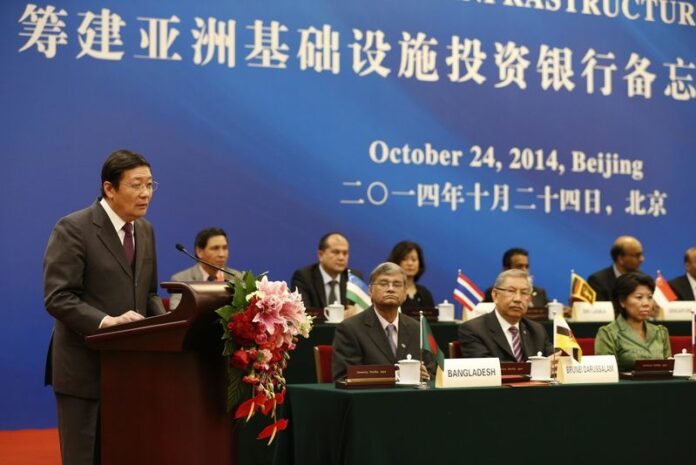
A file photo shows Chinese Finance Minister Lou Jiwei (L) giving a speech with the guests of the signing ceremony of the Asian Infrastructure Investment Bank in the Great Hall of the People in Beijing, China, on the 24th of October in 2014. The EU's four largest economies have backed the establishment of a Beijing-sponsored development bank, giving a triumph to China over US opposition. Photo: Takaki Yajima/EPA

By Lars Nicolaysen and Andreas Landwehr

BEIJING (DPA) — The United States appears to have manoeuvred itself into an isolated corner by opposing a Chinese-backed development bank that has now received support not only from France, Germany and Italy, but also from long-time US ally Britain.

The four largest members of the European Union have made clear their intention to be founding members of the Asian Infrastructure Investment Bank (AIIB), marking a major diplomatic coup for Beijing, which originated the idea.

Many details have yet to be ironed out, but the Europeans saw clear advantage of being in at the launch, rather than in the excluded and isolated position the US now finds itself in.

There is no doubt of the need for infrastructure investment in Asia, nor of China's position as a powerful investor, given that it holds the largest foreign exchange reserves in the world.

"The more countries that participate, the better," is the view expressed by Martin Schulz, the German politician who presides over the European Parliament, during a visit to Beijing.

The aim is for the development bank to invest in roads, ports, airports, energy provision and telecommunications in Asia, and European companies believe that participation in the bank will help open doors to business opportunities.

The initiative is part of a Chinese offensive, to make an "Asian dream" come true through the development of economic corridors, as President Xi Jinping has remarked in reference to his "Chinese dream" of a rejuvenated China.

China is to invest around 50 billion dollars in the new bank, which could in the end have assets of 100 billion dollars with the contributions of other members.

The US is opposed, seeing the AIIB as competing with the World Bank and the Asian Development Bank, and expressing concerns on whether its governance will be in line with established practice.

By contrast, China sees the current international financial system as dominated globally by the US and regionally by Japan.

Beijing is also frustrated at Washington's delays in implementing long-decided reforms to the International Monetary Fund that would give China and other developing countries a greater say.

Even though World Bank President Jim Yong Kim – a US appointee – publicly welcomed the new initiative, a White House official expressed the Obama administration's opposition.

"We are wary about a trend toward constant accommodation of China, which is not the best way to engage a rising power," the unnamed official told the Financial Times.

The background is the contest between the US and China for influence in Asia and in establishing a new world order.

"Many analysts believe that the current situation proves the US lacks the ability to contain a rising China," according to a comment in the Global Times, an organ of the official Chinese People's Daily.

China's success in wooing key European and Asian nations means that it "has also gained some important rights for the future," it said.

Beijing would not turn the issues around the AIIB into a contest with the US, it said, as "an approach that sets the US as an adversary is contrary to China's doctrine." The newspaper expressed the hope that the US would a member of the new development bank one day.

Some Western analysts have also criticised the US approach. Attempts to undermine an institution that could improve the lives of Asians are "short-sighted," said Tom Miller of the independent Gavekal Dragonomics research group in Beijing.

But he also cautioned that Beijing had to reconsider its policies of providing cash to corrupt governments, citing cooperation with Zambia, Liberia, South Sudan and Myanmar as evidence of a policy that had backfired.

Chinese Foreign Ministry spokesman Hong Lei insisted the AIIB would learn from the "sound practice" of existing development banks.

Elizabeth Economy of the US Council on Foreign Relations think tank said: "If the AIIB does not do a better job than China's own development banks, it will be a stain not only on Beijing but also on all the other countries that are participating."

But if it did maintain the standards of the World Bank and ADB, "it will be a welcome addition to the world of development financing," she said.


 
Advertisement

DJ’s Motorcycle Stolen From Police Impound Lot

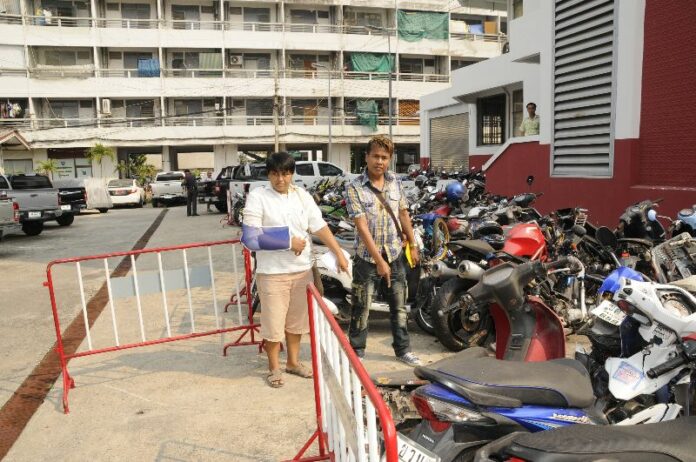
Suchin Sukprasert and his sister pointing to where the stolen motorcycle was parked in Mueang Suphan Buri Police Station, 18 March 2015.

SUPHAN BURI — A motorcycle being kept as evidence by police was stolen from the station's impound lot in Suphan Buri province yesterday.

Suchin Sukprasert, a radio DJ, said police seized his motorcycle as evidence on 2 March after his sister crashed the bike in a traffic accident, breaking her arm.

According to Suchin, police asked him to retrieve the  motorcycle on 17 March, but when he showed up at Mueang Suphan Buri Police Station he was informed that the vehicle had been stolen from the impound lot the night before.

"A policeman told me to accept that I may not get it back," Suchin said. "This is not right. I want them to locate my motorcycle as soon as possible, because I saved money for it for a long time."

He added angrily, "The motorcycle was stolen even though it was parked at a police station. What can ordinary people like me do about it?"

Pol.Col. Montri Kannalekha, superintendent of Mueang Suphan Buri Police Station, said CCTV footage shows a man in a motorcycle helmet enter the impound lot and drive the vehicle away at around 2 am.

"We are urgently working to locate and arrest the perpetrator," Pol.Col. Montri said. "And if it's possible, please do not report about it, because this news does not benefit anyone." 

Meanwhile, Pol.Col. Chairat Thippayachan, commander of Suphan Buri police force, told Khaosod that he always instructs police officers to be vigilant about impounded property and evidence, but that officers have been lacking in discipline lately. He added that police will arrest the thief as soon as possible.

"If we cannot find the vehicle, then the police may have to take responsibility for it," said Pol.Col. Chairat.


Advertisement

Hot News

LATEST NEWS

Bangkok
overcast clouds
32.2 ° C
32.2 °
32.2 °
97 %
4.3kmh
100 %
Sun
30 °
Mon
34 °
Tue
33 °
Wed
32 °
Thu
33 °