28.3 C
Bangkok
Monday, June 29, 2026
Home Blog Page 3046

Fake Cops Arrested for Extorting Immigrant Workers in BKK

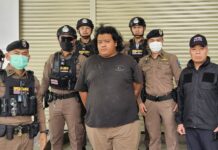
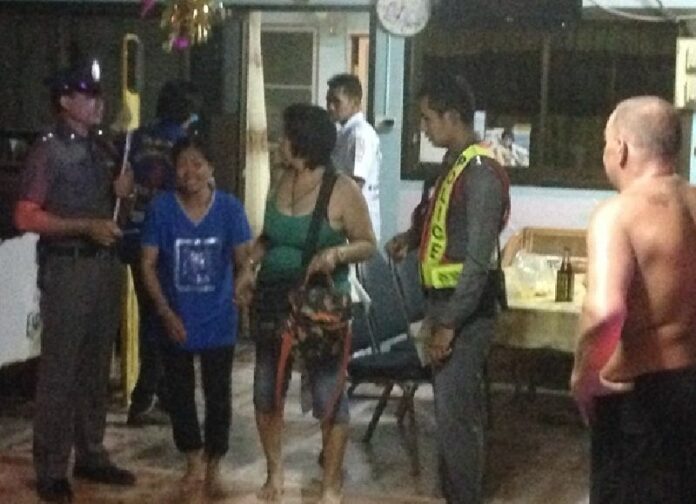
BANGKOK — Four Thai men have been arrested for allegedly disguising themselves as police officers and extorting money from immigrant workers in Bangkok.

According to police, the four suspects have been dressing up as police officers and stopping immigrant workers in Bangkok for fake drug tests. 

After luring the victims into their pick-up truck for the “tests,” the men then demand money in exchange for the victims’ release, said Pol.Lt.Gen. Sriwarah Rangsiphramanakul, commander of Bangkok Metropolitan Police Bureau.

"They liked to prey on alien workers because it's easy for them to use the pretense of ID cards or drug checks," Pol.Maj.Gen. Sriwarah said.

Police have received 17 complaints about the scheme since early March, he said.

According to the officer, one of the suspects also raped a teenage girl in the pick-up truck while the others served as lookouts. 

The suspects were identified as Kawi Luangnan, 26; Kittitat Permwaranyu, 26; Kanokpol Changkanak, 21; and Chalathorn Pawanacharoensuk, 19.

The four men have been charged with posing as law enforcement officers, conspiring in a rape, illegal detention, taking away a minor from guardians for sexual abuse, and robbery. 

Police say they confiscated handcuffs, two fake handguns, five mobile phones, and two bank account booklets from the suspects as evidence. 

There are over a million immigrants living and working in Thailand illegally, mostly from neighboring countries such as Myanmar and Cambodia. Due to their lack of legal protection, the immigrants are often vulnerable to exploitation.

 
Advertisement

New Zealand, Myanmar Bar Operators Jailed Over Buddha Image

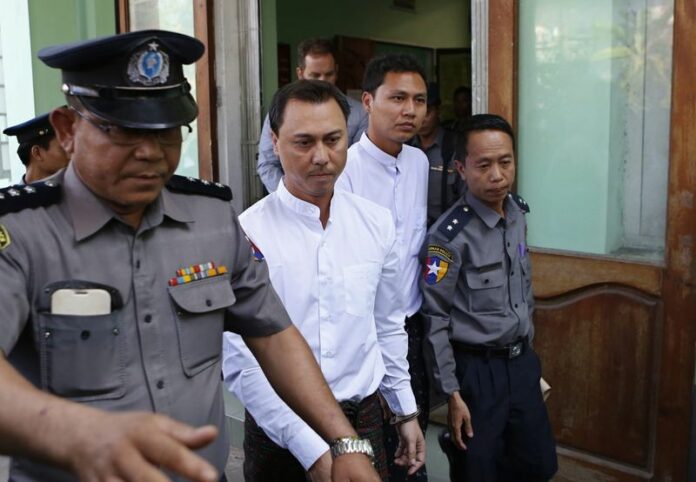
Myanmar citizens Tun Thurein (C-L) and Htut Ko Ko (C-R) are escorted by Myanmar policemen after their hearing at a court in Yangon, Myanmar, 02 January 2015. A court in Myanmar on Tuesday sentenced a New Zealand bar manager and the two Myanmar nationals to two and a half years in prison each, after they used an image of the Buddha wearing headphones in an online promotional poster. EPA/LYNN BO BO

By Kyaw Lynn

YANGON (DPA) – A court in Myanmar on Tuesday sentenced a New Zealand bar manager and two Myanmar nationals to two and a half years in prison each, after they used an image of the Buddha wearing headphones in an online promotional poster.

The three men were given two years in jail for insulting Buddhism, and six months for breaching regulations on shop closing times.

The poster, which appeared in December on the Facebook page of the newly opened V Gastro bar in Yangon, sparked outrage on social media in the predominantly Buddhist country.

The bar subsequently deleted the post and wrote an apology on the Facebook page, saying they had no intention of causing "offence to anyone or toward any religious group."

But general manager Philip Blackwood, 32, owner Tun Thurein, 40, and manager Htut Ko Ko Lwin, 26, were arrested and charged with breaching the Religion Act. Their bar was closed down.

They pleaded not guilty during the trial.

The Religion Act targets anyone who attempts to insult, destroy or damage any religion with a maximum jail term of two years, with another possible two-year penalty for those who insult religion through the written word.

"I am very angry. I want to ask whether this is in accordance with the law or because of the pressure from extremist monks," said the mother of Htut Ko Ko Lwin.

The trial was seen as a sign of growing religious intolerance in Myanmar, with a growing Buddhist nationalist movement spearheaded by extremist monks, and often targeting Muslim communities.

"What this shows is freedom of expression is under greater threat than ever in Myanmar, just as the country heads into a pivotal election year," said Phil Robertson, deputy Asia director of Human Rights Watch.

"The Religion Act should be amended to bring it into compliance with international human rights standards," he said.


Advertisement

Junta Spokesperson Admits to Detaining Missing Woman

Screenshot of Matichon TV footage of Nattathida Meewangpla arriving at the Bangkok Metropolitan Police Bureau, 17 March 2015.

BANGKOK — The spokesperson for Thailand’s military junta admitted today that the army detained a woman who went missing six days ago, explaining yesterday’s denial as a "lack of communication" between different military units.

The spokesperson, Col. Winthai Suwaree, said the initial denial was based on information from the junta’s security wing, the Armed Forces for Maintaining Peace and Order (AFMPO), which said the woman was not in military custody.

However, he said he later learned that Nattathida Meewangpla, 36, was being held by another unit, which he did not specify by name.

Nattathida’s relatives told Khaosod over the weekend that five soldiers arrested her at her home on 11 March. According to her relatives, the soldiers did not provide any information for the arrest.

Nattathida was not heard from or seen until today, six days later, when she was transferred to police custody for her alleged involvement in a “terrorism network” that organized a grenade attack at the Criminal Court earlier this month.

According to police, Nattathida is connected to Supaporn Mit-arak, a Redshirt activist who allegedly financed the network and grenade attack. Supaporn, aka "Dear," was arrested by military officers in Mukdahan province on 12 March. 

Police have accused the network of plotting to stage bomb attacks on four other targets in Bangkok, including Chatuchak subway station, the 11th Infantry Regiment headquarters, Lumpini Park, and Siam Kempinski Hotel. 

At least 15 arrest warrants have been issued for suspects in connection with the courthouse attack, which took place on the night of 7 March and did not cause any injuries. 

Witness of 2010 crackdown violence

Nattathida is also known for serving as a key witness in a 2013 court inquest that deemed soldiers responsible for the deaths of six civilians inside a Buddhist temple during the military crackdown on Redshirt protesters in May 2010. 

Nattathida was working as a volunteer medic inside Wat Pathumwanararm, which had been designated as “safe zone” by authorities, when the incident occurred. The court ruled that soldiers standing on skytrain tracks across the temple were responsible for the deaths, which included two volunteer medics in their twenties. 

Today, the junta spokesperson insisted that Nattathida’s "invitation" to be held incommunicado at an undisclosed location was unrelated to her role in the crackdown inquest.

"That case is over already," Col. Winthai said.

When contacted by Khaosod yesterday, Col. Winthai denied that Nattathida was in military custody, and attributed her alleged abduction to "individuals with ill intentions" who disguised themselves as military officers. 

Related coverage:
Missing 2010 Crackdown Witness Emerges from Army Custody [VIDEO]
Witness of Redshirt Crackdown Deaths 'Abducted by Military'

 
Advertisement

Body of Austrian Expat Found in Rented Phuket House

Mr Siegl's wife told police that he had fallen and died  [Phuket News].

(The Phuket News)

PHUKET – The body of an 60-year-old Austrian expat was found inside his rented house in Patong yesterday (March 16).

At 6:20pm, Lt Thawatchai Srimai from Kathu police was called to investigate the body of Austrian man found in a rented home on Phrabaramee Rd in Patong.

Police arrived with Kusoldharm rescue workers and found the body of Bruno Siegl, 60, lying on the floor close to a bed.

Read more here

Note: Khaosod English is not responsible for content on other websites.

Advertisement

Soldiers Seize Alleged Redshirt Weapon Cache from Temple

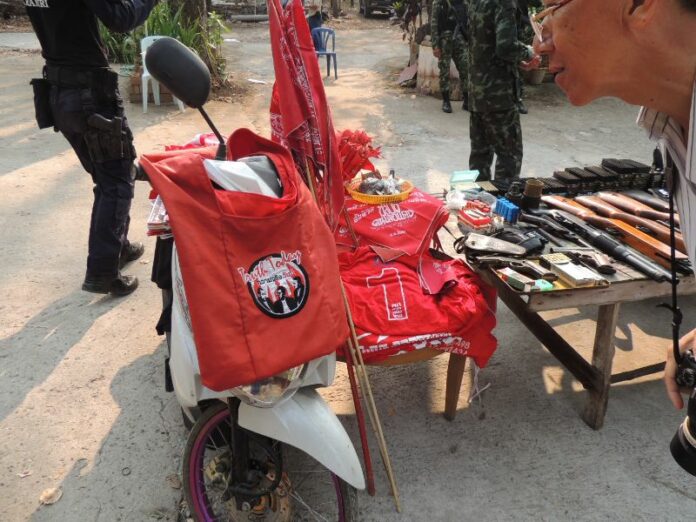
Weapons and Redshirt memorabilia allegedly found by soldiers in a temple in Saraburi province, 17 March 2015.

SARABURI — Military officers say they discovered a weapon cache belonging to an underground militant group affiliated with the Redshirt movement at a temple in Saraburi province.

Officers displayed the weapons to reporters at a press conference today. 

\
Soldiers and police display the cache in Saraburi province on 17 March 2015.

Maj.Gen. Adisorn Khorop, commander of a local army unit in Saraburi province, said soldiers discovered the cache during a raid on Seewalee Forest Monastery, located in Muaklek district. 

The cache consisted of two shotguns, four BB guns, one handgun, one homemade "pen gun," one hand grenade, one rifle, and over a hundred bullets for the firearms, said Maj.Gen. Adisorn.

The military also confiscated two radio devices, one motorcycle without a license plate, and a number of flags and memorabilia of the Redshirt movement. 

The temple's abbot, Phra Inta Sanyato, is now under arrest on charges of possessing firearms, ammunition, and radio equipment without proper permits. According Maj.Gen. Adisorn, the abbot denied having any knowledge of the weapons.

"The suspect contested the charges," said Maj.Gen. Adisorn. "He claimed that Redshirt groups have visited the temple for merit-making, and left behind these belongings when they departed from the temple."

Under martial law, which was imposed by the ruling junta last May, soldiers are authorized to conduct searches and arrests without a court warrant. 

\
A pin of former Prime Minister Thaksin Shinawatra, the de facto leader of the Redshirt movement, was found with the weapons, officers said.

The junta, which seized power from a Redshirt-backed government on 22 May 2014, has accused the Redshirt movement of harboring armed elements inside its ranks. The Redshirt-allied militants are thought to be responsible for the drive-by shootings and grenade attacks on the anti-government protests that preceded the coup. 

Nearly 30 people died in the protests, which lasted from late November 2013 to 22 May 2014. Core leaders of the Redshirt's official organization have repeatedly denied any connection to the violence. 

In the days following the coup, 26 people were arrested in the northeastern province of Khon Kaen for allegedly plotting terrorist activities under the banner of Redshirt resistance. The case is ongoing. 

CORRECTION: Saraburi province is northeast of Bangkok but not considered "northeastern Thailand" as was originally reported. 

For comments, or corrections to this article please contact: [email protected]

You can also find Khaosod English on Twitter and Facebook
http://twitter.com/KhaosodEnglish
http://www.facebook.com/KhaosodEnglish

Advertisement

Missing 2010 Crackdown Witness Emerges from Army Custody [VIDEO]

Screen shot of Matichon TV footage of Nattathida Meewangpla arriving at the Bangkok Metropolitan Police Bureau, 17 March 2015.

BANGKOK — A witness of the deadly military crackdown on Redshirt protesters in 2010 emerged from six days of military detention today, a day after the junta denied any involvement in her arrest.

Nattathida Meewangpla, 36, was arrested at her residence in Samut Prakarn by five soldiers on 11 March, her family told Khaosod. The military officers reportedly informed Nattathida's family that she was being taken for interrogation under martial law, which permits the military to detain individuals without charges for up to seven days. 

Her relatives told Khaosod that they had not heard from Nattathida since. 

Yesterday, Col. Winthai Suwaree, spokesperson of the ruling military junta, denied that Nattathida was in military custody, and attributed her alleged abduction to "individuals with ill intentions" who disguised themselves as military officers. 

However, Nattathida emerged this morning when police brought her to the headquarters of the Bangkok Metropolitan Police Bureau in a van belonging to the 11th Army District.


Matichon TV footage of Nattathida Meewangpla arriving at the Bangkok Metropolitan Police Bureau, 17 March 2015. 

Nattathida flashed the outlawed anti-coup salute several times while police escorted her to an interrogation room. 

She was brought to the police HQ with two suspects accused of participating in the grenade attack on a Bangkok court house earlier this month. 

Police officers told reporters that Nattathida and the two other suspects were transferred from military to police custody today. They did not say whether Nattathida has been charged with any crimes. A formal police press conference is expected later today. 

Nattathida was a key witness in a 2013 court inquest into the deaths of six civilians inside Wat Pathumwanararm Temple during the military crackdown on Redshirt protesters in May 2010. The courtruled that the six victims, which included two volunteer medics, were shot dead by soldiers standing on the skytrain track across the temple. 

Nattathida was working as a volunteer medic inside the temple at the time of the shooting. 

Last May, the junta held a Redshirt activist incommunicado for three weeks – violating the seven-day limit under martial law – before admitting to the public that she was in military custody. The activist, Kritsuda Khunasen, fled Thailand shortly after she was released and accused soldiers of torturing her.

For comments, or corrections to this article please contact: [email protected]

You can also find Khaosod English on Twitter and Facebook
http://twitter.com/KhaosodEnglish
http://www.facebook.com/KhaosodEnglish

Advertisement

Missing 2010 Crackdown Witness Emerges from Army Custody [VIDEO]

Screen shot of Matichon TV footage of Nattathida Meewangpla arriving at the Bangkok Metropolitan Police Bureau, 17 March 2015.

BANGKOK — A witness of the deadly military crackdown on Redshirt protesters in 2010 emerged from six days of military detention today, a day after the junta denied any involvement in her arrest.

Nattathida Meewangpla, 36, was arrested at her residence in Samut Prakarn by five soldiers on 11 March, her family told Khaosod. The military officers reportedly informed Nattathida's family that she was being taken for interrogation under martial law, which permits the military to detain individuals without charges for up to seven days. 

Her relatives told Khaosod that they had not heard from Nattathida since. 

Yesterday, Col. Winthai Suwaree, spokesperson of the ruling military junta, denied that Nattathida was in military custody, and attributed her alleged abduction to "individuals with ill intentions" who disguised themselves as military officers. 

However, Nattathida emerged this morning when police brought her to the headquarters of the Bangkok Metropolitan Police Bureau in a van belonging to the 11th Army District.


Matichon TV footage of Nattathida Meewangpla arriving at the Bangkok Metropolitan Police Bureau, 17 March 2015. 

Nattathida flashed the outlawed anti-coup salute several times while police escorted her to an interrogation room. 

She was brought to the police HQ with two suspects accused of participating in the grenade attack on a Bangkok court house earlier this month. 

Police officers told reporters that Nattathida and the two other suspects were transferred from military to police custody today. They did not say whether Nattathida has been charged with any crimes. A formal police press conference is expected later today. 

Nattathida was a key witness in a 2013 court inquest into the deaths of six civilians inside Wat Pathumwanararm Temple during the military crackdown on Redshirt protesters in May 2010. The court ruled that the six victims, which included two volunteer medics, were shot dead by soldiers standing on the skytrain track across the temple. 

Nattathida was working as a volunteer medic inside the temple at the time of the shooting. 

Last May, the junta held a Redshirt activist incommunicado for three weeks – violating the seven-day limit under martial law – before admitting to the public that she was in military custody. The activist, Kritsuda Khunasen, fled Thailand shortly after she was released and accused soldiers of torturing her. 
 

For comments, or corrections to this article please contact: [email protected]

You can also find Khaosod English on Twitter and Facebook
http://twitter.com/KhaosodEnglish
http://www.facebook.com/KhaosodEnglish

Advertisement

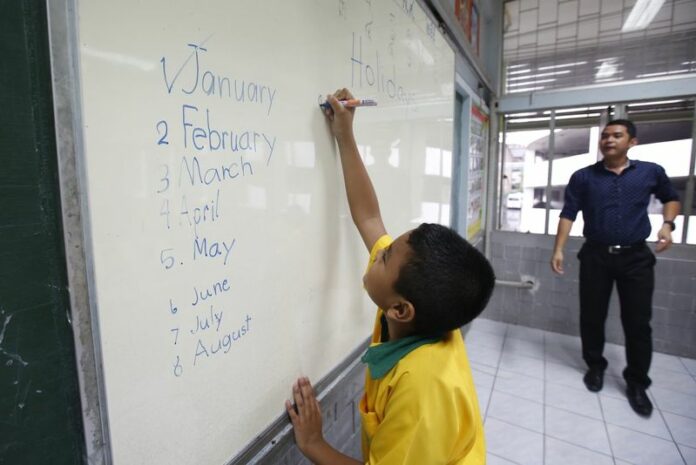
Thais' Poor English Could Dim Job Prospects in ASEAN Market

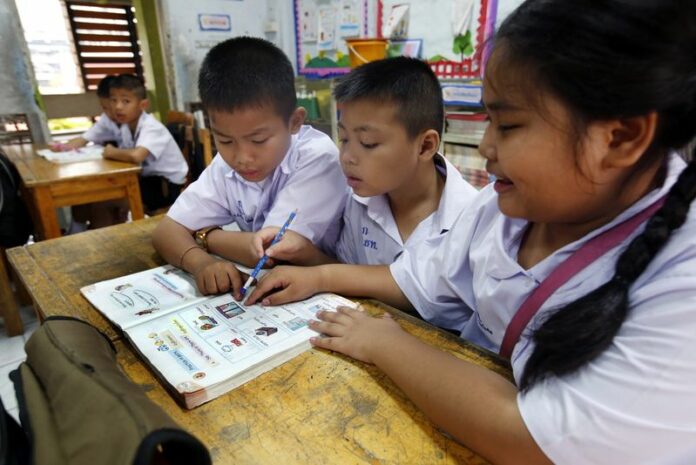
Thai schoolchildren during an English language lesson at Watthatthong Primary School in Bangkok, Thailand, 02 March 2015. When South-East Asia introduces a common economic market in December, job-seekers throughout the region will face more competition, with English-language skills in higher demand. EPA/BARBARA WALTON

By Siraphob Thanthong-Knight

PHUKET (DPA) —  At a luxurious resort in southern Thailand, Boblyn Pertible from the Philippines is completing a professional internship for her bachelor's degree in hotel management.

"I will consider applying for jobs outside my country after graduation," she said in fluent English. "The coming of the ASEAN Economic Community will definitely open doors to more opportunities for me."

\
Thai schoolchildren during an English language lesson at Watthatthong Primary School in Bangkok, Thailand, 02 March 2015. [EPA/BARBARA WALTON]

In December, Thailand and the other nine member states of the Association of South-east Asia Nations (ASEAN) are due to start a single market.

Integration will enable the free flow of capital, goods, services and skilled labour. Workers in eight areas – engineers, nurses, doctors, dentists, architects, surveyors, accountants and tourism professionals – will be able to migrate across ASEAN borders.

The market is home to more than 600 million people, almost double the population of the United States. The combined economy will be the seventh largest in the world, comparable to that of Britain or Brazil.

Language skills will matter in the new single market, especially in English, the only lingua franca in ASEAN.

"English will be extremely important as a means for communications in business," said Treenuch Phaichayonvichit of the Thailand Development Research Institute.

"However, Thai students seems to perform poorly. The mean score on national tests in English has always been below 50, which is a failing grade by any standard."

"The performance in international English proficiency tests is also inferior to other countries in the region," Treenuch said.

The average Thai test-taker typically scores lower than those in Singapore, Malaysia, the Philippines, Indonesia, Vietnam and Myanmar on both the International English Language Testing System and the Test of English as a Foreign Language.

Thailand ranks 55th out of 60 countries on the English Proficiency Index, the world's major ranking of English-language skills. That is the lowest among South-East Asian countries.

Thais struggle with English even though it is a mandatory subject from primary school through high school and despite 20 per cent of Thailand's GDP coming from tourism.

"Classrooms in Thailand put too much emphasis on grammar," said Sarah Wilson, an English teacher who has taught in Thai schools for more than 10 years. "They focus on studying for tests rather than being able to converse and use English in real-life situations."

"Many students struggle forming sentences on their own," said Krittapot Jiravat, a private English tutor. "All they want to do is study for exams and tests, because they think they don't have any other purposes beyond that."

"Many professionals have to study after work when they realize that English is important in their career," he said.

"Once the single market is launched, the job market will become more competitive," Treenuch said. "People with higher skills in English will be at advantage."

Workers with stronger English skills typically earn 30 to 50 per cent more pay than those with weaker proficiency, according to the Harvard Business Review.

Advanced English skills allow job seekers to apply for better jobs and raise their living standards.

"We are already seeing an influx of skilled workers from countries like the Philippines, who are replacing Thais in jobs that require English-speaking employees," Treenuch said.

Staff positions at the Regent Phuket Cape Panwa, where 95 per cent of hotel guests are foreigners, are open to all nationalities, according to manager Witchuda Mas-o-sot.

"The ability to communicate in English is the most important skill to have," Witchuda said.

An unemployed recent hotel management graduate expressed concerns that his difficulty in finding a job will become even more apparent once the integrated ASEAN market is open.

Others, like Boblyn the Filipino intern, will benefit.

"I speak English more fluently than Thais do," she said. "That is my competitive advantage."


For comments, or corrections to this article please contact: [email protected]

You can also find Khaosod English on Twitter and Facebook
http://twitter.com/KhaosodEnglish
http://www.facebook.com/KhaosodEnglish

Advertisement

Thais' Poor English Could Dim Job Prospects in ASEAN Common Market

Thai schoolchildren during an English language lesson at Watthatthong Primary School in Bangkok, Thailand, 02 March 2015. When South-East Asia introduces a common economic market in December, job-seekers throughout the region will face more competition, with English-language skills in higher demand. EPA/BARBARA WALTON

By Siraphob Thanthong-Knight

PHUKET (DPA) – At a luxurious resort in southern Thailand, Boblyn Pertible from the Philippines is completing a professional internship for her bachelor's degree in hotel management.

"I will consider applying for jobs outside my country after graduation," she said in fluent English. "The coming of the ASEAN Economic Community will definitely open doors to more opportunities for me."

\
Thai schoolchildren during an English language lesson at Watthatthong Primary School in Bangkok, Thailand, 02 March 2015. [EPA/BARBARA WALTON]

In December, Thailand and the other nine member states of the Association of South-east Asia Nations (ASEAN) are due to start a single market.

Integration will enable the free flow of capital, goods, services and skilled labour. Workers in eight areas – engineers, nurses, doctors, dentists, architects, surveyors, accountants and tourism professionals – will be able to migrate across ASEAN borders.

The market is home to more than 600 million people, almost double the population of the United States. The combined economy will be the seventh largest in the world, comparable to that of Britain or Brazil.

Language skills will matter in the new single market, especially in English, the only lingua franca in ASEAN.

"English will be extremely important as a means for communications in business," said Treenuch Phaichayonvichit of the Thailand Development Research Institute.

"However, Thai students seems to perform poorly. The mean score on national tests in English has always been below 50, which is a failing grade by any standard."

"The performance in international English proficiency tests is also inferior to other countries in the region," Treenuch said.

The average Thai test-taker typically scores lower than those in Singapore, Malaysia, the Philippines, Indonesia, Vietnam and Myanmar on both the International English Language Testing System and the Test of English as a Foreign Language.

Thailand ranks 55th out of 60 countries on the English Proficiency Index, the world's major ranking of English-language skills. That is the lowest among South-East Asian countries.

Thais struggle with English even though it is a mandatory subject from primary school through high school and despite 20 per cent of Thailand's GDP coming from tourism.

"Classrooms in Thailand put too much emphasis on grammar," said Sarah Wilson, an English teacher who has taught in Thai schools for more than 10 years. "They focus on studying for tests rather than being able to converse and use English in real-life situations."

"Many students struggle forming sentences on their own," said Krittapot Jiravat, a private English tutor. "All they want to do is study for exams and tests, because they think they don't have any other purposes beyond that."

"Many professionals have to study after work when they realize that English is important in their career," he said.

"Once the single market is launched, the job market will become more competitive," Treenuch said. "People with higher skills in English will be at advantage."

Workers with stronger English skills typically earn 30 to 50 per cent more pay than those with weaker proficiency, according to the Harvard Business Review.

Advanced English skills allow job seekers to apply for better jobs and raise their living standards.

"We are already seeing an influx of skilled workers from countries like the Philippines, who are replacing Thais in jobs that require English-speaking employees," Treenuch said.

Staff positions at the Regent Phuket Cape Panwa, where 95 per cent of hotel guests are foreigners, are open to all nationalities, according to manager Witchuda Mas-o-sot.

"The ability to communicate in English is the most important skill to have," Witchuda said.

An unemployed recent hotel management graduate expressed concerns that his difficulty in finding a job will become even more apparent once the integrated ASEAN market is open.

Others, like Boblyn the Filipino intern, will benefit.

"I speak English more fluently than Thais do," she said. "That is my competitive advantage."


For comments, or corrections to this article please contact: [email protected]

You can also find Khaosod English on Twitter and Facebook
http://twitter.com/KhaosodEnglish
http://www.facebook.com/KhaosodEnglish

Advertisement

Martial Court Frees Anti-Coup Activists

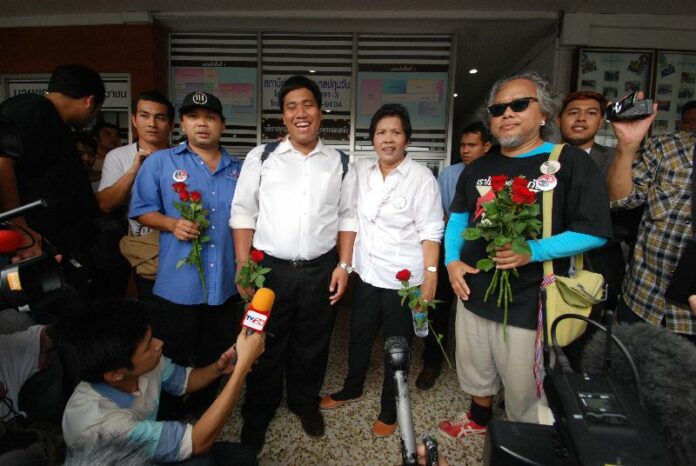
The four defendants at the Pathumwan Police Station on 15 March 2015.

BANGKOK — Four anti-coup activists charged with violating the junta's ban on protests were released by a military court in Bangkok today.

The four defendants were charged with defying the ban after they organized a pro-democracy rally in downtown Bangkok last month. 

The four defendants include Arnon Nampha, 30, a human rights lawyer; Pansak Srithep, 48, an activist whose teenage son was killed in the 2010 crackdown on Redshirt protesters; Siriwit Serithiwat, 24, a fourth-year political science student at Thammasat University; and Wannakiat Chusuwan, 36, a taxi driver.

\
Siriwit Serithiwat, 24, a fourth-year political science student at Thammasat University hugs his mother after being granted release on bail, 15 March 2015.

The four men helped found the anti-coup group "Resistant Citizens," which has organized non-violent resistance against the military junta that seized power from an elected government last May.

Police escorted the activists to the military court at around 2 pm today. At around 6.30 pm, the four defendants emerged from the court, officially known as the Office of Staff Judge Advocate, and told reporters they had been released without any conditions.

In other cases, the court has required defendants to forswear partaking in political rallies or traveling outside the country in order to evade detention.

The activists' lawyer, Pavinee Chumsri, said prosecutors have not formally indicted the four men because they need more time to deliberate on the case files. 

The judge denied prosecutors' request to remand the defendants during the deliberation, said Pavinee, attorney from Thai Lawyers for Human Rights.

"The court reckons that the accused have clear addresses and have no intention to flee from the trial," said Pavinee.

The defendants have been ordered to return to the court on 27 March to hear whether prosecutors will formally indict them.

Speaking to the press upon his release, Arnon said he would like to thank the military court for giving him and other activists the chance to contest the charges outside prison. He declined to say whether his group will stage more rallies in the future. 

"We will focus on fighting our case in the military court in accordance with the legal process," said Arnon, who is a lawyer by profession.

While the court debated whether to detain the four men, a group of university students rallied outside to show their support for the defendants. The group passed around a loudspeaker, condemning the junta’s practice of trying civilians in martial courts, where military officers serve as judges and appeals are not permitted.

\
Students protest the junta's orders to try civilians in martial court, 15 March 2015.

One of the students also flashed the forbidden three-finger anti-coup salute at soldiers, who closed the gate that led to the court but did not interfere with the rally.

The students concluded their rally soon after the activists were released. 

The court hearing followed Pansak's weekend  "march for justice" from his home in Bangbuathong district to Pathumwan Police Station, where he and other defendants were scheduled to report to police today. The walk was billed as an effort to raise awareness about the junta's suppression of civil liberties. 

\
Pansak walking through Thammasat University campus on his way to the police station, 15 March 2015.

The march, which would have totaled 50-km, was interrupted an hour after it began when police officers detained Pansak for defying the junta's ban on political protests.

However, police released the activist later that day without charges, and allowed him to continue portions of his walk over the next two days, culminating in his arrival at Pathumwan Police Station this morning. 

Shortly after seizing power in a coup on 22 May 2014, the junta granted military courts jurisdiction over cases involving lese majeste (insulting the monarchy) and other offenses that "affect national security," including violating the junta's orders. At least 60 civilians are currently facing trials in martial court for violating the junta’s ban on public protests.

On 13 March, a junta spokesperson dismissed complaints from human rights activists about the martial court trials.

"If the accused is guilty based on complete evidence and witnesses' testimonies, the verdict will not be different regardless of what court delivers it," said the spokesperson, Col. Winthai Suwaree. 

 
CORRECTION: The defendants were not required to post bail in order to secure their release, as the original version of this article mistakenly reported. 
 

For comments, or corrections to this article please contact: [email protected]

You can also find Khaosod English on Twitter and Facebook
http://twitter.com/KhaosodEnglish
http://www.facebook.com/KhaosodEnglish

Advertisement

Hot News

LATEST NEWS

Bangkok
overcast clouds
28.3 ° C
28.3 °
28.3 °
79 %
4.1kmh
100 %
Sun
28 °
Mon
34 °
Tue
34 °
Wed
32 °
Thu
33 °