




























30.5 C
Bangkok
Monday, July 6, 2026
Home Blog Page 3104

Thailand's "Superficial" Gay-Friendly Image

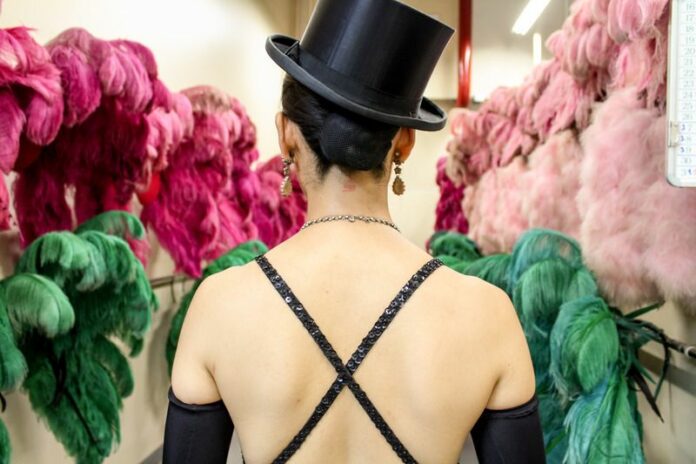
A transgender woman in Bangkok, Thailand prepares for her performance backstage on May 1, 2014. Despite its gay-friendly image, conservative and Buddhist-majority Thailand has not always been a welcoming place for the local lesbian, gay, bisexual and transgender (LGBT) community [DPA].

By Siraphob Thanthong-Knight

BANGKOK (DPA) — In the lively Silom district of central Bangkok, customers pile into a small, noisy gay bar on a busy Saturday night.

Chakgai Jermkwan and his partner Sean L'Estrange co-own the popular venue, which is located on a narrow street lined with gay bars.

The couple has been together for eight years and was legally married three years ago in Boston, Massachusetts.

"We are a married couple in the US but here in Thailand, we are just two friends in the eye of the law," Chakgai said.

"If something bad happened to him tomorrow, I wouldn't have a say in anything," Sean added. "I would be nothing."

\
Silom district in downtown Bangkok on January 15, 2015 [DPA].

Thailand welcomes lesbian, gay, bisexual and transgender (LGBT) visitors: its tourism authority targets the LGBT market, and Bangkok is often the only Asian city included on lists of gay-friendly tourist destinations around the world.

There is no law against homosexuality in Thailand, unlike in some other countries in the region.

However, Thai society is less accepting of its own lesbian, gay, bisexual and transgender communities.

Among Thais between 15 and 24 years old, 56 per cent think homosexuality is wrong, according to recent research by Khon Thai Foundation, a non-profit organization.

By comparison, more than 70 per cent of young people in Japan, South Korea, the Philippines and western European countries think that homosexuality should be accepted by society at large, according to the Pew Research Center, an American think-tank.

In a country where nearly 95 per cent of people are Buddhists, some believe that gay or transgender people suffer from bad karma for committing adultery in their past lives.

"I find it surprising that Thailand, being one of the most gay-friendly countries [for foreigners], does not have laws that support and protect the LGBT community," said L'Estrange, an Irish-American who has lived in Thailand for almost 10 years.

Thailand has no laws against discrimination toward LGBT people, and a recent surrogacy bill defines parents as members of heterosexual couples only. Same-sex marriage is neither licensed nor recognized.

Although a partnership bill has been drafted and will be submitted to the parliament, gay rights activists have concerns about it.

The Anjaree Group, Thailand's largest lesbian and gay rights activist organization, has criticized the bill for not granting homosexual couples the same rights as heterosexual couples.

The proposed Civil Partnership Act includes the right to use one's spouse's surname, the right to end the partnership and property rights. But it also raises the age of legal consent from 17 to 20 and does not include joint adoption or parental rights.

"Although we won't get all the rights we deserve, at least it'll be a good start," said Chakgai.

\
Sean and Chakgai in their bar in Silom Soi 4, Bangkok on January 15, 2015 [DPA].

Transgenders, locally referred to as "kathoey," are more common in Thailand than perhaps in any other country in the world, but they too complain of discrimination.

It is estimated that 1 in 166 men in Thailand is kathoey, compared to 1 in 2,500 in the United States, according to research by the University of Hong Kong.

It was not until 2011 that the Ministry of Defence stopped classifying kathoey – men living as women, not limited to those who have undergone gender reassignment surgery – as people with permanent psychological problems.

Again, the legal framework seems to lag behind. Transgender females are still identified as male in their passports, for instance, although there have been hints that kathoey may get formal recognition under the country's next constitution.

"Society seems to have space for transgenders [only] specific to the entertainment and tourism industry," said Kath Khangpiboon, the only transgender lecturer at Bangkok's Thammasat University.

"I am very fortunate that the university considered me for my ability, but most transgenders do not get that chance," said the social welfare professor. "I have heard many stories of employers telling transgender women to go cut their hair or dress like a man in order to get the job."

"The country's liberal image is superficial," she said.

Changing image into reality may require a more concerted effort from the authorities and the LGBT community.

"There are no openly gay people in high-ranking offices who can influence the change in both law and attitude," said Suppakorn Chudabala, a gay rights researcher. "The local LGBT community needs to be more active as well."

Kertchoke Kasemwongjit, from the Ministry of Justice, the head of the team drafting the same-sex partnership bill, agrees that more activism is needed.

"We need more support from LGBT people to implement changes in the law," he said.

"The first step in advocating for LGBT rights is to educate people that being homosexual or transsexual is not wrong," Suppakorn said.

"People need to stop thinking that heterosexual is a norm and understand that sexuality is diverse."

"We are not asking for any privileges," said Chakgai, the bar owner. "We just want to be treated equally, like everyone else."


For comments, or corrections to this article please contact: [email protected]

You can also find Khaosod English on Twitter and Facebook
http://twitter.com/KhaosodEnglish
http://www.facebook.com/KhaosodEnglish
Advertisement

Thailand's International Hub To Get New Terminal And Runway

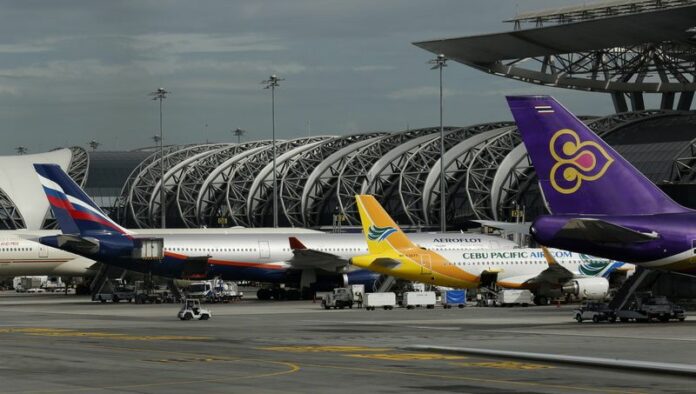
Planes at Suvarnabhumi International Airport in Bangkok in a July 8, 2014 file photo. Photo: Barbara Walton / EPA

BANGKOK (DPA) — Thailand's main international airport is set to have a new runway and terminal pending approval by the government, officials said Thursday.

The new construction, due to be completed in 2019, will add a new 2.9-km runway and a second four-storey terminal at Suvarnabhumi Airport.

Thai aviation authorities said Wednesday they had approved the 47.9-billion baht (1.47-billion-US-dollar) expansion, designed to ease congestion.

The airport receives about 51 million passengers annually, significantly more than its official capacity of 45 million per year. The expansion will add capacity for 20 million more passengers.

The plans will now be forwarded to the National Legislative Assembly for deliberation and a final decision, according to the Airports of Thailand press office.


For comments, or corrections to this article please contact: [email protected]

You can also find Khaosod English on Twitter and Facebook
http://twitter.com/KhaosodEnglish
http://www.facebook.com/KhaosodEnglish
Advertisement

Phuket 'Getting Tough' on Trafficking and Illegal Labour Issues

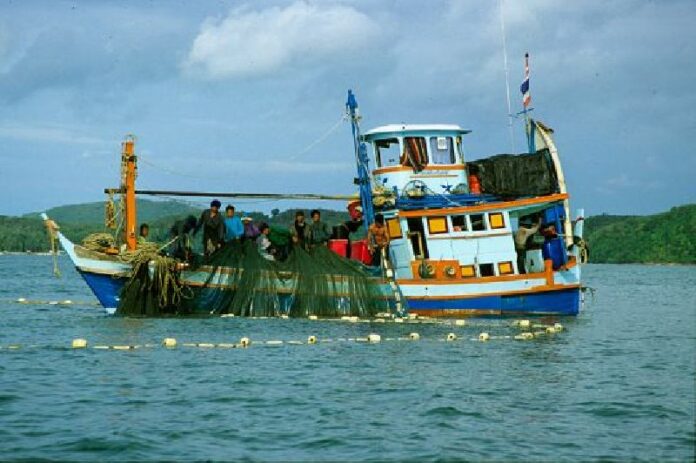
Slave labour aboard Thai fishing boats is not unknown. Photo Arnie Grever [The Phuket News]

(The Phuket News)

PHUKET – Following the US State Department downgrading Thailand to a Tier 3 ranking – the lowest – in its 2014 Trafficking in Persons Report, Phuket has set up a committee to work on illegal foreign labour suppression and management.

The announcement came from Governor, Nisit Jansomwong, following instructions from the National Council for Peace and Order (NCPO) to adhere urgently to the US Trafficking Victims Protection Act (TVPA) or face consequences that could effect the country.

“We cannot simply arrest illegal labourers as we usually do. It is not the only way to solve the problem,” said the governor.

Read more here

Note: Khaosod English is not responsible for content on other websites.

Advertisement

Redshirt Poet Facing 45 Years For Lèse Majesté To Fight Charges

(Prachatai English)

BANGKOK – A red-shirt poet whose lèse majesté case is being tried by a military court has made the extraordinary decision to fight the case despite the dim chances of winning.

On Wednesday, the military court scheduled the first witness hearing for 2 April. There are 10 witnesses in total. 

His case is being tried in camera at a military court after the court said his crimes–writing poems– are severe since his poems touched on the revered Thai monarchy.  

Read more here.

Note: Khaosod English is not responsible for content on other websites.

Advertisement

UN Refugee Agency Visits Rohingya in Southern Thailand

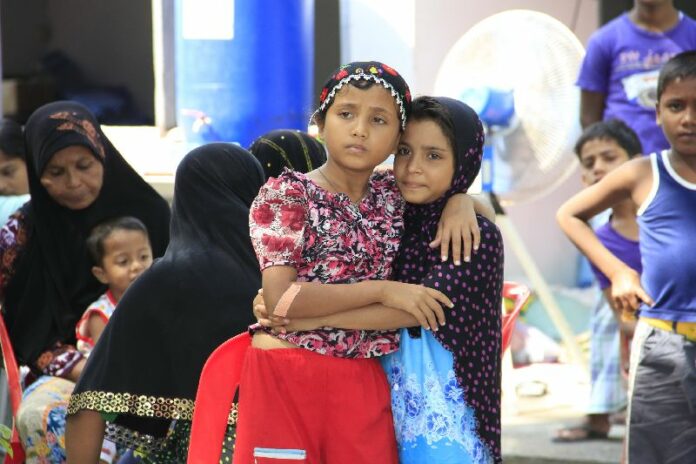
Dozens of the Rohingya intercepted in Thailand on 11 Jan 2015 are children.

NAKHON SI THAMMARAT – Representatives from the United Nations refugee agency visited 99 Rohingya who were recently rescued from suspected human traffickers in southern Thailand today.

Police intercepted 102 Rohingya refugees in Nakhon Si Thammarat province on 13 January. The refugees, many of whom are children, were found crammed into the back of several pickup trucks when police found them.

Two Thai drivers were arrested and charged with human trafficking, while others managed to flee the scene, police say. 

Three of the 102 Rohingya have died since they were rescued. One woman was found crushed to death at the scene, and two men died in police custody, one from dehydration and another from an infection. Police previously told the media that 98 refugees were found, but corrected the number to 102 yesterday, citing a "miscalculation."

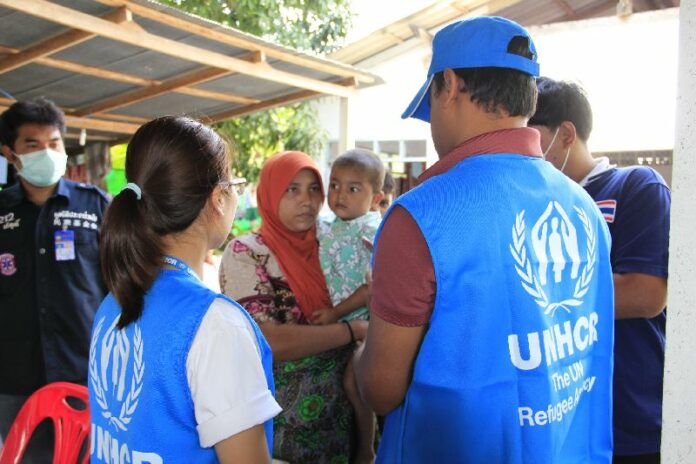
Today officials from the United Nations High Commissioner for Refugees (UNHCR) inspected the condition of the 99 Rohingya, who are being kept in a shelter in Hua Sai. The officials brought food and other necessities, as well as toys and educational equipment for the young refugees.

Serge Bertomio (name transcribed from Thai text), a UNHCR field officer, told reporters through an interpreter that the UNHCR is coordinating with the Thai government to tackle issues related to the plight of the Rohingya. 

Many Rohingya hail from the Rakhine state of Myanmar, where they are denied citizenship by the Burmese government. 

Waves of religious and ethnic violence in Rakhine have driven tens of thousands of Rohingya to flee their homes by boats and other means in recent years. It is believed that up to 140,000 Rohingya have been displaced by anti-Rohingya violence. According to the UN, the Rohingya are one of the most persecuted minorities in the world. 

Reports by human rights groups and foreign media agencies have revealed instances of Thai smugglers exploiting the plight of the Rohingya by charging them exorbitant fees in exchange for promises of a safe passage to another country.

However, many Rohingya never make it to their final destination, which is often Malaysia, because they are held for ransom in Thailand or sold as slaves to boats in the Thai fishing industry.

An officer at Hua Sai Police Station said the court has issued arrest warrants on three more Thais allegedly involved in the human trafficking of the Rohingya.  

"We are looking for them. Their charges carry a statue of limitation of up to 15 years," the officer said. 


For comments, or corrections to this article please contact: [email protected]

You can also find Khaosod English on Twitter and Facebook
http://twitter.com/KhaosodEnglish
http://www.facebook.com/KhaosodEnglish
Advertisement

UN Refugee Agency Visits Rohingya in Southern Thailand

Officials from the United Nations High Commissioner for Refugees (UNHCR) visited a shelter in Hua Sai housing 99 Rohingya refugees, 21 Jan 2015.

NAKHON SI THAMMARAT – Representatives from the United Nations refugee agency visited 99 Rohingya who were recently rescued from suspected human traffickers in southern Thailand today.

Police intercepted 102 Rohingya refugees in Nakhon Si Thammarat province on 13 January. The refugees, many of whom are children, were found crammed into the back of several pickup trucks when police found them.

Two Thai drivers were arrested and charged with human trafficking, while others managed to flee the scene, police say. 

Three of the 102 Rohingya have died since they were rescued. One woman was found crushed to death at the scene, and two men died in police custody, one from dehydration and another from an infection. Police previously told the media that 98 refugees were found, but corrected the number to 102 yesterday, citing a "miscalculation."

Today officials from the United Nations High Commissioner for Refugees (UNHCR) inspected the condition of the 99 Rohingya, who are being kept in a shelter in Hua Sai. The officials brought food and other necessities, as well as toys and educational equipment for the young refugees.

Serge Bertomio (name transcribed from Thai text), a UNHCR field officer, told reporters through an interpreter that the UNHCR is coordinating with the Thai government to tackle issues related to the plight of the Rohingya. 

Many Rohingya hail from the Rakhine state of Myanmar, where they are denied citizenship by the Burmese government. 

Waves of religious and ethnic violence in Rakhine have driven tens of thousands of Rohingya to flee their homes by boats and other means in recent years. It is believed that up to 140,000 Rohingya have been displaced by anti-Rohingya violence. According to the UN, the Rohingya are one of the most persecuted minorities in the world. 

Reports by human rights groups and foreign media agencies have revealed instances of Thai smugglers exploiting the plight of the Rohingya by charging them exorbitant fees in exchange for promises of a safe passage to another country.

However, many Rohingya never make it to their final destination, which is often Malaysia, because they are held for ransom in Thailand or sold as slaves to boats in the Thai fishing industry.

An officer at Hua Sai Police Station said the court has issued arrest warrants on three more Thais allegedly involved in the human trafficking of the Rohingya.  

"We are looking for them. Their charges carry a statue of limitation of up to 15 years," the officer said. 


For comments, or corrections to this article please contact: [email protected]

You can also find Khaosod English on Twitter and Facebook
http://twitter.com/KhaosodEnglish
http://www.facebook.com/KhaosodEnglish
Advertisement

UN Refugee Agency Visits Rohingya in Southern Thailand

NAKHON SI THAMMARAT – Representatives from the United Nations refugee agency visited the 99 Rohingya who have been rescued from suspected human traffickers in southern Thailand today.

102 Rohingya refugees were intercepted in Nakhon Si Thammarat province on 13 January. The refugees, many of whom were children, were crammed into the back of several pickup trucks when police found them.

Two Thai drivers were arrested and charged with human trafficking, while other drivers managed to flee the scene, police say. 

Three of the 102 Rohingya have died since they were rescued. One woman was found crushed to death at the scene, and two men died in police custody, one from dehydration and another from an infection. Police previously told the media that 98 refugees were found, but revised the number to 102 yesterday, citing "miscalculation."

Today officials from the United Nations High Commissioner for Refugees (UNHCR) arrived at the shelter in Hua Sai district where the 99 Rohingya are being housed to inspect their condition, and provide them food and other necessities. The UNHCR officials also brought toys and educational equipment for the young refugees.

Serge Bertomio (name transcribed from Thai text), a UNHCR field officer, told reporters via an interpreter that the UNHCR is coordinating with the Thai government to tackle the issues related to the plight of the Rohingya. 

Many Rohingya hail from the Rakhine state of Myanmar, where they are treated as second-class citizens by the predominantly Buddhist local population. 

Waves of religious and ethnic violence in Rakhine have driven tens of thousands of Rohingya to flee their homes by boats and other means in recent years. It is believed that up to 140,000 Rohingya have been displaced by the anti-Rohingya violence. 

The Myanmar government refuses to recognize the Rohingya as citizens, claiming that they are from Bangladesh, while Bangladeshi authorities also refuse to grant the group citizenship, effectively making them a "stateless" people. 

Reports by human rights groups and foreign media agencies have revealed instances of Thai smugglers exploiting the plight of the Rohingya by charging them exuberant fees in exchange for promises of a safe passage to another country.

In addition, many Rohingya never make it to their final destination, often set as Malaysia, because they are held for ransom in Thailand or sold as slaves to boats in the Thai fishing industry.

An officer at Hua Sai Police Station said the court has issued arrest warrants on three more Thais allegedly involved in the human trafficking of the Rohingya refugees.  

"We are looking for them. Their charges carry a limitation of up to 15 years," the officer said. 


For comments, or corrections to this article please contact: [email protected]

You can also find Khaosod English on Twitter and Facebook
http://twitter.com/KhaosodEnglish
http://www.facebook.com/KhaosodEnglish
Advertisement

Thai Junta Leader Deflects Concern Over Mass Surveillance Bill

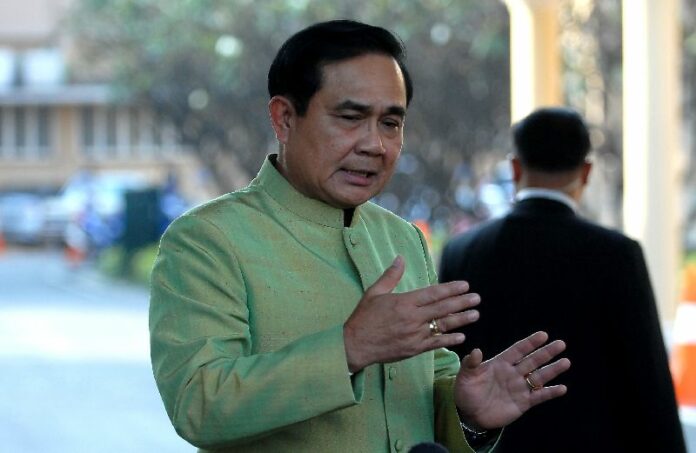
Thai junta chairman and PM Gen. Prayuth Chan-ocha talking to reporters on 20 Jan 2014 at the Government House in Bangkok.

BANGKOK — Thai junta leader and Prime Minister Prayuth Chan-ocha has asserted his authority to pass a mass surveillance bill that would allow officials to inspect any form of communication without a requesting a court warrant.

When a reporter from Isra News asked the junta chairman to comment on the draft of the controversial Cyber Security Act, Gen. Prayuth responded that Thai people should study the "rules" instead of focusing only on the "restriction of their rights."

"Today, have I ever restricted anyone's rights? Have I ever done that?" asked Gen. Prayuth, who imposed martial law after leading a military coup on 22 May 2014, and has banned any political protests or public criticism of his regime. 

The reporter pressed Gen. Prayuth to justify the sweeping nature of the bill, prompting Gen. Prayuth to lose his temper and shout, "I don't have to answer why! I will pass it. You have a problem with that? Otherwise, why the hell am I the Prime Minister? Why am I the Prime Minister?"

Gen. Prayuth then walked away from the reporters and said angrily, "I'm in a very bad mood."

If passed, the Cyber Security Act, a draft of which is available on the Thai Cabinet’s website, would grant officials authority to "access any channel of information and communication, including mails, telegrams, telephones, fax, computer, or any other type of electronic and telecommunication equipment" in order to safeguard the "cyber security" of the state. 

The bill states that officials can exercise those powers per orders from a Committee for Defense of National Cyber Security, which will be formed by the Cabinet, effectively discarding any legal need for authorities to apply for a court warrant first. 

The legislation would allow Thai authorities to access any email, Facebook account, and computers of any individual suspected of engaging in actions that may affect "cyber security."

The draft of the bill also authorizes the Committee to "summon any state agency or individual to give testimony or submit any document beneficial to the operation of this Act," and to "ask" any state or private agency to "perform any task" to protect the national cyber security as decided by the Committee.

According to Thai Netizen, an NGO that campaigns for internet freedom in Thailand, the draft has been approved by the Cabinet, and is now awaiting a vote by the National Legislative Assembly, a body appointed by the junta last year.

Thailand already has two draconian pieces of legislation used by authorities to restrict freedom of expression on the internet: the lese majeste law, which criminalizes any criticism of the monarchy, and the Computer Crime Act.

The Computer Crime Act, which carries a maximum penalty of five years in prison and a 100,000 baht fine, outlaws any use of a computer system that affects "national security," "spreads false information," or damages the "good morality of the people."  

Critics say the law's sweeping scope is regularly abused to restrict freedom of speech. In December 2013, the Royal Thai Navy sued an online news site in Phuket province with the Computer Crime Act for reprinting a Reuters article that accused some members of the navy force of collaborating with human traffickers in Thailand's southern coast

Deputy Prime Minister Visanu Krue-ngam told Daily News yesterday that the Cabinet will invite opinions from many Ministries and may amend the surveillance bill accordingly before it sends a draft to the NLA. 

"Each Ministry will submit its opinion in different issues, including human rights," Visanu was quoted as saying. 


For comments, or corrections to this article please contact: [email protected]

You can also find Khaosod English on Twitter and Facebook
http://twitter.com/KhaosodEnglish
http://www.facebook.com/KhaosodEnglish
Advertisement

Thai Junta Leader Deflects Concern Over Mass Surveillance Bill

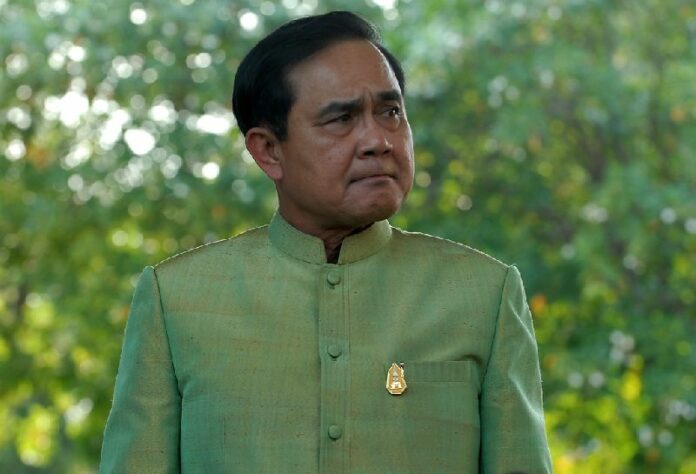
Thai junta chairman and PM Gen. Prayuth Chan-ocha talking to reporters on 20 Jan 2014 at the Government House in Bangkok.

BANGKOK — Thai junta leader and Prime Minister Prayuth Chan-ocha has asserted his authority to pass a mass surveillance bill that would allow officials to inspect any form of communication without a requesting a court warrant.

When a reporter from Isra News asked the junta chairman to comment on the draft of the controversial Cyber Security Act, Gen. Prayuth responded that Thai people should study the "rules" instead of focusing only on the "restriction of their rights."

"Today, have I ever restricted anyone's rights? Have I ever done that?" asked Gen. Prayuth, who imposed martial law after leading a military coup on 22 May 2014, and has banned any political protests or public criticism of his regime. 

The reporter pressed Gen. Prayuth to justify the sweeping nature of the bill, prompting Gen. Prayuth to lose his temper and shout, "I don't have to answer why! I will pass it. You have a problem with that? Otherwise, why the hell am I the Prime Minister? Why am I the Prime Minister?"

Gen. Prayuth then walked away from the reporters and said angrily, "I'm in a very bad mood."

If passed, the Cyber Security Act, a draft of which is available on the Thai Cabinet’s website, would grant officials authority to "access any channel of information and communication, including mails, telegrams, telephones, fax, computer, or any other type of electronic and telecommunication equipment" in order to safeguard the "cyber security" of the state. 

The bill states that officials can exercise those powers per orders from a Committee for Defense of National Cyber Security, which will be formed by the Cabinet, effectively discarding any legal need for authorities to apply for a court warrant first. 

The legislation would allow Thai authorities to access any email, Facebook account, and computers of any individual suspected of engaging in actions that may affect "cyber security."

The draft of the bill also authorizes the Committee to "summon any state agency or individual to give testimony or submit any document beneficial to the operation of this Act," and to "ask" any state or private agency to "perform any task" to protect the national cyber security as decided by the Committee.

According to Thai Netizen, an NGO that campaigns for internet freedom in Thailand, the draft has been approved by the Cabinet, and is now awaiting a vote by the National Legislative Assembly, a body appointed by the junta last year.

Thailand already has two draconian pieces of legislation used by authorities to restrict freedom of expression on the internet: the lese majeste law, which criminalizes any criticism of the monarchy, and the Computer Crime Act.

The Computer Crime Act, which carries a maximum penalty of five years in prison and a 100,000 baht fine, outlaws any use of a computer system that affects "national security," "spreads false information," or damages the "good morality of the people."  

Critics say the law's sweeping scope is regularly abused to restrict freedom of speech. In December 2013, the Royal Thai Navy sued an online news site in Phuket province with the Computer Crime Act for reprinting a Reuters article that accused some members of the navy force of collaborating with human traffickers in Thailand's southern coast

Deputy Prime Minister Visanu Krue-ngam told Daily News yesterday that the Cabinet will invite opinions from many Ministries and may amend the surveillance bill accordingly before it sends a draft to the NLA. 

"Each Ministry will submit its opinion in different issues, including human rights," Visanu was quoted as saying. 


For comments, or corrections to this article please contact: [email protected]

You can also find Khaosod English on Twitter and Facebook
http://twitter.com/KhaosodEnglish
http://www.facebook.com/KhaosodEnglish
 

Advertisement

Court Orders Skytrain to Accommodate Disabled Passengers

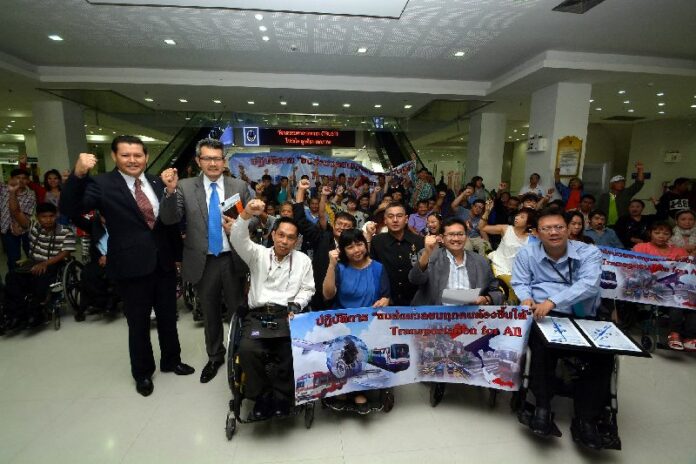
Commuters with disabilities who filed suit against City Hall over access to the BTS Skyrtrain gather to hear the verdict at the Supreme Administrative Court, 21 January 2015

BANGKOK – The Supreme Administrative Court has ruled that Bangkok's skytrain system must install more elevators and other equipment to assist disabled passengers.

The ruling followed a lawsuit filed by a group of Thais who use wheelchairs against the operators of the the skytrain, known officially as the Bangkok Mass Transit System (BTS). 

Currently, only five of 23 BTS stations are equipped with elevators for disabled passengers: Siam, Mo Chit, Chong Nonsri, National Stadium, and On Nut – one elevator for each station. No BTS station provides slopes for wheelchairs. 

The lower Administrative Court dismissed the lawsuit in 2009 on the grounds that 2001 legislation protecting the rights of disabled citizens was enacted six years after the BTS system was built. However, prosecutors appealed the verdict, and the Supreme Administrative Court overturned the ruling today.

According to the new verdict, the court has the power to intervene in the BTS operations because the case affects a "large number of people," in accordance with Second Clause of the Section 52 of the Act of Supreme Administrative Court.

In its ruling, the court ordered the BTS and Bangkok Metropolitan Administration (BMA) to build elevators in all of the 23 skytrain stations. The court also instructed the BTS to construct wheelchair slopes, stairs, and signs for disabled passengers in every station within one year. 

The BTS is a major systme of public transportation in Bangkok, a city known for its notorious traffic jams. It is estimated that there are at least 600,000 rides on BTS per day. 


For comments, or corrections to this article please contact: [email protected]

You can also find Khaosod English on Twitter and Facebook
http://twitter.com/KhaosodEnglish
http://www.facebook.com/KhaosodEnglish

 

Advertisement

Hot News

LATEST NEWS

Bangkok
overcast clouds
30.5 ° C
32.2 °
30.5 °
78 %
4kmh
100 %
Mon
32 °
Tue
35 °
Wed
30 °
Thu
32 °
Fri
31 °