27.7 C
Bangkok
Friday, June 26, 2026
Home Blog Page 3112

Koh Tao Murders Trial Begins in Thailand

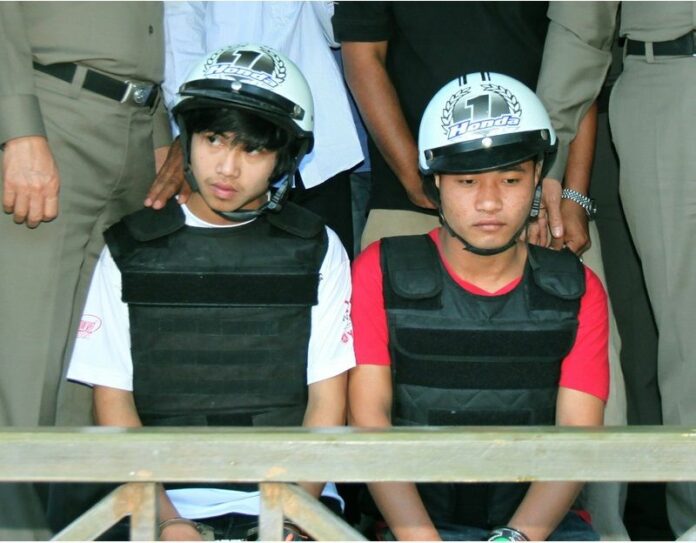
Two Myanmar migrant workers Win (left) and Saw (right), suspects in the killing of two British tourists, attend a press conference with police on the beach of Koh Tao island in Surat Thani province, southern Thailand, 03 October 2014. The murders trial begins on 26 December 2014 in Thailand. EPA/STR

BANGKOK (DPA) – The trial of two Myanmar suspects accused of murdering a pair of British tourists in the Thai resort of Koh Tao began Friday, officials said.

Zaw Lin and Wai Phyo, both 21, were arrested in October and confessed to the crimes, but later withdrew their statements saying they were tortured.

They were in Koh Samui's provincial court to hear opening statements from the prosecution, a court official told dpa.

The defence was expected to request a postponement on the grounds that they had inadequate time to prepare.

The badly beaten bodies of David Miller, 24, and Hannah Witheridge, 23, were found on September 15 on a beach on Koh Tao, 350 kilometres south of Bangkok.

British and Myanmar envoys have raised concerns about the Thai investigation, with London sending a police team as observers.

The National Human Rights Commission of Thailand has also expressed concern about the alleged forced confessions. Thai police have denied the accusations of torture or misconduct.


For comments, or corrections to this article please contact: [email protected]

You can also find Khaosod English on Twitter and Facebook
http://twitter.com/KhaosodEnglish
http://www.facebook.com/KhaosodEnglish

Advertisement

Prayers and Ceremonies Mark 10 Years Since Tsunami

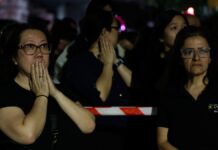
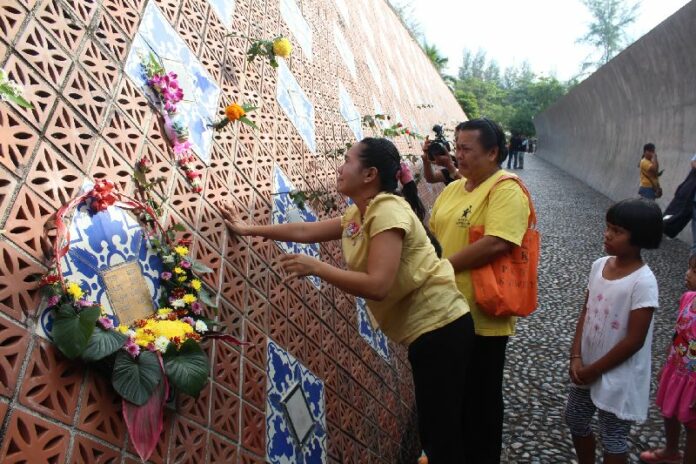
Mourners at the tsunami memorial in Phang Nga province, Thailand, 26 December 2014

BANGKOK (DPA) – A sombre ceremony in Thailand brought to a close a day of remembrance as various countries around the Indian Ocean marked the 10th anniversary of 2004 tsunami that killed some 230,000 people.

The evening ceremony was attended by representatives from over 30 countries as well as thousands who came to offer their condolences.

The event was marked by speeches from dignitaries and poetry and words from survivors and relatives of the dead.

"I salute the courage and bravery of survivors," said Valerie Amos, the UN under secretary general and emergency relief coordinator. Amos also praised the selflessness of those who offered their assistance in the days after the disaster.

"The 2004 tsunami didn't connect just the individuals here but the whole world," said Petra Nemcova, a Czech supermodel and founder of the disaster relief organization Happy Hearts Fund.

Nemcova survived the tsunami by clinging on to a palm tree but lost her fiance during the disaster.

"I was touched by the selflessness of my rescuers who would risk their lives for a complete stranger."

"It was in the worst of occasions that we saw the best of humanity," said Thai Prime Minister Prayuth Chan-ocha who brought the ceremony to a close with a moment's silence and the lighting of candles.

"I want to extend my thanks to those who offered a helping hand and express my condolences to all who lost a loved ones." 

More than 5,000 people lost their lives during the disaster in Thailand, a large percentage of that number were foreign tourists on holiday.

Earlier, in the Indonesian province of Aceh, the area worst hit by the tsunami, an official ceremony was attended by Vice President Jusuf Kalla.

Kalla thanked foreign countries for their involvement in rebuilding Aceh. "I had never seen such extraordinary solidarity and generosity as I saw after the tsunami," Kalla said. 

"Even children from around the world, from Germany to the United States, broke their piggy banks and sent the money to help tsunami victims."  

Indonesia was the hardest hit country, with some 130,000 people losing their lives.

In the morning, people prayed in mosques and at the sites of mass graves to remember their dead.

"I lost two children in the tsunami but I don't know where they were buried," 51-year-old Maimunah, who goes by only one name, said at a mass grave in Ulhee Lhueue in the provincial capital Banda Aceh. "But I'm praying here for all the victims," she said.

In Sri Lanka, a commemorative train journey for tsunami survivors and their families ran from the capital Colombo and arrived in Pereliya in the south.

Over 1,400 people lost their lives on the same journey when the crowded train was hit by tsunami waves that claimed more than 35,000 lives across the country. The commemorative journey featured repaired carriages from the original train.

A two-minute silence was held throughout the country.

Multi-faith prayers were held on India's Andaman and Nicobar islands, as officials and residents gathered in the capital Port Blair.

On the south-eastern Indian coast in Tamil Nadu's Nagapattinam district, locals prayed at memorial pillars near the beach and floated offerings of food into the sea.

More than 16,000 people died when the tsunami hit India.

Thailand also held morning ceremonies at Ban Nam Khem village in Phangna province, where 2,000 people lost their lives, and the Mai Khao remembrance wall in Phuket.

The cross-denominational events were conducted by Buddhist monks, Christian priests and Muslim imams, to mark a disaster that also killed tourists of many nationalities.

The tsunami that struck on the morning of December 26, 2004, decimated coastal communities and killed 230,000 in over a dozen countries in one of the modern world's worst natural disasters.


For comments, or corrections to this article please contact: [email protected]

You can also find Khaosod English on Twitter and Facebook
http://twitter.com/KhaosodEnglish
http://www.facebook.com/KhaosodEnglish
Advertisement

Ubon Shopping Mall Sorry For 'Aquarium-Jumping Shark'

UBON RATCHATHANI – A shopping mall in Ubon Ratchathani province has apologised for the incident of a bamboo shark jumping out of the water tank and hitting several of the visitors.

The incident took place at Central mall in the province at around 2.30 pm on 24 December. A Christmas shopper and his family were reportedly hit by the shark as it jumped out of the "aquarium" on the ground floor, but no injury was reported. 

The bamboo shark was promptly picked up and thrown back into the water tank by a security guard.

Nattakit Tangplusinthana, a member of Central's executive board, told the press that the 40-cm long shark was an "un-aggressive creature." The incident took place after a child tapped at the water tank glass and startled the bamboo shark, Nattakit said in a statement.

"It then jumped out of the aquarium and caused panic to the family of foreign customers," Nattakit said, "However, there was no injury, and the foreigners did not seek any compensation from Central. They merely complained about the incident and sought apology from the shopping mall staff."

He added, "The company feels deeply, and would like to apologise for the incident."

Nattakit said the aquarium staff will hand over the two bamboo sharks at the water tank to a state aquarium in Sri Saket province. The sharks will be replaced by other types of "beautiful fish," he said. 


For comments, or corrections to this article please contact: [email protected]

You can also find Khaosod English on Twitter and Facebook
http://twitter.com/KhaosodEnglish
http://www.facebook.com/KhaosodEnglish
Advertisement

Ubon Shopping Mall Sorry For 'Aquarium-Jumping Shark'

he "aquarium" on the ground floor of Central shopping mall,  Ubon Ratchathani province, 25 December 2014

UBON RATCHATHANI – A shopping mall in Ubon Ratchathani province has apologised for a bamboo shark that jumped out of a water tank and hit several visitors in the mall.

The incident took place at Central mall at around 2.30 pm on 24 December. A Christmas shopper and his family were reportedly hit by the shark as it jumped out of the "aquarium" on the ground floor, but no injuries were reported. 

The bamboo shark was promptly picked up and thrown back into the water tank by a security guard.

Nattakit Tangplusinthana, a member of Central's executive board, told the press that the 40-cm long shark was an "un-aggressive creature." The incident took place after a child tapped on the glass of the water tank and startled the bamboo shark, Nattakit said in a statement.

"It then jumped out of the aquarium and caused panic to the family of foreign customers," Nattakit said. "However, there were no injuries, and the foreigners did not seek any compensation from Central. They merely complained about the incident and sought apology from the shopping mall staff."

He added, "The company feels deeply, and would like to apologise for the incident."

Nattakit said aquarium staff will hand over the two bamboo sharks to a state aquarium in Sri Saket province. The sharks will be replaced by other types of "beautiful fish," he said. 


For comments, or corrections to this article please contact: [email protected]

You can also find Khaosod English on Twitter and Facebook
http://twitter.com/KhaosodEnglish
http://www.facebook.com/KhaosodEnglish

Advertisement

Ubon Shopping Mall Sorry For 'Aquarium-Jumping Shark'

The "aquarium" on the ground floor of Central shopping mall,  Ubon Ratchathani province, 25 December 2014

UBON RATCHATHANI – A shopping mall in Ubon Ratchathani province has apologised for a bamboo shark that jumped out of a water tank and hit several visitors in the mall.

The incident took place at Central mall at around 2.30 pm on 24 December. A Christmas shopper and his family were reportedly hit by the shark as it jumped out of the "aquarium" on the ground floor, but no injuries were reported. 

The bamboo shark was promptly picked up and thrown back into the water tank by a security guard.

Nattakit Tangplusinthana, a member of Central's executive board, told the press that the 40-cm long shark was an "un-aggressive creature." The incident took place after a child tapped on the glass of the water tank and startled the bamboo shark, Nattakit said in a statement.

"It then jumped out of the aquarium and caused panic to the family of foreign customers," Nattakit said. "However, there were no injuries, and the foreigners did not seek any compensation from Central. They merely complained about the incident and sought apology from the shopping mall staff."

He added, "The company feels deeply, and would like to apologise for the incident."

Nattakit said aquarium staff will hand over the two bamboo sharks to a state aquarium in Sri Saket province. The sharks will be replaced by other types of "beautiful fish," he said. 


For comments, or corrections to this article please contact: [email protected]

You can also find Khaosod English on Twitter and Facebook
http://twitter.com/KhaosodEnglish
http://www.facebook.com/KhaosodEnglish

Advertisement

Thai Defence Minister Repeats Threat To Shut Down Media

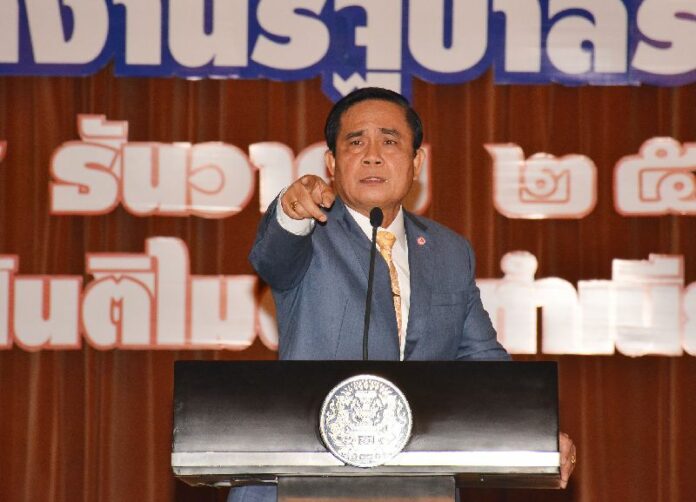
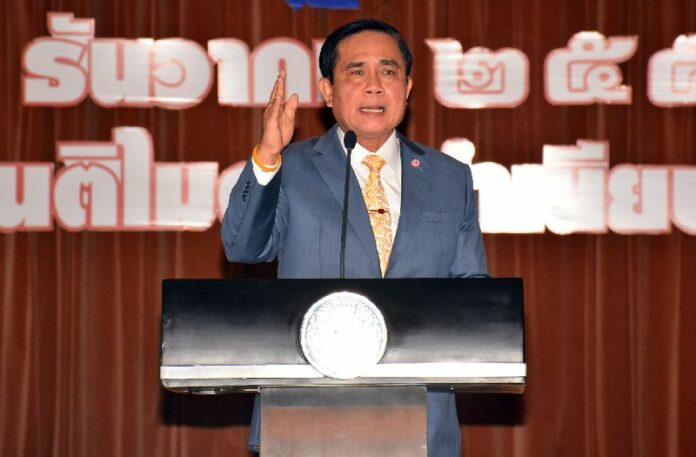
NCPO chairman and Prime Minister Prayuth Chan-ocha threatens to shut down media agencies that criticise him in his speech on 25 December 2014

BANGKOK – A member of Thailand's ruling military junta has warned of shutting down media agencies that do not comply with the junta's mission of "national reconciliation."

Gen. Prawit Wongsuwan, a senior member of the National Council for Peace and Order (NCPO), said today that the junta has the power to invoke Section 44 of the 2014 Interim Constitution, which allows the NCPO to intervene in matters related to "national security."

"The government wants to create national reconciliation, but some media agencies write or present news in the way that causes disputes," said Gen. Prawit, who also serves as Minister of Defence. "They also like to ask about things that cause disputes. They really like doing it. They never ask constructive questions. They like to pick up fights. I don't know what's wrong with them."

Gen. Prawit's comment came a day after NCPO chairman and Prime Minister Prayuth Chan-ocha threatened to invoke Section 44 and close down media agencies whose negative reporting ruined his "leadership image."

"I think it's a good idea," Gen. Prawit said of Gen. Prayuth's threat. 

On 25 December Gen. Prayuth said he has been enduring a daily barrage of criticism from certain newspapers, which he did not name, and warned that he had the power to shut them down.

"I have endured it for a long time now. They criticise me on every issue, every page of the newspapers. What the hell is wrong with them? Are they crazy?" the NCPO leader fumed. "I get angry [every time] I read these newspapers. They made me lose my manner and have ruined my leader image."

He continued, "But this time, I will shut them down for real. I cannot allow them to continue their disrespect. Otherwise, what's the point of me being [Prime Minister]? What's the point of having martial law?"

Shortly after declaring martial law and launching a coup in May 2014, Gen. Prayuth banned any public protests against his regime and has continually intimidated the media against criticising his mission to bring about national "reforms" and "reconciliation."

Although Thai media have been largely subservient to the NCPO, mostly through self-censorship, several news agencies have continued to criticise Gen. Prayuth and his administration on a daily basis. A notable example is the online-based Isra News, which frequently investigates questionable business dealings of the junta members.

The Thai Journalist Association (TJA) has no immediate comment regarding Gen. Prayuth's threat to close down non-compliant media agencies. 


For comments, or corrections to this article please contact: [email protected]

You can also find Khaosod English on Twitter and Facebook
http://twitter.com/KhaosodEnglish
http://www.facebook.com/KhaosodEnglish
Advertisement

Accusing Thaksin of Republicanism Not A Crime, Court Rules

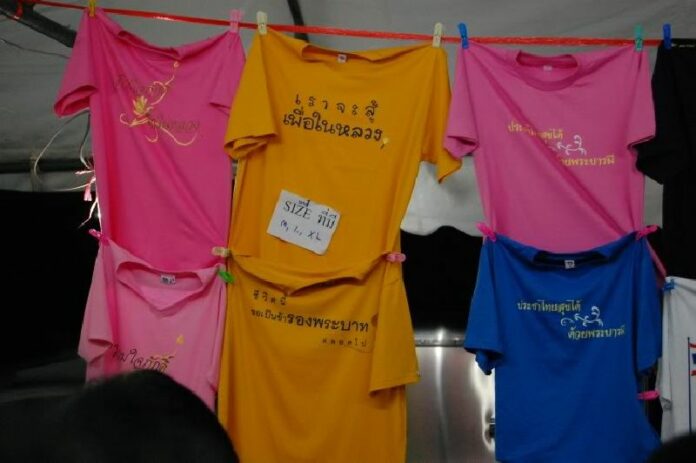
T-shirts with pro-monarchy slogans on sale at the Yellowshirt rally in Bangkok, November 2008. (Photo by Thai Free News website)

BANGKOK – The court has dismissed a libel charge against a Yellowshirt activist who accused former Prime Minister Thaksin Shinawatra of harbouring an anti-monarchy attitude, ruling that the activist simply wanted to "defend the monarchy."

Thaksin filed the charge against Kasit Pirom after the activist told anti-government protesters in November 2008 that the former Prime Minister was trying to control Thailand and appoint himself as President. Kasit also accused Thaksin of conspiring to destroy the monarchy. 

Thaksin and his Redshirt supporters are routinely portrayed as anti-monarchists by the rival Yellowshirt political faction, which consists mostly of royalists and conservative elite. Thaksin has repeatedly denied the allegation. 

The Criminal Court dismissed Thaksin's libel suit today. In the verdict, judges explained that Thaksin is a public figure and subject to criticism from members of the public.

"Although Kasit's speech contains some impolite remarks, the speech was made to defend the interest of the nation and the monarchy," the court wrote. "It is an expression of opinion with an honest intention. The court therefore acquits the defendant of the charges."

Speaking to reporters after the court session, Kasit said he would like to thank the judges and his legal team. 

"I did not mean ill to anyone in my speeches, and I apologise if there has been any unintentional violation," said Kasit, who went on to serve as Minister of Foreign Affairs after the Thaksin-allied government collapsed in 2008. "I will dedicate myself to working for the country and the interest of the public."

Any remarks deemed critical of the Thai Royal Family are punishable by up to 15 years in prison in Thailand, while attempts to overthrow the monarchy carry a death penalty. 


For comments, or corrections to this article please contact: [email protected]

You can also find Khaosod English on Twitter and Facebook
http://twitter.com/KhaosodEnglish
http://www.facebook.com/KhaosodEnglish
Advertisement

Thai Constitution Drafters Pave Way For Unelected PM

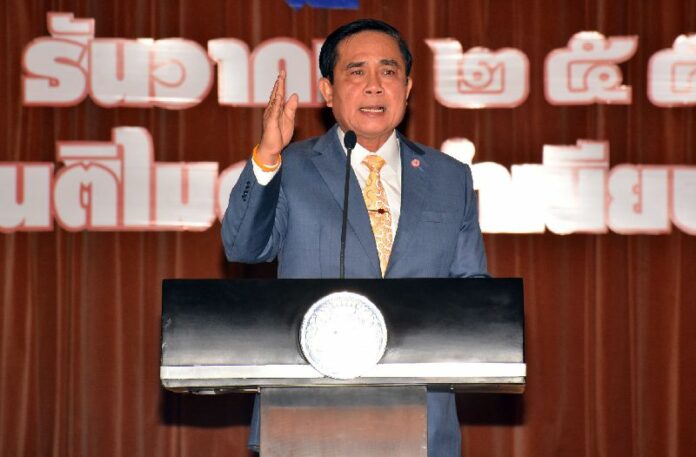
Junta leader and Prime Minister Prayuth Chan-ocha speaking at Government House on 25 December 2014. Critics of the 2014 coup fear Gen. Prayuth will not relinquish power to the new elected government.

BANGKOK – Thailand's junta-appointed Constitutional Drafting Committee (CDC) has announced that the new charter will not require Prime Ministers to be elected members of parliament.

"We will not require the PM to be an MP or a member of any political party," said CDC spokesperson Kamnoon Sidhisaman yesterday, "Because we want to pave a way for an outsider PM in case of political crises, like the previous ones that we have seen."

However, Kamnoon said it is hard to imagine that an "outsider" will ever be appointed as Prime Minister, because parliament will still have the authority to decide on who will become the PM.

"It's natural and logical that Prime Ministers will likely be one of the MPs," Kamnoon said.

Thailand's previous constitutions in recent decades have required that the PM be an elected MP.

In contrast, Thailand's current temporary constitution, which came into effect after the military seized power on 22 May 2014, allows non-elected individuals to take the premiership, and explicitly disqualifies members of any political party from the job. 

Coup leader and then-army chief Gen. Prayuth Chan-ocha was unanimously appointed Prime Minister by the National Legislative Assembly (NLA) in August. Critics of the 2014 coup fear that Gen. Prayuth will not relinquish his near-absolute power to the next elected government. 

When a reporter asked Kamnoon whether the abolition of the MP-requirement in the next charter is a channel for Gen. Prayuth or the junta to perpetuate their grip on Thailand, the CDC spokesperson insisted that "the CDC is not writing the law to help anyone or any group."

"We will listen to criticism from every group in the public," Kamnoon said, "However, let me stress that in practice it is hard for outsiders to become Prime Ministers, because the party that wins the most number of seats in parliament will appoint their own MP [as PM]."

Speaking at a public forum today, Bowornsak Uwanno, chairman of the CDC, defended the idea of an unelected PM on the grounds that having an "outsider Prime Minister" will make it easier to solve political crises in Thailand. 

He claimed that the latest round of conflict in Thailand escalated precisely because of the parliament's inability to replace then-Prime Minister Yingluck Shinawatra with a new head of government. 

"The crisis that led to the coup on 22 May took place because the constitution was too strict," said Bowornsak, who is widely regarded as the "academic leader" of the conservative force that protested against Ms. Yingluck. "It closed the door when the crisis arose. Therefore, the government could not administer the country, and they could not find anyone to become a Prime Minister."

Bowornsak also told reporters that the CDC has no "hidden agenda" in its plan to pave the way for an outsider PM. The committee merely intends to bring balance between "Thai society and globalisation," Bowornsak said.

"Of all 193 countries around the world, only 26 countries explicitly require PMs to come from the MPs. The rest do not have such a restriction," Bowornsak said. 

The CDC has been tasked by the military junta to produce a new charter – Thailand's 19th since democracy was established  78 years ago – by 2015. The junta has promised that a new election will take place after the charter and "national reforms" are completed. 

Critics of the 22 May have warned that the new constitution, drafted under the watch of the ruling military junta, will be less democratic in nature than previous charters. 

Siriwan Noksuan Sawasdee, a political scientist at Chulalongkorn University, said the CDC is attempting to turn the clock back to the "half-leaf democracy era" of 1980s, when MPs were elected but PMs were separately appointed. 

"It reflects that the Thai elite are not ready to adapt themselves for a full-leaf democracy society," Siriwan told Khaosod yesterday. "Whether this proposal will actually be enforced depends on reaction from  people in the society. If there is no reaction, this proposal will be pushed into reality."


For comments, or corrections to this article please contact: [email protected]

You can also find Khaosod English on Twitter and Facebook
http://twitter.com/KhaosodEnglish
http://www.facebook.com/KhaosodEnglish
Advertisement

Thai Constitution Drafters Pave Way For Unelected PM

Junta leader and Prime Minister Prayuth Chan-ocha speaking at Government House on 25 December 2014. Critics of the 2014 coup fear Gen. Prayuth will not relinquish power to the new elected government.

BANGKOK – Thailand's junta-appointed Constitutional Drafting Committee (CDC) has announced that the new charter will not require the Prime Minister to be an elected member of parliament.

"We will not require the PM to be an MP or a member of any political party," said CDC spokesperson Kamnoon Sidhisaman yesterday, "Because we want to pave a way for an outsider PM in case of political crises, like the previous ones that we have seen."

However, Kamnoon said it is hard to imagine that an "outsider" will ever be appointed as Prime Minister, because parliament will still have the authority to decide on who will become the PM.

"It's natural and logical that Prime Ministers will likely be one of the MPs," Kamnoon said.

Thailand's previous constitutions in recent decades have required that the PM be an elected MP.

In contrast, Thailand's current temporary constitution, which came into effect after the military seized power on 22 May 2014, allows non-elected individuals to take the premiership, and explicitly disqualifies members of any political party from the job. 

Coup leader and then-army chief Gen. Prayuth Chan-ocha was unanimously appointed Prime Minister by the National Legislative Assembly (NLA) in August. Critics of the 2014 coup fear that Gen. Prayuth will not relinquish his near-absolute power to the next elected government. 

When a reporter asked Kamnoon whether the abolition of the MP-requirement in the next charter is a channel for Gen. Prayuth or the junta to perpetuate their grip on Thailand, the CDC spokesperson insisted that "the CDC is not writing the law to help anyone or any group."

"We will listen to criticism from every group in the public," Kamnoon said, "However, let me stress that in practice it is hard for outsiders to become Prime Ministers, because the party that wins the most number of seats in parliament will appoint their own MP [as PM]."

Speaking at a public forum today, Bowornsak Uwanno, chairman of the CDC, defended the idea of an unelected PM on the grounds that having an "outsider Prime Minister" will make it easier to solve political crises in Thailand. 

He claimed that the latest round of conflict in Thailand escalated precisely because of the parliament's inability to replace then-Prime Minister Yingluck Shinawatra with a new head of government. 

"The crisis that led to the coup on 22 May took place because the constitution was too strict," said Bowornsak, who is widely regarded as the "academic leader" of the conservative force that protested against Ms. Yingluck. "It closed the door when the crisis arose. Therefore, the government could not administer the country, and they could not find anyone to become a Prime Minister."

Bowornsak also told reporters that the CDC has no "hidden agenda" in its plan to pave the way for an outsider PM. The committee merely intends to bring balance between "Thai society and globalisation," Bowornsak said.

"Of all 193 countries around the world, only 26 countries explicitly require PMs to come from the MPs. The rest do not have such a restriction," Bowornsak said. 

The CDC has been tasked by the military junta to produce a new charter – Thailand's 19th since democracy was established  78 years ago – by 2015. The junta has promised that a new election will take place after the charter and "national reforms" are completed. 

Critics of the 22 May have warned that the new constitution, drafted under the watch of the ruling military junta, will be less democratic in nature than previous charters. 

Siriwan Noksuan Sawasdee, a political scientist at Chulalongkorn University, said the CDC is attempting to turn the clock back to the "half-leaf democracy era" of 1980s, when MPs were elected but PMs were separately appointed. 

"It reflects that the Thai elite are not ready to adapt themselves for a full-leaf democracy society," Siriwan told Khaosod yesterday. "Whether this proposal will actually be enforced depends on reaction from  people in the society. If there is no reaction, this proposal will be pushed into reality."


For comments, or corrections to this article please contact: [email protected]

You can also find Khaosod English on Twitter and Facebook
http://twitter.com/KhaosodEnglish
http://www.facebook.com/KhaosodEnglish

Advertisement

Historian Summoned Over 'Elephant Battle' Lese Majeste Charge

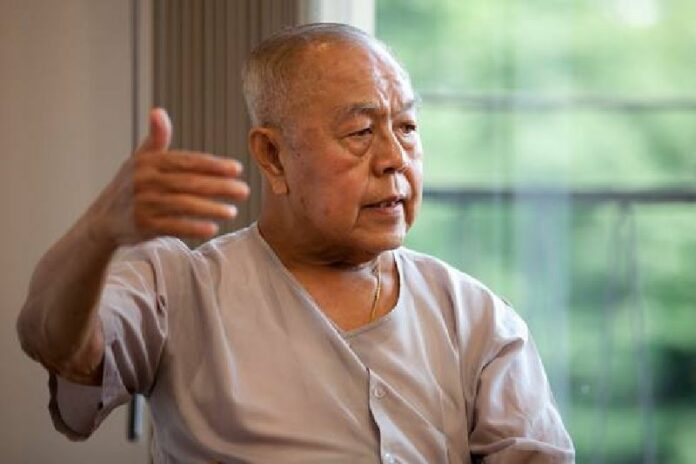
Sulak Sivaraksa (photo taken from his Facebook page)

BANGKOK – A Thai historian has been summoned by police for organising an academic forum that allegedly insulted two dead Thai kings.

Police summoned Pipat Krachaechan, who teaches history at Thammasat University, to Chanasongkram Police Station today to testify on the lese majeste (insulting the monarchy) charge that has been filed against a panelist who spoke at his forum on 5 October 2014.

The panelist, historian and author Sulak Sivaraksa, is accused of defaming the monarchy by raising doubts about a historic elephant battle between an ancient Thai King and a Burmese general 400 years ago. He is also accused of insulting Rama IV in his speech at the 5 October forum. 

"Mr. Sulak Sivaraksa has referred to Somdej Phra Naresuan the Great and Somdej Phra Chomklao Chaoyookhua (Rama IV) in a way that insults, defames, or threatens His Majesty the King," said a statement released by police today. 

Critical remarks about the monarchy are punishable by up to 15 years in prison under Section 112 of the Thai Criminal Code, a law known as lese majeste. Although the letter of the law only specifically covers the King, Queen, Heir-Apparent, and Regent, in practice lese majeste is used to punish comments deemed insulting to any aspect of the monarchy. 

The charge against Sulak was filed by a military officer on 17 October. The officer, Lt.Gen. Padung Niwetsuwanm, claimed that the 82-year-old author defamed the monarchy by suggesting that the elephant duel between King Naresuan and the leader of the invading Burmese army, Minchit Sra, in 1593 may not have happened, contrary to the account in official Thai history. 

A self-identified "royalist reformer," Sulak has faced previous charges of lese majeste for making frank statements about the Thai Royal Family, though none of the charges have been taken up in court.  

Read more: Lese Majeste Filed Against Historian For Questioning Ancient 'Elephant Battle'


For comments, or corrections to this article please contact: [email protected]

You can also find Khaosod English on Twitter and Facebook
http://twitter.com/KhaosodEnglish
http://www.facebook.com/KhaosodEnglish
Advertisement

Hot News

LATEST NEWS

Bangkok
broken clouds
27.7 ° C
30.5 °
27.7 °
82 %
2.1kmh
65 %
Thu
28 °
Fri
36 °
Sat
36 °
Sun
37 °
Mon
37 °