


























29.4 C
Bangkok
Tuesday, July 7, 2026
Home Blog Page 3117

2014 Tourist Arrivals in Thailand Drop By 6.6 Percent

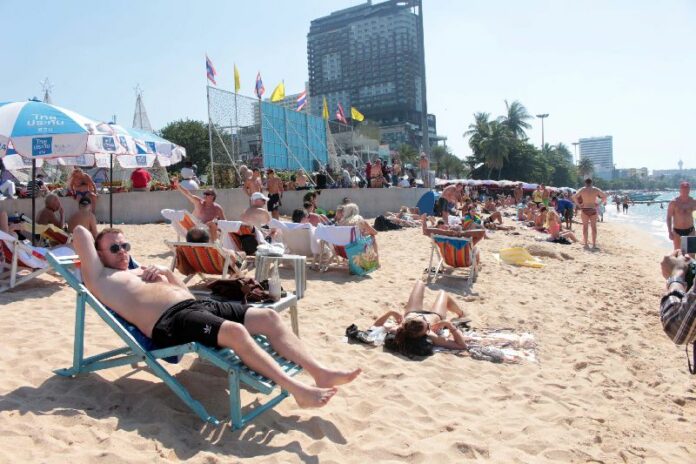
New Year's Eve in Pattaya, a popular destination for Russian tourists that had a week turnout this year due to the fall of the ruble.

BANGKOK — The number of foreign tourists who visited Thailand in 2014 is down 6.6 percent from the previous year, a Thai government official confirmed.

"24.7 million tourists visited Thailand in the year 2014, which is a 6.6 percent decrease compared with 2013," said Kobkarn Wattanavarangkul, Minister of Tourism and Sports. "They generated 1.13 trillion baht in revenue, 5.8 percent less than [the previous year]."

Kobkarn attributed the decline in tourist arrivals and revenues to the political crisis in Thailand during "the first half of 2014," in which parts of Bangkok were paralyzed by street protests that aimed to topple the government of Prime Minister Yingluck Shinawatra. 

The protests, which occasionally turned violent, came to an end when the military staged a coup and declared nationwide martial law in May 2014. The military junta also imposed a 10 pm – 6 am curfew in Thailand for several weeks.

Tourism experts and economists also say that martial law, which remains in place today, has dissuaded many potential foreign tourists from visiting Thailand. More recently, the dramatic fall of the Russian ruble has further damaged tourism in popular destinations for Russian tourists such as Pattaya and Phuket.

According to Kobkarn, the government's goal of increasing "quality tourists," defined as high-spending and culturally sensitive visitors, also failed this year, with numbers showing no increase in the average income of foreign tourists in 2014 as compared to 2013. 

"It's not much different to previous years," she said. 

In an effort to revitalize growth in the tourism industry – a major source of revenue for the Kingdom – Thailand’s tourism authorities have launched a campaign called "2015: Discover Thainess" to promote Thai "values" and the uniqueness of Thai culture. 

The Tourism Authority of Thailand (TAT) Governor Thawatchai Arunyik said the campaign will incorporate the "Twelve Values" that Thai junta leader and Prime Minister Prayuth Chan-ocha wants all Thais to practice.

"We have scheduled a host of events that are specially designed to showcase "Thainess," or the distinct character of the Thai people and our unique culture," Thawatchai said on the TAT website.


For comments, or corrections to this article please contact: [email protected]

You can also find Khaosod English on Twitter and Facebook
http://twitter.com/KhaosodEnglish
http://www.facebook.com/KhaosodEnglish

Advertisement

2014 Tourist Arrivals to Thailand Drop By 6.6 Percent

BANGKOK — The number of foreign tourists who visited Thailand in 2014 was down 6.6 percent from the previous year, a Thai government official confirmed.

"24.7 million tourists visited Thailand in the year 2014, which is a 6.6 percent decrease compared with 2013," said Kobkarn Wattanavarangkul, Minister of Tourism and Sports. "They generated 1.13 trillion baht in revenue, 5.8 percent less than [the previous year]."

Kobkarn attributed the decline in tourist arrivals and revenues to the political crisis in Thailand during “the first half of 2014," in which parts of Bangkok were paralyzed by street protests that aimed to topple the government of Prime Minister Yingluck Shinawatra. 

The protests, which occasionally turned violent, came to an end when the military staged a coup and declared a nationwide martial law in May 2014. The military junta also imposed a 10 pm – 6 am curfew in Thailand for several weeks.

Tourism experts and economists also say that martial law, which remains in place today, has dissuaded many potential foreign tourists from visiting Thailand. More recently, the dramatic fall of the Russian ruble has further damaged tourism in popular destinations for Russian tourists such as Pattaya and Phuket.

Kobkarn also said the government's goal of increasing "quality tourists," defined as high-spending and culturally sensitive visitors, has failed, with numbers showing no increase in the average income of foreign tourists in 2014 as compared to 2013. 

"It's not much different to previous years," she said. 

In an effort to revitalize the growth in tourism industry – a major source of revenue for the Kingdom – Thailand’s tourism authorities have launched a campaign called "2015: Discover Thainess" to promote Thai "values" and the uniqueness of Thai culture. 

The Tourism Authority of Thailand (TAT) Governor Thawatchai Arunyik said the campaign will incorporate the "Twelve Values" that Thai junta leader and Prime Minister Prayuth Chan-ocha wants all Thais to practice.

"We have scheduled a host of events that are specially designed to showcase "Thainess," or the distinct character of the Thai people and our unique culture," Thawatchai said on the TAT website.


For comments, or corrections to this article please contact: [email protected]

You can also find Khaosod English on Twitter and Facebook
http://twitter.com/KhaosodEnglish
http://www.facebook.com/KhaosodEnglish
Advertisement

First Arrest Under 2014 Animal Welfare Act

A police officer inspecting the injured dog that was attacked by Kamdee on 5 January 2015 [Prachatai English]

(Prachatai English)

BANGKOK — Thai police arrested a man accused of harming a dog under the 2014 Animal Welfare Act, the first arrest since the law was enacted last month.   

According to Voice TV, police officers in northeastern Nong Khai Province on Monday charged Kamdee Kotata, a 50-years-old villager, under the 2014 Prevention of Animal Cruelty and Provision of Animal Welfare Act for throwing a knife at a dog, which ended up cutting the dog’s face, after the dog bit his chicken.

He was charged after a person identified only as Jomsri, the dog owner, filed a complaint of animal torture against him with police on Monday.

Read more here

Note: Khaosod English is not responsible for content on other websites.

Advertisement

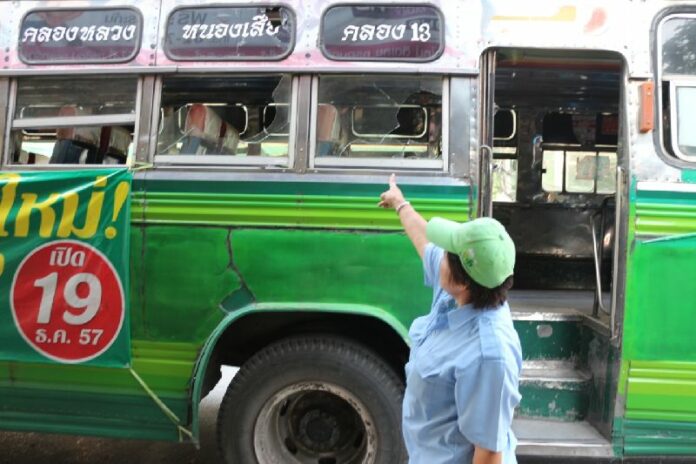
Technical Students Attack Public Bus in Pathum Thani

Technical students in Pathum Thani broke 3 windows on a public bus after spotting students from a rival school in the vehicle, 7 Jan 2015.

PATHUM THANI — Passengers riding a public bus in a Bangkok suburb were forced to evacuate early this morning when nearly a dozen technical students reportedly attacked the vehicle because it was carrying students from a rival school.

Amnuay Kotama, a 51-year-old driver of the Rangsit – Nong Suea bus, said the incident occurred after he drove past "at least 10 students" on Rangsit – Pathum Thani Road at around 1 am today. 

According to Amnuay, several students shouted that they saw two students from a rival technical college riding on the bus, after which they began hurling stones and charging at the vehicle.

The driver was forced to stop and evacuate the twenty passengers who were on the bus at the time.

"Fortunately, no one was injured," Amnuay said, though three of the bus's windows were broken by the rocks. 

Police later set up checkpoints in the area and arrested two technical students who allegedly participated in the attack. Both students are 16 and currently enrolled at Don Muang Technical College in northern Bangkok, police say.

Police also found two knives on the students. 

"The other perpetrators escaped the scene, but police officers will find them for prosecution," said Pol.Cpt. Panya Lekdee, an officer at Pratunam Chulalongkorn Police Station. "As for these two suspects, they will face severe prosecution. We will inform their teachers and guardians about their action."

Gang violence is common between rival technical colleges in Thailand, occasionally resulting in fatalities. 

 
For comments, or corrections to this article please contact: [email protected]

You can also find Khaosod English on Twitter and Facebook
http://twitter.com/KhaosodEnglish
http://www.facebook.com/KhaosodEnglish
Advertisement

AirAsia Tail Find Raises Hopes For Recovery of Flight Recorders

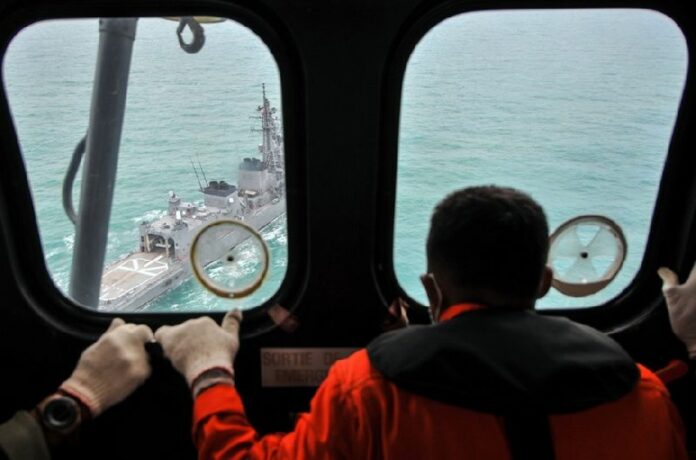
A Malaysian war ship is seen from Indonesian Air Force NAS 332 Super Puma helicopter during a search operation for the victims of AirAsia Flight QZ 8501, off Pangkalan Bun, Central Borneo, Indonesia, on January 6, 2015. EPA/VERI SANOVRI

By Pathoni Ahmad

JAKARTA (DPA) — Searchers Wednesday found the tail of an AirAsia plane that crashed into the Java Sea with 162 people on board 10 days ago, an Indonesian official said. 

"I can confirm that we have found the tail of the plane," search chief Bambang Sulistyo said. 

\
An handout picture released by the Indonesian Search And Rescue Agency (BASARNAS) on 07 January 2014 shows a part of the crashed AirAsia Flight QZ 8501 off Pangkalan Bun, Central Borneo, Indonesia.

The discovery raises hopes for investigators to recover the aircraft's cockpit voice and flight data recorders, known as the black boxes, which are located in the aircraft's tail section. 

The recorders help investigators to determine the chain of events leading up to an accident. 

"I am led to believe the tail section has been found," AirAsia chief executive Tony Fernandes said in a post on Twitter. "If [it is the] right part of tail section, then the black box should be there."

Bambang said another body was found, bringing the confirmed death toll to 40.

Divers frustrated by zero visibility and strong currents were still aiming to reach objects thought to be part of the plane's fuselage, and thought to contain many of the victims' bodies.

"The strong currents are making the search difficult, but we are making all-out efforts," search operations coordinator Tatang Zaenudin said. 

AirAsia flight QZ8501 crashed into the Java Sea on December 28 on its way from Surabaya in Indonesia to Singapore, after requesting permission to climb to try to avoid bad weather.

Indonesia's Transport Ministry said Wednesday it would stop budget airlines from selling seats at rock-bottom prices, in an effort to reemphasize aviation safety.

The lowest ticket prices for Indonesia-based budget airlines would be set at 40 per cent of the highest-cost fare, Transport Ministry spokesman Julius Barata said.

"We want to prevent a price war so that airlines don't compromise on safety," he said. "We want to protect the public."

The cause of the crash is still unknown, with no firm evidence that flight safety checks were involved.

Herry Bakti Gumay, a former Indonesian civil aviation chief, said that safety standards at low-cost airlines were no different from those at full-service carriers.

"Safety is the basis for all airlines," he said.

The Transport Ministry has already suspended seven airport and air traffic control officials as part of an investigation into flight schedule violations by AirAsia, and possibly by other airlines.

The ministry said AirAsia had approval to use the route on Mondays, Tuesdays, Thursdays and Saturdays, but not on Sundays – the day the plane crashed. 

 
For comments, or corrections to this article please contact: [email protected]

You can also find Khaosod English on Twitter and Facebook
http://twitter.com/KhaosodEnglish
http://www.facebook.com/KhaosodEnglish

Advertisement

Prayuth: Southern Peace Talks Depend on Willingness of Insurgents

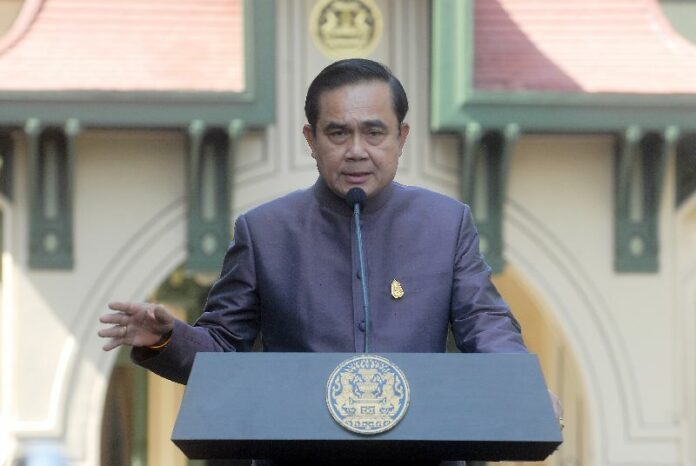
Gen. Prayuth speaking at the Government House on 6 Jan 2015.

BANGKOK — Peace talks with Islamic insurgents in southern Thailand will depend on the willingness and sincerity of separatist groups in the region, junta chairman and Prime Minister Prayuth Chan-ocha said on Tuesday.

"We are ready in all aspects to organize a long-lasting peace dialogue, but the problem is: are the people who use violence to fight us ready as well? Do they want to talk about peace?" Gen. Prayuth said to reporters at the Government House yesterday. 

"How many [separatist] groups are out there? If there are many groups, do all of them want to have peace with us?" Gen. Prayuth asked. "There are good people who want to have peace with us, don't worry, and violence has been decreasing these days, but as far as I know, they have not given up their fights."

In December, Gen. Prayuth met with the Prime Minister of Malaysia to discuss Malaysian-brokered peace talks between Thai authorities and rebels in southern Thailand who have been waging a bloody insurgency against the central government since 2004.

The two leaders stressed that all militant groups involved in the insurgency must cease their attacks and unite around a shared set of demands for the peace talks to go forward.

On the same day in December, dozens of banners were hung around southern Thailand questioning the sincerity of Thailand's military government. 

\

The banners, which were written in Thai, English, and Malay, read: "Is it appropriate to negotiate with the coup government? There is no guarantee for sincerity."

The near-daily bombings and gun attacks that have plagued Thailand’s ‘Deep South’ over the past decade have been launched by a number of shadowy Islamic insurgent groups who aim to revive the independent sultanate of Pattani, which was incorporated into Thailand in early 20th century. 

According to the Thai government, 4,000 people have been killed since violence broke out eleven years ago, but NGOs and other rights groups estimate the number of fatalities to be at least 6,000. The majority of deaths have been civilians.

In an effort to quell the insurgency, over 60,000 security officers have been deployed in the three southern border provinces of Pattani, Narathiwat, and Yala.

During yesterday's press conference, Gen. Prayuth reiterated that Thai authorities will not sit for negotiations until a ceasefire is achieved.

"We can talk to them in an official way, but we have to wait for all of them to [stop the violence]. Otherwise, it would be like in the past. They can't pressure us like what they did in the past," the general said. 

According to a blogger on Deep South Watch who writes under the pseudonym Abu Hafez al-Hakim, insurgents in the south are divided over whether to participate in the government’s peace dialogue.

"There has been serious debate among the movement circles whether it is to their advantage to talk to the military junta at this juncture or better to wait for a legitimate democratically elected government in 1-2 years time," he wrote on December 12, 2014.

The former elected government’s efforts to organize peace talks with an insurgent group in 2012 failed to achieve any concrete gains, partly due to resistance from hawkish wings of the military who preferred to combat the southern rebellion with force. 

Critics also point out that the process did not involve all of the secessionist cells operating in the region, and that former Prime Minister Yingluck Shinawatra’s administration did not offer increased autonomy for the Deep South – a vital demand shared by many insurgent groups.

The peace talks ultimately broke down after mass anti-government protests paralyzed the central government in late 2013 and paved the way for a military coup on 22 May 2014.

January 4, 2015 marked the eleventh anniversary of the insurgent attack on security forces in Narathiwat province that is widely considered the trigger of the recent decade-long wave of insurgent violence. 

According to the Southern Border Provinces Police Operations Center, the number of fatalities in the Deep South decreased in 2014 to 212 deaths, compared to 322 in 2013 and 326 in 2012.


For comments, or corrections to this article please contact: [email protected]

You can also find Khaosod English on Twitter and Facebook
http://twitter.com/KhaosodEnglish
http://www.facebook.com/KhaosodEnglish
Advertisement

Prayuth: Southern Peace Talks Depend on Willingness of Insurgents

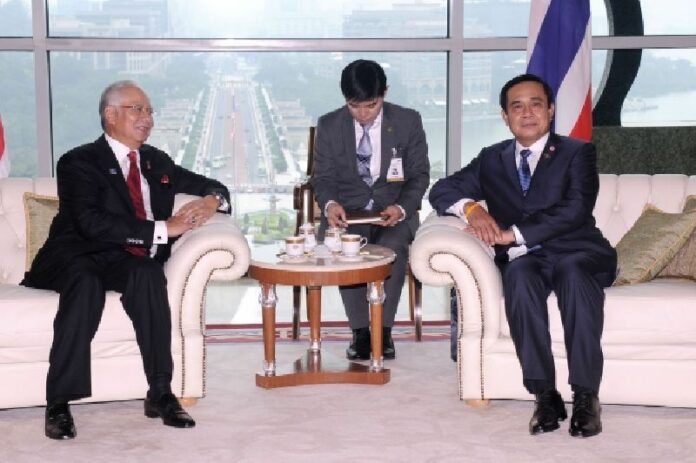
Malaysian Prime Minister Najib Razak and Thai PM Prayuth Chan-ocha met for bilateral talks in Malaysia on 1 Dec 2014. [Photo: NNT]

BANGKOK — Peace talks with Islamic insurgents in southern Thailand will depend on the willingness and sincerity of separatist groups in the region, junta chairman and Prime Minister Prayuth Chan-ocha said on Tuesday.

"We are ready in all aspects to organize a long-lasting peace dialogue, but the problem is: are the people who use violence to fight us ready as well? Do they want to talk about peace?" Gen. Prayuth said to reporters at the Government House yesterday. 

\
Gen. Prayuth speaking to reporters at the Government House on 6 Jan 2015. 

"How many [separatist] groups are out there? If there are many groups, do all of them want to have peace with us?" Gen. Prayuth asked. "There are good people who want to have peace with us, don't worry, and violence has been decreasing these days, but as far as I know, they have not given up their fights."

In December, Gen. Prayuth met with the Prime Minister of Malaysia to discuss Malaysian-brokered peace talks between Thai authorities and rebels in southern Thailand who have been waging a bloody insurgency against the central government since 2004.

The two leaders stressed that all militant groups involved in the insurgency must cease their attacks and unite around a shared set of demands for the peace talks to go forward.

On the same day in December, dozens of banners were hung around southern Thailand questioning the sincerity of Thailand's military government. 

The banners, which were written in Thai, English, and Malay, read: "Is it appropriate to negotiate with the coup government? There is no guarantee for sincerity."

\

The near-daily bombings and gun attacks that have plagued Thailand’s ‘Deep South’ over the past decade have been launched by a number of shadowy Islamic insurgent groups who aim to revive the independent sultanate of Pattani, which was incorporated into Thailand in early 20th century. 

According to the Thai government, 4,000 people have been killed since violence broke out eleven years ago, but NGOs and other rights groups estimate the number of fatalities to be at least 6,000. The majority of deaths have been civilians.

In an effort to quell the insurgency, over 60,000 security officers have been deployed in the three southern border provinces of Pattani, Narathiwat, and Yala.

During yesterday's press conference, Gen. Prayuth reiterated that Thai authorities will not sit for negotiations until a ceasefire is achieved.

"We can talk to them in an official way, but we have to wait for all of them to [stop the violence]. Otherwise, it would be like in the past. They can't pressure us like what they did in the past," the general said. 

According to a blogger on Deep South Watch who writes under the pseudonym Abu Hafez al-Hakim, insurgents in the south are divided over whether to participate in the government’s peace dialogue.

"There has been serious debate among the movement circles whether it is to their advantage to talk to the military junta at this juncture or better to wait for a legitimate democratically elected government in 1-2 years time," he wrote on December 12, 2014.

The former elected government’s efforts to organize peace talks with an insurgent group in 2012 failed to achieve any concrete gains, partly due to resistance from hawkish wings of the military who preferred to combat the southern rebellion with force. 

Critics also point out that the process did not involve all of the secessionist cells operating in the region, and that former Prime Minister Yingluck Shinawatra’s administration did not offer increased autonomy for the Deep South – a vital demand shared by many insurgent groups.

The peace talks ultimately broke down after mass anti-government protests paralyzed the central government in late 2013 and paved the way for a military coup on 22 May 2014.

January 4, 2015 marked the eleventh anniversary of the insurgent attack on security forces in Narathiwat province that is widely considered the trigger of the recent decade-long wave of insurgent violence. 

According to the Southern Border Provinces Police Operations Center, the number of fatalities in the Deep South decreased in 2014 to 212 deaths, compared to 322 in 2013 and 326 in 2012.


For comments, or corrections to this article please contact: [email protected]

You can also find Khaosod English on Twitter and Facebook
http://twitter.com/KhaosodEnglish
http://www.facebook.com/KhaosodEnglish

Advertisement

Skydivers Leap To Safety As Plane Crashes Into New Zealand Lake

A file photo shows Frank Moody, 101, (C) during his tandem skydive with Karl Eitech (L) over Cairns in Australia, as a cameraman films (R) the event for the record books on 16 June 2004. Thirteen people had the parachute jump of their lives, leaping for safety before their skydiving plane crashed into New Zealand's largest lake, Lake Taupo. Photo: Skydive Cairns/ Ho dpa

WELLINGTON (DPA) — Thirteen people had the parachute jump of their lives Wednesday, leaping for safety before their skydiving plane crashed into New Zealand's largest lake, Lake Taupo, police said.

The bright pink Skydive Taupo light aircraft plunged into the lake just after midday local time after suffering engine problems shortly after takeoff.

All 13 people on board, including the pilot, were able to parachute out of the plane and landed safely on shore, police said.

The others consisted of six crew members and six passengers preparing for a tandem skydive.

A witness told the New Zealand Herald he saw the skydivers bail out of the plane before it nosedived into the lake.

He said the plane had "conked out" on the southern side of the lake before going into the bay.

"It was just 'putt' and stop. Then it cruised for about 100 metres. Then half a dozen parachutists jumped out."

The 616-square-kilometre lake in the North Island is a popular area for boating and fishing in summer and lies near the snow-capped volcanoes of the central plateau.

It is also a major destination for adventure seekers, offering tandem skydiving and parasailing over the lake

Parachute tour operator Skydive Taupo says it offers the world's most stunning dropzone surrounded by snow tipped peaks and the blue waters of the lake.

Police divers would assist investigators with underwater inspection and photography of the wreck before it is salvaged, said Peter Northcote, spokesman for the Transport Accident Investigation Commission.


For comments, or corrections to this article please contact: [email protected]

You can also find Khaosod English on Twitter and Facebook
http://twitter.com/KhaosodEnglish
http://www.facebook.com/KhaosodEnglish
Advertisement

Ultra-Royalist General Wants Charter To Permit King's Intervention

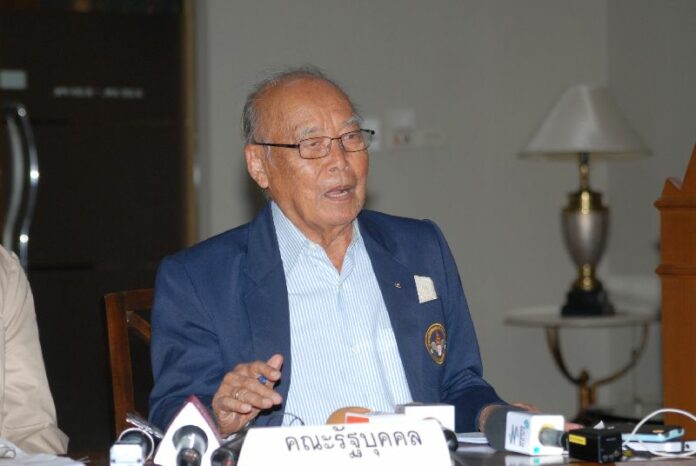
Gen. Saiyud Kerdphol, former Commander of the Royal Thai Armed Forces, said the new constitution should allow His Majesty the King to intervene directly in politics in order to prevent further coups in Thailand.

BANGKOK — A retired commander of the Thai armed forces has urged drafters of the new constitution to allow His Majesty the King to intervene directly in politics in order to prevent further coups in Thailand.

Gen. Saiyud Kerdphol, former Commander of the Royal Thai Armed Forces, said in a press conference today that the Constitution Drafting Committee (CDC) should "clearly" outline channels for the King to intervene and "solve any political crisis in the country" in the new charter. 

"In the past, constitutions have not clearly defined the scope of the King's royal authority, especially when crises take place in our country," said the 92-year-old retired general. "So I want the CDC to define and write about such power very clearly in the new constitution."

The CDC, whose members were appointed by the military junta that staged a coup on 22 May 2014, is currently working to write Thailand's 19th Constitution. A draft of the charter is expected to be completed by late 2015. 

According to Gen. Saiyud, His Majesty the King should have the constitutional authority to exercise power "through the military, or the Statesman that he has appointed." In Thailand, the honorary title of "Statesman" is currently held by Gen. Prem Tinsulanonda, the former unelected Prime Minister who is now serving as a top adviser to King Bhumibol. 

Gen. Saiyud said he believes this measure will help prevent more military coups in Thailand by allowing His Majesty to solve political crises as soon they arise, thereby freeing the Thai military from "needing" to intervene.

"I think solving problems with military coups is not a right thing to do. A coup will only run into an abyss," the general told reporters. "I believe that members of the military don't like [coups] either. They don't want to take the risk. Therefore, there should be a clear channel to find solutions to crises."

However, Gen. Saiyud was one of several retired generals who issued a joint statement in early May calling on then-army chief Gen. Prayuth Chan-ocha to stage a coup against the elected government in response to mass protests in the capital city.

Calling themselves Ratthabukkol (Men of the State), the group also requested Gen. Prayuth seek "royal advice" from the King on appointing a "neutral" government to replace the toppled administration.  

Upon receiving the open letter, Gen. Prayuth said he admired the Men of the State for expressing their loyalty to the monarchy, but did not comment on whether he had plans to stage a takeover.

Less than two weeks later, Gen. Prayuth led the 22 May coup, which he said was necessary to prevent the street protests from spiraling out of control. Gen. Prayuth is now chairman of the ruling military junta and Prime Minister of the interim government appointed by the junta after the coup. 

Under previous Thai constitutions in recent decades, His Majesty the King has been cast as constitutional monarch who only exercises symbolic power through signing off on the government’s laws, decrees, and official appointments.

However, King Bhumibol, who turned 87 last December, has directly intervened in Thai politics on several occasions. His Majesty famously instructed the military junta and anti-junta protesters to stop their confrontations during the Black May uprising in 1992, in which more than 50 demonstrators were killed by security forces. 

More recently, His Majesty the King urged a group of judges in a televised broadcast to nullify the 2 April 2006 election, which was boycotted by parties opposed to then-Prime Minister Thaksin Shinawatra. The Constitutional Court voided the poll in May of that year.


For comments, or corrections to this article please contact: [email protected]

You can also find Khaosod English on Twitter and Facebook
http://twitter.com/KhaosodEnglish
http://www.facebook.com/KhaosodEnglish

Advertisement

Monkeys Escape Cage, Vandalize Southern Village

Monkeys also broke several of Surapong's dishes.

RANONG — Residents of Tha Chang village in southern Thailand have been terrorized by a group of monkeys that escaped from their enclosure last month.

The monkeys started their rampage several weeks ago, running inside residents' homes, trashing their property, and damaging crops in nearby orchards, locals say. 

Surapong Inkabchan, 57, said the monkeys belong to a coconut farmer who trained the animals to pick coconuts from trees in the district. The monkeys appeared to have broken out of their cage last month and have been causing trouble in the village ever since, Surapong said.

"I keep four ducks. The monkeys stole all of the ducks' food. They eat everything," Surapong said. "When they ran out of food, they entered my kitchen, searched for rice, and threw the rice cookers around. I have to keep dishes and food in cupboards these days."

Seven families in the village say they have been affected by the monkeys' rampage.

Police at Ratchakrud Police Station say they are coordinating with officials from Department of Forestry to locate and capture all of the monkeys. 

For comments, or corrections to this article please contact: [email protected]

You can also find Khaosod English on Twitter and Facebook
http://twitter.com/KhaosodEnglish
http://www.facebook.com/KhaosodEnglish

Advertisement

Hot News

LATEST NEWS

Bangkok
overcast clouds
29.4 ° C
29.4 °
26.6 °
77 %
2.7kmh
99 %
Tue
35 °
Wed
36 °
Thu
33 °
Fri
32 °
Sat
28 °