

























36.5 C
Bangkok
Wednesday, June 24, 2026
Home Blog Page 3120

Northeastern Village Still Waiting For Electricity, 25 Years Later

Local authorities have yet to install electricity in Nong Pai Yai village in northeastern Thailand.

SAKON NAKHON — Residents of Nong Pai Yai village in northeastern Thailand are demanding local authorities install electricity in their village, twenty-five years after they first submitted a request.

\
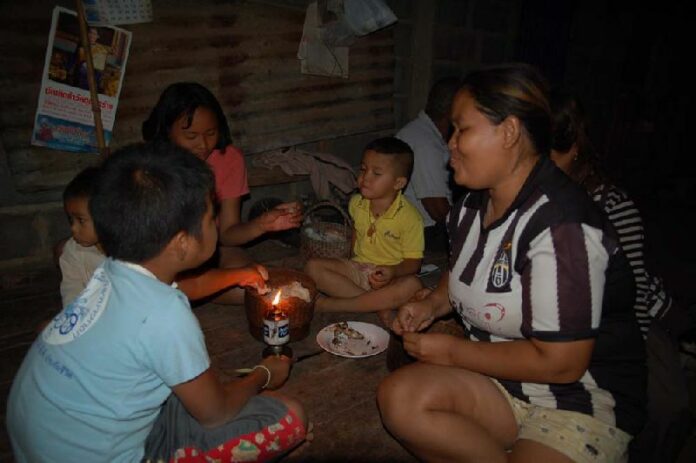
A child reads by candle light in Nong Pai Yai village.

Pom Jairew, 53, said she was among the first group of villagers who went to the District Office to apply for electricity, when her daughter was still a baby.

"Now my daughter is already 25 years old and married," Pom said. 

According to Pom and other residents of Nong Pai Yai, local electricity authorities told them to wait while their request was processed. But the electricity never arrived. 

"They told me to wait. They said it's like going to hospital, you have to wait in line" said Kawi Nampha, a 70-year-old woman who was born and raised in Nong Pai Yai. "In the end people could not endure the wait, so they contacted the District Office again, but the officials also told them to wait."

Twenty-five years later, their patience has run out. Today the villagers banded together to stage a small protest and demand officials make good on their word.

"I'm sorry for the little kids in the village," Pom said at the protest. "They can't read books at night because there's no electric lights, they can't watch TV. They can't even own mobile phones because there's no electricity for their chargers."

She continued, "The only way we know about the outside world is to listen to the radio."

\
Villagers in Nong Pai Yai village demand electricity, 12 Dec 2014.

Twelve families now live in Nong Pai Yai, which is only two kilometres away from the local District Office in the northeastern province of Sakon Nakhon. Whenever the village holds weddings or funerals, villagers are forced to borrow a small generator from a nearby community, and children have to finish their homework before dark.

Prawit Suphon, 40, said he and his fellow villagers decided to contact the press this time rather than seek help again from authorities again.

"The District Chiefs would slam their fists on the table and shout at us, scolding us for not knowing the meaning of waiting in a queue," Prawit told Khaosod

According to official numbers from 2010, the situation in Nong Pai Yai is rare: 99.7% of all Thai households are said to have access to electricity.

Responding to Khaosod's request for comment, an official at the local electricity authority in Sakon Nakhon province said they could not process the villagers' complaint at the moment because their supervisor "is not in the office."

"We have a policy of providing electricity to every household in Thailand, but we must follow the procedure. We have to wait for the supervisor,” the official explained. 


For comments, or corrections to this article please contact: [email protected]

You can also find Khaosod English on Twitter and Facebook
http://twitter.com/KhaosodEnglish
http://www.facebook.com/KhaosodEnglish

Advertisement

Alibaba Founder Jack Ma Becomes Asia's Richest Man


Jack Ma, Executive Chairman of the Alibaba Group, at the Clinton Global Initiative in New York, USA, 23 September 2014. Ma is the richest person in Asia, according to a new list of the world's billionaires. EPA/RAY STUBBLEBINE

BEIJING (DPA) — The founder of Chinese internet giant Alibaba, Jack Ma, is now the richest person in Asia, according to a new list of the world's billionaires.

With an estimated wealth of 28.6 billion dollars, Ma overtook the Hong Kong property tycoon Li Ka-shing at 28.3 billion dollars, according to financial newswire Bloomberg.

Ma was catapulted into the ranks of the world's richest after his sprawling e-commerce firm floated on the New York Stock Exchange in the bourse's biggest ever initial public offering.

Much of Ma's money comes from his 6.3-per-cent stake in Alibaba, which has risen some 54 per cent since September, Bloomberg said.

Alibaba is a collection of businesses which concentrate on online shopping and online payment, and has been compared to a combination of eBay, PayPal and Amazon.

China produces more new billionaires than anywhere else in the world, currently numbering over 300.


For comments, or corrections to this article please contact: [email protected]

You can also find Khaosod English on Twitter and Facebook
http://twitter.com/KhaosodEnglish
http://www.facebook.com/KhaosodEnglish
Advertisement

Military To Promote Prayuth's Twelve Values Via Social Media

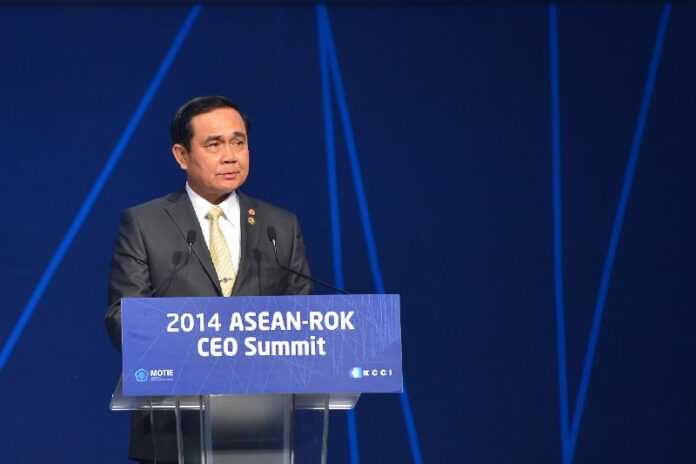
Thai Prime Minister and junta chairman Gen. Prayuth Chan-ocha in South Korea on 11 Dec 2014.

BANGKOK — The Royal Thai Army has announced plans to use social media to promote the teachings of Thai junta leader and former army chief Prayuth Chan-ocha.

Maj.Gen. Wattana Noikamrop, the officer in charge of the army's Civilian Affairs Department, said today that the military is working to publicise Gen. Prayuth’s "Twelve Values" online.  

"We will establish a network on Facebook, social media sites, and websites that are popular among teenagers to develop the new generation of leaders," said Maj.Gen. Wattana.

He explained that the "network" will urge young people to adhere to the Twelve Values, learn about unity and order, refrain from using drugs, and be proud of their "Thainess."

"Especially loyalty to Nation, Religion, Monarchy, which is central to the reconciliation of all Thais," Maj.Gen. Wattana said. 

The officer did not elaborate on the exact operations of the “network,” but added that the military is also organising 4-day camps for students who want to learn more about the Twelve Values and His Majesty the King's teachings.

The Twelve Values, bestowed by Gen. Prayuth to Thai children in a televised broadcast in July, are the following: 

1. Loyalty to the Nation, the Religion, and the Monarchy
2. Honesty, sacrifice, endurance, and noble ideology for the greater good
3. Gratitude for parents, guardians, and teachers
4. Diligence in acquiring knowledge, via school studies and other methods
5. Preserving the Thai customs and tradition
6. Morality and good will for others
7. Correct understanding of democracy with the King as Head of State
8. Discipline, respect for law, and obedience to the older citizens
9. Constant consciousness to practice good deeds all the time, as taught by His Majesty the King
10. Practice of Self-Sufficient Economy in accordance with the teaching of His Majesty the King
11. Physical and mental strength. Refusal to surrender to religious sins.
12. Uphold the interest of the nation over oneself.

To ensure that all Thais take the Twelve Values to heart, authorities have also instructed public schools and state agencies to hang a banner listing Gen. Prayuth’s teachings on their premises. State agencies have also produced a poem, song, and 12-part film based on the Twelve Values.

The film, titled "Thai Niyom," stirred controversy shortly after it was released on 6 December because of a scene in which two schoolchildren are seen painting and praising a picture of Adolf Hitler.

A Cabinet minister from the Office of Prime Minister, which was responsible for the film’s production, was forced to apologise to the Israeli ambassador in Bangkok after the diplomat said he was "deeply saddened" to see the "trivialization and misuse" of Nazi symbols in an official Thai government film. 


For comments, or corrections to this article please contact: [email protected]

You can also find Khaosod English on Twitter and Facebook
http://twitter.com/KhaosodEnglish
http://www.facebook.com/KhaosodEnglish
Advertisement

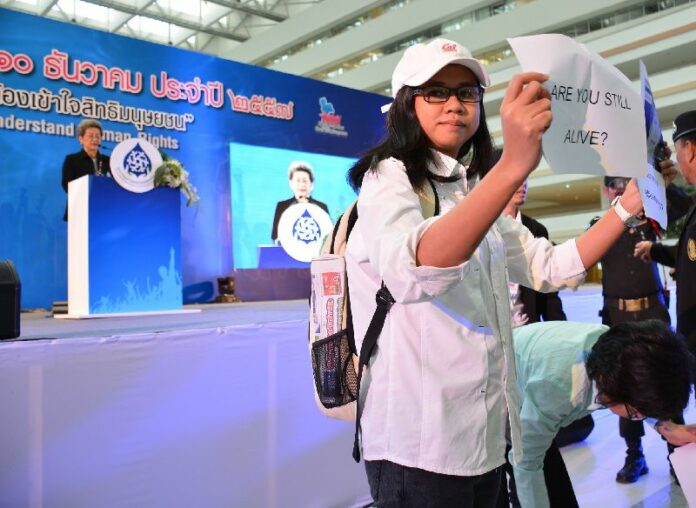
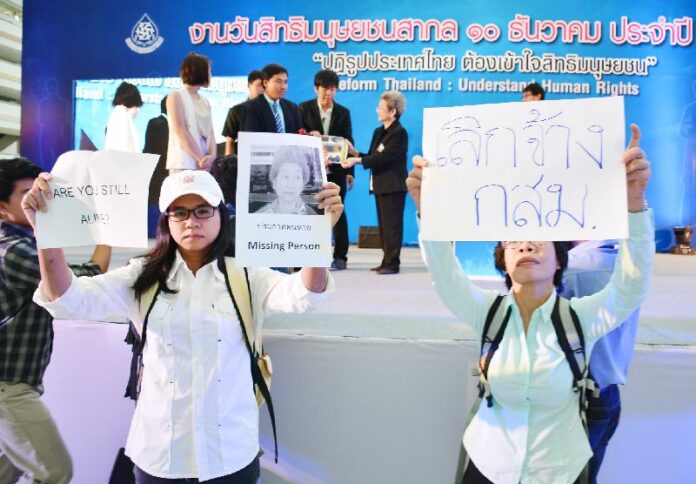
Activists Protest Thai Human Rights Agency's Post-Coup 'Silence'

Anti-coup activists criticize National Human Rights Commission (NHRC) at an award ceremony on 12 Dec 2014.

BANGKOK — Anti-coup activists disrupted an award ceremony organized by the National Human Rights Commission (NHRC) this morning to protest the agency's perceived apathy in the face of human rights abuses following the 22 May coup.

NHRC chairperson Amara Pongsapitchaya was scheduled to hand awards to a number of people and organisations at the Government Complex in Bangkok today to honour their "exceptional contribution to human rights" in Thailand. 

Just before Amara presented the award to a representative from the student activist group Dao Din, several other activists stormed the stage and criticised Amara for her failure to challenge the military junta's repression in Thailand.

Other activists simultaneously moved to the front of the stage and held signs ridiculing the NHRC's weak response to the coup.

"You are fired, NHRC," one sign read. Another mockingly asked, "Are you still alive, Amara?"

Security officers then attempted to escort activists off the stage, but Amara agreed to accept their letter of complaint.

Dao Din made headlines in Thailand when five of its members staged an anti-coup protest in front of Thai junta leader and Prime Minister Prayuth Chan-ocha while he was giving a speech in Khon Kaen province on 19 November. 

However, the group's opposition to the military coup was not cited by the NHRC in its award statement; rather, the NHRC awarded Dao Din for other campaigns related to social and environmental issues. 

\

More commotion took place when the Dao Din representative flashed the "three-finger salute" on stage after receiving the award from Amara. The gesture was adopted as a symbol of coup resistance from the Hunger Games film trilogy in late May.

The student also read a statement from Dao Din vowing to boycott any of the junta’s "reconciliation" or "reform" forums, which the group deems "illegitimate." 

"We will organise our own 'people's forum' to voice the frustration of the people," said Payu Boonsopon. "We also oppose martial law because it violates the rights of the people."

Today’s protest was led by the Thai Student Centre for Democracy (TSCD). One of the protesters was Natcha Kong-udom, a first-year student at Bangkok University who was arrested in front of a cinema in Bangkok on 20 November for flashing the forbidden "three-finger salute."

Sirawit Seritiwat, a core TSCD activist, said the group did not intend to "disrupt" the award ceremony.

"We only wanted to organise a symbolic resistance to the coup," Sirawit explained. 

\
Students from TSCD and Dao Din flash the forbidden "three-finger salute" after the NHRC award ceremony, 12 Dec 2014.

The NHRC has come under fire for its half-hearted rebuke of the 22 May military coup and the junta’s subsequent crackdown on freedom of expression. 

The commission's responses are a stark contrast to other international human rights agencies, such as Human Rights Watch (HRW) and Amnesty International, which have repeatedly criticised the junta’s suspension of civil liberties.

In her speech at the award ceremony today, Amara did not explicitly criticise the junta’s ongoing ban on political expression, only noting that activists and the junta view human rights differently.

"The National Council for Peace and Order (NCPO) thinks we have to sacrifice personal rights to protect the rights of all citizens, while the anti-coup faction believes personal rights and political rights cannot be infringed at all," Amara said.

"This debate will continue for the next several years," she said. "We have to exercise our judgment about individual rights. Sometimes we may have to lose some personal rights for the sake of public rights."

The rest of her speech focused on the need to tackle issues of discrimination and inequality in Thailand.

.\
​Amara with student activists after the NHRC award ceremony on 12 Dec 2014

Amara later met with the anti-coup protesters and told them that the NHRC is doing "its best" to defend human rights.

Critics of the NHRC accuse the agency of harbouring a bias against the Redshirt movement, which supported the former government toppled in the coup.

The NHRC's 2013 report about the military crackdown on Redshirt protesters in 2010, which left over 90 people dead, was slammed by Redshirt supporters and human rights activists for its glaring omission of security officers' use of force against unarmed protesters.

According to the NHRC narrative, Redshirt protesters "violated human rights" by staging a protest in downtown Bangkok, which "forced" the government at the time to enact emergency laws and send in armed troops to disperse the rallies. 

Since seizing power in May, Thailand's military junta – known as the National Council for Peace and Order (NCPO) – has banned all political activity in the name of restoring peace and order after months of protests crippled the nation's capital.

Those found guilty of violating the NCPO's ban on political protests have been sent to face trial in martial court, where they can be sentenced to up to six months in prison and are not permitted to appeal.

The junta has also intimidated the media, blocked academic forums, and granted security forces sweeping authority over civilian matters under martial law, which exempts the military from liability over any damages. 

For comments, or corrections to this article please contact: [email protected]

You can also find Khaosod English on Twitter and Facebook
http://twitter.com/KhaosodEnglish
http://www.facebook.com/KhaosodEnglish

Advertisement

Activists Protest Thai Human Rights Agency's Post-Coup 'Silence'

Anti-coup activists criticize National Human Rights Commission (NHRC) at an award ceremony on 12 Dec 2014.

BANGKOK — Anti-coup activists disrupted an award ceremony organized by the National Human Rights Commission (NHRC) this morning to protest the agency's perceived apathy in the face of human rights abuses following the 22 May coup.

NHRC chairperson Amara Pongsapitchaya was scheduled to hand awards to a number of people and organisations at the Government Complex in Bangkok today to honour their "exceptional contribution to human rights" in Thailand. 

Just before Amara presented the award to a representative from the student activist group Dao Din, several other activists stormed the stage and criticised Amara for her failure to challenge the military junta's repression in Thailand.

\

Other activists simultaneously moved to the front of the stage and held signs ridiculing the NHRC's weak response to the coup.

"You are fired, NHRC," one sign read. Another mockingly asked, "Are you still alive, Amara?"

Security officers then attempted to escort activists off the stage, but Amara agreed to accept their letter of complaint.

Dao Din made headlines in Thailand when five of its members staged an anti-coup protest in front of Thai junta leader and Prime Minister Prayuth Chan-ocha while he was giving a speech in Khon Kaen province on 19 November. 

However, the group's opposition to the military coup was not cited by the NHRC in its award statement; rather, the NHRC awarded Dao Din for other campaigns related to social and environmental issues. 

\
Activists storm the stage during the NHRC award ceremony on 12 Dec 2014.

More commotion took place when the Dao Din representative flashed the "three-finger salute" on stage after receiving the award from Amara. The gesture was adopted as a symbol of coup resistance from the Hunger Games film trilogy in late May.

The student also read a statement from Dao Din vowing to boycott any of the junta’s "reconciliation" or "reform" forums, which the group deems "illegitimate." 

"We will organise our own 'people's forum' to voice the frustration of the people," said Payu Boonsopon. "We also oppose martial law because it violates the rights of the people."

Today’s protest was led by the Thai Student Centre for Democracy (TSCD). One of the protesters was Natcha Kong-udom, a first-year student at Bangkok University who was arrested in front of a cinema in Bangkok on 20 November for flashing the forbidden "three-finger salute."

Sirawit Seritiwat, a core TSCD activist, said the group did not intend to "disrupt" the award ceremony.

"We only wanted to organise a symbolic resistance to the coup," Sirawit explained. 

\
Students from TSCD and Dao Din flash the forbidden "three-finger salute" after the NHRC award ceremony, 12 Dec 2014.

The NHRC has come under fire for its half-hearted rebuke of the 22 May military coup and the junta’s subsequent crackdown on freedom of expression. 

The commission's responses are a stark contrast to other international human rights agencies, such as Human Rights Watch (HRW) and Amnesty International, which have repeatedly criticised the junta’s suspension of civil liberties.

In her speech at the award ceremony today, Amara did not explicitly criticise the junta’s ongoing ban on political expression, only noting that activists and the junta view human rights differently.

"The National Council for Peace and Order (NCPO) thinks we have to sacrifice personal rights to protect the rights of all citizens, while the anti-coup faction believes personal rights and political rights cannot be infringed at all," Amara said.

"This debate will continue for the next several years," she said. "We have to exercise our judgment about individual rights. Sometimes we may have to lose some personal rights for the sake of public rights."

The rest of her speech focused on the need to tackle issues of discrimination and inequality in Thailand.

.\
​Amara with student activists after the NHRC award ceremony on 12 Dec 2014

Amara later met with the anti-coup protesters and told them that the NHRC is doing "its best" to defend human rights.

Critics of the NHRC accuse the agency of harbouring a bias against the Redshirt movement, which supported the former government toppled in the coup.

The NHRC's 2013 report about the military crackdown on Redshirt protesters in 2010, which left over 90 people dead, was slammed by Redshirt supporters and human rights activists for its glaring omission of security officers' use of force against unarmed protesters.

According to the NHRC narrative, Redshirt protesters "violated human rights" by staging a protest in downtown Bangkok, which "forced" the government at the time to enact emergency laws and send in armed troops to disperse the rallies. 

Since seizing power in May, Thailand's military junta – known as the National Council for Peace and Order (NCPO) – has banned all political activity in the name of restoring peace and order after months of protests crippled the nation's capital.

Those found guilty of violating the NCPO's ban on political protests have been sent to face trial in martial court, where they can be sentenced to up to six months in prison and are not permitted to appeal.

The junta has also intimidated the media, blocked academic forums, and granted security forces sweeping authority over civilian matters under martial law, which exempts the military from liability over any damages. 

For comments, or corrections to this article please contact: [email protected]

You can also find Khaosod English on Twitter and Facebook
http://twitter.com/KhaosodEnglish
http://www.facebook.com/KhaosodEnglish

Advertisement

Isaan People Air Grievances at Human Rights Festival in Khon Kaen

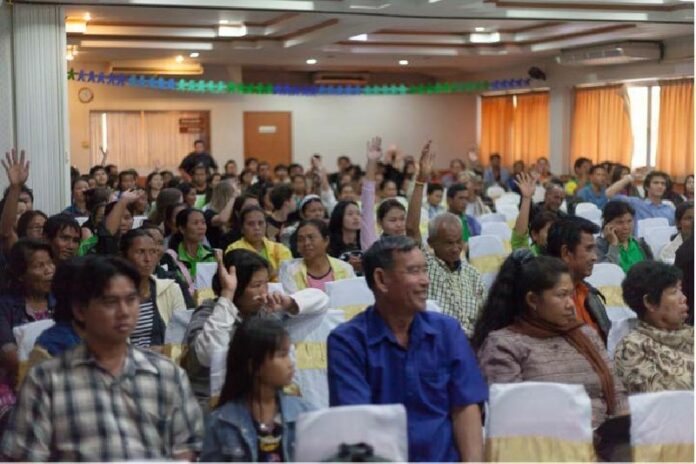
Energy high in tightly-packed meeting room as attendees eager to be heard by others and international guests [Isaan Record]

(The Isaan Record)

KHON KAEN – Despite concerns from the military, about 400 people from thirteen provinces participated in the 7th Annual Isaan Human Rights Festival held yesterday at Kwanmor Hotel in Khon Kaen.

New to the festival this year was the participation of diplomats from the United Kingdom, Canada, New Zealand, the European Union, Sweden, and the United States.

The event, funded primarily by European Union’s “Thailand-EU Policy Dialogues Support Facility” program, has been organized almost every year since 2006 to commemorate International Human Rights Day.

Event organizers say the annual festival has provided a venue for communities and networks to come together to share their human rights situation and make demands.

Read more here.

Note: Khaosod English is not responsible for content on other websites.

Advertisement

Hong Kong Clears Protest Camp, Arrests More Than 100

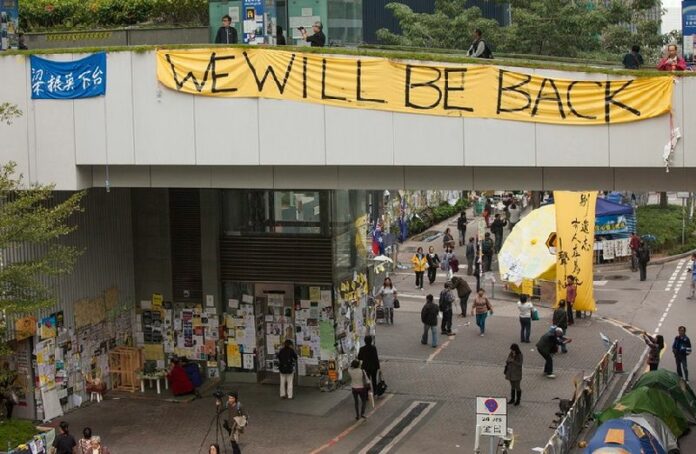
A general view of the Admiralty camp, occupied by pro-democracy supporters in Hong Kong on December 10. EPA/ALEX HOFFORD

By Christy Choi

HONG KONG (DPA) – Hong Kong police cleared out one of the main camps of pro-democracy protesters Thursday and arrested more than 100 people, but without the clashes that marred previous operations.

More than 1,000 police cordoned off the camp site at Admiralty on Hong Kong island near government buildings, where around 400 protesters and some 100 tents remained early Thursday.

They closed in after giving the holdouts up to 2 pm (0600) to leave without facing prosecution, and arrested what appeared to be more than 100 people.

Those detained included media tycoon Jimmy Lai, publisher of the popular Apple Daily, singer Denise Ho and opposition lawmakers Emil Lau and Albert Chan. None resisted arrest.

Officials did not confirm how many were taken Thursday, but said the total number of arrests since September 28 had reached 306.

Thousands had gathered overnight at the Admiralty site, but most packed up and left earlier in the day ahead of the announced operation.

"We won't be here for when the police come," Jason Ng, a 24-year-old recent graduate, told dpa earlier in the morning. "My parents said: 'Don't get arrested. You will not have a good future.'"

Ng was at the camp for all 75 days of its existence, and said while this part of the movement may be coming to a close, he would continue the struggle for more democracy.

Protesters blocked the main road around the government offices on Hong Kong Island in September over Beijing's decision to vet candidates for the city's chief executive elections in 2017.

The blockage has divided opinion in the city, with some residents resenting the disruption.

Most police were in normal uniforms Thursday and appeared to be avoiding confrontation, unlike in previous clearances where police in blue boiler suits and riot gear used pepper spray and batons.

A number of academics joined the crowd to act as observers.

"We will not get in the way of police, but we will be watching your every move," John Tse Wing-ling, 60, a psychology professor at City University, said over a loudhailer.

He also urged the protesters to remain peaceful, saying he was concerned violence might yet break out overnight, as happened in previous site clearances.

"We have a lot of our students here," said Robin Bradbeer, a retired CityU professor. "So there's a paternal aspect" to the academics' supervision, he said.

Some demonstrators vowed to continue with the more fluid "shopping revolution," which has been taking place in Mong Kok, on the Kowloon peninsula, since the camp there was cleared on November 25.  

Protesters have been wandering the streets pretending to be shopping – a tongue-in-cheek response to the chief executive's call for people to go shopping and normalize life in the city.

Britain negotiated a "one country, two systems" principle as part of the 1997 handover of Hong Kong to Chinese rule. It grants freedoms to Hong Kong residents that are not given to Chinese citizens on the mainland, and allows Hong Kong relative autonomy until 2047.

Advertisement

Thai Government Denies Housing CIA Secret Prison

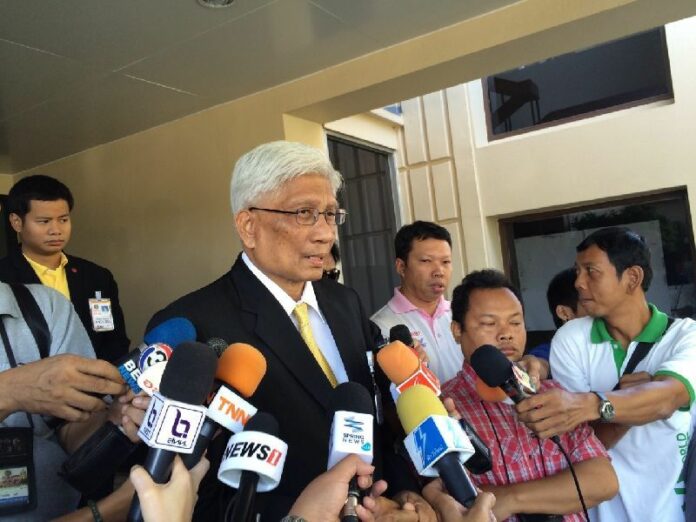
Thai Cabinet Minister Suwaphan Tanyuvardhana speaking to reporters on 11 Dec 2014.

BANGKOK — The Thai government has denied the existence of a secret prison inside the country’s borders following fresh queries about the alleged CIA "black site" after the release of a damning report on the US's post-9/11 interrogations of suspected terrorists.

“There is no secret prison in Thailand,” said Suwaphan Tanyuvardhana, a Cabinet Minister in Thailand's junta-appointed government. “There is no documented case of torture in Thailand. Thai agencies are not involved in this. This is a domestic issue for the US, between the Senate Intelligence Committee and the CIA.”

Thai authorities have denied the existence of a secret CIA-run jail in Thailand since rumours about the detention facility first surfaced in the early 2000s during the administration of former Prime Minister Thaksin Shinawatra.

Although the US Senate Intelligence Committee's heavily redacted report does not reveal the locations of the CIA’s overseas prisons, NGOs and news organisations have used other details in the report to determine the location of eight so-called black sites in five countries around the world, including one in Thailand.  

The prison in Thailand is believed to be referred to as “Detention Site Green” in the report, which was released on 9 December.

The report describes abusive interrogation tactics used against al-Qaeda operative Abu Zubaydah while he was allegedly held in Thailand’s secret facility.  According to a series of cables quoted in the report, Zubaydah became “completely unresponsive” during one waterboarding session. The sessions reportedly became so brutal that they brought some CIA officers “to the point of tears.” 

According to the report, “Detention Site Green” was established in March of 2002, but by April of that year a media organization had caught wind of the country Zubaydah was being held in. Several months later in November, the CIA learned that a major US newspaper also knew about Zubaydah's location, prompting senior CIA officers and US Vice President Dick Cheney to urge the newspaper to keep quiet. Although the newspaper – later identified as The New York Times – complied, the two cases of media attention led the CIA to shut down operations at “Detention Site Green,” the report says.


\

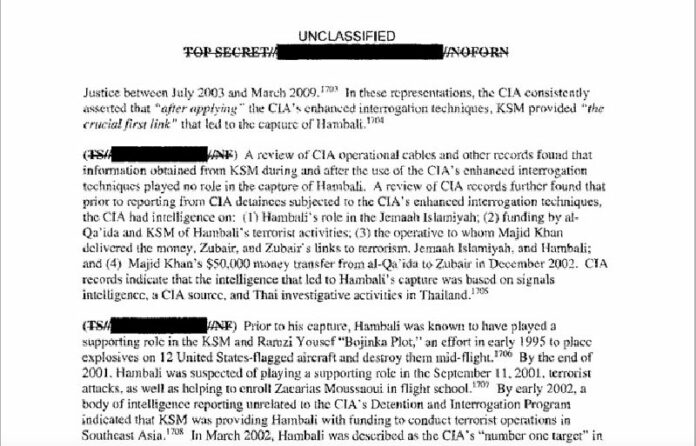
A page from the US Senate Intelligence Committee's report on the arrest of terrorist suspect Hambali in Thailand.

Thailand is also mentioned by name in report’s section on the capture of suspected Bali bombing mastermind 'Hambali' in Ayutthaya, Thailand. His arrest, which was carried out with the help of “Thai investigative activities,” was cited by CIA officials as evidence of the “effectiveness of enhanced interrogation techniques” that had been used on another detainee.

However, the US Senate report overwhelmingly concludes that the CIA’s harsh interrogation tactics, which included a range of painful and unapproved procedures, did not provide essential breakthroughs in intelligence.

In a statement released by the White House, US President Barack Obama said the report confirmed his view that “these harsh methods were not only inconsistent with our values as [a] nation, they did not serve our broader counterterrorism efforts or our national security interests.” President Obama formally ended the CIA's post-9/11 detention and interrogation program when he took office in 2009.

Immediately after the report was made public, the US State Department notified American citizens in Thailand, Afghanistan, and Pakistan that the release of the report's findings “could prompt anti-U.S. protests and violence against U.S. interests, including private U.S. citizens.”

Thai minister Suwaphan said he has informed Prime Minister and junta leader Gen. Prayuth Chan-ocha of the report and its potential effects on American interests in Thailand.

“We have increased security measures for foreigners in the country,” Suwaphan said.

Thailand is one of the US’s strongest allies in the region. In 2003, the Thai government dispatched at least 450 soldiers to assist with the American military operation in Iraq. 

(Reporting by Sally Mairs)

For comments, or corrections to this article please contact: [email protected]

You can also find Khaosod English on Twitter and Facebook
http://twitter.com/KhaosodEnglish
http://www.facebook.com/KhaosodEnglish

Advertisement

Thai Government Denies Housing CIA Secret Prison

A page from the US Senate Intelligence Committee's report on the arrest of terrorist suspect Hambali in Thailand.

BANGKOK — The Thai government has denied the existence of a secret prison inside the country’s borders, following fresh queries about an alleged CIA "black site" in Thailand after the recent release of a damning report on the US's post-9/11 interrogations of suspected terrorists.

“There is no secret prison in Thailand,” said Suwaphan Tanyuvardhana, a Cabinet member in Thailand's junta-appointed government. “There is no documented case of torture in Thailand. Thai agencies are not involved in this. This is a domestic issue for the US, between the Senate Intelligence Committee and the CIA.”

\
Suwaphan Tanyuvardhana speaking to reporters on 11 Dec 2014.

Thai authorities have denied the existence of a secret CIA prison in Thailand since rumours about the detention facility first surfaced in the early 2000s during the administration of former Prime Minister Thaksin Shinawatra.

Although the heavily redacted report released by the US Senate Intelligence Committee on 9 December does not reveal the locations of the CIA’s overseas detention facilities, NGOs and news organisations have used other details in the report to determine the location of eight so-called black sites in five countries around the world, including one in Thailand.  

The prison in Thailand is believed to be referred to as “Detention Site Green” in the report.

The report describes abusive interrogation tactics used against al-Qaeda operative Abu Zubaydah while he was allegedly held in Thailand’s secret facility.  According to a series of cables quoted in the report, during one waterboarding session Zubaydah became “completely unresponsive.” The sessions became so brutal that they brought some CIA officers “to the point of tears,” the report says.  

According to the report, “Detention Site Green” was established in March of 2002 and by April of that year a media organisation had caught wind of which country Zubaydah was being held in.

That November, the CIA learned that a major US newspaper also knew about Zubaydah's location, prompting senior CIA officers and US Vice President Dick Cheney to urge the newspaper to keep quiet. Although the newspaper – later identified as The New York Times – complied, the two cases of media attention led the CIA to shut down operations at “Detention Site Green,” the report says. 

Thailand is also mentioned by name in report’s section on the capture of suspected Bali bombing mastermind Hambali in Ayutthaya, Thailand. His arrest, which was carried out with the help of “Thai investigative activities,” was cited by CIA officials as evidence of the “effectiveness of enhanced interrogation techniques” that had been used on another detainee.

However, the US Senate report overwhelmingly concludes that the CIA’s harsh interrogation tactics, which included a range of painful and unapproved procedures, did not provide essential breakthroughs in intelligence.

In a statement released by the White House, US President Barack Obama said the report confirmed his view that “these harsh methods were not only inconsistent with our values as [a] nation, they did not serve our broader counterterrorism efforts or our national security interests.” President Obama formally ended the CIA's post-9/11 detention and interrogation program when he took office in 2009.

Immediately after the report was made public, the US State Department notified American citizens in Thailand, Afghanistan, and Pakistan that the release of the report's findings “could prompt anti-U.S. protests and violence against U.S. interests, including private U.S. citizens.”

Thai minister Suwaphan said he has informed Prime Minister and junta leader Gen. Prayuth Chan-ocha of the report its potential effects on American interests in Thailand.

“We have increased security measures for foreigners in the country,” Suwaphan said.

Thailand is one of the US’s strongest allies in the region. In 2003, the Thai government dispatched at least 450 soldiers to assist with the American military operation in Iraq. 


For comments, or corrections to this article please contact: [email protected]

You can also find Khaosod English on Twitter and Facebook
http://twitter.com/KhaosodEnglish
http://www.facebook.com/KhaosodEnglish
Advertisement

Activists Throw 'Birthday Party' To Mark Constitution Day

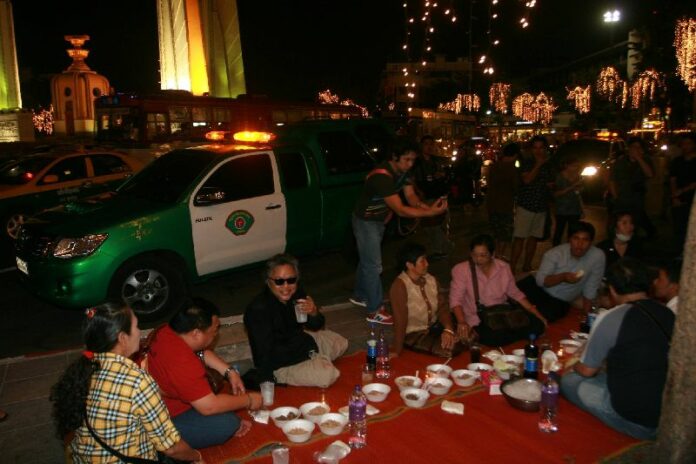
Anti-coup activists organised a "birthday party" across from Bangkok's Democracy Monument to celebrate Thailand’s national Constitution Day amid tight security, 10 Dec 2014.

BANGKOK — Anti-coup activists organised a roadside "birthday party" to celebrate Thailand’s national Constitution Day amid tight security in Bangkok yesterday.

The "party" consisted of a dozen activists sitting, drinking, and eating northeastern Thai cuisine on a traditional mat laid on the pavement across from Bangkok’s Democracy Monument, while dozens of security officers stood guard nearby. A police officer said at least "one company" of uniformed and plain-clothed police was deployed to "maintain peace and order" in the area. 

\

The activists were led by Payao Akhard, the mother of a volunteer medic who was killed in the 2010 military crackdown on Redshirts, and Pansak Srithep, whose 14-year-old son also died in the crackdown. 

Payao billed the event as a birthday celebration for her late daughter, Kamolkate Akhard, aka Nurse Kate, presumably in an effort to circumvent the military junta's ban on political activities. 

"Kate was born on 7 December, but in the past, when she was still alive, our family always celebrated her birthday on 10 December," Payao explained. 

When a group of police officers approached the activists and tried to persuade them to call off their "picnic," Payao refused and insisted that she was merely celebrating her daughter’s birthday. 

At around 8 pm, Pansak and Payao lit candles on their "birthday cake," which was shaped like Democracy Monument, before serving up slices to fellow activists and security officers.

Pansak saved the biggest piece of cake for military officers who were observing the event from a distance. 

"Today is Constitution Day, but since we don't have any actual constitution, we settled for eating a symbol of the constitution," Pansak told reporters. "Normally, I would give out equal sized pieces of cake, but I believe the military has a different definition of equality, so I gave them bigger pieces than everyone else."

\
Payao (L) and Pansak (C) cut the cake before distributing slices to activists and security officers.

After releasing 20 white balloons to mark the occasion, the activists dispersed peacefully without any incident.

Constitution Day, which is celebrated annually on 10 December as a public holiday in Thailand, commemorates the promulgation of Thailand's first official charter on 10 December 1932, six months after a group of military officers and bureaucrats staged a coup in Bangkok to replace the absolute monarchy with constitutional democracy. 

According to the state narrative taught in school textbooks, King Rama VII voluntarily bestowed Thailand’s first constitution to the people in response to an attempt by "hot-headed" and "Western-educated" revolutionaries to seize power on 24 June 1932. This narrative virtually ignores the 27 June Provisional Charter penned by the revolutionaries, which was Thailand’s actual first constitution and is more democratic in wording.

\
Gen. Prayuth at the 
statue of King Rama VII in Bangkok, 10 Dec 2014.

Yesterday Gen. Prayuth Chan-ocha, Thailand’s current Prime Minister and junta leader, paid a visit to a statue of King Rama VII at the Parliament complex in Bangkok, where he laid down flowers to pay homage to the monarch. 

Thailand has seen 19 charters since it became a constitutional democracy in 1932, making the Kingdom the country with the highest number of charters in the world. 

The last constitution, the 2007 charter, was dissolved by the military junta after Gen. Prayuth seized power in May 2014. The junta later replaced it with the 2014 Interim Constitution, and has set up a committee to draft another "permanent" constitution by 2015.

For comments, or corrections to this article please contact: [email protected]

You can also find Khaosod English on Twitter and Facebook
http://twitter.com/KhaosodEnglish
http://www.facebook.com/KhaosodEnglish

Advertisement

Hot News

LATEST NEWS

Bangkok
few clouds
36.5 ° C
36.6 °
35.5 °
40 %
3.6kmh
21 %
Wed
37 °
Thu
37 °
Fri
37 °
Sat
36 °
Sun
37 °