

























25 C
Bangkok
Friday, June 19, 2026
Home Blog Page 3144

Koh Tao Leader’s Son Cleared in First DNA Test: Police

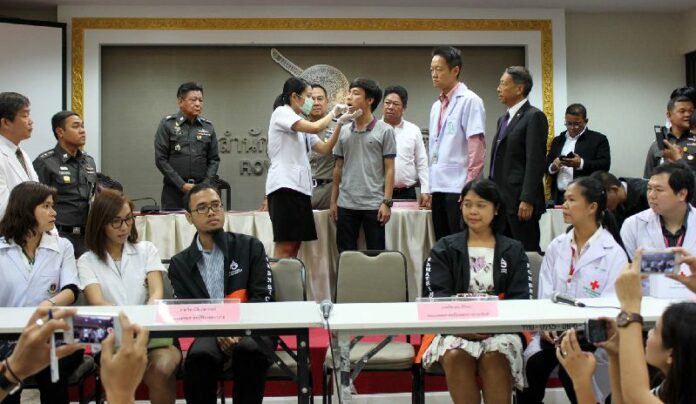
Warot Toowichian, 22, giving a DNA sample to police to dispel accusations that he was involved in the murder of two British tourists on the island last month, 30 Oct 2014.

BANGKOK— Police say the first round of forensic results reveal that the son of a village headman on Koh Tao was not behind the murder of two British tourists on the island last month.

Warot Toowichian, 22, provided authorities with a sample of his DNAyesterday in an effort to dispel persistent rumors that he was responsible for the grisly murder of David Miller, 24, and rape and murder of Hannah Witheridge, 23, on 15 September.

Suspicions were raised about Warot, the son of a local administrator on the island, after he was initially considered a suspect in the case, but then swiftly deemed innocent in less than 24 hours.

Warot’s father, Woraphan Toowichian, also owns the bar where Miller and Witheridge were last seen and is considered an ‘influential figure’ on the island.

Today, officials at the Institute of Forensic Science in Bangkok said Warot’s DNA did not match the semen found in Witheridge’s body. Police are now waiting on results from three other hospitals, which they say should be available by tomorrow.

Thai police have come under heavy scrutiny for their handling of the murder investigation, which was marred early on by a series of blunders and miscommunications with the press. More recently, Thai authorities have been accused of torturing two Burmese migrant workers into confessing to the murder. 

The two suspects, Zaw Lin and Win Zaw Htun, recanted their confessions last week and said they were beaten during the police interrogation. Thai authorities have firmly denied torturing the two men or using them as scapegoats.

Yesterday, Thailand’s chief of police, Somyot Pumpunmuang, reportedly threatened to prosecute anyone who spreads rumours about the murder case with the Computer Crime Act, one of Thailand’s toughest laws. 

The law, which carries a maximum penalty of  five years in prison and a 100,000 baht fine,  criminalises any action carried out via a computer system that defames others, transmits pornography, spreads false information, or threatens national security. Critics say its sweeping scope is regularly abused to restrict freedom of speech.

 
For comments, or corrections to this article please contact: [email protected]

You can also find Khaosod English on Twitter and Facebook
http://twitter.com/KhaosodEnglish
http://www.facebook.com/KhaosodEnglish
Advertisement

Koh Tao Leader’s Son Cleared in First DNA Test: Police

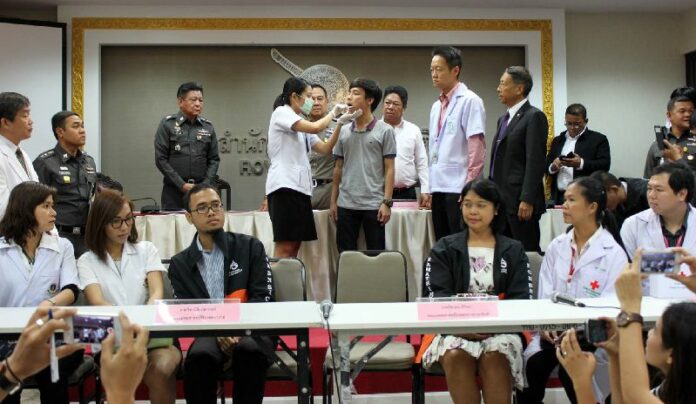
Warot Toowichian, 22, giving a DNA sample to police to dispel accusations that he was involved in the murder of two British tourists on the island last month, 30 Oct 2014.

BANGKOK— Police say the first round of forensic results reveal that the son of a village headman on Koh Tao was not behind the murder of two British tourists on the island last month.

Warot Toowichian, 22, provided authorities with a sample of his DNA yesterday in an effort to dispel persistent rumors that he was responsible for the grisly murder of David Miller, 24, and rape and murder of Hannah Witheridge, 23, on 15 September.

Suspicions were raised about Warot, the son of a local administrator on the island, after he was initially considered a suspect in the case, but then swiftly deemed innocent in less than 24 hours.

Warot’s father, Woraphan Toowichian, also owns the bar where Miller and Witheridge were last seen and is considered an ‘influential figure’ on the island.

Today, officials at the Institute of Forensic Science in Bangkok said Warot’s DNA did not match the semen found in Witheridge’s body. Police are now waiting on results from three other hospitals, which they say should be available by tomorrow.

Thai police have come under heavy scrutiny for their handling of the murder investigation, which was marred early on by a series of blunders and miscommunications with the press. More recently, Thai authorities have been accused of torturing two Burmese migrant workers into confessing to the murder. 

The two suspects, Zaw Lin and Win Zaw Htun, recanted their confessions last week and said they were beaten during the police interrogation. Thai authorities have firmly denied torturing the two men or using them as scapegoats.

Yesterday, Thailand’s chief of police, Somyot Pumpunmuang, reportedly threatened to prosecute anyone who spreads rumours about the murder case with the Computer Crime Act, one of Thailand’s toughest laws. 

The law, which carries a maximum penalty of  five years in prison and a 100,000 baht fine,  criminalises any action carried out via a computer system that defames others, transmits pornography, spreads false information, or threatens national security. Critics say its sweeping scope is regularly abused to restrict freedom of speech.

 
For comments, or corrections to this article please contact: [email protected]

You can also find Khaosod English on Twitter and Facebook
http://twitter.com/KhaosodEnglish
http://www.facebook.com/KhaosodEnglish
Advertisement

Photo Essay: Bangkok's Fading Craft Communities

By Gerrit Phil Baumann

Khaosod English photographer Gerrit Phil Baumann visits three historical neighborhoods in Bangkok where spirit houses, silk weavings, and alms bowls are still being made by artisanal craftsmen. As time passes, more and more of these traditional workshops are being replaced by factories. Here are the photos and stories of those who remain. 

\

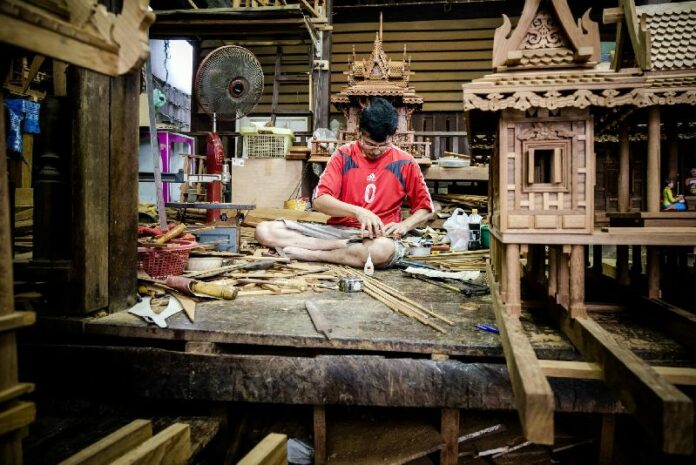
Ban Fuen in Khlong San district, once known as the spirit house village. Gob and her brother are proud to be the third-generation owners of a spirit house carpentry shop.

\

The community of Ban Fuen had to reinvent itself after sawmills along the Khlong San banks of the Chao Phraya river closed during World War II. Today, Gob's carpentry benefits from the business's OTOP status, which provides discounts on teak wood from government forestries. 

\

Spirit houses come in all shapes and sizes and are an integral part of many Thai homes. Even though most are mass-produced, prestigious business towers and shopping malls often rely on made-to-order teak houses to please the spirits.

\

Traditional spirit houses come in pairs. The first element is a temple-like dwelling for the local spirit. In the animist belief system, this guardian spirit (เจ้าที่) is considered the real owner of the space. In order to live or to do business on his land, a Brahmin must perform a rite to ask permission.

\

The second spirit house is shaped like a traditional wooden Thai house. It is intended to pay respect to earlier generations that lived on the land, who are represented by effigies of "Grandma and Grandpa." These are also often accompanied by "domestic servants."

\

All parts of the spirit houses are made by hand, like this roof top ornament, and an entire project may take weeks to finish.

\

Gob believes these tools are unlikely to be passed down to the next generation. Despite a steady demand for artisanal spirit houses, other careers appear to be more attractive to most Thai youth. 

\

Ban Krua in Pathum Wan district. The neighborhood is defined by the Saen Saeb canal, which was originally built to send military supplies for wars fought during the time of Rama I in Cambodia. The campaigns were supported by the Cham people, also known as Khmer Islam, who were granted permission to settle along the canal, which is not far from one of Bangkok's major tourist attractions: the Jim Thompson House.

\

Uncle Aood, who grew up in Ban Kura tells the story of the changes that Thompson brought to the community.

\

After World War II, Thompson arrived as a shareholder of the Oriental hotel and found that most of the silk weavers had closed their businesses. He managed to revive the industry until he disppeared under mysterious circumstances in 1967 during a trip to Malaysia.

\

Uncle Aood sources his silk from farms in Nakhorn Rachasima province. All of the other facilities, from production to factory outlet, are contained within his Bangkok home.

\

Softened raw silk dries. It is waiting to be colored and processed into fine threads for the loom.

\

Uncle Aood inspects the silk after coloring. 

\

Uncle Aood's tools may have seen better days, but they still serve their purpose adequately. 

\

Uncle Aood is using the same looms for weaving silk that he used when Jim Thompson was around to check in on the progress of his production.

\

Ban Baat, Phra Nakhorn district. The "alms bowl village" lies not far from the other end of Saen Saeb canal and is part of the neighborhood along Bangkok's Golden Mount. The community was founded by Burmese migrants in the early Rattanakosin period. 

\

Amorn, an alms bowl smith who grew up in Ban Baat, which quickly specialized in making bowls for monks to receive food donations on their morning alms rounds. Life remained like that until automated production began to replace the neighborhood's traditional shops. 

\

Today only three housholds still produce alms bowls.

\

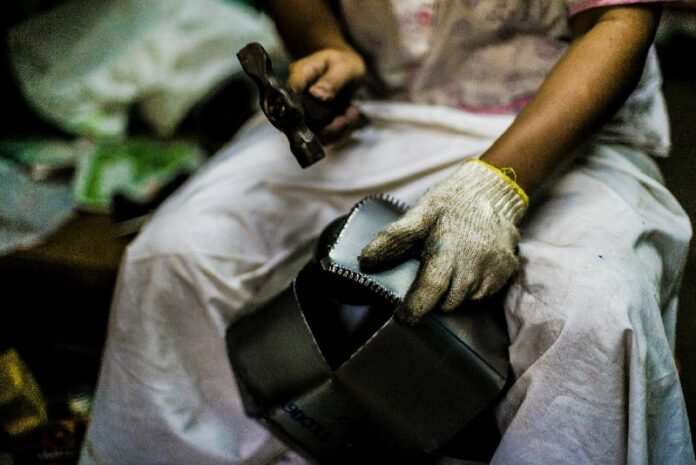
All together, nine metal plates make up an alms bowl. With a bit of hammering, the parts are connected and prepared for welding.

\

The four corner pieces represent the cardinal directions. According to myth, when Buddha lost his alms bowl spirits associated with these directions offered him a replacement. 

\

The shop offers several types of alms bowls. As monks are not allowed to handle money, someone else must come to buy the bowls and donate it to them. 


See more of Baumann's work:
Photo Essay: The Gods Among Us At Navaratri Festival
Photo Essay: A Journey Through Bangkok's Amulet Markets 
Photo Essay: Blood, Sweat, and Tears From Inside The Muay Thai Ring


For comments, or corrections to this article please contact: [email protected]

You can also find Khaosod English on Twitter and Facebook
http://twitter.com/KhaosodEnglish
http://www.facebook.com/KhaosodEnglish


Advertisement

Photo Essay: Bangkok’s Fading Craft Communities

By Gerrit Phil Baumann

Khaosod English photographer Gerrit Phil Baumann visits three historical neighborhoods in Bangkok where spirit houses, silk weavings, and alms bowls are still being made by artisanal craftsmen. As time passes, more and more of these traditional workshops are being replaced by factories. Here are the photos and stories of those who remain. 

\

Ban Fuen in Khlong San district, once known as the spirit house village. Gob and her brother are proud to be the third-generation owners of a spirit house carpentry shop.

\

The community of Ban Fuen had to reinvent itself after sawmills along the Khlong San banks of the Chao Phraya river closed during World War II. Today, Gob’s carpentry benefits from the business’s OTOP status, which provides discounts on teak wood from government forestries. 

\

Spirit houses come in all shapes and sizes and are an integral part of many Thai homes. Even though most are mass-produced, prestigious business towers and shopping malls often rely on made-to-order teak houses to please the spirits.

\

Traditional spirit houses come in pairs. The first element is a temple-like dwelling for the local spirit. In the animist belief system, this guardian spirit (เจ้าที่) is considered the real owner of the space. In order to live or to do business on his land, a Brahmin must perform a rite to ask permission.

\

The second spirit house is shaped like a traditional wooden Thai house. It is intended to pay respect to earlier generations that lived on the land, who are represented by effigies of “Grandma and Grandpa.” These are also often accompanied by “domestic servants.”

\

All parts of the spirit houses are made by hand, like this roof top ornament, and an entire project may take weeks to finish.

\

Gob believes these tools are unlikely to be passed down to the next generation. Despite a steady demand for artisanal spirit houses, other careers appear to be more attractive to most Thai youth. 

\

Ban Krua in Pathum Wan district. The neighborhood is defined by the Saen Saeb canal, which was originally built to send military supplies for wars fought during the time of Rama I in Cambodia. The campaigns were supported by the Cham people, also known as Khmer Islam, who were granted permission to settle along the canal, which is not far from one of Bangkok’s major tourist attractions: the Jim Thompson House.

\

Uncle Aood, who grew up in Ban Kura tells the story of the changes that Thompson brought to the community.

\

After World War II, Thompson arrived as a shareholder of the Oriental hotel and found that most of the silk weavers had closed their businesses. He managed to revive the industry until he disppeared under mysterious circumstances in 1967 during a trip to Malaysia.

\

Uncle Aood sources his silk from farms in Nakhorn Rachasima province. All of the other facilities, from production to factory outlet, are contained within his Bangkok home.

\

Softened raw silk dries. It is waiting to be colored and processed into fine threads for the loom.

\

Uncle Aood inspects the silk after coloring. 

\

Uncle Aood’s tools may have seen better days, but they still serve their purpose adequately. 

\

Uncle Aood is using the same looms for weaving silk that he used when Jim Thompson was around to check in on the progress of his production.

\

Ban Baat, Phra Nakhorn district. The “alms bowl village” lies not far from the other end of Saen Saeb canal and is part of the neighborhood along Bangkok’s Golden Mount. The community was founded by Burmese migrants in the early Rattanakosin period. 

\

Amorn, an alms bowl smith who grew up in Ban Baat, which quickly specialized in making bowls for monks to receive food donations on their morning alms rounds. Life remained like that until automated production began to replace the neighborhood’s traditional shops. 

\

Today only three housholds still produce alms bowls.

\

All together, nine metal plates make up an alms bowl. With a bit of hammering, the parts are connected and prepared for welding.

\

The four corner pieces represent the cardinal directions. According to myth, when Buddha lost his alms bowl spirits associated with these directions offered him a replacement. 

\

The shop offers several types of alms bowls. As monks are not allowed to handle money, someone else must come to buy the bowls and donate it to them. 


See more of Baumann’s work:
Photo Essay: The Gods Among Us At Navaratri Festival
Photo Essay: A Journey Through Bangkok’s Amulet Markets 
Photo Essay: Blood, Sweat, and Tears From Inside The Muay Thai Ring


For comments, or corrections to this article please contact: [email protected]

You can also find Khaosod English on Twitter and Facebook
http://twitter.com/KhaosodEnglish
http://www.facebook.com/KhaosodEnglish


Advertisement

Police Look for Past Japanese Boyfriends of Murder Suspect

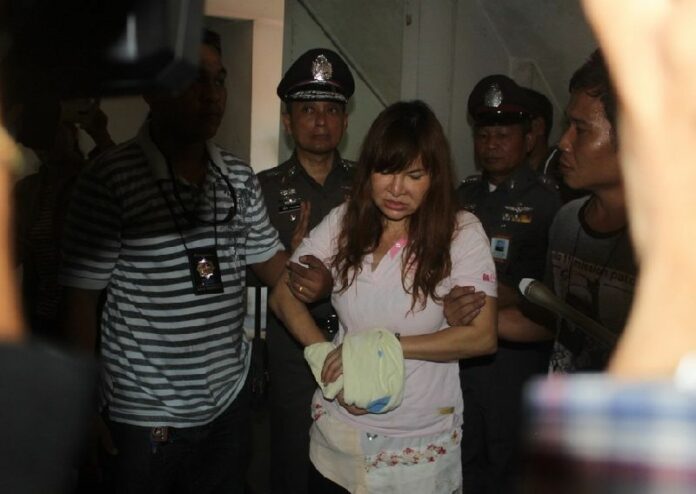
Pornchanok Chiyapa, 47, has been accused of murdering 2 Japanese men in Thailand.

BANGKOK—Police are looking for two Japanese men previously involved with of a 47-year-old Thai woman who was recently linked to the deaths of two other Japanese men.

Police have accused Pornchanok Chaiyapa of playing a role in the murder of Yoshinori Shimato, 79, whose remains were found in a Samut Prakan canal on Tuesday, and Kasitosi Tanaka, who was found dead at the bottom of a flight of stairs in 2003.

Pornchanok was married to Tanaka at the time of his death, which she said told police was “fatal accident.” Police recently re-opened the case at the urging of Tanaka's daughter, who believes Pornchanok was responsible for her father's death after evidence linked her to the murder of Shimato. 

Police are now contacting Japanese authorities to locate two other Japanese men from Pornchanok’s past. It’s unclear whether they are still alive, said Pol.Col. Somsakchai Amornsongchareng, superintendent of Bang Sao Tong police station in Samut Prakan province. 

Porchanok and and Somchai Kaewbangyang, a Thai taxi driver, have been charged with manslaughter over the deaths of Tanaka and Shimato. Police say Somchai confessed to both murders. 


Read more:
Suspect Confesses to Japanese Murders: Police
Daughter Urges Police to Re-investigate Father's Fatal 'Accident'

 
For comments, or corrections to this article please contact: [email protected]

You can also find Khaosod English on Twitter and Facebook
http://twitter.com/KhaosodEnglish
http://www.facebook.com/KhaosodEnglish

Advertisement

Assets of PM and Cabinet Revealed

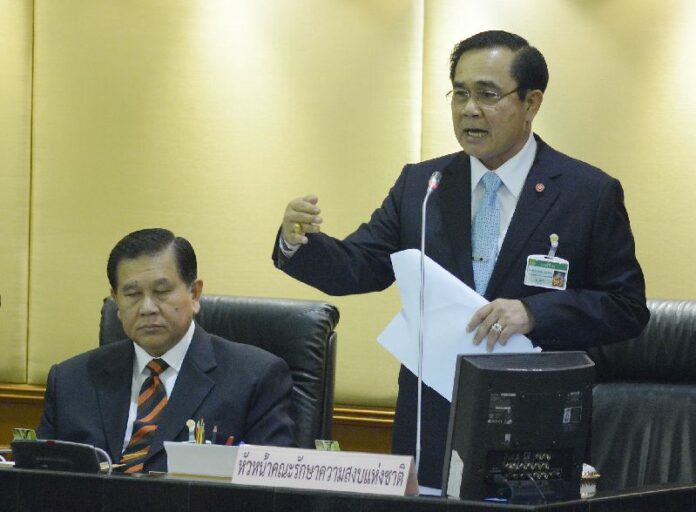
File photo of junta chairman and Prime Minister Gen. Prayuth Chan-ocha.

BANGKOK — Thailand’s national anti-graft agency has published the assets of coup-leader turned Prime Minister Prayuth Chan-ocha and his cabinet, revealing that one third of the ministers are worth more than 100 million baht.

Prauyth, the former army chief who led a coup on 22 May, declared 128 million baht in net assets – which is nearly 4 million in US dollars – and 645,754 baht in debt. 

The wealthiest of the 33 ministers appears to be Deputy Prime Minister Pridiyathon Devakula, with 1,378 million baht in assets and no debt to his name. Next in line is Panadda Diksul, who runs the Office of the Prime Minister, and declared 1,315 million baht in assets, also with no debt.

According to the report, the poorest Cabinet member is Education Minister Narong Pipatanasai with 6.95 million baht in assets and 2.92 million baht in loans.

After leading a coup in May, Prayuth was chosen as Prime Minister by the rubber-stamp parliament he appointed in August. Nearly a third of his Cabinet members are military men.

Although initially reluctant, Thailand’s National Anti-Corruption Commission (NACC) eventually ordered Prayuth and his cabinet to declare their assets, which all holders of political office are normally required to do by law.

Members of the junta-appointed National Legislative Assembly were also ordered to declare their financial holdings in August. However, the NACC recently ruled that the National Reform Council, which will be spearheading a year-long reform effort, is exempt from the order because their work is “academic,” not political.

"They do not have to declare their assets because they will only perform academic works," said NACC spokesperson Wicha Mahakulon 21 October. "They have no stake in politics."

The council, also hand-picked by Prayuth, has been tasked with proposing reforms across a variety of sectors, including the country's politics, public administration, judiciary, local government, and mass media, among others. 

 
For comments, or corrections to this article please contact[email protected]

You can also find Khaosod English on Twitter and Facebook
http://twitter.com/KhaosodEnglish
http://www.facebook.com/KhaosodEnglish


Advertisement

Police Block Commemoration of 2006 Anti-Coup Suicide

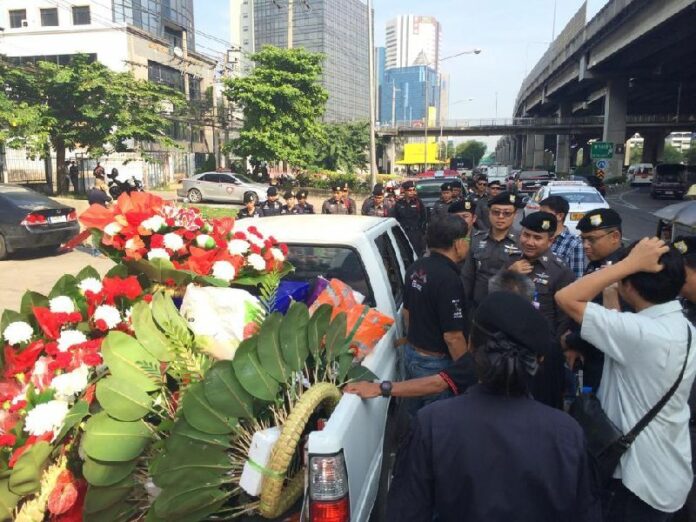
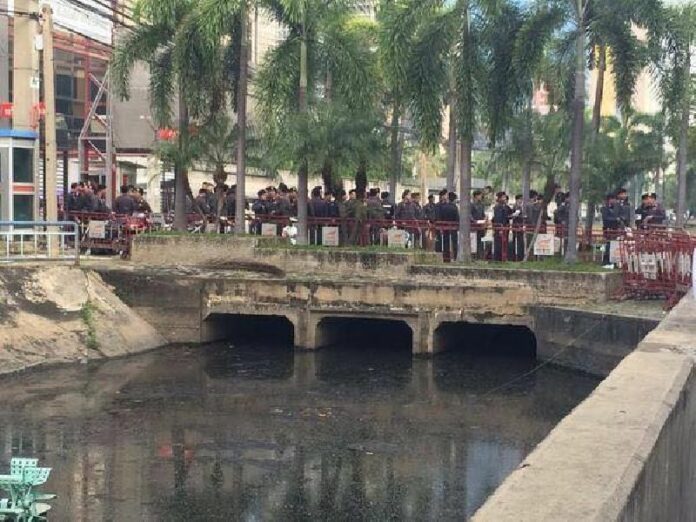
Police blocked student activists from laying a wreath at the pedestrian bridge where taxi driver a hanged himself in protest the 2006 military coup, 31 October 2014. [Photo: Matichon]

BANGKOK — Police have blocked a group of student activists from commemorating the death of a taxi driver who hung himself from a bridge in northern Bangkok to protest the 2006 military coup.

Approximately 100 police officers were stationed at the pedestrian bridge starting at 7am this morning, Prachatai reported

The officers reportedly stopped seven student activists from laying wreaths at the bridge and observing a moment of silence. After a ‘90 minute’ negotiation with the officers, the students were accompanied to take taxis back to their university.

Political gatherings are banned under orders from Thailand’s current military junta, which seized power in a coup on 22 May, 2014.

"When I looked in their eyes, they looked so tried," said Than Rittiphan, an activist with the Thai Student Center For Democracy  (TSCD). "It seems like they stayed up over night to prevent this from happening. I'm concerned that they are victims of this system too."

He continued, "It's so unfortunate that one hundred of them had to stay…just to prevent unarmed civilians and flowers. Who ever ordered them must be so panicked." 

However, a prominent Redshirt lawyer, Anon Nampha, was later allowed to lay a wreath at the bridge after negotiating with police for 30 minutes, Prachatai reported. 

The wreath was laid for Nuamthong Praiwan, who took his own life eight years ago today. 

On 30 September 2006, Nuamthong rammed a taxi painted with an anti-coup slogan into a military tank that was stationed in Bangkok's Royal Plaza. He was injured by the incident, which he said was an act of protest against the coup. He also told the press he was willing to die in the attack.

However, a deputy spokesperson for the military junta, Col. Akkara Thiproj, dismissed Nuamthong’s words and claimed that "nobody’s ideals are so great that they would sacrifice their lives for them."

A month later, Nuamthong hanged himself from a pedestrian bridge on 31 October 2006. He wrote in a suicide note that he wanted to prove Col. Akkara’s "insult” wrong. He also wrote that the date of his suicide was chosen as a tribute to the popular uprising against a military dictatorship in October 1973. 

"I'd like to tell my children and my wife to be proud of me. Do not be sad. I hope I will not see another coup in my next life," Mr. Nuamthong wrote in the letter.


For comments, or corrections to this article please contact: [email protected]

You can also find Khaosod English on Twitter and Facebook
http://twitter.com/KhaosodEnglish
http://www.facebook.com/KhaosodEnglish

Advertisement

Police Block Commemoration of 2006 Anti-Coup Suicide

A heavy police presence by the bridge on 31 Oct. Photo provided by student activists.

BANGKOK — Police have blocked a group of student activists from commemorating the death of a taxi driver who hung himself from a bridge in northern Bangkok to protest the 2006 military coup.

Approximately 100 police officers were stationed at the pedestrian bridge starting at 7am this morning, Prachatai reported

The officers stopped seven student activists from laying wreaths at the bridge and observing a moment of silence. After  ‘90 minutes’ of negotiation with the officers, the students were accompanied to take taxis back to their university.

Political gatherings are banned under orders from Thailand’s current military junta, which seized power in a coup on 22 May, 2014.

"When I looked in their eyes, they looked so tried," said Than Rittiphan, an activist with the Thai Student Center For Democracy  (TSCD). "It seems like they stayed up over night to prevent this from happening. I'm concerned that they are victims of this system too."

He continued, "It's so unfortunate that one hundred of them had to stay…just to prevent unarmed civilians and flowers. Who ever ordered them must be so panicked." 

However, a prominent Redshirt lawyer, Anon Nampha, was later allowed to lay a wreath at the bridge after negotiating with police for 30 minutes, Prachatai reported. 

The wreath was laid for Nuamthong Praiwan, who took his own life eight years ago today. 

On 30 September 2006, Nuamthong rammed a taxi painted with an anti-coup slogan into a military tank that was stationed in Bangkok's Royal Plaza. He was injured by the incident, which he said was an act of protest against the coup. He also told the press he was willing to die in the attack.

However, a deputy spokesperson for the military junta, Col. Akkara Thiproj, dismissed Nuamthong’s words and claimed that "nobody’s ideals are so great that they would sacrifice their lives for them."

A month later, Nuamthong hanged himself from a pedestrian bridge on 31 October 2006. He wrote in a suicide note that he wanted to prove Col. Akkara’s "insult” wrong. He also wrote that the date of his suicide was chosen as a tribute to the popular uprising against a military dictatorship in October 1973. 

"I'd like to tell my children and my wife to be proud of me. Do not be sad. I hope I will not see another coup in my next life," Mr. Nuamthong wrote in the letter.


For comments, or corrections to this article please contact: [email protected]

You can also find Khaosod English on Twitter and Facebook
http://twitter.com/KhaosodEnglish
http://www.facebook.com/KhaosodEnglish


Advertisement

Thailand to Repair and Overhaul 1st Thai-Myanmar Friendship Bridge

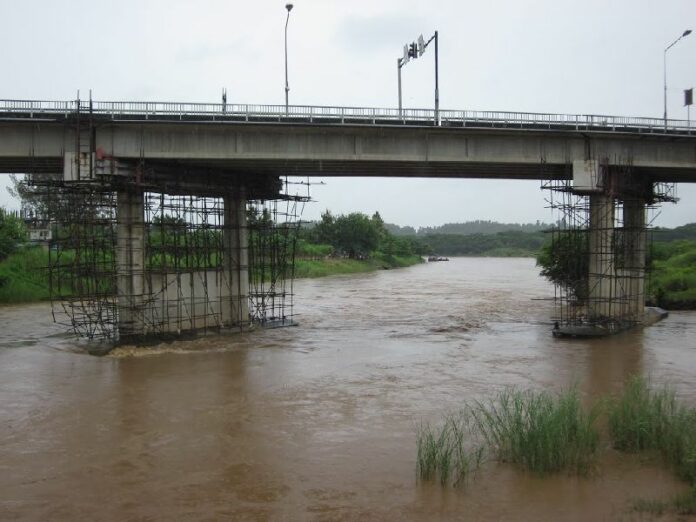
First Thai-Myanmar Friendship Bridge [Chiang Rai Times]

(Chiang Rai Times)

CHIANG RAI -Thailand is to spend 7 million baht to perform major maintenance on the first Thai-Myanmar Friendship Bridge, expected to be finished within half a year.

The Mae Sai Chief District Officer Somchai Rungsakorn today presided at a seminar on the effect on traffic caused by the period of maintenance on the Thai-Myanmar Friendship Bridge.

The meeting was held at the Mekong Delta Boutique Hotel.The participants in the forum included officials from the Pha Muang Task Force, the Chiang Rai Immigration Office, the Mae Sai Customs House, the 1st Chiang Rai Highway District, and the Chamber of Commerce of Chiang Rai.

Read more here.

Note: Khaosod English is not responsible for content on other websites.


Advertisement

Three Train Collisions in Two Days

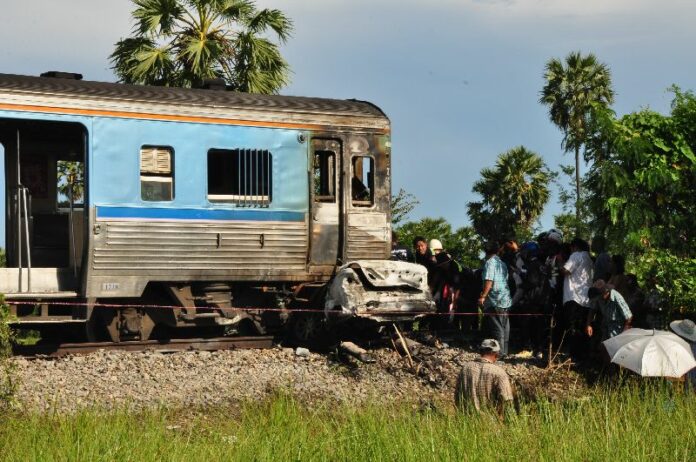
A car collided into a moving train in Phetchaburi province and caused a small explosion that killed the driver and his wife, 29 Oct 2014.

KHON KAEN — Thailand's third train collision in the past 48 hours occurred in the northeast this morning, as a truck crashed into a train and killed at least four people.

The train was on its way from Nakhon Ratchasima to Nong Khai province. The deceased include the train's driver, Wichai Thongdee, a train mechanic, Dumri Phosavart, and two passengers.

There were no lights or barriers at the crossing where the collision occured in Khon Kaen province, as it was one of hundreds of unofficial railway-road intersections in Thailand. 

Transportation officials say there are at least 500 illegal train crossings in the country, which increase the chance of accidents as the intersections are not properly marked. 

Just yesterday, a car collided into a moving train in Phetchaburi province in southern Thailand and caused a small explosion that killed the driver and his wife.

The couple, Vittaya and Rojanawan Ratanam, were reportedly looking at a GPS their mobile phone and did not realize the train was coming. 

Another train accident occurred late Tuesday night when the engine of 35-year-old Pakrassami Makradee’s car gave out while she was driving through a railway crossing in Phitsanulok province. The train slammed into her car and dragged it for 100 metres. Luckily, Pakrassami only suffered minor injuries.

For comments, or corrections to this article please contact: [email protected]

You can also find Khaosod English on Twitter and Facebook
http://twitter.com/KhaosodEnglish
http://www.facebook.com/KhaosodEnglish

Advertisement

Hot News

LATEST NEWS

Bangkok
light rain
25 ° C
27.2 °
25 °
92 %
8.2kmh
100 %
Fri
25 °
Sat
32 °
Sun
35 °
Mon
36 °
Tue
37 °