




















27.2 C
Bangkok
Saturday, July 18, 2026
Home Blog Page 3215

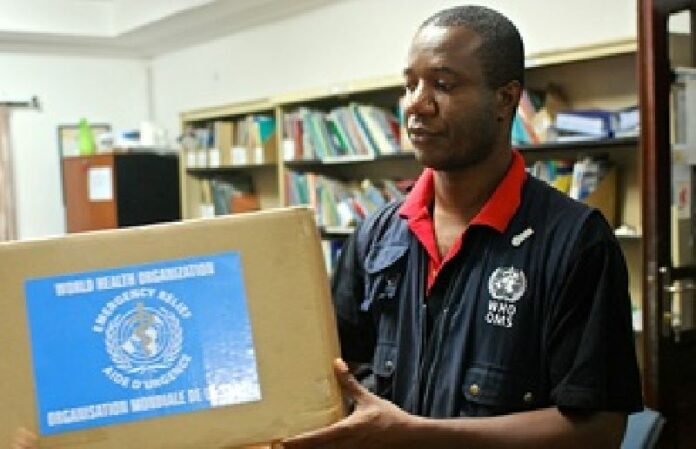
WHO Issues Roadmap to Scale Up International Response to the Ebola Outbreak in West Africa

(World Health Organisation)

The aim is to stop ongoing Ebola transmission worldwide within 6–9 months, while rapidly managing the consequences of any further international spread. It also recognizes the need to address, in parallel, the outbreak’s broader socioeconomic impact.

It responds to the urgent need to dramatically scale up the international response. Nearly 40% of the total number of reported cases have occurred within the past three weeks.

The roadmap was informed by comments received from a large number of partners, including health officials in the affected countries, the African Union, development banks, other UN agencies, Médecins Sans Frontières (MSF), and countries providing direct financial support.

It will serve as a framework for updating detailed operational plans. Priority is being given to needs for treatment and management centres, social mobilization, and safe burials. These plans will be based on site-specific data that are being set out in regular situation reports, which will begin this week.

The situation reports map the hotspots and hot zones, present epidemiological data showing how the outbreak is evolving over time, and communicate what is known about the location of treatment facilities and laboratories, together with data needed to support other elements of the roadmap.

The roadmap covers the health dimensions of the international response. These dimensions include key potential bottlenecks requiring international coordination, such as the supply of personal protective equipment, disinfectants, and body bags.

The WHO roadmap will be complemented by the development of a separate UN-wide operational platform that brings in the skills and capacities of other agencies, including assets in the areas of logistics and transportation. The UN-wide platform aims to facilitate the delivery of essential services, such as food and other provisions, water supply and sanitation, and primary health care.

Resource flows to implement the roadmap will be tracked separately, with support from the World Bank.
Advertisement

Junta Urges Fugitive Dissidents To Come Back

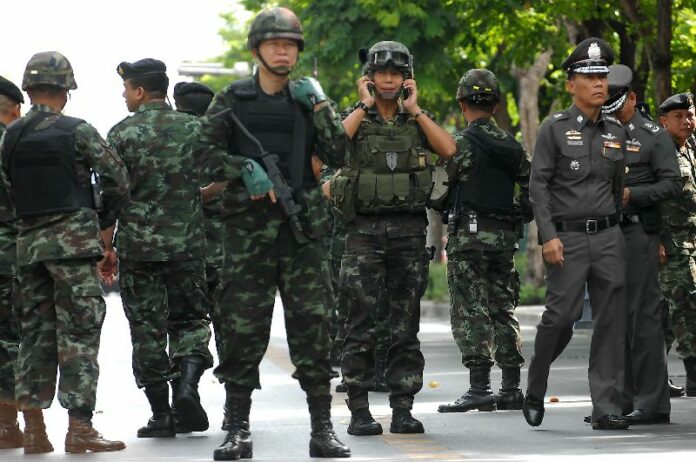
Soldiers stand guard at the Army club in Bangkok, where politicians and activists were ordered to report following the coup d'etat, 23 May, 2014.

BANGKOK — Thailand’s military junta has called upon anti-coup dissidents living in exile to come back to Thailand, promising to provide them with fair trials once they return.

"We want them to come back. We never shut the door to them. We never prohibit them [from coming back]," said junta spokesperson Col. Winthai Suvaree at a press conference today.

Col. Winthai was responding to a comment by Karom Polpornklang, a lawyer who represents a number of Redshirt activists and lese majeste (insult of monarchy) defendants. Mr. Karom accused the junta's National Council for Peace and Order (NCPO) of failing to give a fair trial to its critics. 

Since the military staged a coup on 22 May, dozens of activists, academics, and politicians allied to the previous government have been charged with defying the NCPO's summons orders. In addition, at least fourteen new cases of lese majeste have been opened.

Many dissidents fled the country soon after the military takeover, including former Minister of Interior Affairs Charupong Ruangsuwan, Redshirt leader and former Deputy House Speaker Apiwan  Wiriyachai, and historian and critic of the Thai monarchy Somsak Jiamteerasakul. 

In response to a news report that Mr. Apiwan is currently in the Philippines, Col. Winthai insisted that the NCPO has no intention of asking for his extradition, despite an existing lese majeste charge against the politician.

"The case is the duty of the police to decide how to proceed. Everything is in accordance with the law. The NCPO will merely ask for cooperation [from Mr. Apiwan] to come back and contest the charge in Thailand," Col. Winthai said. "Let me stress that we have no policy of hunting down individuals who are taking exile abroad."

He claimed that NCPO leader and Prime Minister Prayuth Chan-ocha has personally invited all dissidents to return to Thailand, with promises to treat them fairly.

Col. Winthai continued, "This does not only apply to Mr. Apiwan. Other people who are in foreign countries should come back and fight the charges, and enter legal procedures. People who are contesting their charges in the country, those that don't run away, get their bail release." 

Contrary to Col. Winthai's claim, a Thai criminal court recently denied a bail release for two activists charged with lese majeste for their role in a play that was performed in October last year. Police say the theater performance was offensive to the Thai Royal Family. 

The two activists are currently imprisoned as they await their trial. If found guilty, they could face up to 15 years in jail. 


For comments, or corrections to this article please contact[email protected]

You can also find Khaosod English on Twitter and Facebook
http://twitter.com/KhaosodEnglish
http://www.facebook.com/KhaosodEnglish

Advertisement

'Lucky Prayuth Number' Craze Hits Thai Lotto Industry

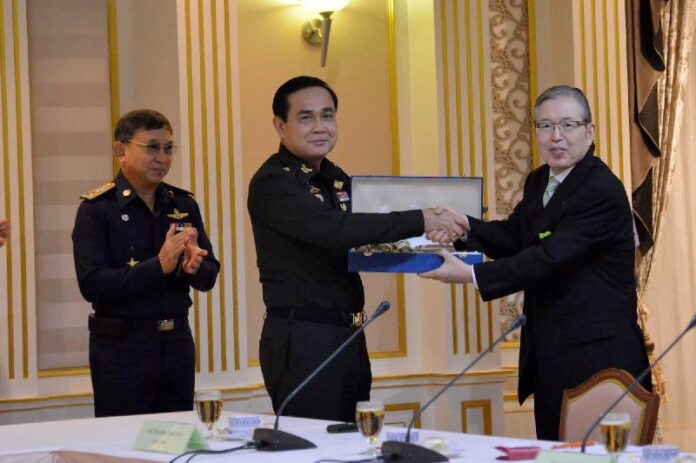
Gen. Prayuth Chan-ocha meeting with Japanese investors at the Army HQ in Bangkok, 28 August 2014.

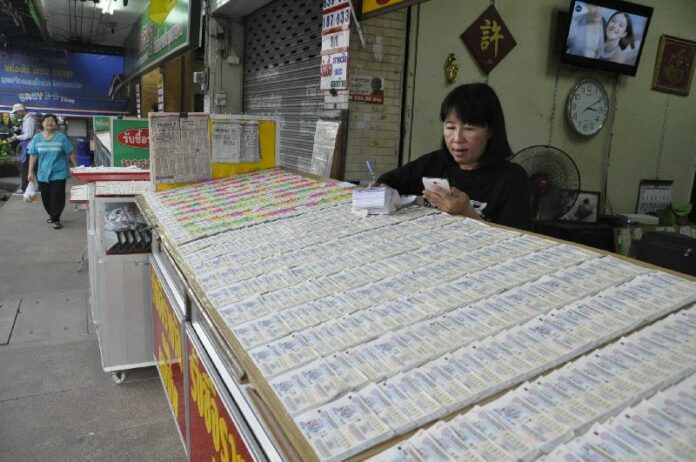
BANGKOK — Four days before lottery draw, tickets ending with the number “29” are flying off the shelf because of their association with Thai junta leader Gen. Prayuth Chan-ocha, who recently became the country’s 29th Prime Minister.

In some provinces, the price of lottery tickets ending in “29” has been driven up to 500 baht per ticket — a steep increase from the usual price of 90-100 baht, and certainly higher than the junta's recommendation of 80 baht per ticket.

Some vendors said they have already sold out all the tickets ending in "29," even though the next round of lottery draw, 1 September, is four days away.

"I ran out of those tickets many days ago," said Amphai Kanchanarak, a lotto seller at a market in Ubon Ratchathani province.

Chatri Khun-in, a vendor who sells lottery tickets in Chiang Mai province, said that the numbers 21 and 60 are also highly sought after by lottery veterans because Gen. Prayuth was voted into the office as Prime Minister on 21 August and born on 21 March, making him 60 years old. 

The craze has also sent a wave of panic across the Kingdom's underground lottery industry, which is even more popular than the state-owned lottery system.

One underground lottery coordinator in Surat Thani province told Khaosodthat all major dealers in the province have already stopped selling the "29" tickets because they are convinced the number will be drawn, which would force them to make a massive payout to their buyers.

"We are really surprised that the number has so many buyers. So, many big hands decided to stop taking the bets early. Usually, they only stop taking the bets on the day of the lottery draw," said the coordinator, who asked not to be named.

Lottery enthusiasts also rallied around numbers associated with Prime Minister Yingluck Shinawatra when she was in office, convinced that she has a supernatural ability to hint at winning lottery numbers.

However, many lottery veterans say they are more confident about betting on numbers that correspond to Gen. Prayuth because they believe the lottery system under the Thailand’s military regime will be rigged to produce numbers that reinforce the Gen. Prayuth’s charisma. 

Since staging a military coup on 22 May, the junta's National Council for Peace and Order (NCPO) has ruled Thailand with undisputed authority. The NCPO has outlawed criticism of the regime, banned public protests, censored the media, and issued legal orders at will.

"Gen. Prayuth's number is the biggest number in years," said Mr. Chatri, a lotto vendor in Chiang Mai province. "Because he is the supreme sovereign authority. The new director of the Government Lottery Office is also a military officer. That makes Gen. Prayuth's number the biggest trend in many years."

Mr. Chatri added, "Right now, all the underground dealers are too scared to take bets anymore. Those who do just told their buyers that they will only pay out the rewards in half. It shows the power of Gen. Prayuth's number."

Officials at the Government Lottery Office dismissed speculation that Gen. Prayuth will somehow influence the outcome of the next lottery draw. They insisted that the lottery draw equipment is up to international standards and that every step of the draw procedure is transparent and observed by high-ranking officials. 

Col. Winthai Suvaree, spokesperson of the NCPO, said he was disappointed by lottery vendors who used the craze around Gen. Prayuth's lucky number to greatly increase the price of their tickets.

"The Government Lottery Office has been asking for cooperation from vendors not to sell lottery tickets at an inappropriate price, but some sellers still sell them at a price much higher than [acceptable] rate," Col. Winthai said.

The spokesperson also advised buyers to "exercise their good judgment" before they decide to spend large money on lottery tickets.


For comments, or corrections to this article please contact: [email protected]

You can also find Khaosod English on Twitter and Facebook
http://twitter.com/KhaosodEnglish
http://www.facebook.com/KhaosodEnglish

Advertisement

'Lucky Prayuth Number' Craze Hits Thai Lotto Industry

Lottery vendor in Nakhon Ratchasima province, 27 August 2014.

BANGKOK — Four days before lottery draw, tickets ending with the number “29” are flying off the shelf because of their association with Thai junta leader Gen. Prayuth Chan-ocha, who recently became the country’s 29th Prime Minister.

In some provinces, the price of lottery tickets ending in “29” has been driven up to 500 baht per ticket — a steep increase from the usual price of 90-100 baht, and certainly higher than the junta's recommendation of 80 baht per ticket.

Some vendors said they have already sold out all the tickets ending in "29," even though the next round of lottery draw, 1 September, is four days away.

"I ran out of those tickets many days ago," said Amphai Kanchanarak, a lotto seller at a market in Ubon Ratchathani province.

Chatri Khun-in, a vendor who sells lottery tickets in Chiang Mai province, said that the numbers 21 and 60 are also highly sought after by lottery veterans because Gen. Prayuth was voted into the office as Prime Minister on 21 August and born on 21 March, making him 60 years old. 

The craze has also sent a wave of panic across the Kingdom's underground lottery industry, which is even more popular than the state-owned lottery system.

One underground lottery coordinator in Surat Thani province told Khaosod that all major dealers in the province have already stopped selling the "29" tickets because they are convinced the number will be drawn, which would force them to make a massive payout to their buyers.

"We are really surprised that the number has so many buyers. So, many big hands decided to stop taking the bets early. Usually, they only stop taking the bets on the day of the lottery draw," said the coordinator, who asked not to be named.

Lottery enthusiasts also rallied around numbers associated with Prime Minister Yingluck Shinawatra when she was in office, convinced that she has a supernatural ability to hint at winning lottery numbers.

However, many lottery veterans say they are more confident about betting on numbers that correspond to Gen. Prayuth because they believe the lottery system under the Thailand’s military regime will be rigged to produce numbers that reinforce the Gen. Prayuth’s charisma. 

Since staging a military coup on 22 May, the junta's National Council for Peace and Order (NCPO) has ruled Thailand with undisputed authority. The NCPO has outlawed criticism of the regime, banned public protests, censored the media, and issued legal orders at will.

"Gen. Prayuth's number is the biggest number in years," said Mr. Chatri, a lotto vendor in Chiang Mai province. "Because he is the supreme sovereign authority. The new director of the Government Lottery Office is also a military officer. That makes Gen. Prayuth's number the biggest trend in many years."

Mr. Chatri added, "Right now, all the underground dealers are too scared to take bets anymore. Those who do just told their buyers that they will only pay out the rewards in half. It shows the power of Gen. Prayuth's number."

Officials at the Government Lottery Office dismissed speculation that Gen. Prayuth will somehow influence the outcome of the next lottery draw. They insisted that the lottery draw equipment is up to international standards and that every step of the draw procedure is transparent and observed by high-ranking officials. 

Col. Winthai Suvaree, spokesperson of the NCPO, said he was disappointed by lottery vendors who used the craze around Gen. Prayuth's lucky number to greatly increase the price of their tickets.

"The Government Lottery Office has been asking for cooperation from vendors not to sell lottery tickets at an inappropriate price, but some sellers still sell them at a price much higher than [acceptable] rate," Col. Winthai said.

The spokesperson also advised buyers to "exercise their good judgment" before they decide to spend large money on lottery tickets.


For comments, or corrections to this article please contact: [email protected]

You can also find Khaosod English on Twitter and Facebook
http://twitter.com/KhaosodEnglish
http://www.facebook.com/KhaosodEnglish

Advertisement

Photo Essay: Blood, Sweat, and Tears From Inside The Muay Thai Ring

Gerrit Phil Baumann

Thailand’s national sport, Muay Thai, is known for its alternating savagery and poetry. Every match is war of attrition, with fighters delivering blows through a combination of fists, elbows, and knees to a soundtrack of traditional Thai music. Khaosod English photographer Gerrit Phil Baumann attended a match in downtown Bangkok last week to capture the ancient sport’s simultaneous beauty and brutality.

\
A Muay Thai fighter in the limelight after entering the ring. 

\
Every match opens with the "Wai Khru" pre-fight ritual. 

\
The ritual is a way for fighters to pay respect to their teachers and trainers. 

\
Boxers can use their hands, feet, elbows, foreheads, and knees to deliver or fend off an attack. 

\

\

\
Unlike international boxing, referees won't separate fighters when they start clinching. 

\
​Injuries recieved during the fight are quickly treated. 

\
It may take over an our to recover from vertigo after getting knocked out. 

\
When a boxer goes down and shows significant impairment ring-side medics may stop the fighting.


Advertisement

2010 Unrest: Court Throws Out Murder Charges Against Former PM

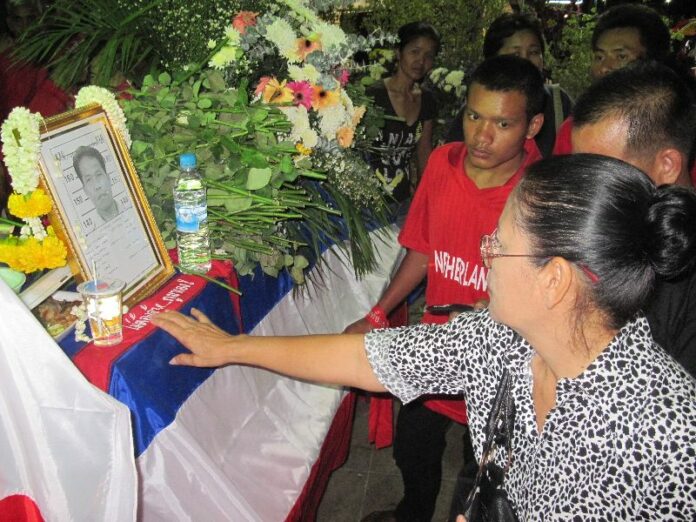
Redshirt demonstrators pay respect to the coffin a fellow protester who was killed in the crackdown, 12 April 2010.

BANGKOK — Thailand’s Criminal Court has dropped the murder case against former Prime Minister Abhisit Vejjajiva and his deputy Suthep Thaugsuban for their roles in a deadly crackdown on protesters in 2010, citing a lack of jurisdiction.

Mr. Abhisit and Mr. Suthep were charged with murder and attempted murder by the Division of Special Investigation (DSI) in 2011 for authorising a military crackdown on anti-government Redshirt protesters in April-May 2010. 

However, the court ruled today that any alleged wrongdoing or abuse of power by Mr. Abhisit and Mr. Suthep must be dealt with by the Supreme Court's Division for Holders of Political Office, as the two men were Prime Minister and Deputy Prime Minister at the time of the military operation.

The decision effectively ended all current criminal proceedings against the former leaders regarding the crackdown, which left over 90 people dead.  

The ruling also transferred authority to pursue the charges from the DSI to the National Anti-Corruption Commission (NACC), citing the latter agency's responsibility over charges related to abuse of power and negligence by political office holders. Mr. Abhisit and Mr. Suthep previously requested the court to appoint the NACC, not the DSI, as the prosecutor.

Denial

The 2010 crackdown came as a response to the tens of thousands of Redshirt demonstrators that had descended on the capital city and occupied Bangkok’s financial districts to demand a fresh election. 

Troops were first sent to disperse the Redshirts on Ratchadamnoen Avenue on 10 April 2010, but failed to break up the protesters. Skirmishes between the military and armed militants allied to the protesters erupted in May, turning parts of Bangkok into a warzone, before the military launched a final push that ended the protests on 19 May 2010.

The violence claimed the lives of more than 90 people, including demonstrators, soldiers, rescue workers, bystanders, and two foreign journalists. More than 1,000 people were also injured in the crackdown. 

Mr. Abhisit and Mr. Suthep denied the murder charges, claiming that shadowy "terrorists" and not security forces, were responsible for the deaths. Commanders of the Thai military have echoed this account, including Gen. Prayuth Chan-ocha, chief of the Royal Thai Army who is now the current Prime Minister.

According to Human Rights Watch, Gen. Prayuth told the DSI in 2012 to stop accusing soldiers of killing demonstrators and not report publicly on the progress of its investigations.

However, court inquests over the recent years have identified military forces as responsible for many of the deaths caused by the crackdown, including a soldier who was reportedly killed in a "friendly fire" in April 2010. 

Footage from journalists and bystanders at the crackdown also show members of the military shooting indiscriminately into the crowds of protesters. One notorious video clip captures a group of soldiers firing weapons into a Buddhist temple in central Bangkok, killing six, including three volunteer medics who were taking shelter inside the sanctuary.

'Double standard'

Today's decision by the Criminal Court is bound to anger many families of the 2010 unrest victims and supporters of the Redshirt faction, who have repeatedly accused Thailand’s judiciary system of harbouring a bias against members of their movement. 

In contrast to the drawn-out inquiries into Mr. Abhisit and Mr. Suthep’s murder charges, Thai authorities convicted 26 Redshirt demonstrators of charges related to the unrest in the first year after the crackdown. At least two Redshirt activists were jailed for 10 months before facing trials and never compensated for their time in prison even though they were eventually acquitted.

In addition, Thai courts and the NACC have swiftly investigated and punished pro-Redshirt politicians on other charges in only a matter of months.  

Since 2007, Thai courts have successfully disbanded two political parties and removed three Prime Ministers allied to the Redshirts. This spring, it took only one month for Thailand’s Constitutional Court to find former Prime Minister Yingluck Shinawatra guilty of unlawfully transferring an official, a verdict that forced Ms. Yingluck to vacate her office.


For comments, or corrections to this article please contact: [email protected]

You can also find Khaosod English on Twitter and Facebook
http://twitter.com/KhaosodEnglish
http://www.facebook.com/KhaosodEnglish

Advertisement

2010 Unrest: Court Throws Out Murder Charges Against Former PM

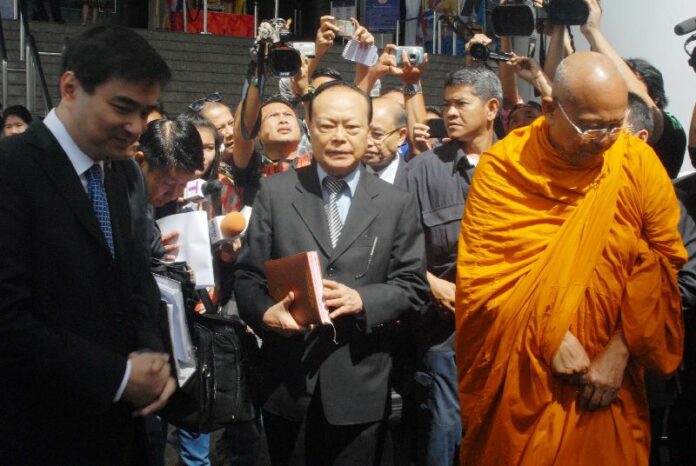
Prime Minister Abhisit Vejjajiva and Suthep Thaugsuban, who recently joined the monkhood, at the Criminal Court in Bangkok on 28 August 2014.

BANGKOK — Thailand’s Criminal Court has dropped the murder case against former Prime Minister Abhisit Vejjajiva and his deputy Suthep Thaugsuban for their roles in a deadly crackdown on protesters in 2010, citing a lack of jurisdiction.

Mr. Abhisit and Mr. Suthep were charged with murder and attempted murder by the Division of Special Investigation (DSI) in 2011 for authorising a military crackdown on anti-government Redshirt protesters in April-May 2010. 

However, the court ruled today that any alleged wrongdoing or abuse of power by Mr. Abhisit and Mr. Suthep must be dealt with by the Supreme Court's Division for Holders of Political Office, as the two men were Prime Minister and Deputy Prime Minister at the time of the military operation.

The decision effectively ended all current criminal proceedings against the former leaders regarding the crackdown, which left over 90 people dead.  

The ruling also transferred authority to pursue the charges from the DSI to the National Anti-Corruption Commission (NACC), citing the latter agency's responsibility over charges related to abuse of power and negligence by political office holders. Mr. Abhisit and Mr. Suthep previously requested the court to appoint the NACC, not the DSI, as the prosecutor.

Denial

The 2010 crackdown came as a response to the tens of thousands of Redshirt demonstrators that had descended on the capital city and occupied Bangkok’s financial districts to demand a fresh election. 

Troops were first sent to disperse the Redshirts on Ratchadamnoen Avenue on 10 April 2010, but failed to break up the protesters. Skirmishes between the military and armed militants allied to the protesters erupted in May, turning parts of Bangkok into a warzone, before the military launched a final push that ended the protests on 19 May 2010.

The violence claimed the lives of more than 90 people, including demonstrators, soldiers, rescue workers, bystanders, and two foreign journalists. More than 1,000 people were also injured in the crackdown. 

Mr. Abhisit and Mr. Suthep denied the murder charges, claiming that shadowy "terrorists" and not security forces, were responsible for the deaths. Commanders of the Thai military have echoed this account, including Gen. Prayuth Chan-ocha, chief of the Royal Thai Army who is now the current Prime Minister.

According to Human Rights Watch, Gen. Prayuth told the DSI in 2012 to stop accusing soldiers of killing demonstrators and not report publicly on the progress of its investigations.

However, court inquests over the recent years have identified military forces as responsible for many of the deaths caused by the crackdown, including a soldier who was reportedly killed in a "friendly fire" in April 2010. 

Footage from journalists and bystanders at the crackdown also show members of the military shooting indiscriminately into the crowds of protesters. One notorious video clip captures a group of soldiers firing weapons into a Buddhist temple in central Bangkok, killing six, including three volunteer medics who were taking shelter inside the sanctuary.

'Double standard'

Today's decision by the Criminal Court is bound to anger many families of the 2010 unrest victims and supporters of the Redshirt faction, who have repeatedly accused Thailand’s judiciary system of harbouring a bias against members of their movement. 

In contrast to the drawn-out inquiries into Mr. Abhisit and Mr. Suthep’s murder charges, Thai authorities convicted 26 Redshirt demonstrators of charges related to the unrest in the first year after the crackdown. At least two Redshirt activists were jailed for 10 months before facing trials and never compensated for their time in prison even though they were eventually acquitted.

In addition, Thai courts and the NACC have swiftly investigated and punished pro-Redshirt politicians on other charges in only a matter of months.  

Since 2007, Thai courts have successfully disbanded two political parties and removed three Prime Ministers allied to the Redshirts. This spring, it took only one month for Thailand’s Constitutional Court to find former Prime Minister Yingluck Shinawatra guilty of unlawfully transferring an official, a verdict that forced Ms. Yingluck to vacate her office.


For comments, or corrections to this article please contact: [email protected]

You can also find Khaosod English on Twitter and Facebook
http://twitter.com/KhaosodEnglish
http://www.facebook.com/KhaosodEnglish

Advertisement

Martial Court Sentences 7 Anti-Coup Protesters to 3 Months in Jail

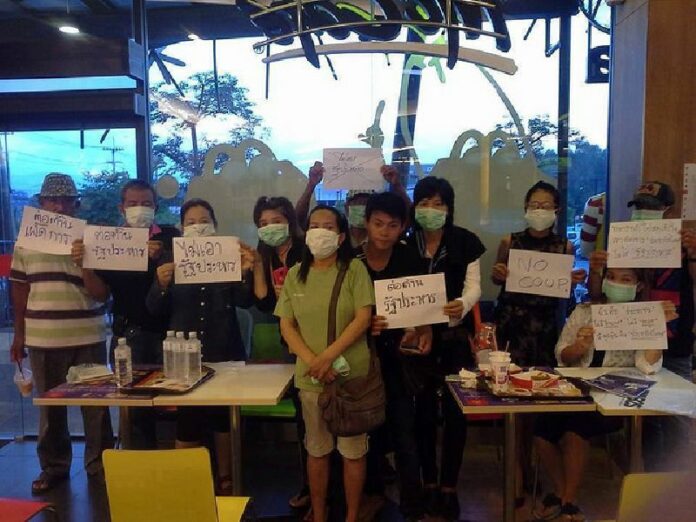
The protesters gathered at the fast food restaurant, wore masks with ‘X’ and showed anti-coup placards around noon of 25 May.

(Prachatai English)

BANGKOK — A Martial Court in Chiang Rai Province sentenced seven anti-coup protesters to six months in jail and a fine of 10,000 baht earlier this week, but since the defendants pleaded guilty, the sentences were halved and the jail terms are suspended for one year. 
 
On Monday and Tuesday, the Martial Court delivered verdicts in two cases. One involves three anti-coup protesters, led by Surirat Boonbuathong and the other involved four anti-coup protesters led by Songsri Khomkam. 
 
Read more of the story here. 
 
 
Note: Khaosod English is not responsible for content on other websites.
Advertisement

Soldiers Beat Nightclub Guards Over 'No Smoking' Policy

CCTV footage from the crime scene shows more than a dozen soldiers armed with M16 rifle barge into the nightclub and brutally beat the security guards, 28 August 2014.

PATHUM THANI — Three security guards at a nightclub in Pathum Thani province say they were beaten by around 20 armed soldiers last night for telling their Army captain not to smoke inside the premises.

According to witnesses, the soldiers arrived at the nightclub on Rangsit – Nakhon Nayok Road in a Humvee and army truck at around 1 am last night.

CCTV footage from the crime scene shows more than a dozen soldiers armed with M16 rifle barge into the nightclub and brutally beat the security guards, who are also sergeants enlisted in the Royal Thai Air Force.

One of the victims, Sgt. Tossaporn Jaemsakorn, 29, told police that the soldiers were led by an officer who claimed to hold the rank of captain. The captain told them he was raiding the nightclub to look for suspected illegal substances, but then ordered his troops to assault Sgt. Tossaporn and his colleagues, the victims reported.

Sgt. Tossaporn said soldiers beat him with the end of their M16 rifles and trampled him with their combat boots. The captain also allegedly shouted at Sgt. Tossaporn that he was punishing him for "not showing respect."

According to Sgt. Tossaporn, two nights ago he approached a man who was smoking in the nightclub and informed him that the establishment has a strict no-smoking policy. The man became angry and said he was captain in command of troops in Pathum Thani, Sgt. Tossaporn said.The man then allegedly lit another cigarette, prompting Sgt. Tossaporn and his colleagues to escort him out of the nightclub.

Pol.Lt. Prapan Ruengsuwan, an officer at Pratunam Chulalongkorn Police Station, said witnesses told police that they were afraid to intervene and help because the soldiers were fully armed. 

Pol.Lt. Prapan added that CCTVs in the nightclub clearly captured the moment of the assault. He said police investigation is ongoing.

Wassana Nanuam, a "military reporter" at the Bangkok Post, wrote on her Facebook that NCPO leader and Prime Minister Prayuth Chan-ocha has been informed about the assault at Pathum Thani nightclub.

According to Ms. Wassana, who is close to military circles, Gen. Prayuth has ordered an investigation into the incident.

Since the Thai army staged a military coup on 22 May, the military junta has regularly dispatched soldiers to perform law enforcement tasks alongside police, such as raiding suspected criminals' homes, confiscating illegal substances, and regulating public transportation.


For comments, or corrections to this article please contact: [email protected]

You can also find Khaosod English on Twitter and Facebook
http://twitter.com/KhaosodEnglish
http://www.facebook.com/KhaosodEnglish

Advertisement

Hajj Pilgrimage Continues Despite Thai-Saudi Tension

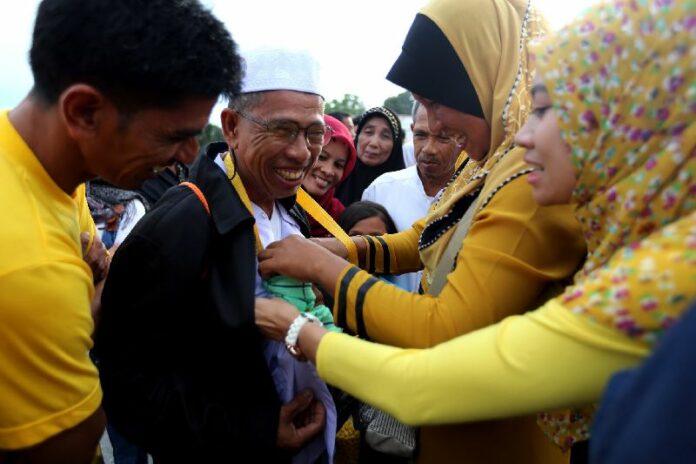
NARATHIWAT — Over 200 Thai Muslims departed for a religious pilgrimage to the Saudi Arabian city of Mecca today, despite ongoing tension between the Thai and Saudi governments.

A total of 577 pilgrims from Thailand’s three Muslim-dominated southern border provinces – Narathiwat, Yala, and Pattani – are scheduled to participate in the holy pilgrimage this year, officials said. 

Islamic faith requires that all Muslims make a pilgrimage to Mecca, known as a "Hajj," at least once in their lifetime. 

Gen. Udomdej Sitabutr, sec-gen of the military junta's National Council for Peace and Order (NCPO), presided over a ceremony that bade farewell to the pilgrims before they left Narathiwat Airport for Medina, Saudi Arabia this morning.

The trip is funded by the Southern Border Provinces Administrative Centre (SBPAC) as part of an effort to improve the relationship between Thai authorities and local Muslims in Thailand’s Deep South, which is home to a hotbed of Islamic insurgent violence that has killed more than 5,000 people in the past decade.

A number of Muslim leaders in Thailand previously expressed concern that Thai Muslims might be barred from taking up the Hajj due to a recent diplomatic row between Saudi Arabia and Thailand. 

Abdulelah Al-Sheaiby, the Saudi Arabian embassy’s Charge d’Affaires, was recalled from his post in July, four months after Thailand’s Criminal Court found five Thai police officers not guilty of abducting and murdering a Saudi businessman who went missing in Bangkok in 1990.

Mr. Al-Sheaiby's deputy, Abdulsalam Alenazi, told Khaosod English that the recall was ordered to express the Saudi government’s disapproval of the verdict and the court’s last-minute change of judges. He added that Saudi officials have not decided when, and if, Mr. Al-Sheaiby will return to Bangkok.

The Saudi government imposed restrictions on travel and business dealings between the two kingdoms in the 1990s to protest Thailand's stalling investigation into the abduction of the Saudi businessman, Mohammad Al-Ruwaili.

However, Mr. Alenazi, who is now serving as the head of Saudi Arabian Embassy in Bangkok, confirmed that the Saudi Arabian government will not alter the existing agreement between the two kingdoms that allows Thai Muslims to participate in the pilgrimage to Mecca. 

"Hajj is one thing that we don't touch," Mr. Alenazi told Khaosod English last week. 


For comments, or corrections to this article please contact: [email protected]

You can also find Khaosod English on Twitter and Facebook
http://twitter.com/KhaosodEnglish
http://www.facebook.com/KhaosodEnglish

Advertisement

Hot News

LATEST NEWS

Bangkok
overcast clouds
27.2 ° C
27.2 °
23.8 °
85 %
3.1kmh
100 %
Sat
37 °
Sun
36 °
Mon
36 °
Tue
31 °
Wed
36 °