28.8 C
Bangkok
Thursday, July 16, 2026
Home Blog Page 3232

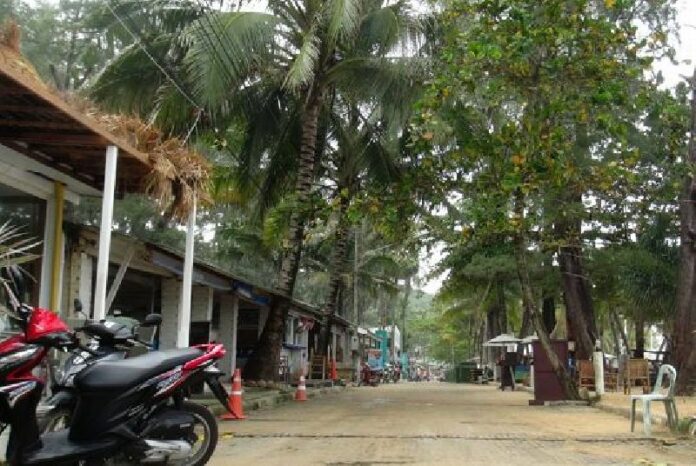
Phuket’s Surin Beach ‘To Be Cleared Completely’

Surin Beach in Phuket [The Phuket News].

(The Phuket News)

PHUKET — ​Beach clubs, bars and restaurants along the east side of the walkway along Surin Beach have received their orders: Knock it all down.

There is some doubt about whether structures originally built on public land to house tsunami victims will be preserved, but it seems probable they will also be demolished.

The remainder of the buildings along the strip are illegal, Ma’an Samran, chief executive of Cherng Talay Tambon Administration Organisation told The Phuket News on July 28.

“Following the relevant laws, we posted demolition orders on all the buildings,” including what remains of world-renowned Catch Beach Club and its rivals, Diamond Beach Club and Zazada.

Read more here

Note: Khaosod English is not responsible for content on other websites.


Advertisement

Junta Chairman Tells Thais To Be Proud of Their 'Unique' Language

Students copy texts from a replica of the Inscription Stone during an exhibition at Siam Paragon shopping mall, April 2013.

BANGKOK — The leader of Thailand’s military junta has urged Thai people to be proud of their linguistic heritage on the occasion of National Thai Language Day.

In a radio address this morning, Gen. Prayuth Chan-ocha, who chairs the ruling National Council for Peace and Order (NCPO), said that Thai language is a central feature of "Thainess" and a testament to Thai civilization.

He pointed to His Majesty the King as an exemplar of Thai language mastery.

"His Majesty the King has bestowed many ideas for Thai subjects to preserve and correctly use Thai language," Gen. Prayuth said.

National Thai Language Day is a tribute to His Majesty the King's speech to Chulalongkorn University's Faculty of Arts on 29 July 1962, in which he advised Thai people to preserve the "purity" of Thai language. 

Gen. Prayuth also urged Thai people to be proud of their language because very few nations have a language of their own.

"I would like to stress to the people and youths of the nation to always remember: Thailand is one of few countries in the world that has its own language, both written and oral," Gen. Prayuth said. "It is a precious heritage handed down for more than 700 years. Everyone should be proud."

Thai language is one of approximately 7,000 languages in the world. It is heavily influenced by Indochinese languages, borrowing structures and words from Khmer, Pali, Tai, and other regional tongues. 

According to official Thai historiography, the Thai language was invented in the 13th century by King Ramkhamhaeng of Sukhotai Kingdom, who reportedly displayed his command of the language on a stone inscription, now considered the earliest evidence of written Thai language.


For comments, or corrections to this article please contact[email protected]

You can also find Khaosod English on Twitter and Facebook
http://twitter.com/KhaosodEnglish
http://www.facebook.com/KhaosodEnglish

Advertisement

Chinese Report Success in Breeding Captive Giant Pandas

A giant panda eats bamboo at the Beijing zoo in China, 20 April 2011. A new study indicates that China has made great strides in breeding giant pandas, which are notorious for their low sex drive. EPA/DIEGO AZUBEL

BEIJING  — A new study indicates that China has made great strides in breeding giant pandas, notorious for their low sex drive, which has, in turn, contributed to their listing as an endangered species.

Led by Wei Fuwen from the Chinese Academy of Sciences, a team of Chinese researchers genotyped 240 captive giant pandas (Ailuropoda melanoleuca) at four breeding stations in China. They found “high levels” of genetic diversity and “low levels” of inbreeding, concluding that “the captive population is genetically healthy and deliberate further genetic input from wild animals is unnecessary.”

Their study was published in the Oxford-based scientific journal Molecular Biology and Evolution.

Giant panda conservation efforts have presented giant challenges to the animals’ native China, Li Desheng, from the China Conservation and Research Centre for the Giant Panda in Wolong, told dpa in Beijing.

“Breeding pandas is very difficult,” he said, noting that it had taken 20 years to develop the necessary techniques. Before that, in the 1980s and 90s, scientists studied the black-and-white bears’ habitat and habits.

Giant pandas reach 1.8 metres long and 90 centimetres tall at the shoulder, with males weighing up to 160 kilograms. They live in a few mountain ranges in central China. Forest clearing for farming and other development has deprived them of their previous lowland habitat.

There are about 1,600 left in the wild. More than 300 live in captivity around the world, mainly in China.

In recent years, the Chinese government has promoted wildlife sanctuaries for giant pandas, as well as breeding in captivity at state-run research centres. A national symbol, the bears, along with dragons, often serve as emblems for Chinese government agencies and Chinese companies. During the 2008 Summer Olympic Games in Beijing, one of the five official mascots was a giant panda.

Advertisement

Suthep Files Complaint Postponing 2010 Crackdown Trial

Soldiers deployed to contain Redshirt protesters on 15 May 2010.

BANGKOK — Former politician Suthep Thaugsuban filed a legal complaint today that pushed back the trial over his authorisation of the military crackdown on Redshirt protesters in 2010.

Former Prime Minister Abhisit Vejjajiva and Mr. Suthep, who was the Deputy Prime Minister at the time, face murder charges for their authorization of the crackdown, in which more than 90 people died, most of whom were civilians.

The Division of Special Investigation (DSI) filed charges against Mr. Abhisit and Mr. Suthep separately in 2010, but today the Criminal Court decided to combine the two cases into one, as both cases concern similar sets of evidence, witnesses, and offences.

At today’s court hearing, Mr. Suthep denied the charges and requested the court reconsider whether the DSI has the jurisdiction to file the lawsuit against him. Mr. Abhisit has filed similar challenges in the past.

The judges agreed to deliberate on Mr. Suthep's complaint and scheduled the next court appearance for 28 August. 

Mr. Suthep, who showed up at court today in his monk robe, refused to speak to reporters after the court session was adjourned, but prior to the hearing said that his mind has been very "peaceful" since he took up the monastic order several weeks ago.

The former politician, who is now also known by his ecclesiastic name Phra Paphagaro, said he does not know when he will leave the monkhood. Mr. Suthep became a monk after leading a six month protest campaign against the former government starting last November. The protests came to an end when the military staged a coup on 22 May and took control of the country’s administration.

Mr. Suthep repeatedly postponed his murder trial earlier this year, citing his need to oversee the protests against government.

In 2010, tens of thousands of Redshirts flooded Bangkok and occupied the city’s financial district to demand Mr. Abhisit dissolve Parliament and call a fresh election. After several months, Mr. Abhisit’s government authorised the military to disperse the protesters, culminating in the Redshirts’ surrender on 19 May. 

Both Mr. Abhisit and Mr. Suthep have insisted that the use of force was necessary because the protests were infiltrated by armed militants. They claim that these militants,  and not the military, were behind many of the deaths caused by the crackdown.

However, previous court inquests have determined that many of the fatalities, which included protesters, civilians, and journalists, were killed by military weapons fired from the position of the security forces. 


For comments, or corrections to this article please contact[email protected]

You can also find Khaosod English on Twitter and Facebook
http://twitter.com/KhaosodEnglish
http://www.facebook.com/KhaosodEnglish

Advertisement

Burmese in Chiang Mai Fear Uncertain Future Under Junta Rule

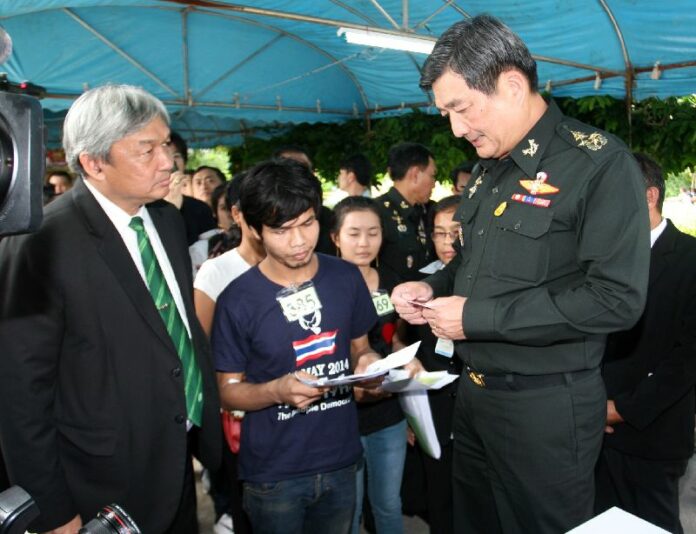
Migrant workers receive temporary work permits at a one stop service center in Bangkok, 15 July 2014.

By David Hopkins

CHIANG MAI — Burmese migrants in Chiang Mai are bracing for an uncertain future as Thailand’s military junta pushes forward with new policies aimed at revamping the country's migrant worker system. 

“Sometimes I worry, even though I have documents” a 22-year-old restaurant worker from Burma’s Shan State told Khaosod English. “The police would like to make money, they find fault every time.”

While the mass exodus of more than 225,000 Cambodian migrants from Thailand attracted headlines last month, the similar plight of Burmese migrant workers has received less attention. 

Since early June, police in Chiang Mai have raided a number of Burmese neighborhoods, as well as markets, construction sites and other workplaces suspected of utilizing migrant labor.

Many migrants, including registered workers, returned to Burma in fear of a crackdown by Thailand's new military regime, said Sai Hseng Ya, chair of the Shan Literature and Culture Society in Chiang Mai.

Rumors continue to circulate of more arrests in and around Chiang Mai, further fuelling anxiety among the migrant community.

“There is still a crackdown in some areas,” said a Shan teacher, who preferred to remain anonymous, as did the majority of migrants interviewed for this article. “Many migrant workers are still worried.”

New policies bring hope and fear 

While the military junta’s National Council for Peace and Order (NCPO) has recently opened several "One Stop Service" Centres around Thailand to help migrant workers obtain temporary work permits, no such centres have been opened in Chiang Mai.

As a result, a window for brokers in the north to take advantage of migrant workers remains open.

One Shan student in Chiang Mai found this out the hard way.

“This morning one of the young students told me she’d lost some money,” a Shan teacher told Khaosod English. “She went to a company and paid 3,000 baht [for identification documents], but after that, when she tried to contact them, this person [at the company] had disappeared. The police don’t take action for this kind of thing.”

According to Brahm Press, the director of the MAP Foundation, the NCPO’s move to register migrants is a positive development, but only a short term fix. The permits acquired at the One Stop Centres only give migrants two months before they must apply for more permanent documents.

“Migrants need stability, and this does not provide it,” Mr. Press said.

The NCPO has also established Special Economic Zones (SEZs) along Thailand’s borders, ostensibly to promote trade and investment. However, some fear that the boons to Thai businesses will come at the expense of migrant workers.

Mr. Press believes the zones will enable employers to “evade standard labor laws, notably by paying lower wages and keeping migrants in insecure and uncertain situations.”

The chairman of the NCPO, Gen Prayuth Chan-ocha, said himself on 30 May that “[the SEZs] could help prevent illegal migrants from crossing into inner provinces of Thailand, thereby giving more work opportunities to Thai nationals.”

Nowhere to turn 

Thailand’s foreign labor policies have been dogged by corruption for years, forcing migrant workers to adapt to a broken system in which they must pay officials, employers, or unscrupulous brokers offering shady promises to avoid arrest.

Kanchana Di-ut of the MAP Foundation says that Thai officials often maintain cosy relationships with brokers, blurring the distinction between official and unofficial processes.

Reports of detained migrant workers in Chiang Mai who were forced to pay a fee for their release has also led to speculation that police officers are using the recent raids as an opportunity for quick cash. 

According to migrant rights activist Andy Hall, police have “arrested people that were irregular but as usual they didn’t deport the workers. In general, they just extorted money from them and then let them go.”

The climate of fear among migrant workers in Chiang Mai is fueled in part by a lack of accurate and timely information on migrant policy available in Shan or Burmese languages. They are forced to rely on Thai language TV news, which they may not understand, unofficial sources on the internet, or simply hearsay to learn about the policy developments that affect their status.

After the military coup, the MAP Foundation’s Shan-language radio stationSeang Htem Heng Mai, which broadcasts information on migrant policy, was forced off the air like scores of other community radio stations across the country.

The vulnerability of Burmese migrant workers in Thailand is further compounded by the inaction and inattentiveness of the Burmese government.

The Burmese Ambassador to Thailand Win Maung told The Irrawaddy last month that he hadn’t heard of "any mass arrests of Burmese migrant workers." His declaration came despite numerous media reports detailing the arrest of Burmese migrant workers during raids in Chiang Mai, Bangkok, Mahachai, and Mae Sot. 

“We cannot rely on them,” said Nang Hseng Moon of the Shan Literature and Culture Society. “Other countries are very active, countries like the Philippines or Indonesia, but Burma is not. There is no support from the [Burmese] government.”

For many Burmese migrant workers, their desire to live and work in Thailand is not based on purely economic considerations, but also on concerns for their safety and security back in Burma. The recent crackdowns on migrant workers in Thailand have caused many to grapple with a familiar sense of unease.

“When they were in Burma, they were afraid all the time” said Nang Hseng Moon. “When they arrive here, they see the [military] uniform and they are afraid again.”

With armed conflict ongoing in parts of Shan State, the prospect of returning home is not an appealing option either. However, the overwhelming majority of migrant workers interviewed by Khaosod English aspired to return to Burma in the near future.

For a young Burmese restaurant worker, his desire to eventually return home was clear, but only on one condition: “when we have democracy.”


 
For comments, or corrections to this article please contact[email protected]

You can also find Khaosod English on Twitter and Facebook
http://twitter.com/KhaosodEnglish
http://www.facebook.com/KhaosodEnglish

Advertisement

Burmese in Chiang Mai Fear Uncertain Future Under Junta Rule

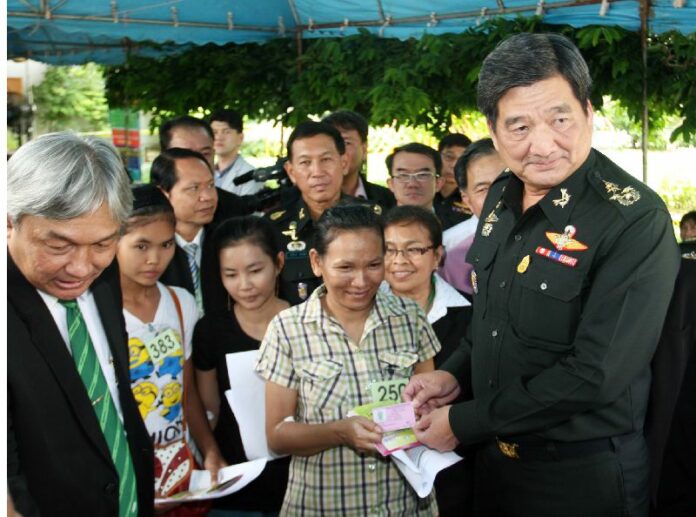
NCPO representatives give new temporary work permits to migrant workers at a One Stop Service centre in Bangkok, 15 July 2014.

By David Hopkins

CHIANG MAI — Burmese migrants in Chiang Mai are bracing for an uncertain future as Thailand’s military junta pushes forward with new policies aimed at revamping the country's migrant worker system. 

“Sometimes I worry, even though I have documents” a 22-year-old restaurant worker from Burma’s Shan State told Khaosod English. “The police would like to make money, they find fault every time.”

While the mass exodus of more than 225,000 Cambodian migrants from Thailand attracted headlines last month, the similar plight of Burmese migrant workers has received less attention. 

Since early June, police in Chiang Mai have raided a number of Burmese neighborhoods, as well as markets, construction sites and other workplaces suspected of utilizing migrant labor.

Many migrants, including registered workers, returned to Burma in fear of a crackdown by Thailand's new military regime, said Sai Hseng Ya, chair of the Shan Literature and Culture Society in Chiang Mai.

Rumors continue to circulate of more arrests in and around Chiang Mai, further fuelling anxiety among the migrant community.

“There is still a crackdown in some areas,” said a Shan teacher, who preferred to remain anonymous, as did the majority of migrants interviewed for this article. “Many migrant workers are still worried.”

New policies bring hope and fear 

While the military junta’s National Council for Peace and Order (NCPO) has recently opened several "One Stop Service" Centres around Thailand to help migrant workers obtain temporary work permits, no such centres have been opened in Chiang Mai.

As a result, a window for brokers in the north to take advantage of migrant workers remains open.

One Shan student in Chiang Mai found this out the hard way.

“This morning one of the young students told me she’d lost some money,” a Shan teacher told Khaosod English. “She went to a company and paid 3,000 baht [for identification documents], but after that, when she tried to contact them, this person [at the company] had disappeared. The police don’t take action for this kind of thing.”

According to Brahm Press, the director of the MAP Foundation, the NCPO’s move to register migrants is a positive development, but only a short term fix. The permits acquired at the One Stop Centres only give migrants two months before they must apply for more permanent documents.

“Migrants need stability, and this does not provide it,” Mr. Press said.

The NCPO has also established Special Economic Zones (SEZs) along Thailand’s borders, ostensibly to promote trade and investment. However, some fear that the boons to Thai businesses will come at the expense of migrant workers.

Mr. Press believes the zones will enable employers to “evade standard labor laws, notably by paying lower wages and keeping migrants in insecure and uncertain situations.”

The chairman of the NCPO, Gen Prayuth Chan-ocha, said himself on 30 May that “[the SEZs] could help prevent illegal migrants from crossing into inner provinces of Thailand, thereby giving more work opportunities to Thai nationals.”

Nowhere to turn 

Thailand’s foreign labor policies have been dogged by corruption for years, forcing migrant workers to adapt to a broken system in which they must pay officials, employers, or unscrupulous brokers offering shady promises to avoid arrest.

Kanchana Di-ut of the MAP Foundation says that Thai officials often maintain cosy relationships with brokers, blurring the distinction between official and unofficial processes.

Reports of detained migrant workers in Chiang Mai who were forced to pay a fee for their release has also led to speculation that police officers are using the recent raids as an opportunity for quick cash. 

According to migrant rights activist Andy Hall, police have “arrested people that were irregular but as usual they didn’t deport the workers. In general, they just extorted money from them and then let them go.”

The climate of fear among migrant workers in Chiang Mai is fueled in part by a lack of accurate and timely information on migrant policy available in Shan or Burmese languages. They are forced to rely on Thai language TV news, which they may not understand, unofficial sources on the internet, or simply hearsay to learn about the policy developments that affect their status.

After the military coup, the MAP Foundation’s Shan-language radio station Seang Htem Heng Mai, which broadcasts information on migrant policy, was forced off the air like scores of other community radio stations across the country.

The vulnerability of Burmese migrant workers in Thailand is further compounded by the inaction and inattentiveness of the Burmese government.

The Burmese Ambassador to Thailand Win Maung told The Irrawaddy last month that he hadn’t heard of "any mass arrests of Burmese migrant workers." His declaration came despite numerous media reports detailing the arrest of Burmese migrant workers during raids in Chiang Mai, Bangkok, Mahachai, and Mae Sot. 

“We cannot rely on them,” said Nang Hseng Moon of the Shan Literature and Culture Society. “Other countries are very active, countries like the Philippines or Indonesia, but Burma is not. There is no support from the [Burmese] government.”

For many Burmese migrant workers, their desire to live and work in Thailand is not based on purely economic considerations, but also on concerns for their safety and security back in Burma. The recent crackdowns on migrant workers in Thailand have caused many to grapple with a familiar sense of unease.

“When they were in Burma, they were afraid all the time” said Nang Hseng Moon. “When they arrive here, they see the [military] uniform and they are afraid again.”

With armed conflict ongoing in parts of Shan State, the prospect of returning home is not an appealing option either. However, the overwhelming majority of migrant workers interviewed by Khaosod English aspired to return to Burma in the near future.

For a young Burmese restaurant worker, his desire to eventually return home was clear, but only on one condition: “when we have democracy.”

 
For comments, or corrections to this article please contact[email protected]

You can also find Khaosod English on Twitter and Facebook
http://twitter.com/KhaosodEnglish
http://www.facebook.com/KhaosodEnglish

Advertisement

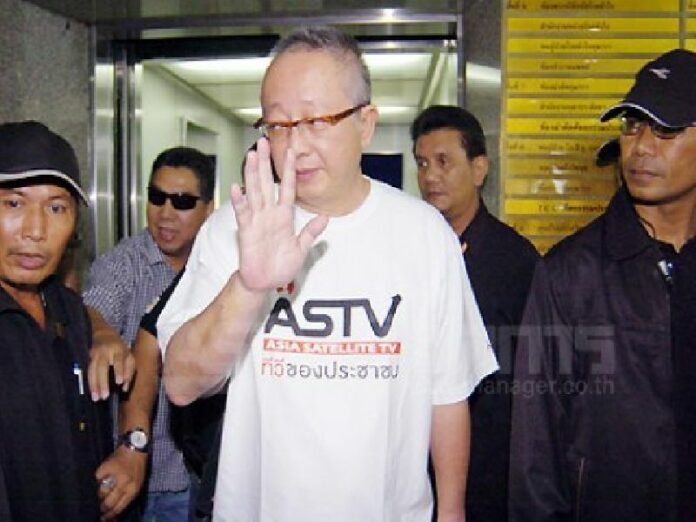
Junta Threatens Right-Wing ASTV-Manager Weekly

Sondhi Limthongkul, co-founder of ASTV Manager Weekly magazine (File photo by ASTV Manager)

(Prachatai English)

BANGKOK — The junta’s National Council for Peace and Order (NCPO) on Saturday reprimanded ASTV-Manager Weekly magazine for discrediting the junta. 

NCPO Order No. 108 stated that issue 253 of the magazine, published on July 23, contained “several issues” based on “false information with dishonest intention” and that the magazine intended to “destroy the credibility of the NCPO.” 
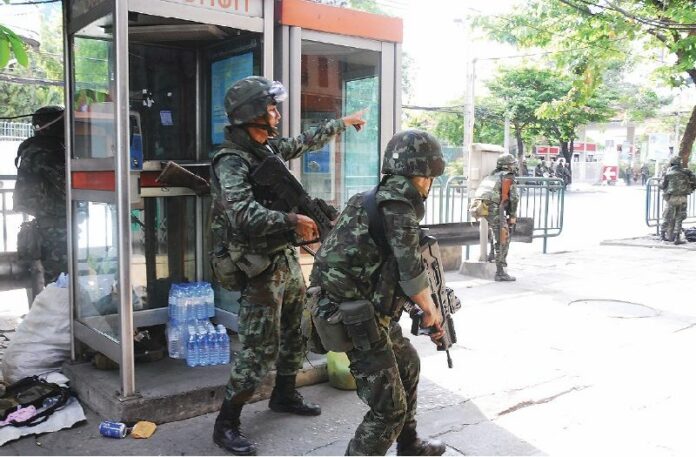
Read more of the story here.


Note: Khaosod English is not responsible for content on other websites.

Advertisement

BKK Airport To Get Automatic Taxi Kiosks

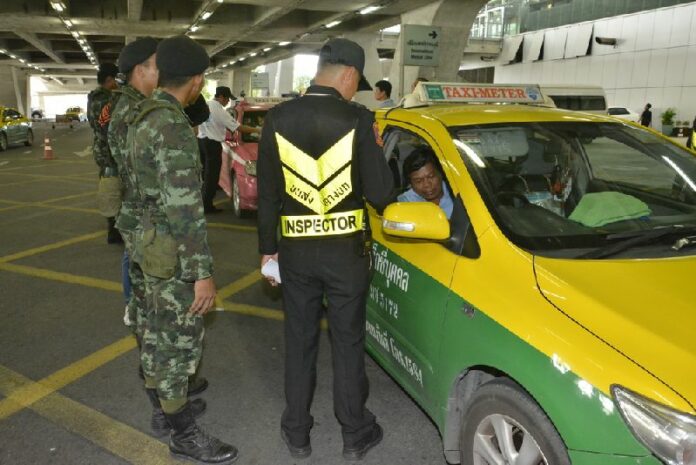
Security officers inspect taxis at Suvarnabhumi Airport in Bangkok on 19 June 2014

BANGKOK — Waiting in a long line for a taxi at Bangkok's Suvarnabhumi Airport will be a thing of the past with the introduction of eight automatic taxi kiosks next month, officials say.

Col. Boonchoo Klinsakorn, commander of 2nd Artillery Regiment, said after a joint meeting between airport staff and military officers yesterday that the kiosks will be installed at Gate 4 and 7 on the ground floor of Suvarnabhumi Airport.

The kiosks will be fully operational by 31 August, he said.

According to Col. Boonchoo, the computerised kiosks will do away with long lines at the airport's taxi booths. Passengers will be able to enter their destination, select which vehicle they prefer, and then be directed to the location of a waiting taxi.

Under the current system, passengers have to wait for taxi booth staff to write down their destinations, inform the drivers, and wait for the taxis to arrive. The new system will reduce waiting time for passengers to only "5-10 seconds," Col. Boonchoo said. 

The project to revamp the taxi service in Suvarnabhumi Airport is a part of a joint effort between the military junta's National Council for Peace and Order and various state agencies following the 22 May coup. After the putsch, the junta has launched many programs aimed at improving public transportation and combating underground mafia networks

Apart from cutting waiting time at taxi booths, Col. Boonchoo said the junta is also working to ensure that the quality of airport taxis are up to standard.

"We will set up joint checkpoints to inspect the service readiness of the vehicles and the drivers before they provide services to passengers," Col. Boonchoo said.


For comments, or corrections to this article please contact[email protected]

You can also find Khaosod English on Twitter and Facebook
http://twitter.com/KhaosodEnglish
http://www.facebook.com/KhaosodEnglish

Advertisement

Islamist Militants Kill 16 in Attack in Philippines

MANILA (DPA) — Sixteen people were killed Monday in an attack by suspected Islamic militants while on their way to celebrate the end of the holy month of Ramadan in the southern Philippines, the military said.

Children were among the 13 injured in the attack, which was believed to have been triggered by a feud, said Brigadier General Martin Pinto, a marine brigade commander.

"The victims have a family feud with the Abu Sayyaf," he said.

Pinto said the victims were travelling in two vehicles on the way to visit relatives when Muslim Abu Sayyaf rebels opened fire at them in Talipao town on Jolo island, 1,000 kilometres south of Manila.
 

Advertisement

Thai Junta Leader Expects Interim Legislature by Mid-August

Staff renovate the Government House, where the new government will work, on 28 July 2014.

BANGKOK (DPA) — The chief of Thailand's military government said Monday he expected an interim parliament to be in place by mid-August.

General Prayuth Chan-ocha said a national legislative assembly and national reform council would be appointed by August 15.

The two bodies would then confirm an interim prime minister, and an acting cabinet would be put together to begin governing the country.

Political and administrative reforms are expected to take place over 10 months, after which there would be a new general election.

The military took power in a coup May 22 after months of street violence between supporters of rival political factions.

Advertisement

Hot News

LATEST NEWS

Bangkok
overcast clouds
28.8 ° C
28.8 °
23.8 °
79 %
2.9kmh
100 %
Thu
31 °
Fri
32 °
Sat
36 °
Sun
36 °
Mon
36 °