28.8 C
Bangkok
Tuesday, July 14, 2026
Home Blog Page 3249

Man Busted For Impersonating Army Colonel

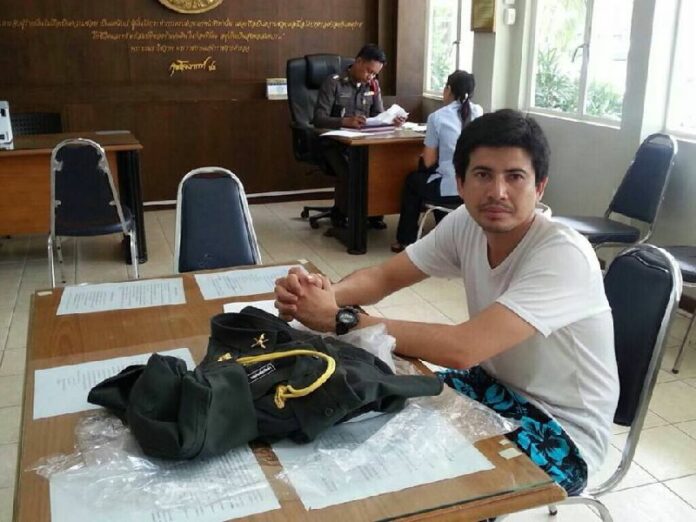
SONGKHLA — A man has been arrested for dressing up as an army colonel to "please his girlfriend."

Policemen and soldiers arrived at Lee Garden Plaza Hotel in Hat Yai district yesterday after they received calls from hotel staff that a suspicious-looking army officer was hanging out in the lobby on the hotel's 8th floor. 

When the soldiers requested the man present his Royal Thai Army ID and identify which regiment he was stationed with, the suspect refused, leading police to arrest him and escort him to a nearby police station.

The man then identified himself as Noppadol Chanmueang, 33, a native of Nakhon Si Thammarat province and confessed that he dressed up as an army colonel “to please his girlfriend.”

Mr. Noppadol told police he graduated from a university in Bangkok in 2003 and is currently unemployed. He said he bought the army uniform from a shop in the 4th Region Army barrack at the price of 2,000 baht.

The suspect added that he changed into the army uniform at a fast food restaurant on the ground floor of the hotel and went to wait for his girlfriend on 8th floor, where he was eventually arrested by the police.

Mr. Noppadol is charged with impersonating a security officer, which carries a maximum penalty of one year in prison.

It's not uncommon for Thai men to don military or police attire in an attempt to woo women thought to have a fondness for "men in uniforms."


For comments, or corrections to this article please contact: [email protected]

You can also find Khaosod English on Twitter and Facebook
http://twitter.com/KhaosodEnglish
http://www.facebook.com/KhaosodEnglish


Advertisement

12 Mothers Attempt Suicide in Australia Detention Centre, Report Says

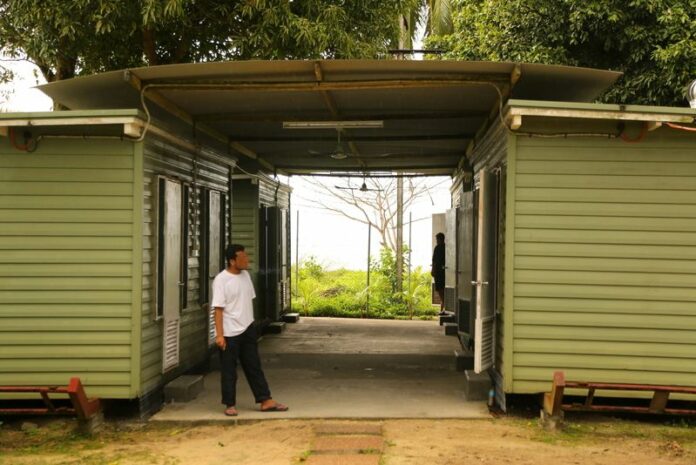
A handout image released by the Australian Department of Immigration and Citizenship on 01 August 2013 shows an asylum seeker arriving on Manus Island, Papua New Guinea [DPA]/

SYDNEY (DPA) — Twelve mothers seeking asylum in Australia attempted suicide in the hope their children would be admitted to the country as orphans, it was reported Wednesday.

The women were being held at the Christmas Island detention centre, which is on Australian territory, the Sydney Morning Herald newspaper reported

They attempted suicide after being told they would be transferred to Australia's offshore camps on the island nation of Nauru or on Manus Island in Papua New Guinea, the newspaper said, quoting independent sources

Christmas Island shire council president Gordon Thomson said the women believed that if their babies were born in Australia they could not be sent anywhere else

"They are saying the babies have a better chance at life if I am dead," Thomson told the newspaper

Jacob Varghese, a lawyer representing 72 babies of asylum seekers, said the mothers became distressed when told they would never be allowed to settle in Australia

Varghese told the Sydney Morning Herald that one tried to hang herself while the others cut themselves with glass

The Refugee Council of Australia says more than 1,100 children are being held in detention centres, including 208 on Nauru

Asked about the report in a television interview early Wednesday, Abbott said the account was "harrowing" but his government would not give in to "moral blackmail.

"No Australian government should be subjected to the spectacle of people saying: 'Unless you accept us, I am going to commit self harm'," Abbott told Channel Nine.


Advertisement

Protester May Face Lèse Majesté For “Long Live USA” Placard

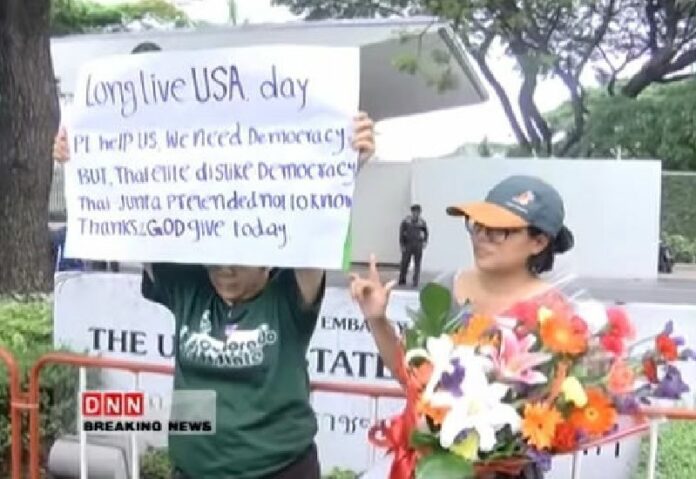
Chaowanat (left) holds "Long Live USA day" placard in front of the US embassy. (Screenshot of DNN's video on Youtube) [Prachatai English].

(Prachatai English)

BANGKOK — Thai police arrested and charged a woman for showing support for the US in front of the US Embassy in Bangkok on 4 July, Independence Day.

The police charged Chaowanat Musikabhumi, aka “Nong,” with defying the coup makers’ ban on political assemblies. She is now being detained at the Crime Suppressiong Division. 

During an interrogation at the Thai Army Club, military officers told her that by holding a placard that said “Long Live USA Day,” she may have violated Article 112 of the Criminal Code (lèse majesté) if the placard is deemed a parody of “Long Live the King.” Read more here


Note: Khaosod English is not responsible for content on other websites.


Advertisement

Thai Editor's Arrest Slammed As Media Faces Wider Clampdown

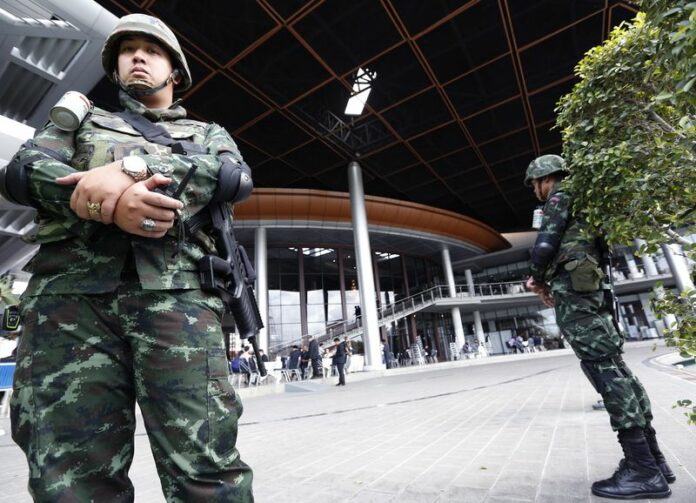
Armed Thai soldiers shown outside the Army Club in Bangkok, Thailand, 13 June 2014. A local magazine editor has been arrested in Thailand, prompting criticism from rights activists, as the domestic media face further possible restrictions [DPA].

BANGKOK (DPA) — The rearrest of a Thai magazine editor by the ruling military was criticized by rights activists Wednesday, as the domestic media faced further possible restrictions.

Human Rights Watch said the arrest on Saturday of Thanapol Eawsakul, editor of a local magazine, showed the junta's "disregard for fundamental rights and freedoms."

Thanapol was on conditional release after being first arrested in May in connection with an anti-coup protest.

He was asked to meet plainclothes officer at a coffee shop for talks, before being taken away in a car.

The charges against him stem from anti-military comments he had made on Facebook.

"Arresting an editor for a Facebook criticism of military rule shows just how far the junta will go to silence critics," said Brad Adams, Asia director at Human Rights Watch.

Pravit Rojanaphruk, a prominent Thai media commentator, called the arrest disturbing as it sets a precedent for "what you can express even on Facebook in Thailand."

The arrest followed an accusation by junta leader Prayuth Chan-Ocha last week that the media was sowing discord by providing "information that damages the country." 

He vowed to investigate the matter further and increase the junta's control over the media if required.

"Prayuth's speech constitutes a slightly veiled order for deeper media self censorship," said Pravit.

The Thai military seized power after months of political deadlock, demonstrations and violence. Since coming to power, the ruling junta has moved to quell dissent and clamp down on personal liberties, citing the need to preserve calm and national security. 

Advertisement

Thai Editor's Arrest Slammed As Media Faces Wider Clampdown

BANGKOK (DPA) — The rearrest of a Thai magazine editor by the ruling military was criticized by rights activists Wednesday, as the domestic media faced further possible restrictions.

Human Rights Watch said the arrest on Saturday of Thanapol Eawsakul, editor of a local magazine, showed the junta's "disregard for fundamental rights and freedoms."

Thanapol was on conditional release after being first arrested in May in connection with an anti-coup protest.

He was asked to meet plainclothes officer at a coffee shop for talks, before being taken away in a car.

The charges against him stem from anti-military comments he had made on Facebook.

"Arresting an editor for a Facebook criticism of military rule shows just how far the junta will go to silence critics," said Brad Adams, Asia director at Human Rights Watch.

Pravit Rojanaphruk, a prominent Thai media commentator, called the arrest disturbing as it sets a precedent for "what you can express even on Facebook in Thailand."

The arrest followed an accusation by junta leader Prayuth Chan-Ocha last week that the media was sowing discord by providing "information that damages the country." 

He vowed to investigate the matter further and increase the junta's control over the media if required.

"Prayuth's speech constitutes a slightly veiled order for deeper media self censorship," said Pravit.

The Thai military seized power after months of political deadlock, demonstrations and violence. Since coming to power, the ruling junta has moved to quell dissent and clamp down on personal liberties, citing the need to preserve calm and national security. 

Advertisement

Editorial: Death Penalty Is Not The Solution To Rape

Classmates of the 13-year-old girl who was raped and murdered on a night train pay respect to her body at the funeral on 8 July 2014

Punishing convicted rapists with the death penalty will not address the root causes of the problem.

This morning, an employee of State Railway of Thailand confessed to raping a 13-year-old girl on a night train from Surat Thani to Bangkok before throwing her body out the window.

Since then, 22-year-old Wanchai Sangkhao’s Facebook has been flooded with comments like “We won’t let you go to jail. You have to only be executed,” and "You only deserve execution, you scum. You should be publicly shot by firing squad."

An online petition calling on Thai authorities to punish all rapists with the death penalty has already reached over 16,000 signatures.

While Mr. Wanchai’s actions — if his confession proves to be genuine — are indeed deplorable, we believe that Thais must not channel their outrage into calls for the death penalty

There are many reasons why death penalty is not the solution, including:

– The death penalty has not been proven to be an effective deterrent against crime. Thai laws use the death penalty against drug criminals, murderers, and coup planners (Section 113 of Criminal Code), yet these offenses remain rampant.

– Criminology experts have warned that using the death penalty in rape cases may put victims in even greater danger, as it may lead perpetrators to murder victims in an effort to cover up the crime. Women rights groups have also argued that equating rape with murder is psychologically harmful to rape victims because it contributes to the view that “rape is a fate worse than death” and that victims are “permanently damaged.”

– Thailand's justice system is not reliable enough to be responsible for decisions about life and death. Thai courts have an extensive history of falsely convicting defendants and police have been known to force suspects to confess to crimes they did not commit. 

The most notorious case is the 1986 murder of Thai-American teenage girl Sherry Ann Duncan, for which four men were falsely convicted and imprisoned. Although the Supreme Court acquitted the defendants six years later, one defendant had already died in prison.

– Thailand does not need a greater punishment for rape; it just needs better law enforcement. Putting rapists in prison is sufficient. Making their punishment more severe will do nothing to prevent rape as long as law enforcement authorities are apathetic about pursuing cases of sexual assault.

According to Yanee Lertkrai, director of the Department of Social Development and Welfare, many sexual assault victims say police have done little to follow up on their complaints. Furthermore, the lack of convictions by authorities has discouraged victims from approaching authorities because they think there's little chance of achieving justice.

– Lastly, it is especially unwise to normalise the use of the death penalty while the country remains under the military rule of the National Council for Peace and Order (NCPO). Without secure human rights, there is dangerous potential for capital punishment to be gravely abused.

In an effort to shore up support, the NCPO has extensively publicized its effort to stamp out crime. It is conceivable that the NCPO could follow in the footsteps of Field Marshal Sarit Thanarat and use corporal punishment to bolster its "tough-on-crime" image. 

Field Marshal Sarit ruled Thailand with an iron fist from 1958 to his death in 1963, and is still praised among older Thais for his harsh crackdown on crime, which involved publicly executing scores of suspected criminals without proper trials. To avoid a repeat of this history, it's important not to grant the NCPO greater powers of punishment. 

In conclusion, punishing convicted rapists with the death penalty will not address the root causes of the problem, may worsen the experience of victims, and could lead to irreversible tragedies for innocent people in Thailand.


 

Advertisement

South African Embassy and Mont Clair Celebrating the Transformation of the Wine Industry

H.E. Ms. Robina P. Marks, South African Ambassador to Thailand, Cambodia, Myanmar and Laos (2nd from right) and Mrs. Anantinee Jitjaroongphorn, Marketing Director of Siam Winery Trading Plus Co., Ltd., importer of South African wine “Mont Clair” (2nd from left),  at the South African Embassy and Mont Clair Celebrating the Transformation of the Wine Industry in South Africa event.  This celebration was held at the South African Embassy in Bangkok, Thailand, in honour of the 20th anniversary of freedom and democracy in South Africa and reinforcing the success story of Mont Claire wine which is the most popular wine brand in Thailand. 

Advertisement

Editorial: Death Penalty Is Not The Solution To Rape

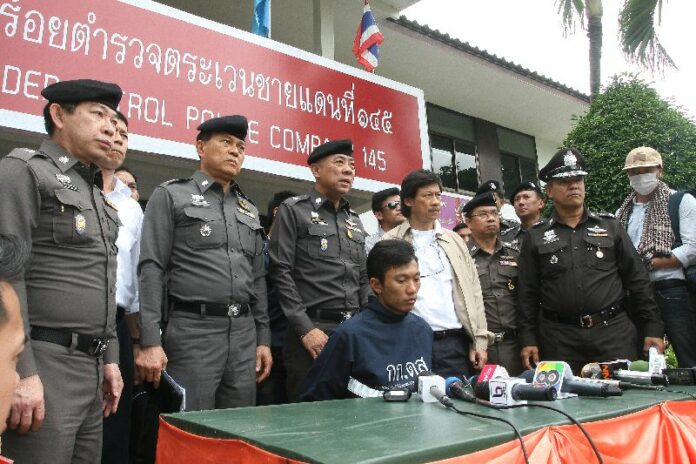
Rape and murder suspect Wanchai Saengkhao (blue shirt) at the police press conference on 8 July 2014

Punishing convicted rapists with the death penalty will not address the root causes of the problem.

This morning, an employee of State Railway of Thailand confessed to raping a 13-year-old girl on a night train from Surat Thani to Bangkok before throwing her body out the window.

Since then, 22-year-old Wanchai Sangkhao’s Facebook has been flooded with comments like “We won’t let you go to jail. You have to only be executed,” and "You only deserve execution, you scum. You should be publicly shot by firing squad."

An online petition calling on Thai authorities to punish all rapists with the death penalty has already reached over 16,000 signatures.

While Mr. Wanchai’s actions — if his confession proves to be genuine — are indeed deplorable, we believe that Thais must not channel their outrage into calls for the death penalty

There are many reasons why death penalty is not the solution, including:

– The death penalty has not been proven to be an effective deterrent against crime. Thai laws use the death penalty against drug criminals, murderers, and coup planners (Section 113 of Criminal Code), yet these offenses remain rampant.

– Criminology experts have warned that using the death penalty in rape cases may put victims in even greater danger, as it may lead perpetrators to murder victims in an effort to cover up the crime. Women rights groups have also argued that equating rape with murder is psychologically harmful to rape victims because it contributes to the view that “rape is a fate worse than death” and that victims are “permanently damaged.”

– Thailand's justice system is not reliable enough to be responsible for decisions about life and death. Thai courts have an extensive history of falsely convicting defendants and police have been known to force suspects to confess to crimes they did not commit. 

The most notorious case is the 1986 murder of Thai-American teenage girl Sherry Ann Duncan, for which four men were falsely convicted and imprisoned. Although the Supreme Court acquitted the defendants six years later, one defendant had already died in prison.

– Thailand does not need a greater punishment for rape; it just needs better law enforcement. Putting rapists in prison is sufficient. Making their punishment more severe will do nothing to prevent rape as long as law enforcement authorities are apathetic about pursuing cases of sexual assault.

According to Yanee Lertkrai, director of the Department of Social Development and Welfare, many sexual assault victims say police have done little to follow up on their complaints. Furthermore, the lack of convictions by authorities has discouraged victims from approaching authorities because they think there's little chance of achieving justice.

– Lastly, it is especially unwise to normalise the use of the death penalty while the country remains under the military rule of the National Council for Peace and Order (NCPO). Without secure human rights, there is dangerous potential for capital punishment to be gravely abused.

In an effort to shore up support, the NCPO has extensively publicized its effort to stamp out crime. It is conceivable that the NCPO could follow in the footsteps of Field Marshal Sarit Thanarat and use corporal punishment to bolster its "tough-on-crime" image. 

Field Marshal Sarit ruled Thailand with an iron fist from 1958 to his death in 1963, and is still praised among older Thais for his harsh crackdown on crime, which involved publicly executing scores of suspected criminals without proper trials. To avoid a repeat of this history, it's important not to grant the NCPO greater powers of punishment. 

In conclusion, punishing convicted rapists with the death penalty will not address the root causes of the problem, may worsen the experience of victims, and could lead to irreversible tragedies for innocent people in Thailand.

 

Advertisement

Thais urge junta to have rapist executed after 13-yr girl raped, killed

(Prachatai English)

A campaign calling for capital punishment for rapists became viral on the Thai social network after a man confessed of raping and killing a 13-year-old girl on a train.

Read more of the story here


Note: Khaosod English is not responsible for content on other websites.

Advertisement

Deposed Transport Minister Apologises For Train Rape-Murder Case

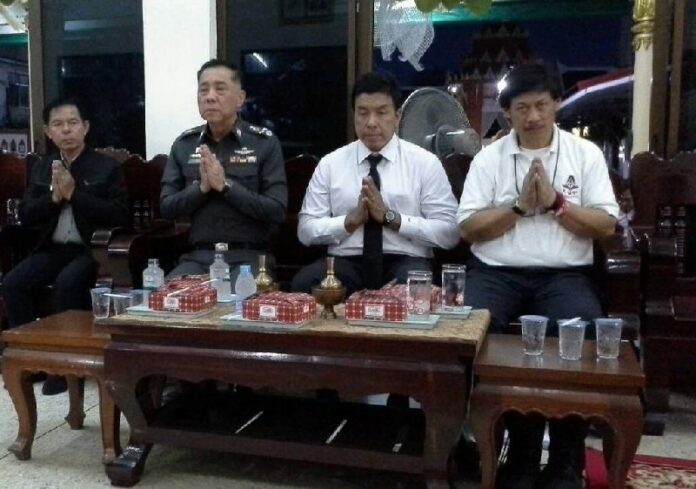
Former Transport Minister Chatchart Sitthipan (C) attended the funeral of a 13-year-old girl who was raped and murdered on an overnight train. 8 July 2014.

BANGKOK — The former Transport Minister who was deposed in the 22 May military coup has offered an apology for not doing enough to prevent the rape and murder of a 13-year-old girl on the state railway over the weekend.
The girl was reported missing by her relatives after she disappeared from a sleeping car on a Bangkok-bound train from Surat Thani on 6 July. Her body was later found next to the rail tracks. This morning, a railway staff reportedly confessed to raping her and throwing her body overboard.
"This morning I read the news [about the incident] with great sadness," former Transport Minister Chatchart Sitthipan wrote on his public Facebook account. "It is the worst news in many years for the State Railway of Thailand and the Ministry of Transport."
"I feel that I am also responsible for this event, because I did not do my job well enough when I was the Minister," Mr. Chatchart said.

He added that the Ministry of Transport should urgently focus on providing safe and convenient services to the public, otherwise any investment to expand the public transport system will be “useless.”

Mr. Chatchart was detained by the military along with other members of Cabinet when army chief Gen. Prayuth Chan-ocha seized power on 22 May. The former Transport Minister was attending a meeting with Gen. Prayuth and other politicians when the coup took place.

He was later released from military custody. 

Mr. Chatchart, widely considered one of the former government's most popular ministers, received high praise for enacting new safety measures, frequently staging suprise inspections of public transportation systems, and pushing the 2.2 trillion baht transportation overhaul project. 

Last year, he developed a cult following on social media where he was referred to as "The Strongest Minister On Earth." 


For comments, or corrections to this article please contact: [email protected]

You can also find Khaosod English on Twitter and Facebook
http://twitter.com/KhaosodEnglish
http://www.facebook.com/KhaosodEnglish


Advertisement

Hot News

LATEST NEWS

Bangkok
overcast clouds
28.8 ° C
28.8 °
28.8 °
77 %
1.9kmh
100 %
Tue
40 °
Wed
38 °
Thu
32 °
Fri
32 °
Sat
36 °