26.6 C
Bangkok
Tuesday, July 7, 2026
Home Blog Page 3266

The Secret Phuket Campaign That Toppled the Taxi and Tuk-Tuk 'Mafia'

(Phuketwan)

PHUKET — The secret operation to crush Phuket's taxi and tuk-tuk ''untouchables'' will be open for public discussion late today at a meeting chaired by Phuket's Governor, Maitree Intrusud.

Resort owners and managers are expected to turn out in substantial numbers as Phuket Land Transport Office officials get their chance to set out what should happen to taxis to give Phuket a future, and how the resorts can help.

Read more here.

Note: Khaosod English is not responsible for content on other websites.


Advertisement

15 North Korean Nationals Arrested in Chiang Saen

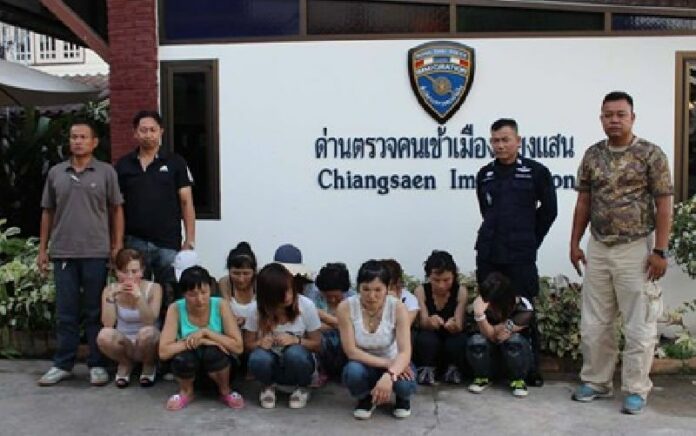
15 North Korean nationals were brought to Chiang Saen immigration for interrogations (Chiang Rai Times).

(Chiang Rai Times)

CHIANG RAI – Provincial marines in Chiang Saen have detained 15 North Korean nationals for illegal entry after they crossed the Mekong on a boat from the Lao People’s Democratic Republic.

The North Koreans were apprehended as they walked from the Mekong River to a town in Wiang Sub-district, Chiang Saen District, an official said, citing witnesses as saying the Laotian boat that transported them sped back to the opposite river bank after dropping off the passengers.

Read the rest of the story here


Note: Khaosod English is not responsible for content on other websites.

Advertisement

Melbourne Restaurant Owner Fined For Paying Staff in Pizza

A pizzeria owner in Melbourne was fined more than 330,000 Australian dollars (310,000 US dollars) for paying his mostly underage staff in pizza and soft drinks. DPA/ARNO BURGI

SYDNEY (DPA) — A pizzeria owner in Melbourne was fined more than 330,000 Australian dollars (310,000 US dollars) for paying his mostly underage staff in pizza and soft drinks, a news report said Tuesday.

The owner of two La Porchetta pizza shops underpaid staff as young as 13 years old by a total of 258,000 Australian dollars over three years, the federal circuit court judge said.

Ruby Chand gave his staff pizza and soft drinks instead of their full pay in a practice the judge said "belongs in the dark ages," the Australian Broadcasting Corporation reported.

Advertisement

Asia-Pacific to Become Second-Wealthiest Region in 2014

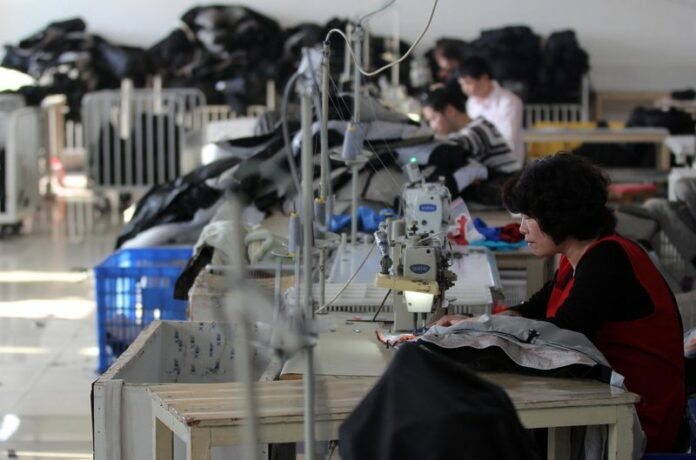
Workers at a garment factory in Jinjiang, southern China. EPA/HE YUAN CHINA OUT

By Emoke Bebiak (DPA)

NEW YORK (DPA) — ​The Asia-Pacific region not including Japan will become the world's second-wealthiest region this year overtaking Western Europe and is poised to take the top spot knocking out North America in 2018, according to a study published Monday.

The report completed by The Boston Consulting Group found that the Asia-Pacific region posted a 30.5-per-cent growth in private wealth in 2013, as the amount of private wealth held globally reached 152 trillion dollars, a 14.6-per-cent increase from 2012.

Private wealth growth in other regions included a 17.2-per-cent increase in Eastern Europe, a 15.6-per-cent rise in North America, which is currently the world's wealthiest region, and a more modest 5.2-per-cent growth in Western Europe.

The number of households owning assets amounting to more than 1 million dollars reached 16.3 million in 2013, which is up 19 per cent from 13.7 million households in 2012. The current number of millionaire households represents 1.1 per cent of households globally.

The United States continued to have the most millionaires with 7.1 million such households, while the number in China rose to 2.4 million in 2013, which is up from 1.5 million in 2012.

Private wealth creation was slowed down in Japan by a 15-per-cent currency fall against the dollar, which led to a decline in the number of millionaire households to 1.2 million from a previous 1.5 million.


Advertisement

Aunties on the Frontline Against the Coup

(Prachatai English)

BANGKOK — The discourse of “the aunty” has appeared in social media to explain the older women who like to cut in line and push in front of others to board trains, unconcerned with how they appear in the eyes of others. Yet given that this discourse has only recently emerged and the definition is not set in stone, we would like to propose an alternate understanding of “the aunty.”

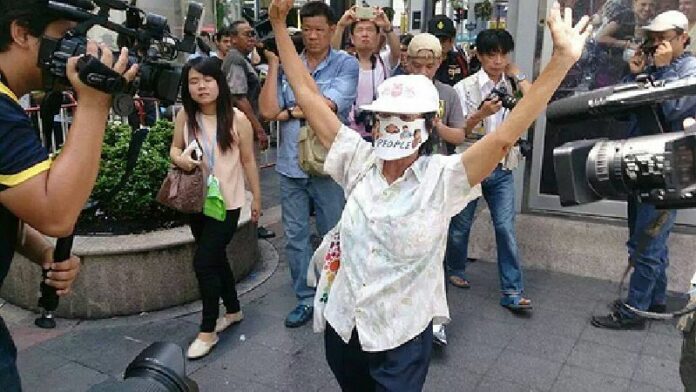
During the period of the past two weeks, “aunties,” or older women, have been a not insignificant component of the broad picture of opposition to the coup.  At least 6 women have been arrested for making a three-finger salute against the coup or holding up signs opposing the coup. Among this group of six, at least four were age between at least 50 years old and up to more than 70 years old.

Read more of the story.

Note: Khaosod English is not responsible for content on other websites.


Advertisement

Pro-Army Group Asks Australia To Reconsider Denunciation of Coup

BANGKOK — A group of pro-coup Thais have urged the Australian government to reconsider its recent downgrade of relations between Thailand and Australia in response to the Thai military's coup d'etat.

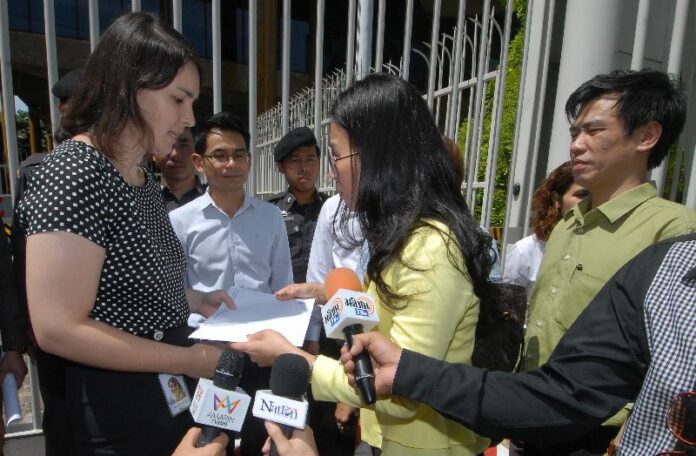
Thai alumni from Melbourne University gathered in front of the Australian Embassy in Bangkok earlier today and submitted a letter to the Australian government protesting the country's criticism of the coup d'etat. A secretary of the Australian Ambassador to Thailand accepted the letter on the embassy's behalf.

Australia is among the western countries that have harshly criticised Thai Army's 22 May coup. Following the military takeover, Australian authorities announced a suspension of cooperation between the two nations' armed forces and placed travel bans on coupmakers. 

"The Australian government should understand the situation in Thailand," said Ms. Pontip Assadathorn, a leader of the alumni group. "The NCPO's takeover may not be accepted by the international community, but it helps prevent bloodshed. Plus, [international] financial institutions did not downgrade Thailand's credibility."

Ms. Pontip said that ever since Australia publicly denounced the coup and downscaled its relations with Thailand, fewer Australian tourists have come to Thailand and Thai schools have struggled to find Australian teachers to teach English classes.

Ms. Pontip said she has been reassured by the embassy secretary that the Australian Ambassador will be informed about the group's demands.

A group of Thai alumni from American universities staged a similar protest against the US government's criticism of the Thai coup and its decision to suspend aid to the Thai military. 

"It is time for the US Department of State to treat allies of the US in equal status, not as colonies of the US," said 'Khun Ying' Songsuda Yodmanee, chairwoman of Thailand's American University Alumni Association (AUAA) on 4 June. "Thailand has never been colonised by anyone, and we will continue to maintain our independence and liberty."


For comments, or corrections to this article please contact:[email protected]

You can also find Khaosod English on Twitter and Facebook
http://twitter.com/KhaosodEnglish
http://www.facebook.com/KhaosodEnglish

Advertisement

Chiang Mai Activists Forced To Cancel '1984' Screening

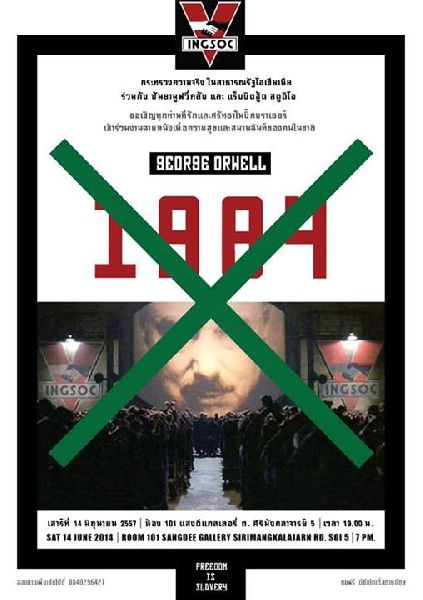
A local movie club announced it was canceling its screening of "1984," after a senior police officer told them to cancel the event.

CHIANG MAI — A senior police officer has forced an art gallery in Chiang Mai province to call off a screening of "1984," the film based on George Orwell’s classic dystopian novel about a society living under an oppressive authoritarian regime.

The screening was organised by a local cinophile group, the "Punya Movie Club," and was scheduled to take place in “room 101" of the gallery on Sirimangkalajarn Road this Saturday, the poster of the event advertised. 

However, a police lieutenant colonel called the gallery owners and persuaded them to cancel the event, said founder of Punya Movie Club, Bodin Theparat. 

"The officer told the gallery owners that 1984 is a political film, and it is linked to anti-coup protests," said Mr. Bodin, without naming the police officer. "He also warned that the screening will violate copyright laws."

Mr. Bodin told Khaosod English that he and other organisers discussed the matter and concluded that the police may show up at the event and use "any excuse" to stop the screening. They decided to cancel the event out of consideration for the gallery owners, who are not involved in politics, and for movie-goers who might end up being prosecuted by authorities. 

"In other times,  I would have insisted that I have the rights to show this film, but right now, we are living in surreal times," Mr. Bodin said. "There are no laws."

Along with the "three-finger salute" from the Hunger Games trilogy, George Orwell’s 1984 has been adopted as a symbol of the anti-coup protest movement. In recent weeks, activists in Bangkok have gathered in small groups to silently read the novel in an effort to express defiance while circumventing the military junta's ban on public protests.

Since seizing power in a coup d'etat on 22 May, the military's National Council of Peace and Order (NCPO) has outlawed public demonstrations and threatened to send transgressors to face trial in military courts. The NCPO has already detained scores of anti-coup protesters and activists thought to be critical of the military takeover. 

Mr. Bodin explained that his group initially planned to screen the film adaptation of the novel because many people have heard of the book's connection to the ongoing anti-coup campaign, yet have not read the book or seen the film.

"I didn't know there would be problem," Mr. Bodin said. "At first we planned to include a discussion panel at the end of film and invite academics, too, but we realised that wouldn't be allowed, so we already scaled down the event."

Asked whether the group will try to arrange a new screening, Mr. Bodin said his group is debating a number of possibilities, such as organising a "no-film screening" to protest the cancellation of the original event, but he personally believes such defiant gesture would only draw more attention  from the authorities.

"I think we already made the point of the film 1984 even though we couldn't screen it: that we are living in a world like 1984," Mr. Bodin said.


For comments, or corrections to this article please contact:[email protected]

You can also find Khaosod English on Twitter and Facebook
http://twitter.com/KhaosodEnglish
http://www.facebook.com/KhaosodEnglish

Advertisement

Vietnam Jails Banking Tycoon for 30 Years

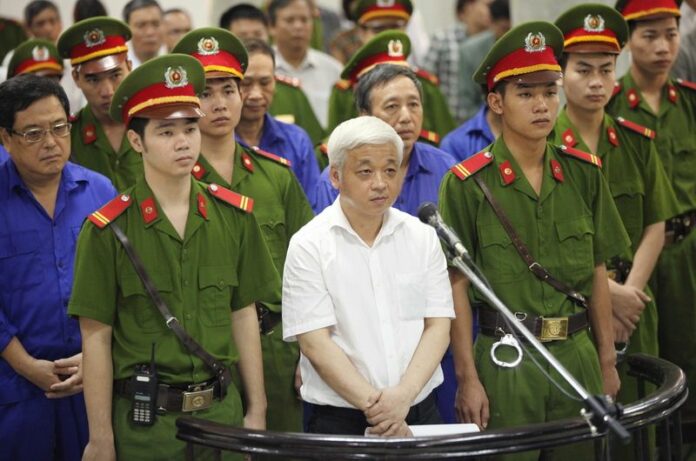
Asia Commercial Bank founder Nguyen Duc Kien stands during his trial in Hanoi. Kien, a tycoon who started one of Vietnam's largest private banks was sentenced to 30 years in prison for fraud, tax evasion and conducting illegal business activities. EPA/STR

HANOI (DPA) — A tycoon who started one of Vietnam's largest private banks was sentenced to 30 years in prison Monday for fraud, tax evasion and "conducting illegal business activities."

Asia Commercial Bank founder Nguyen Duc Kien was convicted of using separate business holdings to issue corporate bonds and false business plans to secure hundreds of millions of dollars in financing from other banks.

He then used the money to buy shares of several other banks, before loaning out those shares for cash for debt repayments and personal expenditures, prosecutors said.

Kien was charged with misappropriation of assets and intentional violation of regulations causing serious consequences. He was also charged with tax evasion and illegal trading.

The court also ordered him to pay 3.5 million dollars in damages.

At the trial, Kien and other eight defendants rejected the charges.

Kien is one of Vietnam's 20 wealthiest people, according to stock reports, and is a major shareholder in several commercial banks.

He was also former deputy chairman of the Vietnam Professional Football Joint Stock Co, which runs the national league, and was chairman of the Hanoi Football Club.

His arrest in 2012 provoked a run on the bank and heightened concerns over the shaky state of the country's financial sector.

Bank chief executive officier Ly Xuan Hai was sentenced to eight years in prison for "deliberately acting against state regulations on economic management, causing serious consequences."

Four others were sentenced under the same charge and two more were found guilty of fraud. They were jailed for up to five and a half years in prison.

Tran Xuan Gia, former chairman of Asia Commercial Bank and a former minister of planning and investment was accused of approving decisions that allowed Kien to conduct business illegally with bank funds, resulting in losses equivalent to about 80 million dollars.

But the court adjourned proceedings against him at the beginning of the trial, citing his poor health. He is suffering from cancer.

Advertisement

Thai Junta Expands Power Over Lucrative Sectors

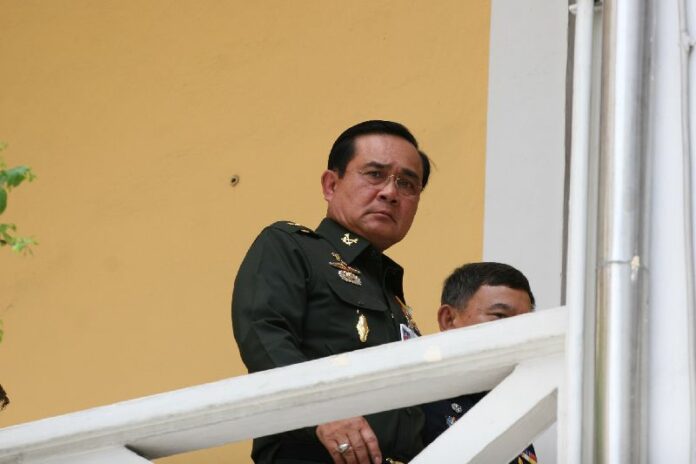
Army chief and coup-leader Gen. Prayuth Chan-ocha. [Photo taken on 24 April, 2014]

BANGKOK — After overthrowing Thailand’s civilian government in a coup d’etat last month, the Thai military junta has begun to implement major economic policies, with little to no oversight.

As of today, the leader of the  the junta's National Council for Peace and Order (NCPO), Gen. Prayuth Chan-ocha, has appointed himself chairman of two prominent economic boards that wield considerable power over the country's investment and energy sectors.

An NCPO order issued on Saturday announced Gen. Prayuth as the chairman of the Board of Investment (BOI), while another NCPO order broadcast this morning announced him as the chairman of a committee to oversee the nation's energy and petroleum policies.

Deputy leaders of the NCPO were also appointed as top members of these economic bodies. 

The NCPO has taken over these economic responsibilities at the same time that it has outlawed any criticism of the military regime and its "missions." The NCPO has threatened to prosecute anyone who disseminates information that questions the junta's good will, lest it lead to "confusion" and derail the NCPO's stated aim of reconciling the country.

The NCPO has also barred independent agencies such as the National Anti-Corruption Commission (NACC) from publicly scrutinising the military junta's operations. 

An NCPO announcement on 24 May ordered "all Courts, independent organizations and other agencies refrain from expressing opinions which might create misunderstanding, confusion and polarization among the public such that it affects the functioning of the officers of the NCPO."

The National Anti-Corruption Commission (NACC), an agency that many accused of harboring bias against the former government, has shown no signs of challenging these orders. 

Last week, deputy secretary general of the NACC, Worawit Sookboon, said there was no legal basis to conduct investigations into the personal assets of the coupmakers. Meanwhile, the anti-graft agency annouced it would begin its probe into Ms. Yingluck and four other former ministers' finances in connection with the administration's controversial rice-pledging policy. 

“This is worse than previous coups,” a political science lecturer at university in Bangkok told Khaosod English. “Because in [1991 and 2006], the military held onto power for a short time and then they organized a technocrat government to take care of all these economic issues for them. The NCPO on the other hand, their actions look more like the military regimes of the 1950s and 1960s. Back then the soldiers controlled many economic boards and state-owned enterprises, which led to massive corruption.”

The academic, who asked to remain anonymous because criticism of the junta is now considered illegal, added: “There is no accountability right now. Not even legislative power. We only have executive power under six people, which is the NCPO.”

Since seizing power, the NCPO has also picked up financial projects initiated by the former government that were stalled over accusations of corruption. 

Almost immediately after the coup, Gen. Prayuth ordered a massive loan of 90 billion baht from state banks to pay farmers who were owed money through the previous government's rice-pledging scheme. The NACC indicted Ms. Yingluck for failing to stop the corruption that allegedly plagued the policy, and is now investigating her personal assets in connection with that case. 

The NCPO's deputy leader, Air Marshal Prachin Chantong, said the junta may also resurrect the 2.2 trillion baht infrastructure overhaul project that was struck down by the Constitutional Court in February due to its lack of transparency.

So far, the NCPO has repeatedly dismissed concerns that its absolute power may lead to corruption. 

"I can assure you that the NCPO does not gain anything from this," Gen. Prayuth said in a nationally-televised address on Friday. "We are here to resolve the problems, not to create more. I urge you all to be vigilant and help us stop all corruption through the use of law, and to avoid further conflict and confrontations."

He added, "I understand it is very dangerous to use absolute power to resolve national economic and financial problems, especially in the long run."

Col. Winthai Suwaree, deputy spokesperson of the NCPO, offered similar reassurance.

"I insist that the NCPO is functioning under principles of righteousness, transparency, fairness, efficiency, and accountability," he said yesterday.

"We certainly won't let [corruption] happen," Col. Winthai stressed, "The nation and the people will greatly benefit from our works. I don't want some people to stick to the old images."

Corruption at the hands of coupmakers is a recurring theme in Thai history. For instance, Field Marshal Sarit Thanarat, who launched a military coup in 1958 and ruled Thailand under an iron fist until his death five years later, is widely considered to have overseen the most scandalous case of military kleptocracy in the Kingdom's modern history.             

Upon his death in 1963, it was revealed that Field Marshal Sarit had amassed at least 604 million baht (not adjusted for inflation), mostly by embezzling state funds. 

Dr. Paul Chambers, director of research at the Institute of Southeast Asian Affairs in Chiang Mai, said that a lack of oversight led to high levels of corruption under Thailand's previous military regimes. 

"There was no transparency or accountability under military governments," Dr. Chambers said. "This is again the danger today."


For comments, or corrections to this article please contact:[email protected]

You can also find Khaosod English on Twitter and Facebook
http://twitter.com/KhaosodEnglish
http://www.facebook.com/KhaosodEnglish

Advertisement

Thai Junta Expands Power Over Lucrative Sectors

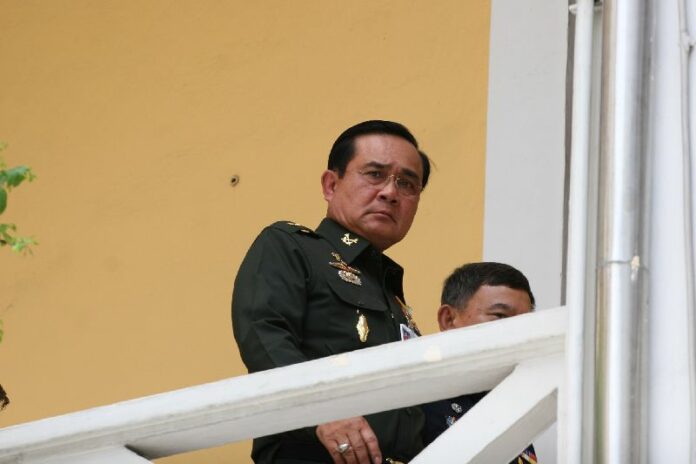
Army chief and chairman of the military junta Gen. Prayuth Chan-ocha.

BANGKOK — After overthrowing Thailand’s civilian government in a coup d’etat last month, the Thai military junta has begun to implement major economic policies, with little to no oversight.

As of today, the leader of the  the junta's National Council for Peace and Order (NCPO), Gen. Prayuth Chan-ocha, has appointed himself chairman of two prominent economic boards that wield considerable power over the country's investment and energy sectors.

An NCPO order issued on Saturday announced Gen. Prayuth as the chairman of the Board of Investment (BOI), while another NCPO order broadcast this morning announced him as the chairman of a committee to oversee the nation's energy and petroleum policies.

Deputy leaders of the NCPO were also appointed as top members of these economic bodies. 

The NCPO has taken over these economic responsibilities at the same time that it has outlawed any criticism of the military regime and its "missions." The NCPO has threatened to prosecute anyone who disseminates information that questions the junta's good will, lest it lead to "confusion" and derail the NCPO's stated aim of reconciling the country.

The NCPO has also barred independent agencies such as the National Anti-Corruption Commission (NACC) from publicly scrutinising the military junta's operations. 

An NCPO announcement on 24 May ordered "all Courts, independent organizations and other agencies refrain from expressing opinions which might create misunderstanding, confusion and polarization among the public such that it affects the functioning of the officers of the NCPO."

The National Anti-Corruption Commission (NACC), an agency that many accused of harboring bias against the former government, has shown no signs of challenging these orders. Last week, deputy secretary general of the NACC, Worawit Sookboon, said there was no legal basis to conduct investigations into the personal assets of the coupmakers. Meanwhile, the anti-graft agency annouced it would begin its probe into Ms. Yingluck and four other former ministers' finances in connection with the administration's controversial rice-pledging policy. 

“This is worse than previous coups,” a political science lecturer at university in Bangkok told Khaosod English. “Because in [1991 and 2006], the military held onto power for a short time and then they organized a technocrat government to take care of all these economic issues for them. The NCPO on the other hand, their actions look more like the military regimes of the 1950s and 1960s. Back then the soldiers controlled many economic boards and state-owned enterprises, which led to massive corruption.”

The academic, who asked to remain anonymous because criticism of the junta is now considered illegal, added: “There is no accountability right now. Not even legislative power. We only have executive power under six people, which is the NCPO.”

Since seizing power, the NCPO has also picked up financial projects initiated by the former government that were stalled over accusations of corruption. 

Almost immediately after the coup, Gen. Prayuth ordered a massive loan of 90 billion baht from state banks to pay farmers who were owed money through the previous government's rice-pledging scheme. The NACC indicted Ms. Yingluck for failing to stop the corruption that allegedly plagued the policy, and is now investigating her personal assets in connection with that case. 

The NCPO's deputy leader, Air Marshal Prachin Chantong, said the junta may also resurrect the 2.2 trillion baht infrastructure overhaul project that was struck down by the Constitutional Court in February due to its lack of transparency.

So far, the NCPO has repeatedly dismissed concerns that its absolute power may lead to corruption. 

"I can assure you that the NCPO does not gain anything from this," Gen. Prayuth said in a nationally-televised address on Friday. "We are here to resolve the problems, not to create more. I urge you all to be vigilant and help us stop all corruption through the use of law, and to avoid further conflict and confrontations."

He added, "I understand it is very dangerous to use absolute power to resolve national economic and financial problems, especially in the long run."

Col. Winthai Suwaree, deputy spokesperson of the NCPO, offered similar reassurance.

"I insist that the NCPO is functioning under principles of righteousness, transparency, fairness, efficiency, and accountability," he said yesterday.

"We certainly won't let [corruption] happen," Col. Winthai stressed, "The nation and the people will greatly benefit from our works. I don't want some people to stick to the old images."

Corruption at the hands of coupmakers is a recurring theme in Thai history. For instance, Field Marshal Sarit Thanarat, who launched a military coup in 1958 and ruled Thailand under an iron fist until his death five years later, is widely considered to have overseen the most scandalous case of military kleptocracy in the Kingdom's modern history.             

Upon his death in 1963, it was revealed that Field Marshal Sarit had amassed at least 604 million baht (not adjusted for inflation), mostly by embezzling state funds. 

Dr. Paul Chambers, director of research at the Institute of Southeast Asian Affairs in Chiang Mai, said that a lack of oversight led to high levels of corruption under Thailand's previous military regimes. 

"There was no transparency or accountability under military governments," Dr. Chambers said. "This is again the danger today."


For comments, or corrections to this article please contact:[email protected]

You can also find Khaosod English on Twitter and Facebook
http://twitter.com/KhaosodEnglish
http://www.facebook.com/KhaosodEnglish
Advertisement

Hot News

LATEST NEWS

Bangkok
overcast clouds
26.6 ° C
28.8 °
26.1 °
65 %
2.8kmh
90 %
Mon
30 °
Tue
35 °
Wed
36 °
Thu
33 °
Fri
30 °