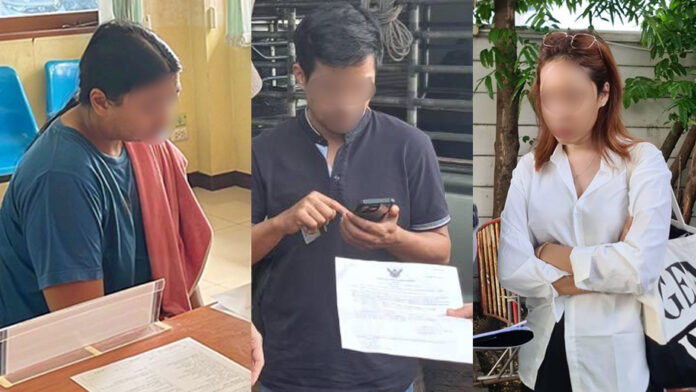
The three suspects are arrested and cherged with human trafficking by using threats, coercion, deception and abuse of power to exploit people for forced labor or services, which amounts to enslavement.
BANGKOK — Police arrested a HR group for making false promises and enticing Thais to work as scammers
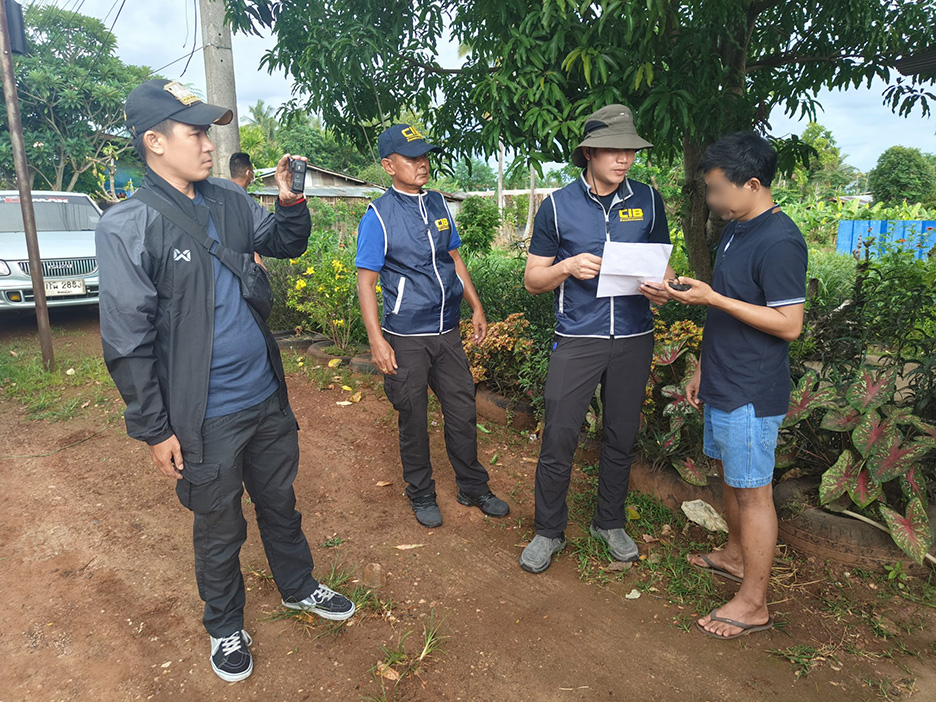
On July 9, Pol. Maj. Gen. Sarut Kwansopha, commander of the Anti-Trafficking in Persons Department (ATPD), ordered the arrest of Mr. Theerapol, also known as Thanapol, 31, and Ms. Aranya, 21, in front of a house in Don Sila, Wiang Chai district, Chiang Rai. They are suspected of luring people with the promise of high salaries as call center agents and then forcing them into fraudulent transactions in Myanmar.
The two suspects are accused of human trafficking by using threats, coercion, deception and abuse of power to exploit people for forced labor or services, which amounts to enslavement. They were arrested outside a residence on Pracha Uthit Road in Bangkok’s Huai Khwang district.
The same charges were also brought against Ms. Natnicha, 31, who is currently detained at the Central Women’s Correctional Institution in Chatuchak district, Bangkok.
In October and November 2023, the Myanmar government, in cooperation with Chinese authorities, launched operations to dismantle Chinese call center fraud rings in Laukkaing, Myanmar. They repatriated 266 Thai victims who had been tricked into working for these scam rings. The victims were screened and segregated under the NRM process.
A view of Laukkaing city in Shan state, Myanmar, Nov. 20, 2023. (Kyaw Ko Lin via AP)
Pol. Col. Patthanapong Sripinprah, Commander of Sub-Division 2, ATPD, was assigned to investigate the call center group led by Fei Yang. The investigation revealed that 11 people were involved, including four Thai recruiters who enticed Thais to work as clerks and answer customer calls with the promise of high salaries of 25,000 to 50,000 baht per month.
Once the victims entered Myanmar, they were arrested and forced to work. They were forced to join the call center scams, which focused on mixed scams by luring victims into romantic relationships and then into investment schemes. Police issued warrants for all 11 suspects, which eventually led to their arrest.
Mr. Theerapol, an assistant to Fei Yang, denied the allegations and claimed that he was merely an employee at an entertainment center in Laukkaing. He claimed to have a romantic relationship with a Chinese man who invited him to live with him and help with translation, and claimed to have nothing to do with the call center scam.
Theerapol is suspected of being an assistant to the Fei Yang call center gang.
Ms. Aranya, who acted as a recruiter and posted fake job advertisements to lure Thais into the call center scam, also denied the allegations. She admitted to using a fake Facebook account to recruit Thais, but claimed not to have known about the scam.
Ms. Natnicha, who is still detained, admitted her role in recruiting Thais for the job but denied knowing about the forced labor aspect. After the investigation, all suspects were handed over to the ATPD’s Sub-Division 2 investigators for further legal action.
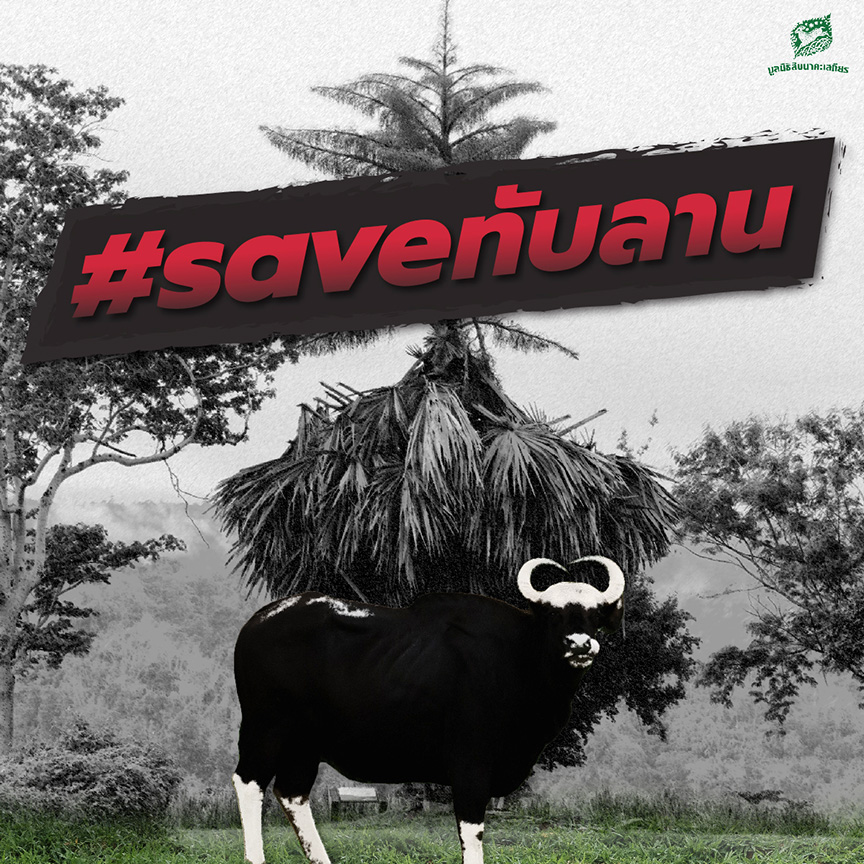
BANGKOK — The #SaveThapLan trend and comments supporting forest protection have been spreading across Thai social media since the beginning of the week. This wave followed a campaign by the Seub Nakhasathien Foundation opposing the possible separation of 265,000 rai from the 1.4 million rai of Thap Lan National Park, which would put the area at risk of exploitation by investors.
Many people envision a scenario where the forests inhabited by elephants and other wildlife are severely threatened by human encroachment, which has accelerated the spread of the #SaveThapLan movement.
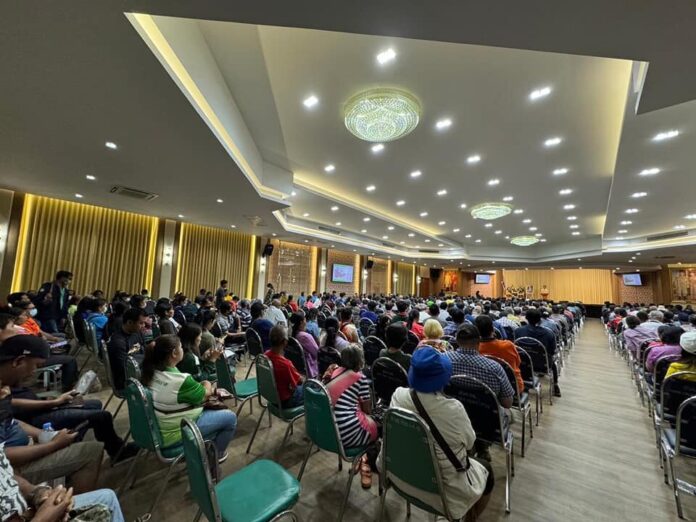
The origins of the #SaveThapLan trend are related to a public hearing scheduled from 28 June to 12 July. This hearing follows the previous government’s decision to review whether 265,286.58 rai of Thap Lan National Park should be removed from protected forest status and established as part of ‘One Map.’ Of this land, 58,000 rai overlap with existing residential areas.
This broad public engagement, even if it is partly a quick social reaction of many netizens without understanding clear and detailed information, reflects the democratic mechanisms at work in a society that, unlike the period of non-democracy, is open to listening, questioning, and examining.
Thaplan National Park
Importance of Public Hearing
On July 9, Prime Minister Srettha Thavisin addressed the issue, stating that it originated from a decision by the previous administration. The National Land Policy Committee (NLPC) was instructed to review the facts, while the Ministry of Natural Resources and Environment was directed to adhere to relevant laws.
The Prime Minister emphasized the importance of conducting public hearings before any land withdrawal, ensuring compliance with various legal procedures, and presenting the matter to the Cabinet for consideration. This includes the way to create ‘One Map.’
Gen. Patcharawat Wongsuwan, Minister of Natural Resources and Environment, pointed out that the issue is currently being discussed in public. The government is listening to all voices, including those of the opposition.
After the July 12 deadline, the ministry will compile the submissions and submit them to the National Parks Department for consideration. The aim is to resolve the matter within 30 days, focusing primarily on the 58,000 rai of land belonging to local residents.
Resolve the 40-year-old problem
Atthapol Charoenchansa, Director General of the Department of National Parks, Wildlife and Plant Conservation, explained that this problem has been going on for 40 years, since 1981. The area was originally reserved forest before it was declared a national park. It was later allocated to Thai development participants and surrounding communities for agricultural use of the 58,000 rai of Wang Nam Khiao forest.
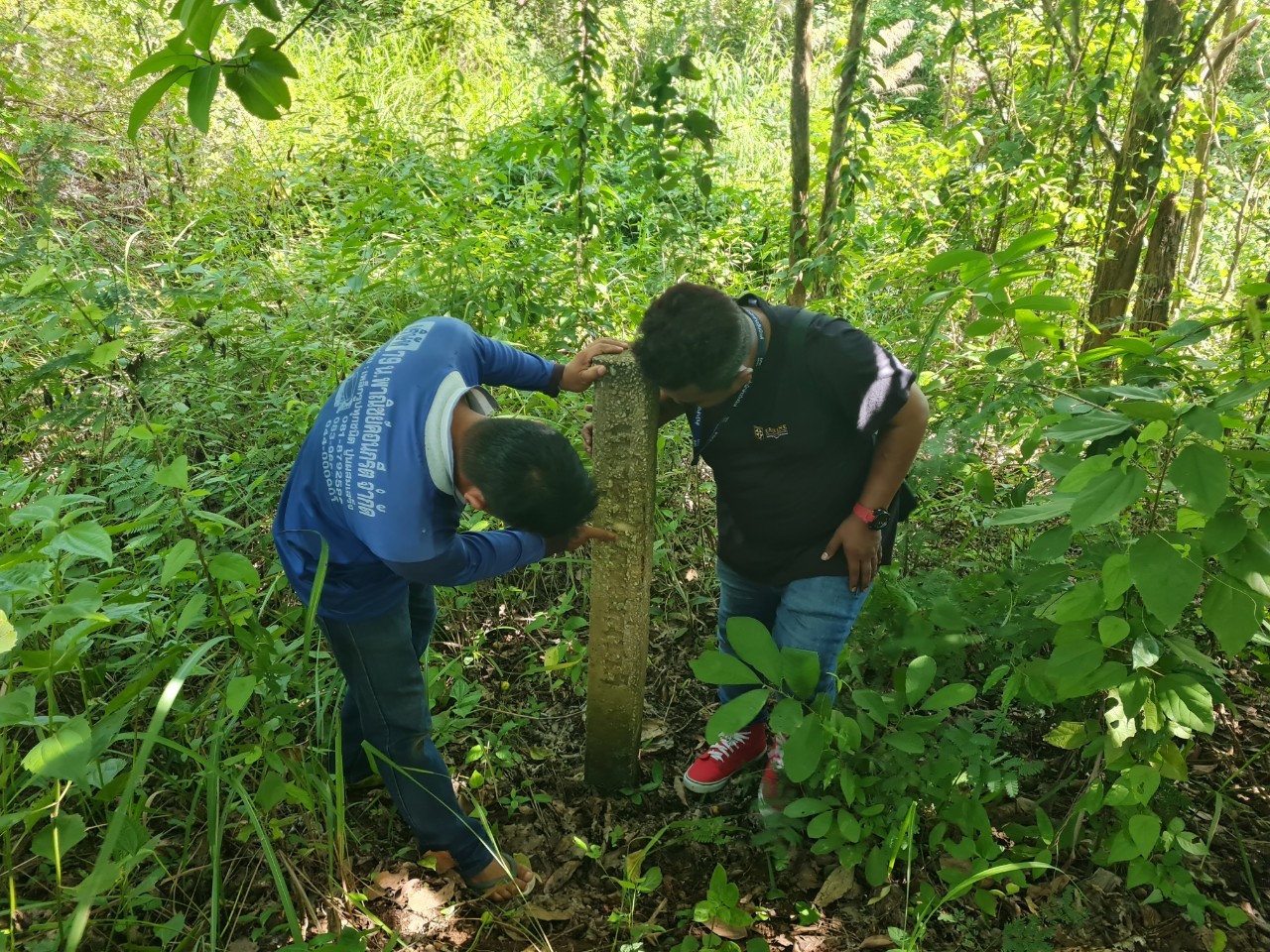
A villager from Ban Thai Samakkhi, Moo 1, Khum Khlong Krathung, Wang Nam Khiao District, Nakhon Ratchasima Province, point to a boundary marker declaring the national park area in 1994, located outside their community.
Later, the national park designation overlapped with this area, which was recognized as an omission by the Ministry of Forestry. This led to the demand to exclude the area from the park. A survey in 2000 aimed to redefine the boundaries but was not finalized, so the land is still considered forest.
Several governments have tried to solve the problem, culminating in a decision by the NLPC to transfer the common land to the Agricultural Land Reform Office (ALRO) and submit it to the Cabinet. The previous cabinet approved the NLPC resolution and excluded people with legal problems from protection and exemptions on the land.
#SaveThapLan trend is positive
Atthapol further mentioned that the public hearing on July 4 and 5 received interest from locals and already garnered hundreds of thousands of online supporters nationwide as part of the #SaveThapLan trend. This public awareness and interest is positive.
All data is reviewed by the National Park Committee within 30 days, taking into account all aspects, including land use and forest protection. The over 200,000 rai include residents, buyers and resort groups involved in 12,000 rai that are the subject of litigation, which requires thorough discussion.
A campaign poster by the Seub Nakhasathien Foundation opposes the removal of 265,286.58 rai of Thap Lan National Park from protected forest status.
When asked if the cabinet decision on March 14, 2023 favors investors who use the land for resorts, Atthapol replied that the government is addressing the issue, maintaining the land as state property and requiring users to meet certain conditions. Those who acquire the land illegally will get it back.
Meanwhile, Capt. Thammanat Prompao, Minister of Agriculture and Cooperatives, stated that his ministry was not involved in the matter and emphasized that it was not within the jurisdiction of the current government. As the regulatory body of ALRO, which is responsible for land distribution to farmers, it will abide by the guidelines, but the current moves do not fall under the purview of ALRO.
Panudet Kerdmali, chairman of the Seub Nakhasathien Foundation, warned that Thailand, whose land is 40 percent forest, must carefully consider any land withdrawal to avoid setting a precedent for future private gains that could potentially lead to the removal of other protected areas.
Consider each context differently
Poonsak Chanjampi, a Move Forward Party MP and Chairman of the Committee on Land, Natural Resources, and Environment, stated that in managing forest areas, especially in national park zones, we must consider each context differently. In the Thap Lan National Park area, there are three overlapping groups of people:
The first group consists of people who lived there before the national park was declared in 1981. The second group includes those who received Agricultural Land Reform Office (ALRO) rights and were permitted to make a living in ALRO areas. The third group comprises those who entered after the national park was declared, resulting in legal cases. As far as we know, there are over 400 cases where the National Parks Department has sued encroachers.
Poonsak continued that we must handle each of these three groups differently. We can’t lump everything together and declare the entire area as a national park because the first group of people would lose their rights.
“We must acknowledge that the rights of people who lived in the forest area before must be proven. This verification process may be somewhat delayed, but it’s worthwhile for the people who have been waiting for these rights since 1981 – over 40 years now. They should be granted their rights as well,” he said.
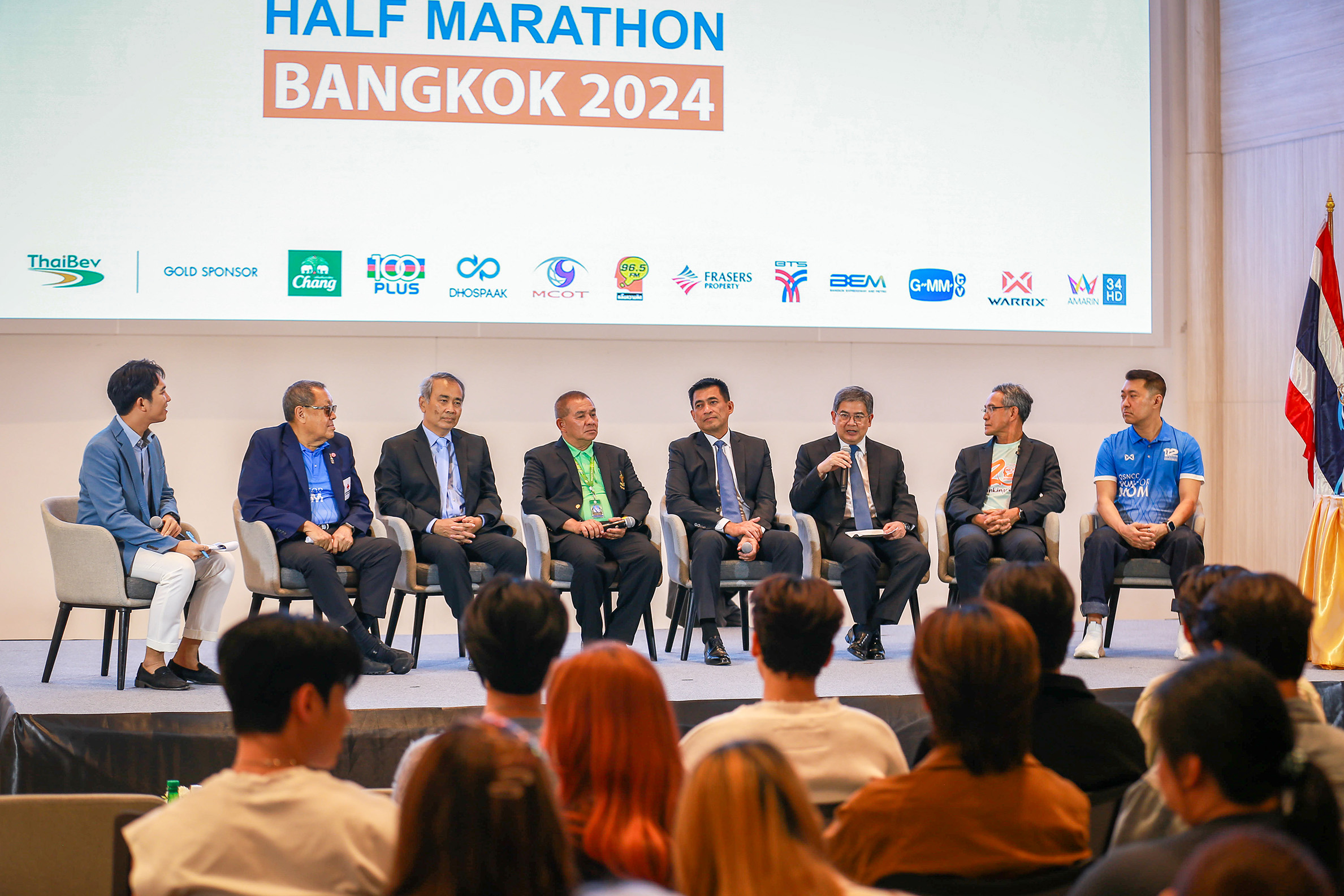
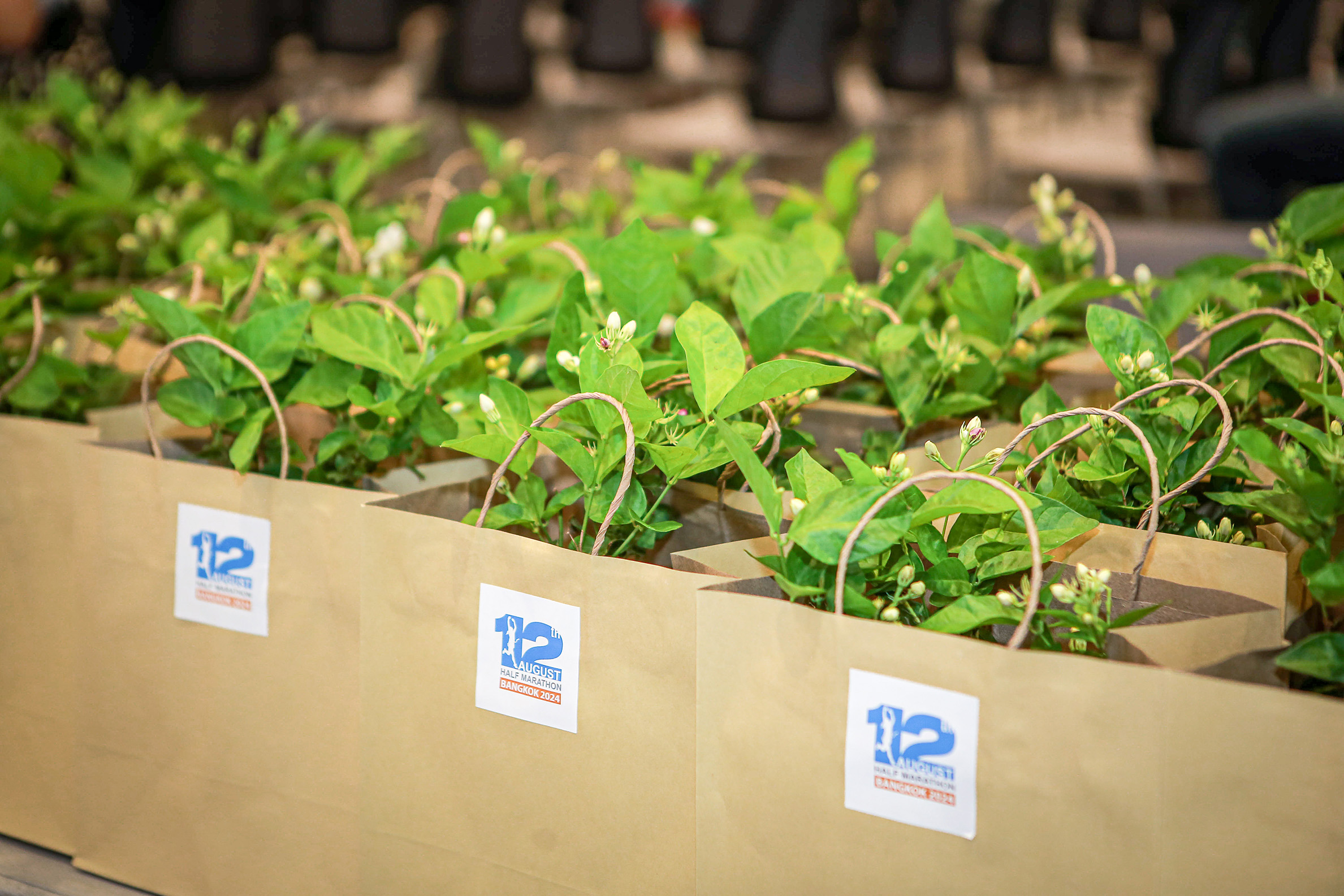
BANGKOK — N.C.C. Management and Development Company Limited or NCC, the operator of the Queen Sirikit National Convention Center (QSNCC), announced the return of the ’12th August Half Marathon Bangkok 2024′ for its 29th edition.
In collaboration with the Bangkok Metropolitan Administration, Thai Beverage Public Company Limited, and various public and private agencies, NCC is organizing this legendary charity run in Thailand to honor Her Majesty Queen Sirikit, The Queen Mother, on her 92nd Birthday Anniversary.
The event also aims to promote health and strengthen family bonds, providing an opportunity for family members to spend valuable time together. All proceeds after expenses will be donated to the Queen Sirikit Centre for Breast Cancer (QSCBC), based at King Chulalongkorn Memorial Hospital, under the auspices of the Thai Red Cross Society. The event will take place on Saturday, August 12, 2024, at QSNCC.
Mr. Surapol Utintu, Chief Executive Officer of QSNCC stated that for the 29th ’12th August Half Marathon Bangkok 2024,’ we have received positive feedback from various sectors, resulting in increased support and participant registrations. It is encouraging to see sectors paying attention to and recognizing the importance of exercise and healthcare.
This year, NCC is well-prepared with the event venue and facilities at Queen Sirikit National Convention Center, nestled in the heart of Bangkok alongside the natural beauty of Benjakitti Park, known as Bangkok’s green lung.
Participants can enjoy family activities and utilize the center’s amenities. After the run, participants can visit QSNCC to enjoy a variety of amenities, including restaurants, cafes, a spa, a sportswear outlet, and a convenient Shower Station service, designed for the active lifestyle of runners.
The 12th August Half Marathon Bangkok 2024” welcomes 5,000 runners across four categories: a 21.1 km half-marathon, a 10 km mini-marathon, a 6 km fun run, and a 1.8 km run/walk in Benjakitti Park. The half-marathon, known for its challenge, includes six bridges for elite runners.
“This year we’ve partnered with Warrix, a leading sportswear manufacturer renowned for high-quality running apparel, to ensure lightweight and comfortable shirts for all participants,” he said.
Event highlights feature themed prizes like ‘Bonding between Mother and Child’ for stylish runners, appearances by GMM TV artists, influencers, and a variety of special activities.
To participate in the race, sign up at www.jogandjoy.run or at information counter near MRT exit, level LG, QSNCC. ‘The 12th August Half Marathon Expo’ takes place on August 9-11, 2024.
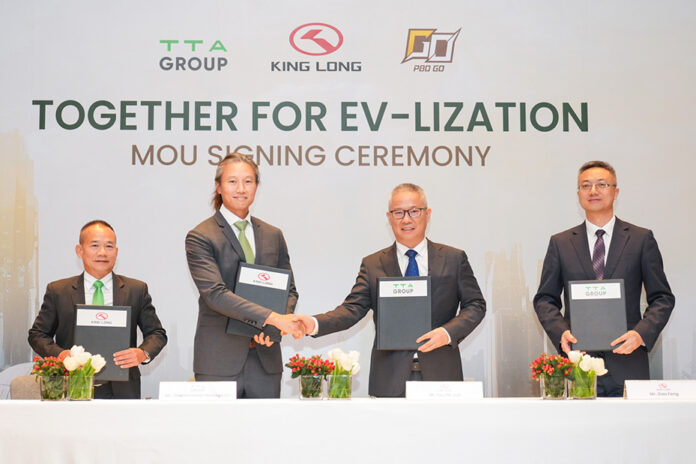
MOU signing ceremony between Thoresen Thai Agencies Public Co., Ltd. and Xiamen King Long United Automotive Industry Co., Ltd. on July 9, 2024.
BANGKOK — King Long has stepped into the Thai EV market with a sales target of 1,000 vehicles in the first year.
Thoresen Thai Agencies (TTA) teamed up with King Long to enter the Thai EV market, targets commercial electric pickup customers, and aims to sell 1,000 vehicles in the first year. The first showroom in the suburban area was opened recently, and distributor partners were selected.
On July 9, 2024, Thoresen Thai Agencies Public Co., Ltd., or TTA, a leading company in strategic investment, teamed up with Xiamen King Long United Automotive Industry Co., Ltd., a major player in the electric vehicle (EV) market from China, to launch the electric pickup truck market for commercial use in Thailand under the theme “Together For EV-lization.”
They aim to fully join the EV market, targeting sales of 1,000 vehicles in the first year, while also planning to collaborate on opening the first EV pickup truck showroom in Thailand’s suburban area.
President and Chief Executive Officer of Thoresen Thai Agencies Public Co., Ltd. Chalermchai Mahagitsiri revealed TTA and King Long are collaborating to develop electric pickup trucks. This year, they will commence market entry with a 1-ton commercial pickup model. The initial model to be released is a single-cab pickup aimed at Thailand’s commercial transport and logistics operators. It will be available for both fleet and retail sales.
“We began with the model in highest demand, which is commercial vehicles, and then gradually expanded to cover every segment later on. We chose to collaborate with King Long because King Long is a leading electric vehicle manufacturer in China with advanced electric vehicle production technology, expertise in design, and over 30 years of experience in commercial vehicle manufacturing.”
TTA’s investment policy focuses on sustainable business growth through the “Smart Growth & Sustainability” concept. As part of its strategy to expand its investment portfolio in the clean energy business sector, TTA is partnering with King Long to introduce electric pickup trucks into the Thai market.
“Entering the electric vehicle business is a significant step for us in advancing TTA’s transportation and logistics experience. We have established P80 Go Co., Ltd. to invest in electric vehicle ventures and distribute electric pickup trucks under the ‘King Long’ brand.”
The King Long electric pickup trucks, resulting from a collaboration between TTA and King Long, are specifically designed for short to medium-range operations. They are well-suited for commercial use throughout Thailand. These trucks have undergone rigorous testing to ensure compliance with the country’s environmental standards and meet user needs.
Liu Zhijun, Chairman of Xiamen King Long United Automotive Industry Co., Ltd., stated, “The electric vehicle market in Thailand holds immense potential, whether for personal cars, commercial vehicles, or other types of vehicles. We mainly focus on introducing electric pickup trucks suitable for commercial use into this market.
We prioritize developing environmentally friendly and suitable technology for the Thai market’s needs, emphasizing efficiency, durability, cost-effectiveness, and low maintenance. Our goal is to sell 1,000 units in the first year after entering the market.”
TTA and King Long are dedicated to becoming strong business partners to revolutionize Thailand’s commercial transportation sector with electric systems, propelling the country towards sustainable transport.
Meanwhile, P80 Go Co., Ltd. has recently opened the first showroom for King Long’s electric pickup in the suburban area. They are currently in the process of choosing dealership partners in anticipation of the upcoming official launch in Thailand. This commercial electric pickup promises customers substantial advantages, including cost savings, long-lasting durability, eco-friendliness, low maintenance expenses, and cutting-edge technology.
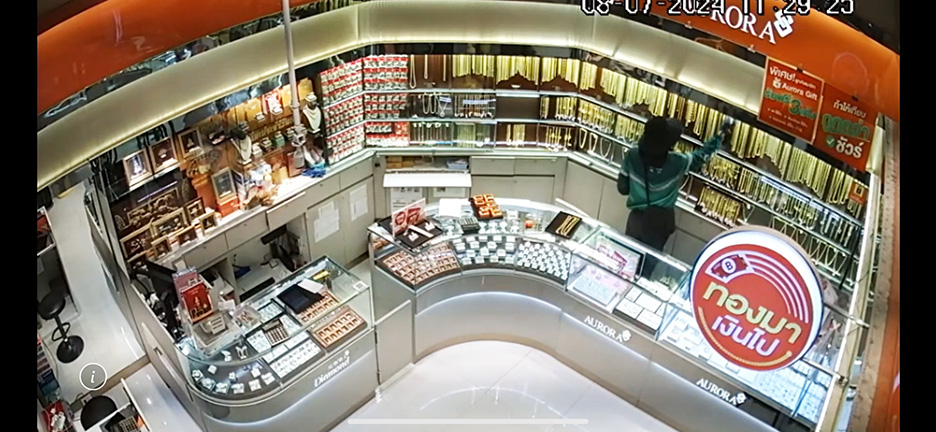
CCTV footage captured the suspect visiting the gold shop to scout the location before committing the crime.
CHIANG MAI — Gold shop robberies continue to occur in Thailand. Despite police consistently arresting criminals, some still risk committing these crimes. The latest case in Chiang Mai Province was more violent and brutal than typical gold shop robberies, as the perpetrator intentionally murdered someone.
Niphitphon, age 26, residing in Chiang Mai’s Doi Saket district, confessed to the police that he had planned the gold heist for over 1 year and 2 months. He hoped to give the money to his parents, who had previously lost money to gold trading scam and were heavily in debt. However, his plan unraveled in just one day.
On July 9, Pol. Maj. Gen. Weerachon Boonthawee, Deputy Commander of Provincial Police Region 5, stated that the quick arrest was fortunate as the suspect had plans to flee abroad. Evidence from the suspect’s phone showed he had surveyed the forest route multiple times and calculated travel times between various points.
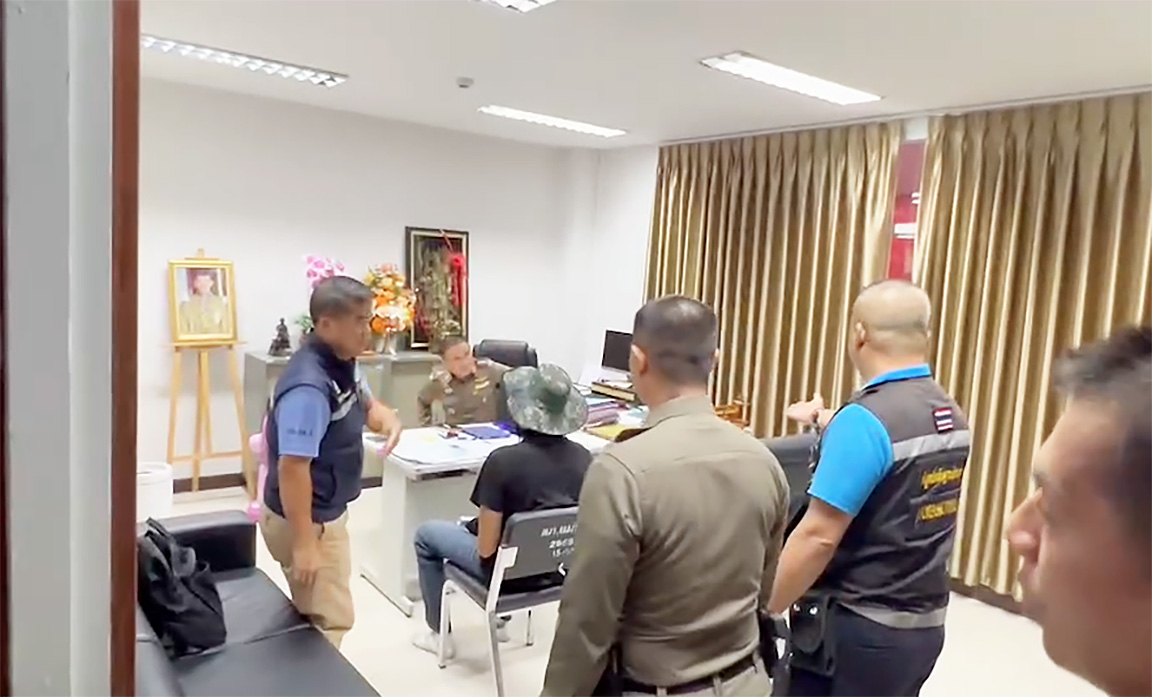
The suspect is brought into the interrogation room at Mae Ping Police Station, Chiang Mai province, on July 9, 2024.
“The suspect had detailed plans A, B, and C, but things didn’t go as expected because he failed to conceal the vehicle, only disguising himself,” Pol. Maj. Gen. Weerachon said.
According to investigation, in the early morning of Monday, July 8, Niphitphon drove his white-gray Toyota to park at Kad Gala in Mueang Chiang Mai district. He then walked along a nature trail to Doi Suthep, about 2 km before reaching Wat Pha Lat temple.
At 5 a.m., he called a Grab taxi. When he got into the back seat, he shot the driver in the back of the head, killing him instantly. He then dragged the body and dumped it off a cliff on Doi Suthep.
He then drove the victim’s white Toyota Altis to rob a gold shop in a downtown department store. After obtaining 80 baht weight of gold ornaments worth about 3 million baht, he drove back to the body dump site on Doi Suthep and walked back to his own car at Kad Gala.
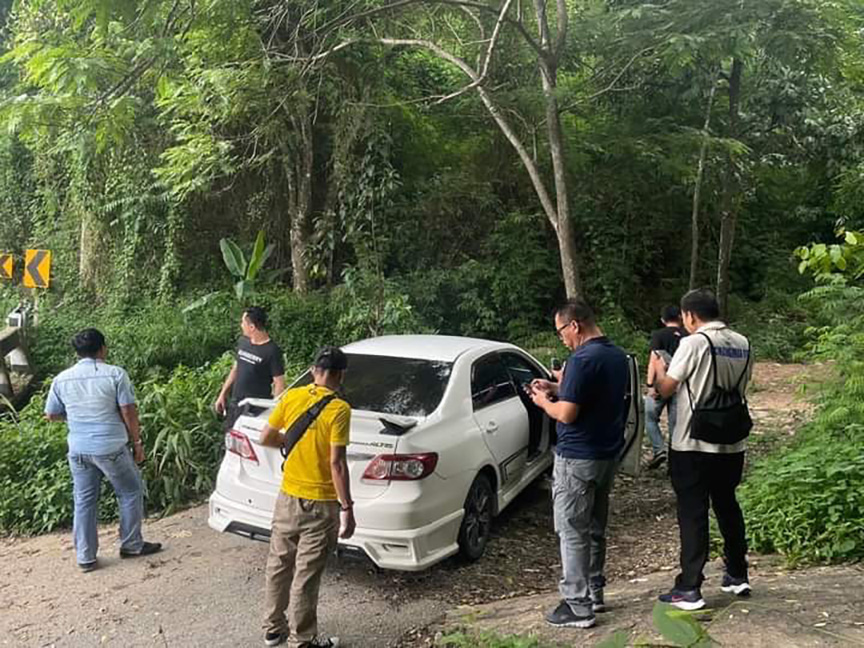
Police find the car stolen by the suspect for the gold shop robbery parked near the spot where he murdered the Grab driver on July 8, 2024.
He then drove around trying to sell the gold at various shops. The first three shops in the city refused to buy, suspecting it might be related to the gold shop robbery news. He then drove to the more distant San Kamphaeng district and managed to sell gold for about 70,000 baht, which he immediately transferred to his parents’ accounts.
At 7:00 p.m., based on a tip from a gold shop, police arrested Niphitphon at his residence. Evidence seized included a 9mm gun used to shoot the victim, clothes worn during the robbery, gold ornaments, and his car.
Pol. Lt. Gen. Kritthaphon Yisakhon, Commander of Provincial Police Region 5, interrogated Niphitphon at Phuping Chiang Mai Police Station. He revealed that Niphitphon had studied science at university but dropped out in his second year and was an avid gamer. He had planned the crime for 1 year and 2 months to help his parents pay off 10 million baht in debt. Before the robbery, he had scouted the gold shop, as evidenced by CCTV footage.
The suspect, wearing a Grab employee uniform, swept gold necklaces from a gold shop located in a department store in downtown Chiang Mai on July 8.
The suspect confessed to all charges, including premeditated murder for robbery, vehicle theft, concealing and destroying a corpse, illegal possession of a firearm and ammunition, and snatching property.
When police took the suspect to reenact the crime and identify the body dump site, relatives of the Grab driver hurled curses and attempted to lynch him. Police quickly intervened and removed the suspect from the scene.
Rescue workers retrieved the body from the ravine and sent it to the forensic department at Maharaj Hospital. The deceased was identified as Acting Sub Lt. Suthep Chainanta, 48, who had previously worked in Rayong province but resigned to care for his 80-year-old ailing mother, working as a trainer and Grab driver for extra income.
Rescue workers retrieve the body of the Grab driver who was shot in the back of the head by the suspect and thrown into a deep ravine.
The investigation revealed that the victim was randomly selected and had no prior connection or conflict with the suspect. He often took early morning jobs due to less competition and would nap at gas stations between rides.
The suspect’s parents visited their son on Tuesday during questioning and apologized to the media for their son’s actions. They confirmed that they had indeed lost 10 million baht in a gold trading scam 4-5 years ago, despite their son’s warnings at the time. Since then, the family had managed to continue living, though less comfortably. The son wasn’t working but cared for his mother, who gave him a monthly allowance of 15,000-20,000 baht.
The mother expressed shock at her son’s actions, describing him as polite and quiet but addicted to violent strategy and combat games since childhood. On the day of the incident, he behaved normally at home. They advised him to tell the full truth to potentially reduce his sentence but worried he might harm himself in custody.
“We deeply apologize and express our sincere condolences to the victim’s family. We will definitely go to pay respects and ask for forgiveness on behalf of our son,” the suspect’s mother said.
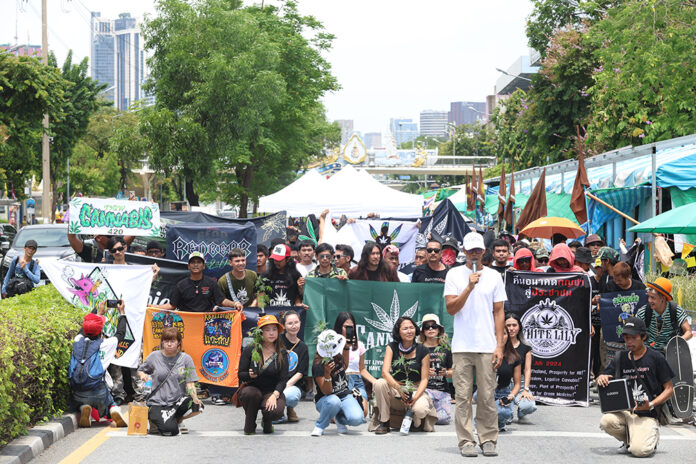
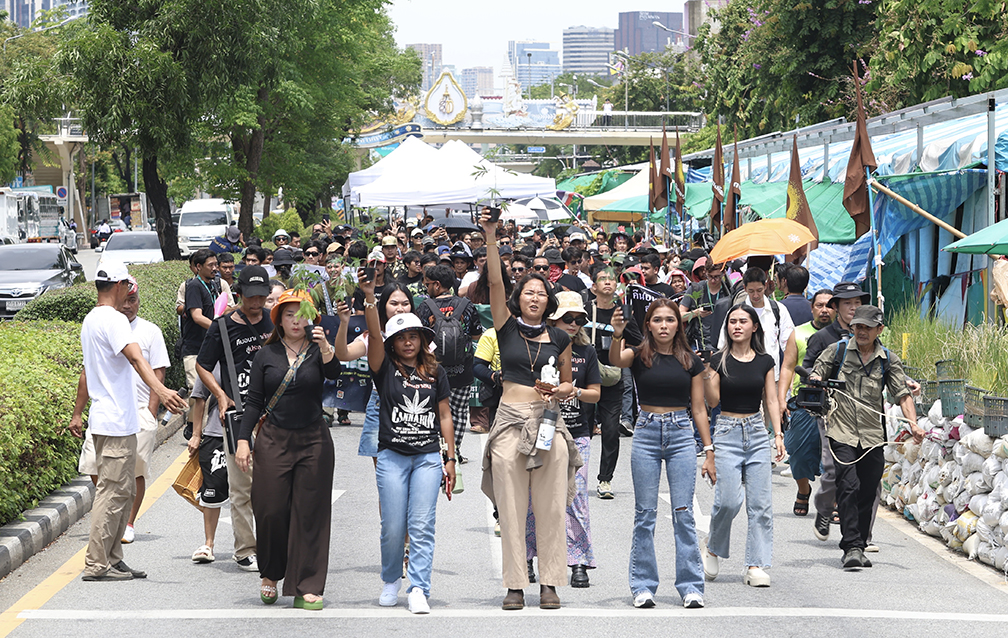
Cannabis farmers and supporters of marijuana for recreational purposes marched to the Government House to camp out on Monday afternoon, July 8, 2024.
BANGKOK — The battle between anti-cannabis and pro-cannabis groups has intensified once again since the Committee for the Control of Narcotic Drugs approved the reclassification of hemp and cannabis as narcotics on July 5, 2024.
Pro-cannabis advocates gathered to push for a Cannabis Act and oppose reclassification as a narcotic, as it reversed the decriminalization from June 9, 2022.
On July 8, about 100 members of the Thai Cannabis Future Network, led by Prasitchai Noonuan, the network’s secretary-general, marched from the United Nations headquarters on Ratchadamnoen Road to the front of Government House to submit a proposal to the government. They called for cannabis to be regulated under a special cannabis law to resolve conflicts according to international standards.
Prasitchai explained that the network has proposed forming a joint committee to research cannabis in four dimensions:
Whether cannabis poses more health risks than cigarettes and alcohol.
Whether cannabis has caused more severe social harm in the last two years compared to cigarettes and alcohol.
Whether the medicinal properties of cannabis are superior to those of cigarettes and alcohol.
Whether cannabis actually causes psychiatric disorders and brain damage in young people, as claimed by the government.
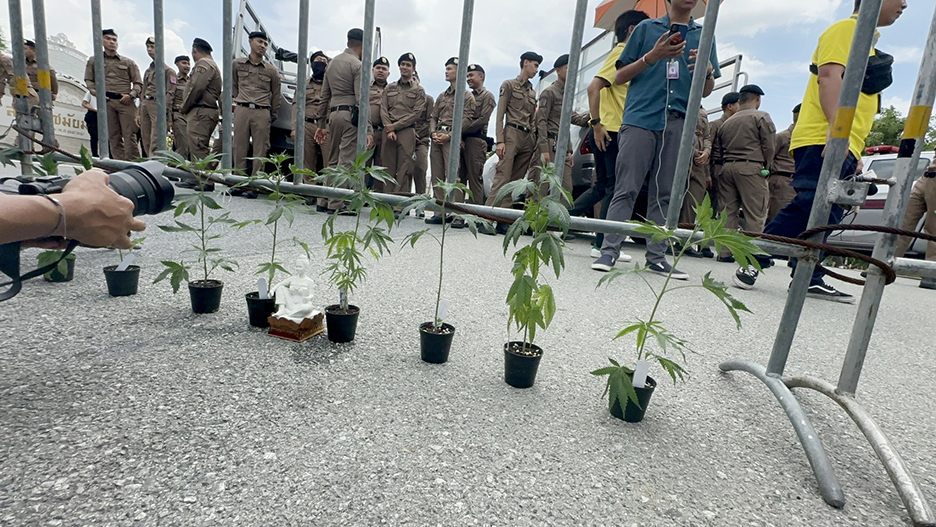
Cannabis plants that protesters arranged along the police barricade near the Government House on July 8, 2024.
Once the research is complete, the results should determine the legal status of cannabis. If cannabis is found to be no more harmful than cigarettes and alcohol and is not a cause of psychiatric disorders or brain damage, it should be regulated under a cannabis law. If it proves to be more harmful, it should come under the Narcotics Act.
Prasitchai also urged Prime Minister Srettha Thavisin to adhere to international principles to resolve the conflict by setting up a joint committee to investigate before control measures are determined. He emphasized the importance of clarifying who misled the public.
“From now on, we will expose the connections between business groups and government officials, especially those of the Pheu Thai Party, including Somsak Thepsutin and Srettha Thavisin, and their relationships with the party’s influential figures. We will expose their connections and the real motives behind calling for cannabis to be reclassified as a narcotic without really caring about public safety,” Prasitchai said.
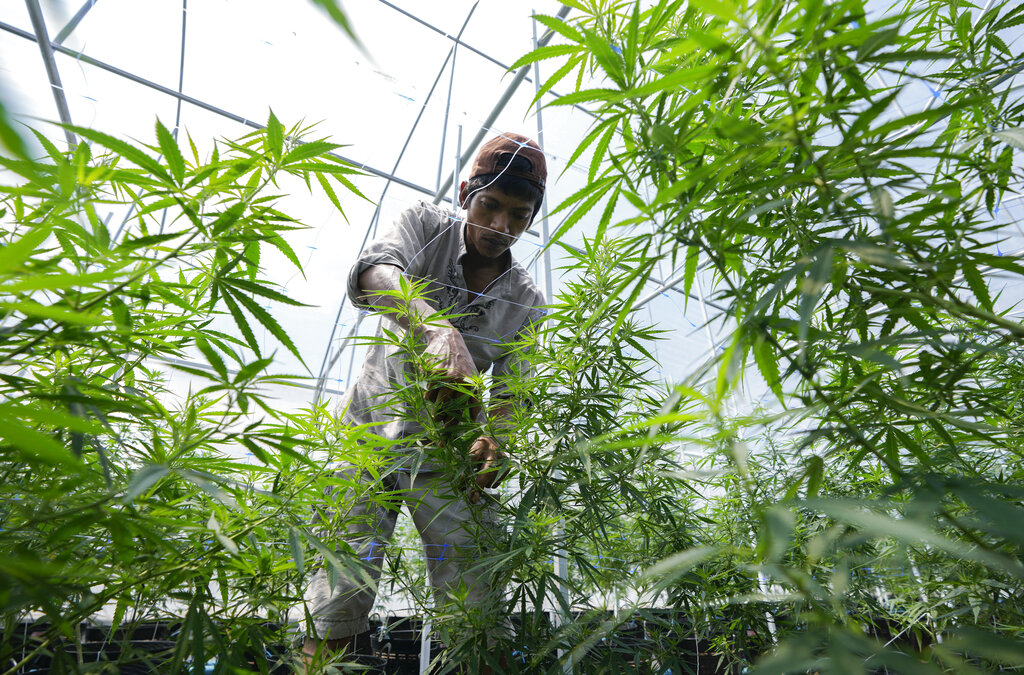
A worker tends to cannabis plants at a farm in Chonburi province, eastern Thailand on June 5, 2022. Photo: Sakchai Lalit / AP
Hiranrat Mahadisthadakul, a director and secretary of the Hemp and Cannabis Industry Association (HCIA), told Matichon that the association, which has over 20 member companies with investments of over 5 billion baht, does not support the reclassification of cannabis and hemp as narcotics. They prefer regulation under a special cannabis law for more business flexibility.
She said that the existence of a cannabis law allows for more flexible business activity than a return to narcotic status. We want to get on with the cannabis law and avoid excessive political interference. We have invested on the basis of clear government policy, not the policy of a particular party.
“If cannabis is reclassified as a narcotic, it would be a step backwards. HCIA has no confidence in the new government’s approach unless it comes from the Pheu Thai Party. Many entrepreneurs have expressed that they no longer want to stay in this business. Our group has been a driving force in this industry, but we have never received protection from the government. We were left to fend for ourselves,” she added.
Cannabis farmers and supporters of marijuana for recreational purposes marched to the Government House to camp out on Monday afternoon, July 8, 2024.
Hiranrat explained that while most companies focus on hemp, reclassifying cannabis and hemp as narcotics would affect investor confidence. Although hemp and cannabis are considered part of the same family, their active ingredients differ.
Hemp contains CBD, which is useful for industrial and commercial purposes, such as CBD oil, beverages and cosmetics. Cannabis contains THC, which has medicinal benefits. The public does not know enough about cannabis and often confuses CBD-containing products with intoxicating cannabis products. Therefore, the government needs to educate the public more.
She emphasized the importance of government dialog with the industry when reclassification is necessary, as past policy uncertainties have led to significant losses for entrepreneurs. The association wants clarity on whether the Cannabis Act will continue and what the future status of cannabis and hemp will be.
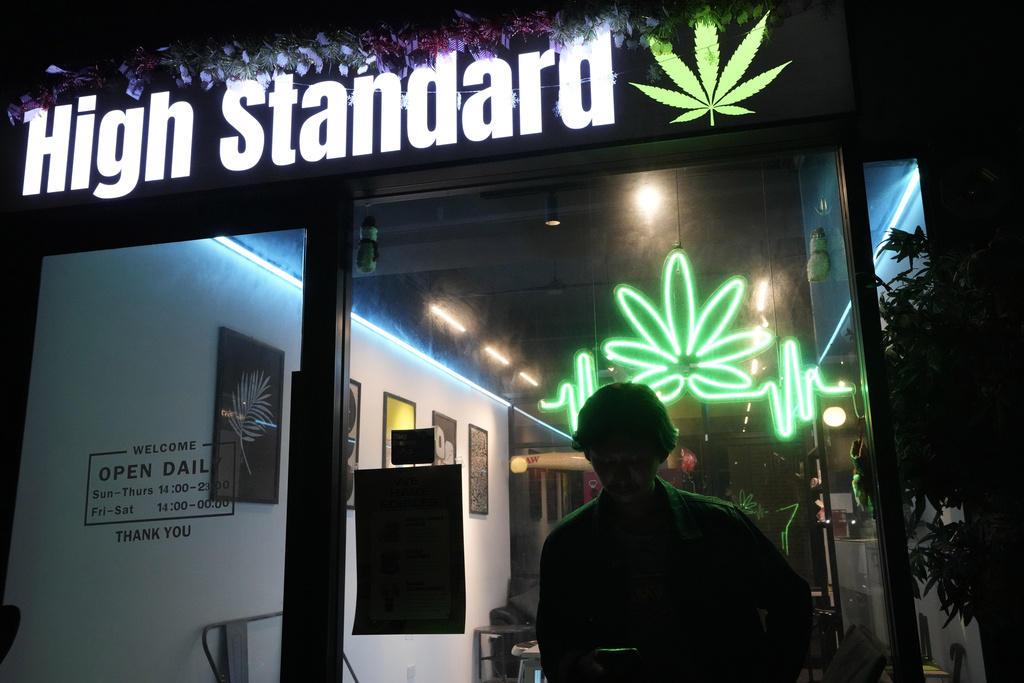
A staff member of a cannabis shop uses his mobile outside the shop in Bangkok, Thailand, Wednesday, May 15, 2024. (AP Photo/Sakchai Lalit)
Although the government promotes cannabis for health and hemp for business, the actual practice is different. The private sector cannot extract cannabis flowers because the law does not allow it. Only government agencies can do this in collaboration with private entities, which comes with many strings attached. This prevents the midstream process from entering the economic cycle. Reclassifying cannabis as a narcotic would exacerbate this problem, Hiranrats concluded.
“We see great business potential for cannabis in the global market. However, with the ever- changing policy, we are unsure of the direction the government is taking. If this continues, businesses will not be able to survive,” she said.
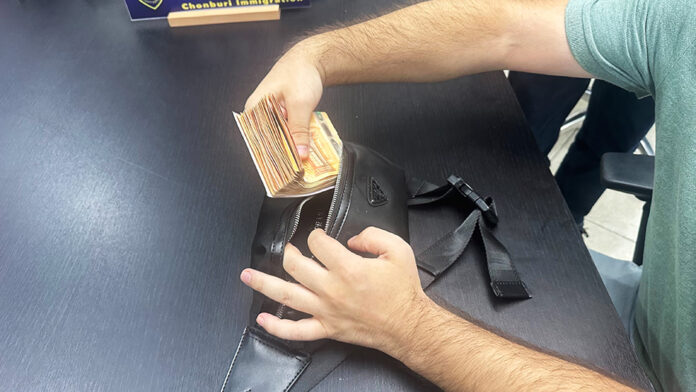
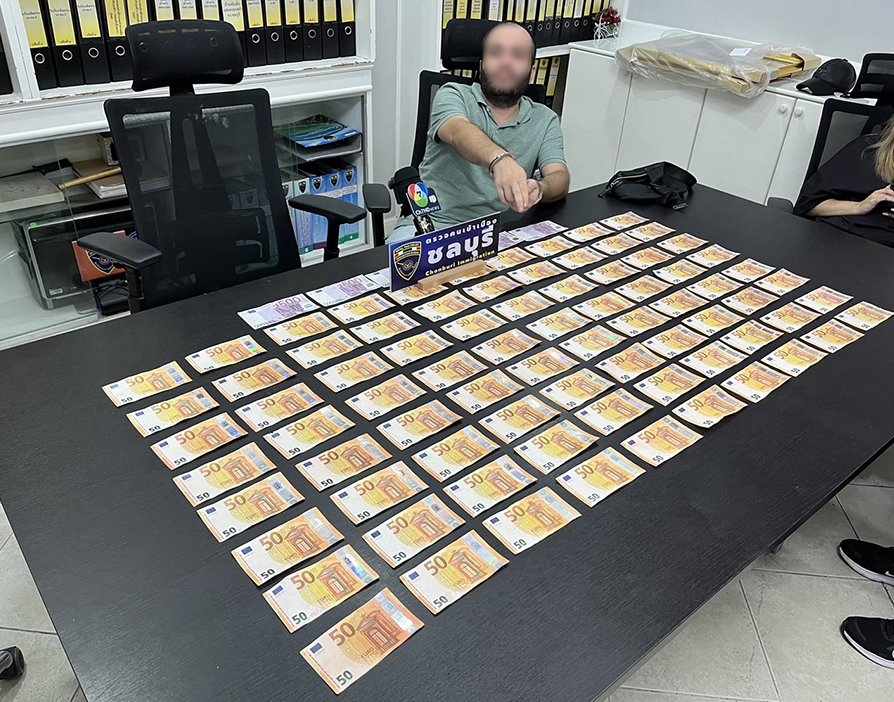
The Russian man Khasanov said he had asked his Turkish friend to bring 7,000 euros in fake notes to use in Thailand.
PATTAYA — Immigration police arrest Russian for using Thai national to exchange 280,000 baht worth of counterfeit Euros in Pattaya.
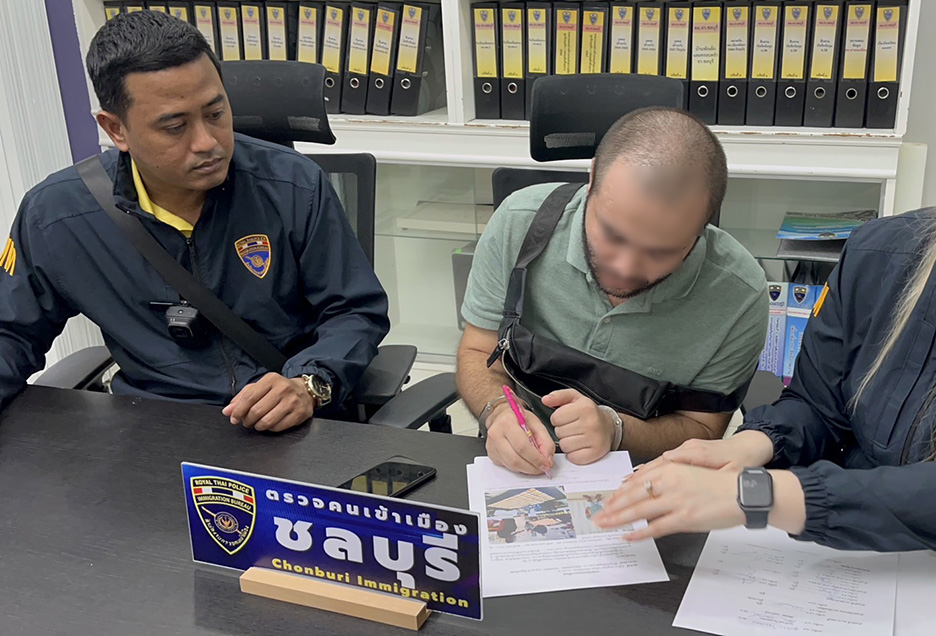
On July 8, Chonburi Immigration officers arrested Mr. Khasanov, a 29-year-old Russian suspect, in a hotel room in Soi Phra Tamnak 6, South Pattaya, Moo 10, Nongprue Subdistrict, Banglamung District, Chonburi Province. They seized counterfeit euro banknotes, 140 pieces of 50 euro notes, totaling 7,000 euros or nearly 280,000 Thai baht.
The arrest followed a tip from a currency exchange booth about a foreigner tricking a Thai person into exchanging 50 euros, worth 20,000 baht. The exchange was successful, and the money was with this foreigner.
Police Colonel Naphatphong Khositsuriyanon, Superintendent of Chonburi Immigration, revealed that Mr. Khasanov arrived in Thailand on May 29 and was scheduled to leave on July 9. He claimed the counterfeit notes belonged to a friend in Turkey, produced there. The producer allegedly had previously successfully exchanged fake euros in Thailand worth over 400,000 baht.
Chonburi Immigration officers charge Mr. Khasanov, a 29-year-old Russian suspect, with possessing counterfeit money and possessing for distribution items which he knows to be counterfeit.
Khasanov said he had asked his Turkish friend to bring 7,000 euros in fake notes to use in Thailand, claiming he would share the proceeds if successful. He had previously failed to exchange the money at a bank in a department store before tricking a Thai person to exchange it.
Tom, a 41-year-old Thai who was tricked, said the Russian asked him to exchange the money to pay for his hotel bill of several thousand baht. Tom was unaware the notes were counterfeit.
“When I exchanged the money, I got about 20,000 baht. I gave it to the Russian. Then the exchange booth staff questioned me. I came to prove my innocence to the police that I wasn’t involved. I want to warn others to be cautious of foreigners behaving like this,” Tom said.”
Khasanov said he had asked his Turkish friend to bring 7,000 euros in fake notes to use in Thailand.
Police have charged the suspect under Section 240 of the Criminal Code, which states: ‘Whoever counterfeits money, whether it be coins, banknotes, or any other item issued or authorized to be issued by the government, or counterfeits government bonds or interest coupons for such bonds,’ and Section 241, which states: ‘Whoever possesses for distribution anything which they know to be counterfeit.’
Additionally, officials discovered that the foreigner had overstayed his permitted duration in Thailand beyond the date allowed on his visa sticker and entry stamp. He has been handed over to investigating officers for legal proceedings.
SAT–1 is part of the Phase 2 development project of Suvarnabhumi Airport.
BANGKOK — The Tourism Authority of Thailand (TAT) is negotiating with the Civil Aviation Authority of Thailand (CAAT) and Airports of Thailand (AOT) to increase the number of slots for flights from China to Thailand.
They are proposing incentives to encourage airlines to add more flights to secondary cities. If the number of slots is increased by only 10 percent in the fourth quarter, monthly tourist arrivals could exceed 1 million and the annual target of 8 million Chinese tourists could be reached.
Mr. Chattan Kunjara Na Ayudhya, Deputy Governor for Asia and South Pacific Market at TAT, highlighted the strong growth in Chinese tourist arrivals. 3.43 million Chinese tourists visited Thailand in the first half of 2024 (January-June), making it the top source of international tourists, out of a total of 17.5 million international visitors.
TAT is confident that the target of 8 million Chinese tourists in 2024 will be achieved. To further boost the market, TAT is currently negotiating with CAAT to increase flights from various Chinese cities in the winter season, starting in the fourth quarter, to cope with the influx in the peak season.
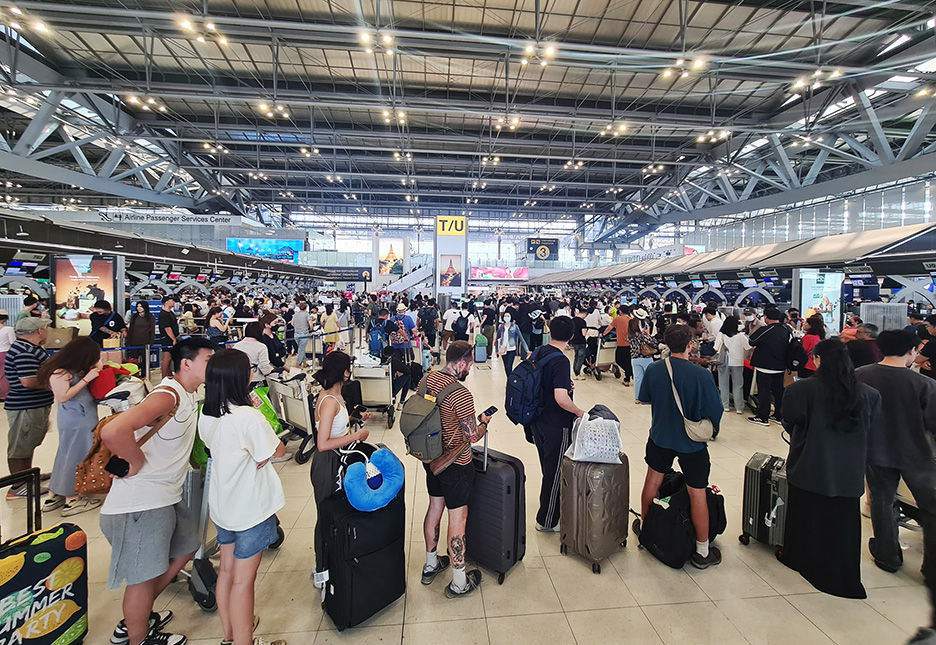
Tourists crowded at Suvarnabhumi Airport on February 25, 2024, but the cashier lady at a nearby coffee shop said it’s not a particularly busy Sunday afternoon. (Photos by Pravit Rojanaphruk)
The TAT also proposes measures to incentivize existing and new airlines to expand their routes to Thailand. This includes incentives such as reduced landing fees to encourage flights to secondary or less visited cities. Discussions are also planned with AOT on these details.
TAT expects that in October, November and December 2024, the number of Chinese tourist arrivals could exceed 1 million per month.
“At present, major cities in China such as Shanghai, Beijing and Guangzhou, as well as secondary and emerging cities, have high demand for more flights. If we can increase seat capacity by about 10 percent in the fourth quarter, we are confident of reaching the target of 8 million,” Chattan said.
During the summer season (31 March – 26 October 2024), there were 34,452 flights from China to Thailand from 40 cities with a total of 6,438,233 seats, which is about 80 percent of the 2019 level.
Chinese tourists traveling to Thailand are mainly from the younger generation (Gen Z), followed by families, young professionals, incentive travelers and students.
A C919 large passenger aircraft, China’s first self-developed trunk jetliner, takes off from Shanghai Hongqiao International Airport in east China’s Shanghai, May 28, 2023. (Xinhua)
Mr. Chattan also mentioned that TAT’s marketing efforts for the Chinese market this year are under the concept of “Travel Thailand, the More You Go, the More Fun It Is”,” which aims to promote Thailand’s positive image. Initiatives include the Amazing Festival & Exclusive Trip in Thailand (Chinese Influencer Mega FAM Trip) at the end of December 2024, joint promotions with social media platforms to share positive content about Thailand, and joint promotions with online platforms to highlight special offers and tourist attractions.
The TAT also works with travel agencies such as Yunnan DCD Traveling Service in Kunming to put together overland travel packages to boost tourism and offer new travel experiences, as well as cultural and tourism exchange projects between Thailand and China.
Looking ahead to 2025, the TAT is planning events such as the Amazing Thailand Songkran Festival 2024 and working with travel companies to offer Thai travel packages to tourists from Kunming and other Chinese regions. These packages will take tourists to various Thai provinces such as Chiang Rai, Chiang Mai and Bangkok, Ayutthaya, Pattaya, Phuket, Hat Yai and on to Malaysia and Singapore, with a trip duration of 10-26 days and prices ranging from 7,000-40,000 yuan (approx. 35,000-200,000 THB) per person.
In addition, TAT will expand projects such as TATX LABUBU (POPMART International Group Limited) with the cultural activities of Labubu Amazing Thailand Experience Explorer between July and September 2025.
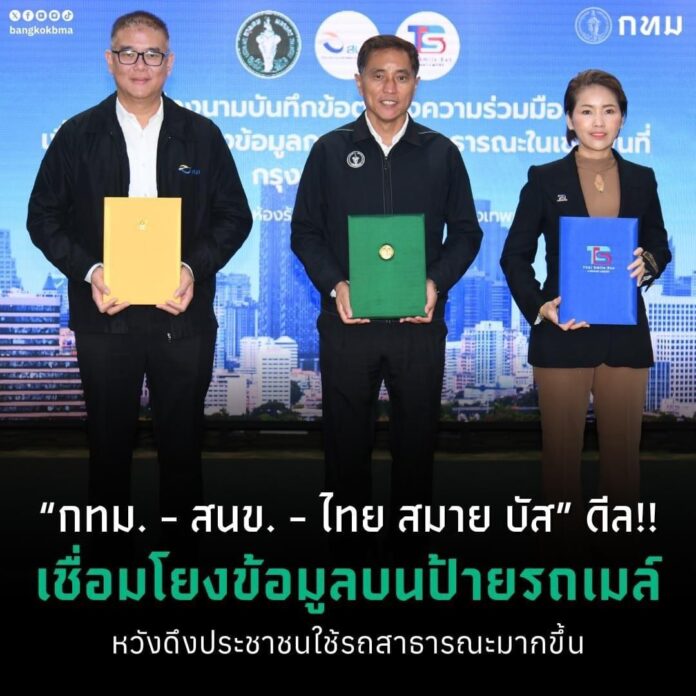
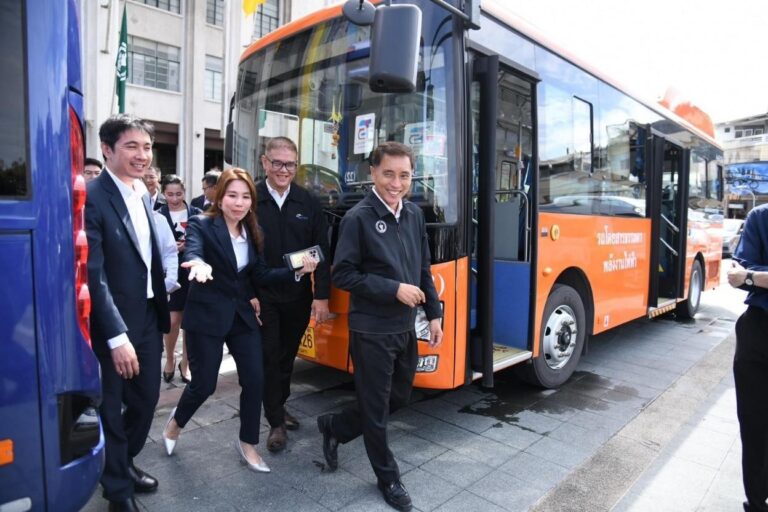
BMA – Office of Transport and Traffic Policy and Planning – Thai Smile Bus” Deal!! Link information on bus stops Hoping to attract more people to use public transportation.
Assoc. Prof. Wisanu Subsompon, Deputy Governor of Bangkok signed a memorandum of understanding on cooperation for linking public transport travel data in the Bangkok area to share, exchange, and link information between government agencies and private
Focus on providing maximum benefit to the people. And promote increased use of public transportation. The executive team from the Office of Transport and Traffic Policy and Planning (OTP), Ministry of Transport, and Thai Smile Bus Company Limited (TSB) attended the signing at BMA City Hall, Giant Swing.
“This cooperation involves sharing information on public transportation between Thai Smile Bus, a major bus service provider. Which has the ‘TSB Go Plus’ application and the OTP which has a ‘Navigation’ application that combines travel information with a variety of public transport. To provide information about buses in the Bangkok area more complete by citizens who have applications, no matter who they are In a future where information exchange is complete Will be able to see more complete information,” Deputy Governor Wisanu said after the signing ceremony.
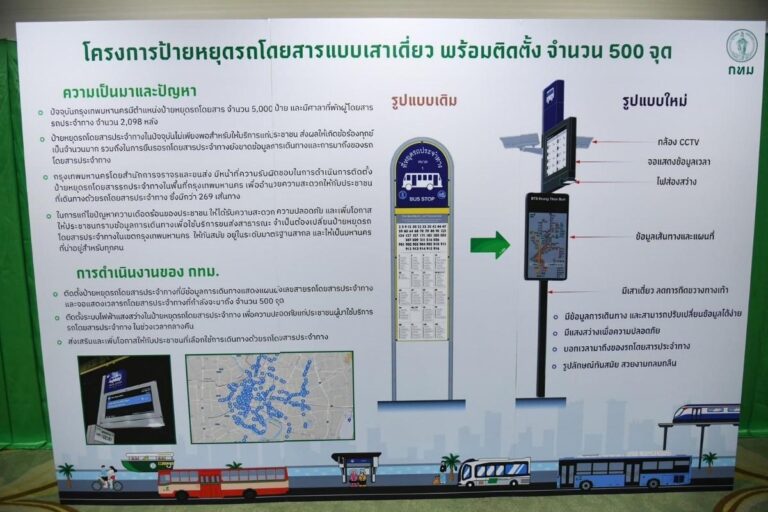
The Director of OTP added that the ‘Navigation’ application that OTP has made has collected travel information on buses, electric trains, and boats. From now on, the information we have made will be forwarded for use. Smart Bus Stop digital screen which is also under the supervision of BMA.
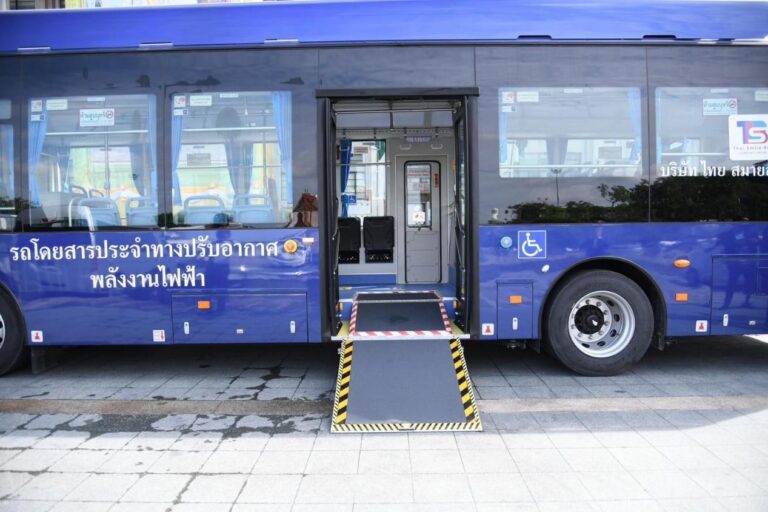
The TSB Chairman also said that at present, Thai Smile Bus buses have 123 routes, which do not yet cover the entire Bangkok – metropolitan area. Having BMA take the lead in this collaboration will bring benefits to passengers. Because while waiting for the bus to arrive, you can see from the screen which bus will arrive within how many minutes? This will allow you to plan your trip. And is expected to attract more people to use public transportation.
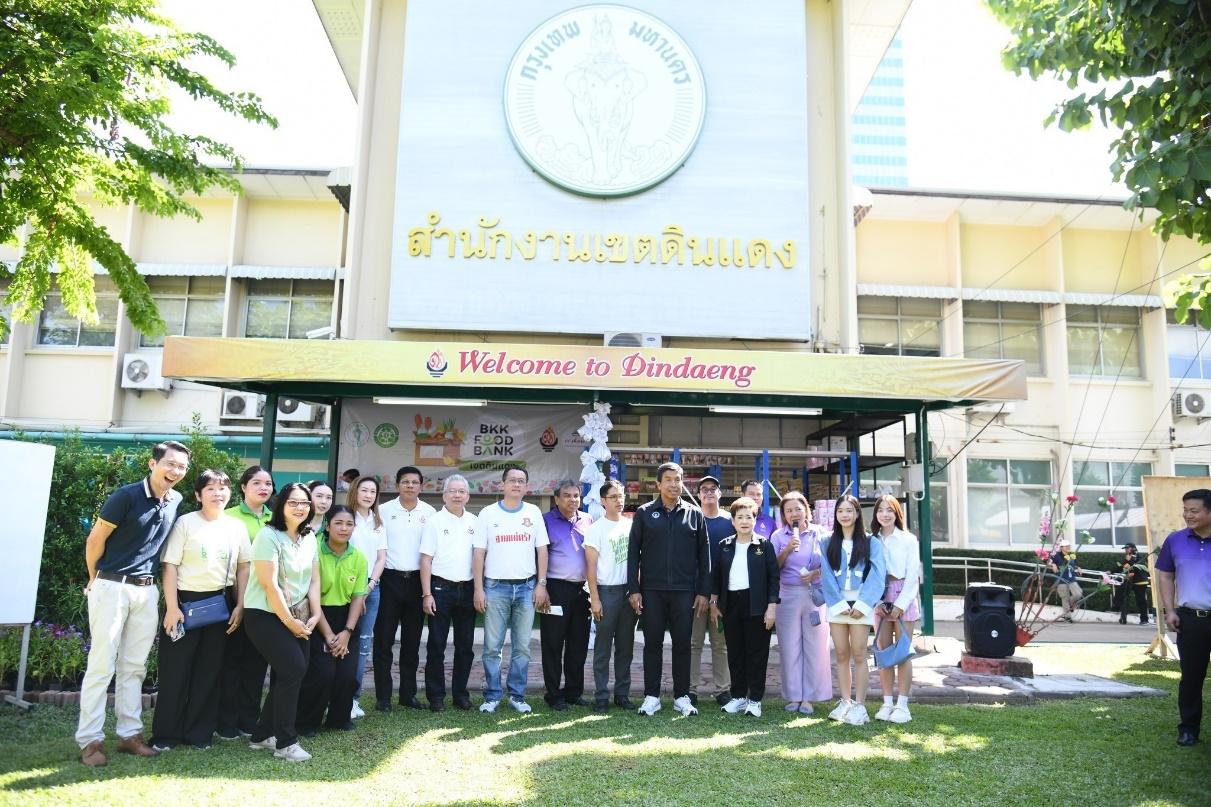
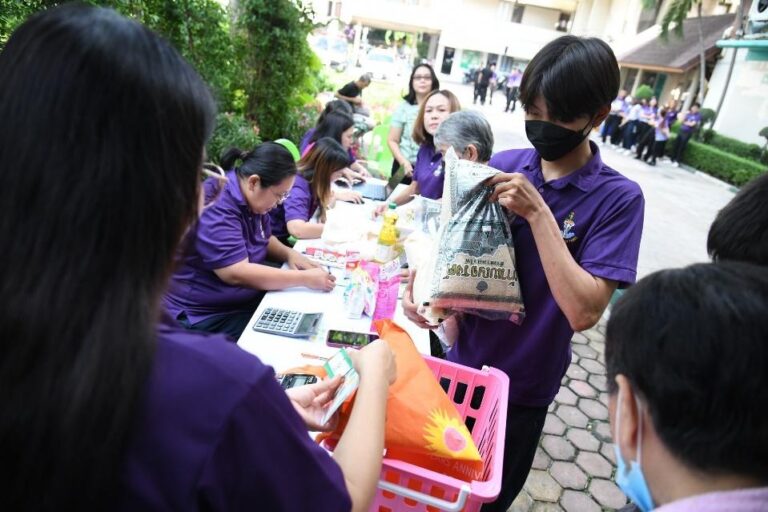
BKK Food Bank, a beautiful meeting point for those who want to share with those in need, is now open in 30 districts.
“The BKK Food Bank project is a project that brings together the objectives of those who want to share with those in need. Which will make our society better We do it in a supermarket format. There is a system for accumulating points. Let those in need bring their points to exchange for products that meet their needs. Thanks to the donors as well.”
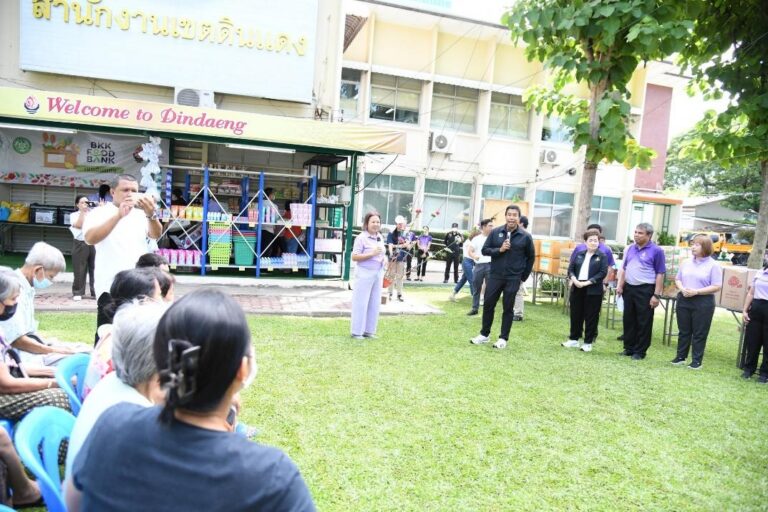
Mr. Chadchart Sittipunt, Governor of Bangkok Speaking on the occasion of presiding over the opening ceremony of BKK Food Bank, Din Daeng District, with Mrs. Anong Pechtat Member of BMC Din Daeng District, and Bangkok Metropolitan Administration administrators, attending the ceremony at the Din Daeng District Office.
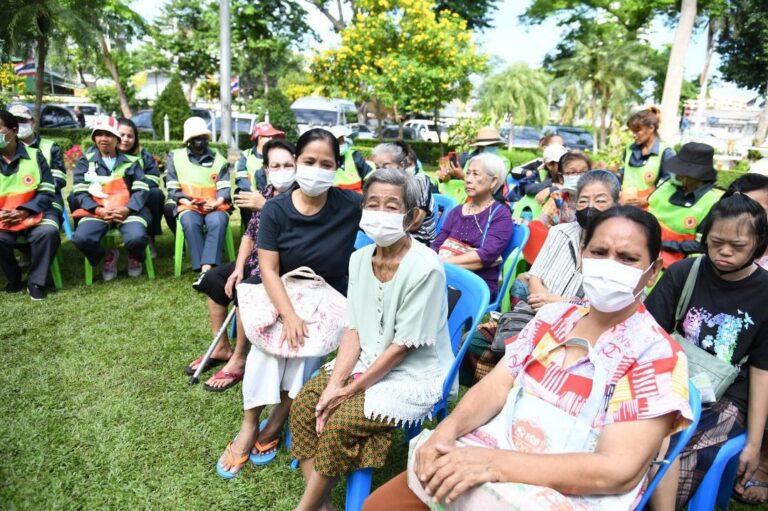
Mr. Chadchart presided over the opening ceremony of the BKK Food Bank, Din Daeng District on July 6, with Mrs. Anong Pechtat Member of BMC Din Daeng District, Mr. Pornphrom Vikitsreth, Advisor to the Governor of Bangkok and the first Chief Sustainability Officer of the BMA Executives and officials of the Din Daeng District Office The Social Development Office, donors and vulnerable people attended the ceremony at the Din Daeng District Office.
The BKK Food Bank project delivers surplus food to vulnerable groups in a concrete way. It is a collaboration between Bangkok Scholars of Sustainability Foundation (SOS) and VV Share Foundation to solve the problem of food waste. That may cause both environmental and economic damage. To be passed on to those in need.
Vulnerable group groups of poor people or people affected by disasters and public disasters in emergencies Create a mechanism for transferring assistance between donors and recipients sustainably. It is carried out in 2 formats as follows:
Model 1: The district office is the recipient – forwards surplus food from sharers and provides assistance to vulnerable groups in the area. There is systematic reporting. In cooperation with the foundation that works with surplus food. Currently, operations have begun in 37 districts for the Din Daeng District. The project started operating on March 19, 2024 to date, receiving products from 21 convenience store branches in the area.
To deliver food to vulnerable groups both in the community and outside the community in the Din Daeng area. A total of 3,394 people have been forwarded, representing a weight of 2,054.17 kilograms of donated food. The amount of carbon reduced is 5,197.04 kgCO2e (kilograms of carbon dioxide equivalent).
Model 2: Establish BKK Food Bank, District Office, as a place to receive and distribute food. Consumer goods Necessary items for living (Goods Donation) and pass them on to the recipient. (Target group) where the district office is responsible for evaluating and rating recipients. (Target group) for recipients (Target group) Use the points received to exchange for items from BKK Food Bank.
It has opened in 29 districts, Din Daeng District being the 30th district and will next open every Thursday from 10:00 a.m. – 12:00 p.m.
Those wishing to donate consumer items to BKK Food Bank can contact every district office.