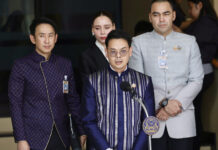
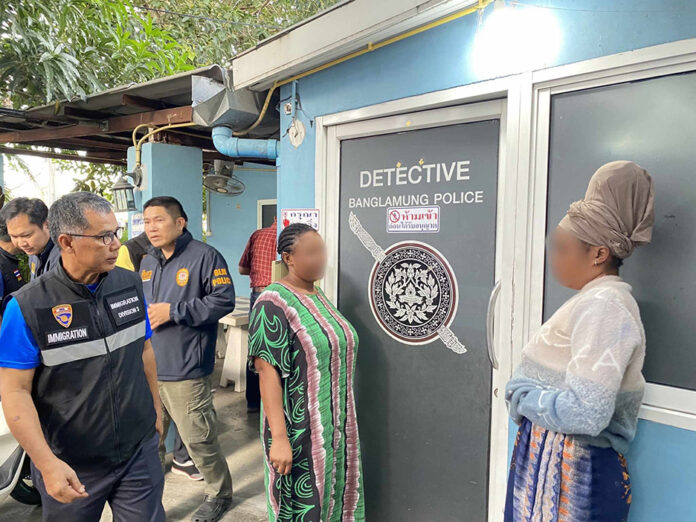
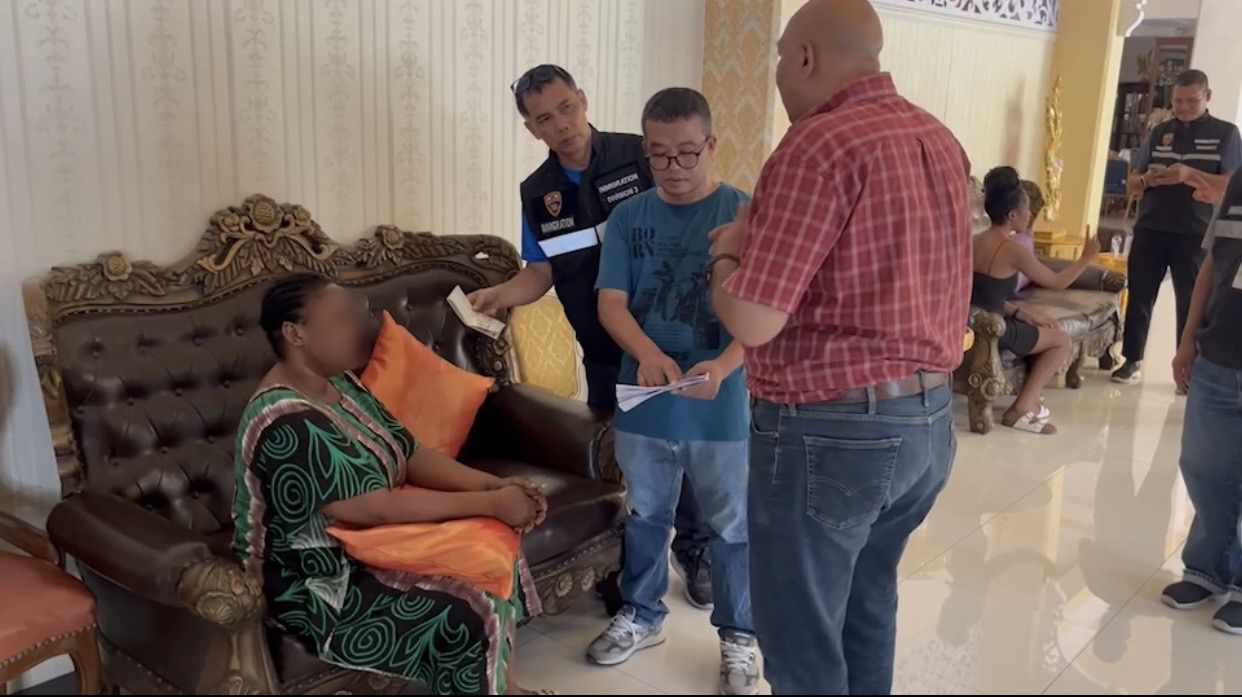
The bar employee (left) states that she tried to walk away, but the foreign man walked up and pushed her, causing her to fall and injure her ankle.
PATTAYA — A bar employee in Pattaya is pleading for a foreign man to be brought in to compensate for the damage caused by his assault that left her injured.
According to a clip shared on social media, a female employee of an entertainment venue on Walking Street, Pattaya, was pushed and knocked down by a burly foreign man. A reporter from Khaosod Online in Pattaya has tracked down this woman.
Ms. Saichon, 32 years old, said that at 4:30 a.m. on June 16, after finishing work and about to go to another entertainment venue on Walking Street, Pattaya, she saw a foreigner in a frenzied state. She tried to walk away, but the foreign man, whom she had never met before, walked up and pushed her, causing her to fall and injure her ankle.
After that, the police officers intervened to settle the incident and brought them to discuss further at Pattaya City Police Station. She asked for 10,000 baht for medical treatment. The foreign man offered to pay 8,000 baht, and she didn’t want to make a fuss, so she agreed to end the matter peacefully to avoid escalating problems.
However, the woman who came with the foreigner refused, saying she would only give 3,000 baht and would bring more on another day before a daily record was made.
But since the day of the incident until now, the other party has not contacted her. She, therefore, wants to ask for justice for herself because she cannot work to support herself. She pleads with the police to urgently track down the perpetrator to be held accountable according to the law as soon as possible.
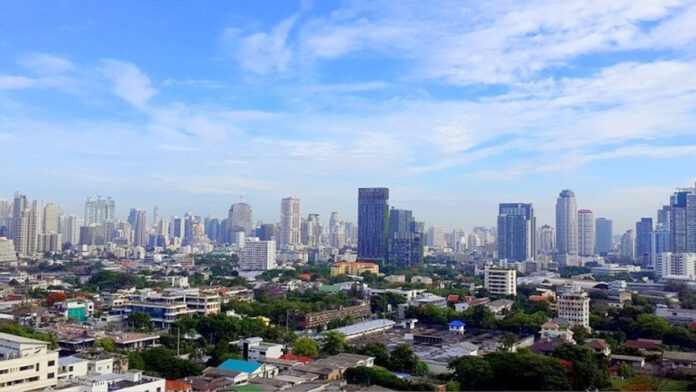
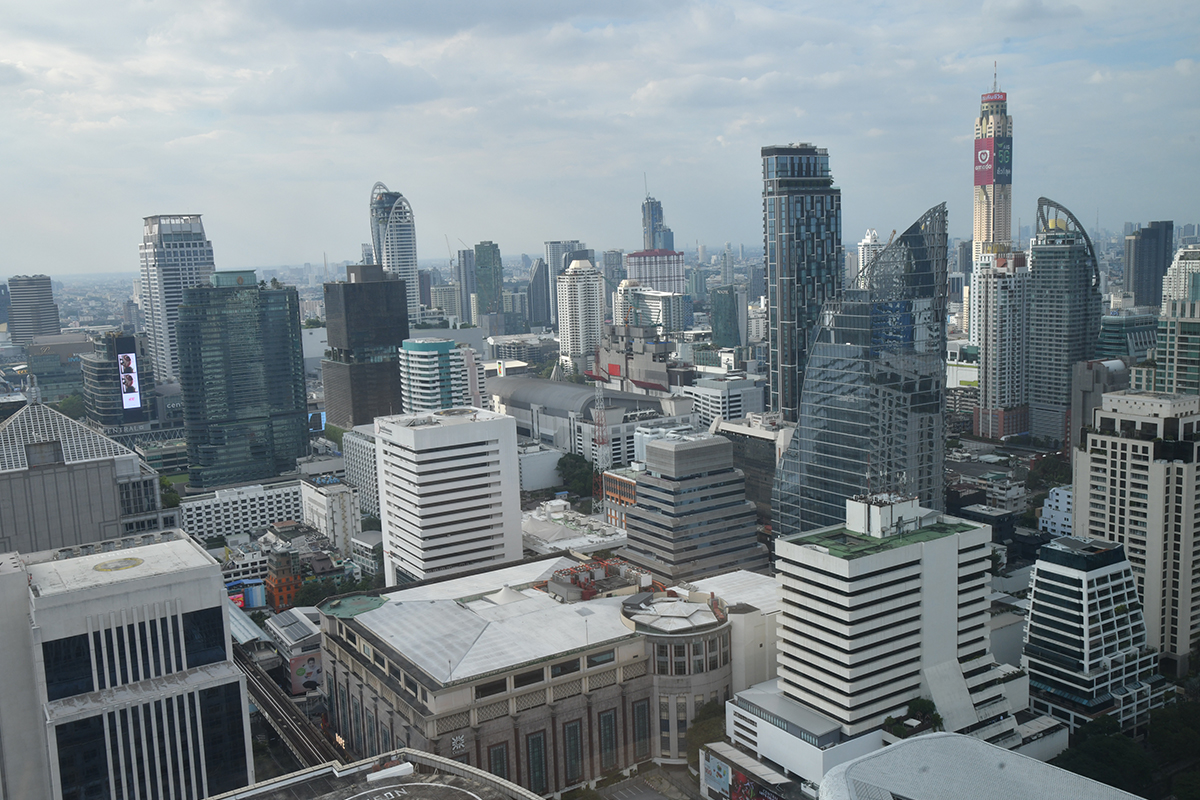
BANGKOK — Prasert Taedulyasatit, president of the Thai Condominium Association, said on June 18, that the Myanmar government’s strict control over condominium purchases in Thailand has affected sales.
Currently, Myanmar nationals are the second largest group of buyers after Chinese nationals.
It is expected that this restriction will further worsen the real estate market in the second quarter and continue the negative trend from the first quarter. Foreign demand is crucial, especially when domestic purchasing power is weak due to high household debt and the continued refusal to borrow. Nevertheless, customers from Myanmar still make up a small proportion compared to Chinese buyers, who remain the largest customer group.
Kajonsit Singsansern, CEO of Siamese Asset Public Company Limited, mentioned that the company has recently expanded its market to Myanmar customers, selling about 10 units priced between 5 and 10 million baht in the Rama 9 area. The main customers are still from China and Taiwan. Due to the weak domestic market, with a rejection rate of up to 50% for properties under 3 million baht, the company relies heavily on foreign buyers.
“We have to admit that the Thai economy is in a bad state due to various factors. The main problem is high household debt, which affects purchasing power in all sectors, including the real estate sector. It will be a challenge for the government to achieve 3% GDP growth this year, as only the tourism sector seems to be a supporting factor. If the digital currency project is launched by the end of the year, it could help, but that is still uncertain,” Kajornsit said.
Piya Prayong, CEO of Pruksa Real Estate Public Company Limited, explained that Pruksa does not yet have many customers in Myanmar as the company is just entering the market. Therefore, the company is not significantly affected and is exploring other markets such as Taiwan and China.
The real estate market has seen weak purchasing power over the last five months due to the sluggish economy and the same old problems with high loan rejection rates of up to 40 percent. The government’s measures have not helped significantly, with the result that sales have fallen slightly short of expectations.
“We have therefore expanded our portfolio to include high-quality properties priced between 30 and 40 million baht. For the Thai economy as a whole, the government will have to work very hard if it wants to achieve GDP growth of 3 percent, as growth in the first quarter was only 1.5 percent. More cash injections and stimulus measures are needed as exports are still not doing well. Relying on tourism alone will not be enough,” said Piya.
Apisith Sunthornchukeat, Co-CEO of Origin Vertical Corporation Limited, a subsidiary of Origin Property Public Company Limited, noted that the market is still performing well overall for foreign buyers, especially as Chinese buyers continue to invest. However, the Myanmar market has slowed down due to strict control by the Myanmar government.
The company has suspended its operations in Myanmar and expanded into new markets such as Taiwan, India, Europe and America, where most customers prefer condominiums in prime locations such as Thonglor, Phrom Phong and Sukhumvit.
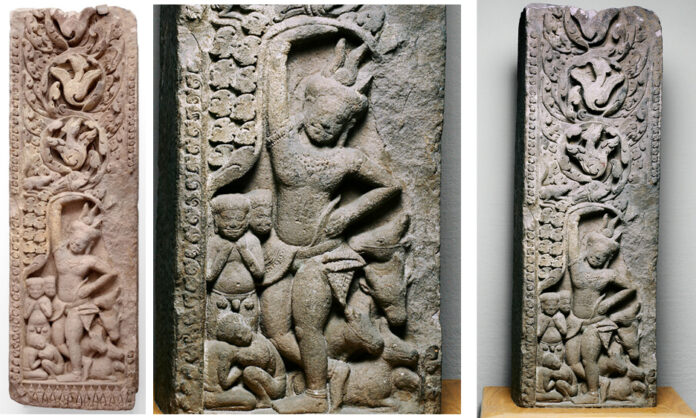
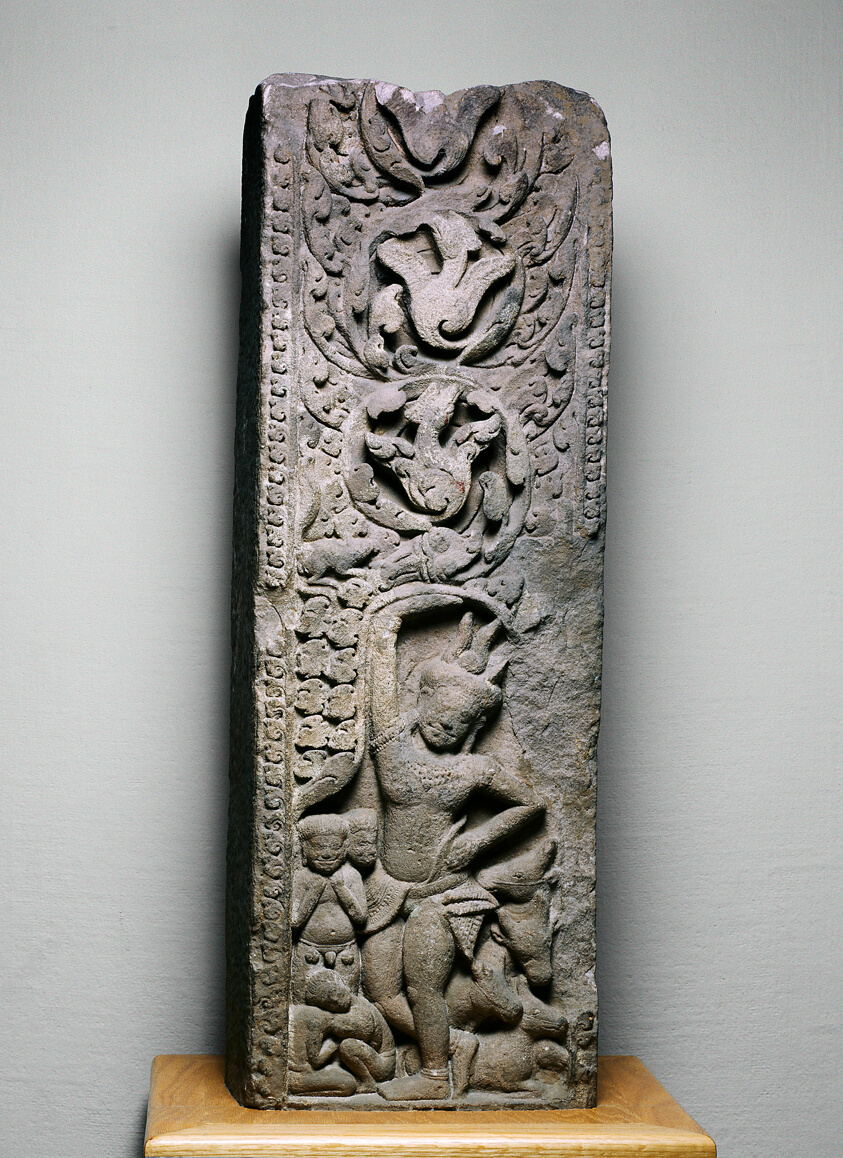
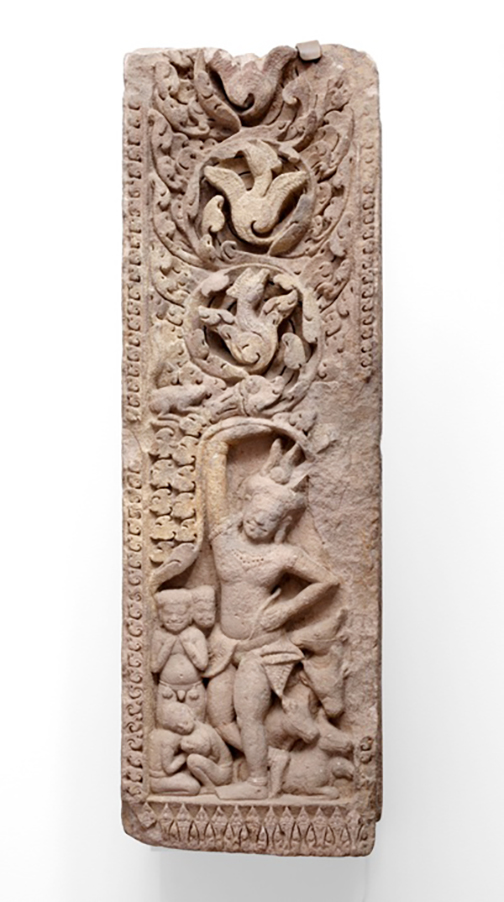
A fragment of a pilaster with Krishna lifting Mount Govardhana
BANGKOK — The Thai government has received the good news on June 18, from the Art Institute of Chicago in the United States, that it will return one ancient artifact of the Phanom Rung temple in Buriram Province, to the Fine Arts Department of Thailand.
The artifact is a “Fragment of a Pilaster with Krishna lifting Mount Govardhana,” which is an architectural component of a stone castle dating back to around the 17th Buddhist century, or approximately 900 years ago.
Phanom Rung Temple, Buriram Province
Panombut Chanthrachot, the Director-General of the Fine Arts Department, said that he has informed the Minister of Culture, Sudawan Wangsupakitkoson, about this good news. She believes that although the artifact is not on the list of Thai ancient objects being tracked in foreign countries, the offer to return it by the Art Institute of Chicago is a delightful matter. Thailand will receive an important ancient object back, which can be used to complete the missing parts of ancient sites, making them more complete.
“On behalf of the Ministry of Culture of Thailand, I would like to express my appreciation and gratitude to the Art Institute of Chicago for recognizing the ethics of possessing ancient objects with proper origins and the good relationship between Thailand and the United States, especially for giving importance to combating the illegal trade of ancient objects.”
Mr. Panombut also said that the return of this ancient object is an important step in extending the cooperation between the two countries, and we hope that this will inspire cooperation that will further promote the exchange of knowledge and cultural collaboration.
“This act serves as a model for ethical collecting practices and strengthens the bonds of cultural respect and collaboration between Thailand and the Art Institute of Chicago,” said Mr. Phnombootra Chandrajoti, Director-General of the Fine Arts Department. “This valuable artifact is from one of the most significant archeological sites in Thailand and we are glad it is returning to its motherland,” he said.
According to the press release of the Art Institute of Chicago, the museum is committed to ongoing provenance research of this collection, and after conducting new research on this object, the museum proactively reached out to the Thai government to initiate the process to return it.
The object is a 12th-century fragment of a pilaster, which is a rectangular architectural column in the side of a doorframe. The pilaster was previously attributed to Cambodia, and new research identified that it originated at the Phanom Rung temple in northeast Thailand, a temple that the museum had previously returned an object to in the 1980s.
A fragment of a pilaster with Krishna lifting Mount Govardhana
With the confirmation of the pilaster’s origins, the museum reached out to the government of Thailand to share these new findings; this collaboration has led to today’s return.
“We are grateful for our close collaboration with the Fine Arts Department in Thailand and are honored to take this step in what I hope is a long and productive partnership,” said James Rondeau, President and Eloise W. Martin Director of the Art Institute of Chicago. “We are deeply committed to fostering an ongoing relationship and continuing to learn from each other.”
The Phanom Rung temple is the place of origin of another object—known as the Vishnu lintel—that was previously in the museum’s collection and that was returned to Thailand in 1988. Since that time, the lintel has been restored to the structure; it is the Art Institute’s hope that the pilaster fragment is able to be restored to the same temple and these objects can be reunited.
On May 21 this year, Thailand’s National Museum received two ancient statues that were illegally trafficked from Thailand by a British collector of antiquities. The statues, a tall bronze figure called the Standing Shiva or Golden Boy and a smaller sculpture called Kneeling Female, are thought to be around 1,000 years old and were returned from the collection of New York’s Metropolitan Museum of Art.
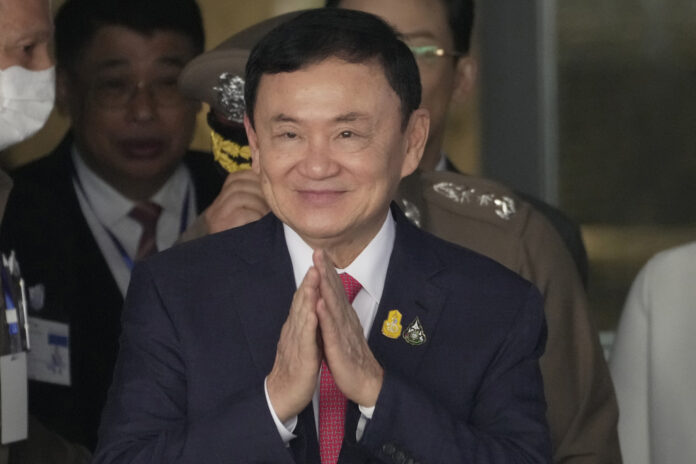
FILE - Thailand's former Prime Minister Thaksin Shinawatra arrives at Don Muang airport in Bangkok, Thailand, Aug. 22, 2023. (AP Photo/Sakchai Lalit, File)
JINTAMAS SAKSORNCHAI, BANGKOK (AP) — Former Thai Prime Minister Thaksin Shinawatra was indicted and arraigned Tuesday on a charge of defaming the country’s monarchy in one of several court cases that have rattled Thai politics. He was granted bail.
Thaksin is the unofficial power behind the party leading the government, Pheu Thai, despite being ousted from power in a coup 18 years ago.
He reported himself to prosecutors Tuesday morning and was indicted, Prayuth Bejraguna, a spokesperson for the Office of the Attorney General, said at a news conference.
Thaksin, 74, voluntarily returned to Thailand last year from self-imposed exile and served virtually all of his sentence on corruption-related charges in a hospital rather than prison on medical grounds. He was granted release on parole in February.
Since then, Thaksin has maintained a high profile, traveling the country making public appearances and political observations that could upset the powerful conservative establishment that was behind his 2006 ouster.
His removal from power had started a deep political polarization in Thailand. Thaksin’s opponents, who were generally staunch royalists, accused him of corruption, abuse of power and disrespecting then-King Bhumibol Adulyadej, who died in 2016.
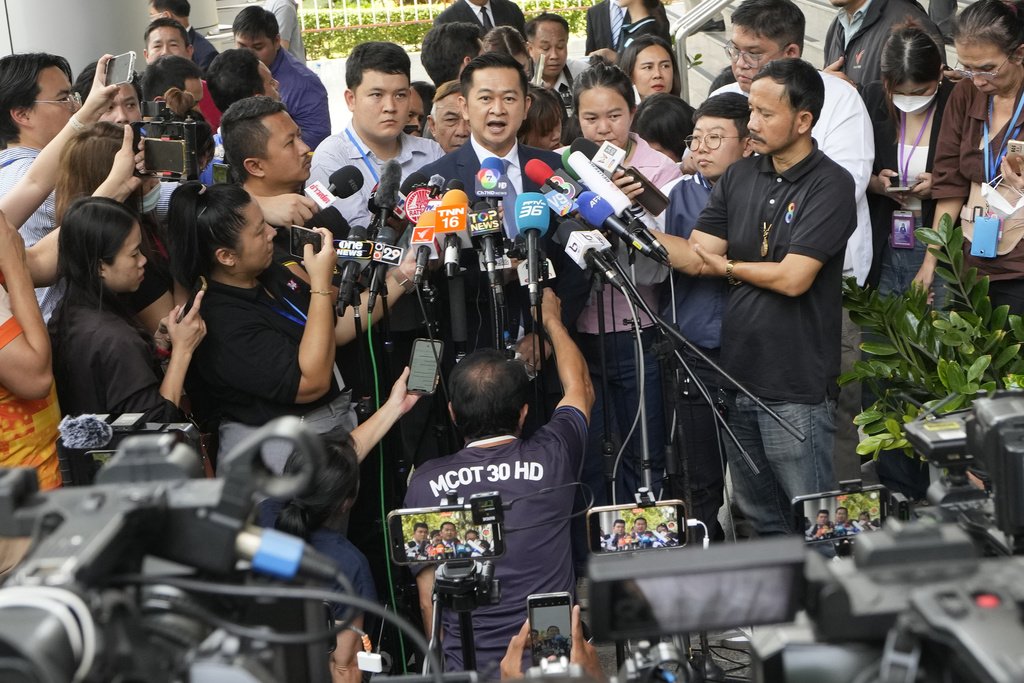
Former Thai Prime Minister Thaksin Shinawatra’s lawyer Winyat Chatmontree talks to reporter at Criminal Court in Bangkok, Thailand, Tuesday, June 18, 2024. (AP Photo/Sakchai Lalit)
Thaksin’s lawyer, Winyat Chatmontree, told reporters that Thaksin was ready to enter the judicial process. The Criminal Court, where Thakisin was arraigned after being indicted, said Thaksin’s bail release was approved with a bond of 500,000 baht ($13,000) under the condition that he cannot travel out of Thailand unless approved by court. His passport was confiscated.
The law on defaming the monarchy, an offense known as lese majeste, is punishable by three to 15 years in prison. It is among the harshest such laws globally and increasingly has been used in Thailand to punish government critics.
Winyat said his client is “not worried, and he’s always maintained that he hasn’t done anything wrong. He’s come here with full confidence in fighting his case.”
Thaksin was originally charged with lese majeste in 2016 for remarks he made a year earlier to journalists in South Korea. The case was not pursued at that time because he went into exile in 2008 to avoid punishment from cases he decried as political.
His case is just one of the several that have complicated Thai politics since the Pheu Thai government took office after the Senate — a conservative, military-appointed body — successfully blocked the progressive Move Forward party, which captured most votes, from taking power last year.
Move Forward is now facing dissolution after the Election Commission asked the Constitutional Court to rule whether it is guilty of attempting to overthrow the system of constitutional monarchy by campaigning to amend the lese majeste law.
Thailand’s courts, especially the Constitutional Court, are considered bulwarks of the royalist establishment, which has used them and nominally independent state agencies such as the Election Commission to cripple political opponents.
The Constitutional Court on Tuesday held procedural hearings on both Move Forward’s and Srettha’s cases, scheduling further proceedings for July 3 in the former case and July 10 in the latter.
The term of the current Senate, appointed by the junta that toppled a previous Pheu Thai government in 2014, expired last month, opening up an opportunity to make its membership more democratic.
Forty members of the interim Senate were behind the petition against Srettha, a move that is seen as favoring a pro-military political party in the coalition government.
The situation is a stark reminder of the challenges Pheu Thai faces from forming alliances with its old enemies, said Napon Jatusripitak, a political science researcher and visiting fellow at Singapore’s ISEAS-Yusof Ishak Institute. He said it also reflects “a highly lopsided balance of power between elected and unelected forces in Thailand.”
“Thai democracy is once again being held hostage by forces that are unaccountable to public interests,” he said.
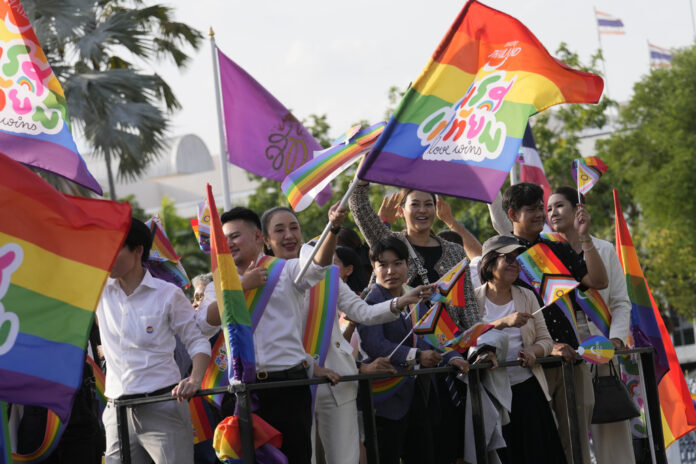
Participants wave flags celebrating equality in marriage at government house in Bangkok, Thailand, Tuesday, June 18, 2024. (AP Photo/Sakchai Lalit)
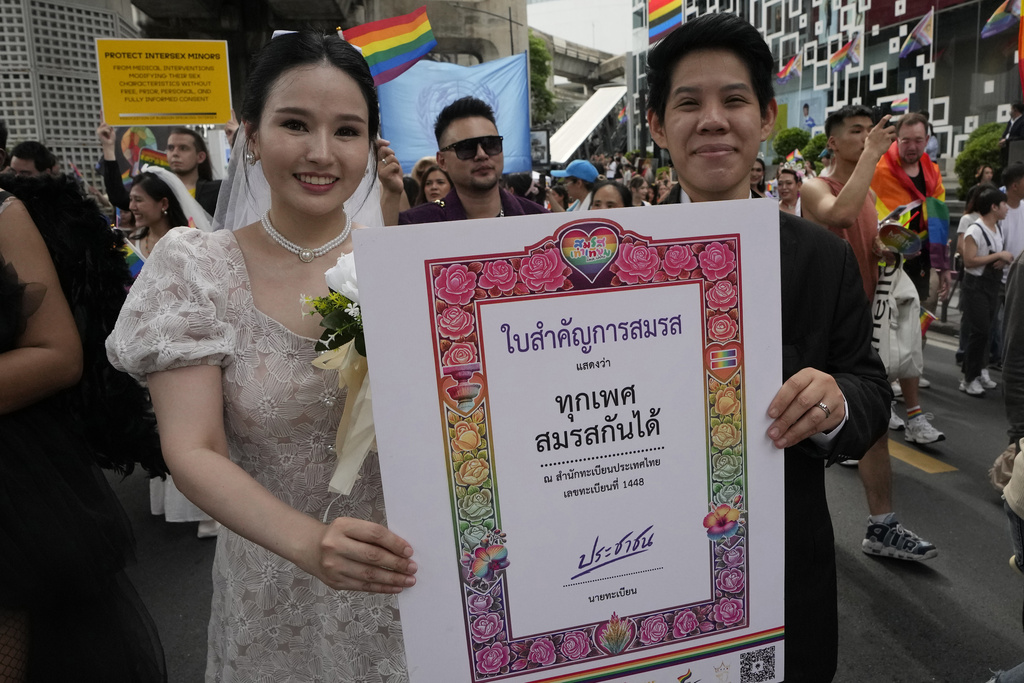
JINTAMAS SAKSORNCHAI BANGKOK — Thailand’s Senate voted overwhelmingly on Tuesday to approve a bill that would legalize same-sex marriage, clearing the last legislative hurdle for the country to become the first in Southeast Asia to enact such a law.
Thailand has a reputation for acceptance and inclusivity but has struggled for decades to pass a marriage equality law. Thai society largely holds conservative values, and members of the LGBTQ+ community say they face discrimination in everyday life.
The government and state agencies are also historically conservative, and advocates for gender equality have had a hard time pushing lawmakers and civil servants to accept change.
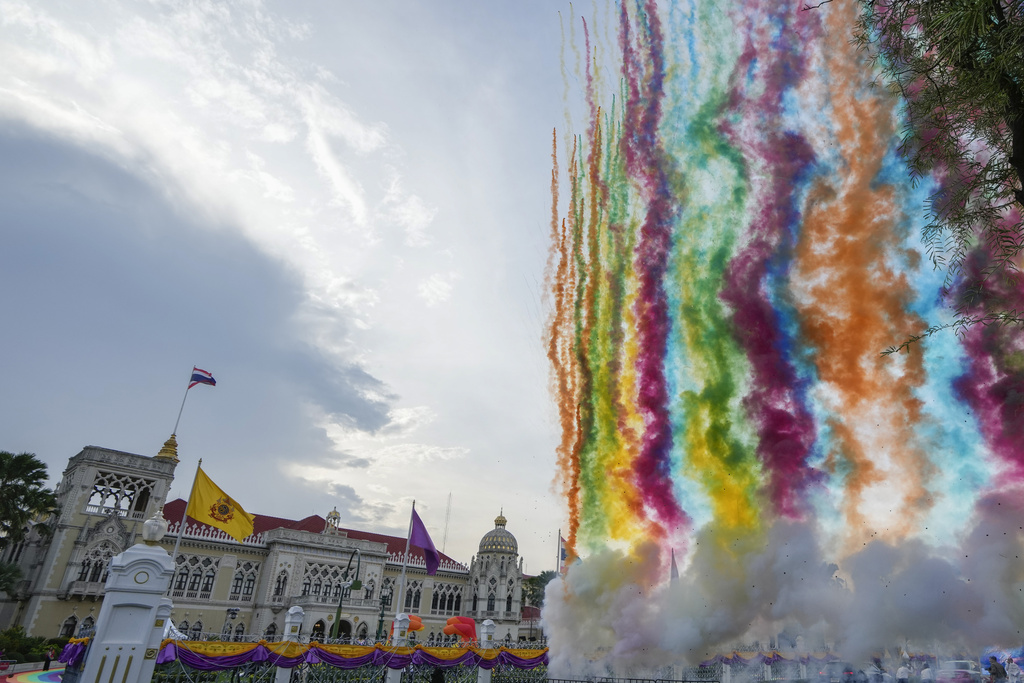
Fireworks shoot up in to sky at government house in Bangkok, Thailand, Tuesday, June 18, 2024. (AP Photo/Sakchai Lalit)
Thailand will become the third place in Asia, after Taiwan and Nepal, to allow same-sex marriage. The marriage equality bill, which grants full legal, financial and medical rights for marriage partners of any gender, sailed through the House of Representatives right before the previous parliamentary session concluded in April with the approval of 400 of the 415 members who were present.
It passed its final reading in the Senate on Tuesday with the approval of 130 of the 152 members in attendance, with 4 voting against it and 18 abstaining.
The bill now needs the pro forma endorsement of King Maha Vajiralongkorn, followed by its publication in the Government Gazette, which will set a date within 120 days when it becomes effective.
The timing of the Senate’s vote on Tuesday, the first day of the current parliamentary session, suggests the urgency in getting the bill passed. The legislation will amend the country’s Civil and Commercial Code to replace gender-specific words such as “men and women” with gender-neutral words such as “individual.”
But it was not approved without a hitch. One member of the Senate, retired army Gen. Worapong Sa-nganet, argued that the gender-specific terms should still be included in the law along with the gender-neutral terms. He said excluding them would be a severe “subversion of the institution of family” in Thailand.
After the vote, Plaifah Kyoka Shodladd, an 18-year-old who identifies as non-binary, took the floor and thanked everyone who supported the legislation, calling it a “force of hope” that will help Thailand become more accepting of diversity.
“Today, love trumps prejudice,” Plaifah said.
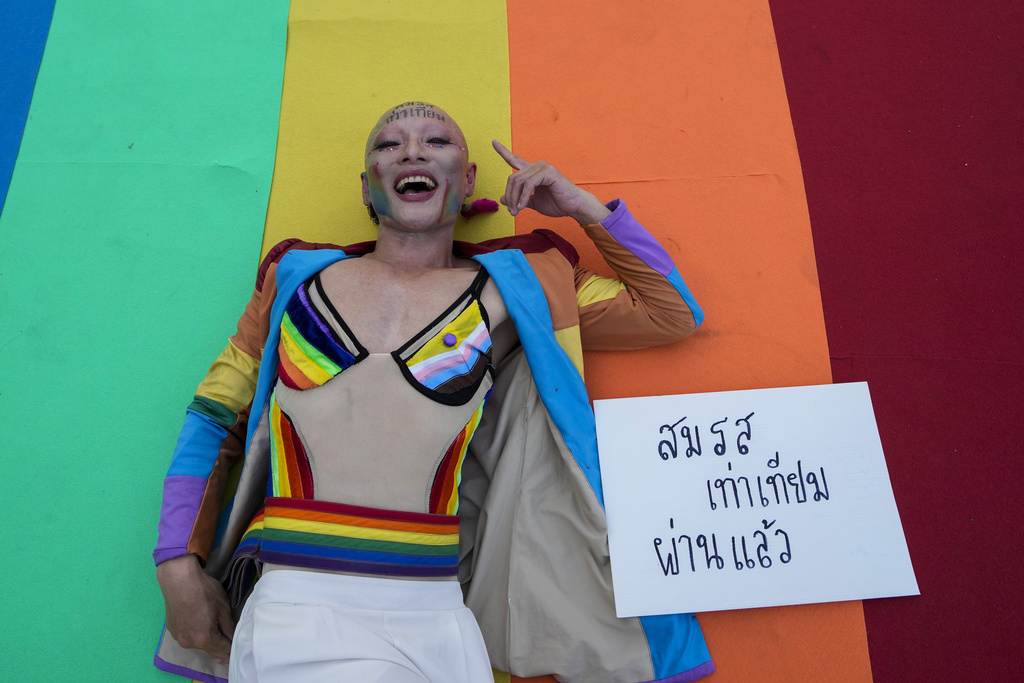
The government, confident of the bill’s passage, announced several days ago it would host a celebration of the occasion later Tuesday at Government House. The ground in front of the main building was decorated with rainbow carpets, flags and a giant balloon in the shape of two hands making a heart sign. The party was joined by politicians, celebrities, diplomats and activists from the LGBTQ+ community and their supporters who rode in a colorful parade of floats from Parliament after the vote.
Prime Minister Srettha Thavisin, who could not join the event because he recently tested positive for COVID-19, wrote his congratulations on social media platform X.
“I am proud of the collective effort of all stakeholders which reiterates the power of ‘unity in diversity’ of the Thai society. We will continue our fight for social rights for all people regardless of their status,” he wrote.
Passing the law is a “triumph for justice and human rights,” said Mookdapa Yangyuenpradorn of the human rights organization Fortify Rights.
“The Thai government must now focus on ensuring swift and effective implementation of this law to safeguard LGBTI+ rights,” she said. “Marriage equality is fundamental to human dignity, and it is essential that Thailand protects these rights without delay or discrimination.”
The government led by the Pheu Thai party, which took office last year, has made marriage equality one of its main goals. It made a major effort to identify itself with the annual Bangkok Pride parade earlier this month, in which thousands of people celebrated in one of Bangkok’s busiest commercial districts.
Pattaya is known as a vibrant tourist destination, famous for its beauty and unique attractions that attract visitors from all over the world. Known as the city that never sleeps, Pattaya offers a variety of experiences, from the dazzling nightlife to the tranquil daytime scenes.
Khaosod Online visited Pattaya’s Walking Street during the day to capture the atmosphere. In contrast to the lively nightlife, the area is relatively quiet during the day, with a few passers-by heading towards Bali Hai Pier or other destinations.
Vehicles, including cars and motorcycles, drive freely along the road, which is closed to traffic at night to accommodate tourists. During the day, employees of the various stores prepare for the night ahead. Some stores, such as fast food outlets and clothing stores, are already open.
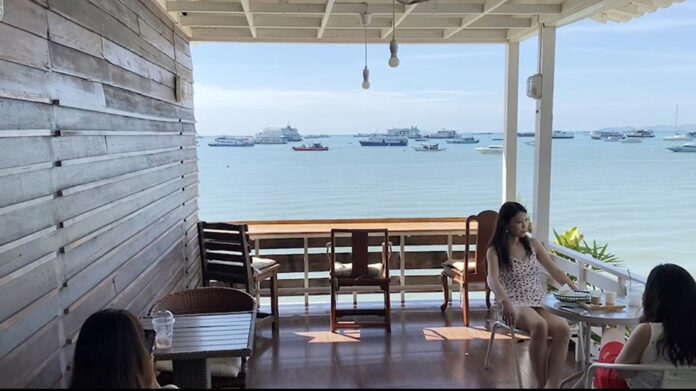
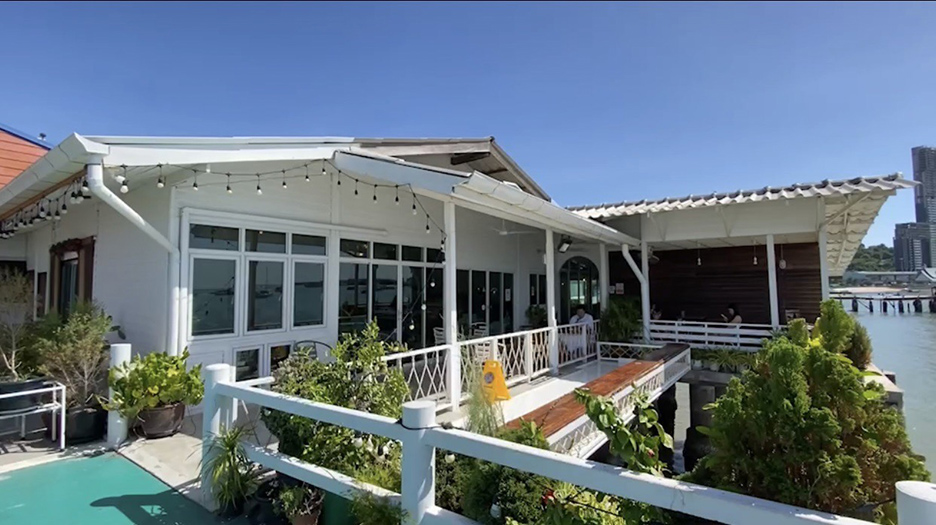
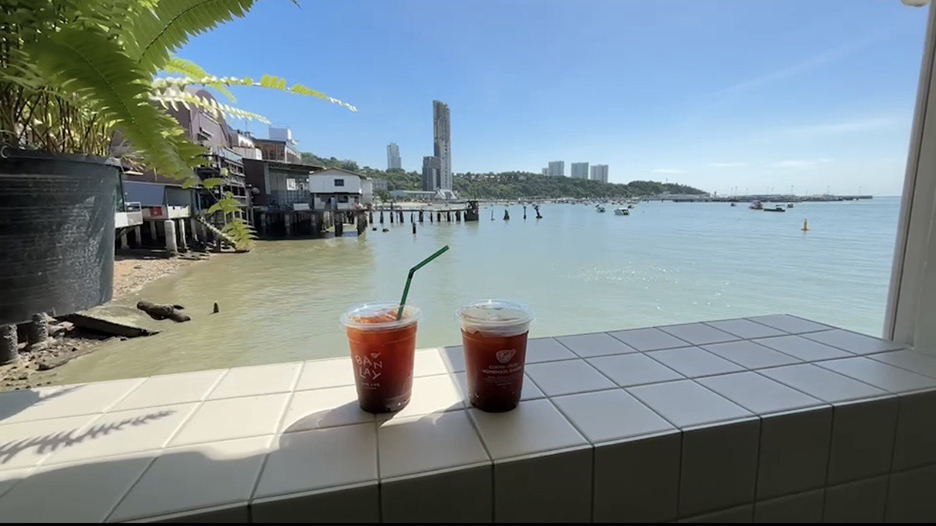
Strolling through the area, we came across a sign leading to the Banlay Home Café, a hidden gem on Walking Street. This café offers a perfect ambience with stunning views of Pattaya Beach and Bali Hai Pier as well as the iconic Pattaya City sign on Pratumnak Hill. Visitors can enjoy a tranquil perspective of Pattaya, making it an ideal spot for chic photos and relaxed moments.
Banlay Home Café offers a variety of drinks, desserts and food, starting at just 70 baht. The café is open from 10:00 am to 6:30 pm, making it an excellent choice for café lovers or those looking for a quiet retreat from the nighttime crowds.
For those who appreciate café hopping or want to experience a quieter side of Pattaya, Banlay Home Café on Walking Street is a must. Enjoy the charming atmosphere and scenic views while you chow down on your favorite dishes.
Today, as the world is being transformed by AI, we are stepping into a new era where it is difficult to predict how we will live, how businesses will need to adjust their business models, or whether the environment will become more concerning.
Therefore, every organization is striving to expand its knowledge of AI and create AI applications that fully address their needs to stay competitive. In doing so, they might forget to lay the foundation or framework for balanced AI usage to maximize sustainable benefits without causing adverse effects on society, the economy, or the environment.
This is the impetus behind the collaboration between AIS and Looloo Technology, a company specializing in AI, aiming to drive sustainable AI usage. This partnership seeks to enhance the competitiveness of organizations and Thailand on the international stage. Mr. Arakin Rakchittapoke, Head of Novel Engine Execution Business Unit at AIS, joined hands with Mr. Parith Rangsimanond, Mr. Supiti Buranawatanachoke, Dr. Thammanit Pipatsrisawat, Co-founders, and Mr. Methin Paspanthong, Head of AI Strategy at Looloo Technology Co., Ltd., to jointly design the AI Governance Framework – a blueprint for sustainable AI. This framework will guide the application of AI considering ethical factors, governance, transparency, auditability, equality, and environmental issues. The aim of this collaboration is to inspire everyone using AI to adopt a sustainable usage framework, ensuring that the AI we create becomes more of an Intelligent Assistant (IA) rather than a disruptive force.
This collaboration is expected to be completed by the fourth quarter of 2024 and will be applicable within AIS and other organizations to plan for comprehensive AI integration by 2024 as well.
PATTAYA – A Canadian man received a relaxing massage from two Ugandan women in Pattaya until he fell asleep, but when he woke up, his money had gone with them.
Chonburi Immigration Police arrested two Ugandan women, Ms. Mariam, 38 years old, and Ms. Sheebah, 28 years old, at a hotel in the Khao Pratamnak area of South Pattaya, Chonburi province.
The two were arrested as suspects based on an arrest warrant issued by the Pattaya Provincial Court on charges of “jointly committing theft at night” on June 17, after Mr. Khalid, a Canadian tourist, filed a police report at Bang Lamung Police Station stating that he was theft by these two women.
The Canadian man stated that on June 10, he had invited two African women to drink and sleep with him in a hotel room on Pattaya-Na Kluea Road. He paid them 2,000 baht each for their time before he became unconscious and fell asleep. When he woke up, he found that approximately 90,000 baht in Thai and foreign currency, which he had kept in the safe, was missing.
Although both women consistently denied the allegations and claimed that they only went to give the Canadian man a relaxing massage, the police have evidence from CCTV footage and other sources that can definitively link the perpetrators to the crime.
Therefore, they were taken into custody and handed over to the investigating officers for further legal proceedings.
Portugal's Cristiano Ronaldo applauds fans at the end of a training session in Gutersloh, Germany, Friday, June 14, 2024. Portugal will play against Czech Republic during their Group F soccer match at the Euro 2024 soccer tournament on June 18. (AP Photo/Hassan Ammar)
LEIPZIG, Germany (AP) — Cristiano Ronaldo can become the first player to feature at six European Championships when Portugal opens its Euro 2024 campaign against the Czech Republic. But Ronaldo is not the only danger for the Czechs, who are making their eight successive appearance. Kickoff is at 9 p.m. local time (1900 GMT) on Tuesday. Here’s what to know about the match:
Match facts
— This will be the fourth meeting between the countries at the tournament. The Czechs won the first 1-0 in 1996, and Portugal won in 2008 and 2012. Portugal has won the last four meetings between the teams, without conceding in the last three.
— Both teams reached the knockout stage of Euro 2020, with defending champion Portugal losing to Belgium in the round of 16 while the Czechs lost in the quarterfinals to Denmark.
— While Portugal won Euro 2016, the Czechs need to go back to 1976 for their triumph when the country was still part of Czechoslovakia. Antonín Panenka scored the winning penalty in the shootout against West Germany by softly dinking the ball through the middle while the goalkeeper dived to the side. Other players like Spain’s Sergio Ramos have since tried their luck scoring “Panenka” penalties.
— Spanish coach Roberto Martínez was in charge of the Belgium team that knocked Portugal out of the last edition. He’s now the Portugal coach, and his team eased through qualifying for Euro 2024 as the only team to win every game. Martínez’ side scored 36 goals and conceded only two as it qualified with three matches to spare.
— Even without Ronaldo, Portugal boasts a formidable attacking lineup with Barcelona’s João Félix, Paris Saint-Germain’s Gonçalo Ramos and Milan’s Rafael Leão all providing options for Bruno Fernandes in midfield.
— But it’s clear Ronaldo is still the main attraction for fans. Police had to intervene to remove some enamored supporters from Portugal’s open training session in Gütersloh on Saturday when they ran onto the field to take selfies with the Portugal star. Some 8,000 fans attended the training session.
— Turkey and Georgia are the other teams in Group F. They meet earlier Tuesday in Dortmund.
Team news
— Czech Republic coach Ivan Hašek has no injury problems to worry about but said he was going to see how Monday’s final training session went before deciding on his starting lineup. “I know that we have 26 players who can play tomorrow,” he said.
— Portugal counterpart Roberto Martínez was due to give an update on his team later Monday.
By the numbers
— Ronaldo, who made his tournament debut at Euro 2004 where Portugal reached the final, already has the records for the most goals (14) and appearances (25) at the tournament. The 39-year-old forward showed he’s not finished yet by scoring two goals as Portugal warmed up with a 3-0 win over Ireland.
— Ronaldo bagged five goals at Euro 2020, the same as Czech striker Patrik Schick to share the top-scorer award. Schick is again the main target for the Czech team and arrives at the tournament full of confidence after helping Bayer Leverkusen win the Bundesliga.
What they’re saying
“Ronaldo always thinks in big proportions, and we want to support him because he is our captain. He’s the one who has won the most among us.” – Portugal central defender Diogo Dalot.
“The Portuguese players are famous. They are popular all over the world. We’re not. We have to face them. We have to play as a team. That’s the only chance.” – Czech Republic coach Ivan Hašek.
“We know there is always a chance in football. There is always a chance to win. Even if you’re an underdog. Even if you’re considered the worst team and playing against the best, there is always a chance.” – Czech Republic midfielder Tomáš Souček.
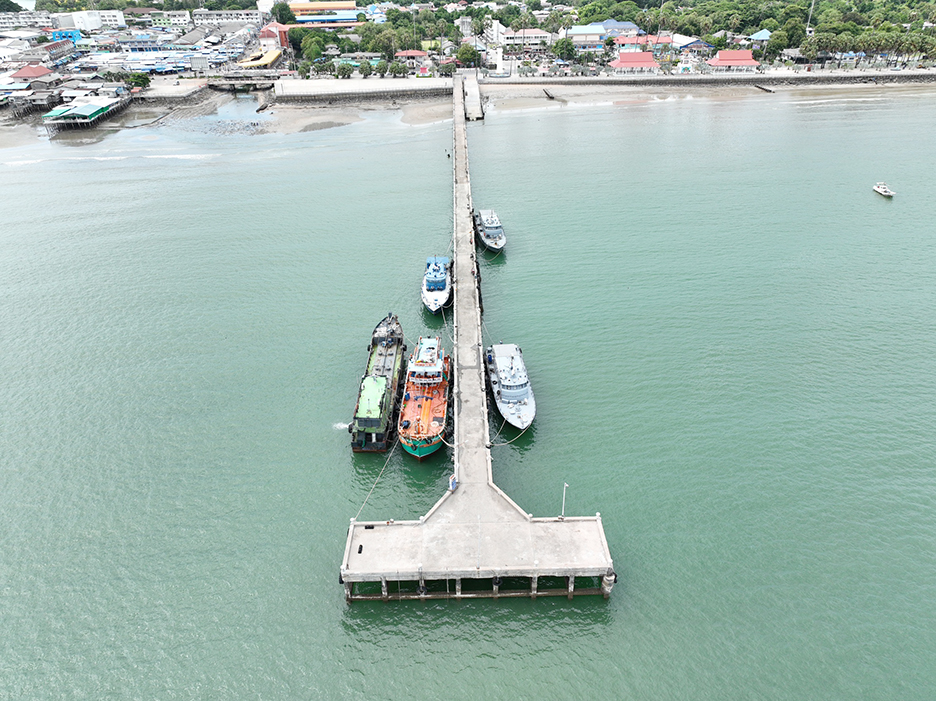
Police escort oil-smuggling boats to the Port of Songkhla on June 17, 2024.
SONGKHLA — On June 17, Pol. Maj. Gen. Jaroonkiat Pankaew, deputy commissioner of the Central Investigation Bureau, held a press conference on the progress of the case of the disappearance and recovery of three seized oil smuggling boats in Sattahip Harbor, Chonburi.
Pol. Maj. Gen. Jaroonkiat explained that investigations are ongoing to determine if the disappearance of the three boats is linked to a suspect named Jo. The Central Investigation Bureau is working diligently to find out the truth. The suspect’s actions are seen as a despicable insult to the police.
t is being investigated whether police officers were involved in the disappearance of the boats in the last three to four days. A committee has been set up to investigate this matter and the public is urged to trust the efforts of the police to solve this case without letting it disappear into oblivion.
“I assure you that we will prosecute all those involved if they are found guilty. The exact quantity of the missing oil is still undetermined and needs to be verified by forensic evidence,” said the deputy commissioner.
Police explained the timeline of events since the seizure of the boats, which later disappeared and were only found again yesterday.
On March 17, the oil smuggling boats were seized in Sattahip.
The oil smuggling boats were seized in Sattahip.
On March 19, the Economic Crime Suppression Division coordinated with the Marine Police to recover the seized boats.
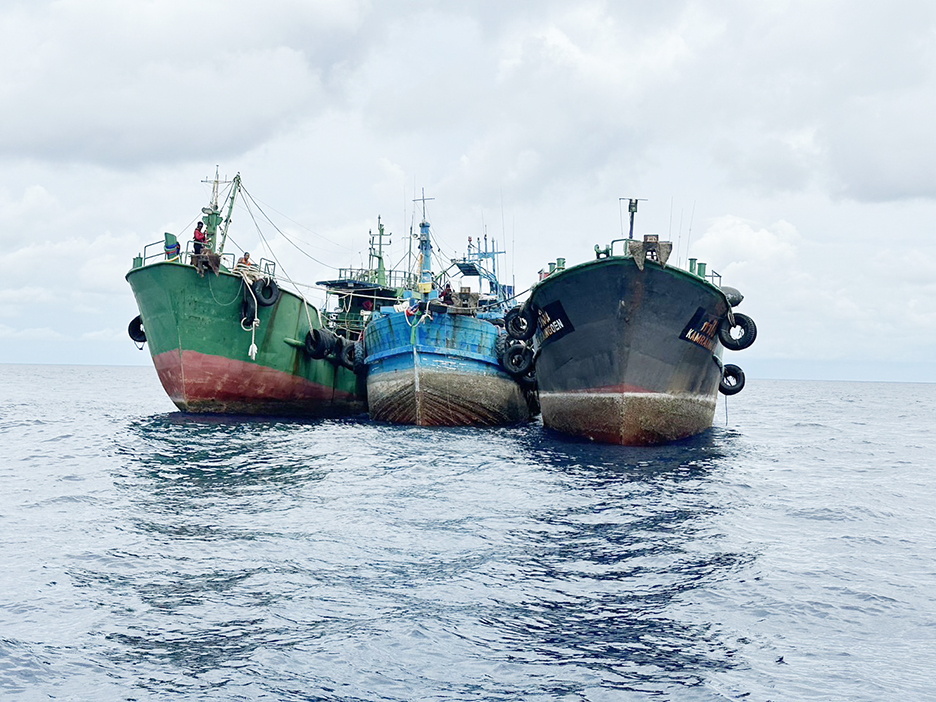
On June 11, a group of criminals hijacked the boats and reached Cambodian waters on June 12, where they attempted to change the appearance of the boats by repainting them from red to green.
However, due to the rush to escape the authorities, only one boat was successfully converted. The suspects intended to reuse the boats and sell the seized oil in Cambodia. It is confirmed that the amount of oil is less than the original seizure.
On June 13, upon learning of the situation, maritime police coordinated with neighboring countries, including Cambodia, Vietnam and Malaysia, to inspect suspicious boats. The suspects, who were aware of the police search, moved their boats to shore. Some suspects fled ashore, while others remained on the boats.
Three oil smuggling boats
The suspects changed their resting times to avoid detection. As pressure from the police increased, the suspects moved the boats from the coast of Cambodia to the Exclusive Economic Zone (EEZ) of Malaysia where they are familiar with the routes, narrowing the search area. Naval support from satellites and cooperation with fishing network partners provided crucial information.
On June 16, at 6:00 a.m., a network partner reported sightings of boats matching the description 90 miles off the coast of Songkhla. The Marine Police sent three boats for verification and confirmed at 15:00 p.m. that they were indeed the missing boats, as well as the names and identities of eight crew members, including three from the boat named “Kamrai Ngoen”,” four from the “JP” and one from the “Dawrung” who was maintaining the boats during an engine failure. It is believed that the remaining suspects are still evading arrest.
The suspects wanted to profit from both the seized oil worth 3-4 million baht and the boats worth 20 million baht. This motivated them to convert the boats for reuse. The discovery of the boats in the Pattani area is linked to influential local groups involved in the illegal oil trade, which explains why the boats were brought to the area from Sattahip. The link to the suspicious Jo who has appeared in the news is still being investigated.
During the first seizure, five boats and twenty-eight suspects were seized. Investigations have revealed that two financial groups are linked to this case.